
Cynthia Sally Haggard's Blog: Cynthia Sally's Blog, page 18
October 6, 2023
What would you do if a 17-year-old girl proposed marriage?
When I find an author I love, I make a practice of reading all of their novels, from first to last, to see how they develop as a writer.
Growing up in Britain, I knew the name Georgette Heyer but I don’t believe I read any of her books. It is only recently, that I discovered her when I opened The Masqueraders, believing it to be her first novel (it is actually her fourth) and was completely blown away by it. What I really loved about that novel is that the three protagonists ~ the aristocratic father, his son and heir Robin, and daughter Prudence are all devilishly clever, and it is wonderful to watch them get out of a dangerous fix.
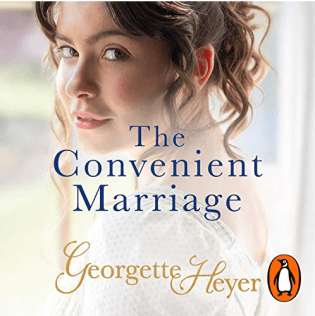
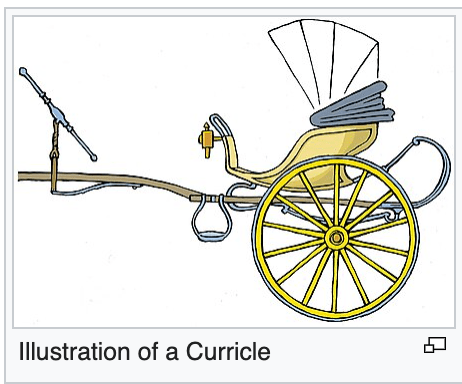
Now, I have read another novel by Georgette Heyer, one of her so-called “Georgian” novels, The Convenient Marriage. In this novel, I was stuck with how much research Ms. Heyer did on 18-century equipages. We have phaetons, racing curricles, chaises-and-four, and other toys that aristocratic men of the time were so fond of. The thought of Lord Rule driving himself along the Bath Road in a racing curricle drawn by two stallions who were literally champing at the bit made my blood run cold. For the Bath Road at that time would have been full of stones and holes. How Lord R. managed to drive himself along it at 50? 60? or even 70 miles an hour without breaking his neck is truly a miracle.
But what really makes this novel are the characters. There is the protagonist Miss Horatia Winwood, who goes by the delightful nickname “Horry”, and her husband Lord Rule whose suitably intimidating name belies the fact that he is actually a very nice man. But what I loved about Lord R. is how smart he is. He is one of those Georgette Heyer characters who exude ennui, but his sleepy eyes miss nothing and when his wife’s reputation is threatened he is terrifying. Then there is the comic duo of Horry’s brother Pelham and his side-kick Sir Roland Pommeroy, who provide light relief in what is a very fraught and angsty tale, at least for poor Horry.
Replete with sparking dialogue, rapier wit, and sword-play, this is an early novel that you won’t want to miss. Five Stars.
The post What would you do if a 17-year-old girl proposed marriage? appeared first on Cynthia Sally Haggard.

September 29, 2023
A Well-Spring, the Hidden Gem that shaped Harry Potter
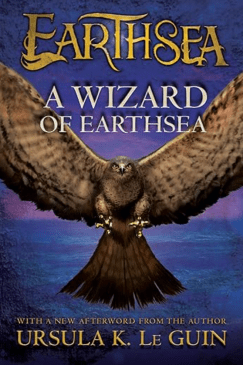
Ursula K. Le Guin’s A Wizard of Earthsea is an old book. First published in 1968 it was a fantasy novel written for young adults because the editor at Parnassus Press saw that this new audience had great potential.
Its author Ursula Kroeber was born in Berkeley California in 1929.
In 1953, after a whirlwind courtship, she married historian Charles Le Guin and became a wife and mother. However, Ms. Le Guin was one of those people who had been a voracious reader as a child, and she turned that passion for reading into a writing career in the 1960s when she wrote poetry, several short stories and five novels. Like many writers, she received many rejections from editors, their main complaint being that her work was inaccessible.
It wasn’t until A Wizard of Earthsea arrived in 1968, that she became famous, for this novel received much acclaim and many awards including the Boston Globe Horn Book Award of 1969. And luminaries such as Margaret Atwood have pronounced this book as one of the “wellsprings” of fantasy literature.
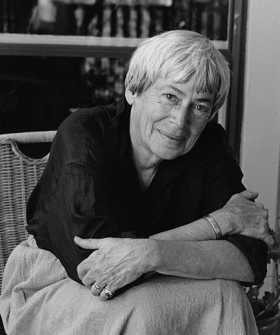 Ursula K. Le Guin in 1995
This is remarkable praise for a seemingly quiet book, which starts without fanfare in a poor village, where a motherless child gives off erratic hints that there might be more to him than meets the eye. It is not until he is thirteen, when this child single-handedly saves his village from attack by shrouding it in a magic fog, that people sit up and take notice.
Which is when the engine of the novel actually starts. Perhaps if this novel had been written recently, that is exactly where it might have started. But in 1968, people had more patience for gentler beginnings in which time is taken to lay out the background of this child’s life.
Not long afterwards, a Mage appears in the village seeking the boy. With his father’s permission he is allowed to go off into the forests with this stranger to learn Wizardry. But as they walk and walk higher and higher into the mountains, the stranger’s promise of tutelage fails to materialize. Ged, young and impatient, is puzzled. When he asks, he is brushed off with an enigmatic reply that he is too young to understand. And so, when an attractive girl goads him, it is inevitable that he will do something unwise to impress her. And so we have Ged’s first mistake, when he inadvertently summons a strange shadow that the Mage has to banish.
This incident makes vivid to the kindly Mage that Ged is unhappy in his service. And so, given the choice, it is not surprising that Ged leaves to go to Wizard School.
He travels all the way to the Island of Roke, where…he makes the same mistake. This time, his tormentor is a slightly older boy called Jasper. Ged has always been uncomfortable with Jasper, believing him to be quietly mocking behind a mask of politesse. But when Jasper insults him openly, comparing him to a goatherd, Ged cracks. And yes, you guessed it, he summons…something. Apparently, he was trying to summon the spirit of a Legendary Lady. Instead, he gets a shadow who attacks and nearly kills him. His life is saved by the Arch-Mage of the school, who sacrifices his life to save Ged and banish the creature.
But is the creature really banished? Not to poor Ged, who now suffers daily torments.
Does any of this sound familiar?
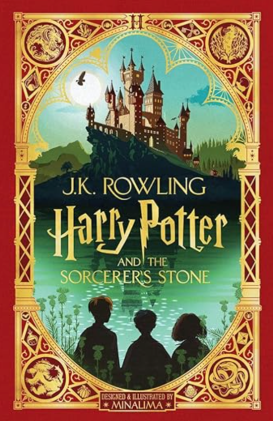
Many critics have noticed that A Wizard of Earthsea is a wellspring for Harry Potter. Like Harry, Ged is a talented boy sent to Wizard School. Like Harry, Ged has a scar on his face that hurts whenever he is close to his shadow. Like Harry, Ged makes an enemy of someone close to him.
Commenting on the similarity, Ms. Le Guin said that she did not feel that J. K. Rowling had plagiarized her work. On the other hand, she thought Ms. Rowling’s books received too much acclaim for novelty ~ “My incredulity was at the critics who found the first book wonderfully original. She has many virtues, but originality isn’t one of them.”
The fact that J.K. Rowling herself “could have been more gracious about her predecessors,” but wasn’t “hurt.”
If you have not read this novel before, you really should. It has a quiet power which is very compelling. Five Stars.
The post A Well-Spring, the Hidden Gem that shaped Harry Potter appeared first on Cynthia Sally Haggard.September 24, 2023
Who was Dracula?
The first surprising thing about Dracula is his name. His father’s name was Vlad the Dragon or Vlad II Dracul after Sigismund of Luxembourg made him a member of the Order of the Dragon in 1431.
Vlad II Dracul (circa 1395-1447) was an illegitimate son of Mircea of Wallachia, who somehow managed to become ruler of Wallachia (now southern Romania, where Bucharest is) between 1436 to 1442 and again from 1443 to 1447.
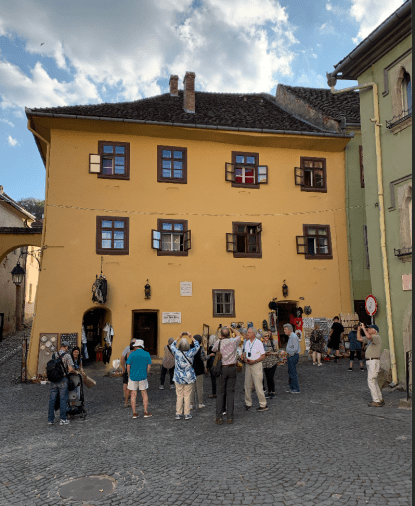 Vlad the Impaler’s birthplace in Sighisoara Romania. He is commonly known as Dracula.
His much more famous son Vlad III the Impaler (circa 1431 to 1477) ~ commonly known as Dracula ~ actually spent most of his life in prison. He was Vlad II Dracul’s second son, and in 1442 when he was around 11 years old, his father left him and his younger brother Radu as hostages at the Sultan’s court in return for his own freedom. Thus Dracula spent his formative years as a “guest” of the Sultan Murad II.
Of course, we do not know what happened to Dracula and his brother, but it is possible that they were badly treated, even abused. If so, it explains much of Dracula’s behavior when he became an adult.
In 1447, when Dracula was around 16 years old, his father and eldest brother were murdered. In this way, Dracula became his father’s heir and ruled Wallachia from October to November 1448, April 1456 to July 1462 and June 1475 to December 1476 or January 1477, when he was either murdered or killed in battle.
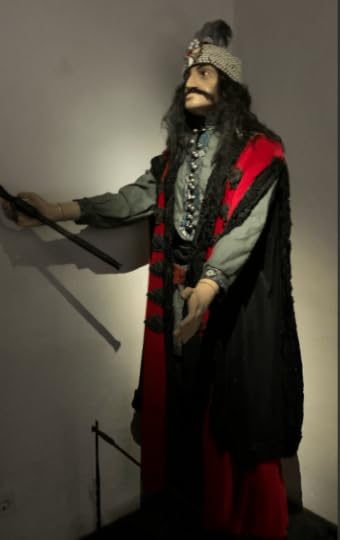 A likeness of Dracula found inside his famous castle in Bran, Romania.
In between his first and second reigns, he went into exile in the Ottoman Empire, in present-day Turkey, while he was imprisoned in Hungary for fourteen years between his second and third reigns.
Nevertheless, this vicious, brilliant man is a Romanian national hero, the only one to have the honor of being buried in a religious building, in this case the Monastery at Snagov.
For Dracula hated the Turks ~ perhaps because he had been so badly treated by them when he was a boy ~ and was the only Medieval ruler who successfully prevented them from conquering Wallachia and Transylvania in modern-day Romania. He earned his nickname “The Impaler” from the way he treated tens of thousands of Turkish soldiers at the beginning of his second reign. This method of torture – in which the victim is left to die on a stick that has been pushed through him (or her) ~ scared the Turks so much they were reluctant to engage with him directly.
After being forgotten for over 500 years, Vlad III The Impaler was brought to life in 1897 by Bram Stoker’s novel Dracula. Since then, over 400 movies have been made for a fascinated public. I am told that the one to watch is Mehmed vs. Vlad, part of the Rise of Empires TV series made between 2020 and 2022.
Stay tuned and I will tell you what my thoughts are…
The post Who was Dracula? appeared first on Cynthia Sally Haggard.
September 11, 2023
A 7th-Century Priory, A 14th-Century Bridge and Amazing Ice Cream!
When I was a girl, I was very fond of Benjamin Luxon’s performances of A Shropshire Lad by A. E. Housman, set to music by George Butterworth. And so, as I happened to be close by I paid a visit to three places that I associate with these songs ~ Much Wenlock, Clun and Knighton.
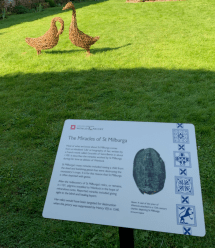
Much Wenlock is a puzzling name for many, as we don’t use the word much these days to mean great or large. But that is exactly what the much in Much Wenlock stands for, to distinguish it from another (smaller) settlement also called Wenlock. The town of Much Wenlock grew up around a famous priory that was founded in 680 CE by King Penda of Mercia. In 687, he installed his daughter Milburga as Abbess, and she became famous for the many miracles she performed. For example, she banished each and every goose who were destroying the monastery’s crops. This miracle is celebrated today by the willow sculptures of two geese that you can see in the ruins of the priory (destroyed by King Henry VIII.)
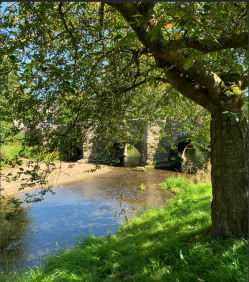
Clun is named for the river that flows through it. Clun became important in the Middle Ages because it was on the old drover’s road where livestock from Wales was driven to markets in the Midlands and London. Today, you can still see the 14th century packhorse bridge, built to accommodate all those animals.

Knighton is in Wales, but only just. It straddles the Teme river and abuts the border between Shropshire England and Powys, Wales, but to my eye has a very Welsh character (all of the signs are in English and Welsh.) In the Middle Ages it became a defensive border town, used to deal with the frequent Welsh raids on England. Today, I sampled the best ice cream I have ever tasted, made locally, and packed full of raspberries!
Clee Hill is one of the highest hills in Shropshire, rising to an elevation of 533 metres (1,759 feet). Imagine driving your car with the windows open (we are having a heatwave in Britain) and seeing an interesting-looking hill. Eventually you climb up its very long (and steep slope) and there you are, on top of it, looking at magnificent scenery. I didn’t stop to take one of my inevitable photos because it was so hot (about 90 degrees) that everything was covered in a haze. But what a wonderful surprise it was to come across it! For those of you who are Cadfael fans, you might be interested to know that this location was the setting of Ellis Peters Virgin in Ice.
The post A 7th-Century Priory, A 14th-Century Bridge and Amazing Ice Cream! appeared first on Cynthia Sally Haggard.September 8, 2023
How did William Shakespeare make £60 a year?
Life is full of surprises. You can think you understand something thoroughly and then find out that you are mistaken.
Like many people, I believed Shakespeare to be born into an impoverished home, and that he never made much money.
How wrong I was.
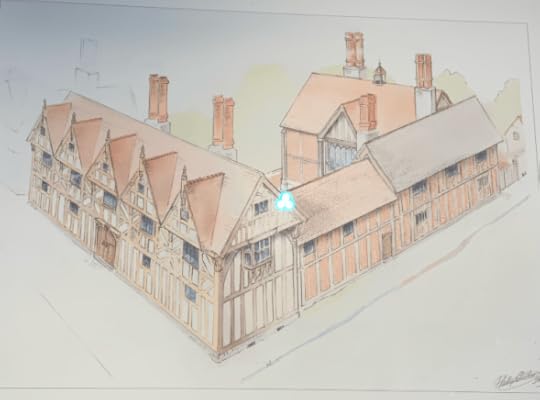 New Place when Shakespeare lived there between 1597 and his death in 1616.
To explain how Shakespeare made enough money to buy New Place in Stratford, which cost him £120 in 1597, it is helpful, I think, to go back in time and understand how his father John Shakespeare and his grandfather Richard Shakespeare made a living.
Richard Shakespeare (1490-1561) came from Wroxall, a village not far from Kenilworth Warwickshire, which boasted a large abbey. For some reason now obscured by the mists of history, Richard decided ~ at the age of forty ~ to move ten miles south to the village of Snitterfield, to become a tenant farmer on land owned by Robert Arden. In those days, a tenant farmer was a free man who had the opportunity to become rich, depending on what kind of contract he signed with the owner of the land. Richard Shakespeare must have signed an advantageous contract with Robert Arden, because he is described as being a “prosperous farmer with livestock” in the manorial records. By the time of his death in 1561, he was leasing 80 acres of land and possessing an estate worth £38 17 shillings, which is worth more than $22,000 in 2019 USD. Not a large sum to be sure, but enough to keep the wolf from the door at a time when people rarely bought luxuries, and when a barter economy was very much in force between friends, relations and neighbors.
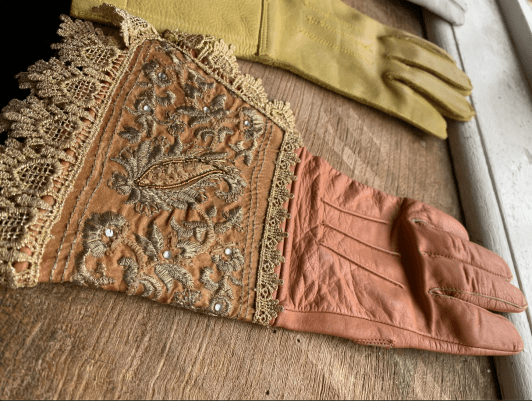 John Shakespeare was a glover by trade. Here is an example of his work shown in his reconstructed workshop in Stratford-on-Avon. If I’d been a fine Elizabethan lady, I would have plumped for those pink gloves!
John Shakespeare (1531-1601) was born in Snitterfield, which lies approximately 4 miles to the north of Stratford-upon-Avon. We can surmise that John must have been bright and ambitious for he did not become a tenant farmer like his father, dependent upon the whims of others. Instead he became apprenticed to a glover, so that by the end of his seven years of apprenticeship, John Shakespeare was a skilled artisan. In order to belong to the local Guild of Glovers, he would have had to produce gloves of the finest quality. John Shakespeare must have passed these exams because when his son William was growing up, he was making gloves for the well-heeled and employing several apprentices to help him.
But John did more than that. He “diversified his portfolio,” as we would say today. He got into the wool trade, presumably because it was making so many of his compatriots wealthy. And then he leant money at exorbitant interest rates. If you visit Shakespeare’s birthplace on Henley Street, you will see that far from being born in poverty, William Shakespeare was born into a prosperous upper-middle class family, headed by a very talented businessman in the shape of John Shakespeare.
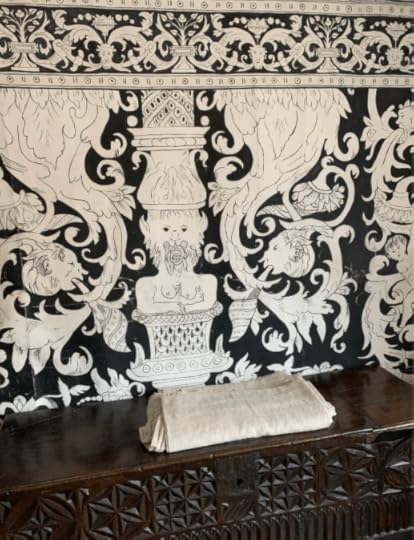 This is a wall hanging in one of the bedrooms of Shakespeare’s birthplace on Henley Street. The Shakespeares could not afford the expensive woven wool and silk hangings that graced aristocratic castles. But they could afford these waxed linen versions which served as a kind of Elizabethan wallpaper. These furnishings show that Shakespeare grew up in a prosperous family.
And so, I hear you asking, who was Shakespeare’s mother? She was one Mary Arden (1536-1608.) Yes, you have heard that name before, as she was the youngest daughter of Robert Arden, the landowner who leased 80 acres of his land for Richard Shakespeare to farm as a tenant farmer.
The Ardens were landowners, rich enough to to be Yeomen farmers who could vote in local elections as they held a 40-shilling freehold to the King of England. They were also were well-connected with ancestors who fought in the Second Barons’ War (1264–67) on the side of Simon de Montfort (Thomas Arden), the Wars of the Roses (Robert Arden senior), and at the court of Henry VII (John Arden.) Thus, they were several notches above the likes of Richard Shakespeare. This means that his son John must have impressed Robert Arden with his brights, hard work, and ability to become wealthy, which convinced Robert Arden that his darling daughter could continue to live a life to which she was accustomed upon her marriage to John Shakespeare.
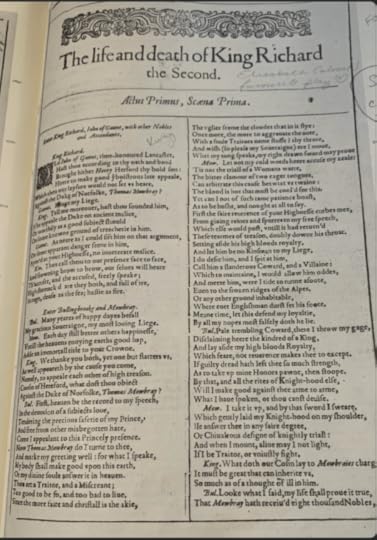 A copy of the first folio edition of Richard II, first printed exactly 400 years ago in 1623.
This leaves us with William Shakespeare (1564-1616) the most famous writer in the English Language. John Shakespeare had risen so high in Stratford – becoming mayor of the town ~ that he was able to arrange for his son and heir William to get a classical education at the local grammar school, something that his own father, the tenant farmer, had been unable to give him. This was a wonderful start in life in the 1570s for a bright boy, and anyone who has experienced the famous plays knows that they are replete with references to the Classics.
But during his lifetime Shakespeare was almost unknown. Apparently his neighbors in Stratford did not realize they had a great bard within their midst. Shakespeare did not become famous until about 150 years after his death, when the great actor David Garrick introduced him to English audiences in the 1760s.
Which leaves us with my original question ~ How did Shakespeare make £60 pounds a year?
Of course, he wasn’t becoming rich from acting ~ Actors then and now are never paid much for their work. He also wasn’t becoming rich from his plays, because the ones that were published only earned him about £8 each (in the 1590s.)
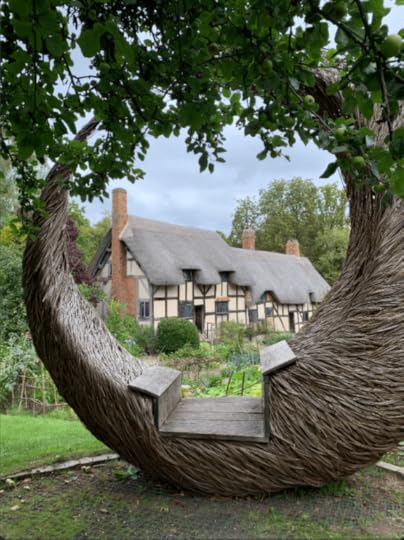 Anne Hathaway’s cottage in Shottery, a small village about a mile from Stratford. Although she may not have been exactly what John Shakespeare was looking for in a daughter-in-law, it is clear from the size of the cottage that Anne’s family was prosperous, which is presumably why John gave his consent to the marriage.
 So what did Shakespeare do?
In order to understand that, we have to remember that when Shakespeare was only 18 years old he married Anne Hathaway, a woman who was about eight years older than himself. As a minor, William Shakespeare had to ask his father’s permission for this marriage to take place. One can imagine John’s disappointment that his son and heir had thrown away an opportunity to become an apprentice, as one couldn’t do that if one was married. But a baby was on the way and respectability was everything in those days, meaning that the child had to be born after the parents were married.
So it really wouldn’t have been wise for William Shakespeare to tell his already-disappointed-father that he was going to London to act. A much better way of presenting his plan to go to London, was to offer to sell gloves to all the fine aristocrats who graced Elizabeth’s court. John Shakespeare could understand that line of reasoning, and probably packed William off to London with his blessing, and his finest gloves stowed in Williams’ saddlebags.
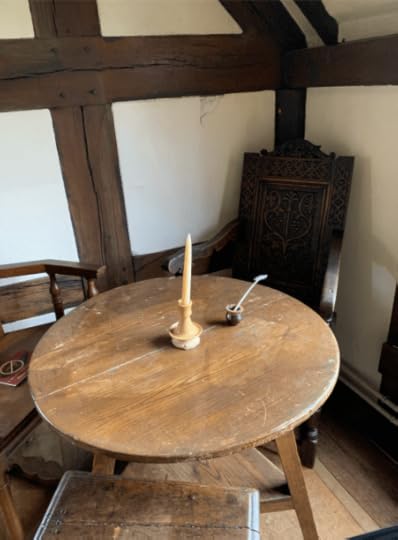
In London, William was able to give full reign to his acting and play-writing passions. But it turns out that not only could William pen sonnets, he was also a very talented businessman. Like his father, he didn’t do just one thing. Not only did he act and write plays, but he could also make gloves. And he was really good with money.
Shakespeare himself lived a frugal life in cheap lodgings in London so that he could send the bulk of his earnings back to his family in Stratford. But the stroke of genius was buying shares in the Lord Chamberlain’s Men, an acting company that was founded in 1594, which he also worked for as an actor and playwright. This was a very lucrative venture as there were roughly 3,000 playwrights in London at the time, all dying to see their plays performed. Luckily, the English audiences of the day had a voracious appetite for new plays and so ticket sales boomed. Therefore, if you were a young man who actually owned shares in such a company, you would be doing very well indeed.
And so it was that in 1597, when William Shakespeare was only 33 years old, he was able to buy the largest house in Stratford, New Place, which he’d passed every day on his way to school. The price was £120, equivalent to two years of his earnings. That is just over $37,000.00 in 2019 dollars. It seems that William negotiated a bargain price for this magnificent house!
And so this is a story not about a genius playwright, but three talented businessmen
~ Richard who signed an advantageous deal with his landlord,
~ John, who had fingers in many pies in Stratford, including making gloves,
the wool trade, and usury,
~ William, who owned shares in the Lord Chamberlain’s men.
The post How did William Shakespeare make £60 a year? appeared first on Cynthia Sally Haggard.September 3, 2023
A Charming Way of experiencing Worcester and its environs…
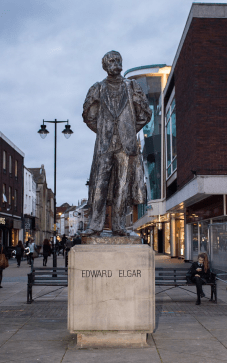 A statue of Edward Elgar in Worcester City Centre.
As a young woman I studied the violin at the Royal College of Music, and that is how I became a fan of Edward Elgar. If you are not British you probably haven’t heard of him. But he was about the same age as Gustav Mahler, and like Mahler, wrote music that reflected the folk-tunes of his native land. (In Mahler’s case that was Austrian music, in Elgar’s case it was English folk-songs.)
Elgar’s most famous music includes his violin concerto (written for Fritz Kreisler), his haunting cello concerto (written during the First World War), his Pomp and Circumstance marches and the Enigma Variations, where each variation is a musical portrait depicting the personality of each friend. The theme that ties all these variations together is an enigma, a hidden theme. Many have tried over the years to guess what this theme is, but it is probably based upon the slow movement of Mozart’s Prague Symphony (his symphony No. 38.)
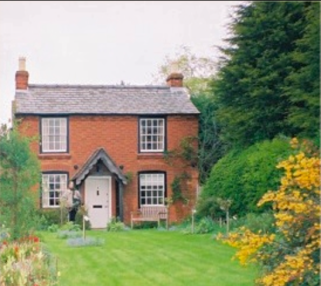 The Firs, Edward Elgar’s birthplace in Lower Broadheath just outside Worcester.
Edward Elgar was born in 1857 in the village of Lower Broadheath just outside Worcester. To my great surprise I discovered his home, The Firs, to be just down the road from The Dewdrop Inn, where I am currently residing.
Edward’s father William Elgar, was a professional violinist who also played the organ well enough to hold the post organist of St George’s Roman Catholic Church, Worcester, from 1846 to 1885. Like many professional musicians, William Elgar made a living by doing many different things. Not only could he play the violin and the organ, but he also opened a shop in Worcester where he sold sheet music, and musical instruments. In addition to all this, he worked as a piano tuner at many of the great houses in Worcestershire.
William and his wife Ann had seven children, all of whom were given a musical upbringing. Edward was the fourth child, and William would often take him along on his piano tuning gigs so that he could show off his boy’s prowess to the various aristocrats lounging around waiting for the piano tuning to stop. (If you have even heard someone tune a piano, you know what I mean!)
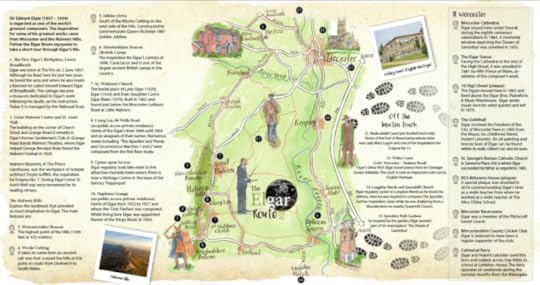 People from Worcestershire are very proud of native son Edward Elgar. And so they put together this brochure which I followed, starting at The Firs and going south to Worcestershire Beacon. I also went to Great Malvern and explored Wyche Cutting and Jubilee Drive.
Like many musically gifted people, Elgar did not receive much formal instruction in music, beyond violin and piano lessons from local teachers, and one or two snatched lessons from Hungarian violinist Adolf Politzer in London during 1877-1878 when he was about 20 years old. So he was obliged to teach himself, working through manuals of instruction on organ playing, and reading every book he could find on the theory of music.
At fifteen, Elgar began to study German as he wanted to go to the Leipzig Conservatory, one of the most famous music schools in the world at that time. Unfortunately, his father could not afford to send him. So when he left school at the age of 15 in 1872, he worked as a clerk in a law office.
It didn’t take long for the 15-year-old Edward Elgar to realize that working in an office was not for him. And so he threw himself into his musical career, appearing in public as an organist and violinist, taking lessons from Politzer in London and becoming an active member of Worcester’s Glee Club where he composed and arranged music.
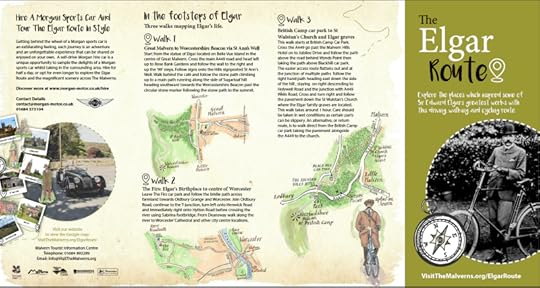 Here is the other part of the Elgar Route brochure. Some bright spark has come up with the idea of enticing (foreign) visitors to hire a Morgan Sports Car in order that you may experience this outing in style! Obviously not for the faint of heart as these wonderful cars exude old-fashioned glamor if you can afford to pay over £70,000 (or an expensive rental fee.)
Elgar impressed Politzer so much, that he believed Elgar could be one of the leading violin soloists of England. However, 20-year-old Elgar didn’t agree. He had already heard many leading virtuosi at various concerts he attended in London, and felt that his own playing lacked fullness of tone. And so he abandoned that idea to become a conductor instead.
Many have said that Elgar’s melodies reflect the lines of the Malvern Hills, and so when I went on my Elgar tour the other day, I made sure to climb up Worcestershire Beacon to see the magnificent rolling countryside for myself.
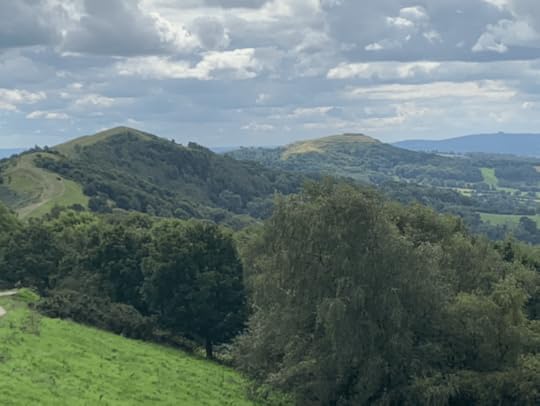
Worcestershire Beacon is part of the Malvern Hills which run for about 8 miles north to south along the Worcestershire-Herefordshire border. It is the highest point in Worcestershire rising to 425 metres or 1,394 feet. I actually managed to climb up it!!
The post A Charming Way of experiencing Worcester and its environs… appeared first on Cynthia Sally Haggard.August 15, 2022
Spun Stories is shutting down…
 My new website, cynthiasallyhaggard.com
Everyone,
I have some bitter-sweet news for you.
The bitter part is that Spun Stories is shutting down and won’t be available in the not-too-distant-future. The sweet part is that I have a NEW website, which is much better looking and much better organized thanks to the talent and hard work of Katie Birks!
My new website name is the same as my name, cynthiasallyhaggard.com.
WHAT THIS MEANS FOR YOU: Actually, you DON’T have to do anything, as you will be migrated to the new site and can enjoy my blog posts and everything else that you’ve been accustomed to!
I always like to hear from my followers, so if you have any comments or questions please contact me at: https://cynthiasallyhaggard.com/contact/

My site will go LIVE tomorrow!
Warmly, Cynthia

August 10, 2022
THE SIGNATURE OF ALL THINGS by Elizabeth Gilbert, narrated by Juliet Stevenson
Of course, this novel is wonderful. Of course it has Liz Gilbert’s wonderful style, now transmuted so that it sounds like something out of the 19th century. Of course there are eccentric, larger-than-life characters.
But what made this book come alive for me was the BRILLIANT NARRATION of Juliet Stevenson, who caught the gruff shouts of Alma’s British father Henry Whittaker, the creamy Dutch accents of her van Deventer relations, the American accents of Alma herself, her husband Ambrose Pike, her American friends and relatives.
I really do not know how ONE PERSON managed to do this, but it was a tour de force!
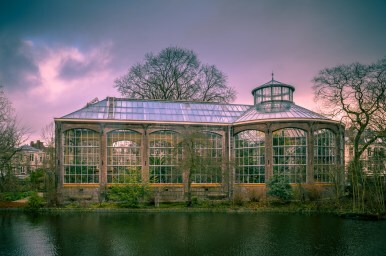 Hexagonal Pavilion of the Hortus botanicus, Amsterdam, dating to the 1600s. iStock.
Alma Whittaker is born in January 1800 to Dutch mother Beatrix van Deventer (whose family, in this novel, are concerned with the running of the Hortus Botanicus in Amsterdam) and British father Henry Whittaker, who hails from Richmond, Surrey.
Those of us who have actually visited Richmond, Surrey will recall a charming 18-century town situated high above the Thames, near Richmond Park and Hampton Court Palace. But of course it had its sour corners, especially in the past. And that is where Henry comes from, a poor family of seven, including five children, an enslaved mother and a timid father, all inhabiting a one-room shack.
Henry begins his life poor and illiterate, but has a burning ambition to make something of himself. His father, called the King’s Mage for saving George III’s favorite apple tree by grafting it onto sturdier stock, is too timid to take advantage of this appellation, and never asks for more money, despite the fact that he really needs it.
This fact galls young Henry, who decides (like so many of us) to be the very opposite of his parent.
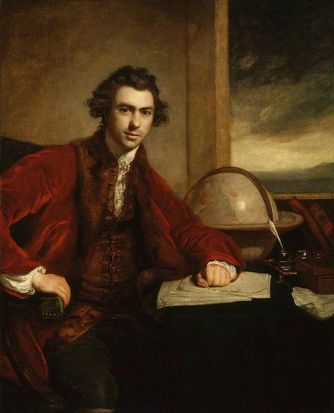 Sir Joseph Banks (1743-1820) painted by Sir Joshua Reynolds circa 1773, when Banks was around 30 years old. Wikimedia Commons.
In no time at all, Henry gains the notice of Sir Joseph Banks for stealing his precious plants and selling them on to visitors from around Europe for a handsome profit. When Sir Joseph asks what happened to the money, Henry claims that he has a terrible gambling habit and that it has all disappeared. (Actually, Henry has buried several bags of silver coins around the gardens at Kew, where his father works.)
Joseph Banks, who has a taste for the unusual, sees potential in the 16-year-old standing before him, struck by the boy’s sheer nerve. After all, Henry could hang for his crimes. Instead, Banks decides to send him away on Captain Cook’s third (and last) voyage of discovery, where Henry is given the post of assisting the botanist on board.
By the time Henry turns 24, he has sailed the world, and thinks that Sir Jospeh should reward him for his pains by making him a Fellow of the Royal Society. However, illiterate fellows of dubious origin are not made Fellows of the Royal Society in 1784, and Sir Joseph, distracted by other matters, dismisses Henry with cruel peals of laughter.
And so Henry makes his way to Amsterdam, with all the precious plants he was going to give Sir Joseph Banks, plus all the bags of silver he dug up from Kew Gardens, and makes his name and fortune as a purveyor of medicinal plants. You could say that the fictional Henry Whittaker is the 18th century’s equivalent of Big Pharma, and like Big Pharma he makes a packet.
Eventually, he finds a Dutch woman of good family (the van Deventers) to marry, and they set off for Philadelphia, USA.
Eight years later, their only surviving child Alma Whittaker arrives, and then Liz Gilbert’s tale morphs into a fictionalized biography of a fictional character, who could have existed in 19th-century America.
I will not say more, so as not to spoil this story for those of you who have not yet experienced it. But if you are looking for a totally engrossing tale with much wisdom packed into it, then I highly recommend this volume. Five stars.
Tap here for YOUR copy of Liz Gilbert’s THE SIGNATURE OF ALL THINGSAugust 3, 2022
COMMITTED: A SKEPTIC MAKES PEACE WITH MARRIAGE by Elizabeth Gilbert, narrated by the author
I don’t know much about Elizabeth Gilbert as a writer as I don’t read magazines like GQ or Esquire, Allure or Real Simple, because I don’t read short stories or articles, not regularly at any rate, instead mostly confining myself to historical novels.
So COMMITTED was a pleasant surprise for me. As with all my reading these days, I experienced it in the audio version, because I no longer enjoy reading text, whereas I love having a voice reading to me while I do the cooking, clean house or flop.
What grabbed me, of course, was Liz Gilbert’s voice. I am not sure exactly why I found it so compelling, but I loved her artful casualness, as if she were just talking with you over a cup of coffee.
COMMITTED takes up the thread of the story that began in EAT, PRAY, LOVE when, after a devastating divorce, the author takes time to go to Italy to eat pasta, visit an Ashram in India to pray, and fall in love with “Felipe” (her second husband José Nunes) in Indonesia.
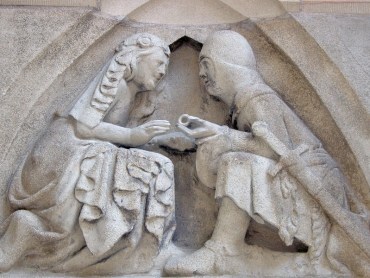 A knight declares his love to his lady, offering her the wedding ring as a sign of commitment, from the Rottweil cathedral in Germany. Photo 3105760 / Marriage © Ale1969 | Dreamstime.com
Here, we learn how the TSA plays matchmaker to two divorcées who are marriage-avoidant. All Liz and her beau want to do is make a home together sans mariage in the US of A.
However, the laws in the (very conservative) USA are discriminatory, discriminating AGAINST people who want to cohabit and NOT marry. If Liz had been a British citizen or French or even perhaps Italian, German or Norwegian, she wouldn’t have had to get all bent out of shape at the thought of actually having to COMMIT herself to ONE OTHER PERSON, as those countries are much more hospitable to co-habitation.
However, here we are in the US of A, and if one wants to live in Philadelphia with one’s boyfriend, one HAS TO MARRY, otherwise said boyfriend (Brazilian born but with Australian citizenship) will be deported, NEVER TO COME BACK TO THE UNITED STATES AGAIN.
 Indian wedding ceremony, exchange of rings. Photo 44172359 © Theromahn | Dreamstime.com
Liz doesn’t really talk about how biased all this is, nor how draconian US Government agencies can be, when they choose. Instead, she focuses all her energy on talking herself into this second marriage.
I should mention that if you look her up in Wikipedia, you will see that indeed, she did have reason to be concerned, as she and José (called Felipe in the book) did abandon their marriage in 2016, after just 9 years. It seems Liz called it quits because she fell in love with a woman who had terminal cancer. Apparently, her first marriage ended in a similar way, Liz again walking out because of (this time) another man. If you want to know more about all this, you should read “Confessions of a Seduction Addict” a 2015 article she wrote for the New York Times.
Despite all that, this book is a very valuable resource. It combines a potted history of the institution of marriage together with Liz’s provocative and thoughtful insights. I really think that anyone considering marriage should read this book. Five stars.
Tap here for YOUR copy of Liz Gilbert’s COMMITTEDAugust 1, 2022
THE LAST AMERICAN MAN, by Elizabeth Gilbert, narrated by Patricia Kalember
This is an amazing story, written by an amazing writer. What a great stylist Liz Gilbert is! I LOVED the carefully crafted casualness of her prose style – a gossip at the local cafe with superb editing.
 A picture of Eustace Conway, in his late 30s, on the cover of Liz Gilbert’s biography THE LAST AMERICAN MAN
Eustace Conway is about my age, but when he was 17, he didn’t finish his A-Levels and go onto music college like me. Instead, he left home to live in the Appalachian Mountains, with only a knife to help him survive. He made his own clothes out of buckskin. He skinned snakes to eat. He drank fresh water (and somehow managed not to die of dysentery). He lived out in the wild (and avoided being mauled by wolves, coyotes, or mountain cats).
In short, Eustace Conway (born in 1961) is a superb naturalist and outdoorsman, who seemingly can turn his hand to anything. Not only does he have formidable survival skills, but he is naturally brilliant with horses. As author Liz Gilbert points out, he has the kind of knowledge that would not have been uncommon amongst American frontiersmen in 1861, or 1761 or even 1661.
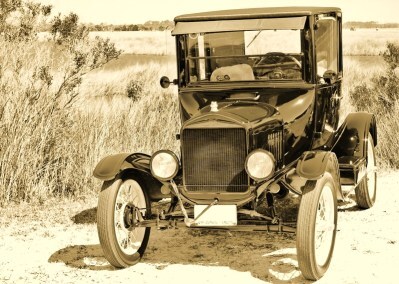 Photo 8510116 / Classic Cars © Eduard Ionescu | Dreamstime.com
Unfortunately, for Eustace Conway, he was born in the late 20th Century and so his attempts to pass on such skills are cursed by the fact that most everyone in our highly technical age is almost completely clueless about anything to do with the outside world.
One hundred years ago, with the appearance of the automobile, we no longer needed to know anything about the care and feeding of horses, or how to get them to cooperate with us when we needed to do something like drive a cart or ride them into town. So a whole acreage of knowledge about animal communication was lost.
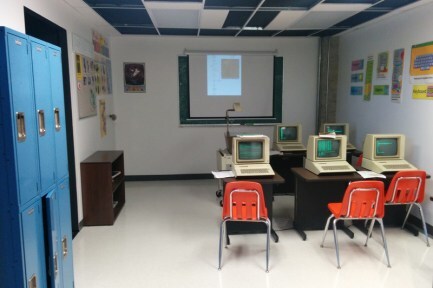 A recreation of an `80s school computer lab with Apple IIe computers and an overhead projector, at the Living Computer Museum in Seattle. Photo 128530802 © Emily743 | Dreamstime.com
Forty years ago, computers began appearing on everyone’s desktops, and now the world has been brought to us by means of our computer screens. If we want to go kayaking, or camping or even fighting with a sword, a lot of that can now be achieved by means of computer games. We are no longer dependent on the outside for a source of food and clothes. We are no longer condemned to short lives of considerable hardship (and near-constant starvation) spending every hour of every day finding food, seeking water, and preventing disaster from happening (such as coyotes attacking our children).

You could say that Eustace Conway is an anachronism, were it not for the fact that the very real disasters caused by climate change make his simple way of life something that we should all try to emulate. We should all try harder to get rid of things we don’t need, create less trash and respect the outside world much more. This is what Eustace Conway has been trying to teach us for the past 44 years. Now, we really need to listen.
Before I end, I would like the commend the superb narration of Patricia Kalember, who did a wonderful job with all of the voices. Not only did she sound like author Liz Gilbert, but she did wonderful imitations of Eustace Conway’s educated southern drawl (he is very well-spoken) as well as the rougher accents of his country neighbors in the Appalachian Mountains. Five stars for a truly superb work.
Tap here for YOUR copy of Liz Gilbert’s THE LAST AMERICAN MANCynthia Sally's Blog

- Cynthia Sally Haggard's profile
- 129 followers

