J.C. Martin's Blog, page 8
June 25, 2013
RISE OF THE MAGI: How to Know When to End a Series by Jocelyn Adams
%Úte%% | J.C. Martin

How to Know When to End a Series
by Jocelyn Adams
Most of the time when Iâm contemplating a series, I already know generally how long itâs going to be. When I wrote The Glass Man, I knew it would end up a trilogy since the storylines I had in my head were only enough to fill three books. I wasnât sure Iâd ever write a long series, but after reading a few that I fell in love with, watching how deep into characters I could get with the prolonged exposure to them, I decided to give it a try. Since I have the attention span of a gnat, it was an overwhelming proposition at first.
The newest world Iâm working in (Ironhill Jinn) has a primary storyline that will span, by my estimate, eight books, while each of those books has its own conflict, villain, etc., along with gradual in-depth explorations into each character. I had a hard enough time writing a trilogy, how the heck am I going to pull this one off? It helps that I can see the building blocks of these books better than any Iâve tackled before.
How do I know how many books it will take to finish the story? Well, for the first time EVER, I actually plotted the story arcs ahead of time for each book, building toward the overall storyline that spans the series, what to reveal about which character at what time, that sort of thing.
Iâm the kind of person who likes to have my ducks in a row, to know where Iâve been and where Iâm going. Iâm not sure how the authors of the never-ending series deal with those books. Is it just like a create-your-own adventure? Each book leads them to new storylines they build from there, come what may? But what if they need to make changes in earlier books? Do they just stop writing when they run out of ideas or get bored with the characters? Thatâs a scary thought for me, not enough boundaries.
Even with my limited series, Iâm still trying to get all of the books written before I submit book 2 in case I need to switch up details to make future storylines work. And without a definite end goal to reach for, I think Iâd flounder a little, have a hard time keeping the characters focused and the story tight. But hey, thatâs just me. Will I ever write an open-ended series? Probably not.
Whatâs your favorite series of all time? What did you love about it?
About the Author

Jocelyn Adams
Jocelyn Adams grew up on a cattle farm in Lakefield and has remained a resident of Southern Ontario her entire life, most recently in Muskoka. She has worked as a computer geek, a stable hand, a secretary, and spent most of her childhood buried up to the waist in an old car or tractor engine with her mechanically inclined dad. But mostly, she’s a dreamer with a vivid imagination and a love for fantasy (and a closet romantic â shhh!). When she isn’t shooting her compound bow in competition or writing, she hangs out with her husband and young daughter at their little house in the woods.
Contact: Website | Blog | Twitter | Facebook | Goodreads
Rise of the Magi
 In a battle of wills, who is strongest? The one who hates or the one who loves?
In a test of faith, who will fight the hardest? The one who has everything to lose or the one who believes only in herself?
For Lila Gray, the answer is both.
For the Magi, the questions are pointless since they canât lose, and theyâve been waiting since before Lilaâs birth for this one moment.
Lila only needs to find them to understand her entire purpose in life.
This time, though, instead of protecting her people, Lila may be leading them all, including her unborn child and the man she loves, to their deaths â and not by accident.
In the ultimate trial of heart and soul, and the conclusion to the Lila Gray series, Lila will learn that the greatest weapon of war is herself, with one ultimate unknown.For which side will she fight?
Purchase Links: Amazon | Barnes & Noble
Source: J.C. Martin, Fighter Writer


June 23, 2013
Book Shout-Out: ANDY SMITHSON: BLAST OF THE DRAGON’S FURY by L.R.W. Lee
%Úte%% | J.C. Martin
L.R.W. Lee’s debut novel, Andy Smithson: Blast of the Dragon’s Fury, Book 1, is described as a riveting book filled with visible humour, clever touches, vvid imagery, and unexpected twists and turns.
Andy Smithson: Blast of the Dragon’s Fury
 From the After Life, ten-year-old Andy Smithson’s relatives initiated a curse 500 years ago. Now they no longer agree it should continue and one is willing to sacrifice Andy’s life to end it. Unaware of the disagreement and with no say in the matter, Andy is unexpectedly and magically transported from his home. He finds himself in the Land of the Oomaldee, facing mortal danger at every turn as he seeks to find a scale from a rare red dragon, the most ferocious of dragon species, to break the curse and save his life.
Purchase Links: Amazon
About the Author

L.R.W. Lee
As early as 8 years old, L.R.W. Lee wanted to write a book, but she didn’t feel she had anything meaningful to say; she refused to waste her readers’ time. She hoped one day she would have something to contribute to others that could significantly impact their lives.
L.R.W. studied ethics, human cognition and behaviour (Dr. Humberto Maturana), and philosophy for over a decade. As well, she worked closely with a mentor while growing her business for 7 years. This education culminated in a practical outcome of helping people shift narratives that are not helpful in living a peaceful life.
In January 2012, she and her partner successfully sold the business. For the first time, she had both the opportunity to write as well as something useful and meaningful to share.
It is her hope that kids, as well as adults, reading the Andy Smithson series will come away having been entertained, but more importantly equipped with tools to better cope with life and its difficulties. Helping people in this way is very meaningful to her.
L.R.W. lives in scenic Austin, TX with her husband, her daughter who is a Longhorn at UT Austin and her son who is in high school.
Contact: Website | Twitter | Facebook
Source: J.C. Martin, Fighter Writer
June 21, 2013
VAMPIRE ELITE: The Birth of a Series by Irina Kardos & Giveaway
%Úte%% | J.C. Martin

***Read on for your chance to win a $50 Amazon/BN gift card!***
The Birth of a Series
by Irina Kardoas
Vampire Elite began unfolding two years ago. It came to me at a time when I felt particularly miserable. Gabor, my husband, had a stroke, and I was doing everything to help him deal with his depression and loss his mobility. At the same time I was preparing for my licensing exam in clinical psychology and was working full time as a psychologist (under my supervisorâs license).
The pressure was intense. That must have been the catalyst for my mind to begin taking me into an alternate reality filled with unique and powerful people. These people were also going through challenges. Their challenges were much greater than mine so my own felt like a piece of cake compared to theirs. The story unfolded as a sequence, like a movie playing in my brain when I was driving, sitting in meetings (extremely boring) or doing housework. I was also dreaming about it and making notes in the morning. The characters were coming to life, events were happening with lightning speed. It seemed as though I was living in two parallel worlds.
In this world I was Irina with all my responsibilities; in the other world, I was four people simultaneously: Simone, Arianna, Theores and Anock. It was beyond thrilling. Iâve always been interested in other peopleâs inner worlds, which is why I chose psychology as my profession. Listening to peopleâs stories is one thing. To actually live the life of your characters, is a completely different experience.
One day the story stopped, and there was a nagging thought that I had to breathe life into this parallel world by writing a book.

Book 2 of the Vampire Elite series, Keepers of the Key.
I was insecure about my proficiency in English, hence my resistance to write a book. But the thought about not writing was unbearable. It was eating me alive. So I sat down and began typing. In a few days the first few chapters were born. I sent them to Jo-An, my dearest friend, for some feedback. She was thrilled. She actually took what I wrote and rewrote it improving the verbiage, developing the characters further, adding incredible details and descriptions. That is how our partnership was born.
When the book was finished, we found an absolutely fabulous editor, Laura Holliday, PhD, whose contribution to this book is immeasurable.
That is the story of how the first two books of the Vampire Elite series were born. The first draft of book 3 is already finished.
About the Authors
Irina Argo is a combined pen name for two authors:
Irina Kardos

Irina Kardos
Irinaâs world is dark. She works as a clinical psychologist in a Juvenile Correctional Facility dealing with the extremes of human behavior on a regular basis, and takes care of her paralyzed husband who suffered a stroke several years ago. To bring light into her life she writes. Writing has always been her passion. She is originally from Russia, where she was employed as a TV journalist.
Jo-An Torres

Jo-An Torres
Jo-An is a Leo, a lioness who has emerged to follow her dream, to someday write a book of her own. She owned a costume shop for 15 years and was able to satisfy and excel in her creative nature. She is an over-achiever and believes that anything is possible if you believe in yourself and ignore the nay-sayers.  Her philosophy is based on Shakespeare: “It is not in the stars to hold our destiny, but in ourselves.” She currently resides in California with her 5 cats and 1 husband.
Vampire Elite
 Can the ultimate choice be made if saving your race means destroying the one you love?
At the beginning of the twenty-first century of our era a millennia long war between two immortal races was coming to an end. The Vampire Elite, the strongest among vampires, forced the race of immortal beings, the Amiti to become their blood suppliers, called bloodstock, locking them in their underground cells and treating them like livestock. The surviving free Amiti make a final attempt to strike back. The Queen of Amiti is proclaimed a traitor and is executed. Her death signifies the rise of a new Queen, her young daughter Arianna who becomes the last hope of her dying race. Arianna totally embraces her mission and is ready to fight for her people to the last drop of her blood but encounters an unexpected challenge â the vampire King Tor. They both are captured into a trap of love where they had to make an ultimate choice; to kill the loved one or to let their races die.
Vampire Elite is the epic story of a bitter conflict between two peoples, and the effect of that conflict on everyone living in its grip. The characters are driven to love and betrayal, vengeance and sacrifice in a world without easy black-and-white answers.
Based on an ancient Egyptian legend, packed with action and intrigue, Vampire Elite will pull you into the entrancing world of immortals and open new portals into their hidden universe.
Purchase Link: Amazon
Giveaway!
The authors are giving away a $50 Amazon/BN gift card to one lucky reader during the tour. To enter, simply complete the Rafflecopter below.
Good luck!
Source: J.C. Martin, Fighter Writer
June 19, 2013
Double Cover Reveal: DARKEST DAY and MEN OF FOXWICK
%Úte%% | J.C. Martin
I’ve committed to two cover reveals this week, so thought I’d combine both in the same post!
So, without further ado, the first cover reveal is for a fellow author at J. Taylor Publishing:

Darkest Day
Mac Thorneâs time as a Changeling is coming to an end.
It may have taken eighteen years, but Mac did finally manage to do what the Council wanted: she chose a teacher and renounced the in-between.
Thereâs just one last step. She must say goodbye to her human. Forever.
After being challenged in every way possible, Mac leaves what she thought would be the easiest task for the last possible moment. As midnight on July fourth draws near, though, she hasnât found a way to give up Winn Thomas.
Nor does she want to.
With time running out, Mac stands at a literal crossroads.
Choose Winn, and sheâll be stripped of the only family sheâs ever known â vampires, dragons, and her favorite demon. Even her own mother. Accept her position on the Council and rule as an equal to her twelve peers, and sheâll forget Winn ever existed.
Independence and freedom have never before been so limiting.
In this final chapter of the 19th Year Trilogy, itâs time for Mac to decide.
Responsibility? Or Love?
Intriguing blurb, no?
Darkest Day will be released on January 6th, 2014.
About the Author
Emi Gayle
Emi Gayle just wants to be young again. She lives vicariously through her youthful characters, while simultaneously acting as chief-Mom to her teenaged son and searching for a way to keep her two daughters from ever reaching the dreaded teen years.
Ironically, those years were some of Emiâs favorite times. She met the man of her dreams at 14, was engaged to him at 19, married him at 20 and sheâs still in love with him to this day. Sheâll never forget what it was like to fall in love at such a young age â emotions she wants everyone to feel.
Contact: Website | | Twitter | Facebook
And now, on to the next cover reveal, for a dear old blogger pal:

Men of Foxwick
This fantasy short story collection features five men from the Kingdom of Foxwick.
A blind teen seeks a place in the kingdom. A dragon seer journeys to Wintermill to spy on the queen. A sword masterâs worst fear comes true when he fails to protect the royal family. A king falls in love with an herb witch, but will she feel the same way? A hunter will rise to the challenge to hunt down a man-eating monster.
Short stories in this collection: Blind Scribe, Dragon Spy, Sword Master, Courting Magic, and Monster Hunter
Purchase Links: Amazon | Barnes & Noble | Kobo | Smashwords
Men of Foxwick is available now!
About the Author

Cherie Reich
A self-proclaimed bookworm, Cherie Reich is a speculative fiction writer, freelance editor, book blogger, and library assistant living in Virginia. Her short stories have appeared in magazines and anthologies, and her books include the horror series Nightmare, a space fantasy trilogy titled Gravity, and a fantasy series The Foxwick Chronicles. She is Vice President of Valley Writers and a member of the Virginia Writers Club and Untethered Realms.
Her debut YA Epic Fantasy novel Reborn, book one in The Fate Challenges, will be released on May 23, 2014.
Why not sign up to Cherie’s newsletter? All subscribers will receive a coupon code for a FREE copy of her short story collection, Women of Foxwick!
What do YOU think of the covers? Will you be adding either to your to-read list?
Source: J.C. Martin, Fighter Writer
June 18, 2013
Sunday Surprise … on a Tuesday
%Úte%% | J.C. Martin
I was over at Barbara G. Tarn’s blog Creative Barbwire on Sunday for an interview … but because of posting commitments couldn’t quite post about it till today.
Well, better late than never! 
Source: J.C. Martin, Fighter Writer
June 17, 2013
Book Shout-Out: COLD KILLING by Luke Delaney
%Úte%% | J.C. Martin

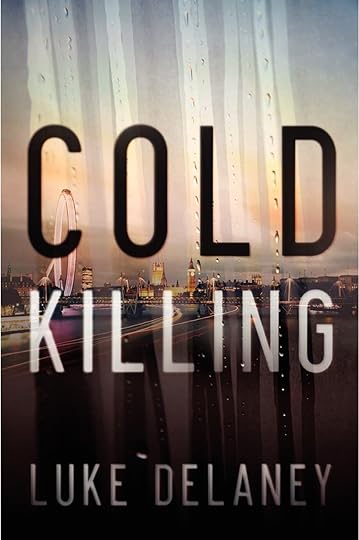
Cold Killing
by Luke Delaney
on Tour May 21st – June 21st 2013
Book Details
Genre:Â Fiction/Thriller
Published by:Â HarperCollins/William Morrow Paperbacks
Publication Date:Â 05/21/2013
Number of Pages:Â 448
ISBN: 9780062219466
Series: 1st in the D.I. Sean Corrigan Series
Purchase Links:Â
       Â


Synopsis:Â
After a young man is found brutally murdered in his own flat, DI Sean Corrigan, responsible for one of South Londonâs Murder Investigation Units, takes on the case. At first it appears to be a straightforward domestic murder, but immediately Corrigan suspects it is much more and it soon becomes clear he is hunting a particularly clever and ruthless serial killer who changes his modus operandi each time he kills, leaving no useable forensic evidence behind…
Read an excerpt:
Saturday. I agreed to go to the park with the wife and children. Theyâre over there on the grassy hill, just along from the pond. Theyâve fed themselves, fed the ducks, and now theyâre feeding their own belief that weâre one normal happy family. And to be fair, as far as theyâre concerned, we are. I wonât let the sight of them spoil my day. The sun is shining and Iâm getting a bit of a tan. The memory of the latest visit is still fresh and satisfying. It keeps the smile on my face.
Look at all these people. Happy and relaxed. Theyâve no idea Iâm watching them. Watching as small children wander away from mothers too distracted by idle chat to notice. Then they realize their little darling has wandered too far and up goes that shrill shriek of an overprotective parent, followed by a leg slap for the child and more shrieking.
I am satisfied for the time being. The fun I had last week will keep me contented for a while, so everyone is safe today.
Chapter 1
Thursday
It was 3 a.m. and Detective Inspector Sean Corrigan drove through the dreary streets of New Cross, southeast London. He had been born and raised in nearby Dulwich, and for as long as he could remember, these streets had been a dangerous place. People could quickly become victims here, regardless of age, sex, or color. Life had little value.
But these worries were for other people, not Sean. They were for the people who had nine-to-five jobs in shops and offices. Those who arrived bleary eyed to work each morning, then scuttled home nervously every evening, only feeling safe once theyâd bolted themselves behind closed doors.
Sean didnât fear the streets, having dealt with the worst they could throw at him. He was a detective inspector in charge of one of South Londonâs Murder Investigation Teams, dedicated to dealing with violent death. The killers hunted their victims and Sean hunted the killers. He drove with the window down and doors unlocked.
Heâd been asleep at home when Detective Sergeant Dave Donnelly called. Thereâd been a murder. A bad one. A young man beaten and stabbed to death in his own flat. One minute Sean was lying by his wifeâs side, the next he was driving to the place where a young manâs life had been torn away.
The streets around the murder scene were eerily quiet. He was pleased to see that the uniformed officers had done their job properly and taped off a large cordon around the block the flat was in. Heâd been to scenes before where the cordon started and stopped at the front door. How much evidence had been carried away from scenes on the soles of shoes? He didnât want to think about it.
There were two marked patrol cars alongside Donnellyâs unmarked Ford. He always laughed at the murder scenes on television, with dozens of police cars parked outside, all with blue lights swirling away. Inside, dozens of detectives and forensics guys would be falling over each other. Reality was different.
Entirely different.
Real crime scenes were all the more disturbing for their quietnessâthe violent death of the victim would leave the atmosphere shattered and brutalized. Sean could feel the horror closing in around him as he examined a scene. It was his job to discover the details of death, and over time he had grown hardened to it, but not immune. He knew that this scene would be no different.
He parked outside the taped-off cordon and climbed from the isolation of his car into the warm loneliness of the night, the stars of the clear sky and the streetlights removing all illusion of darkness. If he had been anyone else, doing any other job, he might have noticed how beautiful it was, but such thoughts had no place here. He flashed his identification to the approaching uniformed officer and grunted his name. âDI Sean Corrigan, Serious Crime Group South. Whereâs this flat?â
The uniformed officer was young. He seemed afraid of Sean. He must be new if a mere detective inspector scared him. âNumber sixteen Tabard House, sir. Itâs on the second floor, up the stairs and turn right. Or you could take the lift.â
âThanks.â
Sean opened the boot of his car and cast a quick glance over the contents squeezed inside. Two large square plastic bins contained all he would need for an initial scene examination. Paper suits and slippers. Various sizes of plastic exhibit bags, paper bags for clothing, half a dozen boxes of plastic gloves, rolls of
sticky labels, and of course a sledgehammer, a crowbar, and other tools. The boot of Seanâs car would be mirrored by detectivesâ cars across the world.
He pulled on a forensic containment suit and headed toward the stairwell. The block was of a type common to this area of London. Low-rise tenements made from dark, oppressive, brown-gray brick that had been thrown up after the Second World War to house those bombed out of old slum areas. In their time theyâd been a revelationâindoor toilets, running water, heatingâbut now only those trapped in poverty lived in them. They looked like prisons, and in a way thatâs what they were.
The stairwell smelled of urine. The stench of humans living on top of one another was unmistakable. This was summer and the vents of the flats pumped out the smells from within. Sean almost gagged on it, the sight, sound, and smell of the tenement block reminding him all too vividly of his own childhood, living in a three-bedroom, public housing duplex with his mother, two brothers, two sisters, and his fatherâhis
father who would lead him away from the others, taking him to the upstairs bedroom where things would happen. His mother too frightened to interveneâthoughts of reaching for a knife in the kitchen drawer swirling in her head, but fading away as her courage deserted her. But the curse of his childhood had left him with a rare and dark insightfulnessâan ability to understand the motivations of those he hunted.
All too often the abused become the abusers as the darkness overtakes them, evil begetting evilâa terrible cycle of violence, virtually impossible to breakâand so the demons of Seanâs past were too deeply assimilated in his being to ever be rid of. But Sean was different in that he could control his demons and his rage, using his shattered upbringing to allow him insights into the crimes he investigated that other cops could only dream of. He understood the killers, rapists, and arsonistsâunderstood why they had to do what they did, could interpret their motivationâsee what they saw, smell what they had smelled, feel what they had feltâtheir excitement, power, lust, revulsion, guilt, regret, fear. He could make leaps in investigations others struggled to understand, filling in the blanks with his unique imagination. Crime scenes came alive in his mindâs eye, playing in his head like movies. He was no psychic or clairvoyant; he was just a copâbut a cop with a broken past and a dangerous future, his skill at reading the ones he hunted born of his own dark, haunted past. Where better for a failed disciple of true evil to hide than among cops? Where better to turn his unique tools to good use than the police? He swallowed the bile rising in his throat and headed for the crime sceneâthe murder scene.
Sean stopped briefly to acknowledge another uniformed officer posted at the front door of the flat. The constable lifted the tape across the door and watched him duck inside. Sean looked down the corridor of the flat. It was bigger than it had seemed from the outside. DS Donnelly waited for him, his large frame filling the doorway, his mustache all but concealing the movement of his lips as he talked. Dave Donnelly, twenty-year-plus veteran of the Metropolitan Police and very much Seanâs old-school right-hand man. His anchor to the logical and practical course of an investigation and part-time crutch to lean on. Theyâd had their run-ins and disagreements, but they understood each otherâthey trusted each other.
âMorning, guvânor. Stick to the right of the hallway here. Thatâs the route Iâve been taking in and out,â Donnelly growled in his strange accent, a mix of Glaswegian and Cockney, his mustache twitching as he spoke.
âWhatâve we got?â Sean asked matter-of-factly.
âNo sign of forced entry. Security is good in the flat, so he probably let the killer in. All the damage to the victim seems to have been done in the living room. A real fucking mess in there. No signs of disturbance anywhere else. The living room is the last door on the right, down the corridor. Other than that weâve got a kitchen, two bedrooms, a bathroom, and a separate room for the toilet. From what Iâve seen, the victim kept things reasonably clean and tidy. Decent taste in furniture. Thereâs a few photies of the victim around the placeâas best I can tell, anyway. His injuries make it a wee bit difficult to be absolutely sure. Thereâs plenty of them with him, shall we say, embracing other men.â
âGay?â Sean asked.
âLooks that way. Itâs early days, but thereâs definitely some decent hi-fi and TV stuff around the place, Â and I notice several of the photies have our boy in far-flung corners of the world. Must have cost a few pennies. Weâre not dealing with a complete loser here. He had a decent enough job, or he was a decent enough villain, although I donât get the feel this is a villainâs home.â Both men craned their heads around the hallway area, as if to confirm Donnellyâs assessment so far. He continued: âAnd Iâve found a few letters all addressed to a Daniel Graydon. Nothing for anyone else.â
âWell, Daniel Graydon,â Sean asked, âwhat the hell happened to you? And why?â
 âShall we?â With an outstretched hand pointing along the corridor, Donnelly invited Sean to continue.
They moved from room to room, leaving the living room to the end. They trod carefully, moving around the edges so as not to disturb any invisible footprint indentations left in the carpets or minute but vital evidence: a strand of hair, a tiny drop of blood. Occasionally Sean would take a photograph with his small digital camera. He would keep the photographs for his personal use only, to remind him of details he had seen, but also to put himself back at the scene anytime he needed to sense it again, to smell the odor of blood, to taste the sickly sweet flavor of death. To feel the killerâs presence. He wished he could be alone in the flat, without the distraction of having to talk to anyoneâto explain what he was seeing and feeling. It had been the same ever since he was a young cop, his ability to step into the shoes of the offender, be it a residential burglary or murder. Seeing the scene through the eyes of the offender. But only the more alarming scenes seemed to trigger this reaction. Walking around scenes of domestic murders or gangland stabbings he saw more than most other detectives, but felt no more than they did. This scene already seemed different. He wished he were alone.
Sean felt uncomfortable in the flat. Like an intruder. As if he should be constantly apologizing for being there. He shook off the feeling and mentally absorbed everything. The cleanliness of the furniture and the floors. Were the dishes washed and put away? Had any food been left out? Did anything, no matter how small, seem somehow out of place? If the victim kept his clothing neatly folded away, then a shirt on the floor would alert Seanâs curiosity. If the victim had lived in squalor, a freshly cleaned glass next to a sink full of dirty dishes would attract his eye. Indeed, Sean had already noted something amiss.
Sean and Donnelly came to the living room. The door was ajar, exactly how it had been found by the young constable. Donnelly moved inside. Sean followed.
There was a strong smell of bloodâa lot of blood. It was a metallic smell. Like hot copper. Sean recalled the times heâd tasted his own blood. It always made him think that it tasted exactly like it smelled. At least this man had been killed recently. It was summer nowâif the victim had been there for a few days
the flat would have reeked. Flies would have filled the room, maggots infesting the body. He felt a jolt of guilt for being glad the man had just been killed.
Sean crouched next to the body, careful to avoid stepping in the pool of thick burgundy blood that had formed around the victimâs head. Heâd seen many murder victims. Some had almost no wounds to speak of, others had terrible injuries. This was a bad one. As bad as heâd seen.
âJesus Christ. What the hell happened in this room?â Sean asked.
Donnelly looked around. The dining room table was overturned. Two of the chairs with it had been destroyed. The TV had been knocked from its stand. Pictures lay smashed on the floor. CDs were strewn around the room. The lights from the CD player blinked in green.
âMust have been a hell of a fight,â Donnelly said.
Sean stood up, unable to look away from the victim: a white male, about twenty years old, wearing a T-shirt that was 50 percent soaked in blood, and hipster jeans, also heavily soaked in blood. One sock remained on his right foot; the other was nowhere to be seen. He was lying on his back, the left leg bent under the right, with both arms stretched  out in a crucifix position. There were no restraints of any kind in evidence. The left side of his face and head had been caved in. The victimâs short hair allowed Sean to see two serious head wounds indicating horrific fractures to the skull. Both eyes were swollen almost completely shut and his nose was smashed, with congealed blood crusted around it. The mouth hadnât escaped punishment, the lips showing several deep cuts, with the jaw hanging, dislocated. Sean wondered how many teeth would be missing. The right ear was nowhere to be seen. He hoped to God the man had died from the first blow to his head, but he doubted it.
The pool of blood by the victimâs head was the only heavy saturation area other than his clothing. Elsewhere there were dozens of splash marks: on the walls, furniture, and carpet. Sean imagined the victimâs head being whipped around by the ferocity of the blows, the blood from his wounds traveling in a fine spray through the air until it landed where it now remained. Once examined properly, these splash marks should provide a useful map of how the attack had developed.
The victimâs body had not been spared. Sean wasnât about to start counting, but there must have been fifty to a hundred stab wounds. The legs, abdomen, chest, and arms had all been brutally attacked. Sean looked around for weapons, but could see none. He returned his gaze to the shattered body, trying to free his mind, to see what had happened to the young man now lying dead on his own floor. For the most fleeting of moments he saw a figure hunched over the dying man, something that resembled a screwdriver rather than a knife gripped in his hand, but the image was gone as quickly as it had arrived. Finally he managed to look away and speak.
âWho found the body?â
âThat would be us,â Donnelly replied.
“How so?”
âWell, us via a concerned neighbor.â
âIs the neighbor a suspect?â
âNo, no,â Donnelly dismissed the idea. âSome young bird from a few doors down, on her way home with her kebab and chips after a night of shagging and drinking.â
 âDid she enter the flat?â
âNo. Sheâs not the hero type, by all accounts. She saw the door slightly open and decided we ought to know about it. If sheâd been sober, she probably wouldnât have bothered.â
Sean nodded his agreement. Alcohol made some people conscientious citizens in the same way it made others violent temporary psychopaths.
âUniform sent a unit around to check it out and found our victim here,â Donnelly added.
âDid he trample the scene?â
âNo, heâs a probationer straight out of Hendon and still scared enough to remember what heâs supposed to do. He kept to the edges, touched nothing.â
âGood,â Sean said automatically, his mind having already moved on, already growing heavy with possibilities. âWell, whoever did this is either very angry or very ill.â
âNo doubt about that,â Donnelly agreed.
There was a pause, both men taking the chance to breathe deeply and steady themselves, clearing their minds, a necessary prelude before trying to think coldly and logically. Seeing this brutality would never be easy, would never be matter-of-fact.
âOkay. First guess is weâre looking at a domestic murder.â
âA loverâs tiff?â Donnelly asked.
Sean nodded. âWhoever did this probably took a fair old beating themselves,â he added. âA man fighting for his life can do a lot of damage.â
âIâll check the local hospitals,â Donnelly volunteered. âSee if anyone who looks like theyâve been in a real ding-dong has been admitted.â
âCheck with the local police stations for the same and wake the rest of the team up. Letâs get everyone together at the station for an eight a.m. briefing. And we might as well see if we can get a pathologist to examine the body while itâs still in place.â
 âThat wonât be easy, guv.â
âI know, but try. See if Dr. Canning is available. He sometimes comes out if itâs a good one, and heâs the best.â
âIâll do what I can, but no promises.â
Sean surveyed the scene. Most murders didnât take long to solve. The most obvious suspect was usually the right suspect. The panicked nature of the crime provided an Aladdinâs cave of forensic evidence. Enough to get a conviction. In cases like this, detectives often had to do little more than wait for the laboratory to examine the exhibits from the scene and provide all the answers. But as Sean looked around something was already niggling away at his instincts.
Donnelly spoke again. âSeems straightforward?â
âYeah, Iâm pretty happy.â He let the statement linger.
âBut . . . ?â
âThe victim almost certainly knew his killer. No forced entry, so heâs let him in. A boyfriend is a fair bet. This smells like a domestic murder. A few too many drinks. A heated argument. A fight kicks off and gets nastier and nastier, both end up beaten to a pulp and one dies. A crime of passion that the killer had no time to prepare for. Heâs lost it for a while, killed a friend. A lover. Now all he wants to do is run. Get away from this flat and be somewhere safe to think out his next move. But thereâre a couple of things missing for me.â
âSuch as?â
âTheyâve probably been having a drink, but there are no glasses anywhere. Can you remember dealing with a domestic murder where alcohol wasnât involved?â
âMaybe he cleaned the place up a bit?â Donnelly offered. âWashed the glasses and put them away.â
âWhy would he bother cleaning a glass when his blood and fingerprints must be all over the place after a struggle like this?â
âPanic?â Donnelly suggested. âWasnât thinking straight. He cleaned up his glass, maybe started to clean up other stuff too before he realized he was wasting his time.â
âMaybe.â
Sean was thinking hard. The lack of signs of alcohol was a small point, but any experienced detective would have expected to find evidence of its use at a scene like this. An empty bottle of cider. A half-empty bottle of Scotch, or a champagne bottle to fuel the rage of the rich. But it was the image he was beginning to visualize that was plaguing him with doubtâthe image his mind was piecing together using evidence that was missing as much as evidence that was present. The image of a figure crouching very deliberately over the victim. No frenzy, no rage, but evil in a human form.
âThereâs something else,â he told Donnelly. âThe killing obviously took place in the living room. We know he must have gone out the front door because everything else is locked up nice and tight. But the hallway is clean. Nothing. The carpet is light beige, yet thereâs no sign of a bloody footprint. And the door handle? Nothing. No blood. Nothing.
âSo our killer beats and stabs the victim to death in a frenzied moment of rage and yet stops to clean his hands before opening any doors. After killing a man who may have been his lover, heâs suddenly calm enough to take his shoes off and tiptoe out of the place. That doesnât make a lot of sense.â
Donnelly joined in. âAnd if our boy did stop to clean himself up before leaving, then where did he get clean? He had two choices. The sink in the bathroom or the sink in the kitchen.â
Sean continued for him. âWeâve seen both of them. Clean as a whistle. No signs of recent use. Not even a splash of water.â
âAye,â Donnelly said. âBut itâs probably nothing. Weâre assuming too much. Maybe forensics will prove us wrong and find some blood in the hallway we canât see.â
Sean wasnât convinced, but before he could reply the uniformed constable at the front door called into the flat. âExcuse me, sir, your lab team is here.â
Sean shouted a reply. âComing out.â
He and Donnelly walked from the flat carefully, keeping to the route theyâd used on entering. They walked to the edge of the taped-off cordon where they knew Detective Sergeant Andy Roddis would be waiting with his team of specially trained detectives and scene examiners.
DS Roddis saw Sean and Donnelly approach. He observed their forensics suits but was not impressed. âI take it you two have already been trampling all over my scene.â He was right to be annoyed. The book said no one into the house except the scene examination team. âNext time Iâm going to seize your clothing as exhibits.â
Sean needed Roddis on his side.
âSorry, Andy,â he said. âWe havenât touched a thing. Promise.â
âI hear you have a dead male for me in flat number sixteen. Yes?â Roddis still sounded irritated.
âIâm afraid so,â said Donnelly.
Roddis turned to Sean. âAnything special you want from us?â
âNo. Our moneyâs on a domestic, so stick to the basics. You can keep the expensive toys locked away.â
âVery well,â Roddis replied. âBlood, fibers, prints, hair, and semen it is.â
Donnelly and Sean were already walking away. Sean called over his shoulder, âIâm briefing my team at eight a.m. Try to get me a preliminary report before then.â
âI might be able to phone something through to you. Will that do?â
âFine,â said Sean. Right now he would take anything offered.
* * *
It was shortly before 8 a.m. and Sean sat alone in his bleak, functional office in the Peckham police station, surrounded by the same cheap wooden furniture that adorned each and every police building across London. The office was just about big enough to house two four-foot battered oblong desks and
an extra two uncomfortable chairs for the frequent visitors. Two ancient-looking computers sat, one on each desk, enabling him to view different inquiries at the same time, and the harsh fluorescent lights above painted everything a dull yellow. How he envied those TV detectives with their leather swivel chairs, banks of all-seeing, all-dancing computers, and most of all the Jasper Conran reading lamps slung low over shining glass desks. Reality was mundane and functional.
Sean thought about the victim. What sort of person had he been? Was he loved? Would he be missed? He would find out soon enough. The phone rang and made him jump.
âDI Corrigan.â He rarely wasted words on the phone. Years of speaking into radios had trimmed his speech.
âMr. Corrigan, itâs DS Roddis. You wanted an update for your briefing?â Roddis didnât recognize any ranks above his own, but his powerful position meant he was never challenged by his seniors. He decided the forensic resources assigned to each case, and it was he who knew the right people at the right
laboratories across the southeast who could get the job done. Everybody, regardless of rank, respected his monopoly.
âThanks for calling. Whatâve you got for me?â
âWell, itâs early days.â
Sean knew the lab team would have done little more than get organized. âI appreciate that, but Iâd like whatever youâve got.â
âVery well. Weâve had a cursory look around. The entry and exit point is surprisingly clean, given the nature of the attack. And the hallway was clean too. Perhaps weâll find something when we get better lighting and some UV lamps. Other than that, nothing definite yet. The blood spray marks on the walls
and furniture have me a little confused.â
âConfused?â Sean asked.
âHaving seen the victimâs wounds, Iâm pretty sure the blow to the head all but killed him, and it certainly knocked him down. I have a blood spray pattern on a wall that would be consistent with a blow to his head with a heavy object.â
âSo whatâs the problem?â
âIf the victim was prostrate when the other injuries were inflicted, then I would only expect to find small, localized sprays, but Iâve got numerous others, over the carpet, broken furniture, up the walls. Theyâre not consistent with his wounds.â
âThen he must have other wounds we havenât seen yet,â Sean suggested. âOr maybe the blood is from the attacker?â
âPossibly.â Roddis sounded unconvinced. âNo obvious murder weapon yet,â he continued, âbut it will probably turn up when we get into the search properly.â
âAnything else?â Sean asked, in hope more than expectation.
âThereâs plenty of documentation: address books, diaries, bank books, and so on. It shouldnât be too hard to confirm the victimâs identity. Thatâs it so far.â
Sean may not have particularly liked Roddis, but he valued his professionalism. âThanks. Itâll be a help in the briefing. Might keep the team awake.â He hung up.
Reclining in his chair, Sean stared at the lukewarm cup of coffee on his desk. What would it mean if the splash patterns didnât match the wounds on the victim? Had the killer been badly injured himself and the blood sprays came from his wounds? He doubted it, especially if Roddis was right about the victim being all but taken out with the first blow to the head. And if he was knocked down with the first blow, then what the hell were the other injuries about? The answers would come, he reassured himself. Wait for the full forensic examination of the scene, the postmortem of the victim. The answers would come. They always did.
He stood and looked out of his window down at the station parking lot. He saw DS Sally Jones outside furiously smoking a cigarette, laughing and joking with a couple of girls from the typing pool.
He watched her, admiring her. A five-foot-three bundle of energy. He thought she had a good pair of legs, but she carried too much weight up top for his taste. He tried to remember if he had ever seen her fair hair not tied back in a ponytail.
He loved her ability to connect with people. She could talk to anyone and make them feel that she was their best friend in the world, and so Sean sometimes used her to do the things he would find impossible to do well. Speaking with grieving parents. Telling a husband his wife had been raped and murdered in their own home. Sean had watched in awe as Sally told people unthinkable things and then half an hour later she would be laughing and joking, puffing on a cigarette, chatting with whoever was close enough. She was tough. Tougher than he would ever be. He smiled as he watched her.
Sean wondered why she was still alone. He couldnât imagine doing this job and then going home to an empty house. Sally told him she was clearly too much for any man to handle. He had often tried to sense some sorrow in her. Some loneliness. He never could.
He checked the time. She was going to be late for the briefing. He could call out the window and warn her, but he decided it would be more fun to leave it.
He walked the short distance along the busy, brightly lit corridor: doors on both sides; old and new posters pinned and stuck to the walls, uniformly ignored by passersby all too single-mindedly trying to get to wherever they were going to stop and take notice of someone elseâs appeals for assistance. He reached the briefing room and entered. His team continued to chatter away among themselves. A couple
of them, including Donnelly, mouthed a greeting. He nodded back.
The team was relatively small. Two detective sergeantsâSally and Donnellyâand ten detective constables. Sean sat in his usual chair at the head of a rectangular wooden table, the cheapest money could buy. He dropped his mobile phone and notebook in front of him and looked around, making sure everyone was there. He nodded to Donnelly, who understood the cue. Theyâd been working with each other long enough to be able to communicate without the need for words.
âAll right, people, listen up. The guvânor wants to speak and weâve got a lot to get through, so letâs park our arses and crack on.â The murmuring faded as the team began to sit and concentrate on Sean.
Detective Constable Zukov spoke. âDâyou want me to grab DS Jones, boss? I think sheâs having a smoke in the yard.â
âNo. Donât bother,â Sean told him. âSheâll be here soon enough.â
The room fell silent, Sean looking at Donnelly with a slight grin on his face. They both turned to the briefing room door just as DS Sally Jones came bursting in. There was a low hum of stifled laughter.
âShit. Sorry Iâm late, guv.â The hum of low laughter grew. Sally swatted Zukov across the head as she walked past. He threw his hands up in protest. âI told you to come and get me, Paulo.â The constable didnât answer, but the smile on his face said everything.
Sean joined in. âAfternoon, Sally. Thanks for joining us.â
âItâs a pleasure, sir.â
âAs Iâm sure youâve all worked out, weâve picked up another murder.â Some of the team groaned.
Sally spoke up. âWeâre only in summer and already weâve had sixteen murders on this team alone. Eight still need preparing for court. Whoâs going to put those court presentations together if weâre constantly being dumped on?â There was a rumble of approval around the room.
âNo point in moaning,â Sean told them. âAll the other teams are just as busy as we are, so we get this one. As youâre all no doubt aware, we donât have a live investigation running, so weâre the obvious choice.â
Sean was prepared for the grumbling. Police officers always grumbled. They were either moaning about being too busy or they were moaning about not earning enough overtime. It was a fact of life with police.
He continued. âOkay, this is the job. What we know so far is that our victim was beaten and stabbed to death. At this time we believe the victim is Daniel Graydon, the occupier of the flat where weâre pretty certain the crime took place. But his facial injuries are severe, so visual identification has yet to be confirmed. We are treating the flat as our primary crime scene. Dave and I have already had a look around and itâs not pretty. The victim would appear to have been hit on the head with a heavy object, and that may well have been the critical injury, although weâll have to wait for the autopsy to confirm that. The stab wounds are numerous and spread across a wide area. This was a vicious, brutal attack.
âIt is suspected the victim may be gay, and the early theory is that it was probably a domestic. If thatâs the case, then the killer himself could be hurt. Weâre already checking the hospitals and custody suites on the off chance he was picked up for something else after fleeing the scene. I donât want this to get complicated, so letâs keep it simple. A nice, neat, join-the-dots investigation will do me fine.â
Sean looked toward Sally.
âSally, I want you to pick four guys and start on door-to-door immediately. That time of night, beaten to  death, someone must have heard or seen something. The rest of you, hang fire. The lab team is looking at the victimâs personal stuff, so weâll have a long list of people to trace and chat with soon enough. I donât expect it to be long before we have a decent idea who our prime suspect is.
âDave. You go office manager on this one.â Donnelly nodded acknowledgment. âThe rest of you check with Dave at least three times a day for your assignments. And remember,â Sean added, âthe first few hours are the most important, so letâs eat on the hoof and worry about sleep when the killerâs banged up
downstairs.â
There were nods of approval as the group began to break up. Sean could sense their optimism, their trust in his leadership, his judgment. He hadnât failed them yet.
He prayed this case would be no different.
It was almost 1 p.m. and Sean had spent the morning on the phone. Heâd told the same story a dozen times. To his superintendent, the Intelligence Unit, the gay and lesbian liaison officer, the local uniformed duty officer, the community safety inspector. He was sick of telling. Sally and Donnelly had returned for their meeting and sat in his office. Sally had brought coffee and sandwiches, which Sean ate without tasting. It was the first thing he had eaten since the phone call from Donnelly early that morning, so he was happy just to get something into his stomach.
Between bites they talked, all of them aware they hadnât a moment to waste on a proper lunch. The first days of a murder inquiry were always the sameâso much to get through and so little time. Forensic evidence degraded, witnessesâ memories faded, CCTV tapes would be recorded over. Time was Seanâs enemy now.
âAnything from the door-to-door, Sally?â he asked. âGive me good news only.â
âNothing,â she replied. âIâve still got guys down there knocking on doors, but so far all weâre being told is that Graydon kept himself to himself. No noisy parties. No fights. No problems. No nothing. Everybody says he was a nice kid. As for last night, nobody saw or heard a thing. Another quiet night in
South London.â
âThat canât be right,â Sean argued. âA man gets beaten to death within a few feet of what, four other flats, and no one heard it?â
âThatâs what weâre being told.â
Sean sighed and turned toward Donnelly. âDave?â
âAye. Weâve managed to make copies of his diary, address book, and what have you. Iâve got a couple of the lads going through that now. Expect to be informed about next of kin pretty soon. No boyfriend yet, though. No one name coming up over and over. Iâll be sending the troops out to trace friends and associates as and when we have their details. Oh, and the coronerâs officer has been on the blower. The bodyâs been moved from the scene and taken to Guyâs Hospital. Postmortemâs at four p.m. today.â
Seanâs mind flashed with the images of previous postmortems heâd attended as he pushed what was left of his sandwich to one side.
âWhoâs doing it?â
âYouâve got your wish there, boss. Itâs Dr. Canning. Anything more from the forensics team at the scene?â
âNot yet. Roddis doesnât reckon theyâll be finished until about this time tomorrow, then as usual everything gets sent to the lab and we wait.â
A young detective from Seanâs team appeared at the door holding a small piece of paper pinched between his fingers. âI think Iâve found an address for the parents.â The three detectives continued to look at him.
âIâll take that, thanks,â Sally told him. The young detective handed her the note and backed away from the door.
Sean knew his responsibilities. âIâll come too. Shit, this is gonna be fun. Dave, Iâll see you back here at about three thirty. You can take me to the postmortem.â
âIâll be here,â Donnelly assured him.
Sean tugged his jacket on and headed for the door, Sally in pursuit. âAnd remember,â he told Donnelly, âif anyone asks, this is a straightforward domestic murder. No need to get anyone excited.â
âHaving doubts?â Donnelly managed to ask before Sean was gone.
âNo,â Sean answered, not entirely truthfully. For a second he was back in the flat, back at the scene of the slaughter, watching the killer moving around Graydonâs prostrate form, but he saw no panic or fury in his actions, no jealousy or rage, only a coldnessâa sense of satisfaction.
Donnellyâs voice snapped him back. âYou all right, guvâ nor?â
âSorry, yes Iâm fine. Just find me the boyfriendâwhoever he is. Find him and youâve found our prime suspect.â
âIâll do my best.â
âI know you will,â Sean told him as he watched him stride back into the main office.
Author Bio:Â
Luke Delaney joined the Metropolitan Police Service in the late 1980s and his first posting was to an inner city area of South East London notorious for high levels of crime and extreme violence. He later joined CID where he investigated murders ranging from those committed by fledgling serial killers to gangland assassinations.
Tour ParticipantsÂ
Source: J.C. Martin, Fighter Writer
June 16, 2013
Bloglovin
%Úte%% | J.C. Martin
As you know, GFC will be defunct by July 1st. To offer yet another way for readers to follow me, I’ve set up a Bloglovin account.
Thank you guys for your continued support!
Source: J.C. Martin, Fighter Writer
June 15, 2013
Let Your Heart Be Your Compass: A Letter to Baby
%Úte%% | J.C. Martin
I must admit, I wrote this in a fit of gushing mushiness, so do forgive me for rambling. For the short version, simply read the photo captions!
Let Your Heart Be Your Compass: A Letter to Baby
Dearest Baby Martin,
Last night, I laid in bed, admiring your beautiful little sleeping face. Stroking your downy hair, I dreamily wondered what you would be like a year … two years … ten … twenty years down the line.

Would you become an intrepid explorer?
What would you be when you grow up?
That got me reflecting on my own life, my hopes and dreams, and where they took me.
By 5, I decided that when I grew up, I wanted to be a police detective or secret agent.
By 10, I found that I much preferred writing about them.

Or an eminent food taster or critic?
By 15, I wrote my first novel-length story, and was certain that writing is what I wanted to do.
By 20, I was halfway through university. Convinced by family that writing is both a lonely and unprofitable profession, I pursued a degree in Pharmacology. Science was something I enjoyed, something to pay the bills. Writing, however, remained my ultimate ambition.
By 25, I started and gave up on a PhD in cancer research. I knew that spending the rest of my life in stark, sterile labs and peering down microscopes was not for me, no matter how noble the cause. Instead, I went into teacher training, and taught secondary school Science. Though I continued scribbling short stories and fanfiction in my spare time, writing became just a hobby, albeit a passionate one.

Or perhaps you’ll be a popular comedian?
By 30, the call of the pen became too much to bear. As much as I enjoyed teaching and as much as I loved (most of) my students, something was missing. Being complimented on flowing, flawless student reports was no longer enough. I was working 10-hour days to make sure I delivered the best lessons I could, and taught martial arts in the evenings. To make time to seriously pursue writing, I took a drastic step: I quit school-teaching and started coaching kung fu full-time. The pay is a fraction of what I’m used to, especially with a mortgage on my first home to pay, but little paperwork and much shorter hours meant I have much more time for doing what I love. I completed Oracle, found a publisher, and released my first book.
Oh, and I also got married — and pregnant with you.
It might have taken me 30 years to achieve my dream, but I got there in the end, despite the false starts and wrong turns. When it comes time for you to pursue your dream, it may take you less time, or it may take you longer. Just remember that as long as you want it enough, it will happen.

Whatever you become, I know you’ll make me proud!
Don’t let naysayers get you down, nor be discouraged by the slim probability of success. Work with your head, but dream with your heart.
When life presents you with obstacles and forked paths, always remember: let your heart be your compass. Trust that it will always get you there, even if it may not know the most direct route.
As I lie here speculating about what your dream may be, know that whatever it is, it is YOUR dream and not mine.
At times, even I may question your dream, but remind me and show me that you really want it, and I will stand by you, no matter what.
Finally, remember that whatever your dream may be, whatever you achieve, whatever you become … you WILL make me proud.
Love Always,
Mommy XOXO
Source: J.C. Martin, Fighter Writer
June 14, 2013
Book Shout-Out: THE TEMPORARY DETECTIVE by Joanne Sydney Lessner & GIVEAWAY
%Úte%% | J.C. Martin

***Read on to find out how you could win an e-book copy of Joanne’s book, or a $25 Amazon gift card!***
The Temporary Detective
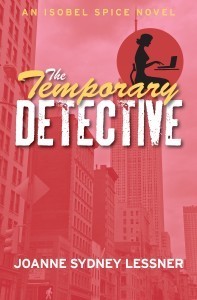 Phones, light typing … and murder.
Think breaking into show business is hard? Try landing a temp job without office skills. That’s the challenge facing aspiring actress Isobel Spice when she arrives in New York City, fresh out of college and deficient in PowerPoint. After being rejected by seven temp agencies for her lack of experience, Isobel sweet-talks recruiter James Cooke into letting her cover a last-minute vacancy at a bank. New to his own job, and recently sober, James takes a chance on Isobel, despite his suspicion that she’s a trouble-magnet. His misgivings are borne out by lunchtime, when she stumbles across a dead secretary in a bathroom stall. With her fingerprints on the murder weapon, Isobel sets out to prove her innocence by investigating the crime herself. While learning to juggle phone lines and auditions, she discovers an untapped talent for detective work — a qualification few other office temps, let alone actresses, can claim.
Purchase Links: Amazon | Barnes & Noble | Kobo
Excerpt
James Cooke returned to his desk and picked up the completed employment request form for InterBank Switzerland. He rattled the paper nervously.
Half-day, phones and light typing. How hard could it be?
âJames!â
He started guiltily. His boss, Ginger Wainwright, was leaning against the door frame. An officious, brassy redhead of a certain age who dressed down in an effort to mask her obsessive personality, Ginger had a habit of sneaking up on her staff. She always claimed to be âjust passing by,â but she passed by an awful lot. After a week, James still wasnât used to it.
âHowâs it going?â Ginger asked.
âFine. Itâs all good.â
âThe young woman who was in here earlier. Potential employee?â
He blinked away an image of Isobelâs long ponytail smacking her in the face and nodded. âCould be.â
âGood. Okay. I was just passing by.â
âUh, Ginger, just out of curiosity â I mean, for future reference â what do we do with candidates who are smart and well-educated, but have no practical experience?â
Ginger sniffed dismissively. âSend them to Temporama or Sally Nelson and let them get some training. Then if theyâre any good, weâll poach them.â
âWe donât ever take a chance and send them out? If they seem to have a lot on the ball, I mean.â
She gave him a stern look. âWe donât take chances at Temp Zone. Thatâs why weâre tops. Right?â
âRight,â James answered, forcing his mouth into a deferential smile. âThatâs what I thought.â
He listened as Gingerâs heels clacked away down the hall, and her voice echoed into the office of another recruiter.
âAnna? Howâs it going? I was just passing by.â
James got up and closed his door quietly. Then he returned to his desk and looked at the request form again.
He had a feeling heâd just made a big mistake.
About the Author

Joanne Sydney Lessner
Joanne Sydney Lessner is the author of BloodWrites Award winner and Awesome Indies Mystery Pick The Temporary Detective, which introduces Isobel Spice, aspiring actress and resourceful office temp turned amateur sleuth. Isobelâs adventures continue in Bad Publicity. Joanneâs debut novel, Pandora’s Bottle (Flint Mine Press), which was inspired by the true story of the worldâs most expensive bottle of wine, was named one of the top five books of 2010 by Paperback Dolls. No stranger to the theatrical world, Joanne enjoys an active performing career, and with her husband, composer/conductor Joshua Rosenblum, has co-authored several musicals, including the cult hit Fermat’s Last Tango and Einstein’s Dreams, based on the celebrated novel by Alan Lightman. Her play, Critical Mass, received its Off Broadway premiere in October 2010 as the winner of the 2009 Heiress Productions Playwriting Competition.
Contact: Website | Twitter | Facebook
Giveaway!
Joanne is giving away a $25 Amazon gift card to one lucky commenter on the tour.
Also, she is giving away an e-book copy of her first book, Pandora’s Bottle, to one lucky commenter on the Fighter Writer.
All you have to do to enter is to leave a comment below.
Why not visit the other tour stops? The more you comment, the better you chances of winning the grand prize!
Source: J.C. Martin, Fighter Writer
June 13, 2013
THE FALLEN ANGELS BOOK CLUB: Writing Amateur Detectives by R. Franklin James
%Úte%% | J.C. Martin
Amateur Detectives: You Get More Than What You Seeby R. Franklin James
The amateur detective as a protagonist has a lot going for it. First, any missteps or lack of expertise is chalked up to the amateur side. Second, any keen curiosity or specialty skill lends itself to supporting the detective aura. Give the hero or heroine a unique personality, put her in a compelling storyline â and youâve got an amateur detective.
When deciphering genres it is easy to see how a cozy mystery can have an amateur detective protagonist, but not all amateur detectives are written into cozies.
A cozy reads just like it sounds. There is a minimum of explicit violence and the murder usually happens off stage. The amateur detective in a cozy may have some eccentric behaviors and likely has strong ties to their neighbors, family and friends.
Amateur detectives have been around a long time. They range in skill across sub genres from cozies to traditional mysteries. From the deductive reasoning of Sherlock Holmes to the superior perceptions of Miss Marple, there is an amateur detective for everyone. But there is one thing the amateur detective has in common â the draw of their personality. It is their personality that attracts the reader and keeps them turning pages to see how they will fare. The amateur detective takes their special skill, or hobby if itâs a cozy, and pushes it to its fullest extent to solve crimes and mysteries.
Sometimes in a series the amateur detectiveâs uncanny attraction for death or crime, corpse after corpse, can push the believability envelope for a reader. A faithful series reader is usually a puzzle solver who is drawn to not what the amateur detective is solving, but how the amateur detective goes about solving the puzzle before them, and that curiosity draws them to follow that detective over and over again.
The heroine in The Fallen Angels Book Club is a paralegal/amateur detective. Paralegals by virtue of their profession are heavily research and detail oriented. Hollis Morgan uses her professional skills to leverage her zeal for justice with her unfortunate lack of sociability. As she solves the mysteries that confront her she must also struggle with her personal baggage of betrayal and social alienation. It is overcoming her personal demons and accomplishing her internal goals, that causes reaching her external goals that much more satisfying.
The key is not to make your amateur detective a one dimensional character. Make them complicated with both good and bad qualities. Give them quirks and distinctive mannerisms. Use the range of these personality traits to help the protagonist solve the crime, or maybe hamper the solving of the crime until the conclusion. The idea is to weave the wealth of personality with the intrigue of the mystery, and what reader could resist that?
About the Author

R. Franklin James
R. Franklin James was born and raised in the San Francisco East Bay area. She graduated from the University of California at Berkeley and completed the Masters program in Public Policy at California State University at East Bay. She has also received her paralegal certification.
She and her husband live in northern California with their English Springer Spaniel, Bailey.
Contact: Website
The Fallen Angels Book Club
 The Fallen Angels Book Club has only two requirements: the members must love books and have a white-collar criminal record. Hollis Morgan fits the bill. Left holding the bag in an insurance fraud scheme concocted by her now ex-husband, she served her time and is trying to rebuild her life. All she wants is for the court to pardon her conviction so she can return to law school.
After one of her fellow members is murdered in a scenario straight out of a club selection, Hollis is once again the subject of police scrutiny. Refusing to get stuck with another bad rap, she sets out to investigate her fellow club members. Is one of them really blackmailing the others? As a second member dies in yet another book-inspired murder, Hollis realizes that time is running out. Everything rides on her finding the killer — not just her career aspirations. She must identify the killer before she herself becomes the next victim. Everyone is convinced she knows more than she lets on. But what is it, exactly, that is she supposed to know?
The Fallen Angels Book Club is the first book in an exciting new mystery series featuring amateur sleuth Hollis Morgan.
Purchase Link: Amazon
Source: J.C. Martin, Fighter Writer