J.C. Martin's Blog, page 5
August 21, 2013
Co-Writing LOST IN THE SHADOWS by Selah Janel
%Úte%% | J.C. Martin
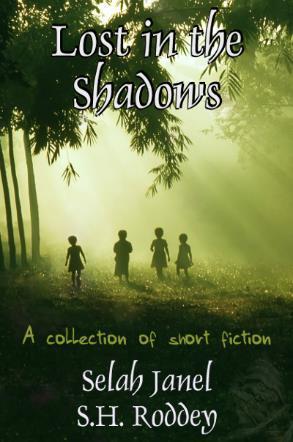
Selah Janel and co-author S.H. Roddey have just released LOST IN THE SHADOWS, a collection of short stories. I asked her how they came up with such an eclectic mix of different genres in the collection, and here’s her response:
Co-Writing LOST IN THE SHADOWS
by Selah Janel
 Part of the reason Iâm a writer is that I have a love affair with ideas. Iâve been this way forever. I canât walk down a street without wondering what might live in the flowers or what could lurk behind the drainage grates. Little things that people say, paintings I walk by, music I hear â it all goes into the mental vault to be boiled together and used in some different way. Luckily, my friend and co-author S.H. Roddey feels the same. We had both suffered some setbacks and frustrations and were in possession of a lot of different types of stories. Some were written for random prompts, some were little vignettes, some were the loosest kind of conceptual there is. Some were very definite genre pieces while others slid between sci-fi and literary, between horror and fantasy. Some were pure speculative with no other suitable way to classify them. Many of them did have a definite beginning, middle, and end, while others dropped a reader off to make their own conclusions.
As a lot of writers can affirm, the thing with submitting things like these is that while a lot of publishers do like new concepts and experimental fiction, they also want to stay within a certain range so their publication stays true to its original vision. In short, we were left with a lot of stories that we loved, but didnât have homes for. The thing is, not everything can be a franchise, a novel, or even a traditional type of story. Is it good to flesh all the details out? Of course, but there are also times to not fill everything in and let a reader use their own imagination. Maybe Iâm idealistic, but I have faith that people are fairly intelligent and can let their minds and emotions react to things without being led all the way. Even if thereâs something you donât agree with or question, thatâs still you reacting and considering. Maybe you even take one step further and come up with your own answers. Writing provides the opportunity for that kind of author and reader relationship, and itâs one that we both wanted to explore.
Have you ever stared at a painting or sculpture, or an interesting-looking tree to the point where you wondered what was really going on? Your mind naturally starts to fill in the blanks, no matter how outlandish or odd those ideas are. Thatâs what we wanted the stories we compiled to do ⦠to get our readers to wonder, to feel, to react. You donât have to agree with the directions we took or the way we handle the details or even the genres, but if what we write gets you thinking, wondering, imagining, then I think thatâs as strong as any traditional fantasy, horror, or sci-fi piece out there.
About the Author
Selah Janel has been blessed with a giant imagination since she was little and convinced that fairies lived in the nearby state park or vampires hid in the abandoned barns outside of town. Her appreciation for a good story was enhanced by a love of reading, the many talented storytellers that surrounded her, and a healthy curiosity for everything. Her e-books The Other Man and Holly and Ivy are published through Mocha Memoirs Press with more to come. Her work has also been included in The MacGuffin, The Realm Beyond, Stories for Children Magazine, the anthology The Big Bad: an Anthology of Evil from Dark Oak Press, and the upcoming anthology Thunder on the Battlefield from Seventh Star Press. Olde School, the first book in her new series The Kingdom City Chronicles is scheduled to release from Seventh Star Press later this year. She likes her music to rock, her vampires lethal, her fairies to play mind games, and her princesses to hold their own.
Contact: Blog | Twitter | Facebook | Goodreads | Amazon
Lost in the Shadows
Journey with authors Selah Janel and S.H. Roddey to a world where every idea is a possibility and every genre an invitation. In this collection of forty-seven short stories, lines blur and worlds collide in strange and wonderful new ways. Get lost with the authors as they wander among fantasy, horror, science fiction, and other speculative musings.
Shadows canât hurt you, and sometimes itâs all right to venture off the path.
Purchase Link: Amazon
Read an excerpt:
BELTANE IN THE MODERN WORLD by Selah Janel
It was a dark and stormy night and the fairies took over the stripper pole. It was the only recourse when Beltane fell on a moonless, rainy eve and the last Maypole in town had been bulldozed decades ago to make way for a rest stop. It wasn’t the best solution, to be sure, but tradition had to be kept and the local strip was closer to the Faerie mound than the nearest field. Quietly, they emerged from what unsuspecting mortals took to be an over-sized speed bump misplaced in a back alley. Through the years they had adapted to life in the city, so pixies and elves, brownies and sylphs, redcaps and trolls emerged from their underworld home, all dressed for a night in the seedier part of town.They grouped together in a lump, all staring up at the flashing sign for Tit-tania’s with eyes that were blue, green, yellow, orange, and black. Round and slit pupils widened and contracted at the convenient name. It was all the sign they needed that they were where they needed to be.
The mortals inside never knew what hit them, especially when gold coins pelted the dancers into fleeing the stage. The elfin maidens who took their places may have been dressed in club wear, but they moved with the grace of the ages-old and whirled around the poles with a fire and grace that no mortal could replicate. Pixies swirled about their heads like sparks of light, so fast that their movements burned a trail of an after-image around the dancers’ heads and shapely figures, the brilliant streaks mingling with the long, swishing hair.
The brownies chugged beer since no ale was available, and trolls watched gaping mortal men out of the corner of their eyes. The age of sacrifice and tithe was over, but if one of the humans reached a grubby hand towards a Fae maiden, then they were more than happy to remind the fool why they were unworthy.
Businessmen, young men who were barely out of boyhood, old men with nothing better to do…they all gaped in awe at the display going on around them. After a while, the creatures in the audience joined hands and circled the perimeter of the club in a dance as old as time. A particularly mischievous sprite cut off the blasting music and poised itself at the edge of the stage, pipes in hand. Another soon joined it with a lyre, and another with a lute. A pixie produced a hand drum and joined the makeshift band, providing a joyful, driving rhythm. The sweet music drew the spurned human women back towards the stage to watch, tears streaming down their faces as they viewed the elegance they’d never have. Their human audience stared, unable to reach for wallets. They didn’t need to. Their admiration was something the celebrating Folk hadn’t had for a long, long time.
Into the night they danced and celebrated, invoking envy, nostalgia, and a heartbreak for the old days. Troll and lawyers guzzled liquor together, brownies hit on strippers jokingly, hobgoblins compared notes with the manager, and all celebrated and danced to the ancient music, enjoying the holiday though most mortals in the place didnât remember that it existed.
Just as fast as the Folk had arrived, they disappeared. Leaves were left where their coins had fallen and none of the club’s patrons could rightly remember what had happened or how much time had passed. They only had a strange memory of joy and an even stranger heartbreak of missing something they could not name.
DOWNING STREET by S.H. Roddey
From the front it appeared no different than any other house on the 200-block of Downing Street â a well-kept two story monument standing as a proud testament to pre-1900âs architecture. Festive decorations adorned the front porch while spooky blow-up caricatures lined the steps like undead marching soldiers. Even a pumpkin graced the front lawn, hiding inside it a peeping Frankenstein. Orange and black lights blinked along the trim of the wide porch day and night without fail. Hidden in the front hedges was a motion sensor that exuded an eerie laugh each time someone passed by. Many people paused to gaze at the spectacle. Some took pictures, but nobody ever stopped. Just because it was six days after Halloween with no change in scenery didnât mean the still-standing decorations were that unusual.
No, it just meant that the owners of the house were dead.
If the passersby were to look closely they would have noticed that the broken door jamb was real, and that the dark trail marring the bright-white boards of the steps was blood, and it led across the threshold. If they were to push open the ruined door they would notice other things out of place â a broken crystal goblet and an overturned bottle of scotch to start. The trail would continue through the house into the kitchen where a once-beautiful blonde woman lay, face up in a pool of blood that had long-since oozed from the angry gash across her throat. From there bloody footprints would lead upstairs where her husband lay sprawled on the landing, almost completely disemboweled. Intestines would be strung along the banister much like the lights out front. His eyes would still be open, staring sightlessly ahead.
But nobody would witness these gruesome sights, because nobody paid attention. Nobody would stop to see what was wrong. Nobody would care.
At least, not until Christmas.
About S.H. Roddey
South Carolina native S.H. Roddey has been writing for fun since she was a child and still enjoys building worlds across the speculative fiction spectrum filled with mystery and intrigue. She brings to the literary world a unique blend of humor, emotion, and wild ideas filled with dark themes and strong characters. In addition to writing she is also a voracious reader, wanna-be chef, and video game addict with two full-time jobs: administrative social media professional, and mom to two cats, a teenager, and a precocious toddler with an affinity for computer keyboards.
Contact: Blog | Twitter | Facebook | Goodreads | Amazon
Source: J.C. Martin, Fighter Writer


August 17, 2013
PAPER WISHES: Interview with Jennifer M. Eaton
%Úte%% | J.C. Martin
To celebrate the release of PAPER WISHES, a two-part Contemporary Sweet Romance novella, author Jennifer M. Eaton is here in the hot seat today.
About the Author

Jennifer M. Eaton
Jennifer M. Eaton is a contemporary blender of Science Fiction, Dystopian, and Romance. Her work ranges from the sweet contemporary romances of Paper Wishes, to the dystopian society of Last Winter Red and Optimal Red, with a dusting of young adult paranormal just for fun in The First Day of the New Tomorrow.
While not off visiting other worlds, Jennifer calls the East Coast of the USA home, where she lives with her wonderfully supportive husband, three energetic boys, and a pepped up poodle.
Full time team leader, full time mom, and full time novelist … what more can you ask for? Writing help did you say? Well, sure! Jennifer hosts an informational blog aimed at helping all writers be the best they can be. Stop on by and chat. She loves to hear from fans!
Contact: Website/Blog | Twitter | Facebook | GoodreadsÂ
—
Go on, hook us: tell us about PAPER WISHES in one sentence.
Paper Wishes shows you how wishes have a habit of coming true, even if you donât know what youâve wished for.
How much do you have in common with Jill, your character in PAPER WISHES?
A lot. Sheâs probably as close to me as Iâll ever write, and it wasnât really intentional. This is my first stab at realistic contemporary fiction, and I guess I shot close to home to get as close to realism as I can. I know most people will side with Jack, but thatâs the dilemma girls like Jill and I need to deal with. Whew! Iâm just glad Iâm married to a great guy and donât need to worry about dating.
What made you decide to get published traditionally, instead of self-publishing?
Although I see the advantages of self-publishing, I am still a fan of the traditionally published. The problem with self-publishing is that it is too easy. So many manuscripts get âout thereâ before they are ready. And it is a real shame. I need and want a publisherâs nod to say âyes, this is good enough.â Now, that is not to say that publishers donât make mistakes, too ⦠but I donât want to be one of those self-published novelists that get horrid reviews because of bad editing, or poor story. Now, I would not discredit the possibility of self-publishing if I get several rejections that say âI love your book, but I just signed one like thisâ, or âThis is great, but not what weâre looking for right now.â This might send me in the self-publishing direction, but Iâd have to seriously consider if Iâd be able to invest in the cost of a professional line editor, copy editor, layout designer, and cover artist. Yikes! Sounds like a lot of money and a lot of work to me.
Name one of your biggest writing strengths, and one of your biggest writing weaknesses.
My biggest strength is my dialog. Dialog comes really easy to me in writing. I sure wish it was that easy to talk in real life! My biggest weakness is this little problem I have with commas. I tend to place one wherever I pause, even if it is not grammatically correct. It drives my editors batty, Iâm sure.
Any tips on overcoming writerâs block?
Just write. Once I wasnât sure what to do with a scene, so I just had my character stand there and look at a closed door and start rambling his thoughts about what had happened up until that point. Before I knew it, he was knocking on the door, and the scene had begun. Now, I did have to go back and edit out all that stream of consciousness stuff, but thatâs okay. It got me going again.Â
What career would you consider apart from writing?
I would love to teach the craft and art of writing fiction. There are things you need to know before you start ⦠and many of us learn these things AFTER weâve written a book â which leaves us with abandoned manuscripts all over the place. Thatâs why I blog â so people can learn from my mistakes and hopefully not make them in their own writing.
Sum up your current work-in-progress in no more than 10 words.
A dystopian romance chase novel prequel to Last Winter Red.
QUICK-FIRE QUESTIONS
Fish & chips, or pie & mash? Huh? Are you speaking English?
Uh, sorry, I was speaking British. Next one:
Favourite food? Chocolate. Make it dark, baby.
Favourite season? Summer. Hate the cold.
Ocean or lake? Lake. Sand wreaks havoc on a keyboard.
Disney World or Universal Studios? ARGHHH!!! Universal. Unless you are counting MGM and Epcot as part of Disney.
Personal catchphrase? Itâs all good. (It is, after all, isnât it?)
—
Thank you Jennifer for that entertaining interview! Now here’s a bit more information about PAPER WISHES:
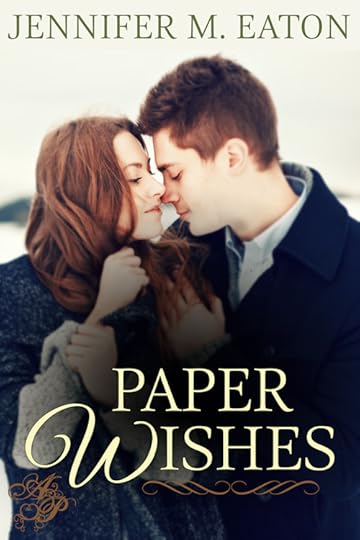 Paper Wishes
Jill has no idea what she wants for Christmas, but when it looks like her best friend Jack is going to get exactly what he asks for, Jill makes a Christmas wish that will change both of their lives forever.Â
Purchase Links: Amazon | Barnes & Noble
Source: J.C. Martin, Fighter Writer
August 12, 2013
5 Grammar Conundrums Clarified
%Úte%% | J.C. Martin
This post is brought to you by Grammarly. 
I used Grammarly to grammar check this post, because it wouldn’t do to have a post on grammar containing grammatical errors now, would it? 
5 Grammar Conundrums Clarified
“Me and George” or “George and I”? “If I were” or “if I was”? Today, I’m hoping to help clear up 5 common grammar conundrums.
1. George and me / George and I
In any case, “George” will always come first (i.e. it is never “me and George”).
To understand this conundrum, it is useful to go back to basics and to remember when we use the pronouns “I” and “me”.
“I” is used when referring to the subject of the sentence or clause, e.g. “I went to the beach.”
“Me” is used when referring to the object of the sentence or clause, e.g. “Dad took me to the beach.“
Bearing this in mind, the same is true when you add George to the picture:

Thanks to Baby Martin, I’ve been watching a lot of “Peppa Pig” recently…
If George is the subject, you use “I”, as in “George and I went to the beach.”
If George is the object, then you use “me”: “Dad took George and me to the beach.”
Here’s a simple way to remember which to use:
Take the other person/pronoun out of the sentence and see if the sentence still reads right.
For example, which of these are correct?
“George and I went to the beach” or “George and me went to the beach“?
Get rid of “George” and see:
“I went to the beach” or “Me went to the beach“?
Similarly:
“Dad took George and I to the beach” or “Dad took George and me to the beach“?
Which is right after you take George away?
“Dad took I to the beach” or “Dad took me to the beach“?
See what I mean?
2. If I were / If I was

“‘If I were’ or ‘if I was’? Was I President?”
Consider this:
“If I were President, I’d reform the gun laws.” CORRECT!
This means that I have specific plans on what to do should I ever be President. The phrase is known as a subjunctive mood.
“If I was President, I’d reform the gun laws.” UM … TECHNICALLY INCORRECT, BUT…
In this case, the phrase is used as a simple past tense. While this is grammatically incorrect — is the speaker uncertain if he/she used to be President? — it has become a widely accepted colloquial use of the phrase, especially in the UK.
3. Toward / Towards
Guess what? They’re both right! There is a tendency to omit the ‘s’ in America, but British publications tend to include it.
The same is true with forward/forwards and backward/backwards.
4. Fewer / Less
 This is a bit of a personal bugbear. It gets me every time I see the “10 items or less” checkout counters in supermarkets.
Before we get into which to use, let’s introduce the count nouns and the mass nouns.
A count noun is something you can count that has a plural, e.g. “pen/pens”, “octopus/octopuses” (or “octopi”? That’s a post all of its own!).
A mass noun is something that can’t be counted that has no plural, e.g. “rain”, “water”.
When referring to count nouns, we use “fewer”. Hence the signs at the supermarket checkouts should really say “10 items or fewer“.
When referring to mass nouns, we use “less”, e.g. “We’ve been having less rain lately.”
Note that collective words like “furniture” and “stationery” are mass nouns (they have no plural), so we would say “less furniture” instead of “fewer furniture”.
But…
There is an exception. For measurements such as time, distance, and weight, it is customary to use “less” even though they are count nouns, e.g. “I’m delighted I weigh less today compared to last week.”
5. That / Which
This is a tricky one, since many people tend to use both words interchangeably. To understand when to use which, we must first explore the restrictive and non-restrictive relative clauses.
A restrictive relative clause is a phrase containing essential information about the noun in the sentence. Leaving out this clause will affect the meaning and/or structure of the sentence. To introduce a restrictive relative clause, we use “that”.

Ouch!
e.g. “He rubbed the hand that he accidentally hit with the hammer.”
Note that after removing the underlined clause, “He rubbed the hand” doesn’t really tell you much about why he’s rubbing his hand.
A non-restrictive relative clause, on the other hand, contains extra information. Leaving out this clause will not affect the meaning or structure of the sentence. In this case, we precede the clause with “which”.
e.g. “He rubbed his injured hand, which he accidentally hit with the hammer.”
Removing the underlined clause does not affect the meaning of the sentence. “He rubbed his injured hand” still makes a perfectly understandable sentence.
Also note that non-restrictive clauses are also preceded by a comma (this also helps you see that the sentence before the comma should make sense on its own). No commas are required for restrictive clauses.
Here’s another example:
“I got a new puppy, which I adopted from the pound.” [non-restrictive]
“My new puppy was the one that I adopted from the pound.” [restrictive]
 Did this help clear up some of your grammatical uncertainties? Are there any other conundrums that should be clarified?
Source: J.C. Martin, Fighter Writer
BLOOD AND ASHES: Interview with Matt Hilton
%Úte%% | J.C. Martin
 I am very excited to introduce my interview subject today. I’ve met Matt a number of times at writing conferences, particularly Crimefest and the Festival of Writing. He writes the successful Joe Hunter thriller series, which has been compared to Lee Child’s Jack Reacher novels, and has just released book 5, Blood and Ashes, in the US. Like myself, Matt is a keen martial artist, and apart from being a lovely chappie, I’ve always envied his journey to publication — to get an advance large enough to quit your day job and pursue writing full time, that is any writer’s dream, isn’t it?
Contact: Website | Blog | Twitter | Facebook
Onwards to the interview!
Tell us about the latest Joe Hunter adventure. Is there anything that makes it different from previous Joe Hunter books?
The latest Joe Hunter book out in the USA is called Blood and Ashes and is the fifth in the series. In it we find Hunter recovering from some major injuries sustained during his previous adventure, depicted in Cut and Run. Hunter is feeling slightly under form and questioning his abilities as a protector. But he has to step up to the plate when the grandchildren of an old colleague, Don Griffiths, are targeted for extermination by a radical white extremist group. At first he is resistant to assist Griffiths, believing the man to be paranoid and his fears unfounded. There is bad feeling between the two, after bad intelligence from Griffiths caused the deaths of some innocent women and children. So Hunter is questioning not only himself, but also his motivations, though the test will be the making of him. He is a man who won’t walk away from a family in danger, and getting involved throws him directly in the middle of a plot to detonate dirty bombs in NYC. I think the book is of two halves, and in it I pay homage to a couple of thriller genre stalwarts, giving a nod to both John Rambo, and to super spies the likes of James Bond or Jason Bourne. In the book I wanted to include, Arrowsake, the shadowy organisation Hunter once worked for, to help explain why Hunter is now the kind of man he is. It’s a fast action-packed tale, but in it I also believe we find a more thoughtful, deeper Joe Hunter than I’ve previously portrayed.
How much do you have in common with your protagonist Joe Hunter?
I often joke that Joe Hunter is the younger, slimmer, more handsome, version of myself, but I know that is wishful thinking. Joking aside, Hunter and I share many values. I’m a firm believer in loyalty, family values, and abhor bullying in its many forms, and would stand up to protect those values. We’re both northern English, and have a background in martial arts, and both drink too much coffee. Where we differ is in the fact that Hunter is the type to stand up and act on the thoughts that would make me pause and consider much longer. He’s more impulsive and volatile than I am. While I was employed in the private security industry, and as a police officer, Hunter’s background is military, so we differ there. And of course, while I’ve experienced some pretty scary incidents in my life, I’ve never killed anyone the way Hunter is prepared to do.
Has your years in the police service contributed to your writing in any way?
I shy away from writing police procedurals for two major reasons: there are other writers who do it much better than I could, and they’re not exactly the kind of book I like to read. I prefer reading the thriller style novel — the ordinary person caught in extraordinary situations, the ticking bomb, facing and trying to overcome overwhelming odds — and they’re the kind of books I like to write. I purposefully chose to write about a vigilante, or at least someone prepared to twist the law to his thinking, so that I didn’t get bogged down in procedure. But where my background as a police officer has helped is in giving me empathy towards the victims and how people respond to danger and fear, and also to the lengths to which a person will respond when thy or their loved ones are in danger. I’ve experienced conflict in dozens of instances, and been in situations where I’ve feared for my health, my life, or that of others close to me. I try to inject that visceral and psychological edge to my writing to add realism.
Where do you get the majority of your ideas from?
I tend to think of themes and how I can bend them to the plot of the latest novel. I’ll think along the lines of ‘this one should be about the effects of bullying’, ‘this one should be about family loyalty or the lack of’, this one should show how echoes of the past impact on the present’, and such, and I begin to look at how I can use those themes to set up the narrative. I write directly on to a Mac these days, and tend to go with the flow and see what comes. I think cinematically, playing out the action in my mind’s eye and then translating it to the page. For research purposes I use the internet and Google earth etc, but there’s nothing like visiting a location to get to the minutiae that makes a scene feel real. I’ve visited the USA on a number of occasions now, but I’m not looking for locations but the tiny things like popular brand names, establishments and local idiosyncrasies that can add realism if drip fed to the novels. Like many authors, i guess I’m a bit of a sponge as well, absorbing things subliminally, a snatch of conversation here, an anecdote there, a snippet of news, and I use these in my narrative too. Often when I sit down to write the next book, I have the theme in mind and that’s it. I kind of have an idea of where I want to end up, but how I get there is usually a mystery to me.
From one martial artist to another, what is your favourite MA style?
I’m a firm believer that different martial art styles suit different people better. Some people are more adept at the striking arts — karate, tae kwon do, boxing etc — while others are more prone to grapple — judo, wrestling, sombo/sambo — and they will get more from a style that fits them. It also depends on why the person chooses to train in a martial art. If it’s simply for self-defence then something like Krav Maga, or military unarmed combat, is best, but if it’s for sport, competition, or fitness etc then a combat sport like kickboxing, MMA or boxing is probably best. For me – being involved in law enforcement, I had to incorporate locks and controls – I wasn’t permitted to punch and kick as such – so Ju-Jitsu or Aikido was the best choice there. However, I didn’t only train for law enforcement purposes, I trained for the lifestyle, the self-discipline, for making myself an all round better person. Under those circumstances I chose to go with traditional martial arts and trained in Shotokan karate, Kyokushinkai karate, boxing, Kempo karate, and latterly in Ju-Jitsu. As time went on I began to formulate my own style of Ju-Jitsu incorporating all the styles I learned, but under the banner of the Ju-Jitsu catch-all. It wasn’t the ground fighting style popular these days through MMA (Mixed Martial Arts) but an unarmed/defensive combat system. I don’t think I have a favourite style per se, I’m a student of all the martial arts and think most have something to offer – but, yeah, I suppose if I was pushed I’d always tip my hat to Ju-Jitsu first.
QUICK-FIRE QUESTIONS
Fish & chips, or bangers & mash? Bangers & mash (with some fried onions and gravy).
Korma or Vindaloo? Korma. I prefer taste over heat.
Pepsi or Coke? Pepsi. Coke gives me gas.
Favourite pizza topping? Sliced garlic sausage and lashings of cheese.
Best writing snack? Huge mugs of dark coffee with a splash of milk. Maybe a ‘Mars Bar’ (do you get Mars bars in the States?) — it’s like a Snicker without the peanuts.
—
Thank you Matt for dropping by and for that lovely chat! And now here’s a bit more information on his latest book:
Blood and Ashes
 When Brook Reynolds dies in a horrific car crash, the police say itâs a tragic accident. But Brookâs father, Don Hoffman thinks otherwise and wants ex-military operative Joe Hunter to help him find the men responsible.Â
Joe is not convinced â until he is attacked by two troublemakers, and Donâs other daughter is also threatened. Looks like more than coincidence. And sure enough, the entire family is soon under siege with only Joe to protect them. The ensuing blood bath is the beginning of a trail of death that leads right to the heart of a horrifying conspiracy.
White supremacists want to hold the government for ransom; and theyâve got hold of a dirty bomb to add weight to their case. Joe is on a countdown: can he stop the plotters before they reduce the free world to ashes?
Source: J.C. Martin, Fighter Writer
August 9, 2013
Book Shout-Out: THE LONE WOLF AGENDA by Joseph Badal
%Úte%% | J.C. Martin

The Lone Wolf Agenda
by Joseph Badal
on Tour dates
Book Details:Genre: Thriller
Published by: Suspense Publishing
Publication Date: June 25, 2013
Number of Pages: 441
ISBN: 978-0615804507
Purchase Links:


Synopsis:
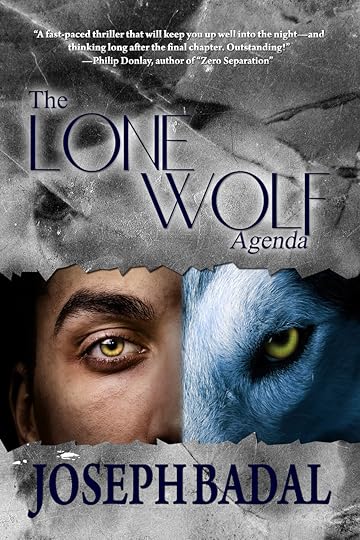
With âThe Lone Wolf Agenda,â Joseph Badal steps back into the world of international espionage and military action thrillers and crafts a story that is as close to the real world of spies and soldiers as a reader can find. This fourth book in the Danforth Saga brings Bob Danforth out of retirement to hunt down lone wolf terrorists hell bent on destroying Americaâs oil infrastructure. Badal weaves just enough technology into his story to wow even the most a-technical reader.
âThe Lone Wolf Agendaâ pairs Danforth with his son Michael, a senior DELTA Force officer, as they combat an OPEC-supported terrorist group allied with a Mexican drug cartel. This story is an epic adventure that will chill readers as they discover that nothing, no matter how diabolical, is impossible.
Read an excerpt:
James Sullivan watched the Bombardier Global 7000 aircraft slowly taxi away from the terminal and breathed in the heavy odor of aviation gas exhaust. Like ambrosia, he thought. He hooked the fingers of both hands in the chain link fence that separated him from the Santa Fe Airport tarmac and squeezed the wire as though to bend it. He gripped the fence so firmly to stop his hands from shaking. He always got the shakes at times like this, just as some men trembled at the prospect of sex and others shook when confronted by danger. But what was about to happen was better than sex and had nothing to do with fear. He shook out of satisfaction that he was about to finish a job that soon would result in the deaths of infidels.
The setting sun painted the planeâs white skin red, reflecting bloody shards of light off its windows. Sullivan knew it was time to go but he couldnât tear himself away. Just another minute. He watched the plane turn to make its way to the runway; heat plumes from its twin engines swirled in the cold early evening New Mexico air.
Sullivan released his grip and flexed his fingers to encourage circulation. He removed his baseball cap, ran a hand through his dirty-blond hair, replaced the cap on his head, and walked to his white Chevrolet pickup truck parked near the terminal building. He took a suitcase and a canvas satchel from the pickup, carried them to his co-worker Renee Moralesâs Saturn sedan parked two slots away. After he unlocked the Saturn with the keys heâd stolen out of Reneeâs desk drawer inside the terminal, he got in, started the motor, and slowly drove away along the access road. Sullivan held the steering wheel tightly, first with one hand and then the other to ease each in turn from the pain he inflicted on them.
At the Santa Fe Bypass Road, he stopped for the red light, then turned right, watched his speed. After a couple miles, he took the entrance ramp onto southbound Interstate-25 and accelerated to the legal speed limit of 75 miles per hour. He let the heavy flow of commuters pass him on their way home to Albuquerque.
Five minutes later, at 3 p.m., Sullivan glanced right as he passed the Santa Fe Racetrack, just before the La Cienega exit, and noticed the glint of light that was the Bombardier jet climbing into the cloudless sky.The mood on the airplane was exuberant: Ten CEOs of energy companies were aboard, already well-lubricated with alcohol and enthusing about the three-day oil and gas industry retreat theyâd just attended in Santa Fe.
Fifty-four-year-old Fred Zook, CEO of Premier Exploration & Development, leaned his bulk forward against his seat belt, fighting the rising aircraftâs G-force, and nodded at his long-time friend and fellow Yale University graduate, Jeffery Raines, the head of Farragut Oil, seated across from him.
âYou as excited about this as I am?â he asked, raising his bushy eyebrows into two upside-down Vâs.
Raines smiled and ran a hand over his bald head. âEnough to wet my pants. These oil shale and gas formations will not only make all of us even richer, theyâll also alter the geopolitical and economic universe.â
Zook opened his arms to include all of the planeâs passengers. âIf we can keep this coalition together, and the environmentalists donât kill the deal, and the tree huggers in Congress donât ruin things, and the President doesnât order his EPA to stop us . . ..â
Raines slowly wagged his head. âYeah, thereâs all of that. But the world is different now. The American people are fed up with decisions that do nothing but cost them more money at the gas pump and cost more in lives lost to war in the Middle East just to preserve our energy interests there.â He shrugged. âIâve thought a lot about this. This is way more important than just profits. This is about our countryâs survival. We need to make sure none of us ever forgets that.â
âWell said,â Zook replied. Then he laughed and added, âBut there ainât nothinâ wrong with profits.â From his aft-facing seat, he glanced out his window and shielded his eyes from the blazing sun, now a melon-red fireball. He was about to turn back to Raines when a flash of brilliant-white light drew his attention toward the ground.
âWhat the hell was that?â he blurted, pointing at the window.
âOh my God! Itâs the terminal building. An explosion.â
James Sullivan was two miles past the La Cienega exit when the flash of light from the bomb in the airport terminal bloomed in his peripheral vision off to the northeast. But he concentrated on the horizon ahead, where he knew the corporate jetâs flight path would take it. He counted seconds with his fingers against the steering wheel, knowing the jet would soon reach an altitude of ten thousand feet — the level at which the altimeter triggering device would detonate the bomb heâd placed aboard.
Fred Zook thought a prayer of thanks, while he looked into Jeff Rainesâs startled, wide-eyed gaze. Then he thought how lucky he had been all his life, and raised his glass of scotch to clink against Rainesâs glass, when everything in his consciousness suddenly fractured into minute particles.
James Sullivan drove Renee Moralesâs Saturn heâd taken from the Santa Fe Airport parking lot and dumped it in the Sandia Casino employeesâ lot on the north side of Albuquerque. After he hotwired one of the cars there, he drove to his girlfriendâs apartment.
Sullivan guessed Susan Gaithers, a nurse who worked the night shift at a local hospital, would be asleep when he opened the door to her apartment at 4:30 p.m. Theyâd met in a club a week after he arrived in new Mexico. He told her he was starting law school at The University of New Mexico in the fall, swept her off her feet, and moved in a few days later. The arrangement had provided him with a roof over his head without having to go through the process of a background check associated with an apartment lease, or having to provide a credit card for a motel room. He used her telephone at will, not exposing his cell phone to possible eavesdropping. And Susan was a tigress in bed. All in all, not a bad situation. He was surprised when he walked into the apartment and found her crying; on the couch, telephone in hand. She wore a halter undershirt and bikini underpants.
âOh my God!â she yelled. She rushed to him, threw her arms around his neck, and planted kisses on his face.
âWhatâs wrong?â Sullivan asked.
âDonât you know? There was an explosion at the airport about an hour ago. Felicia from work just called and woke me up to tell me about it. She wondered if you worked today. I was just about to dial your cell when you walked in.â
âThatâs awful,â he said. âI got off early today. I must have just missed the explosion.â
âThank God!â she exclaimed. âThank God!â
âYouâre trembling, babe,â Sullivan said. âIâm okay.â He looked over her shoulder at the television and saw the results of the bombs heâd planted. He smiled, pushed her back so he could see her face. âItâs nice to know you care so much about me.â
âCare!â she said. âI donât care about you, you idiot. I love you. Donât you know that?â
âOf course I know that. I love you, too.â He kissed her lips and said, âYou standing there with almost nothing on, looking sexy as hell, reminds me of one of the reasons why I love you.â
Susan smiled back at him. âYou never get enough.â
âIâm just so damned happy to be alive; I canât think of any better way to celebrate than making love to you.â
She took his hand and led him into the bedroom.
Sullivan was overwhelmed by her passion. She showed him in many ways how deeply she loved him. He thought for an instant what a shame it was to have to kill her.
Author Bio:
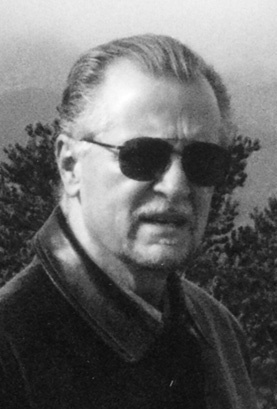 Joseph Badal worked for thirty-eight years in the banking and financial services industries, most recently serving as a senior executive and board member of a NYSE-listed mortgage REIT. He is currently President of Joseph Badal & Associates, Inc., a management consulting firm.
Prior to his finance career, Joe served for six years as a commissioned officer in the U.S. Army in critical, highly classified positions in the U.S. and overseas, including tours of duty in Greece and Vietnam. He earned numerous military decorations.
He holds undergraduate and graduate degrees in International Finance (Temple University) and Business Administration (University of New Mexico). He graduated from the Defense Language Institute, West Coast, and from Stanford University Law Schoolâs Director College.
Joe serves on the boards of Sacred Wind Communications and New Mexico Mutual Insurance, and is Chairman and President of The New Mexico Small Business Investment Corporation.
Joe has had five suspense novels published, including Shell Game, which was released in 2012. His next novel, The Lone Wolf Agenda, will be released in June. He writes a blog titled Everyday Heroes. His first short story, Fire & Ice, was included in an anthology titled Uncommon Assassins, in 2012.
Joe has written dozens of articles that have been published in various business and trade journals, and is a frequent speaker at national business and writersâ events.
Catch Up With the Author:


Tour Participants
Source: J.C. Martin, Fighter Writer
August 7, 2013
Differences Between Real Life and Fictional Private Investigators by Steven Gore & GIVEAWAY
%Úte%% | J.C. Martin
To celebrate the release of his latest book A Criminal Defense, Steven Gore is here to talk about his experiences as a private investigator, and how real life PI work differ from what you read in crime fiction.
*Read on to find out how you could win a paperback copy of A CRIMINAL DEFENSE (US only)*
Differences Between Real Life and Fictional Private Investigators
by Steven Gore
Counterintuitive.
If there is single word that characterizes my encounter with writing crime fiction after decades as a criminal investigator, itâs counterintuitive.
And itâs part of the explanation why true crime makes for lousy crime fiction, why so few career-long law enforcement officers and private investigators succeed in crime writing and why most of those who do have only worked in the field briefly. In truth, much of what readers want from investigator protagonists are characteristics and habits that experienced investigators have to train out of themselves in order for them to succeed.
Readers want different things from investigators than do law enforcement agencies and private investigator clients. Readers want to feel increasing tension, while, with the rarest of exceptions, experienced investigators aim to lower it; readers want to watch investigators overcome obstacles, while experienced investigators aim to avoid them; readers want to read about characters who are uniquely qualified, while in the real world there are only investigators who are especially qualified; readers want to watch investigators run up against walls and then force their way through them, while experienced investigators aim how to slip around them; readers want spontaneity and surprise, while experienced investigators plan and plan in order to limit surprises; readers want to see investigators try and try again, while clients want real investigators to get it right the first time; readers are not troubled by brash, aggressive protagonists injecting conflict into a scene, while real investigators donât inject it, they anticipate potential conflict inherent in a situation and work to mute it.
In the end, in the real world, doing all these things in these ways is both the criteria of competence and the conditions for successful investigations.
There is one kind of law enforcement that matches readersâ expectations: narcotics. But it isnât at heart a crime solving assignment. Narcotics cases are generally built from leaning on people whoâve already been caught dirtyâby patrol officers and street drug task forces and through search warrants and wiretaps–to give up those above them. Itâs less about solving crimes and more about discovering crimes already in progress or creating crimes by means of informants or undercover agents. The problem is that since the skills and attitudes that succeed in narcotics enforcement fail in investigations, few narcotics officers become first rate homicide detectives. Observe the contrast between the drug enforcement reality shows and A&Eâs The First 48. In The First 48, at least during the first few years of the show and before detectives began to play to the camera, nearly all of the excitement came from the music and the jump cuts. The detectives themselves were generally low key and methodical.
The problem for me was to translate the reality of investigation into fiction. That is to say, there could be no âWhen in doubt, have a man come through a door with a gun in his handâ of Raymond Chandler or âMy way of learning is to heave a wild and unpredictable monkey-wrench into the machineryâ of Dashiell Hammett. Rather, plots had to be driven internally and conflict had to be exploited from within, rather than imposed from without and the methods used had to be those that succeeded in real life.
On the domestic front, Iâm making this effort in the Harlan Donnally novels of which A Criminal Defense is the latest, and on the international front, in the Graham Gage thrillers of which Power Blind is the latest. In each series, the central problem I faced was investigative competence: the protagonists had to apply real world methods and approaches in a realistic way. That meant applying the techniques of genre fiction to stories whose aim is realism. And the challenge was to make the stories not only informative about the real world of crime and investigation, but exciting for readers. In the end, itâs the readers who will judge whether I have truly bridged the gap between the real and the fictional.
About the Author
[image error]
Steven Gore
Steven Gore is a former private investigator whose international thrillers draw on his investigations of murder, fraud, money laundering, organized crime, political corruption, and drug, sex, and arms trafficking in Europe, Asia, and Latin America. Gore has been featured on 60 Minutes for his work and has been honored for excellence in his field. He is trained in forensic science and has lectured to professional organizations on a wide range of legal and criminal subjects.
A Criminal Defense
[image error]In Steven Goreâs page-turning second installment, A CRIMINAL DEFENSE by Steven Gore (Harper Mass Market; July 30, 2013; $9.99; ISBN: 9780062025074), readers find ex-SFPD detective Harlan Donnally running a small cafe north of San Francisco. But when Mark Hamlin, a criminal defense lawyer with a slimy reputation, is found murdered underneath the Golden Gate Bridge, Donnally is drawn back into a twisted and corrupt world he thought heâd left behind.
Over three decades, Hamlin’s practice devolved into just another racket: intimidating witnesses, suborning perjury, destroying evidence, laundering money. But is he the victim of murder â or of a dangerous sexual encounter gone wrong? And when law enforcement believes justice has already been done, who can be trusted to find out?
Despite a mysterious request left in the dead manâs hand, Donnally had resolved it wouldn’t be him. He had no desire to immerse himself in the deceit that was Hamlin’s career … nor entangle himself in the corrupted loyalties that turned the dead lawyer’s associates into both co-conspirators and suspects … nor make himself the proxy for the hatreds and betrayals Hamlin left behind.
But the presiding judge demanded otherwise â and that might cost Donnally his life.
âRich, gritty, and terrifically twisty ⦠crackles with legal and psychological authenticity.â
â Lou Berney, author of Whiplash River
Purchase Link: Amazon | Barnes & Noble | IndieBound
Giveaway!
Steven is giving away a paperback copy of A CRIMINAL DEFENSE to one lucky commenter (US only — sorry!).
To enter, all you have to do is leave a comment below.
Contest closes August 14.
Good luck!
Source: J.C. Martin, Fighter Writer
August 5, 2013
My Guest Post & Giveaway @ Moonlight Gleam’s Bookshelf
%Úte%% | J.C. Martin
I was on Moonlight Gleam’s Bookshelf yesterday with a guest post on my journey towards writership. There’s also an e-book copy of ORACLE to give away, so head on over!
Source: J.C. Martin, Fighter Writer
August 4, 2013
THANK YOU!!
%Úte%% | J.C. Martin
You love me, you really love me!
I can’t express my gratitude enough to everyone who voted for ORACLE in the Blogger Book Fair’s Readers’ Choice Awards. The results are in, and thanks to you guys, ORACLE has won the Mystery Category!

ThankyouThankyouThankyouThankyouThankyouThankyouThankyou…
Source: J.C. Martin, Fighter Writer
August 3, 2013
An Old Murder Comes Unsolved by Elizabeth Buhmann
%Úte%% | J.C. Martin
Elizabeth Buhmann’s debut novel, Lay Death at Her Door, has just been released by Red Adept Publishing. She is here today to tell us more about the book’s very intriguing story.
An Old Murder Comes Unsolved
by Elizabeth Buhmann
Lay Death at Her Door is about an old murder that comes unsolved when the man who was convicted of it is exonerated. The fictional case is similar to a number of real cases that have made headlines all across the US in recent years.
Since 1992, the Innocence Project, a non-profit organization founded by a couple of well-known defense attorneys, has been revisiting cases where the latest DNA profiling technology can be used to exonerate people wrongly convicted of rape and/or murder. In more than 300 cases, people have been freed after serving five, ten, in some cases more than twenty years for crimes they didnât commit.
Often, these people have been convicted on eyewitness testimony. Persuasive and much-loved by prosecutors and juries, eyewitness testimony is notoriously unreliable. When itâs false, usually the witness is simply mistaken. But what if the witness deliberately lied?
Lay Death at Her Door is told from the point of view of Kate Cranbrook. As a 20-year-old college student, she witnessed a murder. She was beaten and raped. As eyewitness for the prosecution, she almost single-handedly convicted the wrong man for the crime.
In chapter one, she tells us that she lied on the stand. She knew who the real killer was and lied to protect herself. Then, for twenty years, she lived with the knowledge that she had committed perjury and was an accessory, however unwilling, to murder.
When the crime comes unsolved at the beginning of the book, her life is about to come apart at the seams. But Kate is a bold and determined woman, and she hatches a daring plan to settle a deadly private conflict on her own terms. The plan works, but it brings disaster down on her head.
You wonât like Kate Cranbrook. Sheâs deeply flawed, cunning and ruthless. But I think youâll find her storyâLay Death at Her Doorâa cool read for a hot summer afternoon.
About the Author

Elizabeth Buhmann
Elizabeth Buhmann is originally from Virginia, where her first novel is set, and like her main character, she lived several years abroad while growing up. She graduated magna cum laude from Smith College in Northampton, Massachusetts, and has a PhD in Philosophy from the University of Pittsburgh. For twenty years, she worked for the Texas Attorney General as a researcher and writer on criminal justice and crime victim issues. Elizabeth now lives in Austin, Texas, with her husband, dog, and two chickens. She is an avid gardener, loves murder mysteries, and has a black sash in Tai Chi.
Lay Death at Her Door
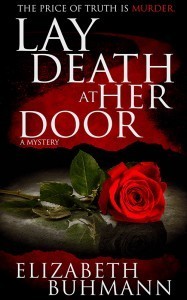 Twenty years ago, Kate Cranbrook’s eyewitness testimony sent the wrong man to prison for rape and murder. When new evidence exonerates him, Kate says that in the darkness and confusion, she must have mistaken her attacker’s identity.
She is lying.
Kate would like nothing better than to turn her back on the past, but she is trapped in a stand-off with the real killer. When a body turns up on her doorstep, she resorts to desperate measures to free herself once and for all from a secret that is ruining her life.
Purchase Links: Amazon | Barnes & Noble
Source: J.C. Martin, Fighter Writer
August 1, 2013
Weaving Fact, Fiction, and Legend by J.M. LeDuc
%Úte%% | J.C. Martin
Cornerstone
by J.M. LeDuc
on Tour August 1-31, 2013
Weaving Fact, Fiction, and Legend
by J.M. LeDuc
First of all let me say that my books are strictly fiction. I say that because each one of them has a fine â very fine â thread of truth in them. I have found that some of the greatest mysteries can be found in the Bible; therefore, it just seemed natural to look there for my thread. Whenever fact and mystery unite, legend cannot be far behind. The idea of combining fact, fiction and legend makes my imagination run wild and makes me excited to see what I can come up with.
For me, the key to a great thriller is to make sure you donât snap that thread by going so far off base that it would seem inconceivable to the reader, and yet I donât want to bog the reader down in historical or Biblical fact. I am constantly having to backtrack and rewrite scenes because they either go too far into the absurd or they stray too close to the truth. Itâs a fine line to walk and I usually find myself battered and bruised from falling off that tightrope before I have completed a final draft.
My Phantom Squad Series which includes Trilogy of the Chosen and Cornerstone are all based in some little Biblical Truth. I find it ironic that I started with a sliver of truth found in the story of Noah in Cursed Blessing, the first book in the trilogy, and ended up with a different aspect of the same story in my latest book, Cornerstone. As much as I didnât mean to do so, it makes sense since Cornerstone is all about going back to the beginning in order to make sense of your life and to face the future.
Fact, fiction and legend are all threads that when intertwined make up a very strong rope. When reading a thriller, I think thatâs what we are all looking for. As the story unwinds, so do the individual threads, but there is always one part of the rope that is strong enough for us to hold on to. We need that end of the rope to hold onto while we are anxiously turning the pages waiting to see how all of these threads are going to finally come together in the end.
And when they do … magic happens!
Author Bio:
 Mark Adduci, writing as J. M. LeDuc is native Bostonian, who transplanted to South Florida in 1985. He shares his love and life with his wife, Sherri and his daughter, Chelsea.
Blessed to have had a mother who loved the written word, her passion was passed on to him. It is in her maiden name he writes. When he is not crafting the plot of his next thriller, his alter ego is busy working as a professor at The Academy of Nursing and Health Occupations, a nursing college in West Palm Beach, Florida.
J.M. LeDucâs first novel, âCursed Blessingâ won a Royal Palm Literary Award in 2008 as an unpublished manuscript in the thriller category. It was published in 2010. He has subsequently written Cursed Presence and Cursed Days, books two and three of the Trilogy of The Chosen, as well as a novella, Phantom Squad. He is a proud member of the Florida Writers Association (FWA) and the prestigious International Thriller Writers (ITW).
Catch Up With the Author:
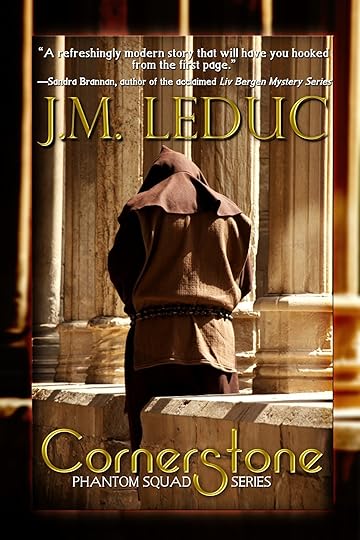
Book Details:Genre:Â Suspense Thriller / Christian
Published by: Suspense Publishing
Publication Date: 06/25/13
Number of Pages: 330
ISBN: 978-1484188682 // 1484188683
Purchase Links:
Synopsis:
In the blink of an eye, a life begins and another ends.
In a blink of an eye, Brent Venturi falls into the chasm of despair.
What do you do when everything is lost? When the person you loved is gone and all you have left is guilt? These are the questions that face Brent, the leader of the Phantom Squad and the latest in Noahâs line of descendants. His answerâgo back to the beginning, back to where it all beganâMount Ararat.
The last known resting place of Noahâs Ark.
In his travels, Brent will meet Rowtag Achak, a Cree brave and Special Forces sniper who is on a similar path of self-destruction. Together, they will trace their steps from Palm Cove to Washington D.C., all the way to Armenia and the Khor Virap Monastery which sits at the base of Mount Ararat. Their travels will eventually take them to Alpha Camp and the Hindu Kush Mountains on the Pakistan-Afghanistan border.
When President Dupree and the Phantom Squad get captured by the Brotherhood of Gaza, time for introspection is over and time for action begins. Brent must find a way to get back to the man he was in order to save the people still left in his life.
What begins as a sabbatical of self-awareness turns into a mission of survival. His own, that of the squad and more importantly, that of the president of the United States. What man and nature takes away, only God can restore. The restoration of the Cornerstone.
To find the beginning, one must walk through the past and be willing to step into the future.
Read an excerpt:
PrologueOne month ago
In one combustible moment, Brentâs life became a tumultuous cascade of happiness and horror. He had witnessed the birth of his daughter and the death of his wife.
Two weeks ago
Eight years ago, after his first encounter with the Omega Butcher, a sadistic serial killer, Brent Venturi lost his identity. Emotional and physical scars forced a sabbatical from the team he led: The Phantom Squad. It was only through the peace he had found in God and in his hometown of Palm Cove that he was able to recover from his physical and psychological injuries.
He was once again sliding back down that slippery slope of despair into a deep, depressive abyss. The place he once ran to for tranquility no longer provided comfort. He spent his days alone and his nights wandering the streets.
The nightmares that once plagued his life, the nightmares he thought were in his past, once again tore a path through his subconscious mind. It was terrifying enough when his dreams brought visions of his own torture, but now, the visions and images were different. More vivid, more personal, more terrifying. The tortured was now Chloe. His nightmares were made worse by the images of blood: so much blood, pools of blood, on her, on him . . . everywhere.
When he did manage to fall asleep, Brent woke up in a pool of sweat and vomit, fearful that the wetness he felt was blood. Chloeâs blood.
Agony was making him less of a man and more of a weapon of mass destruction.
Chapter 1
Present
Seven walked with a purposeful stride down the halls of SIA headquarters which made all other three letter intelligence agencies seem like childâs play. The sound of his footfalls as his heavy boots struck the tile floors reverberated in his ears like the base of a stereo. He heard it echo off the solid steel walls. As he walked deeper into the labyrinth, he looked up at the writing over the door that led to the inner sanctum.
We are called upon when others fail.
He placed his hand on the black glass panel next to the steel door. Like all others in HQ, it worked by palmer recognition. A faint red line slid under his hand. The doorâs air lock disengaged. He repeated this maneuver multiple times as he descended further into the maze, finally arriving at his destination, the security office. Joanâs lair.
Joan, an eclectic blend of bohemian and punk was Maddie Smithâs personal assistant and a self taught computer genius. Her office was nestled in the midst of SIAâs security hub. A sea of computers and flat screen monitors filled every bit of desk and wall space. As he entered, she sat transfixed and stared at a video feed. The monitor she was glued to took up one entire wall and was embedded in three feet of concrete and steel.
âHow long has he been there?â Seven asked.
Joan turned just long enough to acknowledge his arrival. âI arrived at o-eight hundred hours. The security clock shows heâs been there sinceâ¦â
âO-five hundred.â Seven finished her sentence.
It had been the same pattern for the past ten days.
He stood behind her and watched Brent in the armory. Seven, like all of those close to Brent, was showing the signs of stress. In the past weeks, wrinkles from age crept into his face, like dried fissures on barren land.
He blinked the sleeplessness from his eyes. âCan you roll the tape back to when he arrived?â
âI can, but nothing has changed. Brent is still analâa man of pattern.â
Seven reached into the back pocket of his jeans and took out his tobacco tin. Watching the screen, he tapped the lid, shook loose the tobacco, and placed it between his lower lip and gums.
Joan looked at him, rolled her eyes and shook her head. âMuch like yourself.â
Seven smirked and spit in his empty coffee cup. âOblige an old man,â he drawled, âand run the tape.â
âYes, sir.â Joan reached over with her left hand, nimbly fingered the keyboard, and brought up the tape.
âFinally, a woman who will listen to me.â
âI hope that wasnât meant for me.â
They both turned and saw Maddie standing in the doorway. Maddie Smith was the director of the SIA and Sevenâs wife. As always, everyoneâs eyes were glued to herâshe was stunning. A voluptuous redhead who knew how to draw attention from both sexes. She embodied a 1950âs movie starlet.
âGood morning, Darlin,â Seven smiled.
âGood morning, Madam Director,â Joan said.
Her piecing emerald green eyes focused on Joan. âWhy so formal this morning?â
Joan shrugged. âEverything seems so formal since, . . .â her eyes moistened, âyou know.â
Maddieâs voice took on a saddened tone. She stood behind Joan, lightly rubbed her shoulders, and kissed the top of her head. âYeah, I know, but I would feel better if you went back to calling me Maddie, or Mom, or the âBâ word that you mumble under your breath from time to time.â
Joan wiped her tears and sniffed. âAnd what word would that be?â
âBeautiful,â Maddie joked.
A partial smile surfaced on Joanâs lips. âOh, that âBâ word. Right.â
âThatâs the first time Iâve seen you smile in weeks. It feels good.â She looked at Seven expecting a sarcastic comeback, but he was glued to the screen. The look in her husbandâs eyes made her shiver. âWhat is it?â
âItâs Brentâs eyes. Theyâre blank. Emotionless. Itâs as if he were on a squad mission.â
âIs that so bad?â Joan said. âIsnât that the way you all look when youâre engaged in training?â
Pointing to the monitor, Seven said, âThis is different. Look at his jugular veins. His eyes may be expressionless, but the rest of him is about to snap.â
Maddie drew in a deep breath as she watched the monitor. Blowing it out, she knew what she had to do. âWe canât put the inevitable off any longer. Call the directorate and the Phantom Squad to a meeting at thirteen hundred hours and Seven,â she waited for him to acknowledge her. âGet him there.â
Tour Participants
Source: J.C. Martin, Fighter Writer