J.C. Martin's Blog, page 7
July 14, 2013
Book Shout-Out: RING IN THE DEAD by J.A. Jance
%Úte%% | J.C. Martin
Ring in the Dead (A J.P. Beaumont novella)
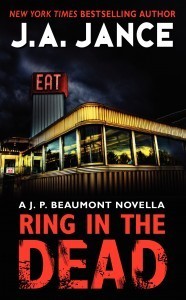 J. P. Beaumontâs had his share of mysteries to solve in his career. Now, J. A. Jance delves into his early years as a rookie homicide detective in her first e-original novella
RING IN THE DEAD
.
J. P. Beaumontâs had his share of mysteries to solve in his career. Now, J. A. Jance delves into his early years as a rookie homicide detective in her first e-original novella
RING IN THE DEAD
.
Working with seasoned detective Milton Gurkeyâa. k. a. Picklesâdidnât exactly start off as a solid partnership. Disgruntled at being stuck with a rookie, Pickles felt it was his duty to give Beaumont a hard time. But, when Pickles is suspected of murder, thereâs only one person who can help him.
One day, a stop at the Doghouse restaurant quickly turns deadly. Not feeling well, Pickles steps out into the parking lot for a breath of fresh air and stumbles into a crime in progress In the same instant, he is felled by a sudden heart attack. Eventually, heâs found unconscious, with a dead woman on the ground nearby, and the murder weapon in his hand.
With Pickles under an Internal Affairs investigation, it’s up to the new kid on the block, his partner, and friends on the force to uncover the truth.
RING IN THE DEAD is filled with mystery and personal reflection as J.P. Beaumont remembers his first years as a detective. Janceâs first e-novella does not disappoint. The J.P. Beaumont series continues with forthcoming novel SECOND WATCH (on sale September 10th, 2013). In anticipation for the September release, RING IN THE DEAD will include a treat: the prologue and first two chapters of SECOND WATCH!
Purchase Link: HarperCollins
About the Author
J.A. Jance is the New York Times bestselling author of the J.P. Beaumont series, the Joanna Brady series, the Ali Reynolds series, and four interrelated thrillers about the Walker Family. Born in South Dakota and brought up in Bisbee, Arizona, Jance lives with her husband in Seattle, Washington, and Tucson, Arizona.
Contact: Website | Blog | Twitter | Facebook
Source: J.C. Martin, Fighter Writer


July 11, 2013
SLINGSHOT Blog Tour: Interview with Matthew Dunn
%Úte%% | J.C. Martin
Slingshot
by Matthew Dunn
on Tour June 25 – July 31, 2013
Former MI6 agent and author of the Spycatcher series, Matthew Dunn gives readers a peak into his former life.
1.     While you probably canât get too specific about this, how do you translate your experiences as an MI6 agent into the scenes and characters in your novels?
One of the joys of writing fiction is that I can disguise my experiences inside a fictional tale. In SLINGSHOT, youâll read about real events and people. The names of the people have obviously been changed, and the events take place in different locations and under different circumstances. I will leave it to readers to attempt to deduce truth from fiction.
When I write, I see everything through the prism of being an MI6 officer. A frequent question I will ask myself is, âwhat would I have done?â Itâs a useful question and there is often no right or wrong answer, just as it is in the field when youâre an operative and youâre faced with intractable problems. Will Cochrane makes mistakes, as I have done in real life, has to recover from those mistakes, and has to keep going. The people I write about are similar to people I know. The events are similar to those that I and others have been in. Thatâs the world I know. I concede itâs very different from the world that most others know.
2.     From James Bond to Will Cochrane, what do you think accounts for the timeless appeal of fiction featuring dashing spies?
Though I never wrote the Spycatcher series with comparisons in mind to Bond (or for that matter, at the opposite end of the spectrum, John le Carréâs George Smiley), it is understandable that comparisons are made.  I write my novels with a contemporary and very precise understanding of espionage and for that reason Cochrane is different to other fictional espionage characters.Â
Regardless, all share in common a dislocation from the real world in favor of an understanding of a very real, yet secret world that is all pervasive and often deadly. Such characters’ ability to operate in that world, and to be supremely intelligent, often charming, frequently deadly, is very intriguing. But more than that, I think the ability of operatives to be chameleons has a tremendous appeal. Readers want to know who they really are. That is a challenge.
3.     Could a frightening story like the one in SLINGSHOT actually take place today?
Something similar and dreadful nearly took place. I know, but can’t reveal details.
8.     There are a few pivotal roles played by women in SLINGSHOT: a retired operative named Betty whoâs brought in on a vital assist; and a whip-smart CIA analyst named Suzy. Did these women come to life entirely from your imagination? Or did you work in the field with women like these?
      I’ve met some of the bravest women and men in the world. Gender doesn’t differentiate them; they are the same breed of unique animal. I can’t give you details of specifics about people I knew beyond one anecdote.Â
      During one of my trips to MI6′s training facility, I walked off the shooting range and confronted an old woman. It was common to meet unusual people in the facility as we often received briefings from Cold War warriors, for example, from both sides of the Western/USSR fence in order to inform the contemporary work we did. But I’d never seen this woman before. She asked me what I was doing and I told her that I’d just been testing a new customized handgun. She immediately had a look of horror and said, “Guns terrify me!”. I smiled, walked her to the range and showed her how to shoot it. She took the gun from me and, ignoring my instructions to position the weapon at eye-level, then held the gun against her belly and fired five shots at the target. All hit a tiny radius around the target that any Special Forces operative would have been proud to strike. I asked her how she did it, given she looked as fragile and as old as my grandmother. She didnât answer, but just smiled and walked off.
      That evening I found out she was a former British Special Operations Executive officer who’d been parachuted into Nazi-occupied France and the Netherlands, who’d blown up German transportation lines, had – together with the resistance civilians she’d rallied – killed hundreds of Nazis, and had ultimately been captured by the Gestapo who put her in dungeons, brutally tortured her, before sending her to an extermination camp.
      Men and woman, young and old, risk their lives every day by operating in the secret world. I know many of them, and in my novels you’ll meet some of them as well. Women like Betty and Suzy existed. SLINGSHOT is my heartfelt homage to them. Â
Author Bio:
As an MI6 field officer, MATTHEW DUNN recruited and ran agents, coordinated and participated in special operations, and acted in deep-cover roles throughout the world. He operated in environments where, if captured, he would have been executed. Dunn was trained in all aspects of intelligence collection, deep-cover deployments, small-arms, explosives, military unarmed combat, surveillance, and infiltration.
Medals are never awarded to modern MI6 officers, but Dunn was the recipient of a rare personal commendation from the secretary of state for work he did on one mission, which was deemed so significant that it directly influenced the success of a major international incident.
During his time in MI6, Matthew conducted approximately seventy missions. All of them were successful. He lives in England, where he is at work on the fourth Spycatcher novel.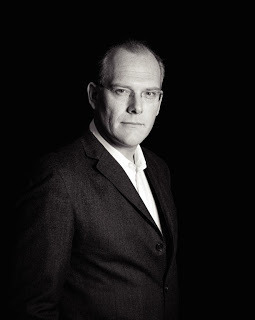
Catch Up With the Author:


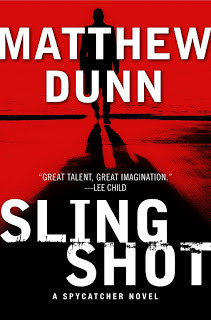
Book Details:Genre:Â Fiction
Published by: William Morrow / HarperCollins Publishers
Publication Date: June 25, 2013
Number of Pages: 416
ISBN: 9780062038029
Purchase Links:


Synopsis:
Master spy Will Cochrane must catch a missing Russian defector as well as one of Europeâs deadliest assassins in this action-packed follow-up to Sentinel, written by real life former field officer Matthew Dunn.
Will Cochrane monitors the nighttime streets of Gdansk, Polandâwaiting for the appearance of a Russian defector, a man bearing a top secret document, who Will believes is about to step out of the cold and into the hands of Polish authorities. But suddenly everything goes sideways. The target shows up, but so does a team from Russian Foreign Intelligence Service (SVR) hell-bent on keeping the man from walking. Then, in a hail of crossfire, a van speeds into the melee and snatches the defector out from under them all. Everyone wants the man and the codes he carriesâbut now heâs gone and itâs up to Will and his CIA/MI6 team to find him before the Russians.
Will tracks both the missing Russian and his kidnappers, believing the defector has his own warped agenda. But soon itâs apparent that the real perpetrator could be someone much more powerful: a former East German Stasi officer who instigated a super-secret pact between Russian and US generals almost twenty years ago. An agreement, which if broken for any reason, was designed to unleash the worldâs deadliest assassin.
Then Will learns that the Russians have tasked their own âspycatcherââan agent just as ruthless and relentless as Willâto retrieve the document. Now Will knows that he faces two very clever and deadly adversaries, who will stop at nothing to achieve their aims
Read an excerpt:
Chapter 1
Berlin, 1995Each step through the abandoned Soviet military barracks took the Russian intelligence officer closer to the room where men were planning genocide.
Nikolai Dmitriev hated being here.
And he loathed what he was about to do.
The barracks were a labyrinth of corridors and rooms. Icy water dripped over the stone walls, covered with paintings of Cold Warâera troops and tanks; the air was rank with must; the officerâs footsteps echoed as he strode onward, shivering despite his overcoat and fur hat. Previously, the complex would have housed thousands of troops. Now it resembled a decaying prison.
He turned into a corridor and was confronted by four men. Two Russians, two Americans, all wearing jeans, boots, and Windbreakers, carrying silenced handguns. The Special Forces men checked his ID and thoroughly searched him. It was the seventh time this had happened as heâd moved through the barracks. Two hundred Russian Spetsnaz operatives and an equal number of U.S. Delta, SEALs, and CIA SOG men were strategically positioned in the base to ensure that every route to his destination was defended. Their orders were clear: kill any unauthorized person who attempted to get near the men in the room.
The men motioned Nikolai forward.
Reaching the end of the corridor, he stopped opposite a door. Extending his hand to open it, he hesitated as he heard a high-pitched noise. Glancing back, two rats in a stagnant pool of water and grease were ripping skin and flesh off the dying carcass of another screeching rat, neither predator attempting to fight the other for the meat; instead they seemed to be cooperating. He wondered if he should turn around and leave while there was still time. Everything about his presence here was wrong. But he was under orders.
He entered.
It was a large mess hall. Ten years ago, he would have seen long trestle tables and soldiers eating their meals. Now it was bare of any furnishings save a rectangular table and chairs in the center. Graffiti covered the walls, most of it crude, deriding the Soviet Union. Cigarette smoke hung motionless in the stagnant air. Rainwater poured from cracks in the high ceiling onto the concrete floor.
Sitting on one side of the rectangular table were a U.S. admiral, a U.S. general, and a CIA officer. Opposite them were two Russian generals. Between them were two files, and ashtrays. None of the men were in uniform; the presence in Germany of Americaâs and Russiaâs most powerful military commanders was secret.
As was the presence of the intelligence officers. Nikolai himself was Head of Directorate Sâthe SVRâs division with responsibility for illegal intelligence, including planting illegal agents abroad, conducting terror operations and sabotage in foreign countries, and recruiting Russians on Russian soil. The CIA officer at the table was Head of the Special Activities Divisionâresponsible for overseas paramilitary activities and covert manipulation of target countriesâ political structures.
At the head of the table was a small, clean-shaven, middle-aged man with jet black hair. Dressed in an expensive black suit, a crisp, woven white silk shirt, and a blue tie that had been bound in a Windsor knot, the man removed his rimless circular glasses, polished them with one end of his tie, and smiled. âAlways late for the party, Nikolai.â
Nikolai did not smile. âA party requires salubrious surroundings. Youâve chosen unwisely, Kurt.â
Kurt Schreiber nodded toward the vacant chair next to one of the Russian generals. âSit, and shut up.â
Nikolai said with contempt, âYouâve no authority over me, civilian.â
Kurt chuckled. âWhen you and I were colonels in the KGB and Stasi, youâd have called me comrade.â
Nikolai sat and nodded. âDifferent times, and Iâd have been lying to your face.â
Kurtâs shrill, well-spoken words were rapid: âThe Russian premier chose me to chair this meeting. Not you.â He placed his manicured fingers together. âThat is telling.â
âI agree. It tells us how low weâve stooped.â Nikolai looked at the Americans. âHave the protocols been drawn up?â
âThey have.â Admiral Jack Dugan nodded toward the Russian generals. âIt took us two days.â
General Alexander Tatlin lit a cigarette. âIt was worth the effort.â The Russian exhaled smoke. âThe results are precise.â
âSeems to me,â CIA officer Thomas Scott said, eyeing Nikolai with suspicion, âthat youâre not comfortable with this.â
Nikolai laughed, his voice echoing in the bare hall. âHow can any sane man be comfortable agreeing to this?â
âKurt Schreiberâs idea is brilliant.â
âItâs psychotic.â Nikolai looked at Schreiber and repeated in a quieter voice, âPsychotic.â
U.S. general Joe Ballinger pointed across the table. âSchreiberâs right. The act has to shock the fuckers into submission. Man comes at you with a knife; you defend yourself with a gun. Trouble isâwe havenât got anyone on our side of the fence whoâs got the balls to do another Hiroshima or Nagasaki. So we make the decision, and itâs a sane oneâas uncomfortable as it may make us.â
Nikolai frowned. âYou havenât reported the true meaning of the protocols to your president?â
The U.S. commander shook his head. âNope, and weâre never going to. Nor are subsequent presidents going to find out.â He gestured toward his two American colleagues. âWeâre the only Americans whoâll know the secret. No one else stateside would ever agree to this plan.â
âAnd thatâs because they lack my . . . imagination.â Kurt withdrew two ink pens, handed one to General Leon Michurin and the other to Admiral Dugan. âSignatures, please.â
The Americans signed a sheet of paper inside one of the files; the Russian generals did the same in their files; they exchanged documents, countersigned, and moved both files in front of Nikolai.
The SVR officer stared at the two files. All that was needed to make this official was his signature on both documents.
âNikolai, weâre waiting.â Kurtâs tone was hard, impatient.
Nikolai looked at the men opposite him; ordinarily they were his enemies. He pictured the two large rats, feasting at opposite ends of the third rodent.
âNikolai!â
The Russian intelligence officer shook his head. âThis is wrong.â
âAnd yet the alternative isnât right.â
âIf I sign this, millions of people could die.â
âNot millions, you fool.â Schreiber smiled. âHundreds of millions.â
Nikolai couldnât believe this was happening. Heâd always hated Kurt Schreiber. The man was undoubtedly highly intelligent, but also untrustworthy, manipulative, and cruel, and since the collapse of East Germany he had made millions through illegal business ventures. Now he had the ear of the Russian president, and that made him more dangerous than when heâd been a Stasi officer. âHow can you live with yourself?â
Schreiber shrugged. âI view the deaths as necessary statistics. I suggest you do the same.â
Nikolai was tempted to respond but knew there was no point.
Schreiber would not listen to reason.
Pure evil never did.
Nikolai gripped the pen, momentarily closed his eyes, muttered, âForgive me,â and signed both documents.
âExcellent.â Kurt reached across, grabbed both files, shoved one at the Russian generals, the other at the Americans. The former Stasi colonel smiled. âThe protocols for Slingshot are now in place, ready for use should ever the need arise.â
âGreat.â General Tatlin stubbed his cigarette out. âSo now we can get out of this shithole.â
âNot yet.â Kurt placed his hands flat on the table. âHow can we ensure that no one in this room ever reveals the secret of whatâs missing in the files?â
Thomas Scott huffed. âSlingshot wonât work if one of us talks. Weâve agreed that.â
Kurt stared at nothing. âWe have, but we need more than agreement.â
âWhat are you proposing?â
âInsurance.â Kurt looked at the men before resting his cold gaze on Nikolai. âTime can erode a manâs resolve. But fear can keep him resolute.â
âSpeak plainly.â
Kurt nodded. âOne day, one of you may wake up with a crisis of conscience and decide that he can no longer carry the burden of this secret. That canât happen. So, my solution is simple and effective. The Russian president has authorized me to activate an assassin. He will be deployed as a deep-cover sleeper agent, and his orders are to kill any of youââhe looked at the CIA officer and smiledââwho talks.â
General Tatlin lit another cigarette and jabbed its glowing tip in the direction of Schreiber. âYou expect us to live our lives with a potential death sentence hanging over us?â
Schreiber interlaced his fingers. âYes.â
Dugan laughed. âTake a look around this base, Schreiber. Weâre the kind of men who like to have impenetrable security wherever we go.â
âImpenetrable?â
âDamn right.â The admiralâs tone was now angry. âSend out your assassin, for all we care. But youâre going to need better insurance than that.â
âThere is no better insurance.â
Nikolai wondered why Schreiber looked so smug. âWhoâs the assassin?â
The sound of rainwater striking the concrete floor seemed to intensify as Schreiber momentarily closed his eyes. âYou know of him by the code name Kronos.â
âKronos!â Nikolaiâs stomach muscles knotted. âWhy was he selected for this task?â
Before Schreiber could answer, General Ballinger asked, âWho the hell is Kronos?â
Nikolai looked at the American commanders as he began to sweat. âHe was a Stasi officer, tasked on East Germanyâs most complex and strategic assassinations. Since the collapse of communism, heâs been on the payroll of Russia. Heâs . . . heâs our most effective killer. One hundred and eighty three kills under his belt. Always successful.â As he returned his attention to Schreiber, he felt overwhelming unease. âWhy was he selected?â
Schreiber opened his eyes. âBecause the Slingshot secret is so vital. We needed our very best assassin to ensure thatââhe swept his arm through airââno amount of impenetrable security can protect a man who might betray us.â Schreiber checked his watch and looked toward one of the far corners of the mess hall. In a loud, clipped tone, he called out, âShow them.â
Nikolai and the others immediately followed Schreiberâs gaze. At first nothing happened. Then, movement from within the shadows at the corner of the room.
A big man stepped into the light.
Standing directly underneath one of the streams of water pouring down from the ceiling.
Was motionless as he allowed the icy rain to wash over his head.
His handgun held high and trained on them.
Kronos.
Schreiber smiled and looked at the others. âNot only did Kronos get past all of your men, he did so with very precise timing. I ordered him not to enter this room until one minute ago, so that the contents of our discussion would remain confidential to only the men around this table. Since then, heâs been pointing his weapon at you.â
General Michurin slammed a fist down onto the table. âHow dare you make fools of us!â
Schreiber responded calmly, âIt wasnât my intention to make fools of you. Rather, to demonstrate to you that you do indeed have a potential death sentence hanging over you.â He darted a look at Kronos. âGive them what they need.â
Nikolai felt fear course through him as he watched the German assassin take measured steps toward the table, his gun still held high. Though Nikolai was one of only a handful of SVR officers who was cleared to know all about the Kronos operations, he didnât know the assassinâs real name. Moreover, this was the first time that heâd been in the presence of the man. Kronos was well over six feet tall, muscular, had black hair, and was wearing clothes identical to those Nikolai had seen worn by the baseâs protection detail.
Kronos lowered his weapon, withdrew a piece of paper from his jacket, tore it in half, and slapped one piece of paper on Admiral Duganâs chest before moving to the other side of the table and doing the same with the other bit of paper on General Michurin.
Schreiber spoke to the Americans. âI suggest you bury your paper deep in the vaults of the CIA.â Then to the Russians, âPut yours in the SVR vaults.â He cupped his hands together. âNever combine them, unless there is reason to do so.â
âReason?â
âOne of you needs Kronos to put a bullet in your head.â
âYou . . .â
âEnough, admiral!â Schreiber composed himself. âThe relevance of the two pieces of paper will be made known to you if the need arises. Until that time, Kronos will vanish. No one, not even me, will know of his location. Heâll wait for years, decades if necessary, until he is . . . needed.â
Thomas Scott shook his head. âOur men have been here for three days.â The CIA officer felt disbelief. âAnd when they arrived, they searched the entire base.â
General Ballinger shrugged. âThereâs no way he couldâve penetrated the base today. He must have entered the complex before our men arrived and hid in a place they failed to search.â
âThatâs the only possible explanation.â Admiral Dugan pointed at Schreiber. âNext time weâll be more thorough.â
Schreiber grinned, though his expression remained cold. âKronosâshow them where you were two and three days ago.â
The German moved around the table, placing a photograph each in front of the Russians and Americans. Incredulity was on all of the menâs faces as they stared at the shots.
Each showed the inside of their homes in America or Russia.
A local newspaper clearly showing the dayâs date.
And Kronos pointing the tip of a long knife toward family photos.
âBastard!â
Kronos retrieved each photo, placed them in a pile in the center of the table, and lit them with a match.
Schreiber watched the flames rise high. âOur meeting is concluded. You will take the Slingshot protocols back to your respective headquarters. You will secrete the torn papers as instructed. You will keep your mouths shut. Otherwise, my assassin will find and kill you.â
Kronos stepped away from the men, hesitated, then turned to face them. In a deep voice, he said, âGentlemen, I left all of your men alive, though I must apologize for the harm I had to cause some of them.â
Then he disappeared into the shadows.
Tour Participants
Source: J.C. Martin, Fighter Writer
July 10, 2013
Protected: An Audience with the Oracle: My Victims
%Úte%% | J.C. Martin
This post is password protected. To view it please enter your password below:
Password:
Source: J.C. Martin, Fighter Writer
July 8, 2013
THE RULES OF DREAMING: How to Weave Seemingly Different and Unrelated Stories Together Seamlessly by Bruce Hartman
%Úte%% | J.C. Martin
 How to Weave Seemingly Different and Unrelated Stories Together Seamlessly
by Bruce Hartman
Letâs start with the question: What makes two stories seem different and unrelated, and what binds them together?
The main factors in the perception of whether stories are unrelated are:
(1) Time and space
Normally we donât assume that stories taking place at widely divergent times or places are related, unless there is a direct chain of events linking the two. The recent interest in science fiction and paranormal fiction, however, has made readers more accepting of linkage across wide expanses of time and space, even without any apparent causal connection. Writers often capitalize on a philosophical/religious belief or perception that everything is fundamentally related.
(2) Point of view
The best writing takes account of the various charactersâ points of view as a core feature of the story. Each character (and outside of fiction, each human being) has a unique point of view and thus perceives a different âstoryâ when viewing the same events. The best writers know how to exploit the tensions in perceptions as affected by the charactersâ distinctive points of view.
Older fiction favored the so-called omniscient narrator with a unitary point of view. Around the beginning of the twentieth century, possibly because of cultural expansion, writers began wanting to see the world from different perspectives at the same time, which we view today as a more realistic way of looking at the world.
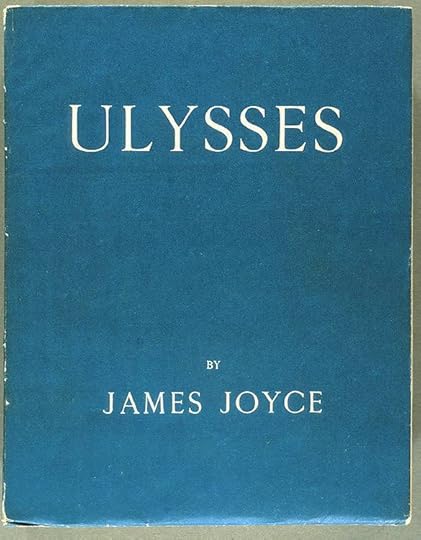
ULYSSES by James Joyce
One of the earliest attempts in literature to use a multi-perspectival approach was James Joyceâs Ulysses, which takes place in Dublin on a single day, with numerous characters going about their lives. We see their stories from their shifting points of view and in their various voices. Gradually some of the stories begin to converge. The main character, Leopold Bloom, doesnât do much. Itâs his point of view and interior musings which (along with the interior lives of others characters) form the âplotâ of the novel.

CLOUD ATLAS by David Mitchell
In Cloud Atlas, David Mitchell took a bunch of stories which in fact were not related, and which take place in various times and places, including the future, and involve characters who for the most part are never aware of each otherâs existence; and by patching them together he keeps us reading because weâre so accustomed to finding order in this kind of chaos we are determined to see a connection between the stories. Thereâs a drama and interest in waiting for that connection to manifest itself, which (we think) surely it must! Interestingly, thereâs no attempt to do this seamlessly: the first story ends in the middle of a sentence, and the next one begins as if the first story never happened. At this point most people are clicking their Kindle buttons or frantically turning the pages to see whatâs wrong with their book. Mitchell has established his authorial control over our expectations and even our actions. Later most of the stories are continued in equally autonomous sections and this recapitulation provides all the aesthetic closure weâre going to get.
The point of all this is that the human mind imposes a connectivity to events which they may or may not have â thatâs what we call a story. Itâs the business of writers to show us the ways this can be done. Today there are seven billion (unreliable) narrators with seven billion stories unfolding around the world. Each of those narrators has his or her own narrative voice and point of view. Their stories are linked by simultaneity but most are linked by much more, because the characters are interacting in their lives, whether they know it or not. The most interesting fiction writing plays off against this clash of autonomous point of view versus the connectedness of everything.
About the Author
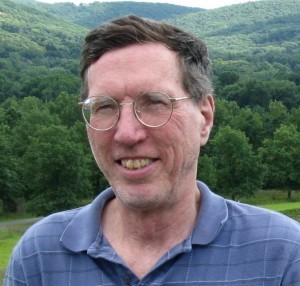
Bruce Hartman
Bruce Hartman has been a bookseller, pianist, songwriter and attorney. He lives with his wife in Philadelphia. His previous novel, Perfectly Healthy Man Drops Dead, was published by Salvo Press in 2008.
Contact: Website/Blog
The Rules of Dreaming
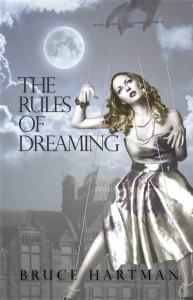 A novel of madness, music â and murder.
A beautiful opera singer hangs herself on the eve of her debut at the Met. Seven years later the opera she was rehearsing â Offenbachâs Tales of Hoffmann â begins to take over the lives of her two schizophrenic children, the doctors who treat them and everyone else who crosses their paths, until all are enmeshed in a world of deception and delusion, of madness and ultimately of evil and death. Onto this shadowy stage steps Nicole P., a graduate student who discovers that she too has been assigned a role in the drama. What strange destiny is being worked out in their lives?
Purchase Links: Amazon
Giveaway!
Bruce is giving away a $50 Amazon/BN to one lucky commenter during the tour.
All you have to do to enter is to leave a comment below.
Why not visit the other tour stops? The more you comment, the better you chances of winning the grand prize!
Source: J.C. Martin, Fighter Writer
July 7, 2013
COLLATERAL DAMAGE Excerpt Tour: Chapter 14
%Úte%% | J.C. Martin
Fellow crime writer Frederick Lee Brooke has just released Collateral Damage, the third book in his Annie Ogden Mystery series. Join him on his excerpt tour for free samples of the new book at each stop, plus a chance to win a $25 Amazon gift card AND a signed paperback copy of Collateral Damage!
Collateral Damage
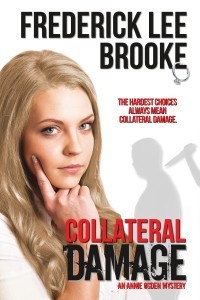 A love story.
When Annie Ogdenâs ex-boyfriend Michael Garcia reappears, she has to confront a lie dating back to her time in Iraq. Will she go back to hot, passionate Michael, who has developed a disturbing interest in meth, or will she stick with her pudgy PI partner and fiancé, Salvatore?
A murder.
The calculus changes when Michael is arrested for murder. When Salvatore refuses to help investigate, Annie is forced to try to find the killer herself. Meanwhile her sisterâs creepy husband, Todd, is making more of an ass of himself than usual.
An obsession.
Annie’s problems with three obsessive men suddenly pale in significance when she realizes the killer has set his sights on her.
Purchase Link: Amazon
And here’s an excerpt from Chapter 14:
Chapter 14âAnnie
Â
I drove all night from Atlanta to Tampa while Michael slept. The idea that Michael and I had just made love kept me awake like No Doz never did. Talk about a natural high.
I knew what Alison would say. First, she would say I was crazy. No, that was too pat, too sweet. She would say she didnât know me. Then she would say Iâd made a self-destructive, life-threatening, mind-boggler of a mistake. She would say years were being deducted from my life span.
My sister was quick to boss me, but what would she have done in my place? That was what I wondered. This was a unique situation. When you have sunk as low as I did after losing Michael, when you have gone through more than a year of depression and longing and grief and then he comes back and he still loves you, how can you resist?
Anyway, I saw no reason to share with my sister my brief flirtation with sweet insanity. I didnât need her breathing down my neck even more than she already did.
Salvatore was another story. As the Corvette ate up the miles of southern Georgia and northern Florida, and the first gray streaks appeared in the sky, I went back and forth in my mind about what to tell Salvatore. There was no question about whether I had to tell him. If I didnât, it would drive me crazy. It would be a big, painful secret between us. If there was going to be something big and painful between us, I wanted it to be known to us both, not secret. I knew I was going to tell him. The question was how.
I had asked him to trust me, driving down here with Michael. I had reiterated my commitment to him. It would hurt him so badly to learn what we had done. Salvatore had trusted me. He would see it as a betrayal of his trust.
Salvatore had sent me a text after midnight. I only saw it when we took off again, after three a.m. It was a sweet text, so typical. I wanted to call him and tell him I loved him, but I couldnât be sure of my reactions just at that moment. I was afraid I might blurt out how profoundly miraculous it had been having sex with Michael. Not the sort of thing you hope to hear in a good-night call. But it was already so late. I was pretty sure he wouldnât mind if I woke him, but the late hour gave me sufficient excuse not to call. The different paths my conversation with Salvatore might take went through my head over and over for hours.
It raised my spirits to see the sun rising over Tampa Bay. It looked like that whole half of the sky was on fire with shades of red and orange and pink. The highway curved again, and the colorful pageant filled my side window.
Michael was back in my life. He wasnât dead anymore. He had written me a love poem, we had made sweet love, and we were in Florida for his party. Salvatore waited for me at home. For the first time in a long time, I felt like everything, really everything, was going my way.
Michael and I would never, ever make love again. That had been a one-time thing, for old timesâ sake. We had shaken hands on it. But I could keep this night as a cherished memory for as long as I lived.
Although it was past seven a.m. when we finally rolled into their neighborhood, Michael thought it was too early to wake Husker. We pulled in at a breakfast restaurant a few minutes away from the house. I think Michael was still waking up himself. We hadnât eaten since Atlanta. This leg of the trip had taken just seven hours, with one quick stop for gas and coffee. I stretched my bones beside the Corvette. My leg and back muscles creaked like old furniture.
The air here was amazingly humid, like a steam bath without steam. It wasnât hot, it was cool, but you felt sweaty the minute you got out of the car. Palm trees ringed the parking lot, and pink hibiscus flowers bloomed on bushes that grew higher than my head. A cool breeze wafted over the sheen of sweat on my face. A blast of air conditioning hit us when we walked into the restaurant.
We collapsed into a booth in the corner, trading the bucket seats of the Corvette for wide benches with no lumbar support. The restaurant was busy and noisy with people eating all manner of breakfasts and waitresses crisscrossing the room, pots of coffee in both hands. Our windows faced south and west and, beyond the parking lot, the entire expanse of Tampa Bay opened before us.
âGood thing I reserved the table for yâall,â the waitress said. She winked at Michaelâs uncomprehending look. âThatâs a joke, honey. Whenâd you get back?â
âJust now. Drove straight through from Chicago,â he said. âCan I get the usual?â
âShort stack with well-done bacon and two over easy?â the waitress said.
âAnd a large orange juice.â
âIs that Eglin Air Force Base out on that point?â I asked.
âBest spot for seeing takeoffs, if there are any,â the waitress said as she picked up Michaelâs menu. âYou know what you want, honey?â
I ordered my food, then put my head down. Michael was sitting across the table. I only meant to rest my eyes for a second. The next thing I knew, someone was tapping me on the shoulder. My ham and cheese omelet had arrived. Michael was laughing.
âI havenât gone jogging in two days,â I said, sleep clouding my brain. âYou guys arenât on the beach or anything, are you?â
Michael was looking out the window, eyes narrowed. I followed his gaze. I watched a familiar figure emerge from the car next to our Corvette. To say I was shocked would be an understatement. I was completely speechless.
âTell me that isnât who I think it is,â Michael said.
My sisterâs estranged husband Todd Paine stood and stretched, looking at us through a pair of Ray-Bans. I set down my fork and knife, trying to grasp the meaning of it. We had just driven approximately eighteen hours straight, except for a two-hour stop in Atlanta, and now found ourselves in a breakfast restaurant in Michaelâs neighborhood in the industrial section of Tampa. Todd had found us here, zeroing in on our location like some kind of human homing pigeon.
âEverything okay with those omelets?â The waitress topped up our coffee. She followed our gaze out the window. âSomeone yâall know?â
âWhat the hell is he doing here? Did you invite him?â
âSort of invited himself, I guess. Some article,â Michael said.
âDid you have to tell him everything?â
âI didnât tell him anything.â Michael looked innocent. âWhat did I tell him? What do you mean?â
âHow did he find this restaurant?â I said.
Todd was walking across the lot toward us.
âOut of all the damned breakfast places in Tampa. How should I know?â When I thought about it, I realized there was no way Michael could have told him where we were eating. He hadnât known it himself.
Todd headed our way across the dining room. He smiled at my befuddled expression.
âHey, Annie. Long time no see. Mind if I join you guys?â Without waiting for an answer, he plopped down. Michael slid toward the window to make room.
âWhat are you doing in Florida? Howâd you know we were here?â
âCoffee, sir?â The waitress was already pouring.
Todd looked away from me long enough to tell the waitress, âIâll have what sheâs having.â When the waitress left, he leaned forward. He looked like he wanted to take my hand, but my hands were in my lap. His eyes shone with a weird light.
âI was in the forest preserve lot. You probably didnât see my car. I thought you mightâve seen me in Atlanta at the restaurant.â
âI saw that white Mustang,â Michael said. âDidnât know it was you.â
âAtlanta?â I said. I was tired and strung out from driving. My brain could not fathom that Todd had driven from Chicago all the way here, following us. I looked at Michael for help. He was eating and seemed unconcerned.
âHey, whereâs your ring?â Todd pointed.
I looked at my ring finger. My stomach flip-flopped. My mouth went dry. How could my ring be gone? It had been there last night. When had it disappeared? I looked at the two men, my mind a rising wall of panic. I couldnât believe my eyes. I hadnât taken it off. I hadnât left it anywhere. Could a ring just fall off?
âYou lost it?â Todd said, not concealing his amusement.
âThere must be some explanation. You mustâve taken it off,â Michael said.
âThat was one jumbo rock, too,â Todd said.
âWhen do you last remember seeing it?â Michael asked.
âI had it on when we ate in Atlanta,â I said. âI never took it off.â
âYou didnât wash your hands or something, take it off?â Michael said.
âMaybe at the Edgerton Motel?â Todd said. I felt my face going hot. He had followed us in Atlanta. The slimeball must have waited the whole two hours, loitering in the motel parking lot, watching our door.
âYou filthy, sneaky bastard,â I said.
âWonât tell a soul.â He raised his hands in innocence.
âYou remember the name of it?â Michael said.
âIâm a journalist. I canât help it.â
I couldnât sit here and look at Toddâs smug face. I couldnât believe what was happening to me. My ring was gone. What the hell was I going to tell Salvatore? Making love to Michael one last time had been blissful, beautiful. It felt right, even if it would stretch the limits of Salvatoreâs ability to forgive. In the end, he would understand.
But the missing ring made me feel degraded, dirty, exhausted. I checked my ring finger for the tenth time in three minutes. How could it be gone? Rings didnât just drop off your finger.
I had enough to tell Salvatore. I didnât want to tell him my ring was gone.
I headed out to the parking lot to think. My idiot brother-in-law probably had pictures of Michael and me going in to the motel room. He probably thought he was sitting on a real powder keg. Well, he didnât know I was planning to tell Salvatore anyway. A blackmailer can only hurt you if youâre afraid of your secret. I hadnât murdered anybody. I hadnât committed a crime. Todd in fact gave me nothing to worry about. This calmed me. If it werenât for that damned diamond.
The Corvette stood gleaming in the morning sunlight. The car! Maybe my ring had come off during our little grope by the 7-Eleven. I unlocked the car and got down on hands and knees. I checked under the floor mat, in door pockets, even in the glove compartment, and then on the driverâs side. No ring.
If I had lost it back at the motel, someone was sure to have pocketed it. There wasnât a chance in a million they would still have it. Still, I decided to call and offer a reward. Maybe if I set the reward high enough someone would rather collect the money than go to the trouble of dealing with a pawn shop.
I went back in the restaurant.
âSo, does Alison know you followed me?â
âI donât give a damn, Annie. Weâre splitting up, remember?â
I dug around in my eggs, picking out the ham. Something didnât feel right. âYouâre working on some feature, right? Thatâs what youâre here for?â
âItâs tonight, isnât it?â Todd turned to Michael. Michael nodded. âHow many people are you expecting?â
Michael finished a bite of pancakes. âSomewhere between fifty and two hundred. Could be more, depending on the Facebook effect. Lucky we have a big deck. Youâll see.â
âIâll interview whoeverâs willing,â Todd said. âI write. I take pictures. Tonight Iâm going to get my story. Iâve got a feeling.â
While they chatted and filled their stomachs, I called the motel in Atlanta. I waited while the day receptionist checked her lost-and-found and talked to maids. No ring. I made her write down my number and repeat it back to me, promising five hundred dollars. In my heart, I knew I would never see the ring again.
Iâd been so hungry when we walked in. Now Iâd lost my appetite. I didnât like it that Todd had taken the liberty of following us, and I hated it that he knew about our stop in Atlanta.
But what really got me was the look of my stupid bare finger.
About the Author

Frederick Lee Brooke
Frederick Lee Brooke is the author of the widely-acclaimed Annie Ogden mystery series, which includes Doing Max Vinyl, Zombie Candy, Collateral Damage. A consummate jetsetter, he was born and raised in Chicago (where both Doing Max Vinyl and Zombie Candy are set) and has lived in Illinois, Massachusetts, Montana, France, and Germany; he has called Switzerland his home for the past two decades, and travels widely throughout Europe (at latest count, he has visited Italy over 50 times!).
Brookeâs love of the written and spoken word is vast â not only has he taught English in various European schools, he also knows French, German, and Italian, and dabbles in Turkish in his spare time. This love of language led him to quit his day job two years ago and focus on his original dream: writing fiction. When not writing books, his three kids (and their homework) keep him busy. He is currently working on a new series of thrillers and, once thatâs done, he might take some time to visit one of those Swiss chocolate factories (but only for the free samples). He can often be found chopping vegetables in the kitchen, and makes a mean lasagna.
Contact: Website/Blog | Twitter
Giveaway!
Fred is giving away a $25 Amazon gift card, AND a signed paperback copy of Collateral Damage, to one lucky person following his blog tour.
To enter, all you have to do is leave a comment on every participating blog.
Good luck! 
Source: J.C. Martin, Fighter Writer
July 4, 2013
Cover Reveal: PERRY ROAD by Emi Gayle
%Úte%% | J.C. Martin
Happy Independence Day to my American readers! Today’s cover reveal is aptly scheduled, as here’s something a little different from Emi Gayle’s usual YA paranormal:

Perry Road
In 2132, âWe the people â¦â means nothing, and it hasnât for a hundred years.
Like all the citizens of the American Union, eighteen-year-old Erianna Keating is not to ask questions. She is not to believe anything except what the A.U. tells her. More importantly, sheâs not supposed to know what she doesnât know, nor that sheâs a pawn.
Like everyone else, though, she is, and like everyone else, she is a hundred percent oblivious to whatâs going on.
Or is she? Are they?
Erianna thinks going to Perry Road and joining the national registration program is her next step toward adulthood; the 2132 candidates for adult-classification, though, are in for a big surprise. Especially Erianna.
Thanks to Zane Warren, an awkward but hot guy who wonât shut up about a history that doesnât â or shouldnât â matter anymore, Erianna will know. Will learn. That includes finding out what actually happens after registration and doing something, anything, about it.
Fixing what went wrong, what caused the U.S.A. to split into two countries, though, is not on Eriannaâs bucket list, but as she faces her future, she must decide whether to fall in line with the American Unionâs plan for her, or to consider that Zane might not be wrong, and the time for revolution begins now.

Woah! :O
About the Author
Emi has actually said she’d prefer not to have her face plastered everywhere on the Internet, so I thought I’d honour he wishes! To find out more about her, you can check out her “About Me” page.
Contact: Website | | Twitter | Facebook
What do YOU think of the cover and blurb?
Source: J.C. Martin, Fighter Writer
July 3, 2013
Protected: An Audience with the Oracle: My Divine Calling
%Úte%% | J.C. Martin
This post is password protected. To view it please enter your password below:
Password:
Source: J.C. Martin, Fighter Writer
July 2, 2013
ORACLE Giveaways, Blogger Book Fair, the Secret Password and Major Life Upheaval
%Úte%% | J.C. Martin
*NOTE: This is a sticky post. For newer posts, please scroll down.
Right, plenty to get through, so I’ll keep everything short and sweet.
CRA Guest Post
First off, I’m over at the Crime Readers’ Association (CRA) blog to celebrate Crime Month, with a tongue-in-cheek post about 6 Common Maladies That Affect Crime Writers (some of which could also ail writers of other genres). There’s also a chance to win either a signed paperback copy (UK) or an e-book copy (international) of Oracle.
BBF

Blogger Book Fair: discover new books and authors, plus freebies and giveaways galore!
Next up, I’m participating in the Blogger Book Fair from 22 – 26 July. In that time, I’ll be hosting some authors on my blog, as well as guesting on others, all in the name of cross-promotion. Why not join in to see if you’ll find a new favourite read/author? There’ll be freebies (including my short horror novelette, The Doll) and giveaways galore, too, including another e-book copy of Oracle up for grabs. To enter, just fill in the Rafflecopter at the bottom of this post (which will start on 22 July).
An Audience with the Oracle
For Oracle readers, the month-long “An Audience with the Oracle” series of blog posts starts this Wednesday. Because these posts contain spoilers, they will be password protected so that only those who have read the book can access the post.
The password is the answer to this question:
What is the real name of the Oracle?
(full name in the format FirstnameLastname, no spaces and all lowercase)
If you haven’t read Oracle, but really want to read the posts, then just send me a message and I’ll give you the password — as long as you promise to read the book eventually! 
And finally…
If it’s not one thing, it’s another
I know I’ve promised to be around more, and to get back on that writing horse, after 6 months off with Baby Martin. But all my plans have been foiled by another major upheaval.
Long story short, my application to extend my visa to stay in the UK has been refused, and we really can’t afford to re-apply or to hire a solicitor to appeal our case. As we have always entertained the idea of moving back to Malaysia, this rejection has expedited our decision.
It might be a month, two months, or three months, we don’t know. I’m applying for a Repatriation Programme (which allows the hubby and Baby Martin a fast-tracked application for Permanent Residence status in Malaysia), looking for a new job back home, and working on selling our home here in the UK. We’ve already rehomed two of our three dogs (*sniff*  ), and are looking to bring the third with us. All in all, it’s gonna be a stressful and busy few months ahead. And settling into a new life in Malaysia will probably mean no time for writing — again.
I’m struggling to make sure I put up everything I already promised in time, but it looks like I might be disappearing on and off — again.
But I have a bit of a super-sekrit five-year plan in the works, so rest assured that I will be back … sooner or later.
Anyway, here’s the Rafflecopter. Good luck!
Source: J.C. Martin, Fighter Writer
June 28, 2013
Book Shout-Out: BAD PUBLICITY by Joanne Sydney Lessner & GIVEAWAY
%Úte%% | J.C. Martin
You may remember my shout-out of The Temporary Detective, Joanne’s first book in the series, last week. Today, I’m pleased to showcase book 2 featuring the plucky Isobel Spice!
***Read on to find out how you could win an e-book copy of Joanne’s book, or a $25 Amazon gift card!***
Bad Publicity
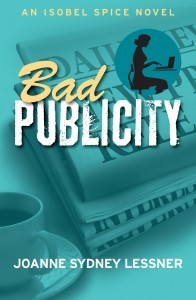 In the world of PR, thereâs only one crime worse than killing a deal â killing a client.
Aspiring actress and office temp Isobel Spice finds a warm welcome at Dove & Flight Public Relations, thanks to her old school friend Katrina Campbell. However, the atmosphere chills considerably when Isobel unwittingly serves an important client a deadly dose of poisoned coffee. Her stalwart temp agent, James Cooke, rushes to her aid, but balks when he learns that the victim was the fraternity brother who got him expelled from college. News that Dove & Flight is being acquired by an international conglomerate quickly supplants the murder as the hot topic of office gossip, but Isobel is convinced the two events are related. When all roads of inquiry lead back to Katrina, Isobel is forced to consider the possibility that her friendâs killer instincts go beyond public relations.
Purchase Links: Amazon | Barnes & Noble | Kobo
Excerpt
Isobel Spice stared at the handsome young man slumped over his coffee cup and thought desperately: not again.
She carefully set her tray of melon chunks and assorted pastries on the credenza at the side of the windowless conference room and tiptoed over to the solitary figure at the large oval table.
Heâd probably just dozed off. Or maybe heâd passed out. There was no reason to think he was dead just because sheâd stumbled across a dead body in an office once before.
But something about the angle of the young manâs body was just plain wrong. Isobel gingerly pressed her fingers against the pale, slender wrist. Sheâd never been good at locating a pulse, even on herself â sheâd lied to many an exercise instructor over the years â but somehow she knew that in this case, if there were a pulse to be found, she would be able to find it.
There was nothing. Not even the faintest throb.
Isobel let the manâs hand drop back onto the table. His gold signet ring cracked loudly against the wood, startling her. She turned his hand over and was disproportionately relieved to find the ruby-colored stone still intact within its school crest. Isobel gently released his hand and slipped out into the hallway, her panic rising as she gathered steam and burst into Katrina Campbellâs office.
âYour client is dead!â
About the Author

Joanne Sydney Lessner
Joanne Sydney Lessner is the author of BloodWrites Award winner and Awesome Indies Mystery Pick The Temporary Detective, which introduces Isobel Spice, aspiring actress and resourceful office temp turned amateur sleuth. Isobelâs adventures continue in Bad Publicity. Joanneâs debut novel, Pandora’s Bottle (Flint Mine Press), which was inspired by the true story of the worldâs most expensive bottle of wine, was named one of the top five books of 2010 by Paperback Dolls. No stranger to the theatrical world, Joanne enjoys an active performing career, and with her husband, composer/conductor Joshua Rosenblum, has co-authored several musicals, including the cult hit Fermat’s Last Tango and Einstein’s Dreams, based on the celebrated novel by Alan Lightman. Her play, Critical Mass, received its Off Broadway premiere in October 2010 as the winner of the 2009 Heiress Productions Playwriting Competition.
Contact: Website | Twitter | Facebook
Giveaway!
Joanne is giving away a $25 Amazon gift card to one lucky commenter on the tour.
Also, she is giving away an e-book copy of her first book, Pandora’s Bottle, to one lucky commenter on the Fighter Writer.
All you have to do to enter is to leave a comment below.
Why not visit the other tour stops? The more you comment, the better you chances of winning the grand prize!
Source: J.C. Martin, Fighter Writer
June 26, 2013
The Oracle Will See You … Do You Dare?
%Úte%% | J.C. Martin
July 30th marks the first anniversary of the release of my debut novel, Oracle. Nearly a year on, I’m still working on book 2, and envying those authors who seem capable of churning out a new book every other month.
Book 2 should have been completed by now.
It’s not.
It’s all Baby Martin’s fault.
While I write the sequel, I thought I’d try to generate further interest in the first book, just to keep it visible and so it doesn’t get forgotten.

“Uh … hello. Remember me?”
So I’m celebrating the anniversary of Oracle‘s release with a series of posts elaborating on the main themes of the story, further background research into history, anthropology, etc.
Plus, I’ll be granting readers access into the mind of one of the most interesting characters from the book: the Oracle himself.
Every Wednesday in July, the Oracle will talk weekly about what influences him and why he does what he does.
But … this will obviously involve lots of spoilers, so you should only read these posts after you have read Oracle (see where I’m going with this? ).
These posts will hence be password protected, and only those who have read the book will know the secret word — so hopefully all five of you who have bought my book will pop by next week! 
Alternatively, if you’ve not read the book but my shameless attempt at flogging it is *actually* working, you could grab a copy here and come back with the magic word!
Have an audience with the Oracle … if you dare!
Source: J.C. Martin, Fighter Writer