
TalkToMeInKorean's Blog, page 5
January 20, 2022
Who do you think did the voice acting?
Time limit: 0 Quiz Summary 0 of 2 Questions completed Questions: You have already completed the quiz before. Hence you can not start it again. Quiz is loading… You must sign in or sign up to start the quiz. You must first complete the following: 0 of 2 Questions answered correctly Time has elapsed Who do you think did the voice acting for the Sapsal?
예지 Yeji 주연 Jooyeon 경화 Kyunghwa Correct Your answer was incorrect.
Listen to
on our app, TTMIK: Audio.
 #image_2061139010 { width: 100%;} #col-1899616936 > .col-inner { padding: 0px 10px 0px 10px; margin: 0px 0px -32px 0px;}@media (min-width:550px) { #col-1899616936 > .col-inner { margin: 0px 0px 0px 15px; }}
  #image_2111916598 { width: 100%;} #col-1956932092 > .col-inner { padding: 0px 10px 0px 10px; margin: -10px 0px 0px px;}@media (min-width:550px) { #col-1956932092 > .col-inner { margin: 0px 0px 0px -15px; }}
  #image_1147930163 { width: 80%;}
  #image_234692281 { width: 100%;}


January 13, 2022
You will succeed in learning Korean if you do this.
What do successful Korean learners have in common? I am introducing three common traits through 3 different emails and this is part 2. In the previous email, I mentioned that based on my experience, successful Korean learners tell people around them about their learning journey. They want to learn to speak Korean really well, and their friends know about it.
So if you have been hesitant to post a picture of your new Korean books on social media or try writing the caption in Korean from time to time, start telling more people about how you are learning Korean!
Want to learn Korean?
Talk To Me In Korean is here to help!
Learn with our systematic online curriculum, books and ebooks!
What is common trait #2 of successful Korean learners?
Think back to the time you first decided to learn Korean. Think about what made you want to learn Korean in the first place. It may have been an engaging Netflix series like Squid Game, a song that you just couldn’t stop listening to, or your friends who introduced you to Korean culture.
No matter what the initial cause was, remember this: When you finally learned and understood the meaning of a certain Korean word you kept hearing before, that felt good. When you finished your first Korean lesson and made progress, that made you feel accomplished. These mini achievements are what makes us keep going, and when something makes you happy, you can do it again and again.
So the #2 common trait that I have witnessed in successful Korean learners is this: They feel a sense of accomplishment quite frequently when they learn Korean, and therefore their spare time is automatically filled up with learning more Korean. This can be because they have strong motivation or important goals, or because they are learning through a method they enjoy.
Start learning today #text-695284454 { text-align: center; color: rgb(53, 80, 154);}#text-695284454 > * { color: rgb(53, 80, 154);} Start with online courses first Browse books first #text-box-2052648119 { width: 100%;}#text-box-2052648119 .text-box-content { font-size: 100%;} #banner-1055298184 { padding-top: 300px; background-color: rgb(250, 235, 235);}#banner-1055298184 .overlay { background-color: rgb(250, 235, 235);}#banner-1055298184 .ux-shape-divider--top svg { height: 150px; --divider-top-width: 100%;}#banner-1055298184 .ux-shape-divider--bottom svg { height: 150px; --divider-width: 100%;}
Most people can’t learn a new language successfully when they have to solely rely on their strong willpower or resolution, because willpower tends to run out rather quickly. So if you want to make sure you reach your Korean learning goals, think about whether what you’re doing to learn Korean is enjoyable and whether you can do it for a long time, almost every single day.
If you decided to take a class but it’s just too hard or stressful for you, you can’t enjoy going there every day. If you picked up a book that is way above your level or not kind enough with its explanations, there is no way you are going to finish that book.
So ask yourself now: What is one activity you could probably do more of to learn at least a little bit of Korean every day? How often do you feel a sense of accomplishment when you study Korean? If you can’t imagine yourself spending more time on your current methods of studying, what can you do differently?
Whichever method you choose to use and what kind of materials you find to be most appealing, we have a wide variety of courses and books you can choose from. We will be waiting for you at our website to help you improve further. See you there!
Study with our popular Korean textbooks
SALE
[image error]
Beginner Package (Hangeul Master + Level 1 Textbook + Workbook) $53 $50.35Add to cart
SALE
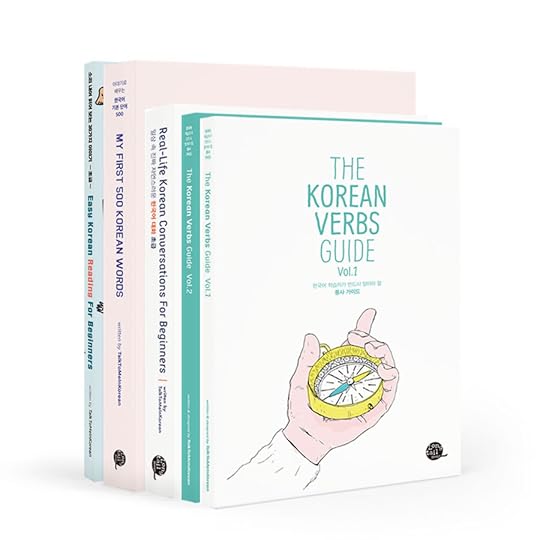
TTMIK Best Sellers (For Beginners) $95 $90.25Add to cart
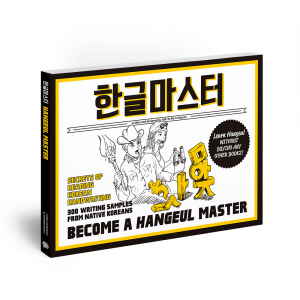
Hangeul Master – Learn how to read and write in Korean $22Add to cart
SALE

Level 1 Package (Grammar Textbook + Workbook) $31 $29.45Add to cart

My First 500 Korean Words $25Add to cart
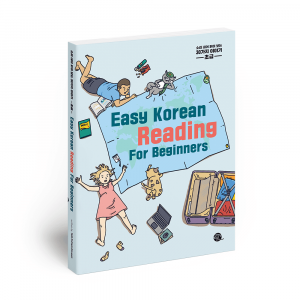
Easy Korean Reading For Beginners $18Add to cart
What do successful Korean learners have in common?
Over the past 20 years or so, I have met and interacted with a lot of language learners, both online and in person. The first time I did a language-related online activity was when I was in high school. Before the “world wide web” was a thing, I was a BBS(= bulletin board system) SysOp(= system operator) for a group of about 5,000 English learners in Korea. Since then, new Internet technologies have made it easier and easier for people to learn languages online and communicate with other learners. I have also personally hosted language exchange gatherings for many years where up to 150 people showed up each time. I could probably keep going with my stories of how many people I’ve met, but in summary, I’ve talked with a fairly large number of people about language learning and their experiences with it.
And one of the most common types of questions I have received over the years is about “how” to learn Korean, or any language for that matter. How to memorize vocabulary faster, how to speak more fluently, how to learn to speak Korean quickly, etc.
Every time I get such questions, I do my best to provide an answer that the person is seeking, after considering their goals, current level, and their learning style, but I can never guarantee that what works for one language learner will certainly work for another.
There are, however, a few common traits and habits that are found in literally ALL of the successful language learners that I’ve met so far. And I’d like to tell you about three such traits through three separate newsletters.
Want to learn Korean?
Talk To Me In Korean is here to help!
Learn with our systematic online curriculum, books and ebooks!
So, what is the first common trait of people that I’ve met who successfully learned to speak a new language, including Korean? (I will stick to the Korean language from now on for your easier understanding.)
They are learning Korean and they want to speak it well,
and their friends know about it.
Tell people you are learning Korean, post on social media about it, and share your progress, no matter how slow it feels.
I know that most people wouldn’t necessarily try to hide the fact that they are learning Korean, but unless you actively tell people about it, people around you most likely won’t notice your new hobby. And the more difficult something is, the more it helps when you get encouragement and attention from people around you, either in person or on social media.
Start learning today #text-2326016651 { text-align: center; color: rgb(53, 80, 154);}#text-2326016651 > * { color: rgb(53, 80, 154);} Start with online courses first Browse books first #text-box-1953609330 { width: 100%;}#text-box-1953609330 .text-box-content { font-size: 100%;} #banner-1228129800 { padding-top: 300px; background-color: rgb(250, 235, 235);}#banner-1228129800 .overlay { background-color: rgb(250, 235, 235);}#banner-1228129800 .ux-shape-divider--top svg { height: 150px; --divider-top-width: 100%;}#banner-1228129800 .ux-shape-divider--bottom svg { height: 150px; --divider-width: 100%;}
At first, like with any new hobby or project, everything about learning Korean as a new learner is exciting. But tricky pronunciation and difficult grammar points hit you hard pretty early on, such as the topic and subject marking particles. And that is exactly when you need to share your progress even more actively. And I am not just talking about Instagram or Twitter. You can tell your friends about your experience in person, join a study group or a Discord server to make study buddies.
The “how” of it may vary from person to person, but every successful language learner I’ve met was very active about sharing their progress and baby steps as they put in hours after hours of work into acquiring the new language. If you study in solitude and don’t interact with other people about it, the chances are high that you will stop studying regularly.
So stop and ask yourself for a second now. Do people around you already know that you are learning Korean and that you really, really, really want to get good at it? If not, with whom would you like to share your passion for Korean and how?
Thank you for reading and I will see you next time!
그럼 다음 시간에 만나요! 감사합니다.
Study with our popular Korean textbooks
SALE
[image error]
Beginner Package (Hangeul Master + Level 1 Textbook + Workbook) $53 $50.35Add to cart
SALE
TTMIK Best Sellers (For Beginners) $95 $90.25Add to cart
Hangeul Master – Learn how to read and write in Korean $22Add to cart
SALE
Level 1 Package (Grammar Textbook + Workbook) $31 $29.45Add to cart
My First 500 Korean Words $25Add to cart
Easy Korean Reading For Beginners $18Add to cart
November 28, 2021
restriction message – 30 Essential Irregular Korean Verbs
 This course is available only for Premium Members.Upgrade your membership to Premium now!Join the clubjQuery(".premium-info").parent().addClass("premium-info-wrapper");
Target level
From low to upper beginners
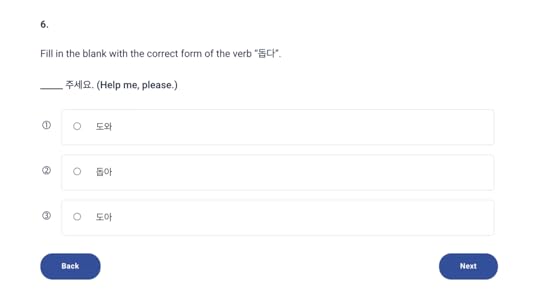
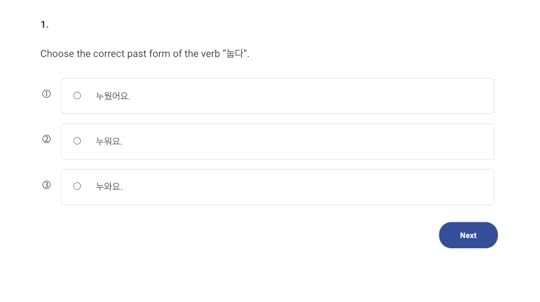
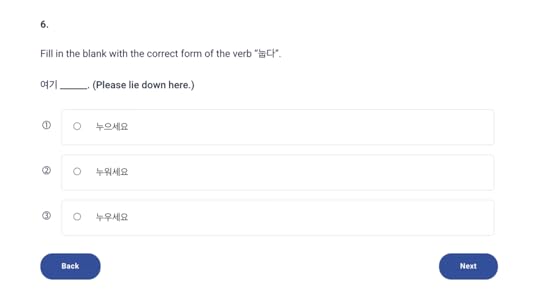
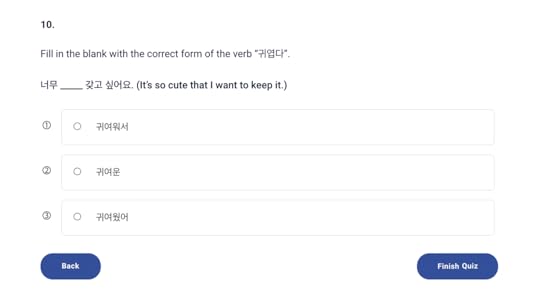
What can you achieve through this course?Learn how irregular verbs are conjugated when combined with various verb endingsLearn accurate pronunciation of each word and example sentencePractice speaking by listening and repeating after Kyung-hwaPractice 존댓말(formal language) and 반말(casual language)Sample lesson #gap-1033881670 { padding-top: 30px;} Review Quiz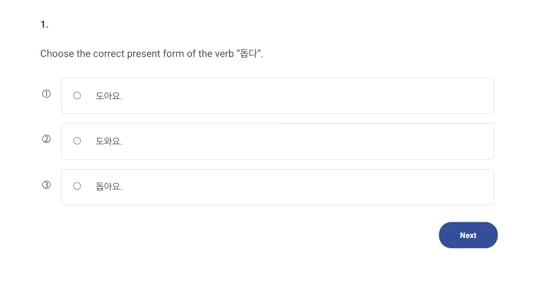 #image_1178423999 { width: 100%;}
  #image_2050845250 { width: 100%;}
  #image_820851112 { width: 100%;}
  #image_545902413 { width: 100%;}
  #image_85822242 { width: 100%;} #col-1229708277 > .col-inner { margin: 0 0px 0px 0px;} Lecturers
 Cassie Casper
 Kyung-hwa SunCourse language
Korean, English
What can you find inside the course?30 lessonsLesson notes for each lesson including extra examplesTable of contents 돕다 to help어렵다 to be difficult쉽다 to be easy춥다 to be cold덥다 to be hot눕다 to lie down굽다 to bake, to roast맵다 to be spicy아름답다 to be beautiful귀엽다 to be cute고르다 to choose다르다 to be different모르다 to not know빠르다 to be fast자르다 to cut기르다 to raise, to grow게으르다 to be lazy누르다 to press듣다 to listen, to hear걷다 to walk묻다 to ask싣다 to load낫다 to recover, to get well잇다 to join, to connect짓다 to build붓다 to pour긋다 to draw (a line)파랗다 to be blue까맣다 to be black이렇다 to be like thisNovember 18, 2021
Squid Game Second Season Confirmed
As most people know by now, Squid Game is a Korean drama series that has made waves all over the world since its Netflix release on September 17th this year. The show has become Netflix’s most popular non-English language series to date, a status it achieved by going viral shortly after it premiered.
For the uninitiated, Squid Game is a Korean drama set in a battle royale style arena where ‘contestants’, who are a group of people down on their luck and in serious financial straits, are tasked with winning a series of games based on nostalgic Korean children’s games for the chance at winning a large sum of money. The creepy twist is that anyone who loses a game also loses their life.
The plot enraptured viewers with its deeper undertones and commentary on social classes and the power of the rich over the poor. Many people could relate to this commentary in some way which surely contributed to its popularity. The final episode ended on a sort of cliffhanger which left fans with the question, will there be a Squid Game season 2?
Talk To Me In Korean is here to help!
Learn with our systematic online curriculum, books and ebooks!
As of November 9th, it has been officially confirmed by creator Hwang Dong-hyuk that the sequel to his smash hit is on its way. The exact Squid Game season 2 release date was not given, as the production is obviously still in the early stages, considering it has been barely 2 months since the initial release of season 1. However, Hwang himself said that since many key factors are falling into place for the series, he has hopes for a late 2022 release.
Having to wait a little over a year is not exactly uncommon for new seasons of major shows, so this news is not particularly shocking. Still, many fans of the show will surely be waiting with baited breath to see Squid Game 2 pop up on their Netflix homepage next year.
SALE
[image error]
Beginner Package (Hangeul Master + Level 1 Textbook + Workbook) $53 $45.05Add to cart
SALE
TTMIK Best Sellers (For Beginners) $95 $80.75Add to cart
SALE
Hangeul Master – Learn how to read and write in Korean $22 $19.80Add to cart
SALE
Level 1 Package (Grammar Textbook + Workbook) $31 $26.35Add to cart
SALE
My First 500 Korean Words $25 $22.50Add to cart
SALE
Easy Korean Reading For Beginners $18 $16.20Add to cart
5 Korean Proverbs Related to Food
If you are learning Korean, you will inevitably come across some proverbs, known as 속담 [sokdam]. They are an integral part of learning the Korean language so why not learn some proverbs while also learning a little about Korean foods?
1. 누워서 떡 먹기 [nuwoseo tteok meokki]
눕다 [nup-tta] = to lie down
떡 [tteok] = rice cake
먹다 [meok-tta] = to eat
Literal translation: eating rice cakes lying down
This Korean proverb is used in situations where something is really easy to do. It’s ‘a cinch’, as easy as lying down and eating rice cakes. It’s similar to the English saying “it’s a piece of cake!”
2. 수박 겉 핥기 [subak geot hal-kki]
수박 [subak]= watermelon
겉 [geot] = outside
핥다 [haltta] = to lick
Literal translation: licking the outside of a watermelon
If you were to lick the outside of a watermelon, what would you taste? Hopefully the watermelon has been washed, so you’d likely not taste much of anything! You have to cut the melon open to get to the sweet flesh inside. So when you use this proverb, you’re saying that you’ve only scratched the surface of something.
Talk To Me In Korean is here to help!
Learn with our systematic online curriculum, books and ebooks!
3. 싼 게 비지떡이다 [ssan ge bijitteogida]
싸다 [ssada] = to be cheap
게 [ge] = thing(s)
비지떡 [bijitteok]= Soy pulp rice cake
Literal translation: cheap things are soy pulp rice cakes
비지떡 [bijieok] is a type of rice cake that is made with the pulp, or leftovers of soybeans from the process of making other foods such as tofu. It is mixed with flour or starch and formed into a sort of cake that in reality is not much like a regular rice cake. So the meaning of this Korean proverb is that you get what you pay for. If you don’t spend much on something, you’re going to get something that is as low quality as a soy pulp rice cake.
4. 남의 떡이 더 커 보인다 [name tteogi deo keo bo-inda]
남 [nam] = another (person)
떡 [tteok] = rice cake
더 [deo] = more
커 [keo] = big
보이다 [bo-inda] = to look
Literal translation: Another person’s rice cake looks bigger
When you’re really hungry and someone gives out snacks, you might feel that your portion isn’t big enough, and that other peoples’ portions are bigger than yours even if that’s not actually the case. The English equivalent of this proverb is ‘the grass is not always greener on the other side’. It means you should be careful about coveting what other people have and be thankful for what you already have.
5. 식은 죽 먹기 [sigeun juk meo-kki]
식은 [sigeun] = cooled
죽 [juk] = porridge
먹다 [meok-tta] = to eat
Literal translation: eating cooled porridge
If you have two bowls of porridge, one that is boiling hot and one that has had time to cool down, which one would be easier to eat? The cooled one, of course! Porridge is also an easy-to-eat food since there is no chewing necessary, which is why it’s a common Korean comfort food when people are ill. When you use this proverb in Korean, you’re saying that something is a breeze, as easy as eating cooled porridge. It can be used interchangeably with the first proverb in this list, eating rice cakes while lying down.
Easy, right?
Start learning today #text-617714950 { text-align: center; color: rgb(53, 80, 154);}#text-617714950 > * { color: rgb(53, 80, 154);} Start with online courses first Browse books first #text-box-827336895 { width: 100%;}#text-box-827336895 .text-box-content { font-size: 100%;} #banner-400568127 { padding-top: 300px; background-color: rgb(250, 235, 235);}#banner-400568127 .overlay { background-color: rgb(250, 235, 235);}
SALE
[image error]
Beginner Package (Hangeul Master + Level 1 Textbook + Workbook) $53 $45.05Add to cart
SALE
TTMIK Best Sellers (For Beginners) $95 $80.75Add to cart
SALE
Hangeul Master – Learn how to read and write in Korean $22 $19.80Add to cart
SALE
Level 1 Package (Grammar Textbook + Workbook) $31 $26.35Add to cart
SALE
My First 500 Korean Words $25 $22.50Add to cart
SALE
Easy Korean Reading For Beginners $18 $16.20Add to cart
5 Most Important Korean Phrases to Learn First
Whether you are going on a short trip to Korea, or you simply want to learn the Korean language, you will have to start somewhere. It can be daunting to figure out where to start but this list will jumpstart your Korean learning with the 5 most important phrases you need to know as a beginner.
1. Hello – 안녕하세요 [annyeong-haseyo]
When you are greeted by someone, whether it be in the shops or on the street, you will hear this word. 안녕하세요 [a-nyeong-ha-se-yo] is the formal, polite way to say hello in Korean and is the most important for you to know when you are just beginning learning Korean or if you are in need of some simple travel Korean. A fun fact about this word: it has the literal meaning of ‘be in peace’.
2. Goodbye – 안녕히 가세요 [annyeonghi gaseyo] / 안녕히 계세요 [annyeonghi gyeseyo]
There are actually two phrases for the formal polite way to say goodbye in Korean, and which one you use depends on the situation. You may have noticed they sound very similar to each other, and they also sound similar to the phrase for “hello”. This is because the two phrases for goodbye also have the literal meaning of ‘go in peace’ and ‘stay in peace’. By looking at their literal meanings you may have a better understanding of what situations they are each used in. 안녕히 가세요 [annyeong-hi gaseyo] is used when the person(s) you are speaking to are the ones leaving, or when you are going separate ways. 안녕히 계세요 [annyeong-hi gyeseyo] is used when you are leaving, but the person(s) you are speaking to are staying.
Want to learn Korean?
Talk To Me In Korean is here to help!
Learn with our systematic online curriculum, books and ebooks!
3. Yes – 네 [ne]
One of the most important Korean phrases to learn is also the simplest. The word for yes in Korean is 네 [ne].
4. No – 아니요 [aniyo]Whether it’s to show disagreement or to answer a question, another extremely important expression to know is ‘no’ which in Korean is 아니요 [aniyo].
5. Thank you – 감사합니다 [gamsahamnida]
Once you’ve had a conversation or exchange with a Korean person, of course you will want to thank them for their time, and the phrase for thank you in Korean is 감사합니다 [gamsahamnida]
Start learning today #text-62839829 { text-align: center; color: rgb(53, 80, 154);}#text-62839829 > * { color: rgb(53, 80, 154);} Start with online courses first Browse books first #text-box-846961372 { width: 100%;}#text-box-846961372 .text-box-content { font-size: 100%;} #banner-953089641 { padding-top: 300px; background-color: rgb(250, 235, 235);}#banner-953089641 .overlay { background-color: rgb(250, 235, 235);}
Once you’ve learned these expressions, you’ll be able to have some simple conversations with Koreans. They will surely appreciate the effort and initiative you have put into the beginning of your Korean learning journey and you may even make some friends along the way!
SALE
[image error]
Beginner Package (Hangeul Master + Level 1 Textbook + Workbook) $53 $45.05Add to cart
SALE
TTMIK Best Sellers (For Beginners) $95 $80.75Add to cart
SALE
Hangeul Master – Learn how to read and write in Korean $22 $19.80Add to cart
SALE
Level 1 Package (Grammar Textbook + Workbook) $31 $26.35Add to cart
SALE
My First 500 Korean Words $25 $22.50Add to cart
SALE
Easy Korean Reading For Beginners $18 $16.20Add to cart
BTS to Perform Hit Song ‘Butter’ at the American Music Awards
The global K-pop sensation, BTS has taken the charts by storm yet again with their hit, ‘Butter’, which ranked number 1 in Billboard’s Hot 100 chart for 10 consecutive weeks this summer. The music video has garnered over 600 million views on youtube since its release on May 20th this year. It is not surprising that with such a massive outpouring of support from the BTS fanbase, ARMY that the group is being nominated for 3 awards. The 3 categories they have been nominated for are Artist of the Year, Favorite Pop Group, and Favorite Pop Song.
Talk To Me In Korean is here to help!
Learn with our systematic online curriculum, books and ebooks!
Regardless of if the group takes home these awards, fans will be excited to see that they will be taking the stage to perform the Butter Remix with Megan Thee Stallion. The remixed version of the song was released featuring a rap portion by Megan Thee Stallion 3 months after the song’s initial release, on August 27th this year. The performance was among the first to be announced for the awards show, which will take place on November 21st at 8pm EST.
Seeing BTS at the AMAs is no surprise to anyone at this point. The group is already a 6-time awards winner, having won 2 awards in 2020, 3 in 2019, and 1 in 2018. They have broken numerous records including being the ‘Longest-charting K-pop album on the Billboard 200’ for their album Love Yourself: Her, which remained on the charts for a whopping 21 weeks. With such an impressive track record, ARMY and casual viewers alike surely will not be disappointed with BTS performing ‘Butter’ at the upcoming 2021 AMAs.
Start learning today #text-4290238691 { text-align: center; color: rgb(53, 80, 154);}#text-4290238691 > * { color: rgb(53, 80, 154);} Start with online courses first Browse books first #text-box-1662551801 { width: 100%;}#text-box-1662551801 .text-box-content { font-size: 100%;} #banner-158021280 { padding-top: 300px; background-color: rgb(250, 235, 235);}#banner-158021280 .overlay { background-color: rgb(250, 235, 235);} Study with our popular Korean textbooksSALE
[image error]
Beginner Package (Hangeul Master + Level 1 Textbook + Workbook) $53 $45.05Add to cart
SALE
TTMIK Best Sellers (For Beginners) $95 $80.75Add to cart
SALE
Hangeul Master – Learn how to read and write in Korean $22 $19.80Add to cart
SALE
Level 1 Package (Grammar Textbook + Workbook) $31 $26.35Add to cart
SALE
My First 500 Korean Words $25 $22.50Add to cart
SALE
Easy Korean Reading For Beginners $18 $16.20Add to cart
November 14, 2021
Butter and its idiomatic meaning in the Korean language
BTS’s new song, Butter, is one of the most popular songs these days and not long after its release, it has already won several awards and broken various records on multiple music-playing platforms.
So since the English word butter is being mentioned a lot in people’s conversations, tweets and comments, why don’t we take a moment to think about the Korean word for it? It’s quite similar to English ㅡ 버터, pronounced like [beo-teo]. (We will skip romanization for the other sample words and phrases that follow, since romanization isn’t always true to the actual Korean sounds anyway. You can learn to read and write Hangeul within a couple of hours with our Hangeul course or Hangeul book.)
When I think about 버터, either the word or the cooking ingredient itself, these words pop into my head:
무염(無鹽) 버터: butter without any salt added 버터샵: a Korean stationery & interior shop brand 앙버터: two slices of bread with red-bean paste and butter in between (The word 앙 comes from 팥앙금[= 팥소, red-bean paste].) 마가린: margarine (Butter is more commonly consumed than margarine these days but back when I was little, margarine was the only “buttery” thing we had in my house to add to bread or rice.) Want to learn Korean?
Talk To Me In Korean is here to help!
Learn with our systematic online curriculum, books and ebooks!
But these words are actually not the first to come to my mind when I think about the word 버터. It’s actually an idiomatic expression that I thought of before anything else, and it is 버터 발음.
버터 발음(butter-like pronunciation) describes someone’s fluent pronunciation of a foreign language, and in 99% of the time, it’s about English. It’s an impression that a lot of Korean people have about English, presumably because of sounds like R, L, V, etc.
When a celebrity speaks fluent English on a TV show with a good pronunciation, especially with their R’s and L’s pronounced confidently, there will be news articles and YouTube videos about their 버터 발음, which is a compliment.
When we learn new languages, we naturally want to strive for a good & accurate pronunciation, so 버터 발음 is what all of us are going for in any foreign language. But for some reason, there is a certain amount of pressure on a lot of Korean people learning English that if they try too hard to sound like a native, maybe their overly emphasized 버터 발음 might make them feel embarrassed in front of other people. Possible reasons? Maybe they think their peers will tell them they are trying too hard. Maybe they might look like they are trying to show off. Maybe they don’t think their general level of English is not up to par with their fluent pronunciations of R’s and L’s yet.
Start learning today #text-728431709 { text-align: center; color: rgb(53, 80, 154);}#text-728431709 > * { color: rgb(53, 80, 154);} Start with online courses first Browse books first #text-box-1532859628 { width: 100%;}#text-box-1532859628 .text-box-content { font-size: 100%;} #banner-836602168 { padding-top: 300px; background-color: rgb(250, 235, 235);}#banner-836602168 .overlay { background-color: rgb(250, 235, 235);}#banner-836602168 .ux-shape-divider--top svg { height: 150px; --divider-top-width: 100%;}#banner-836602168 .ux-shape-divider--bottom svg { height: 150px; --divider-width: 100%;}
Whatever the reason may be, a lot of English learners in Korea tend to have this love-hate relationship with 버터 발음. And the moment the word “butter” started trending due to BTS’s new song of the same title, I knew I HAD TO talk about 버터 발음 to everyone learning Korean at Talk To Me In Korean.
And I wonder ㅡ if a fluent & smooth English pronunciation with confident R’s, L’s and V’s is called 버터 발음 or 버터 바른 발음(바르다 means to “spread” something like butter or jam on bread), what can we call a fluent & smooth KOREAN pronunciation? How about 참기름(sesame-oil) 발음? I will leave you to decide what is a good equivalent of an idiomatic expression for good Korean pronunciation by a learner.
Your Korean pronunciation will naturally and definitely get better as you practice more and more, but don’t worry too much about sounding perfect from the beginning. Balance is always key, so pay attention not just to your pronunciation but also what kind of sentences you can form on your own to communicate with others in Korean.
Thank you for reading, and 다음 글에서 만나요!
Study with our popular Korean textbooksSALE
[image error]
Beginner Package (Hangeul Master + Level 1 Textbook + Workbook) $53 $50.35Add to cart
SALE
TTMIK Best Sellers (For Beginners) $95 $90.25Add to cart
Hangeul Master – Learn how to read and write in Korean $22Add to cart
SALE
Level 1 Package (Grammar Textbook + Workbook) $31 $29.45Add to cart
My First 500 Korean Words $25Add to cart
Easy Korean Reading For Beginners $18Add to cart
November 1, 2021
3 details in Squid Game that you only catch when you understand Korean
Warning, spoilers ahead.
The Netflix Korean drama, Squid Game, has taken the world by storm for its commentary on social classes and the corruption of money. There is no doubt that it can be enjoyed by people from all cultures and backgrounds, regardless of if they understand Korean or not, but how does learning Korean and understanding Korean change the experience of watching Squid Game?
1. What does the name Sae-byeok mean?
Kang Sae-byeok and her brother, Kang Cheol were both told that they had beautiful names at least once in the series, but unless you know Korean, you wouldn’t know why as it’s never explained. Sae-byeok means dawn, a beautiful name indeed. Kang Cheol means steel, which is a very cool name as Sang-woo’s mother told him in the final episode.
2. Showing respect in Korean
Ali Abdul, the Pakistani immigrant, speaks in the highest formality level to the elders in the show, and a formal level when speaking to everyone else. This shows that he is very polite and has respect for others even if he does not know them well. On the other hand, Sae-byeok speaks in banmal, the lowest formality level, in all of her interactions with other people. It shows how little she cares about what others think of her.
We have everything you need!
Learn with our systematic online curriculum, books and ebooks!
3. Knowing the games ahead of time
It’s not possible to separate a language from its underlying culture, so if you understand Korean and thus Korean culture, you would have been able to pick up on hints that otherwise may not have been obvious. In episode 2, it was easy to guess that they would be playing 뽑기[ppob-gi], a game played by trying to remove shapes from dalgona candy, as soon as it was revealed that sugar was involved, but especially so when the shapes were shown, as many of these shapes are classic mold shapes for the game.
Another episode is titled ‘Gganbu’, a word that was used for allies in the games 딱지[ttakji] and 구슬 치기[guseul chigi] by older generations when they were children. 딱지[ttakji] is the game played by Gi-hun in the first episode using folded paper squares, so it was easy to guess that they wouldn’t be playing that game yet again, but rather 구슬 치기[guseul chigi] or marbles in that episode.
It is beneficial to learn Korean so when you watch your favorite Korean Dramas on Netflix, you can pick out fun details like these!
SALE
[image error]
Beginner Package (Hangeul Master + Level 1 Textbook + Workbook) $53 $50.35Add to cart
SALE
TTMIK Best Sellers (For Beginners) $95 $90.25Add to cart
Hangeul Master – Learn how to read and write in Korean $22Add to cart
SALE
Level 1 Package (Grammar Textbook + Workbook) $31 $29.45Add to cart
My First 500 Korean Words $25Add to cart
Easy Korean Reading For Beginners $18Add to cart
TalkToMeInKorean's Blog

- TalkToMeInKorean's profile
- 254 followers

