
TalkToMeInKorean's Blog, page 3
November 4, 2022
What’s the difference? 어렵다 vs. 힘들다 (Both mean “difficult” or “hard”.)
The most “basic” translation for “to be difficult” or “to be hard” is 어렵다.
어렵다 is conjugated like the following.
어려워요. = It’s difficult. (present tense)어려울 거예요. = It will be difficult. (future tense)어려웠어요. = It was difficult. (past tense)어려운 = difficult (adjective form)When you talk about an exam’s difficulty level being high, you say 어렵다. It’s a 어려운 시험. When a question is a tough question, it’s a 어려운 질문.
어려운 시험 a difficult test어려운 질문 a difficult question어려운 퀴즈 a difficult quiz어려운 게임 a difficult gameBut you can also use 어렵다 when the situation is tough. 
Talk To Me In Korean is here to help!
Learn with our systematic online curriculum, books and ebooks!
When things are tough, or you are going through difficult times or some kind of struggle, you can use 어렵다, too. And for this meaning, you can also use 힘들다.
힘들다 originally means “힘이 들다”, which means “strength is required” or “effort is needed”. When something requires effort/strength/energy, it is not an easy task.
So when things are tough or when you are struggling, you can say 어렵다 or 힘들다.
요즘 어려워요. = Things are tough these days. 요즘 힘들어요. = Things are tough these days.요즘 공부가 힘들어요. = I am having trouble with studying these days.일이 힘들어요. = Work is tough. 이사 때문에 힘들어요. = I’m stressed because of moving (to a new place).And with 힘들다, because 힘 literally means “strength”, it can also be used to talk about physically demanding activities. 힘든 운동 is a tiring or tough exercise.
In summary, f you are JUST talking about the difficulty level of something, you use 어렵다. But when things are tough and the situation is stressful, you can use either 어렵다 or 힘들다.
Start learning today #text-518971481 { text-align: center; color: rgb(53, 80, 154);}#text-518971481 > * { color: rgb(53, 80, 154);} Start with online courses first Browse books first #text-box-35715950 { width: 100%;}#text-box-35715950 .text-box-content { font-size: 100%;} #banner-2039363552 { padding-top: 300px; background-color: rgb(250, 235, 235);}#banner-2039363552 .overlay { background-color: rgb(250, 235, 235);}#banner-2039363552 .ux-shape-divider--top svg { height: 150px; --divider-top-width: 100%;}#banner-2039363552 .ux-shape-divider--bottom svg { height: 150px; --divider-width: 100%;}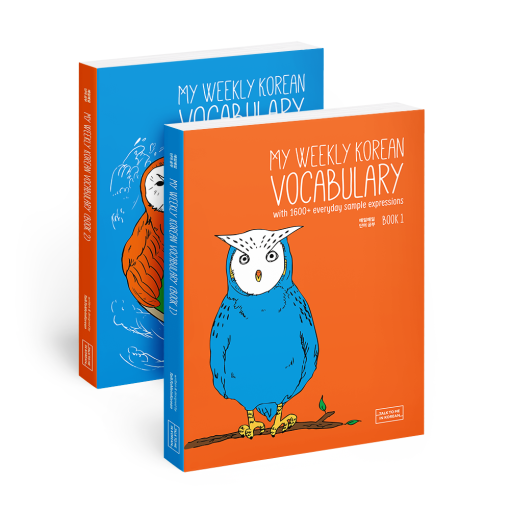 SALE My Weekly Korean Vocabulary Book 1 + Book 2
 $44 $41.80
Each day you have one new keyword, and built upon that keyword are 20 additional phrases and sentences that get progressively longer.
Read more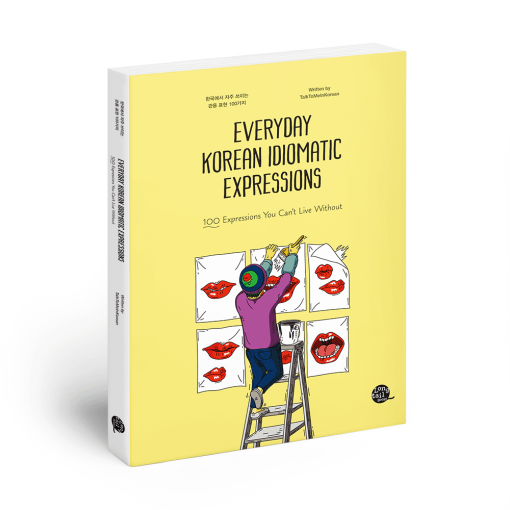 Everyday Korean Idiomatic Expressions
 $21
Through this book, you are not only learning the actual idiomatic expressions and how to use them, but also how to explain things in Korean naturally and fluently, by studying with the transcripts and translations.
Read more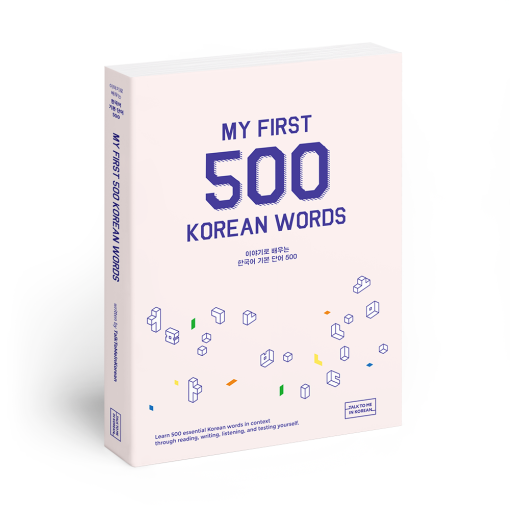 My First 500 Korean Words
 $25
Learn your first 500 Korean words and thousands of related words and expressions that you can start using right away in your everyday conversations in Korean!
Read moreStudy with our popular Korean textbooks
SALE
Beginner Package (Hangeul Master + Level 1 Textbook + Workbook) $53 $50.35Add to cart
SALE
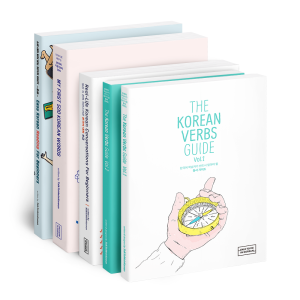
TTMIK Best Sellers (For Beginners) $95 $90.25Add to cart
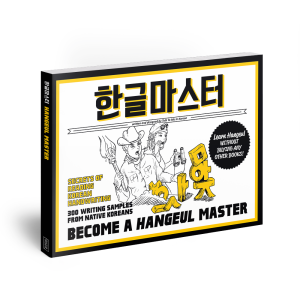
Hangeul Master – Learn how to read and write in Korean $22Add to cart
SALE
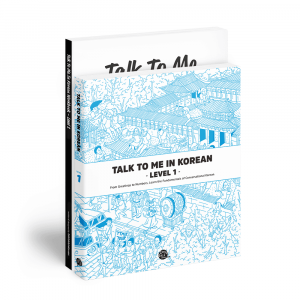
Level 1 Package (Textbook + Workbook) $31 $29.45Add to cart
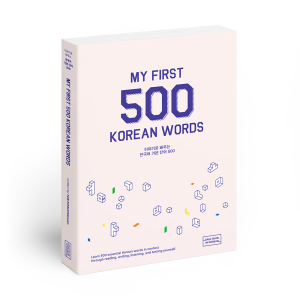
My First 500 Korean Words $25Add to cart
Easy Korean Reading For Beginners $18Add to cart


How to say you “like” something/someone in Korean: synonyms for 좋아하다
You probably already know that 좋아하다 means “to like”. You can say that about things and people. What are some other words you can use instead of 좋아하다? Here are some of them with some example sentences.
좋아하다 = to like (in general) 좋아하는 책 = a book I like좋아하는 사람 = someone I like 마음에 들다 = to like (something/someone that you are seeing or experiencing for the first time)여기 오늘 처음 와 봤는데 마음에 들어요. = It’s my first time here, and I like it here.이 노래 마음에 들어요. = Oh, I like this song! 아끼다 = to cherish, to hold dear, to value제가 아끼는 책이에요. = It’s a big that I cherish.가장 아끼는 물건이 뭐예요? = What’s an object you value the most? 애지중지하다 = to cherish, to treasure 제 친구는 자전거를 애지중지해요. = My friend takes great care of his precious bike.애지중지하는 물건 = an object that one cherishes (and doesn’t want anyone to touch) 귀여워하다 = to adore, to dote on 선생님은 학생들을 정말 귀여워했어요. = The teacher adores her students.자기 자식처럼 귀여워하다 = to love someone like their own child Want to learn Korean?
Talk To Me In Korean is here to help!
Learn with our systematic online curriculum, books and ebooks!
And here are a couple more words related to 좋아하다.
사랑하다 = to love선호하다 = to preferAnd lastly, here is a slang expression that you might hear Korean native speakers use quite often.
애정하다 (slang) to really like애정 is originally a noun that means “love” or “affection” and people now use it as a verb by attaching 하다 to it.
제가 애정하는 앨범이에요. = It’s an album that I love.애정하는 카메라 = a camera that one cherishes Start learning today #text-1471456703 { text-align: center; color: rgb(53, 80, 154);}#text-1471456703 > * { color: rgb(53, 80, 154);} Start with online courses first Browse books first #text-box-519128219 { width: 100%;}#text-box-519128219 .text-box-content { font-size: 100%;} #banner-1126540299 { padding-top: 300px; background-color: rgb(250, 235, 235);}#banner-1126540299 .overlay { background-color: rgb(250, 235, 235);}#banner-1126540299 .ux-shape-divider--top svg { height: 150px; --divider-top-width: 100%;}#banner-1126540299 .ux-shape-divider--bottom svg { height: 150px; --divider-width: 100%;} SALE My Weekly Korean Vocabulary Book 1 + Book 2 $44 $41.80
Each day you have one new keyword, and built upon that keyword are 20 additional phrases and sentences that get progressively longer.
Read more Everyday Korean Idiomatic Expressions $21
Through this book, you are not only learning the actual idiomatic expressions and how to use them, but also how to explain things in Korean naturally and fluently, by studying with the transcripts and translations.
Read more My First 500 Korean Words $25
Learn your first 500 Korean words and thousands of related words and expressions that you can start using right away in your everyday conversations in Korean!
Read moreStudy with our popular Korean textbooks
SALE
Beginner Package (Hangeul Master + Level 1 Textbook + Workbook) $53 $50.35Add to cart
SALE
TTMIK Best Sellers (For Beginners) $95 $90.25Add to cart
Hangeul Master – Learn how to read and write in Korean $22Add to cart
SALE
Level 1 Package (Textbook + Workbook) $31 $29.45Add to cart
My First 500 Korean Words $25Add to cart
Easy Korean Reading For Beginners $18Add to cart
November 3, 2022
Learn Korean through easy songs – Korean grammar & vocab songs!
Can you learn to speak Korean through songs? Probably not the entire language, but you can certainly pick up lots of useful vocabulary and expressions through music! K-pop songs are loved by many people around the world, but if you have been looking for something more specifically created for Korean learners, you are in the right place!
We have these short songs that you can play on repeat to automatically absorb new Korean knowledge!
매일 조금씩 (A little bit every day): Song for all Korean learners
Learn the Korean future tense rules through this song!
The Korean past tense will become easier after you listen to this!
Want to learn Korean?
Talk To Me In Korean is here to help!
Learn with our systematic online curriculum, books and ebooks!
Learn the most basic present tense conjugations through this song.
Learn the most fundamental expressions about time in Korean!
Did you enjoy the songs? We have a ton of resources available for you at various levels! Check out our online courses and books and start learning today.
Start learning today #text-1230857478 { text-align: center; color: rgb(53, 80, 154);}#text-1230857478 > * { color: rgb(53, 80, 154);} Start with online courses first Browse books first #text-box-135229859 { width: 100%;}#text-box-135229859 .text-box-content { font-size: 100%;} #banner-1121979522 { padding-top: 300px; background-color: rgb(250, 235, 235);}#banner-1121979522 .overlay { background-color: rgb(250, 235, 235);}#banner-1121979522 .ux-shape-divider--top svg { height: 150px; --divider-top-width: 100%;}#banner-1121979522 .ux-shape-divider--bottom svg { height: 150px; --divider-width: 100%;}Study with our popular Korean textbooks
SALE
Beginner Package (Hangeul Master + Level 1 Textbook + Workbook) $53 $50.35Add to cart
SALE
TTMIK Best Sellers (For Beginners) $95 $90.25Add to cart
Hangeul Master – Learn how to read and write in Korean $22Add to cart
SALE
Level 1 Package (Grammar Textbook + Workbook) $31 $29.45Add to cart
My First 500 Korean Words $25Add to cart
Easy Korean Reading For Beginners $18Add to cart
How to say “smart” in Korean: 똑똑하다 vs. 영리하다
How do you say that someone is “smart” or “clever” in Korean? These are some words you can find in the dictionary, and all of these words are actually used.
똑똑하다영리하다현명하다 머리가 좋다똑똑하다 and 영리하다 are usually interchangeable. You can say these two words about people, animals, or methods.
똑똑한 사람 = smart person, clever person영리한 사람 = smart person, clever person똑똑한 강아지 = smart puppy영리한 강아지 = smart puppy똑똑한 방법 = clever method영리한 방법 = clever methodOne thing to note is that it is often NOT appropriate to say 똑똑하다 or 영리하다 about someone that’s older than you or higher in social status. Perhaps you can describe them using those words (저희 교수님은 정말 똑똑하세요. = My professor is really smart.) but not directly to that person as a compliment. So don’t say 똑똑하시네요 (= You’re smart.) to your professor even if you mean well.
If you are complimenting someone for being smart or clever and that person is NOT older than you, you can feel free to use 똑똑하다 or 영리하다.
Although 똑똑하다 and 영리하다 are interchangeable, since 똑똑하다 is a native Korean word and 영리하다 is a sino-Korean word, meaning it’s based on Chinese characters, 영리하다 can sound a bit more formal and can be used more frequently to describe methods, tactics and approachs that are “smart”.
Then how can you describe someone being smart and still sound polite?
Want to learn Korean?
Talk To Me In Korean is here to help!
Learn with our systematic online curriculum, books and ebooks!
#text-2231741295 { font-size: 0.75rem; text-align: center; color: rgb(3, 13, 81);}#text-2231741295 > * { color: rgb(3, 13, 81);}
Get Started
#text-box-1256737192 { width: 90%;}#text-box-1256737192 .text-box-content { font-size: 100%;}
#banner-1660401886 { padding-top: 310px; background-color: rgb(215, 227, 242);}#banner-1660401886 .ux-shape-divider--top svg { height: 150px; --divider-top-width: 100%;}#banner-1660401886 .ux-shape-divider--bottom svg { height: 150px; --divider-width: 100%;}
If you want to still sound polite when you say that someone older or higher is smart, you can use 머리가 좋다. This expression literally means that “head is good”. It really depends on the situation whether 머리가 좋다 will sound proper or not, but in general, 머리가 좋다 is safer to use than 영리하다 and 똑똑하다 if you want to sound more polite.
And another word you want to know is 현명하다. It means “to be wise”.
현명한 사람 = a wise person현명한 선택 = a wise choice현명한 조언 = wise adviceThank you for reading and thank you for studying with Talk To Me In Korean!
If you’d like to learn more Korean vocabulary as well as avoid making common mistakes that learners often make, check out these books we have!
 Common Mistakes Korean Learners Make
 $21
Learn to speak more natural Korean and avoid common mistakes!
Read more Everyday Korean Idiomatic Expressions $21
Through this book, you are not only learning the actual idiomatic expressions and how to use them, but also how to explain things in Korean naturally and fluently, by studying with the transcripts and translations.
Read more SALE My Weekly Korean Vocabulary Book 1 + Book 2 $44 $41.80
Each day you have one new keyword, and built upon that keyword are 20 additional phrases and sentences that get progressively longer.
Read moreStudy with our popular Korean textbooks
SALE
Beginner Package (Hangeul Master + Level 1 Textbook + Workbook) $53 $50.35Add to cart
SALE
TTMIK Best Sellers (For Beginners) $95 $90.25Add to cart
Hangeul Master – Learn how to read and write in Korean $22Add to cart
SALE
Level 1 Package (Grammar Textbook + Workbook) $31 $29.45Add to cart
My First 500 Korean Words $25Add to cart
Easy Korean Reading For Beginners $18Add to cart
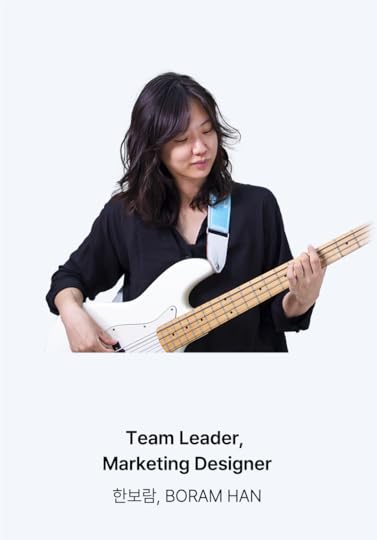
Meet our Marketing Team!
저희 팀은 Talk To Me In Korean의 상품과 서비스 가치를 홍보하고 TTMIK의 메시지를 전하는 일을 합니다. 여러분이 지금 읽고 계시는 뉴스레터와 소셜미디어에서 발행되는 콘텐츠도 저희 팀에서 제작하고 있습니다.
Our team is in charge of communicating the values of TTMIK’s products and services and delivering TTMIK’s message to you. We create various content that you enjoy on our social media as well as this newsletter you are reading now! 
 #image_412993918 { width: 100%;}
 [image error] #image_1912672902 { width: 100%;}
Question 1.
자기소개 해 주세요.
Could you introduce yourselves?
보람: 안녕하세요, 저는 마케팅 기획과 디자인을 담당하고 있는 한보람입니다. 톡톡 여러분이 티티믹에 보내 주시는 응원과 사랑 덕분에 자부심을 갖고 일하고 있어요.
Hi, I’m Boram. I develop marketing strategies and do graphic design. I feel really proud of working at TTMIK because of all your love and support!
하은: 자기소개는 항상 어려운 것 같아요. 저는 다른 언어 배우는 걸 좋아하고 독일어를 오랫동안 공부했었어요. 그러다가 한국어를 가르치는 일을 시작하게 되었고 지금은 티티믹에서 콘텐츠 마케팅 일을 하고 있어요.
Introducing myself is always not easy. I like to learn different languages and I’ve studied German for a long time. Then, I found my interest in Korean language education, and here I am doing content marketing at TTMIK.
Question 2.
요즘의 관심사를 키워드로 말해 본다면?
What are words to describe your personal interests?
보람: 건반, 겨울, 턴테이블, 카메라, 인디 밴드, 바다.
keyboard, winter, turntable, camera, indie bands, ocean.
하은: 요가, 강아지, 더 나은 라이프 스타일.
Yoga, dogs, a better lifestyle.
Question 3.
하루 중 제일 좋아하는 시간대는 언제인가요?
What is your favorite time of day?
보람: 저녁 노을이 지는 때요. 노을이 지고 나면 진짜 하루를 시작할 수 있어요. 그리고 날씨에 따라 매번 다른 모습을 볼 수 있어서 노을 지는 때를 좋아해요.
I like the evening time when the sun is setting. I feel like my day actually starts after sunset. I also love to watch the sunset since it looks different every time as the weather changes.
하은: 밤에 잘 준비를 하는 시간을 좋아해요. 하루 중 가장 평화롭고 고요한 시간인 것 같아요.
It would be around the time when I am getting ready for bed. It’s the most peaceful and quiet time of my day.
Question 4.
가장 좋아하는 티티믹 코스는 뭐예요?
What’s your favorite TTMIK course?
하은
제가 새로운 언어를 배운다면 이런 코스로 공부하고 싶어요. 이런 형태의 중국어 코스 어디 없나요?
This is the course that I would like to take if I learn a new language. If there’s any Chinese course like this, please let me know!
 #image_348408421 { width: 100%;}
 Learn more
보람
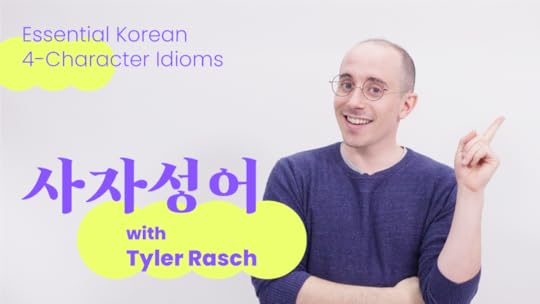
생활 속에서 많이 쓰이는 사자성어를 배울 수 있어요. 전체 디자인을 한 첫 번째 코스라서 가장 기억에 남아요.
You can learn the Korean 4-character idioms used in daily life. This is also the first course that I designed, so it’s very memorable for me.
 #image_1861332951 { width: 100%;}
 Learn more
November 2, 2022
“What is this?” in Korean: 이게 뭐예요? vs. 이건 뭐예요?
These three sentences are all basically translated to “What is this?” but they can have slightly different meanings and tones.
이거 = this, this thing, this one뭐 = what-예요 = the present tense conjugation of 이다, in polite formThe 1st form, 이거 뭐예요? is just a combination of these three elements, and no particle is being used. In other words, a particle was omitted after 이거. So you can use this phrase to ask “What is this?” in the most neutral way.
The 2nd form, 이건 뭐예요? is shortened from 이거는 뭐예요? or 이것은 뭐예요? And because you are using the topic marking particle -은/는, you can show contrast or give a conversation-start kind of vibe. Imagine yourself walking into a room and seeing something on the table, and you wonder what it is. You ask to someone, “이건… 뭐예요?” meaning “Um… as for this thing, (waiting for attention) what is it?” You can say that 이건 뭐예요? can often sound more “soft” and less blunt or direct than 이거 뭐예요? in many cases. (It really depends on the tone of your voice, though.)
The 3rd form, 이게 뭐예요? is shortened from 이것이 뭐예요? And because -이 is the “subject marking” particle, you are focusing more on WHAT this thing is. When you are surprised or upset after seeing something you didn’t expect, you will probably use 이게 뭐예요? more often than 이거 뭐예요? or 이건 뭐예요? (Again, it depends on the situation and your tone.)
This is the general difference among these three phrases, and you will need more practice to completely understand the subtle nuances of sentence variations like these. If you need more help with particles, check out our one-stop guide video here!
If you have a basic understanding of the particles -은, -는, -이, and -가, you can also move on to these lessons about word contractions in the Korean language.
Level 4 Lesson 17 – Word Contractions (Part 1) Level 4 Lesson 23 – Word Contractions (Part 2)These lessons are in Level 4 of our Essential Korean Curriculum. Click on the banner below to see the full table of contents for TTMIK Level 4.
Talk To Me In Korean is here to help!
Learn with our systematic online curriculum, books and ebooks!
Study with our popular Korean textbooks
SALE
Beginner Package (Hangeul Master + Level 1 Textbook + Workbook) $53 $50.35Add to cart
SALE
TTMIK Best Sellers (For Beginners) $95 $90.25Add to cart
Hangeul Master – Learn how to read and write in Korean $22Add to cart
SALE
Level 1 Package (Grammar Textbook + Workbook) $31 $29.45Add to cart
My First 500 Korean Words $25Add to cart
Easy Korean Reading For Beginners $18Add to cart
October 31, 2022
How do you learn to read and write in Korean Hangeul?
Even if you don’t know anything about the Korean language and haven’t taken any lessons before, you can learn how to read and write every letter in the Korean language quite easily. The Korean writing system is called “Hangeul” and it is literally the easiest writing system in the world that you can learn because it was invented based on logical rules. Just invest a couple of hours and you will be reading everything that’s written in Korean.
Just by learning Hangeul, of course, you won’t be able to understand everything that you hear or read. You will still have to study in order to actually become conversational in Korean, but just the fact that the writing system is easy to learn will help you get started with the Korean language much more confidently.
Watch our video lesson here and start learning! After that, you can take our full curriculum to learn to speak Korean fluently.
Did you enjoy the lesson above? Take the rest of the course right here!

Talk To Me In Korean is here to help!
Learn with our systematic online curriculum, books and ebooks!
Study with our popular Korean textbooks
SALE
Beginner Package (Hangeul Master + Level 1 Textbook + Workbook) $53 $50.35Add to cart
SALE
TTMIK Best Sellers (For Beginners) $95 $90.25Add to cart
Hangeul Master – Learn how to read and write in Korean $22Add to cart
SALE
Level 1 Package (Grammar Textbook + Workbook) $31 $29.45Add to cart
My First 500 Korean Words $25Add to cart
Easy Korean Reading For Beginners $18Add to cart
October 27, 2022
Korean Idioms Quiz related to ‘얼굴 (face)’ – Answers
Answers
Q1: a
Q2: c
Q3: c
Q1.
A: 어제 예지랑 얼굴 붉히는 일 있었어. (Yesterday, there was something between Yeji and me that made our faces become red.)
B: a) 너 또 약속 어겼어? (Did you break your promise again?)
literal meaning = to become red in the face
actual meaning = to get angry and feel tension toward each other
Q2.
A: 얼굴만 내밀고 가. (Just come and stick your face out.)
B: c) 진짜 잠깐만이야. (Ok, but it’s only for a moment.)
literal meaning = to stick one’s face out
actual meaning = to greet someone briefly
Q3.
A: 나 너무 부끄러워서 노래 못 하겠어. 어떡해? (I cannot sing because I feel too shy. What should I do?)
B: c) 얼굴에 철판 깔아야지. (Just lay a steel plate on your face.)
literal meaning = to lay a steel plate on your face
actual meaning = to be shameless
_
Not your level? No worries.
There are 10 levels in Talk To Me In Korean’s Essential Curriculum.
Find out which level you are at now and learn with our systematic curriculum to achieve your Korean learning goals!
October 25, 2022
Why are Korean adjectives called “descriptive verbs”?
In our Korean lessons, we often explain that Korean adjectives are basically all “verbs”. Or to be more precise, they are all “descriptive verbs”. Why is that? How are adjective verbs? Let us give you a brief explanation here.
Look at these English words:
bigsmallprettycheapexpensiveThey are all “adjectives” because they describe the state of things and can also modify nouns, like “big buildings”, “small children”, “pretty flowers”, “cheap food” and “expensive hotels”. English adjectives can be used after the verb “to be” or before nouns.
It is big.That is a big box.English adjectives don’t change shape whether you put them after a verb or in front of a noun. However, Korean adjectives work in a different way. Depending on where you use them, Korean adjectives will have to change form. [Continue reading below]
Want to learn Korean?
Talk To Me In Korean is here to help!
Learn with our systematic online curriculum, books and ebooks!
When you want to say that something is big, the Korean word you can use is 크다. That is the dictionary form, which means that 크다 is the “original shape” of the word.
But unlike the English word “big”, you can’t just use the word 크다 everywhere, because Korean sentences work differently.
크다 means “to be big”, including the “to be” part.So you have to “conjugate” the word to be able to use it in a sentence.If you want to say “It is big.”, you use the present tense conjugation. Learn the basic Korean present tense rules here. It’s not that hard! I promise.
크다(to be big) 커요(it is big)
 See? It is used in a different form. It is conjugated, just like a verb. You can conjugate 크다 into other tenses and forms, too.
Past tense: 컸어요(it was big)Future tense: 클 거예요(it will be big)Conditional: 크면(if it’s big)Negative: 크지 않아요(it’s not big)And what if you want to use it in front of a noun, like “big hands”? In that case, again, you need to conjugate the word into its “adjective” form, which can be used in front of a noun to modify it.
크다(to be big) 큰(big + noun)[Continue reading ]
So there you go! This is why Korean “adjectives” are called “descriptive verbs”, not just here at Talk To Me In Korean but also by many other Korean teachers. English adjective can be placed inside sentences without changing form, but in order to use Korean “adjectives”, you need to take the dictionary form of the word and conjugate it into its “adjective” form.
Most Korean adjectives basically function like verbs, and to distinguish them from other types of verbs like “to do”, “to eat” and “to go”, we call these adjective-verbs “descriptive verbs”.
We hope this helps and to learn more with our systematic curriculum, simply head over to our Learning Center. Thank you for reading!
And if you want a more detailed explanation, watch our video lesson here!
Study with our popular Korean textbooks
SALE
Beginner Package (Hangeul Master + Level 1 Textbook + Workbook) $53 $50.35Add to cart
SALE
TTMIK Best Sellers (For Beginners) $95 $90.25Add to cart
Hangeul Master – Learn how to read and write in Korean $22Add to cart
SALE
Level 1 Package (Grammar Textbook + Workbook) $31 $29.45Add to cart
My First 500 Korean Words $25Add to cart
Easy Korean Reading For Beginners $18Add to cart
July 19, 2022
restriction message – [Updated] Learn to Read and Write in Korean (Hangeul)
h2{padding-top: 20px;}
 This course is available only for Premium Members.Upgrade your membership to Premium now!Join the clubjQuery(".premium-info").parent().addClass("premium-info-wrapper");
About this course
For everybody wishing to learn to speak Korean, learning Hangeul early on and learning it well is a must. By learning to read the Korean characters (Hangeul) accurately and confidently, you can speed up your Korean learning process as well as avoid a lot of unnecessary, potentially embarrassing mistakes that many learners make.
Through this course, you can understand how each letter in the Korean writing system is pronounced based on logical explanations about how it was formed. This will make it easier for you to remember the letters. You also get a quick review of the previous lesson in the beginning of each lesson, as well as a brief recap of everything you’ve learned in that lesson.
Hangeul is arguably one of the easiest writing systems to learn in the world, and after watching and studying with our 8-part course, you will be able to read Hangeul quite comfortably and feel confident to continue learning more Korean!
Target levelAbsolute beginner
What can you achieve through this course?Learn to recognize and read Korean charactersLearn the basic pronunciation of all Korean consonants and vowelsLearn the correct stroke orders of Korean charactersRely less and less on romanization in your future Korean learningTrailerSample LessonLecturer
 Hyunwoo SunCourse language
English
What can you find inside the course?7 lessons introducing how to read Hangeul1 lesson introducing how to write HangeulReview quizzes for each lessonTable of contentsBasic Vowels of HangeulBasic Consonants of HangeulMore Consonants of HangeulCompound Vowels of Hangeul“Y” in HangeulFinal Consonants in HangeulReview & PracticeHow to Write Hangeul
TalkToMeInKorean's Blog

- TalkToMeInKorean's profile
- 254 followers

