David Pilling's Blog, page 60
May 31, 2019
Adam Gurdun (continued)
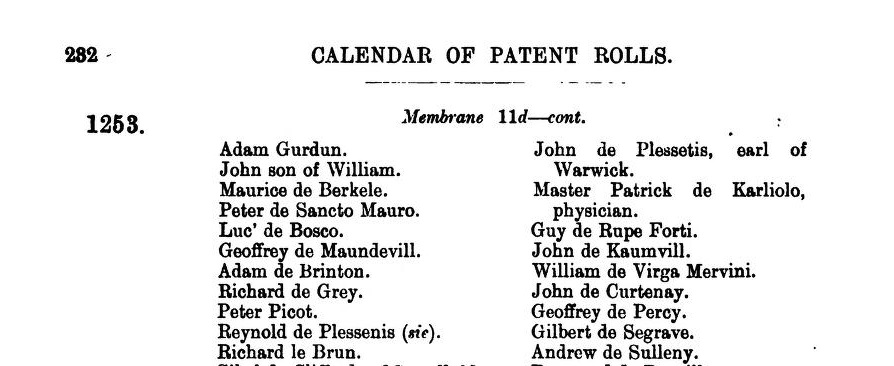
The tale of Sir Adam (continued) In 1253 Adam Gurdun is granted a reward for his military service in Poitou and Gascony: on 10 December, at Bazas in Gascony, Henry III gives him a licence for life to hunt the hare, fox, cat and badger in the forests of Southampton, but not to take the king’s great deer. The following May he is granted exemption from further service if he can find a sergeant to serve for forty days in his stead.
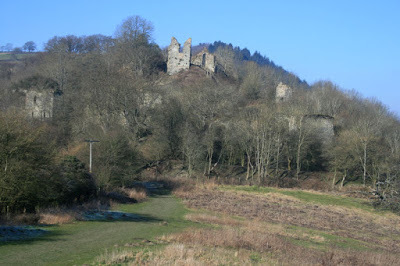 Wigmore Castle in Shropshire
Adam clearly enjoys a life of soldiering. When another war breaks out in 1257, this time against the Welsh, he again serves in person. By now Adam has been drawn into the affinity of Roger Mortimer, lord of Wigmore on the Welsh March, and serves under his command. Mortimer’s contingent is part of a separate army ordered to support Humphrey Bohun, Earl of Hereford, in his command of the Marches from Montgomery to Glamorgan. Adam, therefore, is not part of the king’s army that marches from Chester to Deganwy.
King Henry gets no further as his advance is crippled by supply problems and skilful Welsh guerilla attacks. The king has unfurled his dragon banner and threatened to ‘exterminate the Welsh’; instead he is forced to retreat, ‘the inglorious king, his treasure much squandered, laughed at and mocked by the enemy’ (Matthew Paris). Henry shows considerable personal courage, riding at the head of his troops, but that cannot make up for dismal planning and the famine and disease that sweeps through his army.
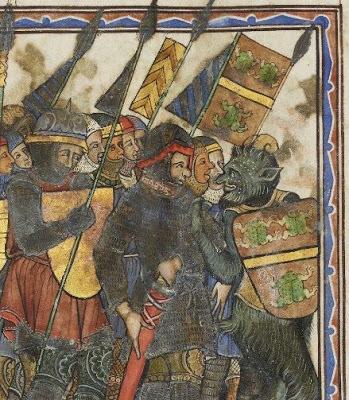 Illustration of medieval soldiers, taken from the Douce Apocalpyse
Adam is having a slightly better time of it in the Middle March. His captain, Roger Mortimer, has his own objectives to pursue against Prince Llywelyn ap Gruffudd. Llywelyn has broken the Treaty of Gwrtherynion, agreed with Mortimer’s father, in which the Welsh prince swore he would never invade the Mortimer lordships of Gwrtherynion and Maelienydd. In 1256 he abjured the treaty and carried fire and sword into these lands, making a lifelong enemy of his cousins Mortimer. Bad move.
Not much is known of Mortimer’s service against the Welsh in 1257, but he seems to hold his ground. On 28 December he is given licence to fortify his town of Radnor against the Welsh, and on the following day grants an extra letter of protection to Adam Gurdun. The knight of Hampshire has survived the harrowing ordeal of war in Wales.
 Wigmore Castle in Shropshire
Adam clearly enjoys a life of soldiering. When another war breaks out in 1257, this time against the Welsh, he again serves in person. By now Adam has been drawn into the affinity of Roger Mortimer, lord of Wigmore on the Welsh March, and serves under his command. Mortimer’s contingent is part of a separate army ordered to support Humphrey Bohun, Earl of Hereford, in his command of the Marches from Montgomery to Glamorgan. Adam, therefore, is not part of the king’s army that marches from Chester to Deganwy.
King Henry gets no further as his advance is crippled by supply problems and skilful Welsh guerilla attacks. The king has unfurled his dragon banner and threatened to ‘exterminate the Welsh’; instead he is forced to retreat, ‘the inglorious king, his treasure much squandered, laughed at and mocked by the enemy’ (Matthew Paris). Henry shows considerable personal courage, riding at the head of his troops, but that cannot make up for dismal planning and the famine and disease that sweeps through his army.
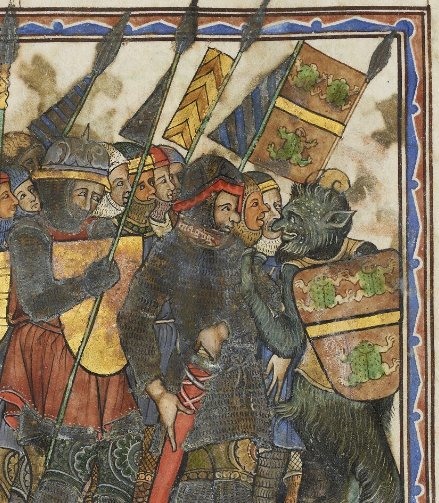 Illustration of medieval soldiers, taken from the Douce Apocalpyse
Adam is having a slightly better time of it in the Middle March. His captain, Roger Mortimer, has his own objectives to pursue against Prince Llywelyn ap Gruffudd. Llywelyn has broken the Treaty of Gwrtherynion, agreed with Mortimer’s father, in which the Welsh prince swore he would never invade the Mortimer lordships of Gwrtherynion and Maelienydd. In 1256 he abjured the treaty and carried fire and sword into these lands, making a lifelong enemy of his cousins Mortimer. Bad move.
Not much is known of Mortimer’s service against the Welsh in 1257, but he seems to hold his ground. On 28 December he is given licence to fortify his town of Radnor against the Welsh, and on the following day grants an extra letter of protection to Adam Gurdun. The knight of Hampshire has survived the harrowing ordeal of war in Wales.


May 30, 2019
Adam Gurdun (continued)
The tale of Sir Adam (continued)
After his traumatic experience on the Poitou campaign in 1242, Adam Gurdun had a better time in Gascony a decade later. The duchy was in chaos, thanks to Simon de Montfort’s mismanagement as seneschal and the revolt of Gaston, vicomte de Béarn. This caused neighbouring princes to cast greedy eyes upon it, in particular Alfonso the Wise, King of Castile. After he succeeded his father, Ferdinand, in 1252, Alfonso renewed his dynastic claim to Gascony.
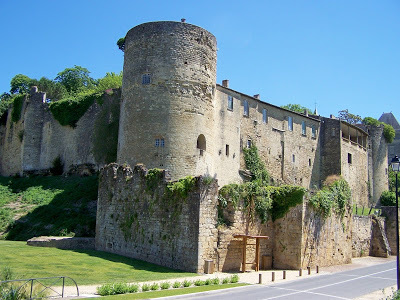 La Réole
All this left Henry III with no choice but to sail to Gascony in person to sort out the mess. Adam was once again summoned to go with his king overseas. Alongside him were the likes of Ralph Bakepuz, a Derbyshire knight who would later fight against Henry’s army at Chesterfield; Humphrey de Bohun, destined to perish in the squalor of a dungeon at Beeston Castle after the battle of Evesham; Hamo Lestrange, who would marry the heiress of Beirut and die in the Holy Land; Fulk Fitzwarin, who would drown in a muddy pool at the Battle of Lewes; Roger Mortimer of Wigmore, whose successors would murder the Prince of Wales, depose Edward II and nearly depose Edward III. An interesting bunch, though I personally wouldn’t have them round for tea.
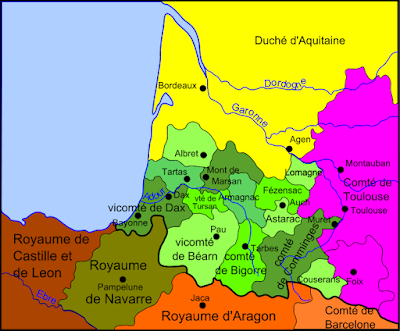 The duchy of GasconyIn August 1253 the royal fleet sailed up the Gironde to Bordeaux, the chief city of Gascony. Like his father, King John, Henry could soldier when he was in the mood. He fought a determined and energetic campaign, though it took months to reduce the towns and castles of the lower Garonne and Dordogne. The diehard rebels, most of them bitter enemies of Montfort, shut themselves up behind the walls of La Réole (pictured above). Henry deprived the rebels of their allies by negotiating treaties with King Louis of France, the lord of Albret, the Counts of Comminges and Armagnac, and Gaston himself. The lords of Albret in particular would remain steadfastly loyal to the Angevin regime for decades, until they were alienated by Edward II and the rise of Piers Gaveston.
After his traumatic experience on the Poitou campaign in 1242, Adam Gurdun had a better time in Gascony a decade later. The duchy was in chaos, thanks to Simon de Montfort’s mismanagement as seneschal and the revolt of Gaston, vicomte de Béarn. This caused neighbouring princes to cast greedy eyes upon it, in particular Alfonso the Wise, King of Castile. After he succeeded his father, Ferdinand, in 1252, Alfonso renewed his dynastic claim to Gascony.
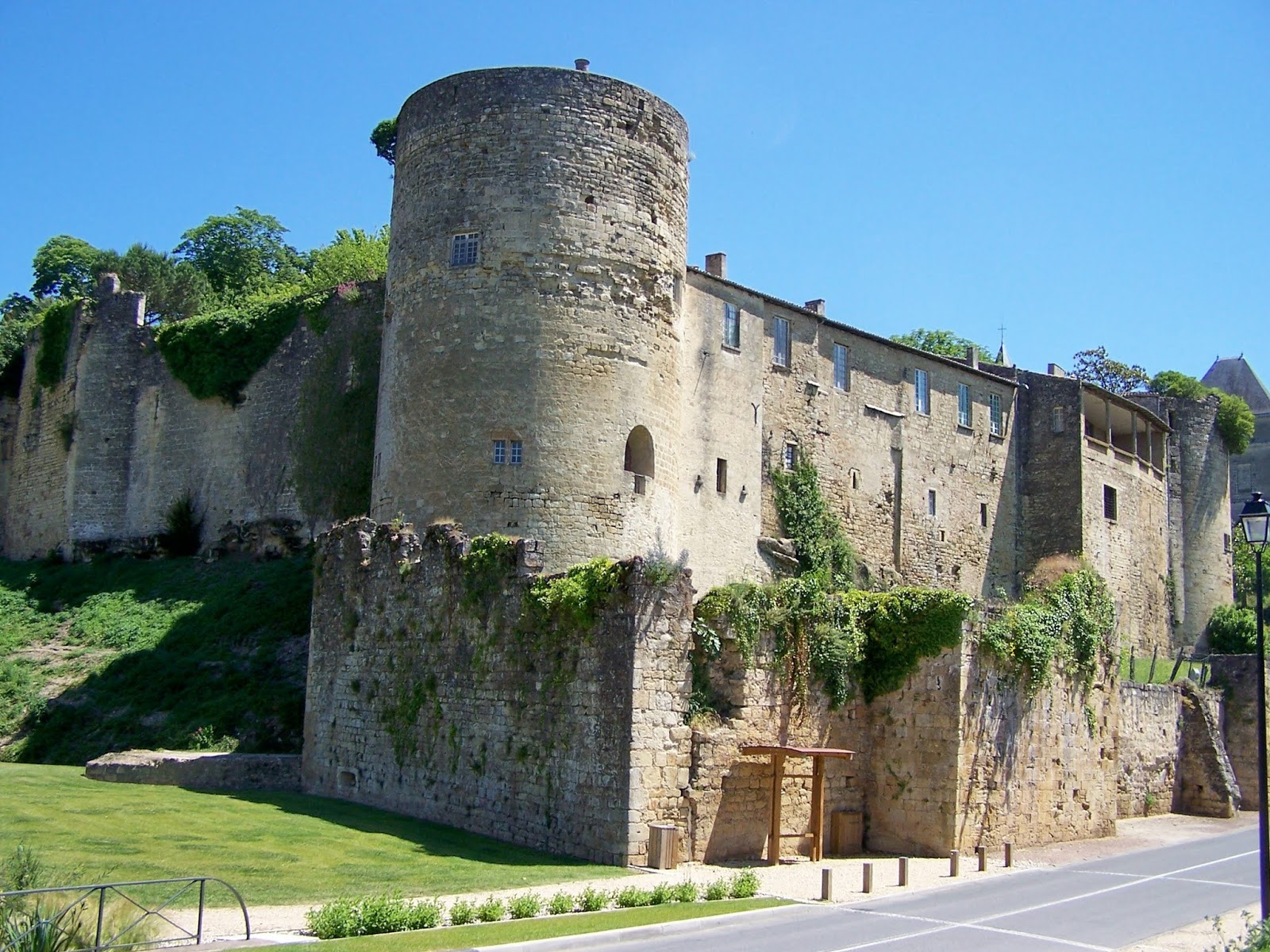 La Réole
All this left Henry III with no choice but to sail to Gascony in person to sort out the mess. Adam was once again summoned to go with his king overseas. Alongside him were the likes of Ralph Bakepuz, a Derbyshire knight who would later fight against Henry’s army at Chesterfield; Humphrey de Bohun, destined to perish in the squalor of a dungeon at Beeston Castle after the battle of Evesham; Hamo Lestrange, who would marry the heiress of Beirut and die in the Holy Land; Fulk Fitzwarin, who would drown in a muddy pool at the Battle of Lewes; Roger Mortimer of Wigmore, whose successors would murder the Prince of Wales, depose Edward II and nearly depose Edward III. An interesting bunch, though I personally wouldn’t have them round for tea.
 The duchy of GasconyIn August 1253 the royal fleet sailed up the Gironde to Bordeaux, the chief city of Gascony. Like his father, King John, Henry could soldier when he was in the mood. He fought a determined and energetic campaign, though it took months to reduce the towns and castles of the lower Garonne and Dordogne. The diehard rebels, most of them bitter enemies of Montfort, shut themselves up behind the walls of La Réole (pictured above). Henry deprived the rebels of their allies by negotiating treaties with King Louis of France, the lord of Albret, the Counts of Comminges and Armagnac, and Gaston himself. The lords of Albret in particular would remain steadfastly loyal to the Angevin regime for decades, until they were alienated by Edward II and the rise of Piers Gaveston.
 Adam Gurdun
The tale of Sir Adam.
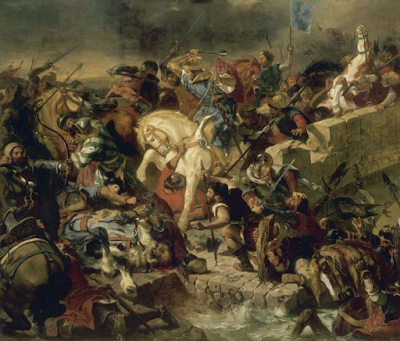
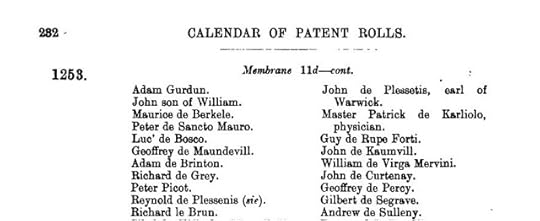
Sir Adam Gurdun was born into a very minor landed Hampshire family. Nothing is known of his early years, except that he chose the path of a career soldier and first saw action on Henry III's campaign to recover Poitou in 1242. Adam's name appears on a long roll of knights given protection to go beyond seas with the king.
Adam had some ill-fated companions. Alongside him on the roll is Philip Basset, who suffered a billion wounds at the Battle of Lewes in 1264; Stephen Bauzan, hacked to death by the Welsh at Cymerau in 1257; Alan la Zouche, murdered by Earl Warenne in the king's presence at Westminster in 1268. There's also a man named Vassal Affoylinis, who sounds like an obscure skin disease.
Nothing is known of Adam's personal experience in Poitou, though it can't have been a happy one. Deserted by his allies, and surprised at the military aggression of the French king, Louis IX (Saint Louis), Henry's campaign ended in disaster. Adam may have got his sword wet in the skirmishes at Taillebourg and Saintes, where the English were well beaten and forced to retreat into Gascony.
Pictured above is The Battle of Taillebourg won by Saint Louis, by Eugène Delacroix (Galerie des Batailles, Palace of Versailles)

Sir Adam Gurdun was born into a very minor landed Hampshire family. Nothing is known of his early years, except that he chose the path of a career soldier and first saw action on Henry III's campaign to recover Poitou in 1242. Adam's name appears on a long roll of knights given protection to go beyond seas with the king.
Adam had some ill-fated companions. Alongside him on the roll is Philip Basset, who suffered a billion wounds at the Battle of Lewes in 1264; Stephen Bauzan, hacked to death by the Welsh at Cymerau in 1257; Alan la Zouche, murdered by Earl Warenne in the king's presence at Westminster in 1268. There's also a man named Vassal Affoylinis, who sounds like an obscure skin disease.
Nothing is known of Adam's personal experience in Poitou, though it can't have been a happy one. Deserted by his allies, and surprised at the military aggression of the French king, Louis IX (Saint Louis), Henry's campaign ended in disaster. Adam may have got his sword wet in the skirmishes at Taillebourg and Saintes, where the English were well beaten and forced to retreat into Gascony.
Pictured above is The Battle of Taillebourg won by Saint Louis, by Eugène Delacroix (Galerie des Batailles, Palace of Versailles)
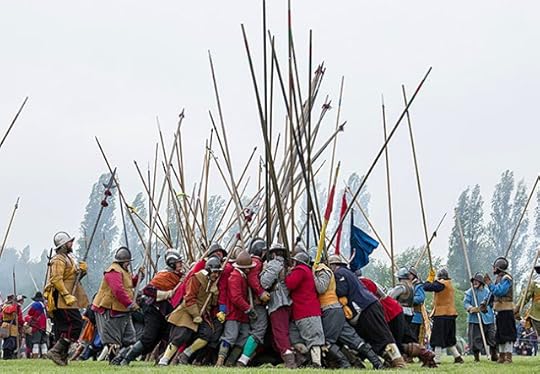
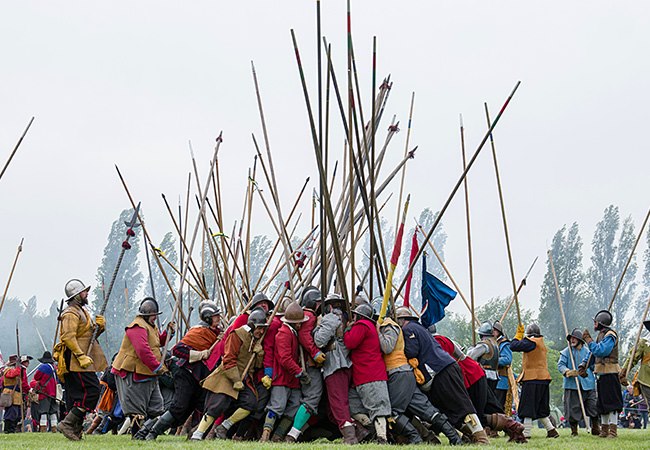
Push of pike
A subtle hint as to the subject matter of my next project. Giving the Middle Ages a rest for a while...
May 29, 2019
Money, money, money
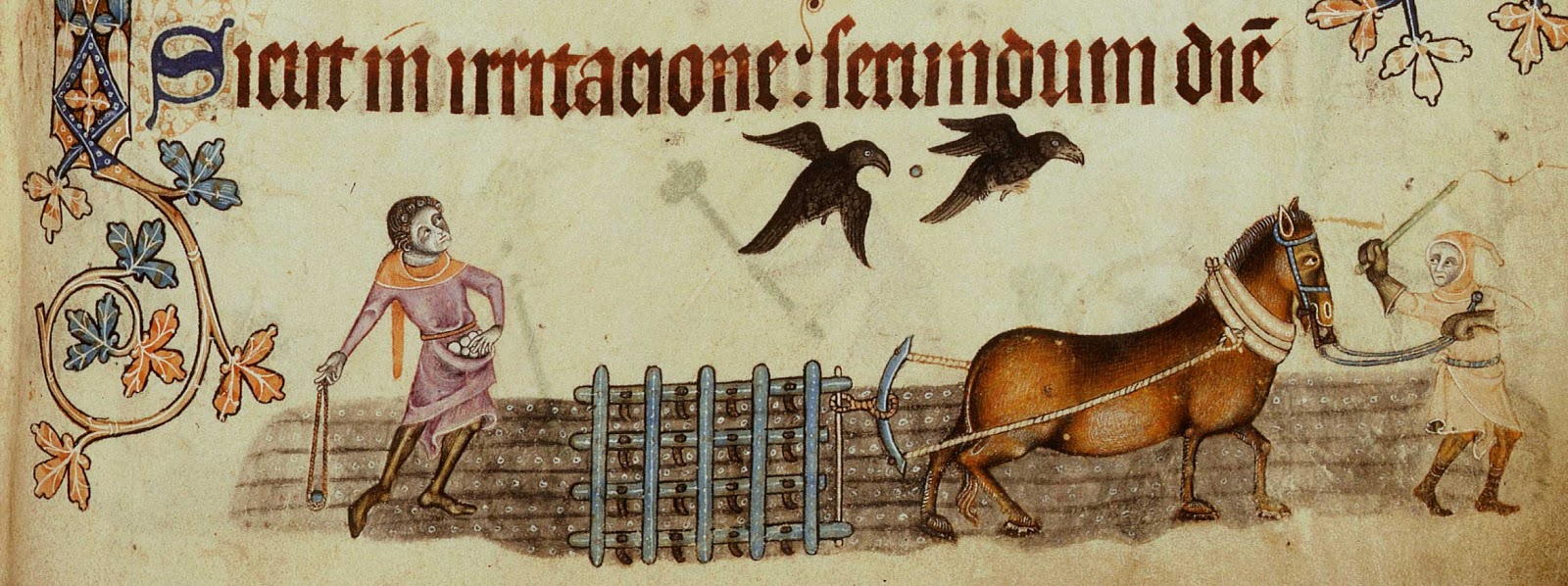
The development of the medieval principality of Wales under the Llywelyns:
“We can thus see that the political and military achievements of the princes were facilitated, at the very least, by substantial developments in the machinery and personnel of governance. At an even more fundamental level economic growth was also crucial to political innovation: the foundation of trading centres, boroughs and ports was a phenomenon imported into Pura Wallia from the March and beyond, and was both stimulated by, and helped to produce, a major thirteenth-century development of commutation of revenues and rents formerly rendered in kind into ones paid in cash. There were numerous flourishing marketing centres in and near the eastern and southern March in the twelfth and thirteenth centuries, and the importance of their trade with Wales can be judged by the quickness of the English governments to ban trade with Wales at times of Anglo-Welsh wars.” -
D Stephenson In light of the above, some difficult questions have to be asked. Why did so many Welshmen, of all ranks of society, reject Llywelyn ap Gruffudd in 1277? This was the important conflict: “It was in the war of 1282 that killed Llywelyn, but it was in the war of 1277 that he was crushed, reduced to a shadow of his former eminence”.
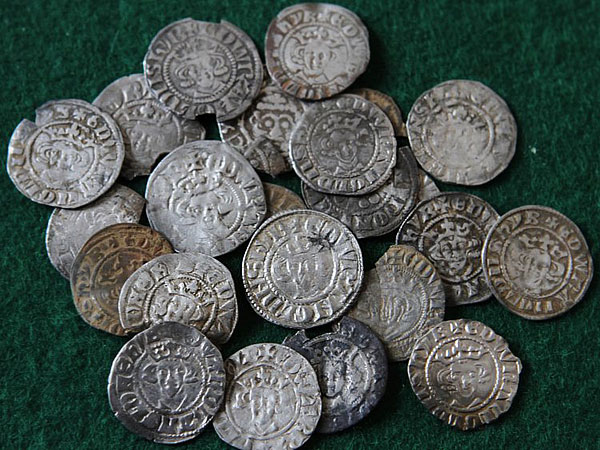
One reason may have been the efforts of the princes to introduce a cash economy: commutation of traditional services into money payments was viable for who produced a surplus to be sold in markets, but was a daunting prospect for the average peasant, who lived at bare subsistence level. As late as 1318, over forty years after Llywelyn’s death, the community of West Wales complained to Edward II that they ‘were never accustomed to have money in the Welshry’.
Longsword IV pre-order!
Longsword (IV) The Hooded Men is now available for pre-order on Kindle, release date 12 June!
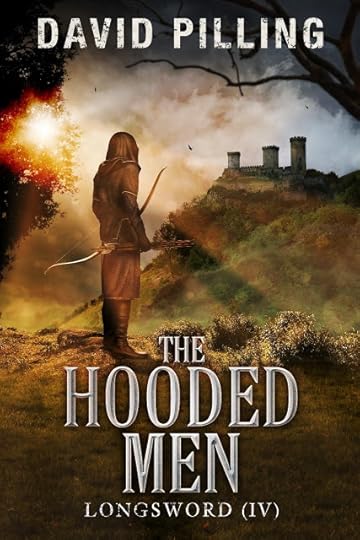
Some of you may recall that Hugh ended the last chapter in disgrace, having failed to reach Acre in time to save the Lord Edward from a Syrian assassin. Now he is sent home to England, carrying a sealed letter that contains his one shot at redemption...
Longsword (IV) The Hooded Men on Amazon US
Longsword (IV) the Hooded Men on Amazon UK

Some of you may recall that Hugh ended the last chapter in disgrace, having failed to reach Acre in time to save the Lord Edward from a Syrian assassin. Now he is sent home to England, carrying a sealed letter that contains his one shot at redemption...
Longsword (IV) The Hooded Men on Amazon US
Longsword (IV) the Hooded Men on Amazon UK
May 28, 2019
The exercise of power
The post mortem inquisition entry from 1278 for Maredudd ap Gruffydd, a lord of south Wales. This serves as an example of the predatory politics of the era, and the crude exercise of power.
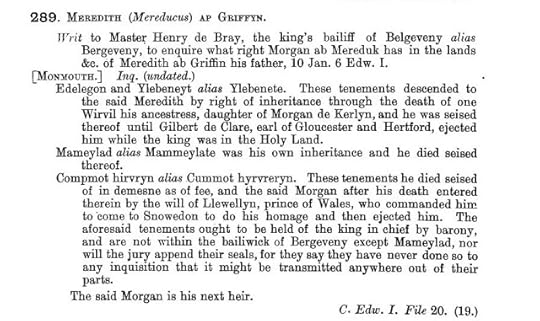
The inquisition, conducted by the bailiff of Abergavenny, records that Maredudd held lands in Monmouth and elsewhere in the south. In 1271, while the future King Edward was in the Holy Land, Maredudd was driven from his manors of Edeligion and Llebenydd in Caerleon by Gilbert de Clare, Earl of Gloucester. He managed to retain the commote of Hirfryn, which was inherited by his son, Morgan, after Maredudd’s death in 1278.
Morgan initially gave his allegiance to Llywelyn ap Gruffudd, Prince of Wales. Llywelyn commanded Morgan to travel into Snowdonia to swear homage and fealty before the prince. The oath of fealty was essentially an appeal to God, whereby a man called down on himself divine punishment if he behaved falsely to his lord. It usually consisted of something like:
"I promise on my faith that I will in the future be faithful to the lord, never cause him harm and will observe my homage to him completely against all persons in good faith and without deceit."
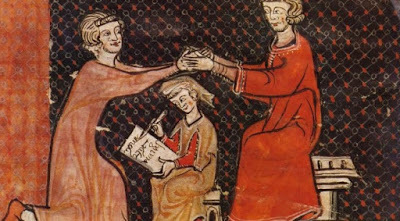
Once Morgan had sworn the oath, Llywelyn ejected his vassal from Hirfryn and left him with nothing. Llywelyn probably did this to regain a foothold in Cantref Bychan in south Wales after his territorial losses there in 1278. Deprived of his inheritance, Morgan had to rebuild his patrimony by entering royal service.
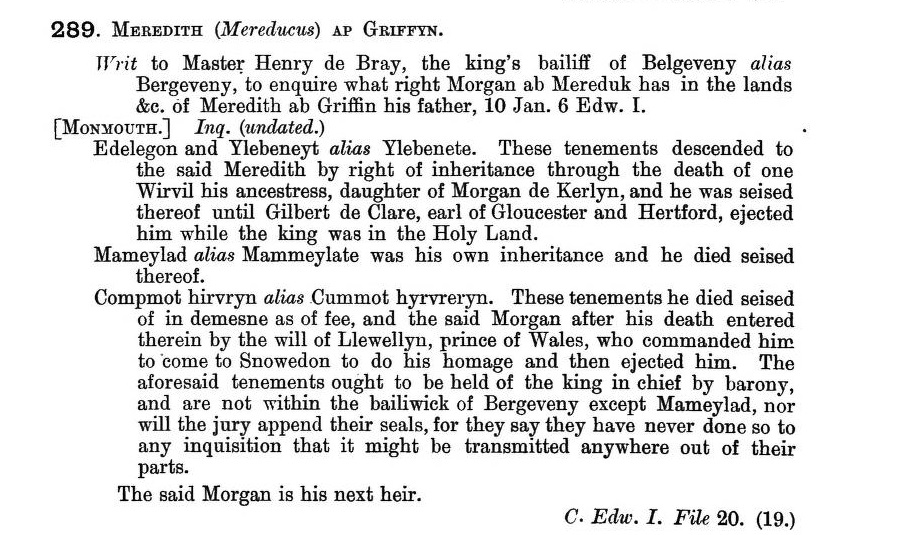
The inquisition, conducted by the bailiff of Abergavenny, records that Maredudd held lands in Monmouth and elsewhere in the south. In 1271, while the future King Edward was in the Holy Land, Maredudd was driven from his manors of Edeligion and Llebenydd in Caerleon by Gilbert de Clare, Earl of Gloucester. He managed to retain the commote of Hirfryn, which was inherited by his son, Morgan, after Maredudd’s death in 1278.
Morgan initially gave his allegiance to Llywelyn ap Gruffudd, Prince of Wales. Llywelyn commanded Morgan to travel into Snowdonia to swear homage and fealty before the prince. The oath of fealty was essentially an appeal to God, whereby a man called down on himself divine punishment if he behaved falsely to his lord. It usually consisted of something like:
"I promise on my faith that I will in the future be faithful to the lord, never cause him harm and will observe my homage to him completely against all persons in good faith and without deceit."

Once Morgan had sworn the oath, Llywelyn ejected his vassal from Hirfryn and left him with nothing. Llywelyn probably did this to regain a foothold in Cantref Bychan in south Wales after his territorial losses there in 1278. Deprived of his inheritance, Morgan had to rebuild his patrimony by entering royal service.
Loyaulté me Lie
The cost of loyalty: how the Plantagenets retained the duchy of Gascony after the loss of the Angevin empire:
“Yet no regime could afford to alienate its supporters, and it was unwise to take too many castles and tolls into royal or ducal possession. By 1294 five-sixths of the castles within the duchy of Aquitaine were held by the nobility: thus, of 130 fortresses in the Agenais, only six were in ducal hands. The price of loyalty was high. A small ducal domain - Edward I held only twenty castles in Aquitaine in the 1290s - ensured the survival of his regime and the Plantagenets consciously and purposefully alienated most of their Gascon assets, with the important exception of the wine customs collected at Bordeaux. The principal beneficiaries of these grants were the middling and lesser nobility.”
- Malcom Vale, The Origins of the Hundred Years War.
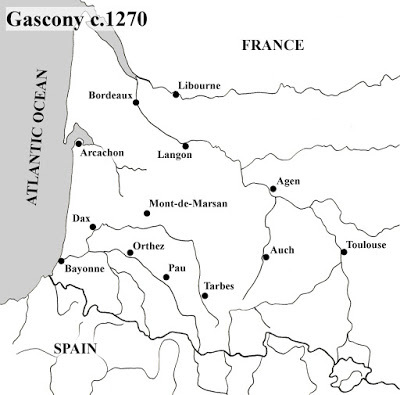
The benefit of this policy of decentralisation was shown in 1294, when the French invaded Gascony. Of the 112 Gascon nobles summoned to arms by Edward I, about 90 responded. Most of those who defected to Philip IV were concentrated in the Agenais on the northeast frontier of the duchy. Edward had only acquired the Agenais a few years earlier, so these men had in effect reverted to their ‘natural lord’, the king of France.
Pictured are the castles of La Réole and the Château de Foix, which lay inside the old duchy of Gascony, also called Guyenne or Aquitaine.
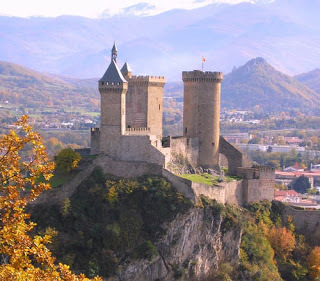 Château de Foix
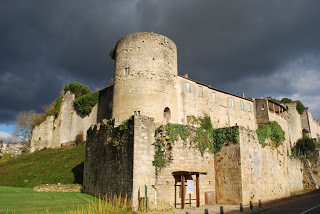 La Réole
“Yet no regime could afford to alienate its supporters, and it was unwise to take too many castles and tolls into royal or ducal possession. By 1294 five-sixths of the castles within the duchy of Aquitaine were held by the nobility: thus, of 130 fortresses in the Agenais, only six were in ducal hands. The price of loyalty was high. A small ducal domain - Edward I held only twenty castles in Aquitaine in the 1290s - ensured the survival of his regime and the Plantagenets consciously and purposefully alienated most of their Gascon assets, with the important exception of the wine customs collected at Bordeaux. The principal beneficiaries of these grants were the middling and lesser nobility.”
- Malcom Vale, The Origins of the Hundred Years War.
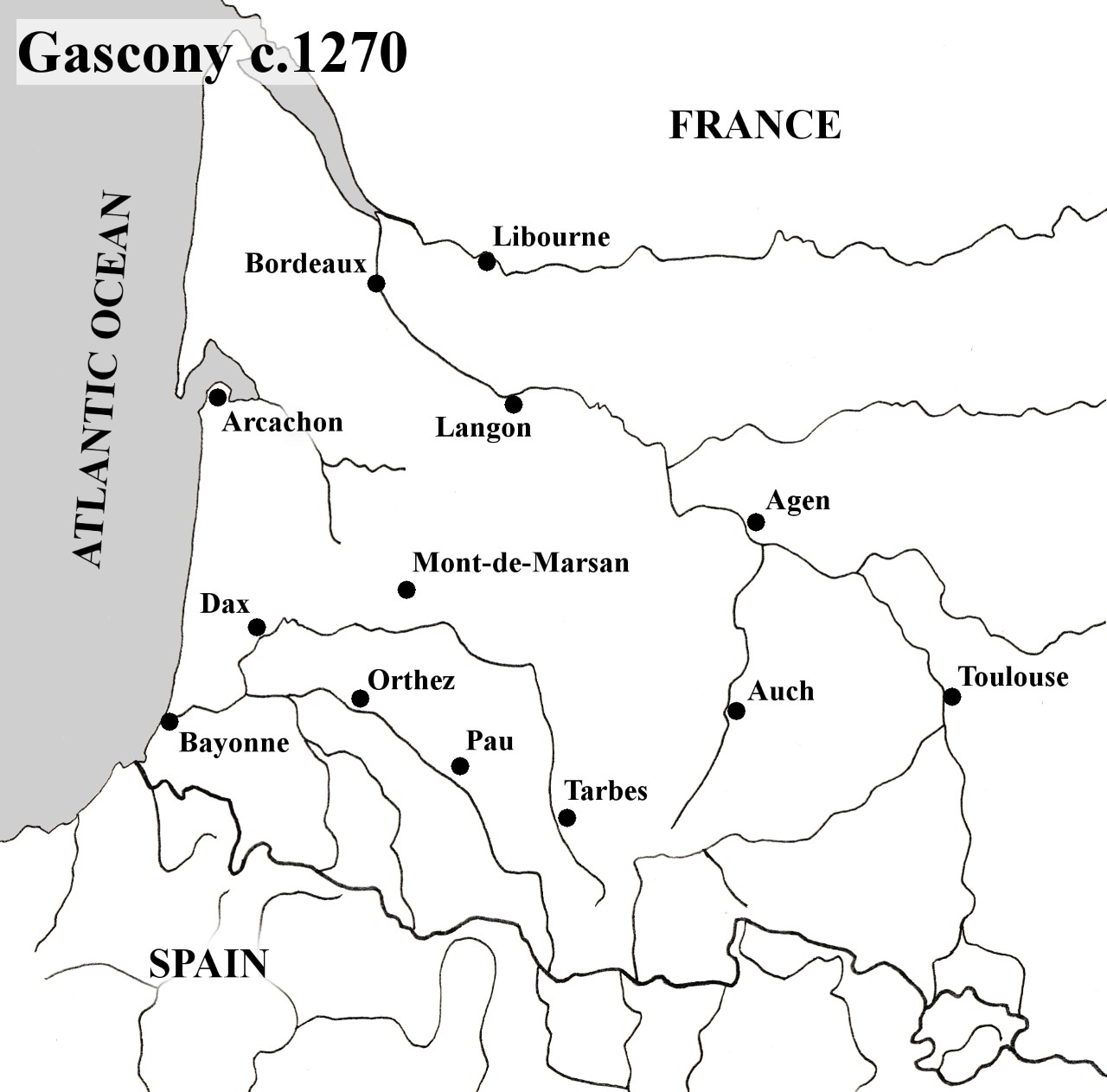
The benefit of this policy of decentralisation was shown in 1294, when the French invaded Gascony. Of the 112 Gascon nobles summoned to arms by Edward I, about 90 responded. Most of those who defected to Philip IV were concentrated in the Agenais on the northeast frontier of the duchy. Edward had only acquired the Agenais a few years earlier, so these men had in effect reverted to their ‘natural lord’, the king of France.
Pictured are the castles of La Réole and the Château de Foix, which lay inside the old duchy of Gascony, also called Guyenne or Aquitaine.
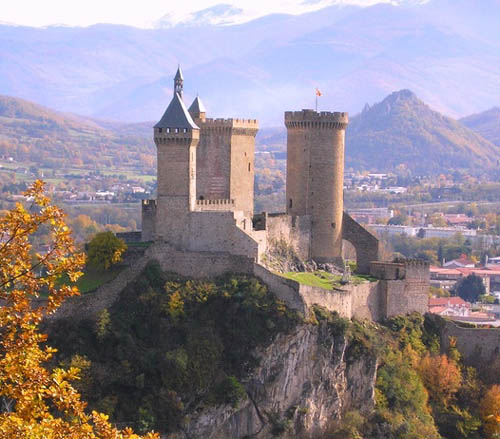 Château de Foix
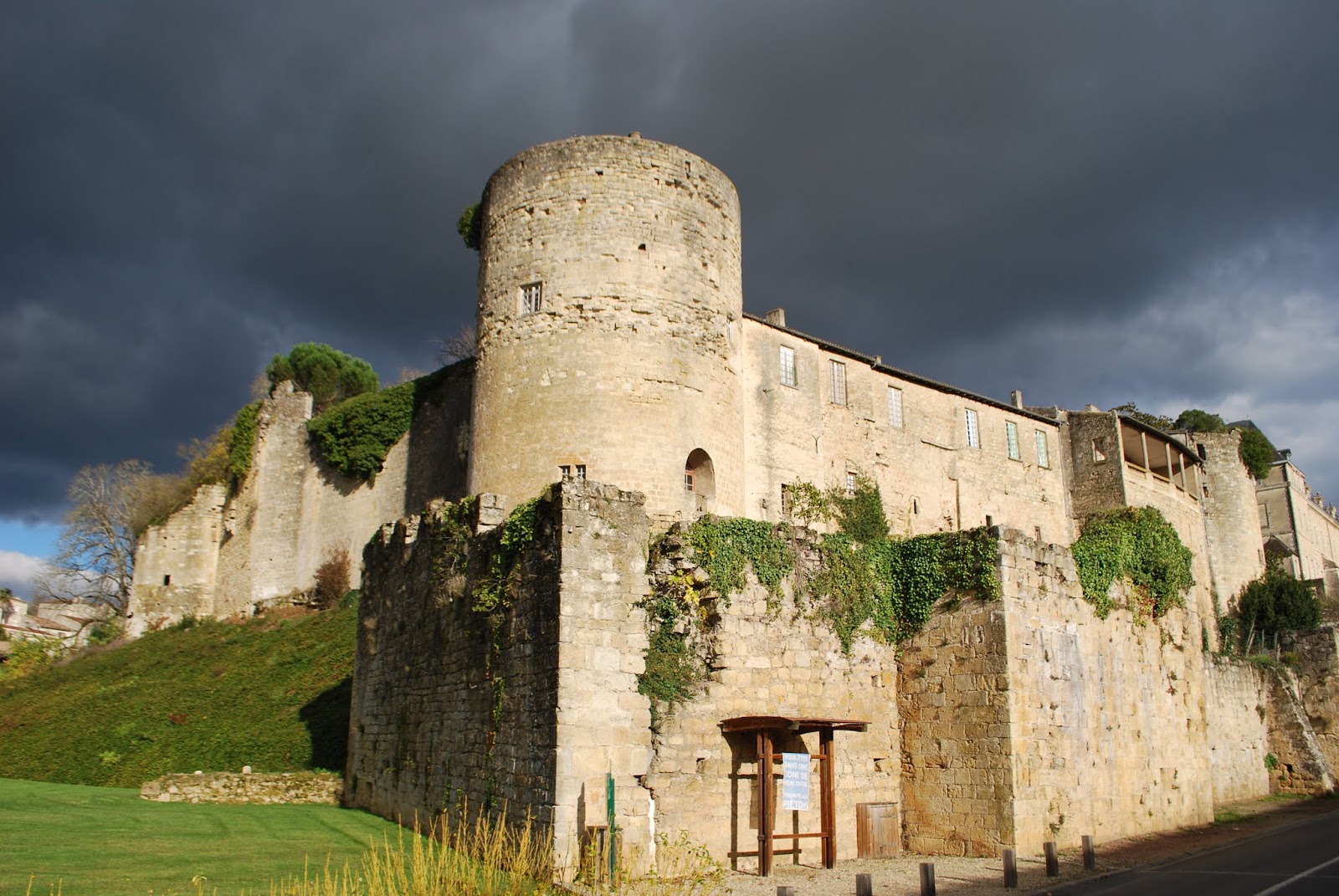 La Réole
May 27, 2019
King Arthur and King Edward
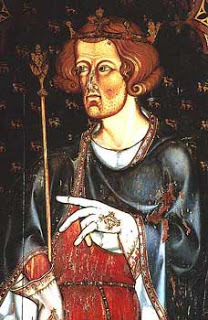
The tournament at Hem-Monacu in France in 1278 had a strong Arthurian theme: the participants dressed as up as the Knights of the Round Table, and scenes from the legend were played out between jousts. From the outset, the herald proclaimed that the tournament was held in honour of Queen Guinevere, represented by a supposedly allegorical figure called the ‘dame de Courtoisie’. The dame was played by the sister of Aubert de Longueval, one of the organisers.
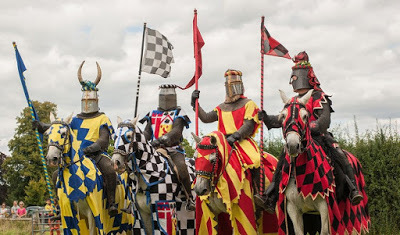
The dame was also the central figure of the tornoi, and held court on a scaffold raised above the arena. Before the jousts began, she gave an explanatory prologue to the crowd. During interludes between combats, she would explain her plans for the rest of the day’s proceedings. Some of her exposition, recorded by the poet Sarassin, reveals much about contemporary attitudes towards Edward I and English knights.
At the start of the tornoi, the dame urges that King Arthur and his knights should be invited to compete: “...en le Haute Bretainge, De coi li Graaus nous ensegne, Que le rois Artus en fu sires.”
A version of the Trojan conquest of Britain was then recited, followed by Merlin’s construction of Stonehenge. Finally the Knights of the Round Table are invoked:
“La [en Angleterrej trueve on les bons jousteours, Les durs, les roides et les fors. Lancelos... Et Gavains... Et cil de la Table Reonde, Qui furent li millor du monde, La sont chevalier de valour, La sont mout de bon jousteour, La sont li chevalier hardi. Cix qui en est sires et rois ... preus et largues et courtois, ... le... roi Edouwart.”
(There [in England] you'll find good fighters, hard men, tough and strong. Lancelot and Gawain and the men of the Round Table, who were the best in the world. There are knights of reputation, there are many good jousters, there are brave knights. ... and him who is their lord and king, the valiant, generous and benevolent
 Edward Iking Edward.')
In this verse, King Edward has been fused with the legendary King Arthur and in fact displaced him: it is now Edward, not Arthur, who leads Lancelot and Gawain and the men of the Round Table. This would have been music to Edward’s ears, not least because it came from a French trouvére rather than his own English minstrels. It would have been sheer wormwood for the Capetian king, Philip III, who had to endure a number of unflattering comparisons between himself and cousin Edward, usually from the troubadours of Aragon and southern France.
(Thanks to Rich Price for the translation.)

The dame was also the central figure of the tornoi, and held court on a scaffold raised above the arena. Before the jousts began, she gave an explanatory prologue to the crowd. During interludes between combats, she would explain her plans for the rest of the day’s proceedings. Some of her exposition, recorded by the poet Sarassin, reveals much about contemporary attitudes towards Edward I and English knights.
At the start of the tornoi, the dame urges that King Arthur and his knights should be invited to compete: “...en le Haute Bretainge, De coi li Graaus nous ensegne, Que le rois Artus en fu sires.”
A version of the Trojan conquest of Britain was then recited, followed by Merlin’s construction of Stonehenge. Finally the Knights of the Round Table are invoked:
“La [en Angleterrej trueve on les bons jousteours, Les durs, les roides et les fors. Lancelos... Et Gavains... Et cil de la Table Reonde, Qui furent li millor du monde, La sont chevalier de valour, La sont mout de bon jousteour, La sont li chevalier hardi. Cix qui en est sires et rois ... preus et largues et courtois, ... le... roi Edouwart.”
(There [in England] you'll find good fighters, hard men, tough and strong. Lancelot and Gawain and the men of the Round Table, who were the best in the world. There are knights of reputation, there are many good jousters, there are brave knights. ... and him who is their lord and king, the valiant, generous and benevolent
 Edward Iking Edward.')
In this verse, King Edward has been fused with the legendary King Arthur and in fact displaced him: it is now Edward, not Arthur, who leads Lancelot and Gawain and the men of the Round Table. This would have been music to Edward’s ears, not least because it came from a French trouvére rather than his own English minstrels. It would have been sheer wormwood for the Capetian king, Philip III, who had to endure a number of unflattering comparisons between himself and cousin Edward, usually from the troubadours of Aragon and southern France.
(Thanks to Rich Price for the translation.)
Castles in Wales
The importance of castle-building in the nascent Welsh state of the 1200s:
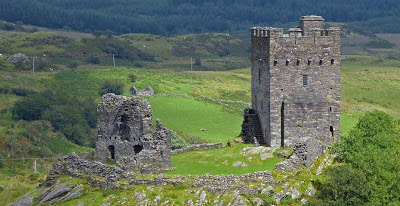
“As the major politics of the later twelfth and thirteenth centuries began to be characterized by the building of stone castles, whose significance was administrative and political as much as military, we find castle staff, castellans and castle clerks. Such castles were relatively numerous in Gwynedd, appearing throughout that land, as at Dolbadarn, Dolwyddelan, Castell y Bere, Degannwy, Ewloe, Dinas Emrys, Carndochan and Criccieth, but were also built or developed by the rulers of Gwynedd or their allies in locations beyond the heartlands of the Llywelyns, as at Dinas Bran above the Dee, Dolforwyn in Cedewain, Bryn Amlwg at the point where Ceri, Maelieneydd and Clun lordships met, and Rhyd y Briw (Sennybridge). In other territories, less amenable to Venedotian control, regional lords maintained important castles at Pool (Powis Castle), the caput of southern Powys and Llandovery, Dinefwr and Dryslwyn in Ystrad Tywi. The very look of the land in pura Wallia was changing: castles, courts and towns had a greater appearance of permanence; governance was making its mark”. -
D Stephenson
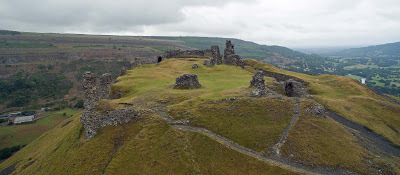
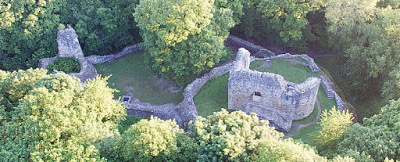
Pictured are Dolwyddelan, Castell Dinas Bran and Ewloe.

“As the major politics of the later twelfth and thirteenth centuries began to be characterized by the building of stone castles, whose significance was administrative and political as much as military, we find castle staff, castellans and castle clerks. Such castles were relatively numerous in Gwynedd, appearing throughout that land, as at Dolbadarn, Dolwyddelan, Castell y Bere, Degannwy, Ewloe, Dinas Emrys, Carndochan and Criccieth, but were also built or developed by the rulers of Gwynedd or their allies in locations beyond the heartlands of the Llywelyns, as at Dinas Bran above the Dee, Dolforwyn in Cedewain, Bryn Amlwg at the point where Ceri, Maelieneydd and Clun lordships met, and Rhyd y Briw (Sennybridge). In other territories, less amenable to Venedotian control, regional lords maintained important castles at Pool (Powis Castle), the caput of southern Powys and Llandovery, Dinefwr and Dryslwyn in Ystrad Tywi. The very look of the land in pura Wallia was changing: castles, courts and towns had a greater appearance of permanence; governance was making its mark”. -
D Stephenson
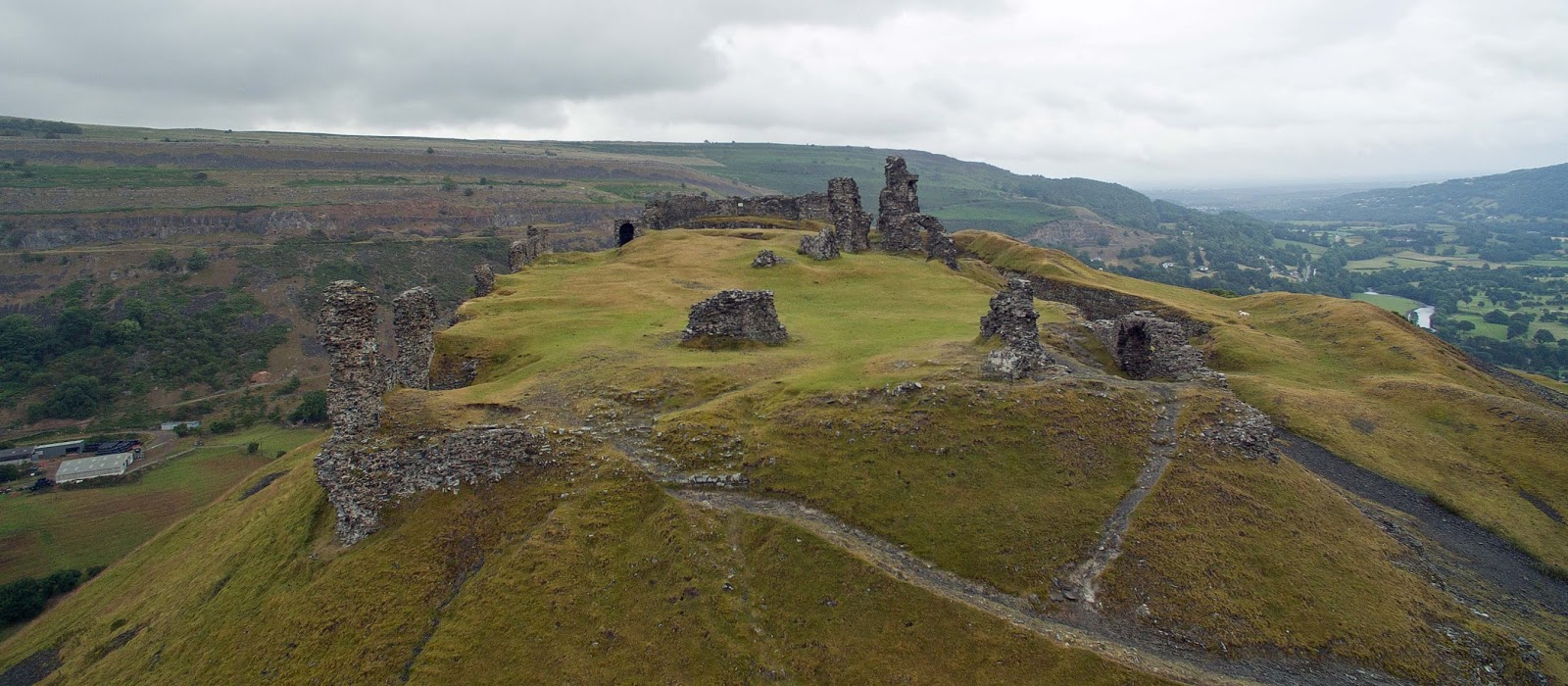
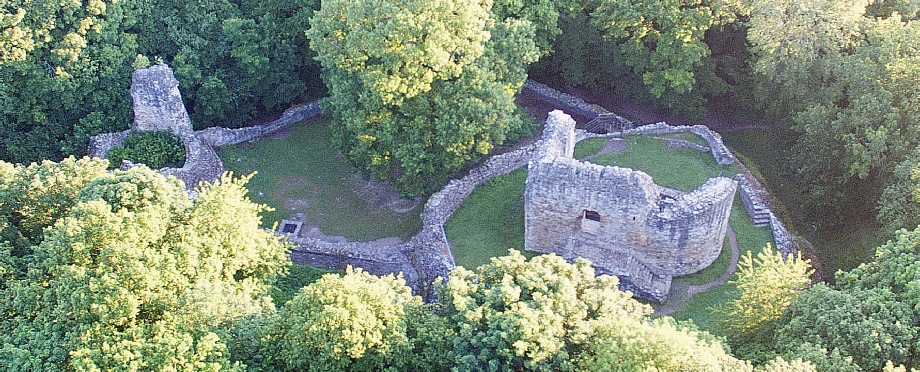
Pictured are Dolwyddelan, Castell Dinas Bran and Ewloe.