
L.M. Long's Blog, page 9
September 15, 2014
Of Bananas and Plantains and Month-old Fish
by H. Linn Murphy
(Metaphor warning: I'm going to be mixing them like a nurse in a nuthouse.)
(Disclaimer #2: I'm waiving the pictures in favor of ever getting to bed in this century. What, are they having another slow down day?)
Bananas were made for baboons. Just saying. When I was young they were great. I also ate strained spinach. That doesn't mean that I want a banana now, or ever. I do, however, like plantain chips exceedingly. They're still in the banana family but they don't make me dash for the nearest chuck bucket. I'm not sure if it's because platanos aren't sweet or if they just don't go all gluey as fast. Nothing says run for the barf bowl faster than a mucky banana. And platano chips are fabulous. Just the right salt and they're better for you than potato chips.
And they don't taste like bananas.
So what does all of this have to do with the price of fish in Alaska? Often the dividing line between what we like and what we don't can be nebulous at best. This also extends to those poor persons who have to wade through the slush pile to fish out the occasional mahi mahi from the carp.
They too have likes and dislikes, good days and bad, perhaps a presently full docket of books exactly like yours, or your story went moldy like last month's fish. Who knew?
How are we supposed to ride the swells in this business? The truly savvy writer can predict, can plan, can go to a fortune-teller, can chase that illusive best-seller status. But if the fickle public suddenly decides they've had enough mahi mahi and that's what you've based your whole book on, you lose.
So what happens to all those poor lifeless vampires hanging about in dusty attics waiting for their chance to shine again? Do they wait around for another flap around the high school or do they quietly go lock themselves back in their coffins for another fifty years?
I say if you write it, they will come. If you write a story full of "truth" that touches the human psyche, your readers will school around your bait. Make it tempting without being titillating. Make it so good they won't miss the sex or raunchy language or violence. Make it speak from your soul. I've never heard people say, "I only buy books for the sex." (They may say that but I've never heard them.) People buy something that speaks to them.
This is my plan: If I fill the pond up with fabulous halibut stories, readers won't have to settle for trashy sucker fish. So even if publishers say people only want garbage stories, we can show them they are wrong. Another good thing is to go on sites like Goodreads, Barnes and Noble, and Amazon and give the books you love great reviews. Not only does this show the authors, but it shows the publishers, that we are intelligent, discriminating readers with morals and a wish for spectacularly good writing.
May your seas be fair and your catch prodigious. And don't settle for the banana when you can have the plantain...;o)
(Metaphor warning: I'm going to be mixing them like a nurse in a nuthouse.)
(Disclaimer #2: I'm waiving the pictures in favor of ever getting to bed in this century. What, are they having another slow down day?)
Bananas were made for baboons. Just saying. When I was young they were great. I also ate strained spinach. That doesn't mean that I want a banana now, or ever. I do, however, like plantain chips exceedingly. They're still in the banana family but they don't make me dash for the nearest chuck bucket. I'm not sure if it's because platanos aren't sweet or if they just don't go all gluey as fast. Nothing says run for the barf bowl faster than a mucky banana. And platano chips are fabulous. Just the right salt and they're better for you than potato chips.
And they don't taste like bananas.
So what does all of this have to do with the price of fish in Alaska? Often the dividing line between what we like and what we don't can be nebulous at best. This also extends to those poor persons who have to wade through the slush pile to fish out the occasional mahi mahi from the carp.
They too have likes and dislikes, good days and bad, perhaps a presently full docket of books exactly like yours, or your story went moldy like last month's fish. Who knew?
How are we supposed to ride the swells in this business? The truly savvy writer can predict, can plan, can go to a fortune-teller, can chase that illusive best-seller status. But if the fickle public suddenly decides they've had enough mahi mahi and that's what you've based your whole book on, you lose.
So what happens to all those poor lifeless vampires hanging about in dusty attics waiting for their chance to shine again? Do they wait around for another flap around the high school or do they quietly go lock themselves back in their coffins for another fifty years?
I say if you write it, they will come. If you write a story full of "truth" that touches the human psyche, your readers will school around your bait. Make it tempting without being titillating. Make it so good they won't miss the sex or raunchy language or violence. Make it speak from your soul. I've never heard people say, "I only buy books for the sex." (They may say that but I've never heard them.) People buy something that speaks to them.
This is my plan: If I fill the pond up with fabulous halibut stories, readers won't have to settle for trashy sucker fish. So even if publishers say people only want garbage stories, we can show them they are wrong. Another good thing is to go on sites like Goodreads, Barnes and Noble, and Amazon and give the books you love great reviews. Not only does this show the authors, but it shows the publishers, that we are intelligent, discriminating readers with morals and a wish for spectacularly good writing.
May your seas be fair and your catch prodigious. And don't settle for the banana when you can have the plantain...;o)


September 11, 2014
How To Find an Agent
From my blog- The Write Path
OK, you've got your manuscript in hand. It is not your first draft or your second, but your well edited umpteenth draft. Now what? My suggestion is look for an agent.
Many people suggest sending straight to publishers, but I think that you should take at least 12 weeks and see if an agent is interested. They are your advocate and key to the publishing world.
Beware, they are hard to get. Many only take on one or two new clients a year, unless they're building their list. But it is worth a try. I'm always amazed at my SCBWI meetings when a first time writer stands up to announce their "good news" that they got an agent. Lucky ducks!
An agents return response time varies too. It can be anywhere from 24 hours to 12 weeks. So you do need to be patient. If you're an impatient person the publishing world is not for you.
So, where do you look? Here are a couple websites to help you out:
Agent Query
http://www.agentquery.com/
It is a free database of agents.
Association of Authors' Representatives
http://www.aaronline.org/
The agents that are members of the AAR must abide by strict standards and ethics.
Query Tracker
http://www.querytracker.net/
Over 1,200 agents listed and it helps you track your queries.
Another important place to look is at workshops and conferences. Agents attending will often give you a free pass over their slush pile. And if you're really brave you can personally pitch to them and perhaps be able to write "requested material" on your envelope.
Good Luck. Don't give up, we're all in the same boat.
OK, you've got your manuscript in hand. It is not your first draft or your second, but your well edited umpteenth draft. Now what? My suggestion is look for an agent.
Many people suggest sending straight to publishers, but I think that you should take at least 12 weeks and see if an agent is interested. They are your advocate and key to the publishing world.
Beware, they are hard to get. Many only take on one or two new clients a year, unless they're building their list. But it is worth a try. I'm always amazed at my SCBWI meetings when a first time writer stands up to announce their "good news" that they got an agent. Lucky ducks!
An agents return response time varies too. It can be anywhere from 24 hours to 12 weeks. So you do need to be patient. If you're an impatient person the publishing world is not for you.
So, where do you look? Here are a couple websites to help you out:
Agent Query
http://www.agentquery.com/
It is a free database of agents.
Association of Authors' Representatives
http://www.aaronline.org/
The agents that are members of the AAR must abide by strict standards and ethics.
Query Tracker
http://www.querytracker.net/
Over 1,200 agents listed and it helps you track your queries.
Another important place to look is at workshops and conferences. Agents attending will often give you a free pass over their slush pile. And if you're really brave you can personally pitch to them and perhaps be able to write "requested material" on your envelope.
Good Luck. Don't give up, we're all in the same boat.
September 8, 2014
Writing What You Feel
by Suzanne Warr
As I thought about this post, I tried to think of something I could share that would be useful to you, dear readers, while also capturing some of the changes going on in my life now. A post that connected the dots in a meaningful way. But, the truth is...the dots are still being dotted down, and most of what I'm going through--in sending my eldest off to college, helping my daughter through a life-impacting illness, prepping our family for a move--is still too close and present for me to be able to draw insightful conclusions.
However I am reminded that this--all of this--equals change and that equals emotions. Feelings. Such a small word to sum up the bittersweet of a son that's moving on, of saying goodbye to my gorgeous woods and trees--
--yet excitement for the opportunities and experiences to come. I wish I could bottle up each of these emotions, store them in little glass vials, and pull them out to take a quick sniff the next time I'm trying to convey powerful feelings in my writing. The next best thing is to take time to notice the impact of these changes, and to embrace the experiences of each day. It's there that the most powerful changes occur, for me as well as my characters. I'm grateful, in my chaos, to be alive and growing!
What are your stories of change? Of those formative moments when you can feel the course of your life tilting, shifting, and careening off in a new direction? Author David Zeltser discusses a life-altering event that led to his becoming an author on My Brain on Books, where Joanne is also giving away a free copy of his middle grade novel Lug, Dawn of the Ice Age. But, don't stop by as I'm hoping to win it. ;)
As I thought about this post, I tried to think of something I could share that would be useful to you, dear readers, while also capturing some of the changes going on in my life now. A post that connected the dots in a meaningful way. But, the truth is...the dots are still being dotted down, and most of what I'm going through--in sending my eldest off to college, helping my daughter through a life-impacting illness, prepping our family for a move--is still too close and present for me to be able to draw insightful conclusions.
However I am reminded that this--all of this--equals change and that equals emotions. Feelings. Such a small word to sum up the bittersweet of a son that's moving on, of saying goodbye to my gorgeous woods and trees--
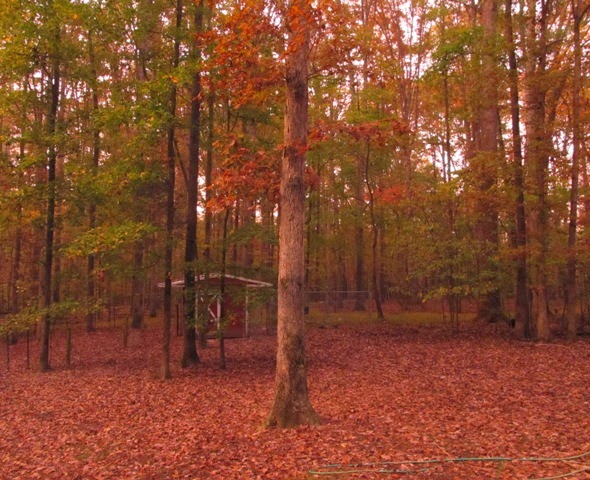
--yet excitement for the opportunities and experiences to come. I wish I could bottle up each of these emotions, store them in little glass vials, and pull them out to take a quick sniff the next time I'm trying to convey powerful feelings in my writing. The next best thing is to take time to notice the impact of these changes, and to embrace the experiences of each day. It's there that the most powerful changes occur, for me as well as my characters. I'm grateful, in my chaos, to be alive and growing!
What are your stories of change? Of those formative moments when you can feel the course of your life tilting, shifting, and careening off in a new direction? Author David Zeltser discusses a life-altering event that led to his becoming an author on My Brain on Books, where Joanne is also giving away a free copy of his middle grade novel Lug, Dawn of the Ice Age. But, don't stop by as I'm hoping to win it. ;)
September 3, 2014
Make Choices that Matter by Monique Bucheger

Today, I’d like to talk about choices: Ones we make deliberately and ones we allow to be made for us—and how each can impact us.As mothers, we want to connect to with our kids and other people's kids in quality ways. What could be more important than teaching people to make "Deliberate Choices" that will improve the lives of the people we care about? As a middle grade author, I am always interested in finding ideas and ways enhance the tween and teen experience. These years are extremely important years in everybody’s lives. These are the formative years when kids realize that life outside of their family home can be very different from what they are used to.New ideas and concepts are pondered; new strategies to deal with the good, the bad, and the frustrating are explored—and experimented with.Personal ethics and codes of behavior are tried on for size and comfort—often tailored, adjusted, and even discarded to fit the whims of peer pressure—good and bad.Kids learn about who they are or what they want to be known as, and spend a lot of time trying to make others see them as they want to be seen or adapt their self-image to reflect what they see in other peoples’ eyes.This can be positive or negative—depending on who is doing the accepting and / or rejecting of ideas and concepts.We all remember the cliché kids: the class clown, the nerd, the bully, the bullied, the overachiever, the underachiever, the geek, the jock, the oddball, the social, the prep, the kid everybody liked, and the one who never quite fit in anywhere, but desperately wanted to.Perhaps we were one or more of them—or another cliché student—either mixed up or altogether different at some point in our career as middle-grade students.There comes a time when each person needs to make determinations about who they are, who they want to be, and take the steps to be that person.This exploration and defining of our core self (of who we are and who we want to be and what that person looks like) becomes earnest and most important in our middle-grade years. This process is often the biggest foundation and shaper of our future self.Children who are blessed with positive influences and a belief in their inherent goodness, travel through these formative years less scathed than children who are told they are worthless, and those who have the sad misfortune to believe such an atrocious lie.For the next week, my friend, James A. Owens has given this link to allow his book: “Drawing Out the Dragons” FREE (a $19.99 value). He is highly sought after as a speaker for middle school audiences.James is a supremely talented artist, and internationally bestselling author, and a superb human being—a self-proclaimed “Awesomist”—one who seeks to bring out the best in others and shares hard learned insights to bring light to other peoples’ lives.I bring this up because a big part of the reason James is as successful as he is today is because he made courageous decisions about who he wanted to be as a middle-grade student .Because I care about kids and the people who love them, I wanted to take this opportunity to share this amazing book and it's incredible insights to the audience it was meant to influence most: Tweens, teens, and anyone seeking to be the best "me" they can be. (and it is only FREE for the next week.)When he was 11, James spent several months in a hospital pretty certain he was going to die—three of his young roommates did die within a month of his admission to the hospital.Doctors didn’t know what was wrong with him; they only knew he was becoming sicker as time went by. At age 11, James had decisions to make about what his future would—and should—hold. Believing he didn’t have much of a future—quite possibly only weeks or months, James fast-tracked those decisions with actions so that he could make the most of the time he had left.The top banner on the cover of “Drawing out the Dragons” says: A Beginner’s Guide to Making Choices that Matter. This is a profound concept because quite often—even adults allow things to happen to them rather than be heroes in their own lives by making deliberate choices to be the best person they can be.To be a hero in your own life, each person needs to take a stand and become the wind—rather than the leaf—that is buffeted about by the wind.Making deliberate choices about how you live your life, and what you do on your personal journey here on earth directly affects your influence on what happens to you and how you affect those around you.Two powerful messages that James repeats in his book are: If you really want to do something, no one can stop you.But if you really don’t want to do something, no one can help you. ~and~Never, ever, sacrifice what you want the most,for what you want the most at that moment.
Think about these messages a minute.To further quote James:“All good things happen . . . In Time.”Choices are cumulative, but the results are not always apparent, or immediate. Sometimes you just have to keep making the right choices, even if it seems there’s no benefit to doing so. Sooner or later, there will come a moment when what you really want most is tested, and how you respond in that moment will reveal the culmination of your choices. At that defining moment, his second message becomes truly powerful:Never, ever, sacrifice what you want the most,for what you want the most at that moment. It is my hope that the people who read this post realize how important it is to make deliberate choices as to who they want to be and learn to believe in themselves and their dreams because truly: If you really want to do something, no one can stop you.But if you really don’t want to do something, no one can help you.So go forward and make informed choices--your future self will thank you. :)Laugh lots ... Love much ...Write on!
August 31, 2014
Is it Fall yet?
We're coming up on my favorite time of the year. Fall. Autumn. Whatever you want to call it. I have loved this season since I was a little girl. I couldn't wait until I could put on my long sleeves and feel the slight chill to the air.
I knew school would be starting. I knew football season was starting—which meant social interactions and my mom's bag of popcorn with marshmallows at the bottom. The small things.
And the colors! If you check my closet, you'll see the reds, yellows, golds, and browns. I can't get enough of it. My family loved to go up in the mountains to see the leaves changing colors. I would stare out the windows just waiting for another explosion of color.
It's fun to share some of these same activities with my kids. We have gone up to the mountains with the kids, but not as often as I'd like. Hopefully this year I can remedy that.
Instead of football like I grew up with, we now spend all our time at soccer practices (one would argue that soccer is actually football in most countries). With six kids playing, we're busy! As I sit at their practices and games, I eat up the chill to the air and the need for jackets.
So what do you like to do in Fall?
I knew school would be starting. I knew football season was starting—which meant social interactions and my mom's bag of popcorn with marshmallows at the bottom. The small things.
And the colors! If you check my closet, you'll see the reds, yellows, golds, and browns. I can't get enough of it. My family loved to go up in the mountains to see the leaves changing colors. I would stare out the windows just waiting for another explosion of color.
It's fun to share some of these same activities with my kids. We have gone up to the mountains with the kids, but not as often as I'd like. Hopefully this year I can remedy that.
Instead of football like I grew up with, we now spend all our time at soccer practices (one would argue that soccer is actually football in most countries). With six kids playing, we're busy! As I sit at their practices and games, I eat up the chill to the air and the need for jackets.
So what do you like to do in Fall?
August 28, 2014
Ways of Telling a Story
 This is kind of a strange way of getting information. I was never, ever a TWEET fan. I don’t have a TWEET account, I don’t want to know what other people are TWEETing but I came across this article by Cyriaque Lamar posted online about how Emma Coates (a Pixar story artist) comes up with story lines for movies they make. I love Pixar and what they do for full length feature animated movies. They are becoming my favorite amongst all the movies we watch. This information definitely caught my attention in helping me tell a story in whatever I write.
Twenty-Two Rules of Story Telling
1. You admire a character for trying more than for their successes.
2. You gotta keep in mind what’s interesting to you as an audience, not what’s fun to do as a writer. They can be very different.
3. Trying for theme is important, but you won’t see what the story is actually about til you’re at the end of it. Now rewrite.
4. Once upon a time there was ___. Every day, ___. One day ___. Because of that, ___. Because of that, ___. Until finally ___.
5. Simplify. Focus. Combine characters. Hop over detours. You’ll feel like you’re losing valuable stuff but it sets you free.
6. What is your character good at, comfortable with? Throw the polar opposite at them. Challenge them. How do they deal?
7. Come up with your ending before you figure out your middle. Seriously. Endings are hard, get yours working up front.
8. Finish your story, let go even if it’s not perfect. In an ideal world you have both, but move on. Do better next time.
9. When you’re stuck, make a list of what WOULDN’T happen next. Lots of times the material to get you unstuck will show up.
10. Pull apart the stories you like. What you like in them is a part of you; you’ve got to recognize it before you can use it.
11. Putting it on paper lets you start fixing it. If it stays in your head, a perfect idea, you’ll never share it with anyone.
12. Discount the 1st thing that comes to mind. And the 2nd, 3rd, 4th, 5th – get the obvious out of the way. Surprise yourself.
13. Give your characters opinions. Passive/malleable might seem likable to you as you write, but its poison to the audience.
14. Why must you tell THIS story? What’s the belief burning within you that your story feeds off of? That’s the heart of it.
15. If you were your character, in this situation, how would you feel? Honesty lends credibility to unbelievable situations.
16. What are the stakes? Give us reason to root for the character. What happens if they don’t succeed? Stack the odds against.
17. No work is ever wasted. If it’s not working, let go and move on – it’ll come back around to be useful later.
18. You have to know yourself: the difference between doing your best & fussing. Story is testing, not refining.
19. Coincidences to get characters into trouble are great; coincidences to get them out of it are cheating.
20. Exercise: take the building blocks of a movie you dislike. How do you rearrange them into what you DO like?
21. You gotta identify with your situation/characters, can’t just write ‘cool’. What would make YOU act that way?
22. What’s the essence of your story? Most economical telling of it? If you know that, you can build out from there.
All of these ideas are so fantastic... This even helps me with setting up a non-fiction story I write for websites....
August 25, 2014
Back to School
Today is the first day back to school for my kids. Hooray!
Various friends and family have already started while others won't start until after Labor Day. No matter when the kids return to hitting the books, moms have mixed feelings and a new day/routine begins.
For those who home school, it means fitting in writing outside of learning time, for those of us using the public or private systems, it means prime writing hours.
All writers are different. Some work best at 2 am, while others let their fingers flyover the keys during early, midday, or late night hours. No matter when you write, it's all about balancing writing time with family, responsibilities, and chocolate.
So, today, well tomorrow, is my day to set up a new writing routine and get down to brass tacks. I've found that I work best in 45 min sprints twice a day or to have a daily word count goal, which is usually 1000 words.
Now, I know there are many writers out there shaking their heads and thinking, "That's shameful. I produce 10,000 words a day" or fit in whatever amazing number works. And I applaud them.
But in order for me to have balance in my life, that's where I'm at.
So, today my husband is off, which means we can get back to having lunch dates while the kids are at school. And I'll put off the grocery shopping, laundry, and cleaning until tomorrow. And perhaps go buy a car as mine got totaled earlier this month. (Not my fault and we're all fine.)
The biggest thing I've had to learn is that all days go awry. plans go out the window, and priorities have to be redone. Sometimes, volunteering at the school will trump writing, or visiting a friend in need, or your spouse's car will break down.
Deep breath. The computer, characters, and muse will wait on standby until you can get to them.
That or grab the nearest napkin and jot away!
Happy back to school day! I need to reorganize my desk for optimal writing.
How will school affect your writing routine?
Various friends and family have already started while others won't start until after Labor Day. No matter when the kids return to hitting the books, moms have mixed feelings and a new day/routine begins.
For those who home school, it means fitting in writing outside of learning time, for those of us using the public or private systems, it means prime writing hours.
All writers are different. Some work best at 2 am, while others let their fingers flyover the keys during early, midday, or late night hours. No matter when you write, it's all about balancing writing time with family, responsibilities, and chocolate.
So, today, well tomorrow, is my day to set up a new writing routine and get down to brass tacks. I've found that I work best in 45 min sprints twice a day or to have a daily word count goal, which is usually 1000 words.
Now, I know there are many writers out there shaking their heads and thinking, "That's shameful. I produce 10,000 words a day" or fit in whatever amazing number works. And I applaud them.
But in order for me to have balance in my life, that's where I'm at.
So, today my husband is off, which means we can get back to having lunch dates while the kids are at school. And I'll put off the grocery shopping, laundry, and cleaning until tomorrow. And perhaps go buy a car as mine got totaled earlier this month. (Not my fault and we're all fine.)
The biggest thing I've had to learn is that all days go awry. plans go out the window, and priorities have to be redone. Sometimes, volunteering at the school will trump writing, or visiting a friend in need, or your spouse's car will break down.
Deep breath. The computer, characters, and muse will wait on standby until you can get to them.
That or grab the nearest napkin and jot away!
Happy back to school day! I need to reorganize my desk for optimal writing.
How will school affect your writing routine?
August 21, 2014
Poking the Creative Ashes
When you build a fire, it burns hot and fast, and then the embers create a long, slow roast that can go on for hours. You add wood, and you stay warm for as long as you need to. When you don't add wood, slowly the fire dies down, but the embers stay good and hot. It takes quite a while for them to die by themselves, and often, campers pour water on their fires to make sure nothing is left that could start a forest fire. The great thing about those embers, though, is that if you don't want to put out your fire, you can stir them up with a stick and throw a little kindling on there, and before you know it, you've got a raging flame again.
Creativity never dies out. Sometimes you've got to let it simmer, sometimes you've got to walk away from the fire pit for a while, but come back and poke it. Then stand back or it will take your eyebrows off.
Creativity never dies out. Sometimes you've got to let it simmer, sometimes you've got to walk away from the fire pit for a while, but come back and poke it. Then stand back or it will take your eyebrows off.
August 18, 2014
Marin At The Well
by H. Linn Murphy

My friend Wes owns two bookstores. The other day we were talking books, as we often do. He said to me, "Heidi, I want you to write me a book. I need a book like the Tennis Shoes books by Heimerdinger that will capture youthful imaginations and increase their testimonies." He told me he's tired of the freshet of admittedly great middle grade and YA fiction which doesn't also answer that need for spiritual nourishment our kids are finding lacking.
At the time I was polishing my LDS book about a sister missionary and was deep into edits for my forthcoming LDS romance. Those will hopefully increase testimonies, though not especially youthful ones. At the time I really had no intention of haring off in a completely new direction to light fires under today's youth. I have four other books in the works right now and a whole host of others waiting impatiently for publishers or agents.

But the other day something happened. I woke up with a story banging at my head to get out. It flew from its aerie nearly fully fledged. I can only think that God wants me to write this book and sent it to me nearly complete. I was on fire with it, lit from the inside.
I continued to kick at it, having so many other ideas flocking around for other books. I'm researching honey badgers and Mozambique, Johns Hopkins University and Niassa nature reserve. But this morning whole scenes of Mary's life clattered across the stage in my mind and I could no longer deny them pride of place there.
 MARIN AT THE WELL is the answer to these questions. It's basically the story of Mary and Martha told through the eyes of a modern teen. I allowed myself to examine how I would feel in Mary's place. What would it be like to kneel at Christ's feet and hear his stories and teachings? How would it feel to tell my sister that Jesus was coming to dinner? How would it feel to stand in the knot of other weeping women on that fateful hill, knowing everything was changing? To crouch and look into the tomb and find my Savior gone?
I think a lot of times we don't write these powerful stories because we're afraid they won't make any money. Well this book is pushy. Marin and Marco want their story told and won't take a pansy-ish "no" for an answer anymore. I don't care if the "great unwashed hordes" want sex and violence. This is what I write.

I suppose I'll just have to tell Wes I've got his book. Hopefully Deseret will help me out with that.

My friend Wes owns two bookstores. The other day we were talking books, as we often do. He said to me, "Heidi, I want you to write me a book. I need a book like the Tennis Shoes books by Heimerdinger that will capture youthful imaginations and increase their testimonies." He told me he's tired of the freshet of admittedly great middle grade and YA fiction which doesn't also answer that need for spiritual nourishment our kids are finding lacking.
At the time I was polishing my LDS book about a sister missionary and was deep into edits for my forthcoming LDS romance. Those will hopefully increase testimonies, though not especially youthful ones. At the time I really had no intention of haring off in a completely new direction to light fires under today's youth. I have four other books in the works right now and a whole host of others waiting impatiently for publishers or agents.

But the other day something happened. I woke up with a story banging at my head to get out. It flew from its aerie nearly fully fledged. I can only think that God wants me to write this book and sent it to me nearly complete. I was on fire with it, lit from the inside.
I continued to kick at it, having so many other ideas flocking around for other books. I'm researching honey badgers and Mozambique, Johns Hopkins University and Niassa nature reserve. But this morning whole scenes of Mary's life clattered across the stage in my mind and I could no longer deny them pride of place there.
 MARIN AT THE WELL is the answer to these questions. It's basically the story of Mary and Martha told through the eyes of a modern teen. I allowed myself to examine how I would feel in Mary's place. What would it be like to kneel at Christ's feet and hear his stories and teachings? How would it feel to tell my sister that Jesus was coming to dinner? How would it feel to stand in the knot of other weeping women on that fateful hill, knowing everything was changing? To crouch and look into the tomb and find my Savior gone?
I think a lot of times we don't write these powerful stories because we're afraid they won't make any money. Well this book is pushy. Marin and Marco want their story told and won't take a pansy-ish "no" for an answer anymore. I don't care if the "great unwashed hordes" want sex and violence. This is what I write.

I suppose I'll just have to tell Wes I've got his book. Hopefully Deseret will help me out with that.
August 14, 2014
Waiting...
 I'm rambling about writing today. More specifically, the waiting that is involved with writing. There is no other business, but maybe science, where you have to wait so long for results. Writing the book takes forever. Of course, then you have a gazillion rewrites, but that's okay because it needs to be perfect before you query. The hard part is next- waiting to hear back from an editor. Agents are usually very zippy, but once they've all said no, you move on directly to editors.
I had one editor take over two years to get back to me. The good news was that she was very upfront in the process and told me it might take that long. The others take at least three months, but more often than not, six months to a year. And that's the hard part, waiting and waiting, and you can do nothing about it. Even worse is what I call the book 2 wait. That's where I am now. I got my foot in the door and had a book published by a legit publisher. Now I have a great credit in my query letter, and you'd think it would be easier? It's not. I actually joined a group of other writers that experience depression because they can't get that second book picked up. I'm not quite at that stage, but I have gotten to the part where it is hard to write anything new because my excitement is wearing thin. I just want to hear back.
My publisher has my book right now. It is a YA fantasy that I submitted four months ago. The wait is killing me, and I know 90% of all other authors go through the same thing. Ugh. The path is so hard. Any other writer's out there have similar problems?


