
L.M. Long's Blog, page 5
February 23, 2015
Publish it? Change it? Or Put it Away?
These three questions run on a constant loop in my head regarding my next book.
Why?
Because, I'm a relatively new Indie author just getting started in the publishing world, I have a tiny fan base (if I even dare to think that's true) and I don't want to alienate the few I do have.
Why?
Because I've written a novel (call it #3) outside my light and fluffy romance genre.
My two published books (let's call them #1 & #2) fit nicely in that category, as do the two others I've written since book 3 (#4 & #5). And I intend to keep writing light and fluffy romance.
So what do I do with this book (#3), that was supposed to be the same as the others, but turned into a novel dealing with sensitive and dark female matters taking place on a college campus?
Do I move forward with publishing it as planned so I can keep to my two novels pubbed this year schedule? Do I put it out under the genre women's fiction rather than romance? Which one will it fit best in? Even my critique group doesn't agree on that. Will my few readers accept a book written outside my usual genre? Should I care? I didn't worry about readership loyalty before I got into this business. I just want to put out well crafted quality novels. If people like them, so much the better. I don't often check out the reviews of my books or my sales, those aren't why I got into writing.
Should I change it to fit back into sweet romance? I've brainstormed an idea that will work to do that. But that would change my publishing schedule to one book this year instead of two. Does that matter to anyone but me?
But on the other hand, perhaps the world needs the book as written.
Then there's the idea that I'm not sure I'm okay with people I know, esp. my family (not my kids, they're too young) reading this book. They may wonder if any of it's true, what demons I'm hiding, etc. None of which is true. But I wonder if people will look at me differently and not in a good way. Like the "she's got issues" way. Does it add anything of value to the world?
Should I shelve it for now? Forever? It's been through my critique group and a round of edits. After one more round of edits and a few beta readers, it's good to go. Do I put aside all the hard work I've done on this novel?
I know plenty of authors who write across multiple genres, several of whom write for this blog. But, then they are pretty consistent at doing so. If I write just one book outside my normal genre, should I use a pen name? Is there a benefit to that?
The decision is a hard one and entirely mine to make, that's part of the beauty of being an Indie Author. But I would love some advice. Good, bad, ridiculous, I'll accept it.
What do you think?
Why?
Because, I'm a relatively new Indie author just getting started in the publishing world, I have a tiny fan base (if I even dare to think that's true) and I don't want to alienate the few I do have.
Why?
Because I've written a novel (call it #3) outside my light and fluffy romance genre.
My two published books (let's call them #1 & #2) fit nicely in that category, as do the two others I've written since book 3 (#4 & #5). And I intend to keep writing light and fluffy romance.
So what do I do with this book (#3), that was supposed to be the same as the others, but turned into a novel dealing with sensitive and dark female matters taking place on a college campus?
Do I move forward with publishing it as planned so I can keep to my two novels pubbed this year schedule? Do I put it out under the genre women's fiction rather than romance? Which one will it fit best in? Even my critique group doesn't agree on that. Will my few readers accept a book written outside my usual genre? Should I care? I didn't worry about readership loyalty before I got into this business. I just want to put out well crafted quality novels. If people like them, so much the better. I don't often check out the reviews of my books or my sales, those aren't why I got into writing.
Should I change it to fit back into sweet romance? I've brainstormed an idea that will work to do that. But that would change my publishing schedule to one book this year instead of two. Does that matter to anyone but me?
But on the other hand, perhaps the world needs the book as written.
Then there's the idea that I'm not sure I'm okay with people I know, esp. my family (not my kids, they're too young) reading this book. They may wonder if any of it's true, what demons I'm hiding, etc. None of which is true. But I wonder if people will look at me differently and not in a good way. Like the "she's got issues" way. Does it add anything of value to the world?
Should I shelve it for now? Forever? It's been through my critique group and a round of edits. After one more round of edits and a few beta readers, it's good to go. Do I put aside all the hard work I've done on this novel?
I know plenty of authors who write across multiple genres, several of whom write for this blog. But, then they are pretty consistent at doing so. If I write just one book outside my normal genre, should I use a pen name? Is there a benefit to that?
The decision is a hard one and entirely mine to make, that's part of the beauty of being an Indie Author. But I would love some advice. Good, bad, ridiculous, I'll accept it.
What do you think?


February 19, 2015
Creating a Writing Environment
Tristi Pinkston
One of the most common questions I'm asked has to do with children and writing, most specifically, how to get your kids to let you write. This is a tricky one indeed, especially if writing is a new pursuit for you. It's difficult to add a new thing into the mix and get everyone on board with it.
My situation is a little unique. I had never intended to be a writing mommy, actually. I knew I'd write someday, but when I started my family, I figured I'd put off writing until my kids were grown. I didn't see a way to write and be a mom at the same time. Well, that changed for me in 1999, when my oldest was three and my second child was seven months. I had a dream that would become the basis for my first novel, Nothing to Regret, and I felt very strongly that I needed to write that book now. That's when the funky roller coaster that is my life began. I started out by writing during my baby's nap time. He'd sleep for around an hour and a half, so I'd get him put down, turn on Dragon Tales for my daughter, and then I'd write.
When he woke up, I'd shut everything back down, and that's what we did for a couple of months. But then that short writing session during the day stopped being enough. I'd been bitten by the writing bug, and I wanted more. You know how it is - you get on a roll and your characters are talking and you can't stop thinking about your book - that was me. So then I added a second writing slot in my day, which was after everyone else was in bed. But that brought about its own problems in that sometimes my daughter would wake up in the night, and I couldn't hear her from downstairs, which was where the computer was at the time. So we rearranged some things and put the computer in my bedroom, where I could hear her. Of course, that's also where my husband was asleep, so I'd work with the light off ... hey, that's why computer monitors light up, right?
So you can do that. As my kids got a little older, I moved the computer into the living room. By now, I had started my editing company, so I needed to be on the computer more. I set it up right in the middle of everything so I could keep an eye on them and work at the same time. It wasn't unusual at all for me to make lunch, edit a page, get out some toys, edit a paragraph, change a diaper, and so forth. As time went by, I did put the computer back in the bedroom, and kept my bedroom door open so I could hear what was going on in the house at any given moment. My kids knew that if I wasn't in the living room or kitchen, I was in the bedroom, and they could come find me with whatever they needed. I'm telling you this long-winded story for a reason. : )
Creating a writing environment is something you do a little at a time. Because I got started when my kids were so little, they don't remember a time when the computer wasn't a part of my life. It's just how it's always been. For those of you who are starting now, you'll want to introduce it slowly so as not to totally whack out your whole family schedule. I suggest looking at your day and finding moments that are already free. Just like I started out using nap time to write, is there a time during the day when your family is already doing something else - maybe a play date or preschool or soccer practice or something? Then, as your need to write more increases, can you stay up late or get up early to get it done? Can you train yourself to work in the middle of playing children? It takes practice, I won't lie.
Being able to hold a train of story thought while also talking to your little boy about his cool new train is an acquired skill, but the more you do it, the better you'll get. I used to think I could only write in total silence. *snort* I have four kids. How much total silence do you think I get? Your brain can learn to adapt and filter. The most important thing is balance. If your kids know that yes, you're writing, but that you'll drop everything the second they need you, that's a great thing.
We love writing. We want to write. We want to do it all day, every day sometimes. But the best fulfillment comes when we're well balanced in all areas of our lives. I didn't start writing during the day until my kids were a little older and more self-sufficient. We do what we've got to do to make it work for our own families. And I have to be honest - when you get that first book published and you're holding it in your hands and you can show it off to your family, that makes it a lot easier for them to "get" why you love writing so much. It's tangible evidence they can process. Until that moment, "writing a book" seems sort of vague. Hang in there, find what moments you can, and above all, be sure to take lots and lots of time for kisses and snuggles. That's the best part of the day ever.
One of the most common questions I'm asked has to do with children and writing, most specifically, how to get your kids to let you write. This is a tricky one indeed, especially if writing is a new pursuit for you. It's difficult to add a new thing into the mix and get everyone on board with it.
My situation is a little unique. I had never intended to be a writing mommy, actually. I knew I'd write someday, but when I started my family, I figured I'd put off writing until my kids were grown. I didn't see a way to write and be a mom at the same time. Well, that changed for me in 1999, when my oldest was three and my second child was seven months. I had a dream that would become the basis for my first novel, Nothing to Regret, and I felt very strongly that I needed to write that book now. That's when the funky roller coaster that is my life began. I started out by writing during my baby's nap time. He'd sleep for around an hour and a half, so I'd get him put down, turn on Dragon Tales for my daughter, and then I'd write.
When he woke up, I'd shut everything back down, and that's what we did for a couple of months. But then that short writing session during the day stopped being enough. I'd been bitten by the writing bug, and I wanted more. You know how it is - you get on a roll and your characters are talking and you can't stop thinking about your book - that was me. So then I added a second writing slot in my day, which was after everyone else was in bed. But that brought about its own problems in that sometimes my daughter would wake up in the night, and I couldn't hear her from downstairs, which was where the computer was at the time. So we rearranged some things and put the computer in my bedroom, where I could hear her. Of course, that's also where my husband was asleep, so I'd work with the light off ... hey, that's why computer monitors light up, right?
So you can do that. As my kids got a little older, I moved the computer into the living room. By now, I had started my editing company, so I needed to be on the computer more. I set it up right in the middle of everything so I could keep an eye on them and work at the same time. It wasn't unusual at all for me to make lunch, edit a page, get out some toys, edit a paragraph, change a diaper, and so forth. As time went by, I did put the computer back in the bedroom, and kept my bedroom door open so I could hear what was going on in the house at any given moment. My kids knew that if I wasn't in the living room or kitchen, I was in the bedroom, and they could come find me with whatever they needed. I'm telling you this long-winded story for a reason. : )
Creating a writing environment is something you do a little at a time. Because I got started when my kids were so little, they don't remember a time when the computer wasn't a part of my life. It's just how it's always been. For those of you who are starting now, you'll want to introduce it slowly so as not to totally whack out your whole family schedule. I suggest looking at your day and finding moments that are already free. Just like I started out using nap time to write, is there a time during the day when your family is already doing something else - maybe a play date or preschool or soccer practice or something? Then, as your need to write more increases, can you stay up late or get up early to get it done? Can you train yourself to work in the middle of playing children? It takes practice, I won't lie.
Being able to hold a train of story thought while also talking to your little boy about his cool new train is an acquired skill, but the more you do it, the better you'll get. I used to think I could only write in total silence. *snort* I have four kids. How much total silence do you think I get? Your brain can learn to adapt and filter. The most important thing is balance. If your kids know that yes, you're writing, but that you'll drop everything the second they need you, that's a great thing.
We love writing. We want to write. We want to do it all day, every day sometimes. But the best fulfillment comes when we're well balanced in all areas of our lives. I didn't start writing during the day until my kids were a little older and more self-sufficient. We do what we've got to do to make it work for our own families. And I have to be honest - when you get that first book published and you're holding it in your hands and you can show it off to your family, that makes it a lot easier for them to "get" why you love writing so much. It's tangible evidence they can process. Until that moment, "writing a book" seems sort of vague. Hang in there, find what moments you can, and above all, be sure to take lots and lots of time for kisses and snuggles. That's the best part of the day ever.
February 16, 2015
Going to the Dogs
by H. Linn Murphy
My son wants a dog. He has wanted one for years--before he could even spell puppy correctly, in fact. Every time he sees a corgi or pug or any puppy, he makes the same 'aaahhhhh' sound people make for adorable babies. It's so cute.

When he gets just rabid to have a dog, we trot out the pluses and minuses, heavy on the minuses. And there are many. We want him to go into his future dog ownership with his eyes wide open. No way do we want to be saddled with a pet the kids won't take care of.

Being a writer is similar. Lots of people think they want to be a writer. They have a book idea and someone has told them they can make piles of ready cash, so they plop down to write their bestseller with very little planning or preparation and towering expectations.
What they don't understand is that there are all kinds of things one needs to do to become a competent writer:
Pay for your pet:
 It's difficult to write your bestseller on your off-time between job and family. You're going to have to allot a certain amount of time to write. And you aren't going to jam out a top-priced book the very first go-around. You'll need to spend some time and maybe money getting an editor to go through your book. It's very, very rare that a book goes to print without lots of editing. If you decide to self-publish, you'll need an editor and a cover designer. Without those two things, your book is going to suffer. Believe me. People won't even look at a book with a lousy cover. I've done reviews for bookstores on perfectly good books that weren't selling because their covers rotted. I've also read atrocious books which were in such need of editing that I couldn't bear to read more than the first page.
 Obedience school:
You need discipline. Someone said you'll need to write at least 10,000 words before you can ever be called a writer. I think it's many more than that. You need to sit down and write something every day. Make it a habit. Write a book. Write a short story. Write a blog post. Write a laundry list. Just write. And don't let anyone or anything stop you. Make it a habit. Call yourself a writer. Learn how to do a slamming query. Learn how to do an elevator speech. Learn great grammar. Fall in love with beautiful language. Learn to spell.
Care and feeding:
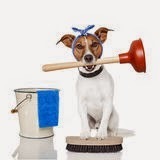 You need to feed your brain. Read books in your genre. Read LOTS of books in your genre. De-construct them and figure out what worked and what didn't. Pay attention to what the market is doing. What kinds of books are people reading? If you're writing a sparkly vampire book, are fairy-like bloodsuckers on the cusp of the market, or are they old and worn out and needing to be chopped up in little pieces and burned? I once heard a panel of publishers and agents plead, "Please, no more dead girls."

When he barks:It's doubtful you have the world's number one book and thus are untouchable. Your editor is going to want you to change things. Count on it. Do so with as much grace as you can muster. Publishers don't want to mess around with a writer who won't work with them. Just remember you get to keep your first run if you want to. But your editor is there to help you clean up your manuscript and make it palatable for your reader.
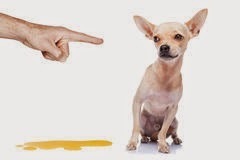
Scooping the poop:
I like to keep a separate file for things I cut from my stories. I call it my slag pile. For whatever reason a phrase just didn't read well in that spot. Into the slag pile it goes. At least twice, I've cut half a book off and tossed it out. Using this file means I don't have to bemoan the fact that that particular piece is gone. Think of it as the stuff a director cuts from the movie that often ends up on the blooper reel. I have occasionally gone back to the slag heap and unearthed something to use later or in another book. It makes the whole editing process much less painful.

Room to run:
Give yourself a chance to get good. Don't compare yourself to Shakespeare right out of the gate. It's not going to help. Improve. Learn your craft. Take classes at conventions. Take college courses. Read books on writing. Take on-line classes. Find a critique group. Find a set of Beta readers you trust. Enter competitions. Talk to people about your craft. Study.
 Share your toys:
Teaching someone else is almost always going to make you better at it yourself. Share what you've learned. Sure, you're competing for a slot (publishers have only a certain number of slots to fill each year. The odds of getting your book into one of those slots are slightly better than getting run down by a rhinoceros), but better books make better readers. We want an audience for our books because we have something to say. Educate your audience. Share your expertise.
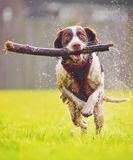 Plenty of exercise:
You are going to actually need more exercise so you don't develop a rear end the size of Texas. Hours of sitting will not only give you a large gluteous maximus (or however you spell the dang thing), but can cause heart problems and poor circulation. Exercise will also give your mind fuel and blow away the cobwebs.
You also need mental exercise. Lots. Read abundantly. Go to conventions and retreats and book clubs. Use a critique group. Friend authors on media sites. Pay attention to successful writers and how they got that way.
 Going to the dog park:
In this age of competition and falling book sales, it's a very good bet that you're going to have to help sell your book. You're going to need some marketing skills. It's rare these days for a writer to sit down, write his/her book, turn it in, and everything is done. You have to help. Get educated about the best ways to help sell your book, whether it's using media sites, signings, tours, or selling it on the corner in your child's lemonade stand.

Know your breeds:
Rarefied, archaic language might interest you greatly. (I personally love ponderous verbiage.) But you need to tailor your words to the audience for whom you are writing. A three year old speaks much differently than a Harvard professor. Fit your language and content to your audience.
 Keeping shot records:
You need to keep records of every transaction. Good rapport with a publisher can go very wrong if you fail to keep exact records. For your peace of mind and that of your tax preparer, document every sale and every time you purchase a box of books. Competent records make happy friendships. Keep track of your contracts. If you need to, have someone look over your contract to make sure it's what you want.

When the dog bites:
Notice I didn't say if the dog bites. You need to continue to write through the set-backs that will come. L. Frank Baum, the writer of the Wizard of Oz, got 36 rejections before a publisher finally believed in his book. There are major writers who have had even more rejection slips. You will get them, whether it's because it's the wrong time, it's not the book for them, it's poorly written, you have a sub par query, you didn't follow instructions, or the planets just weren't aligned. Learn to roll with the punches. If your book is wrong for one publisher, it might do for another one. Or perhaps your hook is wrong or your story needs tightening or maybe you need to put it away for a bit and write something else. Ask someone you trust (who isn't your mom) to give you an opinion.

Another thing. If you write, you're a writer. Don't let your family or friends or other naysayers treat you like a dilettante. If you've payed your dues and you write, you're a writer. Should I say it again? Don't let them drag you down to wannabe status. Keep at it. If they say you're a hack, write better. Most writers have early works that make them want to toss the book off the Empire State building. Write something different.

Putting him down (sob):
Occasionally there comes a day when you must face the facts. Your book is a dead dog. There is nothing you can do to revive it. You've tried rewriting. You've edited the heck out of it. You've run it past all your Beta readers, your relations, and your mom. You've trotted it out to any and everybody who will sit still long enough to listen, and nobody wants it. It's tired, hacked, and you can't find a way to revive it. It's hogging all your time without possibility of making a go. It's time, my friend, to put the thing down and move on to writing something else. Learn to know when this time comes. Luckily, this is a rare occurrence.
 This one just made me laugh
Enjoy your dog:
Writing is a fabulous job. Where else do you get paid to make stuff up? You get to be the pilot of your own space ship. You get to climb to the top of Everest or pilot your own bathyscaphe to the bottom of the Marianas Trench. You can plunge into the sun before lunch and kiss Mr. Darcy before bedtime. You are the architect of a million far-flung worlds. The horizon is wide open, limited only by the scope of your imagination.
My son wants a dog. He has wanted one for years--before he could even spell puppy correctly, in fact. Every time he sees a corgi or pug or any puppy, he makes the same 'aaahhhhh' sound people make for adorable babies. It's so cute.

When he gets just rabid to have a dog, we trot out the pluses and minuses, heavy on the minuses. And there are many. We want him to go into his future dog ownership with his eyes wide open. No way do we want to be saddled with a pet the kids won't take care of.

Being a writer is similar. Lots of people think they want to be a writer. They have a book idea and someone has told them they can make piles of ready cash, so they plop down to write their bestseller with very little planning or preparation and towering expectations.
What they don't understand is that there are all kinds of things one needs to do to become a competent writer:
Pay for your pet:
 It's difficult to write your bestseller on your off-time between job and family. You're going to have to allot a certain amount of time to write. And you aren't going to jam out a top-priced book the very first go-around. You'll need to spend some time and maybe money getting an editor to go through your book. It's very, very rare that a book goes to print without lots of editing. If you decide to self-publish, you'll need an editor and a cover designer. Without those two things, your book is going to suffer. Believe me. People won't even look at a book with a lousy cover. I've done reviews for bookstores on perfectly good books that weren't selling because their covers rotted. I've also read atrocious books which were in such need of editing that I couldn't bear to read more than the first page.
 Obedience school:
You need discipline. Someone said you'll need to write at least 10,000 words before you can ever be called a writer. I think it's many more than that. You need to sit down and write something every day. Make it a habit. Write a book. Write a short story. Write a blog post. Write a laundry list. Just write. And don't let anyone or anything stop you. Make it a habit. Call yourself a writer. Learn how to do a slamming query. Learn how to do an elevator speech. Learn great grammar. Fall in love with beautiful language. Learn to spell.
Care and feeding:
 You need to feed your brain. Read books in your genre. Read LOTS of books in your genre. De-construct them and figure out what worked and what didn't. Pay attention to what the market is doing. What kinds of books are people reading? If you're writing a sparkly vampire book, are fairy-like bloodsuckers on the cusp of the market, or are they old and worn out and needing to be chopped up in little pieces and burned? I once heard a panel of publishers and agents plead, "Please, no more dead girls."
When he barks:It's doubtful you have the world's number one book and thus are untouchable. Your editor is going to want you to change things. Count on it. Do so with as much grace as you can muster. Publishers don't want to mess around with a writer who won't work with them. Just remember you get to keep your first run if you want to. But your editor is there to help you clean up your manuscript and make it palatable for your reader.

Scooping the poop:
I like to keep a separate file for things I cut from my stories. I call it my slag pile. For whatever reason a phrase just didn't read well in that spot. Into the slag pile it goes. At least twice, I've cut half a book off and tossed it out. Using this file means I don't have to bemoan the fact that that particular piece is gone. Think of it as the stuff a director cuts from the movie that often ends up on the blooper reel. I have occasionally gone back to the slag heap and unearthed something to use later or in another book. It makes the whole editing process much less painful.

Room to run:
Give yourself a chance to get good. Don't compare yourself to Shakespeare right out of the gate. It's not going to help. Improve. Learn your craft. Take classes at conventions. Take college courses. Read books on writing. Take on-line classes. Find a critique group. Find a set of Beta readers you trust. Enter competitions. Talk to people about your craft. Study.
 Share your toys:
Teaching someone else is almost always going to make you better at it yourself. Share what you've learned. Sure, you're competing for a slot (publishers have only a certain number of slots to fill each year. The odds of getting your book into one of those slots are slightly better than getting run down by a rhinoceros), but better books make better readers. We want an audience for our books because we have something to say. Educate your audience. Share your expertise.
 Plenty of exercise:
You are going to actually need more exercise so you don't develop a rear end the size of Texas. Hours of sitting will not only give you a large gluteous maximus (or however you spell the dang thing), but can cause heart problems and poor circulation. Exercise will also give your mind fuel and blow away the cobwebs.
You also need mental exercise. Lots. Read abundantly. Go to conventions and retreats and book clubs. Use a critique group. Friend authors on media sites. Pay attention to successful writers and how they got that way.
 Going to the dog park:
In this age of competition and falling book sales, it's a very good bet that you're going to have to help sell your book. You're going to need some marketing skills. It's rare these days for a writer to sit down, write his/her book, turn it in, and everything is done. You have to help. Get educated about the best ways to help sell your book, whether it's using media sites, signings, tours, or selling it on the corner in your child's lemonade stand.

Know your breeds:
Rarefied, archaic language might interest you greatly. (I personally love ponderous verbiage.) But you need to tailor your words to the audience for whom you are writing. A three year old speaks much differently than a Harvard professor. Fit your language and content to your audience.
 Keeping shot records:
You need to keep records of every transaction. Good rapport with a publisher can go very wrong if you fail to keep exact records. For your peace of mind and that of your tax preparer, document every sale and every time you purchase a box of books. Competent records make happy friendships. Keep track of your contracts. If you need to, have someone look over your contract to make sure it's what you want.

When the dog bites:
Notice I didn't say if the dog bites. You need to continue to write through the set-backs that will come. L. Frank Baum, the writer of the Wizard of Oz, got 36 rejections before a publisher finally believed in his book. There are major writers who have had even more rejection slips. You will get them, whether it's because it's the wrong time, it's not the book for them, it's poorly written, you have a sub par query, you didn't follow instructions, or the planets just weren't aligned. Learn to roll with the punches. If your book is wrong for one publisher, it might do for another one. Or perhaps your hook is wrong or your story needs tightening or maybe you need to put it away for a bit and write something else. Ask someone you trust (who isn't your mom) to give you an opinion.

Another thing. If you write, you're a writer. Don't let your family or friends or other naysayers treat you like a dilettante. If you've payed your dues and you write, you're a writer. Should I say it again? Don't let them drag you down to wannabe status. Keep at it. If they say you're a hack, write better. Most writers have early works that make them want to toss the book off the Empire State building. Write something different.

Putting him down (sob):
Occasionally there comes a day when you must face the facts. Your book is a dead dog. There is nothing you can do to revive it. You've tried rewriting. You've edited the heck out of it. You've run it past all your Beta readers, your relations, and your mom. You've trotted it out to any and everybody who will sit still long enough to listen, and nobody wants it. It's tired, hacked, and you can't find a way to revive it. It's hogging all your time without possibility of making a go. It's time, my friend, to put the thing down and move on to writing something else. Learn to know when this time comes. Luckily, this is a rare occurrence.
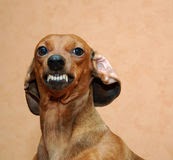 This one just made me laugh
Enjoy your dog:
Writing is a fabulous job. Where else do you get paid to make stuff up? You get to be the pilot of your own space ship. You get to climb to the top of Everest or pilot your own bathyscaphe to the bottom of the Marianas Trench. You can plunge into the sun before lunch and kiss Mr. Darcy before bedtime. You are the architect of a million far-flung worlds. The horizon is wide open, limited only by the scope of your imagination.
February 13, 2015
Developmental Edits
Today I want to focus on an often overlooked part of editing, the developmental edit. Many people use their spell check or look through for spelling and grammar errors and think they are done. Nope, there is another important step that needs to take place even before the copy editing- the developmental edit.
The idea is that the first draft is basically an unloading of all the ideas in your head. You don't stop, you just get out the beginning, middle and end. The developmental edit is what turns your manuscript into a novel. What does this edit involve?
First off, you need to add all the fluff that makes a story jump off the page. Things like sensory details, metaphors and similes. Suppose I wrote about a birthday party in my first draft. I mention the cake and the balloons. During the developmental edit is where I make sure to have included details like chocolate cake with vanilla icing, a description of the colorful balloons and perhaps the sound of them popping. You make sure that you are showing, not telling. It is during this edit that I flesh out my characters, give them a stronger voice and personality. It is also when I make sure that my characters aren't flat, but change and grow.
Another big part of this process is looking for holes. You want to make sure the "magic object" your character found in chapter four actually comes up again later in the book. You need to make sure your plot and sub plot(s) go in the intended direction and actually make sense. This is where you make sure that the underlying story is what it needs to be and that all the other elements line up. As you read through your work for this edit it is a good time to make sure that your premise works and that the story is believable.
When these things are done then it is time to move on to the grammar and sentence structures.- Dorine
The idea is that the first draft is basically an unloading of all the ideas in your head. You don't stop, you just get out the beginning, middle and end. The developmental edit is what turns your manuscript into a novel. What does this edit involve?
First off, you need to add all the fluff that makes a story jump off the page. Things like sensory details, metaphors and similes. Suppose I wrote about a birthday party in my first draft. I mention the cake and the balloons. During the developmental edit is where I make sure to have included details like chocolate cake with vanilla icing, a description of the colorful balloons and perhaps the sound of them popping. You make sure that you are showing, not telling. It is during this edit that I flesh out my characters, give them a stronger voice and personality. It is also when I make sure that my characters aren't flat, but change and grow.
Another big part of this process is looking for holes. You want to make sure the "magic object" your character found in chapter four actually comes up again later in the book. You need to make sure your plot and sub plot(s) go in the intended direction and actually make sense. This is where you make sure that the underlying story is what it needs to be and that all the other elements line up. As you read through your work for this edit it is a good time to make sure that your premise works and that the story is believable.
When these things are done then it is time to move on to the grammar and sentence structures.- Dorine
February 6, 2015
Why Authors Need to Go To Writing Seminars by Monique Bucheger
Well—it’s that time of year again for me—the time when I make arrangements to attend my favorite writing conferences. Why you say? Because LOTS of things can happen in a year and for an author—those changes can be huge.
Last year about this time (Feb 10, 2014 to be exact)—I gave several reasons why authors and wanna-be writers should attend conferences: here.
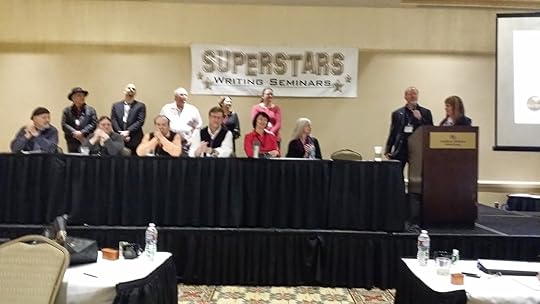 L to R Front: David Farland, Toni Weisskopf, Eric Flint, James A. Owen, Jody Lynn Nye, Kris Rusch, Kevin J. Anderson, Rebecca Moesta. Bak L to R: Dean Wesley Smith, Mark Lefevre, Todd McCaffery, Allyson, Lisa Mangum
This year I want to show you how attending conferences last year, changed my writing life this year. When I went to the Superstars Writing Seminar conference last year Kevin J Andersen and his wife, Rebecca Moesta, gave a talk on professionalism for authors.
In a nutshell, they said, “If you are given an opportunity to write for an anthology, a professional author will need to submit the type of story asked for, within the stated word count requested, and turn it in by the due date.”
IE: If the anthology is about “purple unicorns” the story needs to have a purple unicorn in it, be the right length, and turned in on time. Over the years, aspiring and established authors alike have joked with Kevin and Rebeca about writing an amazing story for his purple unicorn anthology.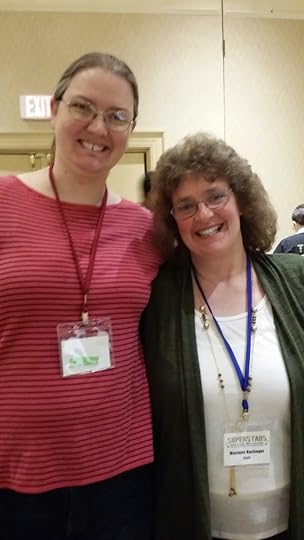 Lisa Mangum and Monique Bucheger
Soooooo, last year at Superstars, an awesome editor, Lisa Mangum, offered to edit such an anthology. Once Kevin and Rebecca agreed, a call was put out to the Superstars Writing Seminars attendees for purple unicorn stories and the fun began.
As the deadline approached dozens of purple unicorn stories were turned in. I wasn’t sure I was going to participate at first because, quite frankly, I’m not a fantasy writer.
Do I love to read fantasy? Absolutely.
Have I written any? No, I had not.
Then the stakes increased.
Peter S. Beagle, author of The Last Unicorn, was asked to be a part of the anthology. Then Todd McCaffrey (son of Ann McCaffrey—an author I loved as a teen) came on board.
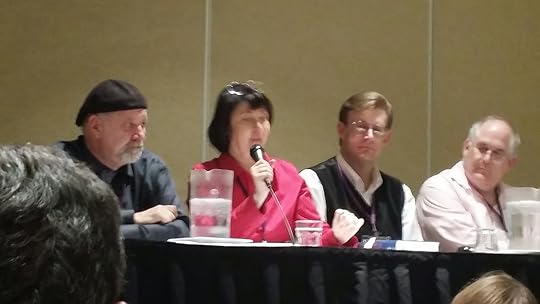 David Farland, Jody Lynn Nye, James A. Owen, & Todd McCaffrey
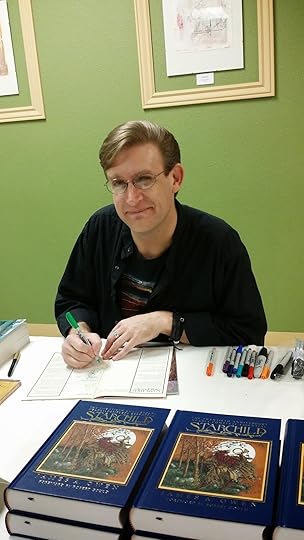 James Artemus Owen
James Artemus Owen—an internationally bestselling author and amazing artist offered to design the cover. Then James made the offer even more personal: he read each story and said his cover would include a unique representation from every unicorn story entered. (See cover here) WOW!!
I was intrigued, and nervous, and excited, and then I really, REALLY wanted to write an awesome purple unicorn story. So I plotted and planned and brainstormed—by myself and with other author friends. A few unique ideas and threads came to me, but, quite frankly, nothing meshed well enough.
On impulse one night (and thoroughly frustrated—after all—at this point I had published four full length novel’s for Pete’s sake—but I couldn’t make one 7,000 word story come together), I called another of the Superstars attendees: Victoria Morris.
She graciously agreed to brainstorm with me. I didn’t know Victoria very well at the time. I only knew she was a very nice person, we had hit it off at the conference, and that she writes epic fantasy. So we plotted together and something magical happened: a story came together.
A very good story. The best fantasy story I’d ever written to date.
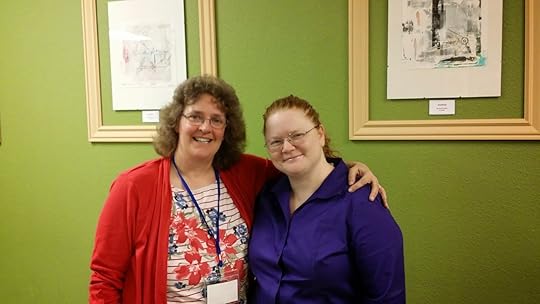 Monique Bucheger and Victoria Morris
Okay, the ONLY fantasy story I’d written. JVicky and I traded critiques on our stories, offering suggestions to strengthen and tighten and keep under word count (I think I deleted over 2000 words to squeak in under 7K—including title and author info.)
We finally submitted our stories shortly before midnight on the due date and then waited … hoping and praying our stories had been accepted. The short story is …they weren’t.
However, I got feedback on my story that it had been a “maybe,” and although it hadn’t been accepted, it had potential. Which was pretty awesome, considering some of the competition for the anthology.
I talked with Vicky. We discussed how I could have made it stronger, better, more engaging. Then a wonderful thing happened: we came up with some incredible ideas for a new series, ideas that would empower and intrigue our intended audience: middle grade girls.
We are now almost done with Book 1 and we have the main ideas for the next several books. A year ago, I wasn't a fantasy author. Now I am. All because of a challenge given at a writing conference.
Even better, I've made a wonderful new friend and she is opening doors to new experiences for me. For example, I've never been to a comicon. Vicky often helps James Owen at different comicons around the country and invited me to help at the Phoenix Comicon in May and Salt Lake City Comic Con in September. I'm looking forward to meeting new people and being immersed in the comicon experience I often hear about from my fantasy writer friends.
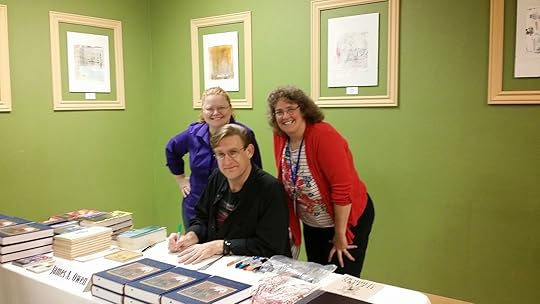 Victoria Morris, James Artemus Owen, & Monique Bucheger
It will be fun ... and it wouldn't be possible if I hadn't attended Superstars Writing Seminars last year. My other favorite writing conference is LDStorymakers. It will be May 15 & 16, 2015. I hope to see some of you there!
Laugh lots, Love much, Write on...
Last year about this time (Feb 10, 2014 to be exact)—I gave several reasons why authors and wanna-be writers should attend conferences: here.
 L to R Front: David Farland, Toni Weisskopf, Eric Flint, James A. Owen, Jody Lynn Nye, Kris Rusch, Kevin J. Anderson, Rebecca Moesta. Bak L to R: Dean Wesley Smith, Mark Lefevre, Todd McCaffery, Allyson, Lisa Mangum
This year I want to show you how attending conferences last year, changed my writing life this year. When I went to the Superstars Writing Seminar conference last year Kevin J Andersen and his wife, Rebecca Moesta, gave a talk on professionalism for authors.
In a nutshell, they said, “If you are given an opportunity to write for an anthology, a professional author will need to submit the type of story asked for, within the stated word count requested, and turn it in by the due date.”
IE: If the anthology is about “purple unicorns” the story needs to have a purple unicorn in it, be the right length, and turned in on time. Over the years, aspiring and established authors alike have joked with Kevin and Rebeca about writing an amazing story for his purple unicorn anthology.
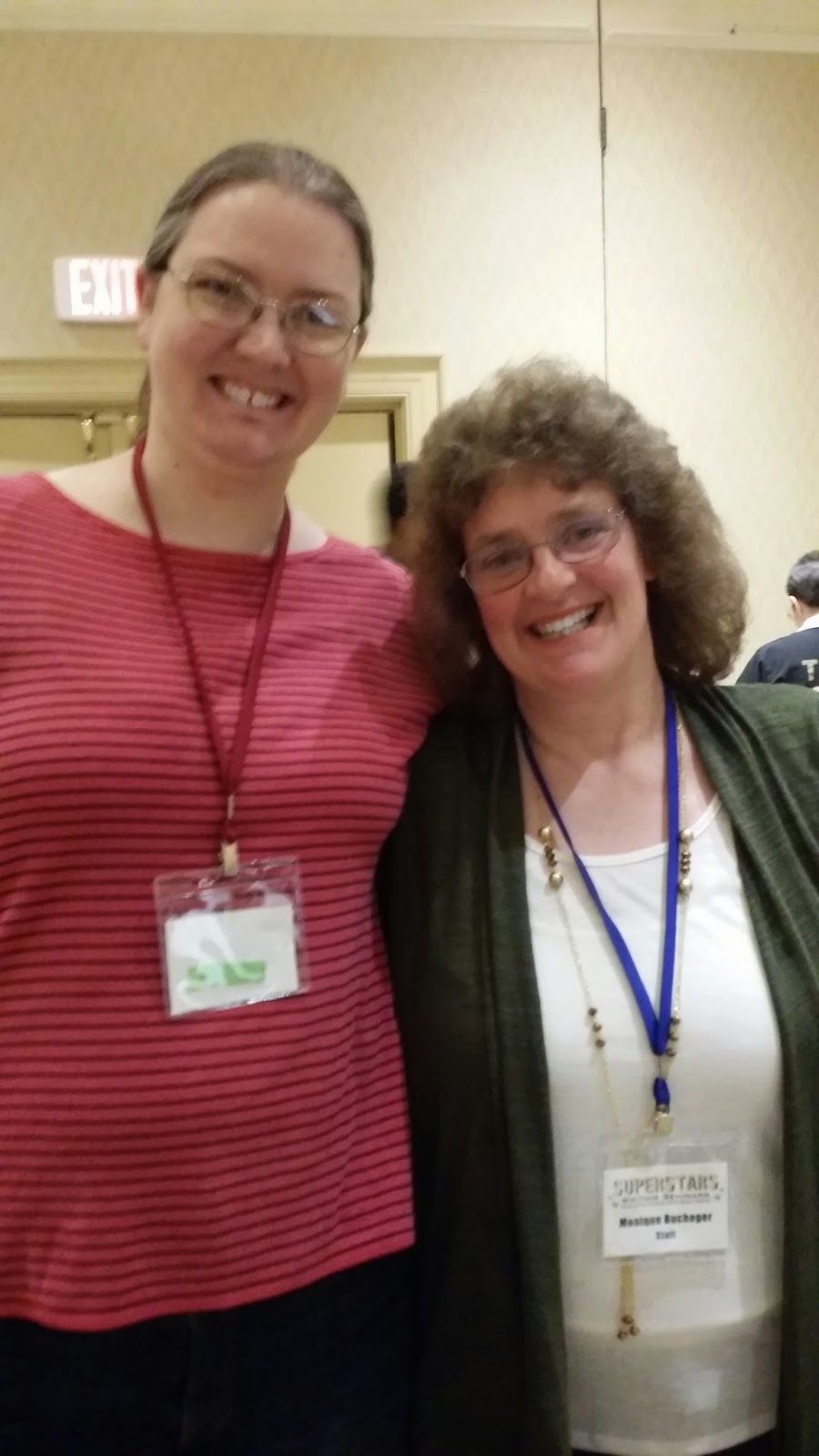 Lisa Mangum and Monique Bucheger
Soooooo, last year at Superstars, an awesome editor, Lisa Mangum, offered to edit such an anthology. Once Kevin and Rebecca agreed, a call was put out to the Superstars Writing Seminars attendees for purple unicorn stories and the fun began.
As the deadline approached dozens of purple unicorn stories were turned in. I wasn’t sure I was going to participate at first because, quite frankly, I’m not a fantasy writer.
Do I love to read fantasy? Absolutely.
Have I written any? No, I had not.
Then the stakes increased.
Peter S. Beagle, author of The Last Unicorn, was asked to be a part of the anthology. Then Todd McCaffrey (son of Ann McCaffrey—an author I loved as a teen) came on board.
 David Farland, Jody Lynn Nye, James A. Owen, & Todd McCaffrey
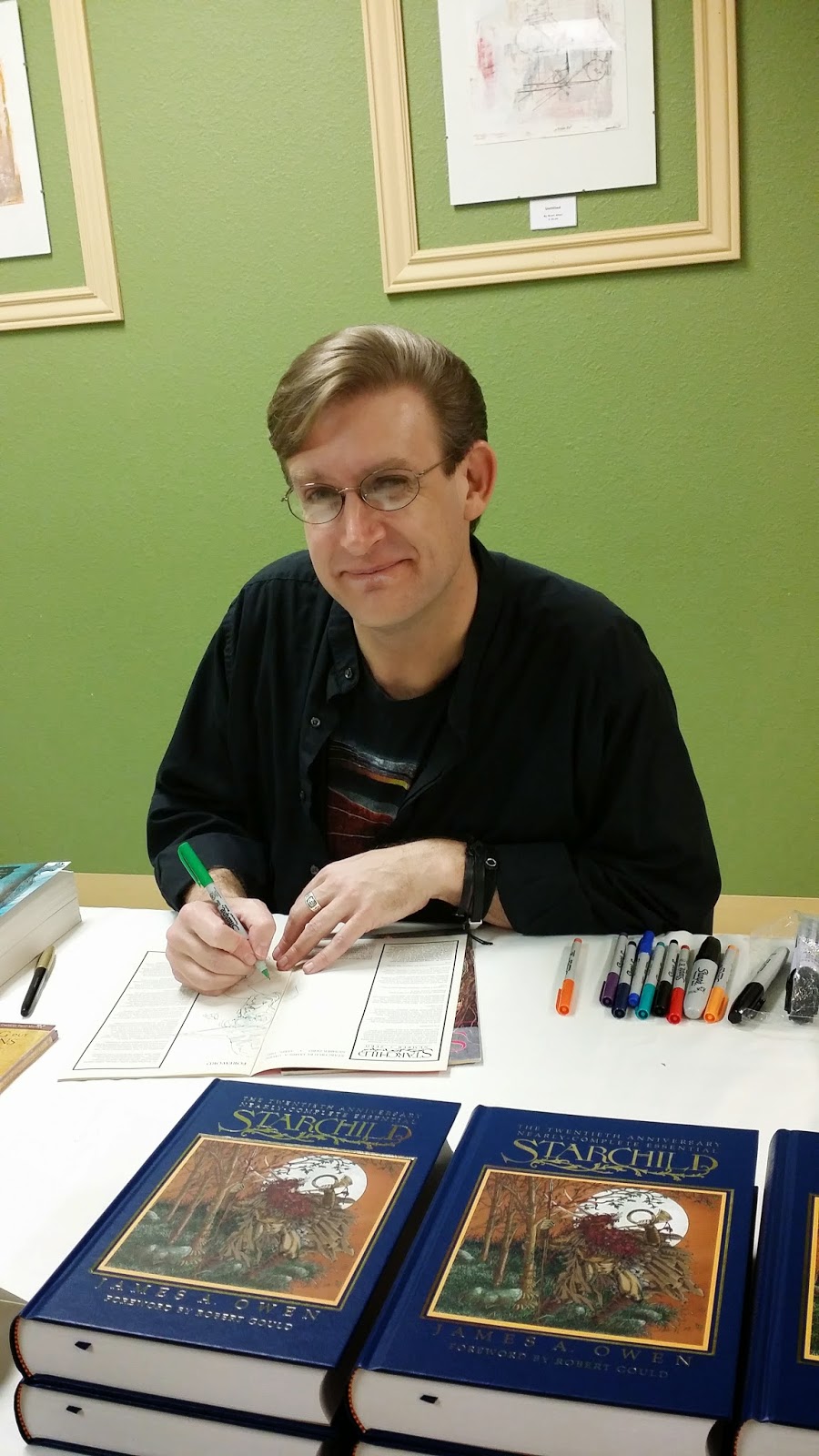 James Artemus Owen
James Artemus Owen—an internationally bestselling author and amazing artist offered to design the cover. Then James made the offer even more personal: he read each story and said his cover would include a unique representation from every unicorn story entered. (See cover here) WOW!!
I was intrigued, and nervous, and excited, and then I really, REALLY wanted to write an awesome purple unicorn story. So I plotted and planned and brainstormed—by myself and with other author friends. A few unique ideas and threads came to me, but, quite frankly, nothing meshed well enough.
On impulse one night (and thoroughly frustrated—after all—at this point I had published four full length novel’s for Pete’s sake—but I couldn’t make one 7,000 word story come together), I called another of the Superstars attendees: Victoria Morris.
She graciously agreed to brainstorm with me. I didn’t know Victoria very well at the time. I only knew she was a very nice person, we had hit it off at the conference, and that she writes epic fantasy. So we plotted together and something magical happened: a story came together.
A very good story. The best fantasy story I’d ever written to date.
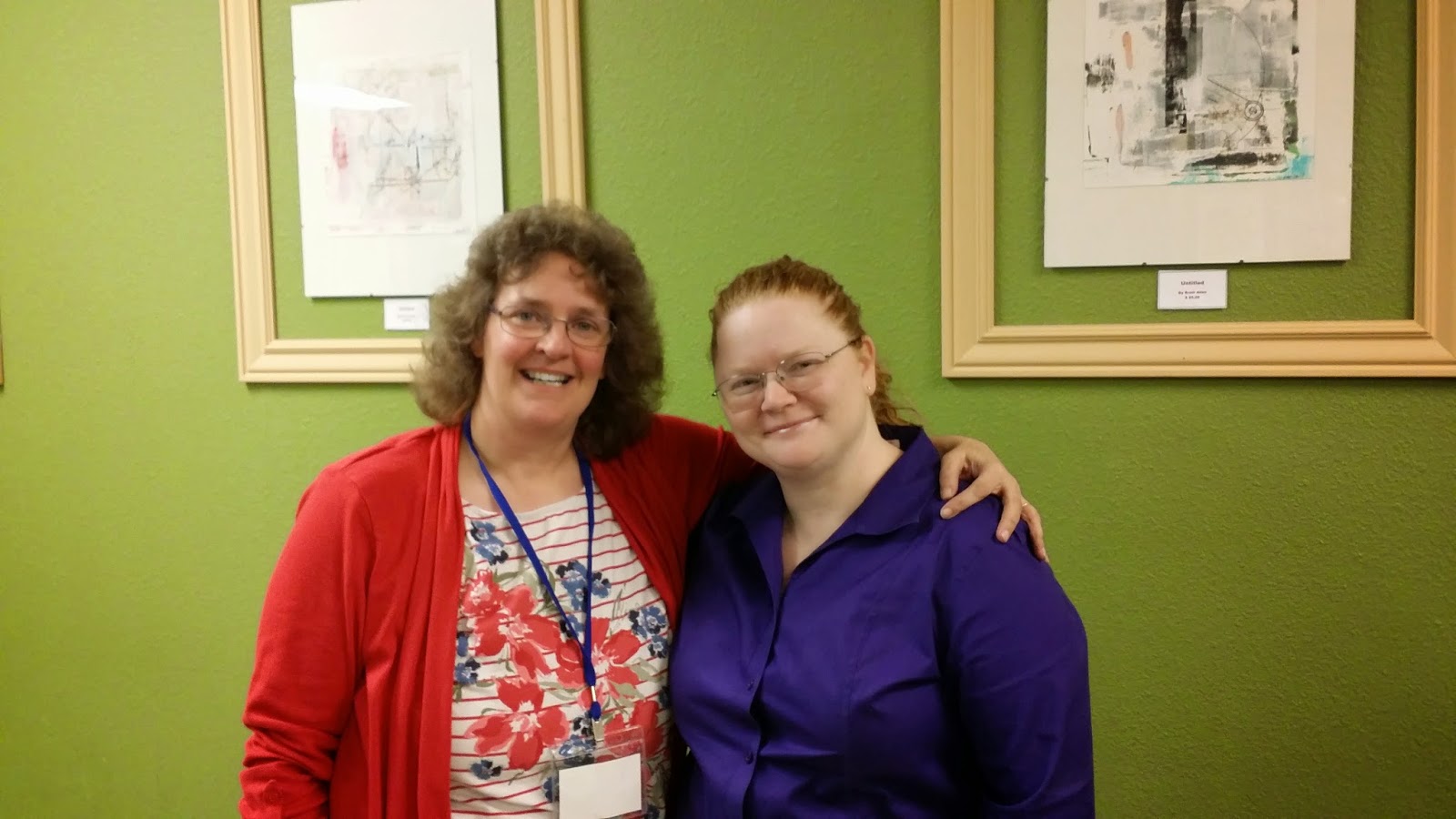 Monique Bucheger and Victoria Morris
Okay, the ONLY fantasy story I’d written. JVicky and I traded critiques on our stories, offering suggestions to strengthen and tighten and keep under word count (I think I deleted over 2000 words to squeak in under 7K—including title and author info.)
We finally submitted our stories shortly before midnight on the due date and then waited … hoping and praying our stories had been accepted. The short story is …they weren’t.
However, I got feedback on my story that it had been a “maybe,” and although it hadn’t been accepted, it had potential. Which was pretty awesome, considering some of the competition for the anthology.
I talked with Vicky. We discussed how I could have made it stronger, better, more engaging. Then a wonderful thing happened: we came up with some incredible ideas for a new series, ideas that would empower and intrigue our intended audience: middle grade girls.
We are now almost done with Book 1 and we have the main ideas for the next several books. A year ago, I wasn't a fantasy author. Now I am. All because of a challenge given at a writing conference.
Even better, I've made a wonderful new friend and she is opening doors to new experiences for me. For example, I've never been to a comicon. Vicky often helps James Owen at different comicons around the country and invited me to help at the Phoenix Comicon in May and Salt Lake City Comic Con in September. I'm looking forward to meeting new people and being immersed in the comicon experience I often hear about from my fantasy writer friends.
 Victoria Morris, James Artemus Owen, & Monique Bucheger
It will be fun ... and it wouldn't be possible if I hadn't attended Superstars Writing Seminars last year. My other favorite writing conference is LDStorymakers. It will be May 15 & 16, 2015. I hope to see some of you there!
Laugh lots, Love much, Write on...
February 2, 2015
"Are You Famous?"
I've been asked this question a few times over the last couple months and it's made me stop and think. Now, don't get me wrong. I don't think I'm even a little bit famous. Instead, it made me wonder what fame actually is.
I used to own a bookstore, and we had Brandon Sanderson come to sign. He had a sixteen-year-old boy travel from Colorado just to see him and ask some questions at the end of the signing. One question was, "Would you consider yourself famous?"
Brandon's answer fascinated me. He said no. Now, Brandon's books are my absolute favorite. If I can ever have an ending as awesomely, amazingly, breathtakingly perfect as his Mistborn ending was, I'll be thrilled to death.
But this is his reasoning. He said that until everyone on the street can answer who he is when asked, (like JK Rowling, Orson Scott Card, etc), he's not famous. That makes sense, right? If you have never even heard of Harry Potter, I'm pretty sure you've been hiding under a rock. I'm not saying everyone has read about him. I'm just saying everyone knows of him.
So now we go back to my original thought. A few months back, I had the chance to do an author assembly at my children's school. I had an absolute blast with my coauthors and the kids in the school. It was great, but I had no clue if I'd impacted anyone there.
The next month, I was at the school for my son's Christmas party and I had several kids tell me they remembered me. One little boy stared at me for a minute when he came to my table. When he finally said something, our conversation went like this:
"Are you famous?""Um ... people know who I am, but I'm not famous.""Yeah, but, are your books in libraries and stuff?""Yep, they're in a few libraries." "Oh, cool."
The boy shrugged and went on with our Bingo game. I don't know what he thought about that conversation, but it put a smile on my face because someone remembered me.
When I was at FanX this last weekend, I had the chance to meet people, and go in the green room, and talk to people I never even dreamed of. A group of us had the chance to get a picture in the Tardis. The guy who had built it told everyone in line that we were authors and we wanted a picture so they were letting us go first. Instead of the annoyance I expected, I saw smiles.
As we walked away, I mentioned how embarrassed I was that we went first, and one of my friends just patted me on the back and said, "You're a bit of a celebrity. Just get used to it."
It was fun and exciting and awesome, but I'm not sure I ever want to get used to it. Not that I didn't enjoy this weekend. I enjoyed every single exhausting second of it. I'd do it again in a heartbeat. What I mean is that I want it to stay exciting and fun and just plain unbelievably amazing.
So am I famous? Not even a little bit. But for those that do know me and enjoy my books, I really appreciate the support. It means the world to me. Now to plot out how I'm going to be the next JK Rowling ...
I used to own a bookstore, and we had Brandon Sanderson come to sign. He had a sixteen-year-old boy travel from Colorado just to see him and ask some questions at the end of the signing. One question was, "Would you consider yourself famous?"
Brandon's answer fascinated me. He said no. Now, Brandon's books are my absolute favorite. If I can ever have an ending as awesomely, amazingly, breathtakingly perfect as his Mistborn ending was, I'll be thrilled to death.
But this is his reasoning. He said that until everyone on the street can answer who he is when asked, (like JK Rowling, Orson Scott Card, etc), he's not famous. That makes sense, right? If you have never even heard of Harry Potter, I'm pretty sure you've been hiding under a rock. I'm not saying everyone has read about him. I'm just saying everyone knows of him.
So now we go back to my original thought. A few months back, I had the chance to do an author assembly at my children's school. I had an absolute blast with my coauthors and the kids in the school. It was great, but I had no clue if I'd impacted anyone there.
The next month, I was at the school for my son's Christmas party and I had several kids tell me they remembered me. One little boy stared at me for a minute when he came to my table. When he finally said something, our conversation went like this:
"Are you famous?""Um ... people know who I am, but I'm not famous.""Yeah, but, are your books in libraries and stuff?""Yep, they're in a few libraries." "Oh, cool."
The boy shrugged and went on with our Bingo game. I don't know what he thought about that conversation, but it put a smile on my face because someone remembered me.
When I was at FanX this last weekend, I had the chance to meet people, and go in the green room, and talk to people I never even dreamed of. A group of us had the chance to get a picture in the Tardis. The guy who had built it told everyone in line that we were authors and we wanted a picture so they were letting us go first. Instead of the annoyance I expected, I saw smiles.
As we walked away, I mentioned how embarrassed I was that we went first, and one of my friends just patted me on the back and said, "You're a bit of a celebrity. Just get used to it."
It was fun and exciting and awesome, but I'm not sure I ever want to get used to it. Not that I didn't enjoy this weekend. I enjoyed every single exhausting second of it. I'd do it again in a heartbeat. What I mean is that I want it to stay exciting and fun and just plain unbelievably amazing.
So am I famous? Not even a little bit. But for those that do know me and enjoy my books, I really appreciate the support. It means the world to me. Now to plot out how I'm going to be the next JK Rowling ...
January 29, 2015
The Importance of a Positive Book Review....
by Valerie J. Steimle
I celebrated the publication of my 6thbook (Home Is Where the Learning Is For High School) two weeks ago with the availability of purchase online. I did the normal promotions to get the word out on Facebook, Goodreads and other internet websites. Next came the release of the kindle version of this book which was not my forte. I thought a Word document copy of the manuscript for kindle would suffice as I was worn out and in a hurry to just get the e-book on sale.
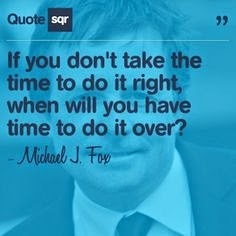 Boy, was I ever wrong. All of my other books had been on kindle and I knew they were marginally formatted. In reality, I should have waited another week to really take the time to do the kindle version correctly as it resulted in a negative book review. I was lazy and at the time didn’t think it mattered, but it did.
As Michael J. Fox says: "If you don't take the time to do it right, when will you have time to do it over?"
Even better....after correcting the blunder and doing it right when will people realized you fixed your mistake? You only get a first impression once....I learned an interesting lesson through all of that. I learned that no matter how you are feeling about pushing your book out there the kindle version is just as important as the printed version. A bad book review will somehow undo all the good ones, especially when there are only a few reviews posted in the first place. Bad book reviews leave a bad taste in everyone’s mouth and it is very painful to read.
So, to those independent authors who are responsible for their own manuscripts, I say take the extra time with the electronic version that you did with the printed version. Since that time I studied and learned very quickly how to reformat my manuscript into an e-book and it’s not difficult at all; just very time consuming. Now all of my books are reformatted into a beautiful kindle format so they will be bought and read with ease. The kindle people are sending emails to all those who had purchased these books prior to the newest version and hopefully all of those people will download and read what I have done.
So now I can move forward, promoting my heart out wherever I can and hopefully that bad review will be forgotten and replaced by wonderful reviews to come.
I celebrated the publication of my 6thbook (Home Is Where the Learning Is For High School) two weeks ago with the availability of purchase online. I did the normal promotions to get the word out on Facebook, Goodreads and other internet websites. Next came the release of the kindle version of this book which was not my forte. I thought a Word document copy of the manuscript for kindle would suffice as I was worn out and in a hurry to just get the e-book on sale.
 Boy, was I ever wrong. All of my other books had been on kindle and I knew they were marginally formatted. In reality, I should have waited another week to really take the time to do the kindle version correctly as it resulted in a negative book review. I was lazy and at the time didn’t think it mattered, but it did.
As Michael J. Fox says: "If you don't take the time to do it right, when will you have time to do it over?"
Even better....after correcting the blunder and doing it right when will people realized you fixed your mistake? You only get a first impression once....I learned an interesting lesson through all of that. I learned that no matter how you are feeling about pushing your book out there the kindle version is just as important as the printed version. A bad book review will somehow undo all the good ones, especially when there are only a few reviews posted in the first place. Bad book reviews leave a bad taste in everyone’s mouth and it is very painful to read.
So, to those independent authors who are responsible for their own manuscripts, I say take the extra time with the electronic version that you did with the printed version. Since that time I studied and learned very quickly how to reformat my manuscript into an e-book and it’s not difficult at all; just very time consuming. Now all of my books are reformatted into a beautiful kindle format so they will be bought and read with ease. The kindle people are sending emails to all those who had purchased these books prior to the newest version and hopefully all of those people will download and read what I have done.
So now I can move forward, promoting my heart out wherever I can and hopefully that bad review will be forgotten and replaced by wonderful reviews to come.
January 26, 2015
Embracing your fears with the help of the X-Men
by Suzanne Warr
This post was brought to you by a plugged up nose and Professor X of the X-men. Thankfully, the plugged up nose was mine, and not his. He has enough to worry about.
You see, I've got a cold, and for the last couple nights haven't been able to breathe easily. Not the end of the world...but the back of my brain thought it might be. Each time I couldn't comfortably breathe through my nose (while sleeping), I had a dream where I was drowning. This, despite the fact that I love water and am a pretty good swimmer!
Enter Professor X. This past week we watched X-Men: Days of Future Past (and I'm not even going to bother warning of spoilers, cause if you haven't seen it yet, you're just asking for it!) and I enjoyed the bit in the last quarter where the young Professor X reaches through the past/present Wolverines' mind to communicate with his future self.
Got all that?
And he tells himself "Just because someone stumbles and loses their path doesn't mean they're lost forever."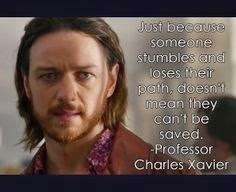
Which is really incredibly wise, and also kind of becomes the theme of the movie. But, he also says a bunch of stuff about how it's not others' pain Charles is afraid of--it's his own. And that if he lets himself feel that pain it will make him stronger, and let him access his greatest strength: hope.
How exactly he's supposed to do that isn't spelled out, but I liked it all the same. Since I've also been thinking about why my nightmares would have burning buildings sometimes, when I love fire, and as mentioned above, feature my drowning, I've been think about the relationship between fear and love. Or, just as important, fear and hope, or fear and joy.
I'm not wise enough to know with certainty all the deep metaphysical or psychological reasons these apparent opposites would be linked, but this is what makes sense to me: vulnerability scares us. It means we're in a precarious place, and our survival is on the line. But we're also stretching, growing, and experiencing something new when we're vulnerable. Maybe something terrible will come of it, or maybe we'll metamorphose into something wonderful and new. This potential for change is what frightens us, and yet, we can't grow without risking that change.
What do you think? Am I on to something? Do you have any scary choices you've been hiding from, for fear the resultant change will be too much for you to live with? I've got one that I've decided to stop backing away from. Something that's big to me, and has been in the works for going on 5 years now. What it is I can't share yet, but I'm excited to embrace my vulnerabilities, and hoping against hope I don't get singed in the process!
Best of luck with your growing changes! If you're feeling brave, share them here! I'll share mine, too, just as soon as I'm able. :)
This post was brought to you by a plugged up nose and Professor X of the X-men. Thankfully, the plugged up nose was mine, and not his. He has enough to worry about.
You see, I've got a cold, and for the last couple nights haven't been able to breathe easily. Not the end of the world...but the back of my brain thought it might be. Each time I couldn't comfortably breathe through my nose (while sleeping), I had a dream where I was drowning. This, despite the fact that I love water and am a pretty good swimmer!
Enter Professor X. This past week we watched X-Men: Days of Future Past (and I'm not even going to bother warning of spoilers, cause if you haven't seen it yet, you're just asking for it!) and I enjoyed the bit in the last quarter where the young Professor X reaches through the past/present Wolverines' mind to communicate with his future self.
Got all that?
And he tells himself "Just because someone stumbles and loses their path doesn't mean they're lost forever."
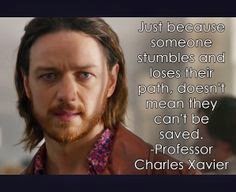
Which is really incredibly wise, and also kind of becomes the theme of the movie. But, he also says a bunch of stuff about how it's not others' pain Charles is afraid of--it's his own. And that if he lets himself feel that pain it will make him stronger, and let him access his greatest strength: hope.
How exactly he's supposed to do that isn't spelled out, but I liked it all the same. Since I've also been thinking about why my nightmares would have burning buildings sometimes, when I love fire, and as mentioned above, feature my drowning, I've been think about the relationship between fear and love. Or, just as important, fear and hope, or fear and joy.
I'm not wise enough to know with certainty all the deep metaphysical or psychological reasons these apparent opposites would be linked, but this is what makes sense to me: vulnerability scares us. It means we're in a precarious place, and our survival is on the line. But we're also stretching, growing, and experiencing something new when we're vulnerable. Maybe something terrible will come of it, or maybe we'll metamorphose into something wonderful and new. This potential for change is what frightens us, and yet, we can't grow without risking that change.
What do you think? Am I on to something? Do you have any scary choices you've been hiding from, for fear the resultant change will be too much for you to live with? I've got one that I've decided to stop backing away from. Something that's big to me, and has been in the works for going on 5 years now. What it is I can't share yet, but I'm excited to embrace my vulnerabilities, and hoping against hope I don't get singed in the process!
Best of luck with your growing changes! If you're feeling brave, share them here! I'll share mine, too, just as soon as I'm able. :)
January 22, 2015
I discovered Drops of Awesome
Some may consider this cheating, but I'm giving full credit where it is due.
Half a year ago, a friend referenced a blog post called Drops of Awesome. You can find it here:
http://www.daringyoungmom.com/2012/12/19/drops-of-awesome/
Yes, I know. You skipped clicking on the link. Go back and read it. Kathryn says it so much better than I can. AND she said it three years ago, and people are still referencing it, clicking it, and sharing it. Someone tell her to publish it as a pamphlet and make .99 a copy! She could've bought a new bra by now. ;) (You have to have read her story to get the reference.)
I shared this with my church girls age 12-18 earlier this month, complete with the object lesson. They thought it was, well, awesome!
But lately, I've forgotten my own lesson, or rather, Kathryn's lesson.
Each day I have opportunities to put drops of awesome in my bucket/bowl. Every drop counts. Most importantly, drops cannot be taken away once they've been earned. They flow on and on and spread to those around you, spreading joy, spreading awesome.
I'm human and I tend to get down on myself on what I'm not getting done/not accomplishing the goals I've set for myself, just like so many of you. For those who have perfected the art of positivity, you may skip the rest of my rambling.
I tend to focus each day on the half of the glass that is empty instead of the half that is full of drops of awesome. This focus in the wrong direction makes me anxious and irritable. Not exactly the description of someone you want to hang out with or, for that matter, that I want to be around.
But when I focus on the good, those negative feelings diminish, and I can be so much better company and be more productive. I'm sure it makes a difference to my family, at least.
So, here's my list of drops of awesome for the day.
Got up on time. Drop. Read my scriptures. Drop. Fed my kids. Drop. Got them to the bus on time with healthy lunches. Drop. Worked out. Drop. Finished watching Downton Abby. Drop. Showered. Drop. Edited a chapter in my next book. Drop. (These chapters currently take 2 hours to edit so it's a commitment. Reference Tristi's post on procrastination.) Braved the snow to pickup my kid from school who is running a fever. Drop. Brought in the recycling bin so my husband wound't have to. Drop. Set up sick kid with Star Wars while I write this post. Drop.
I'm only half way through the day with a long To Do list to go, but if I look at all the eleven drops of awesome I've already accumulated, and banish that stupid voice in my head that says 'Big deal', then I'm doing pretty well. Plus I'm motivated to continue adding to my drops.
Don't worry about perfect. Focus on the Drops of Awesome instead. They'll take you a lot closer to perfect than most other things.
Now, go. Be Awesome!
Half a year ago, a friend referenced a blog post called Drops of Awesome. You can find it here:
http://www.daringyoungmom.com/2012/12/19/drops-of-awesome/
Yes, I know. You skipped clicking on the link. Go back and read it. Kathryn says it so much better than I can. AND she said it three years ago, and people are still referencing it, clicking it, and sharing it. Someone tell her to publish it as a pamphlet and make .99 a copy! She could've bought a new bra by now. ;) (You have to have read her story to get the reference.)
I shared this with my church girls age 12-18 earlier this month, complete with the object lesson. They thought it was, well, awesome!
But lately, I've forgotten my own lesson, or rather, Kathryn's lesson.
Each day I have opportunities to put drops of awesome in my bucket/bowl. Every drop counts. Most importantly, drops cannot be taken away once they've been earned. They flow on and on and spread to those around you, spreading joy, spreading awesome.
I'm human and I tend to get down on myself on what I'm not getting done/not accomplishing the goals I've set for myself, just like so many of you. For those who have perfected the art of positivity, you may skip the rest of my rambling.
I tend to focus each day on the half of the glass that is empty instead of the half that is full of drops of awesome. This focus in the wrong direction makes me anxious and irritable. Not exactly the description of someone you want to hang out with or, for that matter, that I want to be around.
But when I focus on the good, those negative feelings diminish, and I can be so much better company and be more productive. I'm sure it makes a difference to my family, at least.
So, here's my list of drops of awesome for the day.
Got up on time. Drop. Read my scriptures. Drop. Fed my kids. Drop. Got them to the bus on time with healthy lunches. Drop. Worked out. Drop. Finished watching Downton Abby. Drop. Showered. Drop. Edited a chapter in my next book. Drop. (These chapters currently take 2 hours to edit so it's a commitment. Reference Tristi's post on procrastination.) Braved the snow to pickup my kid from school who is running a fever. Drop. Brought in the recycling bin so my husband wound't have to. Drop. Set up sick kid with Star Wars while I write this post. Drop.
I'm only half way through the day with a long To Do list to go, but if I look at all the eleven drops of awesome I've already accumulated, and banish that stupid voice in my head that says 'Big deal', then I'm doing pretty well. Plus I'm motivated to continue adding to my drops.
Don't worry about perfect. Focus on the Drops of Awesome instead. They'll take you a lot closer to perfect than most other things.
Now, go. Be Awesome!
January 19, 2015
Procrastination
 I was going to sit down and write a really awesome article about procrastination. But then I realized that I hadn’t checked my e-mail in at least an hour, so I thought I’d do that instead. After I replied to all the forwards and clicked on all the YouTube links, I looked down and noticed that I was still in my pajamas. So I hopped in the shower and then discovered I was down to one clean towel. I threw in a load of laundry, and thought I’d better do a few dishes too.
 Then I sat down again to write that article, and remembered that I hadn’t checked on Café World for at least three hours. After I served up all the food, visited my friends and left them servings of dumplings - and moved up a level in Delicious Chocolate Cake - I realized it was time to start making dinner.
This is starting to sound like “If You Give a Mouse a Cookie,” isn’t it? While my little scenario is fiction, it is meant to prove a point—we all live busy lives, and it can sometimes become impossible to get all those little things done that we need to do, and even harder when motivation is a missing factor.
I’m by no means the authority on all things procrastination-related. I get distracted by anything and everything and … squirrel! But I have learned a few tips and tricks along the way that I’d like to share with you.1. Make one day of the week your errand day, and see if you can schedule all your stops in one trip. I like to hit the post office, bank, copy center, and library in one trip instead of making four separate runs. True, it takes me longer to do those errands, but compare two hours once a week to an hour at a time, several times a week.
2. I like to break my tasks up into days of the week. For instance, back when I was a Cub Scout leader, I’d do all my Scout planning on Wednesday. I’d read through the book, see what I needed to do to prepare, put those things on my errand list, and then not think about it again until the next Wednesday. This kept me from worrying about it all week long. I assigned my other responsibilities to other days in the week.
3. If there’s a particularly odious task you must perform, like a difficult phone call you need to make, write down on your calendar the day and time you’re going to do it, and then hold yourself to it. When the clock strikes that hour, just grab the phone. Don’t let yourself think it through—you have an appointment to keep.
4. We all have those daily tasks to perform that we just hate doing—set up a reward system for yourself. One of the most effective ways I ever found to make myself exercise was to decide I couldn’t check my e-mail until I done at least twenty minutes on the Healthrider. Because I love checking my e-mail, this was an effective tool for me.
5. You can save your rewards for later, too. I’m a big Netflix junkie, and some nights I’ll tell myself that if I get certain things done during the day, I can curl up with a Netflix movie that night. Bribery works on kids—and it works on grown-ups, too!
6. Sometimes we procrastinate because we don’t have uninterrupted time to accomplish the task. Trade babysitting with a neighbor and use that time to knock down your to-do list. Or if you’re at work, see if you can delegate another task to an employee while you finish up, or trade projects with a co-worker. You can also talk to your spouse and agree on a time for you to sit down, without distraction, to polish it off.
7. As you go down your to-do list, rank them in order of importance, with 1 representing those things that must get done now. We often spend time taking care of things that rank a 2 or 4 or 9 while neglecting the things that rank 1, and then regret the lack of time to finish everything up. By organizing your tasks according to importance, you’ll always get the most crucial things done first. And if that’s all you’ve been able to get to in the course of the day, at least you accomplished the most important thing.
Of course, you’ll want to find the methods that work for you, but one thing remains constant: we all like to be recognized for our hard work. As long as you feel rewarded for doing those hard tasks, you’ll be more likely to get them done, and then you’ll feel more personal satisfaction. That’s a reward in and of itself - but if it's not enough to motivate you, throw some chocolate into the mix ...


