
L.M. Long's Blog, page 13
April 21, 2014
Kinesio Kidnapping
by H. Linn Murphy
I was all set to do my blog post this morning. I'd done the whole routine and had that tunnel vision going. Suddenly, I got kidnapped by my friend Christine and forced to go to lunch with her. She even made me shower. To say that I smelled like the Green Bay Packers' locker room is an understatement. I'd been running earlier and it's already hot enough outside to bake cookies on your car hood at seven o'clock.
So she called and totally demolished my concentration. Even if I'd had it, there was no way to get around, over, or past the friend. She's a one woman regimen wrecking ball. I'd even been planning a new foray into dieting after a horrifying glance at the scales (thus the earlier running--make that stumbling slightly faster than walking). She did away with that with one fell trip to Monkey Burger.
We had burgers you had to unhinge your jaw like a snake to consume. And chips that make you want to kick someone. Yeah. That tempting. Then she dragged me down the block to her favorite boutique to admire the dress she already bought. Then we went back to her truck and let a couple of homeless boys wash her windows.
Next we went to her kinesio-taping appointment so that she could show me what she was going to do to me later on. While gripping to watch, it did nothing for my schedule. The little old man was fun to tease, though.
So then she came home with me and hog-tied me (okay, taped me up). I have to say it's a strange sensation. The tape gently pulls the muscles and skin so that the lymphatic juices can return to where they belong and the edema goes down. I'm thinking that maybe I'll have to get the whole body kinesio-taped so that the chronic chubbiness goes down (and I wish it worked that way).
So here I am at the end of the day and I've done next to nothing but listen to her prattle on about her new house, truck, dog, job, and boy friend. At first stare it looks like a wasted day. But the release, information, and friendship I got (not to mention the amazing tape job) were all worth it. I hope I can be half as good a friend as she is to me.
I was all set to do my blog post this morning. I'd done the whole routine and had that tunnel vision going. Suddenly, I got kidnapped by my friend Christine and forced to go to lunch with her. She even made me shower. To say that I smelled like the Green Bay Packers' locker room is an understatement. I'd been running earlier and it's already hot enough outside to bake cookies on your car hood at seven o'clock.
So she called and totally demolished my concentration. Even if I'd had it, there was no way to get around, over, or past the friend. She's a one woman regimen wrecking ball. I'd even been planning a new foray into dieting after a horrifying glance at the scales (thus the earlier running--make that stumbling slightly faster than walking). She did away with that with one fell trip to Monkey Burger.
We had burgers you had to unhinge your jaw like a snake to consume. And chips that make you want to kick someone. Yeah. That tempting. Then she dragged me down the block to her favorite boutique to admire the dress she already bought. Then we went back to her truck and let a couple of homeless boys wash her windows.
Next we went to her kinesio-taping appointment so that she could show me what she was going to do to me later on. While gripping to watch, it did nothing for my schedule. The little old man was fun to tease, though.
So then she came home with me and hog-tied me (okay, taped me up). I have to say it's a strange sensation. The tape gently pulls the muscles and skin so that the lymphatic juices can return to where they belong and the edema goes down. I'm thinking that maybe I'll have to get the whole body kinesio-taped so that the chronic chubbiness goes down (and I wish it worked that way).
So here I am at the end of the day and I've done next to nothing but listen to her prattle on about her new house, truck, dog, job, and boy friend. At first stare it looks like a wasted day. But the release, information, and friendship I got (not to mention the amazing tape job) were all worth it. I hope I can be half as good a friend as she is to me.


A Teaspoon of Ether and Golden Coins
by H. Linn Murphy
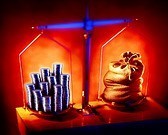
My son recently brought home a particularly egregious set of grades. This is a son who comes home and tosses me a quick yes to my question of whether he's finished his homework. He "does it all at school." I would question that, but his school is really going downhill and doesn't send homework. So like a dolt, I believe him.
 Then he plops himself down in front of the computer and begins to kill stuff. Normally I wouldn't whine about someone coming home and unwinding for a few minutes from a long slog through academia, but the session never ends. I form an expedition into the wilds of his room in search of dirty towels and clothes and eating utensils. When I mention that I think I've spotted grazing raptors and his country must be razed he gives me THE LOOK.
"Mom, I'm right in the middle of a fight. I could die!" he exclaims, his face blanched white in earnestness. I can't elaborate on how little I care if his funky-looking character takes a dirt nap. I can't even fathom how that is so important to him. The disconnect floors me.
Then I remember back to when I coded for an on-line multi-user dimension game a few years back. It started out as something I could do with my husband and ended up being a completely solitary venture. Back then I had a 55 level Elflord who could kick some serious tail. I was extremely buff and able to defend Lothlorien against all comers at the click of a button. Yeah, I seriously rocked. I'd spent countless hours getting that way.

But I looked up one day and saw the sun coming up. And then my little girls came in to me rubbing their sleep-sandy eyes. I hadn't even been to bed. I'd been locked onto the screen trying to kill Cthulhu and nearly getting "killed" myself. My little girl came to my knee and asked, "What are we having for breakfast?"
Then I really looked at them. I realized I'd "mudded" clear through their whole babyhoods. I could barely remember their first steps. But I had about 23 quests under my belt and could thrash almost any monster the M.U.D. had to offer. Woo. That was the end.
 I realized then that I'd spent the golden coin of C's babyhood for a wisp of nothing--less than nothing because they deleted my 55 level Elflord two weeks after I stopped playing every day. All of that playing time and angst and "prestige" went careening down the Whirlpool of Ending. And for what?
I told my son this morning about the things I'd done in my life. I'd lived in Europe when I was young. I'd gone back there at 16 with the German club folk dance team. I'd done a tiny bit barrel racing. I'd competed in dance and danced on toe in ballet. I'd sung, danced, and acted in school plays. I'd swum and climbed and rappelled and hiked. I'd gone to Alaska to work in the fish camps. I'd caved and painted and toured with choirs and fought in heavy armor. This was where I spent the golden coin of my youth.
Still I have regrets that I didn't do more with my coin. Why didn't I continue with the violin until I could stand to hear myself play? Why did I let a move to OR with my parents explode my dream to be a ballet dancer? Why didn't I fight harder to go to school in Austria like I'd planned? Why didn't I push to finish getting my Young Women's Medallion? Why didn't I go on a two-year mission? There are a thousand regrets.
My husband ran in three marathons and countless 10Ks. He played the string bass in school and in plays. He served a successful two year mission in Argentina. He was in tour choir with me. He fought in heavy armor and caved and hiked and camped and took scouts on outings. He has worked hard for our family.
He has regrets. He wishes he'd finished the last bits of his Eagle. He wishes that he'd gone to the Olympics in running. He wishes he'd finished more college.
We have a trove of stories and memories and experiences to draw from. We learned to trouble-shoot and solve problems. We learned to use our imaginations. We learned a thousand different life lessons.

But my son? He has nothing like that under his belt besides a play. I feel so sad when I think of the load of regrets he'll have when he's old and used up and too crumpled with arthritis to move much. He spent his golden coin for a teaspoon of ether. I tell him, "Run. Play a sport. Act in drama productions. Play an instrument. Get the last three merit badges and do your Eagle project. Join a club or three. Pick and pursue a college. Pursue scholarships. Decide what you want to do in life and then make firm goals to get there. And for heaven's sake do your schoolwork! Don't let your life equal a teaspoon of fog."
He slopes away into his cave to lick his wounds and wonder why his mom is so mean. And I'm left wondering how I could have let it get so far.
But this is the deal: We only have so much coinage. There are no Youth Coin Give-backs except in the movies. We need to make certain that the things we spend that golden coin of our youth on, are worth it.
s young. I'd gone back there at 16 with the German club folk dance team. I'd done a tiny bit barrel racing. I'd competed in dance and danced on toe in ballet. I'd sung, danced, and acted in school plays. I'd swum and climbed and rappelled and hiked. I'd gone to Alaska to work in the fish camps. I'd caved and painted and toured with choirs and fought in heavy armor. This was where I spent the golden coin of my youth.
A teaspoon of ether never satisfies.

My son recently brought home a particularly egregious set of grades. This is a son who comes home and tosses me a quick yes to my question of whether he's finished his homework. He "does it all at school." I would question that, but his school is really going downhill and doesn't send homework. So like a dolt, I believe him.
 Then he plops himself down in front of the computer and begins to kill stuff. Normally I wouldn't whine about someone coming home and unwinding for a few minutes from a long slog through academia, but the session never ends. I form an expedition into the wilds of his room in search of dirty towels and clothes and eating utensils. When I mention that I think I've spotted grazing raptors and his country must be razed he gives me THE LOOK.
"Mom, I'm right in the middle of a fight. I could die!" he exclaims, his face blanched white in earnestness. I can't elaborate on how little I care if his funky-looking character takes a dirt nap. I can't even fathom how that is so important to him. The disconnect floors me.
Then I remember back to when I coded for an on-line multi-user dimension game a few years back. It started out as something I could do with my husband and ended up being a completely solitary venture. Back then I had a 55 level Elflord who could kick some serious tail. I was extremely buff and able to defend Lothlorien against all comers at the click of a button. Yeah, I seriously rocked. I'd spent countless hours getting that way.

But I looked up one day and saw the sun coming up. And then my little girls came in to me rubbing their sleep-sandy eyes. I hadn't even been to bed. I'd been locked onto the screen trying to kill Cthulhu and nearly getting "killed" myself. My little girl came to my knee and asked, "What are we having for breakfast?"
Then I really looked at them. I realized I'd "mudded" clear through their whole babyhoods. I could barely remember their first steps. But I had about 23 quests under my belt and could thrash almost any monster the M.U.D. had to offer. Woo. That was the end.
 I realized then that I'd spent the golden coin of C's babyhood for a wisp of nothing--less than nothing because they deleted my 55 level Elflord two weeks after I stopped playing every day. All of that playing time and angst and "prestige" went careening down the Whirlpool of Ending. And for what?
I told my son this morning about the things I'd done in my life. I'd lived in Europe when I was young. I'd gone back there at 16 with the German club folk dance team. I'd done a tiny bit barrel racing. I'd competed in dance and danced on toe in ballet. I'd sung, danced, and acted in school plays. I'd swum and climbed and rappelled and hiked. I'd gone to Alaska to work in the fish camps. I'd caved and painted and toured with choirs and fought in heavy armor. This was where I spent the golden coin of my youth.
Still I have regrets that I didn't do more with my coin. Why didn't I continue with the violin until I could stand to hear myself play? Why did I let a move to OR with my parents explode my dream to be a ballet dancer? Why didn't I fight harder to go to school in Austria like I'd planned? Why didn't I push to finish getting my Young Women's Medallion? Why didn't I go on a two-year mission? There are a thousand regrets.My husband ran in three marathons and countless 10Ks. He played the string bass in school and in plays. He served a successful two year mission in Argentina. He was in tour choir with me. He fought in heavy armor and caved and hiked and camped and took scouts on outings. He has worked hard for our family.
He has regrets. He wishes he'd finished the last bits of his Eagle. He wishes that he'd gone to the Olympics in running. He wishes he'd finished more college.
We have a trove of stories and memories and experiences to draw from. We learned to trouble-shoot and solve problems. We learned to use our imaginations. We learned a thousand different life lessons.

But my son? He has nothing like that under his belt besides a play. I feel so sad when I think of the load of regrets he'll have when he's old and used up and too crumpled with arthritis to move much. He spent his golden coin for a teaspoon of ether. I tell him, "Run. Play a sport. Act in drama productions. Play an instrument. Get the last three merit badges and do your Eagle project. Join a club or three. Pick and pursue a college. Pursue scholarships. Decide what you want to do in life and then make firm goals to get there. And for heaven's sake do your schoolwork! Don't let your life equal a teaspoon of fog."
He slopes away into his cave to lick his wounds and wonder why his mom is so mean. And I'm left wondering how I could have let it get so far.
But this is the deal: We only have so much coinage. There are no Youth Coin Give-backs except in the movies. We need to make certain that the things we spend that golden coin of our youth on, are worth it.
s young. I'd gone back there at 16 with the German club folk dance team. I'd done a tiny bit barrel racing. I'd competed in dance and danced on toe in ballet. I'd sung, danced, and acted in school plays. I'd swum and climbed and rappelled and hiked. I'd gone to Alaska to work in the fish camps. I'd caved and painted and toured with choirs and fought in heavy armor. This was where I spent the golden coin of my youth.
A teaspoon of ether never satisfies.
April 17, 2014
Do You Have Robotic Hands?
Suzanne Warr
I watched the Disney Pixar movie WALL-E for the very first time a couple weeks ago, and absolutely adored it! How’d we miss it the first time? I don’t know…probably ‘cause we were doing some nonsensical thing like building a house or moving (since we’ve done a fair amount of that!), or just didn't have anyone robot-crazy just then to push for it.
But beyond finding the movie being terribly clever, and loving that they made a whole feature film about R2-D2, I thought it had some lovely, deep, and moving insights. One for another day is the fascinating implications of the people needing to rediscover their humanity through two sweet little robots—but, despite that tease, I want to focus today on hands.
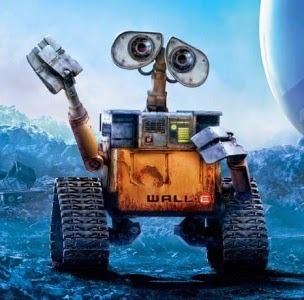
Let’s talk about how the screenwriters of WALL-E developed their theme and brought it to our attention. First there was of course WALL-E’s very human interaction with what others would see as junk, and the sense of hope with which he collected each treasure. His connection to these precious items was tactile, and he turned them in his robotic hands the way a toddler explores some new bit of wonder with their pudgy fingers. It was also how he interacted with his little roach friend—first reaching out, with his hand. At this point the writers had consciously or unconsciously settled in our minds that WALL-E’s hands were the way he gave his hope and dreams reality, the way he reached beyond his limitations toward a brighter, richer existence. I suspect it’s also part of why he alone, of all the WALL-Es, had survived.
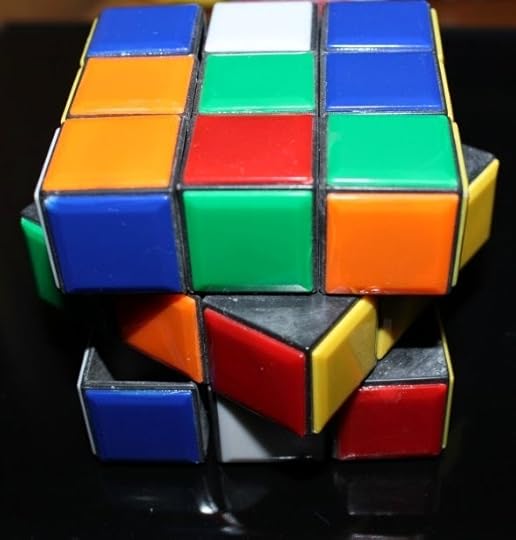
Next we have the entrance of EVE, who at first has no hands but only a blaster and an eye scanner. But each time EVE interacts with the world of precious things which WALL-E has discovered, she turns her flipper-like side arm into a hand. Her hands are more graceful than WALL-E’s, and in this grace she’s able to interact with his ‘stuff’ more like an adult would. A speckled rubik’s cube quickly becomes a solved puzzle, without mystery, and the light bulb takes on its function and glows. In her speed and ability, she whizzes past much of WALL-Es wonder, but because he cares so much she cares, too.
Later in the film—and just in case anyone’s needs it, here’s your SPOILER alert!—we have those touching moments (pun intended) when people’s hands touch, and their eyes startle upward as their souls connect. But they also begin to live fully as their hands do other things, like struggle with robotic indifference so they can return to earth, catch cascading babies, and pass a much needed tool back to the little robot who’s trying to save them all. And finally, it is with their hands that they pat the tiny plant into the ground and begin truly living again.
But what about those little robots, what are they doing while the humans rediscover that rich link between growing as people and growing things from the ground? EVE is trying to save WALL-E, in a massive surgery of sorts that leaves him more replaced than not. And while it appears to be successful…he’s not WALL-E. He doesn’t know his own treasures, and callously crushes them. He’s just another mindless robot with no sense of hope, or desire to reach.
Until EVE fits her hand to his, providing the connection he sought all along. Then, and only then, does WALL-E wake up to who he is, and know her.
All through the movie this lovely theme was carried out, as important changes occurred when two hands connected. It reminded me of soft baby hands, and how they’ve grown into hands larger than mine. And from that I heard echoes of the lessons my Grandpa taught, and how he’d take the hand of a grandchild and place it against his, and show them how big their hands were getting and prompt them to make sure their hands were doing good work as they grew. At any rate, the image of hands touching is burned into my soul and will stay with me, guiding my hands.
For now I’ve set myself the tasking of watching people’s hands, and thinking beyond the mechanics of physical interaction to the meaning behind each touch. I’m excited to take those observations and use them in my personal life, but of course I’ll extend that to my desktop—where I write with my hands—and to my writing board, as well!

What do you notice when you watch a movie? What about when you people watch?
I watched the Disney Pixar movie WALL-E for the very first time a couple weeks ago, and absolutely adored it! How’d we miss it the first time? I don’t know…probably ‘cause we were doing some nonsensical thing like building a house or moving (since we’ve done a fair amount of that!), or just didn't have anyone robot-crazy just then to push for it.
But beyond finding the movie being terribly clever, and loving that they made a whole feature film about R2-D2, I thought it had some lovely, deep, and moving insights. One for another day is the fascinating implications of the people needing to rediscover their humanity through two sweet little robots—but, despite that tease, I want to focus today on hands.
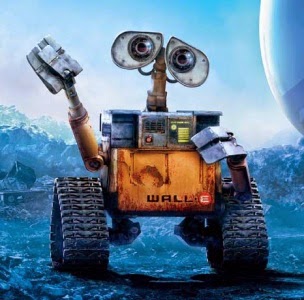
Let’s talk about how the screenwriters of WALL-E developed their theme and brought it to our attention. First there was of course WALL-E’s very human interaction with what others would see as junk, and the sense of hope with which he collected each treasure. His connection to these precious items was tactile, and he turned them in his robotic hands the way a toddler explores some new bit of wonder with their pudgy fingers. It was also how he interacted with his little roach friend—first reaching out, with his hand. At this point the writers had consciously or unconsciously settled in our minds that WALL-E’s hands were the way he gave his hope and dreams reality, the way he reached beyond his limitations toward a brighter, richer existence. I suspect it’s also part of why he alone, of all the WALL-Es, had survived.
Next we have the entrance of EVE, who at first has no hands but only a blaster and an eye scanner. But each time EVE interacts with the world of precious things which WALL-E has discovered, she turns her flipper-like side arm into a hand. Her hands are more graceful than WALL-E’s, and in this grace she’s able to interact with his ‘stuff’ more like an adult would. A speckled rubik’s cube quickly becomes a solved puzzle, without mystery, and the light bulb takes on its function and glows. In her speed and ability, she whizzes past much of WALL-Es wonder, but because he cares so much she cares, too.

Later in the film—and just in case anyone’s needs it, here’s your SPOILER alert!—we have those touching moments (pun intended) when people’s hands touch, and their eyes startle upward as their souls connect. But they also begin to live fully as their hands do other things, like struggle with robotic indifference so they can return to earth, catch cascading babies, and pass a much needed tool back to the little robot who’s trying to save them all. And finally, it is with their hands that they pat the tiny plant into the ground and begin truly living again.
But what about those little robots, what are they doing while the humans rediscover that rich link between growing as people and growing things from the ground? EVE is trying to save WALL-E, in a massive surgery of sorts that leaves him more replaced than not. And while it appears to be successful…he’s not WALL-E. He doesn’t know his own treasures, and callously crushes them. He’s just another mindless robot with no sense of hope, or desire to reach.
Until EVE fits her hand to his, providing the connection he sought all along. Then, and only then, does WALL-E wake up to who he is, and know her.
All through the movie this lovely theme was carried out, as important changes occurred when two hands connected. It reminded me of soft baby hands, and how they’ve grown into hands larger than mine. And from that I heard echoes of the lessons my Grandpa taught, and how he’d take the hand of a grandchild and place it against his, and show them how big their hands were getting and prompt them to make sure their hands were doing good work as they grew. At any rate, the image of hands touching is burned into my soul and will stay with me, guiding my hands.
For now I’ve set myself the tasking of watching people’s hands, and thinking beyond the mechanics of physical interaction to the meaning behind each touch. I’m excited to take those observations and use them in my personal life, but of course I’ll extend that to my desktop—where I write with my hands—and to my writing board, as well!

What do you notice when you watch a movie? What about when you people watch?
April 10, 2014
Is life crazy? Just remember: The Most Important Things in Life are NOT Things.
Monique Bucheger
Silly me—I honestly thought that this year would be the year that I could accomplish everything I wanted/needed to do since my youngest entered school full day. Most of all, I thought I could be an author between the hours of 8am and 3pm and have no guilt as I engaged in the business aspect of being an author: writing, editing, marketing, blogging, attending and helping with conferences, critiquing, exchanging with other authors, finding new readers, submitting to agents & publishers and a host of other things that are not glamorous … and yet are needed and expected.
Being a mom means an equally long list including the care and feeding (and doctoring, chauffeuring, disciplining, encouraging, etc) of our young ones. Multiply the number of kids and a mom’s duties increase exponentially—just trust me on this—I have 12 kids. When I had five kids (8 and under) I SWEAR to you I did 20 plus loads of laundry a week. The next year when our family added 2 more kids, that number jumped to 40 plus loads. Add in husbands, jobs, pets, friends, family, church, work, and social obligations and let’s just agree that all-in-all, daily life can get overwhelming.
And yet it still needs to be lived and handled—preferably calmly and efficiently –at least the majority of the time. I’m not here to judge or nag or make anyone feel bad.
I’m just here to say: I understand. It’s okay. Breathe. The most important things in life ... aren't things. ;)
Sometimes, not perfect has to be good enough and almost perfect needs to be relished and cherished. Because at the end of the day if the house is immaculate and you are cranky and miserable as well as everyone else in your household, because you’ve screamed and nagged trying to get everyone to pitch in, the quality of life is poor.
I’ve got several deadlines looming—including filing my taxes and launching a book, and right now, I am not overly concerned that every piece of clothing is hung up or every cup or plate makes its way immediately to the kitchen sink. (Although with the rule about only eating in the dining room—this shouldn’t be an issue. L ) I am concerned that time spent getting the things done that I need to do is taking up a lot of time I should be spending with my kids.
So maybe this post is about giving myself permission to slack in some areas temporarily for the greater good. J If so—feel free to join me. We can be PERFECTLY awesome another time. Today, I will settle for mostly awesome with good intentions. I have too much to do to juggle every ball equally. I just don’t want to drop the ball that let’s my kids know I love and care about them. The other balls will have to make adjustments until things ease up again.
Laugh lots, love much, write on! J
Silly me—I honestly thought that this year would be the year that I could accomplish everything I wanted/needed to do since my youngest entered school full day. Most of all, I thought I could be an author between the hours of 8am and 3pm and have no guilt as I engaged in the business aspect of being an author: writing, editing, marketing, blogging, attending and helping with conferences, critiquing, exchanging with other authors, finding new readers, submitting to agents & publishers and a host of other things that are not glamorous … and yet are needed and expected.
Being a mom means an equally long list including the care and feeding (and doctoring, chauffeuring, disciplining, encouraging, etc) of our young ones. Multiply the number of kids and a mom’s duties increase exponentially—just trust me on this—I have 12 kids. When I had five kids (8 and under) I SWEAR to you I did 20 plus loads of laundry a week. The next year when our family added 2 more kids, that number jumped to 40 plus loads. Add in husbands, jobs, pets, friends, family, church, work, and social obligations and let’s just agree that all-in-all, daily life can get overwhelming.
And yet it still needs to be lived and handled—preferably calmly and efficiently –at least the majority of the time. I’m not here to judge or nag or make anyone feel bad.
I’m just here to say: I understand. It’s okay. Breathe. The most important things in life ... aren't things. ;)
Sometimes, not perfect has to be good enough and almost perfect needs to be relished and cherished. Because at the end of the day if the house is immaculate and you are cranky and miserable as well as everyone else in your household, because you’ve screamed and nagged trying to get everyone to pitch in, the quality of life is poor.
I’ve got several deadlines looming—including filing my taxes and launching a book, and right now, I am not overly concerned that every piece of clothing is hung up or every cup or plate makes its way immediately to the kitchen sink. (Although with the rule about only eating in the dining room—this shouldn’t be an issue. L ) I am concerned that time spent getting the things done that I need to do is taking up a lot of time I should be spending with my kids.
So maybe this post is about giving myself permission to slack in some areas temporarily for the greater good. J If so—feel free to join me. We can be PERFECTLY awesome another time. Today, I will settle for mostly awesome with good intentions. I have too much to do to juggle every ball equally. I just don’t want to drop the ball that let’s my kids know I love and care about them. The other balls will have to make adjustments until things ease up again.
Laugh lots, love much, write on! J
April 7, 2014
Entertainment Without Electronics
We live in an age of electronics. There are apps for everything and computers everywhere. You can bank, order food, get directions, and send emails from your phone.
With all of the electronics in this world, it’s sometimes nice to get away from it all. We need to remember what it’s like to have non-electronic entertainment.
I’ll wait a moment while you remember to breathe from shock.
Yes, there are still ways to be entertained without electronics.
For example, my family just moved to a new house last week. It was pure chaos for a few days while we tried to unbury the floor from all the stuff that we’d collected over the years.

That meant no electronics. We couldn’t get to the fireplace where we were going to put the TV so we just lived without it. The kids didn’t care because they had too much fun finding the toys that had been packed up for six months while we waited for our other house to sell.
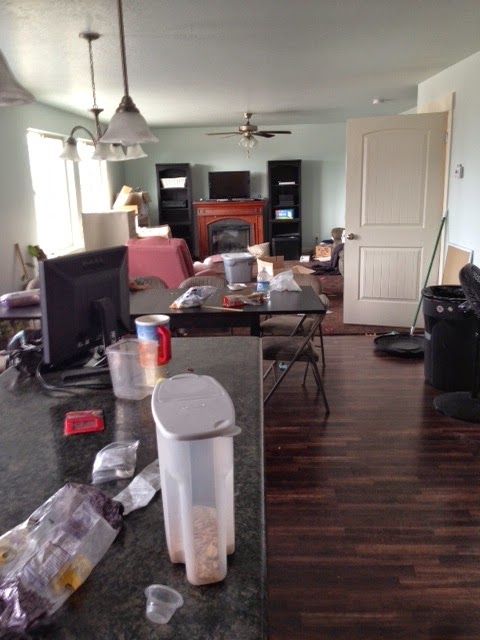
It’s been heaven.
This weekend we had a chance to go to Idaho for a few days. It has been awesome. Why? Not many electronics. There have been a few times when the kids got away with playing on their phones. And I’m obviously on my computer.
But the basketballs have been pulled out of the garage at Grandma’s house. Not just once. But at every possible opportunity. The sun has been out, the wind has died down, and it is gorgeous.
Even better, the grandkids got to go on a tractor ride with Grandpa. They didn’t just ride either. He let them steer. It didn’t take much to talk the kids into going. There was a line.
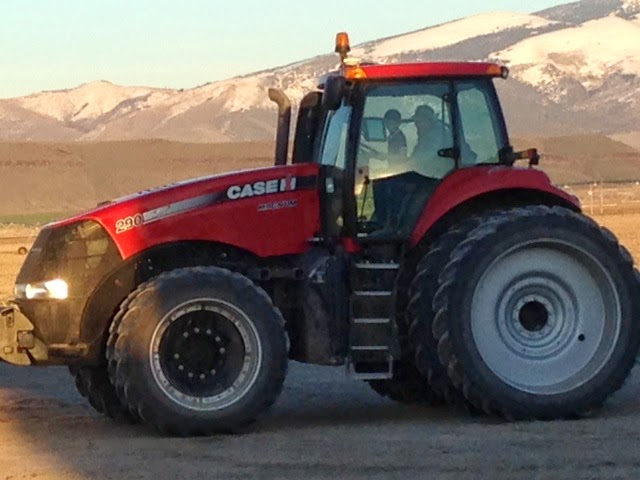
There are a few other things that I like to do with my kids to keep them from being glued to their mobile devices.
Writing:
My kids have wonderful imaginations and I love to write stories with them. My daughter has a story she has written about a witch who loves to play soccer. My son comes up with fun stories for school. And my youngest? She just helps inspire new books for me all the time.
Reading:
We had our books packed up in the garage with everything else for months and it was killer for me. I missed having them on my shelves. I didn’t realize until Wednesday just how much my kids missed the books as well. My four year old sat in front of the bookshelf pulling one book down after another, begging me to read them. Sometimes I’ll read to one child at a time or I will read a chapter a night to the whole family. We made it through the whole Percy Jackson series and I want to keep going with others.
Sports:
And this can be dancing, hiking, skating, or whatever fits your family. For my family, we love sports. Getting out the basketball, soccer ball, or bike is fun for everyone. It makes for good exercise and bonding.
I have learned that if I stare at my computer all day every day trying to edit or write, my brain goes fuzzy. I need to get out there and experience life in order to come up with better ideas. Remember that sometimes those looming deadlines are helped sometimes by walking away and spending time outside instead of staring at your computer screen.
We live in an age of electronics. There are apps for ever...
We live in an age of electronics. There are apps for everything and computers everywhere. You can bank, order food, get directions, and send emails from your phone.
With all of the electronics in this world, it’s sometimes nice to get away from it all. We need to remember what it’s like to have non-electronic entertainment.
I’ll wait a moment while you remember to breathe from shock.
Yes, there are still ways to be entertained without electronics.
For example, my family just moved to a new house last week. It was pure chaos for a few days while we tried to unbury the floor from all the stuff that we’d collected over the years.
That meant no electronics. We couldn’t get to the fireplace where we were going to put the TV so we just lived without it. The kids didn’t care because they had too much fun finding the toys that had been packed up for six months while we waited for our other house to sell.
It’s been heaven.
This weekend we had a chance to go to Idaho for a few days. It has been awesome. Why? Not many electronics. There have been a few times when the kids got away with playing on their phones. And I’m obviously on my computer.
But the basketballs have been pulled out of the garage at Grandma’s house. Not just once. But at every possible opportunity. The sun has been out, the wind has died down, and it is gorgeous.
Even better, the grandkids got to go on a tractor ride with Grandpa. They didn’t just ride either. He let them steer. It didn’t take much to talk the kids into going. There was a line.
There are a few other things that I like to do with my kids to keep them from being glued to their mobile devices.
Writing:
My kids have wonderful imaginations and I love to write stories with them. My daughter has a story she has written about a witch who loves to play soccer. My son comes up with fun stories for school. And my youngest? She just helps inspire new books for me all the time.
Reading:
We had our books packed up in the garage with everything else for months and it was killer for me. I missed having them on my shelves. I didn’t realize until Wednesday just how much my kids missed the books as well. My four year old sat in front of the bookshelf pulling one book down after another, begging me to read them. Sometimes I’ll read to one child at a time or I will read a chapter a night to the whole family. We made it through the whole Percy Jackson series and I want to keep going with others.
Sports:
And this can be dancing, hiking, skating, or whatever fits your family. For my family, we love sports. Getting out the basketball, soccer ball, or bike is fun for everyone. It makes for good exercise and bonding.
I have learned that if I stare at my computer all day every day trying to edit or write, my brain goes fuzzy. I need to get out there and experience life in order to come up with better ideas. Remember that sometimes those looming deadlines are helped sometimes by walking away and spending time outside instead of staring at your computer screen.
April 5, 2014
Happy National Poetry Month
Here we are again. It is that month of the year that someone decided to celebrate poetry. I remember last year this time hoping to inspire others to give poetry a chance and shared a few poems that helped me through a rough time or two. I also remember Angela Morrison's class at the ANWA conference last year and how a free verse poem had given more power to the prose we were writing. The interesting thing was that at the conference this year Dr. James Blasingame gave a class on "voice" and he also discussed poetry briefly. You might not be willing or think you are able to write a limerick or haiku or meet the rigorous standards of iambic pentameter, but if you talk, you speak poetry more often than you think. The way we structure our phrases and sentences or chose to use just one word in a certain instance create a rhythm in the way we talk. He used an example out of the book The Outsiders that showed the poetry in a simple conversation between teenagers.
I have admitted that I love poetry, but now I am going to be completely honest. I do not like all poetry and there are some poets I cannot stand to read. When I was first introduced to something other than Mother Goose and Dr. Seuss, I had a horrible reaction to what I read. It took me a while to read through different poets and actually try to write some poems before I learned to love it. It has taken many years for me to understand that often things are written for the person who wrote it not an audience. Those poems whether or not I like them give me another way of seeing things, a glimpse through someone else's eyes and that brings me closer to understanding others. We all have different life experiences and view points and we all react to life differently. How much easier it is to build a connection with others despite our differences if we can see at least a little through their eyes.
I wrote a poem for my Dad many years ago,
DADDY'S LITTLE GIRL It was a black, windy night And so she slept kinda light The wind howled with the trees And sang his scary song The grandfather clock in the living room Replied with a deep BONG Bong bong Unable to bear it any longer alone She got up swiftly on her own Her footed pajamas scraped softly on the floorThe hinges screeched as she pushed on the door "Daddy?" a little voice called There came no reply But the low, comforting rumble Of a deeply sleeping snore At last unafraid First sank the pink blanket And then the little girl Curled up on the floor To rest for the night In a puddle of soft, silver MoonlightI was terrified of the dark as a child. This scene replayed over and over when I was little. I vividly remember all of those things. Being from Wyoming, the wind is a constant thing, but at night it can be pretty scary. I can remember how bad the fear had to be- the physical pressure in my chest to make me get out of bed and dare the dark hallway to my parents room but all it took to erase the fear was my dad's snore. When I wrote this poem, I just wrote those memories and feelings, I didn't even really know about rhythm and rhyming so it is off in places but I think you can feel the transition from the fear to the peace by the end in that lovely puddle of moonlight which by the way really did exist- at least in my memory. Add a few years and some life experiences and I managed this to explain how I feel about nightfall and night as an adult thanks to a loving earthly father and a loving Heavenly Father.
NIGHTVelvet dark swirls imperceptibly Spinning deeper quietlyFirst begins a violet glowThe silent blackness starts to growHaloed with a golden bandAs the sun draws back its handSprinkled tiny points of lightSoften the inky black of nightAs in a magic flower bedLight blossoms sprout and sparkling spreadGrowing beyond the human worldThe universe itself unfurledLaid out in quiet majestyA glimpse into eternity
Not the emotional tug of the previous poem and probably not that great of a poem, but I think you can see that I have a different perspective on night now. I am not afraid. My dads did a great job of showing me different ways to see it. You don't have to like my poems. I am probably not that good of a poet, but since there are some acclaimed poets that I don't like, I can't really be sure. I know what poetry means to me and what it has done to help me deal with life and how it has helped my writing and that is why I hope others will take advantage of a month long celebration of poetry. Even if you don't want to attempt writing it yourself, find some to read, if you don't like them, try others, but give it a try- a poem a day for the rest of April- then see if you can see things differently, too. Enjoy!
I have admitted that I love poetry, but now I am going to be completely honest. I do not like all poetry and there are some poets I cannot stand to read. When I was first introduced to something other than Mother Goose and Dr. Seuss, I had a horrible reaction to what I read. It took me a while to read through different poets and actually try to write some poems before I learned to love it. It has taken many years for me to understand that often things are written for the person who wrote it not an audience. Those poems whether or not I like them give me another way of seeing things, a glimpse through someone else's eyes and that brings me closer to understanding others. We all have different life experiences and view points and we all react to life differently. How much easier it is to build a connection with others despite our differences if we can see at least a little through their eyes.
I wrote a poem for my Dad many years ago,
DADDY'S LITTLE GIRL It was a black, windy night And so she slept kinda light The wind howled with the trees And sang his scary song The grandfather clock in the living room Replied with a deep BONG Bong bong Unable to bear it any longer alone She got up swiftly on her own Her footed pajamas scraped softly on the floorThe hinges screeched as she pushed on the door "Daddy?" a little voice called There came no reply But the low, comforting rumble Of a deeply sleeping snore At last unafraid First sank the pink blanket And then the little girl Curled up on the floor To rest for the night In a puddle of soft, silver MoonlightI was terrified of the dark as a child. This scene replayed over and over when I was little. I vividly remember all of those things. Being from Wyoming, the wind is a constant thing, but at night it can be pretty scary. I can remember how bad the fear had to be- the physical pressure in my chest to make me get out of bed and dare the dark hallway to my parents room but all it took to erase the fear was my dad's snore. When I wrote this poem, I just wrote those memories and feelings, I didn't even really know about rhythm and rhyming so it is off in places but I think you can feel the transition from the fear to the peace by the end in that lovely puddle of moonlight which by the way really did exist- at least in my memory. Add a few years and some life experiences and I managed this to explain how I feel about nightfall and night as an adult thanks to a loving earthly father and a loving Heavenly Father.
NIGHTVelvet dark swirls imperceptibly Spinning deeper quietlyFirst begins a violet glowThe silent blackness starts to growHaloed with a golden bandAs the sun draws back its handSprinkled tiny points of lightSoften the inky black of nightAs in a magic flower bedLight blossoms sprout and sparkling spreadGrowing beyond the human worldThe universe itself unfurledLaid out in quiet majestyA glimpse into eternity
Not the emotional tug of the previous poem and probably not that great of a poem, but I think you can see that I have a different perspective on night now. I am not afraid. My dads did a great job of showing me different ways to see it. You don't have to like my poems. I am probably not that good of a poet, but since there are some acclaimed poets that I don't like, I can't really be sure. I know what poetry means to me and what it has done to help me deal with life and how it has helped my writing and that is why I hope others will take advantage of a month long celebration of poetry. Even if you don't want to attempt writing it yourself, find some to read, if you don't like them, try others, but give it a try- a poem a day for the rest of April- then see if you can see things differently, too. Enjoy!
March 31, 2014
Write Like Your Brain Works: A book to help writers....
Valerie J. Steimle
When I read the title of that book, my first thought I had was that writing like my brain works would not necessarily be a good thing... My brain doesn't always think as it should and I can't always guarantee good works to come out of it.
But the title intrigued me and I downloaded the book onto my kindle. This non-fiction book is by Dene Low (who is a women and has a B.A. in literature, an M.A. in creative writing, and a Ph.D. in rhetoric and composition, whew!). She also writes novels as well.
The information in this book helps writers to become better at their craft through her knowledge of what makes a better writer and then contains writing exercises to keep you in practice.
I'm already past chapter one so I wanted to talk about what I learned so far:
Whether it's a novel, article, short story or children's book remember these helpful hits when writing:
1. Know your intended audience: Find a notebook to write down your thoughts in a place where you can refer to it later. Write all that you know about your intended audience. What do you know about them and what do you think they would like to read? It is important to know who your audience is otherwise writing becomes mundane and incoherent.
2. Know your purpose in writing: What is your purpose in writing what you write? Why even bother to write at all? Do you have a passion about telling stories? As writers we must know our purpose and write it down in our notebook.
3. Know the context of your work: What is the model that rules your world? In each of your writing projects you should remember what rules are most appropriate for your creations. Writers can evaluate available options and use what they consider the most appropriate aspect of every part of their writing. When we write something out of place, it can ruin the effect we are trying to create. You wouldn't have Luke Skywalker not aspire to be a Jedi--that is not an appropriate ideal in the Star Wars world. Think through your story for the best context.
4. Write down experiences: One suggestion to help us with writing ideas is to keep a notebook of what we experience during our day to day activity. You might not use all of them but then again you might find them very useful. Dene Low gives several examples of what she has written but I have one of my own to share which I did write about in my journal:
My husband and I were invited to the wedding of some very good friends of ours. We knew both the bride and the groom and this wedding was to be at someone's home. It was the second wedding for both and we were looking forward in sharing their happiness. We arrived at a reasonable time before the wedding and were milling around visiting with the other guests. I talked with both bride and groom and then it was getting close to the time of the wedding to begin. We waited, and waited and waited some more.... The bride was not coming out of her dressing room. Visions of "Runaway Bride" ran through my head but I dispelled those as her daughter was going in and out of the dressing room talking to others. I'm sure the bride was still in there.
I started to worry and we waited longer. It was almost 2 hours later while we were waiting and everyone was getting really hungry. No one wanted to eat yet because the wedding hadn't happened yet. Then one of the guys we knew who was a friend of the groom came up to me and said, "Hey- I have a great idea!" Let's all stand around the cake table and on the count of three, charge towards the cake and start eating..." I had to keep from laughing my head off. It was a funny idea and the vision I had was even funnier.
Of course we didn't do that but the bride gave the caterers permission to start passing out food to everyone so we could eat... They did marry eventually but it was one of the funniest weddings I had ever attended. (I think the delay was due to her getting cold feet.)
Now that is a story I could use in one of my books somewhere I'm sure.
5. Persuade your readers to experience what you want them to in your writings: Appeal to reason, facts, data and logic which will convince the audience about the truth of your assertions in your writings. Making sense is an important part of persuading your readers to your world. Always show positive influence even through challenging periods. Write about overcoming life's most difficult problems.
There is so much more information in this book which will help all writers to improve their writing. This helpful writer's book is a great addition to your writer's collection and will have readers begging you for more books. But you'll just have to download the book to study it yourself.
Here is the link: Write Like Your Brain Works
When I read the title of that book, my first thought I had was that writing like my brain works would not necessarily be a good thing... My brain doesn't always think as it should and I can't always guarantee good works to come out of it.
But the title intrigued me and I downloaded the book onto my kindle. This non-fiction book is by Dene Low (who is a women and has a B.A. in literature, an M.A. in creative writing, and a Ph.D. in rhetoric and composition, whew!). She also writes novels as well.
The information in this book helps writers to become better at their craft through her knowledge of what makes a better writer and then contains writing exercises to keep you in practice.
I'm already past chapter one so I wanted to talk about what I learned so far:
Whether it's a novel, article, short story or children's book remember these helpful hits when writing:
1. Know your intended audience: Find a notebook to write down your thoughts in a place where you can refer to it later. Write all that you know about your intended audience. What do you know about them and what do you think they would like to read? It is important to know who your audience is otherwise writing becomes mundane and incoherent.
2. Know your purpose in writing: What is your purpose in writing what you write? Why even bother to write at all? Do you have a passion about telling stories? As writers we must know our purpose and write it down in our notebook.
3. Know the context of your work: What is the model that rules your world? In each of your writing projects you should remember what rules are most appropriate for your creations. Writers can evaluate available options and use what they consider the most appropriate aspect of every part of their writing. When we write something out of place, it can ruin the effect we are trying to create. You wouldn't have Luke Skywalker not aspire to be a Jedi--that is not an appropriate ideal in the Star Wars world. Think through your story for the best context.
4. Write down experiences: One suggestion to help us with writing ideas is to keep a notebook of what we experience during our day to day activity. You might not use all of them but then again you might find them very useful. Dene Low gives several examples of what she has written but I have one of my own to share which I did write about in my journal:
My husband and I were invited to the wedding of some very good friends of ours. We knew both the bride and the groom and this wedding was to be at someone's home. It was the second wedding for both and we were looking forward in sharing their happiness. We arrived at a reasonable time before the wedding and were milling around visiting with the other guests. I talked with both bride and groom and then it was getting close to the time of the wedding to begin. We waited, and waited and waited some more.... The bride was not coming out of her dressing room. Visions of "Runaway Bride" ran through my head but I dispelled those as her daughter was going in and out of the dressing room talking to others. I'm sure the bride was still in there.
I started to worry and we waited longer. It was almost 2 hours later while we were waiting and everyone was getting really hungry. No one wanted to eat yet because the wedding hadn't happened yet. Then one of the guys we knew who was a friend of the groom came up to me and said, "Hey- I have a great idea!" Let's all stand around the cake table and on the count of three, charge towards the cake and start eating..." I had to keep from laughing my head off. It was a funny idea and the vision I had was even funnier.
Of course we didn't do that but the bride gave the caterers permission to start passing out food to everyone so we could eat... They did marry eventually but it was one of the funniest weddings I had ever attended. (I think the delay was due to her getting cold feet.)
Now that is a story I could use in one of my books somewhere I'm sure.
5. Persuade your readers to experience what you want them to in your writings: Appeal to reason, facts, data and logic which will convince the audience about the truth of your assertions in your writings. Making sense is an important part of persuading your readers to your world. Always show positive influence even through challenging periods. Write about overcoming life's most difficult problems.
There is so much more information in this book which will help all writers to improve their writing. This helpful writer's book is a great addition to your writer's collection and will have readers begging you for more books. But you'll just have to download the book to study it yourself.
Here is the link: Write Like Your Brain Works
March 27, 2014
The Why of Writing
I've read and heard a few different things lately that have caused me to consider my real purpose as a writer.
First, in our Stake Conference a few weeks ago, the visiting authority suggested that we ask "Why?" when seeking motivation to adhere to any principle of the gospel. If we have a clear answer to "Why do our visiting teaching?" or "Why do missionary work?" and the like, we will be more successful at it.
I think we writers can extend that principle to our writing, so I've begun to ask myself, "Why do I write?" Is it a need, or is it to gain something--fame, fortune (Hah!), a sense of accomplishment, respect from others? Or is it something more than any of those things?
Second, there was a discussion on a message board recently about David Farland's most recent Daily Kick posting. Generally, he was pointing out that several of those he has taught have gone on to fame and/or fortune, and he was wondering what he needed to do to make it big (or at least "bigger"), so to speak. As his wife put it, "Dave, why don't you go write something big? Don't let all of your students take all of the largest contracts."
But is that why I write? To get a great big, fat, juicy publishing contract? The odds of that are slim to none, of course, but that doesn't mean I shouldn't shoot for it, does it? Hmmm...
He went on to say that he felt authors should constantly be striving to be better, surpassing the work they've done before (and I agree), but then he went on to measure the author's growth by his/her number of readers, focusing on an author's power to convert non-readers into readers.
That is certainly a compelling reason to write, but is it my reason?
Finally, I came across the reason that rings closest to my own. It was given by Kurt Vonnegut in a 2006 letter politely declining to visit a high school in New York. They had wanted his best advice for a successful career in writing, and this is what he wrote, as published in The Huffington Post:
Dear Xavier High School, and Ms. Lockwood, and Messrs Perin, McFeely, Batten, Maurer and Congiusta:I thank you for your friendly letters. You sure know how to cheer up a really old geezer (84) in his sunset years. I don't make public appearances any more because I now resemble nothing so much as an iguana.What I had to say to you, moreover, would not take long, to wit: Practice any art, music, singing, dancing, acting, drawing, painting, sculpting, poetry, fiction, essays, reportage, no matter how well or badly, not to get money and fame, but to experience becoming, to find out what's inside you, to make your soul grow.Seriously! I mean starting right now, do art and do it for the rest of your lives. Draw a funny or nice picture of Ms. Lockwood, and give it to her. Dance home after school, and sing in the shower and on and on. Make a face in your mashed potatoes. Pretend you're Count Dracula.Here's an assignment for tonight, and I hope Ms. Lockwood will flunk you if you don't do it: Write a six line poem, about anything, but rhymed. No fair tennis without a net. Make it as good as you possibly can. But don't tell anybody what you're doing. Don't show it or recite it to anybody, not even your girlfriend or parents or whatever, or Ms. Lockwood. OK?Tear it up into teeny-weeny pieces, and discard them into widely separated trash recepticals [sic]. You will find that you have already been gloriously rewarded for your poem. You have experienced becoming, learned a lot more about what's inside you, and you have made your soul grow.God bless you all!Kurt Vonnegut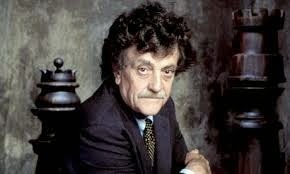
That's the reason I write: to make my soul grow. And if I can help some other souls grow in the process, all the better! I may not do it every day. I may not ever get an agent, or a big publishing contract, or have a line of fans out the door at my book signings. I may never hit the NYT Bestsellers list (or any bestsellers list, for that matter). But you know what? No matter how much Dave Farland or others try to make this into a science, I think writing is an art, and art is serendipitous. Some, like J.K. Rowling, hit it big and not just because they write well. Most do not. It's kind of beyond our control after a certain point.The only thing we can control is the practice, and practice, as we all know, makes perfect. It makes our souls grow. That's why we were given talents in the first place--to grow them and grow our souls. And the best way to make your soul grow through writing (or any other art) is to create something that serves others.That's my why of writing. This will be my last post here. Thanks to Valerie and all of you readers for your kind attention. I wish you success in finding the best way to grow your own souls.
First, in our Stake Conference a few weeks ago, the visiting authority suggested that we ask "Why?" when seeking motivation to adhere to any principle of the gospel. If we have a clear answer to "Why do our visiting teaching?" or "Why do missionary work?" and the like, we will be more successful at it.
I think we writers can extend that principle to our writing, so I've begun to ask myself, "Why do I write?" Is it a need, or is it to gain something--fame, fortune (Hah!), a sense of accomplishment, respect from others? Or is it something more than any of those things?
Second, there was a discussion on a message board recently about David Farland's most recent Daily Kick posting. Generally, he was pointing out that several of those he has taught have gone on to fame and/or fortune, and he was wondering what he needed to do to make it big (or at least "bigger"), so to speak. As his wife put it, "Dave, why don't you go write something big? Don't let all of your students take all of the largest contracts."
But is that why I write? To get a great big, fat, juicy publishing contract? The odds of that are slim to none, of course, but that doesn't mean I shouldn't shoot for it, does it? Hmmm...
He went on to say that he felt authors should constantly be striving to be better, surpassing the work they've done before (and I agree), but then he went on to measure the author's growth by his/her number of readers, focusing on an author's power to convert non-readers into readers.
That is certainly a compelling reason to write, but is it my reason?
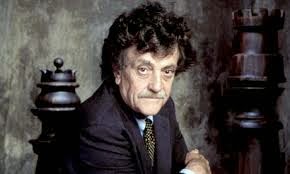
Finally, I came across the reason that rings closest to my own. It was given by Kurt Vonnegut in a 2006 letter politely declining to visit a high school in New York. They had wanted his best advice for a successful career in writing, and this is what he wrote, as published in The Huffington Post:
Dear Xavier High School, and Ms. Lockwood, and Messrs Perin, McFeely, Batten, Maurer and Congiusta:I thank you for your friendly letters. You sure know how to cheer up a really old geezer (84) in his sunset years. I don't make public appearances any more because I now resemble nothing so much as an iguana.What I had to say to you, moreover, would not take long, to wit: Practice any art, music, singing, dancing, acting, drawing, painting, sculpting, poetry, fiction, essays, reportage, no matter how well or badly, not to get money and fame, but to experience becoming, to find out what's inside you, to make your soul grow.Seriously! I mean starting right now, do art and do it for the rest of your lives. Draw a funny or nice picture of Ms. Lockwood, and give it to her. Dance home after school, and sing in the shower and on and on. Make a face in your mashed potatoes. Pretend you're Count Dracula.Here's an assignment for tonight, and I hope Ms. Lockwood will flunk you if you don't do it: Write a six line poem, about anything, but rhymed. No fair tennis without a net. Make it as good as you possibly can. But don't tell anybody what you're doing. Don't show it or recite it to anybody, not even your girlfriend or parents or whatever, or Ms. Lockwood. OK?Tear it up into teeny-weeny pieces, and discard them into widely separated trash recepticals [sic]. You will find that you have already been gloriously rewarded for your poem. You have experienced becoming, learned a lot more about what's inside you, and you have made your soul grow.God bless you all!Kurt Vonnegut
That's the reason I write: to make my soul grow. And if I can help some other souls grow in the process, all the better! I may not do it every day. I may not ever get an agent, or a big publishing contract, or have a line of fans out the door at my book signings. I may never hit the NYT Bestsellers list (or any bestsellers list, for that matter). But you know what? No matter how much Dave Farland or others try to make this into a science, I think writing is an art, and art is serendipitous. Some, like J.K. Rowling, hit it big and not just because they write well. Most do not. It's kind of beyond our control after a certain point.The only thing we can control is the practice, and practice, as we all know, makes perfect. It makes our souls grow. That's why we were given talents in the first place--to grow them and grow our souls. And the best way to make your soul grow through writing (or any other art) is to create something that serves others.That's my why of writing. This will be my last post here. Thanks to Valerie and all of you readers for your kind attention. I wish you success in finding the best way to grow your own souls.
March 24, 2014
The Story of the Scout Shirt
 It would soon be my son's turn to enter the 11-year-old Scouts in our area, and I had given some thought to purchasing a brown shirt, but with some trepidation. Those things are expensive, brand new. But then his Webelos leader showed up on our doorstep and gave us a shirt her own son had outgrown. She's awesome, what can I say. Anyway, our shirt woes were over.
My son happily wore his shirt for a few months, and then it went missing. We looked high. We looked low. We looked in between. We ripped apart the house. We looked behind furniture. I even posted the dilemma on my Facebook status, and took all the suggestions that were posted in reply. It wasn't in the freezer. It wasn't hanging on the back of his door. The thing was simply gone.
I began to wonder if perhaps we'd been targeted by Scout-shirt-hating criminals who break into people's houses and steal their shirts. But when no ransom was demanded, I gave up on that idea.
Board of Reviews came around. He couldn't attend in street clothes, so he wore his church shirt and pants. (It took several minutes to find his pants, but I'm really not feeling emotionally strong enough to go into that.) He passed the requirements to achieve his second class ranking (woohoo) and then it was time for Court of Honor.
You absolutely must have a Scout shirt for Court of Honor. And, since he was part of the color guard, it was even more important than ever. I decided that the house was going down. I was going to peel back wallpaper to find that shirt, if that's what it took. I mobilized my entire family. We started at one end and began to demolish the place.
"I found it!" came the cry. My son had shoved it back behind an old TV he'd been hoarding for parts. My heart rejoiced.
"We have an hour until Court of Honor," I said. "Go throw your shirt in the wash. It's dusty, but we have time to get it ready."
With much pomp and circumstance, the shirt was placed in the washer, and then the dryer. The relief was great. I was overjoyed.
"Mom!" came the wail.
Did you know that a dark green crayon, when left in the pocket of a light brown Scout shirt, and then sent through the dryer, leaves dark green ink streaks all over said brown shirt, in such vast quantity that one would need an abacus to number them all?
I saw red. I also saw green, which caused me to see red.
There was nothing that could be done.
I grabbed the telephone and called a ward member, who has several sons, and begged and pleaded to borrow a shirt. Bless her heart (and her son's heart) they lent us a shirt.
"Go put on your church pants," I said to son. "We're going to be fine - we're borrowing a shirt. But we need to get your lower half ready."
"But I don't know where my church pants are," son said.
Oh, let us not even get started ...
We found the pants. We wore the borrowed shirt. He participated in the color guard and he received his second class. And then we obtained another Scout shirt. Which I stapled to his forehead, right next to his church pants.


