
Andrew Scott's Blog, page 36
July 25, 2013
This is the cover for Myf’s forthcoming novel from...
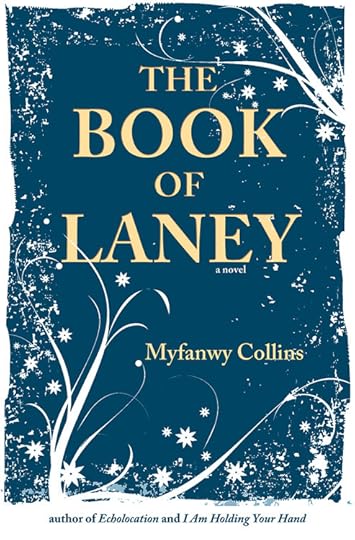
This is the cover for Myf’s forthcoming novel from Lacewing Books, the YA imprint of Engine Books that I run. Victoria Barrett and I co-designed this cover.
THE BOOK OF LANEY (Lacewing Books, March 2015) book cover!
I am IN LOVE with the cover for my young adult novel, THE BOOK OF LANEY, forthcoming from Lacewing…


July 17, 2013
A Jury of One’s Peers and Other Lies — The Good Men Project
Intelligent men and women must not avoid jury duty. Please consider what happens when you do, writes Andrew Scott.
—
In the wake of the not-guilty verdict for George Zimmerman, many of us have questioned the makeup of this particular jury. Why was it comprised entirely of women? And why only six members? (Florida and the five other states that do this—you’re weird.)
Then, the public recoiled at the news that Juror B37 signed on with a literary agent and planned to write a book; the Twitter backlash was effective, though, as both the juror and the agent released statements explaining that they’d changed their minds. This juror faithfully took notes the entire time, so one must wonder when the idea of writing a book about the case first popped into her head.
The other jurors have begun to distance themselves from Juror B37’s comments in her first post-trial interview, where—among many other revelations—she claimed that the verdict hinged on Florida’s “Stand Your Ground” law, even though it wasn’t used in Zimmerman’s defense.
She also said the 911 operator “egged [Zimmerman] on,” which is the exact opposite of what the operator actually said:
Dispatcher: Are you following him?
Zimmerman: Yeah.
Dispatcher: O.K., we don’t need you to do that.
Do you get the sense that at least this juror—one-sixth of the jury—wasn’t really paying attention, perhaps because she was already thinking of how the unfolding events should be recounted in the book she planned to write? Do you think she worried about unconsciously shaping the verdict based on what might make for a better book or more lucrative book deal?
At least she won’t write a book now. That doesn’t change the verdict, or the potential book deal’s effects on how she perceived the information presented in court.
For me, the trial underscores the importance of having intelligent, well-intentioned, and unflinchingly fair citizens on the jury. In this country, most of us complain about jury selection. Many of us try to get out of it—it’s a hassle, a burden. Few Americans under the age of 50 talk about it as a civic duty.
I have been summoned for jury duty four times, though I’ve never sat on a jury. Most of the time, I haven’t even made it into the courtroom. Most of these court cases ended with a last-minute agreement. I wasn’t especially keen on being picked for any of these juries, but who is? Do we really want juries composed of people who seek to stand in judgment of their fellow citizens?
In the weeks after I graduated from college, I was interviewed alongside other members of a jury pool. The case involved students who were allegedly attacked by other young men my age. Even though I was (more or less) the same age as both the alleged attackers and victims, I was immediately dismissed once the attorneys learned I had just graduated. Everyone else in the courtroom was at least fifteen years older. I didn’t understand why I’d been dismissed if assembling a jury of the defendants’ peers was the goal, but that phrase is not actually in the Sixth Amendment:
{In all criminal prosecutions, the accused shall enjoy the right to a speedy and public trial, by an impartial jury of the State and district wherein the crime shall have been committed, which district shall have been previously ascertained by law, and to be informed of the nature and cause of the accusation; to be confronted with the witnesses against him; to have compulsory process for obtaining witnesses in his favor, and to have the Assistance of Counsel for his defence.}
The language—“an impartial jury of the State and district wherein the crime shall have been committed”—is where we inject the idea of a jury of one’s peers, but the legal requirement is far broader than what we normally consider a fair definition of that word.
A few years ago, I was again interviewed alongside potential jurors, this time in a big city. Before he got to me, the defense attorney spoke with several others in the room. We were seated where the actual jury would fulfill its obligations. The defense attorney asked a lot of questions about the reliability of security cameras, since there was apparently footage of his client stealing liquor from a grocery store.
When it was my turn, the prosecutor began by asking questions about my job—I’m an English professor—and I knew what was coming. None of the others had a job so publicly associated with the pursuit of knowledge. He asked me a few other questions, including ones about hypothetical scenarios that had little to do with the court case and everything to do with figuring out if I could detect his moves on the fly. The judge had already asked him several times to reword certain questions. After I called out a few of his rhetorical choices and the vagueness of some of his words, I was kindly shown the door. The last thing a defense attorney wants is an intelligent juror. Far better is a juror who carries reasonable (or unreasonable) doubt regarding nearly every element of American life.
I once knew a lawyer who, when interviewing a jury pool, would say: “Is my client innocent or guilty?” Inevitably, the potential juror would say, “I don’t know.” And the lawyer would respond: “My client is innocent. He’s innocent until proven guilty.” He was quite effective in his defense of college students arrested for public intoxication and other lesser crimes.
I don’t plan to commit a crime anytime soon, but should it come to pass that a jury one day has a hand in my fate, I hope those individuals will be less concerned with what deals they might make after the trial. I hope they’ll follow the court’s instructions regarding what’s deemed permissible in court and won’t vote based on information hyped on TV. Ideally, a jury should be comprised of people who read at least 20 books a year and don’t watch 24/7 news networks, though I know that’s asking a lot. (Juror B37 bragged that she never reads—like a lot of people who don’t read, though, she thought she’d write a book.)
Eighteen people were interviewed for Zimmerman’s jury. Each side was allowed to strike six candidates from the jury pool. Maybe—and this is a possibility—there were even worse individuals in the jury pool. Can you imagine?
How different is your town from Sanford, Florida? Think about that the next time you want to get out of jury duty.
—
Photo dno1967b/Flickr
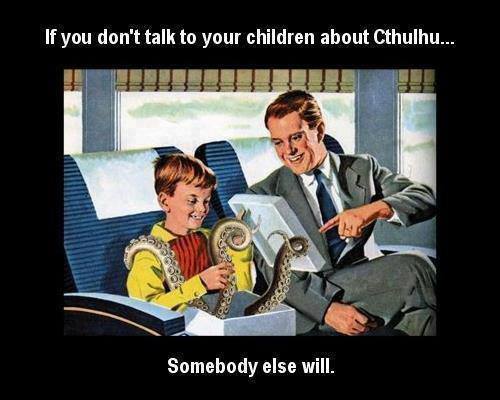
"There’s only one plot—things are not what they seem."
- Jim Thompson, author of The Grifters, Pop. 1280, The Killer Inside Me, and other novels.
July 5, 2013
So much for your vaunted algorithms, Netflix.
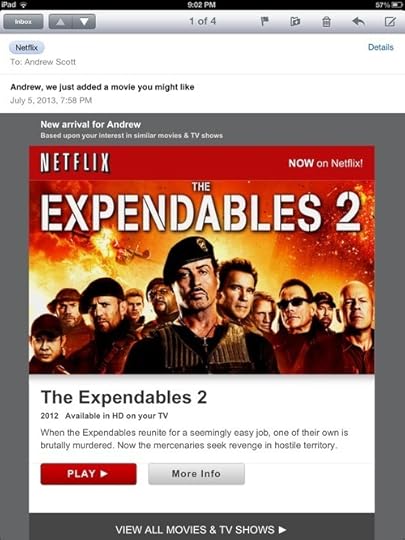
So much for your vaunted algorithms, Netflix.
July 4, 2013
Mr. McGwire Goes to Washington
A new essay, "Mr. McGwire Goes to Washington," is online at the Good Men Project.
Excerpt:
Unlike the man who broke his record, McGwire was not then a polarizing public figure. Fierce at the plate, he was portrayed as a gentle giant off the field. By all accounts, he was a great teammate. More than one article compared him to Paul Bunyan, though McGwire denied that he was some hero. He just hit home runs. That’s all he did—he hit long, towering, beautiful arcs that rose into the bleachers like missives to the past.
July 1, 2013
"The writing I value most is writing that cost the writer more than minutes to get on the page. Which..."
- Lee K. Abbott, in an interview I conducted in 2007
June 13, 2013
A friend teaching a class asked me to chime in about the process of writing my book. This is what I...
A friend teaching a class asked me to chime in about the process of writing my book. This is what I sent:
I didn’t have a plan when I began writing the stories that became Naked Summer. I was too busy figuring out how to write a single story before attempting the next one. Partly this is because I drafted the core of that book during a two-year period in graduate school before gathering them together; when my program changed, I had an additional year to think about the stories as a book.
Only during my lean post-MFA years did I consider linking the collection in overt ways, but it frankly seemed forced. And, yes, I was thinking only of what might interest publishers, not what might best serve the manuscript itself. My book is linked informally or thematically instead. The books ends with a long story—some call it a novella, but I don’t—where echoes of earlier stories ripple forth: the narrator’s skeezy former boss in “Lost Lake” is the landlady’s ex-husband in “Naked Summer,” for instance, and that story’s protagonist interviews for a job at a company that employs the protagonist of “Shortest Distance.” Place helps, too. The stories are set in one small Indiana county.
I tried to find what my mentor, Kevin McIlvoy, called the “tuning fork” in the collection, that story to which the others might defer. The tuning fork story in my collection eventually changed because I withdrew it from the manuscript, along with another story, because they were about characters leaving Indiana and didn’t play well with the others. That’s when “Naked Summer” showed me how it might bring some semblance of unity to the book.
Finding a publisher was a long and frustrating process. Literary agents almost always praised the writing but—you guessed it—wanted to see a novel first. When I approached university presses, my luck was rather uneven. The stories were too much about Indiana, they said, or didn’t focus enough on Indiana. Two of the reviewers for one university press disparaged it as “K-Mart realism,” a classist term I despise, a leftover from Raymond Carver’s era. Another UP basically said: Why are you sending this to us? It’s good enough to be published in New York. Even the small press that eventually published the book had previously rejected an almost-identical version; I apparently kept poor records of where I’d sent the manuscript because I didn’t remember this and would not have submitted it a second time had I known. (I discovered this fact when searching my email account for a message from the publisher.)
I’m working on another collection now—five or six stories that will accompany a novella and will be intentionally linked. After Naked Summer and its difficult birth, I decided I would never again write a non-linked collection. It’s not on the front burner, though I hope to finish a draft within the next twelve months. I’m focusing my attention instead on what I hope is a lean, muscular novel of about 200-240 pages.
Some writers say that students should have a project in mind, or already in progress, before attending an MFA program, but I don’t think that’s required. I suppose it’s useful for writers who are already excellent and expect a book and a teaching job upon graduation. But in that case, it turns the MFA program into a job factory, not a place of learning and mistake-making, which is the greatest gift allowed by a two- or three-year graduate program: it allows writers the time to write and the opportunity to make risky and possibly wrong choices in an encouraging environment.
I adapted the first tuning fork story into a 114-page screenplay and realized it wasn’t really a short story. It’s now the novella I mention later in this piece.
May 31, 2013
"Every form is difficult, no one is easier than another. They all kick your ass. None of it comes..."
- James Baldwin
May 22, 2013
Short Story Month, Day 22: "Differently"
During the month of May, The Missouri Review will highlight a single short story to help celebrate National Short Story Month. Weâ��ve asked a diverse group of readers and writers to participate by sharing a short story that demands to be read. Todayâ��s blog post comes from writer Andrew Scott. “A story is not like a road to follow, I said, it’s more like a house. You go inside and stay A story is not like a road to follow, I said, it’s more like a house. You go inside and stay there for a while, wandering back and forth and settling where you like and discovering how the room and corridors relate to each other, how the world outside is altered by being viewed from these windows. And you, the visitor, the reader, are altered as well by being in this enclosed space, whether it is ample and easy or full of crooked turns, or sparsely or opulently furnished. You can go back again and again, and the house, the story, always contains more than you saw the last â�¦
Here’s a post/essay I wrote about Alice Munro’s “Differently,” one of my favorite Munro stories.
Andrew Scott's Blog

- Andrew Scott's profile
- 9 followers

