
Andrew Scott's Blog, page 35
September 10, 2013
Cincy Comicon
The first time I attended a big comic book convention was in 1994, courtesy of Gary Colabuono, owner of the Moondog’s shop in Chicago. When the Image gang swept through Chicago in 1993, I’d heard that they were charging for autographs, etc., so I wrote a pissed-off letter to Todd McFarlane, who printed it in Spawn #13.
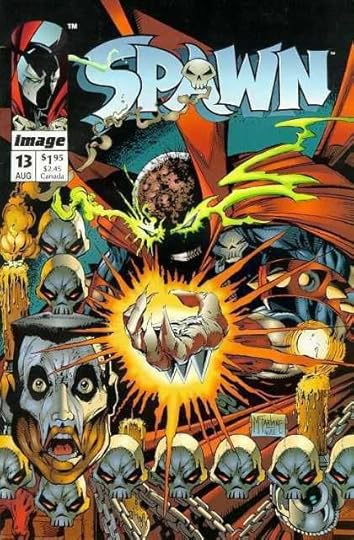
Todd tried to track me down through my local retailer (Connie’s Comics in Lafayette, Indiana—R.I.P.), and even called me at home, but I WASN’T THERE TO TALK TO HIM, NOT THAT I’M STILL BITTER. Gary ran the Chicago con back then, and he sent me four three-day guest passes through Todd, who forwarded them to me.
Pretty cool, right? Especially since (1) I was just an idiot kid who didn’t have his facts straight in those pre-Internet days, and (2) it’s hard to imagine publishers or convention organizers doing something like that now. Especially for idiot kids.
I went to Chicago cons a few more times, but nothing ever topped that first time. My brother and I were in heaven, meeting all of our favorite artists, sometimes in strange places. I took a piss next to Frank Miller, for instance, though I waited until we’d both washed our hands and exited the restroom before talking to him. We accosted Chris Claremont while the poor guy was just trying to eat an overpriced hot dog. To me, these creators were celebrities of the highest order.
I met Jim Shooter (a giant!) in the hallway. As I briefly expressed my admiration for his work and my thanks for his compelling “how to write a story” panel earlier that day, Uhura from Star Trek strolled past us.
The family made it into a vacation. My mom was happy to stay in the hotel and read all day, blissfully free of her two boys and husband, who was covering the World Cup for USA Today and Gannett. One of those days, Dad met us somewhere near the front entrance. Since he had a guest pass, too, he had no problem getting in. When we finally arrived, he told us he’d talked with a really nice guy he thought we knew—it was Joe Quesada, now the top guy at Marvel Comics, but then just a fan favorite artist who’d started his own company, Event Comics, with his friend and artistic partner.

I met most of the Image guys I admired (but not McFarlane, who wasn’t there), the seasoned vets from the Legend imprint at Dark Horse (Miller, Mignola, and so on), and a host of other creators I worshipped.
I was 17 years old, and I acted like it. My brother had just turned 13 and acted like it, too. So we got more than an eyeful of the women (barely) dressed as Vampirella and other characters, who were paid to officially represent one company or another. When we saw the gigantic inflatable version of one of Marc Silvestri’s characters, we predictably posed for photos while grabbing Ripclaw’s giant man-crotch.
I went to a few other conventions. The Mid-Ohio Con in the mid-90s was incredibly small. I went for something to eat and found myself seated next to John Byrne and Walt Simonson as they shot the bull. I got a sketch of a T-Rex from Simonson later on, and another of Phoney Bone by Jeff Smith.
The Chicago cons were less awesome as time went on, but one year, after a Wildstorm editor disparaged my friend’s art, I found the guy resting in a dunk tank in Artist’s Alley, raising money for the Comic Book Legal Defense Fund or something. I may not be a smart man, Jenny, but back then I had an arm like a lightning bolt. I paid my money for three attempts to sink his ass, but I only needed one throw. The ball ricocheted off the target, rattling the entire contraption for nearly a minute.
I stepped away from comics for a few years, fell in love, moved away for grad school, and so on. When I returned to Indiana to accept the teaching job I still have, I again went to Chicago with my good friend, Ed Herrera, whose art and honor I had defended at the dunk tank. Wizard magazine was in charge of it by then, and the vibe was different. I don’t remember too much about that day, actually, except that a lot of writers on the Vertigo panel were openly tired of the attention Neil Gaiman always gets. Oh, and editor Will Dennis dropped trou and showed us his boxers to explain the background cover of this issue of The Losers. Yes, pink.
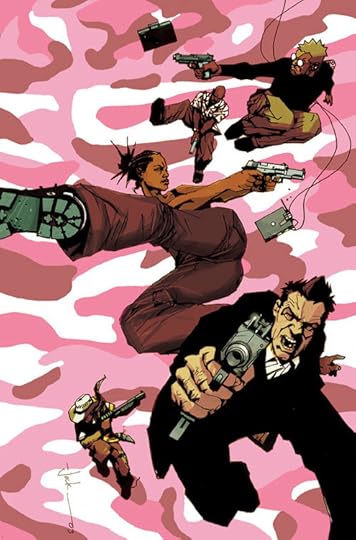
Over time, I’ve become wary of fan culture, especially in comics. Too many comic book stores are unfriendly to customers. They’re often exclusionary, and sometimes offensively so. But with the advent of online bookstores and public libraries ordering most popular graphic novels and trades, and of course the digital comics revolution, I haven’t had to encounter many of those fans in recent years.
Too many aspects of the comics industry are misogynistic, and there aren’t enough female creators working for the larger publishers. I also don’t think comic book publishers in America have done enough to capitalize on the obvious interest American girls have in reading comics—manga is huge for that crowd, and it’s dumb that Marvel, DC, and other publishers haven’t really embraced or cultivated what could be an enduringly engaged and ever-growing audience.
I also attended a Star Wars convention in Indianapolis as a freelance reporter, where I saw numerous women dressed as “Slave Leia” and the like. (Maybe I just don’t get the appeal of cosplay. Maybe it’s because, if I want to “be” a character, I can just put words on a page.)
I really, really didn’t want to encounter problematic fans. Maybe this feeling was underscored when Ed came down to Indy a few weeks ago to shop for records and comics. At one comic book store, an employee acted like an asshole when I asked if a certain issue was in stock, and three customers—all sitting at a gaming table in the middle of the store—loudly discussed one dude’s “fucking bitch ex-wife,” even though he’s “gone home with a different woman every night” and is generally the coolest guy ever, didn’t you know, despite looking like a cosplay representation of Comic Book Guy from The Simpsons.

One young woman stood in the comics section, deciding on her purchases, while this conversation played itself out. Before we left, I had a good look around because I didn’t plan to come back anytime soon. On the wall, they had a framed Hawkman sketch by Joe Kubert—Ed studied with Joe and worked as his apprentice/assistant for one year—and a Thor sketch by Jack Kirby.
So why did I attend the brand-new Cincy Comicon? Wouldn’t I encounter these elements of fan culture that I’m not really into, not even a little?
I realized during the two-hour drive that I hadn’t been to a comic book convention in ten years, even though I am reading as many comics books as ever. I’ve started a tiny comics publishing company called Sinkhole Press. I’m making my first real effort to become a working professional in this field and want to work for other publishers, as well. I need to find an artist for a graphic novel I’ve co-written with Bryan Furuness. There are a ton of reasons the idea appealed to me, despite my reservations.
When I looked at the Cincy Comicon’s website, I noticed how comics-centric it was. There wasn’t much on the program that wasn’t about comics or comics creators. Not gamers. Not general sci-fi TV/movie culture stuff. Just motherfucking comic books.
The Cincy Comicon didn’t list Uhura and Lou Ferrigno and those types of guests. At the top of the list was Bernie Wrightson and Arthur Adams. (Wrightson canceled his appearance because of illness, alas.) The other creators included Jason Aaron, Geoff Darrow, and many other talented, respected writers and artists.
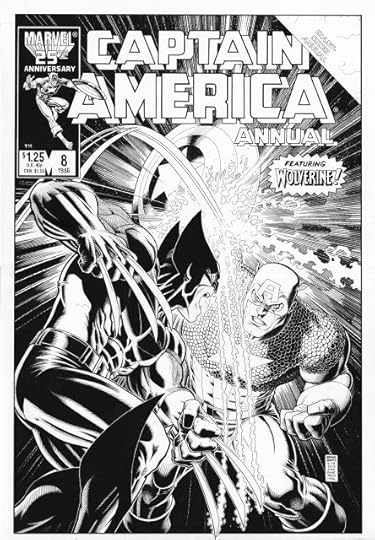
In short, the Cincy Comicon is exactly the con I’ve always wanted. It was mostly about comics. While there were still a lot of fans in costumes—several Deadpools, a bunch of Dr. Who characters, et. al—I didn’t see any scantily clad men or women. Lots of women were in attendance, though, and girls of all ages. They seemed to have a good time and feel welcomed. They were a presence, really. Artists offered free sketches to young fans. The few panels—held in rooms called the Fortress of Solitude and the Batcave—were mostly about creating comics. One focused on funding a project through Kickstarter, but since I’ve already done that (woot!), my favorite was about lettering and coloring comics: Rus Wooton and Matthew Swift were practical, funny, and encouraging about their craft. I bought some marked-down hardcovers, two more Arthur Adams prints, and met a few artists I’ll follow up with and maybe work with eventually.
I was just there for one day, but it seems like the general response to the Cincy Comicon has been overwhelmingly positive. I can only hope the new convention in Indianapolis (March 2014) follows in their footsteps.


August 28, 2013
August 25, 2013
Madonna's Writing Advice
"Don’t go for second best, baby."
"All you need is your own imagination. So use it—that’s what it’s for."
"Find a groove and let yourself go."
"A man can tell a thousand lies."
"I’ve had to work much harder than this."
"Don’t look back. Keep your head held high."
"I learned to let go. I travel in stillness."
"Don’t underestimate my point of view."
"Life is a mystery. Everyone must stand alone."
"Finish what you start."
Andrew Scott's 10 Rules of Writing
There are no rules.
There are no rules.
There are no rules.
There are no rules.
There are no rules.
There are no rules.
There are no rules.
There are no rules.
There are no rules.
There are no rules.
"The amateur, seeing how the professional having learned all that he’ll ever learn about..."
The amateur, seeing how the professional having learned all that he’ll ever learn about writing can take a trivial thing such as the most superficial reactions of three uncharacterized girls and make it witty and charming—the amateur thinks he or she can do the same. But the amateur can only realize his ability to transfer his emotions to another person by some such desperate and radical expedient as tearing your first tragic love story out of your heart and putting it on pages for people to see.
That, anyhow, is the price of admission. Whether you are prepared to pay it or, whether it coincides or conflicts with your attitude on what is ‘nice’ is something for you to decide. But literature, even light literature, will accept nothing less from the neophyte. It is one of those professions that wants the ‘works.’ You wouldn’t be interested in a soldier who was only a little brave.
”- F. Scott Fitzgerald: A Life in Letters
August 16, 2013
At B&N yesterday
…I was happy to see a big stack of Kelly Braffet’s new novel on the front table—I’m reading it now—as well as several books by friends on the new fiction shelf, including Robert Boswell’s Tumbledown, which is great. I bought the new collected stories by James Purdy. The cashier gave me shit because I printed an email instead of the official coupon with the barcode, even though what I printed had a code for him to type in. Apparently this was worth lecturing me. As a member, even with the extra 20% off, it was still three bucks more than Amazon, though B&N’s online price is about the same as Amazon. So I paid three bucks more for the pleasure of driving 30 miles roundtrip and being treated like crap.
B&N is the only real viable competitor for Amazon (in the book business, I mean). Independent stores that have done well in the last decade have incorporated secondary means of generating income, but have also really upped their customer service. I’m not sure B&N is able to do that. They might be too big to succeed.
August 14, 2013
August 13, 2013
Bread Loaf starts tomorrow
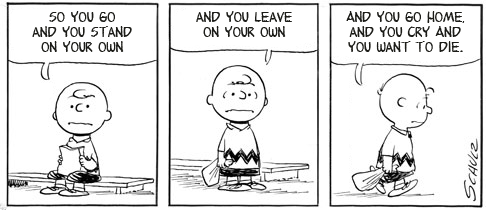
…which means my Facebook and Twitter feeds are about to fill up with photos of writers hugging and mugging for the camera. No doubt, there’s a ton of talent on the mountain this year, as there is every year. But tonight I’m thinking of the many talented writers I know who weren’t accepted or given scholarships or fellowships to attend—writers that many of you repost and retweet at least once a week. It reminds me of playing basketball in high school; there were good players on the school’s team, but that wasn’t the best test of one’s ability. To know if you had game, you played in the intramural league, away from the spotlight. No spectators except other players, but if you were good, everybody would know soon enough.
July 28, 2013
Why we should use the Oxford Comma
A direct quote from The Times newspaper, talking about a Peter Ustinov documentary and saying that:
“highlights of his global tour include encounters with Nelson Mandela, an 800-year-old demigod and a dildo collector”.
glorious.
July 27, 2013
The Most Aptly-Named Novel Ever
In which I respond to this:
1. Don’t talk about your advance.
2. Don’t talk about your small advance and how long it took you to write the book, and then follow up with how you’re not writing about your “lot" in life or career. Yes, you are.
3. You are lucky to have readers. An independent press made that happen. I wish you really understood that, instead of just paying lip service before contradicting yourself throughout the rest of the piece.
4. The media doesn’t give a shit about what kind of pen you use or how you write, but readers (many of whom may be also be writers or interested in writing, as you don’t quite realize here) do care. It’s called knowing your audience. Look into it.
5. As a debut author, you had a publicist? Pretty cool. I don’t believe the publicist said “newspapers like personal stories. Ideally, confessional stories." Unless that’s just some fucked-up British thing. I can understand why you might be uncomfortable with that, given your book’s subject matter. But you’re exaggerating, at least a little.
6. OH MY GOD I JUST REALIZED YOU’RE DOING EXACTLY WHAT YOU’RE SUPPOSEDLY COMPLAINING ABOUT AS YOU FIND SLY WAYS TO TALK ABOUT YOUR NOVEL IN THIS PIECE WRITTEN FOR A NEWSPAPER.
7. Why can’t you get paid for the articles you write, although you’re getting paid for this one? I don’t know. Why don’t you write another article about that topic, like everyone else.
8. “These days, an author, especially an unknown author, must – in order to entice any readers to her work who aren’t blood relatives – write endless unpaid blogs, articles and responses for newspapers and magazines and random people creating things in basements."
You can always say no. But, hey, if you didn’t write this inane, insulting piece that dozens of people in my feed have linked to, I would have no idea who the fuck you are. So maybe it works. But I’m still not buying your book. You reached me, but you failed to make me care about your book. Or you.
9. “What results is the subsidising of publishers by outsourcing the marketing of the book to the writer, and now and again the subsidising of often giant media corporations, who in times gone by would have had to pay her."
Remember early on, when you paid a tiny bit of lip service to your indie publisher? Neither does your publisher, after this. But, hey, you’re so amazing. See you in another twelve years with your next book. Of course, if you have another book sooner, if you’ve built an audience, if you’ve generated a little momentum, the publisher you purport to subsidize is a big part of the reason why.
10. “Third: why is there so much fuss in the media about how to write a novel – ‘everyone can become an author’ – when the more important thing is how to read one?"
Oh, it’s the media’s job to argue that reading, or reading books, is important? You’re right, though. Based on the number of compliments you’ve received from other writers sharing this online, I think a good many people don’t read well—or closely.
11. “The author engaged in a bookshop reading event (usually unpaid) has been known to become a vessel through which other authorial fantasies can flow or ferment. Unless the moderator steers it otherwise, a Q&A can turn into a session on how that ubiquitous determined man at the back can be published. He has an email from an agent from years ago … I sympathise, but I also want to ask him: whom do you imagine will buy and read your work if you do not buy and read books?"
First, you should have talked about how the publisher may have paid the bookstore. That’s right! Not only were you not paid, but it’s possible the publisher had to pay for your chance to feel so slighted. The publisher subsidized your ego-swell. Maybe you didn’t know, which would surprise me, since you’re a debut novelist and obviously know everything about publishing.
Second, who said the dude doesn’t buy books? He’s in the bookstore. He found out about your reading somehow, maybe from previously stepping foot in the same bookstore and seeing a poster or announcement. But as long as you’re assuming you know everything about a complete stranger, at least make him interesting. What? OK. You’re right. You know him better than anyone. You’re the author. Authors are never, ever wrong.
12. “There is something wrong with how much of the media approaches authors and books."
The media! It’s always the media. Damn media. I hate when the media is some kind of active, malevolent force working toward the destruction of literature as we know it, instead of, oh, merely the means of communication between two entities.
There are one or two good ideas in this piece. But really? You got paid for this? You really are lucky. I thought it was a bunch of MALARKEY.
Andrew Scott's Blog
- Andrew Scott's profile
- 9 followers

