Jonathan Auxier's Blog, page 6
November 27, 2012
Give Irony a Chance

A recent NYT or-ed piece by Christy Wampole entitled “How to Live Without Irony” has been making the rounds online.1 The piece is a lament for the millennial generation’s fixation on irony:
The hipster haunts every city street and university town. Manifesting a nostalgia for times he never lived himself, this contemporary urban harlequin appropriates outmoded fashions (the mustache, the tiny shorts), mechanisms (fixed-gear bicycles, portable record players) and hobbies (home brewing, playing trombone). He harvests awkwardness and self-consciousness. Before he makes any choice, he has proceeded through several stages of self-scrutiny. The hipster is a scholar of social forms, a student of cool. [...] He is a walking citation; his clothes refer to much more than themselves. He tries to negotiate the age-old problem of individuality, not with concepts, but with material things.
I feel like a piece like this crops up every year or so, and the consistent factor in all these articles is that the author feels left out of a culture that he/she does not belong to. This article feels about as accurate as those that came out of 9/11 declaring that irony was “dead.” If anything, the hipsters I have known have been excessively earnest people … the only way you might think otherwise is if you were extrapolating their entire person from their clothes, facial hair, and twitter feeds. Lady Gaga may wear a meat dress, but she also gives speeches about bullying. Those same smirking “harlequins” were the ones who started the Occupy movement.
More importantly, I disagree with the premise that earnestness is inherently superior to irony. Since when has the ability to laugh — especially at oneself — been a bad thing?2 The author points to 4 year-old children and animals as exemplars of earnest behavior. From where I stand, those are not necessarily things for adults to aspire to. To celebrate humanity is to celebrate the ways we are different from animals — irony is one of the ways we can do that.
Sure, there’s a possible danger to too much detachment. And, as I’ve discussed before, it can be used to hurt people. But none of these things are unique to one generation.
You know it’s popular when my father emails it to me. ↩
Re-reading Something Wicked This Way Comes this October (something I do every year), I was struck anew by the simple idea that evil is powerless in the face of smile. ↩


November 20, 2012
Viva Las Vegas!

T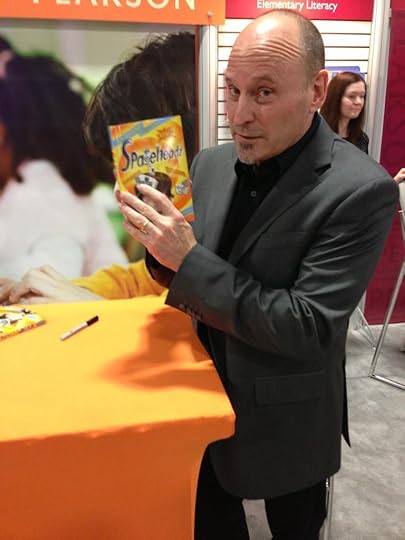 his weekend, I had the pleasure of hanging out with thousands of English teachers at the NCTE Annual Convention.1 I’m not a fan of Vegas, but I am a fan of English teachers, and it was a fun time packed with parties and luncheons and various meet-and-greets. I was able to reconnect with authors like Shannon Hale, Cecil Castellucci, and Jennifer Holm. I may or may not have teared up when I finally got to meet Jon Szieszka.
Abrams also had me at their booth signing copies of Peter Nimble, which they were selling at cost. In a convention hall awash in free ARCs, even discounted books are a tough sell — I felt like I needed to find a way to draw passers-by, which led to this:

I had a stack of 11×17″ paper and a pretty steady line of people eager to receive crappy portraits — so much fun!
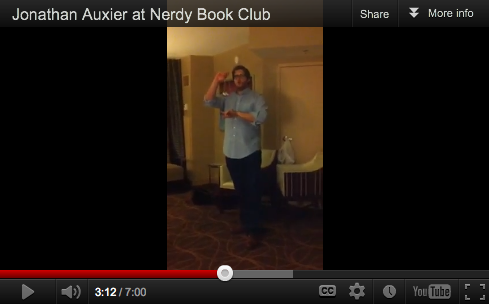
The highlight of the weekend was getting to finally meet the geniuses behind the Nerdy Book Club! Colby, Donalyn, and Cindy threw a party on Friday, and it was a blast. The NBC blog has a convention wrap-up, including a video of me doing an impromptu yo-yo show:
The event felt very similar to ALA Annual, but with a somewhat smaller publisher presence … which actually made it easier to connect with people. ↩
September 11, 2012
Remembering Maxine …
My wife’s grandmother, Maxine Burke Markam, passed away this weekend. Today is her funeral. She was smart, beautiful, tough, and the meanest canasta player I have ever seen. Here’s a picture of us cutting a rug at Mary’s and my wedding five years ago:

Death is never a terribly fun thing, but without it, I’m not sure life would seem quite so wonderful. All last week, I couldn’t help but remember two scenes from different plays. The first is Thorton Wilder’s Our Town in which Emily has passed away in childbirth, but has been given one last to look at her old life before disappearing to her grave:
EMILY: It goes so fast. We don’t have time to look at one another. [...] I didn’t realize. So all that was going on and we never noticed. Take me back — up the hill — to my grave. But first: Wait! One more look. Good-by, Good-by, world. Good-by Grover’s Corners. … Mama and Papa. Good-by to clocks ticking … and Mama’s sunflowers. And food and coffee. And new-ironed dresses and hot baths … and sleeping and waking up. Oh, earth, you’re too wonderful for anybody to realize you.
The second is Vladmir’s speech near the end of Waiting for Godot:
VLADMIR: Astride of a grave and a difficult birth. Down in the hole, lingeringly, the grave digger puts on the forceps. We have time to grow old. The air is full of our cries.
I would like to think that the gravedigger also enjoys coffee and new-ironed dresses.
August 27, 2012
Reading for Writers …
 Since relocating to Pittsburgh, I’ve been invited to teach at the MFA program at Hogwarts Chatham University. This is a thrill, as my students will be actual creative writers of Children’s Literature! It will also be a challenge.
The educational needs of creative writers are slightly different from those of straight academics. The questions/vocabulary/theories that serve scholarship aren’t necessarily the ones that help a writer become better at their craft.1 The goal of this course will be to combine the reading list of an English Lit class with the vocabulary of a creative writing workshop.
I’ll be writing pieces on this blog about each of the books that we’ll be discussing in class.2 Here’s the first half of our reading list. You’re welcome to follow along!
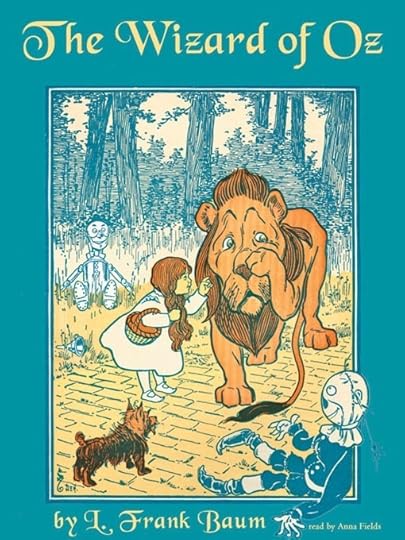 The Wonderful Wizard of Oz by L Frank Baum (1900)
I’m not actually the biggest Baum fan. His books often feel like rambling journeys where each chapter has no relation to the larger story. The first book in his series, however, is a welcome exception. Even better, Baum’s famous introduction to that book is a great way to start a course on the genre — it’s the Declaration of Independence of Children’s Literature.
 The Secret Garden by Frances Hodgson Burnett (1911)
One of the recurring tropes in Children’s Literature is the creation of enchanted spaces — especially ones that are controlled by children. What better example of this than a book that manages to create such spaces without needing to resort to magic?3
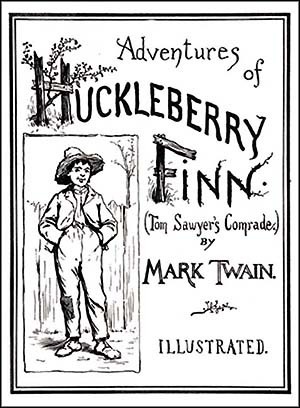 The Adventures of Huckleberry Finn by Mark Twain (1885)
Now that last year’s Huck Finn debacle seems to have blown over, it seemed like it might be fun to explore this book — one of the rare children’s literature titles that has gained full acceptance in the larger canon. From a writing perspective, it will also provide a chance to examine the quest narrative in greater detail.
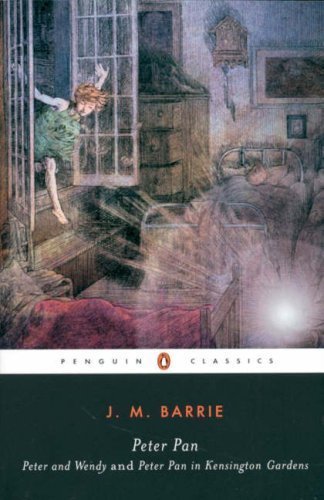 Peter and Wendy by JM Barrie (1911)
My love of this book is well documented.
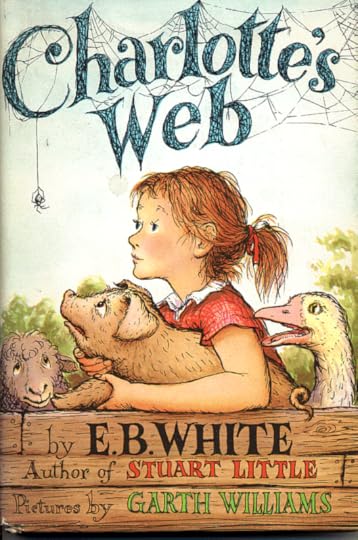 Charlotte’s Web by EB White (1952)
I’m actually more of a Stuart Little guy myself, but with this book recently topping the School Library Journal’s list of Top 100 Children’s Books, I thought it would be worth looking at. One of the things I love about Charlotte’s Web is how (seemingly) effortlessly it manages to combine prosaic American farm life and talking-animal magic — with Charlotte being the nexus between those two worlds.
For more on this difference, you can check out my post on poetics vs hermeneutics ↩
Some readers will remember that I blogged through the Children’s Literature course I taught last year. ↩
My one regret is that I will not have space in the course to pair this book with its natural bookend: Bridge to Terebithia ↩
August 20, 2012
Pictures of Penny
As many of you know, a few months back, my wife and I brought home our very first human baby. In advance of the birth, I had made a point of leaving Mary cute little sketches of what our baby might look like — most all of which she deemed “terrifying.” I thought I’d share them with readers …


And now, here’s the real deal! This is Penelope Fern Auxier. Not quite as many fangs as I’d imagined …

August 13, 2012
Won’t You Be my Neighbor?
 Please pass the word to any-and-all librarians you know that the historic CC Mellor Library in Pittsburgh is looking for a new children’s librarian! This library is two blocks from my house and it is a truly lovely building in the middle of a charming, safe, historic neighborhood.
If you don’t live in Pittsburgh, you should know that it is an incredibly livable city — some people (ahem, Forbes Magazine, The Economist) would even say it is the most livable in the United States. Also, it is home to Mr. Rodgers. Try and tell me you don’t want to come to work in a place that looks like this:

Just to sweeten the pot: I’ll take whoever gets the job to D’s Six Pack and Dogs for dinner — you have not lived until you’ve eaten a salad with french fries on top.
You can find all the info about the position here. Tell your friends!
Book Reviews and the Epidemic of Niceness
 Children’s literature maven Monica Edinger recently wrote a thoughtful response to a recent Slate piece on the “epidemic of niceness” that plagues the modern publishing industry.1 Both writers voice their frustration over the dearth of negative book reviews online.2 Here’s an excerpt from the original article:
“But if you spend time in the literary Twitter- or blogospheres, you’ll be positively besieged by amiability, by a relentless enthusiasm that might have you believing that all new books are wonderful and that every writer is every other writer’s biggest fan. It’s not only shallow, it’s untrue, and it’s having a chilling effect on literary culture, creating an environment where writers are vaunted for their personal biographies or their online followings rather than for their work on the page.” Jacob Silverman, Slate
For me, reading is too often an experience of discovering that the emperor has no clothes. When that happens, I feel betrayed by my community (Somebody should have warned me!). And yet, when I read an openly negative book review, it turns me off. While I agree to the importance of quality criticism, quality criticism is no fun.3
There is, however, one safe place where negative reviews thrive: the celebrated book
 While I bite my tongue about contemporary books I dislike, I am more than comfortable speaking out against boring old books. I am not alone here; the internet is awash in snarky takedowns of overrated classics. For more contemporary targets, one only need look at the upper echelons. For every hundred glowing reviews of Freedom, you can be sure there will be a BR Meyer review attacking it.
Sometimes these dissenting voices come off as prophets, other times they come off as attention-hungry trolls (Armond White, anyone?). I think there is a sense that a successful work can afford to be taken down a few notches. Perhaps this is true, but since when has that been the purpose of criticism?
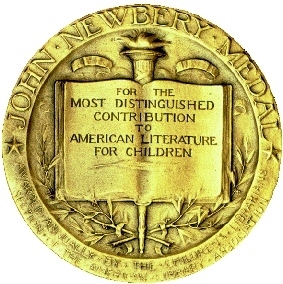 In Edinger’s comments, she mentions that SLJ’s Heavy Medal blog stands out as a place where honest criticism is alive and well. I agree with her, and I think the blog gets away with that because of its conceit: any book mentioned there is already a contender for the Newbery. There is no such thing as a bad book on that blog, only varying levels of good.
I think the success of Heavy Medal speaks to a larger point. Perhaps the reason bad books do not get panned is because we subconsciously know they are undeserving of critical engagement? And perhaps this is the way it should be? What is the value of our greatest literary minds attacking Fifty Shades of Grey, a book that has no literary aspirations?
Let us save our very best criticism for our very best books — because those are the books whose flaws are worth discussing, and those are the authors who we want to see grow.
if the name sounds familiar, I posted about her last year ↩
This is a problem that goes beyond just books. Just a few weeks ago, there was the notorious fanboy uprising against the reviewers who dared criticize the latest Batman movie. ↩
As Edinger points out, things get even more complicated with children’s literature because adults are not the primary/sole reader. Who wants to be the jerk who disparaged a child’s favorite book? ↩
August 6, 2012
Obscure Adaptations of Kidlit Classics
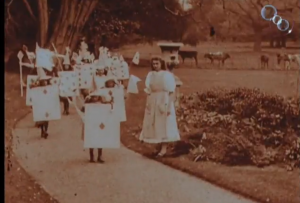
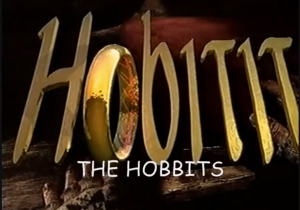
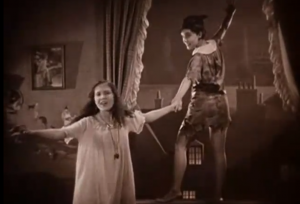
I’m a fan of the science-fiction blog Io9. A few weeks ago, they posted a pretty nifty piece of forgotten versions of famous movies. Among the list were several children’s literature adaptations, all of which are free watch on YouTube. (Hooray for the public domain!) Highlights include silent versions of Alice in Wonderland and Peter Pan as well as a saxiphone-laced Finnish adaptation of The Lord of the Rings. Click any of the below images to read the whole list:
August 3, 2012
The Matilda Prototype
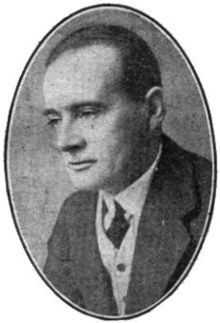
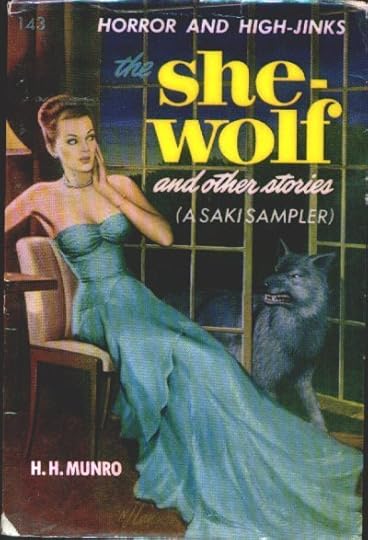
I’ve recently been reading a lot of short stories by Edwardian master Saki (the pen name of HH Munro). The stories are largely wonderful — a combination of funny and macabre that I haven’t seen since Roald Dahl. Speaking of Dahl, he was a huge fan of Saki. Here’s his blurb on the back of the Complete Works:
“In all literature, he was the first to employ successfully a wildly outrageous premise in order to make a serious point. I love that. And today the best of his stories are still better than the best of just about every other writer around.” – Roald Dahl on Saki
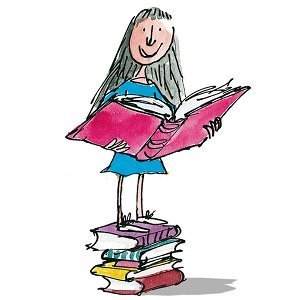
 Why is this interesting? Well, I have recently been thinking about Betsy Bird’s SLJ poll of the top 100 children’s books — in her piece on Matilda, Betsy mentions a rumor that the character of Matilda was originally conceived to be “a nasty little girl, somewhat in the same vein of Belloc’s Matilda Who Told Lies and Was Burned to Death. Revision after revision turned her instead into the sweet little thing we all know and love today.”
This seems like a good comparison, but for the fact that Belloc’s Matilda is not terribly smart.1 So imagine my surprise and delight when a few weeks ago, while reading Saki’s short story “The Boar-Pig“, I encounter a shrewd little girl named Matilda Cuvering whose sole mission in life is to terrorize stupid adults. In the story, Matilda humiliates and extorts a pair of social climbers trying to crash a garden party. And she doesn’t limit her wrath to adults:
“I was told to imitate Claude, that’s my young cousin, who never does anything wrong … It seems [My aunts] thought I ate too much raspberry trifle at lunch, and they said Claude never eats too much raspberry trifle. Well, Claude always goes to sleep for half an hour after lunch, because he’s told to, and I waited till he was asleep, and tied his hands and started forcible feeding with a whole bucketful of raspberry trifle … Lots of it went on to his sailor-suit and some of it on to the bed, but a good deal went down Claude’s throat, and they can’t say again that he has never been known to eat too much raspberry trifle.”
Of course, we’ll never know for certain whether Dahl had this character in mind when he created Matilda Wormwood, but I can’t help but wonder.2
she’s basically a “Boy who Cried Wolf” ↩
For those interested, I also wrote about Matilda and helicopter parenting here. ↩
April 13, 2012
The Upshot of Cancellation
One of the things I’ve been thinking about a lot lately are the differences between cable and network television. This is not a new topic. Much hay has been made of the way pay-channels like HBO and Showtime don’t have to worry about commercial breaks … but why is it that even the shows on “free” cable channels like FX and AMC still feel better than network shows?1
For me, one essential factor is the difference in season lengths. Cable TV shows generally only run for 11-13 episodes per season, while network shows nearly double that number. Obviously, a writer needing to produce twice as much content in the same year might end up sacrificing quality for speed … but what if there were another reason? What if a shorter season was actually linked to better storytelling in some essential way?
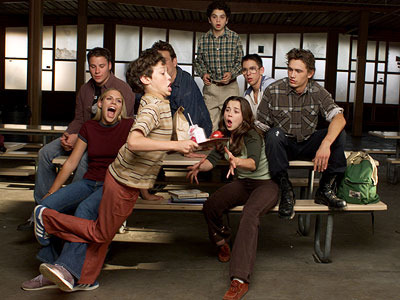
This week I’ve been enjoying reading the AV Club’s series of interviews with “Freaks & Geeks” creator Paul Feig, in which he talks through the writing and shooting of every episode in the short-lived series. In the interview, Feig discusses how he and co-creator Judd Apatow discovered early on they were being cancelled at the end of the season:
We all just went into scramble mode and started saying, “Okay, we’ve got to play out these storylines we wanted to do [in future seasons], so that when we get canceled, we won’t go bummed out.”
This comment was sort of an “Aha!” moment for me. Suddenly, Feig and co-creator Judd Apatow had to cram all the best story parts into the final six episodes. And maybe that’s why “Freaks & Geeks” was such a brilliant show — every episode felt like it was truly an event. I can’t help but wonder if the show would have been quite as strong without the axe hanging over the creators’ heads?2
Going back to the question of cable shows, I can’t help but think of how Feig’s experience applies to season premieres and finales. Premieres and finales are where a series delvers its biggest dramatic punch — rules are changed, people are killed, stakes are raised. A little basic math informs me that a cable show (whose seasons end after just 13 episodes) will have those moments twice as often as a network show. No matter how you cut it, that gives the cable show a huge storytelling advantage because it disallows filler.3
How does this apply to writing in general? I suspect it connects somehow to series books, but I haven’t worked that part out. In the meantime, it’s simply a powerful parable about the importance of not holding anything back. I’m currently in the middle of a second book, and I’m constantly getting exciting story ideas that I think I should save for a story in the distant future. That’s ridiculous. I should be putting everything into the book I’m writing now. I should be treating this book like the last one I may ever get to write.
“Free” is, of course, a euphamism for hundreds of dollars a year ↩
British TV seems to have internalized this idea without the need of a network axe. Consider the abbreviated runs of “The Office” or “Fawlty Towers,” both of which ended because their respective creators would rather have no new episodes than bad new episodes ↩
If you’re in the mood for more TV thoughts, you should check out screenwriter Matt Bird’s current blog series “How to Create a TV Show” ↩