Jason Y. Ng's Blog, page 8
March 14, 2014
When Friends Turn Toxic 當好友變毒友
I have known Thomas since we sat next to each other in third grade. Last month during dinner, I shared a piece of good news with my friend of 30 years.
“Guess what? I finally put a downpayment on this flat I told you about!”
Rather than hearty congratulations, I got a look of displeasure, or a “black face” as the Cantonese people would put it.
“They say the property market is about to crash, you know,” Thomas hissed, suddenly a macroeconomist. “I, for one, am not in a rush to buy.”
For the rest of that evening, a single thought kept playing over and over in my head: Thomas has gone toxic.
* * *
 Toxic friendships are a new urban epidemic
Toxic friends are friends who have grown bitter, unsupportive and downright unbearable over the years. They undermine our achievements but secretly compete with us. They may sneer at our career advancements, make cynical remarks about our love lives or call us names behind our back. It is their passive-aggressive way of reminding us that we are no better than them. They bring so much negativity to the relationship that spending time with them often leaves us mentally drained and physically exhausted. We call them “frenemy” because the line between friend and foe has become so blurred we have a hard time telling them apart.
Among the many manifestations of a toxic friendship, none is more common than the cardinal sin of envy. To our toxic friends, success is a zero-sum game and every achievement we make in life is a personal affront. As envy turns into jealousy and jealousy into resentment, it becomes increasingly difficult for us to share anything without first worrying about how they would react. Jealous people have a knack for making everything about themselves, as did Thomas when he took my home ownership as a jab at his renter’s status. While some people see that as narcissism, I think it is insecurity in poor disguise. Sadly, what happened with my friend that night was not an isolated incident but part of a pattern of growing bitterness I have observed over the years.
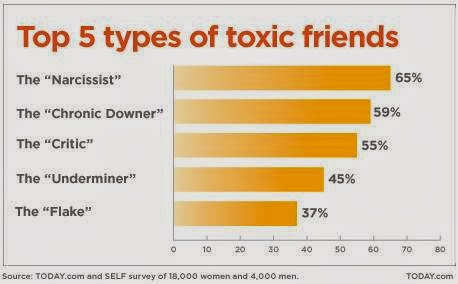 Sounds familiar?
They say a friend indeed is a friend in need. Though having seen friends like Thomas gone toxic over the years, I am starting to think if the contrary is true. I believe that it is far easier to find friends who would stick around when we are in trouble, than friends who would cheer us on when we succeed. The former is what I call “foul weather friends” – people who are there for us only when we are down on our luck – perhaps it makes them feel superior – but turn bitter the moment we start to do well. Foul weather friends lack the most basic ingredient in any human relationship: the capacity to be happy for one other. Thomas is a case in point.
But I can’t pin it all on him. In the age of oversharing and instant posting, peer comparison is intense and endless. Keeping up with the Joneses no longer means having a greener lawn or a bigger garage, but who gets more “likes” on a vacation selfie or restaurant check-in. If life is but a collection of happy moments, then our Facebook walls, where only the good is flaunted and the bad is conveniently left out, would be public chronicles of our fabulous existence. Even though Facebook has only been around for ten years, it has inflicted enough damage on our self-esteem that psychiatrists are advising us to stay off it from time to time for fear of social media depression. The pressure to outdo each other in the virtual world is beginning to poison friendships in the real life.
 Objects on Facebook are less perfect than they appear
Hong Kong is a hotbed for toxic friendships, not least because the lack of personal space is constantly pitting us against each other in a cage match of one-upmanship. That’s why wearable wealth like Rolex watches and Chanel handbags is being rubbed in our faces on a daily basis. But in our concrete jungle, a falling tree doesn’t actually make a sound if there is no one around to hear it. That means neither a new BMW nor a two-karat engagement ring is real unless there is an audience to show off to. That, contrary to what Dionne Warwick has led us to believe, is what friends are for.
What’s more, the city’s rampant materialism is compounded by a peculiar cultural phenomenon: our insistence to hang out with our high school buddies well into our adulthood. Despite all the people who have come in and out of our lives, they are the ones we choose to be our BFFs. Over the years, however, the sharp edges of our childhood images are worn down and sweet memories of time past give way to meaningless competition. Even if we don’t have much in common with our school friends any more, we continue to keep tabs on each other’s successes and failures. Every time we get a news update from an old schoolmate, whether it is the class clown making partner at a law firm or the homecoming queen filing for divorce, we make a mental note to work harder to stay ahead of the curve.
 We love hanging out with high school friends
A toxic social environment breeds toxic friends. While not everyone will turn out like Paris Hilton and Nicole Ritchie, bad friendships are a reality with which many urbanites must wrestle. So what do we do when a friend turns toxic? The most common response is to suck it up and write it off as c’est la vie. Calling a toxic friend out will invariably get ugly, for someone who begrudges us for our achievements will unlikely take a constructive criticism well, much less do something about it. He will invariably turn the tables around and accuse us of doing the same to him. And we will most certainly be caught off guard and start wondering if he has a point, for who among us is without sin – or an occasional black face?
Another reason why we tend not to confront a toxic friend is that doing so will likely put an end to the friendship. It is an outcome most of us try to avoid, not only because we believe it is better to have a frenemy than an outright enemy, but also because we develop a certain level of emotional attachment to our friends no matter how draining the relationship has become. Criminal psychologists call it the “Stockholm syndrome.” It is another term to describe the fear of loneliness. After all, no one enjoys scrambling for company to go to the movies when the weekend rolls around. And so we choose to stay in a hurtful friendship even if it makes us unhappy.
 Some friends are mutually toxic
But not me. After careful deliberation, I came to the conclusion that my friendship with Thomas was beyond repair. I decided to stop reaching out to him and, as if acting on cue, he too stopped reaching out to me. We haven’t seen each other for nearly a year now. Last November, I missed his birthday for the first time in 30 years. Breaking up with anyone – especially a friend I have known and cared about since I was nine years old – is hard, but sometimes it has to be done.
We make friends in different ways, but almost always by serendipity. Friends tend to fall into our laps, like the kid who happens to live next door or the co-worker we run into at the pantry by chance. Just like that, we become friends and start hanging out, bound only by thin threads of common interests and shared experiences. While a few of them will blossom into something rewarding and enduring, others will fail the test of time, not for the lack of a good heart, but because we advance in life at a different pace. In some instances, letting go is the only way to prevent a soured relationship from festering, as it is the case for Thomas and me. Even though the two of us are no longer friends, I will always consider him a good teacher.
 You've got to do what you've got to do

March 2, 2014
Black Wednesday 黑色星期三
I seldom wear black. But I have this black T-shirt I put on two times a year – once for the Tiananmen Square Massacre commemoration on 4 June and the other for the pro-democracy protest on 1 July. Over the years, this T-shirt, the only piece of black clothing I own, has come to symbolize both sadness and discontent.
Since C.Y. Leung moved into the Government House in 2012, I have been wearing my black T-shirt a lot more. If it wasn’t for a mass protest against the national education curriculum, it was for a demonstration in support of HKTV’s bid for a broadcasting license. There seems to be plenty of sadness and discontent to go around these days. Surely enough, yesterday morning I found myself once again rummaging through the closet looking for my protestor’s uniform, this time to defend the future of our press freedom. With a heavy heart, I slipped the black thing over my head and made my way to Tamar.
 A dark day for Hong Kong
* * *
What happened this past Wednesday has shocked the city to the core. Kevin Lau (劉進圖), former editor-in-chief of Ming Pao – one of the city’s major Chinese language newspapers – was attacked by two knifemen on his way to breakfast in Sai Wan Ho. We don’t know which is worse: that Lau was stabbed six times in his back and legs, or that it took place in public and in broad daylight. The assault reeks of the brazenness we expect only in the Mexican drug war or a turf battle between rival gangs in Russia. It makes Hong Kong, one of the safest international cities in the world, look like a lawless backwater.
 Stabbed six times and now a poster boy for press freedom
Violence against the press is not unheard of in our city. There were a handful of high profile incidents in the past two decades. In May 1996, for instance, tabloid magazine publisher Leung Tin Wai (梁天偉) had his left forearm and both thumbs chopped off by attackers right in his office. Two years later in 1998, an equally vicious attack left Albert Cheng (鄭經翰), outspoken businessman and politician, hospitalized for two months. Just last year, Chen Ping (陳平) of iSun Affairs (《陽光時務週刊》), Jimmy Lai (黎智英) of the Apple Daily and Shih Wing Ching (施永青) of AM730 were either attacked or issued death threats. As recently as last month, firebrand radio talk show host Tam Tak Chi (譚得志), better known by his nickname Fast Beat (快必), was roughed up by a group of men outside his studio.
These violent episodes all have one thing in common: the crime never gets solved. Despite offers of multi-million dollar rewards, the bad guys go free and the police investigation goes cold after a few months. Even if the police manage to capture the assailants, perhaps with the help of eyewitnesses and security cameras, they won’t find out who the mastermind behind the attack is, ever. But we can’t pin all the blame on law enforcement. In this day and age, a text message and the target’s headshot are all it takes to order a hit. Anonymity has emboldened the cowardly; technology has enabled the mercenary. That puts journalists – people who make a living upsetting the apple cart – in an ever vulnerable position.
 Albert Cheng, left for dead after a gruesome attack
 When there isn’t much else the police can do, the burden of crime investigation falls on the shoulders of the journalists themselves. Ming Pao staff is currently sifting through dozens of news stories overseen by Kevin Lau before he was let go by the newspaper in January (his termination is a whole other story) to identify what might have gotten the editor in trouble. Among the possible culprits, the one that has generated the most interest is Lau’s exposé about offshore assets stashed away by Beijing’s ruling elite. Written in collaboration with the International Consortium of Investigative Journalists (ICIJ), the story is believed to have ticked off some powerful big wigs up north. So far, the ICIJ has found no evidence linking the attack to the investigative report and so the guessing game continues.
Whoever ordered the hit on Lau, however, probably hadn’t quite thought the whole thing through. If it’s vengeance, then why not take him out altogether but instead let him live to tell the tale? If it’s intimidation, why wait until after the news report has already been published? And why go after an editor who has already left his job? None of it seems to make much sense to us. Then again, the scariest thing about thugs has always been their irrationality and tenuousness of a motive. Sometimes “just because” is reason enough to slash a person with a 12-inch knife.
 Lau's report on the hidden fortunes of the Chinese leadership
Whether it is intended or not, the people behind the brutal attack has made an example of Kevin Lau. The brutality and irrationality of it all has sent chills down the spine of every journalist in the city. For if it was Lau last Wednesday, it could be you and me tomorrow. It is not so much that all investigative reports will invite a deadly reprisal but that they might. It is not so much that reporters must look over their shoulders before breaking a story but that they feel they should. The attack on Lau has given journalists one more thing to think about before they hit that “send” button, something that they didn’t need to think about heretofore. The mere possibility of violence has cast a dark shadow over their desks. And so to those who question what the stabbing of one man has got to do with the press freedom of the entire city – I won’t name any names – and to those who wonder why “expert analysts” are needed to get to the bottom of the heinous crime – they know who they are – here is their answer.
* * *
Yesterday’s rally began at the government complex in Tamar and ended at the nearby police headquarters. There were thousands of participants, all dressed in black, many of them reporters and journalism students. They carried placards bearing the words “They can’t kill us all,” a phrase borrowed from the infamous Kent State University shootings in 1970 in one of the darkest chapters in 20thCentury American history. The choice of words is apt, for last Wednesday may well be one of the darkest days in post-Handover Hong Kong. And so there I was, once again in my black T-shirt, chanting slogans and praying for Lau’s recovery, all the while looking at a city that suddenly felt a bit foreign to me.
 A sea of black in Tamar
February 13, 2014
Funny Valentine 可笑的情人
Valentine’s Day is, for many, the most dreaded holiday on the calendar. Those who are already spoken for go along with it and pretend to enjoy it. For 24 hours, they act as though their love were as sweet as Godiva chocolates and their lives as rosy as an Agnes B flower bouquet. Singles, on the other hand, are relegated to spending the night alone at home with a tub of Häagen-Dazs in front of the television or meeting up with other singles to commiserate the way the years have slipped through their fingers. No one wants to be a wall flower or shrinking violet.
 The obligatory heart-shaped chocolate box
Valentine’s Day is a quintessential Hallmark holiday. It was conceived, created and blown out of proportion by florists and chocolate makers. Originally dedicated to the Valentine of Rome, a martyred priest in the Middle Ages, the holiday was later removed from the Christian calendar because there wasn’t much to celebrate. Historically, the day had nothing to do with either love or romance, until English poet Geoffrey Chaucer associated the fateful day with a pair of love birds in an obscure 15th Century poem. Chaucer could never have imagined the magnitude of harm he would inflict on mankind, nor could he have guessed that his words would lead to cash registers around the world ringing nonstop on the horrid winter day.
 Patron saint of St. Valentine
Different cultures celebrate Valentine’s Day in their own unique way. While the Western world sticks to the chauvinistic tradition of men buying women trinkets, most Arab countries ban Valentine’s Day merchandise as they are considered too Christian for comfort. In Japan and Korea, the gift giving customs are reversed. Women are obligated to give chocolates to not only their other halves but also every male coworker in the office. A month later on March 14, dubbed the “White Day,” the tables are turned and men reciprocate with bigger gifts. Valentine’s Day is such a huge industry in Japan that February 14 accounts for half of the country’s annual chocolate sales.
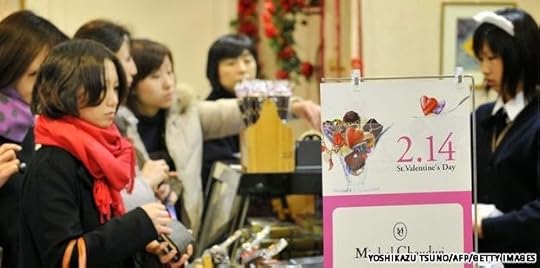 It's big business in Japan
In Hong Kong where everything is measured in dollars and cents, lovers take Valentine’s Day celebrations to a whole new level. The clock has barely struck 9:00 AM when the first flower delivery arrives in the office at the third cubicle in the first row – two dozen long stem roses from Jacqueline’s doting husband, one for each year of marriage. Then one delivery after another, expensive bouquets go to Mary, Susie, Cindy and Queenie, each one bigger and more impressive than the last. The intra-office popularity contest continues throughout the morning. The winner, crowned the Mrs. with the Mostest, will get a day of bragging rights in the department. The losers – ladies who haven’t received anything by lunch time – will keep their heads down for the rest of the day and make excuses for their negligent husbands or imaginary boyfriends. That explains why a large number of men are said to be “on a business trip” every 14 February.
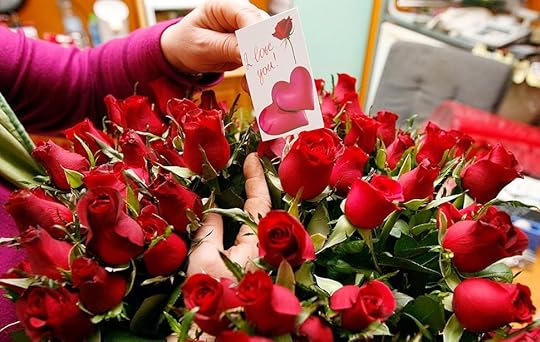 Maximum bragging right
Another funny – and expensive – aspect of Valentine’s Day in Hong Kong is dining out. Restaurants are booked solid weeks in advance. Seating by the window must be reserved three months ahead of time. If a miracle happens and you manage to find a table, you are handed the special Valentine’s set dinner menu designed to trap silly couples who are too smitten to notice the steep prices. Who could have guessed that mushroom soup with rose petals and heart-shaped sirloin on February 14 would cost five times more than mushroom soup without rose petals and regularly-shaped sirloin just the day before? Here is a piece of advice: if you must celebrate this silly holiday, then do your wallet a favor and eat out the week before.
 Pay more for less
Valentine’s Day is as contrived as it is an unnecessary source of stress for everyone, single or otherwise. Until we realize that gift giving is only sweet when it is unexpected, all those obligatory flowers and chocolates are wasted in exchange for a fleeting moment of self-validation. Nevertheless, Valentine’s Day does serve as an important reminder that relationships are based on sacrifices and mutual gratification. If you look at it that way, maybe the holiday does have some meaning after all.
______________________
The obligatory heart-shaped chocolate boxValentine’s Day is a quintessential Hallmark holiday. It was conceived, created and blown out of proportion by florists and chocolate makers. Originally dedicated to the Valentine of Rome, a martyred priest in the Middle Ages, the holiday was later removed from the Christian calendar because there wasn’t much to celebrate. Historically, the day had nothing to do with either love or romance, until English poet Geoffrey Chaucer associated the fateful day with a pair of love birds in an obscure 15th Century poem. Chaucer could never have imagined the magnitude of harm he would inflict on mankind, nor could he have guessed that his words would lead to cash registers around the world ringing nonstop on the horrid winter day.
 Patron saint of St. Valentine
Different cultures celebrate Valentine’s Day in their own unique way. While the Western world sticks to the chauvinistic tradition of men buying women trinkets, most Arab countries ban Valentine’s Day merchandise as they are considered too Christian for comfort. In Japan and Korea, the gift giving customs are reversed. Women are obligated to give chocolates to not only their other halves but also every male coworker in the office. A month later on March 14, dubbed the “White Day,” the tables are turned and men reciprocate with bigger gifts. Valentine’s Day is such a huge industry in Japan that February 14 accounts for half of the country’s annual chocolate sales.
 It's big business in Japan
In Hong Kong where everything is measured in dollars and cents, lovers take Valentine’s Day celebrations to a whole new level. The clock has barely struck 9:00 AM when the first flower delivery arrives in the office at the third cubicle in the first row – two dozen long stem roses from Jacqueline’s doting husband, one for each year of marriage. Then one delivery after another, expensive bouquets go to Mary, Susie, Cindy and Queenie, each one bigger and more impressive than the last. The intra-office popularity contest continues throughout the morning. The winner, crowned the Mrs. with the Mostest, will get a day of bragging rights in the department. The losers – ladies who haven’t received anything by lunch time – will keep their heads down for the rest of the day and make excuses for their negligent husbands or imaginary boyfriends. That explains why a large number of men are said to be “on a business trip” every 14 February.
 Maximum bragging right
Another funny – and expensive – aspect of Valentine’s Day in Hong Kong is dining out. Restaurants are booked solid weeks in advance. Seating by the window must be reserved three months ahead of time. If a miracle happens and you manage to find a table, you are handed the special Valentine’s set dinner menu designed to trap silly couples who are too smitten to notice the steep prices. Who could have guessed that mushroom soup with rose petals and heart-shaped sirloin on February 14 would cost five times more than mushroom soup without rose petals and regularly-shaped sirloin just the day before? Here is a piece of advice: if you must celebrate this silly holiday, then do your wallet a favor and eat out the week before.
 Pay more for less
Valentine’s Day is as contrived as it is an unnecessary source of stress for everyone, single or otherwise. Until we realize that gift giving is only sweet when it is unexpected, all those obligatory flowers and chocolates are wasted in exchange for a fleeting moment of self-validation. Nevertheless, Valentine’s Day does serve as an important reminder that relationships are based on sacrifices and mutual gratification. If you look at it that way, maybe the holiday does have some meaning after all.
______________________
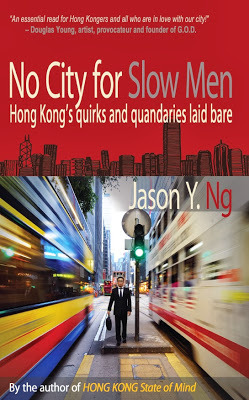
This essay is taken from No City for Slow Men, published by Blacksmith Books, available at major bookstores in in Hong Kong and at Blacksmith Books.

January 31, 2014
About the Author 關於作者
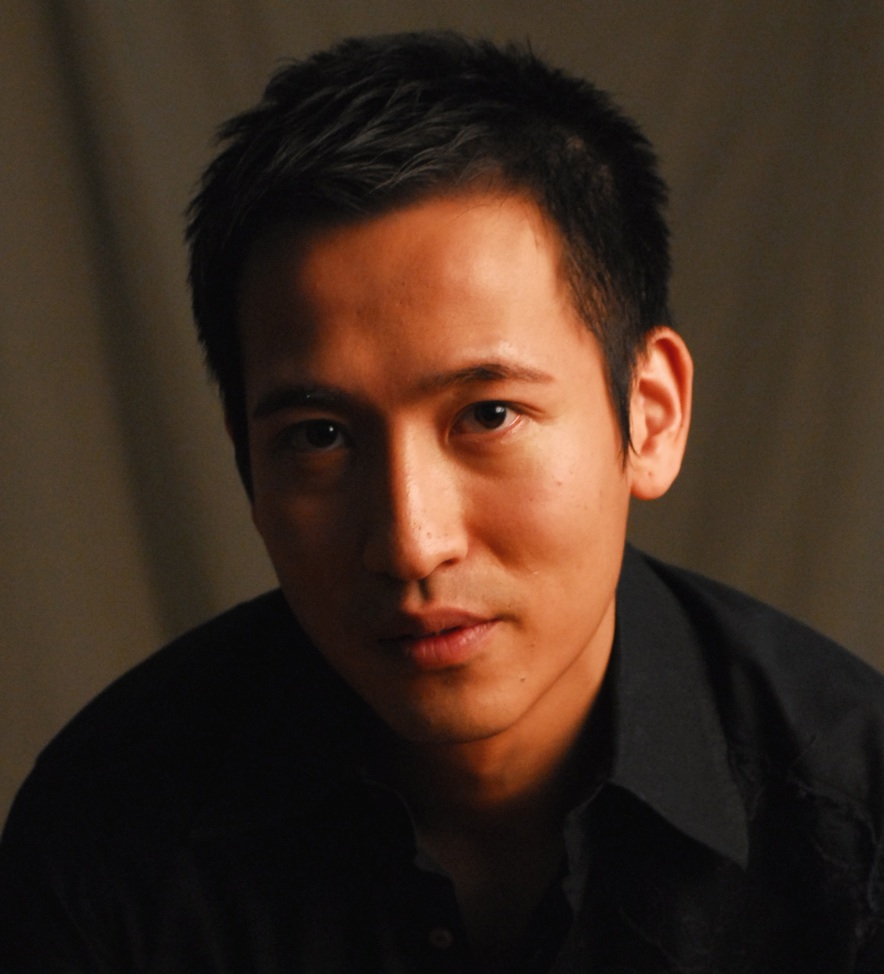
Born in Hong Kong, Jason Y. Ng is a globe-trotter who spent his entire adult life in Italy, the United States and Canada before returning to his birthplace to rediscover his roots. He is a full-time lawyer, a magazine columnist and a resident blogger for the South China Morning Post (SCMP). His social commentary blog As I See It and leisure review site The Real Deal have attracted a cult following.
Jason is the bestselling author of HONG KONG State of Mind (2010) and No City for Slow Men (2013). His short stories have appeared in various anthologies. Jason has been featured at the Hong Kong Book Fair and the Hong Kong International Literary Festival. He has been profiled in TimeOut magazine, the SCMP, various other publications and numerous overseas blogs. Jason speaks frequently at local universities and art festivals.
In addition to being a writer, Jason is an English teacher, classical singer, model and amateur photographer and interior designer. His other interests include alpine skiing, hiking and classical music.
Jason is also a social activist. He is an ambassador for Shark Savers' FINished With FINs campaign and an outspoken supporter of foreign domestic helpers, new immigrants and other minority groups in Hong Kong.
Jason’s day job and personal interests make him a frequent traveler. Over the years, he has visited over 100 cities in more than 35 countries. He speaks English, Cantonese and Mandarin and has working knowledge of Italian and French.
In 2011, Jason was bestowed the title "Man of the Year" by Elle Men magazine for his diverse interests and balanced lifestyle. Later that year, he was featured in the SCMP Magazine for his travel exploits. In 2013, Jason was invited to be the keynote speaker at the Harvard Club Book Prize award ceremony.
Jason lives in Hong Kong and can be contacted at info@jasonyng.com. For more, visit www.jasonyng.com.
* * *
Jason makes frequent appearances on the literary circuit and university campuses. If you would like him to speak at your school or organization, please contact him by email.
January 30, 2014
Media Attention + Upcoming Events 媒體關注 + 最新動向
 Speaking at Harvard Club Book Prize 2013
Featured in The SunTitle: "Defender of Migrant Workers' Rights"Issue: 1 March 2014
Local Personality to Promote Hong Kong at the HK Tourism Board Public Relations Summit 2014Venue: SohoDate: 4 March 2014
Interview with Fermi Wong, Founder of Unison HKTopic: Minority students falling through the cracks in the local education system
Date: March 2014
Official Book Launch of No City for Slow MenDate: April 2014Venue: Bookazine, Lynhurst Terrace
Q&A with Students at Hong Kong University Faculty of Law Date: April 2014Venue: HKU, Pokfulam
Guest Speaker at Yew Chung Community CollegeTopic: HONG KONG State of Mind Venue: YCCC, Kowloon BayDate: April/May 2014
If you would like Jason Y. Ng, author of No City for Slow Men and HONG KONG State of Mind, to speak at your school or organization, please contact him at info@jasonyng.com.
* * *
RECENT ENGAGEMENTS/EVENTS
2014 (to date)
Guest Speaker at Hong Kong University Faculty of Arts
Title: "From Blog to Book"
Date: 18 February 2014Time: 6:00 pmVenue: HKU, Pokfulam
Second Appearance on Show: "Asian Threads" with presenter Reenita Malhotra HoraDate: 1 February 2014
Appearance on RTHK Radio3 to Discuss New BookShow: "Around Town" with presenter Andrew DembinaDate: 28 January 2014
Short Stories Going North and Going South Featured in Beijing-based Writers' Forum The AnthillDate: 24-25 January 2014
Featured in TimeOut MagazineTitle: "Pick Up the Pace"Issue: 22 January 2014
"Maid in Hong Kong - Part 3" Featured in Philippine Newspaper The SunIssue: 16 January 2014
Featured in Cover Story in the SCMP's Young PostTitle: "Mr. Do-It-All"Date: 16 January 2014
2013
Featured Author at "Meet the Authors on a Tram" Event by DETOUR Classroom
Venue: Repurposed tram departing from North PointDate: 7 December 2013
Roll-out of Endorsement of "I'm FINished with FINS" CampaignDate: 28 November 2013
Book Signing Event at Bookazine
New Book: No City for Slow MenVenue: Bookazine, 3/F, Prince's BuildingDate: 28 November 2013
Author-Panelist at Hong Kong International Literary Festival 2013
Venue: City University, Run Run Shaw Creative Media CentreDate: 10 November 2013
Spokesperson for "I'm FINished with FINS" Campaign
Date: October 2013
MANIFESTO and Jason's Column "The Urban Confessional" Gone GlobalNews: Hong Kong's only unisex lifestyle magazine is being stocked in bookstores around the world, including the U.S., Europe, Latin America and Australia
Date: September 2013
Media launch for Hong Kong International Literary Festival 2013
Venue: Fringe Club
Date: 24 September 2013
Guest Speaker at "Tastemakers" Fall 2013 Event Organized by Hogan and Manifesto
Venue: Pacific Place/ElementsDate: 12-13 September 2013
Featured in AGI China of Leading Italian News Agency Agenzia Giornalistica Italia
Date: August 2013
Guest Writer at British Council's Writer's Brunch
Venue: Chez Patrick, WanchaiDate: 21 July 2013
Quoted in Influential Italian Literary Magazine Nuovo Argomenti
Title: Bruce Lee Blues
Date: 20 July 2013
"Maid in Hong Kong - Part 2" Featured in Philippine Newspaper The Sun
Issue: 16 July 2013
Guest Speaker at Hong Kong Book Fair 2013 Forum on HK CultureTopic: Three Views on Documenting Hong Kong in EnglishVenue: HK Convention & Exhibition Centre, WanchaiDate: 18 July 2013
Featured in Ming Pao Weekly 明報周刊
Topic: Anglophone literature and its impact on HK identity
Date: 13 July 2013
Featured in HKTDC's Online Weekly HK TraderTitle: In Focus: Literary Hong Kong
Date: 10 July 2013
Guest Speaker at Hong Kong's First "Asia on the Edge" ConferenceTopic: Dialogue on Vision and Challenges with Publishers, Editors and Authors
Venue: The Fringe Club Ice Vault, Lower Albert RoadDate: 6 July 2013
Guest Speaker at HKTDC "Cultural July" SeminarTopic: How to become a blogger/writer in Hong Kong
Venue: Pacific Coffee Emporium, Causeway BayDate: 3 July 2013
"Maid in Hong Kong - Part 1" Featured in Philippine Newspaper The Sun
Issue: 1 July 2013
Guest Speaker at HKTDC "Cultural July" SeminarTopic: How to become a blogger/writer in Hong Kong
Venue: Kowloon Public Library, Ho Man TinDate: 30 June 2013
As I See It and The Real Deal Featured in the June Issue of GafencuTitle: Online and On Topic
Date: June 2013
Became Member of the Foreign Correspondents' Club Hong KongVenue: The FCC, Lower Albert Road
Date: 4 June 2013
Panel Speaker at "Transforming the Parasite"Topic: Maid in Hong Kong, the social and cultural impact of the importation of domestic helpers on both the host and the migrant
Venue: Baptist University, Kowloon Tong
Date: 3 June 2013
Featured in The Clickbook by Filipino Blogger/Activist RJ BarreteTitle: How you do it
Venue: Four Seasons, Central
Date: 1 June 2013
Keynote Speaker at Harvard Club Book Prize 2013
Topic: How to live a purposeful life
Venue: Education Bureau, Kowloon TongDate: 10 May 2013
Third Printing of HONG KONG State of Mind
Date: 25 April 2013
Guest Speaker at the Ladies' Recreation Club
Topic: book club discussion of HONG KONG State of Mind
Venue: The Ladies Recreation Club, Old Peak Road
Date: 18 April 2013
Featured in The SCMP Education Post
Title: Balancing work and outside interests
Venue: Four Seasons, Central
Date: 20 March 2013
Featured in German blog "Lehrzeit"
Title: Hong Kong's education system and intellectual lethargy
Date: 8 February 2013
2012
Book Signing at Blacksmith Book Booksigning Extravaganza
Venue: Bookazine, Prince's Building, Central
Date: 26 November 2012
Became Resident Blogger at SCMP.com
Start date: September 2012
Became Contributing Writer for The SCMP Encounters travel magazine and LifeSTYLE/Getaways supplementsStart date: June 2012
Guest Speaker at Savannah College of Art and Design (SCAD)Topic: HONG KONG State of Mind
Venue: SCAD, Cheung Sha WanDate: 24 May 2012
Interviewed by Finnish Radio Station GB Times
Venue: Four Seasons, Central
Date: 23 May 2012
Guest Speaker at Savannah College of Art and Design
Topic: HONG KONG State of MindVenue: SCAD, Cheung Sha WanDate: 8 March 2012
Launched Second Blog The Real DealDate: 25 February 2012
Release of As We See It, the 2012 Anthology by the HKWC
(with two short stories, "Going North" and "Going South," by Jason Y. Ng)
Venue: The Globe, Soho
Date: 12 March 2012
2011
Launched Official Website
Date: 31 December 2011
Featured in the December issue of The SCMP Post Magazine
Title: Wanderlust
Date: 2 December 2011
Launched Column "The Urban Confessional" in MANIFESTO magazine
Date: September 2011
Second Printing of HONG KONG State of MindDate: 20 August 2011
Named "Man of the Year" by Elle Men magazine
Date: May 2011
Featured in White & Case Alumni Newsletter
Title: Alumni spotlight on Jason Y. Ng
Date: April 2011
Official Book Launch of HONG KONG State of Mind
Venue: Bookazine, IFC Mall, Central
Date: 5 March 2011
Interviewed by Venue: RTHK, Kowloon Tong
Date: 18 January 2011
2010
Release of HONG KONG State of Mind
Date: 25 December 2010
Became Contributing Writer for Men's Folio magazine
Start date: May 2010
2008
Launched First Blog As I See It
Date: 4 November 2008
January 22, 2014
Helpers be Helped – Special Chinese New Year Double Issue 救救外傭 – 春節雙刊
The images are gruesome and the details are chilling. A woman held captive in a residence has been starved and beaten beyond recognition. Her teeth are chipped, cheekbones fractured and her limbs covered with cuts and burn marks. It sounds like the Ariel Castro kidnappings in suburban Cleveland or the Brixton Bookshop abduction in Lambeth, England – except it is not. It all happened in Tseung Kwan O, a densely populated community of high-rise residential blocks and large shopping centers. It was there 23-year-old Indonesian domestic helper Erwiana Sulistyaningsih was allegedly tortured at the hands of her Hong Kong employer for eight months. She was not paid a cent.
 Erwiana, before and after her eight-month stay in Hong Kong
By now the story has captured the attention of the entire city – and far beyond. Not since Edward Snowden checked into the Mira Hotel last summer had so much spotlight been thrown on the not-so-Fragrant Harbour. Beneath the media frenzy and tabloid-style coverage, however, is the sad reality that Erwiana is not alone. In the past six months, a spate of similar abuse cases have come to light, all of them involving Indonesian workers who have a reputation for being soft-spoken and easily intimidated. Last September, for instance, a Hong Kong couple was jailed for falsely imprisoning their maid, beating her with a bicycle chain and scalding her with an iron. Just last week, a Chinese University professor was arrested for assaulting her 50-year-old helper. To get a sense of how common these abuse cases are, look no further than Bethune House, a shelter for foreign domestic workers that handles hundreds of assault cases every year. A recent survey by Mission for Migrant Workers found that nearly one in five domestic helpers in Hong Kong had been physically abused.
At first glance, it seems implausible that prolonged cases of domestic violence and false imprisonment can go unreported in a crowded city like Hong Kong. Many wonder why victims like Erwiana put up with the abuse instead of running away the first chance they get. The answer is simple: domestic helpers in Hong Kong are trapped in a system that is stacked against them. Among the many flaws in our migrant worker policy and its execution, none puts the domestic helper in a more vulnerable position than the dual evil of unlawful agency fees and the 14-day deportation rule.
 The alleged abuser, 44-year-old housewife Law Wan-tung, in police custody
Employment Agency Fees
By law, employment agencies in Hong Kong are permitted to charge up to 10% of the migrant worker’s minimum monthly pay, or HK$401 (US$52). Back in their home countries, there are laws regulating recruitment and training fees. What happens in practice, however, is a different matter. Agencies on both ends routinely extort exorbitant amounts from migrant workers who are desperate for a job placement. The going rate in Hong Kong is HK$28,000 (US$3,600), roughly seven times the worker’s monthly salary and 70 times over the legal limit. Erwiana allegedly paid her agency HK$18,000 (US$2,300), an amount considered a bargain by the community’s standard. To avoid getting caught, crafty employment agencies accept only cash and never issue receipts.
Migrant workers pay these hefty fees by borrowing from friends and family, but more often, from moneylenders in Hong Kong. The five-figure principal, plus interest accruing at a double-digit rate (sometimes as high as 60%), forces the helper to turn over nearly all of her salary for months, sometimes even years, to pay off the debt. Illegal agency fees are the leading cause of distress for foreign domestic workers in Hong Kong, as well as the main reason why abused women like Erwiana choose not to flee from their House of Horrors. For once they escape, they will be out of a job and their mounting debt will go unpaid. Debt collectors and their harassment tactics will follow. One nightmare will simply give way to another.
 Erwiana's employment agency
All that is happening under the nose of our government. Despite repeated pleas from the migrant worker community to crack down on excessive agency fees, law enforcement turns a blind eye. After all, there are billion-dollar drug trades to bust and weekly anti-government protests to rein in. Who would bother with petty consumer disputes between foreign maids and their agencies? In the meantime, bureaucrats go on renewing business licenses held by unscrupulous employment agencies and moneylenders year after year. In fact, if Time magazine and the Associated Press hadn’t picked up Erwiana’s story, would Labour Secretary Matthew Cheung have just let the police handle the incident as a common assault case and not have said a word about punishing employment agencies?
 The Labour Secretary finally said he would
 do something about bad employment agencies
14-day Reemployment Rule
By law, foreign domestic workers must leave Hong Kong within 14 days after their employment contract is terminated, unless a new placement is secured and a new work visa issued. The rule effectively evicts from the city any migrant worker who leaves her job, as the new work visa alone takes six weeks to process. The two-week provision is designed to achieve two objectives. First, the government wishes to deter employer-shopping and job-hopping. Even though it is perfectly normal for everyone else in Hong Kong to look for a better job and jump ship every now and then, it is not so for a migrant worker. Maids who quit and work for another home are looked upon as greedy and irresponsible.
The second objective is as unspoken as it is ignoble: to put arbitrary restrictions on the domestic helper’s stay to distinguish them from other expatriates. The distinction can have far-reaching consequences. In March 2013, the Court of Final Appeal ruled that foreign domestic workers, unlike fellow expatriates who work at big banks and law firms, are not entitled to permanent residency in Hong Kong regardless of the length of their stay. Focusing on the 14-day reemployment rule, the city’s highest court found the residence of a domestic helper “highly restrictive” and therefore not “ordinary” enough to meet the constitutional requirements for permanent residency.
As a result of the 14-day rule, migrant workers who switch jobs must live abroad while their new work visas are being processed. That’s why there are now boarding houses all over Macau and Guangdong where maids-in-waiting take up temporary residence in horrid conditions. For abused helpers like Erwiana, the risk of not finding alternative employment, the threat of deportation and the peril of borrowing more money for another round of agency fees is enough for her to bite the bullet and remain in the torture chamber.
 "Please leave the city in 14 days. Thank you."
Other Systemic Failures
The mandatory live-in rule prohibits the domestic helper from living anywhere other than her employer’s home. The rule, based on racist and sexist assumptions about South East Asian women, is designed to prevent prostitution and other illegal activities when they are off duty. The irony is that Hong Kong is just about the least qualified place in the world to impose a cohabitation requirement. In fact, the same survey by Mission for Migrant Workers found that 30% of helpers are told to sleep in kitchens, bathrooms, hallways and closets.
Each time the government is asked to repeal the live-in rule, it will hide behind the same party line: doing so would exacerbate the city’s housing shortage and increase the cost of domestic help. It is a roundabout way of telling migrant workers to suck it up and “take one for the team.” Contrary to the government’s claim, however, killing the live-in rule is unlikely to unleash 300,000 maids into our streets, for the vast majority of helpers will choose to live with their employers to avoid high rent and a lengthy commute even if the rule is abolished. Instead, the policy change will give domestic helpers the option to seek an alternative living arrangement and, in Erwiana’s case, sufficient physical space to mitigate the chance and frequency of violence.
 It's not uncommon to put the maid in the toilet
The United Nations defines human trafficking as the “recruitment, transportation, transfer, harboring of persons by the use of force or other forms of coercion… for the purpose of exploitation.” Nearly every developed country has enacted anti-human trafficking (AHT) legislation in an effort to eliminate sex exploitation and forced labor. The latter covers involuntary servitude, debt bondage and restriction of movement, terms that resonate with many domestic helpers in Hong Kong. Incidentally, in August 2013, a Hong Kong man living in Vancouver was sentenced by a Canadian court to 18 months in prison for human trafficking. The accused was caught paying his Filipino maid (whom he had brought from Hong Kong) below the local statutory minimum wage and making her work seven days a week, conditions that were mild compared to what Erwiana had allegedly experienced.
Unfortunately, Hong Kong does not have an AHT statute that imposes stiff fines and heavy prison terms to deter forced labor. There is nothing in the law book that would slap an abusive employer with anything more than a “wounding” or “intimidation” charge or punish non-compliant employment agencies beyond revoking their business licenses. The absence of comprehensive AHT laws is coupled with a police force that thinks the only form of human trafficking is prostitution. In the 2013 Trafficking in Persons Report, the U.S. State Department wrote extensively about the foreign domestic worker issues in Hong Kong and gave the city a “Tier 2” rating for “securing no forced labor convictions… against abusive employers... or employment agencies [that] have charged fees in excess of Hong Kong law.” The report is downloadable from the State Department website and for all the world to see.
 Available at www.state.gov
* * *
It has been four decades since the first batch of foreign domestic helpers arrived in Hong Kong from the Philippines. Since then, our economy has taken off but their status and working conditions have gone the other direction. Their grievances about domestic violence and unlawful business practices have fallen on seven million pairs of deaf ears. We either brush them off as “isolated incidents” or, as some have shamelessly suggested, turn to even more docile workers from Bangladesh and Myanmar. But enough is enough. The time to take a hard look at our migrant worker policy is now.
Erwiana Sulistyaningsih has been failed by our city in every way: by her employer and employment agency, by our law enforcement and policymakers. Every safeguard in the system has failed, all the way to the end when she fled the city for medical help, when immigration officers at the airport noticed her severe injuries but chose to do nothing. There are no words to describe the depth of her suffering or the breadth of our collective callousness. In the same way many Hong Kongers are demanding Philippine President Benigno Aquino III to apologize for the Manila hostage crisis in 2010, the migrant worker community in Hong Kong will be justified in asking C.Y. Leung for an apology for all the systemic failures that have led to Erwiana’s plight.
 The city owes them an apology
January 17, 2014
Hunger Game 飢餓遊戲
Every Chinese New Year I buy myself a tangerine tree for good luck. Ripe fruits fallen to the ground will mould and turn white and green within 36 hours.
Every Thanksgiving I roast a turkey big enough to feed twelve. Leftovers taste better the next day but will spoil by the week’s end even when kept in the fridge.
 Food is supposed to spoil
The unifying theme of these two unrelated household anecdotes is that unprocessed food does not last. Spoilage is part of nature’s metabolism. So how is it possible that the Valencia oranges on my kitchen counter look exactly the same as they did five weeks ago at the store, or that the expiration date stamped on a can of luncheon meat reads “March 2018”? I can’t help but wonder what really is in our food.
Our appetite for things that taste better, look nicer, last longer and cost less, from breakfast cereal to meat products and fresh produce, is insatiable. Consumer demand has spurred the growing use of pesticides, flavorings, colorings and preservatives in the food industry. While globalization requires mass-produced food to withstand long travels and lengthy storage, increased competition from world trade means that the dual goal of taste and shelf life must be achieved at the lowest cost possible. Food safety will have to take a back seat. Every now and then we hear news stories of E. coli or salmonella outbreaks caused by contamination in the food production chain. And every so often a medical journal will warn us of the danger of BPA, BHA and other industrial chemicals found in packaged food.
 What's in your food?
America is a pioneer and leader in many things: blockbuster movies, smart phones and, for better or for worse, processed food. The Fast Food Nation has given the world not only McDonalds and Campbell Soup, but also an inventive panoply of genetically modified crops like herbicide-resistant soybeans and insect-killing corn. To feed 300 million supersized stomachs, the American animal farm has been transformed into a Detroit auto plant. In a typical “factory farm,” livestock is confined in overcrowded feedlots that stretch for miles. Poultry and cattle are fed antibiotics and growth hormones to reduce the spread of disease and speed up production.
Moral qualms over animal cruelty aside, the use of undesirable chemicals in intensive animal farming and the rise of medication-resistant bacteria raise serious concerns over the long-term effects on human health, such as early puberty in pre-teen girls as a result of exposure to growth hormones. None of that, however, prevents the practice from being replicated on an even larger scale in emerging markets around the world, including India and Brazil, the world’s largest exporters of beef and chicken, respectively.
 That's the way farm animals are raised these days
But all those Frankenstein foods and jam-packed industrial farms in America pale in comparison to the stomach-turning food safety scandals in China. The world’s second largest economy is also a 21st Century dystopia, where unscrupulous businessmen are willing to sell anything to make a quick buck. The long list of unsafe food products in China includes rice contaminated with cadmium, rat meat sold as mutton and pork that glows in the dark because of phosphorescent bacteria.
In the Wild Wild East, the food industry is made up of equal parts ingenuity, audacity and atrocity. The infamous “ditch oil” (地溝油), for instance, used by fine restaurants across the country, is made by carefully distilling discarded oil collected from the sewers. Fake eggs that bounce like ping pong balls are manufactured using gelatin and paraffin, each handcrafted with an artist’s sensibility and a surgeon’s precision. If only they put their talent to better use, China might have come up with its own iPhone and iPad.
 Extra virgin ditch oil
The watershed moment in China’s tattered food safety record came in 2008, when tainted baby formula sickened nearly 300,000 infants and killed at least six. Sanlu (三鹿), a state-owned dairy product manufacturer and one of the most trusted names in the food business, was caught using the industrial chemical melamine to boost its milk powder’s protein content to meet government nutritional standards. The company filed for bankruptcy later that year.
Since the Sanlu scandal made international headlines, the Chinese leadership has made repeated promises to crack down on illegal business practices and make food safety a national priority. Six years on, however, tainted milk products continue to resurface at smaller retail chains in fits and starts. In the Chinese food business, catching the bad guys is more than just a cat-and-mouse game – it’s more like playing Whac-A-Mole at the arcade.
 One of the 300,000 "stone babies"
An unbridled market economy, lax regulatory oversight and widespread corruption have created a perfect storm for the New China. Whereas air pollution may take years to take its toll and we won’t feel the effect of shoddy building construction until the next earthquake, the impact of unsafe food products is much more immediate and noticeable. And while government authorities are slow to rein in the food industry, responses from ordinary citizens are much swifter. In cities across the nation, citizens avoid eating out whenever they can, for fear of dubious cooking oil and meat products. They only shop at big supermarket chains and prepare their own meals at home. These changes in dining and shopping habits bring about other social ramifications. That only the elite can afford pricy organic or imported food is fuelling a growing sense of social injustice.
Increasingly, people in China – even those in big urban cities – are starting to grow their own food. A Mainland Chinese friend of mine told me that his parents who live in a residential area 20 minutes from Beijing have formed farming communes with their neighbors. They grow tomatoes, pumpkins and melons in makeshift farmland converted from public lawns within the housing complex. The very place where they used to practice tai chi in the morning has been dug up for seed planting. These urban farms do not provide nearly enough food to support an entire neighborhood, but many would rather eat less than get violently sick. And so it appears that China has come full circle in a mere generation. People used to starve before economic reforms lifted hundreds of millions out of poverty. Decades later, citizens are suffering from starvation of a different kind, caused not by a lack of resources but an absence of civic morality.
 Urban farms are popping up in big Chinese cities
The ripple effect of China’s food safety crisis is felt far and wide, but none more intensely than here in Hong Kong, where nearly all of our food is imported and 90% of it comes from the Motherland. 70% of our drinking water is purchased from nearby Guangdong province. Gone are the days when the island was a self-sufficient fishing village capable of feeding itself. Today, there are less than 7 square kilometers of arable farmland – roughly 0.5% of the city’s area – occupied by a dwindling base of aging farmers. Each time we hear another food scandal in China, we are reminded of the city’s vulnerability to the decline in business ethics up north.
Until the Chinese bureaucrats get their act together to strengthen food safety oversight, Mainland Chinese and Hong Kongers alike continue to play Russian roulette at every meal. There is very little that an ordinary citizen can do to turn the tide – for as much as we try to check the origin of every food item we buy at the market, each time we eat out we are at the mercy of the restaurant that will alwa
 We have fewer choices than ever
* * *
This article previously appeared in the January/February 2014 issue of MANIFESTO magazine under Jason Y. Ng's column "The Urban Confessional."
 As printed in MANIFESTO
December 23, 2013
Kong vs. Hong Kong 移民對居民
The Court of Final Appeal, the city’s highest court, handed down an unpopular judgment two weeks ago. Five justices unanimously ruled that the government’s seven-year residency requirement for welfare application is unconstitutional. In Hong Kong, “welfare” is formally known as Comprehensive Social Security Assistance (CSSA), which averages around HK$3,000 (less than US$400) per month per applicant. The meager assistance is meant to be a bare minimum to give the unemployed or the unemployable a subsistence living.
 They got it right this time
Reactions to the court’s landmark decision poured in almost immediately. Social advocacy groups hailed the ruling as a victory in welfare rights for not only the immigrant community but all of Hong Kong. The rest of the city was not as thrilled. Many Hong Kongers see the lowering of the residency threshold as a threat to their existence, their tax dollars now robbed by newcomers. Netizens on Facebook and Golden Forum (高登), an online chat room and a windsock of public opinion, once again evoked the “locust” metaphor and accused Mainlanders of leeching off our welfare net. The Liberal Party (自由黨), run by plutocrats who are pro-business and anti-social programs, was quick to stoke the fire and criticize the judges for legislating from the bench. There were even calls for a “legal interpretation” by Beijing to overturn the court ruling.
 The few good men who helped Kong
The lawsuit against the government was filed by Yunming Kong (孔允明), a 56-year-old Mainland immigrant whose Hong Kong husband died the day after she arrived in the city. Soon thereafter, the Housing Authority repossessed her late husband’s public housing apartment. Homeless and jobless, Kong applied for CSSA but her application was denied because she failed the residency test.
Kong’s case is not atypical. Every year, tens of thousands of Hong Kong men cross the border in search of Mainland brides. Once married, the husbands will apply for immigration papers to have the wives join them in Hong Kong. Adult females now account for 65% of all new immigrants granted a “one-way permit” (單程證) to enter the city. For the most part, they depend on their local husbands until the latter either die or file for divorce. It’s not easy for widows and divorcées to find work in Hong Kong, especially since their Cantonese is limited and some have children to look after. Government assistance is often their only way out.
 The claimant Kong Yunming, now 64
The Basic Law, Hong Kong’s mini-constitution, guarantees all residents, old and new, the right to social welfare. Article 36 stipulates that the access to government assistance be granted “in accordance with law.” The qualifier is broad and vague, and perhaps deliberately so, to give judges latitude to decide what is equitable. As is the case for many constitutional cases, the justices hearing Kong’s claim relied on the “proportionality test” to weigh the impact of a government policy on the claimant against the public interests it serves. In 2004, while the city was still reeling from the ravage of SARS, Tung Chee-Hwa’s government raised the CSSA application threshold from one year to seven years with the explicit policy goal to cut public spending. In determining whether the increased residency requirement should be struck down or at least reinstated to its pre-2004 level, the justices struck a balance between Kong’s survival and the long term sustainability of the welfare net. What ended up tipping the balance in favor of the claimant is that the policy change, by the government’s own admission, has yielded “insignificant” and “immaterial” savings in the past 10 years. On the other hand, its impact on welfare applicants like Kong is disproportionately great.
 Protestors against the court ruling
Any law student can see that Kong Yunming vs. The Director of Social Welfare is a slam dunk, a no-brainer. The legal analysis becomes even clearer when Article 36 is read in conjunction with the rest of the Basic Law and the Bill of Rights. The only surprise is that the regressive policy change targeting a specific segment of society went unchallenged back in 2004.
But none of that matters to the local population, who tend to lose their sense of right and wrong whenever their financial interests are – or appear to be – at stake. We have seen that “us-versus-them” mentality earlier this year when the Court of Final Appeal denied domestic helpers the right to seek permanent residence. Whether it is a Philippine maid or Mainland immigrant, our xenophobia defies logic and facts. Government figures have shown that a vast majority (over 85%) of welfare applicants are native Hong Kongers and, far from lazy freeloaders, immigrants are known to work harder than their local counterparts when put on the same jobs.
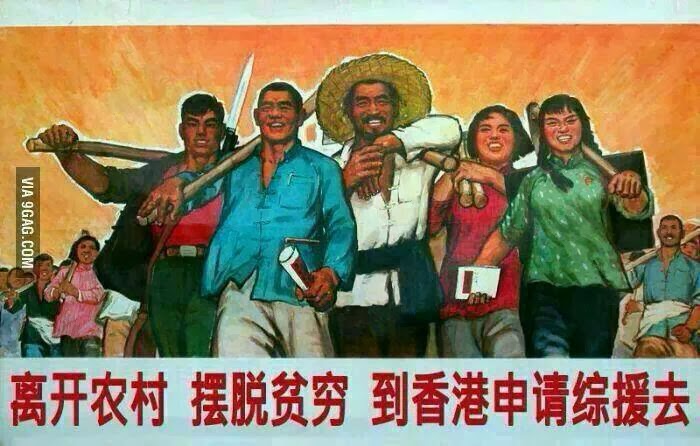 One of the parody posters posted online
portraying new immigrants as leeches
Then the
November 18, 2013
The Art of Profanity 粗口藝術
We react to life’s little vicissitudes – nicking the car door, dropping the phone on a concrete pavement or losing hours of work to a computer crash – with a curse word or two. If some brute walks by and knocks the coffee right out of our hand, the appropriate response is: What the fuck?Swearing is one of those things that we do everyday and nearly everywhere. But like breaking wind and picking our nose, profanity is only bad when someone else does it. Most of us are too squeamish or sanctimonious to own up to it. Rarely in the human experience has something so universally shared been so vehemently condemned and denied.
 Turning society into a nanny state
Profanity exists in every culture. Curse words are the first vocabulary we learn in a foreign language and the only one we remember years later. The linguistic phenomenon can be traced as far back as Ancient Egypt and Babylon. Literary giants like William Shakespeare, James Joyce and George Bernard Shaw were known to use obscenity inventively in their works, as did J.D. Salinger in his coming-of-age classic Catcher in the Rye. These days you can’t enjoy a Hollywood action flick or a crime drama on cable television without getting an earful of the f-word. Whether it is in literature or pop culture, coarse language helps deliver a jolt and a pinch of realism to reflect the way people actually talk.
But the near ubiquity of profanity doesn’t stop us from feeling prudish about it. In the ‘70s, American comedian George Carlin listed “Seven Dirty Words” in a stand up routine to poke fun at society’s unease toward cursing. The act got him arrested for disturbing the peace and made him the First Amendment hero in a landmark Supreme Court decision. It also led to sweeping indecency regulation in American broadcasting, including the proliferation of minced oaths – euphemistic expressions like “gosh,” “heck,” “shoot” and “freaking” – in an attempt to remove the sting of the original words. Since then, obscenity has been bleeped on television and replaced with the phrase “[expletive deleted]” in the print media. The venerable New York Times, a bastion of free speech that prides itself on printing all the news that’s fit to print, has adopted an internal profanity policy to preserve “the newspaper’s character” and “civility in the public discourse.” The paper’s policy suggests that, even in this day and age, decorum and manners still trump honest reporting.
 That was 40 years ago, so let's move on
Let’s face it, swear words are but a string of syllables. What makes “vagina” an anatomy term and “cunt” an abominable abuse is purely arbitrary. At some point we need to be adult about our speech and admit that there is a time and place for every word. After all, a kindergarten classroom is very different from a poker game, and The Sopranos shouldn’t be treated the same way as Pocahontas. So long as it is not directed at children or used in a pejorative way toward minority groups, profanity is an integral part of language to convey horror, confusion and extreme displeasure. Experienced writers understand that curse words are a literary device just like metaphors and puns: having too many of them takes away their effect, but a judicious use can go a long way. If Quentin Tarantino had sanitized Pulp Fiction by changing Vincent Vega’s line to “[the French] wouldn’t know what on earth a quarter pounder is,” the famous diner scene would have been flat and forgettable.
 One of the memorable scenes in Pulp Fiction
What’s more, studies have shown that profanity is a coping mechanism and a form of anger management. Cursing is an instinctive response to shock and pain, like tripping over a rug or cutting ourselves while we shave. Dropping the f-bomb reduces stress and lets off steam. When used cleverly, swear words can also enhance our sense of humour and promote social bonding. According to Natalie Angier, science journalist for, ironically, the New York Times, a free flow of foul language among close friends may signal harmony instead of hostility. On the other hand, resisting obscenity can lead to asymmetry within a social group and signify a “holier than thou” attitude.
In Asia, the social acceptability of profanity runs the gamut from absolute prohibition to use-as-you-please condonation. In Japan, for instance, swear words are never uttered except during a bar brawl or in hostess clubs. By contrast, in Thailand and much of South East Asia, using coarse language is like adding spices to a stew – one must strike a balance between enhancing the flavours and overpowering the dish.
 They don't even use the word "gosh"
Here in Hong Kong, the cursing culture lies somewhere between conservative Japan and permissive Thailand. In Cantonese, the city’s lingua franca, there are the “Famous Five”: a quintet of single syllable swear words that connote the male and female genitalia and what to do with them. While stressed out citizens curse out loud from time to time, profanity is a telltale sign of the speaker’s social standing – or the lack thereof. A liberal use of swear words in daily speech often indicates a deficiency in character and pedigree.
And so when primary school teacher Alpais Lam (林慧思) was caught on video shouting expletives at the police during a street protest earlier this year, the entire city came down on her like a ton of bricks. Lam, a mere bystander on the scene, took issues with a police blockade and vented her frustration at the frontline officers with a few choice words. Days after the video was posted on YouTube, angry parents demanded that Lam be fired from her job for the untoward behaviour. A crime squad was dispatched to investigate the incident as if it were a multiple homicide. Even our Chief Executive C.Y. Leung weighed in on the controversy and ordered the Secretary of Education to submit a report to explain the travesty of human decency.
 Ms. Lam needs our support
The so-called “Miss. Lam Incident” (林老師事件) underscores a deep cultural issue in Hong Kong. The undue emphasis we place on civility means that the bigger offense often falls by the wayside. Eager to use our distaste for profanity as a diversion tactic, authorities shift the focus away from the real issue – the police’s mishandling of a peaceful demonstration – and throw the outspoken educator under the bus of public opinion. Those angry parents never think for a moment that while Lam’s choice of words may seem poor, it was the poor choice of a private citizen outside the confines of the classroom walls. And while the idea of shouting abuse at police officers may be bad, it is a constitutionally protected bad idea.
 It seems most people would rather be lied to
 by a well-spoken man than hear a curse word
British philosopher Bertrand Russell once said: “Obscenity is whatever happens to shock some elderly and ignorant magistrate.” When it comes to language and speech, the line between vulgar and provocative is not only blurred, but also subjective, personal and arbitrary. Like many preconceived notions about gender and race, our queasiness toward foul language is socially conditioned and does not hold up to scrutiny. To avoid self-censorship and aphasia, sensible adults should recognise that every word, even the dirty ones, serves a purpose. Profanity is not a question of right and wrong but rather a matter of taste.
* * *
This article previously appeared in the November/December 2013 issue of MANIFESTO magazine under Jason Y. Ng's column "The Urban Confessional."
 As printed in MANIFESTO
October 29, 2013
Getting Away with Murder 逃之夭夭
Old Cheung was sitting on his front porch when he noticed his house was on fire. He ran inside to retrieve his children who were asleep on the second floor. Moments later, Cheung re-emerged with two of his three sons.
“What happened to little Mickey?” asked the neighbors.
“There wasn’t enough time for the third,” said Cheung.
But there clearly was – the fire started in the basement and hadn’t yet spread to the rest of the house.
“Go back in to get Mickey, old Cheung,” the neighbors urged.
“I’ve already made up my mind,” the father stood his ground. “Besides, Mickey hasn’t been a very good son compared to my other two.”
An intense discussion among the neighbors ensued, as the crowd debated Cheung’s assessment of his youngest child. While many found Mickey energetic and intelligent, others concurred with Cheung that the boy didn’t quite measure up to his brothers.
“This is insane!” shouted one of the neighbors. “How could you guys be arguing which son is better than which, when clearly allof them should have been rescued?”
* * *
If you find my story far-fetched, then you mustn’t have been paying attention to C.Y. Leung’s latest political crisis. Two weeks ago, his cabinet approved two of the three applications for a free-to-air (FTA) television license. The sole rejection went to Ricky Wong’s (王維基) HKTV, the bid most favored by the public. The announcement has touched off a firestorm of protest, as the public demanded to know how HKTV, which has spent years producing an impressive line-up of pilot programs, could lose out to the other two applicants. So far Leung and his posse have been tight-lipped, citing a self-imposed gag rule that applies to all cabinet discussions.
 Wong doesn't like to lose
Like the confused neighbors in my story, the public has been asking all the wrong questions. Neither the government’s screening criteria nor HKTV’s qualifications is of any importance to us. The only relevant question is why can’t all three applicants be granted a TV license, for there is absolutely no evidence to support the claim that, for the betterment of local broadcasting, two new entrants to the market are just right, but three is suddenly too many. The burden of proof lies with the government and not HKTV – and certainly not the public. To engage in an endless debate about HKTV’s viability compared to iCable and PCCW – the two successful applicants – is to play into C.Y. Leung’s sleight of hand. It is the same diversion tactic used by old Cheung to shift the focus away from his filicide.
Until the government gives us a satisfactory answer to that key question, the only thing we can do is speculate the political motivation behind the rejection of Wong’s bid. Some say Beijing doesn’t want HKTV to drive the languishing ATV out of business. ATV and TVB are the only two current FTA license-holders and the former has been unpopular among local viewers for its Chinese ownership and pro-Beijing stance. It is said that HKTV’s entry will be the final nail in ATV’s coffin and that China doesn’t want one of its mouthpieces to go out of business. This theory seems implausible, considering that Beijing is not known to micromanage every minute executive decision in Hong Kong. In fact, Leung reportedly got a scolding from Wang Guangya (王光亞), the CCP big wig in charge of Hong Kong’s affairs, for causing another big SNAFU.
 ATV is a joke, as is its Chinese owner Wang Zheng
 If it’s not Beijing, then it must be the chief executive himself. Perhaps C.Y. Leung doesn’t care for Wong’s ego or finds his ambition a threat. Or perhaps the two have unsettled scores from past dealings. Whatever it is, it would appear that Leung’s personal vendetta has burned up what little political capital he has after the national education debacle and the abandonment of the ill-fated northeast urban development plan. The TV license saga is the latest example of Leung’s knack for overestimating how much he can get away with and underestimating how far citizens are willing to go to hold him accountable.
As C.Y. Leung’s approval ratings dip, Ricky Wong’s personal stock continues to rise. Wong has become the anti-establishment hero of the month. Nicknamed “Boy Wonder” for introducing low-cost long distance phone services in Canada, the 51-year-old is a self-made billionaire and the embodiment of the city’s can-do spirit. He is the closest thing we have to Richard Branson and Elon Musk. Having poured his heart and personal fortune into the TV license bid, Wong is now seen as the David who takes on Goliaths iCable and PCCW, which happen to be owned by tycoons Peter Woo (吳光正) and Richard Li (李澤楷). Wong’s loss is viewed by many as an affront to the city’s entrepreneurship. For if a superstar like Ricky can’t beat the property cartel, what chance does the rest of us have?
 How Wong earned his first pot of gold
In the meantime, the political saga is throwing an unwanted spotlight on TVB, the current licensee that commands a near monopoly in broadcasting. HKTV’s failed application was a wake-up call to millions of viewers who finally realized that they have been watching the same low-budget pastiche for over three decades: soap opera with stock characters and canned plots, travel and cooking programs that are glorified infomercials, and asinine game shows that insult our intelligence. And TVB doesn’t just offend viewers, it also gouges their own employees. Actors and writers are grossly underpaid and contractually prohibited from taking any outside job. That’s what happens when your employer is the only game in town – it is nothing personal.
 You call this television?
 Free television means something to everyone in Hong Kong. For the elderly and the working class, it is the only form of entertainment. For the middle class who grew up in the 70s and 80s, it is a cultural glue that binds people together. For the socially conscious, it is a painful reminder of the way big business stifles our creativity. That’s why nearly 100,000 citizens regardless of age, background and political leaning took to the streets two Sundays ago in support of HKTV. But frustration and anger can only get us so far – we must ask the right questions and keep at it until the government produces meaningful answers or a third new license. Old Cheung might have gotten away with murdering his son, but we can’t let Leung do the same with the Hong Kong Dream.
 It's more than just TV, it's our future
_______________________
If you like this article, read 37 others like it in HONG KONG State of Mind, now available at major bookstores in Hong Kong, on Amazon and at Blacksmith Books.