
Jason Y. Ng's Blog, page 5
June 28, 2015
The Moonscape of Sexual Equality - Part 1 走在崎嶇的路上-上卷
There are things about America that boggle the mind: gun violence, healthcare costs and Donald Trump. But once in a while – not often, just once in a while – the country gets something so right and displays such courage that it reminds the rest of the world what an amazing place it truly is. What happened three days ago at the nation’s capital is shaping up to be one of those instances.
 From White to Rainbow
Last Friday, the Supreme Court of the United States handed down a 5-to-4 decision on same-sex marriage, the most important gay rights ruling in the country’s history. In Obergefell v. Hodges, Justice Kennedy wrote, “It would misunderstand [gay and lesbian couples] to say that they disrespect the idea of marriage. Their plea is that they do respect it, respect it so deeply that they seek to find fulfillment for themselves… They ask for equal dignity in the eyes of the law. The Constitution grants them that right.”
With those simple words, Justice Kennedy made marriage equality a constitutionally protected right in all 50 states. Obergefell will enter history books as a landmark civil rights victory alongside Brown v. Board of Education (the 1954 Supreme Court decision to desegregate schools) and Roe v. Wade (the 1973 decision to protect women’s abortion rights). President Barack Obama praised the Friday ruling, reminding citizens that “when all Americans are treated as equal, we are all more free.”
* * *
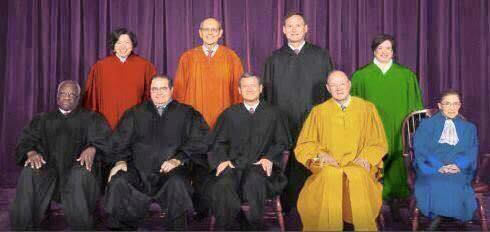 Justice Kennedy, the man in the yellow robe
 12 time zones away, on the opposite side of the world, gay and lesbian folks find themselves navigating a very different political terrain. As far as sexual equality goes, Hong Kong looks like the surface of the moon. This is a place where just three years ago a property tycoon made international headlines by offering a HK$500 million (US$65 million) dowry to any man willing to marry his lesbian daughter. Until 1991, homosexual relations were still a crime. The age of consent used to be 16 for heterosexuals but five years higher for gay men, before the Court of Appeals corrected the anomaly in 2006. Even so, the criminal code wasn’t amended to equalize the age difference until last year. To date, the law remains silent on the consenting age for lesbian sex.
The Hong Kong Bill of Rights Ordinance prohibits discrimination on the grounds of gender, disability, age, race and other status. Sexual orientation is not one of the enumerated groups in the statute, although local courts have interrupted “other status” to encompass it. But there is a catch: the Bill of Rights applies only to government actions – such as public sector hiring and firing – and not to the private realm. Whereas other minority groups are protected by specific statues such as the Race Discrimination Ordinance and the Disability Discrimination Ordinance, there is currently no law to protect citizens from sexual discrimination.
 Gigi Chao, next to her husband
 who did not receive the $500 million bounty
In conservative Hong Kong, the path to marriage equality is treacherous and depressing. Most citizens have never heard of the phrase “civil union.” Same-sex marriage is so foreign to the collective consciousness that the mere mention of the idea evokes a range of responses from “What is to stop two male friends from getting married just to get public housing or tax benefits?” to “What’s next after same-sex marriage? Brothers and sisters tying the knot?” Given the growing cross-border tensions, many also fear that even more mainlander Chinese would come to Hong Kong through fake marriages.
The picture is just as bleak at the government level. It is no surprise that bureaucrats find same-sex marriage a hard pill to swallow, but they have proved to be just as uncompromising in situations that most reasonable people would consider uncontroversial. Take the case of W, a man who had undergone sex reassignment surgery and was legally a woman according to the new identity card and passport issued by the Immigration Department. Hell-bent on denying W a marriage certificate, however, the Registrar of Marriages summoned every resource at its disposal and fought her application all the way to the Court of Final Appeal, the city’s highest court. The registrar went after the woman with such tenacity that it began to look like a personal vendetta. The court eventually ruled in favor of W and ordered the government to redefine gender as a person’s identified sex instead of his or her biological sex at birth. Today, two years after W’s victory, the government is yet to make any of the legislative changes to comply with the ruling. A bill to amend the Marriage Ordinance was defeated in the legislature in 2014.
 Opponents of same-sex marriage in the name of
religious freedom and family values
But the picture gets bleaker the closer you look. Here is another example of systemic prejudice. UK nationals living overseas – whether they are in a same sex or heterosexual relationship – can get married at British embassies and consulates around the world, provided that the local government does not object to such an arrangement. Even not so gay-friendly governments like China and Russia have given their green light to this so-called “getting married abroad scheme.” But so far the Hong Kong government has refused to play ball. The resistance has much to do with the fact that hundreds of thousands of Hong Kong Chinese received a British National Overseas (BNO) passport before the handover. Bureaucrats are worried that once they sign on to the UK scheme, a deluge of gay and lesbian couples with a BNO passport would rush to the British Consulate in Admiralty to get married, which would in turn expose the government to future judicial reviews if they don’t recognize these “overseas marriages” administered in Hong Kong.
They say the strength of a society is measured by how its weakest members are treated. On that account, Hong Kong is not nearly as mighty as many think. As much as we hold ourselves out as Asia’s World City, our policies and attitude toward sexual minorities fall far short of our self-image. The gay, lesbian, bisexual and transgender (LGBT) community needs a change agent to take up the cause, unite the various advocacy groups, and lead the continuous struggle toward full sexual equality.
Enter Ray Chan (陳志全), a pan-democratic member of the Legislative Council (Legco) and a former presenter of the popular Commercial Radio program “Fast Slow Beats” – hence his nickname Slow Beat (慢必). The 43-year-old also happens to be the first, and to date the only, openly-gay lawmaker in Hong Kong. At Legco, Chan has been vocal on a variety of issues from electoral reform to social security. He is not afraid to filibuster important government initiatives even if it earned him many enemies. But ever since he came out of the closet in 2012, Chan has gone from a firebrand to also the go-to person on the uncomfortable subject of sexual politics. It is a role that he has assumed with pride and a sense of duty.
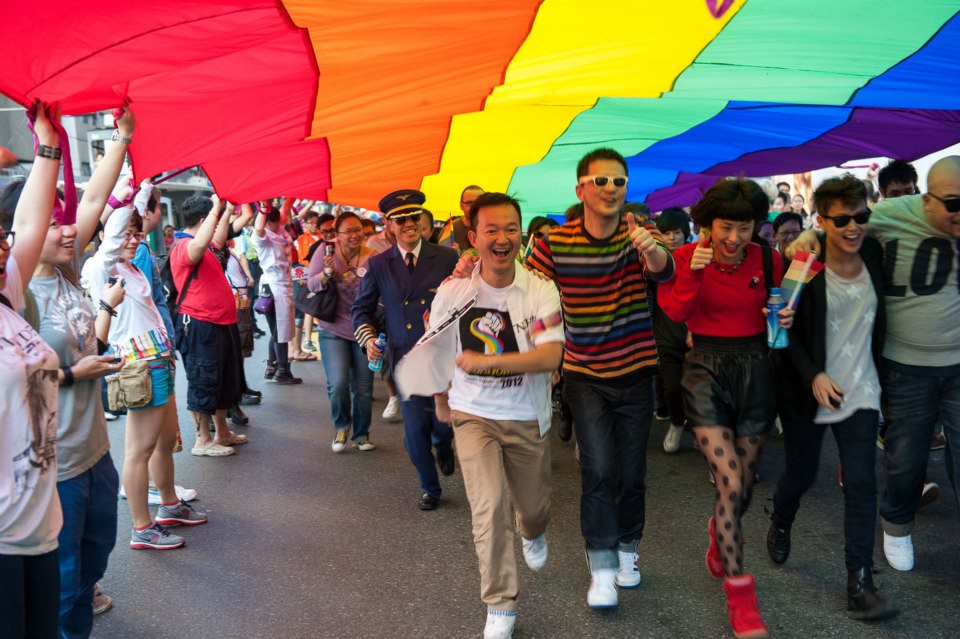 Ray Chan (middle), with openly gay Cantopop star
 Anthony Wong (in stripes) at Gay Pride
Chan is an outspoken champion against sexual discrimination and, from time to time, a victim of it. As recently as a month ago, he was verbally assaulted by a woman on the subway train, not for his Legco antics but his sexuality. The assailant’s two-minute diatribe ran the full gamut of insult, but with a curious focus on the size of the lawmaker’s manhood. The video, now posted on Youtube with subtitles in several languages, has been viewed nearly 600,000 times. Adding insult to injury – or in this case, injury to insult – South China Morning Post columnist Michael Chugani defended the woman’s behavior by likening it to the pan-democrats’ frequent tirades and name-calling against government officials, arguing that both cases are constitutionally protected free speech. Chugani’s op-ed landed him in the center of a public relations firestorm, as critics lambasted the veteran journalist for condoning hate speech. To Chan, the incident and the ensuing drama were both simpler and more complicated: it underscores what he has been advocating for years – local legislation to outlaw sexual discrimination – except that the struggle has now become much more personal.
All that provided the pretext for my conversation with Ray Chan. Within 24 hours after Obergefell v. Hodges was issued and social media were plastered with the rainbow flag, I sat down with Slow Beat at the Foreign Correspondents’ Club to talk about the moonscape that is the state of sexual equality in Hong Kong. Wearing a pink Hollister T-shirt and denim shorts, Chan brimmed with excitement from the U.S. Supreme Court decision. Between finishing his chicken rogan josh and sending text messages on his iPhone, the lawmaker spoke candidly about sex and politics.
* * *
Read Jason Y. Ng’s conversation with Ray Chan in part 2 of this article to be posted on 1 July.
 The infamous woman in yellow

June 18, 2015
Comedy of Errors 錯中錯
In politics, sometimes a mistake is just a mistake. Then there are blunders so shocking that they draw gasps and deer-in-headlights stares from even the opponents. The latter happened at Legcotoday.
After nearly two years of bitter political wrangling, 79 days of street occupation, months of government-funded media blitz, and a last-minute appeal to the opposition by senior Beijing officials, the biggest constitutional showdown in the post-Handover era finally came to an end – and a dramatic one at that. It came as little surprise that the Beijing-backed proposal for the 2017 chief executive election was voted down at the legislature. What’s astonishing was the 28-to-8 defeat. There are 70 seats in Legco and 42 of them are taken by pro-Beijing lawmakers. That means the government was only about five votes shy of the super-majority it needed to pass the electoral reform bill. There were unconfirmed rumors that pro-democracy lawmakers were offered hundreds of millions of dollars to change their minds, although none of them took the bait. In the end, however, the bill that Hong Kong’s No. 2 official Carrie Lam (林鄭月娥) has been peddling for months received only eight out of the 70 Legco votes. Even a Hollywood screenwriter couldn’t have come up with a better twist.
 The vote count
Exactly what happened is the subject of much contention and confusion. Here’s what we do know. The reform bill was submitted to Legco for a vote yesterday. It triggered a series of predictable floor debate and political posturing that lasted until early afternoon today. But then, shortly after the voting bell had already been sounded, all but a handful of pro-Beijing lawmakers suddenly got up and walked out of the room. Those who stayed – nine from the pro-Beijing camp and 28 pan-democrats – constituted a quorum and they cast their votes: 8 yea, 28 nay, 1 no-vote, 33 absent. Most of the absentees were the pro-Beijingers who had left the room. That’s right, the reform proposal that the Communists had practically drafted themselves will now enter the history books as a bill that got less than 10 votes. For Beijing and the SAR government, it was the equivalent of being thrown a dozen eggs and having them rubbed all over the face. Dripping yolk and all.
After the vote, Jeffrey Lam (林健鋒), a member of the pro-establishment Business and Professionals Alliance (經民聯) and the bumbling lawmaker who initiated the walk-out, scrambled to do damage control. Flanked by his fellow Beijing loyalists (including a visibly fuming Regina Ip (葉劉淑儀)), Lam told reporters that the whole thing was a case of misunderstanding. He had intended to stall the vote by staging an adjournment, Lam claimed, in order to buy some time for fellow pro-Beijinger Lau Wong Fat (劉皇發) who was late to the session. Lam’s real motive might have been to derail the vote altogether to give the Liaison Office (中聯辦) – the de facto Chinese consulate in Hong Kong – a few more days to get some of the pan-democrats to switch sides. Whatever his rationale, Lam failed to communicate his plan to everyone in his own camp, and so some of them ended up staying in their seats. Of the nine, eight followed the party line and cast a “yes” vote. Poon Siu-ping (潘兆平), a little known labor union head, was present in the room but he didn’t vote. The poor guy said he didn’t know how to respond, panicked and then pushed the button too late.
 The walk-out
The turn of events looks like amateur night at a comedy club. It is as mortifying as a soccer player who kicks the ball into his own net, or a runner who passes the relay baton to the wrong team. It may be funny-ha-ha for us viewers at home, but Beijing isn’t laughing at all. A political autopsy is now feverishly underway to find out what went wrong and who should take the blame. Slow revenge is not for China, public lynching on the spot is more its thing. That means heads are expected to roll in the coming days. This time, however, everyone is fair game. Any member of the pro-Beijing camp, C.Y. Leung and his cabinet, and the Liaison Office can potentially be held responsible.
To Beijing, this practical joke is another reminder that it should never send an idiot to do a communist’s job. These so-called loyalists may be successful businessmen in their own right, but savvy politicians they are not. They play too much golf and not enough team sports to know how to work together. They are no better than the rent-a-crowds who were hired this week to stand outside Legco and chant pro-government slogans they didn’t understand. Opposition lawmaker Long Hairput it best: it was like drafting a bunch of boy scouts to fight World War II. The biggest loser today was perhaps Regina Ip. The fact that she was one of the lemmings who headed to the Legco door might have dashed her hopes to be the next chief executive. By Beijing’s book, Ip is just one of the idiots.
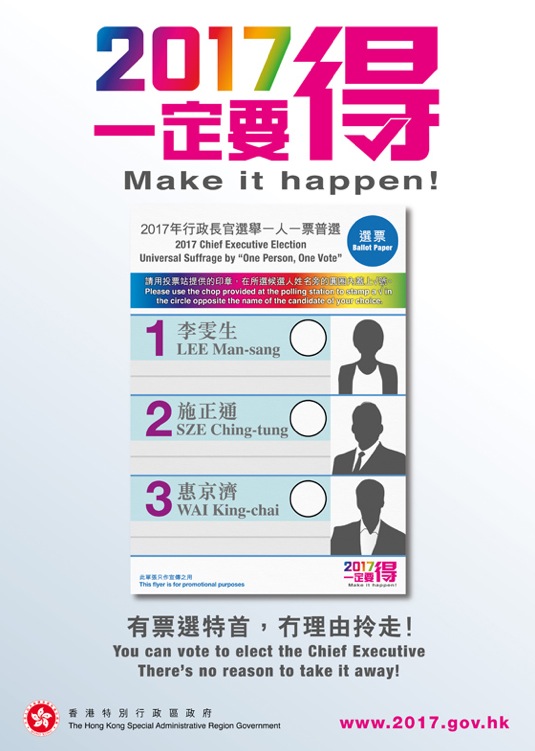 The "Make it Happen!" campaign
Meanwhile, the pan-democrats are laughing all the way to the bank. Yes, the situation is comical, but more importantly, they have all come out of the political crisis unscathed. With public support for the reform bill hovering at around 50 per cent, they have reason to be worried. Half of their constituents may punish them at the next election for rejecting a proposal that would have given them a vote, any vote, in 2017. A huge upset at the ballot box for the pan-democrats would be Beijing’s consolation prize, especially if the pro-democracy camp loses enough seats such that they can no longer block future electoral reform bills. Luckily for them, the blooper today has shifted the public’s focus and deflected the narrative. Come the next Legco election, few voters will remember the likes of Alan Leong (梁家傑) and Emily Lau (劉慧卿) as democracy blockers. Instead, citizens will think back and say to themselves, “Ah yes, the reform bill got only several votes. What a dreadful proposal it must have been!” Tonight, the pan-democrats can heave a collective sigh of relief; some of them may be celebrating in Lan Kwai Fong right now. Champagne, champagne for everyone!
As for the rest of us, we are now back to Square One. With the bill voted down, Beijing is expected to permanently shelve the sore subject of electoral reform. Hong Kongers can kiss goodbye Article 45, the Basic Law provision that guarantees the right to freely elect their leader. For the five million eligible voters in the city, universal suffrage is dead on arrival. Amidst the belly laughs and cackles, we know deep down inside that the joke is really on us.
 From the left: Regina Ip, Lau Wong Fat, Jeffrey Lam
April 17, 2015
Butterfly Effect 蝴蝶效應
I woke up one morning to the buzz of an incoming email on my phone. “Dear Jason,” the message started off disarmingly innocuous, “we are delighted to invite you to our 13th Annual Student Awards ceremony.” The sender was the chairman of a respected NGO that supports underprivileged children in Hong Kong. But the invitation took a sudden, horrifying turn: “It would give us great pleasure if you would be our keynote speaker to address 500 honor students at City Hall. We look forward to your favorable response.” Gulp, gasp, gag. I threw my phone across the bed and leapt to the bathroom. I was ready to hurl.
 Worse than death
Surveys have shown that most people, regardless of age, gender or ethnicity, fear public speaking more than they fear death. Jerry Seinfeld famously joked that the average person at a funeral would rather be in the casket than doing the eulogy. The phenomenon is called glossophobia, derived from glossa, the Greek word for tongue. The symptoms are those associated with the classic fight-or-flight response: pounding heart, sweaty palms, wobbly knees and a rabble of butterflies in the stomach. For the introverts among us, the mere thought of standing up and talking in front of a crowd is enough to trigger a panic attack. It is the sum of all fears: rejection, public humiliation, and if the speech is taped and uploaded onto YouTube, a searchable embarrassment that will last for eternity.
Nowhere are those fears felt more strongly than in Asia, where children tend to learn by rogue and are taught to be docile. In conformist countries like Japan, Korea and China, speaking up in the classroom or voicing an opinion at the dinner table is often mistaken for rebellion and therefore discouraged, which gives young people little chance to hone their verbal skills. Once they are out in the real world, the virtue of silence quickly turns into a vice, when they are asked to give a presentation or lead a conference call. Fears set in and all the rookie mistakes show up: reading off the slides, dodging eye contact, and looking as cheerful as an inmate strapped to his execution gurney.
 Shut up and learn
Psychologists believe that our speech anxiety has to do with the fear of being ostracized. Humans are social animals and we form social groups to survive the perilous world. Early humans depended on each other to fend off predators and starvation, which makes social acceptance a necessary condition for survival and ostracism a form of social death that preceded the actual, physical one. Glossophobia is our natural response to the risk of being judged publicly and negatively, the same way we are programmed to fear heights and rodents to mitigate the risk of falling and contracting deadly diseases. In other words, those butterflies in our stomachs are the result of millennia of genetic mutations, designed to stop us from sticking our necks out and drawing too much attention to ourselves – a risky proposition for anyone living in a lawless commune of axe-throwing, arrow-shooting Neanderthals.
But loincloths and mammoth furs are so 10,000 B.C. A few things have changed since our hunter-gatherer days, including the wisdom of flying under the radar. Public speaking in the 21st Century is as ubiquitous as it is inescapable. These days, everyone from a 20-year-old web designer pitching for a new gig to a middle-aged soccer mom voicing a grievance at the PTA meeting will find themselves in the hot seat. The ability to address an audience with composure is no longer expected only of presidential candidates and tech company CEOs, but anyone who wants to be heard. In the age of black turtlenecks and TED Talks, glossophobia has devolved from a defense mechanism to a career-limiting defect. The butterflies that were meant to protect us from dangers are now holding us back in life.
 Shut up or DIE!
The urgent need to treat glossophobia has spawned a glut of self-help books and magazine articles. A vast majority of them go through the usual dos and don’ts: do practice with friends, do picture the audience in their underwear, don’t use throwaways like “um” and “er”. But if reading a book could cure stage fright, there wouldn’t be so many glossophobes still shaking behind the microphone or dragging themselves to Toastmasters meetings week after week, year after year. To learn how to swim, as it is often said, we just have to jump into the deep end of the pool and start flapping our arms. Anything else, like kicking around all day with a foam board, is likely a waste of time.
That takes me back to the ominous email that rocked me out of bed one fine morning. The next day I accepted the chairman’s invitation and immediately began working on my speech. I practiced in front of the mirror every day for two weeks, each time getting better but discovering something I needed to correct. In the end I did all right. I wasn’t nearly as nervous talking on stage as I was preparing for it. But the whole ordeal frustrated me – because irrationality frustrates me, as does the notion that I have to take orders from, of all things, my adrenal glands. My job at the awards ceremony was to inspire young minds, but every last ounce of enjoyment from that otherwise beautiful experience had been sucked out by my over-preparation, all because I needed to keep my irrational nerves at bay. That night I said to myself: never again.
 One of many self-help books on overcoming stage fright
That was five years ago. Since then I have taken the plunge into the deep end of the proverbial pool, taking on as many speaking engagements as time allows. As a lawyer, I jump on every opportunity to give seminars and chair meetings. As an author, I go on the lecture circuit, give radio interviews and speak at literary events big and small. I have learned to not only control my nerves but relish the adrenaline rush. I have discovered that we fear public speaking because we make it all about ourselves – how we sound, how we look and how much we impress. But who gives a hoot? The only thing the audience cares about is what they get out of sitting in the room instead of being somewhere else. Depersonalization – the recognition that the world does not revolve around one person – has made me a better speaker. It has set me free.
Public speaking is not an inborn skill. On the contrary, we are genetically programmed to fear it. Going against our instinct requires patience: we can’t expect to overcome a phobia millions of years in the making overnight. But the human brain is a muscle, and like all muscles it can be trained. If we fail horribly the first 23 times, we are bound to get better on the 24th try. The only way to become an effective speaker is by getting to a point where speaking in public is as uneventful as talking to friends or reading a bedtime story. Every great speaker we admire, from Bill Clinton to Emma Watson (who won kudos for a recent speech on gender equality at the United Nations), can do what they do not because they are missing the glossophobia gene, but because they have done it a thousand times over. As much as we like to associate oratorical skills with knowledge, charisma and superpower, in the end it comes down to one simple, unglamorous word: repetition.
 Rely on the power of habit
This article previously appeared in the April 2015 issue of MANIFESTO magazine under Jason Y. Ng's column “The Urban Confessional.”
 As printed in MANIFESTO
April 4, 2015
Season Finale 大結局
Hong Kongers are used to duopolies. Every day, citizens choose blissfully between Wellcome and Park’n Shop, Café de Coral and Fairwood, Fortress and Broadway, oblivious and powerless to the glaring absence of choice. Our false sense of consumer freedom is legitimized by the government’s corportacratic propaganda telling us that too many options can lead to confusion, cut-throat competition and an economic apocalypse. Nowhere is this phenomenon more pronounced than in the realm of free-to-air television – broadcasting that requires no paid subscription and commands high viewership especially among the low income demographics. Our television dial can only toggle between the complacent TVB and the languishing ATV, two unequal adversaries that nowadays offer numb viewers the Hobson’s choice between bad programming and the unwatchable.
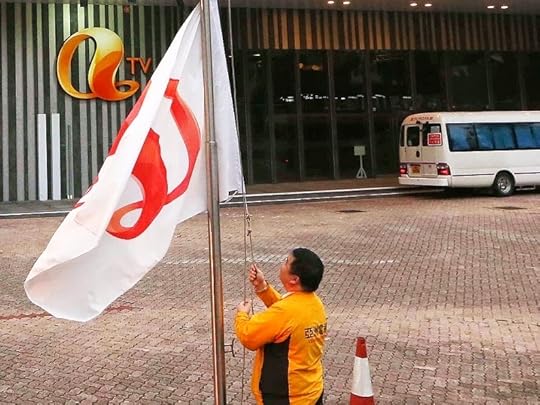 End of an era
For months, ATV – the world’s first Chinese language television station – has been dying a slow and torturous death. Its financial troubles first surfaced last fall when staff complained about unpaid wages. Senior management resorted to stalling tactics and made up stories about new funding and white knights. And when desperate times called for desperate measures, the cash-strapped broadcaster cut its programming to the bone, liquidated assets from copyrights to camera equipment, and even begged key shareholders to offer loans to employees in lieu of pay. All that buffoonery, almost too painful to watch, culminated in a death sentence last Wednesday when the government announced its unprecedented decision not to renew ATV’s license. The announcement came a day after management broke the camel’s back by releasing false information on a prime time news program that Ricky Wong, owner of HKTV, had agreed to a buyout.
Most people welcome the government’s move to put the struggling broadcaster out of its misery. Even before the recent series of unfortunate events, ATV had long been a glorified placeholder in the public airwaves – an ugly sister that no one bothered to cast an eye over. But the butt of jokes we know today is a far cry from the drama powerhouse and trusted news source that it was during its heyday in the 70s and 80s. Frequent ownership transfers in the decades since, however, have weakened management and drained its resources. These days, citizens tune in twice a week only for a few minutes to find out the Mark Six winning numbers.
 Wang Zheng has always been the butt of jokes
Then in 2010, Chinese-born businessman Wang Zheng (王征) acquired a controlling stake in the broadcaster, cementing its unofficial status as a “Mainland channel.” Observers believed that Wang’s foray into television had much less to do with a genuine interest in show business than Beijing’s elaborate scheme to infiltrate Hong Kong’s media, as it has been doing with the city’s daily newspapers. Whatever it is, Wang’s arrival as an industry outsider has done irreparable damage to the ATV brand and staff morale. That, combined with ill-conceived decisions to replace drama series with low-budget talk shows, further alienated local viewers and caused advertising revenue to plummet. Less than five years after his controversial acquisition and high-minded promises to turn ATV into “Asia’s CNN” and “Hong Kong’s conscience,” this flamboyant last emperor successfully ran the broadcaster into the ground, squandering hundreds of millions in his personal wealth and dragging his fellow shareholders with him.
Perhaps the biggest losers in ATV’s undignified demise are its 700 staff. For decades, employees have kept their heads down working for a perennial underdog, their lives made harder still by an erratic and meddlesome owner. Although ATV’s existing license is valid until April 2016, management will likely shut down operations as soon as the company’s liquid assets dry up, which may happen in a matter of weeks. And when the curtain finally comes down on the 58-year-old institution, hundreds will be out of a job and facing a grim reality: join TVB or leave show business altogether. One ATV actress, a former beauty queen, announced her plans yesterday to try her hand at farming once the company folds.
 Explain to us again why his license application was declined?
The ATV implosion has also made the government part of the collateral damage.
Still another loser in the ATV saga is its longtime rival. You would be wrong to think that TVB management is jumping for joy to be rid of a competitor – that’s because the so-called “Big Channel” already commands a near-monopoly in both ratings and advertising dollars, and having ATV out of the picture will barely benefit its bottom line. Instead, the ascension from a de factomonopolist to an actual one is calling unwanted attention to the elephant in the room. As the duopoly becomes a monopoly and the illusion of competition is suddenly lifted, even the most blissfully ignorant of consumers are bound to wake up from their comatose. They now realize that programming that’s good only in comparison to ATV’s isn’t very good at all, and that the television shows they are forced to watch every night are years, even decades, behind that of neighboring countries like Japan, Korea and Thailand. Worse, they may join Ricky Wong’s supporters in putting pressure on the government to open up the airwaves to newcomers. Much to TVB’s chagrin, the age of churning out lobotomized schlock to exact ransom from obliging advertisers may finally come to an end.
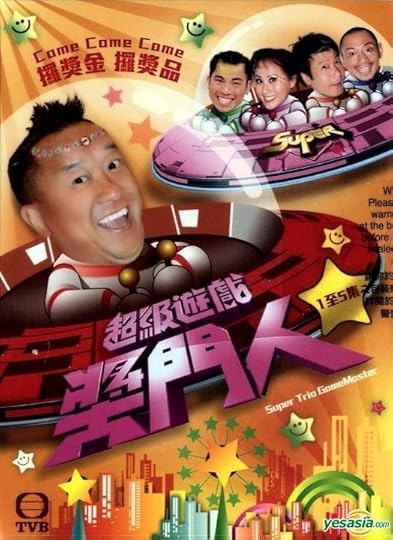 The best TVB can do these days?
If there is ever a silver lining to ATV’s tragic fall, it would be the hope that the city’s free-to-air TV market has become such a cesspool that the day of reckoning is near. They say the night is darkest before dawn, and so perhaps the loss of a broadcaster today will mean the creation of many new ones in the future. And if the false sense of consumer freedom can one day give way to real, meaningful choices for viewers, then there is reason to believe that television doesn’t need to be a sunset industry waiting to be replaced by YouTube and social media, that the nightly news can still be a beacon of press freedom and eschew pressure to self-censor, that the small screen may once again be a place for future superstars to cut their teeth as it was for the likes of Leslie Cheung and Andy Lau, and that Hong Kong will return to its former status as a net exporter of pop culture to the rest of the world. In the meantime, we will stay tuned for the next season of this long-running real-life drama.
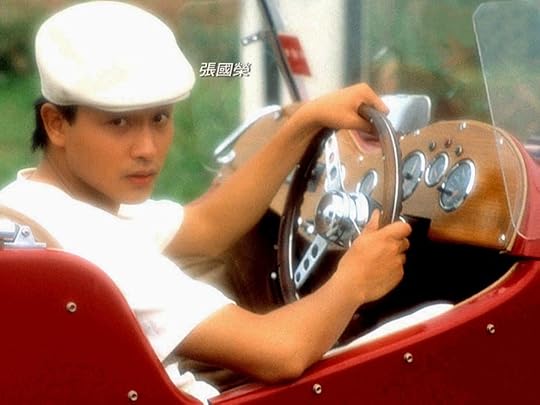 Leslie Cheung back in his television days
 End of an era
For months, ATV – the world’s first Chinese language television station – has been dying a slow and torturous death. Its financial troubles first surfaced last fall when staff complained about unpaid wages. Senior management resorted to stalling tactics and made up stories about new funding and white knights. And when desperate times called for desperate measures, the cash-strapped broadcaster cut its programming to the bone, liquidated assets from copyrights to camera equipment, and even begged key shareholders to offer loans to employees in lieu of pay. All that buffoonery, almost too painful to watch, culminated in a death sentence last Wednesday when the government announced its unprecedented decision not to renew ATV’s license. The announcement came a day after management broke the camel’s back by releasing false information on a prime time news program that Ricky Wong, owner of HKTV, had agreed to a buyout.
Most people welcome the government’s move to put the struggling broadcaster out of its misery. Even before the recent series of unfortunate events, ATV had long been a glorified placeholder in the public airwaves – an ugly sister that no one bothered to cast an eye over. But the butt of jokes we know today is a far cry from the drama powerhouse and trusted news source that it was during its heyday in the 70s and 80s. Frequent ownership transfers in the decades since, however, have weakened management and drained its resources. These days, citizens tune in twice a week only for a few minutes to find out the Mark Six winning numbers.
 Wang Zheng has always been the butt of jokes
Then in 2010, Chinese-born businessman Wang Zheng (王征) acquired a controlling stake in the broadcaster, cementing its unofficial status as a “Mainland channel.” Observers believed that Wang’s foray into television had much less to do with a genuine interest in show business than Beijing’s elaborate scheme to infiltrate Hong Kong’s media, as it has been doing with the city’s daily newspapers. Whatever it is, Wang’s arrival as an industry outsider has done irreparable damage to the ATV brand and staff morale. That, combined with ill-conceived decisions to replace drama series with low-budget talk shows, further alienated local viewers and caused advertising revenue to plummet. Less than five years after his controversial acquisition and high-minded promises to turn ATV into “Asia’s CNN” and “Hong Kong’s conscience,” this flamboyant last emperor successfully ran the broadcaster into the ground, squandering hundreds of millions in his personal wealth and dragging his fellow shareholders with him.
Perhaps the biggest losers in ATV’s undignified demise are its 700 staff. For decades, employees have kept their heads down working for a perennial underdog, their lives made harder still by an erratic and meddlesome owner. Although ATV’s existing license is valid until April 2016, management will likely shut down operations as soon as the company’s liquid assets dry up, which may happen in a matter of weeks. And when the curtain finally comes down on the 58-year-old institution, hundreds will be out of a job and facing a grim reality: join TVB or leave show business altogether. One ATV actress, a former beauty queen, announced her plans yesterday to try her hand at farming once the company folds.
 Explain to us again why his license application was declined?
The ATV implosion has also made the government part of the collateral damage.
Still another loser in the ATV saga is its longtime rival. You would be wrong to think that TVB management is jumping for joy to be rid of a competitor – that’s because the so-called “Big Channel” already commands a near-monopoly in both ratings and advertising dollars, and having ATV out of the picture will barely benefit its bottom line. Instead, the ascension from a de factomonopolist to an actual one is calling unwanted attention to the elephant in the room. As the duopoly becomes a monopoly and the illusion of competition is suddenly lifted, even the most blissfully ignorant of consumers are bound to wake up from their comatose. They now realize that programming that’s good only in comparison to ATV’s isn’t very good at all, and that the television shows they are forced to watch every night are years, even decades, behind that of neighboring countries like Japan, Korea and Thailand. Worse, they may join Ricky Wong’s supporters in putting pressure on the government to open up the airwaves to newcomers. Much to TVB’s chagrin, the age of churning out lobotomized schlock to exact ransom from obliging advertisers may finally come to an end.
 The best TVB can do these days?
 If there is ever a silver lining to ATV’s tragic fall, it would be the hope that the city’s free-to-air TV market has become such a cesspool that the day of reckoning is near. They say the night is darkest before dawn, and so perhaps the loss of a broadcaster today will mean the creation of many new ones in the future. And if the false sense of consumer freedom can one day give way to real, meaningful choices for viewers, then there is reason to believe that television doesn’t need to be a sunset industry waiting to be replaced by YouTube and social media, that the nightly news can still be a beacon of press freedom and eschew pressure to self-censor, that the small screen may once again be a place for future superstars to cut their teeth as it was for the likes of Leslie Cheung and Andy Lau, and that Hong Kong will return to its former status as a net exporter of pop culture to the rest of the world. In the meantime, we will stay tuned for the next season of this long-running real-life drama.
 Leslie Cheung back in his television days
March 15, 2015
Unrighteous Indignation 暴憤填膺
In the past month, nativist groups like Civic Passion (熱血公民) and Hong Kong Indigenous (本土民主前線) have been staging weekly rallies against parallel traders in Sheung Shui, Yuen Long and Tuen Mun, three of the areas most affected by the growing influx of Chinese shoppers. Because parallel traders don’t bear a mark on their foreheads, protestors wind up targeting anybody seen with a bulky baggage on the street. The lucky ones get heckled and mobbed, while the not-so-fortunate have their possessions searched or thrown about. Still others, like the elderly busker who happened to be walking by with his amplifier stuffed in a cart bag, was mistaken for a Mainlander and pushed to the ground. Pretty despicable stuff.
 Parallel traders can be a nuisance
For years, day trippers from Shenzhen and neighboring Chinese cities have been crossing the border using multiple-entry permits. While here, they load up on daily necessities – diapers, baby formula and skincare products – and resell them at a higher price in the Mainland, where demand for safe, reliable consumer goods is insatiable. These arbitrageurs come in droves and buy in bulk, transforming residential neighborhoods into a ubiquity of pharmacies, jewelers and cosmetic stores. Prices continue to rise to keep up with soaring retail rent. Sidewalks get so congested that pedestrian traffic snarls to an aggravating halt. Inaction by the Hong Kong government, either for a lack of political will or fear of antagonizing local authorities in the Mainland, means that residents in northern districts must accept these impositions as the New Normal.
While their gripes have fallen on the bureaucrats’ deaf ears, nativist groups have seized on the growing frustration and used it to step up their anti-Mainland rhetoric. Vowing to help residents in northern towns take back their way of life, angry protestors descend on the neighborhoods with banners and megaphones to drive out these persona non grata. Parallel traders turn out to be a perfect political target: they offer nativist groups the kind of moral high ground that ordinary Mainland shoppers do not.
 Protestors descend on a northern town
In the past, harassment of Mainland visitors – such as the fits of “anti-locust” rallies on Canton Road – failed to win public support and almost always backfired. Most Hong Kongers take the view that xenophobia has no place in our society, and that the inundation of Chinese tourists is to be blamed on our government’s policy failures instead of the tourists themselves. After all, if a flight is overbooked and more people show up than there are seats available, the fault lies with the airlines and not the passengers.
But parallel traders are not your average Mainland visitor. What sets them apart is the notion that they are engaging in an illicit act. The thought of these tax-evading bootleggers plundering our supply of daily products, smuggling them by the suitcase across the border and flipping them for a quick profit hits a nerve with the average law-abiding Hong Konger. The element of illegality makes them political red meat, and gives nativist groups the moral authority to right a wrong that our government has failed to act on. It makes all that verbal and physical abuse against them seem like just deserts.
 "Anti-locust" campaigns have failed to gain traction
But the time to debunk this misplaced righteousness is now. For starters, day trippers from China enter Hong Kong legally using multiple-entry permits granted under the individual traveler scheme. Like any other tourists, they are free to shop anywhere in the city and as much as they want – except for baby formula, which is subject to a two-can daily limit. As long as their purchases are for their own use or benefit, they do not run afoul of Hong Kong immigration law which prohibits any form of employment during their stay. No law is broken until they reenter the Mainland without declaring their purchases at the Chinese border. But their failure to pay duty to Mainland authorities has nothing to do us or our laws. We don’t give a hoot if an American tourist leaves Hong Kong and slips an extra bottle of wine through U.S. customs on his way home, and so why should we care now?
It seems ironic – and entirely hypocritical – for anti-Mainland groups like Civic Passion to be up in arms when a bunch of Chinese citizens decide to deny the Communists tax revenues. The protestors’ indiscriminate harassment of day trippers and anyone mistaken for them is a confirmation that they are more interested in capitalizing on cross-border tensions than “liberating” northern towns that have been overrun by parallel traders. Perhaps that shouldn’t surprise us, for some of the protest organizers are the same agitators behind the “wreak-and-run” incident that happened in the final days of the Umbrella Movement, when masked men smashed the Legco Building’s north entrance, incited others to enter the premises, and then fled the scene when police showed up.
 Civic Passion has been accused of hypocrisy and cowardice
As deplorable as these anti-parallel trade protestors are, their tactic seems to be working for the time being. The number of Chinese visitors, especially day trippers, has plummeted since the protests began. This past weekend, for instance, parallel traders have all but disappeared from northern New Territories. Sidewalks in those areas are wide open and shopping malls are quiet. Neighborhoods have suddenly returned to the way they once were. Even though there is no telling if and when parallel trading may resume, local residents can, at least for now, enjoy a bit of peace and quiet. Nevertheless, it would have been a far better scenario if the same outcome were achieved by concerted government efforts to stem parallel trading – such as by tightening the individual traveler scheme, imposing an arrival tax to eliminate the parallel trade arbitrage, coordinating with Chinese customs to crack down on duty evasion, or building dedicated shopping facilities near the border – than through intimidation and third-rate thuggery by a few self-righteous vigilantes.
 Parallel traders have all but vanished... for now
March 13, 2015
Of a Distant World 遙遠的他
My assistant Alisa came into my office one morning and sat down without being prompted. “I’m going to have to come in late every Monday and Wednesday morning,” she declared, her eyes welling up. She said she needed to take her four-year-old Mark to therapy twice a week or else he would be transferred to a special needs school. Mark was diagnosed with autism 18 months ago.
“Of course,” I said, “I know how it is.”
 Trapped in a faraway world
I know because I too have an autistic member in the family. Seth is my nephew and my parents’ first grandson. The Hebrew name I picked for him means “the appointed one” – and he is, in more ways than one. Seth has always been a special kid on whom everyone dotes. He loves toy trains and knows every detail about buses and sports cars. He enjoys cycling, playing video games and watching 80s movies on YouTube. He delights in all modes of public transport and gets restless when the driver skips a stop or takes a different route.
The first case of autism was diagnosed in 1943 by American doctor Leo Kanner. The term came from the Greek word autos, which means “self” and refers to the patient’s retreat to his fantasies. Today, the term autism spectrum disorder, or ASD, is used to describe the broad range of social and cognitive deficits exhibited by autistic individuals. ASD encompasses anything from classic autistic disorder to Asperger Syndrome and Rett Syndrome, to the lesser known PDD-NOS (Pervasive Developmental Disorder, Not Otherwise Specified). The differences among these labels are not clear-cut and are of little help to parents. By and large, classic autistic individuals face significant delays in language development, and the majority of them have an IQ below 70. Those with Asperger or PDD-NOS, on the other hand, demonstrate fewer learning and verbal difficulties. What all ASD patients have in common is the tendency to withdraw from social interactions and engage in repetitive behaviors.
 Autism spectrum disorder
My nephew falls squarely into the classic autism category. When you first meet Seth, you will find him no different from other young men his age, except that he is skinnier than average and tends to giggle to himself. Once he starts to speak, you will notice his repetitive speech pattern and prodigious use of rhetorical questions. His conversations with you will comprise mainly repeated queries over car and movie trivia. He often parrots back other people’s phrases that he has memorized, a condition known as echolalia. Most of all, you will find Seth operating in his own world – an impenetrable universe of routines, rituals and stereotypy. Predictability gives him a sense of security and he values it more than any form of human interaction. And when this Linus van Pelt loses his blue blanket – such as when his daily programme is disrupted or personal objects are misplaced – he gets anxious, agitated, sometimes even aggressive.
But Seth is hardly alone. After I shared my nephew’s story with Alisa, she began telling me the many ASD cases she knew. In our office alone, she counted, there are a half-dozen parents, uncles and aunts with an autistic child. Our anecdotal sharing corroborates with the worldwide figures suggesting that autism has exploded from an obscure neuro-developmental disorder in the 1940s to one of the fastest-growing global epidemics today. According to the U.S. Centers for Disease Control, the number of diagnosed cases in America has skyrocketed from one in every 5,000 children in 1975 to one in 68 in 2014.
 Exponential growth since the 1970s
The 74-fold increase in just four decades begs the question of what causes autism in the first place. Research findings are at best inconclusive, and the plethora of theories run the gamut of genetics, air pollution and nutritional deficiencies of the birth mother as a result of today’s diet of bleached flour and refined sugar and the widespread use of chemical addictives in processed food. Adding to the debate are folk beliefs such as pregnancy mishaps and the so-called “refrigerator mother theory” that pins the blame on an emotionally distant mother.
More credibly, hair mineral analyses have revealed that all ASD children, without exception, have excessive amounts of toxic metals in the brain. Researchers believe that toxins like mercury and cadmium cause disruptions in the brain and the nervous system, and that autistic individuals respond by withdrawing socially to reduce external stimulation and manage their internal chaos. This “toxic metals theory” points the finger directly at the use of modern vaccines – most notably the MMR combination shot – which contain a mercury-based preservative called thimerosal. The global roll-out of these vaccines in the 1970s coincided with the autism outbreak in the decades since. The fact that the medical community, which is influenced by powerful pharmaceutical companies, has repeatedly disputed any link between ASD and vaccinations has done little to quell the controversy, and both sides of the debate have taken on a religious fervor. In California, as many as 40% of parents now seek a personal beliefs exemption to the state’s vaccination requirements, a trend that is believed to be responsible for the recent measles outbreak in 17 states.
 The biggest medical debate of our time
Equally confounding for families is the efficacy of treatment. Pediatricians recommend early intervention by behavioral therapy, like the type Alisa’s son is getting twice a week. Studies have shown that treatment is most effective if administrated before the age of six. This race against time, combined with the deluge of unsolicited advice from relatives and friends to do this and try that, puts tremendous pressure on already distraught parents. I, too, am guilty of that, holding on to the faint hope that Seth could be a math genius or piano savant waiting to be discovered. I have to stop myself from questioning my brother why he hasn’t taken his son to piano lessons.
Seth turned 21 last week. He grew out of the local education system two years ago and is now an apprentice at a local workshop learning basic job skills alongside dozens other young men and women with special needs. Relative to his colleagues with Down Syndrome or other mental disabilities, Seth is more able, or “high-functioning” in medical parlance. But the chronic shortage of ASD resources in Hong Kong means that people of widely disparate verbal and physical skills are often lumped into a single facility. That puts our city years, even decades, behind other developed countries like Canada, the U.S. and even Taiwan and Singapore when to comes to supporting the autistic community.
 Limited opportunities for autistic people in Hong Kong
That’s why Seth’s parents have set up a trust fund for their son, enough to hire a full-time live-in caretaker to look after him after they pass. It is a common practice among parents with autistic children, because public resources are scarce and independent living remains an elusive dream. We have come to terms that Seth’s body will continue to grow but his mind won’t. Neither will people’s patience for a man who behaves like Dustin Hoffman’s character in Rain Man, minus the card counting ability. It still breaks my heart when I see my grown-up nephew get shooed away by store owners or teased by neighborhood children who are much younger than him.
Each time I take Seth for a ride in my car, he will put on his seat belt and rock his body back and forth in unrestrained excitement. I will feel a pang of guilt for not spending nearly enough time with him. I will wonder what it’s like to see our world in those big deep eyes, and what it’s like to live in his faraway world where words aren’t so important, thinking is visual, and the mundane offers unspeakable joy. It is a world we can't enter and won't understand, a w
 My nephew Seth (taken at age 12)* * *
This article previously appeared in the March 2015 issue of MANIFESTO magazine under Jason Y. Ng's column “The Urban Confessional.”
 As printed in MANIFESTO
February 23, 2015
The Unexpected Virtue of the Oscars 奧斯卡的意外美德
Back when I was living in New York, the Oscars were a big annual event that brought together friends and coworkers. Year after year, I was the designated organizer for the office Oscar pool, and I would spent that one Sunday night at home watching the ceremony while scoring the ballot sheets. I would announce the results in the pantry the following morning, and the lucky winner would use part of his or her winnings to buy coffee for everybody.
 A big social event every February
Luck plays a big role in Oscar pools because few people have the time or care to watch all the nominated films. Besides, doing so doesn’t necessarily increase – and can sometimes even lower – one’s chance of winning. As former Pool Master and now a movie reviewer, however, I feel duty-bound to do my due diligence and watch at least every Best Picture nominee before Oscar night. But it is no easy feat, because the number of nominees has nearly doubled from five in the pre-2009 era to nearly 10 ever since. What’s more, Hollywood studios are known to withhold award-worthy films until just a few weeks before the awards night to keep them fresh on the judges’ minds, resulting in a last minute rush of new releases in late January and early February.
Doing Oscar due diligence is even more challenging after I left New York. Here in Hong Kong, cinemas are dominated by the
 Ready-to-use Oscar Pool sheet
 And I’m glad I did, as this year’s line-up is one of the strongest in recent years. The eight contenders in the Best Picture category are as well-made as they are diverse. They run the gamut of war drama ( American Sniper ), biopics (The Imitation Game and The Theory of Everything), bildungsroman (Boyhood) and comedy-thriller ( The Grand Budapest Hotel ). My top pick was Boyhood, a critical look at the American life mired in existential crises. The camera followed the cast for 12 years, chronicling the trials and tribulations of a boy in a single-parent home as he quite literally comes of age in front of the audience. The film deserves a win for both its depth and innovative storytelling. In the end, the Best Picture went to Birdman (or The Unexpected Virtue of Ignorance), a meta-narrative about the entertainment industry written and directed by Mexican filmmaker Alejandro González Iñárritu.
That means I probably would have lost this year’s Oscar pool if I had organized one. Indeed, the Academy Awards are known for its unpredictability. Over the years, the red carpet has been littered with terrible wins and surprising snubs. Shakespeare in Love and Crash are two of the weakest Best Picture winners in history, as are Russell Crowe’s back-to-back duds: The Gladiator and A Beautiful Mind. Then there were egregious misses likeCitizen Kane, The Graduate and Pulp Fiction. Much of it has to do with the non-transparent and decidedly undemocratic voting process. Winners are handpicked by a 5,800-member committee – a “small circle election” like the one that elected C.Y. Leung – comprising actors, directors and industry insiders who are swayed more by Hollywood politics than the merit of individual films or performances. No one outside the Academy knows who these members are, but what we do know is that they all seem to have a soft spot for historical melodramas and for actors portraying serial killers, deranged psychos and the terminally ill.
 Patricia Arquette accepting an Oscar for Boyhood
I also have a bone to pick with some of the award categories. For starters, I never understand the distinction between Best Picture and Best Director – I would think one should always go with the other. But because they are two separate awards, the latter has become a silver medal of sorts. For instance, when Brokeback Mountain lost to Crash in 2005, Ang Lee was given a golden statuette for his directing as a consolation prize. Perhaps more arbitrary is the distinction between men and women for the lead and supporting roles. Why draw a line between genders but not across races or religions? Separating actors from actresses is to suggest that the two groups cannot or should not compete together, like male and female athletes who must play in their own leagues.
 One of the worst Best Pictures
They say the Oscars are a load of self-congratulatory kitsch, a night in which overpaid celebrities in tuxedos and designer gowns give each other high-fives for being famous and fabulous. The ceremony can run well over four hours, strung together by lame jokes, tedious monologues and acceptance speeches that are far too long and peppered with names known only to the people uttering them. Perhaps that’s why viewership has been on the decline, until the likeable Ellen DeGeneres brought it back to life last year.
At a time when award shows are falling out of favor, the Oscars are coming under increasing pressure to reinvent itself or risk losing its relevance and going the way of beauty pageants and variety shows. But every once in a while, when we least suspect it, someone will walk up the stage and take our breath away – such as when rapper Common and singer/songwriter John Legend gave a shout out to Hong Kong in their acceptance speech at this year’s Oscars. The winners of Best Original Song declared that the Edmund Pettus Bridge in Selma, Alabama – the site for a defining chapter in the Civil Rights Movement – now connects inner-city children in America to the Charlie Hebdovictims, and to the student protestors in our very own Umbrella Movement. Those simple yet powerful words touched millions of viewers in this part of the world, and in so doing, made the Academy Awards just a little more relevant.
 Common and John Legend won our hearts
January 17, 2015
Choosing to Use 企硬剔嘢
Among the constellation of urban vice in Hong Kong – prostitution, illegal gambling and organized crime – drug abuse is perhaps the most widespread and fastest growing. It is a guilty pleasure that transcends socioeconomic class and ethnic backgrounds, fuelled by the influx of cheap drugs from Mainland China and other emerging markets in Asia. And the upcoming murder trial of Rurik Jutting, a Cambridge-educated Hong Kong-based investment banker known for his “regular weekend drug binges”, is expected to thrust the well-known but little mentioned subject of illegal drug use, especially among high-rolling banking professionals, back into newspaper headlines and public discourse.
 To take or not to take
The Jutting story has prompted me to send out a few text messages scouting for people in the know for a dose of inside scoop. It didn’t take me long to zero in on JD*, a self-proclaimed drug enthusiast who happens to be a derivatives trader for a bulge-bracket investment bank. The 26-year-old Chinese Canadian moved to Hong Kong from Toronto two years ago. He and his girlfriend Claire* share an apartment on Wanchai’s Star Street, one of the city’s upscale expat enclaves. The couple, together with their like-minded friends, use drugs recreationally and regularly.
Like other young bankers, JD is smart and assertive. And like other derivatives traders, he is accustomed to taking calculated risks for himself and his clients. JD applies his professional skills to his pharmacological pursuits, and manages his exposure by doing extensive research on the garden variety of drugs available in Hong Kong. Out of everything he and Claire have sampled over the years, MDMA and cocaine are their substances of choice. MDMA, which stands for 3,4-methylenedioxy-methamphetamine, is a psychoactive drug made from safrole oil. In tablet form, it is commonly known as “ecstasy” or its street name “E.” But JD is a purist and prefers to ingest MDMA in its crystalline form.
“MDMA is a great party drug because it enhances my perception of colors and sounds,” JD enthused. “It also makes me feel empathetic toward my friends. I take it twice a month when I go clubbing.”
 MDMA in an ingestible crystalline form
“Coke does something entirely different,” he continued, “It gives you a confidence boost and a sense of accomplishment – the same feeling you get after closing a multimillion-dollar deal. Unlike MDMA, there is no hangover the following day. I can do a few lines on a Sunday night and go to work Monday morning.”
“How about heroin and methamphetamine?” I asked. “They’re very popular among Hong Kong Chinese.” Meth is also called “ice” in the local vernacular.
JD cringed when he heard those words. “We call heroin and ice ‘trashy drugs.’ They’re highly addictive and shooting up heroin leaves needle holes on your arms. Low-income folks take them because they are cheap. Bankers, especially the expats, don’t really touch that stuff.”
 Trashy drug
“Do you smoke pot too?” I asked, conscious of the fact that marijuana has recently been legalized in four U.S. states.
“Pot is cool,” he beamed. “Claire prefers using a glass bong. We smoke in the living room while watching television. Marijuana contains less tar than tobacco and so the smell doesn’t stick to the furniture.”
“How about ketamine or LSD?” I pressed, determined to cover all the bases.
“Not as much. Ketamine is called K-jai here. It makes you hallucinate and gives you an out of body sensation. When you move your arms, for instance, it feels like you’re moving somebody else’s body part. Claire and I took some before we went hiking on Lantau Island yesterday. As for LSD, it’s very difficult to get it in Hong Kong, and so we don’t do much of it. No supply, no demand.”
 Ketamine's out of body experience
Our conversation segued naturally into sources and pricing. My insider proceeded to walk me through where he gets his goods and how much he pays for them.
“Say, if I want some coke – which comes in one-eighth ounce packages – I’ll phone up one of my guys who will either come to my apartment or meet me in his car or a taxi. He’ll take my cash, hand me the stuff and drop me off a block away.”
“Who exactly are these guys of yours?”
“There’re a few dozen dealers in the city. They’re local men in their 30s – decent guys who want to make a few bucks. It’s all business: efficient and uneventful.”
I asked JD whether these men were connected with the triads – the local mafia.
“I suppose someone somewhere up the food chain is. But the guys I deal with are low level distributors. There’re no dragon tattoos or missing fingers. They wear polo shirts and khakis just like you and me.”.
 Drugs and money change hands anywhere in the city
“Alright, let's talk money. How much is a gram of coke these days?” I probed.
“I pay about HK$800 (US$103) for a gram, which will last me and Claire all night. It’s cheaper than buying booze, and that’s partly why cocaine is popular.”
“And the others?”
“Marijuana comes in dried flower buds. A pack costs roughly HK$600 and is good for eight joints. E, on the other hand, is overpriced in Hong Kong. It costs HK$300 a pill, compared to less than HK$100 in the U.S. But prices for E have started to come down since the mainland Chinese started making synthetic safrole oil.”
 Dried flower buds
Once money and drugs change hands, it is all good. JD and his friends consume what they buy at home to avoid having to carry it or pass it around in public – except for coke, which he usually has a second helping in the club’s bathroom. It is called a “key bump” because the small amount is snorted from a household key.
“Have drugs become a big part of your life?” I asked, out of genuine concern.
“Not as much as it sounds,” JD defended. “It’s a hobby, not a habit. I’m aware of the dangers, not only the legal risks but also the health effects. The main worry is that your body may build up a tolerance over time, and that you have to take more and more to get the same high. That’s why Claire and I space out our uses. Drugs are just like alcohol or fatty food, you have to know your limits.”
JD is not just an enthusiast; he is also an advocate. “Drugs have been demonized because people fear what they don’t understand,” he argued. “They can be a useful tool if we learn to use them responsibly. Psychedelic substances allow you to explore your deeper emotions and confront your demons, whatever they are. They’ve helped Claire and me work through our relationship problems.”
JD has a point. In the U.S., clinical trials are being conducted to use MDMA, ketamine and magic mushrooms to treat depression and post-traumatic stress disorder (PTSD).
 One potential application of MDMA
In recent months, JD has been ordering drugs in larger quantities and selling some of them to his friends for a profit. To do that, he has not only moved up the local supply chain but also started importing from overseas. He even has test kits at home to verify the chemical contents of his purchases. For his own protection, he would not disclose how he manages to evade Hong Kong Customs when shipping banned substances into the city.
But the stakes can be high. The maximum penalty for drug trafficking in Hong Kong is HK$5,000,000 in fines and life imprisonment. A disgruntled customer or a careless friend is all it takes to get JD into serious trouble. For now, he is taking it all in stride. He insisted that he knew what he was doing.
“I import in very small quantities,” JD stressed. “It makes sense because if I’m buying for myself anyway, I may as well order a bit more for my close friends. By the way, text me if you want some for yourself. I sell better stuff than the junk on the street.”
___________________*Their real names have been concealed to protect their anonymity.
This article previously appeared in the January/February 2015 issue of MANIFESTO magazine under Jason Y. Ng's column “The Urban Confessional.”
 As printed in MANIFESTO
January 11, 2015
We Are Charlie 我們都是查理
2014 wasn’t a good year for journalists and political satirists. Two American reporters were among a handful of Western hostages beheaded by the militant group ISIS in August and September. After that came a series of cyber attacks on Sony Pictures for ridiculing North Korea’s paramount leader Kim Jong-un in the comedy The Interview. Here in Hong Kong, we learned in horror the brutal knife attack on Kevin Lau (劉進圖), former chief editor of the Ming Pao Daily, outside his apartment building on that fateful February morning. It remains unclear whom Lau had ticked off for him to be stabbed six times in the back and legs.
 "We are all Charlie"
Those who had hoped that 2015 would be a better year for free speech had their bubbles burst only days after they put down the champagne flutes and party hats. On 7 January, heavily-armed Islamic extremists stormed the headquarters of Charlie Hebdo in central Paris and murdered the magazine’s lead cartoonists. Firsthand accounts of the midday massacre were chilling: masked gunmen threatened to shoot a staffer’s young daughter if she didn’t give them the building’s entry code, and once they were inside the newspaper office, called out their targets by name. The shooting left twelve people dead, all because a group of people who couldn’t take a joke were upset by some silly cartoons published years ago.
That one of the dozen victims was a Muslim police officer was remarkable on two levels. First, knowingly or not, the officer had died protecting the very people who had mocked his faith. Second, it highlights the hypocrisy of the attackers and their cause, as neither the Quran nor any Islamic teaching sanctions the use of non-defensive violence, much less against one of their own. It bolsters the argument that the terrorist act was no more than a mob hit by a few unhinged radicals, and that it has nothing whatsoever to do with either Islam or the 1.6 billion Muslims around the world. Believing otherwise is as irrational as blaming all Christians for the sexual abuses by a handful of Catholic priests, or demanding an apology from Mainland Chinese tourists for the sale of gutter oil and tainted baby formula in China. We should be smart enough not to lump a few bad apples in with a basket of millions.
 Who has mocked Islam? Cartoonists or terrorists?
The day after 7 January, now a dividing line in modern French history, I phoned up my friend Alexia, a Paris-based lawyer who used to work in Hong Kong. By the time we spoke, she had already attended a half dozen vigils near her office. She said she would light a white candle and place it on her window sill at home, as had many of her fellow Parisians to pay respect to those who had died doing what they did best. Clearly shaken, Alexia told me that Charlie Hebdo, together with Le Canard Enchaîné , were the two most critical voices in France’s printed media (“Think the Apple Daily*,” Alexia said). She also told me that the slain cartoonists, in particular Stéphane Charbonnier, Cabu and Tignous, were prominent provocateurs in France (“Think Jon Stewart and Stephen Colbert,” she said). Their deaths meant more than a tremendous loss of talent, she believed, but a declaration of war on the freedom of speech. And free speech is a right more cherished and jealously guarded in France than probably anywhere else in the world outside the United States.
On the subject of First Amendment rights, the Charlie Hebdo shooting has sparked heated debate on the Internet over the age old question of whether free speech should have limits. The answer is emphatically “yes,” and that’s why it’s against the law in most countries to falsely shout “Fire!” in a movie theater or joke about seeing a bomb when on board a passenger airplane. Many countries have also banned “fighting words” – hate speech that would cause immediate violence, such as uttering incendiary words to provoke an angry crowd. Other than those limited circumstances, it is very difficult to make a case to encroach on the right to express an opinion, however offensive it is to some. Racist or inflammatory speech may be in bad taste, and the proper response should be outrage, condemnation and boycott, all of which happened to Chip Wilson, founder of Lululemon, after he made an off-color remark about women. But to assassinate Mr. Wilson for upsetting the other gender? You would have to be deranged to sign on to that. Free speech aside, how about a right not to be murdered for speaking one’s mind?
 Charbonnier, a martyr for free speech
With the help of donations and a trust fund, Charlie Hebdo is expected to print a million copies of their first post-shooting issue next Wednesday, a significant increase over its standard 60,000-copy run. In the days since 7 January, the offending caricatures of the Prophet Muhammad – the very cause of the terrorist attack – have gone viral on social media and are viewed and shared by more people than ever. In the meantime, publications around the world have put out new cartoons supporting the French magazine and mocking the terrorists. Far from having a chilling effect on political satirists, the Paris shooting seems to have inspired more artists and journalists to exercise their freedom of expression. It is precisely what has happened to the Hong Kong government after it tried to snuff out dissent by removing those giant yellow banners hung by activists demanding universal suffrage: yellow signs in every way, shape and form have cropped up all over the city. Attempts to suppress free speech almost always backfire.
Following the Paris attack, comedian and television host Jon Stewart lamented, “Very few people go into comedy as an act of courage… and it shouldn’t be that way.” His somber remark has made me think about my father, who was a newspaper cartoonist in Hong Kong before he retired in Canada. Even though his drawings tended to be social commentary rather than political satires, it is unfathomable to him that execution by firing squad is now an occupational hazard for people in his trade, or for anyone else who is in the business of using humor to make a point. Stewart is right: it shouldn’t be that way.
____________________
*Hours after this article was posted, in the early hours of 12 January, masked attackers threw firebombs at the home and offices of Next Media founder Jimmy Lai (黎智英). Next Media owns, among other things, the Apple Daily, one of the few remaining local newspapers that are critical of Beijing and the Hong Kong government. Police investigations of the coordinated attacks are underway.
 My cartoonist father
December 18, 2014
15 Minutes with Mr. Lau 與劉師父的對話
I finished dinner in Causeway Bay and hailed a taxi outside the Excelsior Hotel. The driver was a middle-aged man with grizzled hair and a penchant for small talk. Small talk is not my thing, much less with a stranger at the end of a long day. As I was disentangling my earphones to signal my desire for a quiet ride, the driver said something that piqued my interest.
 Conversation with Mr. Lau
“Look at this mess,” he complained, pointing at the snarled traffic on Gloucester Road. “We had 79 days of heaven and now we are back in hell.”
I wasn’t sure if I had heard him right. My impression was like everyone else’s – that taxi drivers were upset with the Umbrella Movement because main arteries like Harcourt Road and Nathan Road had been occupied. And for those who are in the business of moving people around, blocked streets mean bad business.
“How do you mean?” I probed, glancing at his ID on the dashboard. His name was Lau.
“I mean business was much better during the protests,” Mr. Lau declared.
“I was told your income fell by 15 to 30% because the streets were blocked.” I remembered reading those figures in the paper.
“That’s a load of crap,” he said. “For 79 days, I worked less and made more. Who doesn’t like that?”
 Taxi drivers demanding Harcourt Road to be reopened
“You need to explain to me how that worked, because that’s not what we think happened.”
“It’s simple. Traffic was way better during the protests. There were no double-deckers taking up multiple lanes, and more people took taxis because buses and mini-buses were re-routed.”
“But wasn’t it a big hassle to have to go around the protest sites?”
“It was confusing the first couple of days but people quickly adapted. Say, if I were to go eastbound from Sai Ying Poon to Causeway Bay, I would take Lung Wo Road and bypass the protest zone in Admiralty.” He proceeded to give me a few more examples of how drivers would dodge the occupied areas by taking alternate routes, both on the Hong Kong side and in Kowloon.
“And there’s one more thing,” Mr. Lau continued to enlighten me. “With so much police presence everywhere, we had fewer idiots double-parking or unloading stuff where they weren’t supposed to. Drivers were on their best behavior and many people simply left their cars at home to avoid trouble.”
 Taxi drivers parked on tram tracks to protest against protestors
“Exactly how much better was business?” I pressed, wanting details.
“On average, I made about $300 more every day.”
“What percentage is that compared to what you made before or after the protests?”
“Well, I pull in roughly $1,200 on a good day and $800 on a slow one. So my income went up by more than 30% during those 11 or so weeks.”
“You said you had worked less to make more. It doesn’t seem to add up.”
“Why not? With better traffic and a constant flow of customers, my meter jumped faster. I could finish my shift two to three hours early on most nights.”
“Was it just you or was it the case for everyone else?”
“We all drive on the same streets. Why would I be any different from the next cab driver?”
 After 79 days, things are now back to "normal"
I shook my head in disbelief, shoving my still tangled earphones back into my bag. I recalled images of irate taxi drivers charging at student protestors and taking down their barricades, all because their livelihood had been ruined by traffic disruptions.
“If what you said is true, then who were those angry cab drivers filing for court injunctions and punching their fists in the air?”
“Even my wife cringed when she saw that on television. Those were hired guns, of course. The whole thing was staged. Those guys were paid $1,500 for a day’s work. I’m too old to do that sort of thing, and so I didn’t take the offer. If I were younger, perhaps I would have considered.”
“How did they ask you, by Whatsapp or SMS?”
“Heck, no! That would be too obvious. One of the large taxi companies made verbal offers to us.” He mentioned a company name I had not heard of. Taxi companies aren’t exactly household names.
“I had no idea. I thought it was just a conspiracy theory,” I confessed.
“That’s what the Communists do best. Lies and more lies.” Mr. Lau made his first political statement in our conversation. It would also be his last.
“I’m not a political person, you see. I just want to make money to pay off my mortgage and send my children overseas for a good education. I want them to be as far away from this rotten place as possible.”
Mr. Lau went on with his doomsday pessimism: “Hong Kong is a place to make money. Once you have made enough, you get out and never come back. That’s what all the politicians do as well. Look at C.Y. Leung – all his children are studying abroad.”
 They've been framed
 He was starting to veer off topic and I wanted to bring the conversation back to the Umbrella Movement. “If the protests were good for business,” I asked, “then does it mean you support the students?”
“I don’t support anybody. I’m just an ordinary person trying to make a honest living.” He heaved a sigh and continued, “I’m just telling you what I see. Traffic was great for 79 days and now things are back to ‘normal,’ the normal traffic jams that had cost me over an hour tonight to go from Diamond Hill to Causeway Bay before I picked you up at the Excelsior.”
“Then, Mr. Lau, you must tell every passenger what you have just told me! You should phone in to a radio show or talk to a reporter.” I urged. “Everyone believed what they saw on the news and blamed the students for things they didn’t do. That’s not fair to them!”
“Look, I’m not an activist and I need to be careful whom I talk to. You look like a nice enough guy and so I assume you aren’t one of those Blue Ribbons. I don’t want any trouble...”
That’s when I saw my apartment building and interrupted Mr. Lau: “Wait, sorry, turn left at the traffic lights please.” I gave him a better-than-usual tip and thanked him for the conversation. He thanked me in return and waved goodbye before pulling off.
I went home and turned on my computer. I decided to do what Mr. Lau did not want to do – I would tell everyone what he had told me. It was the right thing to do.


