
Jason Y. Ng's Blog, page 2
May 2, 2017
That Bumpy Road to Growth 難走的成長路
“Demosistō’s anniversary celebration is officially activated!” announced the master of ceremony. It was a tongue-in-cheek parody of Benny Tai, the law professor who had used a similar battle cry when he launched Occupy Central nearly three years ago.
At the microphone was Derek Lam (林淳軒), a core member of one of Hong Kong’s youngest political parties. Lam has recently been arrested for unlawful assembly outside the Liaison Officeand faces months in prison if convicted. But the 23-year-old is unfazed. Ever since he beat leukemia a decade ago and became a loyal sidekick to Joshua Wong (黃之鋒) – like Sancho to Don Quixote, he has prepared himself for whatever his government throws at him. The duo, along with fellow party members Nathan Law (羅冠聰) and Agnes Chow (周庭), are all expected to be charged for their roles in the occupy movement. Jail time or not, the student politicians are taking it in their stride.
 Song and dance at the first anniversary soiree
From left: Joshua Wong, Issac Cehng and Derek Lam
Stride – that happened to be the theme of their first anniversary dinner that took place to great media fanfare one Saturday evening last month. “As new kids on the block, we’ve tried not to overpromise and under-deliver,” Chairman Law half-joked in his opening remarks. “It’s been a year of personal growth.”
And it’s been a year of false starts and setbacks. Their first press conference to announce the party’s establishment 12 months ago was an episode they would rather forget: the venue was too small, audiovisual equipment malfunctioned, and reporters were kept waiting for over an hour. The botched launch – and their inexperience that had caused it – was red meat for radical localistswho pounced on the blunder and jeered in schadenfreude delight.
The party’s unusual name didn’t go unnoticed either. The Greek-Latin concatenation quickly became a subject of constant ridicule on social media – both for its unpronounceability and pretentiousness. The name in Chinese provided fodder for rude puns and biting zingers.
A year later, however, those angry localist groups have all but vanished from the social media echo chamber. Their young ringleaders have either quit politics or left the city for graduate schools, and the internet trolling has ceased. It bears out the political adage that if you wait long enough, you’ll outlive your enemies.
 Localism, all but gone
Demosistians had barely recovered from their rocky start when they found themselves going full steam ahead in preparation for the Legislative Council election. Because Joshua Wong was too young to run, Nathan Law had to fly solo in his bid for an elected seat. In the end he swept up over 50,000 votes and, at age 23, became the youngest ever Legco member in the city’s historyand the only politician in Asia to enter the legislature as a student. But like a star-crossed lover in a Cantonese soap opera, the newly-minted lawmaker saw his honeymoon cut short as soon as it began. The political firestorm known as Oathgate – in which two young pro-independence Legco members, Baggio Leung (梁頌恆;) and Yau Wai-ching (游蕙禎) lost their seats for insulting China during their swearing-in ceremony – spread to the rest of the opposition camp. The government, having successfully ousted two thorns in their side in a single move, swiftly initiated similar legal actions to unseat Law and three others for straying from the oath.
The court is due to hand down a verdict in the coming weeks. If he loses, he will not only have to give up his hard fought seat but also face millions in counsel and court fees, not to mention months of salaries and expense disbursements he will have to pay back the government. Bankruptcy will be inevitable. Until the dark cloud is lifted over his head, Law is reluctant to make any long-term plans for his party. Proposals to open a second office in his constituency and hire more staff have been shelved pending the fall of the gavel.
 Nathan Law (second from left) may lose his seat in the coming weeks
Then there are personal safety issues. Last January, Law was attacked by pro-Beijing protesters at Hong Kong International Airport when he and Wong returned from a pro-democracy forum in Taipei. Hecklers threw water bottles at Law and ripped his shirt. He slipped and fell down a flight of stairs and was treated at a nearby hospital. So far no one has been arrested or held accountable for the assault. Three months prior to the incident, Wong was denied entry to Thailand and detained at the Bangkok airport for 12 hours. Based on that and a similar run-in with the Malaysian government, there are now only three countries in Asia to which the two feel comfortable traveling: Taiwan, Japan and South Korea. The ersatz travel ban has hamstrung a party that has put “international connection” on its marquee.
If legal action and physical violence are overt forms of political clampdown, then there are more subtle but no less effective weapons of oppression. To date, Demosistō still hasn’t been able to register itself as a “society” with the Hong Kong Police, a requirement under local law. Attempts to open a bank account have been repeatedly denied, which makes everything from managing donations and crowd funding to hiring staff and paying bills a daily struggle. The irony of not being able to even write a check in the world’s freest economy is not lost on them.
In the meantime, the party continues to be hemorrhaging people. Out of the seven founding members who addressed the press at the party’s inauguration, only three (Law, Wong and Chow) are still around. The other four have bowed out for one reason or another. Fermi Wong (王惠芬), a long-time defender of minority rights, was diagnosed with breast cancer shortly after the launch. Vice Chairman Oscar Lai (黎汶洛), who took flak for sidling up to Civic Party during a by-election last autumn for his own political gain, stood down from party elections earlier this month. The vice chairman position remains vacant today.
 Of the original seven founding members, only three left
From left: Agnes Chow, Joshua Wong, Shu Kei,
Nathan Law, Oscar Lai, Fermi Wong and Ng Mei-lan
To call the past year “eventful” would be an understatement for Demosistō. The young activists have long lost their teenage innocence. Local politics have toughened them up and taught them lessons that no textbooks can. Among them is voters’ priorities. It has taken them a bit of time to figure out that most constituents are less interested in big ticket political items like universal suffrage and freedom of speech than smaller, more immediate matters affecting their neighborhoods.
That means community outreach and grassroots issues are just as important as filibustering a bad government bill on the Legco floor or leading a thousand-man rally on the streets. Wong and Law, both having achieved international fame, now find themselves increasingly rolling up their sleeves over everything from rerouting bus routes to preventing teen suicides. Recently, the party launched a neighborhood initiative to look into why a popular shopping arcade that serves thousands of local residents has been turned into an international school for a privileged few from outside the district. To look more down-to-earth, they have finally decided to drop the macron – the little bar above the letter “o” – from their name.
Demosisto (now spells with two regular o’s) has been actively growing their membership and grooming new leaders. Their latest recruit on the executive committee is 16-year-old Isaac Cheng (鄭家朗), a high school student with Wong’s signature bowl haircut. The party has also drafted an army of university students and fresh graduates to tackle an ambitious research project. The newly-launched Archival Research on the Future of Hong Kong aims to study, digitalize and compile a report on declassified documents concerning the handover negotiation between Britain and China in the 1980s. The party believes that these documents, housed in the National Archives in London, hold the key to not only understanding the past but also analyzing the path forward come 2047, when the “one country, two systems” framework for Hong Kong will expire.
 Poster for the Archival Research on the Future of Hong Kong
At the end of the evening, after the music had died down and the Chinese petit four had been served, two dozen active party members came on stage for a final curtain call. They shook hands with their guests and posed for endless selfies in every combination. And then they would be back to the grindstone the next day. Demosistō would join a handful of opposition parties and advocacy groups in a protest against a stew of political and social issues. They would continue to make strides, whatever is thrown at them.
____________________________________
A shorter version of this article appeared on SCMP.com under the title "Hong Kong’s youngest political party Demosisto undeterred by a year of false starts and setbacks."
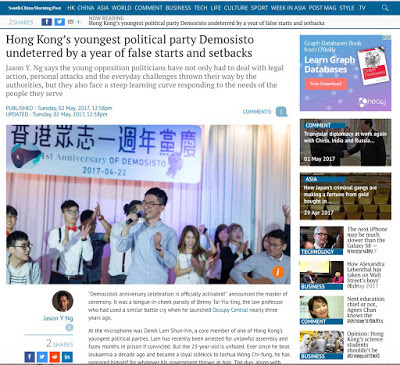 As posted on SCMP.com
At the microphone was Derek Lam (林淳軒), a core member of one of Hong Kong’s youngest political parties. Lam has recently been arrested for unlawful assembly outside the Liaison Officeand faces months in prison if convicted. But the 23-year-old is unfazed. Ever since he beat leukemia a decade ago and became a loyal sidekick to Joshua Wong (黃之鋒) – like Sancho to Don Quixote, he has prepared himself for whatever his government throws at him. The duo, along with fellow party members Nathan Law (羅冠聰) and Agnes Chow (周庭), are all expected to be charged for their roles in the occupy movement. Jail time or not, the student politicians are taking it in their stride.
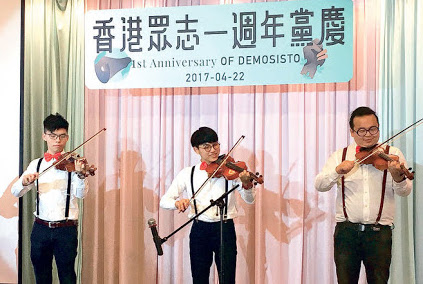 Song and dance at the first anniversary soiree
From left: Joshua Wong, Issac Cehng and Derek Lam
Stride – that happened to be the theme of their first anniversary dinner that took place to great media fanfare one Saturday evening last month. “As new kids on the block, we’ve tried not to overpromise and under-deliver,” Chairman Law half-joked in his opening remarks. “It’s been a year of personal growth.”
And it’s been a year of false starts and setbacks. Their first press conference to announce the party’s establishment 12 months ago was an episode they would rather forget: the venue was too small, audiovisual equipment malfunctioned, and reporters were kept waiting for over an hour. The botched launch – and their inexperience that had caused it – was red meat for radical localistswho pounced on the blunder and jeered in schadenfreude delight.
The party’s unusual name didn’t go unnoticed either. The Greek-Latin concatenation quickly became a subject of constant ridicule on social media – both for its unpronounceability and pretentiousness. The name in Chinese provided fodder for rude puns and biting zingers.
A year later, however, those angry localist groups have all but vanished from the social media echo chamber. Their young ringleaders have either quit politics or left the city for graduate schools, and the internet trolling has ceased. It bears out the political adage that if you wait long enough, you’ll outlive your enemies.
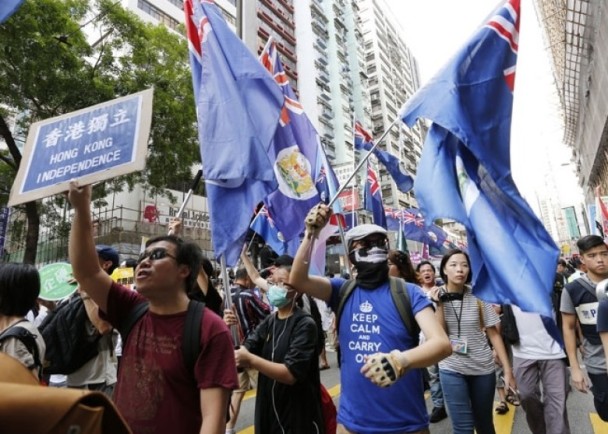 Localism, all but gone
Demosistians had barely recovered from their rocky start when they found themselves going full steam ahead in preparation for the Legislative Council election. Because Joshua Wong was too young to run, Nathan Law had to fly solo in his bid for an elected seat. In the end he swept up over 50,000 votes and, at age 23, became the youngest ever Legco member in the city’s historyand the only politician in Asia to enter the legislature as a student. But like a star-crossed lover in a Cantonese soap opera, the newly-minted lawmaker saw his honeymoon cut short as soon as it began. The political firestorm known as Oathgate – in which two young pro-independence Legco members, Baggio Leung (梁頌恆;) and Yau Wai-ching (游蕙禎) lost their seats for insulting China during their swearing-in ceremony – spread to the rest of the opposition camp. The government, having successfully ousted two thorns in their side in a single move, swiftly initiated similar legal actions to unseat Law and three others for straying from the oath.
The court is due to hand down a verdict in the coming weeks. If he loses, he will not only have to give up his hard fought seat but also face millions in counsel and court fees, not to mention months of salaries and expense disbursements he will have to pay back the government. Bankruptcy will be inevitable. Until the dark cloud is lifted over his head, Law is reluctant to make any long-term plans for his party. Proposals to open a second office in his constituency and hire more staff have been shelved pending the fall of the gavel.
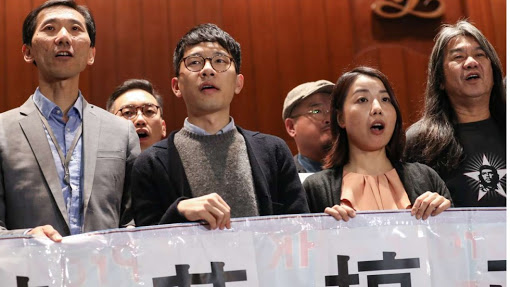 Nathan Law (second from left) may lose his seat in the coming weeks
Then there are personal safety issues. Last January, Law was attacked by pro-Beijing protesters at Hong Kong International Airport when he and Wong returned from a pro-democracy forum in Taipei. Hecklers threw water bottles at Law and ripped his shirt. He slipped and fell down a flight of stairs and was treated at a nearby hospital. So far no one has been arrested or held accountable for the assault. Three months prior to the incident, Wong was denied entry to Thailand and detained at the Bangkok airport for 12 hours. Based on that and a similar run-in with the Malaysian government, there are now only three countries in Asia to which the two feel comfortable traveling: Taiwan, Japan and South Korea. The ersatz travel ban has hamstrung a party that has put “international connection” on its marquee.
If legal action and physical violence are overt forms of political clampdown, then there are more subtle but no less effective weapons of oppression. To date, Demosistō still hasn’t been able to register itself as a “society” with the Hong Kong Police, a requirement under local law. Attempts to open a bank account have been repeatedly denied, which makes everything from managing donations and crowd funding to hiring staff and paying bills a daily struggle. The irony of not being able to even write a check in the world’s freest economy is not lost on them.
In the meantime, the party continues to be hemorrhaging people. Out of the seven founding members who addressed the press at the party’s inauguration, only three (Law, Wong and Chow) are still around. The other four have bowed out for one reason or another. Fermi Wong (王惠芬), a long-time defender of minority rights, was diagnosed with breast cancer shortly after the launch. Vice Chairman Oscar Lai (黎汶洛), who took flak for sidling up to Civic Party during a by-election last autumn for his own political gain, stood down from party elections earlier this month. The vice chairman position remains vacant today.
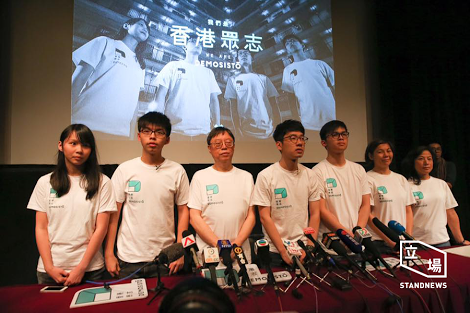 Of the original seven founding members, only three left
From left: Agnes Chow, Joshua Wong, Shu Kei,
Nathan Law, Oscar Lai, Fermi Wong and Ng Mei-lan
To call the past year “eventful” would be an understatement for Demosistō. The young activists have long lost their teenage innocence. Local politics have toughened them up and taught them lessons that no textbooks can. Among them is voters’ priorities. It has taken them a bit of time to figure out that most constituents are less interested in big ticket political items like universal suffrage and freedom of speech than smaller, more immediate matters affecting their neighborhoods.
That means community outreach and grassroots issues are just as important as filibustering a bad government bill on the Legco floor or leading a thousand-man rally on the streets. Wong and Law, both having achieved international fame, now find themselves increasingly rolling up their sleeves over everything from rerouting bus routes to preventing teen suicides. Recently, the party launched a neighborhood initiative to look into why a popular shopping arcade that serves thousands of local residents has been turned into an international school for a privileged few from outside the district. To look more down-to-earth, they have finally decided to drop the macron – the little bar above the letter “o” – from their name.
Demosisto (now spells with two regular o’s) has been actively growing their membership and grooming new leaders. Their latest recruit on the executive committee is 16-year-old Isaac Cheng (鄭家朗), a high school student with Wong’s signature bowl haircut. The party has also drafted an army of university students and fresh graduates to tackle an ambitious research project. The newly-launched Archival Research on the Future of Hong Kong aims to study, digitalize and compile a report on declassified documents concerning the handover negotiation between Britain and China in the 1980s. The party believes that these documents, housed in the National Archives in London, hold the key to not only understanding the past but also analyzing the path forward come 2047, when the “one country, two systems” framework for Hong Kong will expire.
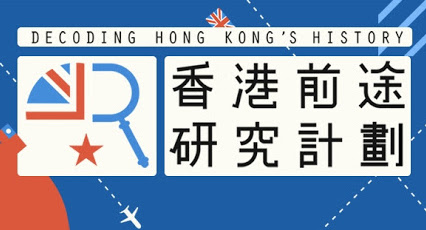 Poster for the Archival Research on the Future of Hong Kong
At the end of the evening, after the music had died down and the Chinese petit four had been served, two dozen active party members came on stage for a final curtain call. They shook hands with their guests and posed for endless selfies in every combination. And then they would be back to the grindstone the next day. Demosistō would join a handful of opposition parties and advocacy groups in a protest against a stew of political and social issues. They would continue to make strides, whatever is thrown at them.
____________________________________
A shorter version of this article appeared on SCMP.com under the title "Hong Kong’s youngest political party Demosisto undeterred by a year of false starts and setbacks."
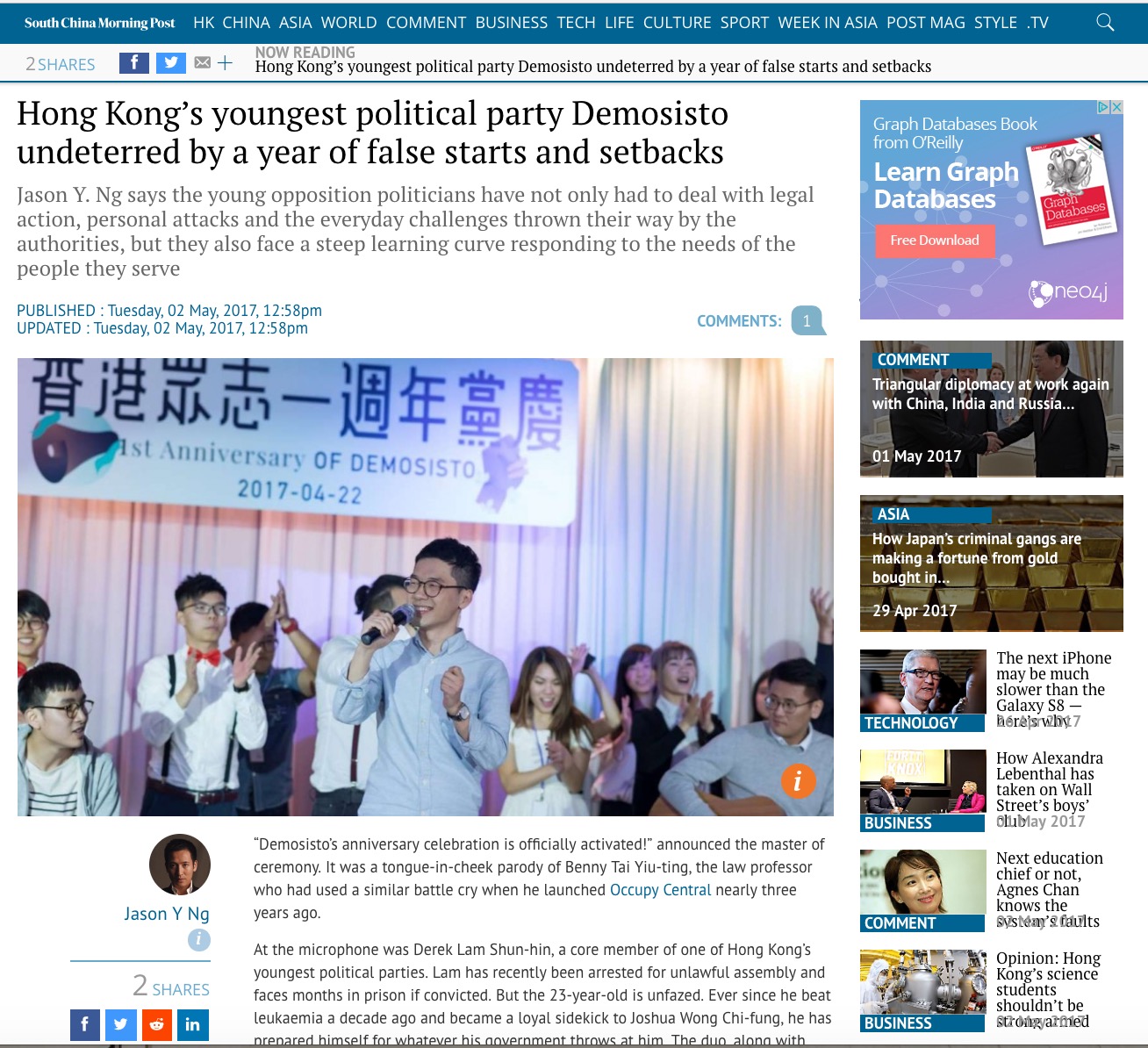 As posted on SCMP.com

December 30, 2016
Past Events: 2016
Upcoming
2016
Book Launch of Hong Kong Future Perfect (2016 Anthology by Hong Kong Writers Circle)Venue: Art and Culture Outbreak Bookshop, WanchaiDate: 15 DecemberTime: 7:00-10:00pm
Guest Speaker at 2016 Graduation Ceremony of St. James' Settlement's "Read, Write, Fun" Program to Help Dyslexic Children Venue: St. James Settlement Jockey Club Social Services Building, Wanchai
Date: 10 December
Interview with Bloomberg News
Article: "Hong Kong Gets Chance to Heal Division as Leader Steps Aside" by David Tweed and Ting Shi Publication date: 9 December
Umbrellas in Bloom Featured in Los Angles Review of BooksArticle: "Some China-related Holiday Gift Book Ideas" by Jeffrey Wasserstrom Issue: 7 December
Interview with CNNArticle: "'They want us to be silent': Hong Kong lawmaker under threat vows to fight" by James Griffiths
Publication date: 25 December
Featured in Rights Review of University of Toronto International Human Rights Program
Article: " Umbrella Movement: A popular uprising predicated on the 'naive' belief that anything is possible " by Karlson Leung Publication date: 30 November
Interview with BBC
Topic: " Art and Protest at the Dakota Access Pipeline " Presenter: Tina Daheley
Broadcast date: 27 November
Interview with CNN
Article: " Hong Kong's banned lawmakers aren't backing down " by James Griffiths
Publication date: 22 November
Umbrellas in Bloom Certified No.1 New Release on Amazon.com (Hong Kong History Category) Date: 22 November
HONG KONG State of Mind Certified No.1 Bestseller on Amazon.com (Hong Kong History Category) Date: 22 November
Interview with South China Morning PostArticle: "Author of book on Occupy protests criticises localists as distraction" by Elaine Yau
Publication date: 18 November
Book Talk Presented by University of Hong Kong Libraries (HKUL) Reading ClubTopic: "Umbrellas in Bloom"Moderator: David Bandurski
Venue: Main Library, University of Hong KongDate: 17 November
Guest Lecture at Centre for English and Additional Languages at Lingnan UniversityTopic: "Developing a writing career in Hong Kong"Moderator: Dr. Marshall MooreVenue: B.Y. Lam Building, Lingnan UniversityDate: 16 November
Interview with Agenzia Giornalistica Italia (AGI)Article: "Hong Kong: Jason Y. Ng, neovescovo Yeung sconfitta per democrazia" by Francesco Palmieri
Publication date: 14 November
Interview with Hong Kong Free PressArticle: "Relaunch of writers group PEN to defend freedom of expression in Hong Kong" by Chantal Yuen
Publication date: 14 November
Book Talk with Kellett School Book ClubTopic: "Umbrellas in Bloom"Venue: Eaton House, CentralDate: 14 November
Interview with South China Morning PostArticle: "Hong Kong writers relaunch literary group in face of unprecedented threat to free speech" by Peace Chiu
Publication date: 13 NovembeR
Moderator at Official Launch of PEN Hong Kong in Collaboration with Hong Kong International Literary FestivalSpeakers: English lecturer Tammy Ho, writer Mishi Saran, publisher Bao Pu and journalist Ilaria Maria SalaVenue: Foreign Correspondents' Club Hong Kong, CentralDate: 13 November
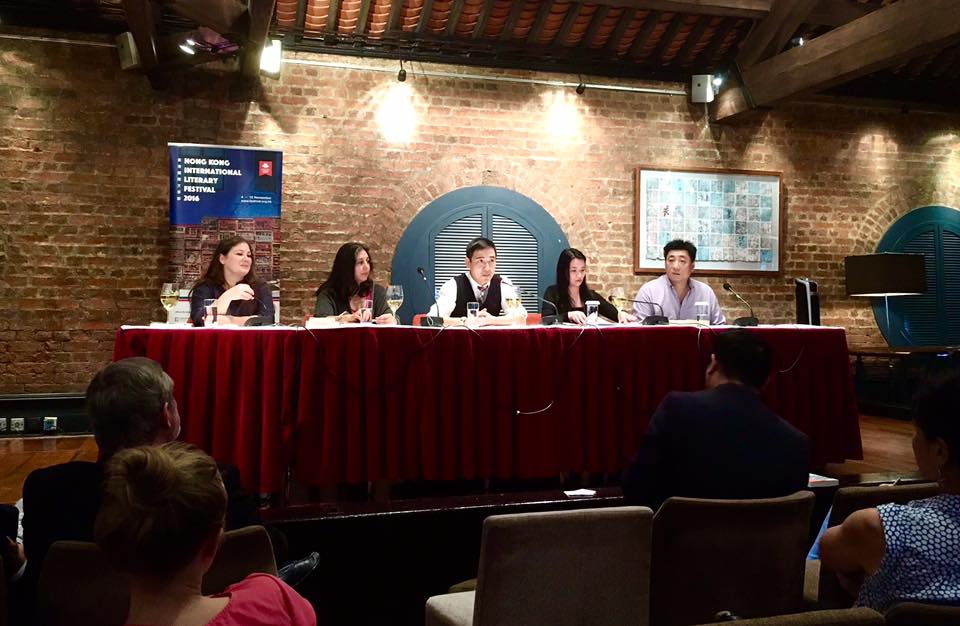 Ng speaking as President of PEN Hong Kong
Moderator at Book Launch of Sarong Party Girl at Hong Kong International Literary Festival Featured author: Singapore novelist Cheryl TanVenue: KEE Club, CentralDate: 12 November
Interview with Bloomberg News
Article: "A Controversial Hong Kong Security Law Is Back on the Table" by David Tweed and Ting Shi Publication date: 11 November
Interview with Globe and MailArticle: "Legislators challenging China’s grip on Hong Kong barred from office" by Nathan Vanderklippe
Publication date: 7 November
Guest Lecture at Faculty of Law, University of TorontoTitle: "Umbrella Revolution - Two Years On"Venue: Flavell HallDate: 27 October
Guest Lecture at Osgoode Hall Law School, York University
Title: "Umbrella Revolution - Two Years On"Venue: Ignat Kaneff BuildingDate: 24 October
Moderator at Inaugural "Neighborhood Series" Sponsored by Grosvenor HK
Speakers: Journalist Vivienne Chow, museum curator Aric Chen, restauranteur Jenn Wong, district councilman Paul Zimmerman and architect Christopher LawVenue: Liang Yi MuseumDate: 17 October
Interview with Le MondeArticle: "Le camp démocrate de Hongkong défie le pouvoir chinois" by Harold Thibault and Florence de Changy Publication date: 12 October
Interview with Sunday TimesArticle: "Hong Kong youth-quake alarms Beijing with push for independence" by Philip Sherwell Publication date: 9 October
Contributed to Full Translation of Joshua Wong's Essay for GuardianArticle: "I'm a pro-democracy activist. Is that why Thailand chose to deport me?" by Joshua Wong Publication date: 7 October
Two Interviews with GuardianArticle: "Hong Kong activist Joshua Wong attacks Thailand after being barred at China's request" by Tom Phillips, Eric Cheung and Oliver Holmes
Article: "Hong Kong activist Joshua Wong detained in Thailand at China's request" by Tom Phillips and Bonnie Malkin Publication date: 5 October
Moderator at Corporate Screening of Documentary She Objects in Collaboration with Women's Foundation (TWF)Speakers: Director Nicola Fan and TWF Vice Chair Angelina KwanVenue: IFC II Date: 3 October
Interview with Bangkok's Voice TV - World News Topic: A look back on the Umbrella Movement by a Hong Kong writer Broadcast date: 29 September
Article Published in GuardianTitle: "Hong Kong's face of protest Joshua Wong considers a future away from politics"Publication date: 28 September
Talk at Chi Sun College, University of Hong KongTopic: "From blog to bestsellers: (part of Stay Young, Dream Big" series)Venue: Jockey Club Student Village III, University of Hong KongDate: 26 September
Interview with CanalMacau
Topic: "Os Localistas de Hong Kong"
Broadcast date: 25 September
Book Talk with Hong Kong Literary Group Book ClubTopic: "Umbrellas in Bloom"Venue: Mahalo Tiki Lounge, CentralDate: 24 September
Interview with China DailyArticle: "Maids of Honor" by Basu Chitralekha Publication date: 22 September
Panel Discussion at Young China WatchersTopic: "LegCo Election 2016: A New Era for Hong Kong Politics?"Venue: Bar Six, Wyndham StreetDate: 21 September
Appointed President of PEN Hong Kong, Local Chapter of PEN International
Date: 20 September
"Umbrellas in Bloom" cited in GuardianArticle: "Denise Ho: the Cantopop queen on a crusade against China's communist party" by Tom Phillips Publication date: 19 September
Talk at Faculty of Communications Arts, Chulalongkorn UniversityTopic: "Hong Kong's politics: post-election and the Umbrella Movement"Moderator: Professor Pirongrong RamasootaVenue: Chulalongkorn University, Pathumwan, BangkokDate: 16 September
Talk at Faculty of Political Science, Thammasat UniversityTopic: " Umbrellas in Bloom : Hong Kong's largest social movement explained"Moderator: Professor Janjira SombutpoonsiriVenue: Thammasat University, Prachan, BangkokDate: 16 September
Panel Discussion at Foreign Correspondents' Club of ThailandTopic: "China: an ever-growing footprint"Moderator: Jerome TaylorVenue: Foreign Correspondents' Club of Thailand, Lumpini, BangkokDate: 15 September
Talk at Raffles Institution (visiting from Singapore)Topic: "Student activism and the Umbrella Movement"Venue: Fairmount HouseDate: 12 September
Interview with French Newspaper LibérationArticle: "A Hongkong, la révolution des parapluies entre au Parlement" by Rosa Brostra Publication date: 5 September
Article Published in GuardianTitle: "Hong Kong’s political class shaken up by new kids on the block"Publication date: 5 September
Interview with GuardianArticle: "Hong Kong elections: anti-Beijing activists gain foothold in power" by Tom Phillips and Eric Cheung Publication date: 5 September
Interview with South China Morning PostArticle: "Indonesian domestic helpers in Hong Kong fall prey to alleged pyramid scam" by Raquel Cavalho Publication date: 4 September
Interview with Los Angeles TimesArticle: "Two years after 'Umbrella' protests, Hong Kong prepares to vote on its future" by Jonathan Kaiman Publication date: 2 September
Option Pricing Article Published for Chinese University of Hong Kong Business SchoolTitle: "Sure Win: New Study on Option Pricing Suggests Arbitrage Opportunities"Publication date: 1 September
Featured Author in A Hundred Readers《百人閱讀》by Muji 無印良品 x City Magazine 號外Release date: 17 August
Panel Judge at Leadership & Social Entrepreneurship Program Co-organized by Wimler Foundation and Aeteno UniversityVenue: Migrants Empowerment Resource Center MERC, CentralDate: 14 August
Speaker at Department of Journalism, Chulalongkorn University (visiting from Thailand)Topic: "Role of new media in the Umbrella Movement"Venue: Tamar Government HeadquartersDate: 4 August
Interview with Associated PressArticle: "Hong Kong booksellers braving China chill for publishers" by Kelvin Chan Publication date: 22 July
Featured in Beijing-based Literary Site Five BooksArticle: "Jason Ng recommends the best books on Hong Kong" by Alec Ash Publication date: 7 July
Interview with Epoch Times
Article: "Umbrellas in Bloom: The Insider's Perspective on Hong Kong's Occupy Movement"Publication date: 20 June
Interview with GuardianArticle: "China behaving like gangster state with bookseller kidnap, say Hong Kong politicians" by Tom PhillipsPublication date: 17 June
KEE Club Book Talk Presented by Hong Kong International Literary FestivalTitle: Umbrellas in Bloom
Moderator: Nick ThorpeVenue: KEE Club, CentralDate: 7 June
Interview with Epoch TimesArticle: "Umbrellas in Bloom: book launch《雨伞盛开》新书发布会" by Li YenPublication date: 7 June
Singapore Book Launch of Umbrellas in Bloom Presented by Select CentreModerator: Professor Ian Chong
Venue: TheatreWorks, Mohamed Sultan Road, SingaporeDate: 2 June
Featured in Stand News《立場新聞》
Article: "Not too late 為時未晚 — Jason Ng feature" by Carmen Kwong Publication date: 30 May
Umbrellas in Bloom Featured in Southside magazine
Article: "News: Umbrellas in Bloom" Issue: May 2016
Featured in Books4You《讀書好》Article: "Not too late 為時未晚 — Jason Ng feature" by Carmen Kwong Issue: 104 ( May 2016)
Lunch Talk Hosted by Latham & Watkins
Topic: "Reflections on the Umbrella Movement"Venue: One Exchange Square, Central
Date: 10 May
Talk at Journalism and Media Studies Centre (JMSC), University of Hong Kong
Topic: Tips on feature writingModerator: Professor David BandurskiVenue: Eliot Hall, PokfulamDate: 24 April
Second printing of Umbrellas in BloomDate: 24 April
Book Talk with Serious Book Club
Title: No City for Slow Men Venue: Blue Place Cafe, WanchaiDate: 20 April
Featured in South China Morning PostArticle: " Climate of fear: Hong Kong publisher claims printers rejected book on Occupy protests " by Oliver Chou Publication date: 16 April
Interview with Guardian
Article: "Hong Kong's umbrella movement spawns new political party" by Tom PhillipsPublication date: 10 April
Commencement of Spring Term at Faculty of Law of University of Hong Kong, LLM ProgramCourse: International Securities LawVenue: Cheng Yu Tung Tower, Centennial Campus, PokfulamDates: 8 - 29 April
Hong Kong Book Launch of Umbrellas in BloomVenue: Bookazine, Lyndhurst TerraceDate: 6 April
Interview with D100 RadioShow: "Running the race 對沖人生路" with presenter Edward ChinTopic: "Umbrella spirit never dies 雨傘精神-不屈不撓 "Broadcast date: 5 April
Interview with RTHK Radio 3Show: "123 Show" with presenter Noreen Mir
Topic: " Umbrellas in Bloom "Broadcast date: 5 April
Featured in Portuguese News Agency Agência de Notícias de Portugal, SA (LUSA)Article: "Hong Kong continua com raiva quase dois anos após Occupy" by Fátima ValentePublication date: 3 April
Featured in New York Times Article: "Q. and A.: Jason Y. Ng on Aftermath of Hong Kong’s Umbrella Revolution" by Didi Kirsten TatlowPublication date: 24 March
Featured in Hong Kong Free Press
Article: "Author Jason Ng reflects on the Umbrella Movement and Hong Kong’s recent local elections" by Vivienne ZhangPublication date: 13 March
Featured Author at 2016 Bookworm Literary FestivalPanel 1: "Future of Hong Kong" moderated by Guardian reporter Tom Phillips
Panel 2: " Umbrellas in Bloom " moderated by Los Angeles Times Beijing Bureau chief Julie MakinenVenue: Sanlitun, Beijing
Date: 12 - 13 March
Release of Umbrellas in BloomDate: 9 March
Guest Speaker at Rotary ClubTopic: "Writing about Hong Kong -- A Decade On"Venue: Hong Kong Bankers' Club, LandmarkDate: 1 March
Interview with TimeOut HKArticle: "Running riot: Is civil unrest the new normal for Hong Kong?" by Jamie LawPublication date: 24 February
Joined EJInsight as a ContributorDate: 22 February
Featured in TimeOut Beijing
Article: "8 must-see talks at the Bookworm Literary Festival" by Helen Roxburgh
Publication date: 12 February
Article Reproduced in Wall Street JournalArticle: "Never underestimate the little guy: What the Mongkok clashes have in common with the Arab Spring" for Hong Kong Free Press Date: 10 February
Interview with Radio France InternationaleArticle: "Hong Kong caught up in 'fishball revolution'" by Jack FeredayPublication date: 10 February
Interview with Los Angeles TimesArticle: "Missing Hong Kong booksellers detained in China for 'illegal activities'" by Jonathan Kaiman and Violet LawPublication date: 5 February
Volunteer Lawyer for Helpers for Domestic Helpers
Start date: 3 February
Master of Ceremony at a 1,500-guest Corporate Annual Ball
Co-host: TVB actor/present Kelly Cheung
Venue: Hong Kong Convention Centre, Wanchai
Date: 23 January
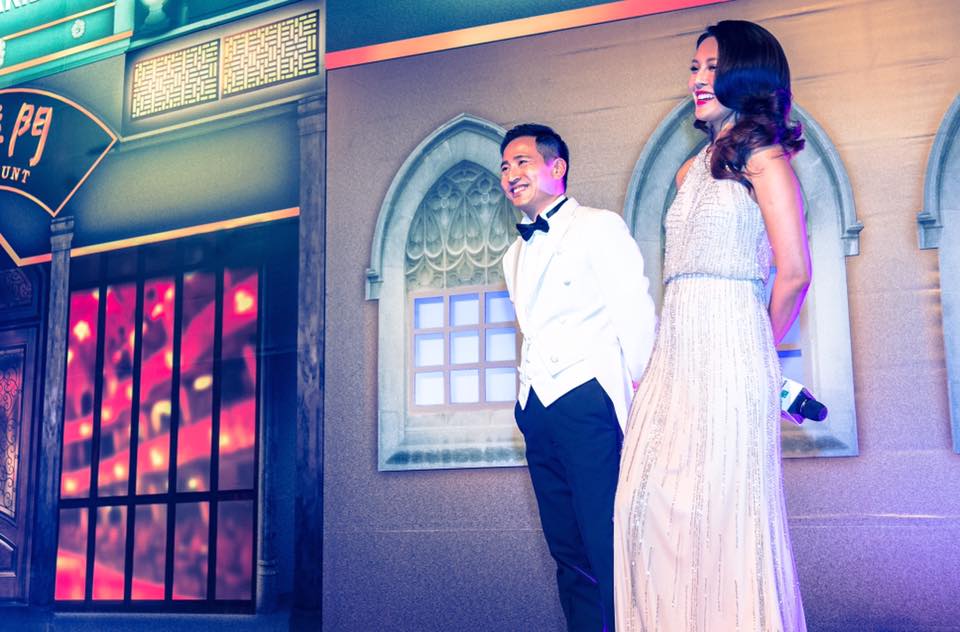 MC'ing at the annual ball
Shooting of Hollywood/UK documentary
Venue: Pokfulam
Date: 22 January
Release date: end of 2016
2015
2014
2013
2008 - 2012
* * *
If you would like Jason Y. Ng, bestselling author of Umbrellas in Bloom, No City for Slow Men and HONG KONG State of Mind, to speak at your school or organization, please contact him at info@jasonyng.com.
December 5, 2016
The Young and the Reckless 廢青新政
Oathgate, the political firestorm that started two months ago and has dominated the headlines ever since, is showing no signs of dying down. Like a molten lava flow, the slow-motion disaster continues to threaten everything in its destructive path: the city’s rule of law, the recent Legislative Council election results, the fledgling anti-establishment coalition, and the already dwindling trust between Hong Kong and mainland China.
It all started with a bad idea gone wrong. At the swearing-in ceremony in October, Yau Wai-ching (游蕙禎) and Sixtus “Baggio” Leung Chung-hang (梁頌恆) – firebrands who ran on a pro-independence platform and were among half a dozen young candidates voted into Legco – draped themselves in a banner bearing the slogan “Hong Kong is NOT China” and used an archaic racial slur to refer to the People’s Republic in their oath.
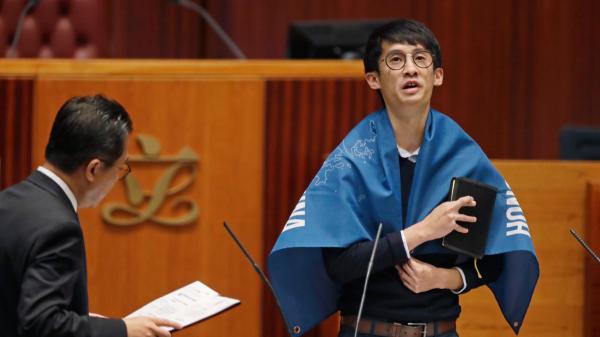 "Hong Kong is NOT China"
By now it is clear that the two overplayed their hand and underestimated Beijing’s resolve to stamp out any and all secessionist ideologies. The National People’s Congress Standing Committee issued an interpretation within weeks of the provocation, to clarify the oath-taking provision in the Basic Law and bar from office any lawmaker who did not follow the prescribed wording of the oath or who lacked “sincerity” when taking it.
With only themselves to blame, the pair lost the seats they had fought hard to win, after months of bruising televised debates and taxing election campaigns endured by both candidates and voters.
But they have done much more than shoot themselves in the foot – they have recklessly endangered the entire anti-establishment bloc.
Last Friday, the Chief Executive’s Office confirmed the opposition’s worst fears by initiating legal action to unseat four other lawmakers – “LongHair” Leung Kwok-hung (梁國雄), Nathan Law Kwun-chung (羅冠聰), Edward Yiu Chung-yim (姚松炎) and Lau Siu-lai (劉小麗) – all of whom had also strayed from the original oath. Long Hair called the government’s move a “coup d’état” to overturn the Legco election results.
If the government prevails in court and if some of the seats held by the disqualified lawmakers end up going to the pro-Beijing camp in the ensuing by-election, the pan-democrats may lose their jealously guarded majority in the geographical constituencies, as well as the critical veto power to block bad bills relating to electoral amendments that require a supermajority vote. All hell could and would break loose.
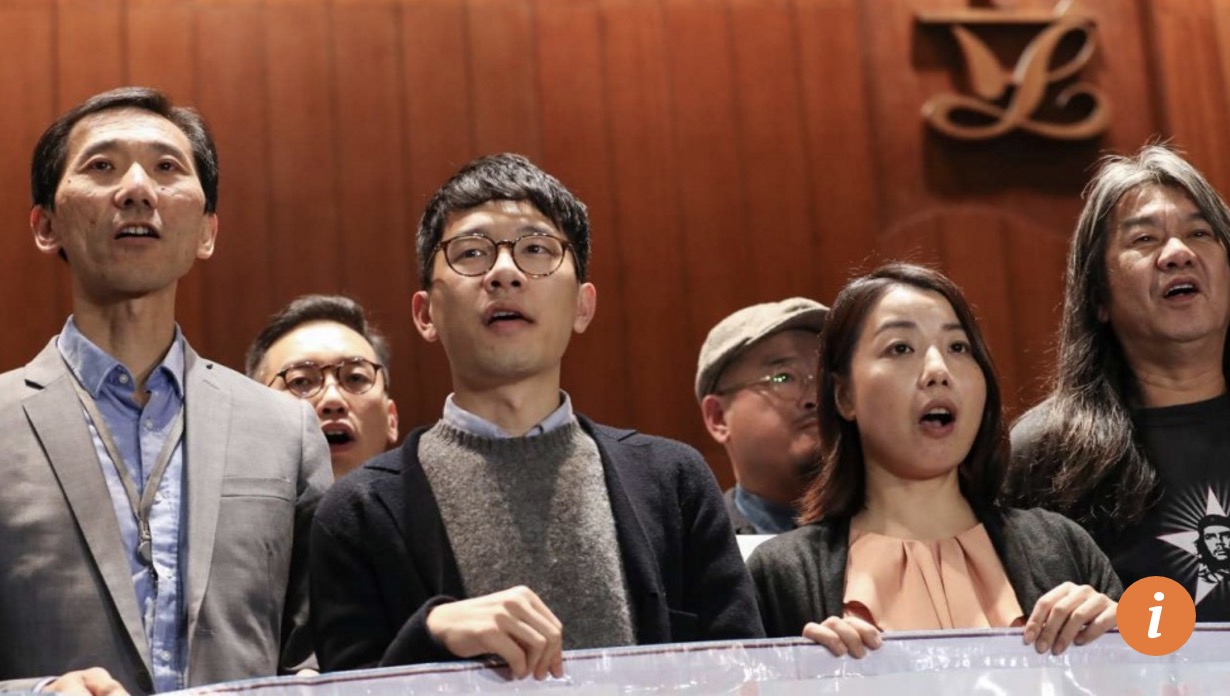 From the left: Yiu, Law, Lau and Leung
The delicate balance of partisan power aside, Oathgate – and the Basic Law interpretation it triggered – has already plunged the city into a constitutional crisis. Since the handover, Beijing has exercised considerable restraint towards its right to interpret the Basic Law, acutely aware that each interpretation chips away at Hong Kong’s rule of law a little more.
Insulted and outraged by the duo’s publicity stunt, the communist leadership was left with no choice but to deploy that blunt instrument once again.
But that’s not all. The incident has given Beijing an opening – if it ever needed one – to tighten its control on the unfettered freedom of expression in Hong Kong. Already, there is mumbling within the city’s ruling elite about the need to enact a much-dreaded anti-subversion law, a discussion that has been shelved after a record number of citizens took to the streets in 2003 to oppose it.
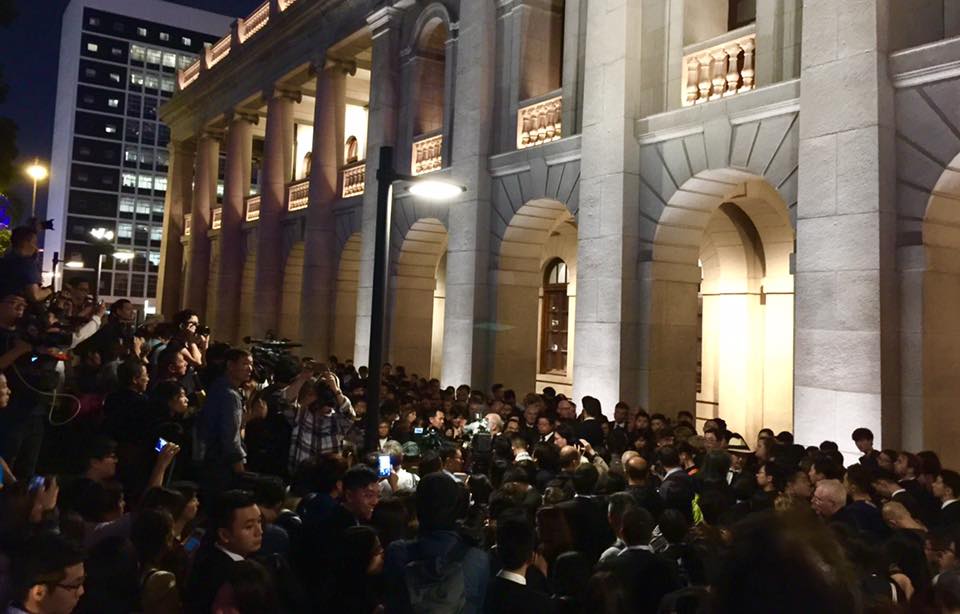 A silent march to mourn the death of the rule of law
Still, the most damaging impact of Oathgate is the diversion of public attention. The seemingly interminable saga continues to push all other news stories off the front page and distract citizens from substantive issues that are more pressing and deserving of their focus.
Before Yau and Leung were thrust to the fore, another opposition lawmaker – Eddie Chu Hoi-dick (朱凱迪) – was gaining traction with his investigation of a scandal involving a major land development project in New Territories West. Chu was well on his way to expose the long-standing collusion among the government, property tycoons, rural community leaders and the triads, making a compelling case that those complicated business ties are the root cause of the city’s stubborn housing shortage.
Thanks to the bumbling duo, however, Chu’s good work has been all but obliterated, and his one-man crusade to take on the establishment is not likely to regain momentum any time soon.
In the coming months, all eyes will be on the next chapter of Oathgate, as the court battle to defend the four seats will continue to play out and, if and when that fails, there will be another round of irksome and polarising election campaigns before voters have to head to the polls again.
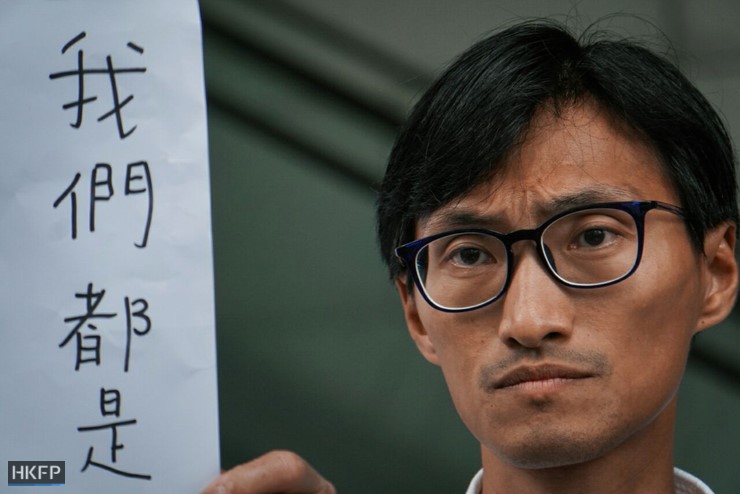 Chu's good work has been sidelined
That the political fallout has worked in Beijing’s favor has left many wondering whose team Yau and Leung are really on. Social media is ablaze with rumors and speculation that they are in fact moles hired by communist operatives to stir the pot, and that the appearance of chaos and ungovernability in the SAR would then give Beijing a convenient excuse to purge Legco of the opposition – or at least weaken the pro-democracy coalition.
So far, the evidence supporting these conspiracy theories has been circumstantial at best. Some point to Yau’s internship years ago at Ta Kung Pao (大公報), a Beijing-owned newspaper, while others question why neither she nor Leung has been able to produce any photo of themselves at the Occupy demonstrations in 2014, even though they touted themselves as “paratroopers” (Occupy protesters-turned-politicians) during their recent election campaign.
Are the two undercover agents serving the Dark Lord, or are they bona fide political rookies who have misjudged Beijing’s temperament and unwittingly committed political self-immolation? We may never know. What we do know is the wreck they have left behind and the long-term damage they have inflicted on the city.
 Who team is she on?
When asked by a reporter about their future plans, Yau and Leung answered: “We want to go back to our ordinary lives.” Yes, walk away and let the rest of Hong Kong clean up your mess.
If there is a moral to this story, it is that young politicians armed with passion and an electoral mandate can do tremendous good as well as serious harm. If channelled constructively, as do lawmakers like Eddie Chu, their energy can achieve great things and move the city in the right direction. If used recklessly, however, the power can consume those who wield it and everybody around
____________________________________
This article appeared on SCMP.com under the title "Oath-taking pair overplayed their hand, and the damage to Hong Kong is dire."
 As posted on SCMP.com
November 29, 2016
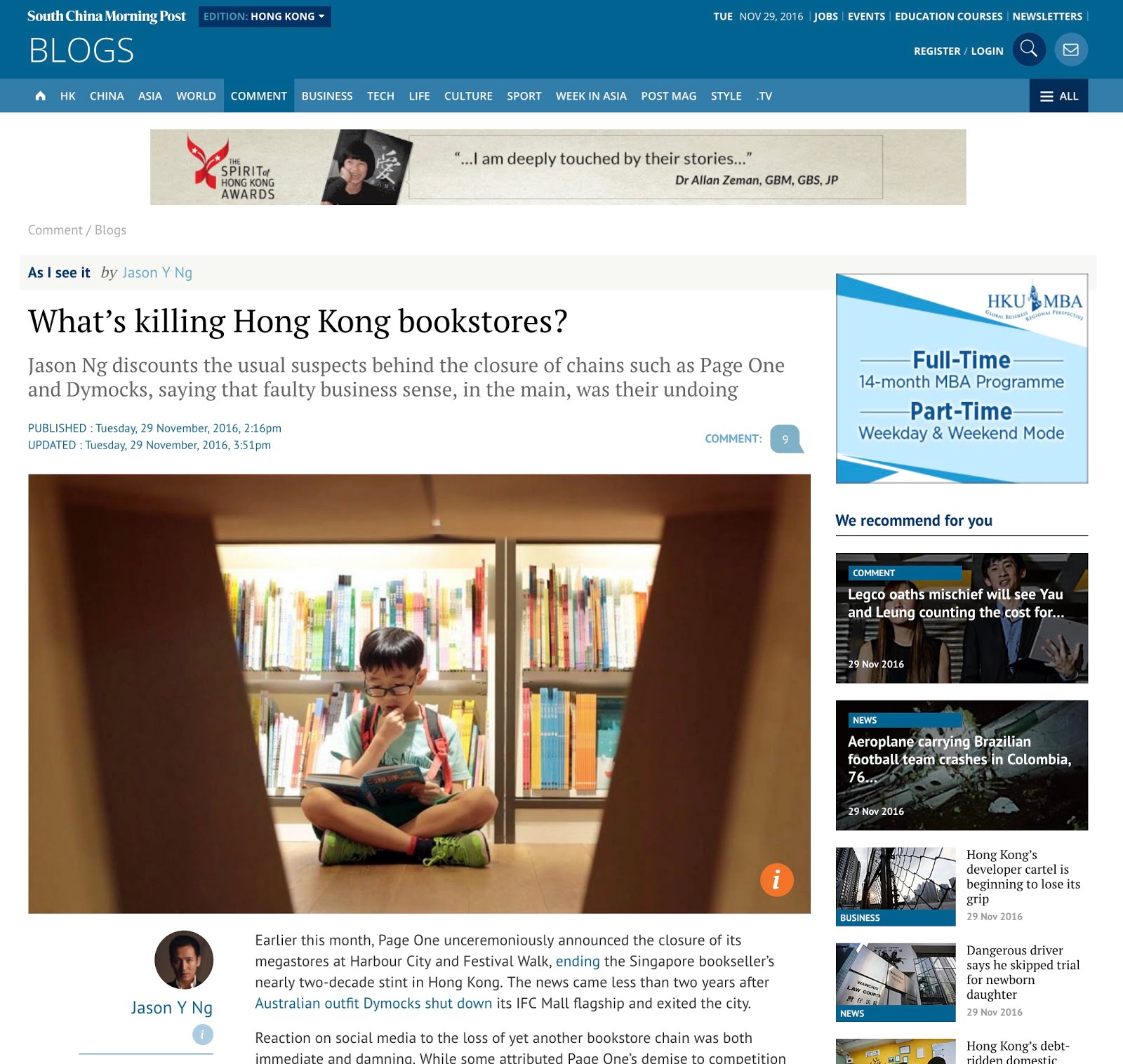
What’s Killing Hong Kong Bookstores?
Earlier this month, Page One unceremoniously announced the closure of its megastores at Harbour City and Festival Walk, ending the Singapore bookseller’s nearly two-decade stint in Hong Kong. The news came less than two years after Australian outfit Dymocks shut down its IFC Mall flagship and exited the city.
Reaction on social media to the loss of yet another bookstore chain was both immediate and damning. While some attributed Page One’s demise to competition from e-books and online retailers, many put the blame on the lack of a robust reading culture in Hong Kong. Still others pointed their finger at greedy landlords and the sky-high rent they extort from retailers.
But what really killed Page One? An autopsy is in order to examine the cause of death of the book industry’s latest casualty.
 When will he go?
E-books : The technorati have long prophesized the end of paper. Portable and affordable, Amazon’s Kindle and other e-readers are the physical book’s worst nightmare. But are they really?
After years of rapid growth in the past decade, e-book sales appear to have reached a plateau. In the UK, digital content sales fell nearly 2 per cent last year, while physical book sales grew in the same period. A similar reversal of fortune is happening in the United States, where industry experts cite “digital fatigue” as the primary cause of e-books’ gradual decline in popularity.
E-books have been even slower to catch on in Hong Kong, largely because not as many Chinese titles are available electronically. Contrary to common belief, they are not responsible for Page One’s death.
 E-book sales have plateaued
Online retailers : Popular sites such as Book Depository and SHOPinHK boast free delivery and sizeable discounts – between 10 and 25 per cent. They offer convenience, savings and a selection that traditional bookstores find hard to beat.
Still, the two platforms cater to somewhat different customer groups: readers who already know what they want (usually international bestsellers) versus those who need to browse and be inspired. The latter are less inclined to make a purchase unless they can leaf through the pages or check out what else is on the shelf.
Store experience matters the most to buyers of children’s books. On weekends, many Hong Kong parents take their kids to physical bookstores where they can pick out a few choice titles, curl up on the carpeted floor and read the text out loud before taking them home as a treat. And so, while online retailers do peel away sales from traditional stores, the former can’t match the shopping environment offered by their brick-and-mortar counterparts. E-commerce did hurt Page One, but it didn’t mortally wound it.
 They've come too late
Reading culture : The joy of reading is lost on most Hong Kongers. We tend to read for utility and not pleasure. That’s why investment manuals and travel guides outsell all other genres, whereas literature and fiction are the perennial underdogs. Chinese-language bookstores such as Joint Publishing (三聯), Commercial Press (商務) and Chung Hwa (中華) rely heavily on the sales of textbooks and exam aids.
Our reading culture has long been the bane of the publishing industry. Over the years, booksellers have evolved and adapted by expanding their product offerings to stay afloat. Eslite (誠品) and Bookazine, for instance, have carved out significant store space for stationery, snacks, toys and sundry paraphernalia.
So had Page One. Its Harbour City flagship resembled a small department store, complete with a restaurant and tea house. What’s more, the chain knew what it was in for when it opened shop in aliterate Hong Kong. It didn’t go out of business because its customers suddenly changed the way they read – because they didn’t.
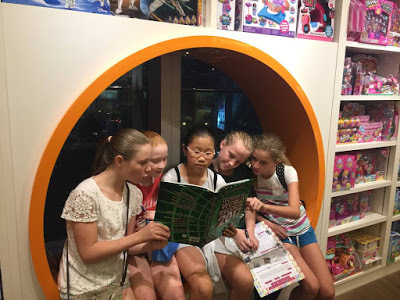 Girls reading at Bookazine
Retail rent : We love to blame all social ills on the property market, and we do so for good reason. In Hong Kong, rent accounts for over 20 per cent of a retailer’s operating cost, nearly twice the industry norm overseas.
To understand the landlord-tenant dynamics, I spoke to Shonee Mirchandani, owner and managing director of Bookazine. To my surprise, she was quick to debunk the myth that commercial landlords are bloodsucking villains. “It’s simple supply and demand,” she said. “If a store space is overpriced, retailers will look somewhere else. At the same time, we don’t expect a free pass from our landlords just because we sell books. We are running a business and so are they.”
The relationship between shopping malls and retailers are symbiotic: mall operators bring in foot traffic and they charge market rates for it. “Yes, rents are high in Hong Kong, but our costliest stores [in terms of monthly rent] are also our most profitable,” Mirchandani confessed. “There are many reasons why businesses fail. It’s not always the landlord’s fault. In fact, it’s often not.”
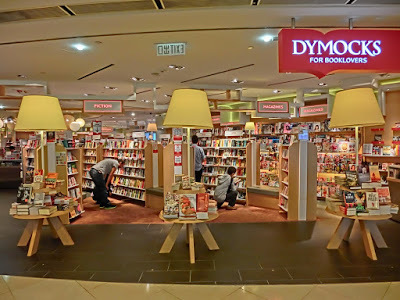 Dymocks IFC no more
None of the above : The suite of market forces we have considered thus far – technology, reading culture and retail rent – affect the entire book industry. None of them explains why some players thrive while others flounder. Dymocks and Page One have both bitten the dust, but their competitors continue to grow. Eslite opened a second location at Star House last year and added a third in Taikoo Shing 10 months ago. Bookazine recently launched new stores in Repulse Bay and Discovery Bay. More branches are being planned.
The difference between success and failure boils down to the basic law of evolution: well-managed businesses survive and mismanaged ones don’t. Dymocks failed in Hong Kong in large part because the franchise was poorly run, according to an industry insider. The head office offered little support to the franchisees and set unrealistic turnover targets.
Page One, on the other hand, misread the book market. “They specialised in high-end art and architecture books and neglected non-fiction titles that Hong Kongers love,” said Pete Spurrier, owner-founder of Blacksmith Books. “Expensive art books are a niche market and it can’t really sustain a business.” As if to prove the point, Basheer Design Books in Causeway Bay announced this past weekend that they have decided to call it quits.
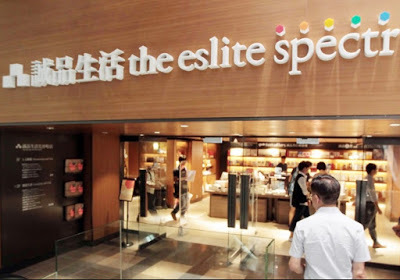 Eslite sells not only books but a lifestyle
Cash flow mismanagement is another common pitfall for booksellers – or any retailer for that matter.
Most businesses fail because they burn cash faster than they can make it. Dymocks owed millions to creditors when they folded. Page One reportedly spent over HK$20 million – money it hadn’t yet earned – on fitting out its sprawling Harbour City flagship. Now in receivership, the chain has left in the lurch scores of unpaid publishers, distributors, interior designers and contractors, according to local news reports.
Luck and timing also played a big part in sealing Page One’s fate. Its expensive renovation works coincided with the Chinese government’s crackdown onpolitically sensitive titles, which dried up a main source of its income. Shortly after the chain moved into Harbour City, direct competitor Eslite unveiled a multi-storey, state-of-the-art lifestyle megastore a block away at Star House, siphoning off both traffic and sales. At roughly the same time, Page One lost all six of its airport branches to Chung Hwa. The series of unfortunate events, all occurring at a time when the chain was most financially vulnerable, dealt a blow that precipitated its eventual death. Call it bad luck and bad timing.
So let the coroner conclude his post mortem examination with a few wise words from a bookseller who has beaten the odds. “Running a business is a gamble,” Mirchandani said. “You need both skill and luck. I’m driven by fear – the fear factor is what makes us adaptable and viable.”
____________________________________
This article also appeared on SCMP.com.
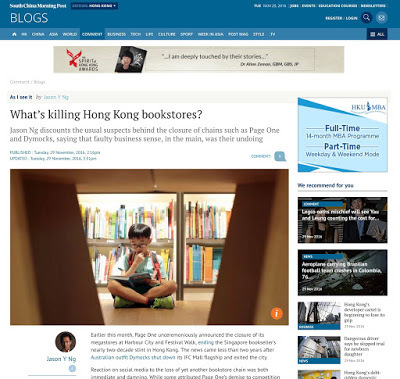 As posted on SCMP.com
Reaction on social media to the loss of yet another bookstore chain was both immediate and damning. While some attributed Page One’s demise to competition from e-books and online retailers, many put the blame on the lack of a robust reading culture in Hong Kong. Still others pointed their finger at greedy landlords and the sky-high rent they extort from retailers.
But what really killed Page One? An autopsy is in order to examine the cause of death of the book industry’s latest casualty.
 When will he go?
E-books : The technorati have long prophesized the end of paper. Portable and affordable, Amazon’s Kindle and other e-readers are the physical book’s worst nightmare. But are they really?
After years of rapid growth in the past decade, e-book sales appear to have reached a plateau. In the UK, digital content sales fell nearly 2 per cent last year, while physical book sales grew in the same period. A similar reversal of fortune is happening in the United States, where industry experts cite “digital fatigue” as the primary cause of e-books’ gradual decline in popularity.
E-books have been even slower to catch on in Hong Kong, largely because not as many Chinese titles are available electronically. Contrary to common belief, they are not responsible for Page One’s death.
 E-book sales have plateaued
Online retailers : Popular sites such as Book Depository and SHOPinHK boast free delivery and sizeable discounts – between 10 and 25 per cent. They offer convenience, savings and a selection that traditional bookstores find hard to beat.
Still, the two platforms cater to somewhat different customer groups: readers who already know what they want (usually international bestsellers) versus those who need to browse and be inspired. The latter are less inclined to make a purchase unless they can leaf through the pages or check out what else is on the shelf.
Store experience matters the most to buyers of children’s books. On weekends, many Hong Kong parents take their kids to physical bookstores where they can pick out a few choice titles, curl up on the carpeted floor and read the text out loud before taking them home as a treat. And so, while online retailers do peel away sales from traditional stores, the former can’t match the shopping environment offered by their brick-and-mortar counterparts. E-commerce did hurt Page One, but it didn’t mortally wound it.
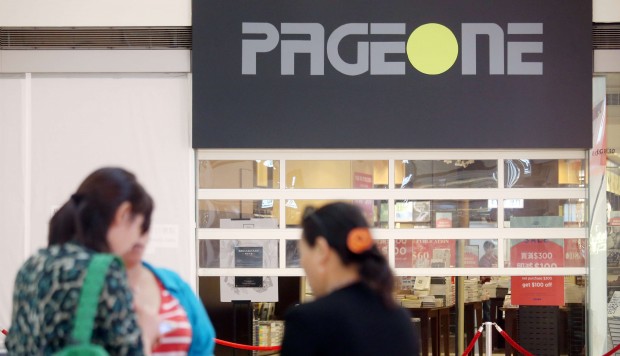 They've come too late
Reading culture : The joy of reading is lost on most Hong Kongers. We tend to read for utility and not pleasure. That’s why investment manuals and travel guides outsell all other genres, whereas literature and fiction are the perennial underdogs. Chinese-language bookstores such as Joint Publishing (三聯), Commercial Press (商務) and Chung Hwa (中華) rely heavily on the sales of textbooks and exam aids.
Our reading culture has long been the bane of the publishing industry. Over the years, booksellers have evolved and adapted by expanding their product offerings to stay afloat. Eslite (誠品) and Bookazine, for instance, have carved out significant store space for stationery, snacks, toys and sundry paraphernalia.
So had Page One. Its Harbour City flagship resembled a small department store, complete with a restaurant and tea house. What’s more, the chain knew what it was in for when it opened shop in aliterate Hong Kong. It didn’t go out of business because its customers suddenly changed the way they read – because they didn’t.
 Girls reading at Bookazine
Retail rent : We love to blame all social ills on the property market, and we do so for good reason. In Hong Kong, rent accounts for over 20 per cent of a retailer’s operating cost, nearly twice the industry norm overseas.
To understand the landlord-tenant dynamics, I spoke to Shonee Mirchandani, owner and managing director of Bookazine. To my surprise, she was quick to debunk the myth that commercial landlords are bloodsucking villains. “It’s simple supply and demand,” she said. “If a store space is overpriced, retailers will look somewhere else. At the same time, we don’t expect a free pass from our landlords just because we sell books. We are running a business and so are they.”
The relationship between shopping malls and retailers are symbiotic: mall operators bring in foot traffic and they charge market rates for it. “Yes, rents are high in Hong Kong, but our costliest stores [in terms of monthly rent] are also our most profitable,” Mirchandani confessed. “There are many reasons why businesses fail. It’s not always the landlord’s fault. In fact, it’s often not.”
 Dymocks IFC no more
 None of the above : The suite of market forces we have considered thus far – technology, reading culture and retail rent – affect the entire book industry. None of them explains why some players thrive while others flounder. Dymocks and Page One have both bitten the dust, but their competitors continue to grow. Eslite opened a second location at Star House last year and added a third in Taikoo Shing 10 months ago. Bookazine recently launched new stores in Repulse Bay and Discovery Bay. More branches are being planned.
The difference between success and failure boils down to the basic law of evolution: well-managed businesses survive and mismanaged ones don’t. Dymocks failed in Hong Kong in large part because the franchise was poorly run, according to an industry insider. The head office offered little support to the franchisees and set unrealistic turnover targets.
Page One, on the other hand, misread the book market. “They specialised in high-end art and architecture books and neglected non-fiction titles that Hong Kongers love,” said Pete Spurrier, owner-founder of Blacksmith Books. “Expensive art books are a niche market and it can’t really sustain a business.” As if to prove the point, Basheer Design Books in Causeway Bay announced this past weekend that they have decided to call it quits.
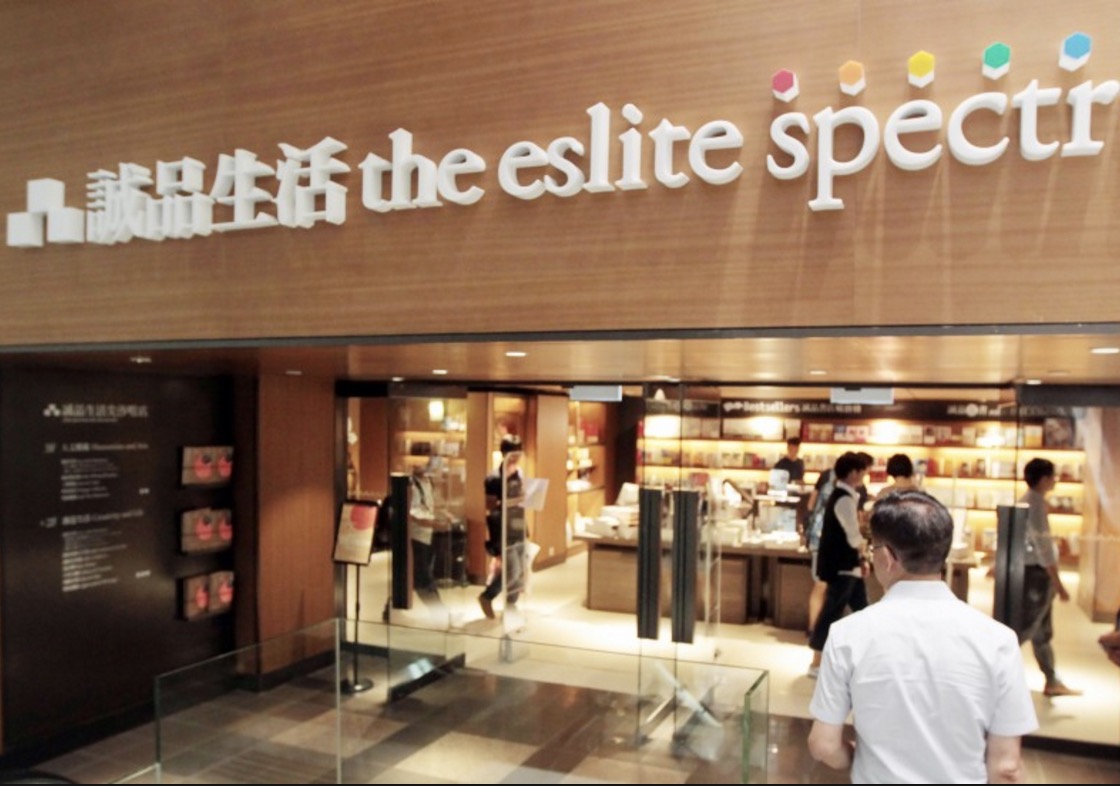 Eslite sells not only books but a lifestyle
Cash flow mismanagement is another common pitfall for booksellers – or any retailer for that matter.
Most businesses fail because they burn cash faster than they can make it. Dymocks owed millions to creditors when they folded. Page One reportedly spent over HK$20 million – money it hadn’t yet earned – on fitting out its sprawling Harbour City flagship. Now in receivership, the chain has left in the lurch scores of unpaid publishers, distributors, interior designers and contractors, according to local news reports.
Luck and timing also played a big part in sealing Page One’s fate. Its expensive renovation works coincided with the Chinese government’s crackdown onpolitically sensitive titles, which dried up a main source of its income. Shortly after the chain moved into Harbour City, direct competitor Eslite unveiled a multi-storey, state-of-the-art lifestyle megastore a block away at Star House, siphoning off both traffic and sales. At roughly the same time, Page One lost all six of its airport branches to Chung Hwa. The series of unfortunate events, all occurring at a time when the chain was most financially vulnerable, dealt a blow that precipitated its eventual death. Call it bad luck and bad timing.
So let the coroner conclude his post mortem examination with a few wise words from a bookseller who has beaten the odds. “Running a business is a gamble,” Mirchandani said. “You need both skill and luck. I’m driven by fear – the fear factor is what makes us adaptable and viable.”
____________________________________
This article also appeared on SCMP.com.
 As posted on SCMP.com
September 28, 2016
What's Next for Joshua? 黃之鋒去向
A lot has happened in Hong Kong in the two years since tens of thousands of student protesters occupied the city’s major thoroughfares to demand a free vote.
The so-called Umbrella Movement, which began on 28 September 2014 and went on for 79 days, was followed by a period of protest fatigue, polarization of society and increasing intervention by the Chinese government.
But for Joshua Wong, a mainstay of that movement and a household name both at home and abroad, the past 24 months have been a chance to reflect and reassess.
 Boy wonder
Earlier this year, Wong disbanded a student group he set up in 2011 and co-founded a political party with fellow protest leader Nathan Law.
In the general election three Sundays ago, Wong, who at 19 was too young to run for office, took a back seat. He campaigned for Law in a bid for one of the 40 democratically elected seats in the city’s legislature. Law went on to win the election and become one of six fresh-faced lawmakers elected on a platform of increased autonomy from China.
And so, for the first time since was catapulted to international fame – after successfully thwarting the Hong Kong government’s attempt in 2012 to introduce a patriotic curriculum in primary and secondary schools – Wong was not the center of attention.
The day after his election win, Law appeared in major newspapers around the world. It was him – and not the much more famous Wong – who took live interviews with CNN and the BBC. In one telling photograph taken at the vote counting station, a jubilant Law was pictured cradling a bouquet of flowers while surrounded by cheering supporters. Standing next to him in the image was Wong, whose face was all but eclipsed by the oversized bouquet.
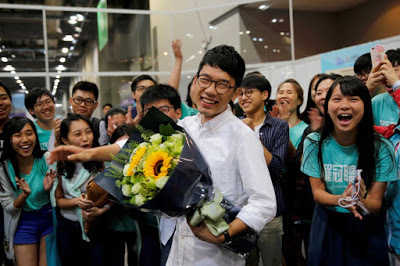 Law (center) and Wong (blocked by flowers)
Wong appeared unfazed by how the spotlight had shifted to his friend.
“I don’t mind being Nathan’s sidekick,” said Wong, in a sit-down interview at the Foreign Correspondents’ Club, a short walk from the main protest site in 2014. “In fact, I’m relieved that someone else is in the limelight for a change.”
“During the general election, I made sure that Nathan took center stage so that voters chose him because they knew him and not because they considered him my surrogate.”
Being in someone else’s shadow seems hardly cold at all, especially if you were named one of the world’s top ten leaders by Fortune magazine – as Wong was in 2015. The teenage student leader takes three to four interviews each day and holds daily meetings with like-minded activists and politicians. His jam-packed days begin at 9am and end well past midnight.
Wong’s schedule has not changed much since he graced the cover of Time magazine shortly after the Umbrella Movement erupted. The foreign press frequently compares him to that other teenage activist, Nobel Prize laureate Malala Yousafzai, in terms of charisma and name recognition.
His fame notwithstanding, Wong said he considered Law an important – and equal – partner. “We have so much on our plates: policy proposals, press interviews and community outreach. Neither of us can do it alone. As a lawmaker, Nathan will fight inside the legislature. I’ll continue my fight on the streets.”
Part of that fight is to garner international support for the city’s pro-democracy movement. Before the recent election, he and Law toured Britain and the U.S., giving speeches at Oxford, Cambridge, Harvard and Stanford. With Law now focusing on the upcoming parliamentary session, Wong will take up the bulk of the overseas speaking engagements. The next couple of months will see him travel to Bangkok, Washington D.C., New Yorkand Miami.
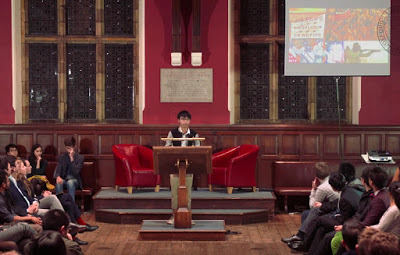 Wong addressing students at Oxford
Wong now appears less fidgety than at the height of the 2014 protests when he spent nearly three months camped on the streets outside Hong Kong’s government headquarters. He smiles frequently and no longer checks his smartphone every 15 seconds. What hasn’t changed is his signature bowl haircut and heavy-framed spectacles. His denim shirt and cargo pants are those of a typical Hong Kong teenager.
But Wong won’t be a teenager for much longer. He turns 20 in a few weeks and will lose his status as a student leader when he graduates from university in 2018. And if he doesn’t manage his career carefully, the comparison may shift from Malala Yousafzai to Macaulay Culkin or other failed child stars.
Wong knows that time is his biggest enemy. That’s why he filed a judicial review prior to the general election to overturn the minimum age requirement for election candidates – a fight he ultimately lost. The next election is four years away.
In the meantime, his prospects remain murky.
Wong currently attends Open University, which ranks last among the nine universities in Hong Kong. While he does well in his political science classes, his grade point average has been pulled down by non-core subjects with which he struggles, such as statistics.
A lackluster transcript aside, Wong’s main career hurdle is perhaps his name. Being a high profile political activist who was recently convicted for his role in starting the Umbrella Movement means that – in the long term – a career in politics may be his only option.
Jobs in both the public and private sectors are out of reach. No bank, telecom company or property developer – by far the largest employers in the city – would want to associate its name with a thorn in Beijing’s side.
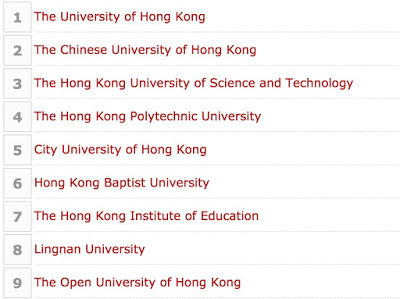 University ranking 2016
Still, friends like Matthew Torne, the British director who shadowed Wong for months while filming a documentary that chronicles Wong’s campaign against the patriotic curriculum, have urged the teenager to think long and hard about whether a career in politics is the right move.
“I’ve told Josh on more than one occasion that he needs a backup plan, such as a solid education from a reputable university overseas,” Torne said. “Josh is smart enough to know that voters are fickle and that he needs to think beyond politics.”
Wong appears to be listening to his friends’ counsel.
“I want to wipe the slate clean with a master’s degree aboard,” Wong mused. His ever-growing rolodex, which boasts professors at top postgraduate programs around the world, will come in handy when he is ready to take a hiatus from public life.
“I haven’t made up my mind about what I’ll do after spending a year or two overseas,” he confessed. “Outside politics, I suppose I can work for an NGO or do some freelance writing. I may even consider academia.”
For now, the protest leader gets by on a modest monthly allowance from his parents, with whom he and his brother share an apartment in a middle class neighborhood.
When he doesn’t eat at home, his meals are paid for by politicians and reporters. Foreign trips are funded by institutions that invite him to speak.
“My biggest expense is cab fare,” the teenage activist said almost apologetically. “I’m always running from one place to the next, and I don’t have time to take the bus or the subway.” In Hong Kong, taking taxis instead of mass transit is considered a luxury for students.
“Other than that, I’m a pretty low maintenance guy.”
 Director Torne (right) and Wong
_________________________
An shorter version of this article was published in the 28 September edition of the Guardian.
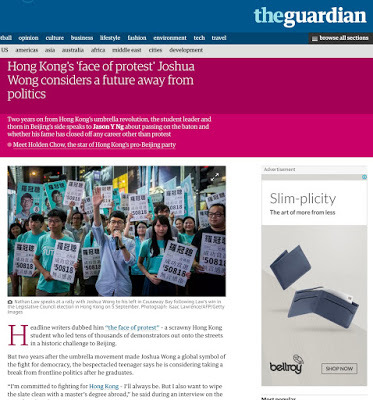 As the article appeared on theGuardian.com
The so-called Umbrella Movement, which began on 28 September 2014 and went on for 79 days, was followed by a period of protest fatigue, polarization of society and increasing intervention by the Chinese government.
But for Joshua Wong, a mainstay of that movement and a household name both at home and abroad, the past 24 months have been a chance to reflect and reassess.
 Boy wonder
Earlier this year, Wong disbanded a student group he set up in 2011 and co-founded a political party with fellow protest leader Nathan Law.
In the general election three Sundays ago, Wong, who at 19 was too young to run for office, took a back seat. He campaigned for Law in a bid for one of the 40 democratically elected seats in the city’s legislature. Law went on to win the election and become one of six fresh-faced lawmakers elected on a platform of increased autonomy from China.
And so, for the first time since was catapulted to international fame – after successfully thwarting the Hong Kong government’s attempt in 2012 to introduce a patriotic curriculum in primary and secondary schools – Wong was not the center of attention.
The day after his election win, Law appeared in major newspapers around the world. It was him – and not the much more famous Wong – who took live interviews with CNN and the BBC. In one telling photograph taken at the vote counting station, a jubilant Law was pictured cradling a bouquet of flowers while surrounded by cheering supporters. Standing next to him in the image was Wong, whose face was all but eclipsed by the oversized bouquet.
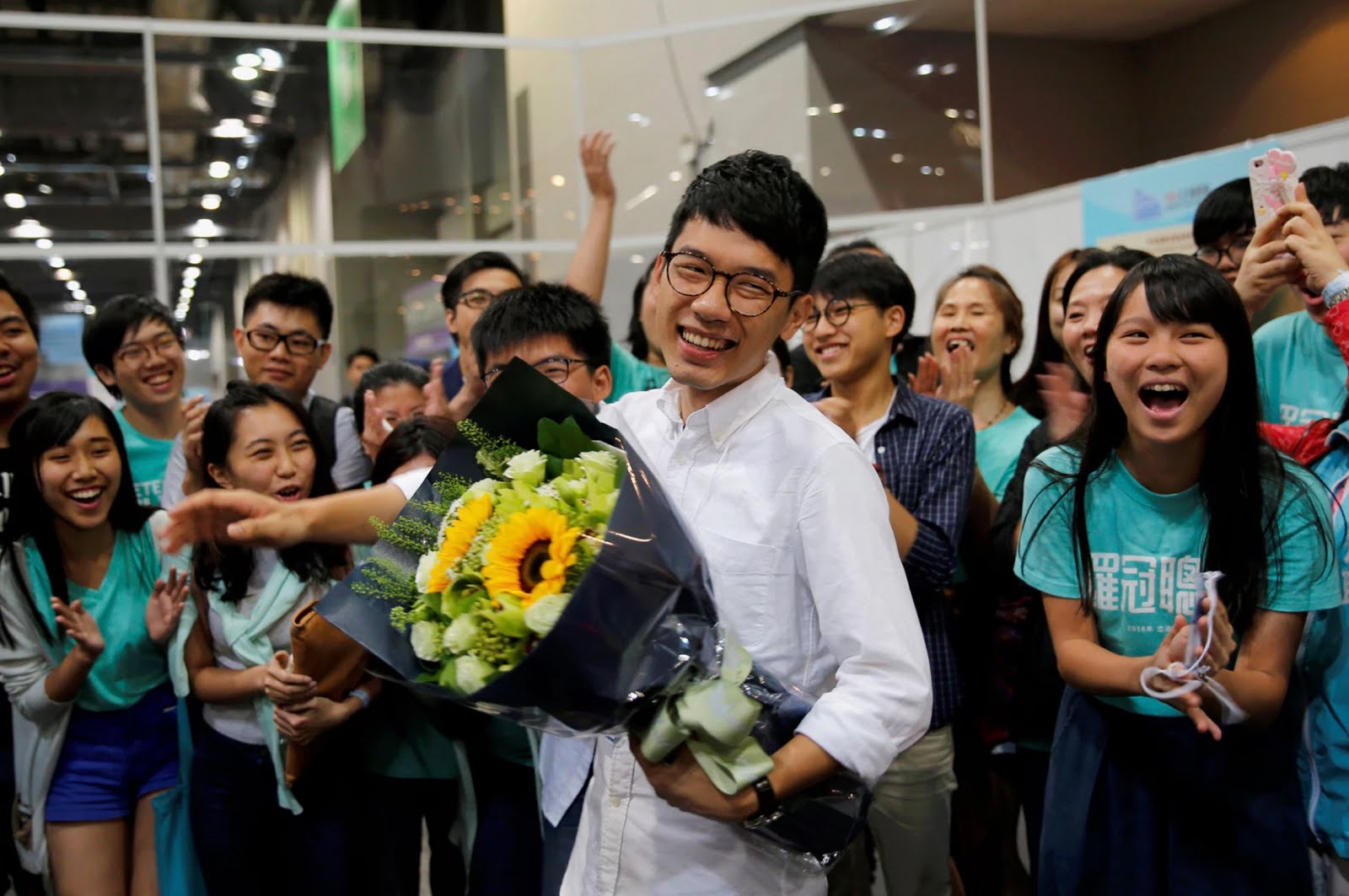 Law (center) and Wong (blocked by flowers)
Wong appeared unfazed by how the spotlight had shifted to his friend.
“I don’t mind being Nathan’s sidekick,” said Wong, in a sit-down interview at the Foreign Correspondents’ Club, a short walk from the main protest site in 2014. “In fact, I’m relieved that someone else is in the limelight for a change.”
“During the general election, I made sure that Nathan took center stage so that voters chose him because they knew him and not because they considered him my surrogate.”
Being in someone else’s shadow seems hardly cold at all, especially if you were named one of the world’s top ten leaders by Fortune magazine – as Wong was in 2015. The teenage student leader takes three to four interviews each day and holds daily meetings with like-minded activists and politicians. His jam-packed days begin at 9am and end well past midnight.
Wong’s schedule has not changed much since he graced the cover of Time magazine shortly after the Umbrella Movement erupted. The foreign press frequently compares him to that other teenage activist, Nobel Prize laureate Malala Yousafzai, in terms of charisma and name recognition.
His fame notwithstanding, Wong said he considered Law an important – and equal – partner. “We have so much on our plates: policy proposals, press interviews and community outreach. Neither of us can do it alone. As a lawmaker, Nathan will fight inside the legislature. I’ll continue my fight on the streets.”
Part of that fight is to garner international support for the city’s pro-democracy movement. Before the recent election, he and Law toured Britain and the U.S., giving speeches at Oxford, Cambridge, Harvard and Stanford. With Law now focusing on the upcoming parliamentary session, Wong will take up the bulk of the overseas speaking engagements. The next couple of months will see him travel to Bangkok, Washington D.C., New Yorkand Miami.
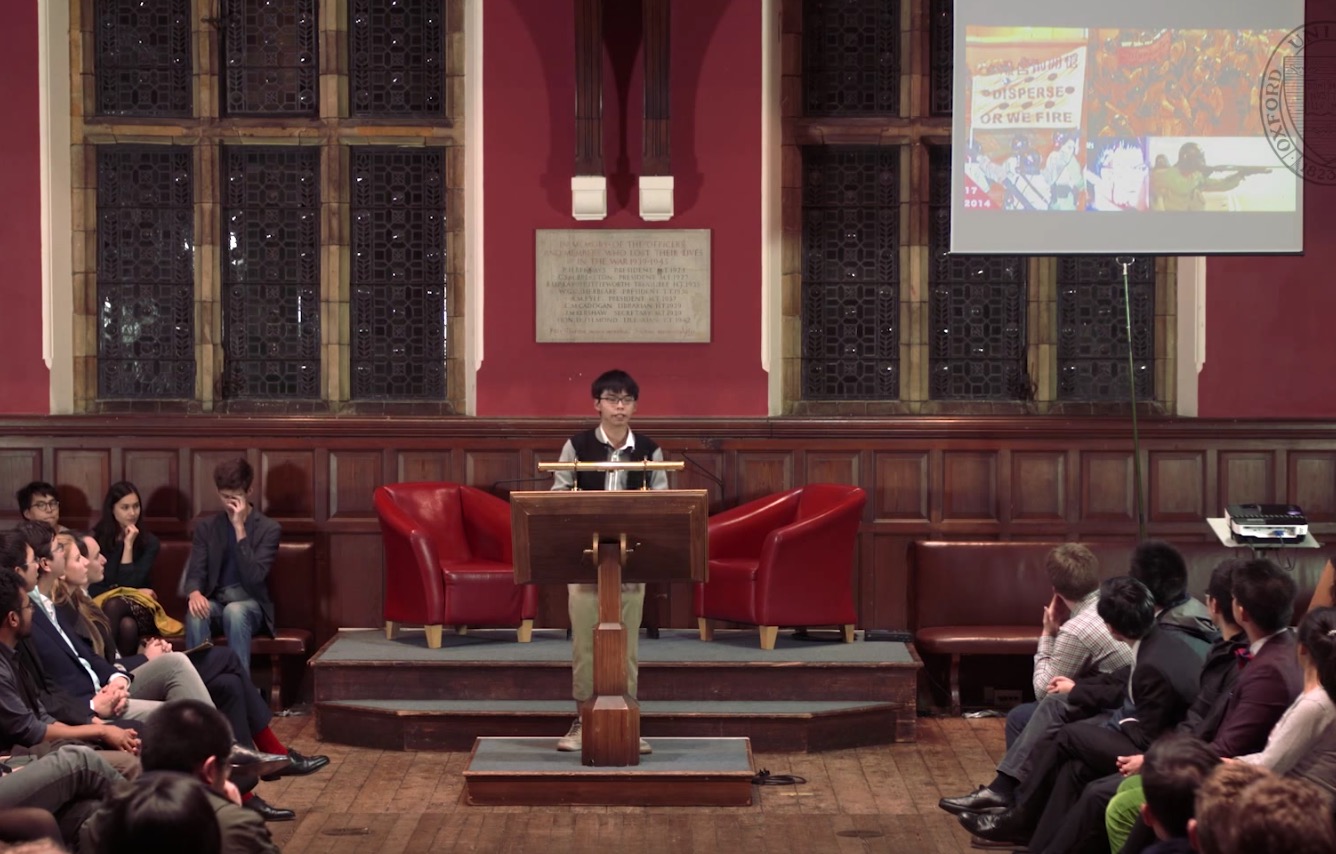 Wong addressing students at Oxford
Wong now appears less fidgety than at the height of the 2014 protests when he spent nearly three months camped on the streets outside Hong Kong’s government headquarters. He smiles frequently and no longer checks his smartphone every 15 seconds. What hasn’t changed is his signature bowl haircut and heavy-framed spectacles. His denim shirt and cargo pants are those of a typical Hong Kong teenager.
But Wong won’t be a teenager for much longer. He turns 20 in a few weeks and will lose his status as a student leader when he graduates from university in 2018. And if he doesn’t manage his career carefully, the comparison may shift from Malala Yousafzai to Macaulay Culkin or other failed child stars.
Wong knows that time is his biggest enemy. That’s why he filed a judicial review prior to the general election to overturn the minimum age requirement for election candidates – a fight he ultimately lost. The next election is four years away.
In the meantime, his prospects remain murky.
Wong currently attends Open University, which ranks last among the nine universities in Hong Kong. While he does well in his political science classes, his grade point average has been pulled down by non-core subjects with which he struggles, such as statistics.
A lackluster transcript aside, Wong’s main career hurdle is perhaps his name. Being a high profile political activist who was recently convicted for his role in starting the Umbrella Movement means that – in the long term – a career in politics may be his only option.
Jobs in both the public and private sectors are out of reach. No bank, telecom company or property developer – by far the largest employers in the city – would want to associate its name with a thorn in Beijing’s side.
 University ranking 2016
Still, friends like Matthew Torne, the British director who shadowed Wong for months while filming a documentary that chronicles Wong’s campaign against the patriotic curriculum, have urged the teenager to think long and hard about whether a career in politics is the right move.
“I’ve told Josh on more than one occasion that he needs a backup plan, such as a solid education from a reputable university overseas,” Torne said. “Josh is smart enough to know that voters are fickle and that he needs to think beyond politics.”
Wong appears to be listening to his friends’ counsel.
“I want to wipe the slate clean with a master’s degree aboard,” Wong mused. His ever-growing rolodex, which boasts professors at top postgraduate programs around the world, will come in handy when he is ready to take a hiatus from public life.
“I haven’t made up my mind about what I’ll do after spending a year or two overseas,” he confessed. “Outside politics, I suppose I can work for an NGO or do some freelance writing. I may even consider academia.”
For now, the protest leader gets by on a modest monthly allowance from his parents, with whom he and his brother share an apartment in a middle class neighborhood.
When he doesn’t eat at home, his meals are paid for by politicians and reporters. Foreign trips are funded by institutions that invite him to speak.
“My biggest expense is cab fare,” the teenage activist said almost apologetically. “I’m always running from one place to the next, and I don’t have time to take the bus or the subway.” In Hong Kong, taking taxis instead of mass transit is considered a luxury for students.
“Other than that, I’m a pretty low maintenance guy.”
 Director Torne (right) and Wong
_________________________
An shorter version of this article was published in the 28 September edition of the Guardian.
 As the article appeared on theGuardian.com
September 6, 2016
Generation Shift 換代
For months, fierce political campaigns, vicious personal attacks and sporadic allegations of electoral irregularities had filled the airwaves and fuelled social media discourse in Hong Kong. One candidate was forced to drop out and flee to the U.K. after receiving threats of physical harm.
That is because the stakes had never been higher.
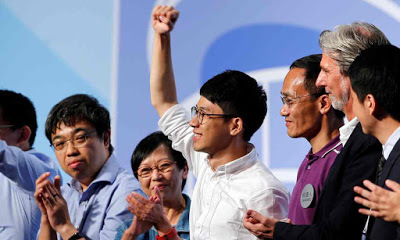 The Honorable Nathan Law (middle)
On Sunday, in the first election in Hong Kong since the Umbrella Movement was spawned in 2014, more than two million citizens – nearly 60% of all registered voters – went to the polls. 40 seats on the Legislative Council, or Legco, the region’s parliament, were up for grabs by candidates representing a wide spectrum of political parties. They ranged from diehard Beijing loyalists to pro-democracy veterans and younger, more radical newcomers calling for autonomy and even independence from China...
Read the rest of this article on TheGuardian.com.
 As the article appeared in the 6 September
2016 print edition of The Guardian
That is because the stakes had never been higher.
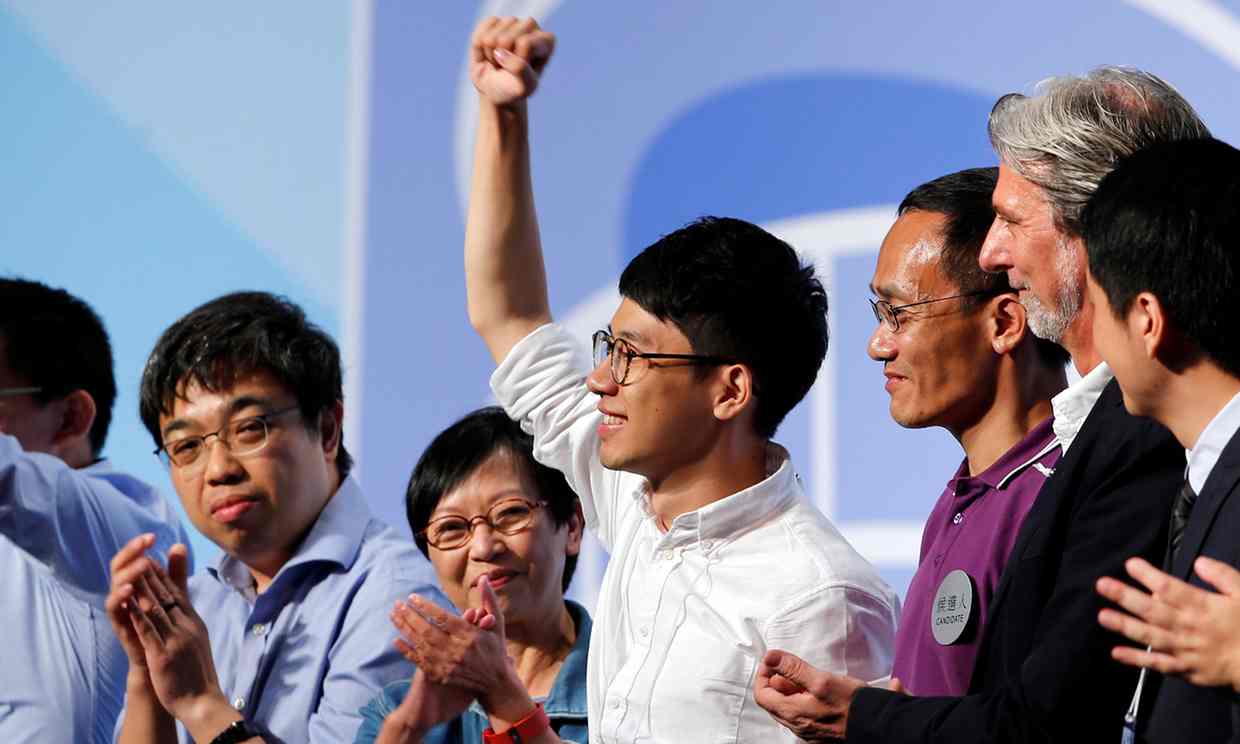 The Honorable Nathan Law (middle)
On Sunday, in the first election in Hong Kong since the Umbrella Movement was spawned in 2014, more than two million citizens – nearly 60% of all registered voters – went to the polls. 40 seats on the Legislative Council, or Legco, the region’s parliament, were up for grabs by candidates representing a wide spectrum of political parties. They ranged from diehard Beijing loyalists to pro-democracy veterans and younger, more radical newcomers calling for autonomy and even independence from China...
Read the rest of this article on TheGuardian.com.
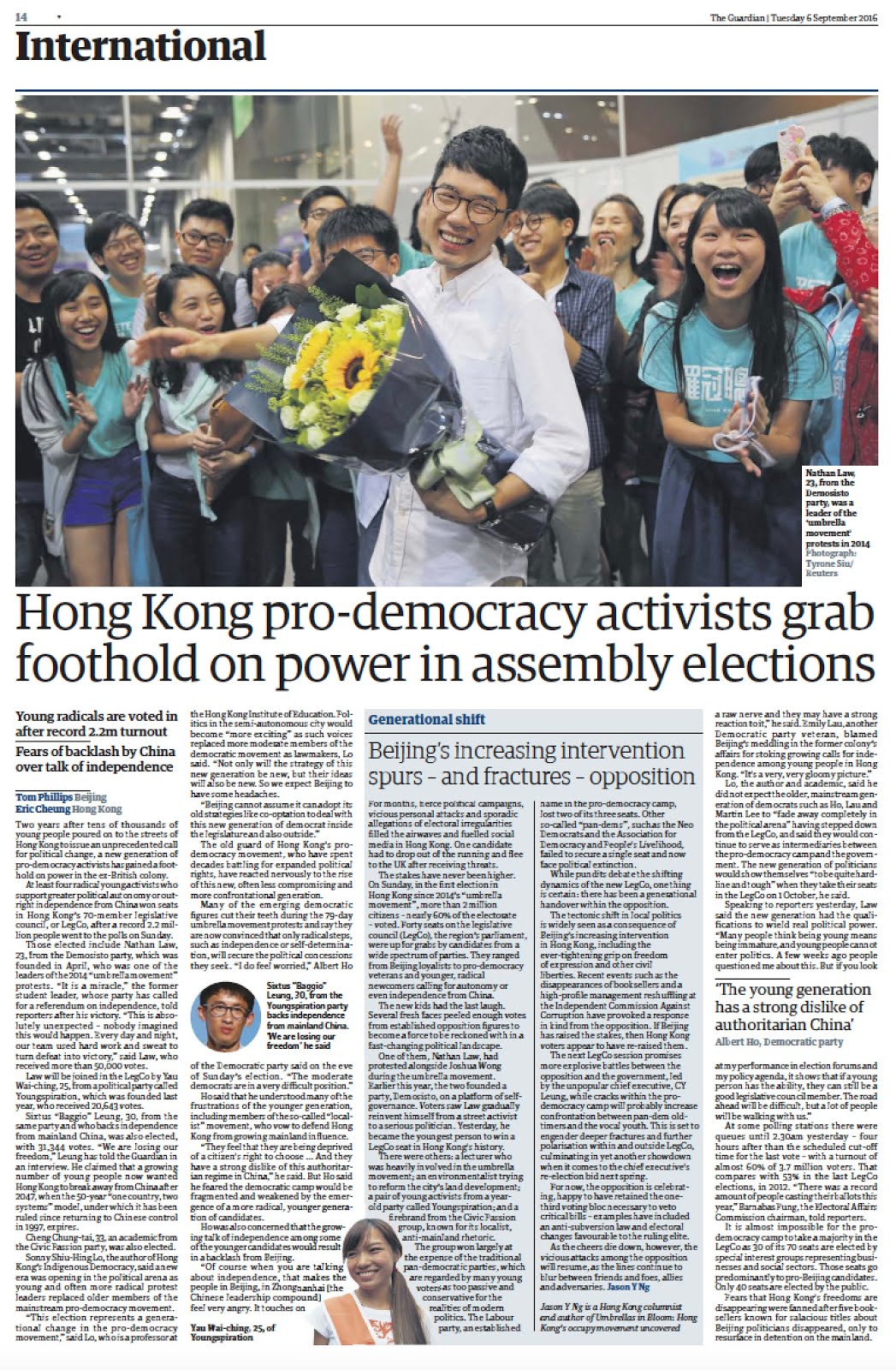 As the article appeared in the 6 September
 2016 print edition of The Guardian
August 30, 2016
Legco Election Special: Part 5 - New Territories West
I conclude my Legislative Council (Legco) election series with New Territories West, where three distinguished gentlemen in that district will tell you who they are and what they stand for.
My top picks in New Territories West are Neighborhood and Worker’s Service Centre’s Ivan Wong Yun-tat 黃潤達 (candidate #1), League of Social Democrats’ Raphael Wong Ho-ming 黃浩銘(candidate #11) and independent candidate Eddie Chu Hoi-dick 朱凱廸 (candidate #20).
 Get out and vote!
* * *
Question 1: Beyond rhetoric and slogans, what concrete action or achievements can you point to that distinguish you from other candidates?
Ivan : This is my 14th year working with Neighborhood and Worker’s Service Centre and my seventh year serving as a district councilman for Kwai Tsing. I’m not a political celebrity – I prefer to work behind-the-scenes for ordinary folks in my district, fighting for their rights and encouraging them to get involved in policy discussions.
In 2006, I launched a campaign to build shuttle elevators for the Kwai Chung Estate. We collected 2,000 signatures and mobilized 300 people to take part in a rally. In the end our efforts bore fruit and the elevators were built. I believe in taking real action.
I’m running for Legco not as a warrior but as a doer. If I’m elected, I’ll make sure that government resources are properly and fairly allocated to the cross-section of society. I’ll get more people to talk about important issues like universal retirement plans, standard working hours and civil liberties.
Raphael : The League of Social Democrats and People Power have been working side-by-side both within and without Legco. More so than any other pan-democratic parties, the two parties have succeeded in using filibusters to derail unpopular government initiatives, including the so-called “internet Article 23” [the Copyright (Amendment) Bill] and the Strategy Studies for Artificial Islands in the Central Waters [to determine the feasibility of constructing artificial islands off the Lantau coast].
In the meantime, my allies and I have been pressuring C.Y. Leung to deliver the promise he made in his 2015 Policy Address to set aside $50 billion for a universal pension scheme.
Eddie : I do a lot more than shouting slogans. For year, I’ve been heavily involved in city planning, rural development and environmental protection. I was one of leaders in the movements to save the Star Ferry Pier and the Queen’s Pier, to oppose the construction of a high-speed rail link, to promote outdoor markets, and to draw public attention to illegal waste dumping. When it comes to environmental and heritage conservation, I have ample experience in research, investigation, organization and direct intervention.
Unlike other candidates, I build my platform on a forward-looking agenda. I believe the future of Hong Kong requires several key ingredients: bottom-up city planning, social and environmental responsibility, a balance between urban and rural developments, and a sustainable agricultural industry.
 Ivan has been a district councilman for
years fighting for the working class
Question 2: If you win, what issue(s) will you put at the top of your agenda and why?
Ivan : Our economy is dominated by oligarchs – big businesses such as Link and MTR Corp. have far too much market power and far too little oversight. Politically, the absence of real democracy allows our government and Beijing to ignore public opinion. These are the reasons why citizens work long hours, get paid a pittance and are left to fend for themselves after retirement.
If I’m elected, I’ll work with labor groups and community organizations on key livelihood issues. I’ll push to legislate standard working hours and implement a universal pension scheme without a means test.
Raphael : My primary focus will be on universal retirement protection and standard working hours legislation, both of which will strengthen our social welfare net and benefit millions of citizens.
I also support the enactment of a democratically-drafted constitution. Universal suffrage is merely a start – it’s through autonomy and self-determination under a new constitution that the people of Hong Kong will develop a distinct identity to stand up to the autocratic regime in China. That’s the future of our pro-democracy movement.
Eddie : First and foremost, I want to reform Heung Yee Kuk 鄉議局 [also known as the Rural Council, a powerful body representing the interest of indigenous people in the New Territories].
Rural development is a complex and emotional subject for many people. It affects not only the indigenous community but every Hong Konger, as it touches on much broader issues like city planning and housing policy. I believe the biggest obstacle to rural development is Heung Yee Kuk, a self-governing, self-perpetuating body that’s susceptible to nepotism and corruption. Some council members put themselves above the law, violating and condoning the violation of zoning laws, building codes and environmental regulations.
We need to inject transparency and accountability into Heung Yee Kuk by allowing New Territories villagers – many of whom are too scared to speak up – to democratically elect the council chairman and community leaders. Only then can residents take back their community currently controlled by powerful council seniors and members of the Triads. I’m not afraid to open that Pandora’s box. It holds the key to addressing the chronic land problem in Hong Kong.
 Raphael believes a distinct Hong Kong identity
is key to countering China’s autocratic regime
Question 3: Our legislative process is plagued with the stubborn existence of the functional seats and unfair rules such as the “separate vote count” mechanism. When the system is so heavily stacked against the opposition, what will you do differently and what are you prepared to do that your predecessors haven’t already tried?
Ivan : The pro-Beijing camp takes up all but a handful of the functional seats, which ensure that government-proposed bills will always get approved but that bills proposed by the opposition will always be defeated. That’s why students continue to suffer from the unpopular TSA [Territory-wide System Assessment, a series of mandatory aptitude tests in primary and secondary schools], fathers are denied a decent paternal leave, government officials responsible for the lead-tainted water incidents go unpunished, and C.Y. Leung gets away with taking a huge sum of money from UGL [an Australian engineering company]. I’m running for Legco because we need more pan-democratic lawmakers to hold the government accountable.
But being a lawmaker is much more than blocking bad government bills, because doing that alone won’t engender long-term political change. Only civic engagement will. Winning a Legco seat will give me a clear mandate to involve local communities in policymaking and empower them to partake in the political process.
Raphael : The many injustices in Legco, and in particularly the dominance by the undemocratically-elected functional constituencies, are what make procedural tactics like filibusters the only effective weapon against the government. As I mentioned earlier, the League of Social Democrats and People Power have been leading that charge for years. We’ll continue our efforts in the next Legco session, and we’ll be even more effective if other lawmakers are willing to get in on the action.
Battles on the legislative floor aside, we need large-scale political movements involving the general public to bring about fundamental change. I’m as committed to fighting the good fight in Legco as I’m doing that on the streets.
Eddie : At present, filibusters are our only defense against the government’s “white elephant” infrastructure projects. If I win the election, I’ll no doubt be part of that campaign.
As a lawmaker, I will also use every resource at my disposal to uncover, investigate and draw public attention to any wrongdoing or impropriety within the government. A Legco seat will give me the platform and political capital to get the public on side. That’s the key to building an effective opposition.
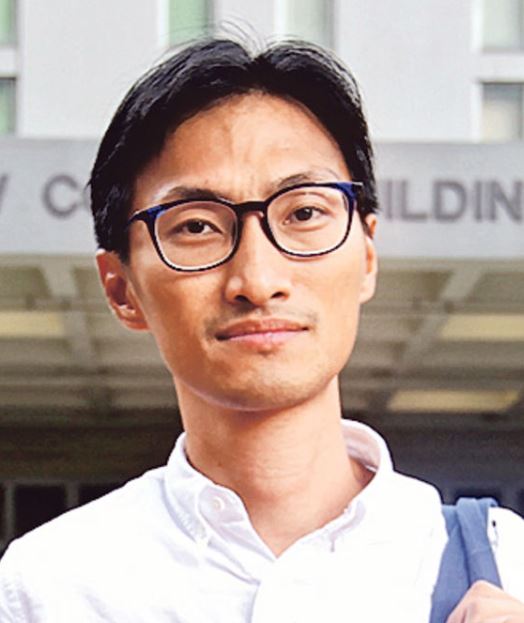 Eddie builds his platform on environmental
 protection and taking on the powerful
Heung Yee Kuk
Question 4: What is your stance on independence? Do you either condemn or support the movement?
Ivan : The Chinese government promised Hong Kong a high degree of autonomy under the one country, two systems framework. In recent years, however, Beijing has been increasingly meddlesome in our affairs. The most egregious example is the 8/31 framework [an announcement concerning the 2017 chief executive election issued by the Standing Committee of the National People’s Congress on August 31st, 2014, that rejected, among other things, civil nomination], which dashed our hopes for genuine universal suffrage. More recently, a number of pro-independence candidates were banned from this Legco election. Hong Kong, it seems, is no longer ruled by law but by people. The emergence of the independence movement is merely a reflection of our collective frustration.
I don’t support independence, but I believe the public has the right to at least talk about it. I’m against any encroachment on our freedom of speech and freedom of thought. China needs to butt out and let us determine our own future.
Raphael : I’m a proponent of self-determination via, among other things, an amendment to the Basic Law to permit a referendum to decide our destiny. If the majority of civil society wishes to separate from mainland China, and that’s our choice and so be it.
At the same time, I’m also mindful of our political reality. Hong Kong doesn’t yet have what it takes to be an independent state. We’ll need to either wait for the one-party rule in China to end, or unite with the pro-democracy movement on the mainland for an all-out revolt – whichever happens first. Until then, it’s more realistic for us to focus on safeguarding our existing freedoms and securing more achievable wins.
Eddie : I support self-determination. We have the right to determine our future in a democratic manner, and independence is just one of the options we may consider. Sadly, many pan-democrats have been quick to denounce the independence movement before we’ve had the chance to properly debate the option.
Incidents like the 8/31 framework, the missing booksellers and the disqualification of certain pro-independence candidates from this election remind us that Beijing has no qualms about sidestepping the Basic Law. Self-determination allows us to think beyond the Basic Law and take back our future.
Question 5: If you had to choose the next chief executive from the pro-Beijing camp, whom would you pick and why?
Ivan : I wouldn’t support anyone chosen through a “small circle” election [at present, only members of an exclusive election committee have the right to select the chief executive]. As long as the electoral system remains unchanged, it’ll continue to produce a Beijing mouthpiece. The chief executive is only as good as the system that elects him or her.
Even though I’m against C.Y. Leung’s reelection, I don’t believe getting rid of him will solve any of our social and political problems. The only solution is genuine universal suffrage.
Raphael : After what the city went throughin 2014, universal suffrage remains out of reach for the people of Hong Kong. Any chief executive handpicked by the election committee will answer only to Beijing or the property tycoons – or both. He or she will do what’s best for his masters and not what’s best for the rest of us. The only chief executive I’d support is one elected by the people to serve the people.
Eddie : I wouldn’t pick anyone from the pro-Beijing camp. Like the rest of Hong Kong, I oppose C.Y. Leung’s reelection. But whoever replaces him will still be chosen by a few insiders and serving those insiders’ interests. Hong Kongers must stand firm and say no to plutocracy.
_________________
Other top-of-the-ticket Legco candidates in the New Territories West geographical constituency include Andrew Wan Siu-kin, Ko Chi-fai, Chow Wing-kan, Cheng Chung-tai, Kwong Koon-wan, Michael Tien Puk-sun, Ho Kwan-yiu, Leung Che-cheung, Kwok Ka-ki, Lee Cheuk-yan, Wong Chun-kit, Alice Mak Mei-kuen, Frederick Fung Kin-kee, Chan Han-pan, Clarice Cheung Wai-ching, Hendrick Lui Chi-hang and Tong Wing-chi.
________________________
This article also appeared on Hong Kong Free Press.
August 29, 2016
Legco Election Special: Part 4 - New Territories East
Continuing with my Legislative Council (Legco) election series, we turn now to New Territories East, where three incumbent lawmakers from the opposition camp will take my five-question challenge.
My top picks in New Territories East are League of Social Democrats’ “Long Hair” Leung Kwok-hung 長毛梁國雄 (candidate #5), Civic Party’s Alvin Yeung Ngok-kiu 楊岳橋(candidate #7) and People Power’s “Slow Beat” Raymond Chan Chi-chuen 慢必陳志全 (candidate #18).
Read Part 1 - Hong Kong Island, Part 2 - Kowloon East and Part 3 - Kowloon West .
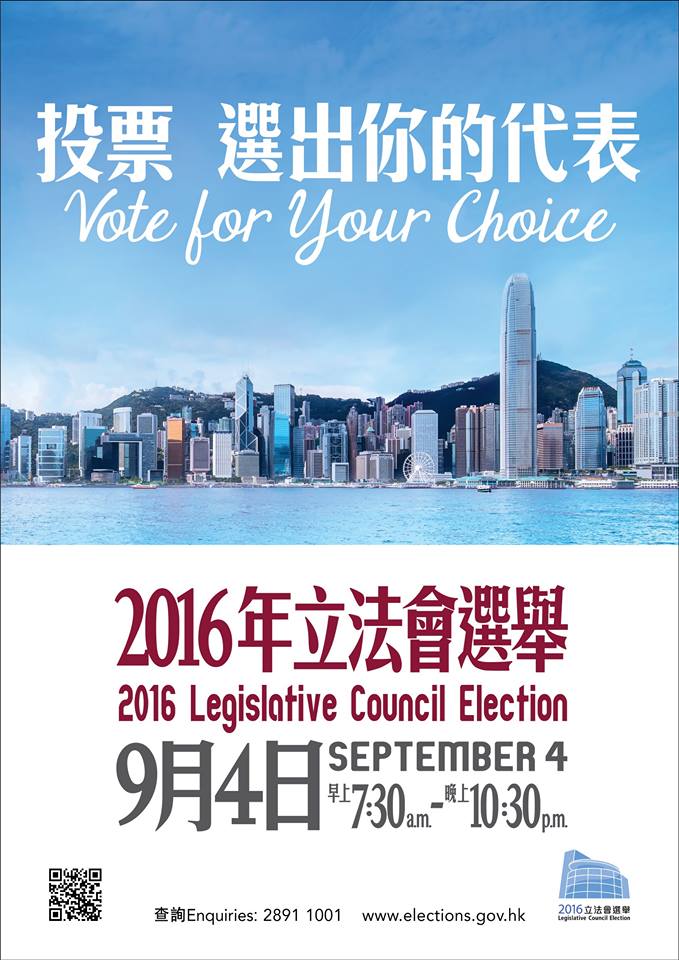 Get out and vote!
* * *
Question 1: Beyond rhetoric and slogans, what concrete action or achievements can you point to that distinguish you from other candidates?
Long Hair : I have a three-prong strategy: filibusters, public demonstrations and courtroom protests. I’ll continue to use various forms of civil disobedience to force Beijing to back off and accept our demand for self-determination. I’ve stood up to the powerful regime all these years and I’ll continue to do so.
Alvin : Since becoming a Legco member some five months ago, I’ve attended 93% of all council meetings and 95% of Finance Committee meetings. I’ve also sat on 12 panels and subcommittees. Meanwhile, I still keep up with my district work in New Territories East by advising residents on community issues.
I’m thankful for the opportunity to work with my pan-democratic colleagues to defend our freedom of expression by forcing the government to withdraw the Copyright (Amendment) Bill. In addition, I voted against the Medical Council Reform Bill after balancing the interests of medical practitioners and patients, as well as proposals to fund various wasteful construction projects, including a musical fountain in Kwun Tong, a Tiananmen Square replica in Tai Po, and the Moreton Terrace Community Hall in Wan Chai, none of which passed a basic cost-benefit analysis.
Ray : In the past four years as a lawmaker, I’ve been instrumental in blocking bad bills from being passed. More specifically, I led the battles to stop the Copyrights (Amendment) Bill that would have restricted the freedom of expression on the internet, the one belt, one road scholarship program that would have benefitted only foreign students, the Lantau Island reclamation project that would have put our environment at risk, as well as many other “white elephant” infrastructure projects.
I have a proven track record of leadership and keeping our unelected chief executive on his toes. In fact, my procedural tactics have been so effective that C.Y. Leung has to urge citizens not to vote for me or my allies in this election. Leung is afraid of filibusters – he even said so himself.
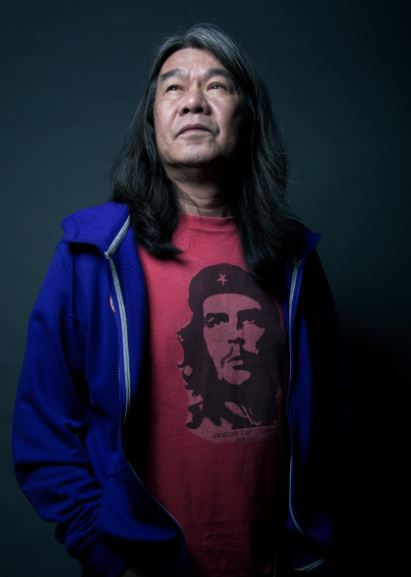 After all these years, Long Hair is as
 defiant as ever against communist China
Question 2: If you win, what issue(s) will you put at the top of your agenda and why?
Long Hair : I’ve spent the past four years fighting for a universal retirement scheme. Our government needs to share its wealth with the masses and give the elderly back their dignity. I’ll continue that fight in my next term.
Second, I’ll do all I can to resist Beijing’s interference in local affairs and infringement of our rights. I’ll stave off any attempt by our government to re-introduce an anti-subversion bill under Article 23 of the Basic Law – and, for that matter, any other attempt to limit our civil liberties. I’ll also challenge the legality of the Election Affairs Commission’s recent decisions to require Legco candidates to sign an additional declaration [accepting China’s sovereignty over Hong Kong] and to disqualify certain candidates from the race.
Third, I’ll continue to filibuster and use other procedural means to discharge our function of keeping the government in check.
Finally, I’ll provide support to the pro-democracy movement on the mainland with the ultimate goal of ending the one-party rule in China.
Alvin : I’d be grateful for the opportunity to continue my Legco work for another four years. Topping my agenda is an in-depth investigation, via Legco’s Powers and Privileges Ordinance, into C.Y. Leung’s undisclosed payment from UGL [an Australian engineering company], as well as his possible meddling in the appointment of the Independent Commission Against Corruption (ICAC) commissioner. I’ll also put forward an amendment to the ICAC Ordinance so that the commissioner won’t be accountable only to the chief executive. We need to increase both transparency and procedural fairness in the system.
As for social policies, I’ll push for a universal pension scheme and an amendment to Residential Care Homes (Elderly Persons) Ordinance with the aim to ensure a dignified retirement life for our elderly and release their spending potential. I’ll also propose an amendment to the Building Management Ordinance to prevent flat owners from falling victim to contractors and property management companies who rig the bidding process under the mandatory building inspection scheme.
Ray : First of all, I’ll push for a universal pension scheme under which every senior citizen aged 65 or above will receive a monthly allowance of at least $3,500 without a means test. It’s important to point out that no new taxes will need to be raised under this proposal – the additional $15 to 18 billion a year will be well covered by our government’s annual fiscal surplus. The plan will have tremendous benefits: the increased allowance will give our elderly a reasonable quality of life and at the same time lessen the financial burden on their working children.
Second, I’ll spearhead a new law to ban discrimination on the basis of sexual orientation and gender identity. I’ll press the government for a timetable for consultation and legislation, as well as funding for promoting awareness and policies against sexual discrimination.
 Alvin vows to get to the bottom of C.Y. Leung’s
controversy payment from an overseas firm
Question 3: Our legislative process is plagued with the stubborn existence of the functional seats and unfair rules such as the “separate vote count” mechanism. When the system is so heavily stacked against the opposition, what will you do differently and what are you prepared to do that your predecessors haven’t already tried?
Long Hair : To date, my People Power colleagues and I are the only lawmakers committed to use of filibusters. Unfortunately, there are only three of us and we need reinforcement to hold the line against unwanted legislation and policies. We need more of us to exert maximum pressure on the government within and without the legislature.
The Umbrella Movement didn’t achieve its political goals, in part because the pan-democrats failed to take their non-cooperation campaign into Legco. Going forward, I’ll work harder with other opposition parties to broaden the scope of our collaboration and use Legco as a platform to garner public support for our resistance and raise civic awareness in society at large. There’s strength in numbers and unity.
Alvin : A constitutional amendment to level the playing field in the legislative process has always been on my agenda. More specifically, Article 74 of the Basic Law prohibits individual lawmakers from introducing bills relating to government policies. My fellow Civic Party members and I have been advocating an amendment to Article 74 to restore our role as policymakers.
Nevertheless, Article 159 of the Basic Law confers the power to propose any constitutional amendment to the Standing Committee of the National People’s Congress, the State Council and the HKSAR. That means before we can talk about amending Article 74, we need to educate the public and muster bottom-up support in society to pressure our government and Beijing to relent. I believe in laying the foundation for long-term change.
Ray : The majority of Hong Kong people support and vote for the pan-democrats, and yet our skewed political system ensures that the pro-establishment camp will always enjoy a majority vote in the legislature. As a result, pan-democratic lawmakers are stuck being the perpetual minority in Legco despite having a mandate from the public.
That’s why I’m prepared to exploit every Legco procedural rule to make our government more accountable. I hope to set an example for other pan-democrats and strengthen the voice of dissent.
 Ray makes universal retirement protection
 and sexual equality his top priorities
Question 4: What is your stance on independence? Do you either condemn or support the movement?
Long Hair : I don’t support independence. Hong Kong isn’t a race, and we still lack a coherent value system and distinct culture that would allow us to unilaterally declare ourselves a sovereign state. Separatism and isolationism won’t get us anywhere with China, especially considering [Chinese President] Xi Jinping’s nationalistic stance. Nor will they solve any of our deep-rooted problems such as a widening income gap, collusion between government and oligarchs, economic invasion by Chinese businesses and Beijing’s increasing political interference.
I do, however, support self-determination. The people of Hong Kong have the right to redraft our constitution. Independence is one of the many options we may consider.
Alvin : Hong Kongers should have the right to make decisions concerning their own future. Even though I’m not supportive of independence, I encourage political discourse and respect the right to freely discuss even sensitive topics.
The emergence of the independence movement is a direct result of the encroachment of our freedoms by C.Y. Leung and the Beijing government. Hong Kongers are disheartened by the perception that the one country, two systems framework no longer gives us the autonomy and civil liberties guaranteed in the Basic Law. In response to the broken promise of universal suffrage and the increasingly toxic relationship between the legislative and executive branches, we must fight tooth and nail for our self-determination.
Question 5: If you had to choose the next chief executive from the pro-Beijing camp, whom would you pick and why?
Long Hair : I won’t support any of them. To choose from the pro-Beijing camp is to be forced to pick your poison.
Frankly, that’s what’s wrong with the pro-democracy movement in Hong Kong. For too long, we’ve played by the rules and prayed for a benevolent dictator. Without the courage to make sacrifices for our future, we’re all complicit in perpetuating the status quo.
Alvin : Regardless of which candidate is running for the chief executive office, I’m interested in only one thin Ray : In 2014, the National People’s Congress unilaterally set the limits on how our chief executive is to be nominated and elected. The electoral reform bill drafted on that basis was eventually defeated in a humiliating 28-8 vote. As long as the chief executive election remains unfair and undemocratic based on rules set by Beijing, my party and I will refuse to endorse, nominate or vote for anyone who stands for election.
_________________
Other top-of-the-ticket Legco candidates in the New Territories East geographical constituency include Christine Fong Kwok-shan, Lam Cheuk-ting, Liu Tin-shing, Chin Wan-kan, Cheung Chiu-hung, Raymond Mak Ka-chun, Andrew Cheng Kar-foo, Elizabeth Quat Pui-fan, Hau Chi-keung, Dominic Lee Tsz-king, Tang Ka-piu, Gary Fan Kwok-wai, Estella Chan Yuk-ngor, Wong Sum-yu, Leticia Lee See-yin, Sixtus Leung Chung-hang, Clarence Ronald Leung Kam-shing, Yung Hoi-yan and Chan Hak-kan.
________________________
This article also appeared on Hong Kong Free Press.
August 28, 2016
Legco Election Special: Part 3 - Kowloon West
The third instalment of my Legislative Council (Legco) election series covers Kowloon West. I put the same five questions to three choice candidates in the district and see how they stack up against each other.
My top picks in Kowloon West are League of Social Democrats’ Avery Ng Man-yuen 吳文遠(candidate #1), Civic Party’s Claudia Mo Man-ching毛孟靜(candidate #3) and Democracy Groundwork’s Lau Siu-lai 劉小麗(candidate #12).
Read Part 1 - Hong Kong Island and Part 2 - Kowloon East .
 Get out and vote!
* * *
Question 1: Beyond rhetoric and slogans, what concrete action or achievements can you point to that distinguish you from other candidates?
Avery : I have a track record of social activism and street campaigns. I’ve also been a longtime advocate for the working class fighting for their rights and economic equality.
Claudia : A while back, an anti-stalking bill was submitted to Legco that could have hampered press freedom by making it easier for reporters to be charged with stalking. The bill was eventually shelved, and I believe I had played an instrumental role in garnering support from the local press corps and eventually pressuring the bill’s sponsor to withdraw it.
I’ve also been an outspoken advocate for animal rights. I helped set up an animal rights subcommittee in Legco to review existing legislation.
Siu-lai : I’ve spent a lot of time on political activism and community involvement. For example, I organized the Kweilin Street Day Market in Mongkok to promote outdoor markets as an alternative to big shopping malls like the ones run by Link [a dominant retail property operator]. The campaign allowed citizens to experience what it’s like to be a street vendor and to appreciate the need for a proper outdoor market policy.
I’m also committed to civic education. In the current political climate, it’s more critical than ever to educate the public about local politics. We need people to understand, analyze and formulate opinions about complex political issues before we can do something about them. Civic participation – the legacy of the Umbrella Movement– must continue.
 Avery fights for the working class and
wants to legislate standard working hours
Question 2: If you win, what issue(s) will you put at the top of your agenda and why?
Avery : My top priorities will be universal retirement protection, standard working hours and self-determination. The two first items have been on my party’s agenda for years and the third is something I intend to continue to fight for especially after the fallout of the pro-democracy movement in 2014.
Claudia : Every day, 150 new immigrants arrive in Hong Kong from mainland China. I intend to exercise our right under Article 22 of the Basic Law to review the newcomers’ entry qualifications. While family reunion is a reasonable ground for immigration, the current scheme is vulnerable to abuse and graft on the mainland [where local authorities approve the applications]. I even suspect some of the immigrants are being sent here to “dilute” our population. It is important that priority be given to those who come here for legitimate reasons.
Another issue I care about is animal rights. We need to scrap Cap 139B [under the Public Health (Animals and Birds) (Animal Traders) Regulations] that permits animal breeding on domestic premises. I share the view of many animal rights groups that CAP 139B encourages commercial breeding which is cruel and has to stop.
Siu-lai : My priorities are as follows: push back on “white elephant” infrastructure projects, implement a universal pension scheme, legislate standard working hours, reform housing policy, and restart electoral reform. These are all burning issues I hold near to my heart.
 Claudia wants to vet mainland immigrants
and reform animal rights legislation
Question 3: Our legislative process is plagued with the stubborn existence of the functional seats and unfair rules such as the “separate vote count” mechanism. When the system is so heavily stacked against the opposition, what will you do differently and what are you prepared to do that your predecessors haven’t already tried?
Avery : Because of the unfair rules you mentioned, the only way for the opposition to push back bad legislation is the use of filibusters. The more lawmakers there are to filibuster, the greater the pressure we put on our government.
But filibusters are only a defensive tactic. To bring about real changes to our political system, we need to take to the streets and wage a popular movement. I’ll continue to work both within and without the legislature to make that happen.
Claudia : I’m not sure if there’s much I‘ll do differently. Then again, if we don’t fight, we certainly won’t get anything. If we do fight, we might get something. So you bet I’ll be fighting my very best for the city.
Siu-lai : I won’t hesitate to filibuster or use other procedural tactics to oppose unjust bills in Legco. I’ll occupy the chairman’s seat if that’s what it takes.
At the same time, I intend to continue my community outreach to galvanize public support on important political issues. We need greater civic awareness and participation to force the government to make compromise.
 A university lecturer, Siu Lai understands the
importance of civic education and participation
Question 4: What is your stance on independence? Do you either condemn or support the movement?
Avery : I fully agree that Hong Kongers should have the right to determine their fate, including whether to separate from China.
But the communist regime is also very powerful. For the independence movement to have any chance of success, I believe we need to join forces with the pro-democracy movement on the mainland instead of isolating ourselves.
Claudia : On the subject of independence, we seem to know the “why,” but not the “how.” Look at it this way: the city gets some 80% of its drinking water and 30% of its power from Guangdong, China. It simply isn’t a practical choice at this point in time.
That said, it doesn’t mean we should condemn the idea or suppress the discussion of it. I’m all for free speech and free will. The youth are talking about 2047 [when the one country, two systems policy expires], which is more than 30 years away. By then I’m probably not around any more. It’s their future, and they have every right to talk about it.
Siu-lai : I personally don’t support independence, because I don’t believe Hong Kong at the moment has what it takes to secede from mainland China.
Still, I agree we need to start thinking collectively about our future, whether it is independence or continuing with the one country, new systems framework. Either alternative should be based on the notion of self-determination and will inevitably involve a struggle. I feel duty-bound to get the public involved in this discussion now.
Question 5: If you had to choose the next chief executive from the pro-Beijing camp, whom would you pick and why?
Avery : Any chief executive chosen by an undemocratic system will be no different from C.Y. Leung. It isn’t a matter of whois elected but rather how that person is elected. Unless and until we reform the electoral system, it doesn’t make much difference whether it’s Leung or someone else who takes the job.
Claudia : The names that have been floated so far aren’t much of a choice. These bureaucrats are all mere cardboard cut-outs and I won’t support or vote for any of them.
Siu-lai : This is a tough question. I can’t think of anyone in the pro-Beijing camp who’s qualified to lead Hong Kong. None of the so-called “frontrunners” is committed to democracy or solving our livelihood issues. Only a chief executive elected through genuine universal suffrage instead of a “small circle” election has the legitimacy and mandate to serve Hong Kong.
_________________
Other top-of-the-ticket Legco candidates in the Kowloon West geographical constituency include Jonathan Ho Chi-kwong, Priscilla Leung Mei-fun, Tam Kwok-kiu, Chu Siu-hung, Raymond Wong Yuk-man, Wong Pik-wan, Lam Yi-lai, Ann Chiang Lai-wan, Kwan San-wai, Yau Wai-ching, Augustine Lee Wing-hon, Tik Chi-yuen.
________________________
This article also appeared on Hong Kong Free Press.
August 24, 2016
Legco Election Special: Part 1 - Hong Kong Island
Voters heading to the polling station this September 4th will find a longer ballot than they did in any previous Legislative Council (Legco) elections. In the Kowloon West district, for instance, the number of candidates went from nine in 2012 to 15 this time around. Choosing from a dozen or so candidates in any given district, all sporting the same deep gaze and promising a better future for Hong Kong, can be a dizzying proposition.
Meanwhile, the latest poll numbers from the University of Hong Kong Public Opinion Program put the opposition candidates significantly behind their pro-Beijing rivals. In the New Territories East district, one of the fiercest battlegrounds, the pan-democrats may win only one of the nine available seats. These men and women – our defenders – need all the help they can get on election day.
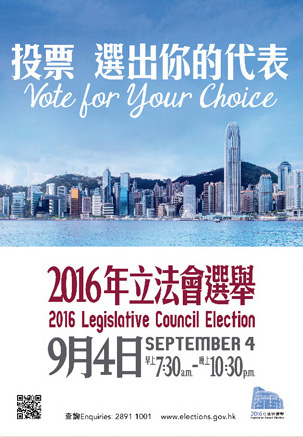 Get out and vote
So read on if you want to steer clear of the pro-Beijing camp and navigate the murky waters of the increasingly diverse (read: fractured) opposition. In this five-part election special, I profile the three most bankable candidates in each of the five districts, all of whom will answer the same five questions in hopes of winning your vote.
In Hong Kong Island, my top picks are People Power’s Christopher Lau Gar-hung (candidate #2), Demosistō’s Nathan Law Kwun-chung (candidate #8) and Civic Party’s Tanya Chan Suk-chong(candidate #14).
* * *
Question 1: Beyond rhetoric and slogans, what concrete action or achievements can you point to that distinguish you from other candidates?
Chris : C.Y. Leung admitted that he is fearful of filibusters. People Power and the League of Social Democrats are the only two parties that are committed to using that and other procedural tactics to block undesirable bills in the legislature. In the absence of a truly democratic Legco, active resistance is the only tool we’ve got and that’s what I intend to do.
Nathan : Some voters may not take me seriously because of my young face, but my track record, including years of activism and social campaigns, has shown my unwavering determination to monitor the government and hold its action accountable.
During the Umbrella Movement of 2014, I was part of a student delegation that faced off top government officials in the one and only round of negotiation on electoral reform. Even though the dialogue was unsuccessful, we managed to put pressure on the government to explain itself to the public and set a precedent for student activism. After the Umbrella Movement, I continued to forge ties with various stakeholders in civil society to push forward political reform. I, together with my friends Lau Siu-lai and Eddie Chu Hoi Dick, both of whom are also running in this election, have been doing community outreach and educating voters on social issues. In addition, we have spent considerable time conducting policy research. I believe my energy and determination represent a new and hopeful approach to local politics.
Tanya : It has always been my belief that politicians cannot isolate themselves from the public and work solely on their own, especially in the face of the growing political challenges brought on by C.Y. Leung. It explains my effort to stay closely connected with civil society in previous years. For instance, I’ve been collaborating with different civil bodies to draft the Tree Bill and push for better tree management. I’ve also joined forces with a number of civil organizations such as the Victoria Waterfront Concern Group to protect our harbor and improve town planning.
These achievements are the living proof of my commitment to the city. I hope to move Hong Kong forward on that basis and be the lawmaker who bridges the gap between political parties and civil society.
 Chris is passionate about universal
 retirement protection and isn’t afraid
to filibuster
Question 2: If you win, what issue(s) will you put at the top of your agenda and why?
Chris : Apart from the continued fight for true democracy, I intend to make universal retirement protection my number one priority. I’m a pension consultant by profession and I care a great deal about this pressing issue. I believe our elderly deserve to live much better lives, especially considering how much they have sacrificed for the city’s economic prosperity.
I am open to any form of universal pension scheme. An easy win will be to raise the fruit money [old age allowance] to $3,500 a month [from the current level of $1,290].
Nathan : I take the role of a lawmaker very seriously. I intend to introduce a new political agenda in Legco and debate the future of Hong Kong openly on the legislative floor. The first and foremost battle is the protection of Hong Kongers’ interests. In recent years, our government has squandered tens of billions of taxpayer money on wasteful infrastructure projects, from a cross-border bridge to an express rail link and an airport runway, all of which have reported cost overruns and delays. My priority as lawmaker is to put a stop to these and other bad government initiatives.
Moreover, I hope to do my part to align the pan-democrats and build the opposition’s momentum, not only to resist bad government bills but also to propose good ones – to the extent we can within the limitations imposed by Article 74 of the Basic Law [which prevents individual lawmakers from introducing bills relating to public expenditure or political structure] – for the betterment of Hong Kong.
Tanya : Hong Kongers’ core values have been arbitrarily destroyed since C.Y. Leung took office in 2012. Even probity – one of the values we cherish the most – is being encroached. If I manage to return to Legco, my priority is to invoke Legco’s Powers and Privileges Ordinance to investigate Leung’s $50 million payment from UGL [an Australian engineering company] and the recent turmoil in the Independent Commission Against Corruption (ICAC). We need to safeguard our probity against further erosion.
It’s beyond dispute that Leung is the culprit for Hong Kong’s many social ills. I’ll work to hold him accountable not only for his corruption, but more importantly, the damage he has done to our society. If the pan-democrats manage to crush the pro-establishment camp in this election, we can thwart Leung’s re-election bid and get Hong Kong back on track.
 Nathan intends to hold the government
 accountable inside Legco while continuing
his street activism outside
Question 3: Our legislative process is plagued with the stubborn existence of the functional seats and unfair rules such as the “separate vote count” mechanism. When the system is so heavily stacked against the opposition, what will you do differently and what are you prepared to do that your predecessors haven’t already tried?
Chris : As I mentioned earlier, filibusters and other procedural tactics are the only tools available to us to rein in our government and prevent undesirable bills from being passed. The key to an effective opposition is to have more legislators who are willing to engage in these tactics.
As we have seen in the four years since C.Y. Leung took office, the government will yield to our demands if there are enough pan-democratic lawmakers to filibuster and stall legislative debate by making quorum calls. That’s why we need more legislators like myself in Legco who aren’t afraid to take up active resistance.
Nathan : Pan-democratic legislators have been doing their best in Legco, but not everyone is exercising his or her powers to the fullest extent. Filibusters are a tried and tested tactic – but I believe it’s far too weak if it’s carried out by only one or two individual lawmakers. We need a concerted effort within the pan-democratic camp to come up with a better plan. Using my connections and credibility in civil society, I intend to galvanize public support for filibusters, bill amendments, as well as direct action outside Legco through social campaigns.
Tanya : The current mechanisms of functional constituencies and separate vote counting are so unfair that they have all but removed Legco’s statutory function to monitor the government. The first thing we must do is to come out and vote on September 4thin order to safeguard the pan-democrats’ majority in the geographical constituencies and prevent the pro-establishment camp from arbitrarily amending Legco’s rules of procedure, which would further restrict the statutory function of Legco members to veto unjust bills.
Furthermore, I suspect the government will initiate a number of controversial bills in the coming Legco term, including the re-introduction of an anti-subversion bill under Article 23 of the Basic Law. As a member of the pan-democratic camp, I promise to do my best to resist these initiatives while upholding my non-violence principle. What action I’ll undertake depends on the circumstances and I’m not in a position to disclose any plans with specificity at the moment.
 Tanya wants to be the bridge
 between lawmakers and civil society
Question 4: What is your stance on independence? Do you either condemn or support the movement?
Chris : I won’t condemn the independence movement. I believe in liberal values and I believe that it’s squarely within the rights of Hong Kong people to determine their own future, including declaring Hong Kong a separate state.
That said, I don’t support the independence movement given the present political reality. To gain de jure independence from communist China could lead to bloodshed – a price that no one in Hong Kong is prepared to pay, at least not at the moment. The independence movement doesn’t have any international support either. I believe that fighting for genuine self-determination, for instance by amending the Basic Law to give the city more autonomy, is a better way forward and in the best interest of Hong Kong people.
Nathan : Independence is one of several alternate futures for Hong Kong, the discussion of which shouldn’t be silenced. A number of pro-independence candidates have been barred from running for this election, and I intend to safeguard their voices in Legco.
To me, the call for independence reflects our collective despondence toward the current political environment. Since the handover, our freedoms, civil liberties and living standards have all been deteriorating. Many feel hopeless about their future and rights, knowing that communist China isn’t prepared to grant them full democracy in the foreseeable future. But I don’t believe that now is the right time to either support or condemn the independence movement. Before we talk about independence, we must first achieve self-determination.
Tanya : Even though I don’t support the idea of independence, I firmly respect the discussion of it. The freedom of speech, the right to vote and the right to stand for elections are among the most important core values in Hong Kong. Political screening of pro-independence candidates is clearly arbitrary and unconscionable. I’ll defend these voices against political suppression, whether or not I agree with them.
As for the city’s future, I’ll work to ensure that Hong Kongers play a meaningful part in the negotiation of our fate beyond 2047 [when the one country, two systems policy ends]. We didn’t have any say during the handover talks thirty years ago and I won’t let that happen again.
Question 5: If you had to choose the next chief executive from the pro-Beijing camp, whom would you pick and why?
Chris : People Power won’t send any candidate to stand for an undemocratic chief executive election, nor will we nominate or vote for anyone in such an election. This is to show our total rejection of the system. If I’m elected as a lawmaker and become eligible to vote in the chief executive election [as a member of the exclusive election committee], I’ll vote for no one – pro-Beijing or otherwise.
Nathan : I’ll oppose any nominee from the pro-Beijing camp. During the Umbrella Movement two years ago, I called for civil nomination [a proposal to allow individual citizens to nominate candidates in the chief executive election] and demanded Beijing to withdraw the 8/31 framework [an announcement concerning the 2017 chief executive election issued by the Standing Committee of the National People’s Congress on August 31st, 2014, that rejected, among other things, civil nomination]. I didn’t give in then and I won’t compromise now.
Tanya : I won’t pick any candidate from the pro-Beijing camp unless they support and promise genuine universal suffrage. I firmly reject any sort of censorship of candidates in any election. Universal suffrage for the selection of the chief executive is a solemn promise enshrined in both the Basic Law and the Sino-British Joint Declaration. My determination to fight for a free vote won’t waver.
If I manage to return to Legco, I’ll demand electoral reform be re-launched outside the confines of the 8/31 framework. My goal is to achieve genuine universal suffrage without citizens being forced to choose someone from the pro-Beijing camp.
_________________
Other top-of-the-ticket Legco candidates in the Hong Kong Island geographical constituency include Wong Chi-him, Regina Ip Lau Suk-yee, Cyd Ho Sau-lan, Cheung Kwok-Kwan, Chim Pui-chung, Cheung Kam-mun, Sham Chee-chiu, Wong Wai-kay, Chui Chi-kin, Paulus Johannes Zimmerman, Hui Chu-fung, Kwok Wai-keung.
________________________
This article also appears on Hong Kong Free Press.


