
Elisabeth Storrs's Blog, page 17
February 13, 2015
On Inspiration: Patricia Bracewell
I’m delighted that Patricia Bracewell has agreed to share her sources of inspiration with me. And I’m doubly pleased to say that her new book, The Price of Blood, has reached Australian shores! In celebration of the launch, Patricia has kindly offered giveaway copies of Shadow on the Crown and The Price of Blood. Be sure to comment … Read more


December 1, 2014
On Inspiration: Ned Hayes
Ned Hayes has just released his new novel, Sinful Folk and has embarked on a blog tour with Historical Fiction Virtual Book Tours. I’m delighted that Ned has agreed to be interviewed on Triclinium on his sources of inspiration. Ned is a candidate for an MFA from the Rainier Writers Workshop, and holds graduate degrees in English and Theology from … Read more
On Inspiration: Linda Lee Graham
Linda Lee Graham has just released her new book Voices Echo in her Voices series. I’m delighted that she has agreed to share her sources of inspiration with me. History and real-life narratives had always blended in Linda Lee Graham’s imagination, particularly when she delved into the stories of her family’s ancestors. Eventually the engaging voices of characters who might … Read more
September 29, 2014
On Inspiration: Mirella Sichirollo Patzer
On Inspiration: Interview and Giveaway with Mirella Sichirollo Patzer
The wonderful Mirella Sichirollo Patzer has just released her new novel, The Novice and has embarked on a blog tour with Historical Fiction Virtual Book Tours. I’m delighted that Mirella has agreed to be interviewed on Triclinium on her sources of inspiration. Leave a comment and go into the draw to … Read more
September 8, 2014
Welcome to Triclinium: Join my banquet
In Ancient Rome banquets were held in tricliniums where philosophy, literature and art were discussed along with intrigue and scandal. On my blog you can enjoy interviews, reviews, guests posts from historical novelists and art. And also history – both trivia and the serious stuff! So come and join my banquet!
 Tomb of the Shields, Tarquinia
The image is from … Read more
June 6, 2014
On Inspiration: Interview with Helen Hollick

My guest today is the wonderful Helen Hollick. Helen started writing pony stories as a young teenager. She moved onto science fiction and fantasy and then discovered the delight of writing historical fiction. Helen is published in the UK and the US with her books about King Arthur and the 1066 Battle of Hastings, officially making the USA Today best seller list with her novel The Forever Queen. She also writes the Sea Witch Voyages, a series of historical adventure seafaring books inspired by her love of the Golden Age of Piracy. As a firm supporter of independent authors, publishers and bookstores, she has recently taken on the role of Managing Editor for the Historical Novel Society’s Indie Reviews for historical fiction. Helen now lives in Devon with her husband, adult daughter and son-in-law, and a variety of pets, including a dog, two cats, and several horses.
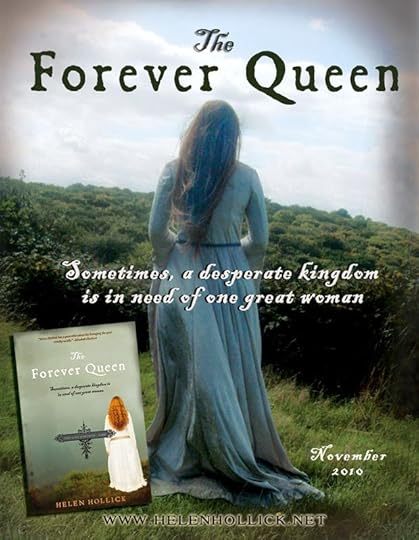
What or who inspired you to first write?Ruby Fergusson and Monica Edwards – they wrote pony-based stories for young adults and I so desperately wanted a pony, so I started writing stories about my own pony (she was a palomino called Tara). I thought everyone did this – lived their dream-life through writing stories. It astonished me when I eventually discovered that I was in a small minority! I then discovered Rosemary Sutcliff…. And the wonderful world of historical fiction.
What is the inspiration for your current book?The first Pirates of the Caribbean movie: The Curse of the Black Pearl. Well, who can resist Johnny Depp’s creation of Captain Jack Sparrow? I enjoyed the movie, it was tongue-in-cheek entertainment, with nothing about it that was meant to be taken seriously – pure fun.I searched for novels that echoed the movie – sailors’ yarn tales of nautical adventure with an added portion of believable fantasy. I found plenty of straight nautical fiction (Julian Stockwin, C.S. Forrester, Patrick O’Brian etc) and several Young Adult novels – but not a thing for adults. So I wrote my own: The Sea Witch Voyages (Sea Witch, Pirate Code, Bring It Close, Ripples In The Sand – and On The Account is half written).
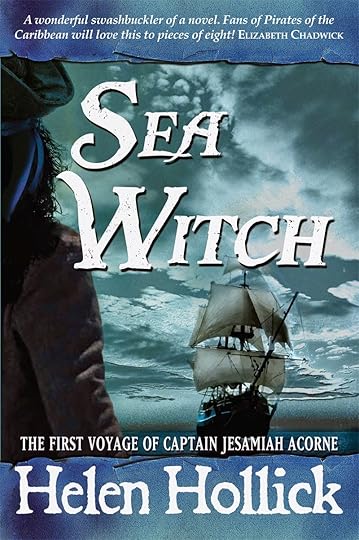
Is there a particular theme you wish to explore in this book?I describe my protagonist, Captain Jesamiah Acorne, as a blend of Hornblower, Jack Aubrey and Jack Sparrow, with a dash of James Bond and a pinch of Indiana Jones, all mixed up with Bernard Cornwell’s Richard Sharpe. As with all such heroes, you know they will get out of trouble by the end of the book (or movie). Trouble follows my Jesamiah like a ship’s wake – you know he will survive, but the excitement comes with discovering how he manages to do so!
Each ‘Voyage’ is a read-alone adventure, but I have two other threads running through the entire series. One is a fantasy element – Tethys, the ethereal goddess-spirit of the sea wants Jesamiah’s soul, and Jesamiah himself coming to terms with his unhappy childhood and his almost non-existent relationship with his deceased father. The past unravels throughout the series, Jesamiah discovering things he did not know along with us, the readers…and myself as writer, come to that! In On The Account I intend to explore the complexity of relationships – between a male and female, and male and male. Love can be a very complicated emotion….
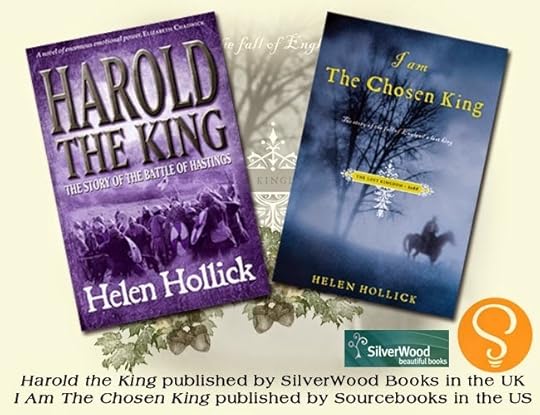
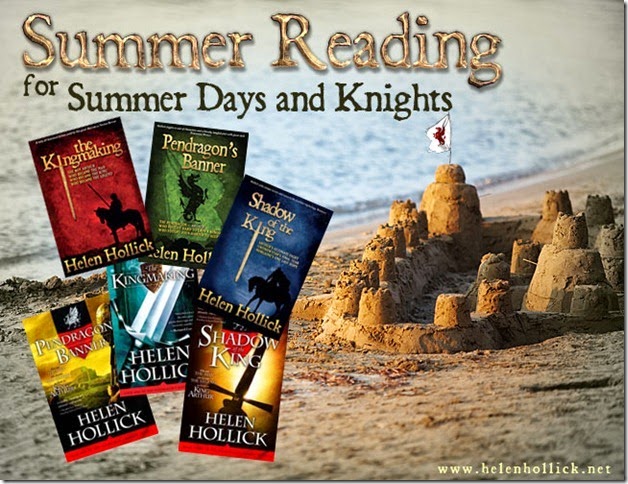
What period of history particularly inspires or interests you? Why?I have three! Post-Roman Britain – the fifth and sixth centuries. This is the period when if he had existed ‘King’ Arthur would have been fighting as an enigmatic warlord; the eleventh century prior to the Norman Conquest in 1066; and the Golden Age of Piracy – the early eighteenth century.
What resources do you use to research your book/s?Mostly on-line nowadays because my sight is deteriorating and I cannot read text books as well as I used to, especially if the print is small. You must always remember, however, if working on-line to verify at least three different sources – and even then, take what you read with a large pinch of salt. The best research places on-line are the various university and professional sites.
I do have a non-fiction library here at home, with some of the books I used for my previous novels listed on my website at http://www.helenhollick.net/bibliography.htmlOne day I’ll get around to updating it!
Which authors have influenced you?As I said above, the various authors of children’s pony stories, but beyond those, and not in any particular order: Rosemary Sutcliff, Mary Stewart, Sharon Kay Penman, Elizabeth Chadwick, Patrick O’Brian, C.S. Forester, James L. Nelson, Bernard Cornwell, Dick Francis, Susan Cooper, Alan Garner… and quite a few more!
What do you do if stuck for a word or a phrase?Get my Roget’s Thesaurus from the shelf next to my desk. If really stuck, I go for a walk and mull over what it is I want to say – the words usually come by the time I have turned for home, gasping for a cup of tea.
Is there a particular photo, piece of art, poetry or quote that strikes a chord with you? Why?I love any photos of the tall ship Surprise (formally Rose). She is the ‘template’ for Sea Witch: I have never been on anything bigger than a dinghy in all my life, but this ship – even just to look at a photo – immediately takes me far out to sea. I can feel her moving, hear her timbers creaking, hear the wind thrumming in the ratlines and stays, the sails cracking… she transports me to that other, very real to readers and writers world of the Imagination.

One other photo of a tall ship is precious to me. This is the ship my graphics designer, Cathy Helms of www.avalongraphics.orguses for my Sea Witch covers and all my marketing. Sea Witch – my pirate’s ship – my ship!
What advice would you give an aspiring author?Stop talking about “When I write my book” and get on and write it! And if you have decided to go Indie/Self-Published, do it properly. Get an editor, and a professional cover designer. You will only be taken seriously as an author if you present your book to the highest quality; there should not be any difference between the layout of your indie book and a mainstream one. Yet as Managing Editor of the Historical Novel Society Indie Reviews I find novels printed in Comic Sans font, with text left-justified, and or double-spaced. I have even had published novels submitted for review that have no title or information on the covers. Take pride in what you produce and don’t send your precious novel out into the world looking ragged and uncared-for.
Tell us about your next book.Well I’ve already mentioned On The Account, which I hope will be published towards the end of 2014. I would also like to do a spin-off story based on my King Arthur Pendragon’s Banner Trilogy. Set in the fifth century, Madoc – known as Madoc The Horseman - was an officer in Arthur’s cavalry. Wounded, unable to ride, he has to seek a new life, and ends up as Arthur’s spy. His cover being that he is a horse trader. You can read a very rough draft of the first (exploratory) chapter here: http://www.helenhollick.net/h2uitem8.html
Funny how I started out at writing pony stories, and I end up doing a similar genre fifty years later!
Helen, thanks so much for sharing your sources of inspiration, and for giving us a sneak preview into On the Account!
Helen has written so many books that it's easiest to give you this link on Goodreads to the list. You can connect with Helen through social media via the links below:
Website: www.helenhollick.net
Main Blog: www.ofhistoryandkings.blogspot.com
Leaning on the Gate – Devon Diary: www.leaningonthegate.blogspot.co.uk
Facebook: www.facebook.com/HelenHollickAuthor
Twitter: @HelenHollick
Newsletter : www.h2unews.blogspot.co.uk
If you enjoyed this interview, why not share it? Here's a tweet you could use:)
Read On Inspiration with @HelenHollick on Triclinium blog by @elisabethstorrs #histfic #interviews #inspiration http://ow.ly/xHsIz
Elisabeth Storrs is the author of The Wedding Shroud and The Golden Dice , the first two books in the Tales of Ancient Rome series. The third book, Call to Juno, will be released in 2015. Subscribers to her newsletterwill receive a free copy of her newly released short story, Dying for Rome: Lucretia’s Tale .
April 19, 2014
My Main Character Blog Hop: Aemilia Caeciliana in the Tales of Ancient Rome
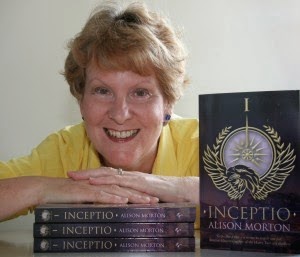 Here are my answers:
What is the name of your character? Is he/she fictional or a historic person? My Caecilia (Aemilia Caeciliana) is a young Roman woman who is the neglected half-caste child of a wealthy plebeian man and a patrician woman. When she is orphaned, her uncle and the generals of Rome use her as a pawn in their political ambitions by marrying her to an enemy Etruscan nobleman, Vel Mastarna, to seal a tenuous truce between the warring cities of Rome and Veii.
 When and where is the story set?The Wedding Shroudcommences in 406 BC in the Rome of the early Republic but the action soon moves to Veii, an Etruscan city that lies only twelve miles across the Tiber from its neighbour. Caecilia leaves behind the austere Rome to discover an hedonistic culture which offers education, independence and sexual freedom to women and forces her to grapple with conflicting moralities. Ultimately she must determine where her loyalties lie: her birthplace or her husband’s world. Her decision to forsake Rome leads to war. Seven years later, in The Golden Dice, Caecilia is perceived as an enemy by the Veientanes yet knows that, if Veii should fall, the Romans would execute her as a traitoress. In the upcoming Call to Juno, Caecilia must summon even greater reserves of strength at the height of the siege to prove her loyalty to Mastarna’s people, and ensure the survival of her family.
What should we know about her? Caecilia is born into an insular and intolerant society where women were considered the possessions of either their father or husband, and could be killed for adultery or even just for drinking wine. Furthermore they were expected to adhere to ‘Roman virtues’ such as modesty, piety and chastity. She was a lonely child, neglected by her parents, although her father later grew to love her and provided her with an education which was unusual in Rome. Her natural intelligence and inclination to question authority irritates the generals who are prepared to wed her to an enemy in a situation that may well lead her to being held as a hostage to war. She is bears a purple birthmark on her throat which portends that her life will not be smooth in the eyes of the Romans yet is believed by Mastarna to be the sign of a fortunate marriage. When she encounters the liberal, decadent Etruscan world with its mystical religion, she is at times bewildered and confronted yet is also curious to experience new ways (and she does love Etruscan pretty shoes and jewellery)! Apart from being naive and vulnerable, she can be very, very stubborn, (and prudish) which often causes her to ‘takes two steps forward and one step back’ throughout her time in Veii (which causes some readers to be frustrated with her, or even dislike her.) She is not above temptation, though, and slowly shrugs off her inhibitions when it comes to the pleasure Vel Mastarna gives her. Most importantly she is a survivor who must withstand constant threats from forces both within and without her husband’s city. In The Golden Dice, we see her mature into a loving wife and mother who wants to prove her loyalty to her adopted home. And she again shows the true courage required by women in war to protect their children while their warrior husbands face the constant threat of death.

What is the main conflict? What messes up his/her life? Caecilia finds herself thrust into the decadent, sophisticated and opulent world of Veii with its intriguing and mystical religion (which she learns also has a dark and savage side). The liberal nature of Etruscan society both delights and frightens her as it causes her to question all that she has been taught in Rome, and all that she believes in. By the end of The Wedding Shroud, Caecilia must choose between Veii or Rome. In The Golden Dice, she must prove to her adopted people that she is no longer loyal to Rome which, in turn, requires her to question if she really wants to see her birthplace destroyed. In Call to Juno, as both sides line up for the ultimate conflict, Caecilia must finally determine whether she can ever be wholly Etruscan and exorcise the ‘Roman’ remaining within her.
What is the personal goal of the character? Caecilia endeavors to understand the conflicting moralities, beliefs and loyalties of the two societies while always striving to ensure those whom she loves are kept safe.
 Is there a working title for this novel, and can we read more about it? When can we expect the book to be published?Call to Juno is currently being written and will be released in 2015.
And who am I tagging to answer the same questions on their blog on 24 April?
 GS Johnston
 G.S. Johnston is an author of two historical novels, The Skin of Water and Consumption , noted for their pithy complex characters and well-researched settings. In one form or another, Johnston has always written, at first composing music and lyrics. After completing a degree in pharmacy, a year in Italy re-ignited his passion for writing and he completed a Bachelor of Arts degree in English Literature. Feeling the need for a broader canvas, he started writing short stories and novels. The latest novel, The Cast of Troppmann’s Hand, has taken many years to write. Inspired initially by an exhibition of phrenology death masks at the Musée d'Orsay in 2001, a tributary of ideas led to the stream of the story. For more news and information, Johnston’s blog can be found at www.gsjohnston.com
 Iva Polansky Born in Prague, in the former Czechoslovakia, and now living with her husband in Calgary at the foot of the Canadian Rockies, Iva Polansky has authored several non-fiction books in French and English. Her novels are Fame and Infamy and
Sonya’s War
. Iva is also a co-founder of Historical Fiction eBooks established in 2010.
Iva Polansky Born in Prague, in the former Czechoslovakia, and now living with her husband in Calgary at the foot of the Canadian Rockies, Iva Polansky has authored several non-fiction books in French and English. Her novels are Fame and Infamy and
Sonya’s War
. Iva is also a co-founder of Historical Fiction eBooks established in 2010.Elisabeth Storrs is the author of The Wedding Shroud and The Golden Dice , the first two books in the Tales of Ancient Rome series. The third book, Call to Juno, will be released in 2015. Subscribers to her newsletterwill receive a free copy of her newly released short story, Dying for Rome: Lucretia’s Tale .
My Main Character Blog Hop: Aemila Caeciliana in the Tales of Ancient Rome
Here are my answers:What is the name of your character? Is he/she fictional or a historic person? My Caecilia (Aemilia Caeciliana) is a young Roman woman who is the neglected half-caste child of a wealthy plebeian man and a patrician woman. When she is orphaned, her uncle and the generals of Rome use her as a pawn in their political ambitions by marrying her to an enemy Etruscan nobleman, Vel Mastarna, to seal a tenuous truce between the warring cities of Rome and Veii.
When and where is the story set?The Wedding Shroudcommences in 406 BC in the Rome of the early Republic but the action soon moves to Veii, an Etruscan city that lies only twelve miles across the Tiber from its neighbour. Caecilia leaves behind the austere Rome to discover an hedonistic culture which offers education, independence and sexual freedom to women and forces her to grapple with conflicting moralities. Ultimately she must determine where her loyalties lie: her birthplace or her husband’s world. Her decision to forsake Rome leads to war. Seven years later, in The Golden Dice, Caecilia is perceived as an enemy by the Veientanes yet knows that, if Veii should fall, the Romans would execute her as a traitoress. In the upcoming Call to Juno, Caecilia must summon even greater reserves of strength at the height of the siege to prove her loyalty to Mastarna’s people, and ensure the survival of her family.What should we know about her? Caecilia is born into an insular and intolerant society where women were considered the possessions of either their father or husband, and could be killed for adultery or even just for drinking wine. Furthermore they were expected to adhere to ‘Roman virtues’ such as modesty, piety and chastity. She was a lonely child, neglected by her parents, although her father later grew to love her and provided her with an education which was unusual in Rome. Her natural intelligence and inclination to question authority irritates the generals who are prepared to wed her to an enemy in a situation that may well lead her to being held as a hostage to war. She is bears a purple birthmark on her throat which portends that her life will not be smooth in the eyes of the Romans yet is believed by Mastarna to be the sign of a fortunate marriage. When she encounters the liberal, decadent Etruscan world with its mystical religion, she is at times bewildered and confronted yet is also curious to experience new ways (and she does love Etruscan pretty shoes and jewellery)! Apart from being naive and vulnerable, she can be very, very stubborn, (and prudish) which often causes her to ‘takes two steps forward and one step back’ throughout her time in Veii (which causes some readers to be frustrated with her, or even dislike her.) She is not above temptation, though, and slowly shrugs off her inhibitions when it comes to the pleasure Vel Mastarna gives her. Most importantly she is a survivor who must withstand constant threats from forces both within and without her husband’s city. In The Golden Dice, we see her mature into a loving wife and mother who wants to prove her loyalty to her adopted home. And she again shows the true courage required by women in war to protect their children while their warrior husbands face the constant threat of death.
What is the main conflict? What messes up his/her life? Caecilia finds herself thrust into the decadent, sophisticated and opulent world of Veii with its intriguing and mystical religion (which she learns also has a dark and savage side). The liberal nature of Etruscan society both delights and frightens her as it causes her to question all that she has been taught in Rome, and all that she believes in. By the end of The Wedding Shroud, Caecilia must choose between Veii or Rome. In The Golden Dice, she must prove to her adopted people that she is no longer loyal to Rome which, in turn, requires her to question if she really wants to see her birthplace destroyed. In Call to Juno, as both sides line up for the ultimate conflict, Caecilia must finally determine whether she can ever be wholly Etruscan and exorcise the ‘Roman’ remaining within her.
What is the personal goal of the character? Caecilia endeavors to understand the conflicting moralities, beliefs and loyalties of the two societies while always striving to ensure those whom she loves are kept safe.
Is there a working title for this novel, and can we read more about it? When can we expect the book to be published?Call to Juno is currently being written and will be released in 2015.And who am I tagging to answer the same questions on their blog on 24 April?
GS Johnston G.S. Johnston is an author of two historical novels, The Skin of Water and Consumption , noted for their pithy complex characters and well-researched settings. In one form or another, Johnston has always written, at first composing music and lyrics. After completing a degree in pharmacy, a year in Italy re-ignited his passion for writing and he completed a Bachelor of Arts degree in English Literature. Feeling the need for a broader canvas, he started writing short stories and novels. The latest novel, The Cast of Troppmann’s Hand, has taken many years to write. Inspired initially by an exhibition of phrenology death masks at the Musée d'Orsay in 2001, a tributary of ideas led to the stream of the story. For more news and information, Johnston’s blog can be found at www.gsjohnston.com
Iva Polansky Born in Prague, in the former Czechoslovakia, and now living with her husband in Calgary at the foot of the Canadian Rockies, Iva Polansky has authored several non-fiction books in French and English. Her novels are Fame and Infamy and
Sonya’s War
. Iva is also a co-founder of Historical Fiction eBooks established in 2010.Elisabeth Storrs is the author of The Wedding Shroud and The Golden Dice , the first two books in the Tales of Ancient Rome series. The third book, Call to Juno, will be released in 2015. Subscribers to her newsletterwill receive a free copy of her newly released short story, Dying for Rome: Lucretia’s Tale .
April 4, 2014
Kindle Fire Giveaway 4th - 18th April

From 4th -18th April I'm participating in a Kindle Fire Giveaway to help promote my book and gain new readers. You can register to win a Kindle Fire 7" HD or a $200 Amazon Gift Card, or you can help by sharing this post with your FB friends. You also have the chance to find other great books at the Kindle Book Review. Thanks! Here's the link: http://ow.ly/vpwtf
March 29, 2014
On Inspiration: Interview with Eva Stachniak

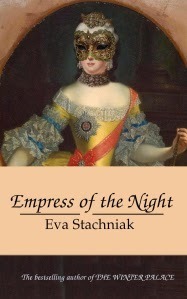
My guest today is Eva Stachniak author of The Winter Palace , her novel of Catherine the Great which was an international bestseller, and has been included in The Washington Post 2012 list of most notable fiction. Empress of the Night , her second Catherine the Great novel, has just been published in Canada and the US. Itis also available in the UK, Australia and New Zealand as an e-book.
Eva was born and raised in WrocÅaw, Poland. She moved to Canada in 1981 to pursue her post-graduate degree in English at McGill and now lives in Toronto. She has worked for Radio Canada International (Montreal) and Sheridan College (Oakville) where she taught English and humanities. Her debut novel, Necessary Lies , won the Amazon.ca/Books in Canada First Novel Award in 2000.
What or who inspired you to first write?It was the love of reading at first. Iâve always been an avid reader. Ever since I realized that authors were real people, I wanted to be a writer, imagine and tell my own stories. But I found the courage to actually do it only after I emigrated from Poland to Canada in 1981. My new Canadian friendships always began with questions about my homeland. It was the time of the Solidarity crisis, when Poland was on everyoneâs lips. I began by telling stories of the city I was born in and its complicated Polish and German past. Stories turned into novelsâ¦and here I am.
What is the inspiration for your current book?Empress of the Night is the second novel in my two-book project on Catherine the Great. Both were inspired by the formidable Russian Tsarina who always loomed large in Polish consciousness. It was under her rule that Poland was wiped out from the map of Europe. I was always aware of Catherineâs existence and her powerful presence, but only when I decided to write about her that I saw a woman and a politician behind the empress.
Is there a particular theme you wish to explore in this book?In The Winter Palace I explored the influence Catherine the Great exerted on her political supporters and friends. In Empress of the Night I wanted to examine a powerful woman from the inside, at her moments of triumph and defeat. I wanted the reader to understand better what it meant to be empress of 18th century Russia, an upcoming political power, and what it cost her.
What period of history particularly inspires or interests you? Why?Iâve written three novels rooted in the 18th century, because this is when the modern era began. Political decisions made at that time still touch our lives. Polandâpartitioned in the 18th centuryâregained her independence only in 1918, at the end of WWI, which also saw the end of the Romanov rule of Russia. The current Crimean crisis can serve as yet another example, for it was Catherine the Great who took the Crimea from the Ottoman Turks in 1783.
I also have to confess that 18th century women attract me more than their 19th century daughters. They are much more earthy, unashamed of their sexuality, ready to take power if given half a chance. Very modern in many ways.
What resources do you use to research your book/s?I read biographies of all my major characters; I read their memoirs, if they left any, and letters. I also talk to historians, and anyone who can shed light on any aspect of my characterâs lives. A doctor to whom I described Catherineâs symptoms diagnosed her with diabetes, a detailed not mentioned by her biographers.
I travel to places I write about. I need to position myself in the physical space where I set my novels. In St. Petersburg I walked all over the oldest part of the city, from The Winter Palace to the Nevsky Prospect, to Vasilyevsky Island, the Peter and Paul Fortress, along the Embankment, walks I describe in my novels. I visited other suburban palaces where Catherine the Great livedâPeterhof, Tsarskoye Seloâand where her traces are still very much visible.
I also visit museums and art exhibits, looking for pictorial representation of life at different historical periods. I search for the details of ordinary lives, a dogâs collar, the shape of a pitcher or flower vase, a childâs toy.
Which authors have influenced you?Itâs a hard question for there have been so many, starting from the beloved writers of my childhood, Astrid Lindgren, Mark Twain, Lucy M. Montgomery. More recent influences include Hilary Mantel, a genius of historical novel writing, Kate Grenville, whose The Secret River is one of my favourite historical novels of all times, Rose Tremain whose Music and Silence I often return to, and Penelope Fitzgerald whose novels may seem short, but they manage to contain whole worlds.
What do you do if stuck for a word or a phrase?Leave a blank space and do something else. Read poetry. Garden. Go for a walk. Something always triggers an association.
Is there a particular photo, piece of art, poetry or quote that strikes a chord with you? Why?There is a Henry David Thoreauâs quote I keep on my desk
âIf one advances confidently in the direction of his dreams, and endeavors to live the life which he has imagined, he will meet with a success unexpected in common hours.â
I started writing when I was in my forties and maybe this is why I find this admonition to be confident, to go where my imagination takes me, resonates with me. I take the word success to mean many things. Satisfaction, a sense of purpose, a deep joy of spending my days in the flow of work I love.
What advice would you give an aspiring author?Write and read every day. Do not wait for inspiration. It will come when you are working. Polish your writing until it becomes smooth and hard and you cannot polish it anymore without damaging it. Thenâand only thenâshow your work to your trusted readers. Listen to their comments carefully, with an open mind, especially if they do not praise you. Criticism may hurt, but if it is merited and free of malice, it makes you grow. There is nothing more sobering than making your reader laugh when all you wished for were tears.
Tell us about your next book.Iâm now working on a book set among Russian exiles in interwar Europeâthus closing the Russian theme of my last two novels. Iâm still researching these years, the last decade of the Russian empire before the Revolution of 1917, the fate of Catherineâs descendants, and the wonderful explosion of art that took place at that time. I study the Ballets Russes, dancers, choreographers, musicians and painters who dazzled Europe with their art, a vibrant, creative group, tightly woven into the cultural tapestry of Europe. I find their lives full of passions and drama. This is what I want to write about.
Many thanks for sharing your sources of inspiration with me, Eva. I hope Empress of the Night is a massive success, and I'm glad Australian readers have the chance to buy it here, too.
You can learn more about Eva and her books on her website, and she would love to connect with you via Facebook and Twitter.
The Winter Palace re-imagined the rise of Catherine the Great through the watchful eyes of her servant. Now, in Empress of the Night, Catherine takes center stage, reliving her astonishing rule over an empire, and the sacrifices that made her the most feared and commanding woman of her time.
'â¦ambitiousâ¦structurally complex and psychologically intense Empress of the Night aims for Hilary Mantel. Stachniakâs writing is distinct, however, especially in vivid description of sensory details: perfume, sweat and the click of heels on polished floorboards.'Quill & Quire (Canada)
'Empress of the Night ⦠casts light on Catherineâs life with unflinching honesty and intimacy. This fun novel of lovers, intrigue and malicious and manipulative nobility keeps readers enthralled with every pageâ¦'Virtuoso Life Magazine (US)
'Stachniakâs absorbing novel opens readersâ hearts to an extraordinary and misunderstood woman â¦wonderfully written, Stachniakâs story vibrates with passion, drama, and intrigue. This is a feast for fans.' Romantic Times Magazine (US)
'â¦historical fiction fans will appreciate this personal account of a formidable and, indeed, infamous ruler.'Library Journal (US)
Empress of the Night is available in all Amazon stores including Amazon US, Amazon Canada, Amazon UK and, of course, Amazon Australia.


