
Elisabeth Storrs's Blog, page 18
March 19, 2014
New Release of Dying for Rome: Lucretia’s Tale
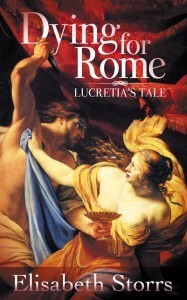
I’m delighted to announce that I’ve released Dying for Rome: Lucretia’s Tale, the first story in a new collection entitled Short Tales of Ancient Rome, in which I retell the legends and history of Rome from a fresh perspective.
Dying for Rome: Lucretia’s Tale retells the historic story of the tragic girl whose death inspired the men of Rome
… Read more

New Release of Dying for Rome: Lucretia's Tale

I'm delighted to announce that I've released Dying for Rome: Lucretia's Tale , the first story in a new collection entitled Short Tales of Ancient Rome, in which I retell the legends and history of Rome from a fresh perspective.
Dying for Rome: Lucretiaâs Tale retells the historic story of the tragic girl whose death inspired the men of Rome to rise up against a tyrant king and establish the Roman Republic. Was she a victim or a champion? A pawn in political schemes or the catalyst for rebellion? In this vivid short story, I explore Lucretiaâs character to reveal a tender portrait of a young girl misused by men who transforms into a woman with a passion for justice.
The dramatic stories of dark deeds, love and power surrounding the foundation of Rome are hard to resist. In fact, I was inspired to write Lucretia's Tale after the interest shown by readers in my blog post, Dying for Rome. What particularly intrigues me is that significant political change against oppressive rulers often eventuated as the response to the unjust death of a woman. As such, the death of the ravaged and self-sacrificing Lucretia is depicted by Roman historians as being the spur for revolution. Lucretia is not seen as an instigator of reform in her own right. In Lucretia's Tale, I have tried to explore the woman behind the legend.
As you know, I'm a mad Etruscophile, so it was difficult for me to write a story where the Etruscans are cast as the villains. In the legend, Lucretia is raped by Sextus, the son of the last Etruscan king of Rome, Tarquin the Proud. People often mistakenly assume that the Etruscans conquered Rome given the existence of the three Etruscan monarchs. In fact these men ruled over the Romans through political maneuvering at a time when aristocrats migrating between different city states managed to gain supreme office through elections. To my mind, the Tarquinian royal family are probably painted blacker by Roman historians than they might have been. After all, it was during their reign that Rome changed from being a collection of mud huts in a swamp into a well drained city with famous landmarks such as the Circus Maximus and the Great Temple of Jupiter on the Capitol Hill. Alas, history is written by the victors so we'll never know what the Etruscan rulers were truly like. Accordingly, until such time as evidence emerges to counter the "bad press," the expulsion of the Tarquins will continue to be heralded as one of the most successful rebellions of the ancient world.
To celebrate the release of Dying for Rome: Lucretia's Tale, subscribers to my newsletter can obtain a FREE copy. I hope you'll take advantage of my offer. Otherwise, you'll find a copy on all major digital retail sites for $2.99 including at Amazon.
The cover features the stunning painting "Lucretia and Tarquin" by Simon Vouet.
January 29, 2014
Winner of the 2014 Australia Day Giveaway Blog Hop!

Thanks to all for visiting Triclinium and participating in the Australia Day blog hop giveaway. I'm delighted to announce that Sharon has won a Kindle copy of Kate Morton's The Shifting Fog, and ebook editions of M.K. Tod's Unravelled and my own book, The Golden Dice: A Tale of Ancient Rome.
As a special treat for all those that entered the giveaway, I would like to offer an ebook edition of The Golden Dice as well. Please email me to claim a copy at elisabeth@elisabethstorrs.com.
Many thanks to M.K Tod for agreeing to be interviewed for the blog hop. I loved learning about your sources of inspiration. I'm looking forward to the release of Lies Told in Silence.
A big thanks also to Shelleyrae at Book'd Out for organising the hop once again! I recommend reading her blog for wonderful reviews and giveaways throughout the year.
Can't wait for Australia Day 2015!
January 24, 2014
Open up to Indies Campaign - Alliance of Independent Authors

As a traditionally published author who has found incredible freedom by moving into self-publishing, I've joined the Alliance of Independent Authors (ALLi), an organisation committed to championing the rights of self-published ('indie') authors globally.
ALLi is running the Open Up to Indies campaign to encourage and aid literary events, festivals, prizes, reviewers, booksellers and other interested parties to find ways to include self-publishing authors in their programs, events, listings and reviews.
I recently wrote an opinion piece for the ALLi blog about the failure of the organisers of the Australian Prime Minister's Literary Awards to allow self-published authors to enter the competition Australian Prime Minister's literary awards let indie authors down. The truth of the matter is that more and more indie authors are being accepted for the quality of their writing. I also believe readers who are discovering ebooks or paperbacks online don't necessarily bother to check whether they are trade published. Certainly many well known authors are also dabbling in self-publishing as they seek to remove themselves from onerous, one-sided contracts where the rights to their books are hoarded by publishing houses that have no intention of promoting such novels past their 'used by' date.
I was thrilled last week that both my books, The Wedding Shroud and The Golden Dice , were mentioned in the 2013 Australian Women Writers' Challenge round up with no need to add the qualification that I was an indie author. How wonderful to be in the hallowed company of Kate Morton, Hannah Kent and Kate Forsyth! The Golden Dice has also been named as one of the most memorable reads of 2013 by Sarah Johnson, the reviews editor of the Historical Novels Review. A similar mention was made on Historical Tapestry and Confessions of an Avid Reader blogs alongside other international historical fiction authors. I hope in the future, there will be a similar attitude taken by all literary events, reviewers, awards and journals. There are always poorly written books in the marketplace whether they be produced by publishing houses or indies. I believe that readers are finally being given the power to choose the books they want to read rather than those only made available to them through the biased funnel of the traditional publishing model.
I'd love it if you would consider signing the petition to support the Open Up to Indies Campaign.
And a happy 2014 to all - let's get stuck into those TBR piles! And you can get a chance to add to them by taking a look at the AUSTRALIA DAY GIVEAWAY BLOG HOP.
OPEN UP TO INDIES CAMPAIGN - ALLIANCE OF INDEPENDENT AUTHORS
As a traditionally published author who has found incredible freedom by moving into self-publishing, I've joined the Alliance of Independent Authors (ALLi), an organisation committed to championing the rights of self-published ('indie') authors globally.
ALLi is running the Open Up to Indies campaign to encourage and aid literary events, festivals, prizes, reviewers, booksellers and other interested parties to find ways to include self-publishing authors in their programs, events, listings and reviews.
I recently wrote an opinion piece for the ALLi blog about the failure of the organisers of the Australian Prime Minister's Literary Awards to allow self-published authors to enter the competition Australian Prime Minister's literary awards let indie authors down. The truth of the matter is that more and more indie authors are being accepted for the quality of their writing. I also believe readers who are discovering ebooks or paperbacks online don't necessarily bother to check whether they are trade published. Certainly many well known authors are also dabbling in self-publishing as they seek to remove themselves from onerous, one-sided contracts where the rights to their books are hoarded by publishing houses that have no intention of promoting such novels past their 'used by' date.
I was thrilled last week that both my books, The Wedding Shroud and The Golden Dice , were mentioned in the 2013 Australian Women Writers' Challenge round up with no need to add the qualification that I was an indie author. How wonderful to be in the hallowed company of Kate Morton, Hannah Kent and Kate Forsyth! The Golden Dice has also been named as one of the most memorable reads of 2013 by Sarah Johnson, the reviews editor of the Historical Novels Review. A similar mention was made on Historical Tapestry and Confessions of an Avid Reader blogs alongside other international historical fiction authors. I hope in the future, there will be a similar attitude taken by all literary events, reviewers, awards and journals. There are always poorly written books in the marketplace whether they be produced by publishing houses or indies. I believe that readers are finally being given the power to choose the books they want to read rather than those only made available to them through the biased funnel of the traditional publishing model.
I'd love it if you would consider signing the petition to support the Open Up to Indies Campaign.
And a happy 2014 to all - let's get stuck into those TBR piles! And you can get a chance to add to them by taking a look at the AUSTRALIA DAY GIVEAWAY BLOG HOP.
Australia Day Blog Hop: Interview With M K Tod

Aussies celebrate Australia Day this weekend! To give you a chance to share in the celebrations I'm offering the chance to win a Kindle version of Kate Mortonâs The Shifting Fog together with an ebook version of The Golden Dice: A Tale of Ancient Rome in the AUSTRALIA DAY BOOK GIVEAWAY BLOG HOP.
As part of the blog hop, Iâm delighted to interview M.K Tod, author of Unravelled on her sources of inspiration. As a bonus - M.K is also offering an ebook version of Unravelled in tandem with her interview with me - I'm bending the rules a little here as M.K is a Canadian author :0)
Make sure you visit Shelleyrae at Book'd Out to find out other blogs who are participating in the Blog Hop - more chances for you to win books by great Aussie authors! And many thanks to Shelleyrae for organising the hop:)
The AUSTRALIA DAY BOOK GIVEAWAY BLOG HOP is open for entries until Midnight January 28. Open internationally! Winners will be announced 4 February. To be entered into the raffle, just read M.K's interview, comment and name the title of her next book.
What or who inspired you to first write?My grandmother died on the way to her second wedding. I had always thought this would make a dramatic ending for a story and when I found myself living in Hong Kong with oodles of time on my hand, I decided to research my grandparentsâ lives and times. Research proved seductive, as did my early attempts to create sentences, paragraphs and chapters. I fell in love with WWI and have now written three novels set in that era.

What is the inspiration for your current book?Lies Told in Silenceâthe novel I am currently polishingâis the story of Helene Noisette who is sixteen when WWI begins. Believing that Germany will make straight for Paris if war occurs, Heleneâs father, Henri Noisette, sends Helene along with her mother, grandmother and younger brother to northern France where he feels they will be safe from potential attack. As it turns out, Helene and her family are closer to the front lines than they would have been in Paris and experience war in a more direct fashion. After finishing Unravelled, I felt Heleneâs story needed to be told and was intrigued at the thought of writing a novel that was in no way confined by family history. I also love France!
Is there a particular theme you wish to explore in this book?Lies Told in Silenceis a coming of age story that examines love and loss, duty and sacrifice and the unexpected consequence of lies. Iâve tried to show how war affects those behind the lines, women who fear for their loved ones and who struggle to survive.
What period of history particularly inspires or interests you? Why?Had you asked me ten years ago whether I would have become so immersed in tales set during WWI, I would have said âno wayâ since history was never a subject I enjoyed at school and war is far too gruesome. However, as I explored, I became fascinated with understanding what my grandfather lived through. He had been in the trenches; he had been gassed; he had fought at Vimy Ridge and other battles where so many soldiers were killed. It was my grandfather who would have lost his innocence just like so many others and this realization made it personal, not abstract. Beyond that was the realization of what women went through, coping with loss, with absence, with shortages, with fear. I constantly ask myself whether I would have had the strength to do what so many of our grandparents and great grandparents did.
Now that I know more about WWI, I am awed at those who fought, at their everyday bravery and their dedication to ideals that stood at the heart of what countries like Canada stood for.
Is there a particular photo, piece of art, poetry or quote that strikes a chord with you? Why?On my desk I have two bulletin boards where I post photos, articles and other items. At the moment these boards are tucked away because we are selling our house, however, I can tell you that I have several photos from a WWI museum my husband and I visited posted on them. Photos of soldiers walking a battlefield, the bombed out town of Ypres, a forest that has been decimated except for tree stumps, soldiers wearing gas masks. In addition, there is a photo of my grandfather in WWI uniform at the age of nineteen.
 What resources do you use to research your book/s?
Beyond a growing collection of fiction and non-fiction books about WWI, Iâve used a number of favourite websites, the Canadian collection of World War One battalion diaries, BBC and CBC radio broadcasts, Fullbooks and Project Gutenberg, the diaries and letters of soldiers, museum visits, personal travel, Google Maps, movies, and online fashion sites.
Which authors have influenced you?Rather than specific authors, my approach has been to read as much historical fiction as I can, learning from each author individually. I underline passages that appeal to me, and try to figure out why. I look at style, technique, phrasing, rhythm, story structure, character descriptions and so on so I can appreciate what works and what doesnât.
What do you do if stuck for a word or a phrase?Often I pick up a novel at random and flip through pages looking for ideas. Sometimes I open my grandmotherâs book of quotations and again look for ideas. At other times, I leave my desk and do something completely different for a while. I carry a small notebook with me and jot ideas down when they strike. These can be helpful as well. As a last resort I type XXX and return to the passage later.
What advice would you give an aspiring author?During the past two years, Iâve conducted two surveys exploring what readers think about historical fiction. Survey results offer some very interesting facts about why people read historical fiction, what detracts from their enjoyment of historical fiction and their favourite kinds of stories. I recommend the surveys as one source of advice. Like many, Iâm still relatively new to creating and publishing novels, but I have discovered that marketing activities are almost as important as the writing itself so you need to take marketing seriously. I would also recommend reaching out to the community of historical fiction authors, a very supportive group of individuals who hang out on Facebook, Twitter, the Historical Novel Society and other places.
M.K Tod writes historical fiction and blogs about all aspects of the genre at A Writer of History. Her debut novel, Unravelled: Two wars. Two affairs. One marriage.is available in paperback from Amazon (US, Canada and elsewhere), and as an e-book from Amazon, Nook, Kobo, Google Play and on iTunes. Mary can be contacted on Facebook, Twitter and Goodreads.
Thanks for sharing your sources of inspiration with me, M.K. You take on an enormous job in conducting your survey. I, for one, am very grateful for the insight into my favourite genre. Here are the results of the 2013 Historical Fiction Survey. M.K has also just released the results of the 2013 Favourite Historical Fiction Authors.

Unravelled: Two wars.Two affairs. One marriage.
In October 1935, Edward Jamieson's memories of war and a passionate love affair resurface when an invitation to a WWI memorial ceremony arrives. Though reluctant to visit the scenes of horror he has spent years trying to forget, Edward succumbs to the unlikely possibility of discovering what happened to Helene Noisette, the woman he once pledged to marry. Travelling through the French countryside with his wife Ann, Edward sees nothing but reminders of war. After a chance encounter with Helene at the dedication ceremony, Edward's past puts his present life in jeopardy.
When WWII erupts a few years later, Edward is quickly caught up in the world of training espionage agents, while Ann counsels grieving women and copes with the daily threats facing those she loves. And once again, secrets and war threaten the bonds of marriage.With events unfolding in France, England and Canada, Unravelled is a compelling novel of love, duty and sacrifice set amongst the turmoil of two world wars.
Remember - to win a Kindle edition of Kate Morton's The Shifting Fog and ebooks of The Golden Dice: A Tale of Ancient Rome and Unravelled , please comment and name the title of M.K Tod's next book.

 Enjoy Australia Day!
Elisabeth Storrs is the Australian author of the Tales of Ancient Rome series. Subscribe to her newsletter for news and special offers here.
November 24, 2013
Review - Burial Rites by Hannah Kent - Goodreads Choice Awards for 2013
I recently reviewed Hannah Kent's debut novel, Burial Rites, on Goodreads. I was delighted to discover that my rather brief review was chosen as the top review of Kent's book by Newsweek in connection with their promotion of the finalists in the historical fiction category of the Goodreads Choice Awards for 2013. This young Australian author's writing is superb and I wish her luck in the competition. I'm also pleased to see that another author from the Antipodes is represented in the top ten as Eleanor Catton's The Luminaries is also nominated. Make sure you register your vote as well by visiting Goodreads. I guess you know who has my vote!
 Burial Rites by Hannah Kent
My rating: 5 of 5 stars
This book is a stunning debut novel. Here's hoping Hannah Kent has other tales to tell. Her language is lyrical and the character of Agnes is complex and poignant. In a way, there is a cruelty in how Kent draws the reader into Agnes' soul when one knows the inevitable heartbreak that lies in store for her. The other characters' gradual affection for the doomed woman is also cleverly evoked. At first I found the interpolation of official records to be distracting but ultimately I found myself returning to them to fully understand the attitudes of the time. We may never really know what Agnes Magnusdottir was like, or whether she was complicit in the murders, but Kent is to be lauded for this beautiful rendering of a woman whose life was beleaguered from childhood and had to survive the cold, harsh world of Iceland's landscape, prejudices and law.
View all my reviews
Burial Rites by Hannah KentMy rating: 5 of 5 stars
This book is a stunning debut novel. Here's hoping Hannah Kent has other tales to tell. Her language is lyrical and the character of Agnes is complex and poignant. In a way, there is a cruelty in how Kent draws the reader into Agnes' soul when one knows the inevitable heartbreak that lies in store for her. The other characters' gradual affection for the doomed woman is also cleverly evoked. At first I found the interpolation of official records to be distracting but ultimately I found myself returning to them to fully understand the attitudes of the time. We may never really know what Agnes Magnusdottir was like, or whether she was complicit in the murders, but Kent is to be lauded for this beautiful rendering of a woman whose life was beleaguered from childhood and had to survive the cold, harsh world of Iceland's landscape, prejudices and law.
View all my reviews
October 20, 2013
2013 Historical Fiction Survey
The wonderful MK Tod from A Writer of History blog conducted a survey of historical fiction readers last year to ascertain just what readers exactly love about this genre. The survey uncovered insights about those who read historical fiction and those who do not - demographics, story preferences, favourite time periods, reasons for reading or not reading this genre, top authors, the different perspectives of men and women, sources of recommendations and so on. Here are some of the highlights of the 2012 survey. The 2013 survey will augment these results with a broader focus on reading habits as well as social mediaâs role in enhancing the reading experience. Survey questions were developed in collaboration with Richard Lee, Founder of the Historical Novel Society.Whether you read historical fiction or not, please take a few minutes to complete the survey. To add to the robustness of data collected, please pass the survey URL along to men and women of all ages and in any part of the world you can reach!Aussie readers were only a small segment of responders last time so, all my compatriots, here's your chance to have your say :) I know Mary and Richard would be delighted to hear your opinion. Click here to access the survey. Have fun!
September 23, 2013
Who were the Mysterious Etruscans?
There is a tale told by Herodatus, the famous Greek historian, about a wily prince called Tyrrhenus who saved his people by encouraging gambling. The story goes like this. Once in the land of Lydia there came a time when the harvest could no longer fill the bellies of all. So the king cast half his subjects, led by his son Tyrrhenus, adrift upon the sea to find another realm or perish. The prince landed safely in Italy, but until crops could be sown and reaped the first survivors had to scrounge for food and shiver through winter. Yet not one person died. For Tyrrhenus commanded that half the people take it in turns to eat the supplies they had brought with them while the other half gambled until spring arrived. Thereafter he called his people the Tyrrhenians.
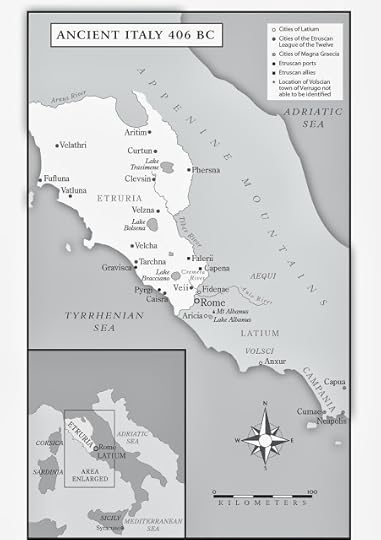
Greeks like Herodatus called these people Tyrrhenians but we know them today as the Etruscans. The land in which they settled was known as Etruria and was primarily located in the areas of Lazio, Umbria and Tuscany. However the Etruscanâs influence spread across Italy, north to the Po River and south to Campania.
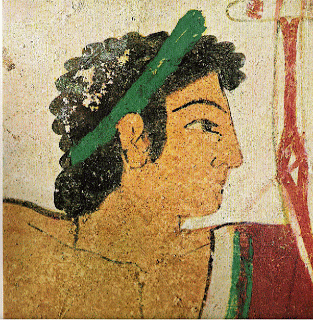
The Etruscans features were very distinctive; their straight noses and almond shaped eyes distinguished them from other peoples living in Italy at the time. Their language and script was also markedly different. As a result, their origins have long been debated. Was Herodatus speaking the truth when he said the Etruscans came from Lydia? Or were they simply a people who were native to Italy?
Some modern historians contend the Etruscans were indigenous as did another ancient Greek historian, Dionysius of Halicarnassus, who lived in imperial Roman times. And Livy, a Roman historian who lived in the Augustan age, believed the Etruscans came to Italy from the north, over the Alps. Some current day archaeologists give credence to Herodatusâ claim that the Etruscans migrated from Asia Minor (modern day Turkey) because he lived in the C5th BCE and had contemporary knowledge compared to Dionysius and Livy.
It is no wonder, then, that the Etruscans have been dubbed âmysterious.â But where did they come from? Perhaps all three options are useful when researching the ethnicity of these people. Evidence from the Bronze Age (3300-1200 BCE) established their presence in Italy. By the end of the Iron Age (1200-550 BCE) their culture had flourished to such an extent they controlled a trading empire extending from France and the Black Sea throughout the Mediterranean, Near East and Egypt. Indeed, their sculpture, artwork, decorative furniture, gilded artefacts and jewellery were all heavily reminiscent of Assyrian and Phoenician culture. Consequently it appears Etruscan society could have been based on an existing Italian culture which was further developed with waves of migration over a considerable period of time.
What about genetic testing? Attempts have been made to establish ethnicity through DNA sampling. The result? Inconclusive. A sample taken from the bones found in tombs revealed affinities with European populations whereas genetic material taken from modern day Tuscan descendants shows Near Eastern markers.
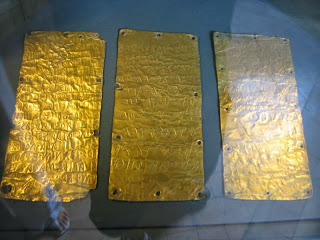
And what do the Etruscans themselves say? For many years their language was considered indecipherable but the discovery of three thinly beaten sheets of gold known as the Pyrgi Tablets advanced efforts to decode Etruscan writing. The sheets were engraved with a dedication to the goddess Astarte in both Etruscan and Phoenician script. This bilingual text assisted archaeologists to decipher the Etruscan language just as the Rosetta Stone unlocked the mystery of Egyptian hieroglyphics. Unfortunately, though, understanding their words has not helped. Very little Etruscan literature remains other than inscriptions and the remnants of ritual texts. There are no works by Etruscan historians, poets or writers for us to translate. Instead we are left with the commentary of their victors, the Romans and Greeks.
Whoever the Etruscans were, one thing is certain â their culture fascinates me and has held my attention for over fifteen years of research. They afforded independence, education and sexual freedom to their women. And their religion developed the art of divination to a science. This liberal, mystical and cosmopolitan society inspired me to write the Tales of Ancient Rome series which chronicles the events of a ten year conflict between Republican Rome and Veii, a city described as the âjewel in the crownâ of the Etruscan world. It is the tale of two lovers who are blamed for starting a war, and the journey of three women to survive a siege.
This essay was first published as a guest post at HFeBooks.

Greeks like Herodatus called these people Tyrrhenians but we know them today as the Etruscans. The land in which they settled was known as Etruria and was primarily located in the areas of Lazio, Umbria and Tuscany. However the Etruscanâs influence spread across Italy, north to the Po River and south to Campania.
The Etruscans features were very distinctive; their straight noses and almond shaped eyes distinguished them from other peoples living in Italy at the time. Their language and script was also markedly different. As a result, their origins have long been debated. Was Herodatus speaking the truth when he said the Etruscans came from Lydia? Or were they simply a people who were native to Italy?

Some modern historians contend the Etruscans were indigenous as did another ancient Greek historian, Dionysius of Halicarnassus, who lived in imperial Roman times. And Livy, a Roman historian who lived in the Augustan age, believed the Etruscans came to Italy from the north, over the Alps. Some current day archaeologists give credence to Herodatusâ claim that the Etruscans migrated from Asia Minor (modern day Turkey) because he lived in the C5th BCE and had contemporary knowledge compared to Dionysius and Livy.
It is no wonder, then, that the Etruscans have been dubbed âmysterious.â But where did they come from? Perhaps all three options are useful when researching the ethnicity of these people. Evidence from the Bronze Age (3300-1200 BCE) established their presence in Italy. By the end of the Iron Age (1200-550 BCE) their culture had flourished to such an extent they controlled a trading empire extending from France and the Black Sea throughout the Mediterranean, Near East and Egypt. Indeed, their sculpture, artwork, decorative furniture, gilded artefacts and jewellery were all heavily reminiscent of Assyrian and Phoenician culture. Consequently it appears Etruscan society could have been based on an existing Italian culture which was further developed with waves of migration over a considerable period of time.

What about genetic testing? Attempts have been made to establish ethnicity through DNA sampling. The result? Inconclusive. A sample taken from the bones found in tombs revealed affinities with European populations whereas genetic material taken from modern day Tuscan descendants shows Near Eastern markers.
And what do the Etruscans themselves say? For many years their language was considered indecipherable but the discovery of three thinly beaten sheets of gold known as the Pyrgi Tablets advanced efforts to decode Etruscan writing. The sheets were engraved with a dedication to the goddess Astarte in both Etruscan and Phoenician script. This bilingual text assisted archaeologists to decipher the Etruscan language just as the Rosetta Stone unlocked the mystery of Egyptian hieroglyphics. Unfortunately, though, understanding their words has not helped. Very little Etruscan literature remains other than inscriptions and the remnants of ritual texts. There are no works by Etruscan historians, poets or writers for us to translate. Instead we are left with the commentary of their victors, the Romans and Greeks.
Whoever the Etruscans were, one thing is certain â their culture fascinates me and has held my attention for over fifteen years of research. They afforded independence, education and sexual freedom to their women. And their religion developed the art of divination to a science. This liberal, mystical and cosmopolitan society inspired me to write the Tales of Ancient Rome series which chronicles the events of a ten year conflict between Republican Rome and Veii, a city described as the âjewel in the crownâ of the Etruscan world. It is the tale of two lovers who are blamed for starting a war, and the journey of three women to survive a siege.
This essay was first published as a guest post at HFeBooks.
WHO WERE THE MYSTERIOUS ETRUSCANS?
There is a tale told by Herodatus, the famous Greek historian, about a wily prince called Tyrrhenus who saved his people by encouraging gambling. The story goes like this. Once in the land of Lydia there came a time when the harvest could no longer fill the bellies of all. So the king cast half his subjects, led by his son Tyrrhenus, adrift upon the sea to find another realm or perish. The prince landed safely in Italy, but until crops could be sown and reaped the first survivors had to scrounge for food and shiver through winter. Yet not one person died. For Tyrrhenus commanded that half the people take it in turns to eat the supplies they had brought with them while the other half gambled until spring arrived. Thereafter he called his people the Tyrrhenians.
Greeks like Herodatus called these people Tyrrhenians but we know them today as the Etruscans. The land in which they settled was known as Etruria and was primarily located in the areas of Lazio, Umbria and Tuscany. However the Etruscanâs influence spread across Italy, north to the Po River and south to Campania.
The Etruscans features were very distinctive; their straight noses and almond shaped eyes distinguished them from other peoples living in Italy at the time. Their language and script was also markedly different. As a result, their origins have long been debated. Was Herodatus speaking the truth when he said the Etruscans came from Lydia? Or were they simply a people who were native to Italy?
Some modern historians contend the Etruscans were indigenous as did another ancient Greek historian, Dionysius of Halicarnassus, who lived in imperial Roman times. And Livy, a Roman historian who lived in the Augustan age, believed the Etruscans came to Italy from the north, over the Alps. Some current day archaeologists give credence to Herodatusâ claim that the Etruscans migrated from Asia Minor (modern day Turkey) because he lived in the C5th BCE and had contemporary knowledge compared to Dionysius and Livy.
It is no wonder, then, that the Etruscans have been dubbed âmysterious.â But where did they come from? Perhaps all three options are useful when researching the ethnicity of these people. Evidence from the Bronze Age (3300-1200 BCE) established their presence in Italy. By the end of the Iron Age (1200-550 BCE) their culture had flourished to such an extent they controlled a trading empire extending from France and the Black Sea throughout the Mediterranean, Near East and Egypt. Indeed, their sculpture, artwork, decorative furniture, gilded artefacts and jewellery were all heavily reminiscent of Assyrian and Phoenician culture. Consequently it appears Etruscan society could have been based on an existing Italian culture which was further developed with waves of migration over a considerable period of time.
What about genetic testing? Attempts have been made to establish ethnicity through DNA sampling. The result? Inconclusive. A sample taken from the bones found in tombs revealed affinities with European populations whereas genetic material taken from modern day Tuscan descendants shows Near Eastern markers.And what do the Etruscans themselves say? For many years their language was considered indecipherable but the discovery of three thinly beaten sheets of gold known as the Pyrgi Tablets advanced efforts to decode Etruscan writing. The sheets were engraved with a dedication to the goddess Astarte in both Etruscan and Phoenician script. This bilingual text assisted archaeologists to decipher the Etruscan language just as the Rosetta Stone unlocked the mystery of Egyptian hieroglyphics. Unfortunately, though, understanding their words has not helped. Very little Etruscan literature remains other than inscriptions and the remnants of ritual texts. There are no works by Etruscan historians, poets or writers for us to translate. Instead we are left with the commentary of their victors, the Romans and Greeks.
Whoever the Etruscans were, one thing is certain â their culture fascinates me and has held my attention for over fifteen years of research. They afforded independence, education and sexual freedom to their women. And their religion developed the art of divination to a science. This liberal, mystical and cosmopolitan society inspired me to write the Tales of Ancient Rome series which chronicles the events of a ten year conflict between Republican Rome and Veii, a city described as the âjewel in the crownâ of the Etruscan world. It is the tale of two lovers who are blamed for starting a war, and the journey of three women to survive a siege.
This essay was first published as a guest post at HFeBooks.


