Susanna Fraser's Blog, page 18
May 13, 2013
Susanna reads the Ritas: Contemporary Single Title
In the challenge I set myself to read at least one finalist from each category of the 2013 Ritas, The Way Back Home, by Barbara Freethy, was my Contemporary Single Title Romance choice. And while it was a nice story, sweetly romantic and well-paced, it didn't succeed in overcoming my aversion to small-town contemporary romances. It's funny, I'm fine with small town or rural settings in other countries or in historicals, but an American small-town contemporary romance is almost guaranteed to have me snarling at some point in the story.

I fully admit it's not the books, it's me. I grew up in a small town. I left when I was 18. I live in Seattle. Not in the metropolitan area, not in the suburbs, within the city limits. I love my city and my life, and I loved spending my college years and early 20's in the very different but equally awesome city of Philadelphia. Don't get me wrong, I love my hometown too. I just can't imagine living there again. And I think because the urban vs. rural divide has become so politically and culturally fraught in the past decade or two, it's hard for me to relate to a story that's not just about a small town, but how awesome it is to live in one compared to a city. I literally had to put this book down mid-scene and walk away from it for hours after a character talked about how much better he felt about having his son in a small town school than their old home in San Francisco, because city schools are just so much rougher. The Seattle public school system is far from perfect, but Miss Fraser is having a MUCH better experience than I did in my small-town school growing up. As for behavioral issues...well, let's just say kids are just as likely to get into fights, get stupid drunk at parties, get pregnant, etc. in a small town as in a city. I'd be just as terrified thinking how I'm only four years away from having a teenager no matter where I lived. Nothing else in the book got me huffily indignant, but living in a small town just isn't my fantasy.
So...yeah. Small town contemporary American romances and I remain non-mixy things. I think this would be a lovely book for people not carrying that particular chip on their shoulder, though. (With the caveat that I winced a bit every time the hero was referred to as an ex-Marine, because I've always been told that former Marine is the preferred term for an honorably discharged member of that branch of the service. Also, I don't know what the publisher was thinking with that cover image. The story is set on a river in Northern California, and the heroine's family runs a white-water rafting business. Would it really have been that hard to find an image with some, you know, rugged hills, a fast-moving river, and some Western-looking trees? I may not want to LIVE in rural Northern California, but it's an incredibly beautiful place. I know, accuracy in romance cover images is a lost cause, but seems like it'd be easier with contemporaries.)


May 12, 2013
Random Cookbook of the Week: Pork Everywhere (Pig: King of the Southern Table and The Food You Want to Eat)
I'm not going to post the recipe I cooked last week from Pig: King of the Southern Table. It's a good cookbook, sort of an encyclopedia of pork recipes from various Southern cuisines, but something was wrong with the breaded pork cutlets with lemon-caper sauce I made. All I can think is that an ingredient was left out or listed at far too small an amount, because the sauce part just did not happen, even when I tripled the amount of chicken broth and threw in some butter. I had a thick gravy, but I'm sure it wasn't what the recipe intended, and it wasn't that good...so I'll just hope for better luck the next time the cookbook comes around in my rotation.
Instead, I'll skip straight to last night's dinner from Ted Allen's The Food You Want to Eat.
Mustardy Barbecued Spareribs
For the barbecue rub:
- 1 T kosher salt
- 1/4 c. sugar
- 1 T. chili powder
- 1 T. paprika
- 3 T. ground cumin
- 2 t. Colman's dry mustard
- 1/4 t. ground allspice
(You know, as I typed the recipe I realize I misread the ingredients while mixing the rub yesterday and put in 2 tablespoons dry mustard. No matter. It still tasted good.)
For the ribs and sauce
- 2 3 1/2 pound racks of spareribs (I used one 4-pounder because I was making this for just my little family, and it was the smallest one in the store.)
- 1/2 c. cider vinegar
- 1/2 c. medium-weight beer
- 1 t. sugar
- 2 t. prepared mustard
- 1 t. kosher salt
Preheat the oven to 300 F.
In a small bowl, combine all the rub ingredients. Rub the ribs all over with the dry spice mixture, place them in a roasting pan or on a baking sheet, put them in the oven, and let them roast for 2 hours or until very tender. They are now completely cooked and can be refrigerated for 2 or 3 days, or until you're ready to serve.
N.B. Allen has three paragraphs of instructions for how to do the grilling piece if you're using a charcoal grill. We have a gas grill, so I'll just say that I heated the grill to medium.
Put the ribs on the grill and grill slowly, turning once, until the ribs are heated through and have developed a crust, about 20 minutes.
Meanwhile, stir together all the ingredients for the sauce. When the ribs are ready, cut between the bones with a large knife to cut them into individual ribs. Brush with the sauce and serve the remaining sauce on the side.
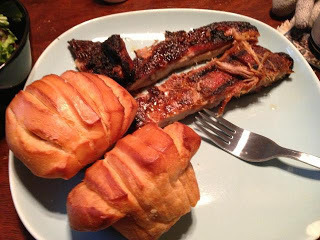
All I can say is YUM. While the mustardy South Carolina style isn't my favorite sauce, it is quite tangy and tasty, and I can always order some proper Alabama sauce from Dreamland for the next time I make it. For indeed there will be a next time.
Instead, I'll skip straight to last night's dinner from Ted Allen's The Food You Want to Eat.
Mustardy Barbecued Spareribs
For the barbecue rub:
- 1 T kosher salt
- 1/4 c. sugar
- 1 T. chili powder
- 1 T. paprika
- 3 T. ground cumin
- 2 t. Colman's dry mustard
- 1/4 t. ground allspice
(You know, as I typed the recipe I realize I misread the ingredients while mixing the rub yesterday and put in 2 tablespoons dry mustard. No matter. It still tasted good.)
For the ribs and sauce
- 2 3 1/2 pound racks of spareribs (I used one 4-pounder because I was making this for just my little family, and it was the smallest one in the store.)
- 1/2 c. cider vinegar
- 1/2 c. medium-weight beer
- 1 t. sugar
- 2 t. prepared mustard
- 1 t. kosher salt
Preheat the oven to 300 F.
In a small bowl, combine all the rub ingredients. Rub the ribs all over with the dry spice mixture, place them in a roasting pan or on a baking sheet, put them in the oven, and let them roast for 2 hours or until very tender. They are now completely cooked and can be refrigerated for 2 or 3 days, or until you're ready to serve.
N.B. Allen has three paragraphs of instructions for how to do the grilling piece if you're using a charcoal grill. We have a gas grill, so I'll just say that I heated the grill to medium.
Put the ribs on the grill and grill slowly, turning once, until the ribs are heated through and have developed a crust, about 20 minutes.
Meanwhile, stir together all the ingredients for the sauce. When the ribs are ready, cut between the bones with a large knife to cut them into individual ribs. Brush with the sauce and serve the remaining sauce on the side.

All I can say is YUM. While the mustardy South Carolina style isn't my favorite sauce, it is quite tangy and tasty, and I can always order some proper Alabama sauce from Dreamland for the next time I make it. For indeed there will be a next time.
May 7, 2013
Welcome, Shawna Reppert!
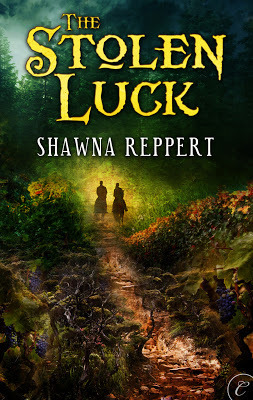
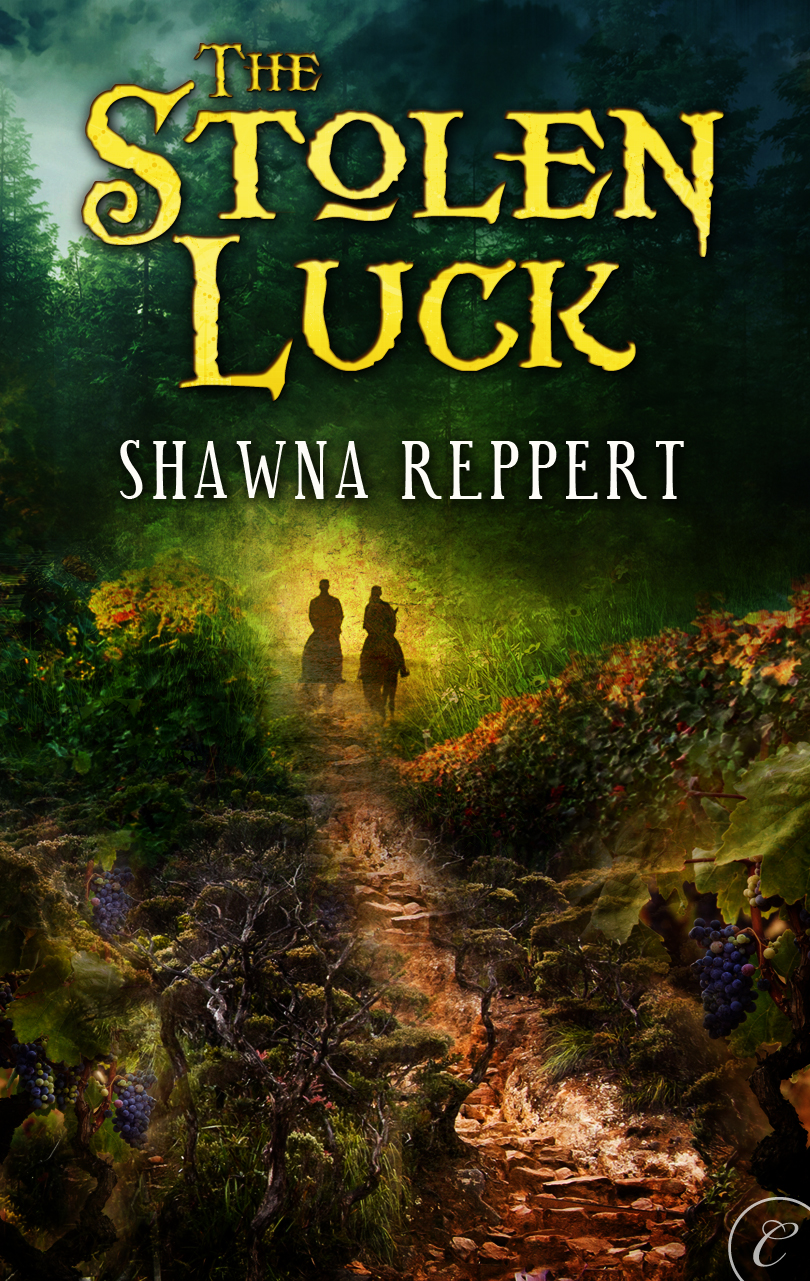
Today's guest on my blog is fellow Carina author Shawna Reppert, whose m/m fantasy romance The Stolen Luck released this week! By the way, isn't that a gorgeous cover? Carina consistently provides quality covers, but I think they've outdone themselves this time.
Something Old, Something New, Something Borrowed, Something Blue
(On Worldbuilding)
In some ways, writing an original-world fantasy is easy. No need to scour the web for reference photos and old maps, no need to worry about getting caught out by a reader who knows that Main Street in Nameatown runs east/west, not north/south.
On the other hand, you face the daunting task of making a world up entirely out of your own imagination. It needs to be detailed enough to feel real, and it needs to make sense.
In the opening of The Stolen Luck, my protagonist, James Dupree, is travelling through an area that he doesn’t particularly care for, a land where slavery is legal. I had already decided, arbitrarily, that his own estate is in the North. I realized that put the opening in the South would add unintended political and historical resonances, even though the novel is set in a fantasy world vaguely equivalent to late medieval/early Renaissance Europe in technology and feel.
So, he’s travelling through the Midlands. To give the world a more complete feel I make mention of the South by implying that the Dupree wines must be famous indeed to be traded that far. I reference the East by implying that fine horses have a touch of Eastern blood, a detail borrowed from our own world, where hotter, finer-boned horses descend at least distantly from Arab and Barb breeds.
I actually borrow quite a bit from our world. The rolling vineyards surrounded by tall forests will feel familiar to any of my neighbors. The weather on the journey from the Dupree manor to the elven sanctuary of the Lands Between fall in similar patterns to those I’ve come to respect on the mountain where I keep my horse. The north wind in winter brings bitter cold, dry weather; the winds from the west bring rain and snow.
I wanted the magical elements of the novel to have an almost fairytale feel, and so the Lands Between the Worlds bear a resemblance to cnuc na Sidhe, the faerie underworld of Celtic myths and legends. At the same time, I wanted to give the world something unique and original. Cloaks of invisibility, magic swords, elixirs that heal wounds, all these have been done and done again. I decided that the chief function of the Luck, the talisman in my novel that James will do almost anything to recover, is to make vineyards thrive and make the wine from those vineyards exemplary beyond all others. (It does other things, but loss of its influence on the vineyard and the wines his family depends on is what causes James Dupree to risk both life and honor for its return.)
As a final note on worldbuilding, unless you really know your biology and your atmospheric science, keep your trees green and your sky blue. (I had to get the blue in there somehow to justify the title!)
The Stolen Luck:
How far will a good man go to save his home and loved ones?
Lord James Dupree must recover his family's stolen Luck, the elven talisman that has protected the Dupree lands for generations. Without the talisman, the Dupree vineyards are failing and creditors are closing in. The Luck is his only hope of saving his home and his family from poverty and ruin.
Despite his abhorrence of slavery, James wins an elven slave in a game of cards. The slave, Loren, provides the only chance to enter the Lands Between and recover the stolen Luck. Despite James's assurances and best intentions, Loren does not trust his new master and James finds it all too easy to slip into the role of slave master when Loren defies him.
As the two work together through hardship and danger, James finds himself falling in love with Loren. And when a hidden enemy moves against them, he must choose between his responsibility to his family and his own soul.
Buy it on Amazon: http://www.amazon.com/The-Stolen-Luck...
Or directly from the publisher:
http://ebooks.carinapress.com/89EDE73...
Keep in touch with the author:
www.ShawnaReppert.com
Twitter: @ShawnaReppert
On Amazon: http://www.amazon.com/Shawna-Reppert/...
On Facebook: www.facebook.com/shawna.reppert
On Tumbler: http://www.tumblr.com/blog/shawnareppert
Something Old, Something New, Something Borrowed, Something Blue
(On Worldbuilding)
In some ways, writing an original-world fantasy is easy. No need to scour the web for reference photos and old maps, no need to worry about getting caught out by a reader who knows that Main Street in Nameatown runs east/west, not north/south.
On the other hand, you face the daunting task of making a world up entirely out of your own imagination. It needs to be detailed enough to feel real, and it needs to make sense.
In the opening of The Stolen Luck, my protagonist, James Dupree, is travelling through an area that he doesn’t particularly care for, a land where slavery is legal. I had already decided, arbitrarily, that his own estate is in the North. I realized that put the opening in the South would add unintended political and historical resonances, even though the novel is set in a fantasy world vaguely equivalent to late medieval/early Renaissance Europe in technology and feel.
So, he’s travelling through the Midlands. To give the world a more complete feel I make mention of the South by implying that the Dupree wines must be famous indeed to be traded that far. I reference the East by implying that fine horses have a touch of Eastern blood, a detail borrowed from our own world, where hotter, finer-boned horses descend at least distantly from Arab and Barb breeds.
I actually borrow quite a bit from our world. The rolling vineyards surrounded by tall forests will feel familiar to any of my neighbors. The weather on the journey from the Dupree manor to the elven sanctuary of the Lands Between fall in similar patterns to those I’ve come to respect on the mountain where I keep my horse. The north wind in winter brings bitter cold, dry weather; the winds from the west bring rain and snow.
I wanted the magical elements of the novel to have an almost fairytale feel, and so the Lands Between the Worlds bear a resemblance to cnuc na Sidhe, the faerie underworld of Celtic myths and legends. At the same time, I wanted to give the world something unique and original. Cloaks of invisibility, magic swords, elixirs that heal wounds, all these have been done and done again. I decided that the chief function of the Luck, the talisman in my novel that James will do almost anything to recover, is to make vineyards thrive and make the wine from those vineyards exemplary beyond all others. (It does other things, but loss of its influence on the vineyard and the wines his family depends on is what causes James Dupree to risk both life and honor for its return.)
As a final note on worldbuilding, unless you really know your biology and your atmospheric science, keep your trees green and your sky blue. (I had to get the blue in there somehow to justify the title!)
The Stolen Luck:
How far will a good man go to save his home and loved ones?
Lord James Dupree must recover his family's stolen Luck, the elven talisman that has protected the Dupree lands for generations. Without the talisman, the Dupree vineyards are failing and creditors are closing in. The Luck is his only hope of saving his home and his family from poverty and ruin.
Despite his abhorrence of slavery, James wins an elven slave in a game of cards. The slave, Loren, provides the only chance to enter the Lands Between and recover the stolen Luck. Despite James's assurances and best intentions, Loren does not trust his new master and James finds it all too easy to slip into the role of slave master when Loren defies him.
As the two work together through hardship and danger, James finds himself falling in love with Loren. And when a hidden enemy moves against them, he must choose between his responsibility to his family and his own soul.
Buy it on Amazon: http://www.amazon.com/The-Stolen-Luck...
Or directly from the publisher:
http://ebooks.carinapress.com/89EDE73...
Keep in touch with the author:
www.ShawnaReppert.com
Twitter: @ShawnaReppert
On Amazon: http://www.amazon.com/Shawna-Reppert/...
On Facebook: www.facebook.com/shawna.reppert
On Tumbler: http://www.tumblr.com/blog/shawnareppert
May 5, 2013
2013 reading, books 43-45
43) Masterless Mistresses, by Emily Clark.
A history of the Ursuline convent established in New Orleans in the early 18th century from its founding through the early 19th century. An academic work, though not as dry as many of its ilk--if you're interested in early New Orleans or women religious, you'll probably enjoy it. Clark focuses on how the Ursulines as women operating autonomously, without a father or a husband as their patriarchal head, challenged the social order of the time.
44) Sweet Awakening, by Marjorie Farrell.
For the 2013 TBR Challenge. Detailed post to come on May 15.
45) River of Stars, by Guy Gavriel Kay.
A sweeping, epic historical fantasy (light on the fantastical elements--there's really only one sequence that's undeniably otherworldly) set in what is obviously an alternate-world version of China. I was caught up in it, staying up till almost 1 AM last night to finish it even though I usually prefer even my doorstopper fantasy sagas to concentrate more intently on one or two characters. (E.g. I love Jacqueline Carey's first-person Kushiel epics.)

That said, I hated the ending. HATED it. I raced through the last 100 pages waiting for the moment everything turned around--and it never did. It's not a wholly depressing ending by any means, and Kay doesn't kill off characters with the abandon of a George RR Martin or even a Joss Whedon. But I was still hoping for something, shall we say, more traditionally satisfying and cathartic. I can be old-school like that. But this morning I looked up the historical events Kay based the story on, and now his choices make a lot more sense. So if you're like me in that you A) are fond of traditionally happy endings and B) know very little about Chinese history, I recommend giving the "History" section of the Wikipedia article on the Song Dynasty a quick read.
May 1, 2013
Guest Post - Angela Highland on science fiction and fantasy for romance readers
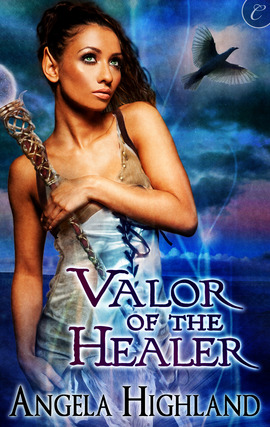
Today I'd like to welcome my fellow Carina author Angela Highland, whose epic fantasy novel Valor of the Healer was released in April.
Greetings, Susanna's readers! You all know Susanna as an author of historical romance, and I'm right there with you on that; I've quite enjoyed her books. Particularly after discovering that she was a fellow Browncoat. Which meant I got to spend all of The Sergeant's Lady imagining her hero looking like Nathan Fillion. This did not suck.
And that leads me into what I wanted to post about, which is to say, what romance readers and SF/F readers can have in common, and what books might appeal to both!
Science fiction and fantasy novels got my reading attention very early on in my life. But on the other hand, so did the author who wrote under the names of Barbara Michaels and Elizabeth Peters. Michaels/Peters gave me a very strong introduction to Gothic-style romance via the one pen name, and mysteries with romantic elements via the other. It didn't take long at all for novels that incorporated both fantastic and romantic elements to shoot to the top of my favorites list.
Anne McCaffrey was probably the first SF author to pull this off for me. F'lar and Lessa in the Pern series were a classic romance for me early on in my reading, as were Killashandra Ree and Lars Dahl in the Crystal Singer novels. On the fantasy side of things, one name similarly leaps out: Mercedes Lackey. Her Valdemar series gave me not only Talia and Dirk as a romantic couple, but one of the earliest male couples to show up in modern fantasy: Vanyel and Tylendel.
As urban fantasy started getting its feet under it as a genre, Tanya Huff's Victory Nelson books staked their claim hard for my affections as well, with the love triangle of Vicki, her former police partner Mike, and the vampire Henry. (This remains one of my favorite romantic scenarios as well, in no small part because it is in fact eventually resolved, and not in the way I would have expected reading it at the time!)
For more modern releases, I'll give some love to Patricia Briggs and Doranna Durgin--both of whom had excellent fantasy novels before they jumped over to writing urban fantasy and paranormal romance, respectively. I'll give particular shoutouts to Briggs' When Demons Walk and Durgin's A Feral Darkness. I specifically highly recommend A Feral Darkness; not only does it have a lovely little romance in it, it's got a delightful plot, a positively adorable Corgi, and the distinction of being a contemporary fantasy not actually set in an urban setting.
Julie E. Czerneda is hands down my favorite SF author, not only for her ability to create vivid and memorable alien species from her own real-life biology expertise, but also because she tells compelling love stories as well. Her debut novel A Thousand Words for Stranger is one I return to time and again.
Now, you'll notice that these are all female authors, so let me give shoutouts to some male authors as well. J.R.R. Tolkien might not seem an obvious candidate for fantasy accessible to romance readers, but the tale of Beren and Luthien that appears in The Silmarillion remains my favorite love story in all of Tolkien's works ever. Close behind that comes Eowyn and Faramir in Return of the King.
Terry Brooks may have shamelessly ripped off Tolkien in the original Shannara trilogy, but I do have to give him props for having strong love stories in all three of those books: The Sword of Shannara, The Elfstones of Shannara, and The Wishsong of Shannara.
And in current-day releases, I'm totally shipping Harry Dresden and Murphy in Jim Butcher's The Dresden Files. Anton Strout has set up some fun romance in both of the series of his that I've read. And Chaz Brenchley has delivered me some truly lovely little romances in the fantasy novel Bridge of Dreams and his more recent horror release, House of Doors.
These are all some pretty gigantic shoes for me to fill in my own book, Valor of the Healer, Book 1 of the Rebels of Adalonia trilogy. All of them, though, have taught me that the kind of book I want to write is one that combines the excellent worldbuilding of SF/F with a love story that will resonate with readers. If you'd like to let me know if I made it work, you can pick up Valor of the Healer from Carina Press, or from any of the other places I've called out on Valor's official page!
If any of you are also SF/F readers, tell me about your own favorite love stories in that genre, won't you? I'll be taking comments for a week after this post goes up, and I'll choose someone to win a free copy of Valor of the Healer in either EPUB or PDF form!
Thanks to Susanna for hosting me!
Susanna again: Thanks for being a guest on my blog, Angela! Your list has given me some great ideas for future reads. As for my own favorite love stories in the genre, I'm fond of many couples from Lois McMaster Bujold's Vorkosigan saga--Aral/Cordelia is probably my favorite pairing, but Miles/Ekaterin, Ivan/Tej, and Alys/Simon are right up there, too. I love Jacqueline Carey's D'Angeline series, with Joscelin/Phedre as my favorite couple, though I like Moirin/Bao too. Ilya and Tess in Kate Elliott's Jaran are also among my favorites. I really wish there was more chance she'd go back to that series someday...
April 29, 2013
Random Cookbook of the Week: A New Turn in the South (wherein Susanna botches the recipe)
This week I drew A New Turn in the South by Hugh Acheson, one of my newer cookbooks. It's based on the food at the author's Five and Ten restaurant in Athens, GA. I've never been to Athens, but I gather the Five and Ten is where I'll want to eat if I ever make it there.
That said, given that this weekend I was still fighting off the bug that kept me in the ER on Thursday afternoon, I went with one of the simplest recipes in the book.
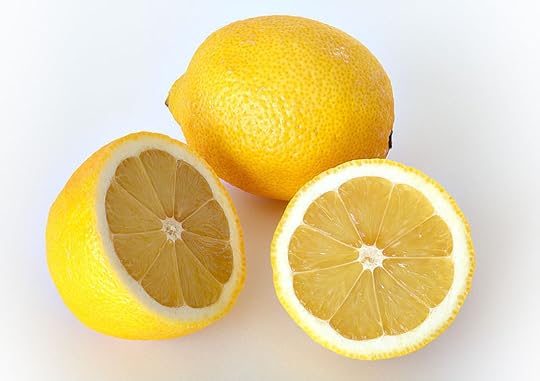
Lemonade with Vanilla, Mint & Rosemary
8 c. cold water
8 large lemons
1 c. granulated sugar
10 springs fresh mint
1/2 vanilla bean, scraped seeds and pod
1 spring of fresh rosemary
Pour the water in a large pot over high heat and bring to a boil. While the water is coming to a boil, halve the lemons and juice them thoroughly. Place the juice and the juiced lemon halves in a large heat-proof non-reactive pot. Add the sugar, 2 springs of mint, the vanilla seeds and pod, and the rosemary.
Pour the boiling water over the mixture. Stir carefully and let sit for 20 minutes. Stir well again and strain out the solids, then discard them and pour the lemonade into Mason jars or a large pitcher and keep refrigerated until people get thirsty.
To serve, pour the lemonade over ice in tall glasses, garnish each with a mint leaf, and sit on a porch.
Mr. Fraser and I gave the lemonade an identical verdict of "too much vanilla," and I'd decided not to make it again. Only just now as I was transcribing the recipe I realize that yesterday I misread the recipe and put in a WHOLE vanilla bean rather than half one. Maybe if I'd actually made it right, we would've been able to taste the rosemary and mint. Oops. That's a bit of a blow to my perfectionism and image of myself as a good cook! I think I'll have to give the recipe one more try after all.
That said, given that this weekend I was still fighting off the bug that kept me in the ER on Thursday afternoon, I went with one of the simplest recipes in the book.

Lemonade with Vanilla, Mint & Rosemary
8 c. cold water
8 large lemons
1 c. granulated sugar
10 springs fresh mint
1/2 vanilla bean, scraped seeds and pod
1 spring of fresh rosemary
Pour the water in a large pot over high heat and bring to a boil. While the water is coming to a boil, halve the lemons and juice them thoroughly. Place the juice and the juiced lemon halves in a large heat-proof non-reactive pot. Add the sugar, 2 springs of mint, the vanilla seeds and pod, and the rosemary.
Pour the boiling water over the mixture. Stir carefully and let sit for 20 minutes. Stir well again and strain out the solids, then discard them and pour the lemonade into Mason jars or a large pitcher and keep refrigerated until people get thirsty.
To serve, pour the lemonade over ice in tall glasses, garnish each with a mint leaf, and sit on a porch.
Mr. Fraser and I gave the lemonade an identical verdict of "too much vanilla," and I'd decided not to make it again. Only just now as I was transcribing the recipe I realize that yesterday I misread the recipe and put in a WHOLE vanilla bean rather than half one. Maybe if I'd actually made it right, we would've been able to taste the rosemary and mint. Oops. That's a bit of a blow to my perfectionism and image of myself as a good cook! I think I'll have to give the recipe one more try after all.
April 26, 2013
2013 Reading, Books 40-42 (and medical adventures)
I woke up yesterday with a racing heart (120 beats/minute) and elevated blood pressure (150/90). I have a strong family history of hypertension, which first reared its head in my own life when I was pregnant with Miss Fraser and ended up on bed rest for the last two months. Even though my non-pregnant blood pressure was at worst borderline high, I've been on a low-dose blood pressure med for years now in hopes of staving off my strong family history of stroke and heart disease. My doctor hopes my current weight loss and exercise program will ultimately end my need for such meds, but given that my oldest brother runs marathons and takes the same medication that I do, I have my doubts. Sometimes your worst genes trump your best behavior.
Anyway, my meds do such a good job of keeping my bp stable and normal that 150/90 was enough to freak me out a little, especially when coupled with the racing heart and an off-and-on dizzy, wobbly sensation. When I didn't feel any better after eating breakfast and when my blood pressure at a podiatrist appointment was something like 155/100, I freaked out seriously and went to my regular doctor. She did a quick EKG and reassured me that my heart sounded healthy and normal, just excessively fast, but she couldn't figure out what was going on and ultimately advised that I go to the ER for my own peace of mind, because otherwise I was just going to keep making myself feel even worse worrying.
So, I ended up spending about 2 1/2 hours in the ER, most of which was curled up in my room by myself with a book. Which made me feel better all by itself, since clearly they weren't too worried about me. Indeed, the doctor said that there are people who walk around with bp like mine was yesterday for decades. Which amazed me, because I feel like my everyday, medicated 125/80 or so isn't anywhere near good enough, and I can't count myself truly healthy unless I get it down to 120/70 or even lower. But they did agree that a suddenly elevated pulse and bp with no obvious cause was worth investigating and did the usual assortment of tests, ultimately diagnosing me with a UTI and sending me home with an antibiotic prescription. (Which I can forgive my regular doctor for missing, since I didn't have the obvious symptom of burning when I pee, and the symptoms I did have were subtle enough that I interpreted them as other things.)
All of which is a very long-winded way of saying that between the afternoon at the ER and staying home from the day job today to rest and recuperate, I had more reading time than usual this week.
40) Escape from Camp 14, by Blaine Harden.
The true story of a young man who was born and raised inside a brutal labor camp in North Korea and escaped at age 23--at least, it's true insofar as you choose to trust Shin Dong-Hyuk's possibly unreliable narration (and it's clear Harden, a journalist, has his doubts in spots). It's harrowing and horrifying, to put it mildly. Shin was raised in circumstances designed to break down all the natural social and familial bonds, so he never learned trust, compassion, sympathy, and the like as a child. It's clear he's trying as an adult living in America and South Korea, but I finished the book by no means certain he'd ever figure it out.
41) The French Revolution: A Very Short Introduction, by William Doyle.
A quick, high-level overview of the French Revolution, but it's not at all simple--it's not the kind of thing I'd recommend to someone with no familiarity with the period, but it was a good refresher.
42) A Plague of Zombies, by Diana Gabaldon.
The newest novella featuring Lord John Grey set in the Outlander world. While it's not the strongest of the novellas, Lord John has become my favorite character in the entire series, so I enjoyed his latest adventure quite a bit. As you'd expect from the title, it does indeed have zombies (in 1761 in Jamaica), in a revenge plot that Lord John is ultimately able to untangle before it becomes an outright bloodbath.
Anyway, my meds do such a good job of keeping my bp stable and normal that 150/90 was enough to freak me out a little, especially when coupled with the racing heart and an off-and-on dizzy, wobbly sensation. When I didn't feel any better after eating breakfast and when my blood pressure at a podiatrist appointment was something like 155/100, I freaked out seriously and went to my regular doctor. She did a quick EKG and reassured me that my heart sounded healthy and normal, just excessively fast, but she couldn't figure out what was going on and ultimately advised that I go to the ER for my own peace of mind, because otherwise I was just going to keep making myself feel even worse worrying.
So, I ended up spending about 2 1/2 hours in the ER, most of which was curled up in my room by myself with a book. Which made me feel better all by itself, since clearly they weren't too worried about me. Indeed, the doctor said that there are people who walk around with bp like mine was yesterday for decades. Which amazed me, because I feel like my everyday, medicated 125/80 or so isn't anywhere near good enough, and I can't count myself truly healthy unless I get it down to 120/70 or even lower. But they did agree that a suddenly elevated pulse and bp with no obvious cause was worth investigating and did the usual assortment of tests, ultimately diagnosing me with a UTI and sending me home with an antibiotic prescription. (Which I can forgive my regular doctor for missing, since I didn't have the obvious symptom of burning when I pee, and the symptoms I did have were subtle enough that I interpreted them as other things.)
All of which is a very long-winded way of saying that between the afternoon at the ER and staying home from the day job today to rest and recuperate, I had more reading time than usual this week.
40) Escape from Camp 14, by Blaine Harden.
The true story of a young man who was born and raised inside a brutal labor camp in North Korea and escaped at age 23--at least, it's true insofar as you choose to trust Shin Dong-Hyuk's possibly unreliable narration (and it's clear Harden, a journalist, has his doubts in spots). It's harrowing and horrifying, to put it mildly. Shin was raised in circumstances designed to break down all the natural social and familial bonds, so he never learned trust, compassion, sympathy, and the like as a child. It's clear he's trying as an adult living in America and South Korea, but I finished the book by no means certain he'd ever figure it out.
41) The French Revolution: A Very Short Introduction, by William Doyle.
A quick, high-level overview of the French Revolution, but it's not at all simple--it's not the kind of thing I'd recommend to someone with no familiarity with the period, but it was a good refresher.
42) A Plague of Zombies, by Diana Gabaldon.
The newest novella featuring Lord John Grey set in the Outlander world. While it's not the strongest of the novellas, Lord John has become my favorite character in the entire series, so I enjoyed his latest adventure quite a bit. As you'd expect from the title, it does indeed have zombies (in 1761 in Jamaica), in a revenge plot that Lord John is ultimately able to untangle before it becomes an outright bloodbath.
April 23, 2013
2013 Reading, Books 37-39
37) Things I Can't Forget, by Miranda Kenneally.
I've been a Kenneally fan ever since I read the query letter for her first YA romance, Catching Jordan, (her agent posted it on a blog as an example of an effective query), but I think this book may be my favorite so far just because I identified with the heroine so much. I've been told that's a simplistic reason to enjoy a book, but oh well. I was Kate when I was 18, and for several years afterward. Painfully good, afraid to break the rules, convinced that my beliefs were the only right ones and therefore pretty dang judgmental even if I was better than Kate at keeping my mouth shut about it. So I enjoyed watching Kate begin to come to terms with life's complexities and ambiguities, and I loved seeing a character like her (and my younger self) grow and change.
38) Consider the Fork, by Bee Wilson.
If you enjoy culinary history or the history of everyday things, you'll probably love this book. It's a history not of what we eat, but of the technology we use to prepare and consume our food, from pots to refrigerators to the kitchen space itself. It's too general an overview if you're looking for, say, what a French kitchen was like in 1780, but it's packed with fascinating anecdotes, and it made me think about any number of things I usually take for granted.
39) Lord Roworth's Reward, by Carola Dunn.
This is a sequel to Miss Jacobson's Journey, which I read earlier in the year. It's a sweet, chaste traditional Regency romance set during and immediately after the Waterloo campaign and featuring a hero who's so sure he's found his perfect future countess that he doesn't notice just how much love is involved in his friendship for another, less suitable, young lady until it's almost too late. I enjoyed it a lot, with two small caveats: 1) The sheer number of famous Waterloo quotes and incidents referenced in the story came across as a bit of an infodump, especially since the hero heard about most of them secondhand and they weren't necessary to move the plot forward. 2) The story treats the urban legend that Nathan Mayer Rothschild used his advance knowledge of the outcome of the battle to make a fortune on the London stock exchange as fact, when actually there's no contemporary evidence for it and it seems to be an anti-Semitic tale that sprang up later in the 19th century. That said, a lot of histories cite it as fact, Dunn herself clearly isn't anti-Semitic, and Rothschild is portrayed in a positive light. So I don't hold it against her--I just feel compelled to point out the issue, since I'm pedantic like that, especially given the roots of this particular legend.
April 22, 2013
Random Cookbook of the Week - The Gourmet Cookie Book
I'm more of a cook than a baker, so I was a bit dismayed when this week I drew The Gourmet Cookie Book: The Single Best Recipe From Each Year, 1941-2009. It's what it sounds like--one cookie recipe from each year of Gourmet's existence. It's fascinating to browse, since you can see how fashions in sweet treats changed over the decades, but since this is Gourmet we're talking about, many of the recipes are dauntingly complex.
I toyed with picking a recipe based on a significant year--my birthday, my husband's or daughter's, the year we married, etc. However, those years' cookies either looked beyond my skills or out of synch with my tastes, so I settled on the 1950 recipe.
Chocolate Wafers
- 3/4 c. butter
- 1 1/4 c. sugar
- 1 T. rum extract (I used 2 tsp. rum)
- 1 egg
- 1 1/2 c. sifted flour
- 3/4 c. cocoa powder
- 1 1/2 tsp baking powder
- 1/4 tsp salt
Cream butter, gradually add sugar, and cream together till light and fluffy. Add rum extract and egg and beat thoroughly. Sift together dry ingredients, then add to the wet ingredients gradually, mixing well after each addition. Roll the dough out 1/8 inch thickness on a lightly floured board and cut it with a floured cookie cutter into rounds about 2 1/2 inches in diameter. Place the rounds on an ungreased baking sheet in a 375 F oven and bake for 8 minutes.
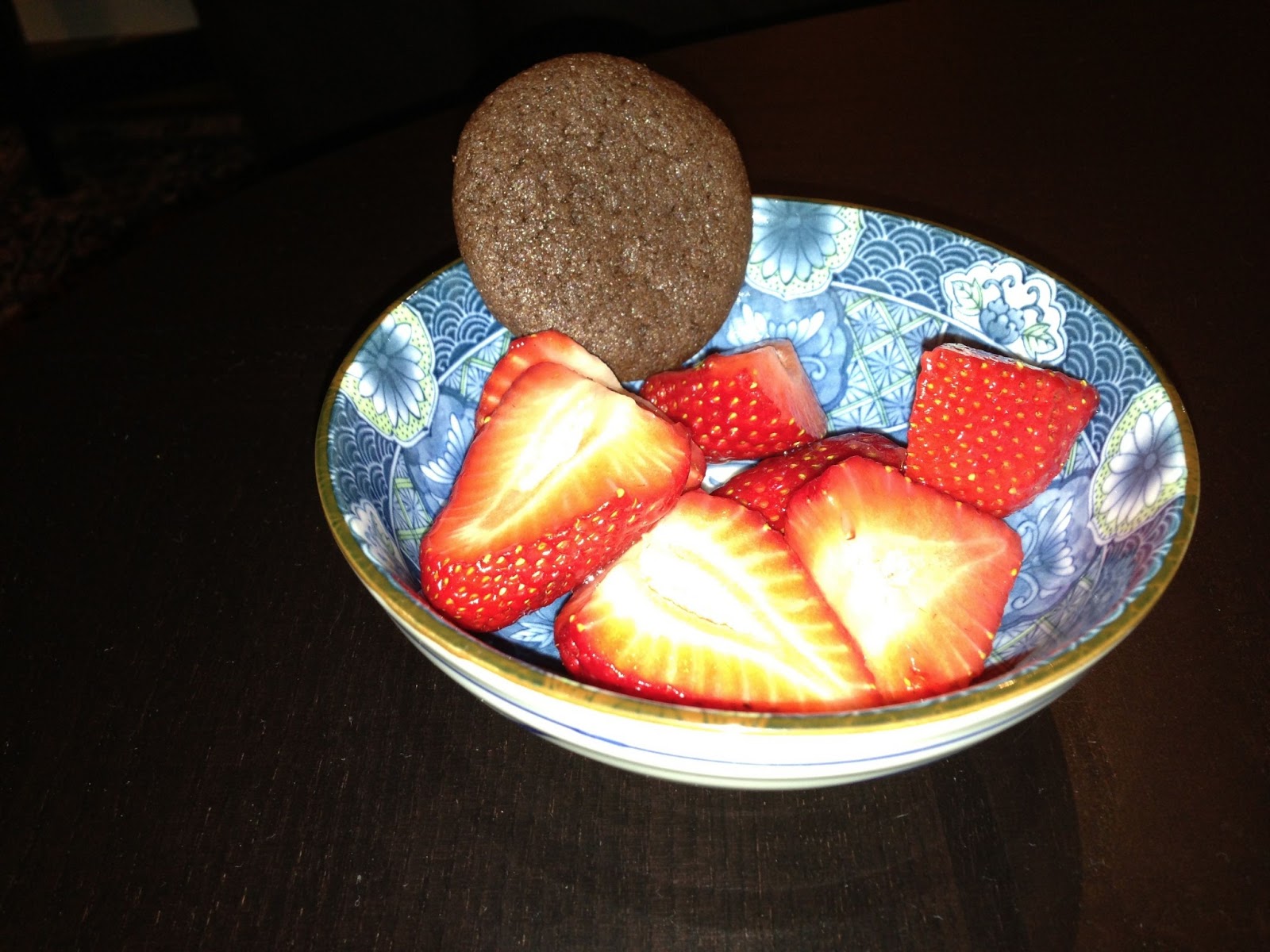
I did fine with this recipe until the time came to roll the dough. On the advice of notes at the bottom of the recipe, I'd chilled it overnight in the fridge, and it was far too stiff to flatten out as much as needed. So I ended up rolling it into balls and pressing into rounds by hand. Not as pretty and uniform, but they baked up just fine:
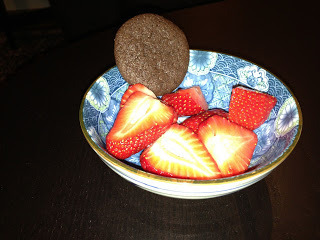
This is a seriously rich and chocolatey cookie. I think I'd like it better if it were a bit lighter--more buttery, and with vanilla instead of rum, maybe. Which didn't stop me from eating half a dozen or so, however...
I toyed with picking a recipe based on a significant year--my birthday, my husband's or daughter's, the year we married, etc. However, those years' cookies either looked beyond my skills or out of synch with my tastes, so I settled on the 1950 recipe.
Chocolate Wafers
- 3/4 c. butter
- 1 1/4 c. sugar
- 1 T. rum extract (I used 2 tsp. rum)
- 1 egg
- 1 1/2 c. sifted flour
- 3/4 c. cocoa powder
- 1 1/2 tsp baking powder
- 1/4 tsp salt
Cream butter, gradually add sugar, and cream together till light and fluffy. Add rum extract and egg and beat thoroughly. Sift together dry ingredients, then add to the wet ingredients gradually, mixing well after each addition. Roll the dough out 1/8 inch thickness on a lightly floured board and cut it with a floured cookie cutter into rounds about 2 1/2 inches in diameter. Place the rounds on an ungreased baking sheet in a 375 F oven and bake for 8 minutes.
I did fine with this recipe until the time came to roll the dough. On the advice of notes at the bottom of the recipe, I'd chilled it overnight in the fridge, and it was far too stiff to flatten out as much as needed. So I ended up rolling it into balls and pressing into rounds by hand. Not as pretty and uniform, but they baked up just fine:
This is a seriously rich and chocolatey cookie. I think I'd like it better if it were a bit lighter--more buttery, and with vanilla instead of rum, maybe. Which didn't stop me from eating half a dozen or so, however...
April 17, 2013
2013 TBR Challenge - The Midwife
The April theme for the 2013 TBR Challenge was New-to-You Author. I had many choices on my Kindle, given that when I first got one, I went on sort of a mini-binge scooping up romance bargains that I never actually got around to reading. Given how indiscriminate this buying binge was, I had several false starts the first week of April. For the first three books, I made myself read a chapter or two to give the stories a fair chance, but ended up rejecting them for, in order, an overly florid writing style, a hero who struck me as not just needing reform but inherently shallow and misogynistic, and having every single character feel more like a stereotype than a person.
Next I tried a more recent acquisition, The Midwife, by Carolyn Davidson. It's a 1999 release, but newish as an ebook, part of the Harlequin Treasury collection.
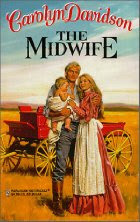 Although the book didn't bowl me over, I enjoyed it, in large part because it's a quiet, subtle story with an unusual setting. There's nothing splashy or over-the-top about it, with the possible exception of some secrets in the heroine's past, but they were handled deftly. The hero was a fairly prosperous farmer, not a duke or a cowboy with a past. Aside from a fistfight or two, there wasn't any violence to be found. Rather than the Wild Wild West or the Highlands (Home of the Kilted!) or Glamorous London, it was set in Minnesota in the 1890s, with hardworking Scandinavians everywhere you look. And I liked that. Not that there's anything wrong with big stories or the standard settings (says the Regency author), but it's just so nice to settle in with a book that doesn't fit the mold.
Really, I do wish there was more variety in historical romance settings. Maybe I'm an unusually omnivorous reader--I certainly meet readers online who never read outside the romance genre, never tire of Regencies and Victorians, and can never have too many dukes. And, let me stress, everyone should read what they like without any guilt, and without me or anyone else telling them they should make different choices. Most of us are super-busy people who read to relax, and if what relaxes you is a steady diet of two 19th century dukes per week, that's absolutely what you should choose. Maybe one of these days I might even write a duke myself, and I do have a wealthy, handsome viscount you might enjoy. But one of the things that gives me pleasure as a reader is getting mental vacations to a variety of times and places. In romance, I like the balance of knowing I'm getting a love story with a happy ending while seeing that played out across a variety of times, places, and character types, and I wish that variety was easier to find.
Incidentally, I've also challenged myself to read at least one finalist from each category of the 2013 Ritas. If you're interested, I blogged about Best First Book here.
Next I tried a more recent acquisition, The Midwife, by Carolyn Davidson. It's a 1999 release, but newish as an ebook, part of the Harlequin Treasury collection.
 Although the book didn't bowl me over, I enjoyed it, in large part because it's a quiet, subtle story with an unusual setting. There's nothing splashy or over-the-top about it, with the possible exception of some secrets in the heroine's past, but they were handled deftly. The hero was a fairly prosperous farmer, not a duke or a cowboy with a past. Aside from a fistfight or two, there wasn't any violence to be found. Rather than the Wild Wild West or the Highlands (Home of the Kilted!) or Glamorous London, it was set in Minnesota in the 1890s, with hardworking Scandinavians everywhere you look. And I liked that. Not that there's anything wrong with big stories or the standard settings (says the Regency author), but it's just so nice to settle in with a book that doesn't fit the mold.
Really, I do wish there was more variety in historical romance settings. Maybe I'm an unusually omnivorous reader--I certainly meet readers online who never read outside the romance genre, never tire of Regencies and Victorians, and can never have too many dukes. And, let me stress, everyone should read what they like without any guilt, and without me or anyone else telling them they should make different choices. Most of us are super-busy people who read to relax, and if what relaxes you is a steady diet of two 19th century dukes per week, that's absolutely what you should choose. Maybe one of these days I might even write a duke myself, and I do have a wealthy, handsome viscount you might enjoy. But one of the things that gives me pleasure as a reader is getting mental vacations to a variety of times and places. In romance, I like the balance of knowing I'm getting a love story with a happy ending while seeing that played out across a variety of times, places, and character types, and I wish that variety was easier to find.
Incidentally, I've also challenged myself to read at least one finalist from each category of the 2013 Ritas. If you're interested, I blogged about Best First Book here.