Susanna Fraser's Blog, page 16
July 28, 2013
A Dream Defiant release day and blog tour!
My new release (and first-ever novella), A Dream Defiant, hits virtual shelves tomorrow, July 29!
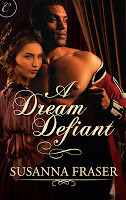 Spain, 1813
Elijah Cameron, the son of runaway slaves, has spent his whole life in the British army proving that a black man can be as good a soldier as a white man. After a victory over the French, Elijah promises one of his dying men that he will deliver a scavenged ruby necklace to his wife, Rose, a woman Elijah has admired for years.
Elijah feels bound to protect her and knows a widow with a fortune in jewels will be a target. Rose dreams of using the necklace to return to England, but after a violent attack, she realizes that she needs Elijah's help to make the journey safely.
Her appreciation for Elijah's strength and integrity soon turns into love, but he doubts she could want a life with him, knowing the challenges they'd face. As their relationship grows, she must convince Elijah that she wants him as more than a bodyguard. And she must prove that their love can overcome all obstacles, no matter the color of their skin.
A Dream Defiant is now available for order pretty much wherever ebooks are sold, including:
Directly from my publisher, Carina Press. Note that Carina is having a sale on historical romances through July 31 at midnight Eastern time. Order now and enter coupon code HISTC25 and you can get 25% off on all historical romance purchases, including my three previous releases.Amazon.comBarnes & NobleGoogle PlayiTunesKoboAll Romance eBooksAmazon CanadaAnd, for my European readers, Amazon UK, Amazon France, and Amazon GermanyI will be doing a brief blog tour over the next week or so, and at several stops will be giving away a copy to one lucky commenter.It's not too late to comment on my Friday post at Risky Regencies.July 29 - Cecilia Grant's blogJuly 30 - the Carina Press blogJuly 31 - SOS AlohaJuly 31 - Romance CooksAugust 1 - Excerpt at Unusual HistoricalsAugust 2 - Novel ReflectionsAugust 4 - Q&A at Unusual HistoricalsAugust 6 - Romancing the Past
 Spain, 1813
Elijah Cameron, the son of runaway slaves, has spent his whole life in the British army proving that a black man can be as good a soldier as a white man. After a victory over the French, Elijah promises one of his dying men that he will deliver a scavenged ruby necklace to his wife, Rose, a woman Elijah has admired for years.
Elijah feels bound to protect her and knows a widow with a fortune in jewels will be a target. Rose dreams of using the necklace to return to England, but after a violent attack, she realizes that she needs Elijah's help to make the journey safely.
Her appreciation for Elijah's strength and integrity soon turns into love, but he doubts she could want a life with him, knowing the challenges they'd face. As their relationship grows, she must convince Elijah that she wants him as more than a bodyguard. And she must prove that their love can overcome all obstacles, no matter the color of their skin.
A Dream Defiant is now available for order pretty much wherever ebooks are sold, including:
Directly from my publisher, Carina Press. Note that Carina is having a sale on historical romances through July 31 at midnight Eastern time. Order now and enter coupon code HISTC25 and you can get 25% off on all historical romance purchases, including my three previous releases.Amazon.comBarnes & NobleGoogle PlayiTunesKoboAll Romance eBooksAmazon CanadaAnd, for my European readers, Amazon UK, Amazon France, and Amazon GermanyI will be doing a brief blog tour over the next week or so, and at several stops will be giving away a copy to one lucky commenter.It's not too late to comment on my Friday post at Risky Regencies.July 29 - Cecilia Grant's blogJuly 30 - the Carina Press blogJuly 31 - SOS AlohaJuly 31 - Romance CooksAugust 1 - Excerpt at Unusual HistoricalsAugust 2 - Novel ReflectionsAugust 4 - Q&A at Unusual HistoricalsAugust 6 - Romancing the Past


July 27, 2013
2013 Reading, Books 64-72
Catching up on everything I read while traveling...
64) Decisive, by Chip Heath & Dan Heath.
An extremely useful look at how to short-circuit some of the issues that commonly lead to bad decision-making. It gave me some good ideas for how to evaluate my writing career and whether my current path will take me where I want to go and how to balance competing priorities in my life as a whole. This was a library copy, but I'll definitely be buying my own soon.
65) Sprig Muslin, by Georgette Heyer.
For the 2013 TBR Challenge. Detailed comments here.
66) My Life Next Door, by Huntley Fitzpatrick.
A sweet YA romance about the daughter of a perfectionist single mother (who also happens to be a state senator) who falls for the boy next door--from the big, crazy, chaotic family with 8 kids her mother completely disapproves of. A fun story, though I found the heroine's mother and her campaign manager just a bit over-the-top compared to the other characters.
67) An Heiress at Heart, by Jennifer Delamere.
For my Rita finalists challenge. Detailed comments here.
68) Always and Forever, by Farrah Rochon.
An enjoyable contemporary romance set in a small Louisiana town that managed to get past my "no small American towns" filter with its engaging hero and heroine and by not forcing the hero to give up his dream of opening a business in New Orleans to show that Real, Authentic American Life belongs in a small town.
69) Captain Ingram's Inheritance, by Carola Dunn.
Old-school Regency romance that focuses as much on the hero and heroine's community and families as their relationship. I liked it a lot, but if you haven't read Lord Roworth's Reward you'll be pretty lost.
70) What Kings Ate and Wizards Drank, by Krista D. Ball.
A guide to help writers of historical fiction and historically based fantasy write more realistically about what their characters would've eaten and how they would've obtained and prepared it.
71) Swept Off Her Stilettos, by Fiona Harper.
A perfectly delightful confection of a friends-to-lovers story. I couldn't imagine a better book to while away several hours of a long, turbulent plane ride.
72) Avatar: The Last Airbender - The Search, Part 2, by Gene Luen Yang, Michael Dante DiMartino, Bryan Konietzko, Dave Marshall.
The latest entry in the graphic novels filling in some of the gaps between Avatar: The Last Airbender and The Legend of Korra. It didn't give me as many answers as I'd hoped for about Zuko's mother, but it's visually beautiful and kept me interested enough to immediately go preorder the final book in the trilogy.
64) Decisive, by Chip Heath & Dan Heath.
An extremely useful look at how to short-circuit some of the issues that commonly lead to bad decision-making. It gave me some good ideas for how to evaluate my writing career and whether my current path will take me where I want to go and how to balance competing priorities in my life as a whole. This was a library copy, but I'll definitely be buying my own soon.
65) Sprig Muslin, by Georgette Heyer.
For the 2013 TBR Challenge. Detailed comments here.
66) My Life Next Door, by Huntley Fitzpatrick.
A sweet YA romance about the daughter of a perfectionist single mother (who also happens to be a state senator) who falls for the boy next door--from the big, crazy, chaotic family with 8 kids her mother completely disapproves of. A fun story, though I found the heroine's mother and her campaign manager just a bit over-the-top compared to the other characters.
67) An Heiress at Heart, by Jennifer Delamere.
For my Rita finalists challenge. Detailed comments here.
68) Always and Forever, by Farrah Rochon.
An enjoyable contemporary romance set in a small Louisiana town that managed to get past my "no small American towns" filter with its engaging hero and heroine and by not forcing the hero to give up his dream of opening a business in New Orleans to show that Real, Authentic American Life belongs in a small town.
69) Captain Ingram's Inheritance, by Carola Dunn.
Old-school Regency romance that focuses as much on the hero and heroine's community and families as their relationship. I liked it a lot, but if you haven't read Lord Roworth's Reward you'll be pretty lost.
70) What Kings Ate and Wizards Drank, by Krista D. Ball.
A guide to help writers of historical fiction and historically based fantasy write more realistically about what their characters would've eaten and how they would've obtained and prepared it.
71) Swept Off Her Stilettos, by Fiona Harper.
A perfectly delightful confection of a friends-to-lovers story. I couldn't imagine a better book to while away several hours of a long, turbulent plane ride.
72) Avatar: The Last Airbender - The Search, Part 2, by Gene Luen Yang, Michael Dante DiMartino, Bryan Konietzko, Dave Marshall.
The latest entry in the graphic novels filling in some of the gaps between Avatar: The Last Airbender and The Legend of Korra. It didn't give me as many answers as I'd hoped for about Zuko's mother, but it's visually beautiful and kept me interested enough to immediately go preorder the final book in the trilogy.
July 26, 2013
Susanna Reads the Ritas - Inspirational Romance
An Heiress at Heart, by Jennifer Delamere
I'm still working my way through one nominee from each category in the 2013 Ritas, and this was my choice for the inspirational category. It's also a Victorian-set historical romance, something of a riff on The Return of Martin Guerre, about a heroine who discovers her half-sister, whom she resembles closely, in Australia. When the sister is dying, she begs Lizzie to go home to England and assume her identity to make amends to the family she ran away from. Lizzie does so, never expecting to fall in love with her sister's brother-in-law, who would be forbidden to marry her under 19th century British law if she was really who she claimed to be. But it's not like revealing her deception and her true identity as an illegitimate offshoot of her sister's family with a shady past in her own right is going to endear her to her ersatz brother-in-law or anyone else...
I enjoyed the book, though my inner historical nitpicker is constrained to point out that it has some linguistic anachronisms and Americanisms, and in a couple of places the titles and forms of address are off--basically, if a man is John Biscuit, the Earl of Crumpet, he's Lord Crumpet, never Lord Biscuit. The heroine meeting her half-sister in Australia was a large coincidence, but being able to pass as her made sense given their blood relationship and the fact no one in England had seen the dead sister in ten years. I'm not generally a fan of inspirational romances, since the evangelical market they're targeted toward has a different worldview than my Episcopalian mainline Protestant self. That said, I was comfortable reading this book because the inspirational aspects were handled with a light touch--the hero was a vicar until both his older brothers died, leaving him a barony, and we see his faith and desire to help others in the name of God, which the heroine comes to share. But it's more a book that holds conservative Christian views than pushes them, if you know what I mean.
I'm still working my way through one nominee from each category in the 2013 Ritas, and this was my choice for the inspirational category. It's also a Victorian-set historical romance, something of a riff on The Return of Martin Guerre, about a heroine who discovers her half-sister, whom she resembles closely, in Australia. When the sister is dying, she begs Lizzie to go home to England and assume her identity to make amends to the family she ran away from. Lizzie does so, never expecting to fall in love with her sister's brother-in-law, who would be forbidden to marry her under 19th century British law if she was really who she claimed to be. But it's not like revealing her deception and her true identity as an illegitimate offshoot of her sister's family with a shady past in her own right is going to endear her to her ersatz brother-in-law or anyone else...
I enjoyed the book, though my inner historical nitpicker is constrained to point out that it has some linguistic anachronisms and Americanisms, and in a couple of places the titles and forms of address are off--basically, if a man is John Biscuit, the Earl of Crumpet, he's Lord Crumpet, never Lord Biscuit. The heroine meeting her half-sister in Australia was a large coincidence, but being able to pass as her made sense given their blood relationship and the fact no one in England had seen the dead sister in ten years. I'm not generally a fan of inspirational romances, since the evangelical market they're targeted toward has a different worldview than my Episcopalian mainline Protestant self. That said, I was comfortable reading this book because the inspirational aspects were handled with a light touch--the hero was a vicar until both his older brothers died, leaving him a barony, and we see his faith and desire to help others in the name of God, which the heroine comes to share. But it's more a book that holds conservative Christian views than pushes them, if you know what I mean.
July 25, 2013
Random Cookbook of the Week Rebooted
Now that I'm back from RWA and my life has settled down a smidgeon, I'd like to bring my random cookbook challenge back. In it is I randomly select one cookbook per week from my rather extensive collection, pick out a recipe from it that I've never tried before, attempt it, and blog the results. I'm not going to bake in a heat wave, since I lack AC in the kitchen, nor am I going to grill when it's snowy or rainy. But other than that, I have to work with the cookbook random.org assigns me.
In the last version of this challenge, I'd narrowed my list to the kind of cookbooks I normally work from--I ignored all the tough chef-y ones, along with all the older ones I was hanging onto for sentimental reasons, especially the local collections put together for fundraisers. However, a certain husband of mine opined that that's cheating, not to mention cheating myself and my readers of the best culinary challenges. Of course I can cook from a Mark Bittman or an Alton Brown book. But can I successfully a Thomas Keller recipe or find something interesting and tasty from a 1970's home ec teachers' collection? Watch this space to find out.
Below is a list of all the cookbooks I currently own. Each week I'll blog my selected recipe along with the cookbook drawn for the next week's challenge.
First up will be The Food You Want to Eat, by Ted Allen. It's one of my more recent acquisitions and the source of my current ribs recipe, but I haven't tried much else from it yet.
1. How to Cook Everything
2. Mom and Me Cookbook
3. Cook it Together
4. Colorado Cache Cookbook
5. Favorite Recipes of Alabama Vocational Home Ec Teachers
6. Chicken: 150 Great Recipes for All Seasons
7. Ratio
8. 1950's Joy of Cooking
9. The Science of Good Cooking
10. Fresh Food Fast
11. Book of Soups
12. Old-School Comfort Food
13. Quick and Easy Recipes from the New York Times
14. Home Economics Teachers' Bicentennial Cookbook
15. Life after Pizza
16. The Minimalist Cooks at Home
17. Southern Biscuits
18. More with Less
19. Express Lane Meals
20. Starters & Closers
21. Mariners Wives' Cookie Book
22. The Gourmet Cookie Book
23. Les Halles Cookbook
24. A Feast of Ice and Fire
25. Best One-Dish Meals
26. Process This!
27. Food Matters
28. Mastering the Art of French Cooking
29. In My Kitchen
30. Julia's Kitchen Wisdom
31. The Food You Want to Eat
32. Pig: King of the Southern Table
33. Calling All Cooks
34. Calling All Cooks 2
35. Calling All Cooks 3
36. West Point Cookbook
37. 1990's Joy of Cooking
38. Route 66 Cookbook
39. Ruhlman's Twenty
40. The Barbecue Bible
41. 30-Minute Meals
42. Chili Madness
43. The Pie and Pastry Bible
44. A New Turn in the South
45. I'm Just Here for the Food
46. I'm Just Here for More Food
47. Good Eats 1
48. Good Eats 2
49. Good Eats 3
50. The Bread Bible
51. Ad Hoc at Home
52. The French Laundry Cookbook
53. Great Food Fast
54. Home Cooking with Trisha Yearwood
55. Old-Fashioned Desserts
56. The Best Recipes in the World
57. The Gourmet Cookbook
In the last version of this challenge, I'd narrowed my list to the kind of cookbooks I normally work from--I ignored all the tough chef-y ones, along with all the older ones I was hanging onto for sentimental reasons, especially the local collections put together for fundraisers. However, a certain husband of mine opined that that's cheating, not to mention cheating myself and my readers of the best culinary challenges. Of course I can cook from a Mark Bittman or an Alton Brown book. But can I successfully a Thomas Keller recipe or find something interesting and tasty from a 1970's home ec teachers' collection? Watch this space to find out.
Below is a list of all the cookbooks I currently own. Each week I'll blog my selected recipe along with the cookbook drawn for the next week's challenge.
First up will be The Food You Want to Eat, by Ted Allen. It's one of my more recent acquisitions and the source of my current ribs recipe, but I haven't tried much else from it yet.
1. How to Cook Everything
2. Mom and Me Cookbook
3. Cook it Together
4. Colorado Cache Cookbook
5. Favorite Recipes of Alabama Vocational Home Ec Teachers
6. Chicken: 150 Great Recipes for All Seasons
7. Ratio
8. 1950's Joy of Cooking
9. The Science of Good Cooking
10. Fresh Food Fast
11. Book of Soups
12. Old-School Comfort Food
13. Quick and Easy Recipes from the New York Times
14. Home Economics Teachers' Bicentennial Cookbook
15. Life after Pizza
16. The Minimalist Cooks at Home
17. Southern Biscuits
18. More with Less
19. Express Lane Meals
20. Starters & Closers
21. Mariners Wives' Cookie Book
22. The Gourmet Cookie Book
23. Les Halles Cookbook
24. A Feast of Ice and Fire
25. Best One-Dish Meals
26. Process This!
27. Food Matters
28. Mastering the Art of French Cooking
29. In My Kitchen
30. Julia's Kitchen Wisdom
31. The Food You Want to Eat
32. Pig: King of the Southern Table
33. Calling All Cooks
34. Calling All Cooks 2
35. Calling All Cooks 3
36. West Point Cookbook
37. 1990's Joy of Cooking
38. Route 66 Cookbook
39. Ruhlman's Twenty
40. The Barbecue Bible
41. 30-Minute Meals
42. Chili Madness
43. The Pie and Pastry Bible
44. A New Turn in the South
45. I'm Just Here for the Food
46. I'm Just Here for More Food
47. Good Eats 1
48. Good Eats 2
49. Good Eats 3
50. The Bread Bible
51. Ad Hoc at Home
52. The French Laundry Cookbook
53. Great Food Fast
54. Home Cooking with Trisha Yearwood
55. Old-Fashioned Desserts
56. The Best Recipes in the World
57. The Gourmet Cookbook
July 24, 2013
Back from RWA (and July TBR Challenge post)
Yesterday I finally got back into town after my combined RWA National and family reunion trip to Atlanta, so I've got a lot of blogging to catch up on. I also need to post about my RWA experiences at some point. Suffice it to say it was a good conference, and I came out of it with a few new ideas and new connections.
For now, well, I'll start by catching up on July for the 2013 TBR Challenge.
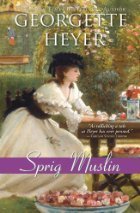 Sprig Muslin, by Georgette Heyer.
This month's theme was the Classics--a classic author, book, trope, or however you choose to interpret it. I ended up going with Georgette Heyer, since the Regency genre as we know it certainly wouldn't exist without her. I read most of her books in high school, since my library had a good collection, but I don't remember this one.
I have a confession to make. Despite her genre pioneer status, I only like Heyer's books--I don't love them. I feel the same way about Tolkien and high fantasy, incidentally, albeit for different reasons. The fact that many of my favorite books wouldn't exist without them doesn't make their books my favorites. With Tolkien, the issue is that I always feel like I'm watching his characters from a distance, that I'm observing the stories rather than connecting to and participating in them. With Heyer...well, ever since I read A Civil Contract I haven't been able to forgive her for what she did to Jenny Chawleigh. Jenny wasn't of the gentry or the aristocracy, therefore she didn't deserve a truly happy ending--at least, that's the subtext of the book as I read it. Ot She didn't get love and devotion; she got respect and contentment. And as someone whose own ancestry is FAR from genteel, I got angry about that.
I know a lot of people love Heyer and love A Civil Contract in particular for its realism. And I can totally understand and respect that. But for whatever reason, that book's ending triggered something personal for me that changed how I look at her work as a whole. And, yes, I realize I'm not being wholly consistent. I read books with aristocratic characters all the time. Two of my favorite fictional crushes are Lord Peter Wimsey and Count Aral Vorkosigan (not that either of them had any trouble conjuring up romantic feelings for a commoner, come to think). The fact that the Duke of Wellington was as elitist as can be doesn't make me admire him any the less--though there are a few quotes of his where I always shake my head in exasperation that anyone that smart could say something that stupid.
But when I'm reading fiction and I feel like the author is endorsing the idea that I ought to regard anyone as superior or inferior because of an accident of birth, I end up, shall we say, in an argument with the text. And, yes, I know, Heyer is a product of her times...but she's a contemporary of Dorothy Sayers, and while the class issues are certainly there in Sayers, they're not on anything like the level of A Civil Contract. And maybe throwing in an American author is apples to oranges, but Louisa May Alcott is decades earlier and has the Phebe-Archie secondary romance in the Rose books, where Phebe is an almost literal nobody. She started out as a servant in the family, and IIRC came from a workhouse and didn't know who her parents were. Mind you, most of Archie's family disapproved of the match just as much as you'd expect of a family with generations of money and status behind it, but you never feel like the text is telling you they're right.
Anyway...all that said, I enjoyed Sprig Muslin. It's a classic Heyer romp--frothy, madcap, and fun. I read it in less than a day, and enjoyed every word. However, I would've liked to see more interaction between the hero and heroine, and I got to arguing with the text again at the end when it was made clear that the secondary heroine, a young, headstrong beauty, belonged with her future husband because he'd keep her in check, which her doting guardians had never managed to do. I got the sense he'd be a benevolent husband/guardian, but it still gave me a bit of a squick.
For now, well, I'll start by catching up on July for the 2013 TBR Challenge.
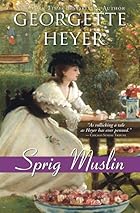 Sprig Muslin, by Georgette Heyer.
This month's theme was the Classics--a classic author, book, trope, or however you choose to interpret it. I ended up going with Georgette Heyer, since the Regency genre as we know it certainly wouldn't exist without her. I read most of her books in high school, since my library had a good collection, but I don't remember this one.
I have a confession to make. Despite her genre pioneer status, I only like Heyer's books--I don't love them. I feel the same way about Tolkien and high fantasy, incidentally, albeit for different reasons. The fact that many of my favorite books wouldn't exist without them doesn't make their books my favorites. With Tolkien, the issue is that I always feel like I'm watching his characters from a distance, that I'm observing the stories rather than connecting to and participating in them. With Heyer...well, ever since I read A Civil Contract I haven't been able to forgive her for what she did to Jenny Chawleigh. Jenny wasn't of the gentry or the aristocracy, therefore she didn't deserve a truly happy ending--at least, that's the subtext of the book as I read it. Ot She didn't get love and devotion; she got respect and contentment. And as someone whose own ancestry is FAR from genteel, I got angry about that.
I know a lot of people love Heyer and love A Civil Contract in particular for its realism. And I can totally understand and respect that. But for whatever reason, that book's ending triggered something personal for me that changed how I look at her work as a whole. And, yes, I realize I'm not being wholly consistent. I read books with aristocratic characters all the time. Two of my favorite fictional crushes are Lord Peter Wimsey and Count Aral Vorkosigan (not that either of them had any trouble conjuring up romantic feelings for a commoner, come to think). The fact that the Duke of Wellington was as elitist as can be doesn't make me admire him any the less--though there are a few quotes of his where I always shake my head in exasperation that anyone that smart could say something that stupid.
But when I'm reading fiction and I feel like the author is endorsing the idea that I ought to regard anyone as superior or inferior because of an accident of birth, I end up, shall we say, in an argument with the text. And, yes, I know, Heyer is a product of her times...but she's a contemporary of Dorothy Sayers, and while the class issues are certainly there in Sayers, they're not on anything like the level of A Civil Contract. And maybe throwing in an American author is apples to oranges, but Louisa May Alcott is decades earlier and has the Phebe-Archie secondary romance in the Rose books, where Phebe is an almost literal nobody. She started out as a servant in the family, and IIRC came from a workhouse and didn't know who her parents were. Mind you, most of Archie's family disapproved of the match just as much as you'd expect of a family with generations of money and status behind it, but you never feel like the text is telling you they're right.
Anyway...all that said, I enjoyed Sprig Muslin. It's a classic Heyer romp--frothy, madcap, and fun. I read it in less than a day, and enjoyed every word. However, I would've liked to see more interaction between the hero and heroine, and I got to arguing with the text again at the end when it was made clear that the secondary heroine, a young, headstrong beauty, belonged with her future husband because he'd keep her in check, which her doting guardians had never managed to do. I got the sense he'd be a benevolent husband/guardian, but it still gave me a bit of a squick.
July 4, 2013
Favorite reads of the year so far
Happy Independence Day to my fellow Americans! I'm off from the day job today, but I have to work Friday--which, looking on the bright side, means this week feels like it has two Fridays. I'll be having a low-key celebration with my family. Mr. Fraser is making waffles for breakfast, a tradition for almost every holiday we're not traveling, since they taste just as good on Labor Day or Presidents' Day as they do in July. Then we'll grill hot dogs and I'll bake Miss Fraser's favorite cake, which has white icing transformed into an American flag with strawberry stripes and blueberry stars.
It just occurred to me that the year is half over. (Insert ritual "How did THAT happen?" comment here.) That means it's time to post my top ten reads of the year so far, in the order I read them:
1) Julie's Wolf Pack
Third in Jean Craighead George's beautiful YA series about a young Inuit girl who finds refuge among a wolf pack and keeps ties with them even after being reunited with her family, this one is almost all from the POV of the wolves themselves, and it works surprisingly well. She doesn't quite anthropomorphize them but still makes them extremely relatable, somehow.
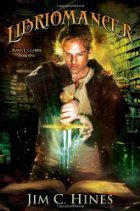
2) Libriomancer, by Jim C. Hines.
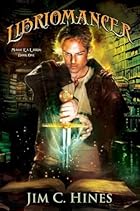
First in a fantasy series with a really clever concept for its magic--basically, books make magic by the collective belief of readers in the stories' worlds, and libriomancers can pull objects out of those books temporarily. This doesn't give the unlimited power you might think--among other things, too much magic use wrecks both the libriomancer and the book, and you can only pull out objects that would fit through an ordinary-sized physical copy of the book. E.g. if I were a libriomancer carrying a copy of a book from the Sharpe series, I could pull out Sharpe's sword or the telescope Wellington gave him, but a cannon wouldn't fit. The story and characters are as good as the concept, and I'll be eagerly awaiting the sequels. I've already preordered the sequel, Codex Born.
3) A Year of Biblical Womanhood, by Rachel Held Evans
I'm easily hooked by the type of memoir where someone spends a year trying to live a lifestyle that's foreign to them, cooks their way through a famous cookbook, or whatever. This one was both hilarious and unexpectedly moving. Evans comes from a background almost identical to my own--I'm ~10 years older, but we grew up within 40 or 50 miles of each other, and the biggest obvious difference between our good Alabama Baptist families is that mine roots for Auburn in college football while hers supports Alabama. (I was really disappointed that the month she was trying not to be contentious was October 2010 rather than November of that year, because she talked about her struggles during the South Carolina game rather than the epic Auburn comeback. And yes, I know Bama has since won two more national championships. 2010 was still awesome.)
Anyway, Evans is also like me in having wrestled with the increasing conservatism of the evangelical church, though AFAIK she hasn't yet gone as far as I have in running away from it--I'm now Episcopalian, which I suspect has some of my Baptist ancestors spinning in their graves. So for this book she spends each month of a year trying to live out one of the biblical commands to women literally, both to show the absurdity of a hyper-literal approach and to find God in unexpected places. She also talks a lot about women's power and strength, in the Bible and through history to the present. I think what will stick with me most is her discussion of the Proverbs 31 woman, which I was taught to think of as the perfect homemaker--someone I hoped to become during my more conservative days and now rebel against. But Evans discovers that in the Jewish tradition, that text isn't used prescriptively, but as praise for whenever a woman shows courage, generosity, integrity, and like virtues. In Hebrew the words the King James Bible translates as "a virtuous woman" are "eshet chayil"--a woman of valor. I'll never be a Proverbs 31 homemaker, but on my best days I can be a woman of valor.
4) Miss Jacobson's Journey, by Carola Dunn
This one is a traditional Regency, with a PG, kisses-only sensuality rating, but with a decidedly non-traditional heroine and setting. The heroine, Miriam Jacobson, is an English Jew who's been living on the Continent with her doctor uncle for nine years after having become estranged from the rest of her family by rudely rejecting the suitor the matchmaker brought for her. Now she wants to go home, but at the height of the Napoleonic Wars, journeying from France to England isn't a simple task. She and her maid/duenna are recruited by Jakob Rothschild to help two men smuggle gold to Wellington in Spain, with the promise of help getting home once she completes her mission. Naturally, one of the men in her party is the suitor she rejected all those years ago, and he's grown and matured in the intervening years into a far more attractive man than she ever would've dreamed possible...
From the time I started reading traditional Regencies in high school, I've always loved any non-traditional setting. (Not that I don't love a nice country house party or London Season tale, too.) Following the drum in the Peninsular War? I'm there. Congress of Vienna? Fascinating. Canada? More, please. Brussels just before Waterloo? Wonderful! America, before, during, or after the War of 1812? Why not? So this book had me halfway to hooked from the beginning because of the setting, and the story delivered on its promise. I enjoyed all the characters, the sweet romance worked beautifully for me, and I've already bought more of Dunn's backlist.
5)
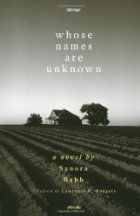
I heard about this book while watching Ken Burns' Dust Bowl documentary. It was originally written and accepted for publication in the 1930's, then rejected after The Grapes of Wrath came out because the acquiring editor figured there wasn't room for TWO Dust Bowl/Okie migrant stories. (Which is so laughably different from today's market, where every hit spawns a dozen imitators.)
I'm glad I read this book. It's more literary than my usual taste, but it has a kind of subtle, deceptively simple beauty, and it sort of rounded out my understanding of the Dust Bowl era, I think, in the way that good fiction can bring the past to life better than documentary alone.
6) Things I Can't Forget, by Miranda Kenneally.
I've been a Kenneally fan ever since I read the query letter for her first YA romance, Catching Jordan, (her agent posted it on a blog as an example of an effective query), but I think this book may be my favorite so far just because I identified with the heroine so much. I've been told that's a simplistic reason to enjoy a book, but oh well. I was Kate when I was 18, and for several years afterward. Painfully good, afraid to break the rules, convinced that my beliefs were the only right ones and therefore pretty dang judgmental even if I was better than Kate at keeping my mouth shut about it. So I enjoyed watching Kate begin to come to terms with life's complexities and ambiguities, and I loved seeing a character like her (and my younger self) grow and change.
7) Help, Thanks, Wow: The Three Essential Prayers, by Anne Lamott.
Anne Lamott's books don't always work for me, but this one blew me away. The Thanks and Wow chapters in particular helped me remember to stop and revel in the Eternal Now of the current moment, instead of always straining toward a longed-for future when I might be able to quit my day job and write full-time, or else flinching away from the inevitable future in which someday I must die. I found myself reveling in the life all around me, even in the spring pollen that makes me sneeze and coats my pretty black car with an unsightly yellow film. I remembered my favorite lines from For I will Consider My Cat Jeoffry:
For he counteracts the Devil, who is death, by brisking about the life.
For in his morning orisons he loves the sun and the sun loves him.
For he is of the tribe of Tiger.
For the Cherub Cat is a term of the Angel Tiger.
...and also quoting one of my favorite lines from a character in the Vorkosigan saga: "Every day is a gift. Me, I tear open the package and wolf it down on the spot," not to mention, of all people, Bon Jovi: "I just want to live while I'm alive."
So I guess you might say the book made an impression on me. Thanks, Anne Lamott!
8) Sacred Games, by Gary Corby.
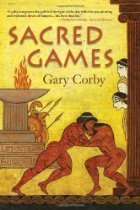
Third in a series of light, fun, yet richly researched mysteries based in Periclean Athens. This entry is set at the Games of the 80th Olympiad in 460 BCE, and our sleuth, Nicolaos, a fictional elder brother to Socrates, has to pair up with a Spartan to investigate the death of a star Spartan athlete the night after the opening ceremonies. (The primary suspect is an Athenian, and everyone agrees the only fair solution is to have one man from each city investigate, because at that point in history there was no such thing as a neutral city in any dispute between the two rival powers.) Corby does an excellent job bringing the bloodthirsty, superstitious, and quirky aspects of Greek culture to life, while simultaneously making his characters and their world human and relatable. I recommend this especially for fans of Lindsey Davis's Falco series, as the tone is quite similar.
9) The Strange History of the American Quadroon, by Emily Clark.
The book that made me withdraw a submitted manuscript so I could fix its utter historical inaccuracy. See more detail here.
10) The Ides of April, by Lindsey Davis.
First in a new series of mysteries set in Ancient Rome, this book is linked to the Davis's Falco series, but it takes place about a dozen years after the last one, and we never actually see Falco and Helena. The sleuth is their adopted daughter, Flavia Albia, an independent young widow who's taken up her father's old profession and lives on her own. Falco and Helena are evidently doing fine, and Albia drops in to visit regularly--it's just that all those meeting are told rather than shown. Hopefully that won't be the case throughout the series, though I can understand wanting to establish Albia as an interesting character in her own right.
The book got off to rather a slow start, and I might not have stuck with it were it not for my long-standing love for the Falco series. But about 40% in, the story took off and I started caring about Albia for her own sake. I guessed the whodunnit fairly quickly, not to mention the love interest, though there was a sort of mini-mystery about the latter I must confess to being totally oblivious to until it was spelled out for me. In any case, I'm looking forward to book two next year.
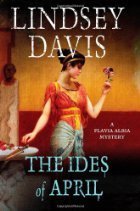
(Incidentally, this one wins my favorite cover of the year to date. So pretty!)
It just occurred to me that the year is half over. (Insert ritual "How did THAT happen?" comment here.) That means it's time to post my top ten reads of the year so far, in the order I read them:
1) Julie's Wolf Pack
Third in Jean Craighead George's beautiful YA series about a young Inuit girl who finds refuge among a wolf pack and keeps ties with them even after being reunited with her family, this one is almost all from the POV of the wolves themselves, and it works surprisingly well. She doesn't quite anthropomorphize them but still makes them extremely relatable, somehow.
2) Libriomancer, by Jim C. Hines.
First in a fantasy series with a really clever concept for its magic--basically, books make magic by the collective belief of readers in the stories' worlds, and libriomancers can pull objects out of those books temporarily. This doesn't give the unlimited power you might think--among other things, too much magic use wrecks both the libriomancer and the book, and you can only pull out objects that would fit through an ordinary-sized physical copy of the book. E.g. if I were a libriomancer carrying a copy of a book from the Sharpe series, I could pull out Sharpe's sword or the telescope Wellington gave him, but a cannon wouldn't fit. The story and characters are as good as the concept, and I'll be eagerly awaiting the sequels. I've already preordered the sequel, Codex Born.
3) A Year of Biblical Womanhood, by Rachel Held Evans
I'm easily hooked by the type of memoir where someone spends a year trying to live a lifestyle that's foreign to them, cooks their way through a famous cookbook, or whatever. This one was both hilarious and unexpectedly moving. Evans comes from a background almost identical to my own--I'm ~10 years older, but we grew up within 40 or 50 miles of each other, and the biggest obvious difference between our good Alabama Baptist families is that mine roots for Auburn in college football while hers supports Alabama. (I was really disappointed that the month she was trying not to be contentious was October 2010 rather than November of that year, because she talked about her struggles during the South Carolina game rather than the epic Auburn comeback. And yes, I know Bama has since won two more national championships. 2010 was still awesome.)
Anyway, Evans is also like me in having wrestled with the increasing conservatism of the evangelical church, though AFAIK she hasn't yet gone as far as I have in running away from it--I'm now Episcopalian, which I suspect has some of my Baptist ancestors spinning in their graves. So for this book she spends each month of a year trying to live out one of the biblical commands to women literally, both to show the absurdity of a hyper-literal approach and to find God in unexpected places. She also talks a lot about women's power and strength, in the Bible and through history to the present. I think what will stick with me most is her discussion of the Proverbs 31 woman, which I was taught to think of as the perfect homemaker--someone I hoped to become during my more conservative days and now rebel against. But Evans discovers that in the Jewish tradition, that text isn't used prescriptively, but as praise for whenever a woman shows courage, generosity, integrity, and like virtues. In Hebrew the words the King James Bible translates as "a virtuous woman" are "eshet chayil"--a woman of valor. I'll never be a Proverbs 31 homemaker, but on my best days I can be a woman of valor.
4) Miss Jacobson's Journey, by Carola Dunn
This one is a traditional Regency, with a PG, kisses-only sensuality rating, but with a decidedly non-traditional heroine and setting. The heroine, Miriam Jacobson, is an English Jew who's been living on the Continent with her doctor uncle for nine years after having become estranged from the rest of her family by rudely rejecting the suitor the matchmaker brought for her. Now she wants to go home, but at the height of the Napoleonic Wars, journeying from France to England isn't a simple task. She and her maid/duenna are recruited by Jakob Rothschild to help two men smuggle gold to Wellington in Spain, with the promise of help getting home once she completes her mission. Naturally, one of the men in her party is the suitor she rejected all those years ago, and he's grown and matured in the intervening years into a far more attractive man than she ever would've dreamed possible...
From the time I started reading traditional Regencies in high school, I've always loved any non-traditional setting. (Not that I don't love a nice country house party or London Season tale, too.) Following the drum in the Peninsular War? I'm there. Congress of Vienna? Fascinating. Canada? More, please. Brussels just before Waterloo? Wonderful! America, before, during, or after the War of 1812? Why not? So this book had me halfway to hooked from the beginning because of the setting, and the story delivered on its promise. I enjoyed all the characters, the sweet romance worked beautifully for me, and I've already bought more of Dunn's backlist.

5)
I heard about this book while watching Ken Burns' Dust Bowl documentary. It was originally written and accepted for publication in the 1930's, then rejected after The Grapes of Wrath came out because the acquiring editor figured there wasn't room for TWO Dust Bowl/Okie migrant stories. (Which is so laughably different from today's market, where every hit spawns a dozen imitators.)
I'm glad I read this book. It's more literary than my usual taste, but it has a kind of subtle, deceptively simple beauty, and it sort of rounded out my understanding of the Dust Bowl era, I think, in the way that good fiction can bring the past to life better than documentary alone.
6) Things I Can't Forget, by Miranda Kenneally.
I've been a Kenneally fan ever since I read the query letter for her first YA romance, Catching Jordan, (her agent posted it on a blog as an example of an effective query), but I think this book may be my favorite so far just because I identified with the heroine so much. I've been told that's a simplistic reason to enjoy a book, but oh well. I was Kate when I was 18, and for several years afterward. Painfully good, afraid to break the rules, convinced that my beliefs were the only right ones and therefore pretty dang judgmental even if I was better than Kate at keeping my mouth shut about it. So I enjoyed watching Kate begin to come to terms with life's complexities and ambiguities, and I loved seeing a character like her (and my younger self) grow and change.
7) Help, Thanks, Wow: The Three Essential Prayers, by Anne Lamott.
Anne Lamott's books don't always work for me, but this one blew me away. The Thanks and Wow chapters in particular helped me remember to stop and revel in the Eternal Now of the current moment, instead of always straining toward a longed-for future when I might be able to quit my day job and write full-time, or else flinching away from the inevitable future in which someday I must die. I found myself reveling in the life all around me, even in the spring pollen that makes me sneeze and coats my pretty black car with an unsightly yellow film. I remembered my favorite lines from For I will Consider My Cat Jeoffry:
For he counteracts the Devil, who is death, by brisking about the life.
For in his morning orisons he loves the sun and the sun loves him.
For he is of the tribe of Tiger.
For the Cherub Cat is a term of the Angel Tiger.
...and also quoting one of my favorite lines from a character in the Vorkosigan saga: "Every day is a gift. Me, I tear open the package and wolf it down on the spot," not to mention, of all people, Bon Jovi: "I just want to live while I'm alive."
So I guess you might say the book made an impression on me. Thanks, Anne Lamott!

8) Sacred Games, by Gary Corby.
Third in a series of light, fun, yet richly researched mysteries based in Periclean Athens. This entry is set at the Games of the 80th Olympiad in 460 BCE, and our sleuth, Nicolaos, a fictional elder brother to Socrates, has to pair up with a Spartan to investigate the death of a star Spartan athlete the night after the opening ceremonies. (The primary suspect is an Athenian, and everyone agrees the only fair solution is to have one man from each city investigate, because at that point in history there was no such thing as a neutral city in any dispute between the two rival powers.) Corby does an excellent job bringing the bloodthirsty, superstitious, and quirky aspects of Greek culture to life, while simultaneously making his characters and their world human and relatable. I recommend this especially for fans of Lindsey Davis's Falco series, as the tone is quite similar.
9) The Strange History of the American Quadroon, by Emily Clark.
The book that made me withdraw a submitted manuscript so I could fix its utter historical inaccuracy. See more detail here.
10) The Ides of April, by Lindsey Davis.
First in a new series of mysteries set in Ancient Rome, this book is linked to the Davis's Falco series, but it takes place about a dozen years after the last one, and we never actually see Falco and Helena. The sleuth is their adopted daughter, Flavia Albia, an independent young widow who's taken up her father's old profession and lives on her own. Falco and Helena are evidently doing fine, and Albia drops in to visit regularly--it's just that all those meeting are told rather than shown. Hopefully that won't be the case throughout the series, though I can understand wanting to establish Albia as an interesting character in her own right.
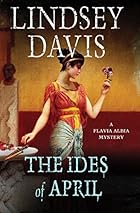
The book got off to rather a slow start, and I might not have stuck with it were it not for my long-standing love for the Falco series. But about 40% in, the story took off and I started caring about Albia for her own sake. I guessed the whodunnit fairly quickly, not to mention the love interest, though there was a sort of mini-mystery about the latter I must confess to being totally oblivious to until it was spelled out for me. In any case, I'm looking forward to book two next year.
(Incidentally, this one wins my favorite cover of the year to date. So pretty!)
June 30, 2013
2013 Reading, Books 61-63
First of all, my apologies for the light posting of late. I'm ultra-busy between now and RWA, really between now and
A Dream Defiant's
release date on 7/29. Starting in August, I plan to resume my regular posting schedule, including re-starting my Random Cookbook of the Week project.
Anyway, I've managed to squeeze in some reading time, albeit not as much as usual.
61) The New Mind of the South, by Tracy Thompson.
Thompson, like me, has deep roots in the Deep South--her family has been in Georgia for many generations while mine has been in Alabama since there was an Alabama, longer if the tradition that we have Creek blood is true. (Though this book brings up something I've long suspected--that a lot of white Southerners who believe they're part Cherokee or Creek are actually part black. One of these days I'd like to go through 23 and Me to get my ancestry composition just to see how true my family tree and family legends actually are. I'm less curious about the health risk genetic testing, because I don't need to see my DNA to know I'm at high cardiac risk. Simple family history and the fact my blood pressure already runs borderline high tell me that for free.)
Anyway, Thompson and I are also alike in that we've chosen to live our adult lives away from our native soil--she's a reporter living near Washington DC, while in Seattle I'm as far from the Deep South as you can be in the Lower 48. She's a bit older, so her youthful memories are of the 60's, while mine are of the 70's and 80's, but the South is no longer the place we grew up in, for better and for worse. I'm not sure how interesting this book would be for someone without Southern roots, but I found it a fascinating exploration of the less racist but more conservative, more diverse but less rural and sadly sprawl-plagued South of today.
62) A Natural History of Dragons, by Marie Brennan.
A charming fantasy novel--I especially loved the narrative voice--set in a world resembling and obviously based on the Victorian era--the technology is at the steamship level--but with dragons. The heroine and narrator is an aristocratic woman willing to defy society's strictures on women to study dragons, and in this volume (I expect there will be more) we see her childhood, youth, and first expedition.
63) Bounded Lives, Bounded Places: Free Black Society in Colonial New Orleans, 1769-1803, by Kimberly S. Hanger.
More research for the New Orleans WIP, mostly confirming and adding detail to my previous reading on the subject. Surprisingly, the decades of Spanish colonial rule were the best time for the free black community in a lot of ways, compared to earlier French and especially later American rule--their numbers grew through liberal manumission laws, and they were treated with a fair amount of respect, if never quite equality, within the community.
Anyway, I've managed to squeeze in some reading time, albeit not as much as usual.
61) The New Mind of the South, by Tracy Thompson.
Thompson, like me, has deep roots in the Deep South--her family has been in Georgia for many generations while mine has been in Alabama since there was an Alabama, longer if the tradition that we have Creek blood is true. (Though this book brings up something I've long suspected--that a lot of white Southerners who believe they're part Cherokee or Creek are actually part black. One of these days I'd like to go through 23 and Me to get my ancestry composition just to see how true my family tree and family legends actually are. I'm less curious about the health risk genetic testing, because I don't need to see my DNA to know I'm at high cardiac risk. Simple family history and the fact my blood pressure already runs borderline high tell me that for free.)
Anyway, Thompson and I are also alike in that we've chosen to live our adult lives away from our native soil--she's a reporter living near Washington DC, while in Seattle I'm as far from the Deep South as you can be in the Lower 48. She's a bit older, so her youthful memories are of the 60's, while mine are of the 70's and 80's, but the South is no longer the place we grew up in, for better and for worse. I'm not sure how interesting this book would be for someone without Southern roots, but I found it a fascinating exploration of the less racist but more conservative, more diverse but less rural and sadly sprawl-plagued South of today.
62) A Natural History of Dragons, by Marie Brennan.
A charming fantasy novel--I especially loved the narrative voice--set in a world resembling and obviously based on the Victorian era--the technology is at the steamship level--but with dragons. The heroine and narrator is an aristocratic woman willing to defy society's strictures on women to study dragons, and in this volume (I expect there will be more) we see her childhood, youth, and first expedition.
63) Bounded Lives, Bounded Places: Free Black Society in Colonial New Orleans, 1769-1803, by Kimberly S. Hanger.
More research for the New Orleans WIP, mostly confirming and adding detail to my previous reading on the subject. Surprisingly, the decades of Spanish colonial rule were the best time for the free black community in a lot of ways, compared to earlier French and especially later American rule--their numbers grew through liberal manumission laws, and they were treated with a fair amount of respect, if never quite equality, within the community.
June 19, 2013
2013 Reading, Books 58-60
58) The Fall of the House of Dixie, by Bruce Levine.
An excellent history of the Civil War focusing not on military strategy and tactics, but on how the conflict ultimately hastened the end of slavery even though that wasn't the Union's initial goal. I'd heard it before, but it still amazes me that so many people on both sides were surprised that blacks made as good soldiers as whites, fighting with just the courage and tenacity you'd expect of men fighting for their own and their families' freedom, and that black children given the opportunity to learn picked up reading and writing just as quickly as white children.
59) Defiant, by Pamela Clare.
For my personal 2013 Rita reading challenge, blogged about here.
60) The Ides of April, by Lindsey Davis.
Isn't that a gorgeous cover?
First in a new series of mysteries set in Ancient Rome, this book is linked to the Davis's Falco series, but it takes place about a dozen years after the last one, and we never actually see Falco and Helena. The sleuth is their adopted daughter, Flavia Albia, an independent young widow who's taken up her father's old profession and lives on her own. Falco and Helena are evidently doing fine, and Albia drops in to visit regularly--it's just that all those meeting are told rather than shown. Hopefully that won't be the case throughout the series, though I can understand wanting to establish Albia as an interesting character in her own right.
The book got off to rather a slow start, and I might not have stuck with it were it not for my long-standing love for the Falco series. But about 40% in, the story took off and I started caring about Albia for her own sake. I guessed the whodunnit fairly quickly, not to mention the love interest, though there was a sort of mini-mystery about the latter I must confess to being totally oblivious to until it was spelled out for me. In any case, I'm looking forward to book two next year.
An excellent history of the Civil War focusing not on military strategy and tactics, but on how the conflict ultimately hastened the end of slavery even though that wasn't the Union's initial goal. I'd heard it before, but it still amazes me that so many people on both sides were surprised that blacks made as good soldiers as whites, fighting with just the courage and tenacity you'd expect of men fighting for their own and their families' freedom, and that black children given the opportunity to learn picked up reading and writing just as quickly as white children.
59) Defiant, by Pamela Clare.
For my personal 2013 Rita reading challenge, blogged about here.
60) The Ides of April, by Lindsey Davis.
Isn't that a gorgeous cover?
First in a new series of mysteries set in Ancient Rome, this book is linked to the Davis's Falco series, but it takes place about a dozen years after the last one, and we never actually see Falco and Helena. The sleuth is their adopted daughter, Flavia Albia, an independent young widow who's taken up her father's old profession and lives on her own. Falco and Helena are evidently doing fine, and Albia drops in to visit regularly--it's just that all those meeting are told rather than shown. Hopefully that won't be the case throughout the series, though I can understand wanting to establish Albia as an interesting character in her own right.
The book got off to rather a slow start, and I might not have stuck with it were it not for my long-standing love for the Falco series. But about 40% in, the story took off and I started caring about Albia for her own sake. I guessed the whodunnit fairly quickly, not to mention the love interest, though there was a sort of mini-mystery about the latter I must confess to being totally oblivious to until it was spelled out for me. In any case, I'm looking forward to book two next year.
2013 TBR Challenge - Heart of a Knight
The June theme for the 2013 Romance TBR Challenge is "Lovely Rita"--books that have won or finaled in RWA's Rita awards. I chose Heart of a Knight, which won in 1998 for Best Short Historical. For what it's worth, it's not a particularly short book. I'd say it's at least as long as an average single title historical romance being published today, but it's well-known that publishers' preferred word counts have shrunk, so that's hardly surprising.
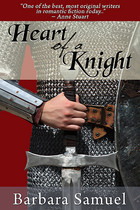
I rarely read medieval romances. Knights just don't innately appeal to me for some reason, though I'm reasonably interested in medieval history. I did enjoy this poignant love story, though--it's a forbidden cross-class romance where the heroine outranks the painfully honorable hero, which happens to be one of my favorite tropes EVER, and one that's all too hard to find in historical romance. Heroines marry up all the time, but that's not half so swoon-inducing for me as a reader.
In 1351, Lady Elizabeth D'Auvers, a young widow who's kinswoman to the king, returns to her lands after a lengthy absence to discover that the guards she left behind abandoned the castle and village, but that her people and property have found a protector in a knight, Thomas of Roxburgh, who left his home far to the north after everyone on his own lands but himself and a middle-aged widow fell victim to the plague. Though she suspects something isn't quite right about his story, he really has taken good care of her estate, and she's in need of a protector herself...
I have no idea how historically accurate the book is, since I just don't know the 14th century the way I do the 18th and the 19th, but the setting and characters felt three-dimensional and vivid.
A small caveat: the copyediting, at least in the Kindle edition I read, isn't perfect. E.g. on two occasions "reign" was used where "rein" would've been the correct choice, which along with "tow the line" instead of "toe the line" is a huge usage peeve of mine.

I rarely read medieval romances. Knights just don't innately appeal to me for some reason, though I'm reasonably interested in medieval history. I did enjoy this poignant love story, though--it's a forbidden cross-class romance where the heroine outranks the painfully honorable hero, which happens to be one of my favorite tropes EVER, and one that's all too hard to find in historical romance. Heroines marry up all the time, but that's not half so swoon-inducing for me as a reader.
In 1351, Lady Elizabeth D'Auvers, a young widow who's kinswoman to the king, returns to her lands after a lengthy absence to discover that the guards she left behind abandoned the castle and village, but that her people and property have found a protector in a knight, Thomas of Roxburgh, who left his home far to the north after everyone on his own lands but himself and a middle-aged widow fell victim to the plague. Though she suspects something isn't quite right about his story, he really has taken good care of her estate, and she's in need of a protector herself...
I have no idea how historically accurate the book is, since I just don't know the 14th century the way I do the 18th and the 19th, but the setting and characters felt three-dimensional and vivid.
A small caveat: the copyediting, at least in the Kindle edition I read, isn't perfect. E.g. on two occasions "reign" was used where "rein" would've been the correct choice, which along with "tow the line" instead of "toe the line" is a huge usage peeve of mine.
June 14, 2013
Susanna Reads the Ritas - Historical Romance
First of all, I have to say that I am not a big fan of this cover. It's not that it's badly done--it's just that somehow the combination of the orange color and the shirtless hero crossed the line from nicely eye-catching too just too much, at least for my tastes. (Though, now that I look at the covers for all the finalists in this category, orange is obviously In this year. And while I like a nice, muted burnt orange as much as the next person on clothing or dishes--I have an orange t-shirt I wear all the time, and I saw some lovely rustic-looking orange plates at Pottery Barn the other day--I'm not so crazy about it on books for some reason, especially as the dominant color.)
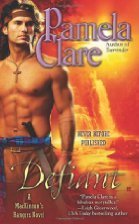
Anyway, this book is part of my challenge to read one finalist per month from each category of the 2013 Rita awards, in this case Best Historical Romance--i.e. my own home genre. I chose Defiant because I've heard good things about Pamela Clare but hadn't gotten around to trying her books yet.
I enjoyed it, though I probably would've liked it better if I hadn't been coming in on the last book of a trilogy--if I'd read the older brothers' stories, I probably would've been happy to see them again, but as it was I was all, "Yeah, yeah, I know, your brothers are awesome and went through great trials to win their true loves. I get it." I also found myself wondering if the brothers only made Y-sperm somehow, since by the end of the story they have four or five sons between them with nary a daughter in sight. I know, I know, it's a trope, though one I like to defy out of pure contrariness--in the five books I've sold to date, I've given four of my heroes firstborn daughters, just 'cuz.
But I shouldn't focus on nitpicks in a book I liked so much. The writing is excellent, descriptive and smooth without being too lush, the characters are appealing, and the plot gripping and well-paced. I especially appreciated the unusual and richly developed setting--what is now upstate New York during the French and Indian Wars. I can definitely see myself reading more of Clare's work in the future.
Anyway, this book is part of my challenge to read one finalist per month from each category of the 2013 Rita awards, in this case Best Historical Romance--i.e. my own home genre. I chose Defiant because I've heard good things about Pamela Clare but hadn't gotten around to trying her books yet.
I enjoyed it, though I probably would've liked it better if I hadn't been coming in on the last book of a trilogy--if I'd read the older brothers' stories, I probably would've been happy to see them again, but as it was I was all, "Yeah, yeah, I know, your brothers are awesome and went through great trials to win their true loves. I get it." I also found myself wondering if the brothers only made Y-sperm somehow, since by the end of the story they have four or five sons between them with nary a daughter in sight. I know, I know, it's a trope, though one I like to defy out of pure contrariness--in the five books I've sold to date, I've given four of my heroes firstborn daughters, just 'cuz.
But I shouldn't focus on nitpicks in a book I liked so much. The writing is excellent, descriptive and smooth without being too lush, the characters are appealing, and the plot gripping and well-paced. I especially appreciated the unusual and richly developed setting--what is now upstate New York during the French and Indian Wars. I can definitely see myself reading more of Clare's work in the future.