Susanna Fraser's Blog, page 14
October 16, 2013
2013 TBR Challenge - Scoundrel
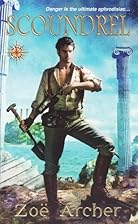 I read Warrior, the first book in this series, ages and ages ago, and bought the whole series as a "boxed" set when it was on sale for Kindle, again quite awhile back. And I've been hoarding it ever since, as I often do with books I know I'll enjoy, but where the author didn't leave me with a strong enough cliffhanger that I have to read the newest book the nanosecond it comes out. (I'm looking at you, Diana Gabaldon, for leaving poor Jem Mackenzie literally in the dark! And you too, George RR Martin, not to name any names lest I spoil TV viewers, but that last major character maybe-death!) Having a few hoarded books gives me a sense of security that I'll never be trapped on a long flight or, worse, holed up in an airport under a weather delay and lack for something entertaining to read.
Anyway, Archer's Blades of the Rose series is fantasy romance with steampunk elements, set in an alternate late 19th century where magic exists and the Blades of the Rose fight to ensure that each nation gets to keep their own magical legacy against the Heirs of Albion, who want to control all the world's magic so the sun will really REALLY never set on the British Empire. They're sort of Indiana Jones with lots of sexytimes--rollicking swashbucklers where good is good, evil is evil, and the characters hurtle from one death-defying adventure to the next.
I picked up Scoundrel now because the October theme for the 2013 Romance TBR Challenge is Paranormal Romance. I didn't like it quite so much as Warrior because of the different hero archetypes involved--Warrior's hero is a rough-around-the-edges soldier who falls for a highborn woman, which I love. (Mmm, Sharpe!) Bennett Day in Scoundrel is more your typical romance novel womanizing rogue, which is much less a fantasy of mine. That said, I loved the heroine, and the swashbuckling was dandy. And speaking of dandies, I'm looking forward to Catullus Graves' story in Stranger. He's the inventor of all the handy gadgets the Blades team uses, and he's a black Briton, which draws my interest since two of my own most recent manuscripts have featured black British characters.


October 15, 2013
Random Cookbook of the Week - 1951 Joy of Cooking
My mom married my dad in 1952. (I was their late-edition surprise oopsie Gen-X child born in 1971--I have three Baby Boomer brothers.) She received a 1951 Joy of Cooking for a wedding present, one that six decades on bears the stains of long use, especially in the pie and candy sections. It's one of several "family" books she gave me during her last illness, along with a few other cookbooks, my father's and grandfather's Bibles, and a 100-year-old speller with my great-uncle's name penciled on the inside cover.
 The 1951 Joy is an intriguing mix of the timeless and the very much of its era. My chosen recipe fell into the latter category, but made for a good dinner for a fall evening nonetheless:
Pork Chops Baked in Sour Cream
4 servings
Prepare for cooking:
- 4 loin pork chops 1/2 inch thick
Dredge them with:
- Seasoned flour
Insert in each chop:
- 1 clove
Brown them lightly in a little hot pork fat or lard. (I used a tablespoon of butter, because, this being 2013, I don't have a canister of lard by the stove like my mom used to before she and Dad got put on low cholesterol diets.) Place them in a baking dish. Combine, heat, and pour over them:
- 1/2 c. water
- 1/2 bay leaf
- 2 T vinegar (I used white wine vinegar)
- 1 T sugar
- 1/2 c. sour cream
Cover the dish. Bake the chops in a moderate oven (350 F) for about 1 hour.
The pork chops came out tasty enough, and the sour cream sauce made a nice gravy, but it was a little sweet for my taste. I'll probably make it again, since it was so simple and such a nice cool-weather dish, only I'll omit the sugar and brown some mushrooms, capers, and garlic or shallot along with the pork chops.
 The 1951 Joy is an intriguing mix of the timeless and the very much of its era. My chosen recipe fell into the latter category, but made for a good dinner for a fall evening nonetheless:
Pork Chops Baked in Sour Cream
4 servings
Prepare for cooking:
- 4 loin pork chops 1/2 inch thick
Dredge them with:
- Seasoned flour
Insert in each chop:
- 1 clove
Brown them lightly in a little hot pork fat or lard. (I used a tablespoon of butter, because, this being 2013, I don't have a canister of lard by the stove like my mom used to before she and Dad got put on low cholesterol diets.) Place them in a baking dish. Combine, heat, and pour over them:
- 1/2 c. water
- 1/2 bay leaf
- 2 T vinegar (I used white wine vinegar)
- 1 T sugar
- 1/2 c. sour cream
Cover the dish. Bake the chops in a moderate oven (350 F) for about 1 hour.
The pork chops came out tasty enough, and the sour cream sauce made a nice gravy, but it was a little sweet for my taste. I'll probably make it again, since it was so simple and such a nice cool-weather dish, only I'll omit the sugar and brown some mushrooms, capers, and garlic or shallot along with the pork chops.
October 14, 2013
2013 Reading, Books 91-93
91) Pink and Blue: Telling the Boys from the Girls in America, by Jo B. Paoletti
My daughter, age 9, is a tomboy, as I myself was at her age. Given the enormous strides women have made toward fuller equality and success in traditionally male professions, it's startling how much more gendered clothes and toys are now than during my 1970's and 80's childhood. Photos of me show a kid in the same reds, oranges, greens, and yellows boys were wearing, and while boys played with GI Joe toys and girls played with dolls (I didn't--I preferred toy horses), things like blocks, Lincoln Logs, and Legos weren't gendered. Now girl clothes run heavily to pink and ruffled, and toys are gendered as can be. I'm proud to say Miss Fraser scorns these trends, and will proclaim that everyone should play with, wear, and watch whatever they like. But it's still tough to shop for her.
So this book caught my attention. It's a history of children's clothing from the late 19th century to the present--from the days when babies of both sexes wore the same white dresses and boys kept wearing skirts, albeit usually with masculine detailing, through their preschool years, to the unisex trends of the 60's and 70's, all the way up to how today's trends look to be a backlash against the unisex clothing today's generation of parents wore as children. Fascinating stuff--e.g. did you know in the early 20th century there was debate over which color belonged to each sex? Many were of the opinion blue was better for girls, being a delicate color associated with the Virgin Mary, while pink as a shade of red was the more manly color.
92) Winter Woman, by Jenna Kernan.
I've had this book on my TBR shelf for ages--it's part of my library's collection of donated paperbacks with a "please return when finished" sticker slapped on the cover...and I, um, kinda hoard them. (I also regularly donate boxes of books to be either sold at the Friends of the Library Book Sale or added to the return-when-finished collection, so hopefully it balances out.)
Anyway, I decided it was high time I started weeding through my borrowed collection and returning them to the wild, so I grabbed this one, read the first few pages to see if it was any good, and was promptly hooked. It's a Western romance, but one set in the 1830's, before the heyday of the cowboy. The heroine is a widow who survived a winter alone in the Rockies (she and her husband were left behind by their missionary wagon train who promised to return for them, only everyone but her ultimately died), and the hero is a trapper. The book is an all-around good read--fast-paced, adventurous, and romantic.
I'd never heard of Kernan before, and since the romance writer community is a smallish world, I feared that meant she was no longer active. (This book is copyright 2003.) But when I googled her I discovered she's an active and prolific writer with a good-sized backlist for me to explore. Which is why libraries are good things for authors. I tried her because I'll grab pretty much anything that halfway appeals to me of the "please return when finished" rack, but I'll be buying her works in the future.
93) Scoundrel, by Zoe Archer.
For the 2013 TBR Challenge. Detailed post to follow.
My daughter, age 9, is a tomboy, as I myself was at her age. Given the enormous strides women have made toward fuller equality and success in traditionally male professions, it's startling how much more gendered clothes and toys are now than during my 1970's and 80's childhood. Photos of me show a kid in the same reds, oranges, greens, and yellows boys were wearing, and while boys played with GI Joe toys and girls played with dolls (I didn't--I preferred toy horses), things like blocks, Lincoln Logs, and Legos weren't gendered. Now girl clothes run heavily to pink and ruffled, and toys are gendered as can be. I'm proud to say Miss Fraser scorns these trends, and will proclaim that everyone should play with, wear, and watch whatever they like. But it's still tough to shop for her.
So this book caught my attention. It's a history of children's clothing from the late 19th century to the present--from the days when babies of both sexes wore the same white dresses and boys kept wearing skirts, albeit usually with masculine detailing, through their preschool years, to the unisex trends of the 60's and 70's, all the way up to how today's trends look to be a backlash against the unisex clothing today's generation of parents wore as children. Fascinating stuff--e.g. did you know in the early 20th century there was debate over which color belonged to each sex? Many were of the opinion blue was better for girls, being a delicate color associated with the Virgin Mary, while pink as a shade of red was the more manly color.
92) Winter Woman, by Jenna Kernan.
I've had this book on my TBR shelf for ages--it's part of my library's collection of donated paperbacks with a "please return when finished" sticker slapped on the cover...and I, um, kinda hoard them. (I also regularly donate boxes of books to be either sold at the Friends of the Library Book Sale or added to the return-when-finished collection, so hopefully it balances out.)
Anyway, I decided it was high time I started weeding through my borrowed collection and returning them to the wild, so I grabbed this one, read the first few pages to see if it was any good, and was promptly hooked. It's a Western romance, but one set in the 1830's, before the heyday of the cowboy. The heroine is a widow who survived a winter alone in the Rockies (she and her husband were left behind by their missionary wagon train who promised to return for them, only everyone but her ultimately died), and the hero is a trapper. The book is an all-around good read--fast-paced, adventurous, and romantic.
I'd never heard of Kernan before, and since the romance writer community is a smallish world, I feared that meant she was no longer active. (This book is copyright 2003.) But when I googled her I discovered she's an active and prolific writer with a good-sized backlist for me to explore. Which is why libraries are good things for authors. I tried her because I'll grab pretty much anything that halfway appeals to me of the "please return when finished" rack, but I'll be buying her works in the future.
93) Scoundrel, by Zoe Archer.
For the 2013 TBR Challenge. Detailed post to follow.
October 10, 2013
Random Cookbook of the Week - A Feast of Ice and Fire
A Feast of Ice and Fire
has its roots in the Inn at the Crossroads blog, and both are devoted to bringing the food from George R.R. Martin's books to life. The recipes are a mix of accessible and challenging, and of modern and historical--often the cookbook will offer two recipes for a dish mentioned in the books, one modern and one medieval (or sometimes Roman or Elizabethan). It has a handful of recipes I know I'm not brave enough to try--e.g. Honey-Spiced Locusts--and several I'd love to tackle but haven't yet had the time to attempt--Roman Honeyfingers, Quails Drowned in Butter, Medieval Pork Pie, etc.
But it's also packed with a surprising number of good everyday recipes. Modern Bean and Bacon Soup has become one of my go-to dinner recipes, for example, and I plan on making this week's choice again, too.
Almond Crusted Trout
Serves 2
1/2 c. fresh parsley, chopped
1/4 c. fresh dill, chopped
2 shallots, chopped
1/2 c. chopped or ground almonds
1 tsp salt
1/4 c. bread crumbs (I used panko)
4 cloves garlic, minced
1/4 c. lemon juice
1 egg
1/2 c. flour
2 small cleaned and gutted trout, or 4 trout fillets (I used fillets)
Heat a grill to low or preheat the oven to 275F. (I used the oven, because it's the rainy season now.)
Mix the herbs, shallots, almonds, salt, and bread crumbs together by hand or in a food processor. (food processor here) Add the garlic, lemon juice, and egg and mix until uniform in texture. Put the flour into a shallow bowl and dredge the fish in the flour. Gently pack the almond mixture inside and around the fish. Grill or bake for about 1 hour, or until the crust is just crispy and the fish is cooked through. Plate and serve.
Since I was using fillets instead of a whole fish, it only took about 20 minutes for the fish to cook through, by which point the crust wasn't anywhere close to crispy, so I turned the broiler on and stuck the fish under it for 5 minutes to give it some crunch.
The crust mixture is a perfect balance of flavors, IMHO. It doesn't have a strong almond flavor, but the fat and richness of the nuts seems to mellow and bind the bright flavors of the lemon and herbs, and they marry beautifully with the fish.
Incidentally, I'm still trying to acquire a taste for fish, and I was advised by other fish-averse folk to avoid trout. But I tried it one night when it was the special at Maple Leaf Grill, and it's my favorite fish. Turns out my problem with fish has at least as much to do with texture as flavor, and trout and salmon, though fishy-tasting, have a nice meaty texture. So give them a tasty sauce or crust so they don't scream FISH! and I'm a happy diner.
But it's also packed with a surprising number of good everyday recipes. Modern Bean and Bacon Soup has become one of my go-to dinner recipes, for example, and I plan on making this week's choice again, too.
Almond Crusted Trout
Serves 2
1/2 c. fresh parsley, chopped
1/4 c. fresh dill, chopped
2 shallots, chopped
1/2 c. chopped or ground almonds
1 tsp salt
1/4 c. bread crumbs (I used panko)
4 cloves garlic, minced
1/4 c. lemon juice
1 egg
1/2 c. flour
2 small cleaned and gutted trout, or 4 trout fillets (I used fillets)
Heat a grill to low or preheat the oven to 275F. (I used the oven, because it's the rainy season now.)
Mix the herbs, shallots, almonds, salt, and bread crumbs together by hand or in a food processor. (food processor here) Add the garlic, lemon juice, and egg and mix until uniform in texture. Put the flour into a shallow bowl and dredge the fish in the flour. Gently pack the almond mixture inside and around the fish. Grill or bake for about 1 hour, or until the crust is just crispy and the fish is cooked through. Plate and serve.
Since I was using fillets instead of a whole fish, it only took about 20 minutes for the fish to cook through, by which point the crust wasn't anywhere close to crispy, so I turned the broiler on and stuck the fish under it for 5 minutes to give it some crunch.
The crust mixture is a perfect balance of flavors, IMHO. It doesn't have a strong almond flavor, but the fat and richness of the nuts seems to mellow and bind the bright flavors of the lemon and herbs, and they marry beautifully with the fish.
Incidentally, I'm still trying to acquire a taste for fish, and I was advised by other fish-averse folk to avoid trout. But I tried it one night when it was the special at Maple Leaf Grill, and it's my favorite fish. Turns out my problem with fish has at least as much to do with texture as flavor, and trout and salmon, though fishy-tasting, have a nice meaty texture. So give them a tasty sauce or crust so they don't scream FISH! and I'm a happy diner.
October 8, 2013
A plea for fashion advice
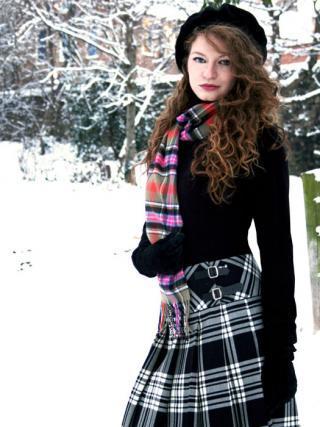
I've been on Weight Watchers for almost a year now, and I've lost over 40 lbs, with another 20-25 to go. If and when I get to my goal weight, I mean to splurge on a top-quality tartan skirt, something that will last me years and years, thereby motivating me to STAY at goal weight so it will fit me for book signings and whenever else I want to rock the Scottish part of my heritage.
What I'd really like is something like this:
Or possibly something in a more kiltish cut, like this:
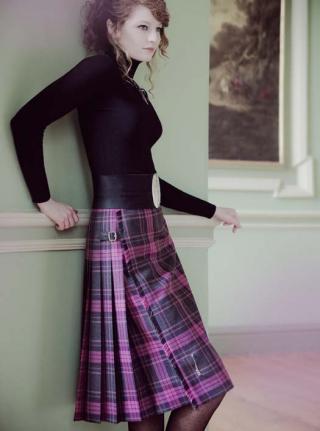
But even being at goal weight is not going to make me look like the bonnie lassie modeling those skirts, and I want to make sure whatever I choose works for me. And I tend to look best in pencil or otherwise straight skirts. So maybe what I really need is this:
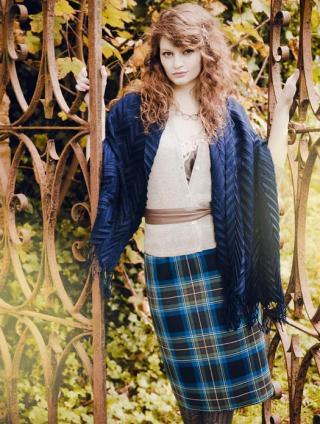
So, fashionistas...help me out. My heart is with the first two choices, because they're more evocative of a kilt. And I'm hoping the flat front of the second option would give enough of a straight skirt look to be flattering for me. But would I be better off playing it safe with a straight skirt?
And, while I'm at it...
Fraser Modern?
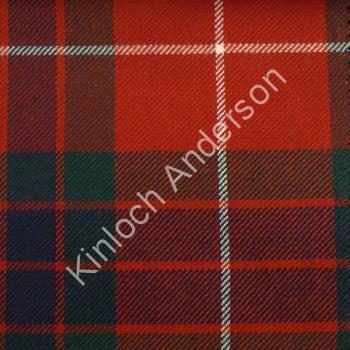
or Fraser Ancient Hunting?

(Assume I'd being wearing this with a black, dark brown, or dark green sweater and some silver Celtic jewelry.)
What I'd really like is something like this:

Or possibly something in a more kiltish cut, like this:

But even being at goal weight is not going to make me look like the bonnie lassie modeling those skirts, and I want to make sure whatever I choose works for me. And I tend to look best in pencil or otherwise straight skirts. So maybe what I really need is this:

So, fashionistas...help me out. My heart is with the first two choices, because they're more evocative of a kilt. And I'm hoping the flat front of the second option would give enough of a straight skirt look to be flattering for me. But would I be better off playing it safe with a straight skirt?
And, while I'm at it...
Fraser Modern?

or Fraser Ancient Hunting?

(Assume I'd being wearing this with a black, dark brown, or dark green sweater and some silver Celtic jewelry.)
October 3, 2013
2013 Reading, Books 88-90
Still busy busy busy, but hopefully almost to the point where I can actually announce Good Writing News. Watch this space...
88. Weird Things Customers Say in Bookstores, by Jen Campbell.
Exactly what the title says it is, and hilarious, too.
89. A manuscript by my critique partner, Rose Lerner. Assuming her publisher accepts it, y'all may be able to read it in, oh, November 2014 or so. So for now I won't say anything other than that it's beautifully written and different. However, she does have a new release scheduled for March that I can highly recommend, too.
90. The Prime of Miss Jean Brodie, by Muriel Spark.
This isn't my usual type of book--I'm more about the smart genre fiction than Noted Works of Literature. But I heard an interesting discussion of the book on NPR, and I'm glad I gave it a try. I wouldn't say I enjoyed it, exactly, but it made me think. I'm not sure what to think of the book, or of Jean Brodie, but I expect I'll be turning it over in my mind for some time to come.
88. Weird Things Customers Say in Bookstores, by Jen Campbell.
Exactly what the title says it is, and hilarious, too.
89. A manuscript by my critique partner, Rose Lerner. Assuming her publisher accepts it, y'all may be able to read it in, oh, November 2014 or so. So for now I won't say anything other than that it's beautifully written and different. However, she does have a new release scheduled for March that I can highly recommend, too.
90. The Prime of Miss Jean Brodie, by Muriel Spark.
This isn't my usual type of book--I'm more about the smart genre fiction than Noted Works of Literature. But I heard an interesting discussion of the book on NPR, and I'm glad I gave it a try. I wouldn't say I enjoyed it, exactly, but it made me think. I'm not sure what to think of the book, or of Jean Brodie, but I expect I'll be turning it over in my mind for some time to come.
September 18, 2013
2013 TBR Challenge - Sunrise Over Texas
September's theme for the 2013 TBR Challenge was Westerns, a romance subgenre that I rarely read. Much like with small-town contemporary romances, I have trouble connecting to the central fantasy. Being a city slicker is just too close to the core of my identity, I guess. (Mind you, I read plenty of rural, small-town, or otherwise isolated stories set outside of America. My baggage is strictly related to the urban-rural divide as it plays out in my own country. Which sounds odd, but I've met a British reader, currently living in London, who can enjoy small town settings in America, Australia, etc. but not villages in the British Isles, so I'm not completely unique.)
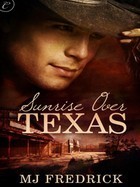
I do, however, have several Westerns on my Kindle, picked up as bargains or on a recommendation, so I didn't lack for choices for this month's theme. I picked Sunrise Over Texas, by MJ Fredrick. This historical romance set in the earliest days of American settlement in Texas was an emotional, compelling read in which both the hero and heroine have to overcome grief and past mistakes to move on with their lives, and I liked the fact that the heroine was in many ways the more dominant of the pair. Really, the hero was a beta type--the heroine was even a better shot than he was--which was unexpected and refreshing in any historical, and I suspect is even rarer in Westerns than, say, Regencies.
The story was gripping and gritty, especially the early sections where the hero and heroine are fighting to survive in an isolated environment. I don't know how accurate it was, since I'm far from being an expert on 1820's Texas. Recommended for readers looking for off-the-beaten-path historicals.
Full disclosure: This book was published by my publisher, Carina Press.

I do, however, have several Westerns on my Kindle, picked up as bargains or on a recommendation, so I didn't lack for choices for this month's theme. I picked Sunrise Over Texas, by MJ Fredrick. This historical romance set in the earliest days of American settlement in Texas was an emotional, compelling read in which both the hero and heroine have to overcome grief and past mistakes to move on with their lives, and I liked the fact that the heroine was in many ways the more dominant of the pair. Really, the hero was a beta type--the heroine was even a better shot than he was--which was unexpected and refreshing in any historical, and I suspect is even rarer in Westerns than, say, Regencies.
The story was gripping and gritty, especially the early sections where the hero and heroine are fighting to survive in an isolated environment. I don't know how accurate it was, since I'm far from being an expert on 1820's Texas. Recommended for readers looking for off-the-beaten-path historicals.
Full disclosure: This book was published by my publisher, Carina Press.
September 15, 2013
2013 Reading - Books 85-87
85) Lawrence in Arabia, by Scott Anderson.
Even though it took me a week and a half to complete and was a bit of a slog at points, I'm glad I finished this history of WWI in the Middle East. It isn't exclusively about T.E. Lawrence, though his outsized personality carries the narrative--we follow a multinational assortment of historical figures all jockeying for power and influence as the Ottoman Empire loses control of the Arab world over the course of the war. The author at once raises some intriguing what-ifs that might've given us a better and more peaceful world even today while acknowledging that even a best-case scenario would've had its share of simmering sectarian tension.
86) Sunrise Over Texas, by M.J. Frederick.
For the 2013 romance TBR challenge. Detailed post to come next week.
87) Crucible of Gold, by Naomi Novik.
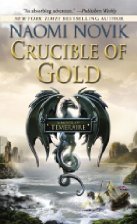
The first book in this series, His Majesty's Dragon, is one of my favorite reads of all time, but I took a break from it after Victory of Eagles, for reasons that have more to do with me as with the book itself. You see, my proverbial Book Under the Bed (which of course does not live under an actual bed, not in 2013, but is instead a file on my hard drive and backed up to Dropbox that I get out and look at every year or two, because someday I mean to go back to it) is an alternative history/adventure story of the Napoleonic Era. And Victory of Eagles is the closest Novik's story comes to overlapping mine. Not in a way that would prevent me from publishing the Book Under the Bed--our approaches and plots are very different. No, it's more that I spent the entire read arguing with the book, particularly with her portrayal of Wellington. As those of you who've followed me around the blogosphere may know, I'm kinda fond of the Great Duke. As in, historical crush fond. He's one of the three protagonists of the BUtB, and while I hope my portrayal is true to the sarcastic, snobby, and all-around-difficult aspects of his personality, he also comes across as badass and awesomesauce (which I think is also justified by the historical record).
Which probably sounds a bit petty of me, to say I didn't like Victory as much as previous entries because I didn't like Novik's Wellington. But that's just the surface reaction. It's more that I find it weird and a little disconcerting to read anything too similar to what I'm writing--and when Victory came out, the BUtB was my beloved work-in-progress, which I was polishing for submission to editors and agents. I'm not one of those authors who can't read the same genre I write, but I find myself reading fewer Regencies now than before I started writing them. When I hear about a book that's very similar to something I'm writing or planning to write, I'm more likely to avoid it than read it--if it's too close to my approach, I worry about accidental influences, and if it's too different, I know I'll be too busy arguing with the story to really sink into it properly. With Victory, I think I had a weirdly strong reaction to the book because it was simultaneously too much like the BUtB and too different from it, unlike any book I've read before or since, so reading it induced a kind of mental whiplash.
Anyway, after reading a strong review of the latest book, I decided to go back to the series, and I'm glad I did. I got exasperated with Laurence a few times, but the dragon interactions were delightful, I liked seeing more of Emily Roland, who's always been one of my favorite secondary characters, and I was fascinated by how Novik developed an Incan society where the human population had been decimated by European diseases as in real history, but the Incan dragons had prevented European conquest. And...I certainly wasn't expecting that twist with the Incan empress. I can't wait to see what happens in the next book.
Even though it took me a week and a half to complete and was a bit of a slog at points, I'm glad I finished this history of WWI in the Middle East. It isn't exclusively about T.E. Lawrence, though his outsized personality carries the narrative--we follow a multinational assortment of historical figures all jockeying for power and influence as the Ottoman Empire loses control of the Arab world over the course of the war. The author at once raises some intriguing what-ifs that might've given us a better and more peaceful world even today while acknowledging that even a best-case scenario would've had its share of simmering sectarian tension.
86) Sunrise Over Texas, by M.J. Frederick.
For the 2013 romance TBR challenge. Detailed post to come next week.
87) Crucible of Gold, by Naomi Novik.
The first book in this series, His Majesty's Dragon, is one of my favorite reads of all time, but I took a break from it after Victory of Eagles, for reasons that have more to do with me as with the book itself. You see, my proverbial Book Under the Bed (which of course does not live under an actual bed, not in 2013, but is instead a file on my hard drive and backed up to Dropbox that I get out and look at every year or two, because someday I mean to go back to it) is an alternative history/adventure story of the Napoleonic Era. And Victory of Eagles is the closest Novik's story comes to overlapping mine. Not in a way that would prevent me from publishing the Book Under the Bed--our approaches and plots are very different. No, it's more that I spent the entire read arguing with the book, particularly with her portrayal of Wellington. As those of you who've followed me around the blogosphere may know, I'm kinda fond of the Great Duke. As in, historical crush fond. He's one of the three protagonists of the BUtB, and while I hope my portrayal is true to the sarcastic, snobby, and all-around-difficult aspects of his personality, he also comes across as badass and awesomesauce (which I think is also justified by the historical record).
Which probably sounds a bit petty of me, to say I didn't like Victory as much as previous entries because I didn't like Novik's Wellington. But that's just the surface reaction. It's more that I find it weird and a little disconcerting to read anything too similar to what I'm writing--and when Victory came out, the BUtB was my beloved work-in-progress, which I was polishing for submission to editors and agents. I'm not one of those authors who can't read the same genre I write, but I find myself reading fewer Regencies now than before I started writing them. When I hear about a book that's very similar to something I'm writing or planning to write, I'm more likely to avoid it than read it--if it's too close to my approach, I worry about accidental influences, and if it's too different, I know I'll be too busy arguing with the story to really sink into it properly. With Victory, I think I had a weirdly strong reaction to the book because it was simultaneously too much like the BUtB and too different from it, unlike any book I've read before or since, so reading it induced a kind of mental whiplash.
Anyway, after reading a strong review of the latest book, I decided to go back to the series, and I'm glad I did. I got exasperated with Laurence a few times, but the dragon interactions were delightful, I liked seeing more of Emily Roland, who's always been one of my favorite secondary characters, and I was fascinated by how Novik developed an Incan society where the human population had been decimated by European diseases as in real history, but the Incan dragons had prevented European conquest. And...I certainly wasn't expecting that twist with the Incan empress. I can't wait to see what happens in the next book.
September 12, 2013
Still here...
I'm still here, just insanely busy, and hopefully with good news to announce soon. (That's publishing-related news. No babies or lottery wins or anything of the sort on the horizon.)
September 3, 2013
2013 Reading - Books 82-84
82) Cockpit Confidential, by Patrick Smith.
Patrick Smith is a commercial pilot and the author of the Ask the Pilot blog (formerly a column at salon.com). I've always been fascinated by his columns even though I'm not really a frequent flyer, typically flying 2-3 times a year for family, vacation, and writers' conferences. (I'm just frequent enough to get impatient when I'm stuck behind truly infrequent flyers who don't have the check-in and security line process down cold.) He's made me a much less nervous flyer--I finally believe that turbulence won't knock my plane out of the sky. Anyway, this book is much like his blog, informative and snarky, and I recommend it for anyone who'd like a behind-the-scenes look at air travel.

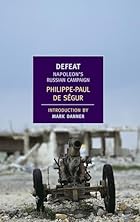
83) Defeat: Napoleon's Russian Campaign, by Philippe-Paul De Segur.
As I continue researching Napoleon's invasion of Russia for my next manuscript, I've moved on to campaign memoirs. This, written more than a decade after the fact by one of Napoleon's aides-de-camp from the campaign, is a fascinating and often horrifying read. It's a self-consciously literary saga of the Fall of the Hero, Occasioned by Hubris, but not made any less valuable as a primary source thereby--if anything, it's especially useful to see how the men of the Grande Armee made sense of their experiences, both at the time and in retrospect.
But what is up with that cover image? Would it have been so hard to find an image of a Napoleonic-era cannon?
84) Divergent, by Veronica Roth.
This seems to be the second-most popular dystopian YA series after The Hunger Games, and I picked it up out of curiosity after hearing about the upcoming movie. While I didn't completely buy into the concept of the faction-based social order (basically, your life is determined by whether you're more inclined to see courage, kindness, honesty, selflessness, or the pursuit of knowledge as the key virtue), I was able to accept the premise and let the story run with it, and me. It's compelling, and I've already put the second and upcoming third books in the series on my library holds list. That said, though I let my daughter read The Hunger Games and its sequels over the summer, I'm not going to tell her about these. It's not so much that they're more violent as that Tris feels less remorse about her kills than Katniss, and I'd rather my fourth grader stick to the latter as a role model for now.
Patrick Smith is a commercial pilot and the author of the Ask the Pilot blog (formerly a column at salon.com). I've always been fascinated by his columns even though I'm not really a frequent flyer, typically flying 2-3 times a year for family, vacation, and writers' conferences. (I'm just frequent enough to get impatient when I'm stuck behind truly infrequent flyers who don't have the check-in and security line process down cold.) He's made me a much less nervous flyer--I finally believe that turbulence won't knock my plane out of the sky. Anyway, this book is much like his blog, informative and snarky, and I recommend it for anyone who'd like a behind-the-scenes look at air travel.
83) Defeat: Napoleon's Russian Campaign, by Philippe-Paul De Segur.
As I continue researching Napoleon's invasion of Russia for my next manuscript, I've moved on to campaign memoirs. This, written more than a decade after the fact by one of Napoleon's aides-de-camp from the campaign, is a fascinating and often horrifying read. It's a self-consciously literary saga of the Fall of the Hero, Occasioned by Hubris, but not made any less valuable as a primary source thereby--if anything, it's especially useful to see how the men of the Grande Armee made sense of their experiences, both at the time and in retrospect.
But what is up with that cover image? Would it have been so hard to find an image of a Napoleonic-era cannon?
84) Divergent, by Veronica Roth.
This seems to be the second-most popular dystopian YA series after The Hunger Games, and I picked it up out of curiosity after hearing about the upcoming movie. While I didn't completely buy into the concept of the faction-based social order (basically, your life is determined by whether you're more inclined to see courage, kindness, honesty, selflessness, or the pursuit of knowledge as the key virtue), I was able to accept the premise and let the story run with it, and me. It's compelling, and I've already put the second and upcoming third books in the series on my library holds list. That said, though I let my daughter read The Hunger Games and its sequels over the summer, I'm not going to tell her about these. It's not so much that they're more violent as that Tris feels less remorse about her kills than Katniss, and I'd rather my fourth grader stick to the latter as a role model for now.