Susanna Fraser's Blog, page 15
September 1, 2013
Random Cookbook of the Week - Ad Hoc at Home
Last week's cookbook draw was Thomas Keller's Ad Hoc at Home, which is exactly the kind of cookbook you'd expect as a home cooking cookbook from a chef of Keller's level--i.e. a reasonably skilled and experienced home cook like me can make most of the recipes, but they're more labor-intensive and challenging than I have energy for on an ordinary weekday when I've already put in a full day at the day job and I still need to squeeze in an hour or two's writing time while also helping my daughter with her homework, packing her and my lunches for tomorrow, and hopefully at least having a conversation or two with my equally busy husband.
Still, it's a good cookbook, and the Potato Hash with Bacon and Melted Onions I made the last time it came up in my rotation is one of the most delicious things I've ever produced. Last week's effort didn't turn out so well, but I figure that's more my fault than the recipe's.
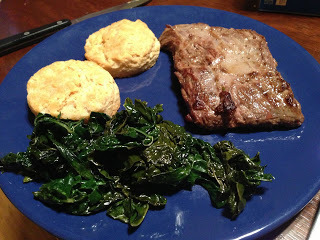
Marinated Skirt Steak
Marinade:
- 6 thyme sprigs
- 2 8-inch rosemary sprigs
- 4 small bay leaves
- 1 T. black peppercorns
- 5 garlic cloves, smashed, skin left on
- 2 c. extra virgin olive oil
- 6 8-oz. trimmed outer skirt steaks
- kosher salt and freshly ground black pepper
- canola oil
- 2 T. unsalted butter
- 4 thyme sprigs
- 2 garlic cloves, smashed, skin left on
Combine the marinade ingredients in a medium saucepan and bring to a simmer over medium heat. Remove from the heat and let the marinade cool to room temperature.
Put steaks in dish or resealable plastic bag, add the marinade, and cover the dish or seal the bag. Marinate for at least four hours or up to a day in the refrigerator.
Remove the meat from the marinade and let sit at room temperature for about 30 minutes before cooking; discard the marinade. Dry the meat with paper towels. Season with salt and pepper.
Preheat the oven to 350 F. Set a roasting rack in a roasting pan.
Heat some canola oil in a large frying pan over high heat. When it shimmers, add half the meat and quickly brown the first side. Turn the meat and, working quickly, add 1 T of the butter, 2 thyme sprigs, and 1 garlic clove and brown the meat on the second side, basting constantly; the entire cooking process should only take about 1 1/2 minutes. Transfer the meat to the rack and spoon the butter, garlic, and thyme over the top. Wipe the pan and repeat with the remaining steaks.
Transfer the baking sheet to the oven and cook for 8-10 minutes, or until the center of the meat registers about 125 F. Remove from the oven and let rest on the rack in a warm place for about 10 minutes for medium rare.
I think I erred in trusting the time in the recipe over my own instincts for when the steak was sufficiently seared. I think if I'd let it go 30-60 seconds longer, it would've gotten a nice char to go with just barely medium rare innards. (I do like my steaks on the bloody side.) As it was, it was a bit too mushy and soft altogether. That said, the marinade imparted a nice subtle but distinctive flavor.
I also tried the book's buttermilk biscuits recipe. I won't post it here, but suffice it to say I still haven't quite got the hang of biscuits. These turned out a bit like hockey pucks, but I think even if Keller himself had made them they wouldn't be the elusive high, light, and fluffy Southern-style biscuits like my mom used to make. Once I achieve those, I'll post the recipe for sure...and I've just discovered you can order White Lily flour on Amazon! Maybe good biscuits are within my grasp after all, since I'm given to understand that the Yankeefied flour my local grocery store carries is too hard for a Southern biscuit.
Still, it's a good cookbook, and the Potato Hash with Bacon and Melted Onions I made the last time it came up in my rotation is one of the most delicious things I've ever produced. Last week's effort didn't turn out so well, but I figure that's more my fault than the recipe's.

Marinated Skirt Steak
Marinade:
- 6 thyme sprigs
- 2 8-inch rosemary sprigs
- 4 small bay leaves
- 1 T. black peppercorns
- 5 garlic cloves, smashed, skin left on
- 2 c. extra virgin olive oil
- 6 8-oz. trimmed outer skirt steaks
- kosher salt and freshly ground black pepper
- canola oil
- 2 T. unsalted butter
- 4 thyme sprigs
- 2 garlic cloves, smashed, skin left on
Combine the marinade ingredients in a medium saucepan and bring to a simmer over medium heat. Remove from the heat and let the marinade cool to room temperature.
Put steaks in dish or resealable plastic bag, add the marinade, and cover the dish or seal the bag. Marinate for at least four hours or up to a day in the refrigerator.
Remove the meat from the marinade and let sit at room temperature for about 30 minutes before cooking; discard the marinade. Dry the meat with paper towels. Season with salt and pepper.
Preheat the oven to 350 F. Set a roasting rack in a roasting pan.
Heat some canola oil in a large frying pan over high heat. When it shimmers, add half the meat and quickly brown the first side. Turn the meat and, working quickly, add 1 T of the butter, 2 thyme sprigs, and 1 garlic clove and brown the meat on the second side, basting constantly; the entire cooking process should only take about 1 1/2 minutes. Transfer the meat to the rack and spoon the butter, garlic, and thyme over the top. Wipe the pan and repeat with the remaining steaks.
Transfer the baking sheet to the oven and cook for 8-10 minutes, or until the center of the meat registers about 125 F. Remove from the oven and let rest on the rack in a warm place for about 10 minutes for medium rare.
I think I erred in trusting the time in the recipe over my own instincts for when the steak was sufficiently seared. I think if I'd let it go 30-60 seconds longer, it would've gotten a nice char to go with just barely medium rare innards. (I do like my steaks on the bloody side.) As it was, it was a bit too mushy and soft altogether. That said, the marinade imparted a nice subtle but distinctive flavor.
I also tried the book's buttermilk biscuits recipe. I won't post it here, but suffice it to say I still haven't quite got the hang of biscuits. These turned out a bit like hockey pucks, but I think even if Keller himself had made them they wouldn't be the elusive high, light, and fluffy Southern-style biscuits like my mom used to make. Once I achieve those, I'll post the recipe for sure...and I've just discovered you can order White Lily flour on Amazon! Maybe good biscuits are within my grasp after all, since I'm given to understand that the Yankeefied flour my local grocery store carries is too hard for a Southern biscuit.


August 24, 2013
Random Cookbook of the Week: Home Cooking with Trisha Yearwood
This week I cooked from the newest of my cookbooks, Home Cooking with Trisha Yearwood. The second oldest of my brothers and his family live in Yearwood's hometown in Georgia, and my niece gave me an autographed copy of this cookbook when I visited the family after RWA.
When I drew this cookbook I gravitated to the dessert section, as is my habit with the Southern cookbooks in my collection. In my experience, aside from fried chicken, buttermilk biscuits, and barbecue, the sweet stuff is what my people do best. And since I'm always curious about quirky ingredient combinations, I decided to try...
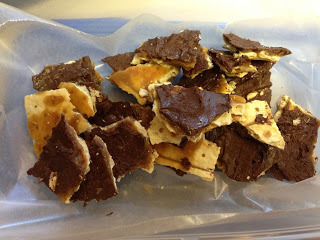
Sweet and Saltines
- 35-45 saltine crackers (enough to cover a standard cookie sheet)
- 1 c. (2 sticks) butter
- 1 c. light brown sugar
- 8 oz. semisweet chocolate chips (about 1 1/3 c.)
Preheat the oven to 425 F. Line cookie sheet with aluminum foil and the saltines.
In a medium saucepan, melt the butter and brown sugar together and bring to a boil. Boil for 5 minutes. Remove from the heat and pour over the crackers, covering them evenly. Put in the oven and bake for 4-5 minutes or until just bubbly, watching carefully.
Remove from the oven and pour the chocolate chips over the crackers. When the chips melt a bit, spread them over the crackers with a knife. Let cool until cookie sheet is cool enough to touch and transfer the pan to the freezer for 15-20 minutes or until completely cold.
Break solidified candy into pieces and store in an airtight container.
This particular quirky ingredient combination? It works. It has crunch, salt, and chocolate, and it's sweet without being too sweet. It's far too large a batch for my little family of three to eat before the crackers go stale (especially since Miss Fraser thought it too salty and Mr. Fraser and I are both on Weight Watchers--he's lost 73 lbs. since December 1 and I've lost 42). I took it in to work the next day and my coworkers made quick work of it, so I'm making up another batch next week for the annual department picnic.
Next up is Ad Hoc at Home.
When I drew this cookbook I gravitated to the dessert section, as is my habit with the Southern cookbooks in my collection. In my experience, aside from fried chicken, buttermilk biscuits, and barbecue, the sweet stuff is what my people do best. And since I'm always curious about quirky ingredient combinations, I decided to try...
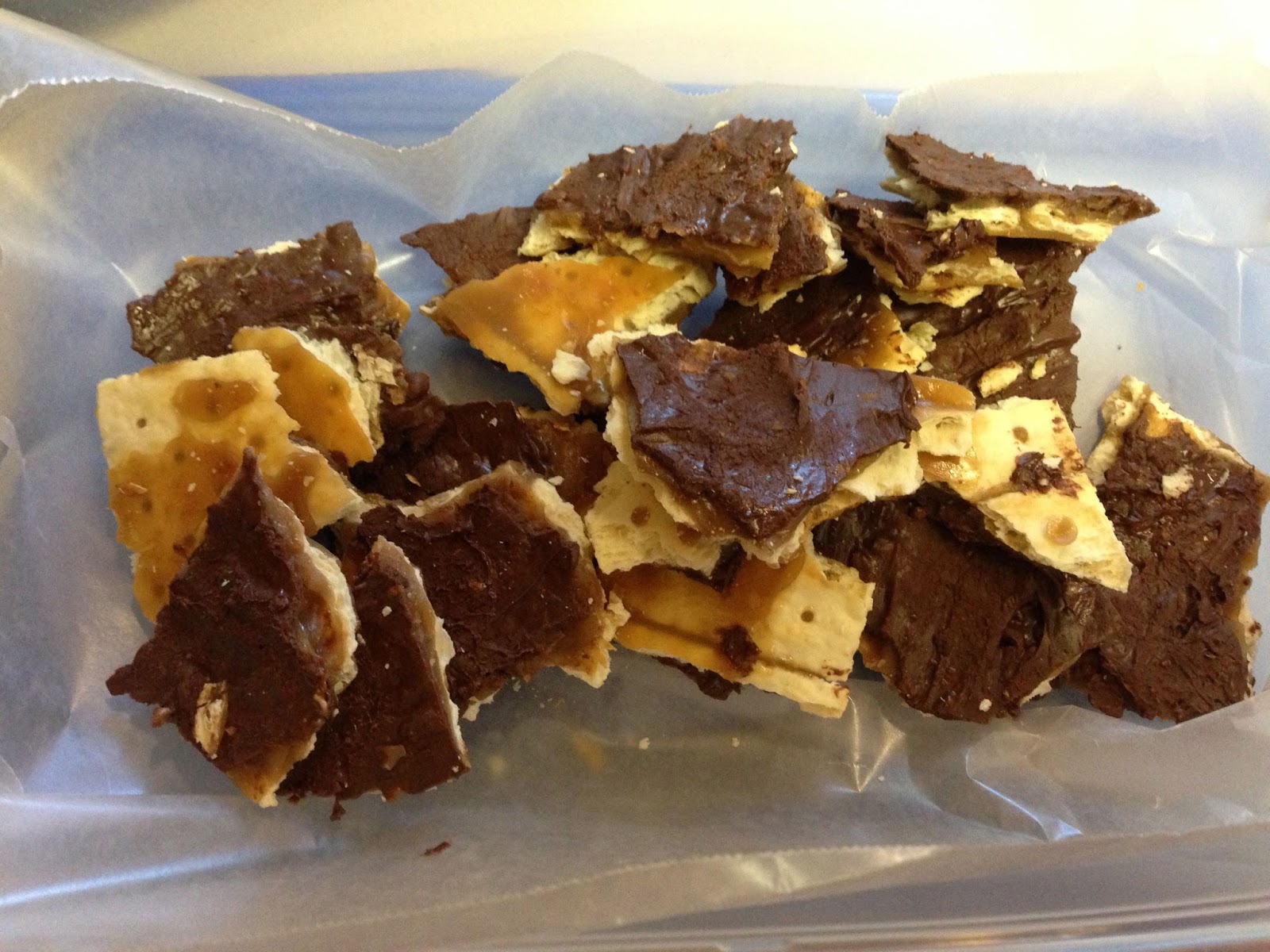
Sweet and Saltines
- 35-45 saltine crackers (enough to cover a standard cookie sheet)
- 1 c. (2 sticks) butter
- 1 c. light brown sugar
- 8 oz. semisweet chocolate chips (about 1 1/3 c.)
Preheat the oven to 425 F. Line cookie sheet with aluminum foil and the saltines.
In a medium saucepan, melt the butter and brown sugar together and bring to a boil. Boil for 5 minutes. Remove from the heat and pour over the crackers, covering them evenly. Put in the oven and bake for 4-5 minutes or until just bubbly, watching carefully.
Remove from the oven and pour the chocolate chips over the crackers. When the chips melt a bit, spread them over the crackers with a knife. Let cool until cookie sheet is cool enough to touch and transfer the pan to the freezer for 15-20 minutes or until completely cold.
Break solidified candy into pieces and store in an airtight container.
This particular quirky ingredient combination? It works. It has crunch, salt, and chocolate, and it's sweet without being too sweet. It's far too large a batch for my little family of three to eat before the crackers go stale (especially since Miss Fraser thought it too salty and Mr. Fraser and I are both on Weight Watchers--he's lost 73 lbs. since December 1 and I've lost 42). I took it in to work the next day and my coworkers made quick work of it, so I'm making up another batch next week for the annual department picnic.
Next up is Ad Hoc at Home.
August 21, 2013
2013 TBR Challenge - The Bookseller's Daughter
The Bookseller's Daughter, by Pam Rosenthal.
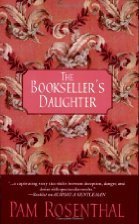
This month's theme for my romance TBR challenge is Steamy Reads, so I chose this erotic historical romance. It's an unusual romance on many levels, starting with its setting--France in 1783-84. The hero is an aristocrat, the heroine a bookseller's daughter (of course) turned servant in the hero's family home after her father's death left her penniless. The writing is lush and dreamy, with a tangible fairytale mood of "once upon a time"...and yet you're never allowed to forget the gathering storm of the Revolution just over the horizon. I'm very glad I read this book for its sheer uniqueness even though I'm normally a fan of a sparer writing style.
I feel like I should be saying more, but the above is what it came down to for me. It's lush. Evocative. The setting is off the historical romance beaten path, which is always a plus for me. And it's available now as a reasonably priced ebook.
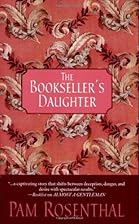
This month's theme for my romance TBR challenge is Steamy Reads, so I chose this erotic historical romance. It's an unusual romance on many levels, starting with its setting--France in 1783-84. The hero is an aristocrat, the heroine a bookseller's daughter (of course) turned servant in the hero's family home after her father's death left her penniless. The writing is lush and dreamy, with a tangible fairytale mood of "once upon a time"...and yet you're never allowed to forget the gathering storm of the Revolution just over the horizon. I'm very glad I read this book for its sheer uniqueness even though I'm normally a fan of a sparer writing style.
I feel like I should be saying more, but the above is what it came down to for me. It's lush. Evocative. The setting is off the historical romance beaten path, which is always a plus for me. And it's available now as a reasonably priced ebook.
August 19, 2013
2013 reading, books 79-81
79) Donner Dinner Party, by Nathan Hale.
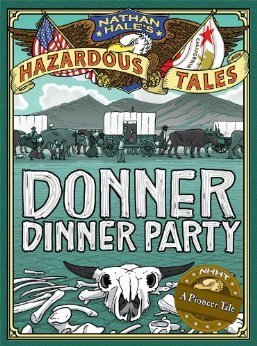
Miss Fraser and I are having a contest this summer to see who can read the most books from June 1 - Labor Day weekend. The winner gets an Amazon gift card. (Of course I'm not actually trying to beat my 9-year-old. I am trying to make sure she reads instead of spending the entire summer watching TV and playing video games by making the contest as close as possible.) Anyway, my husband, in his role as arbiter of the contest, has decreed that she gets to count this book toward her summer reading tally, but I don't, since it's a middle grade graphic novel. I read it as soon as Miss Fraser finished it anyway because these irreverent takes on famous incidents in American history are just so fun. Of course, any book about the Donner Party is going to be awfully grim in spots. Hale's snarky take actually pulled far fewer punches than the earnest novelization of the same events I read back when I was 9 or 10.
If you've got a middle grade child, I can't recommend the Hazardous Tales series highly enough. My daughter, though smart and geeky, isn't particularly interested in history, but she eats them up. I just wish there was a similar series on European history so I could get her interested in the stuff I write!
(The author really is named Nathan Hale, and the historical Nathan Hale narrates the series--he sees into his future through a Scheherezade plot device wherein as he's about to be hanged he's "taken up into history" and is therefore able to tell stories from America's future to delay his execution. You can read all about it at the series blog, and have I mentioned how awesome these are? Don't have your own middle-grade child? Get the series for your friends' kids, for your nieces and nephews, or to donate to your local library. Or just read them yourself.)
80) Borodino 1812, by Philip Haythornthwaite.
A detailed account of the Battle of Borodino framed by a brief summary of Napoleon's Russian campaign as a whole. I learned little I didn't already know, since I've been reading detailed accounts of the campaign, but I expect I'll refer to this book a lot once I settle into writing my manuscript that's set in Moscow and on the retreat for the sake of the maps, timelines, illustrations, and summary bios of important people on both sides.
81) From Father to Son, by Janice Kay Johnson.
A 2013 Rita finalist in Long Contemporary Series. See more detailed comments in yesterday's post.
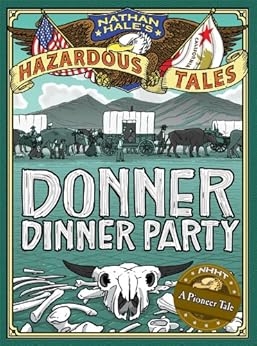
Miss Fraser and I are having a contest this summer to see who can read the most books from June 1 - Labor Day weekend. The winner gets an Amazon gift card. (Of course I'm not actually trying to beat my 9-year-old. I am trying to make sure she reads instead of spending the entire summer watching TV and playing video games by making the contest as close as possible.) Anyway, my husband, in his role as arbiter of the contest, has decreed that she gets to count this book toward her summer reading tally, but I don't, since it's a middle grade graphic novel. I read it as soon as Miss Fraser finished it anyway because these irreverent takes on famous incidents in American history are just so fun. Of course, any book about the Donner Party is going to be awfully grim in spots. Hale's snarky take actually pulled far fewer punches than the earnest novelization of the same events I read back when I was 9 or 10.
If you've got a middle grade child, I can't recommend the Hazardous Tales series highly enough. My daughter, though smart and geeky, isn't particularly interested in history, but she eats them up. I just wish there was a similar series on European history so I could get her interested in the stuff I write!
(The author really is named Nathan Hale, and the historical Nathan Hale narrates the series--he sees into his future through a Scheherezade plot device wherein as he's about to be hanged he's "taken up into history" and is therefore able to tell stories from America's future to delay his execution. You can read all about it at the series blog, and have I mentioned how awesome these are? Don't have your own middle-grade child? Get the series for your friends' kids, for your nieces and nephews, or to donate to your local library. Or just read them yourself.)
80) Borodino 1812, by Philip Haythornthwaite.
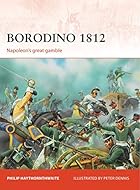
A detailed account of the Battle of Borodino framed by a brief summary of Napoleon's Russian campaign as a whole. I learned little I didn't already know, since I've been reading detailed accounts of the campaign, but I expect I'll refer to this book a lot once I settle into writing my manuscript that's set in Moscow and on the retreat for the sake of the maps, timelines, illustrations, and summary bios of important people on both sides.
81) From Father to Son, by Janice Kay Johnson.
A 2013 Rita finalist in Long Contemporary Series. See more detailed comments in yesterday's post.
August 18, 2013
Susanna Reads the Ritas - Long Contemporary Series
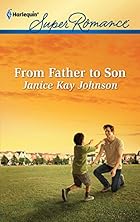
From Father to Son, by Janice Kay Johnson.

I'm up to Long Contemporary Series this month in my effort to read one finalist from each category of the 2013 Rita awards. These books run heavily to small town Americana, taking me out of my readerly comfort zone, and this book was no exception. However, the small town in question was in Western Washington, not too far from Seattle. If I ever moved to a small town, it would probably be out here, maybe someplace like Sequim because it's far sunnier than Seattle without being hotter in the summer. So I felt a bit more at home in this book's small town than I usually am, and thankfully no one in the book went off on how dangerous the big city is or how terrible our schools are or how much better it is to live in a small town or anything like that. Trash MY city and that book is meeting the wall.
Anyway, my small town issues aside, I enjoyed this book. The hero and heroine both seemed like real, relatable people, and the widowed heroine's two young children were charming without being implausibly cute and precocious. Some of the tropes used weren't my favorites, like a sexually unawakened widow (the most I can say without giving spoilers is that she and her husband were sexually incompatible and poor at communicating their needs and issues), along with children-in-peril, but I figure any book with a cop hero is going to have some sort of crime subplot. But in general, while I'm not the target market for this story, I can tell it'd make an excellent read for someone who does enjoy contemporary small towns, the tropes I mentioned, and so on.
I'm up to Long Contemporary Series this month in my effort to read one finalist from each category of the 2013 Rita awards. These books run heavily to small town Americana, taking me out of my readerly comfort zone, and this book was no exception. However, the small town in question was in Western Washington, not too far from Seattle. If I ever moved to a small town, it would probably be out here, maybe someplace like Sequim because it's far sunnier than Seattle without being hotter in the summer. So I felt a bit more at home in this book's small town than I usually am, and thankfully no one in the book went off on how dangerous the big city is or how terrible our schools are or how much better it is to live in a small town or anything like that. Trash MY city and that book is meeting the wall.
Anyway, my small town issues aside, I enjoyed this book. The hero and heroine both seemed like real, relatable people, and the widowed heroine's two young children were charming without being implausibly cute and precocious. Some of the tropes used weren't my favorites, like a sexually unawakened widow (the most I can say without giving spoilers is that she and her husband were sexually incompatible and poor at communicating their needs and issues), along with children-in-peril, but I figure any book with a cop hero is going to have some sort of crime subplot. But in general, while I'm not the target market for this story, I can tell it'd make an excellent read for someone who does enjoy contemporary small towns, the tropes I mentioned, and so on.
August 17, 2013
Random Cookbook of the Week - The Gourmet Cookbook
Last week my random cooking journey took me to The Gourmet Cookbook, one of the more encyclopedic of the works we own. It was a busy week, so I chose a simple recipe, but an unusual, old-fashioned one. Apparently dressing room-temperature lettuce in a warm butter sauce used to be a Thing (though the cookbook doesn't specify how long ago), which was enough to make my inner historical re-enactor want to come out to play.
Bibb Lettuce with Butter Dressing
- 4 heads Bibb lettuce or 1 head boston lettuce, at room temperature, leaves separated and torn into bite-sized pieces
- 1/2 stick (4 T) unsalted butter
- 1 garlic clove, halved lengthwise
- 4 tsp fresh lemon juice
- Scant 1/2 tsp salt
- Freshly ground black pepper
(Note that having the lettuce at room temperature is key--if it's refrigerator-cold, the butter will solidify once you pour it over the lettuce, which wouldn't be very appetizing.)
Put lettuce in a large bowl. Melt butter in a small heavy skillet over moderate heat. Add garlic and cook, stirring occasionally, until garlic is golden and butter has a slight nutty aroma, about 3 minutes. Remove skillet from heat, discard garlic, and add lemon juice, salt, and pepper to taste, swirling skillet to incorporate; butter will foam.
Pour warm dressing over lettuce and toss to coat. Serve immediately.
This dish was...interesting. It didn't taste bad by any means, and I can imagine in the hands of master chef with a subtle hand for flavoring that it might be made into something special with an addition of just one or two more flavors. That said, I doubt I'll make it again. I do love to experiment, but I'm sufficiently of my own place and time that I like my salads cold.
Bibb Lettuce with Butter Dressing
- 4 heads Bibb lettuce or 1 head boston lettuce, at room temperature, leaves separated and torn into bite-sized pieces
- 1/2 stick (4 T) unsalted butter
- 1 garlic clove, halved lengthwise
- 4 tsp fresh lemon juice
- Scant 1/2 tsp salt
- Freshly ground black pepper
(Note that having the lettuce at room temperature is key--if it's refrigerator-cold, the butter will solidify once you pour it over the lettuce, which wouldn't be very appetizing.)
Put lettuce in a large bowl. Melt butter in a small heavy skillet over moderate heat. Add garlic and cook, stirring occasionally, until garlic is golden and butter has a slight nutty aroma, about 3 minutes. Remove skillet from heat, discard garlic, and add lemon juice, salt, and pepper to taste, swirling skillet to incorporate; butter will foam.
Pour warm dressing over lettuce and toss to coat. Serve immediately.
This dish was...interesting. It didn't taste bad by any means, and I can imagine in the hands of master chef with a subtle hand for flavoring that it might be made into something special with an addition of just one or two more flavors. That said, I doubt I'll make it again. I do love to experiment, but I'm sufficiently of my own place and time that I like my salads cold.
August 8, 2013
Random Cookbook of the Week: I'm Just Here for More Food
This week I drew Alton Brown's main baking cookbook, I'm Just Here for More Food. He divides all baked good by their mixing methods--the Muffin Method, the Creaming Method, the Custards, etc.--and I decided it was high time I got in some more practice at the Biscuit Method
Blackberry Grunt
For the blackberry filling:
- 1 c. water (8 oz)
- 1 c. sugar (7.5 oz)
- 4 c. fresh or frozen blackberries (1 lb 3 oz)
- 1/2 tsp ground ginger (1/8 oz)
The dry goods:
- 2 c. all-purpose flour (9.5 oz)
- 2 tsp baking powder (1/4 oz)
- 1/4 tsp baking soda (1/8 oz)
- 1 tsp kosher salt (1/4 oz)
The fat:
- 4 T unsalted butter (2 oz/ 1/2 stick), frozen
The liquid:
- 1 c. buttermilk (8 oz)
Make the blackberry filling: Place the water, sugar, blackberries, and ginger in a Dutch oven and place over medium heat. Bring to a simmer and cook, stirring occasionally, for 15-20 minutes, until the liquid is thick enough to coat the back of a spoon. Allow 5-10 minutes longer if using frozen berries.
Preheat oven to 400F.
While cooking the filling, assemble the dough via the BISCUIT METHOD, as follows:
- Scale or measure all ingredients.
- Pulse dry goods in food processor for 3-4 pulses, then move to a large bowl.
- Rub fat into the dry goods until about half the fat disappears and the rest is left in pea-sized pieces. Place in the freezer to keep the fat solid.
- Make a well in the center of the dry goods/fat mixture. Pour the liquid into the well and quickly mix using a rubber spatula or wooden spoon.
Drop the dough over the fruit mixture by the tablespoonful, evenly distributing it over the top. Bake for 15-20 minutes, just to brown the top of the dough. For a browner crust, brush with butter and broil until golden.
Remove the pot from the oven and allow the grunt to rest 10 minutes before serving.
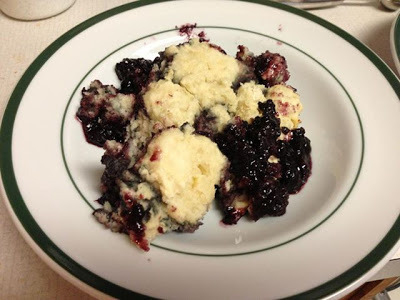
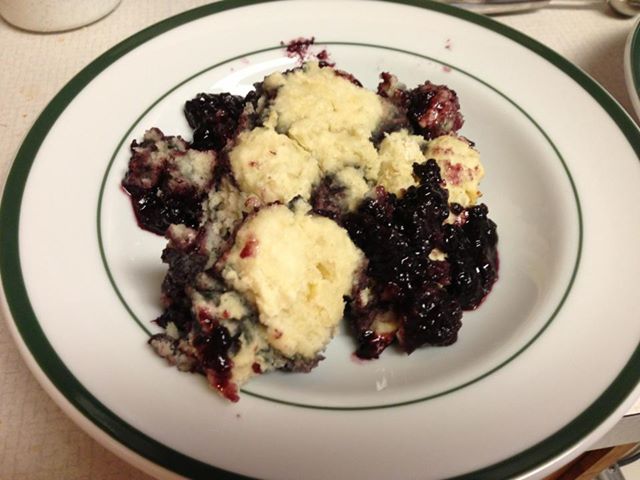
This turned out DELICIOUS. However, the biscuit topping baked up just a little bit too heavy. I think I'm still overmixing the fats. Next time I make a biscuit dough, I'ma stop when I think it can't POSSIBLY be blended enough and see how it turns out.
Next up: The Gourmet Cookbook
Blackberry Grunt
For the blackberry filling:
- 1 c. water (8 oz)
- 1 c. sugar (7.5 oz)
- 4 c. fresh or frozen blackberries (1 lb 3 oz)
- 1/2 tsp ground ginger (1/8 oz)
The dry goods:
- 2 c. all-purpose flour (9.5 oz)
- 2 tsp baking powder (1/4 oz)
- 1/4 tsp baking soda (1/8 oz)
- 1 tsp kosher salt (1/4 oz)
The fat:
- 4 T unsalted butter (2 oz/ 1/2 stick), frozen
The liquid:
- 1 c. buttermilk (8 oz)
Make the blackberry filling: Place the water, sugar, blackberries, and ginger in a Dutch oven and place over medium heat. Bring to a simmer and cook, stirring occasionally, for 15-20 minutes, until the liquid is thick enough to coat the back of a spoon. Allow 5-10 minutes longer if using frozen berries.
Preheat oven to 400F.
While cooking the filling, assemble the dough via the BISCUIT METHOD, as follows:
- Scale or measure all ingredients.
- Pulse dry goods in food processor for 3-4 pulses, then move to a large bowl.
- Rub fat into the dry goods until about half the fat disappears and the rest is left in pea-sized pieces. Place in the freezer to keep the fat solid.
- Make a well in the center of the dry goods/fat mixture. Pour the liquid into the well and quickly mix using a rubber spatula or wooden spoon.
Drop the dough over the fruit mixture by the tablespoonful, evenly distributing it over the top. Bake for 15-20 minutes, just to brown the top of the dough. For a browner crust, brush with butter and broil until golden.
Remove the pot from the oven and allow the grunt to rest 10 minutes before serving.
This turned out DELICIOUS. However, the biscuit topping baked up just a little bit too heavy. I think I'm still overmixing the fats. Next time I make a biscuit dough, I'ma stop when I think it can't POSSIBLY be blended enough and see how it turns out.
Next up: The Gourmet Cookbook
August 6, 2013
2013 Reading, Books 76-78
76) A More Unbending Battle, by Peter N. Nelson.
An account of the Harlem Hellfighters (i.e. the 369th Infantry Regiment), an African American regiment who fought as part of a French division in 1917-18. They quickly gained a reputation for valor and were treated well by both their French brothers-in-arms and the civilian population--but weren't as welcome at home afterward.
77) Assassin's Gambit, by Amy Raby.
This is a fantasy romance, wherein a young woman from a conquered land has trained from childhood to assassinate an emperor, only to discover upon getting close to her target that both he and his nation's political situation are more complex than she realized. I liked it a whole lot and was intrigued by the setting--reminiscent of imperial Rome, but with magic and roughly 18th-century military technology. My only issue--and I feel guilty for saying this because I write romance novels myself and love the genre--is that I think I would've enjoyed it more if it had been a romantic fantasy instead of a fantasy romance. (By romantic fantasy I mean something like Jacqueline Carey's Kushiel series, which are both sexy and romantic, but where the romance plot comes second to the political intrigue and war.) Because there are few things I love more than a well-constructed fantasy world, and Raby hinted at so much interesting history and magic and intrigue and war that I wished she had more room for that side of the story.
(Incidentally, this book warrants a bit of a content warning. To go into detail would be to spoil a major plot point, but suffice it to say the heroine's past has some sexual trauma we eventually revisit on the page.)
78) The Bookseller's Daughter, by Pam Rosenthal.
For the 2013 TBR Challenge. Detailed post to come.
An account of the Harlem Hellfighters (i.e. the 369th Infantry Regiment), an African American regiment who fought as part of a French division in 1917-18. They quickly gained a reputation for valor and were treated well by both their French brothers-in-arms and the civilian population--but weren't as welcome at home afterward.
77) Assassin's Gambit, by Amy Raby.
This is a fantasy romance, wherein a young woman from a conquered land has trained from childhood to assassinate an emperor, only to discover upon getting close to her target that both he and his nation's political situation are more complex than she realized. I liked it a whole lot and was intrigued by the setting--reminiscent of imperial Rome, but with magic and roughly 18th-century military technology. My only issue--and I feel guilty for saying this because I write romance novels myself and love the genre--is that I think I would've enjoyed it more if it had been a romantic fantasy instead of a fantasy romance. (By romantic fantasy I mean something like Jacqueline Carey's Kushiel series, which are both sexy and romantic, but where the romance plot comes second to the political intrigue and war.) Because there are few things I love more than a well-constructed fantasy world, and Raby hinted at so much interesting history and magic and intrigue and war that I wished she had more room for that side of the story.
(Incidentally, this book warrants a bit of a content warning. To go into detail would be to spoil a major plot point, but suffice it to say the heroine's past has some sexual trauma we eventually revisit on the page.)
78) The Bookseller's Daughter, by Pam Rosenthal.
For the 2013 TBR Challenge. Detailed post to come.
July 31, 2013
Random Cookbook of the Week - Pasta en Brodo from The Food You Want to Eat
The first cookbook drawn for my rebooted Random Cookbook Challenge was Ted Allen's The Food You Want to Eat: 100 Smart, Simple Recipes. And since Mr. Fraser and I have both been battling a particularly vicious summer cold, I chose to make what amounts to chicken soup:
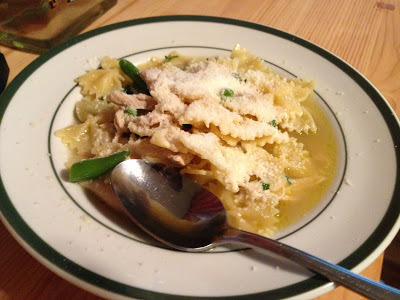
Pasta en Brodo
Kosher salt for boiling pasta
6 c. canned low-sodium chicken stock
6 skinless chicken thighs, about 2 pounds
2 garlic cloves, halved
10 black peppercorns
1 bay leaf
1 large sprig of fresh thyme (optional--I meant to use it but forgot)
1 clove (optional--this I remembered)
1/2 lb. green beans, ends trimmed
1 lb. farfalle (bow-tie pasta)
1/4 c. extra virgin olive oil
1/4 tsp freshly ground black pepper
2 T chopped flat-leaf parsley
1 c. freshly grated Parmigiano-Reggiano, plus extra for serving
1. Bring a large pot of salted water to a boil.
2. Meanwhile, in a large saucepan, combine the chicken stock, chicken thighs, garlic cloves, peppercorns, bay leaf, and thyme and clove if using. Bring to a boil, reduce the heat to low, and simmer, partly covered, for 30 minutes to cook the chicken. Skim and discard any gray foam that rises to the top.
3. Remove the chicken with a slotted spoon. Strain the sock through a fine strainer into a clean saucepan and boil to reduce to 4 cups, about 10 minutes. Bone two of the chicken thighs and shred the meat; set the meat aside. Wrap and refrigerate the remaining chicken for another use.
4. When the pasta water comes to a boil, add the beans and cook for 5 minutes or until tender. Remove with a slotted spoon to a colander and refresh them with cold water to keep the bright green color. Then pat dry, cut into 1-inch pieces, and set aside.
5. Add the farfalle to the boiling water and cook until not quite tender, about 8 minutes. (You want to undercook the pasta slightly because it will cook further in the stock.) Drain and discard the pasta water.
6. Pour the reduced stock into the pasta pot. Add the green beans, shredded chicken, and olive oil, and bring to a simmer. Add the farfalle, ground pepper, and the parsley, and toss over medium heat for 30 seconds to warm the pasta and cook it completely. Remove from the heat. Use a slotted spoon to divide the pasta, chicken, and beans among 4 large, deep pasta plates. Ladle about 1/4 of the stock into each bowl and sprinkle each with 1/4 c. of the cheese.
Mr. Fraser liked this one better than I did and thinks I should make it again, possibly tweaking the ingredients a bit to lighten it up. (We're both on Weight Watchers, and this thing was a major hit to our points budget.) As for my opinion, well, while it's not a hard recipe, it did take me a little over an hour and cluttered the kitchen with dirty dishes. Given how busy my life is, if it takes more than 45 minutes and gives me more than one dishwasher load of dirty dishes, it better be something I'd proudly serve to company--like the rib recipe in this same cookbook. This was nice, but it was chicken soup.
Next week I'll be staying in the "cookbooks by Food Network hosts" section of my bookshelf and making something from Alton Brown's I'm Just Here for More Food. I may change my mind between now and this weekend's grocery run, but for now I'm torn between pineapple upside-down cake and blackberry grunt.
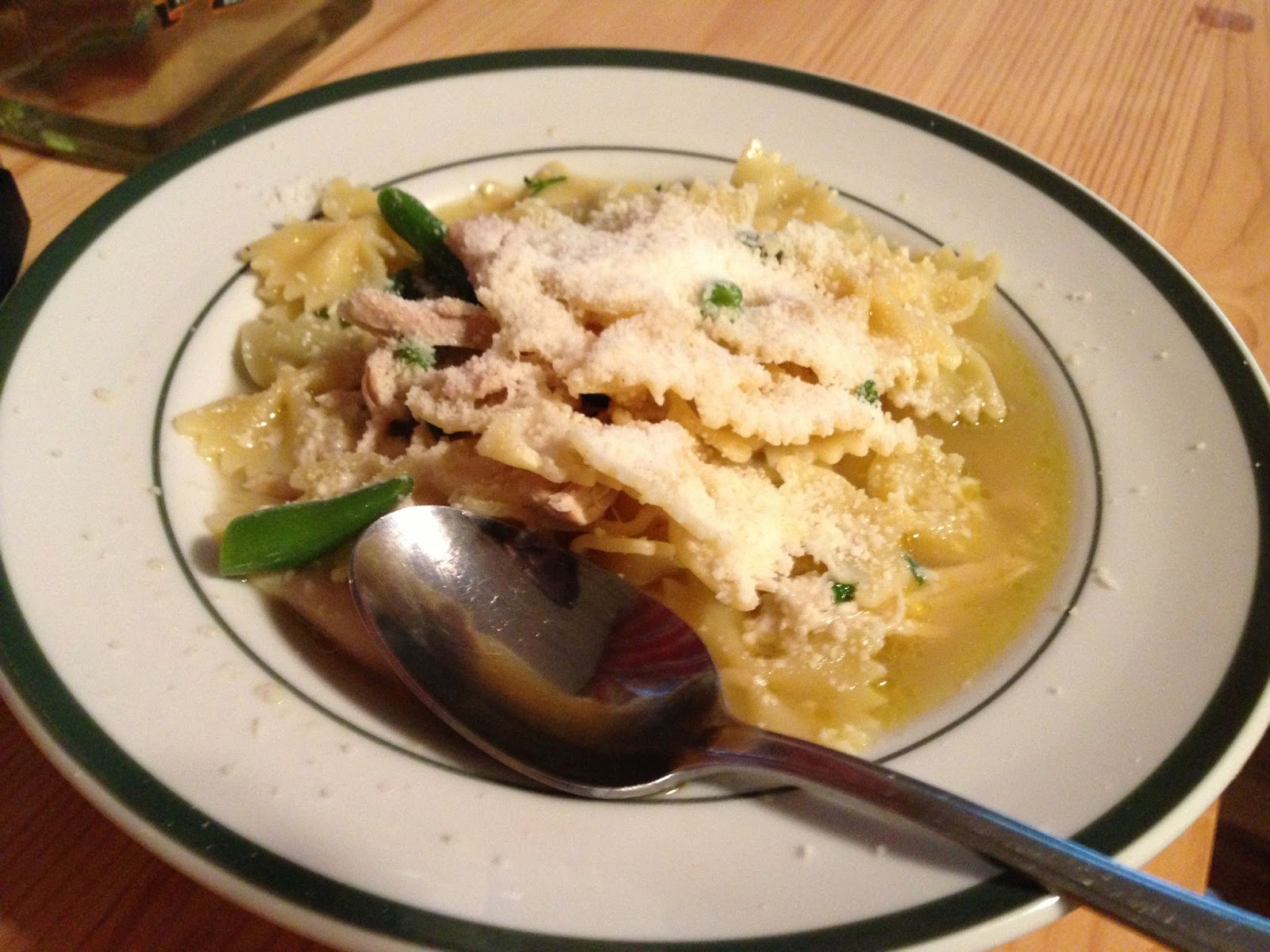
Pasta en Brodo
Kosher salt for boiling pasta
6 c. canned low-sodium chicken stock
6 skinless chicken thighs, about 2 pounds
2 garlic cloves, halved
10 black peppercorns
1 bay leaf
1 large sprig of fresh thyme (optional--I meant to use it but forgot)
1 clove (optional--this I remembered)
1/2 lb. green beans, ends trimmed
1 lb. farfalle (bow-tie pasta)
1/4 c. extra virgin olive oil
1/4 tsp freshly ground black pepper
2 T chopped flat-leaf parsley
1 c. freshly grated Parmigiano-Reggiano, plus extra for serving
1. Bring a large pot of salted water to a boil.
2. Meanwhile, in a large saucepan, combine the chicken stock, chicken thighs, garlic cloves, peppercorns, bay leaf, and thyme and clove if using. Bring to a boil, reduce the heat to low, and simmer, partly covered, for 30 minutes to cook the chicken. Skim and discard any gray foam that rises to the top.
3. Remove the chicken with a slotted spoon. Strain the sock through a fine strainer into a clean saucepan and boil to reduce to 4 cups, about 10 minutes. Bone two of the chicken thighs and shred the meat; set the meat aside. Wrap and refrigerate the remaining chicken for another use.
4. When the pasta water comes to a boil, add the beans and cook for 5 minutes or until tender. Remove with a slotted spoon to a colander and refresh them with cold water to keep the bright green color. Then pat dry, cut into 1-inch pieces, and set aside.
5. Add the farfalle to the boiling water and cook until not quite tender, about 8 minutes. (You want to undercook the pasta slightly because it will cook further in the stock.) Drain and discard the pasta water.
6. Pour the reduced stock into the pasta pot. Add the green beans, shredded chicken, and olive oil, and bring to a simmer. Add the farfalle, ground pepper, and the parsley, and toss over medium heat for 30 seconds to warm the pasta and cook it completely. Remove from the heat. Use a slotted spoon to divide the pasta, chicken, and beans among 4 large, deep pasta plates. Ladle about 1/4 of the stock into each bowl and sprinkle each with 1/4 c. of the cheese.
Mr. Fraser liked this one better than I did and thinks I should make it again, possibly tweaking the ingredients a bit to lighten it up. (We're both on Weight Watchers, and this thing was a major hit to our points budget.) As for my opinion, well, while it's not a hard recipe, it did take me a little over an hour and cluttered the kitchen with dirty dishes. Given how busy my life is, if it takes more than 45 minutes and gives me more than one dishwasher load of dirty dishes, it better be something I'd proudly serve to company--like the rib recipe in this same cookbook. This was nice, but it was chicken soup.
Next week I'll be staying in the "cookbooks by Food Network hosts" section of my bookshelf and making something from Alton Brown's I'm Just Here for More Food. I may change my mind between now and this weekend's grocery run, but for now I'm torn between pineapple upside-down cake and blackberry grunt.
July 30, 2013
2013 Reading, Books 73-75
73) Mothers of Invention: Women of the Slaveholding South in the American Civil War, by Drew Gilpin Faust.
Drew Faust is currently the president of Harvard, but she was an AmCiv professor at Penn back when I was an undergraduate there. Her two classes on the American South, one covering 1607-1861, the other 1861-present, were among the most popular and highly rated in the entire university. I took the first and found it an eye-opening look at my own roots.
This book in its own way was the same kind of experience. Faust looks at the diaries and letters of elite white Southern women (who AREN'T part of my roots--my Civil-War-era antecedents fell into the "poor white" category and were probably marginally literate at best) and how the four years of the Civil War impacted their views on everything from gender roles to religion to race relations, leading, among other things, to a feminism that was both more pessimistic and conservative than that of the rest of the country during the fight for women's suffrage.
74) Blindspot: Hidden Biases of Good People, by Mahzarin R. Banaji and Anthony G. Greenwald.
This quick but thought-provoking read is all about the measure the authors, a Harvard and a UW* professor, developed to measure unconscious biases of various kinds. It's a deceptively simple measure of whether you associate a particular group with positive or negative qualities. For a sample test, the book had you go through lists of insect and flower nouns (e.g. wasp, roach, rose, lily) and negative and positive traits/things (e.g. vomit, fear, peace, heaven). On one round you sort flowers and pleasant things into Column A, insects and negative ones into Column B, while on the next you have to put flowers and negative things in Column A, insects and positive ones in Column B. Since almost everyone prefers flowers to insects, they're able to perform the first round much more quickly. (Though I noticed the insect list didn't include "honeybee" or "butterfly." I caught myself hesitating on "moth" compared to the other insects, because it's not like they're ugly or gross or fill me with a desire to either run away or squash them. I have a feeling I would've wanted to class bees and butterflies with flowers, since I expect to see them AROUND flowers and have wholly positive associations with them. Butterflies are pretty! Bees make honey and pollinate our crops, and colony collapse disorder is so scary I'm downright thrilled whenever I see honeybees at work.)
Anyway, the test takes on more serious implications as soon as you turn it to sorting human categories. It turns out that even people who wouldn't be considered racist or bigoted by any conscious measure tend to associate whites with more positive qualities than blacks or with more American traits than Hispanics or Asians. Even committed feminists associate women more with home and men more with work, and so forth. I'm appalled but not exactly surprised to say that despite trying my best to perform on the tests as the unbiased, egalitarian person I aspire to be, I showed my share of unconscious bias--though at least my anti-bug bias is stronger than any of my human ones. :-/
The book raises more questions than it answers, but the author's main points are that A) these biases matter, because even though most of us want to be unbiased and therefore wouldn't consciously discriminate, our unconscious biases show up in small ways that over time add up to real harm in peoples lives, and B) if we know our biases exist, we can take conscious steps to counteract them.
*Since I live in Seattle and actually work at the U-Dub in question for my day job, this means University of Washington, not Wisconsin or Wyoming. When I was at the RWA conference, a couple of lunch tablemates, strangers to me, were talking about UW and its hospital system, and I was all ready to jump in with my insider opinion until I took a closer look at their name tags and saw they were from Wisconsin.
75) The Turncoat, by Donna Thorland.
A fast-paced, sexy spy novel set mostly in British-occupied Philadelphia in 1777-78. Recommended for fans of Lauren Willig's Pink Carnation books, with the caveat that it's darker and grittier--if you like Willig but also like, say, Diana Gabaldon or Bernard Cornwell, you should definitely pick this book up. (Though it comes with a trigger warning for depictions of rape, mostly off-page but in one case fairly graphic.)
Drew Faust is currently the president of Harvard, but she was an AmCiv professor at Penn back when I was an undergraduate there. Her two classes on the American South, one covering 1607-1861, the other 1861-present, were among the most popular and highly rated in the entire university. I took the first and found it an eye-opening look at my own roots.
This book in its own way was the same kind of experience. Faust looks at the diaries and letters of elite white Southern women (who AREN'T part of my roots--my Civil-War-era antecedents fell into the "poor white" category and were probably marginally literate at best) and how the four years of the Civil War impacted their views on everything from gender roles to religion to race relations, leading, among other things, to a feminism that was both more pessimistic and conservative than that of the rest of the country during the fight for women's suffrage.
74) Blindspot: Hidden Biases of Good People, by Mahzarin R. Banaji and Anthony G. Greenwald.
This quick but thought-provoking read is all about the measure the authors, a Harvard and a UW* professor, developed to measure unconscious biases of various kinds. It's a deceptively simple measure of whether you associate a particular group with positive or negative qualities. For a sample test, the book had you go through lists of insect and flower nouns (e.g. wasp, roach, rose, lily) and negative and positive traits/things (e.g. vomit, fear, peace, heaven). On one round you sort flowers and pleasant things into Column A, insects and negative ones into Column B, while on the next you have to put flowers and negative things in Column A, insects and positive ones in Column B. Since almost everyone prefers flowers to insects, they're able to perform the first round much more quickly. (Though I noticed the insect list didn't include "honeybee" or "butterfly." I caught myself hesitating on "moth" compared to the other insects, because it's not like they're ugly or gross or fill me with a desire to either run away or squash them. I have a feeling I would've wanted to class bees and butterflies with flowers, since I expect to see them AROUND flowers and have wholly positive associations with them. Butterflies are pretty! Bees make honey and pollinate our crops, and colony collapse disorder is so scary I'm downright thrilled whenever I see honeybees at work.)
Anyway, the test takes on more serious implications as soon as you turn it to sorting human categories. It turns out that even people who wouldn't be considered racist or bigoted by any conscious measure tend to associate whites with more positive qualities than blacks or with more American traits than Hispanics or Asians. Even committed feminists associate women more with home and men more with work, and so forth. I'm appalled but not exactly surprised to say that despite trying my best to perform on the tests as the unbiased, egalitarian person I aspire to be, I showed my share of unconscious bias--though at least my anti-bug bias is stronger than any of my human ones. :-/
The book raises more questions than it answers, but the author's main points are that A) these biases matter, because even though most of us want to be unbiased and therefore wouldn't consciously discriminate, our unconscious biases show up in small ways that over time add up to real harm in peoples lives, and B) if we know our biases exist, we can take conscious steps to counteract them.
*Since I live in Seattle and actually work at the U-Dub in question for my day job, this means University of Washington, not Wisconsin or Wyoming. When I was at the RWA conference, a couple of lunch tablemates, strangers to me, were talking about UW and its hospital system, and I was all ready to jump in with my insider opinion until I took a closer look at their name tags and saw they were from Wisconsin.
75) The Turncoat, by Donna Thorland.
A fast-paced, sexy spy novel set mostly in British-occupied Philadelphia in 1777-78. Recommended for fans of Lauren Willig's Pink Carnation books, with the caveat that it's darker and grittier--if you like Willig but also like, say, Diana Gabaldon or Bernard Cornwell, you should definitely pick this book up. (Though it comes with a trigger warning for depictions of rape, mostly off-page but in one case fairly graphic.)