Rachel Maddow's Blog, page 3408
May 23, 2013
Thursday's campaign round-up
Today's installment of campaign-related news items that won't necessarily generate a post of their own, but may be of interest to political observers:
* Pennsylvania Gov. Tom Corbett (R), already struggling in advance of his re-election campaign, was asked at an event last week whether he has any Latino staffers. "No, we do not have any staff members in there," the governor responded. "If you can find us one, please let me know."
Watch on YouTube* In Massachusetts' U.S. Senate special election, billionaire Tom Steyer is gearing up to boost Rep. Ed Markey's (D) prospects. "NextGen, working with our local partners, will be seeking to be a politically disruptive force between now and Election Day," reads the memo sent by Chris Lehane, a spokesman for Steyer's NextGen super-PAC, to the PAC's campaign team, and obtained by The Hill.
* Remember former Rep. Tom Tancredo (R), the failed former presidential and gubernatorial candidate? The anti-immigrant conservative announced this morning that he'll be running for governor in Colorado once again in 2014.
* In Iowa, a new Quinnipiac poll shows Gov. Terry Branstad (R), now in his fifth term, with a fairly strong 49% approval rating. The same poll, however, found a 43% plurality does not believe he deserves a sixth term.
* Sen. Rand Paul (R-Ky.) now has the support of a super PAC. The name isn't subtle: Rand PAC 2016.
* Despite being in the minority, the House Democrats' campaign committee narrowly outraised their Republican counterparts in April, $5.4 million to $5.1 million.
* Despite being in the minority, the Senate Republicans' campaign committee narrowly outraised their Democratic counterparts in April, $3.56 million to $3.54 million.
* And in Utah, Saratoga Springs Mayor Mia Love (R) is looking for a rematch against Rep. Jim Matheson (D) in 2014.


McConnell's clumsy opportunism
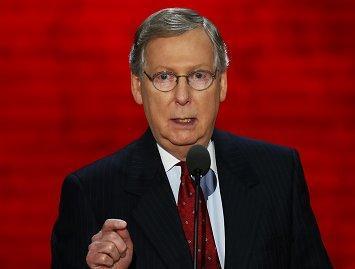
Getty Images
Senate Minority Leader Mitch McConnell (R-Ky.), like a few too many pundits, is eager to find a common thread connecting the various political controversies of the day. And in a new Washington Post op-ed, the Republican leader thinks he's found it: that rascally President Obama has created a "culture of intimidation."
Remarkably, Mitch McConnell overcame his fears of Obama's heavy-handed thugs just long enough to write the op-ed. What a trooper.
But what can be done to combat this president's crushing culture of intimidation? Don't worry, the Senate Minority Leader knows just what to do.
[R]ecent efforts to revive the so-called Disclose Act suggest that these tactics are alive and well in Washington. This bill, which would force grass-roots groups to make their member and donor lists public, may seem benign to some. But as a longtime defender of the First Amendment, I have always seen it for what it is: a backdoor effort to discourage those who disagree with the Obama administration from participating in the political process. [...]
Oddly, some on the left are now arguing that the IRS scandal is reason to revive the Disclose Act. But if this scandal has taught us anything, it is that Washington's ability to target individuals and groups is already too expansive.
Wait, what? It's scandal-mania, Republicans are openly speculating about impeachment, and McConnell's worried about campaign-finance laws? Actually, yes. As Ed Kilgore explained:
You have to hand it to Mitch McConnell. While other scandal-mad Republicans are off on a wild goose chase that could well end in 1998, McConnell's focused on exploiting scandals to promote his very favorite cause, and his special gift to the corruption of American politics: hiding the identity of big campaign donors. His op-ed in today's Washington Post aims at convincing us that conservative donors obviously need anonymity because they will otherwise be persecuted by Obama-inspired bureaucrats and union thugs.
In other words, McConnell's op-ed is just shameless opportunism -- he's killed campaign-finance disclosures in the past, desperately wants to prevent them in the future, and figures now is as good a time as any to leverage controversies that have nothing to do with campaign finance to push his favorite argument.
In case anyone's forgotten, the Disclose Act (Democracy Is Strengthened by Casting Light On Spending in Elections), was a pretty modest proposal. Proponents have argued it's corrosive to our democracy to have secret donors quietly funneling millions into the elections process.
And since Democrats and Republicans have traditionally agreed that disclosure and transparency is the key to preventing corruption, the Disclose Act's authors saw it as a rather mainstream idea -- those who donate $10,000 or more to organizations that spend money on political campaigns could not do so in secret.
Republicans killed the proposal last summer, with McConnell leading the way. Secret donations, he said, are critical and must be protected.
As of today, McConnell is still saying the same thing, but now he has a new talking point: we must shield major donors from disclosure or the big bad Obama meanies will somehow punish them with something.
Dems enjoy edge on generic ballot
Associated Press
There's quite a bit of interest lately in political controversies and efforts to connect them to the White House, but as an electoral matter, there's a limit to the utility: President Obama won't be on the ballot again.
But, Republicans argue, there will be important midterm elections in November 2014, and if the public has soured on the president, it's likely his party will be punished accordingly. Democratic dreams of taking back the U.S. House majority will be dashed, and the Senate Democratic majority, already weakened by retirements, will be in jeopardy.
It was therefore interesting to see the new Washington Post/ABC News poll ask the generic-ballot question: "If the election for the U.S. House of Representatives were being held today, would you vote for the Democratic candidate or the Republican candidate in your congressional district?"
If the various "scandals" are hurting the president's party, it is not yet reflected in the data: Democrats lead Republicans on the generic ballot by eight points, 48% to 40%. There's no recent trend line, but late last month, Quinnipiac released a similar poll, and it showed Dems with a four-point advantage.
For context, note that shortly before the 2006 midterms, when Democrats took back both chambers, they also had an eight-point lead in a Washington Post/ABC News generic-ballot poll.
I remain skeptical of House Dems being able to pick up a net gain of 17 seats -- redistricting tilted the playing field against them heavily -- but so long as they enjoy an advantage this large over the GOP, it's at least possible.
May 22, 2013
Links for the 5/22 TRMS
Citations for Wednesday night's show are listed after the jump.
Woolwich attack: 'Soldier beheaded' by ranting fanatics on busy London street
Boston bomber Tamerlan Tsarnaev eyed in 2011 murders
MAN SHOT TO DEATH WHILE QUESTIONED IN BOSTON PROBE
FBI Boston Division's Response to Shooting Incident in Orlando, Florida
Spencer Ackerman - @attackerman Jude Kenan Muhammad's FBI wanted poster: http://www.fbi.gov/wanted/alert/jude-kenan-mohammad …... even those [sic] he was killed in a drone strike...
Attorney General Holder's letter on Americans killed by U.S. drone strikes (pdf)
Strikes Hit Yemen as Violence Escalates in Capital
Inhofe, Lucas Introduce Bill Limiting Federal Agencies From Stockpiling Ammunition
Ahead on the 5/22 Maddow show
Tonight's guests include:
Wesley Lowery, reporter for the Boston Globe, live from Orlando
Jeh Johnson, former Pentagon general counsel
Rep. Carolyn Maloney, (D) New York, member of the House Oversight and Government Reform Committee, which held today’s IRS hearings
And here's executive producer Bill Wolff with a look at what will come up on the show when the sun goes down:
'If we are going to mandate that our kids must be in school, then we need to mandate that they have somewhere safe to go when there's a tornado.'
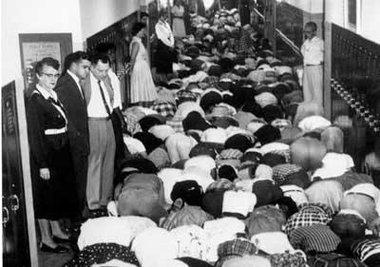
The ancient response to tornadoes in school remains -- and, in many places -- the current one.
A bunch of you who grew up sitting in hallways during tornado warnings wrote in yesterday about Moore, Oklahoma. Neither of the two schools hit by a tornado this week had special "safe rooms" for protection from storms. The students and teachers took shelter the same way they have taken shelter for generations -- in hallways and bathrooms, wherever they could, with horrifying and tragic results.
Oklahoma state Representative Joe Dorman grew up sitting in hallways, too, and hoping for the best. Now he is proposing that Oklahoma spend $500 million building safe rooms for schools and other public facilities. As part of the Democratic minority, Dorman will need bipartisan support if he's to get anywhere with a bill. He tells us:
"There is that Big Brother mentality that says, 'You can't tell me what to do. We will never get a mandate that says you have to have a safe room in your home. . . . [I]f we are going to mandate that our kids must be in school, then we need to mandate that they have somewhere safe to go when there's a tornado."
As it happens, the mayor of devastated Moore now says he'll push for an ordinance requiring safe rooms in new homes. Even as Oklahoma has offered funding for schools to build safe rooms, the state has also resisted having the government regulation needed to require them and the expense of building them.
Oklahoma's 2013 legislative session is down to its last few days, so Representative Dorman's proposal might not get considered until next year. For now, the House budget chief tells the local press that they're considering the $500 million bond issue, along with other responses to the storm. Dorman says that if he can't get a vote in this session, he'll ask for a study committee over the summer and hearings to follow. He's term-limited out of office after next year. "Knowing this is my last stand in the legislature, I'm going to be tenacious about this," he says.
After the jump, our segment last night on safe rooms and the Oklahoma town they saved.
In 2011, the tiny town of Tushka, Oklahoma, rode out a tornado in a pair of community safe rooms. The twister destroyed the town's school. Now they're rebuilding, they're including three safe rooms. The superintendent, as you'll see in the clip, says that was the first question they had about the new facility: Where are the safe rooms going to go? You can read more about Tushka's safe rooms on our previous post.
Wednesday's Mini-Report
Today's edition of quick hits:
* London: "A man was killed by knife-wielding assailants on a London street Wednesday, and a bloodstained suspect at the scene holding a meat cleaver was captured on video telling passers-by: 'We swear by the almighty Allah.'"
* Oklahoma: "At the White House press briefing on Wednesday, Press Secretary Jay Carney announced that President Obama will travel to Oklahoma on Sunday, May 26 to inspect the damage from the tornado that hit the state on Monday. Carney added that the president will visit with affected families and thank first-responders."
* Drone strikes: "[T]he Obama administration revealed Wednesday that drone strikes since 2009 had killed four Americans overseas -- one of whom, Anwar al-Aulaqi, was targeted in Yemen because he'd planned and was planning terrorist attacks on the United States – principally the plot to blow up an airliner over Detroit on Christmas Eve 2009. Three others who were not 'specifically targeted' were killed in circumstances the administration did not explain."
* The Waltham muders: "Dead Boston bombing suspect Tamerlan Tsarnaev and another man -- who was killed by the FBI on Wednesday -- murdered three people in Massachusetts after a drug deal went wrong in 2011, law enforcement sources tell NBC News."
* Lois Lerner: "The Internal Revenue Service official who first disclosed that the agency had targeted conservative groups for special scrutiny, and in doing so ignited a controversy that has ensnared the White House, denied on Wednesday that she had ever provided false information to Congress. She then invoked her Fifth Amendment right against self-incrimination and declined to testify at a House hearing on the agency's actions."
* The need for systemic action grows: "A sergeant first class on the staff of the United States Military Academy at West Point faces charges for allegedly videotaping female cadets without their consent, sometimes when they were in the shower, according to Army officials."
* Climate crisis: "China is taking steps to tackle its huge carbon output. Today, the country announced the details of its first carbon trading program, which will begin in the city of Shenzhen next month. The southern city is one of seven cities and provinces, including Beijing, which will take part in the pilot program, set to be completely implemented by 2014."
* And the Presidential Commission on Election Administration -- also known as Obama's election-reform panel -- now has members.
Anything to add? Consider this an open thread.
Bernanke urges Congress to get smarter on economic policy
Getty Images
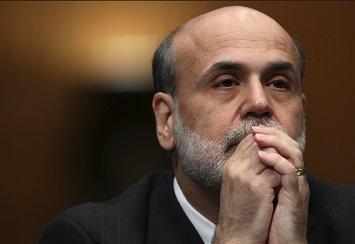
Federal Reserve Chairman Ben Bernanke spoke to the Joint Economic Committee this morning, and as expected, much of the attention was on his expectations with regard to monetary policy. The Fed will, Bernanke explained, pull back from its quantitative easing, but not before the economy shows it can handle the departure.
But as it often the case, what interested me were Bernanke's not-so-subtle hints to lawmakers about their role in making the economy worse.
Bernanke touted the Fed's efforts to lift the economy but warned Congress that the central bank's actions will be insufficient to stave off a drag on the economy caused by rising taxes and spending cuts.
A bevy of fiscal policy issues -- including the expiration of the payroll tax cut, tax increases, budget caps on discretionary spending and the cuts to government spending from sequestration -- are creating headwinds that will "exert a substantial drag on the economy this year," he said.
"Taking them all together, they have the effect of being a drag on economic growth, perhaps more than necessary."
With interest rates near zero, the Fed "does not have the capacity to fully offset an economic headwind of this magnitude." ... "Monetary policy is not omnipotent," Bernanke said.
To be sure, this is all very polite and professional in tone, and I suspect some of the members of Congress on the Joint Economic Committee didn't fully appreciate what Bernanke was saying.
So let's translate a bit: the Fed chairman was telling Congress that taking money out of the economy, as Republicans insist we keep doing, is the one thing holding an American economic recovery. While Bernanke is trying to make it easier for the economy to grow, his efforts are being negated by Congress, which is making it harder for the economy to grow by embracing austerity measures and focusing on deficit reduction. The unsatisfactory status quo is, quite literally, largely lawmakers' fault.
He'd never say this out loud, of course, but Bernanke was effectively trying to argue, "While I'm trying to keep the water out of the boat to keep it from sinking, you guys are inexplicably trying to pour more water back into the boat. Please stop."
This isn't the first time the Fed chairman has pleaded with Congress to get smarter about economic policy, and I'll confess, it amazes me every time.
To reiterate a point we last discussed in December, Bernanke has, over the last few years, occasionally abandoned subtlety and explicitly pleaded with Congress to consider fiscal stimulus, but Republicans have always refused. (Indeed, GOP lawmakers haven't just been content to ignore the need for fiscal remedies, they've also demanded that Bernanke stop trying to improve the economy through monetary measures.)
Bernanke wants Congress to act as a partner, working alongside the Fed to strengthen the economy. Instead, Congress has acted as an opponent, pushing in the opposite direction.
In fact, congressional Republicans see Bernanke's explanation that unnecessary government spending cuts are undermining the recovery, and they respond with two arguments: (1) we need more unnecessary government spending cuts; and (2) the Republican Fed chairman must be some kind of liberal.
And what of the tax increases? Republicans demanded an end to the payroll tax break, too. As for the income tax hikes on the wealthy, they're largely responsible for sharp reduction in the deficit, which is what Republicans have claimed is their top priority.
How not to deal with concerns over the IRS
Associated Press
Rep. Paul Gosar (R-Ariz.)
It's hardly unreasonable to think the Internal Revenue Service took some serious missteps when it came to groups seeking tax-exempt status, and will need to improve the way the agency is managed. But being critical of the IRS's missteps does not mean one should necessarily start making wild assumptions about imaginary misdeeds.
You may recall last summer, when Senate Majority Leader Harry Reid (D-Nev.) caused quite a stir claiming he'd heard from a Bain Capital investor that Mitt Romney hadn't paid income taxes for 10 years. Which investor? Reid didn't say. Why should anyone take the claim seriously? Reid couldn't say. He heard an unsubstantiated rumor, and he passed it along.
Nearly 10 months later, the right has decided to revisit the issue, in light of the ongoing IRS controversy. Last week, for example, the Daily Caller ran a report, based on literally nothing, asking whether "someone at the IRS" leaked Romney's tax information to Reid.
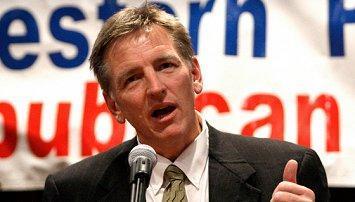
As is often the case, the story worked its way from Republican media to Republican lawmakers. During a congressional hearing today, Rep. Paul Gosar (R-Ariz.) was incensed when former IRS commissioner Doug Shulman said he no idea whether Romney's tax documents had leaked.
"Do you know how Mr. Reid obtained that information? Did you look into this?" he asked Shulman.
Shulman stumbled, then said, "I have no idea."
"Doesn't that alarm you that all of a sudden, this pertinent information comes up, and you're the head of this agency, and you're not asking questions? Shame on you. Absolutely shame on you," Gosar responded.
Look, I criticized Reid at the time for repeating unsubstantiated rumors, which struck me as irresponsible. And if lawmakers want to read IRS officials the riot act over its mistakes on dealing with tax-exempt applicants, more power to 'em.
But Gosar's tirade today wasn't just over the top; it was plainly ridiculous.
Reid said he'd heard a rumor from an investor about Romney. Should the IRS have investigated this? Of course not; that wouldn't make any sense.
Indeed, one need not be a strategic mastermind to understand that if Reid had actual tax materials to bolster his rumors, he would have released them to make Romney look bad.
And while we're at it, let's go ahead and note that Reid was, in fact, wrong -- Romney did pay taxes over that 10-year period. If someone had illegally leaked Romney's returns, they'd show the opposite of Reid's claims.
So, the underlying argument is kind of silly, and is probably evidence of a right-wing congressman looking for an excuse to yell at the IRS. "Absolutely shame on you"? Gosar doesn't seem to have any idea what he's talking about.
Heller tries to have it both ways
Associated Press
In competitive states, we're seeing two kinds of politicians: those who support new measures intended to reduce gun violence and those who pretend to support new measures intended to reduce gun violence.
In New Hampshire, Sen. Kelly Ayotte (R), shortly after voting to kill the bipartisan bill to expand background checks, benefited from new ads claiming she voted for "a bipartisan plan to make background checks more effective." In Arizona, Sen. Jeff Flake (R), who voted the way the NRA demanded last month, this month is telling anyone who'll listen how much he loves "to strengthen background checks."
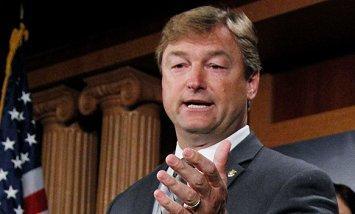
And in Nevada, as Jon Ralston noted today, Sen. Dean Heller (R) is sending out interesting correspondence to his constituents.
"Knowing your interest in gun control, I wanted to give you an update on legislation I have cosponsored and supported recently."
Imagine how Nevadans felt when they received a letter that began that way from none other than Sen. Dean Heller, who voted against the Manchin-Toomey bill, saying he feared a creation of a gun registry despite his general support for the concepts in the measure. He was hailed by NRA types and blistered by gun control advocates.
I wonder how many folks who received that missive fell for the having-it-both-ways Heller approach.
Probably quite a few. That's the point -- politicians who do unpopular things have to cynically hope they can mislead voters, not by explicitly lying, but by taking advantage of public confusion over details.
In this case, Heller's letter (pdf) makes him sound like quite the reformer, boasting of his support for background checks, keeping firearms from the mentally ill, endorsing an amendment sponsored by a Democrat, and cosponsoring "bipartisan" legislation.
The typical person, who may not follow the news closely, would probably have no idea that Heller helped filibuster the bipartisan measure on background checks, and helped kill the entire bill on gun reforms.
But therein lies the point: the Nevada Republican is embarrassed enough to try to give people the wrong impression, and that level of embarrassment tells us something important.
As we talked about the other day, the NRA would have lawmakers believe -- indeed, it would have all of us believe -- that opponents of gun reforms enjoy broad support from the American mainstream. The NRA's allies have nothing to be embarrassed about, and have no reason to fear a public backlash, since freedom-loving Americans have no use for those rascally liberal ideas on gun safety.
But we know they're wrong, not just because of the available public opinion data, but because the senators who voted with the NRA appear to be going out of their way to pretend they didn't.