
Michelle Van Loon's Blog, page 8
March 25, 2018
Review: Venus & Virtue
We in the church are being discipled by our culture in the area of sexuality, whether we believe it to be true or not. In response, we’ve either chosen to adopt those values in the name of relevance or have presented a reactive “no” as an alternative narrative. Before I came to faith in Jesus in my mid-teens, I was pretty promiscuous. As I moved into adulthood and began raising my own children, though I understood the why being the “no” narrative, I think I often framed that “no” in terms of my own painful teenage experience. Though I could quote Bible verses to support the “no” (sex between one man and one woman within the bounds of marriage), I’ll confess I didn’t have a very deep understanding of the the why behind those boundaries – nor of all of the yesses that God intended to flourish within those boundaries. Instead, I think I oversimplified a lot by passing on without much comment beyond sharing my own horror stories what I’d learned from the church about sex: “Just say no until it’s time to say ‘I do’ to a person of the opposite biological gender.”
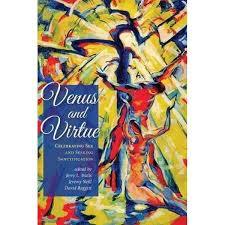 I would have benefitted greatly back then from a book like Venus and Virtue: Celebrating Sex and Seeking Sanctification. Though this is structured and presented as an academic volume containing essays from a variety of contributors, editors Jerry Walls, Jeremy Neill and David Baggett have kept the focus on thoughtful discussion and mature application rather than arcane academic hair-splitting. Walls notes in the introduction, “In this book we will argue (as will be apparent from our title) that Christianity presents a morality of celebration, not one of castration.” Just say no does not contain an invitation to celebration, no matter how attractive the envelope might be.
The contributors to Venus and Virtue are drawn from a wide variety of academic and professional streams. They include professors such as Erin Dufault-Hunter (Fuller), Raymond Phinney (Wheaton), and Lawson Stone (Asbury); pastors such as Jay Thomas (Chapel Hill Bible Church) and Gerald Heistand (Calvary Memorial Church); a lawyer, Mary Rice Hasson (Ethics & Public Policy Committee); and writers who regularly address issues of sexuality in their work such as Anna Broadway, Brett McCracken, and Ron Belgau. There are at least a couple of essays in the book that present differing viewpoints on a debatable topic, such as the pair of essays about the topic of masturbation by Matthew Dugandzic and Erin Dufault-Hunter. I appreciated the interchange – one calling for chastity and restraint, the other suggesting that there is a way to bring virtue to bear in this area.
The book is broken into four main sections. The first contains 4 essays exploring Biblical and theological foundations of human sexuality. The next section, addresses sexuality for singles with 7 essays. There is a section with three essays tackling same-sex attraction, and the book closes with a couple of essays on pastoral response and responsibility.
The Bible teaches us that intimacy between men and women is about so much more than “sexy.” sex—intimacy—is about helping your wife recover for months from a very difficult delivery of a baby you sort of had something to do with. Real sex is about loving a spouse’s wrinkles and grey or thinning hair . . . or no hair because of the chemo. Sexual intimacy is about sitting by the bed wishing you could be the one suffering instead of them. sexual intimacy—“one flesh”—is an eighty-something-year-old man snuggling in the hospital bed next to his dying wife, holding her in his arms, softly singing hymns to her through the night as she crosses over. Sex is feeling out of balance when you have to go without your wedding band for some reason. it’s about staying together through times when you don’t feel in love, don’t feel dedicated, and don’t feel committed, but you remember that before God and his church you made a promise, a covenant, and you’ll honor it—and discovering that those who keep faith with that formal, so- called legalistic boundary inhabit a garden of satisfaction and joy known only to those who surrender to its secret.
– Lawson Stone, Chapter 1, “Garden of Delights and Dilemmas: The Old Testament on Sex”, Venus and Virtue
Though all the essays were of value, I found the section on singleness had the most relevance to my own life. Though I’ve been married for nearly 39 years, I have many friends of all ages who are single. As nearly half of all adults in this country are single (and hello, this includes the Church, where we often focus our efforts solely on the nuclear family), the essays on topics ranging from why younger believers cringe at old-school sexual ethics, making out, what it means to exercise morality in the area of sexuality, and the aforementioned debate around masturbation have immediate practical application in the kinds of conversations I am privileged to have with single friends. If there is one omission in this section, it is about discussing sexuality among singles at midlife and beyond – many of whom are making choices in this area of their lives they never would have dreamed of making when they were younger.
This is a book that belongs in the hands of every pastor, and particularly those who are working with youth and young adults. I also believe that many of those who are mentoring or discipling younger people would benefit greatly from engaging with the readable essays in this book. Even if you think you’ve settled the questions of sexuality by just saying ‘no’, I can guarantee those in generations younger than you are grappling with the subjects addressed in Venus and Virtue. I commend this book to you.
Note: I received a review copy of this book from one of the contributors, but the cost I paid for the book ($0.00) did not affect my feelings about it in any way. 


March 16, 2018
Born To Wander
Why are we so restless?
All of us have a little wanderlust—a desire for that next thing, that new place, but this competes with our longings for security, control, and safety. We don’t like how it feels to be unsettled and uprooted. Whether we’re navigating a season of transition, dealing with the fallout of broken relationships, or wrestling with a deep sense of restlessness, we are all experiencing some form of exile. And most of us do whatever we can to numb the feelings of unbelonging, powerlessness, and unsettledness that come with it. But the truth is that exile has a profound purpose if we can just learn to lean in.
Over and over again Scripture tells us that the people of God are exiles and wanderers. And this is good news because exile is what transforms us into pilgrims. In Christ, we are no longer directionless wanderers, but pilgrim followers who have a clear purpose and a secure identity. In Born to Wander, Michelle Van Loon weaves together personal stories and keen insights on the biblical themes of pilgrimage and exile. She will help you embrace your own pilgrim identity and reorient your heart toward the God who leads you home. Engaging and thoughtful, enhanced with practical suggestions, prayers, and questions, Born to Wander will teach how to trust God even when you don’t understand what’s happening around you and follow Him even when it hurts.
If you keep chasing security, you’ll never find it. Embrace the purpose behind the wandering and discover the freedom and safety of resting in God alone.
“Every one of us carries a restlessness that runs as deep as the marrow of our born-again bones. Our relationships shift like tectonic plates. We change jobs. We switch churches. And our culture tells us the cure for our restlessness is to buy a new mattress, a new car, or a new tube of toothpaste.”
Newsletter, March 2018
Shalom, friend!J.R.R. Tolkien said, “Not all who wander are lost”. I’d go one step further and say Jesus’ call to follow him is meant to make wanderers of every single one of us who respond with a ‘yes’ to his invitation.
In recent years, a rapidly-shifting culture has left many disoriented. That sense of disorientation has encouraged some believers to adopt an exile mindset that takes its cues from the longing for a past that seemed somehow simpler, safer, and more secure. I understand the very real temptation to want to hide from it all in order to preserve ourselves and our families.
The Bible demonstrates that exile can serve a redemptive purpose, but it is not a spiritual destination. Exile is meant to turn us into pilgrims. Let’s face it: the word “pilgrim” conjures images of unsmiling, black-garbed people who sailed to America on the Mayflower—or a lone backpacker with a walking stick, hiking to a distant holy site. While those capture the motion and intention of pilgrimage, the best image of a pilgrim is the one you see in the mirror every day.
I’m excited to share a book designed to help readers reclaim their pilgrim identity. Born To Wander: Recovering The Value of our Pilgrim Identity releases July 3, but you can pre-order your copy (or copies!) by clicking here:
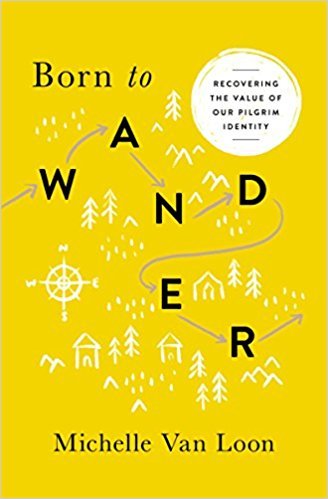
I’m hoping to share the message of this book in a workshop format with small groups, Bible study groups, retreat gatherings, and churches. Many of us struggle to make sense of our wanderings, and it is my prayer that many will begin to see with fresh eyes how God has been at work in their lives, and discover afresh the wonder of wandering in his company. Contact me here if you’re interested in scheduling a Born To Wander event at your church next fall.
 A giant “THANK YOU” to the many of you who prayed for our family during the last year as we navigated my husband Bill’s unemployment, our uncertain housing situation, and my breast cancer scare, a fall resulting in broken bones in two places in my body, a blood clot, and my ongoing battle with a rare immune system disorder. So many offered support through prayer, financial assistance, and banana bread. I am humbled and so very grateful for every bit of it.
A few quick updates:
Are you planning to attend Festival of Faith & Writing April 12–14 in Grand Rapids, MI? This biennial event draws more than 2,000 readers and writers together to feast on the written word. I’m looking forward to participating on a panel about writing and reading at midlife called “Wisdom In The Shadows: Bringing Seasoned Women’s Voices To Light” with Anita Lustrea, Jennifer Grant, Kathy Khang, and Amanda Eastep Cleary. 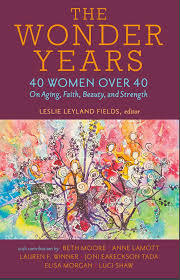 If you’ll be at the Festival, let me know. I’d love to greet you in person.
At the Festival, a book entitled The Wonder Years: 40 Women Over 40 on Aging, Faith, Beauty, and Strength will be released. Leslie Leyland Fields pulled together this collection of essays from writers including Luci Shaw, Joni Eareckson Tada, and Lauren Winner. I’m honored to have a piece in this book as well – and I’m looking forward to soaking up the oceans of wisdom of the others included in this volume.
We’re nearly a year into the new website I co-founded with fellow writer Amanda Eastep Cleary, The Perennial Generation. This website is aimed at those of us at midlife and beyond. We’ve explored a variety of topics ranging from faith shifts to empty nesting to cleaning out our closets, and have been gratified to feature a wonderful variety of writers with lots of wonderful insight to share. (Click here to learn how you can contribute.) You can follow ThePerGen on Facebook, Twitter, and Instagram.
You were born to wander.
In Him,
Michelle Van Loon
michellevanloon.comAuthor of If Only: Letting Go Of Regret and Moments & Days: How Our Holy Celebrations Shape Our Faith
Photo by Priscilla Du Preez on Unsplash
March 2, 2018
Lifeway’s Survey About Jewish Evangelism
At the recent National Religious Broadcasters convention, Lifeway Research released a survey exploring the current state of Evangelical attitudes regarding Jewish evangelism. This is a topic that has been a lightning rod in the Church for a wide variety of reasons including but not limited to:
the belief that God has an entirely different salvation scheme in mind for the Chosen People than he does for the rest of the world
deeply-embedded anti-Semitic attitudes
Supercessionist (“The Church has replaced Israel”) theology
“Left Behind” pop dispensationalism that links the return of Jesus to national Israel returning to the land and turning en masse to him
plain old garden-variety discomfort with sharing one’s faith with a Jewish person
There are a number of active anti-missionary groups active in the Jewish community, committed to alerting Jewish people to the perceived “threat” from evangelistic efforts, and working to convince the Church to take the Gospel to Gentiles instead and leave the Jewish people alone. In some very visible cases, some branches of the Church have chosen this position. The Lifeway survey is a reminder to those who are self-identified Evangelicals that Jesus’ call to proclaim the good news contains no loopholes.
Within the Messianic Jewish community, outreach can be a loaded topic. There are many in the Messianic community who celebrate the efforts of evangelistic groups like Jews for Jesus or Chosen People Ministries, noting that God has used them to show and tell the world that it is possible for a Jewish person to believe in the Jewish Messiah, Jesus. There are other Messianic Jews for whom the notion of “Jewish evangelism” is entirely the wrong approach. Those of the latter group root their practice in what Mark Kinzer called post-missionary Messianic Judaism instead believe that living a Torah-observant life is “an act of covenant fidelity rather than missionary expediency”; thus, a Messianic believer seeking to live an observant lifestyle because they’ve come to faith in Jesus is at once a mark of a Jewish believer’s true identity and is supposed to act as a witness to the not-yet-believing Jewish community at large.
The results of the Lifeway survey aren’t particularly surprising, but they beg a larger question: Once a Jewish person comes to faith, how – and where – are they to be discipled? Estimates suggest that about 10% of Jewish people who come to faith in Jesus end up in Messianic congregations. Some of those do a solid job of whole-life discipleship. Others focus primarily on gathering for weekly worship and teaching.
The other 90% of Messianic believers attend churches. One Messianic leader said to me, “I headed to the Church for discipleship as a young man, because the Messianic movement wasn’t able at that time in my life to give me what I needed.” That was true for my husband and me as well. One challenge is that depending on the church’s theology regarding the Jewish people, a new Messianic believer may believe they need to somehow lay aside their Jewishness in order to belong and to grow spiritually. This may be explicit, but more often than not, I’ve found the pressure to conform to Gentile norms is subtle and implicit in the social milieu of a majority Gentile church.
Not only does this latent neglect or antipathy of Jewish identity do a disservice to the Jewish believer, it also starves the church of the rich understanding that comes from proper relationship to her Jewish roots. I appreciated the list below from Steven Ger, who offers several practical ways in which Churches can embrace the Jewish believers in their midst – and begin to connect to their own grafted-in identity, which is an important component of healthy discipleship, whether the congregation has 30 Jewish believers – or none:
Pray for the salvation of the Jewish people.
Activate programs and creative ideas for Jewish evangelism. The Jewish community in America and abroad is still a largely unreached people group, despite their historic and cultural nearness to the gospel.
Support Jewish missions and teaching ministries.
Go to Israel and invite fellow church members to join you. Experiencing the land promised to the chosen people can greatly enhance a believer’s love and concern for the Jewish people.
Celebrate the messianic fulfillment of a Jewish festival such as Passover or Tabernacles. Host a Passover seder.
Encourage the Jewish believers in your congregation. These believers often feel “out of sync” with their Gentile siblings. They are often a tiny minority of one or only a few and perceive themselves as living between two worlds.
Create and implement a bar mitzvah/bat mitzvah celebration within the church for Jewish believing thirteen-year-olds. Confirmation catechisms and the like need not substitute for following the biblical customs of our ancestors.
I hope that Lifeway’s study results will lead beyond those questions about evangelism to prompt more churches to consider their discipleship practices once a new believer enters the life of their congregation.
This post first appeared here. Photo by Aaron Burden on Unsplash


