
Nancy Wilson's Blog, page 23
April 21, 2013
April 17: Anger Management
(Continuing with a look at Matthew Henry’s The Quest for Meekness and Quietness of Spirit.)
When we are exercising meekness, we are able to “calm the spirit so that the inward peace may not be disturbed by any outward provocation….Cannot we charge home upon our enemy’s camp without the wilful disordering of our own troops?”
Meekness calms our spirits. “Meekness preserves the mind from being ruffled and discomposed, and the spirit from being unhinged by the vanities and vexations of this lower world.”
This sounds like a tall order, but remember, this is not something we can produce in ourselves. It is a work of grace, given to us by the Holy Spirit. If you are prone to anger, you must diligently pray for meekness and quietness. Your family will be so happy if you do. Then it’s so important to recognize temptation when it arrives. We often realize we have “lost it” once we are too far in it to turn back. How wonderful it would be to see temptation arrive just as the milk jug is being knocked over on the table. Ah ha! Yes! This is a temptation to react and get mad. At that moment, you must quickly acknowledge that God is in control of all things, even spilled milk, and you must be thankful and kind, not harsh and frustrated.
The lovely thing is that once the milk is cleaned up, you won’t have to apologize to anyone. You won’t feel all churned up. You’ll be amazed at the Spirit’s work in your life and you will rejoice in gratitude.
But don’t foolishly think you have now arrived. A fresh test is on the way. After all, we do live in this world where things do not go according to plan. So expect another one. And another. Pray in the morning that you will pass each test, and thank God each and every time that you do. Of course, if you stumble, remember you have an Advocate with the Father, Jesus Christ the Righteous, and He loves to forgive.
Remember what Jesus said: “Blessed are the meek, for they will inherit the earth” (Matthew 5:5).


April 16: Meekness
Matthew Henry, the great Bible commentator, published The Quest for Meekness and Quietness of Spirit in 1698. It turns out that we still need meekness and quietness 400 years later (at least I do!) so I’m going to use the next several posts to highlight a few of his points from this encouraging little book.
First a definition. Meekness is what he calls easiness of spirit. Not easiness about sin, but easiness about inconvenience and hard work and obstacles and all kinds of provocations. Meekness is in direct opposition to anger.
“Meekness is easiness for it accommodates the soul to every occurrence, and so makes a man easy to himself and to all about.” In other words, when we are meek, we do not react or get fussed up or fired up. We stay in control of ourselves and “keep possession of our souls” in the midst of unforeseen occurrences. I love the word he chooses here: provocation. He allows that this world is full to overflowing with all sorts of provocations, so we might as well get our souls adjusted to it and learn the drill.
Henry argues that before we can be meek toward others (or be easy toward ourselves), we must first be meek toward God, which means quietly submitting ourselves to “his whole will, according as he is pleased to make it known whether by his word or by his providence.”
If we are meek toward God, not only will we have control of our own anger, but we will “patiently bear the anger of others.”
“Meekness, in the school of Christ, is one of the fruits of the Spirit. It is a grace, wrought by the Holy Ghost both as a sanctifier and as a comforter in the hearts of true believers, teaching and enabling them at all times to keep their passions under the conduct and government of religion and right reason.”
Do you sometimes snap at the kids or react toward others impatiently? Then learn meekness and quietness of spirit. The Holy Spirit is willing to teach us, and we are enrolled in His school. First we should recognize our need for it; secondly, we should pray that He will teach us. Finally, we should walk through the day with a look-out for provocation. Ah! Here comes one! Let’s test our meekness and see how far we are along in our lessons.
April 17, 2013
April 15: Good Feelings
John Bunyan in his book Grace Abounding says this about our tendency to forget where our righteousness comes from:
“I also saw that it was not my good feelings that made my righteousness better, and that my bad feelings did not make my righteousness worse; for my righteousness was Jesus Christ Himself, ‘the same yesterday, and today and forever’ (Heb. 13:8).”
Understanding this truth can be very helpful in our Christian lives. We tend to either “feel good” about how we are doing (often based on whether we read our Bible today or whether we got the laundry done and dinner on the table) or we “feel bad” about ourselves because we got short with the kids and paid a bill late.
Now when we sin, “we have an Advocate with the Father, Jesus Christ the righteous” (1 John 2:1). We seek His forgiveness as well as our children’s if we were irritated at them; we apologize when our bill is late and we make restitution where needed. But our feelings have absolutely nothing to do with this. Sin is objective. It violates God’s commands, and God’s commands are objective: we can read them in black and white.
Our feelings, on the other hand, are very subjective. They are subject to change based on the weather, our health, our circumstances, our hormones, our age, and how much sleep we got last night. Feelings can lead us astray and cloud our judgment. Of course they are very helpful when deciding whether to have coffee or tea, but they are not to be trusted when it comes to judging our own righteousness or unrighteousness.
Whether I am feeling pretty good about my sanctification or not, my righteousness is objective, not subjective. My righteousness is found in Christ. His righteousness has been imputed to me, and His righteousness is perfect, even on my bad days. In fact, His righteousness has nothing to do with my feelings one way or another. That is why our salvation is safe and secure in Him because He never changes.
What is the conclusion? When you are having a bad day, thank God that when He looks at you, He sees the perfections of His Son. When you are having a good day, thank God that He sees the righteousness of His Son.
To quote my husband: “So our faithfulness is not the ground of our confidence; rather, our confidence [in Christ] is the ground of our faithfulness.”
April 13, 2013
April 13, Titus 2:3
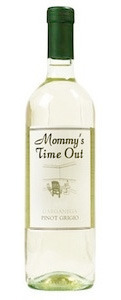
“The aged women likewise, that they be in behaviour as becometh holiness, not false accusers, not given to much wine, teachers of good things;That they may teach the young women to be sober, to love their husbands . . . ”
Rachel already did a post on this verse, but there’s something else in here that I’d like to stop and notice – that little phrase, “not given to much wine.” This section in Titus is addressed to the older women, and it is directly related to how they interact with and teach the younger women. The younger women are obviously meant to be learning from the older women in these things, and the goal is that they too will grow into wise and godly older women who can instruct and give examples to the younger women coming up behind them. No matter how old you are, there are always younger women behind you. They may be your own younger sisters, younger women in your church, or your own daughters and granddaughters. You can’t put off the teaching of this verse, thinking that when you’re 65 or 75 then it will apply to you. The obvious implication here is that the older women are not to be given to much wine, and they are to be teaching and modeling this to the younger women – who are supposed to learn by example and also not be given to much wine.
So. What does it mean to not be given to much wine? Obviously this verse would exclude drunkenness – that’s kind of the big “E” on the eye chart. But if that’s all that Paul was talking about, he could have just said that. This is a broader command – that you not be “devoted to” much wine. That’s a little more vague, and obviously that’s why it takes wisdom to figure out how to apply it
Let me pause for a moment to just establish my “street cred” on this subject, lest anyone think I’ve launched the Women’s Temperance League 2.0. I personally can’t abide beer, but I do love a nice wine and at our house we frequently drink it. For Christmas this year I gave Ben a trip down to Walla Walla to tour the wineries etc. (Despite the un-promising name, there are some fantastic wines coming out of Walla Walla. It’s true. I’m not making that up.) We went down last month and had a really terrific time doing wine tastings, touring the wineries, seeing the vineyards, and learning lots. We came back with a nice case of wine and I scored an awesome old wine barrel. So this post should not be taken as me on a crusade against enjoying wine.
However. Comma. It seems to me that there are a lot of Christian women being extremely un-cautious in their approach to wine (and alcohol in general), in a way that I think violates the spirit of this verse. Do you joke with your girlfriends about how you’ve trained your husband to just know when he shouldn’t open his mouth – he should just hand you a glass of wine? Do you joke about drinking too much or being tipsy? Do you laugh about relying on several glasses of wine every night after the kids are in bed to keep you from going insane? There are lots of little memes floating around the internet that say things like, “Wine is to women what duct tape is to men: it fixes everything.” Is that the kind of thing that you comment “hahahaha – so true!!!” under and re-post on your pinterest page? If so then it’s possible you need to ask yourself whether you’re living in the spirit of Titus 2.
One thing to keep in mind is that drunkenness is a sin – not a joke. But for some reason it seems like a sin that lots of Christian women love to laugh about together. I doubt that those same women would laugh and joke about – to take an instance at random – their husbands going to a strip club or cheating on them. Somehow the consequences of that kind of sin are too obvious and too painful and too tasteless to make into a little funny jest.
And yet, how many homes has drunkenness destroyed? How many families have been shattered by it? How many marriages wrecked? Lives ruined? I’m sure that many of you have first-hand experience with the tragedy, the violence, the lies, and the heartbreak that come with drunkenness. How many children live in constant fear of their mom or their dad opening that bottle? My grandmother was, after her conversion at 16, a lifelong teetotaler. Her mother had died when she was very young and she was raised by an alcoholic father and drunk older brothers. Can you imagine why she might want to have nothing to do with alcohol ever again after that? In my opinion, jokes about it are fully as tasteless as jokes about adultery.
Just to be clear – I don’t think that everyone who jokes about being drunk actually is a drunk. But there are two distinct sins here which sometimes overlap and sometimes don’t. One sin is drunkenness, the other sin is being foolish. Sometimes people are drunks, sometimes people are foolish and laugh about being drunks, and sometimes they do both. It’s possible to be given to much wine, and it’s possible to just talk about it in such a way that you lead everyone to think that you are.
It’s possible that you should take a hard look at how much your rely on wine. Are you given to it? Is it a crutch that you depend on? Do you excuse how much you drink by saying that you would never actually get drunk? It’s fully possible to be “given to much wine” without ever getting sloppy drunk, and entirely conceivable that even if you’ve never been “drunk” in your entire life you still need to cut back.
It’s also possible that you never drink too much, but you should take a hard look at how you talk about wine. Maybe you need to work on handling the subject like a mature Christian woman and not like a foolish woman. Is the way you talk and laugh and joke about wine modeling Christian wisdom to the younger women? If a younger woman (your daughter for instance, or one of the high school girls in your church) listened to how you talk – and then acted exactly like that – would you have led her into wisdom or into folly?
Drunkenness is an ugly sin against God. And wine is a fantastic blessing from him, one that he chose to be the picture of his redemption, his grace, and our forgiveness. He’s given it to us to enjoy, not to abuse, not to flirt with abusing, and not to laugh about abusing.
April 11, 2013
Winners!
I did what I said I would and picked some winners! Congrats to Marci S., Kathryn A., and Rebekah Priscilla! I will email you for your address and we will get some books in the mail for you! Thanks to all for entering!
April 8, 2013
Giveaway! Yeehaw!
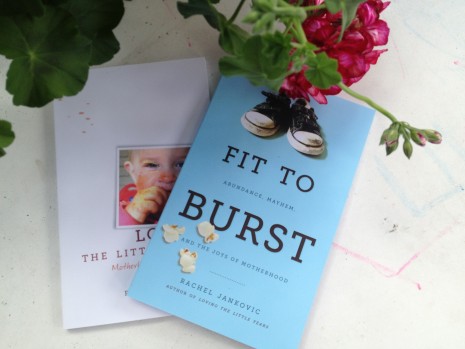
Hello there all! I thought it was about time that I did another giveaway! This is a giveaway for the set of Loving the Little Years and Fit to Burst. We will give away three sets, with a random number generator drawing on Thursday. International readers are welcome to enter, no – encouraged to enter! I will let each winner pick which two books you want – so if you want to get two of the same one to share with a friend you can.
I snapped this picture on the patio table out back, and thought it was appropriate. Little Years has spaghetti on the cover (as modeled by Chloe), Fit to Burst has straggly popcorn, and my niece Marisol’s shoes, and the picture I took of these two books shows that people ran amok with sidewalk chalk on this very inviting surface. It’s all very true to life in my life.
One quick thing about entering the contest – Just leave a comment on the post to be entered! Yeehaw, and I hope you all win!
April 8: Deuteronomy 14:21

“Do not cook a young goat in its mother’s milk.”
This is simply a fragment of a verse which is part of the Old Testament law. The context is lots of things that the people of God are to do differently than surrounding people. It is what sets them apart.
Now some of you may think this is an odd choice for a devotional verse, but I think that there is a lot of wonderful things to glean from it. This command is representative of something that God did not want His people doing. This verse is about a twisting of things. Do not take that which is meant to give life and use it as an instrument of death.
As a principle, this is excessively applicable to our everyday mothering. What are the things that you want to give your children? What are the things that you want to give them in order to make them thrive? And how might you be using those things to cook them? Instead of giving them a strong work ethic with all the chores you give them, are you giving them a hatred of home? A great education is something that we delight to give our children, because it gives them freedom, and strength, and all kinds of things that are meant for life. But there are countless ways to take something that is for life, and make it into part of a long slow cooking.
Think of discipline, think of family worship, think of catechisms, think of chores, of friendships, of talking with your kids, of dinner time. All of these things are made for life, and can be used for death. The fundamental difference is fairly simple: the milk is life giving when it is taken on the inside. But when it is applied to the outside, it only causes death.
A mother’s love is a sweet thing. It is made for life – it is made for comfort, for joy, for encouragement. But how easy is it for a mother’s love to become a great oppression? How easy is it to turn into someone who won’t stop fixing hair and worrying over skinned knees? How easy is it to let your interest in your children’s health become the thing that keeps them from ever having a healthy experience of being sick, and miserable, and tough? Are you making yourself into an instrument of death? Are you making yourself into the instrument that kills off your son’s toughness? Your daughter’s laughter? Are you so critical that instead of feeding and building up, you are constantly raising the temperature and smothering your children in flashcards?
Of course the goal is not to leave your children unchallenged. The goal is not to expect little. The goal is for a thriving, strong, kicking life. And of course the answer here is not to pry their mouths open and force a bunch of things down. The answer is grace. We can pray that God will give us wisdom as we educate and train and talk with our children. We can pray that God will give our children a ravenous appetite for the things of life, and that He will make us a great gift to them.
And we can pray that when we see our children like so many little birds in a nest – mouths open, squawking at us with pointy little beaks, demanding more, and more, and more – we can pray that we will see this as a great mercy. That God has given us children who hunger. When they want to talk, need to talk, want to know, need to know, want to learn, need to learn – that is life! That is a sign of great things. I know, as I am sure you do – that that is often the time when you want to go shut yourself in the bathroom. But when you do – pray for this. Pray that God will give you all the food you need. That God will give you overwhelming gladness for their hunger, and all the food you need to satisfy it.
April 4, 2013
April 4: Proverbs 30:1-6
The words of Agur the son of Jakeh, his utterance. This man declared to Ithiel—to Ithiel and Ucal:
Surely I am more stupid than any man,
And do not have the understanding of a man.
I neither learned wisdom
Nor have knowledge of the Holy One.
Who has ascended into heaven, or descended?
Who has gathered the wind in His fists?
Who has bound the waters in a garment?
Who has established all the ends of the earth?
What is His name, and what is His Son’s name,
If you know?
Every word of God is pure;
He is a shield to those who put their trust in Him.
Do not add to His words,
Lest He rebuke you, and you be found a liar.
I usually use the New King James version, but what brought my attention to this passage was the ESV. In the ESV ”this man declared to Ithiel, to Ithiel and Ucal” is translated as “I am weary, O God; I am weary, O God, and worn out.”
Since I have the special convenience of being related by marriage to a Hebrew scholar, I texted him asking him to explain this oddity. Apparently in the Hebrew names are sometimes regular vocabulary words and aren’t capitalized. And then sometimes there aren’t spaces between them, and in general it can be hard to tell if you are talking about being weary and worn out or if you are talking about Ithiel and Ucal. He thought without looking too deeply that he would side with the NKJV, but I like the ESV for the fact that the thought progression is very familiar to me.
So let us just imagine for a moment that this chapter, instead of being written by Agur son of Jakeh was a little something thrown out by a tired woman somewhere. All the sudden the progression from being tired and worn out to feeling stupid makes more sense to me. That is a little something that many of us do every day. Or at least bi-weekly.
This foundation of weariness is a common one. We are busy, we are tired, we are stretched out. We are wanting to throw in the towel. We wonder why we are doing all this stuff anyways. I like verse 3 especially. “Surely I am too stupid to be a man. I have not the understanding of a man.” Does this sound familiar at all? Have you ever felt too stupid to be a mom? Too stupid to be a wife? Too stupid to be a person?
When we are working hard and being faithful, there will be times when we are so flat out tired and exhausted. And that is good. Being tired to the point of stupidity is not a sin. In fact, it is often a component of faithfulness. What I love about this passage is that it gives us an example of how to respond to that low down feeling. Look to God. The passage turns to repeating a number of the mighty works God. We might be tired and stupid, but He is not.
“Who has gathered the wind in his fists?… What is His name, and what is his son’s name? Surely you know!” But the real centerpiece of this passage is what comes at the end
“Every word of God proves true. He is a shield to those who take refuge in him.” Take refuge in the word of God, because He is a shield for you. A shield from all of the tired, all of the worry, all of the stress, all of the indifference. Every word proves true. Take refuge in it. It is our shield. Proverbs 18:10 also reflects this sentiment,”The name of the Lord is a strong tower; The righteous run to it and are safe.”
Right after this reminder is a warning: Do not add to it. His word is sufficient to shield you. Do not try to protect yourself, or build a shield out of your own smarts. The word of God is sufficient, and do not add to it. Who is it who made you with His words? Who threw the stars into the heavens with His words? Who has established the ends of the earth with His words? Take refuge in His words, and it will always prove sufficient.
April 3, 2013
April 3: Rivals
Once you start to think about it, envy seems to be the root cause of lots of the world’s troubles. But I don’t think I’ll tackle the world’s troubles, and I’ll turn instead to the troubles at home, which is where the world’s troubles start anyway.
Sibling rivalry is a cliche for good reason: it is very common. What is it that turns siblings into rivals? They are competing for the same thing. What thing? As I mentioned in the last post, it is often for Mom or Dad’s attention and approval. If Johnny always gets a pat on the back, and Susie always gets a lecture, then it is pretty easy to figure out which kid will be tempted to be envious and which kid will be tempted to be conceited. Parents can (unknowingly) set their kids up for this, and we ought to know better.
After all, we were once all kids ourselves. Which one does Dad prefer? Whom does Mom praise the most? Why can’t some kids do anything right? The conclusion is obvious: parents should be wise in making all the children feel loved, special, and accepted. Love should be unconditional, not based on appearance or achievement.
However, even if the parents are doing a good job on the home front, kids will still be tempted to envy over something. It could be athletic ability, appearance, intelligence, winning the spelling bee, riding the bike first or best, having more friends, or getting a shinier toy. The thing parents want to do is teach the children that they are all on the same team and should be fighting sin, not each other. They are not rivals.
Parents must work hard to preserve the peace among the children and have zero tolerance for fits of anger, fighting, or any display of unkindness or unpleasantness. If you look the other way or tune it out, you are allowing envy to grow unchecked in your household, and when it is harvest time, it won’t be pretty. Your daughters will be competing for attention from the boys, and your sons will be competing against their own teammates on the basketball court. Your children will take envy with them where ever they go, and envy breeds strife.
These two sins, envy and strife, are mentioned together in several places in the New Testament (Rom. 13:13, 1 Cor. 3:3, 2 Cor. 12:20, Phil. 1:15, 1 Tim. 6:4, James 3:14-15). If you have strife, you can be pretty sure there’s some envy tangled up in it.
Don’t be rivals with your own children. Mothers, don’t compete with your beautiful teenage daughters. Enjoy their growing beauty without envy. Sisters, don’t compete with one another. Enjoy one another without rivalry.
When we forsake envy, and we refuse to be rivals, we are not giving the enemy a foothold in our relationships. Instead, our relationships can prosper and flourish under God’s blessing, and He is glorified.
April 2, 2013
April 2: From Envy to Admiration
The sin of envy is often overlooked because it is under the surface. We often don’t recognize it in ourselves, and so we unknowingly nurse it along until it breaks out in strife. Nevertheless, it’s listed right along with some of the big uglies in Galatians 5 and Romans 1 (murder, drunkenness, fornication, wickedness…). God does not like envy: “They which do such things will not inherit the kingdom of God” (Gal. 5:21). It is a work of the flesh, and is not of the Spirit. It brings confusion (James 3:16) with it, as well as fits of anger, rivalries, dissensions and all the rest (Gal. 5:21). “Do ye think that the scripture saith in vain, ‘The spirit that dwelleth in us lusteth to envy’?” (James 4:5). Envy is easy. Envy satisfies the flesh, but only temporarily because envy always wants more.
Not only do we need to identify our own temptations to envy, but we have to teach our little ones about it as well. They can easily fall into envy at a very tender age and learn to live quite comfortably with it. This can be envy of siblings, envy of Mom and Dad’s attention, etc.
Here’s how envy gets out of the starting blocks. The dictionary defines envy as “a painful or resentful awareness of an advantage enjoyed by another joined with a desire to possess the same advantage.” So let’s break this down.
First of all we become aware of someone’s blessing, success, advantage or achievement. Noticing that someone else is blessed is not a sin; we all have eyes in our head. It’s what we do next that leads to envy. Rather than rejoicing in the good fortune of another, we give way to desire. We see their blessing and we desire to have the same one.
If we ask the Holy Spirit to identify this sin in our hearts, I am confident that He will. Then we can seek forgiveness for any existing envy and move on to learn how to resist this temptation. That means we must pay attention to our own hearts. We must notice the point of temptation and resist it.
Here’s the scenario: You see a woman who looks beautiful, is dressed well, and is surrounded by her friends. You are aware of her and all her obvious advantages. Now you are at the point of decision, teetering on the edge: you can either choose to rejoice that God has blessed her, or you can desire her blessings for yourself. If you give way to desire, you are set up for other companion sins of resentment, discontent, self-pity, gossip, and a host of others.
If you choose to resist the temptation to desire, you must quickly do something else. You must choose to rejoice with her, and thank God for her blessings. This directs the awareness away from envy to admiration. You are pleased for her, you admire her, you may even want to imitate her in positive ways, but you do not envy her.
Teach your children this principle. Show them how to steer their hearts away from envy to admiration. When little sister wins the prize, teach big sister to thank God for giving it to her. Show her how to rejoice. This isn’t easy! It is a work of the Spirit.
Don’t give way to fleshly desires. Ask the Spirit to give you joy and contentment in the advantages others enjoy. After all, God has apportioned His gifts in wisdom. This is the only way out of the envy trap.”But he giveth more grace” (James 4:6).
Nancy Wilson's Blog

- Nancy Wilson's profile
- 292 followers

