Phil Simon's Blog, page 87
October 21, 2013
Healthcare.gov: Government IT Project Failure at its Finest
Originally publishing on Huffington Post.
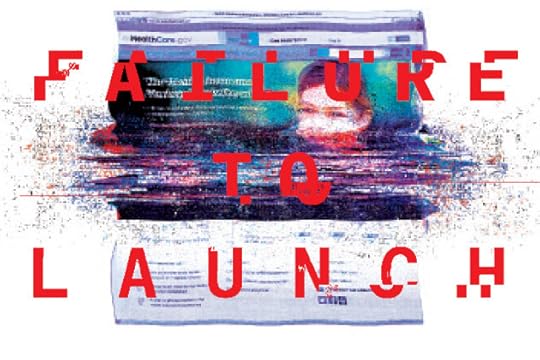
The BusinessWeek article on the Healthcare.gov failure is nothing if not instructive. From the piece:
Healthcare.gov isn’t just a website; it’s more like a platform for building health-care marketplaces. Visiting the site is like visiting a restaurant. You sit in the dining room, read the menu, and tell the waiter what you want, and off he goes to the kitchen with your order. The dining room is the front end, with all the buttons to click and forms to fill out. The kitchen is the back end, with all the databases and services. The contractor most responsible for the back end is CGI Federal. Apparently it’s this company’s part of the system that’s burning up under the load of thousands of simultaneous users.
The restaurant analogy is a good one. Projects with scopes like these fail for all sorts of reasons. Why New Systems Fail details a bunch of culprits, most of which are people-related.
As I read the article, a few other things jumped out at me:
The sheer number of vendors involved
The unwillingness of key parties involved with the back-end to embrace transparency
The ostensible lack of any real stress testing. How else do explain the fact that roughly one percent of all users actually accomplished what they set out to do?
On a different level, launching a true platform should not be confused with a traditional IT project. Yes, platforms share similarities with enterprise systems (read: ERP, CRM, etc.). Still, tens of millions of people do not concurrently use these applications. We’re talking about differences in orders of magnitude. One can only hope that the burnt hand teaches best.
The post Healthcare.gov: Government IT Project Failure at its Finest appeared first on Phil Simon:.


October 18, 2013
Reflections on 15 Years of Remote Work
I’m old enough to remember the arrival of the Web. I remember early browsers, websites, search engines, ISPs, and e-mail clients. In the late 1990s, meetings started to come online. Webex, Skype, and Radmin promised to end superfluous travel–or at least minimize it. I remember being amazed at my ability to control a computer remotely. In New Jersey, I once logged into a remote session in Seattle to get to a computer in Pennsylvania.
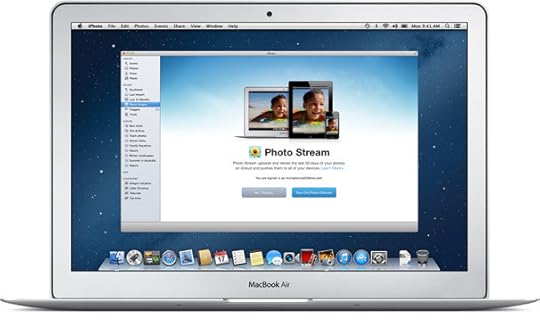
These days, screen-sharing tools abound. I’m a big fan of join.me. I love how up to 50 people can concurrently edit a document with Google Docs. Trust me. I could go on.
But don’t think for a minute that remote work is confined to screen sharing. For example, via iCloud, you can easily locate your missing iPhone, iPad, or MacBook. You can even erase its contents or “wipe it” if it’s stolen, along with the script to an unreleased Breaking Bad episode. Just set it up yourself. No need for IT to do it for you. You surely are not happy about the theft or loss, but at least you can minimize the damage.
A New Default Mind-Set
For an increasingly tech-savvy workforce, the default mind-set has changed. We used to ask, “Can that be done remotely?” Now, many of us wonder out loud, “Why can’t that be done remotely?” And we don’t believe any answer that starts with no.
Now employees wonder, Why can’t that be done remotely?
Are there risks associated with BYOD and other nascent technologies? Of course. That’s a given. (To learn more about addressing the challenges posed by BYOD, register for a VMWare webinar on the topic here.) Forget potential security breaches for a moment. There are still plenty of human challenges to overcome, as my friend Terri Griffith points out. Griffith describes an organization that believed that it was facing an issue related to lack of communication. In point of fact, the issue had more to do with the youth of the partner firm. Those types of things are hard to discover via screen-sharing applications.
Simon Says: The Remote Genie Is Out of the Bottle
Some bells you can’t unring. Remote work is one of them. While coworking is on the rise, millions of people like me are extremely productive without ever setting foot in a proper office. And that’s not changing anytime soon.
Feedback
What say you?
While the words and opinions in this post are my own, VMware has compensated me to write it.
The post Reflections on 15 Years of Remote Work appeared first on Phil Simon:.
October 17, 2013
BYOX

I’ve written on this site about the pros and cons of BYOD. The rationale is relatively simple: Organizations can save money and make employees happy by supporting devices previously not sanctioned in the workplace.
In point of fact, though, BYOD only represents part of the technology and productivity revolution taking place in many enterprises right now. As Alan Trefler writes on Forbes.com, BYOD is important, but it’s just the tip of the “BYO” iceberg. There’s the nascent trend called bring your own software (BYOS). Other acronyms are sprouting up:
BYOA (Bring Your Own applications)
BYOS (Bring Your Own Servers)
BYOF (Bring Your Own Files)
Trefler correctly points out that all of the BYO initiatives can quickly become BYOC (read: Bring Your Own Chaos. It’s important to remember that relatively few IT departments voluntarily embraced BYOD; most were forced to surrender to it.
Contemporary Enterprise IT: A Sea Change
Acronyms aside, all of these changes undergird one indisputable fact: We have seen nothing short of a sea change in enterprise IT since the advents of the iPad and the AppStore. Today, more than 50 billion apps have been downloaded for iOS. The phrase “There’s an app for that” has entered the vernacular. And companies like Google, Microsoft, Samsung, and Amazon have taken notice, effectively aping Apple’s model. For instance, billions of apps have been downloaded for Android, although precise numbers are hard to come by.
BYOD only represents part of the technology revolution taking place in enterprises right now.
Brass tacks: Today WinTel is hardly the only game in town. Plenty of CIOs are buying Apple products over more traditional enterprise hardware stalwarts. Companies are buying iPads and other Apple products in bulk.
And the same holds true on the software side. Cloud- and Web-native companies like Workday, JIVE, and Salesforce.com are making inroads into land previously dominated by Oracles, SAP, and Microsoft. ERP and CRM applications are not the sole purview of large, established enterprise vendors.
Without question, many holdouts remain–and will continue to do so. Some CIO somewhere is signing a deal to purchase new computers running Microsoft Windows. This is always the case with emerging technologies. The Technology Adoption Lifecycle is alive and well:

Simon Says
While not true across the board, the technology pendulum has swung to the employee. More and more enterprises have embraced today’s new, employee-centric reality. Management at these organizations realizes that employee satisfaction matters–big time.
It can be a mistake to force knowledge workers to use BlackBerrys, laptops running Microsoft Windows and Office, and other long-in-the-tooth stalwarts. (Employees in call centers and other more standardized jobs, however, may not have the same degree of choice, especially in developing countries.)
To learn more about addressing the challenges posed by BYOD, register for a VMWare webinar on the topic here.
Feedback
What say you?
While the words and opinions in this post are my own, VMware has compensated me to write it.
The post BYOX appeared first on Phil Simon:.
Six Archetypes of Bad Project Managers

This post was adapted from my first book, Why New Systems Fail. It originally ran on InformationWeek.
Running IT projects isn’t easy. For a slew of reasons, most fail. In my consulting career, I’ve come across six types of project managers who do it the wrong way.
The Yes-Man
Certain PMs fear conflict and agree to every demand that internal clients or senior management make. These PMs might have a sales background. As a result, they are used to saying “yes.”
Now, these PMs typically mean well and certainly do not intentionally try to sabotage projects. Often, yes-men simply want their clients to be satisfied and provide future references. But by failing to confront those with wildly different expectations, yes-men implicitly make promises and commitments that endanger entire projects.
The Micromanager
Much like yes-men, micromanagers often mean well and merely want to understand each step in a process or the nature of a complex issue. However, on a project, the PM is not supposed to be the product, application or technical expert. During crunch time, consultants often cannot explain each facet of a complex issue to anyone, much less a newbie, regardless of the latter’s benevolent intentions.
Micromanagers need to let experienced consultants do their jobs.
Micromanagers need to let experienced consultants do their jobs. Depending on the timing, a PM might have to live with a high-level explanation of an issue. Should the micromanager need more detail, she should bring consultants to steering committee meetings or have them write status reports providing more specifics.
PMs need to let everyone else breathe; that is, get the actual work done. Employees and consultants can’t be effective if they spend most of their time briefing PMs on the status of each issue. This is especially true as projects reach critical points.
The Procrastinator
PMs who routinely fail to deliver are the worst of the bunch. At a minimum, they cause organizations to miss project deadlines. Procrastinators put both employees and consultants in untenable positions. Speaking from a consultant’s perspective, it’s a no-win situation. The procrastinator often ducks clients and does not deliver promised results such as updated project plans, documentation or status updates. In such cases, people are likely to lose faith in the consulting firm and its individual consultants, whether the latter are contributing to the delays or not. The best PMs know when to use each tool in their kits.
The Know-It-All
Nobody can know everything about an enterprise application. Some PMs have graduated from the ranks of application or technical consultants. As such, they might have the ability to answer questions about certain system-related issues. Although being able to speak intelligently about issues is hardly a liability, PMs who do not engage their teams at key points do a number of inimical things.
For one, they can alienate their consulting teams and make team members less likely to broach issues with them in the future. Second, by routinely not involving the experts, know-it-alls effectively minimize the contribution of those consultants, possibly causing clients to question the need for those consultants in the first place. Unless the consultant was specifically hired in a hybrid role of consultant/PM, that individual should routinely involve the implementation team throughout the project.
The Pollyanna
Some PMs new to projects with large scopes are ecstatic when the project makes any progress at all. Pollyannas tend to take a “glass is 10% full” approach to project management. Rather than realistically assess and deal with a project suffering from delays and budget overruns, Pollyannas focus on trying to make everyone feel good. In this sense, they are like yes-men. PMs need to be able to call a spade a spade and not worry about sugarcoating dire situations. Part of being a PM entails making tough decisions.
The Pessimist
The pessimist is the antithesis of the Pollyanna. Pessimists fail to appreciate the gains that a team and its individuals have made in the face of considerable obstacles. Pessimists routinely overemphasize what still needs to be done as opposed to what has been done.
Make no mistake here. Many projects would benefit from healthy doses of skepticism and realism. Sometimes, it’s necessary to put functionality and even entire modules on the chopping block. However, both consultants and employees tend to put in long hours on projects, especially during critical times. Few things anger a team more than unalloyed negativity from a PM not burning the midnight oil. PMs who constantly criticize a team for that which it has not accomplished are likely to irritate everyone. Celebrating a significant milestone never hurt anyone.
Simon Says
Sometimes PMs need to play the role of good cop, bad cop, shrink, confidant and devil’s advocate. Other times, they need to stroke the egos of key people or use PM techniques to move the project forward. While there’s no secret sauce to project management, avoid the archetypes described here.
The post Six Archetypes of Bad Project Managers appeared first on Phil Simon:.
October 15, 2013
Should I Buy an iPad?

On October 22nd, Apple will be announcing the release of several new products, including a souped-up iPad.
Up until now, I haven’t bought an iPad. I own just about every other Apple product: a MacBook Pro, AppleTV, an iPhone, and a few iPods. I’ve noodled with my friends’ iPads and have enjoyed the experience. It works basically like a big iPhone.
I’ve been resisting getting an iPad for several reasons. For one, I like to give my eyes a rest from the tyranny of screens. I don’t like reading e-books, even though I recognize their inherent advantages over their physical counterparts (search, highlighting, etc.). Also, I like using the MacBook’s physical keyboard and multi-touch touchpad.
Tablets are the way of the future.
Still, tablets are the way of the future. With a keyboard case, they function as de facto computers. I love the near-instant boot-up time. When I travel, I usually don’t write too much. I’m content to consume content more than create it. I can’t imagine writing a book on an iPad.
Feedback
What say you? Do you own an iPad? Do you use it much? What do you like about it?
The post Should I Buy an iPad? appeared first on Phil Simon:.
October 14, 2013
Working Remotely and the Limits of Technology

In his latest book The Year Without Pants: WordPress.com and the Future of Work (affiliate link), Scott Berkun writes about the issue of remote work. Rather than research his book in a vacuum, however, Berkun returned to the field. He spent a little more than a year working at Automattic, the parent company to WordPress.
It’s an excellent read and I highly recommend checking it out. In an Xconomy interview to support the book, Berkun says:
My year there totally proved that remote work can work fine for teams. We did all kinds of different projects, some of which required schedules with dependencies, and some of which were more ad hoc and agile. But if it’s a good team that’s motivated to work and you have the authority to manage them well, then they can do a good job.
It’s interesting to note the lack of emphasis on technology in the interview and, I’d argue, throughout the book. While hardly Luddites, most WordPress employees rely upon IRC to conduct chats, hardly a new application. Employees rarely e-mail each other and use Skype to compensate for the fact that they were all scattered throughout the globe.
Technology: Too Much, Too Little, and the Same Result
I’ve seen in my consulting career organizations deploy solutions in search of problems. Encumbered by myriad applications, many employees, groups, and departments remained confused about what to do–and how to do it. As a result, key documents and data resided in a hornet’s nest of systems, wikis, intranets, and knowledge bases. This is not ideal.
Never forget the cardinal importance of culture.
Conversely, I’ve seen plenty of companies refuse to get with the times. Ironically, the result was often the same. Left to their own devices, employee and customer data spiraled out of control. Simple questions could not be answered. (To learn more about how to make remote employees more productive, register for this VMWare webinar.)
Simon Says
The trick is to strike a balance. There’s no “right” amount of technology. What works for one organization may well not work for another. Too many organizations deploy different systems and applications in a bubble, ignoring culture in the process. The results are typically predictable.
Feedback
What say you?
While the words and opinions in this post are my own, VMware has compensated me to write it.
The post Working Remotely and the Limits of Technology appeared first on Phil Simon:.
October 10, 2013
The Pros and Cons of BYOD
About three years ago, my third book, The New Small, was published. Color me biased, but I tend to think that the book holds up pretty well on a number of levels. Open source software, mobility, and cloud computing have if anything only increasing in popularity.
Still, three years is nothing short of an eternity in technology. I often think about how technology has changed since my books have been published. For one, the boundary separating consumer and IT technologies has continued to blur.

But that’s hardly the only change to have taken place since 2010. In that book, there’s nary a mention of the term BYOD. I’d like to think that that omission doesn’t stem from my missing what was at the time an important new trend. But how can I be sure?
Enter Google Trends to the rescue. As I suspected, in 2010, BYOD was a blip on the radar. If I were to write The New Small today, BYOD would be a major theme.
Technology’s Double-Edged Sword
Throughout history, changes in technology have always inhered tremendous benefits in the workplace. For instance, with respect to BYOD, employees need not learn how to use new devices and applications. In theory, they are happier and more productive. Organizations save on purchasing new software and hardware and training employees on how to use them.
Technology is never an unalloyed good.
Still, technology is never an unalloyed good. Today, many if not most organizations continue to struggle managing virtual employees and BYOD. Marissa Mayer isn’t alone. Distributed companies are still the exception that proves the rule.
It’s fair to say that the current environment has created significant challenges for untold numbers of end users, IT departments, and organizations in general. (To learn more about addressing these challenges, register for a VMWare webinar on the topic here.) Employees with their own devices can be pretty demanding and impatient, not to mention the fact that they can pose massive security and compliance risks.
Simon Says
Succeeding in a BYOD environment certainly isn’t easy, but organizations have no choice. BYOD is here to stay. Deal with it.
Feedback
What say you?
While the words and opinions in this post are my own, VMware has compensated me to write it.
The post The Pros and Cons of BYOD appeared first on Phil Simon:.
October 9, 2013
Thoughts on the Breaking Bad Ending

WARNING – SPOILERS
It’s been a little over a week, and I still have major problems with the ending of my favorite show. On one hand, the Walt-Skyler scene was poetic and honest. How do you go wrong with Badger and Skinny Pete?
On the other hand, the Nazis patted Walt down but opted not to check the trunk of Walt’s car? Walt just walks around in ABQ? Lydia calls right after Todd meets his demise. Too many coincidences. Too neat.
So, what do you think? I’m using Wedgies to conduct a little poll.
The post Thoughts on the Breaking Bad Ending appeared first on Phil Simon:.
Fixing Healthcare: Let’s Start with Technology

As I pen these words, the federal government is in the midst of a week-long shutdown. At the heart of the matter are the usual suspects: inter-party bickering, political posturing, debates over debt ceiling limits, genuine antipathy among plenty of individuals, and one particularly contentious issue: Obamacare.
I’ll stay out of the debate over the latter here. I will however go this far: Healthcare has been broken for a long time, a subject that I discussed on CNBC. Whether Obamacare improves or exacerbates the U.S. healthcare system is anyone’s guess. Each side has a vested interest in promulgating its own views. Eventually, the current stalemate will resolve itself one way or another.
A Brighter Future
Politics aside, one thing is certain. Healthcare’s status quo is just plain untenable. Just check out these dismal statistics:
What the United States spent on health care in 2009 was greaterthan the entire GDP of Great Britain.
According to the Bureau of Economic Analysis, health care costs accounted for just 9.5 percent of all personal consumption back in 1980. Today they account for approximately 16.3 percent.
The United States spent 2.47 trillion dollars on health care in 2009. It is being projected that the U.S. will spend 4.5 trillion dollars on health care in 2019.
One study found that approximately 41 percent of working age Americans either have medical bill problems or are currently paying off medical debt.
Read more here.
Healthcare has been broken for a long time.
On a personal level, I pine for the days of true data portability. I want to visit a new doctor without having to fill out separate forms. My medical history data should be portable and secure. Why can’t my doctor just scan an app and see my entire medical history? After all, when I bought a new computer, I logged into iTunes, DropBox, Amazon.com, Gmail, and other web services and instantly saw my data.
Beyond the Rant: Technology as Part of the Solution
Brass tacks, we cannot ignore economic realities forever. So, what’s the solution? I certainly don’t have all of answers to an issue this thorny, but we simply cannot afford to preserve antiquated methods. Filling out paper forms in doctors’ offices that may or may not be transcribed or scanned one day is so 1960s. Faxes and letters seem equally silly.
Readers of this blog and my books know that I am a fervent believer in the power of technology. To that end, it’s evident to me that new solutions can significantly reduce (if not remove) the considerable friction that exists in the U.S. healthcare system today. Specifically, I’m talking about mobility, open standards, and cloud computing. (For more on the latter, see Turning Healthcare Vision into reality with the Cloud.)
Simon Says: Big Data Is Never Finished
As the Chinese say, there is opportunity in crisis. It’s high time for healthcare organizations to stop squandering their resources on antediluvian technologies and maintaining dated systems and hardware. Why not start by focusing on logical goals, like easily and instantly delivering patient data from physicians to insurance companies?
Feedback
What say you?  This post was written as part of the IBM for Midsize Business program, which provides midsize businesses with the tools, expertise and solutions they need to become engines of a smarter planet. I’ve been compensated to contribute to this program, but the opinions expressed in this post are my own and don’t necessarily represent IBM’s positions, strategies, or opinions.

The post Fixing Healthcare: Let’s Start with Technology appeared first on Phil Simon:.
October 7, 2013
Visualizing a Viral Facebook Photo

Ever wonder what happens when a photo goes viral on Facebook?
This is what it looks like.
This dataviz is part of a series of Stamen videos that visualizes a single piece of content being shared between hundreds of thousands of individuals on Facebook. From the company’s Vimeo page:
Each visualization is made up of a series of branches starting from a single person. As the branch grows, re-shares split off on their own arcs, sometimes spawning a new generation of re-shares, sometimes exploding in a short-lived burst of activity. The two different colors show gender, and each successive generation becomes more and more white as time goes by.
Simon Says
APIs from Facebook, Twitter, LinkedIn, and other social networks can provide really interesting windows into how data evolves. Can you waste time? Sure, but don’t tell me that there’s no value in exploring data. Who knows what you’ll find.
Feedback
What say you?
The post Visualizing a Viral Facebook Photo appeared first on Phil Simon:.