Phil Simon's Blog, page 38
February 3, 2020
A Preview of Slack For Dummies
I’m knee-deep in putting the final touches on Slack For Dummies. In total, the book will consist of six parts. Here they are.
Part 1: Working Smarter and Better with Slack
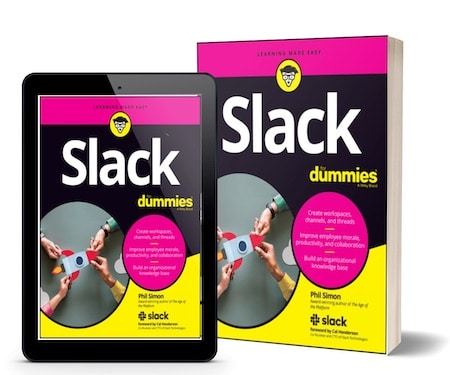 Slack has exploded in popularity for many reasons. The chapters in this part explain why. What’s more, they offer some rudimentary information about Slack’s background, rise, and benefits. I describe the main business problems that Slack helps solve for more than 12 million people and hundreds of oodles of thousands of organizations every day.
Chapter 1 paints a decidedly mixed picture of the states of business communication and collaboration. Brass tacks: Employees frequently waste time and become frustrated while on the clock. For precisely these reasons, Slack serves an invaluable function its users every day. Not only does it Slack benefit employers, but it can make employees’ work lives far less chaotic.
I also introduce readers to the Slack user interface and some of its building blocks. To use a bowling analogy, Part 1 sets up the pins and the other parts knock them down.
Part 2: Communicating without Chaos
“Calling the phone a phone is like calling a Lexus convertible a cup holder.”
— Gary Gulman
 Slack lets users send individual and group messages to their colleagues. In this way, it resembles email, but that’s missing the big picture. To paraphrase the erudite comedian Gary Gulman, claiming that Slack only allows you to send messages is tantamount to using your car for the sole purpose of holding your coffee tumbler. You are severely underestimating what it can do.
In Part 2, readers learn how to send targeted public and private messages to colleagues throughout their organization. I also show you how to control Slack’s notifications.
Part 3: Becoming a Slack Power User
In this section, I move beyond the basic Slack message and notification functionality. I explain some of its advanced features such as group video calling, screen-sharing, and more. You’ll learn how to find exactly what you in want using Slack’s advanced search features and how to personalize Slack’s appearance. I also cover to secure Slack and minimize the chance of data breaches.
Part 4: Extending Slack’s Native Functionality
The chapters in this part describe some of the cool ways that developers have taken Slack in new and exciting directions. Yes, much like your smartphone, you can use third-party apps in Slack. If you wished that Slack could do something that Parts 2 and 3 don’t cover, there’s a good chance that a whip-smart developer or startup has already built it or will soon. Alternatively, if you’ve got the technical chops, you can create it yourself.
I also explain the data side of the application: How to get data into and out of Slack and how to analyze it. In so doing, you’ll learn a few things about your how employees at your company communicate. This part concludes with how organizations are increasingly integrating Slack into their front- and back-office systems.
Part 5: Successfully Introducing Slack in the Workplace
Parts 2, 3, and 4 demonstrate Slack’s most powerful features. In short, Slack allows organizations to transform how their employees communicate and collaborate.
Of course, theory and practice often collide. It’s critical to understand that Slack is ultimately not an individual tool; it is a group one. As such, the benefits that you and your organization will ultimately reap hinge upon its successful adoption and use. The wider, the better.
In this vein, Part 5 offers tips on how to maximize the chance that your organization will profit from using the application for years to come. I discuss the risks of adopting and using Slack.
Make no mistake: This matters. People who don’t understand issues tangential to adopting any application are more likely to make glaring mistakes with it.
I close this section of Slack For Dummies with a chapter on Slack’s bright future and what you can expect from it down the road.
Part 6: The Part of Tens
The chapters in Part 6 offer valuable tips on how to make the most out of Slack. Collectively, these quick nuggets provide even more ways to extend its power. I debunk some of the biggest misconceptions that people have about Slack. The book closes with a chapter on my favorite Slack resources.
The post A Preview of Slack For Dummies appeared first on Phil Simon.


January 30, 2020
The Wild Wild West of Analytics Programs
 As I write these words, I’m in the midst of teaching my fourth year of analytics courses at ASU. To be sure, it feels like longer than that. That’s probably because, during this time, I have done more than merely fulfill my 4/4 teaching load. I wrote a book on analytics, taught courses over each summer, and recorded a 7-week online analytics capstone course back in 2017. I’ve also discussed the topic with my peers both at ASU and at other universities. Finally, I’ve spoken about the topic at a few conferences in Phoenix.1
To call the last three-plus years instructive would be the acme of understatement. (Pun intended.) In that time, I’ve learned a great deal about teaching analytics. To wit, I have reached an unequivocal conclusion: Much like in the corporate world, universities that currently offer degrees and courses in analytics are still trying to figure it out.
Let me explain.
Academia plays catchup
Let’s be clear: Analytics as a practice didn’t just arrive yesterday. Individuals and organizations have been making data-based decisions for decades. Behemoths such as Amazon, Facebook, Google, Netflix, and Twitter have taken this to another level, often with disastrous consequences. Brass tacks: data and analytics are double-edged swords.
In academic circles, however, the discipline of analytics remains a relatively new and immature topic. This should surprise exactly no one. By way of comparison, consider the early to mid-1990s. It’s not like higher ed immediately nailed nascent topics such as enterprise systems and the World Wide Web. I’m sure that some professor somewhere taught a Kozmo.com case study. To be fair, we can only fully understand and teach many things in hindsight. As Søren Kierkegaard said, “Life can only be understood backwards, but it must be lived forwards.”
Analytics means vastly different things to different people
Against this backdrop, as I look across academia, two things are obvious. First, analytics matter more than ever. Exhibit A: Johns Hopkins is now wisely infusing technical courses in their MBA program. Second, there’s anything but universal agreement on the very term analytics.
Allow me to offer my own two cents here. At a high level, I’ve always thought of analytics simply as the process by which organizations make decisions and gain insights based upon data. That’s it. Beyond that, there’s a general consensus that analytics falls into one of the three buckets: descriptive, predictive, and prescriptive.
Opinions and definitions on analytics vary—often widely. Oddly, many schools offer degrees data analytics—as if there’s another kind. Cue Jack Nicholson quote from A Few Good Men.
 This begs the question: Can schools, departments, and faculty effectively and consistently teach a subject if they can’t really define it?
By way of contrast, most faculty teach entry-level economics and accounting in virtually identical fashions. In these courses, professors speak a lingua franca. Sure, the textbooks and examples may vary from school to school, but all students can expect to learn the rudiments of supply and demand and debits and credits. This holds true whether a student attends Harvard or Tallahassee Community College.
There’s anything but universal agreement on the very term analytics.
Let’s get back to analytics. In meetings and when I interview prospective faculty members, I frequently hear other categories of analytics bandied about beyond the three mentioned above. Yes, I’m talking about diagnostic, exploratory, and edge analytics. (This reminds me of the “v explosion” that accompanied Big Data a few years ago.)
Where do you put analytics, anyway?
This isn’t just an existential question. The answer portends many consequences for the courses that recommend and require that students take. Related questions include:
Is analytics a separate discipline or is it at the nexus of data, management, and technology?
Should it exist in its own department or should it live “under” information systems (IS), operations, management/business, or statistics?
I’ve looked at how some schools attempt answer these questions one thing is clear: There’s anything but unanimity.
What’s the relationship between analytics and data science?
Again, this is a core question to which there’s currently no correct or even consensus answer. Adding to the ambiguity is the definition of data scientist. Again, opinions vary, but I’m fond of Josh Willis’ simple yet effective tweet.
Data Scientist (n.): Person who is better at statistics than any software engineer and better at software engineering than any statistician.
— Josh Wills (@josh_wills) May 3, 2012
Where does analytics end and data science begin? What courses are appropriate or imperative for each?
Again, these aren’t just theoretical or rhetorical queries. The consequences of each school’s answer drive the courses that they offer and require students to take. For instance, consider two schools: ABC and XYZ. The analytics program at ABC emphasizes technology more than business. As a result, it teaches students powerful languages such as Python and R.
By contrast, XYZ emphasizes the business side. As such, it offers an entire class on Tableau or another best-of-breed dataviz application. In this case, the teaching of higher-level programming languages becomes optional. The focus here is the “business” side of analytics, not the quant side.
What do we teach undergrads vs. grads?
Again, I see more questions than answers here. Lines at present appear very blurry and I haven’t yet heard a compelling distinction.
How many universities routinely use analytics to make decisions?
Based on my conversations with peers, many universities continue to struggle with the basics. I’m talking here about wrangling data, data quality, and governance. By and large, few universities have “graduated” (pun intended) into using proper analytics themselves. This is not lost on me. Perhaps this stems from their own decision-making processes. In other words, consider the following questions:
Do administrators make data-based decisions? If so, then how often? If not, then why not?
Are administrators willing to go where the data takes them—even if it means questioning core beliefs? (For instance and as I write in Analytics: The Agile Way, Google ditched using grade point average [GPA] when evaluating software engineers because it didn’t correlate with long-term performance.)
Do administrators and IT folks refuse to make valuable student data available to professors under the guise of FERPA?
Are universities’ internal systems contemporary or are they stuck in the 1990s? (The answer is often the latter.)
Do employees stubbornly insist upon using Excel as a Swiss Army knife? Or do they use powerful and interactive dataviz tools such as Tableau and Microsoft PowerBI?
Are universities and colleges only capturing and analyzing structured data?
Do employees possess the skills or even the desire to embrace analytics?
Are institutions’ analytics efforts university-wide or are they isolated to silos?
 While exceptions abound, generally speaking I have my doubts. Sadly in higher ed, fascinating stories such as how the University of Arizona and Georgia State have used data to reduce student attrition still represent exception that proves the rule. In the jargon of Silicon Valley, very few schools seem to eat their own dog food.
Simon Says: Higher education struggles with analytics but opportunities remain.
So many questions and so few answers. Despite the growth of analytics programs (or perhaps because of it), it’s the Wild Wild West out there. I suspect that we’ll see greater progress and cohesion over the next few years.
Feedback
What say you?
The post The Wild Wild West of Analytics Programs appeared first on Phil Simon.
January 15, 2020
Contribution in Forthcoming HBR Book on Agile Methods
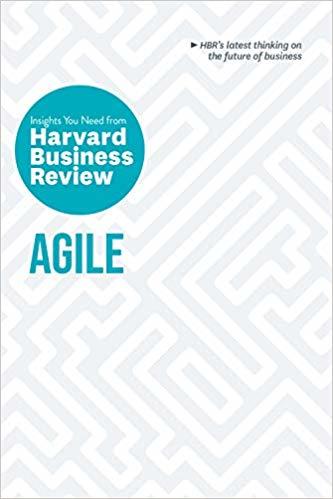 A few years ago, I penned a piece for Harvard Business Review on how Nextdoor used analytics and agile methods to reduce racial profiling. I excerpted the article from Analytics: The Agile Way.
Today I’m pleased to report that that article will appear in a new book called Agile: The Insights You Need from Harvard Business Review. The book represents a curated group real-world examples on how companies have embraced Agile methods.
Needless to say, I can’t wait to get my copy.
Pre-order it on Amazon by clicking on the book to the right. The book is slated for an April publication, around the same time that Slack For Dummies arrives.
The post Contribution in Forthcoming HBR Book on Agile Methods appeared first on Phil Simon.
January 2, 2020
My Five Most Popular Posts from 2019
 I’ve been on WordPress for a decade now. (Click here for some dated incarnations of this site) I can’t imagine using a different content management system. As I tell my students each semester, it’s intuitive, powerful, flexible, and very popular.
As a data guy, I’m always curious about how my posts are doing. Thankfully, WordPress provides oodles of stats. In that vein, here are my five most popular posts from last year:
How I Use Slack Inside of the Classroom
Three of My Favorite In-Class Exercises
Five Tips for a Successful CRP
Three Main Types of Capstone Project Problems
Why I Have Never Visited My Rate My Professor Page
I knew that my post on Slack in the classroom received plenty of page views. I’m either one or two for that related Google query. Beyond that, though, four of my five deal with higher education in some way. That’s certainly been one of my areas of interest since joining ASU back in 2016.
As for 2020, I suspect that I’ll be blogging more about Slack than higher education with Slack For Dummies due in a few months.
The post My Five Most Popular Posts from 2019 appeared first on Phil Simon.
December 31, 2019
Visualizing Two NFL Franchises
 In a move that should surprise exactly no one, the Cleveland Browns canned head coach Freddie Kitchens after only one season. It’s become somewhat of a rite of passage over the past few years for that moribund franchise. Meanwhile, in Foxborough, MA, the Patriots keep chugging away with the same head coach.
With respect to stability, how different have these two franchises been? Night and day.
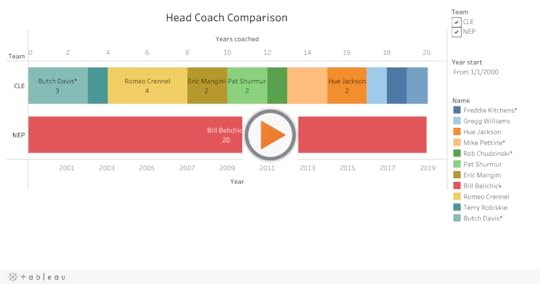
For an even more interesting dataviz on NFL coaches, see this one from Ken Flerlage.
I suspect that the NBA’s parallel comparison involves the Knicks and the Spurs.
Maybe I’ll create that one before editing for Slack For Dummies begins in earnest.
The post Visualizing Two NFL Franchises appeared first on Phil Simon.
December 14, 2019
Advice for My Dataviz Students
I just put a bow on my first semester teaching a seven-week dataviz course. To be sure, students learned the basics by hopefully reading Cole Nussbaumer Knaflic’s text Storytelling with Data: A Data Visualization Guide for Business Professionals.
Get Active on Tableau Public
This one is a no-brainer. You can spend hours on Tableau Public viewing interesting data visualizations and learn advanced techniques from rock stars such as my friend Ken Flerage. Still, they should do more. By creating their own informative and interactive charts and graphs, they can brand themselves as skilled dataviz professionals. What better way to show prospective employers your chops than point them to your online portfolio?
Keep an Eye Out for Future Tableau Improvements
Next year’s version ships with some insane improvements, including viz animations.
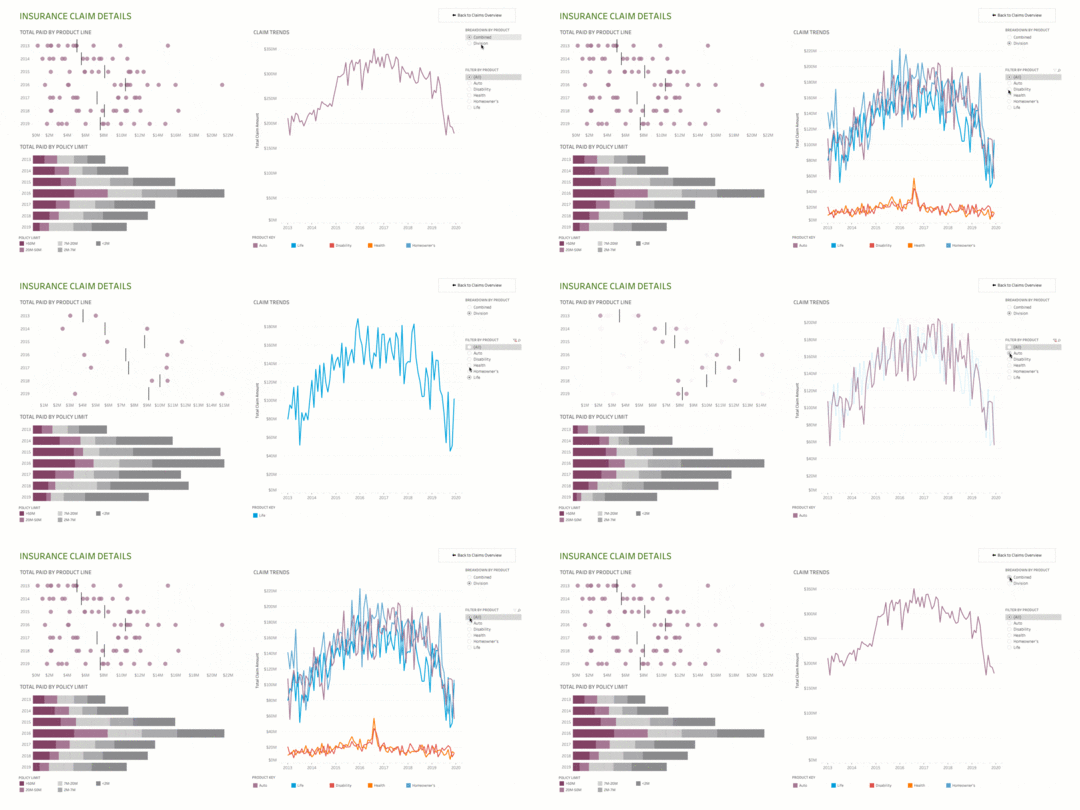
As I tell my students, their learning has only just begun. Tableau’s future is exciting and I can’t wait to see what I’ll be able to do next.
Resist the Urge to Default to Excel
Excel serves as an invaluable program in the business world. It’s essential to remember, though, that with more than 1.2 billion users, it doesn’t differentiate any applicant today. Put differently, it’s the ultimate hygiene factor.
Excel doesn’t differentiate any applicant today.
Think about it. Consider two identical candidates with respect to GPA, work experience, and personal skills. Candidate #1 is a Tableau beast while #2 used it a few years ago and hasn’t kept up. Which one would you hire?
Feedback
What say you?
The post Advice for My Dataviz Students appeared first on Phil Simon.
December 10, 2019
Thoughts on Slack, Culture, and Workplace Boundaries
 Reading Zoe Schiffe’s fascinating article on Away made me sick. TLDR: CEO Steph Korey used Slack essentially as a tool to intimidate, overwork, and surveil her employees. From the piece:
Korey was infamous for tearing into people on Slack. “You could hear her typing and you knew something bad was going to happen,” says a former customer experience associate we’ll call Caroline*. Yet while her feedback was almost always sent online, its effects were felt in the real world, often when employees burst into tears.
Those unfamiliar to Slack may think twice about using it given the Away horror story. Don’t. People regularly abuse Facebook, YouTube, Twitter, and scores of other tools. Slack is no exception to this rule. Neither is email for that matter. As my friend Josh Bernoff writes, “The problem is the abuse, not the communications channel.”
Amen.
Simon Says: Draw your boundaries at work—even in Slack.
Given what I read in the piece, I would not have lasted a week at Away. I would have used Slack’s different notifications to keep my sanity. I would have created private channels to vent with my colleagues. Ditto for direct messages—something that Korey explicitly discouraged. Yes, Slack can increase organizational transparency—a point that I make in Slack For Dummies. The idea that every conversation needs to take place in a public channel, though, is absurd and even dangerous.
Feedback
What say you?
The post Thoughts on Slack, Culture, and Workplace Boundaries appeared first on Phil Simon.
December 1, 2019
Don’t Be Evil by Rana Foroohar
 Building upon books such as World Without End and Weapons of Math Destruction, Don’t Be Evil: How Big Tech Betrayed Its Founding Principles — and All of Us makes the case that Big Tech is doing more harm than good. Rana Foroohar proves her central thesis in spades. I find it impossible to argue the opposite these days using any reasonable standard. Her thoughts on venture capital, the bias of algorithms, election interference, and other related topics should gave anyone pause. As she points out, Big Tech’s shiny new things distract us from considerable downsides.
Sure, I’d nitpick with a few of her assertions. For instance, at one point she refers to Uber has profitable when it’s lost billions every quarter. Perhaps this was just an oversight. More generally, I also have difficulty putting Netflix in the same bucket as Amazon, Apple, Facebook, and Google when it comes to power. FAANG might make for a nice acronym but I’d argue that Microsoft exerts far more power than the world’s most valuable streaming company.
A Spot-On Critique of Big Tech
Regardless of my small gripes, this book is spot-on. Foroohar synthesizes the main arguments against the tech titans that have become far too powerful—and I defended them for years. Now more than ever, we need to ask ourselves tough questions about Big Tech’s power. Promises that the industry will regulate itself are as laughable as banks making the same claim prior to the financial crisis. Her final chapter is her strongest and it’s high time to act now with sensible, bi-partisan legislation and oversight.
Rating: 
The post Don’t Be Evil by Rana Foroohar appeared first on Phil Simon.
November 19, 2019
Using Slack in the Classroom: A Case Study
 Professors teaching dense survey classes face many challenges. To be sure, Introduction to Information Systems is no exception to this rule. At a high level, the sheer number of topics can overwhelm students—typically sophomores. From the professor’s point of view, teaching a dense, lecture-based course makes it difficult to regularly engage students. As I’ll show in this post, for this very reason, a tool such as Slack is indispensable.
How Users Work
Early in the course, I lecture the students on how computers, cloud computing, and the Internet work. There’s just no getting around these foundational topics and the need for classic lectures. Professors then cover how users work on their computers. If that sounds like a robust subject that’s tough to cram into a 50-minute class, then trust your instincts.
In the past, I have demonstrated the basics of operating modern computers in a one-to-many way. Specific topics included:
Viewing a computer’s specs such as memory, processor, and hard drive size
Navigating the user interface
Launching programs
Saving files
Invoking command-line access
Naming and moving files
Accessing the computer’s security settings
Using browsers to conduct advanced web searches
And much, much more
Oh, and I had to do this on both Macs and PCs. Needless to say, it was a tall order and I wondered if there was a better way.
Slack in the Classroom
This past summer with a year of teaching the course under my belt, I thought about ways to turn this fast-paced lecture into an interactive exercise—one of the key tenets of my teaching philosophy. Many companies have had success with gamification, so I decided to start there. Why not pit the Mac users vs. the Windows’ users and turn the class into a game?
Why not pit the Mac users vs. the Windows’ users?
For instance, I explained the importance of performing routine maintenance on their computers. Some of them didn’t know that you need to do that—and, to be fair, I’ve met many professionals who don’t either. I then showed the students how to defrag a Dell hard drive. I then asked the Mac folks if their stylish computers could do the same. Of course, I knew the answer but I wanted them to show me and their classmates—not the other way around.
And here’s where Slack and Zoom proved invaluable. I started a Slack channel call via Zoom.1 In this case, a Mac user would join the call and share his or her screen with the class.
If Mac users didn’t know the answer to my question, then I would playfully tell them that they are using inferior machines.2 I would then give them hints on where to look until another student joined the call, shared her screen, and effectively took over the class to demonstrate. Make no mistake: I was an equal-opportunity provocateur. That is, I also gently needled PC users if they didn’t know how to do something that Mac users easily could.
I repeated this for a number of key computer functions including changing file extensions, creating multiple desktops, and many of the other topics I mentioned above. For example, regardless of which type of computer you own, you’ll at some need to search for files. Mac users can just invoke Spotlight. Windows 10 offers similar search functionality but, again, I wasn’t going to tell them that. I wanted them to show me—and the rest of their classmates.
Results and Lessons
I asked students via a Slack poll what they thought of the class. Most of them enjoyed the interaction and, dare I say, had fun.
For professors who say that Slack is the same as email, I guffaw. As this example shows, Slack allows us to engage with students in new and exciting ways. It can even help transform a standard lecture into an interactive in-class exercise.
Feedback
What say you?
The post Using Slack in the Classroom: A Case Study appeared first on Phil Simon.
November 11, 2019
The Years That Matter Most
 Paul Tough’s book The Years That Matter Most: How College Makes or Breaks Us paints a decidedly mixed picture of how higher ed works. For some, it’s the ticket to a better life. For others, though, it’s a high-risk gamble that may well not pay off.
I particularly enjoyed his tale of David Laude at UT – Austin. His hard work resulted in real changes in graduation rates—against a backdrop of a clueless Texas governor who shamefully believes that students are customers. Beyond that, Tough’s exploration of the admissions process and its painful economics was especially enlightening. Those with idealistic goals often have to compromise in the fact of fiscal realities.
Higher Ed: A Mixed Bag
Tough’s book paints a decidedly mixed picture of how higher ed works today. Through some fascinating stories, he shows that, for some, it’s the ticket to a better life. For others, though, it’s a high-risk gamble that may well not pay off. If you think that race and class complicate matters, trust your instincts.
I wish that Tough covered the struggles of well-intentioned faculty attempting to overcome internal politics and constraints. Plenty of intelligent and hard-working faculty eventually pack their bags.1 Still, his is a text about students, not professors, and I am much more informed about the mechanics of higher ed than before.
I also like how Tough ends his book: By reminding us of the GI Bill’s intent to make education a public good, not a private one. Demagogues and poorly informed politicians would do well to remember this fact.
Rating:
Click here for more on the book.
The post The Years That Matter Most appeared first on Phil Simon.