Phil Simon's Blog, page 11
June 7, 2023
AI Is Eveywhere
Perhaps the most topical of the forces in the new book is AI. It’s no overstatement to claim that mentions of it today are ubiquitous.
Meet AuraAura makes a number of security-related products. NortonLifeLock is one of its main competitors. On November 30, 2022, the front page of the comapny’s website looked like this:
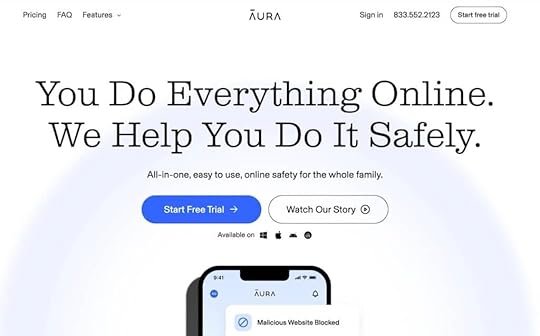
Thank you Internet Archive.
Maybe you’re wondering, What’s so special about that date? ChatGPT broke the Internet.
This morning, Aura’s site looked like this:
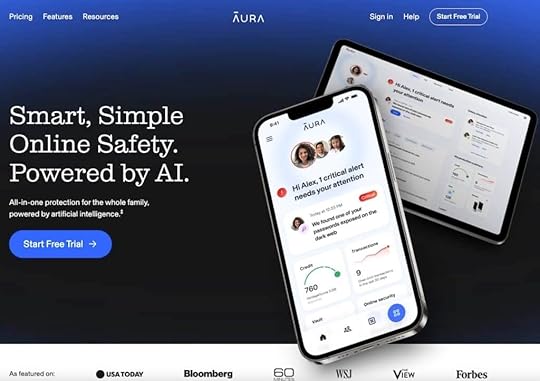
As you can see, AI is front and center.
I’ve lost count of the number of AI-based rebrands. (Maybe Zuck shouldn’t have gone all-in on the metaverse. Its recent attempts to lean into AI muddle its previous message.)
Speaking of Big Tech, Apple loaded up on references to machine learning during its most recent WWDC.1
Simon SaysThe AI hype cycle is on overdrive. I can’t tell you if all of these firms are using AI to truly make their wares better. They’re sure claiming as much, though.
FeedbackWhat say you?
I've just rebuilt my site from scratch. It should be much faster, but I'm sure that a few bugs persist. If you find an error, let me know. Thanks.
The post AI Is Eveywhere appeared first on Phil Simon.


May 30, 2023
Episode 79: No-code in the Enteprise With Teresa Cintra
 Teresa Cintra joins me. She is the country manager at ncScale. We talk about LC/NC tools, Airtable, Netflix, and Anchorman. It turns out that low-code/no-code is kind of a big deal. WANT EARLY ACCESS TO PODCAST EPISODES? ➡️
 The post Episode 79: No-code in the Enteprise With Teresa Cintra appeared first on Phil Simon.
May 10, 2023
Book Review: Wonder Boy
In 2011, I moved from NJ to Vegas. It didn’t take long for me to hook up with the Vegas tech scene and the Downtown Project. Over the course of my five years in Sin City, I attended events, spoke at Zappos’s HQ a few times, met plenty of smart cookies, and learned a great deal about one man’s attempts to revitalize the longtime gambling mecca.
That man, of course, was Tony Hsieh.
I met Tony a few times, and I definitely sensed an aura about him. After I moved to Arizona in 2016, I didn’t follow Vegas events as closely. I read a few articles about the DTP’s travails and knew that he had resigned from Zappos in the summer of 2020. Sadly, Hsieh passed away a few months after. To be sure, there were gaps in my knowledge—and I wanted to fill them.
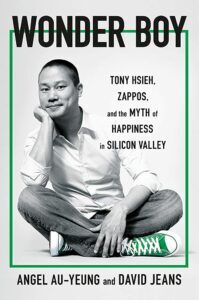 Against that backdrop, I just finished the excellent book Wonder Boy: Tony Hsieh, Zappos, and the Myth of Happiness in Silicon Valley. Angel Au-Yeung and David Jeans have done what few books business are able to do: move the reader.
Part of me enjoyed the trip down memory lane. I remember well networking events at the Downtown Cocktail Room and many of Tony’s other renovated locales. I even crashed one night at The Ogden.
On a deeper level, though, reading the book made me sad. Tony’s wealth, incessant need for companionship, and big ideas attracted no shortage of opportunists competing for status. When tragedy inevitably struck, the panoply post-death lawsuits that followed angered me. I can’t imagine the grief that his parents experienced, compounded no doubt by people claiming that Post-it notes entitled them to millions of their dead son’s savings.
I’m still processing the book, but I wonder—as I’m sure others have—what might have happened if more of the folks in Tony’s inner circle had just said no. Would he still be alive today? Or would have have excommunicated them and sent them off of the island?
Give it a read.
The post Book Review: Wonder Boy appeared first on Phil Simon.
May 8, 2023
Forces Are Colliding
In a nutshell, my latest book examines powerful forces that are reshaping the workplace. As I researched them and wrote the book’s manuscript, the fascinating interrelationships between and among these forces began to manifest themselves.
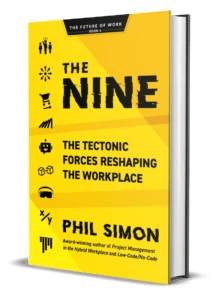 Examples abound, but today I’ll focus on a single question: What happens when employee empowerment, dispersion, and generative AI tools such as ChatGPT collide?
We starting to find out.
If managers can’t see their subordinates during the day, then what’s to prevent the latter from taking on a side hustle or four?
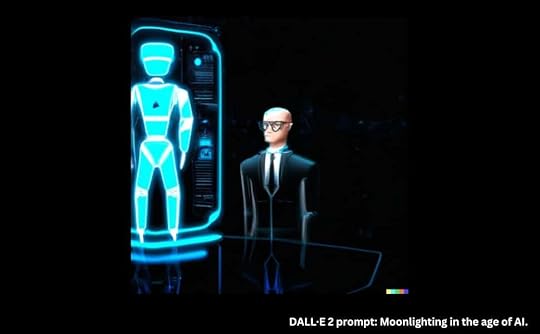
Moonlighting in the Age of AITo be fair, moonlighting is hardly a novel concept. The advent of powerful generative AI tools, however, changes everything.
As Steve Mollman writes for Fortune:
James Clarke, the CEO of Clearlink, a Utah-based digital marketing firm, explained why he feels workers need to return to the office. Among his comments:
“Some of our developers could be working for two different companies. We don’t know. We hope that’s not the case, but we don’t know. Many content writers today are now exclusively using A.I. to write. I can do that in about 30 minutes of an eight-hour workday. So what do we need to do? Let’s put out 30 to 50 times our normal production.”
For all sorts of reasons, Clarke’s simplistic proposed solution won’t work. Adding salt to the wound, the CEO now finds himself routinely mentioned with other tone-deaf leaders like MillerKnoll CEO Andi Owen.
Get used to the nine forces.
For starters, the labor market remains historically tight, and employees forced to exponentially increase their output will shirk, quietly or actually quit, or both. Apart from that, though, insisting upon 40x the output will invariably lead to a decrease in quantity. The portions may be ample, but the quality will suck.
So, what’s the simple solution?
There isn’t one.
Simon Says: The cure is worse than the disease.In the final chapter of The Nine, I propose six alternatives for leaders to navigate this era of unprecedented change. Make no mistake: Reflexively magnifying employee workloads isn’t one of them.
Get used to the nine forces. Not only are they not disappearing; they are intensifying with no end in sight.
FeedbackWhat say you?
The post Forces Are Colliding appeared first on Phil Simon.
May 5, 2023
Collaboration, AI, and the Long Game
DALL\u00b7E prompt: stubborn executive computer\n
Your department or employer has embraced Slack, Microsoft Teams, or another internal collaboration hub. You regularly send your colleagues direct messages. You frequently post messages in channels. Some contain brief videos that you record to save time. As you type a new message, you see the following prompts:\n\nElaine doesn’t typically respond to messages containing more than 100 words. Consider calling her or scheduling time with her instead.\nDespite being a member of [channel name], Kramer isn’t active on it. Send him a DM instead if you want him to respond.\nMembers of [channel name] are far more likely to watch a video than read a long message.\nDid you know that George asked this question a year ago in [channel name] and Jerry answered it? Click here to view it.\n\n All of these scenarios sound far-fetched, right?\n A few years ago, sure.\n Today, however, not so much.\n Generative AI is coming to collaboration and communication applications. (Exhibit A: the recently announced Slack GPT.) Make no mistake: As I predicted in the final chapter of Reimagining Collaboration, these technologies can and will immensely improve how we work. They will save us a great deal of time and help us prioritize what we do.\nUnder the Hood\n Large language models underpin today’s crop of robust generative AI tools, but LLMs don’t learn by themselves. They require data. Lots and lots of data.\n And here’s why it’s essential that all\u2014yes, all\u2014employees communicate via internal collaboration hubs as much as possible: More data in Slack, MS Teams, Zoom, and the ilk results in deeper learning. LLMs get smarter. In turn, they will make better connections and suggestions down the road.\nSimon Says: Think bigger.\n Every internal e-mail, text, WhatsApp message, and communication outside of the hub represents a missed opportunity to train and improve LLM. (Remember that GPT stands for generative pre-trained transformer.) Over time, these omissions add up. Recommendations won’t be as relevant\u2014and some will be grossly inaccurate.\n Think about that next time people start conversations via e-mail or divert an existing conversation from the hub to an inbox.","tablet":" DALL\u00b7E prompt: stubborn executive computer\n Your department or employer has embraced Slack, Microsoft Teams, or another internal collaboration hub. You regularly send your colleagues direct messages. You frequently post messages in channels. Some contain brief videos that you record to save time. As you type a new message, you see the following prompts:\n\nElaine doesn't typically respond to messages containing more than 100 words. Consider calling her or scheduling time with her instead.\nDespite being a member of [channel name], Kramer isn't active on it. Send him a DM instead if you want him to respond.\nMembers of [channel name] are far more likely to watch a video than read a long message.\nDid you know that George asked this question a year ago in [channel name] and Jerry answered it? Click here to view it.\n\n All of these scenarios sound far-fetched, right?\n A few years ago, sure.\n Today, however, not so much.\n Generative AI is coming to collaboration and communication applications. (Exhibit A: the recently announced Slack GPT.) Make no mistake: As I predicted in the final chapter of Reimagining Collaboration, these technologies can and will immensely improve how we work. They will save us a great deal of time and help us prioritize what we do.\nUnder the Hood\n Large language models underpin today's crop of robust generative AI tools, but LLMs don't learn by themselves. They require data. Lots and lots of data.\n And here's why it's essential that all\u2014yes, all\u2014employees communicate via internal collaboration hubs as much as possible: More data in Slack, MS Teams, Zoom, and the ilk results in deeper learning. LLMs get smarter. In turn, they will make better connections and suggestions down the road.\nSimon Says: Think bigger.\n Every internal e-mail, text, WhatsApp message, and communication outside of the hub represents a missed opportunity to train and improve LLM. (Remember that GPT stands for generative pre-trained transformer.) Over time, these omissions add up. Recommendations won't be as relevant\u2014and some will be grossly inaccurate.\n Think about that next time people start conversations via e-mail or divert an existing conversation from the hub to an inbox.","phone":" Your department or employer has embraced Slack, Microsoft Teams, or another internal collaboration hub. You regularly send your colleagues direct messages. You frequently post messages in channels. Some contain brief videos that you record to save time. As you type a new message, you see the following prompts:\n\nElaine doesn't typically respond to messages containing more than 100 words. Consider calling her or scheduling time with her instead.\nDespite being a member of [channel name], Kramer isn't active on it. Send him a DM instead if you want him to respond.\nMembers of [channel name] are far more likely to watch a video than read a long message.\nDid you know that George asked this question a year ago in [channel name] and Jerry answered it? Click here to view it.\n\n All of these scenarios sound far-fetched, right?\n A few years ago, sure.\n Today, however, not so much.\n Generative AI is coming to collaboration and communication applications. (Exhibit A: the recently announced Slack GPT.) Make no mistake: As I predicted in the final chapter of Reimagining Collaboration, these technologies can and will immensely improve how we work. They will save us a great deal of time and help us prioritize what we do.\nUnder the Hood\n Large language models underpin today's crop of robust generative AI tools, but LLMs don't learn by themselves. They require data. Lots and lots of data.\n And here's why it's essential that all\u2014yes, all\u2014employees communicate via internal collaboration hubs as much as possible: More data in Slack, MS Teams, Zoom, and the ilk results in deeper learning. LLMs get smarter. In turn, they will make better connections and suggestions down the road.\nSimon Says: Think bigger.\n Every internal e-mail, text, WhatsApp message, and communication outside of the hub represents a missed opportunity to train and improve LLM. (Remember that GPT stands for generative pre-trained transformer.) Over time, these omissions add up. Recommendations won't be as relevant\u2014and some will be grossly inaccurate.\n Think about that next time people start conversations via e-mail or divert an existing conversation from the hub to an inbox."}},"slug":"et_pb_text"}" data-et-multi-view-load-tablet-hidden="true" data-et-multi-view-load-phone-hidden="true"> DALL·E prompt: stubborn executive computer Your department or employer has embraced Slack, Microsoft Teams, or another internal collaboration hub. You regularly send your colleagues direct messages. You frequently post messages in channels. Some contain brief videos that you record to save time. As you type a new message, you see the following prompts: All of these scenarios sound far-fetched, right? A few years ago, sure. Today, however, not so much. Generative AI is coming to collaboration and communication applications. (Exhibit A: the recently announced Slack GPT.) Make no mistake: As I predicted in the final chapter of Reimagining Collaboration, these technologies can and will immensely improve how we work. They will save us a great deal of time and help us prioritize what we do. Large language models underpin today’s crop of robust generative AI tools, but LLMs don’t learn by themselves. They require data. Lots and lots of data. And here’s why it’s essential that all—yes, all—employees communicate via internal collaboration hubs as much as possible: More data in Slack, MS Teams, Zoom, and the ilk results in deeper learning. LLMs get smarter. In turn, they will make better connections and suggestions down the road. Every internal e-mail, text, WhatsApp message, and communication outside of the hub represents a missed opportunity to train and improve LLM. (Remember that GPT stands for generative pre-trained transformer.) Over time, these omissions add up. Recommendations won’t be as relevant—and some will be grossly inaccurate. Think about that next time people start conversations via e-mail or divert an existing conversation from the hub to an inbox.
[image error]
The post Collaboration, AI, and the Long Game appeared first on Phil Simon.
April 29, 2023
The Nine: Audiobook Updates
We’re finally live on Audible. The audiobook version should be live just about everywhere else by now.
Happy listening.
The post The Nine: Audiobook Updates appeared first on Phil Simon.
April 19, 2023
Employee Empowerment and Pity City

Screenshot by NPR/YouTube
Not that long ago, CEOs could put their feet in their mouths with relative impunity. Many did sans meaningful consequences.
Those days, however, have largely come to an end, but MillerKnoll CEO Andi Owen never got the memo.
Owen’s video on employee bonuses has predictably gone viral. One version of the video posted to Twitter sports more than 7 million views as of this writing.
Owen banked more than $4 million in bonuses in 2022. The words tone deaf come to mind.
Like it or not, we live in an age of employee empowerment. (It’s the first of the forces in The Nine: The Tectonic Forces Reshaping the Workplace.) You can either fight this force or recognize that the world has changed for good.
Simon Says: Employee empowerment is going away any time soon.No, you can’t make everyone happy, but actions like Owen’s are counterproductive. Her message won’t inspire the troops. Rather, expect a great deal of disengagement and quiet and actual quitting at MillerKnoll over the next few months.
FeedbackWhat say you?
The post Employee Empowerment and Pity City appeared first on Phil Simon.
April 6, 2023
Publication of The Nine
 [image error]\n
I am pleased to announce the publication of The Nine: The Tectonic Forces Reshaping the Workplace.\u00a0I believe that it’s my best work to date.\n
Check out the trailer, praise, and a few excerpts on the book’s main page.\n As of now, the paperback and Kindle versions are up on Amazon. Google Play dropped the other day. The hardcover and audiobook versions should arrive later this month. It just takes a bit of time.\n I hope that you’ll check it out.","tablet":""}},"slug":"et_pb_text"}" data-et-multi-view-load-tablet-hidden="true"> I am pleased to announce the publication of The Nine: The Tectonic Forces Reshaping the Workplace. I believe that it’s my best work to date. Check out the trailer, praise, and a few excerpts on the book’s main page. As of now, the paperback and Kindle versions are up on Amazon. Google Play dropped the other day. The hardcover and audiobook versions should arrive later this month. It just takes a bit of time. I hope that you’ll check it out.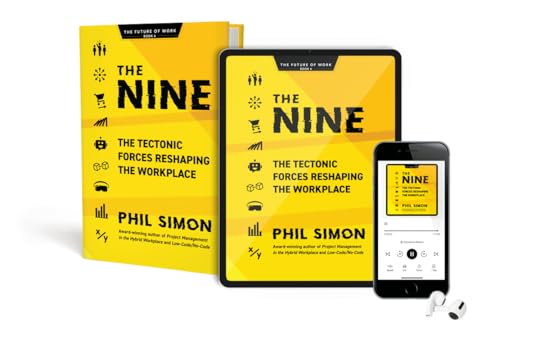
UPDATED: 04.05.22
AMAZONBULK ORDERSSIGNED COPY🔜 APPLE BOOKSBARNES & NOBLE🔜 BOOKSHOPGOOGLE PLAY🔜 INDIEBOUNDThe post Publication of The Nine appeared first on Phil Simon.
March 28, 2023
Episode 78: The Empathy Advantage With Chris Shipley
 Chris Shipley joins me today. We talk about four-day workweeks, pandemic-based relocation, and her new book The Empathy Advantage.
The post Episode 78: The Empathy Advantage With Chris Shipley appeared first on Phil Simon.
March 25, 2023
Custom Editions of The Nine Available
As I’ve done with my last three books, I’m offering bespoke editions of The Nine: The Tectonic Forces Reshaping the Workplace.
ProcessExecutives agree with the general message of the book, but they want to put their own spin on it. As such, they’ll want to give copies to their employees, prospects, and/or customers. (Stress balls and USB drives are so 2010.)
They’ll do this by writing four- to five-page forewords with their individual takes on the fascinating future of work and what their organization is doing to prepare. Ideally, their takes align nicely with the core themes of The Nine. What’s more, the exec’s name and title will adorn the cover of the bespoke version of the book. Finally, the organization’s logo can also go on the cover, probably in the upper or lower right-hand corner.
It would look something like this:
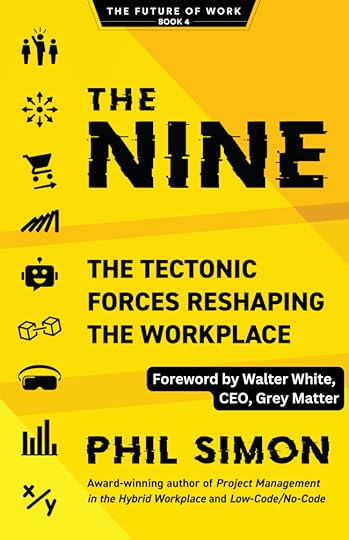
I can envision several different homes for bespoke versions of my book. In no particular order:
Consulting firms.Colleges and universities.Think tanks.Membership organizations, such as SHRM.Service providers.Software vendors.Conference organizers who want to provide attendees with a bespoke version of the book, especially if I’m speaking at the event.Other LogisticsI’ll start with the paperback version.
At the risk of stating the obvious, these versions will cost far less than their hardcover counterparts—although both are on the table. To make the per-unit price cost-effective, an organization will need to purchase no fewer than 200 copies. Larger orders will drop the per-unit price considerably. If we hit 1,000, then the number really plummets. Oh, and copies—no matter how many—do not include rights to the book’s intellectual property. That stays with me.
As for the hardcover, the price is more expensive, the order minimum is higher, and the time to produce them will be longer—about 90 days as of now.
LET'S DO THISThe post Custom Editions of The Nine Available appeared first on Phil Simon.