Phil Simon's Blog, page 12
March 21, 2023
Episode 77: Audio Excerpt From The Nine
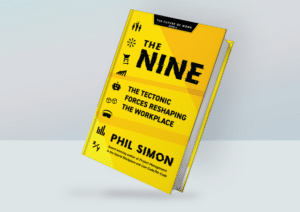 Enjoy a 13-minute preview of my forthcoming book, The Nine: The Tectonic Forces Reshaping the Workplace.
Props to my narrator Jonathan Yen.
WANT EARLY ACCESS TO PODCAST EPISODES? ➡️The post Episode 77: Audio Excerpt From The Nine appeared first on Phil Simon.


March 13, 2023
Excerpt From The Nine
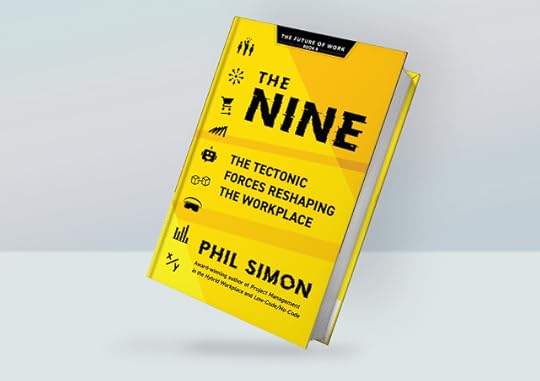
Here’s an excerpt from the new book. In it, I discuss ChatGPT and the growth of generative AI.
(function() { var scribd = document.createElement("script"); scribd.type = "text/javascript"; scribd.async = true; scribd.src = "https://www.scribd.com/javascripts/em... var s = document.getElementsByTagName("script")[0]; s.parentNode.insertBefore(scribd, s); })();The post Excerpt From The Nine appeared first on Phil Simon.
March 10, 2023
Reimagining Collaboration Wins Axiom Award
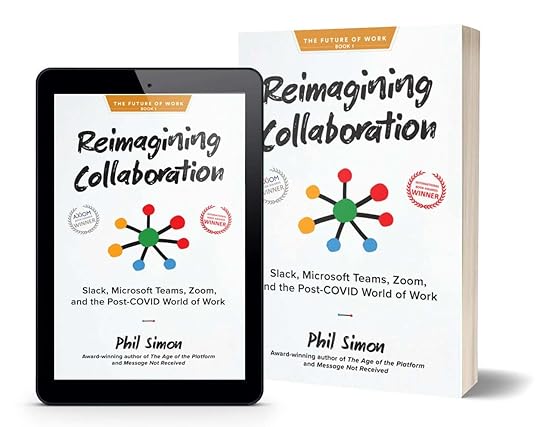
Reimagining Collaboration has won the Axiom Silver medal for Business Technology. It previously won a 2021 International Book Award in the Business Communications/Public Relations category.
It’s my third Axiom. Message Not Received and The Age of the Platform also won awards.
Mic drop.
The post Reimagining Collaboration Wins Axiom Award appeared first on Phil Simon.
March 9, 2023
Trailer for The Nine
Here’s the trailer for The Nine: The Tectonic Forces Reshaping the Workplace.
Hat tip to rockstar Stephanie Welch.
PRE-ORDER KINDLE EDITIONThe post Trailer for The Nine appeared first on Phil Simon.
March 7, 2023
Episode 76: The Good Enough Job With Simone Stolzoff
 Simone Stolzoff joins me to talk about his new book The Good Enough Job: Reclaiming Life from Work. We discuss unions, Kickstarter, trust, and much more.
The post Episode 76: The Good Enough Job With Simone Stolzoff appeared first on Phil Simon.
February 17, 2023
Can ChatGPT improve collaboration?
[image error]I’m still getting my head around ChatGPT\u2014a tool that somehow made Bing sexy.\n We’ve seen over the past three months how training generative AI tools against a large but generic corpus of knowledge like the web produces impressive results. No argument here, but what about other, more focused bodies of knowledge?\n Specifically, what about training a language model against all of the text, images, links, conversations, and videos in a Slack Workspace or an instance of Microsoft Teams?\n Developers are already thinking about ways to fuse the two technologies together.\n\n Say that you just joined a company\u2014one that eschews e-mail and uses an internal collaboration hub instead. Imagine being able to access all of the valuable content but in a more conversational, less overwhelming way. (Parsing through months-old messages to get a feel for the organization, team, department, internal politics, and major decisions is akin to drinking from a firehose.)\n Here’s a generic work-related question and ChatGPT’s answer, but I can see far more specific ones that account for a team’s or a department’s interpersonal dynamics:\n [image error]\n I could see typing a DM to Steve, only to have AI tell me that he typically doesn’t respond for three days before I send it. Maybe a bot will suggest that I search an existing Slack or Teams channel for my answer or ask Lucy or Pete instead? That recommendation might help alleviate tool overload and solve the search dilemma.\n Such functionality isn’t a pipe dream.\u00a0It turns out that developers are already thinking about ways to fuse the two technologies together. (A developer wrote this bot in Python.) Ditto for the C-suite. Microsoft CEO Satya Nadella has already said that ChatGPT is coming to all of his company’s products. For their part, citizen developers can integrate Slack and ChatGPT via Zapier.\nSimon Says\n Will generative AI improve the utility of internal collaboration hubs? Yes, but don’t ask me when. The possibilities are endless\u2014and worth keeping an eye on.\n What say you?","tablet":" [image error]I'm still getting my head around ChatGPT\u2014a tool that somehow made Bing sexy.\n We've seen over the past three months how training generative AI tools against a large but generic corpus of knowledge like the web produces impressive results. No argument here, but what about other, more focused bodies of knowledge?\n Specifically, what about training a language model against all of the text, images, links, conversations, and videos in a Slack Workspace or an instance of Microsoft Teams?\n Developers are already thinking about ways to fuse the two technologies together.\n\n Say that you just joined a company\u2014one that eschews e-mail and uses an internal collaboration hub instead. Imagine being able to access all of the valuable content but in a more conversational, less overwhelming way. (Parsing through months-old messages to get a feel for the organization, team, department, internal politics, and major decisions is akin to drinking from a firehose.)\n Here's a generic work-related question and ChatGPT's answer, but I can see far more specific ones that account for a team's or a department's interpersonal dynamics:\n [image error]\n I could see typing a DM to Steve, only to have AI tell me that he typically doesn't respond for three days before I send it. Maybe a bot will suggest that I search an existing Slack or Teams channel for my answer or ask Lucy or Pete instead? That recommendation might help alleviate tool overload and solve the search dilemma.\n Such functionality isn't a pipe dream. It turns out that developers are already thinking about ways to fuse the two technologies together. (A developer wrote this bot in Python.) Ditto for the C-suite. Microsoft CEO Satya Nadella has already said that ChatGPT is coming to all of his company's products. For their part, citizen developers can integrate Slack and ChatGPT via Zapier.\nSimon Says\n Will generative AI improve the utility of internal collaboration hubs? Yes, but don't ask me when. The possibilities are endless\u2014and worth keeping an eye on.\n What say you?","phone":" [image error]I'm still getting my head around ChatGPT\u2014a tool that somehow made Bing sexy.\n We've seen over the past three months how training generative AI tools against a large but generic corpus of knowledge like the web produces impressive results. No argument here, but what about other, more focused bodies of knowledge?\n Specifically, what about training a language model against all of the text, images, links, conversations, and videos in a Slack Workspace or an instance of Microsoft Teams?\n Developers are already thinking about ways to fuse the two technologies together.\n\n Say that you just joined a company\u2014one that eschews e-mail and uses an internal collaboration hub instead. Imagine being able to access all of the valuable content but in a more conversational, less overwhelming way. (Parsing through months-old messages to get a feel for the organization, team, department, internal politics, and major decisions is akin to drinking from a firehose.)\n Here's a generic work-related question and ChatGPT's answer, but I can see far more specific ones that account for a team's or a department's interpersonal dynamics:\n [image error]\n I could see typing a DM to Steve, only to have AI tell me that he typically doesn't respond for three days before I send it. Maybe a bot will suggest that I search an existing Slack or Teams channel for my answer or ask Lucy or Pete instead? That recommendation might help alleviate tool overload and solve the search dilemma.\n Such functionality isn't a pipe dream. It turns out that developers are already thinking about ways to fuse the two technologies together. (A developer wrote this bot in Python.) Ditto for the C-suite. Microsoft CEO Satya Nadella has already said that ChatGPT is coming to all of his company's products. For their part, citizen developers can integrate Slack and ChatGPT via Zapier.\nSimon Says\n Will generative AI improve the utility of internal collaboration hubs? Yes, but don't ask me when. The possibilities are endless\u2014and worth keeping an eye on.\n What say you?"}},"slug":"et_pb_text"}" data-et-multi-view-load-tablet-hidden="true" data-et-multi-view-load-phone-hidden="true"> We’ve seen over the past three months how training generative AI tools against a large but generic corpus of knowledge like the web produces impressive results. No argument here, but what about other, more focused bodies of knowledge? Specifically, what about training a language model against all of the text, images, links, conversations, and videos in a Slack Workspace or an instance of Microsoft Teams? Developers are already thinking about ways to fuse the two technologies together. Say that you just joined a company—one that eschews e-mail and uses an internal collaboration hub instead. Imagine being able to access all of the valuable content but in a more conversational, less overwhelming way. (Parsing through months-old messages to get a feel for the organization, team, department, internal politics, and major decisions is akin to drinking from a firehose.) Here’s a generic work-related question and ChatGPT’s answer, but I can see far more specific ones that account for a team’s or a department’s interpersonal dynamics: I could see typing a DM to Steve, only to have AI tell me that he typically doesn’t respond for three days before I send it. Maybe a bot will suggest that I search an existing Slack or Teams channel for my answer or ask Lucy or Pete instead? That recommendation might help alleviate tool overload and solve the search dilemma. Such functionality isn’t a pipe dream. It turns out that developers are already thinking about ways to fuse the two technologies together. (A developer wrote this bot in Python.) Ditto for the C-suite. Microsoft CEO Satya Nadella has already said that ChatGPT is coming to all of his company’s products. For their part, citizen developers can integrate Slack and ChatGPT via Zapier. Will generative AI improve the utility of internal collaboration hubs? Yes, but don’t ask me when. The possibilities are endless—and worth keeping an eye on. What say you?\n
\n
\n
 I’m still getting my head around ChatGPT—a tool that somehow made Bing sexy.
Example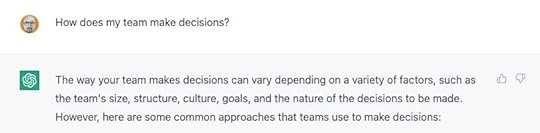
The post Can ChatGPT improve collaboration? appeared first on Phil Simon.
February 14, 2023
Following the AI Money
 Generative AI tools like ChatGTP have been all the rage lately. Microsoft’s bet on OpenAI has paid off in spades. Hell, even Bing—yes, Bing—is suddenly sexy. Microsoft’s rapid ascension is forcing its competitors to scramble. Case in point: Google dropped its knockoff Bard the other day after its CEO declared a code red.
This begs the question: Is generative AI just a fad, or is something more fundamental taking place?
In The Nine: The Tectonic Forces Reshaping the Workplace, I argue for the latter.
Follow the MoneyA decent—albeit imperfect—way to predict the future involves following the money. Bob Woodward thought so:
Ask yourself two questions: Where are venture capitalists placing their bets? And how significant are those amounts?
Estimates vary, but here are a few. The Organization for Economic Cooperation and Development reported that the global annual value of VC investments in AI firms in 2020 was $75 billion. In 2012, that number was less than $3 billion.
Over the last nine years, there’s been a precipitous thirty-fold, inflation-adjusted rise in AI investment:
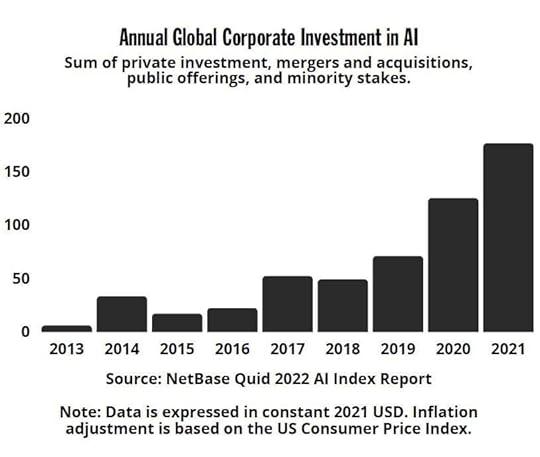
Investors clearly see AI dollar signs, but what about generative AI in particular? The top dogs at the prominent VC firm Sequoia Capital believe it “has the potential to generate trillions of dollars of economic value.” Pitchbook reports that VCs have increased their investment in generative AI by 425 percent since 2020 to $2.1 billion.
Investors want to make money. Ho hum. But what about the people who are making budgeting and spending decisions? Are they buying into the AI hype?
In short, yes.
In September 2022, the MIT Technology Review released the results of an extensive survey of CIOs and other business leaders. The topics included enterprise systems, AI, and their strategic plans. Here are some interesting findings:
The surveyed companies’ data and AI strategies are closely interlinked. Over three-quarters (78%) of the executives we surveyed—and almost all (96%) of the leader group—say that scaling AI and machine learning use cases to create business value is their top priority for enterprise data strategy over the next three years.
Despite the report’s stilted language, it’s clear that the C-suite increasingly recognizes the vast potential of AI. As for why I suspect that several forces are at play.
CXOs Get ItFirst, workers are expensive, demanding, and finicky about where they work. Beyond that, AI has matured considerably in recent years. It’s become less abstract. Recent advances (such as ChatGPT) have convinced some grizzled skeptics of its capabilities, but don’t believe me.
OpenAI’s valuation stands at $29 billion.
Jasper is an AI copywriting app for marketers. In October 2022, it raised $125 million, valuing the company at $1.5 billion. In the words of co-founder and CEO Dave Rogenmoser, “About two years ago, we realized (AI) had crossed a threshold. It started producing better end results.”
And just to put a bow on OpenAI, its valuation stands at $29 billion.
Simon Says: Generative AI is here to stay.Expect more AI unicorns in the years ahead. Much like Mosaic and the iPhone, we may look back at the launch of ChatGPT as a transformational moment. It doesn’t matter that I don’t use it.
FeedbackWhat say you?
The post Following the AI Money appeared first on Phil Simon.
February 8, 2023
From Big to Small
 Layoffs are all the rage these days. Microsoft, Zoom, Amazon, Meta, and Salesforce are just some of the companies that have let go of thousands of employees.
Yet the labor market remains white hot. Unemployment is 3.4 percent. It’s a question that I consider in The Nine: The Tectonic Forces Reshaping the Workplace.
Why?
Lots of things are at play, but here’s a biggie.
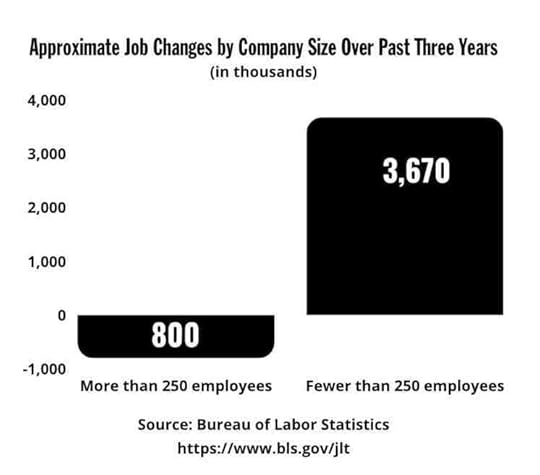
Small business growth over the past three years has been phenomenal, but don’t believe me. Since February 2020, the Bureau of Labor Statistics Job Openings and Labor Turnover Survey reports that firms with fewer than 250 employees have hired 3.67 million more people than they’ve lost.
That number starkly contrasts with larger businesses that employ 250 individuals or more. As a whole, the latter group has trimmed 800,000 net jobs during this three-year period.
This trend bodes well for fractional CFOs like Ken Weil. Ditto for CIOs and chief legal counsels.
Smaller firms are exactly the types that benefit from locking in part-time experts as they confront new challenges.
The post From Big to Small appeared first on Phil Simon.
January 23, 2023
Why I Don’t Write With ChatGPT
ChatGPT continues to get a good deal of play, including an appearance on CBS Sunday Morning.
It’s a neat tool, but I’m not using it to write The Nine or any of the posts on my site or for my clients. Here’s why.
It’s Not AccurateCreating a bibliography is a manual process. Ideally, it’s the type of thing that ChatGPT could easily handle.
I pasted some texts that I’m quoting and have influenced my thinking. See its response below:
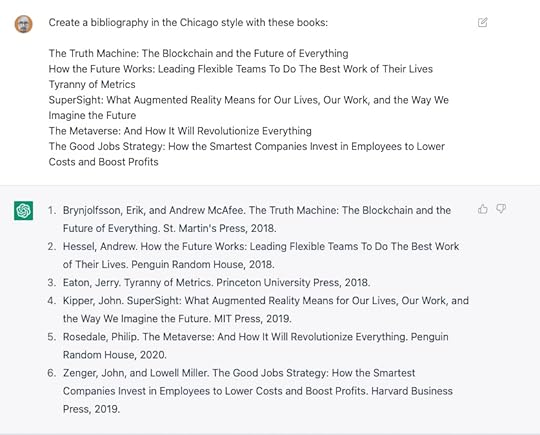
These are wrong. If you can’t tell me who wrote a book, why should I trust you to make arguments for me?
My Spanish is decent. I wouldn’t hire an interpreter who routinely confused words—and neither should you.
PrideI’m big on bringing my receipts.
When I hold the first copy of a new book in my hand, I feel a sense of pride. I know how much work went into it. Even if ChatGPT churned out quality text, knowing that I cheated would cheapen the experience for me.
Lack of SourcingI’m big on bringing my receipts. There are over 200 endnotes in the manuscript for the new book from reputable sources. Sometimes I have to dig to find a stat or study from a reliable outlet, but that journey makes me confident in my results.
Editing Takes Longer Than Starting From ScratchChatGPT is good but imperfect. I find that making tweaks to sentences takes me longer than just writing them correctly from the get-go. What’s more, writing from scratch allows me to enter flow state.
I Don’t Suffer From Writer’s BlockAt the risk of being immodest, I don’t. If anything, I’ve got too many ideas pinging around my noggin. Such is life as a sponge.
I Have Developed My Own Writing StyleOver the years, I’ve become a better and snarkier writer. Let’s say, though, that I used ChatGPT.
Intelligent readers of my books would sense that something is off. Why am I using a generic tone on this one? And, for God’s sake, where are all the Seinfeld and Breaking Bad references?
Perish the thought.
Simon SaysGPT-4 is supposed to be sick, although OpenAI’s own CEO vows that people will be disappointed.
I’ll give it a shot but, for the reasons described in this post, won’t be using it as my writing assistant anytime soon.
FeedbackWhat say you?
The post Why I Don’t Write With ChatGPT appeared first on Phil Simon.
Why I Don’t Use ChatGPT
 ChatGPT continues to get a good deal of play, including an appearance on CBS Sunday Morning.
It’s a neat tool, but I’m not using it to write The Nine. Here’s why.
It’s Not AccurateCreating a bibliography is a manual process. Ideally, it’s the type of thing that ChatGPT could easily handle.
I pasted some texts that I’m quoting and have influenced my thinking. See its response below:
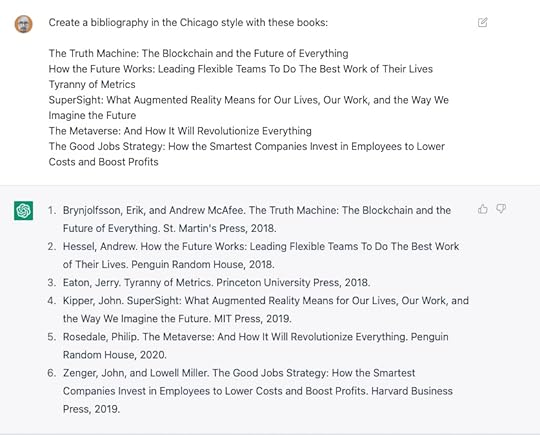
These are wrong. If you can’t tell me who wrote a book, why should I trust you to make arguments for me?
My Spanish is decent. I wouldn’t hire an interpreter who routinely confused words—and neither should you.
PrideI’m big on bringing my receipts.
When I hold the first copy of a new book in my hand, I feel a sense of pride. I know how much work went into it. Even if ChatGPT churned out quality text, knowing that I cheated would cheapen the experience for me.
Lack of SourcingI’m big on bringing my receipts. There are over 200 endnotes in the manuscript for the new book from reputable sources. Sometimes I have to dig to find a stat or study from a reliable outlet, but that journey makes me confident in my results.
Editing Takes Longer Than Starting From ScratchChatGPT is good but imperfect. I find that making tweaks to sentences takes me longer than just writing them correctly from the get-go. What’s more, writing from scratch allows me to enter flow state.
I Don’t Suffer From Writer’s BlockAt the risk of being immodest, I don’t. If anything, I’ve got too many ideas pinging around my noggin. Such is life as a sponge.
I Have Developed My Own Writing StyleOver the years, I’ve become a better and snarkier writer. Let’s say, though, that I used ChatGPT.
Intelligent readers of my books would sense that something is off. Why am I using a generic tone on this one? And, for God’s sake, where are all the Seinfeld and Breaking Bad references?
Perish the thought.
Simon SaysGPT-4 is supposed to be sick, although OpenAI’s own CEO vows that people will be disappointed.
I’ll give it a shot but, for the reasons described in this post, won’t be using it as my writing assistant anytime soon.
FeedbackWhat say you?
The post Why I Don’t Use ChatGPT appeared first on Phil Simon.