
Jonathan Harnum's Blog, page 51
October 10, 2013
Less Talk, More Music
The title of this post says what I feel. Talk is cheap. If talking about music sufficed, music would not be. I’ll shut up now. Well, almost. Props where props are due.
Reinier Voet and company (w/ Rob Stoop on accordion) play Django’s beautiful tune, Anouman. Mr. Voet’s web site is here.
Related articles
How to Play An Accordion | “Accordion Course for Beginners” Teaches People How to Become Professional Accordionists Within A Few Months – V-kool (prweb.com)
The King of the Accordion (mothergoosesmiles.wordpress.com)


September 26, 2013
Essential Music Books (age 14+)
I’ve read every practice book out there (most of them twice or more), and many other music-related books besides, as well as a raft of peer-reviewed research on practice. Here’s a compilation of the best of the best books. Great advice and excellent writing. If I’ve left out a favorite of yours, let me know in the comments. I’ve done extensive reviews of most of these titles. Look for the link, or go here.
Lots of food for thought in these books for players of every level. These books should be in your music library. The order in which they’re presented reflects my own loose ranking system. The first one is the best. All of them are good.
___________________________________________________________
___________________________________________________
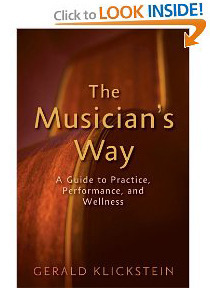
The Musician’s Way: A Guide to Practice, Performance, and Wellness, by Gerald Klickstein
Pages: 343
Chapters: 14
Back Matter: Notes, Selected Bibliography, Index
Part I: Artful Practice
Part II: Fearless Performance
Part III: Lifelong Creativity
MY REVIEW
Klickstein is a classical guitarist who performs throughout the U.S. and internationally and is a professor at the University of North Carolina School of the Arts. He has an excellent blog.
My favorite 2 aspects of the book are the well-chosen quotations sprinkled throughout, and the use of solid research to inform and back up what Klickstein puts forth. The bibliography is solid though not comprehensive. The book covers the nitty gritty of practice and includes concrete things to actually do, which mostly means strategies for excellent practice, but there are other worthy tidbits, too. The second section of the book is all about performance and the strategies you can use to include performance as another aspect of your practice. Klickstein also covers aspects of the body that are important to good practice: physical warm-ups, injury prevention, resting. The final part of the book covers injury prevention and valuable advice for the student. More specifics on each section can be found in my original review.
___________________________________________________________
___________________________________________________

The Inner Game of Music by Barry Green, with Timothy Gallwey
15 chapters
225 pages
Barry Green’s book is based on Gallwey’s quite successful title, The Inner Game of Tennis. What is striking and admirable is that Green didn’t just write a knockoff cribbed from Gallwey’s book. After meeting with Gallwey about the project, they decided Green should live with (and teach) the principles and then write the book. Three years later, Green was ready and this book is the result.
___________________________________________________________
___________________________________________________
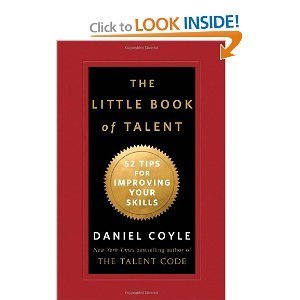 The Little Book of Talent: 52 Tips for Improving Your Skills, by Dan Coyle. You’ll see another great book by Coyle further down this list. This little gem here is short, sweet, and just about small enough to fit in most instrument cases, and it’s a hardcover, so it’ll take a beating if necessary.
Though I personally don’t like the word “talent,” because it’s a loaded term that tends to mean “gifted,” or “you either have it or you don’t,” but Coyle’s superb book may convince you that “talent” isn’t a gift, it’s earned through effort, attention, and perseverance. This book is chock-full of excellent advice on practice. Get it!
Hardcover: 160 pages
Publisher: Bantam; 1 edition (August 21, 2012)
Language: English
Product Dimensions: 4.9 x 0.7 x 7.5 inches
Average Customer Review: (64 customer reviews)
___________________________________________________________
_______________________________________________
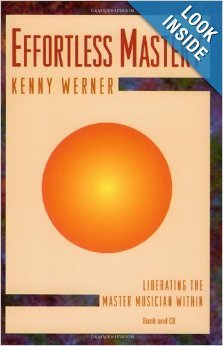 Effortless Mastery: Liberating the Master Musician Within
by Kenny Werner
I have to make the disclaimer that reading this book resulted in a sea change that deeply affected my philosophy and approach to teaching, learning, playing, and listening to music. It came along at just the right time to make a big impact on me and because of this, I had to revisit it as I think about The Practice of Practice. In my re-reading of Werner’s book I see again a wisdom and a reverence for Music that still shines through. I still recommend the book highly.
Especially useful in this book are Werner’s thoughts on how fear can (and usually does at some point) affect one’s playing, and even the way one listens to music. Fear of any sort doesn’t result in good playing and it may well force you into quitting altogether. This is bad. If you can get a handle on fear early in your pursuit (or at any phase of your journey), you’re better off than most.
___________________________________________________________
_______________________________________________
Free Play: Improvisation in Life and Art , by Stephen Nachmanovich
Pages: 197
Chapters: 22
Back Matter (10 pp): notes/sources, bibliography, illustrations list, bio
4 Sections: The Sources; The Work; Obstacles & Openings; The Fruits
(At the end of this review is a link to an mp3 of my improv group Meh! playing an improvised story with Nachmanovich.)
Free Play doesn’t deal directly with music practice, but it is nevertheless an important book for anyone interested in music (or other arts, or life). I strongly believe that improvisation benefits practice. To me, improvising is an essential musical skill, one possessed by musical greats (Hussain, Bach, Shankar, Beethoven, Duke, Mozart, etc.), and is practiced in musical traditions all over the world, as well as by young children who haven’t developed some of the fear associated with improvisation in those overly focused on the written notes. Remember when you drew letters over and over as a young child, taking great care (or not) with the shapes? Now imagine that despite all that practice time forming letters and sounding out words, that you never (ever) spoke extemporaneously. Crazy, right? To me, that’s about the same as practicing scales over and over until they’re memorized, but then never using that tonal material to improvise.
_______________________________________________
___________________________________________________
August 24, 2013
12 Rules of Music Practice (Wynton Marsalis)

Wynton Marsalis at the Lincoln Center for the Performing Arts (Photo credit: Wikipedia)
Wynton Marsalis knows how to practice. As a younger man, he was equally at home in front of a symphony orchestra playing the Haydn concerto, or laying down some serious jazz with Art Blakey. Check out Wynton’s discography for more evidence of his skill and artistry.
For a while now, he’s turned his full attention to traditional jazz and his own new compositions. Back when VHS was the only option for video releases, Wynton did a program called Tackling the Monster: Wynton on Practice. In the video excerpt below, fast-forward to 3:00 to get to the practice tidbits. After that, check out Wynton playing some sweet choruses at the Jazz in Marciac festival in France, in 2009. So tasty and relaxed. After the first tune, the concert goes on for another 45 minutes, and is equally tasty. Put it on in the background while you work, or stare at it raptly like I do. That’s what tens of thousands of hours of practice sounds like.
Lately, I’ve subscribed to live concert video/audio feeds from Jazz at Lincoln Center, where you’ll hear the world’s best jazz musicians doing their thing in real time. On the LiveStream site you can check out other feeds, too. Wynton latest appearance at Ronnie Scott’s in the UK was a concert I enjoyed a lot. Knowing it’s happening live is pretty cool.
Here are 12 practice suggestions from Master Marsalis. Each one could be the subject of a book on its own. After the videos, I’ve added some suggestions to consider below each of Wynton’s practice rules. Some of them will be covered in more detail in the book, The Practice of Practice.
Seek out the best private instruction you can afford.
Write/work out a regular practice schedule.
Set realistic goals.
Concentrate when practicing
Relax and practice slowly
Practice what you can’t play. – (The hard parts.)
Always play with maximum expression.
Don’t be too hard on yourself.
Don’t show off.
Think for yourself. – (Don’t rely on methods.)
Be optimistic. – “Music washes away the dust of everyday life.”
12. Look for connections between your music and other things.
(start the vid below at 3:00 to skip the credits). I’ve found some evidence in my own research talking with master musicians that, instead of being something dreaded, as Wynton and YoYo Ma mention, practice is also something many musicians love dearly. It’s good to have a challenge and work toward it, even if that work is sometimes supremely demanding, and at times frustrating.
Here’s Wynton and crew in 2009. Around 16:00 you can hear Wynton and Wycliffe Gordon sing. Listen to the concert as you ponder the suggestions for each rule below the video.
Suggestions for Each Practice Rule:
1. Seek out the best private instruction you can afford.
In a study by Sosniak, she found that most accomplished classical musicians’ first teachers lived in the neighborhood, and that teacher was instrumental (haha) in finding the second teacher. Find someone close by who is willing to teach you.
Teachers are also be the people you play with, or hang out with. Just getting together to play and talk about music with a few people is a fun way to spend some time, and can teach you a lot. Make a point of getting together regularly to make music with other people. One fun option anyone can do is free improvisation.
2. Write/work out a regular practice schedule.
Sitting down to think through how and when and where you’ll practice will help make it happen. Daily, 20 minutes or more. Fund
Fundamentals like breathing (for wind instruments), tone quality (everyone), relaxed playing posture, intonation….
Playing with drones is a super-fun and rewarding way to hone all these abilities. Play with a great drone from Prasad Upasani’s app, iTabla, or iLehra.
Pick one song, or one part of a song, to work on. And then….
3. Set realistic goals.
Setting easy goals is better, at first, but continue to challenge yourself.
What’s the easiest goal you can set?
What’s your ultimate goal?
Writing out 10-year goals, 5-year goals, 1 year goals, 1 week goals, and any other that come to you can be helpful.
Think big when you imagine long-term goals.
Make your goals easier the closer you get to the present moment. What is your goal for the next practice session? Keep it short and simple.
A great first goal is to sit down in the chair for 20 minutes of practice, 5-6 days a week.
4. Concentrate when practicing.
Easier said than done. Choosing small, realistic goals will help you concentrate.
5. Relax and practice slowly.
It takes time and repetition for the brain to grow synaptic connections and lay thin coats of myelin over them. By playing slowly, you can more easily avoid and address errors.
6. Practice what you can’t play. – (The hard parts.)
Tuba legend Rex Martin says he never labels anything as “hard,” or “difficult,” because that sets up an expectation of the thing. Instead, he prefers to identify these parts as “unfamiliar.” Through repetition and careful study, they become familiar, and “easy.”
When accomplished practicers get a piece of new music, the immediately identify the “most unfamiliar” parts, the parts that look most challenging. These are tackled first.
7. Always play with maximum expression.
Listening to great musicians will help immensely.
8. Don’t be too hard on yourself.
Buddha is said to have said, “You yourself, as much as anyone else in the entire Universe, deserve your love and affection.
9. Don’t show off.
And while I’m quoting people, why stop now. CS Lewis said, “Humility is not thinking less of yourself. Humility is thinking of yourself less.”
To me, showing off is a weird combination of needy and aggressive. Nobody really likes showoffs because the point is the performer, not the music.
10. Think for yourself. – (Don’t rely on methods.)
You don’t get harmony when everyone sings the same note. (Doug Floyd)
11. Be optimistic.
“Music washes away the dust of everyday life.”
12. Look for connections between your music and other things.
Related articles
Wynton Marsalis Quintet, review (telegraph.co.uk)
Wynton Marsalis at Ronnie Scott’s: expect a return to jazz’s golden age (guardian.co.uk)
An Invective Against Wynton Marsalis (samuelweinberg1.wordpress.com)
Wynton Marsalis – A Trumpeter’s Lullaby (euzicasa.wordpress.com)
Wynton Marsalis vs. Robert Glasper (aaronsjazzblog.wordpress.com)
Jazz At Lincoln Center’s New Season Celebrates Past Legends, Future Greats (manhattan.ny1.com)
Wynton Marsalis Background Information (vividseats.com)


August 4, 2013
Yeime Arrieta Ramos: When She Looks Asleep, Her Accordion Playing is Most Dangerous

Meet young accordion queen, Yeime Arrieta Ramos. Her playing is great, and her attitude is even better. I’ve been writing about Flow states lately, for a chapter in the motivation section in The Practice of Practice. Young Ms. Ramos could be a poster-child for Flow. She looks incredibly relaxed, and yet is playing some serious accordion in the shot above. One of her teachers says something like, “When she looks like she’s asleep is when her accordion is most dangerous.” The joy she has in playing is hard to miss.
I’d love to hear more about her history and how she practices. Her musical companions, who also seem to be around 10-12, are also pretty amazing musicians. I think I’ll go check the Smithsonian app for the documentary right now. Looks like a good one. Here’s Yeime Arrieta Ramos in a clip from the documentary:
Related articles
Accordion Festival Plays At Bryant Park Every Thursday (statenisland.ny1.com)


August 3, 2013
Chromatik: An Online Music-Learning Resource
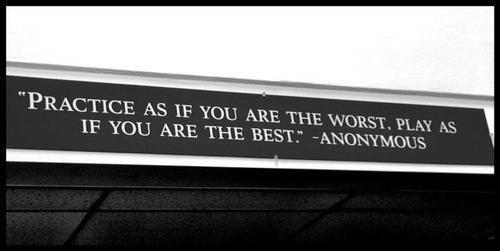
Practice as if you are the worst, play as if you are the best. -Anonymous
The Trumpet Players page on Facebook just clued me in on a theChromatik web site, a site for learning how to play an instrument. I can’t vouch for all the videos on there, but as I perused the brass section, I was pleasantly surprised to find a video of little old me, a trumpet video lesson on playing thirds. I’ve posted around 80 trumpet video lessons which you can find on YouTube here.
Below is my video on playing thirds that Chromatik chose to include on the site, and what’s really cool (you have to click through to see it), is that on Chromatik, the music theory I talk about is illustrated with written notation.Much more useful and informative than my original video. Such a great addition! I love the internet. When information is free, everybody benefits.
Whatever instrument you’re learning, unless it’s something cool like didgeridoo, or dan bau, you can probably find something on Chromatik site. Happy browsing!
Related articles
SoundSlice: YouTube Learning Goodness (intentionalpractice.wordpress.com)
Chromatik Raises $5.7 Million For Digital Sheet Music (hypebot.com)
World renowned jazz musician Jon Barnes to attend Hollywood Bowl for Arturo Sandoval Performance (jonbarnesofficial.com)
“The Way of the Trumpet” – How Not to Double-Clutch (ilearnedinband.wordpress.com)


August 1, 2013


July 25, 2013
Heard: A Practice Recording App with a 5-minute Buffer
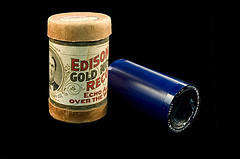
Edison Gold Mould Record wax cylinder (Photo credit: NFSA Australia)
Recording during practice is something all the best players do. Sometimes, searching through a long recording can be a total pain. For those who remember recording onto cassette tapes, you remember it was even more of a pain to try to find something you’d recorded. It was probably even harder on the first recording device, a wax cylinder, like this one, invented by Edison and his team of muckers.
It can be tough to know exactly what to record beyond a specific performance of a song or section. Sometimes, when I’ve been improvising or goofing around during the warm-up, or making a “creative error” while transcribing a solo, I really like the results. When I stumble across a neat musical idea, if I don’t stop to capture it by repeating it or writing it down, it’s gone, usually never to return. During a gig, if you’re improvising, stopping to record a cool idea is never an option. If you record the whole concert, trying to find a magical moment is time-consuming.
Now there’s an app to alleviate some of the drudgery and pain-in-the-neck of recording your ideas. The app, called Heard, is available as a freemium, but only records 12 seconds. You’ve got to upgrade to the $1.99 version to get the 5-minute buffer. Also, the app probably uses a lot of juice to keep that buffer going, so I’d suggest plugging in if you’re going to use it.

Related articles
New iOS App Lets You Record What You Heard Five Minutes Ago (techcrunch.com)


July 20, 2013
The 10,000-hour Red Herring
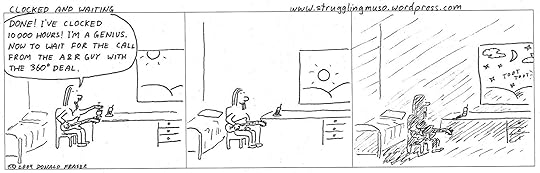
Guitar dude in a chair in his room says, “Done! I’ve clocked 10,000 hours! I’m a genius. Now to wait for the call from the A & R guy with the 360-degree deal. (nothing happens). By Donald Fraser at http://www.strugglingmuso.wordpress.com
You’ve all heard it by now: all the talk and focus on the 10,000 hour “rule,” from people like Malcolm Gladwell, and the lead researcher who originally published the finding, Anders Ericsson, whose theories on deliberate practice are not without opposition in the academic world. If you haven’t heard of this finding by researchers Ericsson, Krampe, & Tesch-Romer, it goes like this: it takes 10,000 hours of what they call deliberate practice to reach expert-level performance, whether it’s in sports, music, chess, comedy, or x-ray diagnostics. But the 10,000-hour rule is a red herring for several reasons.
1. It’s not the hours you practice, it’s the practice in your hours. If you’re practicing in the wrong way, or practicing the wrong things, there is little benefit. Quality of practice matters. Playing one note for 10,000 hours will not make you an expert.
2. This “rule” pertains to elite-level performers. You DO NOT need 10,000 hours to be a good player and enjoy yourself, and entertain others. Consider a recent book from Josh Kaufman, The First 20 Hours: How to Learn Anything Fast. (his video is below, too).
3. Trying to wrap your mind around putting in 10,000 hours can be daunting. Forget about it. Concern yourself with the next practice session, not the ones years from now. Expert-level performers weren’t trying to accumulate 10,000 hours, they were doing what they love to do.
4. Context matters, as Gladwell pointed out in Outliers. Where you are and who you’re with (and when you are) all matter. Cultivate relationships with like-minded people to boost your musical ability and knowledge.
5. The 10,000 hour “rule” is for what Ericsson called deliberate practice. All experts engage in many other activities and behaviors that also contribute to their expertise. For musicians, it can be performing, talking about music and musicians, playing informally, reading about music, studying music theory, going to performances, listening to music, watching YouTube videos and many, many other activities. It all contributes. Greatness isn’t about the hours, it’s a lifestyle.
6. The last issue (there are others, so please share if you have some) has to do with something tuba player Rex Martin told me. It was told to him by legendary Chicago Symphony trumpeter Bud Herseth who passed away recently. Herseth gave lots of good advice. Bud told Rex, “You have to be careful about practice, or you start practicing practice. You need to practice performance.”
Classical musicians and anybody learning in school often get caught up in this practice trap, the trap that the 10,000 hour rule reinforces: we practice too much and perform too little. Performance is key, and it’s an experience that will sharpen your skills very quickly. Performance will also give you excellent feedback about where you most need improvement. Practice as though you’re performing, and perform a lot as a form of practice.
The 10,000 hour “rule” is supported by some research, but one thing that isn’t spoken about is that, in Ericsson’s original study, the musicians he studies were Western classical musicians, string players if I remember correctly (here’s the original study). This number may well be different for other genres of music, or maybe not. We don’t know because nobody has done the research. But again, the numbers of hours is beside the point.
It’s not the hours in your practice, it’s the quality practice in your hours and a whole bunch of other stuff that create greatness. Forget about the 10,000 hours and worry about the half-hour practice session you’re going to do today.
Related articles
What Young Athletes Need Besides 10,000 Hours Of Practice (80percentmental.com)
Really? An Expert in 10,000 Hours (thisgrandventure.wordpress.com)
10,000 Hours May Not Make a Master After All (mind-revolution.org)
Is 20 Hours Enough to Add a New Skill to Your Resume? (danarmishaw.com)
BlackBerry World: Q&A with Malcolm Gladwell (blogs.blackberry.com)


July 18, 2013
RIP, Laurie Frink: “Trumpet Mom” for Many Jazz Trumpeters
Laurie Frink is a trumpeter and teacher you should know about. She helped many, many great trumpeters play even better. Players like Dave Douglas, Ingrid Jensen, Ambrose Akinismurie and too many more to list.
Ms. Frink also wrote the excellent method book Flexus with trumpeter John McNeil. Her approach was an extension of the great brass teacher Carmine Caruso.
Ms. Frink passed away July 13 from complications of bile duct cancer. She was 62. The loss of a great teacher is most tragic.
A Blog Supreme posted a nice tribute to Ms. Frink.
Below is a video of the Maria Schneider Orchestra playing Gumba Blue in 2000. Laurie Frink is in the trumpet section along with one of her students, Ingrid Jensen.
And here’s the MSO in 2008, again with Laurie Frink in the trumpet section and Ingrid Jensen taking an extended solo in Pretty Road.
Related articles
Remembering Laurie Frink, The ‘Trumpet Mother’ Of The Jazz Scene (npr.org)
KNOW YOUR CO-CONSPIRATORS: Ingrid Jensen (secretsocietymusic.org)
Clean Up Your Axe: Long-term Illness linked to Goop Inside Trombone (talkingtrumpet.wordpress.com)


July 11, 2013
Cover Your Assessment: Musical Elements Checklist
Use the musical elements as a checklist.
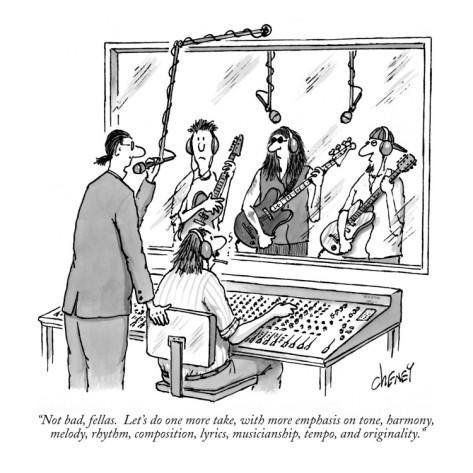
caption reads:
“Not bad, fellas. Let’s do one more take, with more emphasis on tone, harmony, melody, rhythm, composition, lyrics, musicianship, tempo, and originality.”
Comic artist Tom Cheney was born in Norfolk, Virginia, grew up in northern New York, and now lives in Hawaii. He has been contributing cartoons to The New Yorker since 1978 and, in 1985, received the Scripps-Howard Outstanding Cartoonist Award for his work in magazine cartooning. Cheney’s wry drawings often focus on workplace tedium and life’s minor daily struggles. Want the poster? Click to order it.


