
Jonathan Harnum's Blog, page 50
January 9, 2014
Score Study 2.0: Stravinsky’s “Petrushka”
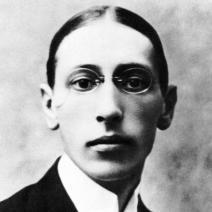
A portrait of the artist as a young man.
Practice involves much more than sitting in a practice room working on music. For classical orchestral musicians, studying the score is vital. Some musicians, like mezzo soprano Joyce DiDonato, spend as much or more time studying the score than they do in “actual” practice (said toward the end of a wonderful BBC radio clip on practice here).
This interactive score of Petrushka from the Ruhr Piano Festival Foundation is a gold mine for anyone interested in the piece. Stravinsky wrote Petrushka when he was 28 years old, in 1910-11. It’s a wonderful piece of music, and even if you’re not a classical musician, this site is a feast for the mind and the ears. Follow along in the highly interactive score, learn about what the different parts represent, learn about the historical context, and listen to commentary from music luminaries on the piece. There is something for everyone here: players, teachers, and even young children. Learn more about this project from the Ruhr Piano Festival Foundation here.
To have a listen to Petrushka in its entirety, I’ve included the 3 videos below by the London Symphony Orchestra, conducted by Valery Gergiev in 2010.
Related articles
 Music is the greatest means we have of digesting time
 100 years of Le Sacre Du Printemps
 This Generation: Memo to Music Institutions – Adapt or Die
 High Notes And Clams: The Best And Worst Of Classical 2013



December 19, 2013
Tiny Desk: Big Awesome. Laura Mvula Concert

Laura Mvula (Photo: The Queen’s Hall)
Live music is great for practice motivation. When you hear a musician perform live, you get the real deal. No auto-tune, no studio manipulation, just a person, communing with her muse, and letting you share the experience. Live music is a gift that keeps on giving. A great performance (and even a bad one) can give your practice a shot in the arm. Laura Mvula’s Tiny Desk concert is wonderful (video below).
We’re so lucky (those of us who can afford computers and Web access, that is) that we can now watch live music from the comfort of our own home, while the snow piles up and the roads shut down. Livestream is a great place to find live streaming concerts.
Another great source for live shows, and one of my favorite ways to learn about new musicians is NPR’s “Tiny Desk” concerts. Check out their archives.
Here’s the Tiny Desk concert by Laura Mvula, in support of her debut album Sing to the Moon. What a gorgeous voice she has. Her Tiny Desk concert is different from the album, more intimate and chill, more sparse. Click through to the album for a sample of Laura Mvula in more lush arrangements.
Related articles
Watch: Laura Mvula – “Sing to the Moon” LIVE | Century Club (feedbackmusiq.wordpress.com)
Laura Mvula: A Soulful Voice That Once Answered Phones (wnyc.org)
Music: Laura Mvula (juliabondwhhs.wordpress.com)
The whirlwind rise of Laura Mvula (thetimes.co.uk)
VIDEO: Laura Mvula favourite for Mercury (bbc.co.uk)
Music Video | Laura Mvula – “She” (mimskohmusic.com)


December 13, 2013
Small Percussion: Perfect Gift for Musicians
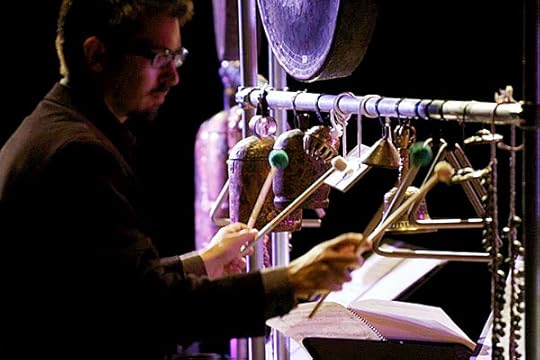
Third Coast Percussionist (photo by TADASHI OMURA)
Check out trumpeter Lee Morgan and alto saxist Wayne Shorter play small percussion on this killing performance by Art Blakey and the Jazz Messengers. They’re playing Dizzy Gillespie’s tune, Night in Tunisia. Gotta be one of the best versions around.
Jymie Merritt’s burning fast bass solo is accompanied by some precise hits from all the small percussionists (starts @ 4:00).
The next several posts will focus on the small percussion instruments below and will include videos explaining techniques for these small instruments you can easily toss into your gig bag.
It can feel awkward to stand in front of an audience with your horn in your hand, only playing for solos and a head or two. It feels weird to stand there doing nothing but nodding your head. If I can, I step to the side. If the playing is really good, and I’m really into it, I want to contribute in some way. In my quintet Swang, small percussion was almost always an option, not only for me as a trumpeter, but for Sophie on clarinet, and Lee Ann on vocals. During a couple performances, I’ve sat on a cajón and play that when I’m not playing guitar or trumpet. It’s a lot of fun.
Small percussion work takes practice, which is just doing it, at home, with recordings (I’ll list some in the coming posts) is the most fun way to practice. The playing techniques are simple for the instruments, but a challenge to do with rhythmic precision, and a tight rhythm section. You can really screw up the groove if you don’t know what you’re doing. Be open to just stopping if that starts to happen. In fact, unless you’re at home practicing, to stop playing is often your best option. Be sensitive to the other players, especially whoever’s providing other percussion instruments, like a drummer. Talk about it. Get some pointers and/or suggestions. Respect the Groove.
Over the coming weeks, I’ll be posting videos covering the basics of the instrument: techniques, typical rhythms, and probably a bit of history. I’ve listed them roughly from easiest to most challenging:
___________________________________________________
 Shakers
For anybody with a tight budget, you can get egg shakers for about a buck apiece. There are other versions, too, all of which sound great. My personal favorite is a line of shakers called the “One Shot” because you can precisely control the sound. I’ll post a video about those soon, too.
___________________________________________________
 Cabasa
Like many of these instruments, it comes from Africa, but has been embraced by lots of south american and Cuban music. Wonderful sound. I have the tiny one ($20) fits into a gig bag and has great projection. You can also get one that is operated with your foot.
Many cabasas to choose from here.
___________________________________________________
 Clave
ClaveIt’s the name of an instrument, a rhythmic concept, and a specific pattern, covered in the first post, soon to follow.
King Clave (Latin Percussion) ($27)
Rosewood Clave ($22):
___________________________________________________
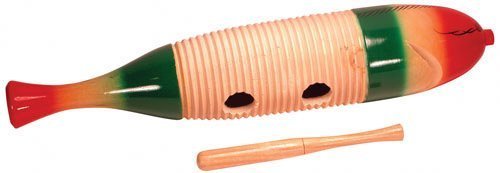 Guiro
GuiroA very cool sound, a little more difficult to play correctly than the instruments you’ve seen so far. Worth the effort, though. Some come in plastic, which are great for band directors or people who are hard on instruments, but the wood ones, like the one pictured, sound best. Several to choose from. Around $20.
___________________________________________________
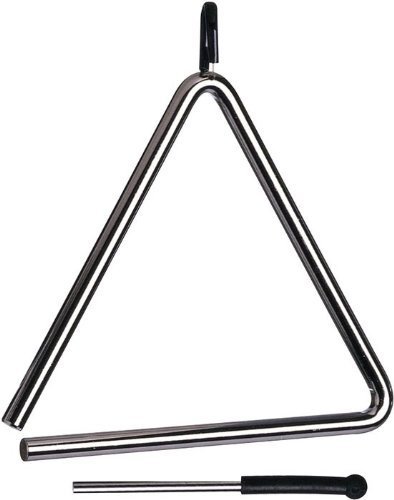 Triangle
To play this correctly you don’t ring it like dinner’s ready (although you can). It sounds coolest if you muffle it. I’ll show you how in an upcoming video. This is one of my favorite percussion instruments when it’s played right. Thought there are many to choose from LP makes a great one. Some can be pretty poor quality, giving you a tinny sound. I have small, medium and large triangles from LP, like this one.
___________________________________________________
In the coming weeks, posts will focus on how to play these small percussion instruments. Stay Tuned!
Related articles
(M 1) Percussion: non-tuned instruments.(creativemisspedagogy.wordpress.com)
Coolest music in the world: Siberian ice drummers use frozen Lake Baikal as percussion instrument (sott.net)
Percussion Laid Out (percussionmadeeasy.wordpress.com)
Top Six Percussion Instruments played in India(musicalintrumentsindianity.wordpress.com)
A Life in clave: Josh Jones keeps the beat (berkeleyside.com)


December 1, 2013
Happy Birthday, Jaco

Jaco Pastorius, Amsterdam, 1980 (Photo credit: Wikipedia)
Jaco Pastorius is one of the more influential musicians of the 20th century. If you’re an electric bass player, you know Jaco is the most influential musician of the 20th century.
His sound and musicality changed how the electric bass is played. You can still hear Jaco’s sound, his techniques, and his licks in many different styles of music today, from hip hop samples to hard rock to jazz and pop. Check out his discography, and don’t forget to search for Weather Report, too. The tune below is on one of their best albums, Heavy Weather.
I don’t know much about how Jaco practiced, but I do know he grew up in a musical household (his dad was a big band singer and drummer), and that Jaco also played drums until a hand injury forced him to take up the bass. I like to think that Jaco’s early rhythmic practice on drums can be heard his bass playing style.
It’s tough to overestimate Jaco’s contribution to our current musical soundscape, especially for those of us who weren’t hip to him (or even alive) when he came on the scene in the mid 70s. Take it from an early bandmate, Pat Metheny, who wrote a wonderful bio on Jaco. The dude’s approach was completely unprecedented.
When choosing a video for this post, I went with the iconic tune Birdland, from Jaco’s time with Weather Report. Yeah, there are other tunes that show more of his technique, or obscure tunes that hipsters wouldn’t scoff at, but I don’t care. I love this tune, and will always love this tune. In this live version, Jaco is killing it, as usual.
So tasty.
Thanks, Jaco, and happy birthday.
Related articles
Top 10 Female Bass Guitar Players (toptenz.net)
The Former Bassist for Suicidal Tendencies Makes Some Fucking Great Electronic Music?! Yes! (slog.thestranger.com)
How to Play Bass | Just a Pop, Riff and a Thump Away (riffacademybass.wordpress.com)


November 18, 2013
One Source of Talent: Everything Counts (In Large Amounts)
Researchers are not yet sure if “natural” talent exists. Pretty solid arguments can be made for either side, but in my opinion, the strongest evidence seems to tell us that “natural” talent is a myth. The myth of “natural” talent is so pervasive because it’s impossible to see all the ways someone has practiced throughout their lives, and by practice, I’m talking about exposure as well as the diligent sit-in-a-room-by-yourself kind of practice. Everything counts.
There is mounting evidence that mere exposure, especially for young minds, affects brain development. For more on the topic, check out this great TED talk by neuroscientist Michael Merzenich.
Indian classical vocalist Prasad Upasani–one of the many stellar musicians I’ve interviewed about practice–remembers waking up to hear his dad’s singing practice. Young Prasad would toddle in to sit on his dad’s lap and they would sing his favorite songs. It was fun, relaxed, and enjoyable. Was it practice? You bet it was! Early positive exposure to music isn’t absolutely essential, but many of the best musicians out there appear to have had early musical experiences like this.
Another contributor to my research on practice is New York Philharmonic trumpeter Ethan Bensdorf. Ethan’s parents took him to hear the Chicago Symphony, with legendary principal trumpeter Bud Herseth when he was “about 3.” I would argue that this kind of musical exposure is a passive form of practice that certainly contributes to one’s store of talent. Talent is built up. Like a gene, talent is expressed because of the environment in which the person develops.
But whatever the reality is, you have to check out this video of DMK playing a cover of Depeche Mode’s tune Everything Counts. The letters DMK stand for Dicken Schrader and his kids Milah and Korben. Dicken is a Colombian-American musician and video artist. I’ve posted about cool parents playing with their kids before, but in this example, there is so much to love. They’re all playing multiple instruments (some of which are clearly instruments they’ve made themselves) and they all sing. Everyone is having a great time, and all of them are totally engaged musically. I love the ending when it becomes clear this video isn’t cobbled together from a bunch of different takes, but is one clean performance, probably a long time coming based on their reactions. Great stuff. Thanks for sharing, Schraders!
Related articles
The Mere Exposure Effect and Music (tlw002.wordpress.com)
Blog 6: Mere Exposure Effect (mbh004.wordpress.com)
Phil Smith, NY Philharmonic Principal Trumpeter Retiring (talkingtrumpet.wordpress.com)
Don Cheadle To Direct & Star In Miles Davis Biopic ‘Kill the Trumpet Player’ (screenrant.com)
One Singular Sensation: It’s Just About… Life. (markbrodinsky.com)


November 12, 2013
Universal Musical Mind: Bill Evans on Creative Process and Self-Teaching

Bill Evans, 1978 Photo: Brian McMillen brianmcmillen@hotmail.com
Bill Evans is a genius whose ideas about music, and his music itself are still fresh and invigorating and necessary. Here’s his discography.
Evans played piano on the best-selling jazz album of all time, Miles Davis’s Kind of Blue; he was nominated for 31 Grammys and won 7, including a lifetime achievement award.
There are too many gems from Evans in these 5 short videos to list, but some of the good stuff include Evans’s thoughts about the universal musical mind, composition vs. improvisation, learning to improvise, and so much more. There are some synchronization issues, which can be weird. I just put these on in the background and listened.
In video 2 Mr. Evans demonstrates what he’s talking about as far as “realness” and authenticity and simplicity. Been thinking about this idea of simplicity and authenticity a lot after Ingrid Jensen posted this 1961 recording of Plum Blossom by Yusef Lateef that is so, so simple, yet so tasty and “real,” and I just can’t stop listening to it. That approach is behind much of the appeal of Kind of Blue.
Anyway, towards the end of the second video (at 8:15), Bill and Harry Evans go to the piano for a teaching/learning demonstration. In the 4th and 5th videos, Evans begins to talk about his own process of practice and learning. I could go on and on and on, but redundancy is annoying. Just watch.
a bit of overlap here, skip ahead to 2:10 to pick up where the last one left off….
Related articles
Bill Evans’s discography on Amazon.
“I Look at Every Concert Like a New Painting”: Bill Evans Soulgrass (Feature) (popmatters.com)
Classic Music Review: Kind of Blue by Miles Davis (altrockchick.com)
Bill Evans and the Real (cherigrissom.com)


November 3, 2013
Kenny Werner’s Practice Snapshots
Pianist Kenny Werner’s book Effortless Mastery has helped a lot of people who struggle with the fear of performance. He’s started a new blog, and part of the blog is a series of videos on how he practices. I’m excited to hear and watch these videos, and encourage you to check them out the first three below. If you haven’t read it, you really owe it to yourself to buy his book, and his Effortless Mastery videos, and learn from the man. Good stuff.
Here are the first three of Mr. Werner’s practice videos (and below those, is the Keith Jarrett solo piano concert mentioned in his first video).
Introduction to the Series
______________________________________________________________________
Practice Session 1
In the introduction, Mr. Werner talked about working on playing in 9 (9 beats to the measure). You’ll hear his metronome counting out this meter in this clip. Wonderful example of practice. It’s so, so rare to get a glimpse into anybody’s practice routine, because it’s often an intensely private thing. A huge Huzzah! and a thank you to him for sharing it.
______________________________________________________________________
Practice Session 2
Here Mr. Werner talks about “doubling up” two things. He’s practicing in 9 and working through the Keith Jarret solo. Master practicers often combine their goals like this. If you’re new to practice, I’d suggest you focus on only one thing. His advice in this clip at 1:23 is gold. So simple, but that morsel is almost all you need for great practice.
______________________________________________________________________
Keith Jarrett Solo Piano, Tokyo, 1984
This is the performance Mr. Werner is learning as a tribute (and a way to practice in 9/4). You should watch the whole performance, but if you want to jump to the encore, I’ve cued the video to that spot (I think. If not, it’s at 1:26:37). If you don’t know, Mr. Jarrett’s performances are entirely improvised. In an interview Keith Jarrett once said that as he watches his fingers reach to the keyboard to play, he will sometimes move his hand at the last instant to play something unintended. That’s fearlessness and mastery at work, for sure.
Related articles
Essential Music Books (age 14+)
Betty Buckley On Piano Jazz (npr.org)
Portland Jazz Festival lineup announced (blogs.seattletimes.com)
Christine Jensen – It’s All About the Sax …( Sorta ) (keenemusic.wordpress.com)


October 28, 2013
You Think YOU Have Stage Fright? Pianist Maria João Pires Has You Beat
It’s normal to be nervous before a performance. That nervous energy, if it’s not too overwhelming, helps you to focus. But imagine you’ve prepared a piano concerto, memorized it, and rehearsed it to perfection. Then imagine you’re on stage, with an audience quietly listening, and when the conductor gives the orchestra the first downbeat, they begin to play another concerto, one you have not prepared. What would you do? You can watch what Maria João Pires did below. What’s amazing about this clip is the shock and emotion and horror conveyed on Ms. Pires’s face and her courage to do what had to be done. Absolutely amazing. Bravo!
Related articles
A lesson in orchestral technique from Orchestra Mozart and Haitink in their London debut, 1/10/13 (gslaterwalker.wordpress.com)
Argerich out; Pires back on the bill (intermezzo.typepad.com)
Classical music Q&A: What makes Brahms’ Piano Concerto No. 2 so great? French pianist Philippe Bianconi discusses his upcoming performances of it this weekend with the Madison Symphony Orchestra. Plus, the memorial performances for singer Ilona Kombrink a (welltempered.wordpress.com)


October 27, 2013
The Fruits of Practice: Ring Without Words: Lorin Maazel & Berlin Philharmonic
This is what comes of good practice. The intonation, beauty of tone, and expression in this performance of Der Ring ohne Worte is absolutely stellar.
I hope you have an hour and fifteen minutes to spare to watch it. Lorin Maazel conducts the Berlin Philharmonic performance of Maazel’s arrangement of Wagner’s Ring Cycle (you know, one ring to rule them all…, no wait. This ring–The Ring of the Nieblung–came before that one). Anyway, it’s an incredible performance. For the arrangement, Maazel didn’t change a note, just compiled all the best instrumental bits out of the 4 separate-but-connected operas.
My neighbors probably think I’m crazy. I had this absolutely cranked up to 11 while I cleaned the house. Only cleaning took a lot longer because I kept stopping to stare at the screen. Wow!
I don’t know the names of most of these outstanding musicians, so if you do, please let us know in the comments, and thanks!

Buy the Album
Related articles
ArtsBeat: New York Philharmonic to Stream Video Performances Next Week (artsbeat.blogs.nytimes.com)
This is the next conductor of the Berlin Philharmonic (intermezzo.typepad.com)
Wagner’s 15-hour Ring Cycle … in two and a half minutes – video (theguardian.com)
A to Z of Wagner: R is for the Ring Cycle (theguardian.com)


October 20, 2013
Less Talk, More Music Part Deux: Jacob Collier
Jacob Collier sings and plays all the parts in this amazing video clip. He also arranged this version of Stevie Wonder’s Don’t You Worry ‘Bout a Thing. Apparently he also edited the video. Some serious skill. Wonder what his practice routine is like….
Related articles
British YouTube phenom Jacob Collier’s Stevie Wonder cover is perfect (dailydot.com)



