Diane Lockward's Blog, page 35
December 28, 2011
Feeding Ourselves with Food and Poetry

I had a really nice holiday. The tree was pretty. One son was here for the full week. We had good food, often joined by our other two kids. My daughter did Christmas dinner for eleven and really outdid herself. A beautiful pork tenderloin, herb-encrusted, with a tasty but subtle gravy. Sweet potato dish, fantastic stuffing made with Italian bread, shallots, and dried cranberries. My brother and sister-in-law were up from North Carolina and contributed a yummy salad. I contributed a broccoli casserole and my best dessert, Boccone Dolce. It was completely devoured.
We even had a baby with us this year as my nephew and his wife joined us with 7-month old Jake who is adorable and exceedingly sweet. He just enjoyed our company and never made any noise other than some gurgling.
One of my gifts was the 2011 Microsoft Ofice which I loaded onto my computer yesterday. Now I need to learn the differences between the new and the old. And get back to my writing schedule. I've been working on revisions and have done some submissions. Now it's time to generate some new work.
If you haven't already subscribed to my monthly Poetry Newsletter, this would be a good time to do so. The next issue will go out on January 1, just in time to start off the new year. If you need some inspiration—and who doesn't?—you'll find a poem and prompt, a book recommendation, some links to writing-related sites, a poetry-related video, and a Craft Tip. This month's tip will come from poet Ingrid Wendt. Ingrid offers some great ideas on how to use discarded lines, you know, the ones you loved but had to admit weren't working in their poems, or the ones that were the only good parts of failed poems. If interested, use the sign-up form in the right-hand sidebar.
Or Go Here to sign up. Once you sign up, be sure to hit the confirm link.
Happy New Year, Everyone, and may your year be filled with poetry.


December 21, 2011
Yes, Virginia

Each Christmas I like to revisit the following essay from the The Sun. My grandmother read it to me many years ago. I've always remembered it. If you don't already know this piece, I hope you'll enjoy it. I also hope you'll have a Merry Christmas if that's what you're celebrating. And I hope you'll have a wonderful New Year. Thank you for being a Blogalicious reader. And a special thank-you to all who have supported my poetry this past year.
Eight-year-old Virginia O'Hanlon wrote a letter to the editor of New York's The Sun, and the quick response was printed as an unsigned editorial September 21, 1897. The work of veteran newsman Francis Pharcellus Church has since become history's most reprinted newspaper editorial, appearing in part or whole in dozens of languages in books, movies, and other editorials, and on posters and stamps.
Here's Virginia's letter:
"DEAR EDITOR: I am 8 years old.
"Some of my little friends say there is no Santa Claus.
"Papa says, 'If you see it in THE SUN it's so.'
"Please tell me the truth; is there a Santa Claus?
"VIRGINIA O'HANLON.
"115 WEST NINETY-FIFTH STREET."
Here's the reply:
VIRGINIA, your little friends are wrong. They have been affected by the skepticism of a skeptical age. They do not believe except what they see. They think that nothing can be which is not comprehensible by their little minds. All minds, Virginia, whether they be men's or children's, are little. In this great universe of ours man is a mere insect, an ant, in his intellect, as compared with the boundless world about him, as measured by the intelligence capable of grasping the whole of truth and knowledge.
Yes, VIRGINIA, there is a Santa Claus. He exists as certainly as love and generosity and devotion exist, and you know that they abound and give to your life its highest beauty and joy. Alas! how dreary would be the world if there were no Santa Claus. It would be as dreary as if there were no VIRGINIAS. There would be no childlike faith then, no poetry, no romance to make tolerable this existence. We should have no enjoyment, except in sense and sight. The eternal light with which childhood fills the world would be extinguished.
Not believe in Santa Claus! You might as well not believe in fairies! You might get your papa to hire men to watch in all the chimneys on Christmas Eve to catch Santa Claus, but even if they did not see Santa Claus coming down, what would that prove? Nobody sees Santa Claus, but that is no sign that there is no Santa Claus. The most real things in the world are those that neither children nor men can see. Did you ever see fairies dancing on the lawn? Of course not, but that's no proof that they are not there. Nobody can conceive or imagine all the wonders there are unseen and unseeable in the world.
You may tear apart the baby's rattle and see what makes the noise inside, but there is a veil covering the unseen world which not the strongest man, nor even the united strength of all the strongest men that ever lived, could tear apart. Only faith, fancy, poetry, love, romance, can push aside that curtain and view and picture the supernal beauty and glory beyond. Is it all real? Ah, VIRGINIA, in all this world there is nothing else real and abiding.
No Santa Claus! Thank God! he lives, and he lives forever. A thousand years from now, Virginia, nay, ten times ten thousand years from now, he will continue to make glad the heart of childhood.

December 13, 2011
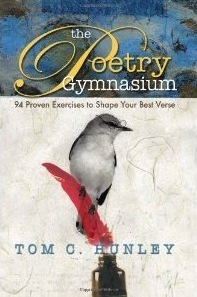
Revision in The Poetry Gymnasium
 Click Cover for Amazon
I am not quite finished with this book, but I want to mention it now in case some of you might be interested in getting it as a holiday gift. This craft book would be a perfect gift for any poets you know who are looking for instruction and stimulation. Perhaps you yourself are just such a poet? Then treat yourself.
The book seems a bit pricey at $35, but it's a textbook so is priced as such. That doesn't mean, however, that you can't use it outside of the classroom. If you're a teacher looking for a good poetry textbook, this could be the very one. If you're a poet working on your own but hoping to expand your knowledge, this book really does contain the classroom.
If you keep in mind that Hunley offers 94 exercises, then the price does not seem so high. But there's more, much more. Each exercise is preceded by a rationale and some background (tons of information here) and then followed by model poems.
I found Hunley's revision strategies particularly interesting and exciting. I recalled and looked up Kim Addonizio's words about revision in Ordinary Genius: "If you don't think your work needs revision, here's a tip: Don't try to be a poet. You will never—and I mean never—be any good." Firm, but true. She goes on to say: "If you take your art seriously, you will write the poem again and again until you get it right, or as close to right as you can make it. Revision separates the professionals from the amateurs and the wannabes."
Sometimes, of course, that's easier said than done. You have the poem in front of you, ten drafts in. You know you've got something worth working on, but you're not sure what to do at this point. On page 52, Hunley provides a list of four suggestions. I immediately embraced the first and put it to use on two poems I'd been wrestling. Here's the suggestion for revision:Reread some of your text. Along the way, collect five words or phrases from your text and freewrite on each word. Let the word or phrase take you anywhere. See if any of this new material helps you open up the draft; can you insert the new material at the point you find the original word or phrase? Somewhere else?I found this strategy very helpful in opening up the poem and forcing me into new thinking and material. I then incorporated some of the new stuff into the draft. To the poem's advantage, I think. Then, of course, some cutting was necessary. (I confess to not doing this with all five words or phrases. I revised the suggestion a bit.)
I think you'll also find much in this book to stimulate your own work.

December 9, 2011
Just in Time for the Holidays

Click Cover for Amazon
I'm happy to have a poem in this new anthology, The Best of the Barefoot Muse, published by Barefoot Muse Press. Editor and publisher Anna Evans has gathered together sixty poems from over fifty poets, all of whom had their poems selected from Evans' online journal, The Barefoot Muse, which for five years published formal and metrical poetry. The collection includes contemporary examples of the sonnet, villanelle, triolet, and sestina as well as more unusual forms such as the ghazal and the fib and many poems in structures of the poet's own devising.
I'm represented by the poem, "Love Test: A Ghazal." Here's a list of all the poets:
Mike Alexander Tiel Aisha Ansari Peter Austin Michael Battram Kendall A. Bell Kate Bernadette Benedict Kim Bridgford Chris Bullard Michael Cantor Catherine Chandler Edmund Conti Maryann Corbett Robert W. Crawford Erica Dawson Frank De Canio Jehanne Dubrow Robert Klein Engler Julie R. Enszer Annie Finch Carol Frith Ona Gritz Lois Marie Harrod Penny Harter Paul Hostovsky Juleigh Howard-Hobson A.M. Juster T.S. Kerrigan Deborah Kreuze David W. Landrum Quincy R. Lehr J. Patrick Lewis Diane Lockward Austin MacRae Laura Maffei James Scannell McCormick Susan McLean Rick Mullin Bruce W. Niedt Eric Norris Amber Norwood Chris O'Carroll Frank Osen Aaron Poochigian Ray Pospisil Jennifer Reeser David J. Rothman Marybeth Rua-Larsen E. Shaun Russell Paul Christian Stevens Clay Stockton Peter Swanson Gail White James S. Wilk
The collection is now available at Amazon, just in time for a wonderful holiday gift. In fact, what could be a better gift than a book of poetry? This one is very reasonably priced at $10.95.

New Chapbook Now Available

At last! This new chapbook has been published. I say "at last" as it's been well over a year since I was first invited to participate in this series. Although I was told then that the chapbook would be available for that year's AWP, which would have been 2011, that simply did not happen. Apparently, there were some problems that caused delays. In fact, the delays went on so long that I had pretty much concluded that the chapbook just wasn't going to happen.
But happen it did. The original publisher, Pudding House Publications, sold the series to Kattywompus Press. Once the new publisher took over my manuscript, the process moved along at a brisk pace. So I went from thinking it wouldn't happen to a box of 20 copies on my doorstep.
This collection consists of 12 poems, the ones deemed my "greatest hits." Selection was challenging, but I think I have a good variety and all three of my full-length books are represented. The collection begins with an essay detailing the history of the poems. I could provide a list of the poems here, but I'm not going to. I'll leave it to you to guess. Then if and when you get the chapbook, you can see if you were right. Make a game of it!
The chapbook is available at Barnes & Noble and is offered now at a really generous pre-order discount of 32%.

December 4, 2011
My New Toys

I recently succumbed to the lore of the Amazon Kindle Fire. I'm glad I did. I love it. This is my first Kindle so I have nothing to compare it to, but so far I'm happy. Although I love all things Mac, I passed over the iPad and opted for the Kindle Fire at less than half the price. It doesn't have all the options of the iPad, but I didn't think I wanted all the fancy stuff. I also liked the slightly smaller size. Among other reasons, I wanted one of these so I could download my newest book which recently became available for Kindle. I wanted to see how it looks. It looks great. There were two poems with one bad break each due to line lengths. I simply reduced the size of the font and the lines became just right. I'd noticed earlier when I added a book sample to Amazon's free desktop reader that the table of contents consisted of all blue links except the links were inactive. In the actual Kindle book, those links are active. Click on a title and you're immediately taken to that poem.
I haven't loaded on any additional books yet, but I plan to. In the meantime, I've been using my new toy to check email and hop onto the internet. Very convenient—and fast. Another feature I find very fantastic is Amazon Prime which I recently signed up for. You get a free month with Kindle, but I'd already signed up for it. At $79 per year, it strikes me as a huge bargain. Any book I order now comes with free shipping and two-day delivery. No more waiting until I have enough books to equal $25 so I qualify for free shipping. I get instant gratification, something I'm quite fond of.
Now with Amazon Prime, I can get one free Kindle book per month. I can get magazines and a good selection of movies—for free! I can't see myself watching movies on a reader, but it's nice to know that I can if I want to.

Now for my second toy, the Roku. A month or so ago I missed an episode of "Boardwalk Empire." I missed my weekly dose of violence, so I signed up for HBO GO. That enables me to get all HBO shows and movies on my computer. Since I have a big screen, watching on the computer is very comfortable. I get a weekly email now from HBO listing all the shows. In one of those newsletters, they had an offer for Roku. It's a game box, very small, about 3" x 3". You hook it up to your TV—with a USB cable for standard definition or an HDMI cable for HD. Either one is a very easy, fast setup. Once that was set up, the Roku screen appeared and took me through all the free offerings. For each one that I wanted, I had to go online, put in a code, and bingo, the channel was activated. We can get all the HBO shows, Amazon movies—again, many for free now that I'm a Prime subscriber—and a few other movie channels. I don't watch a ton of movies, but now that I can get so many for free instead of paying $5 each with FIOS, maybe I'll watch more. Of course, there's all kinds of stuff I could pay for, but for now I'm resisting any more temptation.

November 28, 2011
What I Learned As an Editor

Recently I served as Guest Editor for the inaugural issue of Adanna, a new print journal. The doors opened for submissions on January 31 and closed on April 30, so I had 3 full months of reading and selecting poems, short stories, essays, and book reviews. I'd like to now share some of my thoughts and observations about the experience.
1. It's a lot of work! If I'd just been doing the poetry, it would, of course, have been less, but this experience gave me a heightened appreciation for the silent work that editors do to put out a journal. Editors do a ton of work. It's easy to get angry at them. But don't forget to be grateful.
2. A significant number of contributors do not follow the guidelines. Ours were very clear. We asked for no more than 6 poems, we asked that contact information appear on each submitted piece, that prose be one piece only and no longer than 2000 words, that the submission arrive as one file. Here's some of what I received:
• from one poet, 96 poems. No joke. Then she sent an additional 6. After I sent a rejection note, she sent 6 more.
• several prose writers sent as many as 3 pieces. Sorry, but that's just an imposition on the editor's time.
• one prose writer sent a piece that was close to 9000 words. When I wrote and said I could not read her piece as it was far in excess of our maximum, she replied that I should select my favorite 2000 words. When I said that wasn't the way it works, she replied that she didn't want to live in my world. Good. I don't want her there either.
• far too many poets sent 6 files instead of 1. When I sent them back, I was asked to provide instructions on how to create a single file. I was nice about it and did so, but really, if you don't know how to do that, maybe you're not ready to submit?
• far too many authors put their contact information in the email but not on the submission. Now somebody had to do that so we could keep track of what belonged to whom. I don't think that somebody should be the editor. I was nice the first few times, then started just returning with a note to review the guidelines.
• a number of poets sent only one poem. Why would anyone do that? An editor wants choice. Side note: not one of those poems was accepted. Maybe there just weren't any others to send?
• a number of authors sent a pdf although we specifically asked that authors not do so. Why not? Because if we wanted the piece, we needed to be able to make edits.
3. It's really not a good idea to submit to editors you know personally. The hardest part of my job was saying no to people I know. We received many submissions from NJ poets, but because the journal is both national and international, I could take just a limited number of pieces by NJ poets.
4. There are many reasons for a rejection. I've read that before, but now I know it's really true. I sent out acceptances on a rolling admissions basis. So if I'd early on accepted a poem about Alzheimer's, one that arrived later, no matter how good, wasn't going to get in.
5. If you know that the journal accepts on a rolling admissions basis, it's a good idea to send early in the submission period. (See #4) Towards the end of the reading period, long pieces just weren't going to get in as we were running out of available pages.
6. Mistakes happen. Even with a good system and great care and the utmost respect for the contributors, an occasional mistake will happen. We had submissions from approximately 450 writers, most with multiple pieces.
• And yet we almost omitted two accepted poems from the journal. Something went awry at the layout end. Fortunately, because I had a system which included a checklist, I spotted the omissions in time to rectify.
• We also somehow lost an entire submission. Submissions went to the editor and from her to me. Somehow this one vaporized. We became aware of it only when the poet withdrew one poem. By then, however, it was too late to consider the others as the journal was already in production. All we could do was apologize.
• We were scrupulous about notifications, and yet we missed one. I hear writers complain a lot about a journal's failure to respond. I agree that that is unforgivable—if it's just laziness. But if it's a genuine mistake, please understand and forgive. Then try again.
7. If the guidelines ask for a bio, be sure to include one (and adhere to the length asked for). Do not tell the editor to go to your website to find the information. Won't happen.
8. Send your best work, work you'd be proud to have published. We received some submissions from poets whose work we knew and admired. But what a disappointment to discover that they'd sent inferior work. I wondered if these poets didn't want to risk sending their first team work to a new journal. Okay, but then it's better not to send at all. Wait until you've seen the first issue and decide if you'd like to be in the second issue. As this was a first issue, it was very very important to us to select work that would set a high standard.
9. Format your work correctly. It's so annoying to get work with weird margins. Stick to the one inch rule. And it really surprised me to see how many writers are still inserting two spaces after a period. That practice has gone the way of the dodo bird. With the advent of word processors, the rule became one space. Using two spaces dates you as someone who learned how to type on a typewriter. Now this might seem really petty, but each one of those extra spaces has to be deleted by somebody. Let that somebody be you, the writer.
10. Putting out a print journal is truly a labor of love. There's no money to be made. Think of the print journals that have gone out of business. Think of the ones that have converted to online formats. Then support the print journals that give us paper pages for our work. If we want them to continue, we need to support them. If you can't afford author copies, perhaps you could recommend the journal to your library, to your students, your friends. Mention your appearance in the journal on your blog, at Facebook, and via other social networks. Help spread the word.

November 21, 2011
Give the Gift of Poetry

I have an early gift-giving suggestion for you: A subscription to the print journal, Poet Lore. At 125 years old, Poet Lore is the oldest literary journal in this country. It is also one of the best, turning out outstanding poetry in issue after issue. I've been a subscriber for years. Other journals I subscribe to I sometimes drop for a while and move onto other journals, perhaps later returning. I wouldn't consider dropping Poet Lore, not even for one issue.
Here are some reasons why you should treat yourself and the people you love to a subscription:
1. A subscription is only $10. Really, what other gift of such value can you get for that price? That price, however, is going up on January 1, so act now. Do not procrastinate.
2. The journal comes out twice a year, spring and fall. There's enough in each journal to keep you happy for many hours, yet not so much that you feel overwhelmed by the size of the issue.
3. This is one of the few print journals that is exclusively poetry. You're not going to have to flip through the short stories and essays to get to the poems. It's all poems. I have nothing against prose, but I love having this one journal that's such a feast of poetry.
4. The selection of poems is eclectic. If you like well-written poems in a variety of styles, poems that tell stories, poems that touch the heart, poems that take some risks while not sacrificing clarity, then this is your journal.
5. Each journal is organized in much the same way that a poetry book is, i.e., with the poems strategically placed rather than in alphabetical order or according to some other arbitrary plan. This means a big investment of time and brain power on the editors' part, but provides enormous pleasure for the reader. Each issue is like a quilt, each poem fitting in just the right place and adding to the overall design.
6. The back section of each issue contains a generous number of reviews of recent poetry collections.
7. An Added Bonus: This journal stimulates the production of new work. I never leave an issue without having begun one or more new poems of my own. There might be a poem that begs me to imitate it, that makes use of a technique I haven't seen before and would like to try. There might be a poem with a line that demands some kind of response. There might be a poem with an image that evokes images in my own brain.
So what are you waiting for? Hop on over to Poet Lore and place your order.

November 16, 2011
How to Spot a Future Poet
I'm often asked, as I imagine most poets are, How did you know you wanted to be a poet? Or, What made you become a poet? The truth is I didn't know I wanted to be a poet until I volunteered to test the poetry prompts for a then-forthcoming textbook written by William Stafford and his former student, Stephen Dunning. That book, Getting the Knack: 20 Poetry Writing Exercises, was published by NCTE in 1992 and remains one of their bestsellers. My role over a period of about six months was to write poems to the prompts that arrived by mail every few weeks. From the very first one, I knew that something special had happened. I was electrified. I knew I wanted to keep writing poems. And I did, even though I was off to a late start.
Maybe if someone had ever asked me to write poems, I would have gotten off to an earlier start. But I went through school never being asked by a single teacher to write a poem. If it happened in elementary school, I don't remember. I know it didn't happen in junior high, high school, or college. In fact, until I was in college and later graduate school, I barely even read any poetry.
And yet as I look back to the young girl I once was, I think I might have shown some early signs of poetic potential. I've isolated three characteristics:
1. I was a crybaby.

I cried at home. I cried in school. Threaten me with punishment and I dissolved. Hurt my feelings and I was ruined for an entire day. My teachers, at conference time, always told my parents that I was a pretty good student but I cried too much. Once my cousin was visiting from Tennessee and staying at my grandparents' house. I went there with my father to visit. She wanted to visit a former friend down the street so I went with her. When the friend opened the door, they conferred. Then my cousin turned to me and said, "Di, I'm going to have lunch with Carolyn. I'll see you later." And the door closed behind her. I went back to my grandparents' house and began to cry my eyes out, so much that my father made me go home to my mother. Once there, I cried so hard and long my mother finally put me to bed. I could still cry just thinking about the way my cousin dumped me.
I wish I could say I've grown out of crybaby-hood, but lately I've been tearing up during The X Factor.
2. I was a daydreamer.
This also got me in trouble in school. Sometimes I was thinking, but sometimes I was just zoning out. It was like a trance. I'd just gaze and not even see what was in front of me. In eighth grade my teacher one day stopped class and disturbed me out of my trance. He said I'd been staring right through him and he'd never been so uncomfortable in his life. Oh dear. When I was in high school, I pretty much trained myself out of doing this in public places. But I still do it, especially if I'm tired or if I'm thinking about something. Sometimes I'm looking for a word or an image for a poem I'm working on.
I'm glad my parents weren't able to knock my dreaming out of me.
3. I was a liar.
Really, I told a lot of fibs. I learned the word prevaricator when my father called me one. I made up a whole bunch of different names for myself and sent off for things by mail and used those names, much to the mortification of my mother when the mailman handed her an envelope addressed to Venus DeVeau. In sixth grade I received a Siamese kitten for my birthday. When I told my classmates, no one believed me! Why not? Because they'd come to know that most of what I told them was invented. Consequently, that day I brought home almost the entire sixth grade so I could prove that I did have a kitten. I then realized that perhaps I'd better stop my prevaricating. If I hadn't, I might still be calling myself Sarah Bessie.
But, for the most part, I did stop. Except in the poems where it's legal to invent.
Now if my parents and teachers and pals noticed my crying, my daydreaming, my lying, why didn't any of them realize that those were really just the early signs of a poet in training?
Maybe if someone had ever asked me to write poems, I would have gotten off to an earlier start. But I went through school never being asked by a single teacher to write a poem. If it happened in elementary school, I don't remember. I know it didn't happen in junior high, high school, or college. In fact, until I was in college and later graduate school, I barely even read any poetry.
And yet as I look back to the young girl I once was, I think I might have shown some early signs of poetic potential. I've isolated three characteristics:
1. I was a crybaby.

I cried at home. I cried in school. Threaten me with punishment and I dissolved. Hurt my feelings and I was ruined for an entire day. My teachers, at conference time, always told my parents that I was a pretty good student but I cried too much. Once my cousin was visiting from Tennessee and staying at my grandparents' house. I went there with my father to visit. She wanted to visit a former friend down the street so I went with her. When the friend opened the door, they conferred. Then my cousin turned to me and said, "Di, I'm going to have lunch with Carolyn. I'll see you later." And the door closed behind her. I went back to my grandparents' house and began to cry my eyes out, so much that my father made me go home to my mother. Once there, I cried so hard and long my mother finally put me to bed. I could still cry just thinking about the way my cousin dumped me.
I wish I could say I've grown out of crybaby-hood, but lately I've been tearing up during The X Factor.
2. I was a daydreamer.

This also got me in trouble in school. Sometimes I was thinking, but sometimes I was just zoning out. It was like a trance. I'd just gaze and not even see what was in front of me. In eighth grade my teacher one day stopped class and disturbed me out of my trance. He said I'd been staring right through him and he'd never been so uncomfortable in his life. Oh dear. When I was in high school, I pretty much trained myself out of doing this in public places. But I still do it, especially if I'm tired or if I'm thinking about something. Sometimes I'm looking for a word or an image for a poem I'm working on.
I'm glad my parents weren't able to knock my dreaming out of me.
3. I was a liar.

Really, I told a lot of fibs. I learned the word prevaricator when my father called me one. I made up a whole bunch of different names for myself and sent off for things by mail and used those names, much to the mortification of my mother when the mailman handed her an envelope addressed to Venus DeVeau. In sixth grade I received a Siamese kitten for my birthday. When I told my classmates, no one believed me! Why not? Because they'd come to know that most of what I told them was invented. Consequently, that day I brought home almost the entire sixth grade so I could prove that I did have a kitten. I then realized that perhaps I'd better stop my prevaricating. If I hadn't, I might still be calling myself Sarah Bessie.
But, for the most part, I did stop. Except in the poems where it's legal to invent.
Now if my parents and teachers and pals noticed my crying, my daydreaming, my lying, why didn't any of them realize that those were really just the early signs of a poet in training?
I'm often asked, as I imagine most poets are, How did you...
I'm often asked, as I imagine most poets are, How did you know you wanted to be a poet? Or, What made you become a poet? The truth is I didn't know I wanted to be a poet until I volunteered to test the poetry prompts for a then-forthcoming textbook written by William Stafford and his former student, Stephen Dunning. That book, Getting the Knack: 20 Poetry Writing Exercises, was published by NCTE in 1992 and remains one of their bestsellers. My role over a period of about six months was to write poems to the prompts that arrived by mail every few weeks. From the very first one, I knew that something special had happened. I was electrified. I knew I wanted to keep writing poems. And I did, even though I was off to a late start.
Maybe if someone had ever asked me to write poems, I would have gotten off to an earlier start. But I went through school never being asked by a single teacher to write a poem. If it happened in elementary school, I don't remember. I know it didn't happen in junior high, high school, or college. In fact, until I was in college and later graduate school, I barely even read any poetry.
And yet as I look back to the young girl I once was, I think I might have shown some early signs of poetic potential. I've isolated three characteristics:
1. I was a crybaby.
I cried at home. I cried in school. Threaten me with punishment and I dissolved. Hurt my feelings and I was ruined for an entire day. My teachers, at conference time, always told my parents that I was a pretty good student but I cried too much. Once my cousin was visiting from Tennessee and staying at my grandparents' house. I went there with my father to visit. She wanted to visit a former friend down the street so I went with her. When the friend opened the door, they conferred. Then my cousin turned to me and said, "Di, I'm going to have lunch with Carolyn. I'll see you later." And the door closed behind her. I went back to my grandparents' house and began to cry my eyes out, so much that my father made me go home to my mother. Once there, I cried so hard and long my mother finally put me to bed. I could still cry just thinking about the way my cousin dumped me.
I wish I could say I've grown out of crybaby-hood, but lately I've been tearing up during The X Factor.
2. I was a daydreamer.
This also got me in trouble in school. Sometimes I was thinking, but sometimes I was just zoning out. It was like a trance. I'd just gaze and not even see what was in front of me. In eighth grade my teacher one day stopped class and disturbed me out of my trance. He said I'd been staring right through him and he'd never been so uncomfortable in his life. Oh dear. When I was in high school, I pretty much trained myself out of doing this in public places. But I still do it, especially if I'm tired or if I'm thinking about something. Sometimes I'm looking for a word or an image for a poem I'm working on.
I'm glad my parents weren't able to knock my dreaming out of me.
3. I was a liar.
Really, I told a lot of fibs. I learned the word prevaricator when my father called me one. I made up a whole bunch of different names for myself and sent off for things by mail and used those names, much to the mortification of my mother when the mailman handed her an envelope addressed to Venus DeVeau. In sixth grade I received a Siamese kitten for my birthday. When I told my classmates, no one believed me! Why not? Because they'd come to know that most of what I told them was invented. Consequently, that day I brought home almost the entire sixth grade so I could prove that I did have a kitten. I then realized that perhaps I'd better stop my prevaricating. If I hadn't, I might still be calling myself Sarah Bessie.
But, for the most part, I did stop. Except in the poems where it's legal to invent.
Now if my parents and teachers and pals noticed my crying, my daydreaming, my lying, why didn't any of them realize that those were really just the early signs of a poet in training?
Maybe if someone had ever asked me to write poems, I would have gotten off to an earlier start. But I went through school never being asked by a single teacher to write a poem. If it happened in elementary school, I don't remember. I know it didn't happen in junior high, high school, or college. In fact, until I was in college and later graduate school, I barely even read any poetry.
And yet as I look back to the young girl I once was, I think I might have shown some early signs of poetic potential. I've isolated three characteristics:
1. I was a crybaby.
I cried at home. I cried in school. Threaten me with punishment and I dissolved. Hurt my feelings and I was ruined for an entire day. My teachers, at conference time, always told my parents that I was a pretty good student but I cried too much. Once my cousin was visiting from Tennessee and staying at my grandparents' house. I went there with my father to visit. She wanted to visit a former friend down the street so I went with her. When the friend opened the door, they conferred. Then my cousin turned to me and said, "Di, I'm going to have lunch with Carolyn. I'll see you later." And the door closed behind her. I went back to my grandparents' house and began to cry my eyes out, so much that my father made me go home to my mother. Once there, I cried so hard and long my mother finally put me to bed. I could still cry just thinking about the way my cousin dumped me.
I wish I could say I've grown out of crybaby-hood, but lately I've been tearing up during The X Factor.
2. I was a daydreamer.
This also got me in trouble in school. Sometimes I was thinking, but sometimes I was just zoning out. It was like a trance. I'd just gaze and not even see what was in front of me. In eighth grade my teacher one day stopped class and disturbed me out of my trance. He said I'd been staring right through him and he'd never been so uncomfortable in his life. Oh dear. When I was in high school, I pretty much trained myself out of doing this in public places. But I still do it, especially if I'm tired or if I'm thinking about something. Sometimes I'm looking for a word or an image for a poem I'm working on.
I'm glad my parents weren't able to knock my dreaming out of me.
3. I was a liar.
Really, I told a lot of fibs. I learned the word prevaricator when my father called me one. I made up a whole bunch of different names for myself and sent off for things by mail and used those names, much to the mortification of my mother when the mailman handed her an envelope addressed to Venus DeVeau. In sixth grade I received a Siamese kitten for my birthday. When I told my classmates, no one believed me! Why not? Because they'd come to know that most of what I told them was invented. Consequently, that day I brought home almost the entire sixth grade so I could prove that I did have a kitten. I then realized that perhaps I'd better stop my prevaricating. If I hadn't, I might still be calling myself Sarah Bessie.
But, for the most part, I did stop. Except in the poems where it's legal to invent.
Now if my parents and teachers and pals noticed my crying, my daydreaming, my lying, why didn't any of them realize that those were really just the early signs of a poet in training?