Diane Lockward's Blog, page 33
March 31, 2012
Free Download One Day Only
Free download of poetry chapbook Twelve for the Record, today only (3.31), ends at midnight: http://www.amazon.com/Twelve-for-the-...


Free Download One Day Only
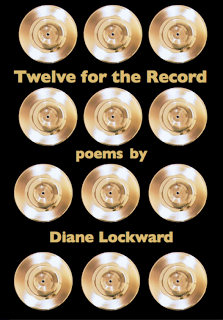
Click Cover for Amazon
My e-chapbook, Twelve for the Record, is available today, Saturday, as a free download at Amazon. That's right, free! Just go HERE to instantly download. But do it right now as this promo will end at midnight (Pacific Time).
Here's the chapbook description:
Twelve for the Record originally appeared in print as part of the
Greatest Hits series. The collection gathers together a dozen of the
poet's most often requested poems, all of which have previously appeared
in print and online journals, including Harvard Review, Prairie
Schooner, and Spoon River Poetry Review. Several of the poems have
appeared on Poetry Daily, Verse Daily, and The Writer's Almanac. Readers
familiar with Lockward's work will find favorites such as "My Husband
Discovers Poetry," "The Missing Wife," and "Linguini." The collection
ends with an essay in which the poet traces the history of the poems.
Teachers may find this a convenient and cost-effective resource for
poetry students.
You can also download a free e-reader at the same page.

March 29, 2012
Women Poets Giving to the Poetry Community

When Teresa Carson recently asked me 3 interview questions about Girl Talk, she wanted to know how I select the poets each year. I replied that I try "to include women who actively support other poets." Then last Saturday at the Girl Talk reading one of our poets talked about the various contributions some of our women poets have made and continue to make to the poetry community.
While putting away my materials and cleaning up my work space, I glanced over this year's list of names and noticed how many of these women poets contribute in a variety of ways to the poetry community. Here's a list:
Teresa Carson—maintains the CavanKerry blog and uses it to promote not only the work of CK poets but also the work of other poets.
Jessica deKoninck—hosts poetry salons at her home for her poet friends with new books.
Sondra Gash—for years curated a reading series at the Women's Resource Center in Summit, NJ. Now she hosts salons at her home.
Marcia Ivans—created and hosts Poetry and Pastries, a monthly open reading for area poets.
Vasiliki Katsarou—created and hosts a reading series at Panoply Books in Lambertville, NJ.
Adele Kenny—hosts a long-running series at Carriage House in Fanwood, NJ. Recently named Poet Laureate of Fanwood in recognition of her service.
Gina Larkin—created and serves as editor of the Edison Literary Review.
Deborah LaVeglia—hosts Poets Wednesday, the longest-running poetry series in NJ, at Barron Arts Center in Woodbridge, NJ, and facilitates workshops there.
Julie Maloney—created the Meet the Author series at the Bernardsville Library. Twice a year she invites a poet or prose writer to come and be interviewed, engage in a Q&A with the audience, and do a book signing. Several years ago she created Women Reading Aloud. Using the Amherst Writers and Artists Method, she leads workshops, some with yoga, some at retreat locations, and one on a Greek island.
Charlotte Mandel—founder of the Eileen W. Barnes Award Competition, sponsored by Saturday Press, to publish a first book by a woman poet over 40. Served in this capacity from 1981 to 1992.
Marilyn Mohr—for 20 years hosted a reading series at the JCC in West Orange, NJ.
Priscilla Orr—previously ran the Idiom Reading Series at Sussex County Community College. Now is editor of The Stillwater Review.
Christine Waldeyer—founder and editor of Adanna, a journal of women's poetry.

March 26, 2012
Bits & Pieces of This & That
Busy weekend! Saturday was Girl Talk: A Reading in Celebration of Women's History Month. I've been running this event for five years now. It was intended to be a one-shot deal, but everyone enjoyed it and wanted more. So more they got. We had 27 women poets each read one woman-related poem. It was a joy to read for a packed room of approximately 80 people, mostly women but some men. The poems were wonderful and the spirit in the room was palpable. The reading was followed by a Reception with lots of homemade cookies. One of our poets, Teresa Carson, who does promotion work for CavanKerry Press, recently posed 3 questions to me about this event. She then posted this brief interview at the CK blog.

Half of the Room
Then yesterday I went to Julie Maloney's Meet the Author event in Bernardsville. Her guest was Molly Birnbaum, author of the memoir, Season to Taste. Julie has interviewing refined to an art. Her questions elicited wonderful responses from Molly as she told us about her experience of losing her sense of smell as well as her sense of taste. Shortly before she was to leave for the Culinary Institute of America to pursue her dream of being a chef, she was hit by a car. She crashed headfirst into the front windshield of the car. Her memoir details the changes that accident meant in her life and how she went about recovering her lost senses and understanding what they really mean to us. As a poet interested in the senses and imagery, I found both the book and the in-person interview fascinating.

Julie Maloney and Molly Birnbaum
Another member of the audience yesterday was the Human Resources Director at the company where my daughter works. Back in 2008 they'd invited me to give a poetry reading for one of their Women's History Month programs. Then last year they invited me back to read one poem as part of a program defined as a Collage of Women. Half a dozen women employees each chose a woman they admired and then spoke about her. It was absolutely wonderful, so much so that they're repeating the program this year. Now as a result of yesterday's chance meeting, I'm invited back again and am now trying to choose a poem. I love it when one thing you do leads to another.
Also in the Good News Department is this new interview with poet Michael T. Young, posted at The Inner Music. The interview is followed by Michael's review of my book, Temptation by Water. I feel very fortunate to have had this attention for my book. And very grateful!


Half of the Room
Then yesterday I went to Julie Maloney's Meet the Author event in Bernardsville. Her guest was Molly Birnbaum, author of the memoir, Season to Taste. Julie has interviewing refined to an art. Her questions elicited wonderful responses from Molly as she told us about her experience of losing her sense of smell as well as her sense of taste. Shortly before she was to leave for the Culinary Institute of America to pursue her dream of being a chef, she was hit by a car. She crashed headfirst into the front windshield of the car. Her memoir details the changes that accident meant in her life and how she went about recovering her lost senses and understanding what they really mean to us. As a poet interested in the senses and imagery, I found both the book and the in-person interview fascinating.

Julie Maloney and Molly Birnbaum
Another member of the audience yesterday was the Human Resources Director at the company where my daughter works. Back in 2008 they'd invited me to give a poetry reading for one of their Women's History Month programs. Then last year they invited me back to read one poem as part of a program defined as a Collage of Women. Half a dozen women employees each chose a woman they admired and then spoke about her. It was absolutely wonderful, so much so that they're repeating the program this year. Now as a result of yesterday's chance meeting, I'm invited back again and am now trying to choose a poem. I love it when one thing you do leads to another.
Also in the Good News Department is this new interview with poet Michael T. Young, posted at The Inner Music. The interview is followed by Michael's review of my book, Temptation by Water. I feel very fortunate to have had this attention for my book. And very grateful!
March 25, 2012
Meet Author Molly Birnbaum

Sunday, March 25
2:00 PM
Join the tea and conversation as Julie Maloney conducts an up-close and personal interview with guest author
Molly Birnbaum
Q&A
Book signing to follow
OPEN TO THE PUBLIC
FREE
Bernardsville Public Library
1 Anderson Hill Road
Bernardsville, NJ 07924
908 766 - 0118
Directions to the Bernardsville Library

March 22, 2012


March 18, 2012
Do You Dare Talk about Syntax?

I love syntax but wouldn't dare mention it in public. It's not something normal people talk about. But then writers aren't all that normal, are they?
I was delighted, actually a bit thrilled, to discover an article in this month's The Writer's Chronicle on this very topic. "The Geography of Sentences" is by Emily Brisse, a high school English teacher (yay, Emily!) and writer. The title is particularly apt as this Minnesota writer is apparently also an amateur naturalist.
Adapted from Emily's MFA graduate lecture at Vermont College of Fine Arts, the article tackles the subject few writers want to tackle: syntax. It's a topic we know is important, but it's a hard concept to pin down and talk about. Even when we're working on syntax, we often have a hard time defining what we're doing or articulating why it's important.
What do we mean when we say that a piece of writing is wonderful, beautiful, or moving? We might mean that we liked the images, the metaphors, the word choices. We have no problem pointing to examples of those. But we also probably mean that we liked the sentences, that is, the syntax, and that we have a harder time illustrating and talking about.
And yet, as Emily points out, syntax is one of the elements we need to work on in our revisions. She regards the sentence as "one of our most powerful tools." To illustrate what she means by sentences with good syntax, the ones she refers to as "magical incantations," she frequently quotes from Louise Erdrich' s Love Medicine.
Although the focus of the article is on prose, poets will find the article just as valuable as prose writers will, maybe even more so. A prose writer can get away with a few bad sentences; a poet can't. Emily considers that old bugaboo—grammar—but she's more interested in how writers "manipulate chunks of language . . . to achieve certain effects," how they use syntax to increase the intensity of words and to move the reader. We can do this without being able to name the grammatical parts of the sentence.
What is the effect of a short sentence? a long one? an alternation between the two? a fragment? What happens if you move this part of your sentence to another part of the sentence? if you reverse the order of words? if you delay the verb until the end of the sentence? Emily is interested in how the arrangement of words in a sentence conveys and enhances meaning. She's also interested in the way a sentence looks (its shape), and she's interested in how it means. She also considers the syntax as symbol—something I'd never thought of before.
She speaks about parallelism, onomatopoeia, and repetition. She talks about breaking the rules. She talks about syntax.
I found this article enlightening and useful. It's making me look more closely at lines and sentences. It will do the same for you. It's even making me talk in public about syntax.
By the way, if you're not already subscribing to The Writer's Chronicle, correct that error as soon as possible.
Here's a syntax challenge for you: Using an egg as your topic, write a poem that's one long sentence. Keep it going for at least 30 lines of substantial length. Put it away. Go back to it. Now break that sentence into smaller parts. Some parts sentences. Some not.

March 13, 2012
Twelve for the Record: A New EChapbook
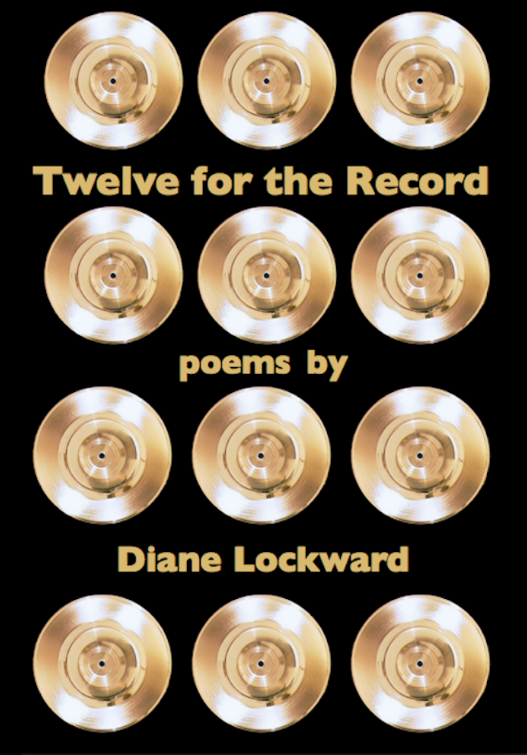
I have a new chapbook! Previously published as part of the Greatest Hits series, the collection is now available as an ebook and can be downloaded onto any of your ereader devices. The collection consists of 12 poems, the ones most often requested, and an essay tracing the history of the poems.
Teachers might find this collection a convenient and cost-effective resource for their poetry students.
Twelve for the Record can be purchased for $3 at Amazon. Click HERE to purchase.
Don't have an ereader? No problem. Amazon has applications that you can download for free. Then you can read right on your computer, tablet, Blackberry, iPhone or Android. Click HERE to download.
As always, thanks for your support of poetry.

March 5, 2012
The Poet on the Poem: Martha Silano

Martha Silano lives in Seattle, Washington, but she's originally a Jersey girl. She is also the winner of the 2010 Saturnalia Books Poetry Prize for her third book, The Little Office of the Immaculate Conception, chosen by Campbell McGrath. Her work has appeared in Agni, American Poetry Review, Beloit Poetry Journal, and elsewhere. In addition to being a delightfully quirky poet, Martha teaches composition and creative writing at Bellevue College and is mother to two young children.
Today's poem comes from The Little Office of the Immaculate Conception.

Click Cover for Amazon
It's All Gravy
a gravy with little brown specks
a gravy from the juices in a pan
the pan you could have dumped in the sink
now a carnival of flavor waiting to be scraped
loosened with splashes of milk of water of wine
let it cook let it thicken let it be spooned or poured
over bird over bovine over swine
the gravy of the cosmos bubbling
beside the resting now lifted to the table
gravy like an ongoing conversation
Uncle Benny's pork-pie hat
a child's peculiar way of saying emergency
seamlessly with sides of potato of carrot of corn
seamlessly while each door handle sings its own song
while giant cicadas ricochet off cycads and jellyfish sting
a gravy like the ether they swore the planets swam through
luminiferous millions of times less dense than air
ubiquitous impossible to define a gravy like the God
Newton paid respect to when he argued
that to keep it all in balance to keep it from collapsing
to keep all the stars and planets from colliding
sometimes He had to intervene
a benevolent meddling like the hand
that stirs and stirs as the liquid steams
obvious and simple everything and nothing
my gravy your gravy our gravy the cosmological constant's
glutinous gravy an iridescent and variably pulsing gravy
the gravy of implosion a dying-that-births-duodenums gravy
gravy of doulas of dictionaries and of gold
the hand stirs the liquid steams
and we heap the groaning platter with glistening
the celestial chef looking on as we lift our plates
lick them like a cat come back from a heavenly spin
because there is oxygen in our blood
because there is calcium in our bones
because all of us were cooked
in the gleaming Viking range
of the stars
DL: I am delighted by the leaps this poem takes. How did you negotiate the progression from kitchen to cosmos, from real gravy to metaphorical gravy?
MS: My leaping guide in this poem is Pablo Neruda, especially his odes. I have read some of Neruda's food odes so many times it's like I have a Neruda microchip inside me. "Gravy of doulas of dictionaries and of gold" could easily have been lifted directly from a Neruda poem—not the exact words but the trope. Also, I had been doing a lot of research: Simon Singh's Big Bang, a biography of Newton, a book about Aristotle and his ether concept. And I'd been kicking around for months this idea of writing a poem titled "It's All Gravy." I didn't know what the poem would be about, but I had to make good on a promise to myself to write a poem with that title. Once the lucky accident of the cosmos research and the gravy idea merged in my head, the poem, at least an early (and mediocre) draft of it, emerged quite easily.
DL: Tell us why you dispensed with punctuation and sentences in this poem. And at what point in your drafting was that decision made?
MS: As far as I can tell from pouring over early drafts of this poem, there was never any punctuation or sentences, so the answer to your question would be "very early on." As for why I dispensed with punctuation and sentences: it wasn't a logical or rational choice, it was an intuitive one. From the very first draft, it felt like the poem should be fragmented and punctuation-less. Looking back on my choice, perhaps it had something to do with the subject matter—where we come from. It seemed so huge … as if ordinary grammar and punctuation could not contain it—it was like the words had to be flying through ether, or mingling with the carbon of dead stars. How could I place a period in a poem that was communing with the stars that made us?
DL: In several stanzas, you use white space. What do you see as the function of those open spaces? How do you accommodate them when you're reading the poem aloud?
MS: The white space was an experiment. In the past when I have written poems without punctuation, one of the problems I continuously encountered (and why I have come back to loving punctuation) is how to create pauses without periods, commas, semi-colons, and dashes. Usually that would mean a line break, but I did not want "seamlessly" on its own line, and the same with "luminiferous" and "ubiquitous." I just wanted them set off from the rest of the line, so I copied what many writers do—I hit the space bar a few times. When I read this poem, I pause between the white spaces about the same length of time as I do for a line break.
DL: I'm also intrigued by your strict use of 2-line stanzas. The formality of the form seems at odds with the absence of punctuation and sentences and the use of white space. What made you choose the form?
MS: Many of my poems are written in couplets, whether or not they are punctuated or written in sentences. Very often early drafts are written without stanzas, or in three-line or four-line stanzas, but usually the poem does not start taking off until I put it into couplets. I am not sure why this is the case. I never wrote a poem in couplets until Linda Bierds pointed out that I had that option. She explained poems that might warrant the two-line stanza (two opposing forces, a poem about two people, an either/or situation), and it turned out that just about all of my poems present dualities, couplet-worthy subjects. In the case of "It's All Gravy," the pull is between the personal / private / particular very real gravy and a universal and cosmic gravy.
DL: Certainly one of the characteristics of your poetry is the obvious joy you take in language. In this poem, you mix elevated diction with humble diction. Words like cycads, luminiferous, and doulas play up against words like little brown specks, dumped in the sink, and Uncle Benny's pork-pie hat. Talk about this disparity and fusion.
MS: The poem presented itself to me as both a personal poem, bursting with my own family history (Uncle Benny, my little brother and his baby-talk "emergency," which actually sounded something like "the mert-it-y"), and a poem embracing the history of how humans have viewed the heavens. Aristotle, Newton, and Einstein on one side of the scale, and regular folks—a middle-class, suburban family, sitting down to dinner, to "a gravy with little brown specks." I wanted the reader to experience both—"my gravy, your gravy, our gravy"—to know the gravy wasn't perfect, that it was made from scratch—and also to view it as something universal and cosmic. I realize now that these specks could be the planets sprayed across our solar system, or millions of stars spread across the Milky Way, but that double meaning was not my intention. That was a gift.
DL: I also admire your use here of strategic repetition. The word "gravy," for example, is used multiple times. Then you also use anaphora as in "splashes of milk of water of wine / let it cook let it thicken let it be spooned or poured // over bird over bovine over swine." To my mind, such devices make the parts cohere and add music and momentum. Was that your intention or just a lucky outcome? Tell us how you went about working with repetition in this poem.
MS: There was quite a bit of luck in terms of how quickly this poem moved through the drafting process to completion (it was accepted for publication at The Cincinnati Review within one year, with only six rejections prior!), but the music and momentum are anything but luck, unless you count the luck of having an undergraduate instructor tell us to go home to our dorm rooms and recite all fifty-two sections of "Song of Myself." I was hoarse by section fifty-two, but I never again doubted the power of anaphora! Or the luck of hearing Allen Ginsberg read at Rutgers University in 1979 (my first poetry reading). If I had not adored Ginsberg's poem "America" these last thirty years, I do not think I would have had the nerve to use the word gravy fourteen times. Repetition comes naturally to me because I have had Whitman and Ginsberg singing in my brain since I was in my teens.
Readers, Martha has provided us with a wonderful reading of the poem. Please enjoy!

February 27, 2012
Social Media: Friend or Foe?

I recently came across an interview with Dana Gioia in The Chronicle of Higher Education. Conducted by Evan R. Goldstein in June 2011, the interview focuses largely on Gioia's reading practices. He reads copious amounts. The volume of his daily reading is all the more amazing in that he still teaches. Although I couldn't possibly come close to equaling the amount of reading he does, I was reminded again that writers read, a practice sometimes ignored by young writers.
But I was surprised by Gioia's response when asked how his reading of professional journals had changed in the past 10 years. He replied:
I used to follow a great many journals in my field, which is modern and contemporary poetry. Today I read far fewer. Most publications now seem more or less interchangeable—the poetry mostly forgettable and the critical prose generic. Perhaps I'm getting old and tired, but I've noticed that most of my peers also seem to follow these publications with less interest. Perhaps we are in a poetry slump.
I now read about half a dozen journals regularly, plus the online Contemporary Poetry Review. I also check Poetry Daily, which provides links to poetry reviews from across the U.S. as well as the U.K., Ireland, Canada, and Australia. I also rely on friends who constantly send me links, off-prints, and copies of journals.
Journals change, sure, and so do readers. But with so many journals to choose from, I find such a blanket dismissal surprising. I wonder which half dozen journals Gioia does read regularly. I wonder, too, if he is in a poetry slump or if poetry is in a slump.
Having read that response, I was not then surprised to read Gioia's response when asked if he reads blogs: "I don't read any blogs regularly, although half the people I know seem to be blogging. I read them only when friends send me links in their emails."
Given how much print material he reads each day, it's easy to understand why Gioia wouldn't have time for blogs, but that's a lot to miss.
When asked about Twitter, Gioia replied: "I never use Twitter. In fact, I am deeply suspicious of the massive communications overload that the media obsesses over and glorifies. So much of this activity is just covert advertising for products and celebrities. The objective is to capture and commercialize every moment of people's time. What we really need is more quiet and less phony connectivity."
Certainly there's a good deal of truth in this. And yes, we need quiet time for reflection and solitude for writing. But there's also the practical reality that if we want our work to be read these days, we need to make some use of social media. Yes or No? Is time spent on social media wasted time or is it part of the work we need to do to stay in touch with other poets and to assist our publishers who simply do not have large budgets for lots of advertising? Honestly, many of my Facebook friends are very well-known poets who I'm happy to hang out with, albeit if only virtually.
One reader of this interview made this comment: "Gioia's dismissal of social networking is the voice of someone who mocks what he does not understand. A shame for a scholar to let his own ignorance be his certitude."
Ouch!