David Gessner's Blog, page 82
July 9, 2012
Origami Weekend: Confessions of a Non-Folder, Continued
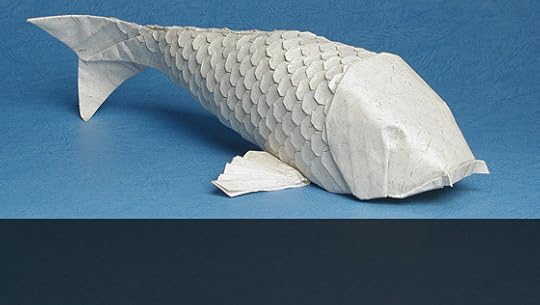
Origami by the incredible folder and scientist Robert Lang
[We invite Katherine Heiny back to follow up on her Origami post from May 22!]
.
“Folder or non-folder?” the woman at the front desk asked me.
“Is that like ‘Human or subhuman?’” I asked.
She stared at me expressionlessly.
I sighed. “Non-folder.”
We were in New York for the National Origami Convention. My husband had taken Angus to the first day of the convention and when they returned to the hotel room, Angus had been in a sort of joyful daze and my husband had drunk scotch straight from the bottle. We had all been too tired to go to the origami dinner or participate in the nocturnal folding. Today it was my turn to accompany Angus.
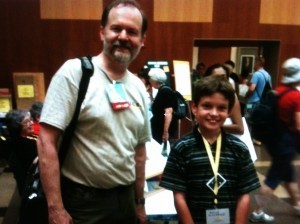
Angus with Robert Lang!
The woman at the front desk gave me a non-folder badge with a beautiful little origami sailboat stuck to it (made by a folder somewhere) and Angus and I went off to register for his day’s classes. Then we had an hour to kill so we went to the cafeteria, where almost every table was full and every single person was folding something.
Angus and I found two chairs at a table and he began folding while I unpacked my laptop. I couldn’t find a wifi network.
No wifi! I felt like I’d been trapped in a mine cave-in. Looking around, though, I saw that I was the only person even hoping for wi-fi. No one else held a PDA. They were all folding.
I walked Angus to his first class and then went back to the cafeteria. Most of the folders had gone to workshops. I saw the father of one of Angus’s friends from Maryland and sat at his table and he let me use his wireless router to get on the Internet. For a few brief, happy moments, I was like a trapped miner tapping my code on the line: I’m here! I’m alive! Don’t do anything interesting until I’m rescued!
All too soon, though, the first workshops were over and the man and I went to collect our children and then he was driving back to D.C. with his precious router.
On the stairs on the way to Angus’s second workshop, some nice lady gestured to his origami project and said, “That’s very pretty. It looks sort of like a pinecone.”
“It’s a Star of David,” Angus said loudly and slowly, as though she were an idiot.
I couldn’t see her badge but I know in my heart she was a non-folder. I tried to think of a way to signal her – how did the humans find each other in Invasion of the Body Snatchers? I couldn’t remember, so I gave her a big smile, meant to convey I’m one of you, not one of them. She just looked scared and then I lost her in the crowd.
Angus went into his next workshop, and I had a brief conversation with a janitor, who told me that a whole bunch of people had stormed one of the escalators trying to get upstairs for the praying-mantis workshop and the escalator had broken. Something had happened and I had missed it! I felt this loss keenly, like someone who’d waited weeks for a mail stagecoach and then happened to be off in the fields that day.
Angus and I went to McDonald’s for lunch and I wanted to walk around – New York is my favorite city – but Angus wanted to go back to the cafeteria, where he folded an origami Thomas Jefferson and the woman sitting next to him folded an origami tea cozy, and they had a very intense conversation about tessellations. I read my book. (Please be aware that I’m hitting the highlights here — I’m actually leaving the really boring parts out.)
Angus went back to class and I sat in the cafeteria and finished my book. When I looked up, a man sitting at another table made eye contact with me. I recognized it instantly: it was the kind of eye contact people make at parties when it’s late and everyone remotely desirable has gone home. I sighed. I was lonely, too.
So the man moved over to my table and showed me how to fold a fujimoto cube and I told him about my new high-heeled sandals which are guaranteed not to cause blisters. But like all desperation hook-ups, it left us both feeling a little used, a little tarnished. We didn’t have much to say to each other afterward, and he moved to a table on the other side of the cafeteria and ostentatiously began folding a piece of paper into sixty-fourths. And what did I do? Something I would have done at ten that morning if I hadn’t been afraid Child Services might find out: I went out and had a beer.
The bar I chose was Irish, dim, seedy. I loved it. I sat at the bar and ordered a beer and the bartender asked me where I was from and if the weather was hot enough for me and he told me the password for the bar’s wifi and he didn’t mention origami once. I found him quite the most charming man in all the world.
When I went back into the convention, I had to stop and dig my pass out of my purse. The woman behind me in line said, “You should wear your pass even when you leave the building.”
“I don’t want to walk around New York wearing an origami badge,” I said. “Bartenders would never flirt with me.”
I could see the woman look at her watch (it was not quite one o’clock) and then my wedding ring. She was clearly debating several responses but finally she looked at my badge and said, “Non-folder!” contemptuously and pushed past me.
I was just in time to pick Angus up from the fighter-jet workshop. A man also waiting outside the classroom asked me politely if I’d been at the convention all day.
“Yes,” I said. “But I just went out for a beer so I’ve regained the will to go on living.”
“Well, I wouldn’t know about that,” the man said. “I don’t drink.”
“Oh,” I said, very happy that I’d chosen not to share the fact that I also felt like I’d just escaped from a bad one-night stand. Then I added, “I’m a non-folder,” and he nodded as though that didn’t surprise him.
In the break before Angus’s final class, we were sitting in the cafeteria and he was folding and I was tipped back in a chair, sleeping with my eyes open (a trick I perfected in junior high school) when Angus poked me and whispered, “Look, it’s Robert Lang!”
Robert Lang! I brought my chair legs down with a bang. If you don’t know who Robert Lang is, it’s because you don’t love someone who loves origami. In terms of celebrity sightings, it was no less exciting than the time I shared an elevator with Cindy Crawford.
 Angus shook hands with Mr. Lang and I took a photo of them, and Mr. Lang was so charming and gracious that I vowed to watch his TED talk all the way through — something Angus is always wanting me to do.
We were at the convention for eight hours, most of which Angus spent in class, folding things so detailed and precise that some people would have ended up in a special home somewhere after attempting just one. And yet on the walk back to the hotel, Angus was fresh as a flower, talking about crimping and ridgeline creases and how hard it is to fold foil precisely. Then he interrupted himself to say, “Why is that man is waving at you?”
It was the bartender. I waved back. “People are just very friendly in New York,” I said. It seemed hard to believe that during given a whole glorious summer day in New York, I’d seen only the insides of classrooms, a cafeteria, a McDonald’s, and a bar.
Angus talked a little more about the difference between a bird base and a cupboard base and then he turned to me, his face glowing and his voice exuberant. I have never seen him look so happy, and that’s not an exaggeration. He said, “You won’t believe this, but today was one of the best days of my life!”
Well, nobody will believe this, but it was – suddenly – one of the best days of my life, too.


July 7, 2012
Getting Outside Saturday: Summer Swimming
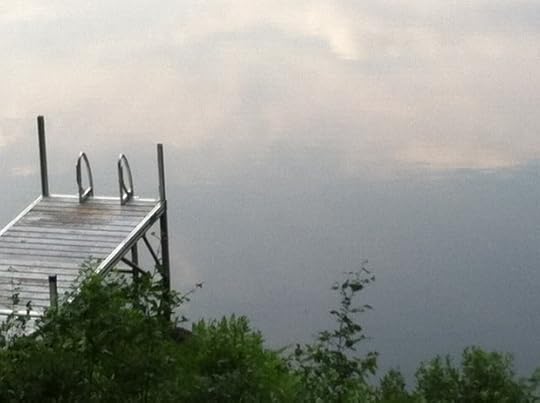
Ahh. Drew and Sarah’s dock at Staples Pond, with sky–photo by Elysia.
Ah. Last summer I couldn’t swim because of the neck operation. It just hurt too much to pull water with my hands, to roll my shoulders, to turn my neck from side-to-side. I could wade in and float, but. So. It’s a special pleasure this summer to drive the three miles to Drury or Staples and visit with the McNairs or Slartons and swim out to the center of whichever little pond and tread water with the loons. You might also be with dogs, you might also be with friends, but when the water is in your ears and you are stroking forward you are very much alone in your thoughts, which I find turn from the business of the day, the worries of the week, the issues of the month, the crises of the year, the lifetime failings, to: To the noise of the breath and the bubbles of the stroke and the squiggling path and dainty wake of the water beetle just ahead, who seems to have decided to serve as pilot to the vessel of yourself. It’s the exercise, of course, the endorphins pumping through every capillary, but mid-swim you do find yourself suddenly there, suddenly in–wait–a pond, and suddenly aware of all the very tall white pines at the shore, the great rocks at the edges, the mounting glorious clouds overhead, and it’s summer, and it’s getting near cocktail hour, and there are nighthawks high above, and you are swimming the pond, this way out and then this way back and then there’s company and it’s only tonight, the eternal now, and it’s no other anything at all.
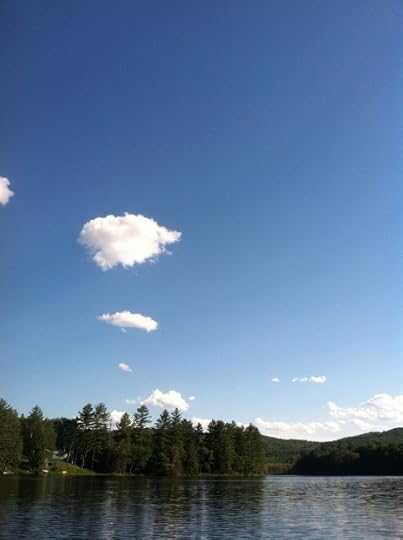
At Wes and Diane’s camp on Drury Pond.
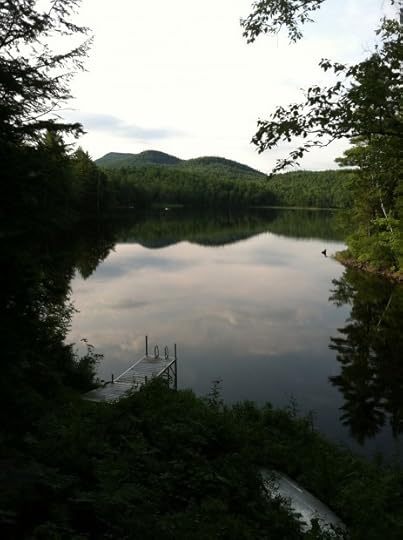
Staples Pond
July 6, 2012

July 4, 2012

July 2, 2012
Dave at Doe Branch: A Photo Haiku
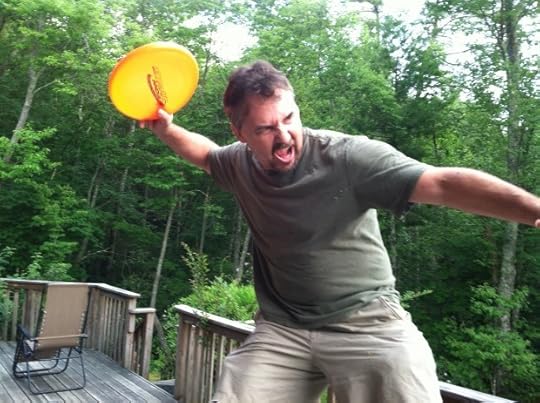
Never to be seen again.
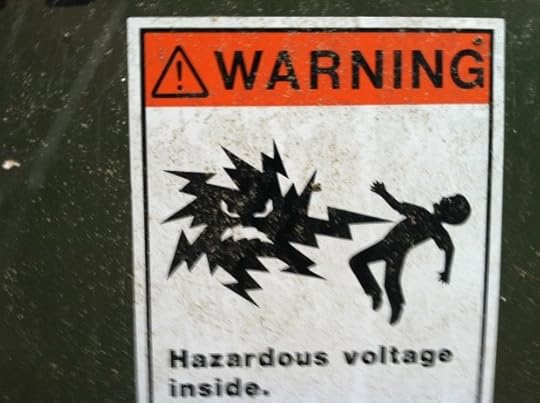
Do not fuck with Dave!
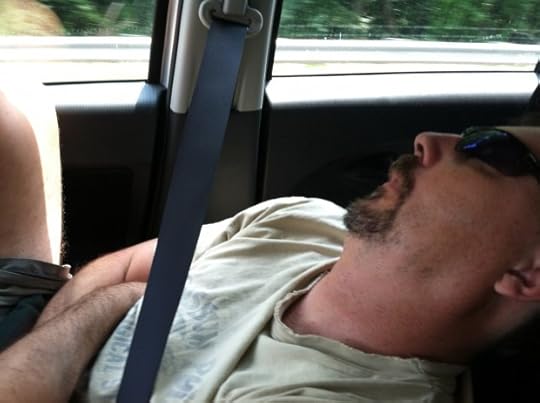
Even the gods grow weary!
June 30, 2012
Getting Outside Saturday: Summer Pleasures, a Photo Haiku
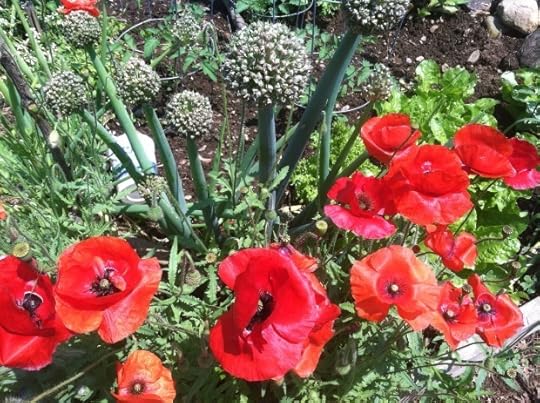
Poppies rock.

Swimming hole.
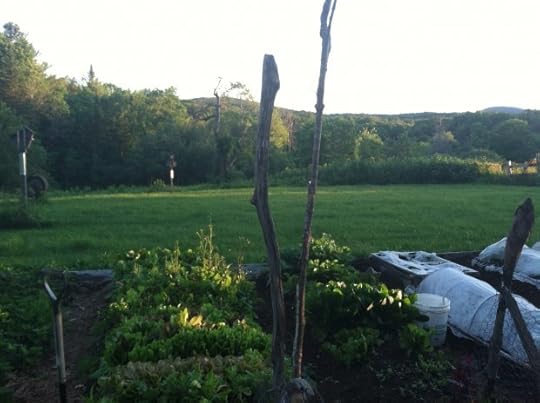
Sunset garden.
June 28, 2012
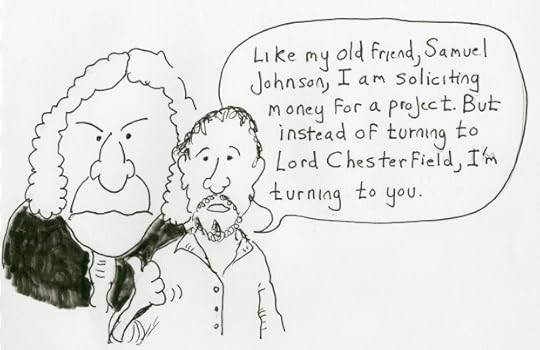
My New Book…and New Adventure…..And maybe a little help from you, Dear Reader

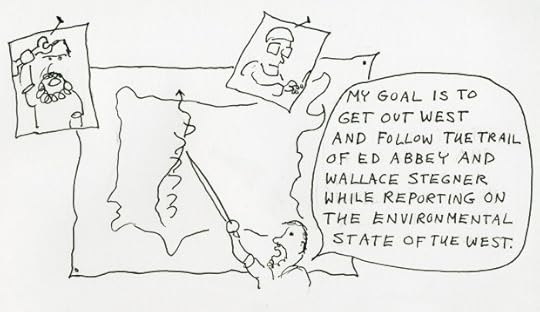
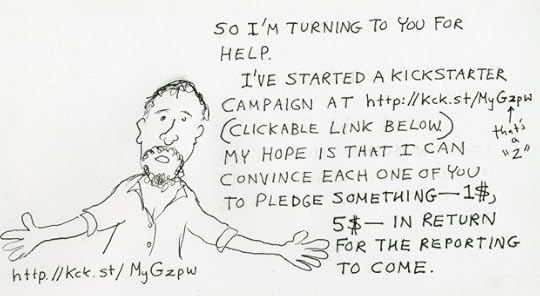
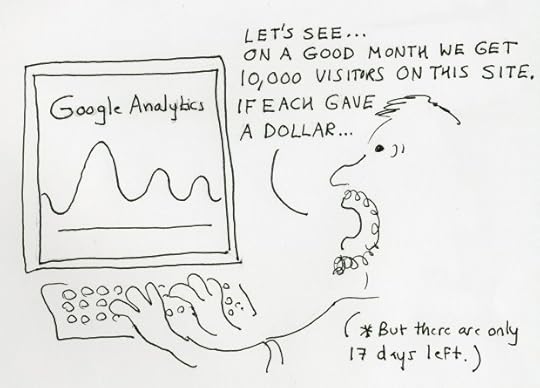
It was almost exactly two years ago that I headed down to the Gulf of Mexico during the BP oil spill. Many of you came with me, metaphorically speaking. This summer, with the fires raging, I will head West. My goal is to blog from the road, while creating a kind of state of the eco West report. As I travel I will also follow the trail left by the ghosts of Edward Abbey and Wallace Stegner, and will ask what they would make of the state of things. To help fund my trip I have made a movie and launched a Kickstarter campaign, both of which you can see here:
And here’s a fuller description of the project:
This summer I will head out West and follow the trail left by the ghosts of Edward Abbey and Wallace Stegner. I will visit the places they lived, talk to the people they knew, read all their books, and study the letters and journal notes they left behind. Beginning in the in Tucson , where Abbey lived and died, I will meander north to Saskatchewan, where Stegner spent his early boyhood. Along the way I will film, blog, and write, creating a multimedia experience that is part travelogue, part braided biography, and part a report on the state of the environment in the West. My goal is to see what these two literary and environmental giants can offer at this moment—both what they can offer the West, the environment, and, more personally, what they can offer me.
And an even fuller desciption:
Edward Abbey and Wallace Stegner left their large footprints all over the Western landscape. Both are considered among the West’s greatest writers (though they both abhorred being considered “regional” writers), and both are known almost as well by their environmental actions as by their words. In fact, they have come to represent poles of environmentalism: the competent, mature advocate who works within the system (Stegner), and the Wildman anarchist who works outside the system and wouldn’t mind seeing it torn down (Abbey).
During the summer of 2012 I will follow the ghosts of Stegner and Abbey throughout the American West, visiting the places they called home and the places they wrote about, beginning in Cabeza Prieta Wilderness where Abbey is buried and heading north to Stegner’s frontier home in Saskatchewan. Along the way I will raft rivers and camp in the desert, and as I travel I will braid the lives and stories of Abbey and Stegner, wrestling with their ghosts and asking how the two men speak to my own current life as a man, environmentalist, teacher, husband, and father.
These meditations will deepen the book and give it texture, but what will give it true urgency will be the current state of the West. Wallace Stegner wrote of the “boom and bust” economy of the region and how companies come in, devour a town or landscape, and move on to the next. What Stegner witnessed is mild compared to what is happening today; what he called the “geography of hope” is being drilled, gored, fracked and pipe-lined beyond recognition. The West is a fragile, arid landscape that does not recover in the manner of the green East, and so the actions we take now will long leave their mark. As in my other work (most notably The Tarball Chronicles, my book about the Gulf oil spill) I will try to take the larger topic of our energy consumption and make it feel immediate and direct for my readers. I will pose these questions: can we change our consumptive ways? Can we be happy with less? I believe that Stegner and Abbey can point toward some answers to these questions. I will also consider not just the necessity, but the means, of environmental resistance. Is Ed Abbey’s monkey-wrenching still a valid reaction? Perhaps no, but perhaps yes in the age of Occupy Wall St. Abbey, after all, knew the value of dramatic symbols.
But there is also a more personal element to the project. Ed Abbey and Wallace Stegner are heroes of mine. For starters, I love their writing. But it’s more than that: they have also become, at different times, models. Models of how to be, how to live. The title, “Properly Wild,” comes from the fact that Stegner valued the civilized and restrained (but was wild in his own way) while Abbey was a barbarian (though a fairly civilized one). It seems to me they have something deep to teach us about the interaction of the civilized and the wild, something that is of vital importance to both the Western landscape and the country as a whole. We could all stand to be properly wild.
For this project I will employ a working method that has evolved over my last three books. It’s not a complicated method: I drive into town and talk to people, in bars or coffee shops or on the street, and in this way find my way toward interesting characters who lead me to the heart of the story. But in the West, unlike the Gulf, my contacts are myriad and I have a list of names of people both within environmental organizations and within the industries that those organizations oppose. As with the Gulf trip, I will blog as I go for the Natural Resources Defense Council, building an audience for my adventure. Already, I have sketched out an itinerary that includes a river trip in the tradition of Stegner and Abbey, a trip up from Stegner’s birthplace up to the Tar Sands, and a camping trip deep into the Maze in the heart of Canyonlands National Park.
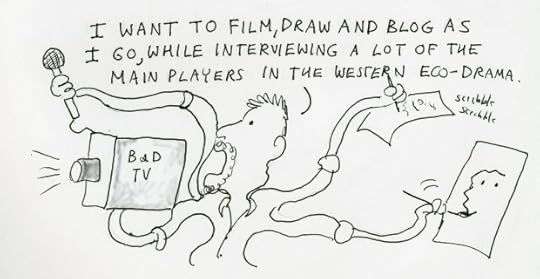
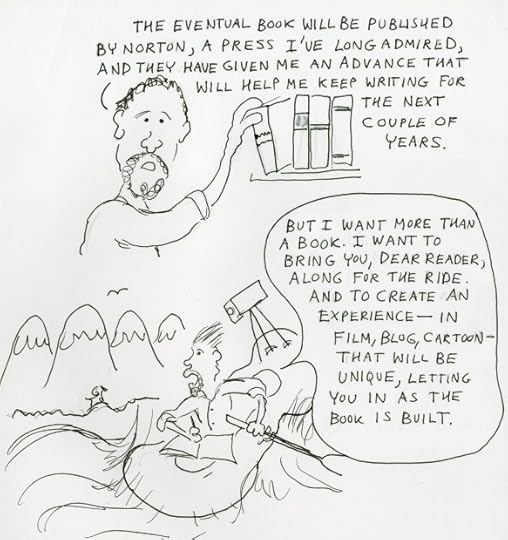
My goal is to create a multimedia blog—film, cartoons, and writing– from the road so that viewers and readers can come along for the (properly) wild trip. The blog will be the immediate result of the trip, but a short film and book will follow. My hope is that these will speak directly to the state of the West and to the lives of two great writers who made the geography of hope their home.
June 26, 2012
Bad Advice Wednesday: Everything I Need to Know about Writing I Learned from Bartending!

Make it a Double!
.
Bill and Dave have got me thinking about cocktails. Writing, too, of course, and how the two fit together. And I’d really like to hear about how your work fits in with your writing. Or how it doesn’t. See, once upon a time I was a bartender. And lately, I’ve noticed that people who haven’t worked in the service industry react to that with a certain reverence and awe. “Wow, I wish I’d done that when I was younger,” they say. They imagine I was a sort of female Tom Cruise, shaking fruity libations, tossing bottles, juggling coconuts to the likes of “Kokamo,” lots of wicker and palm fronds and gorgeous customers lining up to fall in love.
Kristen Keckler working on her new book…
Well, sort of. Just substitute Jamaican Tiki bar with suburban restaurant specializing in “New American cuisine,” one with a name like Main Street Grill. Imagine décor along the lines of a Frontgate catalog. Bistro-style barstools. Birdbath sized Martini glasses. Sconces. Pendant fixtures over the bar. Fabric banquettes. Tile. Contemporary, comfortable, with a few unique-seeming details, but underneath, as generic as the model home in a subdivision.
I lasted six months.
I was twenty-six, well beyond that post-graduation grace period when you can coast on your laurels. I’d done the cross-country-camp-out-of-your-car thing. I wrote sporadically, mostly when I was falling in love or after things went really bad. Sometimes I read poems at some café open mike. At the point I started bartending, my job history included: lifeguard; camp counselor; library book-shelver; birthday party clown; barista; vegetarian short order cook; seitan (wheat-meat) maker; and psychiatric group counselor. The last of which I quit to travel around the world on a frequent-flyer ticket, eventually landing back at my parents’ house, windswept and vaguely more aware of my own unsettledness. But up for anything. My dad knew the owners. I was set.
I did eventually master the four M’s: martini, Manhattan, mojito, margarita. And the “cosmo
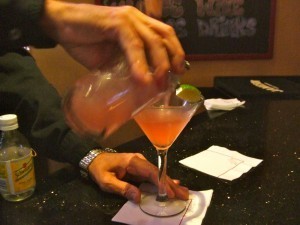
The Bridesmaid’s Martini
” of course—bridesmaid’s martini. I learned dry, extra dry, and dirty. I learned just enough to be able, over a decade later, to take over for some well-meaning husband or wife at a dinner party and pump out some serious aperitifs. Case in point, recently a friend had the brilliant idea to make watermelon martinis. I watched, curiously, as he hacked the melon o
pen, scooped chunks in a blender with too much ice and too little vodka. The result was like watermelon shaved ice, something you’d eat with a spoon. I didn’t interfere—not until the results bombed. I’d never actually made a watermelon martini, but what the hell, I found a few tools—drink mixer (metal kind with a lid with holes), a plastic juicer, agave nectar. Juiced the watermelon, discarding the pulp. Filled the mixer with ice, lots of vodka, a few splashes of watermelon juice, a couple drops of nectar. Shook and shook and shook. Strained the mixture—pink like dragon fruit. Summer in a glass.
But beyond the arts of improvisation and entertainment, it seems that bartending and writing share a similar list of do’s and don’ts.
1. Know your Audience.
Tommy Hardware drank Coors Light, bottle not tap. Stockbroker Steve liked Macallan 12, once in a while would splurge on the 18, always trying to haggle down the price. The O’Brien’s—husband and wife legal team, very sweet, good tippers—liked margaritas, rocks and salt. Donna the therapist ordered house Pinot Grigio, always with a glass of ice on the side. And Chardonnay Ray, retired village police chief, liked, you guessed it. But Tommy Hardware would never drink a Guinness, and Stockbroker Steve would never order a cosmo. Though it still makes me giggle to imagine.
2. Be Realistic
Before my first shift, and well into the first few weeks, I did sort of aspire to be a female Tom Cruise. Well, maybe more along the lines of Rachel in Friends—but substitute wine for coffee. I imagined myself serving wine mostly. Sure, I expected some light cleaning, lifting, stocking, ass kissing. Doing all of the above while engaging in sophisticated conversations about art. And eventually being offered free Yankees tickets and stays in patrons’ vacation cottages.
3. Think Big
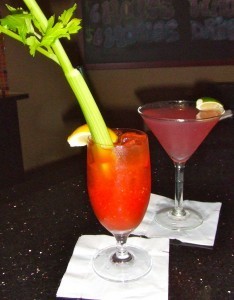
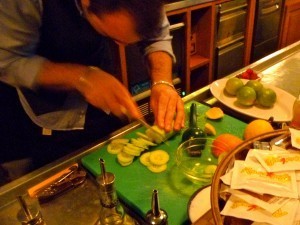
When prepping for your night shift, always remember bigger is better, and cut the lemons and limes into fat wedges—or whole circles with a slit to hug
Lunch
the glass. Feel good about your generous garnishes, at least until the owner tells you to cut them smaller—if he even notices at all.
4. Bartending is a Process
There were very few shortcuts that actually saved time. Glasses needed to be washed, buffed, chilled. A pina colada took freaking forever, always inspiring a fuck-me inner sigh. Especially when I was slammed. Pop the coconut cream, pineapple juice, simple sugar, rum, and ice in a blender (first rinse out the leftover margarita), which will drown out the music and banter with its annoyingly loud whir-hum. Blend until the ice is fully incorporated—a full thirty seconds. Try to shave a few seconds off, and the colada will be full of straw-clogging ice chips. And that’s no fun.
5. Honor thy Apprenticeship
You’ll be itching to gain credibility, make some real money. But most bartenders have to start as barbacks, basically manning the service window, pouring wine for the wait staff and staying out of the way of the real bartender, who gets to socialize and make all the cool drinks in the pretty glasses. You’ll make a fr
Wade on in, the water ain’t deep!
action of the tips. You’ll respect and want to impress some of the bartenders who train you, and others, you’ll wonder how this dipshit lucked into a bar shift. You’ll need to prove yourself, wait for someone to call off or quit. Watch, listen, learn. When your time comes: pounce.
6. Eavesdrop
Learn about all sorts of things you could care less about. Like: golf, baseball, day trading, boat slips, property taxes, school districts, Costco, dog breeding, plastic surgery, fantasy football, point spreads, primer and paint brands, divorce proceedings, action movies, cholesterol medications, country clubs.
7. Become an Expert
When Tommy Hardware asks, “Did you catch the game last night?,” don’t ask “what game?” It’s July and he is wearing his Posada Jersey for Christ’s sake. Say, “No, I missed it. Did Rivera close?” And he will proceed to explain the highlights of the game in cinematic detail.
8. Eschew Disclaimers
No self-respecting barmaid would say, “I haven’t quite nailed my margarita yet.” Or, “My bloody Mary’s are so blah.” It would be like a poet saying, “My meter sucks balls.”
9. Seize the Personal Pronoun
You’ll find yourself using the word “my” a lot: “the” bar will become “my” bar. And not my in the collective-personal, like “my church” or “my bus stop” but my in a more intimate and possessive sense, as in “my boyfriend” or “my couch.” It will slip out that way, mostly without you even noticing, although sometimes it will have an oddly narcissistic ring—my, my, my.
10. Show Don’t Tell
oLet’s face it, you’ll find out top-secret stuff too good to keep to yourself. Like, that a certain bartender’s thong underwear were once, before I worked there, discovered on one of the dinning room banquets. I knew who she was—had been—banging, but I won’t tell, at least, not here. But that thong will remain draped in my memory. Sometimes I picture Victoria’s Secret, black lace, little bow, other times a satiny leopard print triangle. Then there was the night one of the owners came in with a date—a teacher, nice girl. They sat at my bar and had a couple drinks. He was obviously showing off his status as owner. They got a little sloppy, touchy-feely-gropey, and then left. The next day I mentioned that the owner was in with his new girlfriend to the waitress he used to date. They’d broken up a while ago, so I’d assumed she was over him. Big mistake. The nex
Bar.
t thing I knew, the pissed off owner cornered me in the dry goods storage to tell me that what happens at my bar stays at my bar. Capice?
Yeah, okay.
11. Take What’s Free
Liquor distributors will stop by, usually between the hours of three and five, when you are doing side-work. Engage them as if you actually have decision-making power. They are a nice mid-afternoon distraction. They will offer you samples of new products, most trendy and/or dumb, like green-flecked whiskey, bubble-gum favored schnapps. They’ll shower you with pens, pads, wine keys, ash trays, bottle openers, bobble-heads, shot glasses, flasks, dish towels, hats. They’ll offer you a T-shirt or tank top, always in a size L, emblazoned with their brand. Take it. You can always give it away, or wear it to bed.
12. Bond with Colleagues
Since you won’t want to (always) drink where you work, you’ll find yourself in other establishments after your bar closes or on your night off. Don’t order: bartender’s choice. Let it be known, casually of course, where you tend bar and invite the person to “stop in, come see me!” Code for “I’ll hook you up.” When they come into your bar, treat them like royalty. Commiserate. Trade secrets. Some will teach you about bourbons, vintages. Some you will grow to trust, like, envy. Others you’ll tolerate, because you know what they say about keeping your enemies close.
13. Immerse yourself in your Craft
As the saying goes, all great writers read. Just like all good bartenders drink. I’ve come across a few that didn’t, but they were in AA. You make a drink, and there’s a little left in the shaker, so you pour it into the rocks glass to sample—pretty tasty!, or not enough lime, or whatever. Always drink to taste. How else are you going to figure out what’s good.
14. Don’t Do it for the Money
On an average night, slow but steady, I’d gross eighty bucks. Wait, after tipping out the busboys, try seventy-two. Minus the drink I bought for a fellow service-industry worker who stopped in (as I’d invited). Down to sixty. Then drinks at the “workingman’s bar” watering hole next door, three long games of Quick Draw, a tank of gas and the two skirts I had to buy from TJ Maxx because the owners expected me to dress up, and I almost broke even.
15. Push through the Hard Stuff
Attention to detail
There was a couple that came in once or twice a week—let’s call them Linda and Jim. They were in their late 40s, had a couple kids—daughters, I think. She had short frosted blond hair, looked like she placed tennis, and he was gray and tan. She drank red; he drank white. They drank a little too much and stumbled home—they lived close, walking distance. Usually they were happy drunks. But sometimes, it was like a switch suddenly flipped, activating their evil twins. My back turned, punching buttons on my touch screen register, I’d hear:
“How does it feel to be a loser? A pathetic excuse for a man? I should’ve listened to my mother.”
“Your mother is a gold-digging bitch.”
“I’m going to divorce you and take the kids,” she hissed.
The hairs on the back of my neck stood up. They weren’t shouting, though their tones were razor sharp. They were not turned toward each other, but looking straight ahead, as if they were addressing me, or the mirror behind me.
“Laughable. You’re an unfit mother,” he said.
“Fucking asshole…”
“Beef cavern…”
Sometimes marriage and alcohol don’t really mix.
Turn up the music. Then cut them off.
16. Respect Deadlines
You’ll never set out to serve a shitty drink on purpose. But you can tell that margarita’s off, suspect you went too heavy on the Triple Sec because it is more orange than that lovely translucent key lime pie color. But new tickets are popping out of the printer and the regulars are getting restless. So send it out anyway. There’s always next time.
17. Develop an eye for Detail
It’s the little things that keep you sane. Dusting all shapes and styles of bottles. Cutting fruit. The strawberry slice that clings to the glass like a perfect little valentine. The peach moon floating in the sea of white sangria. The festive umbrella staked into a pineapple island. The double olives that peer out like cute red-eyed aliens.
18. Primadonnas Need Not Apply
If a drink gets sent back, just shut up and re-make it. Don’t get hung up on semantics—like, if he didn’t want any damn vermouth, he should’ve specified very dry.
19. No Whining
No one wants to hear you bitch, except perhaps those in your, um, trade (see “Bond with Colleagues”) and they’re only thinking of payback. But others, they’ll remind you that you chose this. No one kidnapped you and dropped you off in a new American restaurant. No one’s holding a gun to your head as you change a keg. If you don’t like what you’re doing, do something else. But you know deep down, there’s something you do like about this job, sometimes, some little satisfaction that comes when you’re in your zone, when get it right.
20. Make it Look Easy.
Rattle that cocktail shaker like it’s your moneymaker (because it is) and with muscle and flair you can muster. Pretend it’s a maraca or tambourine. Do a little dance.
21. Find Your Zone
Some people are always on their game. (We hate those people.) The rest of us are pretty much inconsistent. We have our good and bad days, and a sweet spot of peak performance we hit maybe once a shift if we’re lucky. I always needed to be very-busy-but-not-quite-in-the-weeds to finally find my groove. And then, for an hour or two, my senses became particularly acute, and I seemed to be floating through my work. When my body finally caught up to my brain—surpassed it, even—it was sort of like in a Disney movie, when a princess waves a magic wand and it sparks with little stars.
22. Disclose the Self
Once, I was bending over the beer cooler, a refrigerator that looked like a stand-up freezer, with hatches on top that slid. The beers all the way to the back were the ones that weren’t ordered as much, like O’Doul’s (non-alcoholic, down fifty for a buzz) or Peroni (yuck! Italians should stick to wine.)

Not a cabbage.
At barely past five, Chardonnay Ray was on his third glass, and a few others had trickled in for happy hour. I was stocking the beer case, pushing the Peronis further back to make room for the Heineken when I heard Ray’s unmistakable boom: “Hey, honey, why do you have a cabbage on your ass? Or is that one of those bloomin’ onions?”
“Looks like an artichoke to me,” piped in Stockbrocker Steve.” I whipped around, pulling down my skimpy shirt, saying, “Haha, I’m sorry you forgot your glasses at home, but I’ll have you know it’s a flower.” I said.
“Huh, coulda sworn it was a cabbage—let’s have another look,” Ray said.
So, turn around, lift your shirt just a little, and let them ogle your tattoo. Say, “It was designed from a photograph I took in Australia. And I got it done in Sydney. It’s a lotus blossom.” Add: “After New Zealand and before Singapore,” just because.
“When were you over there?” Ray asked.
Just to up the ante: “Couple months ago. My second time.”
Don’t add that the price of such a trip was to work your cabbage ass off serving the likes of them. But now they know something about you that the average stranger or acquaintance does not.
23. Don’t Be a Scenester
Towards the end of my career as a drink slinger, I got a little caught up in the scene. Long story short, the restaurant had been closed for a private party, and we re-opened the bar area after the party cleared out, save three or four of the family lushes. Your regulars, they went over to the workingman’s bar instead, but the fact you were “closed” only makes them stalk you until you to re-open. (Usually people started off at the restaurant, and then moved over to the real bar where drinks were a lot cheaper, they could play Quick Draw and be really loud.) Since it was late, the female manager—a raven-haired no-nonsense Brit—changed the satellite radio from easy jazz to ultimate hip-hop hits. The manager was bored so she helped me work my bar. We were pumping out drinks, having a little fun. People were dancing little drunken dances. Next thing I knew, some guy talked us into doing belly shots.
So I’m lying on the bar, tugging my skirt down a little, my shirt up, exposing my belly, complete with cute piercing. Someone sprinkles me with salt. Someone else pours tequila in my navel. I’m trying to keep flat and still. My button is too small to hold much so the liquid pools around it but doesn’t spill over my sides. This all happens lickety split, and the moment after he pulls the bottle back, my manager, serenaded by catcalls, puts her pretty lips to my middle and sucks it out, washes it down with the lime I’ve had stuffed in my mouth. I repeat the favor. I felt wild and reckless and cool—for maybe a week. But when all is said and done, do you want people to remember you for your craft, or your navel?
24. Screw the Critics
People will treat your occupation with enthusiastic admiration, polite skepticism, or outright disdain they mask in the spirit of joking. Oh, so you’re a bartender. (Wink, wink.) You spend your nights dancing on a bar you’ve set on fire! Must be nice to drink for free (actually, one free “shift drink,” pay for the rest.) Or, on the flip side, it must be awful dealing with all those drunk people! They’ll assume you must be a flake, a hustler, or just too out there to hold down a “real” job, and sometimes you’ll think they sorta kinda have a point.
25. Honor thy Characters
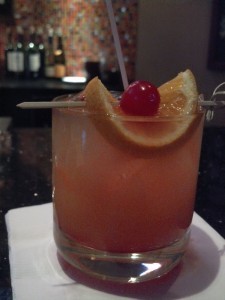
Just another tequila sunrise…
Tommy Hardware wore a gold Yankees pendant (circle with a hat on a bat) on a gold link chain. His light hair was always short, like a shaved head after one month of new growth, and he liked every major sport, always rooting for New York (Giants, not Jets, Yankees not Mets, Knicks not Nets). He played in a softball league in the summer, lived with his mother, and helped me move furniture in his Jeep. Though the menu was peppered with “duck confit” and “frittes,” if he ate, it would most likely be a burger or a chicken sandwich. He would never: hit a girl, convert to Islam, rob a bank, drive a Prius, or steal a friend’s girl. But the longer I stuck around, the more my regulars would surprise me. Chardonnay Ray was a retired cop who read the New York Post, and he had his sexist and racist Tourette’s moments. I could picture him twenty years earlier, setting up speed traps, slinking the streets in his patrol car. Then one day I’d find out that he had an unusual hobby—he had a stained glass studio in his basement. He said making stained glass relaxed him. He brought in a photo-album of his work—butterflies, kittens, birds, sunflowers, Celtic knots, and lots of crosses. Really nice stuff. He told me he did custom orders, could make almost anything. So I commissioned him to make a lotus flower, brought him the photo, and he sketched the design. The final product was spectacularly beautiful, delicate petals, a blend of bright and pearly pinks. Today, it still hangs in my window.
Your turn–what have you learned about writing from your job?
[Kristen Keckler is a writer living in Westchester County, New York. She's a professor at Mercy College and was co-author of the tenth anniversary edition of Writing Life Stories, the world's best book on the subject of memoir. She's at work on a memoir of work, love, and finding a life, called Sex and the Group Home]
June 25, 2012
Wild, by Cheryl Strayed

Far from my studio, in the world of Wild.
I really loved reading Wild, by Cheryl Strayed. I’m not alone in that, of course. The book has had the trajectory of a rocket and has left earth’s constricting atmosphere, bound for the heavens, and history. Cheryl Strayed has built the most compelling narrative out of a walk on the Pacific Coast Trail. Walk, ha. It’s 1100 miles of difficult terrain, from desert to snowfield to deep, dark forest. Also the forest of the soul. And that’s where the irresistible drive of this book takes place, the soul. Trail stories are nearly universally boring—a privileged person wears out some shoes, or a funny person mocks the enterprise, or an achiever overvalues his experience and documents every hard-won sandwich. Whatever, in the end they are victors, and their triumph has a moral.
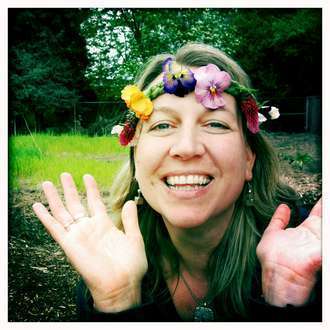
Cheryl Strayed photographed by her husband, Brian Lindstrom
What Strayed adds to the mix is a strong, anti-suburban anti-ethos. She’s been self-destructive, but doesn’t really mind that about herself, in fact, motherless, steps in these many years later and loves her younger self unconditionally. And as reader, you love her, too, really, really care about this kid and the person she becomes, love her from the start, and love her courageous incompetence, her confident ambivalence even as she walks through the valley of the shadow of death—“Who’s braver than me!” she keeps saying.
And you worry about her feet, and your worry about her life, and you wish people would come through for her even though she doesn’t need them, and in that and all other ways you admire her courage, part of which is the courage of the narrative itself.
What I love most about Wild is that the Cheryl writing doesn’t judge the Cheryl hiking, and doesn’t feel superior to her, and most of all—here’s the power of the book, I think—loves her unconditionally, and in that way offers her, well, a mom as she puts herself in the driver’s seat of her own life. If I may quote her. And then as we follow the trail, the voice of the narration slips back effortlessly and becomes the hiker’s, and the hiker’s memory as she hikes becomes again the narration.
There’s also the frank sexuality, the attractions, the happy hook-ups, the unhappy, the good decisions and bad, the dammed-up tears that will flow when the time finally comes. There’s the body, too, the real body, the pack-damaged skin, the tattoo of a horse (and the story that goes with it), the hole to shit in, the trail-friendly menstrual sponge, the unfriendly hunger, the terrible thirst: it’s wonderful, it’s human, the body natural, and almost no one ever mentions any of it.
I love it because it’s all so anti-suburban: the younger Cheryl did these things and thought these things and wanted these things and made horrendous mistakes but had fun, too, sex, smack, and rock and roll, and that’s how it is, so.
And literarily speaking there’s a parallel, the refusal of the epic model, in which the hero returns home, like Odysseus, or Dorothy. Because our hero can’ go home: her home is gone. And in the end she can’t quite say what the moral is, and doesn’t try. A hike’s just a hike, let’s not kid ourselves. The growth has happened since, and it was in progress before. You can’t just put down the heavy pack and walk away, and putting on a heavy pack doesn’t mean you weren’t wearing one the moment before.
A great book, which you also can’t put down (read that as you wish, all true), and an example of well-deserved success, things going right in book world.
June 24, 2012
Bug Haiku: North Carolina Night Insects

Luna Moth
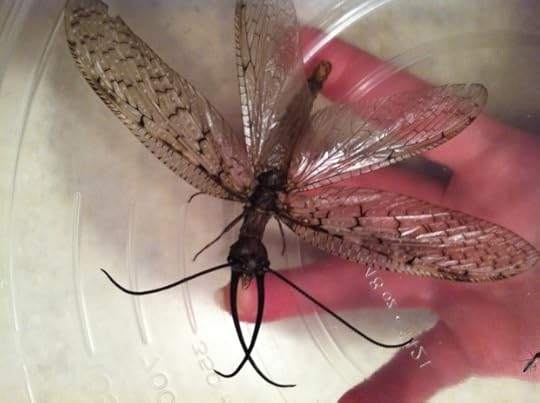
Dobsonfly
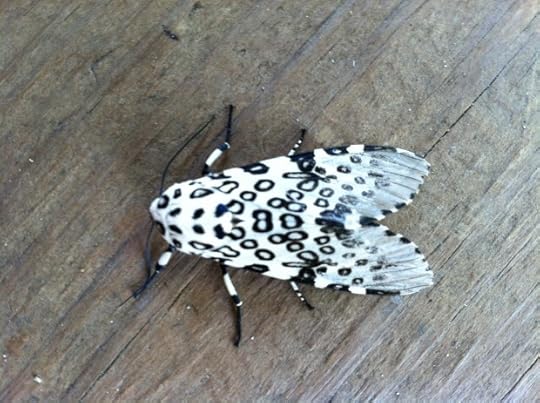
Designer Moth