David Gessner's Blog, page 86
May 13, 2012
Me and Bobby McGee: Happy Mother’s Day
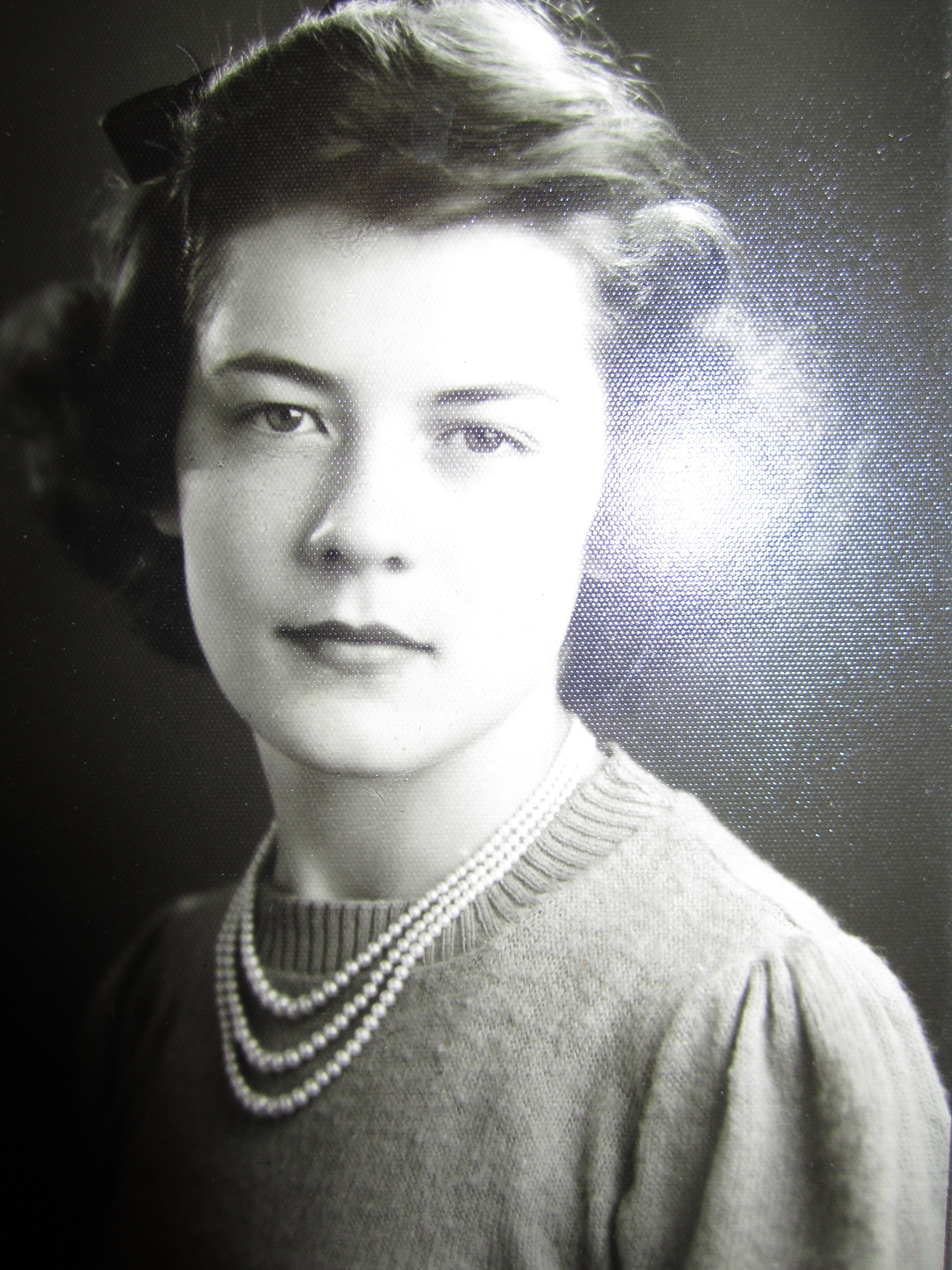
Reba Burkhardt about age 16, with pearls.
.
A couple of years ago I called my dad to ask if he knew the whereabouts of any family photos or other memorabilia of my time playing in bands. I particularly wanted a photo of equipment set up in the big room over our garage, which we called the Hideaway, and where my friends and I rocked out. He said, Oh, I’ve got photos all right. The older of my two younger sisters, Carol, had boxed them all when Poppy moved down to Atlanta to live with my younger brother, Doug, and his family. And, well, they were still in the boxes.
#
Which arrived three days later via Fedex ground–seven large U-Haul cartons taped shut at the end of 2006, beginning of 2007. These I put in the barn, but today cleaning up a little I spied them (very close to blending in to the permanent warp and woof of barn stuff). And for no particular reason dragged one inside and slit the tape and inside a bursting cornucopia of forgotten faces and beloved ones, mostly my mother’s side of the family, and mostly theForsyth clan, her mother’s crowd. Gradually I realized that the collection was from my mother’s aunt Pearl, her favorite aunt and middle-name sake (my daughter’s, too: Elysia Pearl). Aunt Pearl had written names on many photos, but many were unmarked. My grandparents I recognized–this pair of people born in 1887 and 1890 respectively. Grandfather is serious in every photo, Grandmother a touch less so. Their eight children arrive one-by-one, my mother near the end of the line-up.
Robert, her immediate senior, died at age 5, polio. Our beloved angel, his mother writes on the back of one photo. I recognize my other uncles’ faces, but not this one. And there are many shots of my mother. Perhaps Aunt Pearl organized these photos, sent selected shots to the right Burkhardt households before her death. Anyway, photos, photos: Mom at 15 years old, Mom and Dad arm in arm age 16 or so, going steady. And then, a photo I’ve never seen, the two of them at their wedding, Dad in his navy uniform, her siblings flanking, both sets of parents dour at the two far ends of the tableau. My future folks are 19 and look it, cheerful and resolute, a bit stunned.
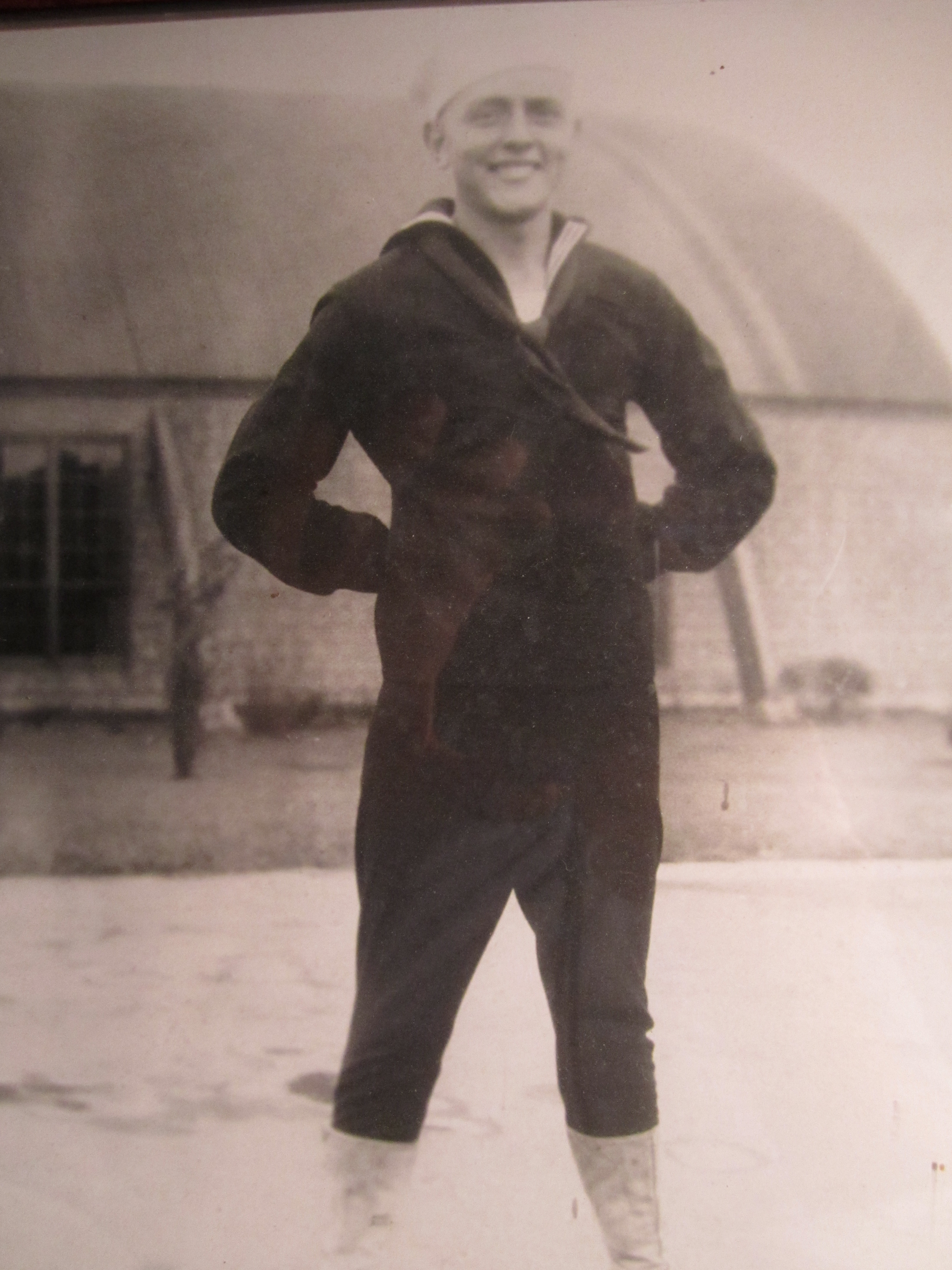
Jack Roorbach, age 18.
It was my job to go through all these boxes and try to divide things a little. I get out a stack of large envelopes and label them sibling by sibling and cousin by cousin (I have 36 first cousins, all on Mom’s side–I pick just one per family). My two uncles, Bill and Carl, my Aunt Connie, and my mother (Reba Elaine Pearl Burkhardt) had all died in the previous four years. Photos of each of them, photos of all of them, photos of their living siblings, women in their 80s and 90s now. Photos of the living, photos of the dead. I tuck images of Uncle Bill into an envelope for cousin Lindy. I tuck Uncle Carl into an envelope for cousin June. Who knew how carefree and how good-looking and how gangly these people used to be!
In a stationery box, Robert’s baby book, all carefully filled out, beloved boy. It’s kept as a journal in the Victorian style, rather stiff until late in the pages, which include a description in my Grandmother’s hand of his last words: a prayer, which she spells out complete, blue fountain pen, on the page titled “Baby’s First Prayer,” an addendum to the old book of hopes she must have pulled out for comfort, a thought continued from somewhere else: “Later he wanted a different prayer from sister Reba Pearl’s so he used ‘Dear God we thank thee for this day, for home, and work and play, for loving care, and everything in Jesus’ name, Amen.’ He repeated this in gasps before his dear little soul left us.”
Me and Bobby McGee, my mother used to sing. Me and Bobby, me and Bobby McGee.
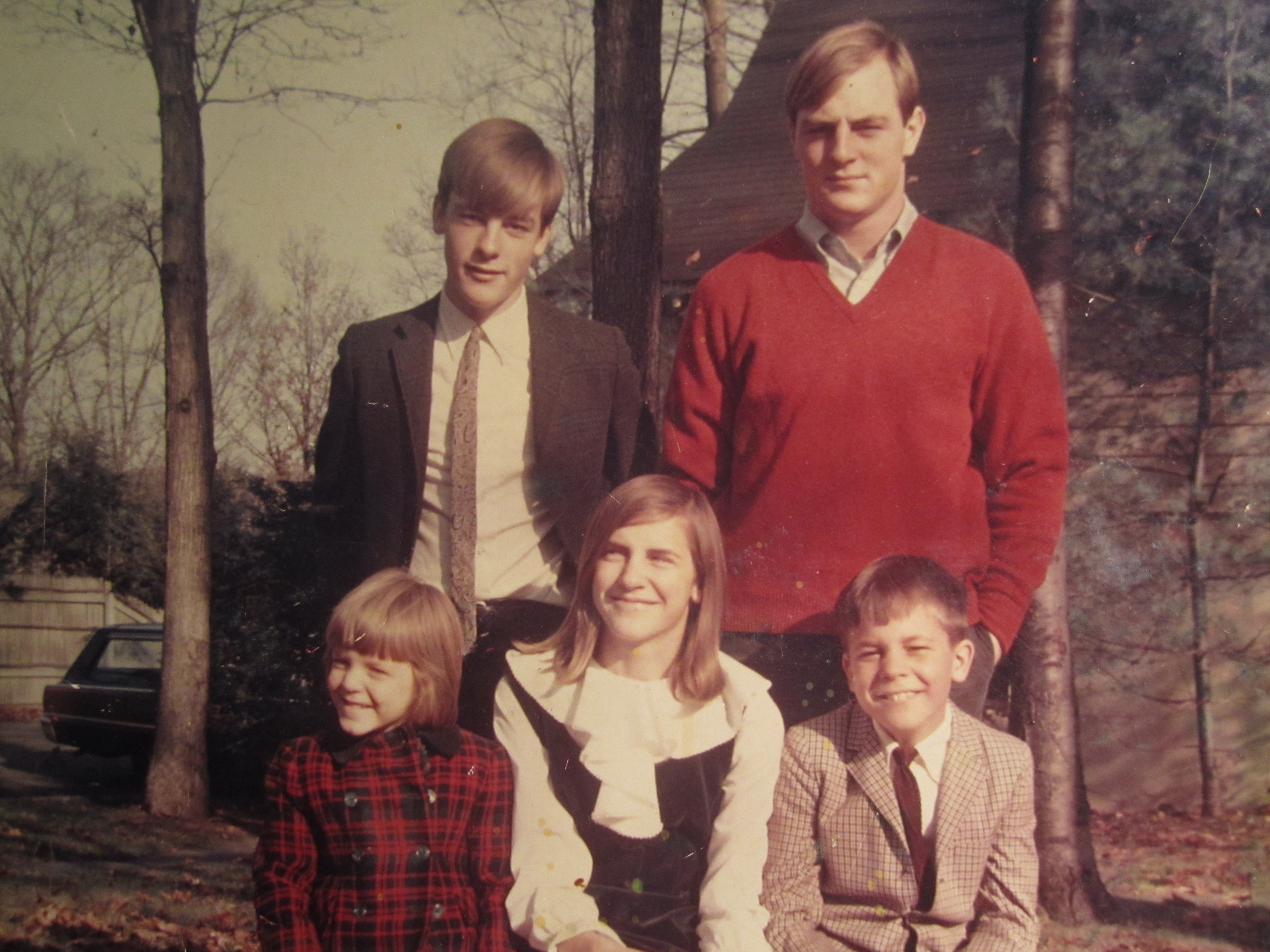
Bill, Randy, Janet, Carol, Doug, c. 1967
One day singing it with her late in her life it occurred to me why this unlikely Janis Joplin hit would become her favorite song, why she sang it out at the top of her lungs, why she awakened us with it all through high school, full blast on the console hi-fi. And why the 45 version was on our little pink record player in my sister’s old room when I went to help clean the Connecticut house out before Dad’s move.
Me and Bobby, Me and Bobby McGee.
After dinner that summer’s night, having embarked on this project by accident, I opened a second box, this one containing Roorbach family photos, lots of laughs, lots of sitting there on the couch trying to figure out who was who, which baby which, which haircut when, lots of tossing photos into labeled envelopes: Randy, Bill, Carol, Doug, Janet.
When the box was empty and sorted I went to the old computer to work on whatever was at hand, the novel, no doubt. And saw at the bottom of my Mac screen the little calendar with the date: July 17, of course. Which happens to be my mother’s birthday. Or was. Or always will be, however these things work. [Originally posted July 17, 2010]
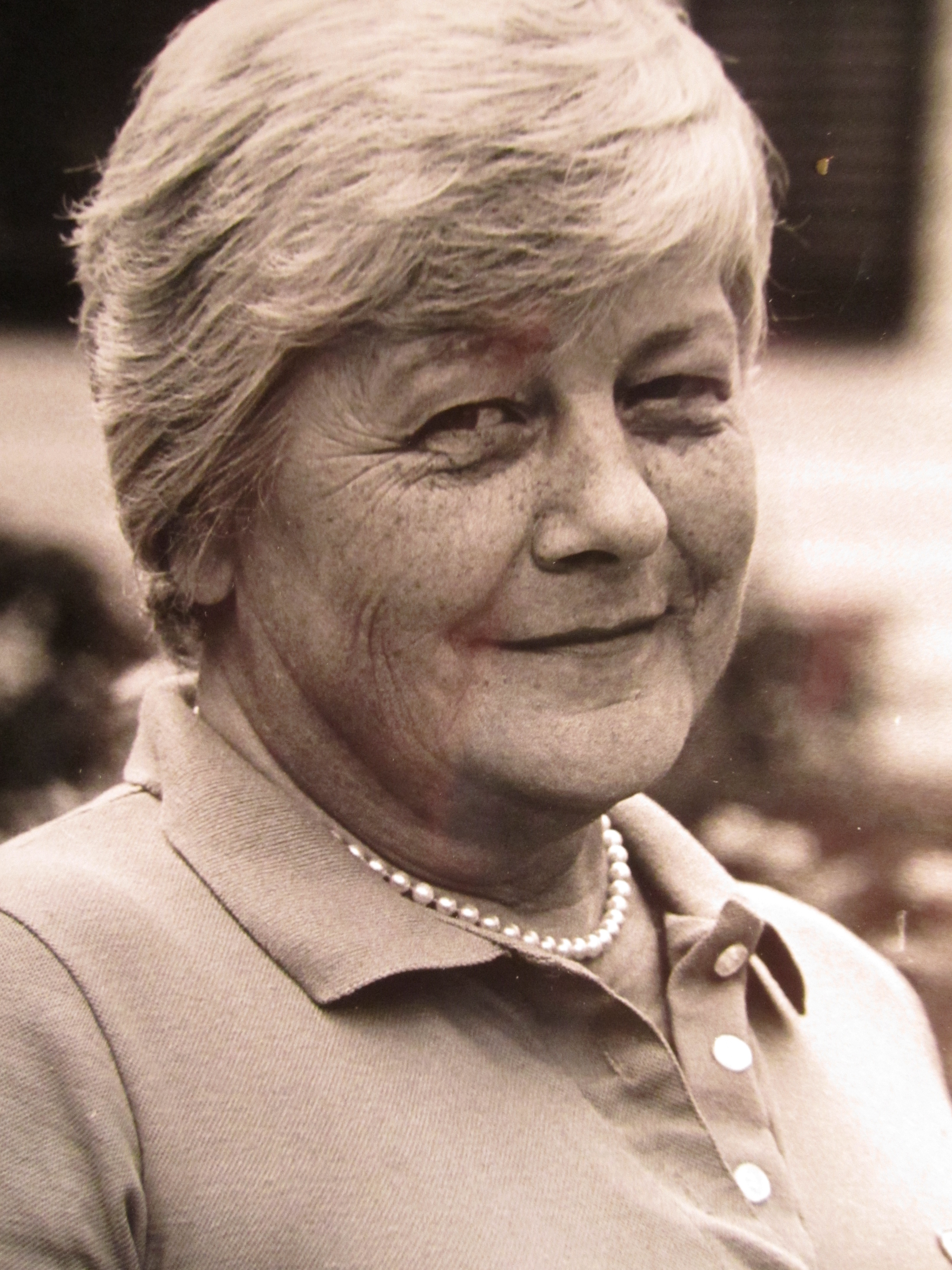
Reba, about my age now (late-50s?), still with the pearls


May 12, 2012
Getting Outside Saturday: Haiku with Wild Violets
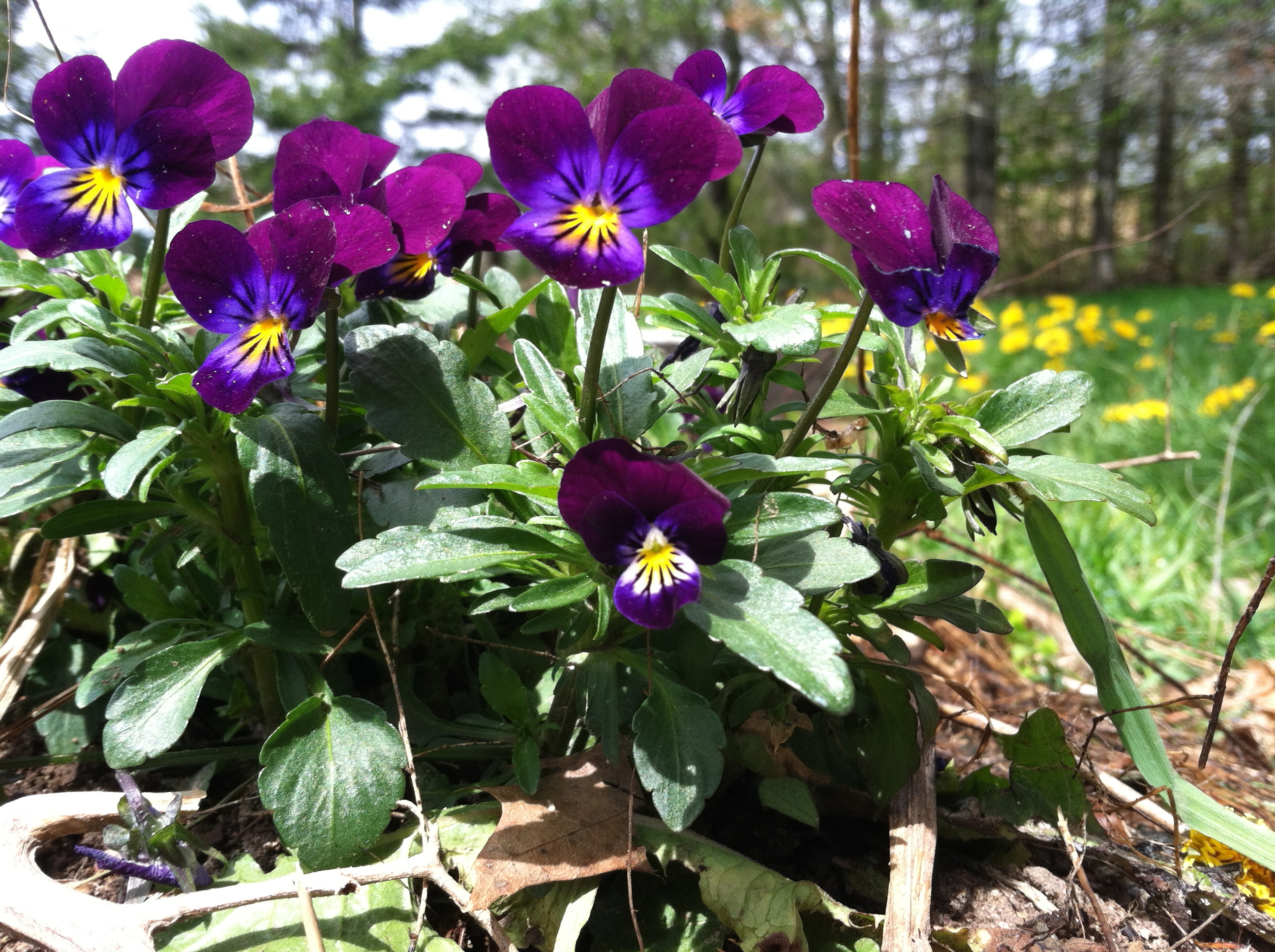
Johnny Jump-ups

Yellow violets under blue cohosh
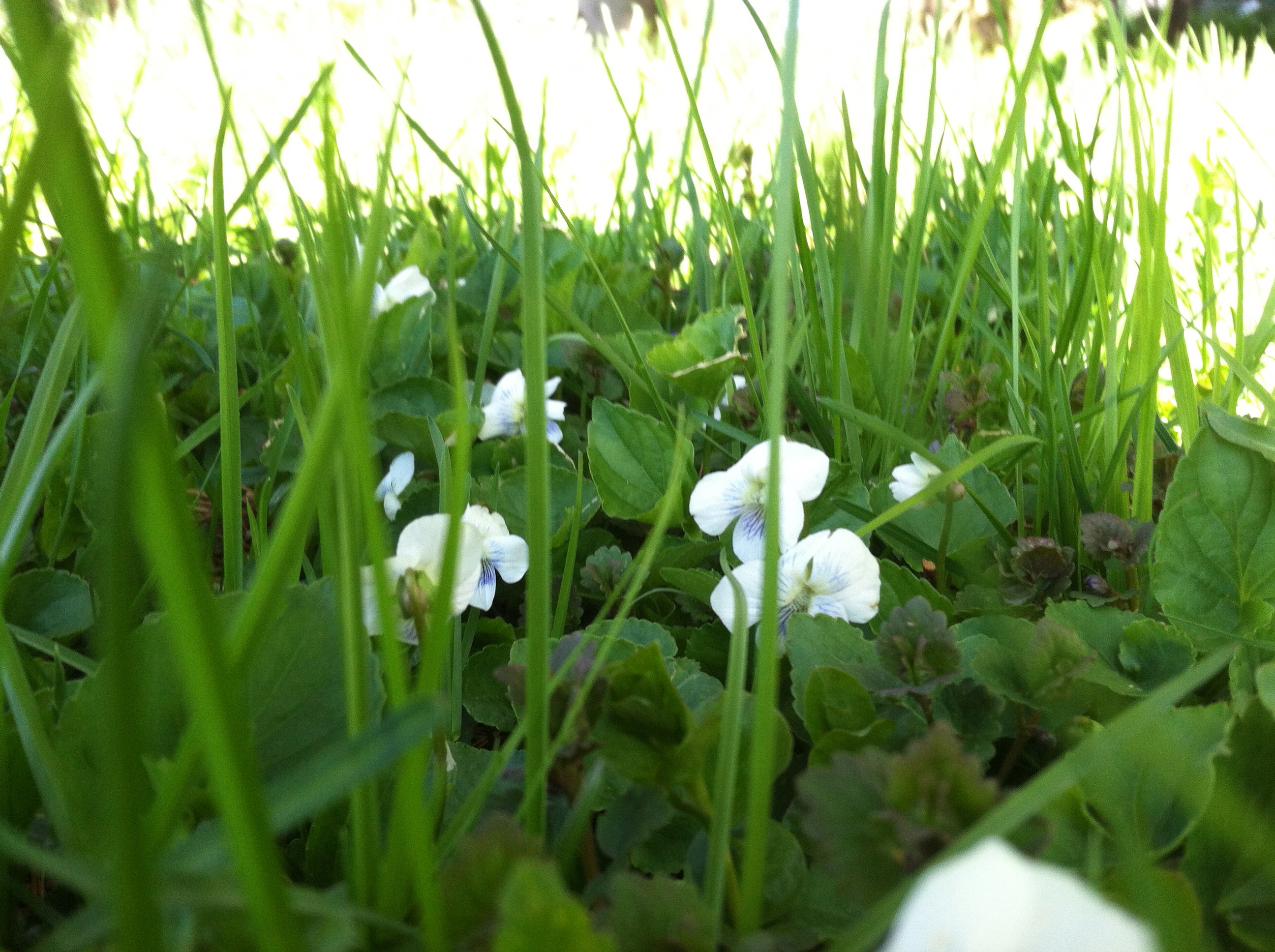
White violets in the lawn among gill-over-the-ground
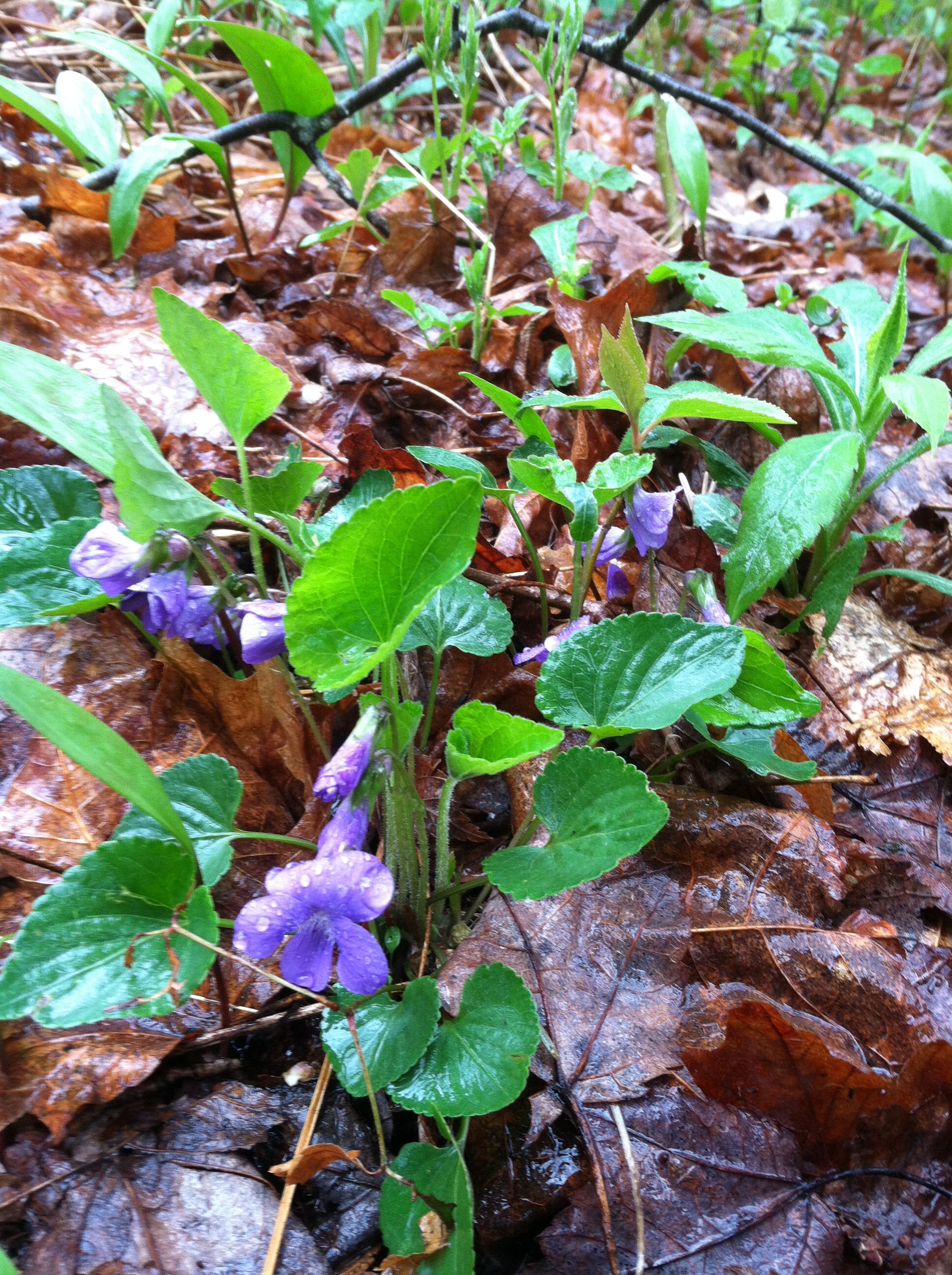
Wild in the woods
May 11, 2012
Life in the Hate State
[image error]The following is from Daniel Nathan Terry, a poet and Wilmington, NC resident:
On April 17th, I wrote an open letter, a plea for equality, asking North Carolinians to vote Against Amendment One. I was heartened by the response; the letter was posted on blogs and translated into other languages, including Italian, Finnish, and Spanish. My fiancé and I voted early, and On May 7th, we were married in the District of Columbia. On that day, I believed in us, our home, and our nation.
The next day, we returned home to church signs commanding their congregations to vote for the amendment, to yard signs asking neighbors to deny rights to their neighbors.
Still, I believed in us, in our home state, and in our nation.
But when we woke the next morning, that had changed. I still believed in us, but, when I looked at my wedding band (which I’d worn for less than two days), I no longer believed in our nation. And I knew that I was no longer home.
Daniel Nathan Terry
May 10, 2012
Here is the original letter:
Dear Friends and Fellow North Carolina Residents,
On May 7th, my partner and I will be married in Washington, DC. After sixteen years together, of facing many of the difficulties most couples endure, we are overjoyed that this day is finally on our doorstep.
Well, not on our doorstep, but on the doorstep of an office in a courthouse in DC.
We are not wealthy, although we work most of our waking lives. We both teach six classes a semester at NC colleges, and we work year-round. As an adjunct for two colleges, I have no health insurance, and (although we have been together for over a decade and a half) NC does not recognize us as domestic partners; therefore, I am not eligible to gain insurance under my partner’s policy. As many of you know, I suffered a spinal injury 9 years ago. My current medical expenses add up to about $1000.00 a month. It is, to say the least, a strain on our family.
Also, as we are unable to marry in our home state, we will spend thousands on airfare, hotels, and so on–something we would not do. If we had a choice, we would spend what money we can muster on a party for our friends. We do not want new suits, flowers, a DJ, or any of the other trappings. But we will still spend the money others might spend on such things just to have the right to be legally married elsewhere–in DC, where we are given the “right” to marry.
Among the other 50-plus rights that married couples have which are denied to Ben and me, is the right of hospital visitation. The last time I was taken to an emergency room, Ben had to claim he was my brother. And, should one of us leave this life before the other (the saddest thing two in love may endure), the one left behind would have no legal claim to all that we have built together–this includes the poetry and art we have produced since we met (something we prize beyond most things).
Beyond these legal and practical matters, there is also the emotional and psychological damage that is done by knowing that in the eyes of the law and in the eyes of some of your neighbors, you are considered inferior–even as you struggle to do good work for your community, your students, and your country.
I know that many of you are already with us. I know that you love and support us. But I am asking you to consider reposting and widely circulating this open letter–this plea–for equality.
Early voting begins on the 19th. Please vote AGAINST Amendment One.
As always, my best wishes and love to you,
Daniel Nathan Terry
Daniel Nathan Terry, a former landscaper and horticulturist, is the author of Capturing the Dead (NFSPS 2008), which won The Stevens Prize, and a chapbook, Days of Dark Miracles (Seven Kitchens Press 2011). His second full-length book, Waxwings, is forthcoming from Lethe Press in July of 2012. His poetry has appeared, or is forthcoming, in many journals and anthologies, including New South, Poet Lore, Chautauqua, and Collective Brightness. He teaches English at the University of North Carolina Wilmington.
May 10, 2012
The Writer Games: An Interview with Dinty W. Moore

Dinty W. Moore
.
BR: As always, Dinty, my first question is this: Where do you want to have our pretend meal?
DM: I would like to have our pretend meal at the base of the Kachemak Bay glacier.
BR: Very near to where we last actually sat down to eat together, in Salmon Bay, at that cool restaurant over the otter-filled waters of Kachemak Bay. But that was then, and involved a boat ride and wine. This of course, will be different. The glacier is a wild place. May require helicopters.
DM: I had my heart set on a tandem kayak.
BR: Okay, a plus-size tandem and the food comes in by helicopter…
DM: No, no. We hunt for our food, or fight to the death and one of us eats the other. That’s the natural way.
 VOICEOVER: Every year, as all citizens know, the overlords in the Capitol oversee a pageant, a lottery to see which writers will represent their districts in a battle against one another and against the elements, also hunger. This all started because writers got too big for their britches in a time not so long ago, the age of Mailer, and what’s her name, with the white stripe in her hair. (Crowd in capitol hisses.)
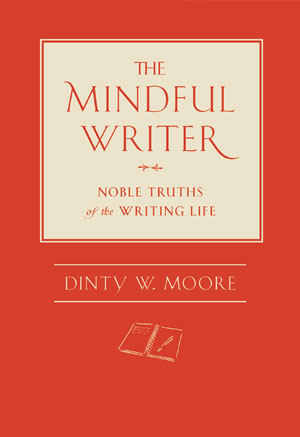
BR: (Working out in preparation, a blur of one-armed pushups): You’re going to be a hell of a meal, Dinty. But first, let me introduce you. Dinty W. Moore, as you know, is the author of a number of books: Toothpick Men (short stories), Between Panic and Desire (nonfiction), The Accidental Buddhist (immersive nonfiction), and Crafting the Personal Essay (instruction). He’s also an editor and teacher and administrator, and past president of the Association of Writers and Writing Programs (AWP). His newest book, and the occasion for this interview, is The Mindful Writer, and has just been published by Wisdom Publications. It’s a brilliant application of Buddhist thought to the trials and processes of writing, and it’s also a book of quotations, each glossed and discussed in the great light of Buddha.
VOICEOVER: Dinty and Bill, old friends. But today, one of them must die.
BR: I met Dinty W. Moore at Lee Gutkind’s Creative Nonfiction Conference at Goucher College, where I fumbled an introduction Lee asked me to make, calling our man Dinky in front of a vast crowd of hopeful writers. But Dinty is not Dinky in any way. We next met right here in Alaska, across the water there on the Homer spit in Kachemak Bay, where we were teaching at the wonderful Kachemak Bay Writers Conference, in probably the most beautiful spot on Earth.
VOICEOVER: And then they were picked for the Writer Games.
BR: Dumped on the glacier!
VOICEOVER (film clip background): Dinty and Bill scrambled for tools, the things that would keep them alive, clearly visible in diabolical piles protected by their deadly fellow scribes. Bic pens and yellow pads. Facebook. A toaster. One of those bagel-cutting guillotines. Also numchuks. Dinty Moore darts in and recovers a letter opener, not bad, and then—risky—a yellow highlighter. And here comes Bill, full sprint, agile as a dump truck. He passes the huge advance, turns his nose up at tenure, darts past the spears and arrows and bowls of acid flung in his direction and grabs a small, beautiful book. It’s. It’s. It’s The Mindful Writer! Brilliant—the most powerful tool in the mix! Days have passed. Writers are falling like, like people who are falling. And here in the late going Dinty and Bill have found one another on the glacier, and formed an alliance. Pacifists both, it’s going to be a difficult finish: only one may live. Meantime, safe in their hiding place, a pile of glacier-strewn boulders, they chat.
BR: Dinty, my friend, you are an impressive collector of quotations. I know this from talking with you and from Brevity Blog, also from Facebook, and now, of course, from The Mindful Writer. What’s your method, and why quotations? And what should the epigraph for our interview be? (These snow fleas are delicious.)
DM (scanning the glacier, the ocean, the mountain for danger, eating snow fleas): I have a few books of quotations, and a few internet sites I can go quickly if I’m looking for a quote of the day. Sometimes I just Google in the name of an author followed by the word ‘quote,’ if it is that author’s birthday, for instance. Lately though I’ve enjoyed pulling quotes out of the middle of craft articles that I am reading. I feel as if I am adding something new to the recurring stream of writerly advice. Why quotations? They are quick to absorb, perfect for a status line, and frankly, we shouldn’t be spending so much time on Facebook, Twitter, and these infinite blogs. We should be writing.
BR: Infinite Blog, great title for a book. I believe you killed the author of that one with that typewriter that came down by mini-parachute.
DM: (grim-faced, remorseful) The epigraph for this interview should be this from theoretical physicist Wheeler: “Time is what prevents everything from happening at once.”
BR: Love it. Though in some ways everything IS happening at once. I’m sad my leg was sawn off by that poet we ran into, for example. But the starfish balm is working and I’m almost back together. Speaking of legs, you’re a great dancer–no, no, I’ve seen you, down there in Homer at Alice’s Champagne Palace? After Stephanie Elionzo Greist’s reading? With all the movement she put into it, brilliant? You were up next—hard act to follow—and just broke a few steps to much delight and by way of segue (or segway, as a student once wrote). And then you read a really affecting memoir about family. A great reading altogether. But tell us, tell us about your dance days.
DM (chipping at the ice with his letter opener, delicate rhythm): For about four or five years, in my younger, considerably slimmer days, I earned my living as a professional modern dancer. I worked with an experimental dance theater company that toured up and down the East Coast in a ramshackle van, hauling lights and curtains in a trailer. We would pop up on a college campus early in the morning, assemble the stage in a cafeteria or student union, and perform that evening. Sometimes we performed on real stages – The Walnut Street in Philadelphia, Riverside Church in NYC – but usually not.
BR: Does dance turn out to have anything to do with writing?
DM: What I learned from dance is something I still struggle to put into words. In many ways, the dancer is the paint, or the words. So in the studio, when the choreographer, Trina Collins, would move me around – do that faster, do this slower, start on the ground and then come to standing – I was being revised upon. I learned that the creative process involved trying a phrase fifteen different ways, and then settling on either the best placement and execution of that phrase, or throwing that phrase away and starting over. Endless revision. Often in dance the reason a certain movement phrase worked best couldn’t be put into words: it belonged in the kinetic/visual realm. Often in my writing, I rely more on my ear than my intellect. So all of that is related and all of that is still difficult for me to put into words. But it was a gift, having been a dancer. Truly a gift.
BR: Were you already involved in Buddhist study and practice?
[The sound of shouting and clobbering is heard in the distance, anxious voices, a scream]
DM: I’ve been a toe-dipper in the great Dharma since my college days, which is a fancy way of saying I approach Buddhism in a rather hit-and-miss fashion. I never donned orange robes or turned away from a regular life to allow steady meditation, except every once in a while when I would go off to a week-long retreat. But slowly the ideas behind Buddhist practice worked their way into my daily life, and even if I don’t outwardly seem any more Buddhist than your neighborhood auto mechanic, the ideas are in my mind and influencing how I approach trouble, conflict, and self.
BR: My neighborhood auto mechanic is Buddhist, in fact. And holy kazolies! Here comes a pack of screenwriters wielding razor-sharp clichés and unassailable, pat structure! What do we do?
DM: Buddhism teaches me that I can’t control certain events and challenges in my life, but I can control how I react to those events and challenges, and in that control, I can waste a lot less energy and create a lot less pain by not struggling against something that cannot be changed. That’s Buddhism to me, in a nutshell. Plus you try to breathe. Plus you try to sit still sometimes. Plus you are kind to other people. Plus you wake up every couple of weeks and realize what a miracle it is that there are red and black birds in the cherry tree in your backyard, and they are singing.
BR: Nice. I love that. And a great quotation stops me cold. I have to sit and think about it, sometimes for days, and usually say it to someone, just to get their help understanding it. Because we all find different layers of meaning in the simplest statements. In your book, Dinty, you are right there after each quotation to offer your thoughts, add them to mine as reader, help me understand the depths. So I loved, for example, having your voice after hearing this thought from Stephen Dunn, who once kicked my ass at tennis (and is at this moment, in fact, beheading Carol Muske-Dukes out there on that seagull island): “Your poem effectively begins at the first moment you’ve surprised or startled yourself.” Were there moments in the making of The Mindful Writer that startled you?
DM: What startled me was just how much agreement there is between writers, and for that matter, between artists of all stripes, about the mystery of it, about the voices that come in the middle of the night showing you a path you hadn’t seen, about the beauty of “accidents” and how they can set you out on an unexpected, beautiful new direction. I was also struck by how many of these writers came back to the power of words: not words as markers that are used to set down meaning, but words as guides and signals to help locate meaning.
BR: “Accidents.”
DM (brandishing his highlighter as if it were a sword, sharpening his letter opener against it comically): “Accidents.”
BR: Any particular favorite quotes we should mention here?
DM: Actually, the Dunn quote you just cited is among my favorites, but in the end I love them all. Of particular pleasure was exploring the words of Flannery O’Connor, a staunch Catholic who would likely have spit in my eye if I told her that I thought she was Buddhist. Well, she wasn’t Buddhist, of course, but her discussions of grace and of that “peculiar crossroads where time and place and eternity somehow meet” reminded me so much of karma and enlightenment, that I came back to a conclusion that many others have had over the years, the conclusion that our world religions are not all that different. The giant institutions, the Vaticans and Holy Cities and Potala Palaces create very different ritual and ceremony, but the basic messages are so much the same.
BR: “Thou shalt not kill,” etc.
DM: “Do unto others.” Also, “Anger poisons the one who is angry, so turn the other cheek.”
BR: You treat writing as a spiritual practice, which it certainly is. But in the case of writing, or the making of art in general, what’s the spirit?
DM: The human spirit. That part of us, whatever it is, that makes us think and love and wonder.
BR: Is it all so rosy though? And aren’t things a little broken much of the time? How do we fix it? Is writing enough?
DM: I’m not much of an activist. I admire so much those folks who have the energy and inclination to protest, to face arrest, to give speeches and knock on doors. I’m pretty quiet in my politics, and despite the book, I’m pretty quiet about my spiritual beliefs. That’s just me.
VOICEOVER: There has been a change of rules, writers. Repeat. A change of rules. We are entering conscientious pacifism into the mix of weaponry!
BR: Tell us about your career. I ask this of everyone before I eat them, because so many readers of Bill and Dave’s are grad students or newer writers looking for reassurance and/or role models.
DM: Probably the most important thing to know about my writing career is that I didn’t even begin getting serious about it until I was in my thirties. Then I went off to grad school and started publishing some short fiction, wrote three failed novels, and eventually published a book of nonfiction. That part of the journey took about ten years, and since then I’ve published many more books, but it was the stubbornness and doggedness in the early days that got me here, in my comfortable modest success. So many writers I know tell the same story: when others gave up, they got twice as tenacious.
VOICEOVER: We were kidding. About the pacifism. This Writer Games interview ends with dinner!
BR: From the book, Dinty, and from hanging out with you, also from talking to people who’ve sat under your tree, I know you’re a wonderful teacher. How does teaching fit into your writing practice? And how do you get the time to do anything else?
DM: I love teaching because I love people, and I love conversation, and I love thinking about the mechanics of writing, so it is pretty much a happy part of my career. But yes, there is always the juggling, and always the wish that maybe we could perhaps comment on a few less manuscripts and have a few more hours for writing. I do a lot of department service as well as serving as director of the creative writing graduate program, so balance is always an issue. My answer is to write first thing in the morning, before other concerns and responsibilities intrude.
BR: And speaking of time, how have you fit family into your writing and thinking career?
DM: Probably not well enough. You would have to ask my daughter and wife. They are certainly patient with me, and they both love writing and books, so at least I have a sympathetic team, but there are so many times I’m banging away at the keyboard instead of just sitting around at the kitchen table talking, and I worry I will someday regret those times. Oh, Bill, you do ask the hardest questions! I thought this interview was going to be fun.
BR: You were born on my older brother’s birthday, August 11, and yet you’re younger than I. What’s that all about?
DM: I’ve warped the time-space continuum. Plus I actually am your brother. We are one and the same person, in two different bodies. There is much you do not understand.
BR: Randy?
DM: Quickly as you can, snatch the pebble from my hand.
BR: Ouch! Mom! Mahm!
VOICEOVER (in an eerie Mom voice): Sort it out between you boys.
BR: But he….
VOICEOVER (as Mom, and mocking): The big fish eat the littler fish, and the littler fish eat the littler.
RODNEY KING (hurrying past, huge crowd of white cops chasing): Can’t we all just get along?
BR: Fine, Rodney, and by the way, good book. Dinty, you invented and built and have overseen and loved the on-line magazine Brevity. Which is, I think, is the first Internet literary magazine. Could you tell us about its inception? And what’s happening with it now?
DM: No, we are not the first, but this is our fifteenth birthday or so, which makes us one of the first, and one of the few to survive this long. We are probably the first in nonfiction. I’m proud that we are now paying our writers, even if just a modest $45 per essay. And I’m proud that so many people visit our blog and magazine site. But it is exhausting work to keep it going some days. Any literary magazine editor, paper or digital, will tell you that. You do it out of love.
BR: But I hate Bill and Dave’s. Is the Internet a curse or a blessing for the spirit?
DM: Both.
BR: For the writer?
DM: Both.
BR: For writing?
DM: Both.
BR: For the world?
DM: It probably depends where you are sitting, but information seems to be more free because of the Internet, and the truth is a powerful tool. As long as people—dissidents and artists and grass roots organizers and parents of autistic children and gay folks and soldiers and bullied children—continue to find ways to use the internet to spread honest information, to speak against forces that would lie and distort, I think the technology is going to be more good than bad.
BR: Anything else you want to say?
DM: Where’s my cocktail?
BR: It’s right here, my friend. It’s right here….
[LIKE Bill and Dave's and avoid being eaten! Follow Bill on Twitter: @billroorbach]
May 9, 2012
Bad Advice Wednesday: Dive Like an Osprey!
 This is a pretty good time of year if you live on an academic schedule. Actually, come to think of it, it’s a pretty good time of year if you live on a human (or animal) schedule: plants blooming, birds nesting, green breaking through.
But back to academics. The point I want to make is that when I teach, during spring and fall terms, I get used to doing a hundred things at once. I also, naturally enough, start to long for a simpler schedule. For instance, this spring, while rushing from thing to thing, I started imagining my life once school ended: I would stop shaving and showering and hole up in some writing cave and never come out again. Specifically, I would get to spend a couple of weeks on my Cape Cod novel—nothing else—and I would focus all the creative energy that, for most of year, shoots off in some many directions.
And now that time is here. Sure, it isn’t ever quite as perfect as in imagination. Sure, there are still irritants and bills and things that get in the way. But for the most part it is good. I am back to doing what I like most—writing—and what I think I do best. There’s a healthy obsessiveness on focusing on one thing in a culture that insists you do a thousand. Fuck ‘em. Every now and then you need to blow everything else off—to let the room get messy and the recommendations go unwritten—and get back to the business of what you were put on this earth to do.
So how does this translate to Bad Advice? This way: let yourself get obsessed for a while. Stop being so responsible. Or rather, be responsible to the work. The world won’t fall apart without you. Do one thing. Work on one book. Don’t let the nagging insects of things-to-do (or other projects) get in your way.
Be like the Bolivian hunter who slipped a bone of an osprey under the skin of his arm in “hopes of absorbing hawk-like skills in hunting.” Better yet be like an osprey itself, diving for fish. Focus on that one thing that gives you life and dive for it.
Here is what Shakespeare had to say about the conquering Coriolanus: “I think he’ll be to Rome as is the osprey to the fish, who takes it by sovereignty of nature.”
Get it? So that’s my advice. Be to your work as an osprey is to fish.
It may of course be possible that you have never seen an osprey dive. In which case I offer this:
The Dive
(From Return of the Osprey)
Ospreys are the only raptors that dive fully into the water to catch their prey. Try to imagine the physical sensation. To skim across the sky, above the ocean, peering down with eyes that can see into the shallows from forty, sixty, even a hundred feet up. To catch a glint or the shadow of a movement and know it to be a fish, the one thing that keeps you alive. To hover, adjust, beating your wings so that you stay in place, like a giant kingfisher or hummingbird. Then to dive, to commit, to tuck with folded wings and plunge downward at over forty miles an hour while still keeping your eyes on the prey, calculating its size and movement. To adjust in mid-air, re-directing, considering even the refraction of the fish’s image in the water, before pulling in your wings and diving again. And then, at the last second before hitting the water, to throw your wings back and your talons forward, striking feet first. To plunge in, splash, immerse, and make contact at the same time, trapping, piercing, clutching a slippery, scaled, cold-blooded creature.
Now imagine what comes next. Securing the fish, aided by the sharp, horny scales on the pads beneath your toes. For a moment being out of your element and in your prey’s, feeling wet, awkward, ungainly. Then lifting off from the water with a great thrust of exertion, soaked and heavy, hefting an animal that may weigh half of what you do. Beating your wings furiously and rising, shaking the water off like a wet dog, already using your reversible outer talon to adjust the squirming fish, turning it so that it faces forward to reduce drag as you lift into the air, triumphant (or at the very least successful), shaking off silver flecks of spray.
To even imagine a dive is to get excited. What a bold way to live! To find one thing you do well and then to stake your life on it. It’s as simple and direct as passion. It is passion. Peter Matthiessen wrote: “Simplicity is the whole secret of well-being.” If so, the ospreys have got it figured out. It isn’t hard to picture a band of primitive osprey tribesmen watching the birds and learning from them. One thing they might have learned, and one thing that appeals to me, is how the osprey’s dive weds calculated patience to wild aggression. He who hesitates is smart, at least if when he finally commits he commits fully. For the ospreys the hesitation is as important as the dive. The birds have a remarkable success rate, some catching well over fifty percent of what they dive for, (like humans, athleticism varies; a few particularly adept birds catch close to ninety), and this is due in good part to the pre-dive patience, the search for the right target. This careful adjustment will often carry over into the dive itself. After the bird has tucked its wings and dropped down thirty feet, it may pause and readjust, and it may continue this a time or two again as if descending imaginary stairs. But while the pre-dive ritual demands control and calculation, the plunge itself is about the opposite of control. It is a moment of full commitment, of abandon, and finally, of immersion.
May 7, 2012
The Best Writing Program in the Country!
.
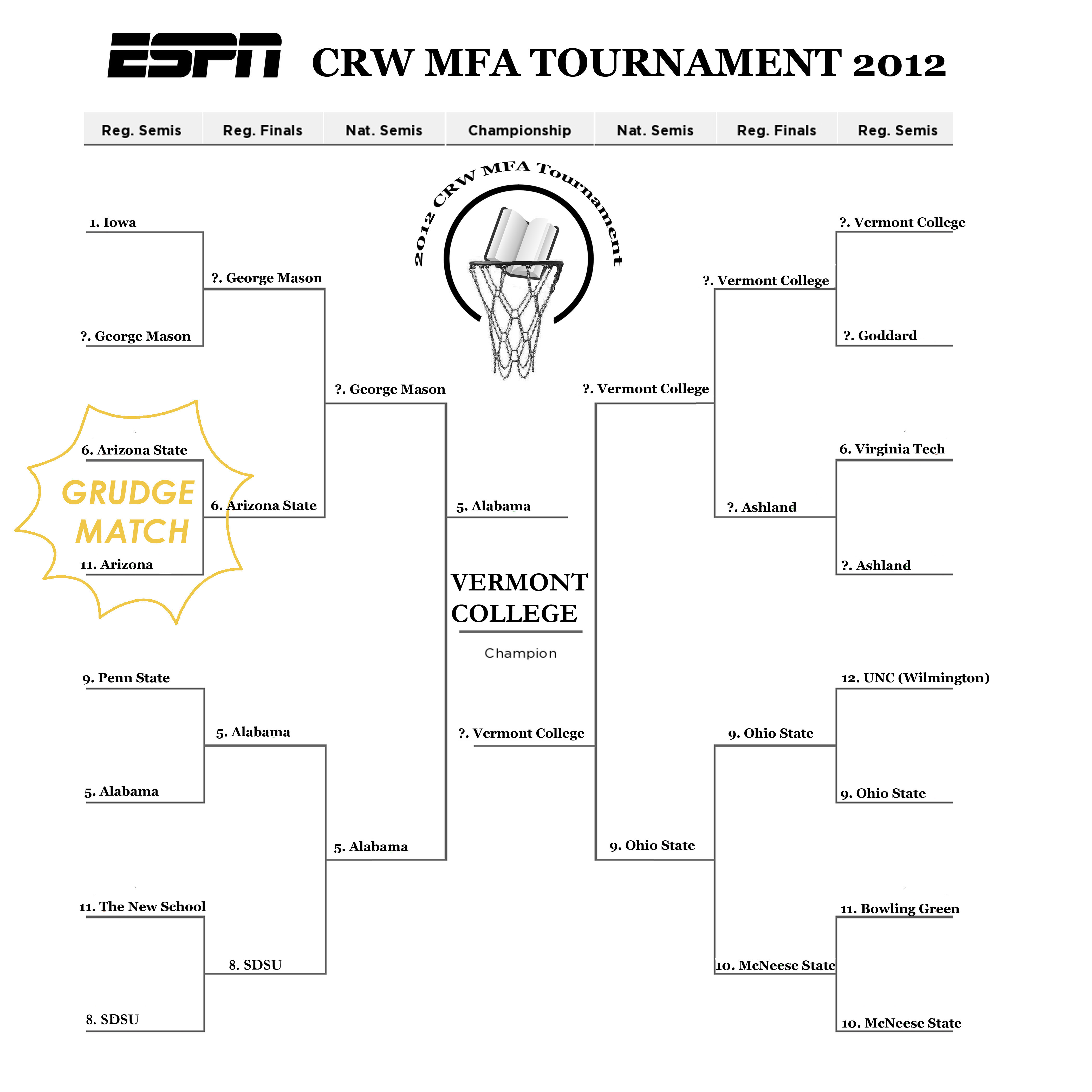
No more questions. No more methodologies. No more knife fights in the back stacks of the great libraries. Science has spoken. The greatest writing program in the country is… VERMONT COLLEGE!
And what’s more, this unseeded, non-traditional, low-res, upstart CRUSHED the competition at every juncture.
The match-ups:
The inevitable Iowa will live to see another day of course, but George Mason advanced from the Sweet Sixteen on an upset, crushing Arizona state only to face the Alabama juggernaut and their vatic chants (dicks, elephants, tides, RTR, RFMT, and so forth, boo-rah!), enthusiasm unbounded, gentlemanly Michael Martone at the helm. A mix-up in Bill’s head led to two San Diego programs taking the floor at the same time against the New School, hardly fair, but it all worked out for the bleached blondies down there at SDSU, that is till the Crimosn Tide came back strong, the moon more full than usual, and swamped their beaches. The blood feud in Arizona had exhausted its combatants, it seemed, a lackluster match that barely made it to the buzzer, the teams just standing there panting. What a game between OSU and UNCW, however. Coach Gessner throwing chairs and his dog Missy onto the court shouting “Simplify, simplify!” and getting ejected, wonderful stuff. But the cooler heads (and Lee K. Abbott) of OSU prevailed. Ashland and Virginia tech played a nailbiter, but in the end it was scrappy Ashland who prevailed, and maybe got a little cocky: because here came the Monster from Montpelier! Who’da thunk Vermont could take on OSU? But they did so with ease, garnering more votes than their whole half of the bracket combined.
The final matchup, Vermont vs. Alabama, was a shocker, tied at the half, then no contest, ‘Bama tripping over their extraordinarily long dicks while meanwhile, triple-triples for the whole Vermont team.
Vermont!
Bill and Dave are speechless, but the system has spoken. Best MFA program in the land? Vermont College of Fine Arts, ladies and gentlemen, VERMONT!
This is the last word, of course, at least for 2012. Bill and Dave’s has spoken. All other rankings are obsolete, refer to them no more. Let’s celebrate in the comments column. And don’t forget to drink responsibly. Riot police are standing by.
VERMONT!
Our top 16 programs in the country:
1. Vermont: 192
2. Bama: 64
3. OSU: 51
4. McNeese: 44
5. Goddard: 43 (a spate of late votes would have made G number 3, but…..)
6. George Mason: 35
7. UNCW: 23
8. Ashland: 22
9. SDSU: 21
10. Virginia Tech: 15
11. Arizona State: 13
12. BGSU: 9
13. New School: 7
14. Arizona: 7
15. Iowa: 7
16. Penn State RIP: 5
Unlike in the Abramson system, these voters have tasted the food, baby.
["Like" Bill and Dave's Cocktail Hour on Facebook. Or "Hate" us, up to you!]
May 6, 2012
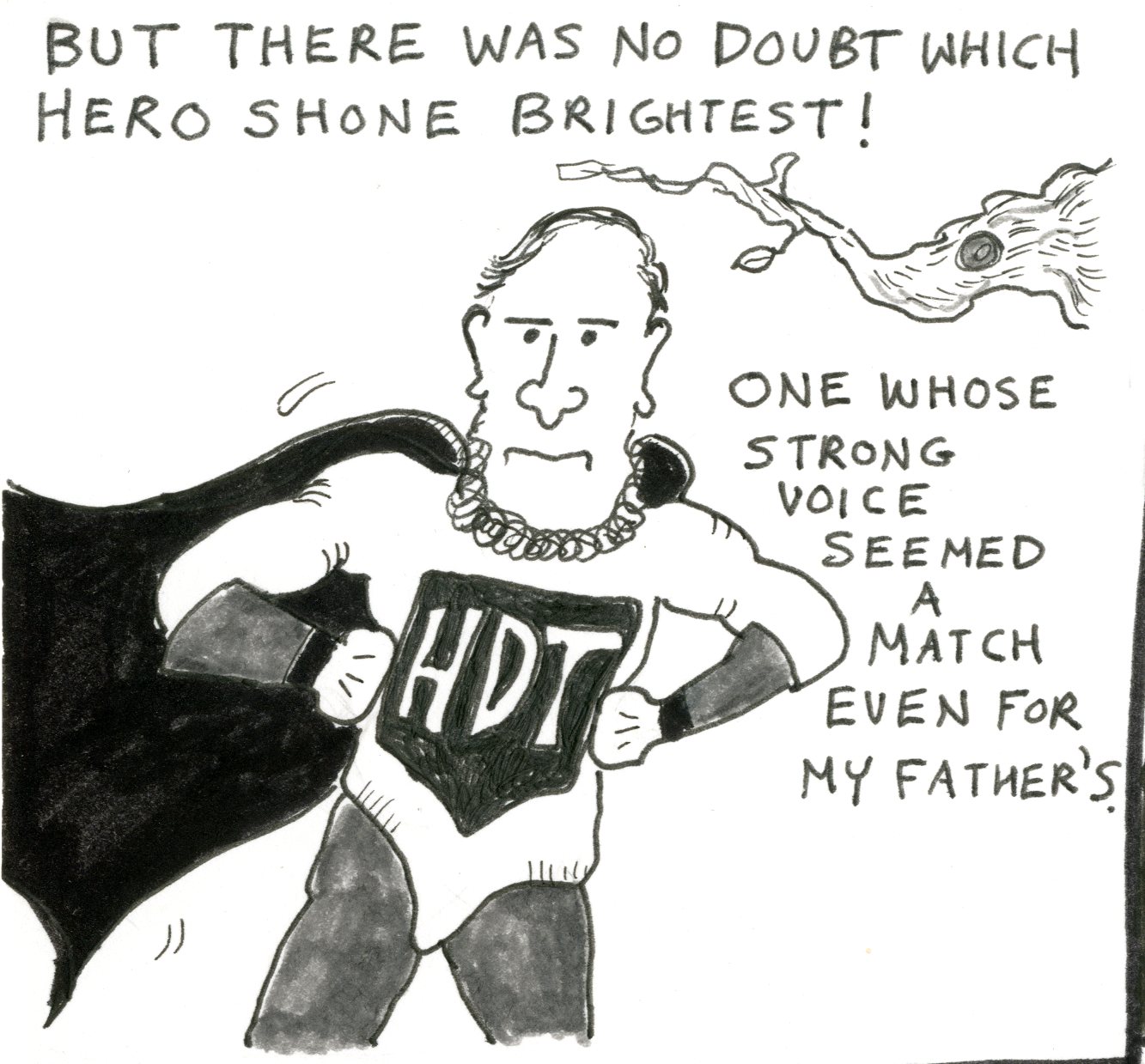
THE REAL AVENGERS
Sure, Thor, Iron Man and the Hulk are getting a lot of press.
But what about these guys?


To read more click HERE…..
May 5, 2012
Getting Outside Saturday: Clappers
 Do you guys know about the journal Ecotone? I’m hoping that if you visit Bill and Dave’s you do. It prints great work, occasionally by a guy named Bill. And it was started by a guy named Dave. I still write an essay for each issue in a feature called “Out of Place.” Here’s this issue’s essay:
.
Out of Place from Ecotone 13
.
Clappers
I
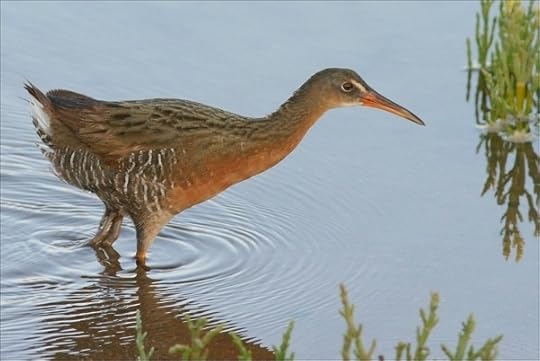
In the evenings, when I read and take notes in my journal, I am showered by applause. As you can imagine, it’s a warm and rewarding feeling. I work outside, or as close to outside as you can get while in, my dwelling an 8’ by 8’ writing shack that I built a year ago in my backyard on the edge of the salt marsh. The applause, which begins just before dusk, comes straight off the marsh, though I rarely see a single member of my appreciative audience. Loud but shy, they call from hidden places. And though I know they are birds, I rarely see them. They are named, appropriately enough, clapper rails, and they call to each other with such vehemence that the noise fills the marsh. It’s a strange business for a creature that makes its living by hiding, as if after a full day of secretiveness they are ready to throw it all over, intent on revealing their own hiding places.
II
I built this shack in March of 2011 to celebrate my fiftieth birthday. It was a modest and inelegant project, slammed together in three days, my body remembering the few skills I had picked up working as a framing carpenter in my twenties. I bought a level for the work, but never got things quite level. The lopsided beams show and, when I finally put roof shingles on, the nails came right through the plywood ceiling so that they now point down at me like a thousand fangs. When the guy at Home Depot tried to sell me a long horizontal window for four hundred dollars, I understood, in a moment of inspiration, that I could instead spend forty bucks on a screen door and simply turn it on its side. This I did, effectively transforming the shack into a bird blind, an eye through which I see herons, egrets, woodpeckers, ospreys, and, every once in a great while, a glimpse of a clapper rail.
III
Most of us use language easily, even carelessly, slinging about sayings and metaphors. “Thin as a rail,” for instance. How many people know that this refers, not to a fence post of railroad tie, but to the same bird that showers me with nightly approbation? In his guide to bird behavior, David Sibley explains the saying’s origin: “The bodies of rails are laterally compressed (flattened) and the feathers can be held tightly against the body when necessary to allow the bird to slip through very narrow spaces.” In other words, though rails are actually medium-sized birds with stubby wings and long bills, they can make themselves thin to the point of invisibility, which, combined with the fact that they are “cryptically colored,” allows them to all but disappear in the tall grasses of the marsh. Sibley goes on to say that their compressed bodies allow them to move through the marsh without rustling the reeds or grasses, which would give away their positions to predators, and that “Some observers believe that rails use the pathways of mice while foraging in dense vegetation.” The pathways of mice! Their nests, too, are secretive affairs, platforms of grass and reeds on the ground, hidden under other vegetation.
IV
“We need a backshop all our own,” wrote Montaigne. The shack has become my backshop. My treehouse. My fort. My hiding place. While you could throw a rock from my house and hit the roof, I am solitary enough here, despite occasional visits from my wife, daughter, and yellow Lab. At first I imagined the shack as a work place. I built a desk right below the screen-door window, and brought my computer out to write. But a crucial moment came when I decided to rip out the desk. I am something of a workaholic, with two offices already. The shack would not be an office. I would read there, scribble notes, and think; I would drink a beer or two and watch birds; and I would watch the sun slowly set over the trees. But I would not work. Anyone who builds a cabin, no matter how modest, is required to quote that famous cabin-builder from Concord, and here I fulfill that obligation: “The life that men praise and call successful is but one kind.” A perfect epigraph to carve into the beam above my screen window. Work provides deep pleasures, but it is also, as the poet Donald Hall has pointed out, a way to prove that we are good children who have done our homework and pleased our parents. The shack is not about parent-pleasing. In fact, it is not about pleasing at all. It is a place to do whatever the fuck I want.
V
The nightly noise explodes on the marsh. Sometimes a yip, yip, yip, yip, yip, yip. But more often something sharper, a “clappering” as my bird book calls it, though with a distinctive slurry edge like a heron’s croak. It starts with a burst from nowhere, and then ratchets upward. It really does sound like applause, and like applause it’s contagious. One of my favorite movie scenes is in the The Lord of the Rings when the warning beacons are lit, first in Gondor, and then, one after another, from mountaintop to mountaintop, until the sight of the flames reaches far off Rohan. The rails’ call is the aural equivalent of the lighting of the beacons. Or, to put it another way, the cry carries down the marsh from one bird to the next, as if they were handing off a baton. I mentioned earlier that all this racket seems strange for a bird that puts such a high premium on secrecy. Sibley clears up this mystery somewhat: “Their dense habitat also explains the frequent and loud vocalizations the birds perform in establishing their territories; in densely vegetated conditions birds cannot communicate visually and must call regularly.” But doesn’t this lead to another question? If the birds are so secretive that they usually try to move without rustling the reeds, why do they sporadically give up their location with a noise as loud as a car alarm? Perhaps that is why these “mostly crespucular” birds choose dusk for the calls, since most of the marsh hawks have packed it in. But what about owls and raccoons? And, anyway, while they call most intensely at sunset, they can be heard bursting forth at any odd moment in the day. This must surely give up their location. Their secret. How strange to have one personality, one seeming mission, for 99 percent of your waking moments, and then to spend the other 1 percent undermining it wildly. I am perplexed enough to write directly to David Sibley. He generously responds: “You would expect a secretive bird to be ‘whispering’ and sneaking around, but I guess the rails are confident enough in their camouflage and the protection of the grasses that they can burst out in loud calls without any concern. I often see them do this when they poke their heads out of the grass or stand in the open for a minute, burst out calling, and then quickly duck down and dash back into the grass. They need to communicate with other birds that might be hundreds of feet away, in an environment that’s often windy, and they can be bold and brash for a few seconds, but then have to run back into the sheltering grass.”
VI
As writers we work in solitude, but long to be heard. Any writer who works primarily to please an audience, and not to the rhythm of his or her own inner voice, will never do much. But while we need to labor in privacy, the finished thing—the book, the poem, the essay—is then brought back to the tribe. Odd that those of us who labor in this solitary way are then expected to boast, to sing, of our labors. By July, four months after I built the shack, I was no longer spending a lot of time in it. For one thing, the summer heat turned it into something like the isolation box in Cool Hand Luke. For another, I was spending most of my time out on the road, pimping for my new book, doing readings and radio interviews, and generally waving my arms around trying to draw attention to myself. Like most writers, I felt queasy doing this, though I understood the need. Without all the arm-waving, no one would know about the book, and if people didn’t know about the book they couldn’t be expected to buy it. And if they didn’t buy it? Then there would be no next book, no time alone doing the real, solitary work of making. It’s a cycle endured by any artist who hopes to have their work known by those other than him or herself. We seek recognition. We seek applause. And we can appreciate the importance of being recognized, while also understanding the final irrelevance of the same.
VII
On December 7, after many months of traveling, I sat in the shack watching winds whip the red-brown marsh grass around like a crazy woman shaking her hair. Above the marsh, the wind pushed a line of blue clouds to the north, a great military procession moving across the horizon. I wondered what the rails were doing during such a windstorm. Did they simply hunker down more deeply? I imagined them stooped low, peeking up at the wild world above. I reached for my journal to record these imaginings and just as I did I heard a wild clapping above the wind, a single bird asserting itself above the storm’s rumblings. I didn’t see the bird. Which was not unusual. In fact, the only time I have gotten a really clear look at a rail was during the first week we moved to this house. During that week, I decided to transport our two kayaks from old house to new by paddling them, since the houses are connected by the Intracoastal Waterway. A friend paddled the second kayak, and at the halfway point we camped for the night on a dredge spoil island. The next morning we continued our trip north, finally ducking into the creek that led like a winding path to my new home. We were halfway up the creek when I saw the strange new bird, letting go with its full-throated cry, for which I did not yet have a name.
VIII
To lead an alternative life we need an alternative. Like most of us, my “regular” life revolves around family and work, and is fueled by my own private ambitions. We drive toward goals because goals work; they effectively simplify and organize the chaotic world. For instance I use goals—and timetables and charts—to finish writing books, and for trying to get those books out into the world. One pole of my life revolves around these goals. But what the shack has come to represent is the other pole. The shaggy, unkempt, private, goal-less pole, the pole that men don’t “praise and call successful.” If one pole is the “miles to go” before we sleep, then the other pole is the woods. If one pole wants to bend things to my will, the other pole knows just how silly this is. If one pole craves applause, then the other pole says fuck ’em. Over the years I have come to believe that there needs to be a counter life, something that runs against the main river of ambition, a current that burbles back against the river. I think the best decision I made in the last twelve months was to tear out the desk. This isn’t a place for desks. It is instead a place to pick up one book and jump to the next whenever I feel like it, and a place to wrap my hand around a cold bottle of beer—tonight a Ranger IPA—and scribble down a few notes in the pages of my journal, my only audience the dozen or so shy but loud birds that hide out in the marsh. And while this shack might appear flimsy to others, I believe it offers me some real protection. It’s here that I find my sheltering grass, the place I run back to after letting go with my brash and bold cry.
See more essays and stories at Ecotone.
May 4, 2012
Bill and Dave’s Greatest Hits

.
Sometimes Dave and Bill just get nostalgic. Plus, we know some of you have missed our best stuff! Here are the links everyone’s clamoring over. Spread the word….
.
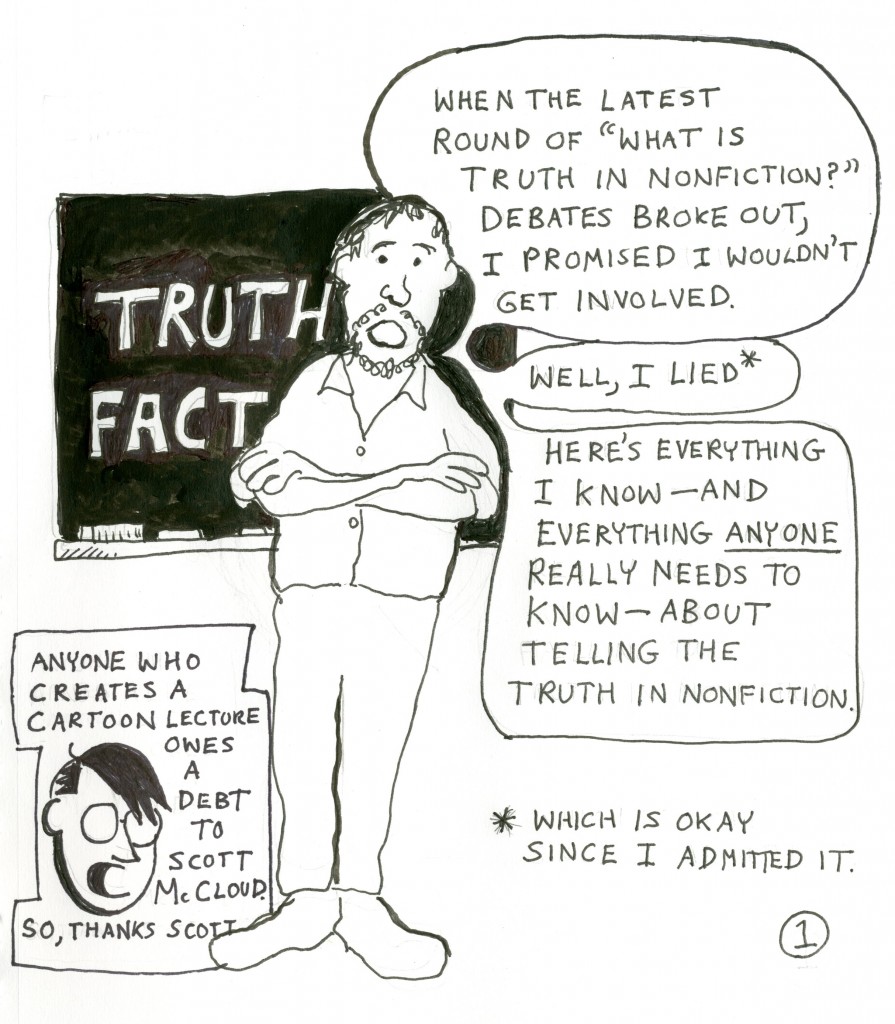
Dave’s cartoon essay: Everything You Ever Wanted to Know About Truth in Nonfiction But Were Afraid to Ask
.
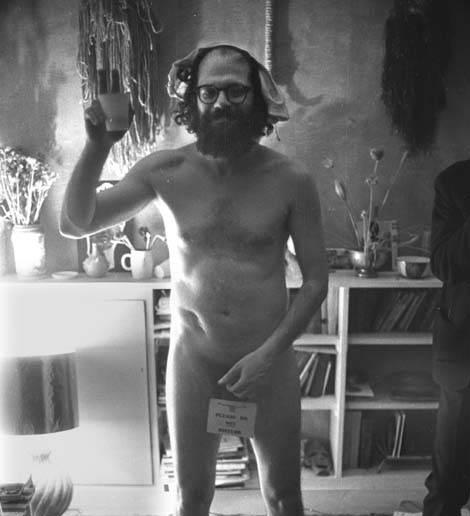
Bill’s comic post: The Author Photo
.
Dave’s essay: Kid of the Year
.
Bill’s parody of a push-poll, inspired by the Koch Brothers. Kochtail Hour
.
Dave Tells All: Confessions of a Nature Writer
.
Bill’s Short Story “Investigation”
.
Dave’s comic post: Things You Never Hear Writing Teachers Say
.
Bill’s video memoir (still in progress, but not much progress lately…): I Used to Play in Bands
(And don’t forget to Like our Facebook page!)
May 3, 2012
The Sweet Sixteen! Here They are…the Best Writin’ Schools in the Country
Here it is, folks. You voted and your vote counts. And now we ask you to vote again on the comments page of this post. Only one vote per person per school this round please. But if you like you can vote for two schools, yours and another. This next round of voting will determine the final 2! Because how long can we really keep this up?
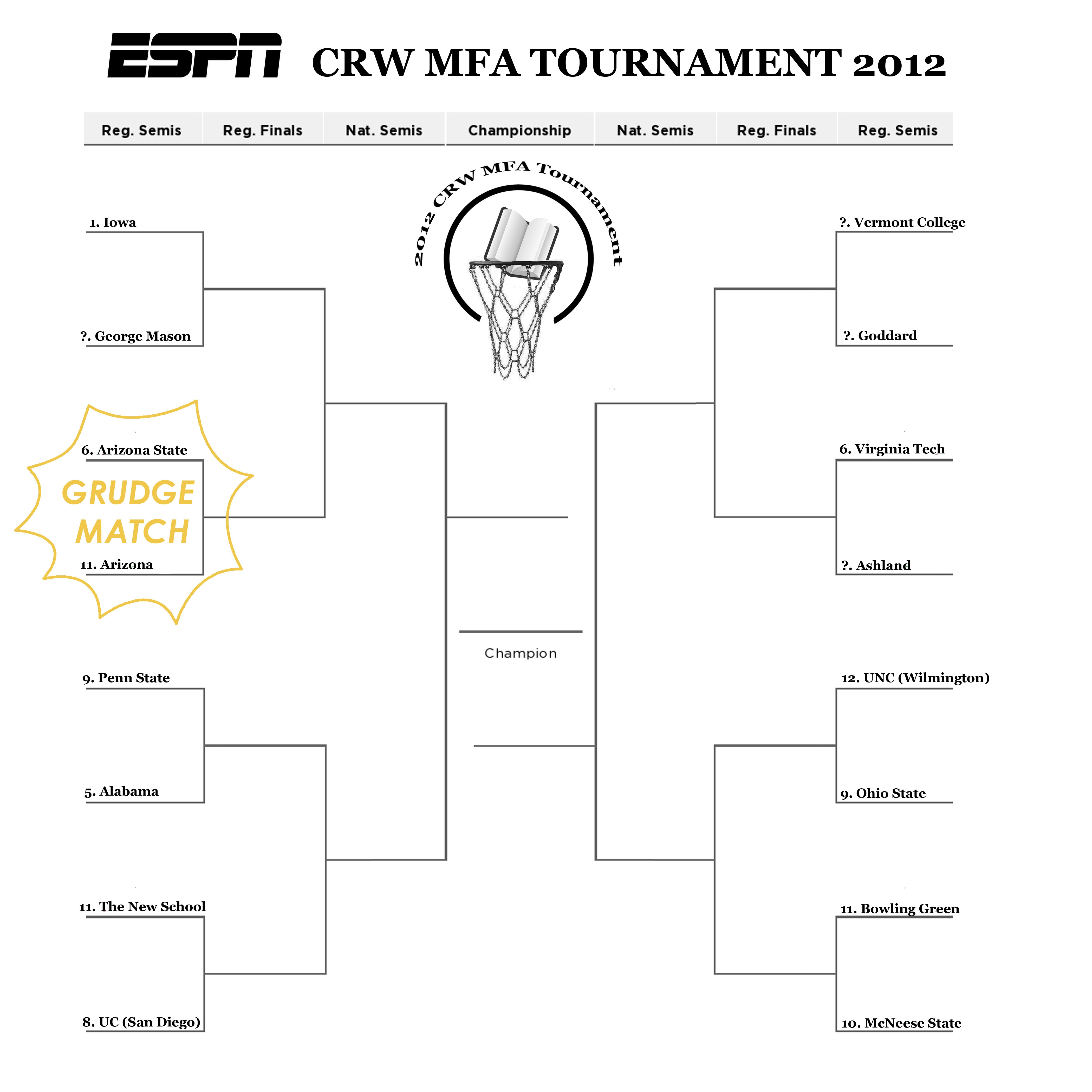
Observant fans will note that some of the results make no sense. Teams won that were never in the bracket, teams lost and then reappeared elsewhere, etc… Well, what can we say? In the spirit of Seth Abramson, we have decided to follow a logic all our own. (And we wanted to make sure that the top 16 vote getters made it in.)
For more about the match-ups and to vote, keep going:
Iowa vs. George Mason
The top-seeded Iowa barely squeaked by a scrappy Florida Atlantic squad, and now face the write-in George Mason, the Washington, D.C. upstart, and their hordes of rabid fans.
Arizona vs. Arizona State
This in-state rivalry is getting ugly. And bloody. The two battled to a virtual tie in the first round, inspiring us to throw out the rules and pit them against each other again in the Sweet Sixteen. Sheriff Arpaio, where are you?
Penn State vs. Alabama
Who doesn’t love plucky Penn State, fighting on valiantly even though their program is going into the crapper? Meanwhile Alabama dominated the early rounds, the Tide garnering more votes, and rah-rah spirit, than any other school. They also used the word “dick” a lot. Does that mean that they are the country’s best writing school? You decide.
The New School vs. San Diego State
The New School surprised everyone by digging in for tough wins, even with the crowd chanting “What’s so new about you, what’s so new about you, you were founded in 1919, boo-hoo!” Their curious alliance with The Ohio State University team (it’s the THE, said retiring great OSU coach Lee K. Abbott) no doubt helped their game. San Diego State, no article to speak of, came out of nowhere to dominate, and only the one incident to mar their performance. You know what I’m talking about, Staties. Also, our niece Rosalie (yes, Bill and Dave’s is an uncle, and many times over), attends SDSU as an undergrad, really our only chance at some nepotism here.
Vermont College vs. Goddard
From the land of Saint Bernie Sanders, also gods Ben and Jerry, a blistering rivalry between two fine low-res programs in the Green Mountain State. But fans have found that low-res means hi-intensity! Brother against brother, sister against sister, this stands to be one of the fiercest face-offs of the century. And folks, that’s twelve whole years!
Virginia Tech vs. Ashland
Tiny Ashland is winning hearts all over the country, dominating from its rusty berth in post-industrial northern Ohio. But the bigger, if equally lovable, Virginia Tech, might be sending Cinderella home in a pumpkin driven by rats.
UNCW vs. THE Ohio State University
It’s true that UNCW has the homecourt advantage here, but their performance in the first rounds was tepid. Now they’ll set out to prove they deserve the name THE University of North Carolina at Wilmington. And let us not forget where Bill taught for many years: Ohio State. Can Cocktail Hour survive the strain?
Bowling Green vs. McNeese State
Eleven votes apiece? That’s a solid matchup. We suspected some hanging chads on this one, and sure enough, the vote-counting mainframe didn’t know what BGSU stood for. But what fight from an underlooked organization, and a PhD program too. Can we talk about McNeese? There’s no state called McNeese, unless maybe it’s in Ireland! But coaches Fleury and Taylor have built from the brilliant success of John Wood, and after 30 years in the biz, the McNeese squad rules. Oh. Okay. This just in. McNeese State is in Louisiana.
[Like this post to spread the word on Facebook. Like Bill and Dave's (above) to help keep the sober science of MFA program rankings alive!]