
Larry Gottlieb's Blog: The Insights Blog, page 3
October 8, 2022
The Maternal Instinct Controversy

Writing in the New York Times on Sunday October 2, 2022, Chelsea Conoboy challenges the widespread cultural assumption that women have a built-in maternal instinct that kicks in (for most) when a child is born. This instinct supposedly accounts for “the selflessness and tenderness babies require.” She points out that this idea is a relatively modern — and pernicious — one.
Conoboy goes on to discuss the origin of this idea — “…constructed over decades by men selling an image of what a mother should be” — and its effect — “It keeps us from talking about what it really means to become a parent, and it has emboldened policymakers in the United States, generation after generation, to refuse new parents, and especially mothers, the support they need.”
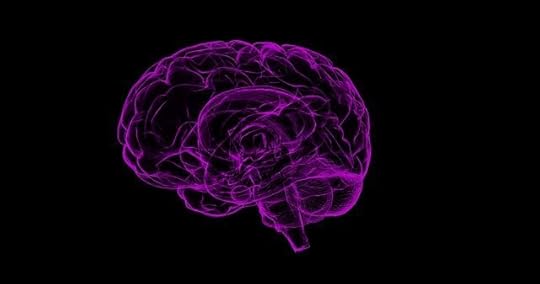
It’s relatively easy to debunk the idea of the maternal instinct and the questionable science that supports it. For example, research into the brains of people who care for infants shows a similarity of structure and function no matter what their gender. According to an article I found at webmd.com, “They experience an increase in activity in their amygdala and other emotional-processing systems, causing them to experience parental emotions.” The idea that activity in the brain and the experience of emotions are related is one thing. To place the cause of this relationship in the brain is another example of the self limiting belief that the cause of our experience lies in the physical, thus leaving us powerless, at the effect of these physical processes.
However, my argument is that underneath this controversy is another well-hidden assumption — that instinct itself is a hard-wired feature of the mind-body entity we call a human being, men and women alike.
This overlooked assumption, that we are both sustained and limited by hard wiring, is a mechanistic view of life. This view is the result of believing that to do rigorous science we must disregard the role that consciousness plays in the unfolding of the physical world (see this blog post). This belief that science can and must eventually find in the physical world the cause of all our behavior may be the ultimate self limiting belief.

There is another way to look at ourselves and the world that allows us to recover our power to determine our own experience. This viewpoint starts with the premise that the physical world we perceive is the product of interpretation of sensory data (light impinging on our retinas, pressure waves in the air surrounding our eardrums, and so on). Our brains then make a three-dimensional picture of our world, and we literally walk around inside this interpretation system instead of experiencing the world directly. We look at that picture when we think we’re looking at the world.
The way out of living entirely in our heads, in the pictures our brains make from sensory input, is to open ourselves to the vastly greater intelligence that gave rise to all creatures in the first place. This requires replacing the idea of instinct as hard wiring with a secure connection to that greater intelligence. This opening of oneself to expanded intelligence is called intuition, and it becomes increasingly available to us as we liberate ourselves from self limiting beliefs. One of these beliefs is our culturally derived view that experience is determined by physical hard wiring.
Armed with the understanding that instinct is really intuition, one opens oneself to the experience of caregiving, and the brain and the rest of the nervous system expand and change to facilitate that experience. The maternal instinct becomes the intuitive understanding that children need conscious caregiving, no matter who shows up to provide it, no matter their gender, age, or any other characteristic.


September 21, 2022
The Observer Effect in Psychology
In psychology, the observer effect is the name given to the phenomenon that occurs when the subject of a study alters their behavior because they are aware of the observer's presence. This results in incorrect data: the researcher records behavior that is not the way the subject actually behaves when not under observation.
John Hain from Pixabay
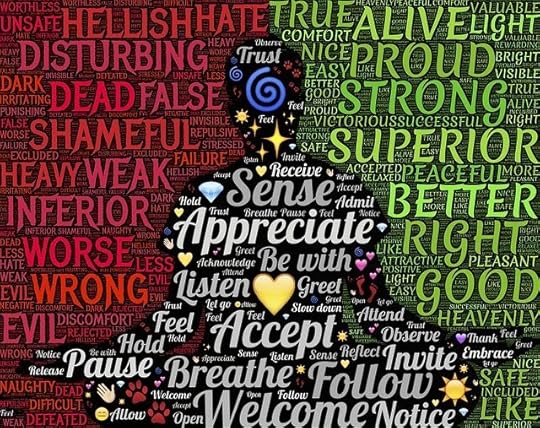
For me, the interesting thing about this definition is that as far as the Ego is concerned, we’re always being observed, and much of the time it feels as if we are being judged. And that fact leads to one of the core principles of this work: much of the behavior we observe in ourselves and in others isn’t authentic.
Over the last few decades, I have become acutely aware of the degree to which I modify my own behavior so as to fit the needs of others. That pattern began, of course, with trying to please my parents so as to earn their support and avoid their criticism. It is commonly understood that the parent/child relationship becomes the template for all other relationships, and I can see the truth of that in my own life. It is clear to me that I have spent much of my life acting in such a way as to please others and avoid their negative judgments.
So, the observer effect in psychology is something we can observe for ourselves if we pay attention to why we act or react the way we do. However, that turns out to be easier said than done. I believe the difficulty is due to what is often called the internal dialog, the parrot on our shoulders that’s always telling us what to do.
Many years ago, I had an experience in which the true nature of the voice I listen to all day came into stark relief. Like all of us, I had spent a lifetime listening to that voice articulate all my thoughts. I had always believed that the voice I was listening to was mine. In one moment however, someone drew my attention to the possibility that my internal dialog is an externally imposed phenomenon. The person suggested that the voice I hear is culturally derived. “It”, the Ego, is designed to tell me what to do to please other people. It tries to maintain its position as the authority and the executive in my personality, and It isn’t my voice at all.
In that moment, It reacted to the suggestion that it is not my voice as if It were being threatened. The Ego said, “This is evil.”
John Hain from Pixabay
Since that moment several decades ago, I have, with steadily increasing ability, been able to objectively observe that voice as It continues to offer its analysis of the situations in which I find myself. I have been able to experience a newfound freedom to either accept or reject Its advice. I believe that leads to true freedom and authentic behavior of the human being.
In studying this phenomenon, I have come to suspect that every other person in my experience is absorbed in listening to their own “It” and is not concerned with judging me at all. So, my interpretation of the observer effect is all about our own mistaken identification with the voice in our heads.
It occurs to me in this context that listening objectively to the voice also negates the observer effect in psychology, because it was the voice in my head that played the role of the critical and judgmental observer. There is still the observer, of course, the non-judgmental witness of all that I experience, that which I have come to know as who I really am, my true Self.
September 16, 2022
You Are Not a Boltzmann Brain!

Gerhard from Pixabay
One of the primary pillars of our culture’s knowledge base is that the physical universe is real and exists apart from anyone or anything observing it. In this view, you and I are transient observers of our universe, and we have a finite amount of time in which to observe something that is essentially eternal.
Virtually every one of us believes in this fundamental idea so completely that it is rarely questioned. And yet, it begs the confounding question of how our consciousness, our human awareness, came to be.
Another way of asking this question of the origin of human awareness is, “Is it just a happy accident, a product of a particularly fortunate assembling of the elements of our physical world, that physics and chemistry should give rise to biology and consciousness?” --From Hoodwinked: Uncovering Our Fundamental Superstitions
People search for explanations all the time, and perhaps the most important explanation there could be is the one about why we exist. The Boltzmann Brain hypothesis arises out of this question.
Ludwig Boltzmann (1844-1906) was a principal figure in the development of thermodynamics, a statistical basis for understanding the universe. Rather than consider the behavior of each individual atomic component of the universe (an impossible task), thermodynamics treats the world in macroscopic terms as huge collections of atoms.
The Boltzmann Brain idea says that given enough space filled with the manifestations of energy we call particles, and given enough time for quantum fluctuations in this energy space (interactions among particles) to randomly produce structures of matter, these fluctuations will eventually create a brain, such as yours, complete with all your memories. And this brain will produce a picture of reality (including your body and all that you perceive) that is indistinguishable from what we think of as ordinary reality.
I think most of us would dismiss this idea as ridiculous, given our idea of what the world is and what a human being is. However, we can deconstruct the Boltzmann Brain idea and see what it’s made of.
As I noted in the previous paragraph, one of the components of the Boltzmann Brain hypothesis is that complex structures of matter are made from random interactions among atoms. Randomness is the inevitable byproduct of the assumption that consciousness, and deliberate intent, are not involved in creation. The dichotomy between intelligent design (presumably by a Creator) and creation by natural processes is largely assumed to be an either/or choice. However, these two ideas about creation are not mutually exclusive.
KattanaSox from Pixabay
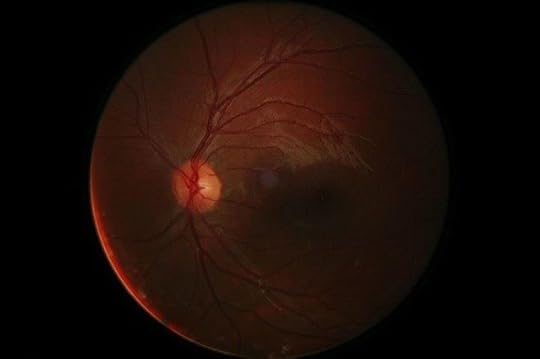
Let’s illustrate how this might be the case. Consider our visual perception of objects around us. Light enters our eyes and is transformed by the rods and cones in our retinas into electrical impulses. These impulses travel along the optic nerve to the brain, and the brain makes a three-dimensional picture from these signals. It is universally assumed that this picture represents a fixed external reality with some degree of accuracy.
Then, let’s ask the question, “Can I prove or somehow demonstrate that the picture in my brain represents a reality that’s ‘out there’?” I can think of no way to do that. I suggest that, equipped as we are with only our five senses, all we have as human beings is that picture in our brains. That’s our reality, and we are the creators of that reality. Consciousness is all there is, and it’s all there has ever been. There are no random fluctuations in some energy space that’s separate from consciousness; everything that composes our reality exists within our consciousness. There is only our interpretation of the signals we receive from the Universe. Then, we mistake that interpretation, that picture, for a real, external physical world.
Instead of being stuck with things “the way they are,” we are each free to optimize our interpretation (create our own reality) to our benefit and to the benefit of all. As a current example, Yvon Chouinard, the founder of the Patagonia company, recently changed his description of the value of his company from a component of his personal wealth to an asset which can help fight climate change. It makes a difference how we describe the world!
To explore this idea further, I invite you to read my recent book, Hoodwinked: Uncovering Our Fundamental Superstitions
September 12, 2022
How to Look at the World Differently
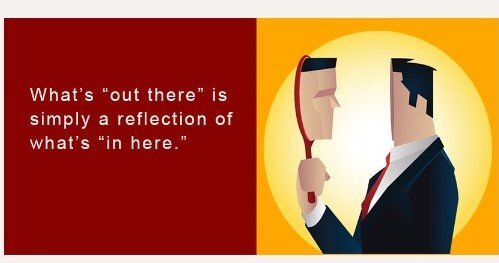
There exists a spiritual principle that can be validated in our individual experience. It says, “As within, so without.”
This principle amounts to saying that our individual experience of the world is determined largely by the way we look at the world. If we start from there, it follows that if we want to improve our experience of the world, we have to change the way we look at the world.
Those of us who experiment with changing the way we look at the world immediately run into a fundamental difficulty. We don’t know how we look at the world!
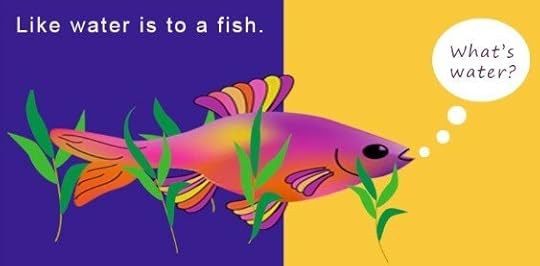
I begin my book, Hoodwinked: Uncovering Our Fundamental Superstitions, with a parable about a fish in water. The fish doesn’t know about water because water is all he’s ever known. He’s never seen the water; he just looks through it at whatever he’s observing. The water in this parable represents our understanding of the world. We look through, and not at, our understanding of the world. It’s transparent, like the water the fish swims in.
We never think about how we look at the world, because it’s all we’ve ever known.And the way we look at ourselves, at life, at the world, our entire belief system, is based on this transparent understanding.
One way I’ve found to look at the world differently is to become aware of the “water” I swim in. “Well,” you may ask, “How do I do that?”
I’ve learned two useful techniques for becoming aware of how I look at the world. The first technique involves becoming aware of my internal dialog. Example: You consider one of your problems. You talk to yourself about it. You discuss the pros and cons of one or more possible solutions to it. You hear yourself talking about it, and the voice you hear is yours. That’s you speaking “inside your head,” isn’t it? It’s sometimes called the internal dialog, and all of us engage in it.
But is that really you? Is that your voice? It sure sounds like you… but what if it’s not? What if that internal dialog is simply playing out in your mind and you are just listening to it, just witnessing it? I have discovered that I can listen to that voice as it describes the way I look at the world! That’s IT describing the world, not me! In fact, I’ve come to realize that IT is not me at all. I think of IT as the sum total of my cultural learning. I call IT the Ego.
The second useful technique I’ve found to show me how I look at the world is the understanding of “self limiting beliefs.” Self limiting beliefs are those that restrict the range of options I have in my experience of living.
Let me use a metaphor to explain what I mean. Let me ask you to visualize an old-time movie theater. Those of you who are too young to have experienced a film-based movie theater, bear with me!
What are the elements of a film-based movie house? First, before we turn on the projector, we have a big white screen. That screen has no content; it’s just a place to focus our attention when we get some content going. Next, we have a light bulb that projects pure white light onto the screen.

Gerd Altmann from Pixabay
OK, so we have white light and a white screen. So far, it’s a really boring movie! The last element is the film, which gets threaded into the projector. The film allows us to project the movie onto the screen. It does that by blocking, or filtering out, various frequencies of light at various points on the film and allowing all the other frequencies to pass through it. So, the visual portion of the movie is created by a process of removing some of the light. And what’s left is what we see on the screen.
This metaphor can show us that the world we experience is the result of removing possibilities from those we might otherwise experience, just as the film removes a portion of the light that would otherwise hit the screen. And those possibilities are removed by our attachment to self limiting beliefs.
Another spiritual principle is “You change your experience by changing your story.” This amounts to getting rid of self limiting beliefs, or by replacing them with beliefs that serve you better. You put the Ego in the backseat and you drive!
Doing so is a process, and it requires clear intent and persistence. It turns out, though, that simply by becoming aware of how we look at the world, it begins to happen quite naturally. And as it does, we gain confidence that our experience can change for the better, and we become reacquainted with the joy of discovering our new way of experiencing life.
Let’s get started! Let’s find out how to look at the world differently! For more, check out the rest of the Insights Blog.
September 2, 2022
Examples of Self Limiting Beliefs
John Hain from Pixabay
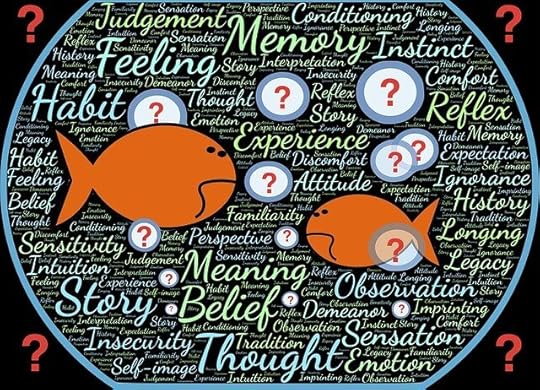
As human beings, our view of the world is full of examples of self limiting beliefs. Perhaps the easiest way to recognize these beliefs is to pay attention to our language.
All of us have heard someone say, and maybe said ourselves, each of the following:
I’ll be happy when…
I wasn’t taught or shown how to…
I’m not good enough for...
Let’s think about each of these statements. “I’ll be happy when…” carries within it a powerful statement to ourselves which becomes a solid reality upon repetition. That message is, “I’m not now happy.” If we continue to tell ourselves that we’re not happy, that will become our expectation. The word “when” in this context implies that there is some other time than now in which we will experience being happy. And this is simply not the case; there is no time one can be happy other than now!
“I wasn’t taught or shown how to…” is a responsibility shifter. It was someone else’s fault that I wasn’t shown or taught how to do whatever. It is true that much of our individual behavior patterns are learned by watching other people. But we humans have vastly larger abilities than mere imitation. Using this responsibility-shifting excuse usually results in both missing out on doing the thing we think we weren’t taught to do, as well as making the person who “should” have done so feel guilty.
“I’m not good enough for…” could be even more damaging than the other examples I gave above. That’s because the word “good” carries an enormous amount of emotional baggage we acquired from the adults who trained us to be who they thought we needed to be, or who they needed us to be for their own reasons. Maybe there was a premium placed on being good little boys and girls. The word “good” in that context connotes “well-behaved” and “quiet” and “no trouble,” to name just a few examples. The repercussions of that emotional baggage are well documented in our popular culture.
The examples of self limiting beliefs I offered above reside entirely in the psychological domain. However, there may be a more powerful domain in which to consider these issues. We can begin to access this other area by considering the possibility that our every-day experience is determined by our belief system and not by our own inner creativity.
Nancy Sloane at Rebel Marketing Design
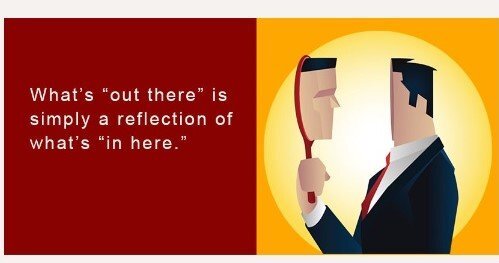
Perhaps you have heard the phrase “As within so without,” or “What’s out there is simply a reflection of what’s in here.” This is in contrast to our natural assumption that the world is the way it is regardless of our feelings and attitudes about it. I explain it to myself in the following way.
In order to become a functioning member of a society, we have to first learn to see the world in the same or similar terms in which others see it. This amounts to learning to describe the world in a manner consistent with the way others describe it. Endless repetition of this process results in immersion in the description or worldview to the point where we lose the distinction between the world and its description.
The next step is to recognize that our description of the world will always be consistent with our beliefs about it. If you believe that it is not possible for you to live your life in a particular manner, you will not describe your world as a place where you can live that way. For example, I would venture to say that those who fit into a category that is often referred to as LGBTQ+ have probably found themselves believing that they cannot live their lives openly and authentically. And, they will not describe our world as a place where they can do so freely. This would be true of any unwanted condition that a self limiting belief would generate.
Words have power! If we harbor self limiting beliefs, we will speak to others in accord with those beliefs, and those others will take us at our word. They will reflect these beliefs back to us in their words and actions, and those words and actions will reinforce the validity of our speaking. That’s how our world reflects our beliefs about it.
This understanding of how our beliefs determine our world lives “underneath” the psychological domain. Seeking to understand how our beliefs determine our experience puts us on the road of spiritual discovery, leading to uncovering our own inner creativity. We are here learning to be creators of our own reality, and this requires freeing ourselves from the constraints inevitably imposed upon us by membership in our culture. This is true freedom: the freedom to live our lives the way we choose.
July 29, 2022
Moving Beyond Self Limiting Beliefs
If you ask people what their number 1 problem is, most will not identify this question: “Why am I not more effective at getting what I want?” However, whatever their answer is, that’s what it will boil down to. So it’s worthwhile to consider what we want, as individuals and as societies, and what might stand in the way of manifesting our desires.
Most of us have been taught the methods and practices of rational analysis and problem-solving. We’ve been practicing those techniques all our lives. And yet, there doesn’t seem to be a strong correlation between those practices and one’s quality of life.
Albert Einstein famously said that you can’t solve problems with the same kind of thinking that created those problems in the first place. For creative beings such as ourselves, our thinking is inadequate only because of self limiting beliefs.
The role of self limiting beliefsI call those beliefs, the ones that hold us back, superstitions. The Merriam-Webster dictionary defines superstitions as “beliefs or practices resulting from ignorance, fear of the unknown, … or a false conception of causation.”

Gerd Altmann/Pixabay
As an example of a self limiting belief, let’s consider that last part of this definition: a false conception of causation. In our popular culture, both Friday the 13th and black cats have been considered by some to cause bad luck. Most of us realize that’s a false conception of causation.
However, we know for sure that our rational analysis and problem solving skills are the best tools we have for getting more of what we want. We know this because everybody says it’s true. But what if that certainty turns out to be a superstition? What if we have more powerful tools at our disposal and our belief in the supremacy of rationality constitutes a self limiting belief?
Here’s how rationality shows up.
Who’s driving?
You consider one of your problems. You talk to yourself about it. You discuss the pros and cons of one or more possible solutions to it. You hear yourself talking about it, and the voice you hear is yours. That’s you speaking “inside your head,” isn’t it? It’s sometimes called the internal dialog, and all humans engage in it.
But what if that’s not actually you?
What if that internal dialog is not something you are actually engaged in? What if it’s playing out in your mind and you are just listening to it, just witnessing it? What if you allowed that dialog to die down, to simply be noise that you can disregard? And what if in the silence that remains you just know what to do? That’s called intuition. In our culture, intuition has been relegated to the back seat by the internal dialog that has been allowed to drive. That’s been the way it is since the Age of Reason, which began in the 17th and 18 centuries with Newton and Descartes.
How can I empower my intuition? How can I let go of self limiting beliefs?As we uncover and confront this superstition about our identification with the internal dialog, our thinking expands to include new solutions to our problems, and it happens naturally. I’ve been working on helping people approach their natural, authentic, creative selves by providing a roadmap to identifying those superstitions. Moving beyond these self limiting beliefs allows us to more fully realize our potential to determine the quality of our own lives. That puts us firmly back in the driver’s seat where we belong. Read more about letting go of self-limiting beliefs in my book, Hoodwinked: Uncovering our Fundamental Superstitions.
For more similar content, take a look at my blog post titled “A Brief Conversation about Beliefs.”
How to Eliminate Self Limiting Beliefs
If you ask people what their number 1 problem is, most will not identify this question: “Why am I not more effective at getting what I want?” However, whatever their answer is, that’s what it will boil down to. So it’s worthwhile to consider what we want, as individuals and as societies, and what might stand in the way of manifesting our desires.

Gerd Altmann/Pixabay
Most of us have been taught the methods and practices of rational analysis and problem-solving. We’ve been practicing those techniques all our lives. And yet, there doesn’t seem to be a strong correlation between the expertise that one so derives and one’s quality of life.
Albert Einstein famously said that you can’t solve problems with the same kind of thinking that created those problems in the first place. For creative beings such as ourselves, our thinking is inadequate only because of self-limiting beliefs.
The role of self limiting beliefsI call those beliefs, the ones that hold us back, superstitions. The Merriam-Webster dictionary defines superstitions as “beliefs or practices resulting from ignorance, fear of the unknown, … or a false conception of causation.”
As an example of a self limiting belief, let’s consider that last part of this definition: a false conception of causation. In our popular culture, both Friday the 13th and black cats have been considered by some to cause bad luck. Most of us realize that’s a false conception of causation.
However, we know for sure that our rational analysis and problem solving skills are the best tools we have for getting more of what we want. We know this because everybody says it’s true. But what if that certainty turns out to be a superstition? What if we have more powerful tools at our disposal and our belief in the supremacy of rationality constitutes a self limiting belief?
Here’s how rationality shows up. Who’s driving?
You consider one of your problems. You talk to yourself about it. You discuss the pros and cons of one or more possible solutions to it. You hear yourself talking about it, and the voice you hear is yours. That’s you speaking “inside your head,” isn’t it? It’s sometimes called the internal dialog, and all humans engage in it.
But what if that’s not actually you?
What if that internal dialog is not something you are actually engaged in? What if it’s playing out in your mind and you are just listening to it, just witnessing it? What if you allowed that dialog to die down, to simply be noise that you can disregard? And what if in the silence that remains you just know what to do? That’s called intuition. In our culture, intuition has been relegated to the back seat by the internal dialog that has been allowed to drive. That’s been the way it is since the Age of Reason, which began in the 17th and 18 centuries with Newton and Descartes.
How can I empower my intuition?As we uncover and confront this superstition about our identification with the internal dialog, as well as other fundamental superstitions, our thinking expands to include new solutions to our problems, and it happens naturally. My work helps people to approach their natural, authentic, creative selves by providing a roadmap to identifying those superstitions. Moving beyond these self limiting beliefs allow us to more fully realize our potential to determine the quality of our own lives. That puts us firmly back in the driver’s seat where we belong.
July 27, 2022
A Frog’s Tale

Radek Homola on Unsplash
Once there was a quiet, idyllic pond that was home to a great number of frogs.
Frogs, as you know, can live in water and in air… they’re amphibians. And they know how to travel easily from one environment to the other. While their aquatic neighborhood is dark and safe, the terrestrial one is highly appealing to those adventurous enough to explore the sandy shore, the jungle, and beyond.
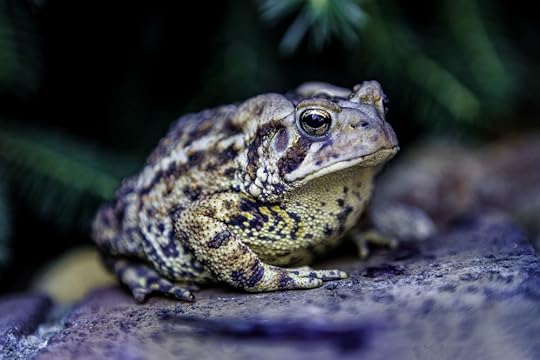
“Bull” Frog
There was among them, however, a particularly ambitious, rather large specimen.
He was known among the population as “Bull” frog. Now, Bull became particularly fond of the nearby jungle environment and wanted it all to himself. So, he practiced his rhetorical skills and eventually he convinced the other frogs that he alone could protect them from the predators that lurked beyond the pond.
As time passed, new tadpoles were born, and the older frogs, who remembered being on land, began to die off. All the tadpoles were told early on about Bull. They learned the rules of the pond, about how they had to stay in the water because Bull couldn’t protect them on land. Eventually, those tadpoles became frogs who didn’t know they could survive out of the pond, or even that they could breathe air.
Anytime one of these frogs started to climb out of the water, Bull would create a diversion. His favorite was to point out some problem in the pond that had to be addressed without delay, and he became expert at describing the problem in such a way as to motivate everyone to take up arms to protect the pond.
Some of the frogs believed in the dangerous situations that Bull described, and some did not. Those who didn’t believe in the danger came up with what they believed would solve the problem easily, but they were considered weak by the other frogs. And Bull made sure these two groups stayed occupied in battling each other as to which side correctly understood the situation.
Frogs, of course, have desires.
They have hopes and dreams, just like everyone else. But these frogs only had desires that could be realized in water. They didn’t know they could survive in air, and so naturally none of their ambitions pertained to things that could happen outside their watery home.
But wait, you say! These frogs are amphibians, and it’s still possible for them to leave the pond and work to satisfy those terrestrial desires! Right?
Well, yes. All amphibians have terrestrial possibilities, but those would never occur to these frogs because they have to do with breathing air, which nobody told them they could do. Their range of choices is smaller than it would otherwise be, not because of the way things are, but because the rest of what is available to them is literally unthinkable. Another way of saying that is, our frogs, the ones that are constrained to live in water, can’t consider options that don’t fit within that conception of who and what they are, which in this case is aquatic animals.
We human beings are like those frogs.
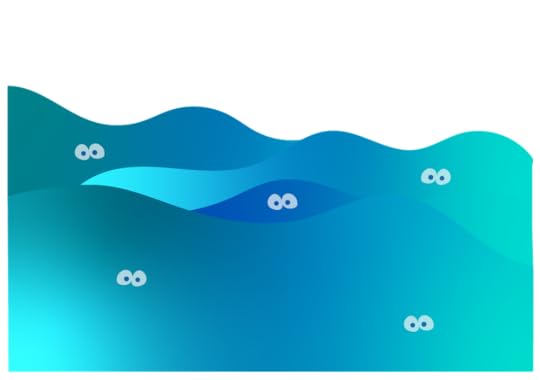
Immersed in the ocean of belief
We have lived our entire lives immersed in an ocean of belief, which we like to call “our beliefs.” We have never been outside that ocean, and it has never occurred to most of us that such a thing might be possible.
While we have among us a number of people who play the role of Bull frog, they are actually just pretenders. The real Bull is the belief system that each of us has bought into. It has convinced us that we must stay within our beliefs and defend them with everything we have. The real Bull has its own agenda, which is to stay in control.
It is a rare human being that knows that he or she is immersed in the ocean of belief and that there are possibilities outside that ocean that most of us have never imagined. And yet, we can never grow into the fullness of who we are until we make that leap, defying the common sense understanding of our own Bull and venturing into the unknown.
July 14, 2022
Why Am I Dissatisfied with My Life?

Dissatisfied, Even with a Good Job
Dissatisfaction is a topic that arises frequently when people engage in “real talk,” when they are in a safe space to tell the truth about their lives. It’s easily understandable among those of us who feel as if we have wasted time following unproductive paths, whether in the area of employment, relationships, or simply personal life choices.
It’s less obvious, however, for those of us who did all the “right” things and still feel dissatisfied with life.
The following is a fictional account of a conversation that might take place among seemingly “successful” people. The characters are invented but the themes are very familiar to many of us. The scene takes place floating down a gentle river in a raft…
"While you guys were gone,” Malcolm says, “May was explaining to me that you can’t solve problems with the same thinking that we used when we created them. Apparently, it was Einstein who said that. Anyway, I know we talked about pursuing my hobby yesterday, and we all got excited about that as a possibility, especially me, but the fact remains that I don’t find my job very satisfying. How do I solve that problem? May tells me the answer lies in taking a step back to get a broader view of the situation and stop wracking my brain for answers.”
Malcolm has brought up a great subject that we can all relate to! Margaret is thinking about those dark circles she saw under her eyes a few days ago that made her take this vacation. Jeremy is following the conversation with interest because he’s not very satisfied with his life either. Annie is feeling empathetic towards her new friends. Benjamin is just confused.
Malcolm continues, “I kind of get that if my experience in the world isn’t satisfying, I guess I need to allow my intuition to guide me. I’ve thought about it most of the afternoon and I might have an inkling about where to start.” He looks at the river guide, who says, “Malcolm, why don’t you just think out loud.”
Malcolm begins his train of thought. “I think that what’s not working for me at the company is that people don’t seem to know how to talk to one another. There are the engineers, who know how the products are supposed to work, and then there’re the workers who seem to have problems putting them together. The assembly workers don’t know how to explain their difficulties to the engineers, partly I think because they’re afraid of them. And the engineers don’t know how to listen to the workers because they’re always thinking about new products, and they have a whole different language.”
May asks him, “Well, what’s missing? Do you think either of those groups is going to change the way they communicate?”
“No,” Malcolm answers. “I like the people I work with a lot. But I see them talking past each other every day.”
“So, what’s your inkling?”
“I think maybe I could be the bridge… I can hear what the workers’ problems are, and I know how to speak ‘engineer’. But that’s not my job.”
The guide laughs and interjects, “Who says? What is your job, anyway?”
“Well, I help the engineers get their designs turned into drawings that the assemblers can use, and I make sure those drawings are accurate. But nobody looks deeper to see why the drawings create problems for the assemblers. Nobody can persuade the engineers to think about their designs in terms of facilitating the assembly process, making things easier on the workers. Maybe I could do that.”
“Aha!” says the guide. “Vice President in charge of communication!” Malcolm is momentarily blown away by the idea. Same job, only really helpful and useful! I like it, he thinks.
May says, “And now, Malcolm, you’ve figured out how to tell a new story about your job, one that obviously has you energized! You get to recreate your job, from scratch, and I’ll bet you’ll find it satisfying to do so. You’ve discovered that you had a belief that it was management that created your job for you. And you now see how you can let go of that belief and how it will transform your experience in the process. You can recreate your existing job!”
Malcolm is nodding his head. He says, “That makes sense...” and with a growing sense of excitement, “all right! And I don’t have to change jobs. I get it now… I just change the way I think about the situation, instead of changing the situation. That sure wasn’t as hard as I imagined it would be!”
—Taken from my forthcoming book, Conversations on the River
Malcolm, our fictional character, might now describe his experience in terms of the flow of his creative juices. He has seen another possibility, one that is outside the range of options he’s been considering. In that opening, the power he has to create is suddenly free to express itself instead of being bottled up as his mind went ‘round and ‘round among his old thoughts.
The seeing of possibility can be thought of as the most powerful ability we humans have. It unleashes the experience of being called forth to create, of a new sense of freedom in which to play. In the “rush” of feeling that freedom, dissatisfaction can simply melt away. It doesn’t require hard work, or preparation, or any effort at all. It requires only relinquishing a self-limiting belief, which in Malcolm’s case was that it was up to management to create his job.
What is your self-limiting belief that’s standing in the way of a new experience of satisfaction in your life? Is it in your personal relationships, with your job, in your religious community? Where might you allow yourself to examine a self-limiting belief that keeps you going ‘round and ‘round? Where might you take a step back and view your dissatisfaction from a broader sense of possibility?
June 30, 2022
Grieving an Illusion
While drinking coffee this morning, I find that there’s something missing. When I ask myself what’s missing, what comes up is the days of feeling good about my society, my culture, and my country. That good feeling seems absent since Friday, June 23, the day of the overturning of Roe v. Wade.

I knew at a relatively early age that what Ronald Reagan called the “shining city on a hill,” the America of our ideals, was an invention, a romantic notion that made us all feel good.
My dad was a left-winger. He made sure I knew about McCarthyism (of which he had personal, up-close experience), segregation, racism, the exploitation of Latin America, the projection of force around the world, and so much more. In spite of that background, what Reagan’s vision represented made me feel good. I wanted to believe that America could lead the world by example. However, I always knew deep down that my romantic vision doesn’t actually stand up to reality.
The idea was that our form of government and the principles upon which our nation was founded resulted in a reality that we could be proud of, one that would allow us to be a beacon of freedom for the world.
I guess that beacon worked for a while.
People in other countries used to look to the United States for guidance, for leadership. Then they started laughing at the disparity between the ideals we preach to others and the reality of our society. And, perhaps, now they are afraid of what has happened here, and what may yet happen here.
So the grief that I feel this morning is for my cherished illusion. It was never real.
In this blog I have frequently offered a broader perspective, a viewpoint from which it is easier to bear witness to what feels to me like the steep decline of American society. I will continue to do so. For now, however, I must see this through. I need to feel the grief that comes from the shattering of illusion and allow it to pass through me.
Experience has taught me that disillusionment is a good thing. It means that something false has been revealed to be false, and once the falsehood is allowed to fall away the truth behind it will remain. I know that only then will the illusions be replaced with greater strength and wisdom. I cherish that knowing. It can never be taken away from me.
The Insights Blog

Those superstitions are responsible for Albert Einstein’s declaration that “you can’t solve problems with the same thinking that created them in the first place.” ...more
- Larry Gottlieb's profile
- 122 followers

