
Larry Gottlieb's Blog: The Insights Blog, page 5
February 3, 2022
Thoughts on Control
Back in September, I posted some thoughts on the idea of control. My thought was that while we think we have at least some measure of control over the conditions and circumstances we face in life, we have more effective control over what thoughts we choose to think, and that gives us a powerful say in how we feel. The following conversation ensued:
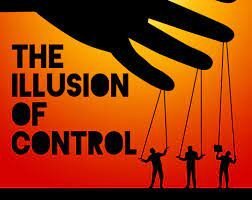
Floyd: The only true control is the control over yourself!
Larry: Thanks, Floyd. How about... the only true control is the control you have over what thoughts you think.
Floyd: I would agree! I had to learn the hard way to control my emotions especially anger and fear! Your thoughts control how you react to situations.
Jeff: Lol! Do you? If you had control over your thoughts there would be no need for control over your thoughts. For a millenia, or more or less, man has tried to control thought; with the invention of religious practice and mantras and the rest of it. Those who wish to control are the enemy of peace. To control is futile, it creates its own chaos.. To understand the self is enough.
Floyd: Maybe I should be more exact of what I mean by my statement! I control what I think about various things in life! When I am in a dangerous situation, do I panic and freeze or do I use my intelligence to help me remove myself from the danger! I try to always use logic to access the things that affect me!
Larry: Jeff, That's a good point. To understand the self, however, might turn out to require many of the same techniques you refer to. And ultimately, I suspect, the self might turn out not to exist at all as a separate entity, but rather an aspect of Being.
As for controlling thought, we humans can choose thoughts. It's just that we have been thinking the ones we think for so long the thought-choosing muscles have atrophied. But they can be rehabilitated. And beyond that, I've found that techniques for focusing the attention on non-thought can be very helpful in allowing the overall volume of thoughts to die down.
Jeff: also, I think (if that means anything at all) that it is important to understand that thought is limited by experience. It can only operate in the field of limited experience.
Consider life is the movement in relationship, and intelligence, which is not the accumulation of experience as knowledge but rather a prerequisite of it, is the sensitivity to THAT movement.
Perhaps, if one can be aware to this point, there is also an awareness in which one can see what has been the cultivation of knowledge from the beginning, and, perhaps what may be, through understanding, the cultivation of intelligence.
Larry: I agree. I think it's important to distinguish between knowledge as the accumulation of information, which I would argue is indirect knowledge, and the knowledge that comes from direct experience. The former can be useful in creating, designing, dealing with life and winning arguments. The latter can be transformative, opening possibilities that were never apparent before. Good conversation!


February 2, 2022
A Response to “A Wonderful Conversation”
This post is a follow-up to the one from November 11, 2021 which related a conversation I had with my friend whom I called Steve. A reader responded with the question below.
Greg: Very interesting conversation. To me, the question of the possible existence of a God or god, or higher power vs. no higher power of any kind, is academic. Whether there is a God or not, don't we end up at the exact same place? The concept of God comes from our inability to answer fundamental questions. How did we get "here"? What is here? Where are we? What is this? The struggle is in our inability to conceive of the idea that something cannot come out of nothing. Yet, whether one chooses to believe in god or not, you're left with the same issue. Either human consciousness existed seemingly forever, or God/god/power, existed forever and he/she/it created us. If one chooses the creation idea, the question is, where did God/god/higher power come from? Eventually one has to conclude that we have a conundrum that is inescapable. Something appears to have come into existence out of nothing. I think that question points to the notion that our premise is incorrect. It's more likely that "something" existed forever. As difficult as it is to envision, if true, there is no need for a creator, because there was nothing to "create" in the first place.
Larry: Good point, Greg. The only thing I would add to what you said is that the nothing out of which something comes is actually everything. It's like my metaphor of the movie theater... you start with white light and you apply a filter (the film strip) which removes some of the information, and what you see on the screen is what remains. Conscious Being-ness is everything - it contains all possibilities, and we filter out what we're not focusing on.
Greg: Great point Larry. Thanks for the addition!
February 1, 2022
A Brief Conversation about Beliefs
Doug: I would imagine because everything is based on the principle of independent observation and that the subatomic world is always in a place of all possibilities until observed… and that we know that nothing exists on the outside that it is created by the mind so that we really don’t see the “reality of things… that it is possible through or upon examining something we can wrestle with our assumptions, opinions, beliefs, expectations and therefore… Predict a different outcome during our next observation… Possibly

Larry: I think that's pretty much what happens. On the subatomic level, you can't predict what your next observation will be but only the statistical likelihood of any particular result. On the macro, human scale, however, you can be certain, in my opinion, that the way the world shows up for you will directly reflect your "assumptions, opinions, beliefs, and expectations." That's the way a human being can recover the personal power that was given away to those bigger people who raised and educated us into the ways of the world (mostly with good intentions, but that's another story).
Doug: Excellent response Larry… I shall continue to look into your work. Thank you.
Do you think we can we really change our core beliefs, those stories which keep us stuck in old patterns?
This is something I have wrestled with for decades, and I share my insights in Hoodwinked. As a scientist, modern physics offered me powerful examples of how getting unstuck from unexamined assumptions can open up an entire field of new possibilities.
Do you think this is the way forward to shake off our old patterns? I’d love to know what you think. Please feel free to share your insights under “Contact,” and I’ll share them if appropriate.
November 11, 2021
A Wonderful Conversation
I’ve been carrying on the most wonderful conversation with a reader, whom I’ll call Steve. I think it really helps to clarify some of what I presented in Hoodwinked; I hope it will be useful to you as well.
In particular, I spoke about the description quantum physics offers us of the world we observe: “The equations of quantum theory describe mathematically a distribution of probable results of any experiment that is yet to be performed on a system of fundamental, exceedingly small particles. Those equations then describe how that distribution of experimental results will vary over time. This process is known as the propagation of probability waves.”
Steve: On page 83, you state "This process is known as the propagation of probability waves." While I have said more than once that you can explain quantum physics better than anyone I have read or heard, I think the above concept and the pages that explain it may cause you to lose your audience (hopefully only temporarily). You end the chapter on P 89: "When we shift from one of those possible worlds to another by virtue of a shift in our emotional state, the change is seamless for everybody else's reality." Larry, I need help here, since I don't understand the preceding sentence.
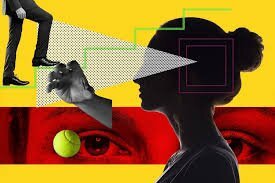
Larry: My first premise here is that what we think of as the external world is an interpretation of sensory information, a picture created in the brain out of electrical impulses and conditioned by one’s biases, education, acculturation, and so on. We all assume that the picture so created is an accurate depiction of that external world, but I believe it to be the result of a great deal of necessary filtering.
My second premise is that the world itself is, in [Carlos Castaneda’s classic sorcerer] Juan Matus’s words, “mysterious and unfathomable,” and all we can do is make a picture of it so we have something to work with. In this view, the world embraces all of the possibilities that quantum theory predicts (i.e. the location of all the particles that make up the physical world and so on), and the filtering process is what isolates one set of those possibilities and makes it “real” (i.e. observable).
The third premise is that the specific filter each human being employs in this process is a function of his or her emotional state. In that way, the world we experience behaves as if it is a mirror, reflecting back to us our expectations and beliefs about ourselves, each other, and the world.
Steve: With regards to your most recent response, I wasn't saying the chapter wasn't clear. I understood your three premises way back when I was reading The Seer's Explanation, so I didn't find the chapter confusing. I just didn't understand the sentence which ends the chapter on P 89, specifically the words I have now underlined: "When we shift from one of those possible worlds to another by virtue of a shift in our emotional state, the change is seamless for everybody else's reality." I understand that the change will be seamless for each individual, but the sentence seems to imply that each individual's change causes a change in everyone else's reality and I don't think that's what you meant.
You continue: "That's because the Universe, All-That-Is, non-physical conscious energy, arranges each and every human being's experience as a perfect, effortless composite of those emotional states." Am I correct in assuming that since you have chosen to put this statement (which I consider faith-based) at the end of a chapter which discusses quantum physics, you believe that quantum physics supports your statement? I'm interested in your answer to this question because, while I believe your quantum physics explanations do support many of your statements, I don't think they prove the statement in question should be true for everyone (even though it is obviously true for you).
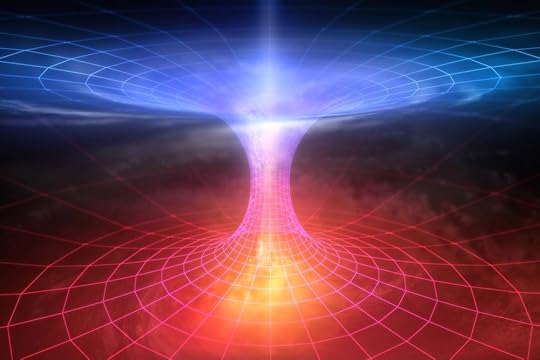
Larry: In terms of the words you underlined, I was responding to what I imagined would be a challenge from perhaps a science fiction fan. I imagined someone pointing out that if I shifted the world I'm in, everyone else would see me disappear! Castaneda did describe such an experience, but that’s a somewhat different case!
Yes, I do believe that quantum physics supports all of the premises I’ve woven into the book. If you want (one wants) to make sense of quantum physics, you have to explain how a multiplicity of possible states of a system (from one electron to the visible universe) becomes just one reality when you look at it. I concluded that one’s emotional state determines which of those possible states one experiences. But then you have to explain how we can agree on the reality we experience enough to talk about it and to interact with it. I concluded, again, that it is the conscious Universe that arranges everything so that we can so agree.
Steve: Thanks for the further explanation. I think I understand the meaning of the underlined phrase better now. I can make my question more specific: Do you believe that quantum physics supports the notion of a "conscious Universe"? I know there is no mention of God (or god) in Hoodwinked, but am I wrong in interpreting your use of capitalized words like Being, All-that-is, and the Universe as your personal vocabulary for referring to what most people refer to as God?
Larry: As a basis for answering your question, I would say first that we have two ways to think about quantum theory. First, we have the equations that were developed to explain experimental results, and that successfully predict ensuing experimental results without fail. Then, we have interpretations of those equations that attempt to explain what’s going on, i.e. how they correspond to “reality” (no small feat). The orthodox interpretation, called the Copenhagen interpretation, is entirely mechanistic and doesn’t involve consciousness at all, and in my mind it doesn’t really explain how you get from the probabilistic nature of the equations to a single consensual reality. Nor does it explain how you get consciousness at all!
I find interpretations that involve an observer as the determining factor much more satisfying. Most notably, these include many-worlds and QBism. But saying that the observer is essential implies that to create a fixed reality one needs consciousness. My thesis is that consciousness turns out to be all there is, and so saying that the Universe is conscious is a truism.
As for God or god, I think those words carry the subtle implication that God or god is an object, albeit an all-powerful one, as distinct from that which is not god. To me, that’s a fallacy, a result of our conditioned thinking that we humans are objects and identified with our bodies. So no, I don’t identify Being and All-that-Is with what most people refer to as God, because Being, the Universe, isn’t an object or entity distinct from that which it’s not. And yes, I deliberately avoided using the word god for that very reason.
Steve: Your responses definitely add clarity, but also stimulate more questions! I believe I understand your explanation of how quantum theory relates to a conscious Universe. Could I think of the entire Universe as existing within the Consciousness (now you got me capitalizing things) or being a projection of it, rather than the consciousness pervading the Universe (sort of chicken vs egg--which came first)? As with most ideas about the origin of the universe and/or the origin of life, if one accepts the idea of a conscious Universe, then the question arises as to the origin of the Consciousness (which seems to be another example of the uncreated Creator).
Since there is much anthropomorphizing when people discuss God, maybe a more traditional way of describing your concepts of Being, All-that-is, and a conscious Universe would be to think of "everything" (including us) existing only in the mind of God, with nothing having a separate existence or "reality" outside it. I'm just trying to use words most people are already familiar with versus coining new usages. Do you think the foregoing has any validity?
Larry: I think of the entire Universe – to the degree that a human being can conceptualize it – as conscious Being-ness, without end either spatially or temporally. Consciousness, then, has no origin… it just is. For a human mind, that’s impossible to imagine, because our minds are organized around a limited, though potentially vast, series of multi-sensory images. Our minds are trained to deal with objects, which is why we objectify everything, including ourselves, each other, and god/universe.

I see the physical world that we experience as a projection (of completely abstract ideas) into time and space so that we can deal with our experience in a tangible way. I do think you could say that the world exists within the mind of god, if god refers to the unlimited Being and not to somebody’s mental construct of what god might be (male, white, and so on).
Steve: Most creation myths start with “In the beginning there was….” Usually the sentence ends with “nothingness” or “the Void”, but it could just as well be “consciousness” or even “Being”. In my opinion, no matter what word ends the sentence, ending the sentence requires belief, and one belief is as good as another. In my life experience, as long as the belief gives comfort to the believer and promotes the common humanity of all human beings, then I’m all for it. For me, it is when a particular belief is perceived by its adherents as the “only true belief” that it can do harm.
Your “Seer’s Explanation” is logically presented and basically comprehensible. You have written two books about it and seem anxious to share it with anyone who shows interest. For you, what would be the best result of someone reading or hearing your explanation?
Larry: Yes, most creation myths talk about a beginning. The only one I subscribe to is the one that starts with “13.8 billion years ago or so…” However, for me it refers to the physical universe and not life or human beings, and yes it requires belief! I’m with you… as long as belief gives comfort to the believer and promotes common humanity, I’m all for it too.
What I like most about someone reading or hearing my ideas is that someone engaging in a conversation with me. Sometimes my ideas seem to bring people considerable comfort:
“What a fascinating read. This book may have made more of an impact on me more than anything else I have ever read. Thank you, Larry Gottlieb for such an incredible book. J.H. and A.K.R., you may find this interesting. Thought provoking for sure.”
Sometimes it seems to make people mad:
“If the lid is on the sugar bowl, and there’s sugar in it, but I don’t see it, it’s still there. It’s an arrogant view on our behalf to say if we don’t see it, it’s not there. It’s there. You just can’t f**king see it. Do you think molecules just came into being when they were first seen?”
It's all good!
September 4, 2021
Taking Our Emotional Temperature

What’s your emotional temperature?
From a typical person’s point of view, the correlation between one’s emotions and one’s experience may seem obvious. Most people believe that their emotional temperature (essentially the way they feel about things in general) is a result of the events and conditions they encounter.
However, my argument is that in reality it works the other way around. Your emotions determine the quality of the events and conditions of your life, and you can feel the correlation between the two.
At this point, you may well ask, “Ok, that’s kind of an abstract pseudo-philosophical idea. But how would it work in my life?”

Yin and Yang: the Principle of Duality
To begin that inquiry, I suggest that we take a step back and think about how we experience the world. We can start by examining the possibility that we humans are trapped in a world view that we learned when we were young. That world view is all we know, and it has never occurred to most of us to examine it in terms of whether it serves our hopes and dreams.
This world view I’m speaking of interprets all our perceptions in terms of duality. There’s good and bad, right and wrong, hot and cold, and on and on. Without thinking about it, we give equal weight to each of those poles in terms of what we think is real. Because good is real to us, bad must be real as well.
But consider what happens when you enter a dark room. It’s not dark because somebody threw the “dark switch.” It’s dark until somebody hits the light switch. Dark doesn’t have the same quality of reality as light; dark is simply the absence of light.
Again, without thinking about it, we assume that good experiences and bad experiences are on equal footing. That assumption leads us to feel that the quality of our lives is largely random. As this thinking goes, some people are lucky enough (or educated enough, or light-skinned enough) to have predominantly good experiences, and the rest are unlucky enough (in the same vein) to have mostly bad ones.
However, I’d like to suggest that the quality of our lives does not really live in duality, as if on a thermometer measuring from cold to hot. What makes an experience good or bad is not the event itself but what we tell ourselves about it. In other words, the quality of our experience resides in our story about it. The experience itself is neither good nor bad; it’s just what it is.
For example, a hurricane is really neither good nor bad. Now, it’s certainly true that one’s experience of that hurricane can be thought of as bad. In some locations however, it delivers much-needed rain. A raging river can be destructive, but it can also be thrilling in a kayak.
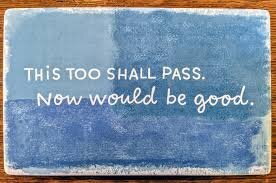
We’ve learned and practiced our story for so long we’ve forgotten that it’s only a story. That story, however, is up to us. We can craft a story about our experience that makes us feel better. My mother used to point at that truth by telling me about something I wasn’t enjoying, “This too shall pass.” She was telling me that I didn’t need to feel stuck in what I thought of as a bad experience, because it wasn’t permanent. And that made me feel better.
Ok, how does our emotional temperature affect our experience?We all know people who expect bad experiences to come their way. This expectation is often expressed these days as “life is hard,” “things are getting worse,” “we’re losing our freedom/democracy/way of life,” and the old standby, Murphy’s law: “if things can go wrong, they will.” We all suspect that those folks are most likely experiencing life that way. We also know that there are people for whom things are going really well. What makes the difference? Is it just luck?
Here’s another premise for your consideration: We are fluid beings, capable of perceiving a multiplicity of realities. All possible configurations of the world that we could perceive actually exist in this moment, right here and now, and the one we’re experiencing right now is the one to which we are an emotional match.
I know, that statement strikes many people as hopelessly romantic, impossibly abstract, Pollyanna. Surely there isn’t any scientific basis for the idea that at a deep level we choose the reality we experience. Is there?? Well…
Quantum physics tells us that the world exists in what is called a superposition of possible states, and it doesn’t appear to us in a particular state until we actually observe it.I have studied, in my own life, the correlation I’m speaking about, the one that connects my usual emotional state, my usual mood, to what happens. Based on my own experience, I can say the way I feel makes a difference. If I look at the world around me as a safe, friendly place, my experience tends to confirm that view of life. And, I have noticed, the reverse is also true. If I look out at the world with fear in my heart, I see unending bleakness, unfulfilled dreams, dashed hopes, and so on.
The bad news is that the world seems unyielding in its confirmation of our worst fears. The good news is that the world is equally unyielding in its confirmation of our best, practiced thoughts about what’s possible in our lives. My emotional temperature really does make a difference.
I set my emotional temperature according to my expectations.
Our emotional scale
I find that my emotional temperature stabilizes around what I call a set-point. It’s analogous to the average temperature of some location at a particular time of year. The actual temperature fluctuates around that mean or set-point from day to day.
Following this analogy, if I expect that answers to my questions will appear in right timing, if I expect things to always work out for me, my emotional set-point becomes more conducive to joyful living. When I make my average mood more expansive, more allowing, more joyful, then the quality of my experience correlates with that mood shift. I can feel that shift and watch the circumstances of my life shifting as well. And as a result, I can feel myself coming more and more into my own as a creative being for whom life is designed to be satisfying.
How does our emotional temperature determine the quality of our experience? The answer lies in the story we each tell about our lives. There is no darkness in life. There is only dis-allowing the light. This I believe with all my heart.
August 26, 2021
The World as a Mirror
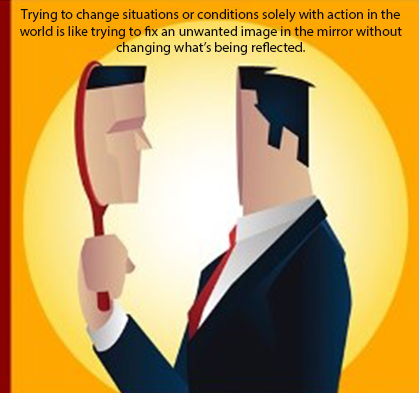
This phrase is considered by some to be a Universal Law, informing us that the outer world is somehow a reflection of our inner world. It’s often interpreted in a moral context, in which a person’s life experience is determined by how good we are, or how well we embody somebody’s ideas about what a human being should be or how we should behave.
When I hear the phrase “As within, so without” in that moral context, my mind always conjures some moral authority that’s outside myself, either singular or collective, some uber-observer that’s watching me and sitting in judgment of my thoughts and actions.
However, the problem for me is that I long ago rejected that idea of the external judge, and so it became incumbent upon me to come up with some other interpretation of “As within, so without.” It would, of necessity, lie outside of the domain of moral judgment and authority, and it would need to explain a mechanism by which the external world could change its behavior depending on how I changed my thoughts and actions.
For me, that interpretation arises in the domain of a purely scientific understanding of the relationship between the observer and the observed.The classical interpretation of this relationship is that a human being is born with various forms of sensory apparatus and a brain capable of assembling sensory input into a more-or-less accurate picture of what’s actually “out there.” The problem for me was that when I studied quantum physics all these many years ago, I found out that our collective best efforts to understand the physical world led to a world view which calls into question the very idea of a world that’s “out there,” and even of the existence of a location called “out there.”

In the classical understanding of the world, everything is composed of the smallest possible building blocks, usually called fundamental particles. These particles are complete in and of themselves, and are not composed of smaller, more basic things. They exist in and of themselves, apart from any observation or measurement of their properties.
In the quantum domain - in what is called quantum theory - the building blocks of which the world is composed are described by the likelihood that any particular measurement of their properties, such as present and future location, will yield any particular result. This theory implies that those building blocks do not have discreet locations until they’re actually observed. And beyond that, the theory actually says nothing about the external world itself but only about what we are likely to observe when we’re looking at it.
The insights in the preceding paragraph have led me to understand that none of us has direct access to what we think of as the external world, because all we have is our perceptions of the world and the stories we tell ourselves about those perceptions.
Nowadays, when I hear the phrase “As within, so without,” I remember that “without” is simply an idea, part of the description I have adopted to explain what I see, hear, and so on. I understand that there is only “within,” because my perceptions, and their description, lie entirely within myself… and that is all there is. There is no need of a mechanism that connects within and without, because they both have their being inside me, and you, and all of us. That’s why the world is a mirror. We are literally looking at our description of the world. The world itself is, and must always be, a mystery to us. At least while we are here in these amazing bodies, reveling in the sights and sounds of a magical world.
August 19, 2021
The World as a Story
Virtually every human being who has ever lived has considered the world to be the container in which one lives one’s life. Clearly, we believe, we come and go while the world remains. That’s just common sense; it’s completely intuitive.
But consider the possibility that we have it backwards. Consider the opposite: that we are the container in which the world appears. Exploring this possibility requires that we relinquish our identification with our bodies and think of ourselves as our consciousness, our awareness. Everything we observe is a picture formed in our brains from electrical impulses delivered by our senses. In this view, any object we’re observing lives in our awareness, in us, as a description of what we’re witnessing.

So now, we can ask about the implications of living in this possibility, as if what we think of as the world is actually a story, a description which we’ve accepted as being real, as if the description is the real world. This idea is opposed to that of living in a world that exists independently of ourselves.
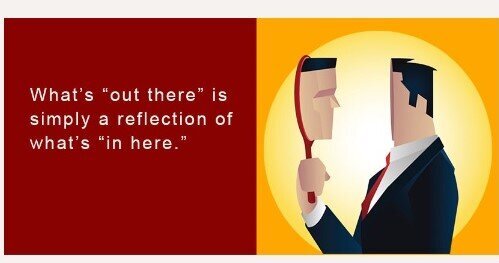
Let’s take a step back. We human beings believe that the conditions in which we find ourselves determine our experience. Looking at things from that perspective, a primary purpose of action is to change conditions. This is one of those unexamined assumptions that seems so obvious as to be invisible. Clearly, we human beings use action to fix things that are broken, to make things happen, to change our experience, and hopefully the experience of others, for the better.
However, let’s explore the possibility that we are interpreting sensory stimuli according to a description that we’ve already accepted as real and which therefore functions as a filter. This filter allows only those perceptions that confirm and validate what we already know about the world.
Any description that we believe in carries within it a certain, limited range of options. Suppose, for example, that I describe myself as unworthy of experiencing true financial abundance. That description carries within it feelings like “I haven’t worked hard enough,” or “I don’t have the right education,” or “I wasn’t born in the right place or the right time,” or something like that. The set of options consistent with my belief in unworthiness doesn’t include a story such as “All you have to do is follow your heart and your passion and things will always work out for you.”
This different story, one I can tell if I dispense with this belief in unworthiness, can be expanded to read, “If you follow your passion you will wind up inventing, writing, or otherwise offering something that other people will find valuable or useful. You will do it because it feels good to do it, and abundance will follow.” There are people who believe in this possibility and who find it manifested in their experience. But the possibility of following your heart and your passion is not available if you consider yourself unworthy of life’s abundance, in whatever form that might take.
The filtering principle I speak of implies that however much action you engage in, you can at best only trade one limited option for another one, all within the range of options dictated by the description you have accepted as being real.
Ok, what would be the purpose of action in a world that mirrors your description of it? What would be the purpose of acting in the world if the world you perceive is actually a story, a description of what you observe?
Since the conditions you encounter are simply reflecting your description of the world, consider that the world itself doesn’t need to be fixed. Consider that the same is true of the content of your life experience.
The circumstances you face aren’t actually causing your experience; it’s the story you tell about yourself that does that.
If you accept that proposition, then what remains is for you to act for the enjoyment of being in action, to revel in the sights and sounds of the world, to love being and interacting with other people, and so on. In other words, in this alternative interpretation of reality, we really can act simply for the joy of it. This flies in the face of so many cultural dictates we can barely hear it. But it is enormously freeing if we can come to realize, or make real for ourselves, that nothing in our lives is broken, and nothing in our lives needs to be fixed.
August 10, 2021
Just Released! My Newest Book!
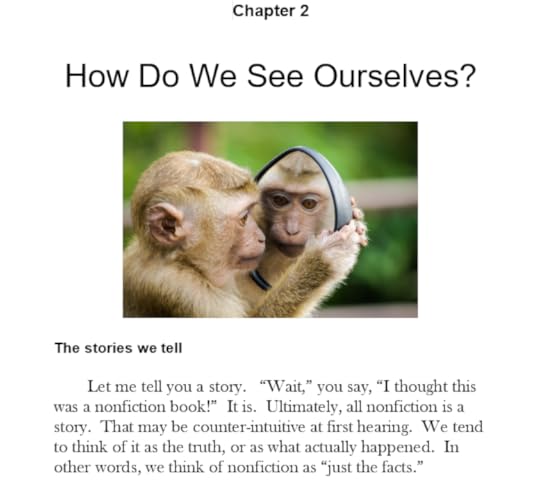 Hoodwinked: Uncovering Our Fundamental Superstitions, has just been released in a full color version! Here’s a sample page:
(We accept Venmo, PayPal, and checks… and please include your mailing address!)
August 1, 2021
The Ego and the Illusion of Control
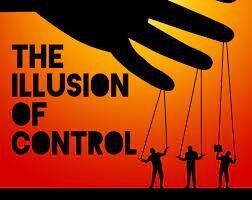
Whatever control we think we have may be an illusion
It has been noted many times and in many places that separation, from each other and from the whole of the Universe, is the veil. Our separateness is what gives rise to fear and anxiety, to aggression and depression, and to our need for comforting ideologies and belief systems. The Ego, by painting a consistent picture of dangers and possible pitfalls, makes everything conform to this interpretation and thus keeps itself in business.
The antidote for aloneness and fear is assumed to be the ability to control our circumstances and predict the future based on the past. The Ego offers us the sense that we can understand the mechanisms which animate the world of our experience and the feeling that we can control those mechanisms with our cleverness and our adaptability.
The frustration we feel when our efforts to control our circumstances fall short is interpreted to indicate that we are in some way inadequate. The Ego always makes it about us.
But what if the Universe intends to bring each of us to the awareness that we are vastly more than the Ego would have us believe?There is a story that was once told by a very smart person, about experiments with rats in a maze. He pointed out that if you allow a rat to learn where the cheese is, and you then move the cheese, the rat will eventually discover that the path he has been following no longer provides the reward he seeks and he will begin to investigate other paths. See, the rat has no Ego, no need to be “right” about his choices.
Human beings, on the other hand, because we have come to consider ourselves “right” about our paths, will choose those empty paths indefinitely. We will continue to work on our problems with cleverness and rationality, creating new problems in our wake. As Einstein is quoted as saying, “You cannot solve problems with the same thinking that created those problems in the first place.”
The control the Ego promises us over the circumstances of our lives seems so promising, so enticing.What if the Universe, the Oneness that is obscured by the Ego’s commitment to separation, intends to show us the emptiness of the Ego’s promise? What if we consider climate change as a problem large enough to show us the utter inadequacy of our individual and collective ability to control our circumstances? Does anyone really feel that we are making headway in our “fight” against the changes in our climate that arguably create increasingly destructive fires, floods, heat waves, and the like?
And what of the virus that now dominates our news coverage? Michael Osterholm, an infectious disease researcher, is quoted in the New York Times as pointing out that “we’ve ascribed far too much human authority over the virus.” We don’t know why it spreads like wildfire in some times and places but seems to fizzle out in others. Many of us don’t understand why seemingly obvious strategies such as getting vaccinated and wearing masks aren’t universally understood to be rational and effective.
Maybe there is purpose to the virus, as well as to climate change. Perhaps those phenomena are not simply problems too large to control and solve. Maybe they are in our experience to guide us with increasing urgency to release our addiction to the Ego’s empty promises and remember our true nature as free, creative beings for whom control and prediction are simply not necessary for the living of full, satisfying lives.
If we can disabuse ourselves of the superstitions and misunderstandings that cloud our view of ourselves, of each other, and of the Universe, we can finally come to recognize what is real in our lives here on planet Earth.* We could then leave behind the Ego’s empty promises and inherit the blessings we came here to experience.
What do you think about that possibility?
* By the way, for more on the distinction between what’s real and what’s not, please listen to this podcast episode.
July 8, 2021
Ego and the Transformed Relationship
Today I came across a quote from the publication Psychology Today. It reads, “Great relationships require hard work.” And we all know that nothing we desire happens without hard work. Right?
Well, I think there’s a better way to look at this idea of a great relationship, and it has to do with understanding the distinction between content and context.
One way to look at this distinction is that content is what happens, and context is the meaning we give to what happens.

As a relevant example, suppose I have an expectation that people are unreliable. That expectation is then the context in which I view another’s cancellation, say, of a lunch date. The cancellation serves to reinforce my expectation, and that particular relationship will likely suffer as a result.
If, on the other hand, my expectation is that people have busy lives and we will get together when the timing is right, the cancellation will likely not adversely affect the relationship because I will simply ask to reschedule the lunch date. In a sense, what happens is just what happens, but my experience of what happens is determined by the context I’ve created for that particular happening.
Now, we can generalize this principle: it is the context we create for our lives, and not the content of our lives, that determines our life experience.
Well, what is the general, over-arching context we create for our lives? See if this rings true for you:
We are separate beings, blessed with the capacity for rational thought, trusting the evidence provided by our senses, on our own in life but able to make connections with others who can help us make the best rational decisions we can to deal with our problems. Oh, and we each have an ego, but if we do enough work on ourselves we can set it aside and act for the good of others anyway.
What I’ve just proposed is how most people live their lives, and it doesn’t serve us. It leaves us ineffective at solving our problems and unsatisfied with the quality of our lives and our relationships. What other context would serve us better?
Let’s return to the subject of great relationships… and, to the Ego.

The ocean of Ego we all swim in
Let’s not take our egos so personally. We usually think of “my ego,” or “your ego.” In that personal context, the ego is usually thought of as a character defect, which we somehow have to make up for with apologies and/or resolutions to put it aside and thus be more present, truthful, or authentic. Let’s try thinking of ego as something we’re all submerged in. Suppose we say that every love relationship takes place in the context, the ocean, of Ego.
We can consider the Ego a global phenomenon, the water we all swim in, that colors or distorts everything we look at. In that case, we don’t feel the need to apologize or make up for our habit of following the ego’s dictates, because we’re all in it together.
Ordinarily, relationships live as content inside the context we’ve created for relationship. We human beings live inside an unrecognized, unidentified container called Ego. That container, the Ego, determines how we see everything we look at while inside it. And it’s a mess.
In a transformed relationship, however, things are reversed. The Ego lives inside the context of the relationship instead of the other way around. The Ego is then seen to be a Thing, an ocean of shared viewpoint, transmitted from generation to generation as parents teach their children language. It doesn’t ever disappear or even become negligible. But it can be recognized and processed in the context of a mutually honest and trusting conversation about any and all disagreements that may arise.
When two people agree to hold themselves and each other as creative beings dealing with that mess (a global set of inaccurate assumptions and mistaken ideas), they can work together to reveal those misunderstandings and progressively clear up the mess for themselves. In that process, the Ego is gradually revealed to be what it really is: a story whose apparent power is a superstition. And that “recontextualization” changes everything. The relationship itself becomes more truthful and authentic… and so do we.
Learn moreFor more, I invite you to check out my new book, Hoodwinked: Uncovering our Fundamental Superstitions. It will show you how to recontextualize your entire life!
The Insights Blog

Those superstitions are responsible for Albert Einstein’s declaration that “you can’t solve problems with the same thinking that created them in the first place.” ...more
- Larry Gottlieb's profile
- 122 followers

