
Larry Gottlieb's Blog: The Insights Blog, page 6
June 23, 2021
More Thoughts on What We Want
Ok, admit it… you want stuff. You want things to happen in your life. We all do.
The next thing to acknowledge is that you don’t get everything you want. That’s true of the rest of us as well. No big deal.
But here’s the thing. Most of us settle for not getting everything we want, like that’s a limitation built into the nature of human being. And very few of us wonder if there might be a way to enhance our ability to satisfy our desires. If that describes you, please read on!
Now, you might think that enhancing our ability to get what we want requires one or more of the following: more effort, more cleverness, more self-confidence, more education, more luck, less resistance from others, and so on. And if you’ve been working with ideas such as the Law of Attraction, you could add less resistance on your part, changing your thoughts, meditating more, and so on. All of which sounds like hard work! Is there another way?
Let me offer a story that may help to illuminate another possibility.
As European expansion in the New World brought agriculture to heavily forested land, settlers confronted natural obstacles, objects such as tree stumps and boulders which they needed to remove. Naturally, the effort to accomplish this clearing was often beyond the abilities of even the strongest.
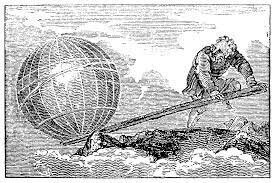
Using leverage
(to get more of what we want)
People needed a way to apply more force to these tasks, and the principle of leverage underlay their more successful efforts, whether it involved tools or animals.
So we might reformulate our question about another way, an alternative to all that hard work: is there leverage available to use in enhancing our ability to get more of what we want? I offer the following…
Try looking at it this way: it’s possible that what we think we want isn’t what we actually want!Ok, wait. That sounds completely ridiculous. I’m supposed to get more of what I want by changing what I think I want?? Well, not exactly…
Here’s a way of looking at the relationship between what we think we want and what we actually want. Imagine yourself in the body of an amphibian, perhaps a frog or a toad. Bear with me now… Suppose you were born in the water, or were put there shortly after birth. And your mom forgot to tell you about air - about getting out of the water. Maybe she didn’t know either. Anyway, all your training, and all your experience, is about getting along in the water. You probably wouldn’t have any desires that have to do with being on land… like checking out the beach, the forest that’s just inland, and so on.
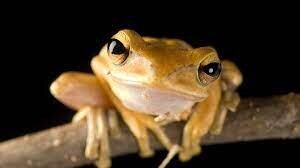
Your range of choices is smaller than it might otherwise be
But you’re an amphibian, and you have possibilities that would never occur to you because they have to do with breathing air, which nobody told you about. Your range of choices is smaller than it might otherwise be, not because of the way things are, but because the rest of what is available to you is literally unthinkable. Another way of saying that is, you can’t consider options that don’t fit within your conception of who and what you are.
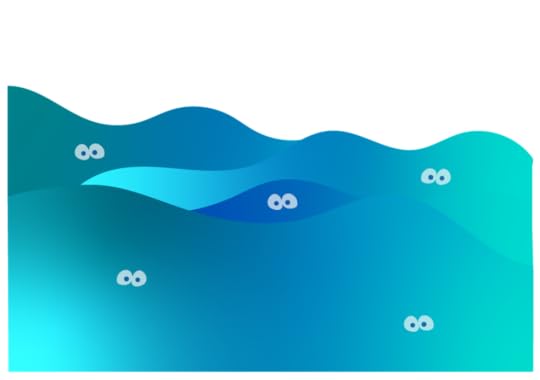
Immersed in our ocean of belief
Ok, what does that have to do with us? We’re not amphibians, after all. But what if we’ve always “swum” in the ocean of our own beliefs, which we’ve never been outside of, and we have never had the opportunity to glimpse possibilities that lie beyond the scope of that ocean?
Because we don’t realize who we really are, we feel limits to what we deserve or what we’re worthy of. For some of us that limit is broader than for others, but it exists nonetheless.
So because there’s a limit to what we think we can have or do, we’re working with a range of options that’s smaller than what it might otherwise be.
What we think we want comes from that limited range of options, and since it’s not what who-we-really-are wants, it doesn’t happen!As we work on our understanding of who we really are, that limit to what we think we can be and do and have expands. And when it expands to include what we really want, what we really want happens. So to get what we really want, we have only to be more fully who we really are!
Learn moreFor more, I invite you to check out my new book, Hoodwinked: Uncovering our Fundamental Superstitions. It will show you how to get more of what you really want!


June 22, 2021
Moving Towards Mastery – Telling a New Story
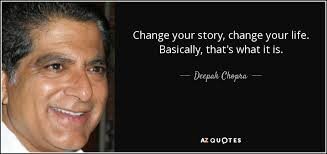
It’s tricky though. If you tell a story that reflects the life you want, but you don’t believe it, it won’t feel good, and it won’t change your life.
Let’s say you feel you don’t have enough money, because you’ve been telling a story for a long time that paints you as a victim of economic circumstances or of insufficient education, or because you decided long ago that you could rationalize not having much money by considering yourself as being “more spiritual,” or by saying that money is the root of all evil.
Telling that story might in the short run make you feel better than not telling it, but it doesn’t change anything, which reinforces your feeling of powerlessness with respect to money, and that doesn’t feel good at all.
Now, suddenly telling a story in which you have plenty of money won’t feel good either, because you know you don’t believe it, and every time you look at your bank balance, you feel the same powerlessness all over again. So are we left with a slow, incremental approach to changing our ideas about ourselves, and about what’s really possible for us, or are there levers available with which we can change those ideas in larger chunks?
It turns out that there is a powerful methodology for changing our ideas about ourselves. Let me see if I can illustrate that.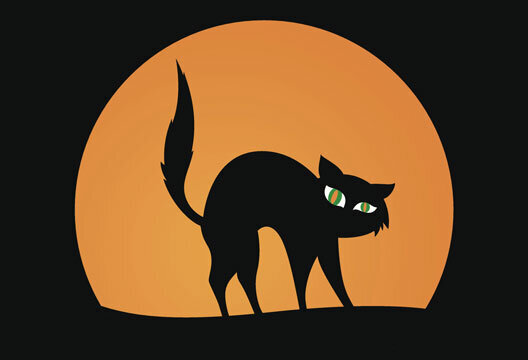
Most people are familiar with the superstition about black cats being bad luck. If you believe in that superstition, and you encounter such a creature on the sidewalk, you may feel the urge to cross the street to avoid it… and risk getting hit by the bus that’s coming along behind you.
However, if you know that black cats being bad luck is a superstition, you probably won’t feel that urge and you won’t be imperiled by the bus.
We live in an ocean of superstition, and most of them are so ingrained in our respective world views that we don’t even notice them. But if you stand back and look dispassionately at our collective ineffectiveness at addressing our problems over the millennia, you may begin to see the effect of living in that ocean.
The good news is that you don’t have to change a superstition and make it more like the way things really are. You just have to see through it, see that it is in fact a superstition, whereupon it simply loses its power over you. And now, you see that aspect of life the way it really is.
Learn moreFor more, I invite you to check out my new book, Hoodwinked: Uncovering our Fundamental Superstitions. It will show you how to tell a new, more authentic story!
The Insights Blog

Those superstitions are responsible for Albert Einstein’s declaration that “you can’t solve problems with the same thinking that created them in the first place.” ...more
- Larry Gottlieb's profile
- 122 followers

