
Adam Thierer's Blog, page 12
June 3, 2020
The Section 230 Executive Order, Free Speech, and the FCC
Section 230 is in trouble. Both presidential candidates have made its elimination a priority. In January, Joe Biden told the New York Times that the liability protections for social media companies should be revoked “immediately.” This week, President Trump called for revoking Section 230 as well. Most notably, after a few years of threatening action, the President issued an Executive Order about Section 230, its liability protections, and free speech online. (My article with Jennifer Huddleston about Section 230, its free speech benefits, and the common law precedents for Section 230 was published in the Oklahoma Law Review earlier this year.)
There have been thousands of reactions to and news stories about the Executive Order and a lot of hyperbole. No, the Order doesn’t eliminate tech companies’ Section 230 protection and make it easier for conservatives to sue. No, the Order isn’t “plainly illegal.”
It’s fairly modest in reach actually. The Executive Order can’t change the deregulatory posture and specific protections of Section 230 but the President has broad authority to interpret the unclear meanings of statutes. Some of the thoughtful responses that stuck out are from Adam Thierer, Jennifer Huddleston, Patrick Hedger, and Adam White. I won’t reiterate what they’ve said but will focus on what the Order does and what the FCC can do.
Election Year Jawboning
The Order is a political document. For the baseball fans, it’s the political equivalent of a brushback pitch to tech companies–the pitcher throws an inside fastball intended to scare the batter without hitting him. (For those missing baseball, enjoy 4 minutes of brushback pitches on YouTube.) Most of the time, a pitcher won’t get ejected by the umpire for throwing a brushback pitch. Likewise, here, I don’t see much chance of the Order being struck down by judges. The Order was wordsmithed, even in the last 24 hours before release, in a way to avoid legal troubles.
As Jesse Blumenthal points out in Slate, the Order is just the latest example of the long tradition of politicians using informal means and publicity to pressure media outlets. The political threats to TV and radio broadcasters during the Nixon, LBJ, and Kennedy years were extreme examples and are pretty well-documented.
More recently, there was a huge amount of jawboning of media companies in the runup to the 2004 election. Newspaper condemnation and legal threats forced a documentary critical of John Kerry off the air nationwide. Stations either pulled the documentary or only ran a few minutes of it because activists’ threatened to challenge TV station licenses for years at the FCC if stations ran the documentary. Many people remember the Citizens United case, which derived from the FEC’s censorship of an anti-John Kerry documentary in 2004 and an anti-Hillary Clinton documentary in 2008. Less remembered is that the conservative group started creating political documentaries only after the FEC rejected its complaint to get a Michael Moore’s anti-Bush documentary, Fahrenheit 9/11, off the air before the 2004 election.
The Title II net neutrality regulations were, per advocates close to the Obama White House, imposed largely to rally the base after Democrats’ 2014 midterm losses.
Implementation of the Executive Order
The timing of the Order–a few months before the election–seems intended to accomplish two things:
Rally the Trump base by publicly threatening tech companies’ liability protections and provoking tech companies’ ire.Focus public and media scrutiny on tech companies so they think twice before suspending, demonetizing, or banning conservatives online.
The legal effect in the short term is negligible. Unless the relevant agencies (DOJ, FTC, NTIA, FCC) patched something together hastily, the Order won’t have an effect on tech companies and their susceptibility to lawsuits in the near term. The most immediate practical effect of the Order is the instructions to the NTIA. The agency is directed to petition the FCC to clarify what some unclear provisions of Sec. 230 mean, particularly the “good faith” requirement and how (c)(2) in the statute interacts with (c)(1).
It’s not clear why the Order makes this roundabout instruction to the NTIA and FCC. (The FCC is an independent agency and can refuse instructions from the White House.) “Good faith” is a term of art in contract law. It seems to me that referring this to the DOJ’s Office of Legal Counsel, not the FCC, would be the natural place for an administration to turn to to interpret legal terms of art and how provisions in federal statutes interact with each other.
One reason the White House might use the roundabout method is because the administration knows the downsides of weakening Section 230 and isn’t actually intending to make material changes to existing interpretations of Sec. 230. The roundabout request to the FCC allows the White House to do something on the issue without upsetting established interpretations. And if the FCC refuses to take it up, the White House can tell supporters they tried but it was out of their hands.
Alternatively it could be that this was referred to the FCC because Section 230 is within the Communications Act and the FCC has more expertise and jurisdiction in communications law. The FCC has interpreted Section 230 before and has also interpreted what “good faith” means because Congress requires good faith negotiations between cable TV and broadcast TV operators.
If they took it up, I suspect FCC review would be perfunctory. The NTIA petition need not even get decided at the commission level. The FCC can delegate issues to bureau chiefs or other FCC staff. Bureaus can respond to a petition with an enforcement advisory or, after notice-and-comment, a declaratory ruling regarding the interpretative issues. It would take months to complete, but the full commission could also consider and rule on the NTIA petition.
But I suspect the commissioners don’t want to get dragged into election-year controversies. (As I mentioned above, White House staff may have even sent this to the FCC in order to let the issue die quietly.) The FCC is busy with pressing issues like spectrum auctions and rural broadband. Further, the NTIA-FCC relationship, while cordial, is not particularly good at the moment. Finally, the commissioners know the agency’s history of mission creep and media regulation. The Republican majority has consistently tried to untangle itself from legacy media regulations. An FCC inquiry into what “good faith” means in the statute and how (c)(2) in the statute interacts with (c)(1)–while an intriguing academic and legal interpretation exercise–would be a small but significant step towards FCC oversight of Internet services.
Section 230 is in Trouble
The fact is, Section 230 is in trouble. Courts have applied it reluctantly since its inception because of its broad protections. As Prof. Eric Goldman has meticulously documented, in recent years, courts have undermined Section 230 precedent and protection.
At some level the President and his advisors know that opening the door to regulation of the Internet will end badly for right-of-center and free speech. This was the foundation of the President’s opposition to Title II net neutrality rules. As he’s stated on Twitter:
Obama’s attack on the internet is another top down power grab. Net neutrality is the Fairness Doctrine. Will target conservative media.
Obama’s attack on the internet is another top down power grab. Net neutrality is the Fairness Doctrine. Will target conservative media.
— Donald J. Trump (@realDonaldTrump) November 12, 2014
The Executive Order, while it doesn’t allow the FCC to regulate online media like Title II net neutrality did, is the Administration playing with fire. It’s essentially a bet that the Trump administration can get a short-term political win without unleashing long-term problems for conservatives and free speech online.
The Trump team may be right. But the Order, by inviting FCC involvement, represents a small step to regulation of Internet services. More significantly, there’s a reason prominent Democrats are calling for the elimination of Section 230. The trial bar, law school clinics, and advocacy nonprofits would like nothing more than to make it expensive for tech companies to defend their hosting and disseminating conservative publications and provocateurs. Be careful what you wish for.


May 31, 2020
Video: My Conversation with the Institute for Economic Inquiry
Here’s a webinar video of a discussion I had recently with Kevin Gomez and his colleague at the Institute for Economic Inquiry at Creighton University’s School of Business. We discussed my new book, Evasive Entrepreneurs and the Future of Governance: How Innovation Improves Economies and Governments and the future of “permissionless innovation” more generally. My thanks to Kevin and his team at Creighton for inviting me to join them for a fun discussion. Topics include:
why evasive entrepreneurialism is expanding
the growth of innovation arbitrage
the difference between technologies that are “born free” versus “born in captivity”
the nature of “the pacing problem” and what it means for policy
the problem with “set-it-and-forget-it” & “build-and-freeze” regulations
technological risk and the potential for “soft law” governance
sensible legislative reforms to advance permissionless innovation (such as “the innovator’s presumption” and “the sunsetting imperative”)
how the COVID crisis potentially opens the Overton Window to much-needed policy change
May 28, 2020
The Surprising Ideological Origins of Trump’s Communications Collectivism
President Trump and his allies have gone to war with social media sites and digital communications platforms like Twitter, Facebook, and Google. Decrying supposed anti-conservative “bias,” Trump has even floated an Executive Order aimed at “Preventing Online Censorship,” that entails many new forms of government meddling with these private speech platforms. Section 230 is their crosshairs and First Amendment restraints are being thrown to the wind.
Various others have already documented the many legal things wrong with Trump’s call for greater government oversight of private speech platforms. I want to focus on something slightly different here: The surprising ideological origins of what Trump and his allies are proposing. Because for those of us who are old-timers and have followed communications and media policy for many decades, this moment feels like deja vu all over again, but with the strange twist that supposed “conservatives” are calling for a form of communications collectivism that used to be the exclusive province of hard-core Leftists.
To begin, the truly crazy thing about President Trump and some conservatives saying that social media should be regulated as public forums is not just that they’re abandoning free speech rights, it’s that they’re betraying property rights, too. Treating private media like a “public square” entails a taking of private property. Amazingly, Trump and his followers have taken over the old “media access movement” and given it their own spin.
Media access advocates look to transform the First Amendment into a tool for social change to advance specific political ends or ideological objectives. Media access theory dispenses with both the editorial discretion rights and private property rights of private speech platforms. Private platforms become subject to the political whims of policymakers who dictate “fair” terms of access. We can think of this as communications collectivism.
The media access movement’s regulatory toolkit includes things like the Fairness Doctrine and “neutrality” requirements, right-of-reply mandates, expansive conceptions of common carriage (using “public forum” or “town square” rhetoric), agency threats, and so on. Even without formal regulation, media access theorists hope that jawboning and political pressure can persuade private platforms to run more (or perhaps sometimes less) of the content that they want (or don’t) on media platforms.
The intellectual roots of the media access movement were planted by leftist media theorists like Jerome Barron, Owen Fiss in 1960s and 1970s, and later by Marxist communications scholar Robert McChesney. In 2005, I penned this short history of media access movement and explored its aims. I also wrote two old books with chapters on the dangers of media access theory and calls for collectivizing communications and media systems. Those books were: Media Myths (2005) and A Manifesto for Media Freedom (2008, w Brian C. Anderson). The key takeaway from those essays is that the media access movement comes down to control.
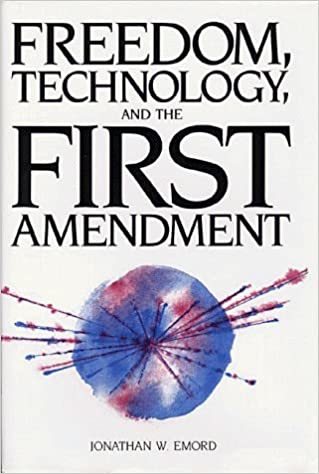 The best book ever written about dangers of media access movement was Jonathan Emord’s 1991, Freedom, Technology and the First Amendment. He perfectly summarizes their goals (and now Trump’s) as follows:
“In short, the access advocates have transformed the marketplace of ideas from a laissez-faire model to a state-control model.”
“Rather than understanding the First Amendment to be a guardian of the private sphere of communication, the access advocates interpret it to be a guarantee of a preferred mix of ideological viewpoints.
“It fundamentally shifts the marketplace of ideas from its private, unregulated, and interactive context to one within the compass of state control, making the marketplace ultimately responsible to government for determinations as to the choice of content expressed.”
“This arrogant, elitist, anti-property, anti-freedom ethic is what drives the media access movement and makes it so morally repugnant,” I argued in that old TLF essay. That is still just as true today, even when it’s conservatives calling for collectivization of media.
It’s astonishing, yet nonetheless true, that the ideological roots of Trump’s anti-social media campaign lie in the works of those extreme Leftists and even media Marxists. He has just given media access theory his own unique nationalistic spin and sold this snake oil to conservatives.
There certainly could come a day where his opponents on the Left just take this media access playbook up again and suggest this is exactly what’s needed for Fox News and other right-leaning media outlets. If and when that does happen, Trump and other conservatives will have no one to blame but themselves for embracing this contemptible philosophical vision simply because it suited their short-term desires while they were in power.
I hope that conservatives rethink their embrace of communications collectivism, but I fear that Trump and his allies have already convinced themselves that the ends justify the means when it comes to advancing their causes or even just “owning the libs.” But there really is a strong moralistic slant to what Trump and many of his allies want. They think they are on the right side of history and that the opponents–including most media outlets and plaforms–are evil. Trump and his allies have repeatedly referred to the press as the “enemy of the American people” and endlessly lambasted social media platforms for not going along with his desires. This reflects a core tendency of all communications collectivists: a sort of ‘you’re-either-with-us-or-against-us’ attitude.
Steve Bannon scripted all this out back in 2018. Go back and read this astonishing CNN interview for a preview of what could happen next. Here’s the rundown:
>> Bannon said Big Tech’s data should be seized and put in a “public trust.” Specifically, Bannon said, “I think you take [the data] away from the companies. All that data they have is put in a public trust. They can use it. And people can opt in and opt out. That trust is run by an independent board of directors. It just can’t be that [Big Tech is] the sole proprietors of this data…I think this is a public good.” Bannon added that Big Tech companies “have to be broken up” just like Teddy Roosevelt broke up the trusts.”
>> Bannon attacked the executives of Facebook, Twitter and Google. “These are run by sociopaths,” he said. “These people are complete narcissists. These people ought to be controlled, they ought to be regulated.” At one point during the phone call, Bannon said, “These people are evil. There is no doubt about that.”
>> Bannon said he thinks “this is going to be a massive issue” in future elections. He said he thinks it will probably take until 2020 to fully blossom as a campaign issue, explaining, “I think by the time 2020 comes along, this will be a burning issue. I think this will be one of the biggest domestic issues.”
This is now Trump’s playbook. It’s incredibly frightening because, once married up with Trump’s accusations of election fraud and other imagined conspiracies, you can sense how he’s laying the groundwork to call into question future election results by suggesting that both traditional media and modern digital media platforms are just in bed with the Democratic party and trying to rig the presidential election. I don’t really want to think about what happens if this situation escalates to that point. These are very dark days for the American Republic.
May 26, 2020
DIY-Bio, Biohacking & Evasive Entrepreneurialism
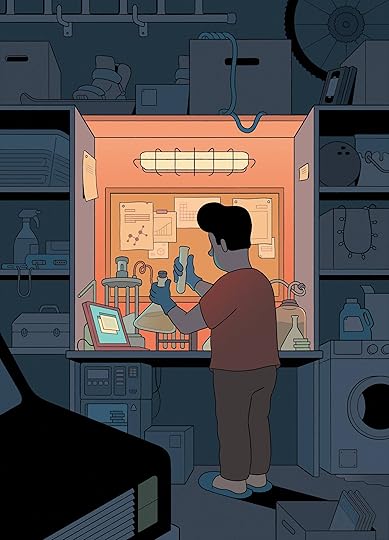 Margaret Talbot has written an excellent New Yorker essay entitled, “The Rogue Experimenters,” which documents the growth of the D.I.Y.-bio movement. This refers to the organic, bottom-up, citizen science movement, or “leaderless do-ocracy” of tinkerers, as she notes. I highly recommend you check it out.
As I noted in my new book on Evasive Entrepreneurs and the Future of Governance, “DIY health services and medical devices are on the rise thanks to the combined power of open-source software, 3D printers, cloud computing, and digital platforms that allow information sharing between individuals with specific health needs. Average citizens are using these new technologies to modify their bodies and abilities, often beyond the confines of the law.”
Talbot discusses many of the same examples I discuss in my book, including:
the Four Thieves Vinegar collective, which devised instructions for building its own version of the EpiPen;
e-nable, an international collective of thirty thousand volunteers, designs and 3-D-prints prosthetic hands and arms (and which has, more recently, distributed more than fifty thousand face shields in more than twenty-five countries.);
GenSpace and other community biohacking labs; and
Open Insulin and Open Artificial Pancreas System.
I like the way Talbot compares these movements to the hacker and start-up culture of the Digital Revolution:
The D.I.Y.-bio movement, which emerged in the early two-thousands, seems almost evolutionarily adapted to its historical moment,” she argues. “It echoes aspects of startup culture, especially the early days of personal computing, with its garage-based origin stories. First came the hardware, then the software; now even the wetware of life can be created in people’s homes. D.I.Y. bio reflects popular skepticism about professional authority and gatekeeping, but it is not skeptical about learning or expertise.
She also quotes others on this point, like John Wilbanks, a health technologist at the research nonprofit Sage Bionetworks:
when new biotech companies fail, they tend to sell off their equipment for a discount, and community labs and biohackers scoop it up. Wilbanks told me, “D.I.Y. bio is very similar to the home-brew, hacker-club culture of the late seventies in Silicon Valley. If you’ve not gone on eBay to shop for a DNA sequencer that they can ship to you in twenty-four hours, check it out—there’s a massive secondary market.”
Perhaps the most interesting thing about this bottom-up citizen-science movement is that it run the political gamut. It includes “anarcho-libertarians” to those “steeped in social-justice activism,” Talbot says. But they are all generally unified by a commitment to the widespread dissemination of scientific knowledge and transparency in health-related matters. “D.I.Y. biologists often have a greater commitment than their professional counterparts do to making their work open to scrutiny—and available for free on the Internet,” Talbot notes.
“The D.I.Y.-bio ecosystem includes a lot of do-gooders, and many of them have been galvanized by the covid-19 crisis,” she also observes. Quite right. I discussed that fact in the launch essay for my book, “Evasive Entrepreneurialism and Technological Civil Disobedience in the Midst of a Pandemic.” I documented dozens of examples of various individuals and organizations rising up to meet the challenges posed by the pandemic. “Eventually, people take notice of how regulators and their rules encumber entrepreneurial activities, and they act to evade them when public welfare is undermined,” I argued. “Working around the system becomes inevitable when the permission society becomes so completely dysfunctional and counterproductive.” DIY health innovation has gone mainstream out of necessity.
Importantly, Talbot notes that when it comes to what counts as success for DIY health and biohacking, sometimes good enough is, well, good enough. On this point, she quotes Jon Schull, an e-nable (non-commercial 3D-printed prosthetics) co-founder, who says, “it doesn’t matter that e-nable hands aren’t state-of-the-art. The job of professional prostheses-makers, he said, is “to produce something really good, and if it’s merely better than nothing it’s not good enough”—but, in some circumstances, something is better than nothing.”
That is a crucial point understanding why this movement is so important: Working together in a spontaneous, bottom-up fashion, citizen scientists and tinkerers can act quickly to fill pressing public health needs. Of course, that is exactly what makes these same innovations potentially risky and has some people wondering about the wisdom of such efforts—and the potential need for more regulation.
I wish Talbott would have spent a bit more time diving into these ethical and legal questions. I really struggled with them when writing about all this stuff in my new book on evasive entrepreneurialism and technological civil disobedience. She does briefly discuss how some FDA regs might affect DIY bio movement, including efforts like Open Insulin. “Even if Open Insulin begins producing a consistent product, it will have to overcome all kinds of regulatory obstacles to demonstrate safety and purity before taking it to market,” she notes. “Manufacturers of pharmacy-grade medications must provide the F.D.A. with reams of evidence that they can produce the substances with complete consistency, in sterile environments. Proving this level of proficiency can cost millions of dollars.” But Talbot does not spend much more time exploring what might happen next on this front if DIY efforts continue to expand.
“But what should the law say about people… who are creating their own specialized medical devices in an open-source, noncommercial fashion?” I ask in my new book.
I outlined three potential future scenarios for the movement:
DIY technologies go mainstream and become more commercialized.
biohacking remains decentralized but becomes more mainstream and professional without becoming fully commercial.
biohacking turn even more rogue or underground in nature as a form of guerrilla innovation that sometimes borders on neo-anarchism.
Regardless of the outcome, the ethical and regulatory issues will persist and grow as technological capabilities continue to grow more sophisticated, decentralized, and inexpensive. I argue in the book that it would be foolish for policymakers to think they can (or should) bottle up this movement altogether:
biohacking and decentralized medicine will expand for a simple reason: People care deeply about improving their health and abilities. They will take advantage of new technological capabilities that let them do so—especially when those capabilities are significantly cheaper than other options. To reiterate, that does not make these technologies safe or smart, but it does mean we will need a new approach to governance as evasive entrepreneurialism expands in this arena.
And then I continue on to note how improved risk education and awareness efforts might be one solution to the growing DIY bio movement.
Anyway, for more discussion on this, see pages 79-87 of my new book. I’ve also listed a few other essays down below that you might find interesting, including several penned by my former colleague Jordan Reimschisel.
___________
Additional Reading:
Andrea O’Sullivan & Adam Thierer, “3D Printers, Evasive Entrepreneurs and the Future of Tech Regulation,” The Bridge, August 1, 2018, https://www.mercatus.org/bridge/commentary/3d-printers-evasive-entrepreneurs-and-future-tech-regulation
Jordan Reimschisel, “Biohackerspaces,” Medium, June 29, 2017, https://medium.com/@jordanreimschisel...
Jordan Reimschisel, “Technology Could Enable Personal Medicine Whether We Like It Or Not,” Medium, August 10, 2017, https://medium.com/@jordanreimschisel/technology-could-enable-personal-medicine-whether-we-like-it-or-not-ce6e19b826fe
Jordan Reimschisel, “Evolving Oversight of Digital Health,” Medium, June 21, 2018, https://medium.com/@jordanreimschisel/evolving-oversight-of-digital-health-d65199913503
Adam D. Thierer and Adam Marcus, “Guns, Limbs, and Toys: What Future for 3D Printing?” Minnesota Journal of Law, Science & Technology, Vol. 17, No. 2, (2016), p. 805-854, http://papers.ssrn.com/sol3/papers.cfm?abstract_id=2795562
May 21, 2020
Video: Evasive Entrepreneurs & the Fresh Start Initiative
Here’s a video chat I did today with Americans for Prosperity – Virginia. My thanks to Benjamin Knotts for hosting the discussion. We talked about my recent book (Evasive Entrepreneurs) and my last one (Permissionless Innovation). We also discussed my new proposal with Matt Mitchell and Patrick McLaughlin to create “Fresh Start Initiatives” to address rules suspended during the COVID crisis. Watch the 30 min video here:
May 17, 2020
Matt Ridley on the Freedom to Experiment and Try New Things
 There are few things more exciting to innovation policy geeks that than the week a new Matt Ridley book drops. Thankfully, that time is upon us once again. This week, Ridley’s latest book, How Innovation Works: And Why It Flourishes in Freedom, is being released. I can’t wait to dig in.
This weekend, the Wall Street Journal published an essay condensed from the book entitled, “Innovation Can’t Be Forced, but It Can Be Quashed.” Here are some of the highlights from Ridley’s piece:
Innovation relies upon freedom to experiment and try new things, which requires sensible regulation that is permissive, encouraging and quick to give decisions. By far the surest way to rediscover rapid economic growth when the pandemic is over will be to study the regulatory delays and hurdles that have now been hastily swept aside to help innovators in medical devices and therapies, and to see whether such reforms could be applied to other parts of the economy too.
…
Dealing with Covid-19 has forcibly reminded governments of the value of innovation. But if we are to get faster vaccines and treatments—and better still, more innovation across all fields in the future—then innovators need to be freed from the shackles that hold them back.
These are crucial point, and ones I discuss in the launch essay and the afterward of my new book, Evasive Entrepreneurs and the Future of Governance. Alas, as I pointed out in that launch essay and my last book on Permissionless Innovation, a great many barriers stand in the way of the freedom to experiment and try new things. As Ridley points out:
There is nothing new about resistance to innovation. […] Incumbent vested interests, overcautious regulators, opportunistic activists and rent-seeking patent holders combine to oppose or delay almost every innovation.
And that’s a real shame because, Ridley correctly concludes, “It turns out that continuous tinkering to develop and refine a better product is much more important than protecting what you’ve already created.”
Spot on. Head over to the Wall Street Journal to read the entire thing and then go order a copy of Ridley’s new book. He’s one of the most important living defenders of technological innovation and human progress. His work has had a huge influence on my way of thinking about innovation, science, and technology. Thank you Matt!
May 13, 2020
Panicking About 5G is a Celebrity Trend You Shouldn’t Follow
The COVID-19 pandemic has shown how important technology is for enabling social distancing measures while staying connected to friends, family, school, and work. But for some, including a number of celebrities, it has also heightened fears of emerging technologies that could further improve our connectivity. The latest technopanic should not make us fear technology that has added so much to our lives and that promises to help us even more.
Celebrities such as Keri Hilson, John Cusack, and Woody Harrelson have repeated concerns about 5G—from how it could be weakening our immune systems to even causing this pandemic. These claims about 5G have gotten serious enough that Google banned ads with misleading health information regarding 5G, and Twitter has stated it will remove tweets with 5G and health misinformation that could potentially cause harm in light of the COVID-19 pandemic. 5G is not causing the current pandemic, nor has it been linked to other health concerns. As the director of American Public Health Association Dr. Georges C. Benjamin has stated, “COVID-19 is caused by a virus that came through a natural animal source and has no relation to 5G, or any radiation linked to technology.” As the New York Times has pointed out, much of the non-COVID-19 5G health concerns originated from Russian propaganda news source RT or trace back to a single decades-old flawed study. In short, there is no evidence to support many of the outrageous health claims regarding 5G.
New technologies have often faced unfounded concerns about their potential risks. In the late 19th and early 20th centuries, many people feared electricity in the home was making people tired and weak (similar to the health claims about 5G today). More recently, many were concerned that technologies such as microwave ovens and cell phones might cause cancer or other health issues, but studies have proved that these worst fears have little grounding in science.
Some of these fears are based on misunderstandings of how technology works or confusion over similar but distinct technologies. For example, in the case of concerns about cell phones and cancer, the fears may stem from misunderstandings about the differences between ionizing and non-ionizing radiation. In a time of uncertainty, we may want to rush to maintain the status quo. But any number of innovations such as the radio, trains, or cars that were once feared have themselves become part of the status quo.
Why does it matter if some people are afraid of new technologies? While it is completely rational to want to avoid catastrophic and irreversible harms, unfounded fears can risk delaying important and beneficial technologies. For example, work by Linda Simon suggests that the exaggerated claims and fears of electricity’s impact on health may have slowed its adoption. While all technologies carry some risks, can we imagine all that might have been lost if we had listened to those trying to convince us to avoid electricity out of an abundance of caution? we may laugh about fears of electricity and not understanding its benefits, we still see extreme reactions out of fear of new technology, such as recent attempts to burn 5G towers in the United Kingdom because of misinformation about the health risks.
The recent pandemic should remind why constantly improving connectivity and internet infrastructure has been beneficial. As more of us are working from home and have an increased number of connected devices, 5G will increase network capacity and enable faster download speeds. These improvements also play a key role in the development of a number of emerging technologies from smart home devices and virtual reality to driverless cars and remote surgery.
The problem is not in individual choices to avoid a specific technology, but rather how such technopanics can impact broader adoption of beneficial technologies and innovation-friendly public policies. The good news is policymakers recognize the importance of policies that enable 5G and are also informing the public on the facts about wireless technology and health. During the COVID-19 pandemic, the Federal Communications Commission has continued to pursue policies that can improve connectivity, including for advancements toward 5G.
While we may want to follow celebrity trends when it comes to the latest fashion or TikTok dances, we should only let them scare us in the movies and not when it comes to 5G. If we only focus on the most outrageous and unfounded claims, our fear might distract us too much to see its benefits.
May 11, 2020
Introductory Chapter: “Evasive Entrepreneurs and the Future of Governance”
I’m making the opening chapter of my new book, Evasive Entrepreneurs and the Future of Governance: How Innovation Improves Economies and Governments, available here. Also here’s the launch essay and the event launch video, which discuss how the themes discussed throughout the book have become even more visible during the coronavirus crisis.
Also, here are some lists of 10 major themes from the book; 13 key terms found in the book, and 5 innovation policy scholars who inspired my thinking. Reminder: this book is a sequel to my previous book, Permissionless Innovation: The Continuing Case for Comprehensive Technological Freedom.
I hope you will consider buying Evasive Entrepreneurs after reading this opening chapter.
May 8, 2020
Podcast with Chairman Ajit Pai about COVID-19 response and US broadband
Last week the Federalist Society’s Regulatory Transparency Project released a podcast Adam and I recorded with FCC Chairman Pai:
Tech Roundup 9 – COVID-19 and the Internet: A Conversation with Ajit Pai
A few highlights: Chairman Pai’s legacy is still being written, but I suspect one of his lasting marks on the agency will be his integrating more economics and engineering in the FCC’s work.
He points out that that in recent decades, the FCC’s work has focused on the legal and policy aspects of telecommunications. My take: much of the dysfunctional legalism and regulatory arcana that’s built up in communications law is because Congress refuses to give the FCC a clean slate. Instead, communications laws have piled on to communications laws for 80 years. The regulatory thicket gives attorneys and insiders undue power in telecom policy. With the creation of the Office of Economics and Analytics and Engineering Honors program, Chairman Pai is creating institutions within the FCC to shift some expertise and resources to the economists and engineers.
We also discussed Marc Andreessen’s It’s Time to Build essay. A thought-provoking polemic (Adam has a response) that offers a challenge:
[T]o everyone around us, we should be asking the question, what are you building? What are you building directly, or helping other people to build, or teaching other people to build, or taking care of people who are building? If the work you’re doing isn’t either leading to something being built or taking care of people directly, we’ve failed you, and we need to get you into a position, an occupation, a career where you can contribute to building.
As we discuss in the podcast, the FCC has outperformed most public institutions on this front. The FCC in the past few years has untangled itself from the nonstop legal trench warfare of net neutrality regulation–an immense waste of time–to focus on making it faster and easier to build networks. As a result, the US is seeing impressive increases in network investment, coverage, and capacity relative to peer countries.
The COVID-19 crisis has been a stress test for the FCC and the broadband industry, and we’re grateful the Chairman took the time to discuss the agency, industry trends, and more with us.
May 7, 2020
The Continuing Data Privacy Debates and the Question of Enforcement
Recently, a group of Republican senators announced they plan to introduce the COVID-19 Consumer Data Protection Act of 2020 to address privacy concerns related to contact-tracing and other pandemic-related apps. This new bill will reinvigorate many of the ongoing concerns regarding a potential federal data privacy framework.
Even before the bill has been officially introduced, it has faced criticism from some groups for failing to sufficiently protect consumers. But a more regulatory approach that might appear protective on the surface also has consequences. The European Union’s (EU) General Data Protection Regulation (GDPR) has made it more complex to develop compliant contact-tracing apps and to run charitable responses that might need personal information. Ideally, data privacy policy around the specific COVID-19 concerns should have enough certainty to enable innovative responses while preserving civil liberties. Policymakers should approach this policy area in a way that enables consumers to choose which options work best for their own privacy preferences and not dictate a one-size-fits-all set of privacy standards.
A quick review of the current landscape of the data privacy policy debate
Unlike the EU, the United States has taken an approach that only creates privacy regulation for specific types of data. Specific frameworks address those areas that consumers would likely consider the most sensitive and expect increased protection, such as financial information, health information, and children’s information. In general, this approach has allowed new and innovative uses of data to flourish.
Following various scandals and data breaches and the expansive regulatory requirements of the EU’s GDPR, policymakers, advocates, consumers, and tech companies have begun to question if the United States should follow Europe’s lead, or instead create a different federal data protection framework, or even maintain the status quo. In the absence of federal action, states such as California have passed their own data privacy laws. The California Consumer Privacy Act (CCPA) became effective in January (you may remember a flurry of emails notifying you of privacy policy changes) and is set to become enforceable July 1. The lack of a federal framework means, with various state laws, the United States could go from an innovation-enabling hands-off approach to a disruptive patchwork, creating confusion for both consumers and innovators. A patchwork means that some beneficial products might not be available in all states because of differing requirements or that the most restrictive parts of a state’s law might become the de facto rule. To avoid this scenario, a federal framework would provide certainty to innovators creating beneficial uses of data such as contact-tracing apps (and the consumers that use them) while also clarifying the redress and any necessary checks to prevent harm.
Questions of Enforcement in the Data Privacy Debate
One key roadblock in achieving a federal privacy framework whether is the question of how such rules should be enforced. Some of the early criticism of the potential COVID-19 data privacy bill has been about the anticipated lack of additional enforcement.
Often the choices for data privacy enforcement are portrayed as a false dichotomy between the status quo or an aggressive private right of action, with neither side willing to give way. In reality, as I discuss in a new primer, there are a wide range of options for potential enforcement. Policymakers should build on the advantages of the current flexible approach that has allowed American innovation to flourish. This also provides a key opportunity to improve the certainty for both innovators and consumers when it comes to new uses of data. More precautionary and regulatory approaches could increase the cost and discourage innovation by burdening innovative products with the need for pre-approval. Ideally, a policy framework should preserve consumers and innovators’ ability to make a wide range of privacy choices but still provides redress in the case of fraudulent claims or other wrongful action.
There are tradeoffs in all approaches. Current Federal Trade Commission (FTC) enforcement has led to concerns around the use of consent decrees and the need for clarity. A new agency to govern data privacy could be a massive expansion of the administrative state. State attorneys general might interpret and enforce federal privacy law differently if not given clear guidance from the FTC or Congress. A private right of action could deter not only potentially harmful innovation but prevent consumers from receiving beneficial products out of concerns about litigation risks. I discuss each of these options and tradeoffs in more detail in the new primer mentioned earlier.
Policymakers should look to the success of the current approach and modify and increase enforcement to improve that approach, rather than pursue other options that could lead to some of the more pronounced consequences of intervention.
Conclusion
As we are seeing play out during the current crisis, all privacy regulation inevitably comes with tradeoffs. We should be cautious of policies that presume that privacy should always be the preferred value and instead look to address the areas of harm while allowing a wide range of preferences. When it comes to questions of enforcement and other areas of privacy legislation, policymakers should look to preserve the benefits of the American approach that has given rise to a great deal of innovation that could not have been predicted or dictated.
Adam Thierer's Blog

- Adam Thierer's profile
- 1 follower

