
Stephen K. Ray's Blog, page 106
February 9, 2022
Discovering the Place of Paul’s Shipwreck on Island of Malta on the Feast Day!
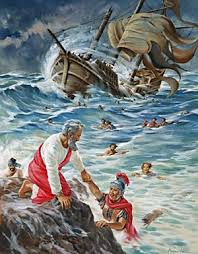 You would not have wanted to be with St. Paul today because February 10 is the Feast Day of the Shipwreck of St. Paul on Malta. I have been on ships in the Mediterranean many times and I make a practice each time of going out on the deck on a stormy night and imagining….
Paul was shipwrecked FOUR TIMES and once spent a whole day and a night floating on the sea waiting to be rescued (2 Cor 11:25; plus the 4th on Malta, Acts 28:1).
So I am reposting this blog from our recent trip to Malta where I found the place of St. Paul’s shipwreck.
One of my favorite things is to discover the events and places of the Bible and to share them with others. The Bible is true and the more we learn of it the more we are grounded in the Catholic Faith.
Today I went out in search of the place of St. Paul’s Shipwreck in Acts 27-28. It was great fun and I thought I would share this adventure with you.
Much to do on this Catholic Island and this is only one of my adventures on video from Malta.
The post Discovering the Place of Paul’s Shipwreck on Island of Malta on the Feast Day! appeared first on Defenders of the Catholic Faith.


Pope Benedict’s 4 Sentences to Confidently Face Death
Pope Emeritus Benedict XVI recently wrote a letter about the sex abuse crisis in Munich. Within the letter, he shared 4 sentences about his preparation for his death.
He 94 year old former Pope wrote,
Quite soon, I shall find myself before the final judge of my life.
Even though, as I look back on my long life, I can have great reason for fear and trembling, I am nonetheless of good cheer, for I trust firmly that the Lord is not only the just judge, but also the friend and brother who himself has already suffered for my shortcomings, and is thus also my advocate, my “Paraclete.”
In light of the hour of judgement, the grace of being a Christian becomes all the more clear to me.
It grants me knowledge, and indeed friendship, with the judge of my life, and thus allows me to pass confidently through the dark door of death.
Taken from Aleteia (you should subscribe)
The post Pope Benedict’s 4 Sentences to Confidently Face Death appeared first on Defenders of the Catholic Faith.
February 7, 2022
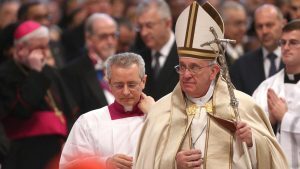
Does God Pick the Pope? [implied, Did God Pick Pope Francis]? by Jimmy Akin
Does God Pick the Pope? by Jimmy Akin (written in 2018)
 “When Pope Benedict was elected in 2005, I was overjoyed. As much as I loved John Paul II, Cardinal Ratzinger spoke to me in a special way, and I was thrilled when he became pope.
I was puzzled, though, by the way people began announcing him as “God’s choice” and speaking as if—in every conclave—the Holy Spirit himself selects the pope.
It’s customary for people to speak that way in the jubilation that occurs whenever a new people is elected.
I knew that, but this was the first conclave I witnessed as an adult, and as a Catholic, and I hadn’t experienced it first hand.
That kind of language is understandable as a way of building confidence for the new pontificate, but is it literally true?
Does the Holy Spirit really select the best possible man for the job, or is it a form of pious hyperbole?
 Common Sense
Common sense would suggest the latter. The cardinals in a conclave certainly invoke the Holy Spirit and seek his guidance, but he does not override their free will.
We’ve had some really bad popes in the history of the Church, and not just ones like Peter who made mistakes and then repented.
We’ve had some genuinely bad actors in the papacy (for example, Benedict IX, who reigned three different times between 1032 and 1048).
So in what sense can the election of a pope be said to be God’s will?
Divine Providence
Everything that happens in history takes place under God’s providential care.
By his omnipotence, God could stop any event from occurring, and so if something happens, it’s because God allows it.
The election of a pope thus can be said to be God’s will in the sense that any historical event can.
In this broad sense, however, the fact that something is God’s will does not guarantee that he approves of it.
It may be God’s will to allow a man to commit adultery, but that doesn’t mean he approves of the adultery.
Is the election of a pope in accord with God’s will only in this minimal sense or does it involve something greater?
Divine Guidance
While God does not override human free will, he does offer guidance. Jesus gave the Church certain promises in this regard, stating:
When the Spirit of truth comes, he will guide you into all the truth (John 16:13).
And:
Lo, I am with you always, to the close of the age (Matt. 28:20).
God has thus promised to give the Church his guidance. He has also promised it to individuals:
If any of you lacks wisdom, let him ask God, who gives to all men generously and without reproaching, and it will be given him (James 1:5).
If an individual man seeks God’s guidance, he can count on it being given. This does not mean it will be easy to hear or understand, or that the man will act on it, but it does mean that God will offer his assistance in some way.
Similarly, when the college of cardinals seeks God’s guidance in a conclave, they can be confident he will give it. Indeed, given the weightiness of the decision facing the cardinals and the implications it will have for the entire Church, they can expect he will provide even greater guidance.
This does not guarantee that the guidance will be easy to hear or understand, or that the cardinals will act on it, but it does mean that God’s assistance will be provided.
By presuming the discernment and good will of the cardinals, we may presume the man they elect was chosen in accord with God’s guidance and thus that his election was God’s will in a greater way than if God merely allowed it.
 A Marriage Analogy
We should be careful about assuming that there is only one correct choice for pope, for the process of selecting a pope is similar to the process of selecting a spouse.
Pop culture sometimes promotes the idea that everyone has a soul mate—a single, best individual that they should marry—but the reality is more complex.
Each marriage prospect has different strengths and weaknesses, and depending on who you choose, your marriage will unfold in different ways. But that doesn’t mean there is a single, best candidate you must find.
Even if there is, identifying that person with confidence cannot be humanly accomplished, given the number of factors and the number of unknowns in play.
Similarly, candidates for the papacy have different strengths and weaknesses. Depending on who the cardinals choose, the next papacy will unfold in different ways. But there may not be a single, best choice—or one that is humanly knowable.
 After the Choice is Made
Once a selection has been made, however, a new mode of divine will comes into play.
In the case of a marriage, once you exchange vows, it is God’s will that you treat that person as your spouse.
The realm of possibilities that existed before has now reduced to a single person, and that person is your divinely ordained spouse. He ordained that you be spouses in the moment the vows were exchanged, and “what God has joined together, let man not separate” (Matt. 19:6).
It’s now your job to make the marriage work, not to worry about what-ifs and might-have-beens.
Similarly, when a man accepts his election as pope, he becomes the divinely ordained pope, and it’s now everyone’s job in the Church to support him in the various ways that are appropriate to their station and to make the papacy work.
Spouses are not perfect, and neither are popes. Just as every marriage has challenges and requires work, so does every papacy.
Cardinal Ratzinger’s Views
When he was still a cardinal, Benedict XVI acknowledged the fact that cardinals can elect sub-optimal popes in an interview with German television back in 1997.
When asked whether the Holy Spirit is responsible for the election of a pope, he said:
I would not say so, in the sense that the Holy Spirit picks out the pope. . . . I would say that the Spirit does not exactly take control of the affair, but rather like a good educator, as it were, leaves us much space, much freedom, without entirely abandoning us. Thus the Spirit’s role should be understood in a much more elastic sense, not that he dictates the candidate for whom one must vote. Probably the only assurance he offers is that the thing cannot be totally ruined (John Allen, The Rise of Benedict XVI, 6).
He continued:
There are too many contrary instances of popes the Holy Spirit obviously would not have picked!
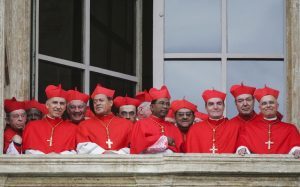
Similarly, in his final address to the college of cardinals, Pope Benedict stated:
Before I say goodbye to each one of you personally, I would like to tell you that I shall continue to be close to you with my prayers, especially in these coming days, that you may be completely docile to the action of the Holy Spirit in the election of the new pope. May the Lord show you the one whom he wants.
Benedict’s prayer that they will be docile to the Holy Spirit indicates the possibility that they will not be docile
 Implications for the Future
Nobody knows when the next conclave will be, but we can draw several implications from all this.
First, we can be confident from the fact that the cardinals seek God’s guidance that he will give it to them, as he has promised.
Second, even if they make a sub-optimal choice, we can be confident that God will ultimately bring good out of it, for “in everything God works for good with those who love him” (Rom. 8:28; cf. CCC 311).
Third, we need to pray. We need to pray now that good cardinals will be chosen, and when they meet in conclave, we need to pray that they will earnestly seek and heed God’s guidance.”
The post Does God Pick the Pope? [implied, Did God Pick Pope Francis]? by Jimmy Akin appeared first on Defenders of the Catholic Faith.
Our Agent, Corporate Travel Services, Explains the Nightmare of Travel over the Last Two Years
This is an excellent article published in the Legatus Magazine about our very own Catholic travel services provider. We have been using Corporate Travel Services (CTS) exclusively for over 15 years to handle all of our pilgrimages around the world. They are excellent!
The President, John Hale, is not only excellent at his business but a devout Catholic and a dear friend. Mark Slater has been my personal operations manager for our trips for over 15 years, along with the day-to-day manager Bridget Yurko.
But the last two years have been a nightmare. Many people who travel with us to the Holy Land, Italy-Rome, Poland, Ireland, Guadalupe, Lourdes & Fatima, St. Paul Mediterranean Cruise, and more don’t realize all that CTS does for us. Nor do they understand the nightmare they experienced and how it affects them — and us.
Use the arrows at the bottom left of the image to scroll pages 2 and 3.
The post Our Agent, Corporate Travel Services, Explains the Nightmare of Travel over the Last Two Years appeared first on Defenders of the Catholic Faith.
Vitamin D and Covid – an Israeli Study
Israel scientists say they have gathered the most convincing evidence to date that increased vitamin D levels can help COVID-19 patients reduce the risk of serious illness or death.
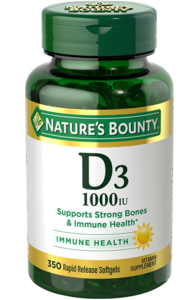 Researchers from Bar Ilan University and the Galilee Medical Center say that the vitamin has such a strong impact on disease severity that they can predict how people would fare if infected based on nothing more than their ages and vitamin D levels.
Lacking vitamin D significantly increases danger levels, they concluded in newly peer-reviewed research published Thursday in the journal PLOS One.
The study is based on research conducted during Israel’s first two waves of the virus, before vaccines were widely available, and doctors emphasized that vitamin supplements were not a substitute for vaccines, but rather a way to keep immunity levels from falling.
Vitamin D deficiency is endemic across the Middle East, including in Israel, where nearly four in five people are low on the vitamin, according to one study from 2011. By taking supplements before infection, though, the researchers in the new Israeli study found that patients could avoid the worst effects of the disease.
“We found it remarkable, and striking, to see the difference in the chances of becoming a severe patient when you are lacking in vitamin D compared to when you’re not,” said Dr. Amiel Dror, a Galilee Medical Center physician and Bar Ilan researcher who was part of the team behind the study.
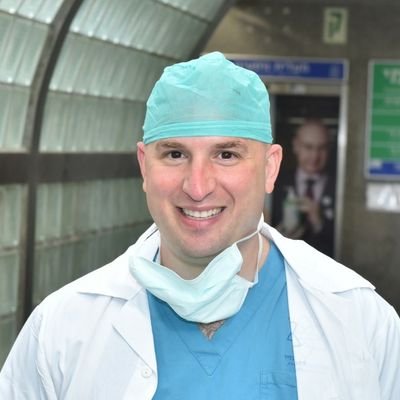
He noted that his study was conducted pre-Omicron, but said that the coronavirus doesn’t change fundamentally enough between variants to negate vitamin D effectiveness.
“What we’re seeing when vitamin D helps people with COVID infections is a result of its effectiveness in bolstering the immune systems to deal with viral pathogens that attack the respiratory system,” he told The Times of Israel. “This is equally relevant for Omicron as it was for previous variants.”
For the whole article, CLICK HERE
Vitamin D is inexpensive and readily available at any grocery store, drug store and online.
The post Vitamin D and Covid – an Israeli Study appeared first on Defenders of the Catholic Faith.
February 6, 2022
The Sign of the Cross: It’s History, Meaning and Biblical Basis
SIGN OF THE CROSS
By Steve Ray
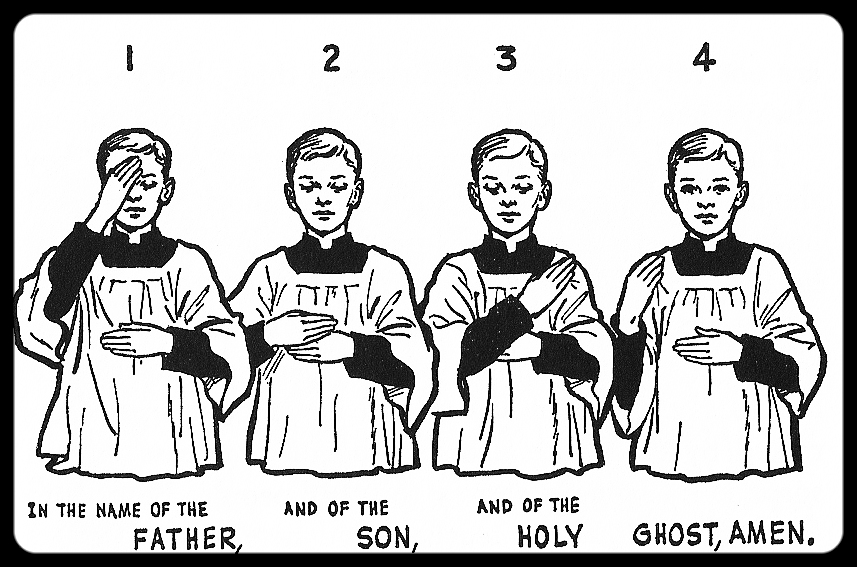
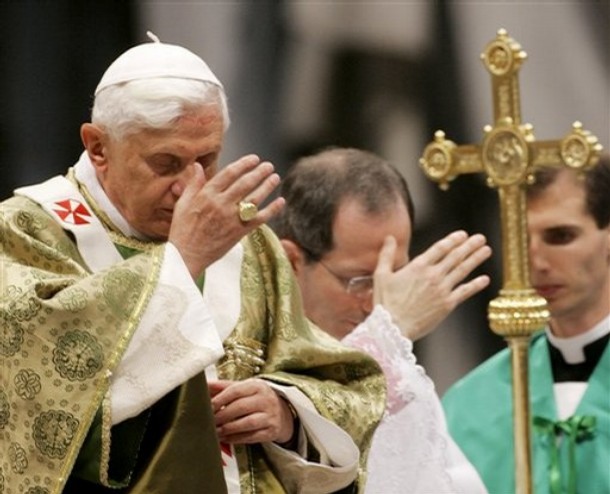 The Sign of the Cross is a ritual gesture by which we confess two important mysteries: the Trinity and the centrality of the Cross. It is the most common and visible means by which we confess our faith. The Sign of the Cross is made by touching the forehead with the fingers of the right hand, then the breast and then the left and right shoulders.
The sign was originally placed upon the forehead with the thumb and later extended to the whole upper body. This is not only a personal gesture, as a form of prayer but also a public witness and a sign of participation in the life of Christ and the Church. It is used as an integral part of many actions (e.g., at Baptism, Confirmation, prayer, to begin and end Mass, etc.).
 The Church has given us wonderful customs and traditions to mark ourselves and to acknowledge our participation in the whole continuity of the Church and the work of Christ. Miracles have been performed with this simple gesture and parliaments and councils have opened under its sign. Though Protestantism jettisoned this practice, along with the crucifix during the Reformation, the Catholic and Orthodox traditions faithfully continue this age old practice handed down from the age of the Apostles.
The Catholic Church has always seen outward gestures as means of expressing and actuating internal spiritual realities. Sacramentals, such as the Sign of the Cross, are not superstitious practices but are sacred signs by which various things in life are rendered holy through the effectual and sacramental grace of God. By the Sign of the Cross we pledge allegiance to Christ and invite the Holy Spirit to apply the cross to our lives—to take up our cross and follow Christ.
Though the NT does not specifically mention the “Sign of the Cross”, there is scriptural warrant for such a gesture. St. Paul writes, “I determined to know nothing among you except Jesus Christ, and Him crucified.” (1 Cor 2:2), and “may it never be that I should boast, except in the cross of our Lord Jesus Christ” (Gal 6:14).
 Ezekiel provides precedence for a sign upon the forehead of believers (Ezek 9:4; 17:9–14) as does Revelation (Rev 7:3; 9:4; 14:1). Ezekiel provided a support for the early Christians to use it as a “sacramental” (CCC 1235, 1668) to display their devotion to Christ and His Cross. There is reason to believe that the Jewish Christians used the Sign of the Cross prior to the destruction of Jerusalem in ad 70.
In the Catechism of the Catholic Church we learn: “The Christian begins his day, his prayers and his activities with the Sign of the Cross: ‘in the name of the Father and of the Son and of the Holy Spirit. Amen.’ The baptized person dedicates the day to the glory of God and calls on the Savior’s grace which lets him act in the Spirit as a child of the Father. The Sign of the Cross strengthens us in temptations and difficulties” (CCC, no. 2157; see also CCC, no. 786).
The writings of the Fathers, as authentic witnesses to the apostolic teaching in the early Church, are replete with references to the Sign of the Cross. The practice is already well established in the 2nd century as attested to by Tertullian (ad c. 160-c. 225). He writes of the wife who “signs” her bed and body (To His Wife 5).
He also writes, “At every forward step and movement, at every going in and out, when we put on our clothes and shoes, when we bathe, when we sit at table, when we light the lamps, on couch, on seat, in all the ordinary actions of daily life, we trace upon the forehead the sign. If, for these and other such rules, you insist upon having positive Scripture injunction, you will find none. Tradition will be held forth to you as the originator of them, custom as their strengthener, and faith as their observer” (The Chaplet 3, 4).
 Origen (ad c. 185-c. 284) wrote, “This [letter Tau] bears a resemblance to the figure of the cross; and this prophecy [Ezek 9:4] is said to regard the sign made by Christians on the forehead, which all believers make whatsoever work they begin upon, and especially at the beginning of prayers, or of holy readings” (Selections in Ezekiel. c. ix).
St. Augustine (354–430 AD) wrote: “What else is the sign of Christ but the cross of Christ? For unless that sign be applied, whether it be to the foreheads of believers, or to the very water out of which they are regenerated, or to the oil with which they receive the anointing chrism, or to the sacrifice that nourishes them, none of them is properly administered” (Tractates on John 118).
There has never been a time in the flow of historic Christianity that the Sign of the Cross has not been devoutly practiced. Only recently, since the Reformation, has the Sign of the Cross (along with the Crucifix, holy water and other visible signs) been rejected as idolatrous by many Protestant traditions. However, even Martin Luther in his Taufbuechlein retained the Sign of the Cross in the baptismal service and used the Sign of the Cross as one of his last gestures before death (H. Grizar, Luther, 3:435).
Quotations:
Tertullian: Nicene and Post-Nicene Fathers, Philip Schaff, ed., Eerdmans, 1980, vol. 3, p. 94–95.
Origen: The Faith of Catholics, Rev. Chapel, ed., Fr. Pustet & Co., 1885, vol. 3, p. 424.
St. Augustine: Nicene and Post-Nicene Fathers, 1st series, Philip Schaff, ed., Eerdmans, 1983, vol. 7, p. 432.
Grizar citation: Luther, Hartmann Grizar, B. Herder Book Co., 1919, vol. 3, p. 435.
The post The Sign of the Cross: It’s History, Meaning and Biblical Basis appeared first on Defenders of the Catholic Faith.
February 5, 2022
Does God Tempt Us to Sin? Should we Change the Words of the “Our Father” Prayer?
 There are a lot of discussions about the Pope’s comments a while ago on the wording of the “Our Father” prayer, especially the line “Lead us not into temptation” (Matt 6:13). He said it gives the wrong impression — that God Himself leads us into sinful temptations. Of course, taken at face value without understanding the nuances of the wording, it could be incorrectly understood that way.
To be clear, the Pope did NOT say he was going to change the Sixth Petition of the Our Father Prayer in the Bible. The news media again went overboard exaggerating the whole situation. Another example of not trusting the mainstream media. But subsequently, the bishops of several countries, including France, have actually changed the wording in the Mass.
First, it could never be the case, that God leads us to temptation or into sin, since we learn elsewhere in Scripture that God tempts no one. James 1:13 tells us, “Let no one say when he is tempted, ‘I am tempted by God’; for God cannot be tempted with evil and he himself tempts no one.” Along with other similar verses, it is clear God could never tempt us with sin nor lead us into an alleyway to push us into sin.
The UBS Handbook on Matthew, a series I find especially helpful, states, “This final petition is especially difficult to interpret. The Greek word translated temptation may also mean “trial, persecution”… the sense here can be either “to tempt to do wrong” or “to test or try.”
For me, this line in the Our Father has never been a problem. The same Greek word for temptation used in the Our Father (peirasmos) is also used for testing in 1 Peter 1:6-7, “In this you rejoice, though now for a little while you may have to suffer various trials, so that the genuineness of your faith, more precious than gold which though perishable is tested by fire, may redound to praise and glory and honor at the revelation of Jesus Christ.”
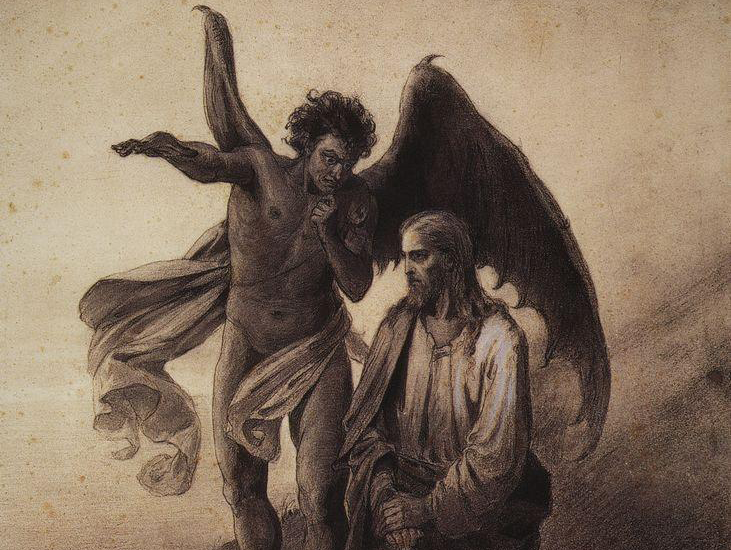 Second, Jesus himself had just been led by the Holy Spirit into the wilderness to be tempted by the Devil. St. Matthew tells us, “Then Jesus was led up by the Spirit into the wilderness to be tempted by the devil” (Matt 4:1).
The Sermon on the Mount follows Jesus’ temptation in the wilderness. He had been led by the Spirit to be tempted by the Devil. I have always thought the two were related. We pray that what happened to Jesus does not happen to us. We pray that we will not be put to the test or subjected to trials like the temptations Jesus experienced. He taught us to pray that we not be subjected to the same kind of testing.
Third, remember when God approached Abraham in Genesis 22 and told him to offer up his son Isaac as a burnt offering? The conversation between God and Abraham begins with, “After these things God tested Abraham.”
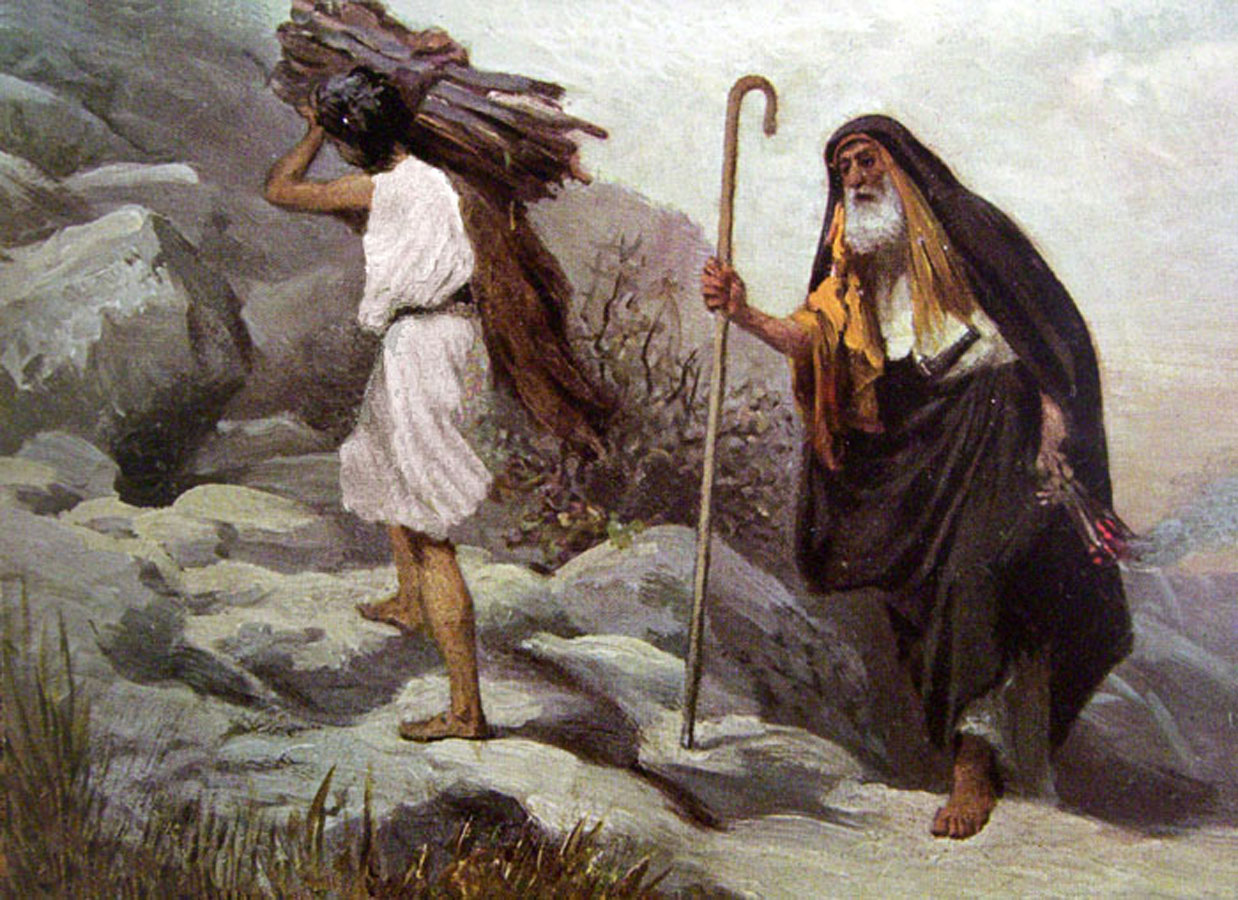 The Greek Septuagint translation of the Old Testament was the primary translation used by St. Paul and the early Church. The Greek text of Abraham’s test uses this same Greek root word (test, trial, temptation) when referring to God testing Abraham by asking him to offer up his only son. It was a test of Abraham, not a temptation to sin. After testing the faith and obedience of Abraham, God proclaims, “now I know that you fear God, since you have not withheld your son, your only son, from Me.”
The books of Hebrews, when describing this testing of Abraham, use the same Greek word peirasmos.
Fourth, the Catechism makes it clear that “lead us not into temptation” does not mean God tempts us. It states, “[I]t is difficult to translate the Greek verb used by a single English word: the Greek means both “do not allow us to enter into temptation” and “do not let us yield to temptation.” … We ask him not to allow us to take the way that leads to sin. We are engaged in the battle ‘between flesh and spirit’; this petition implores the Spirit of discernment and strength” (Catechism 2846).
Finally, what is needed here is not to change the wording of the prayer—which would be difficult and problematic on many fronts. To change the words “lead us not into temptation” to “do not abandon us in temptation” is simply a manipulation and alteration of the original biblical text. Instead of changing our Lord’s words, it is best to educate and teach the meaning and nuances of the actual wording of the petition so people understand the meaning of the prayer.
**********************************************
For Catholic World Reports article “Should the Sixth Petition be Translated, ‘Do Not Let us Fall?’” click here.
For Jimmy Akins article on this topic here.
For Msgr. Pope’s article on not changing the petition, click here.
Catholic On-line here.
The post Does God Tempt Us to Sin? Should we Change the Words of the “Our Father” Prayer? appeared first on Defenders of the Catholic Faith.
February 3, 2022
Two New Books for Catholic Cultural Warriors – which includes all of us!
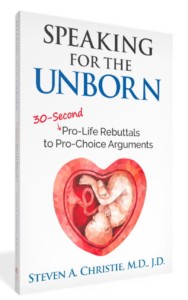
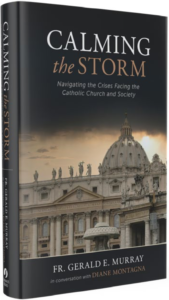 Emmaus Road has recently published two new books on current culture and how to navigate as Christians in this strange and rapidly secularized world. Both are worth a read.
My mom is now 100 years old and told me she doesn’t like the changes in our country. She doesn’t like what America has become: abortion, LGBT, cancel culture, lost religious freedom and you know all the rest.
These books help us understand the situation and give us help in the battles which we face – and help us prepare the next generation.
 The first is Calming the Storm: Navigating the Crises Facing the Catholic Church and Society by Fr. Gerald Murray, Canon Lawyer, and an outspoken, eloquent priest often on EWTN’s The World Over.
The second teaches us how to give 30-second answers to pro-abortionist arguments. The title is Speaking for the Unborn: 30-second Pro-nice Rebuttals to Pro-abortion Arguments by Dr. Steven Christie. He is both a medical doctor and a lawyer.
The post Two New Books for Catholic Cultural Warriors – which includes all of us! appeared first on Defenders of the Catholic Faith.
February 2, 2022
Podcast Dialog with Bryan Mercier on Salvation and the Catholic-Protestant Divide
If you would like to join in on the lively discussion I had with Bryan Mercier. He described it as,
“Catholic vs Protestant (on salvation) Former Fundamentalist Baptist Steve Ray speaks about salvation and how to be saved. He shows why Protestants don’t understand salvation correctly and why Catholics have the true understanding of salvation.”
The post Podcast Dialog with Bryan Mercier on Salvation and the Catholic-Protestant Divide appeared first on Defenders of the Catholic Faith.
February 1, 2022
Pictures (and Radio Shows) of the Presentation of Our Lord
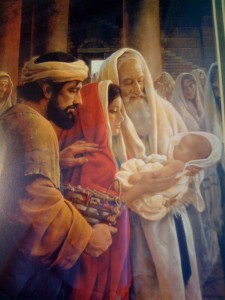
Tuesday is the Feast of the Presentation of Our Lord. I have two radio shows today on this topic so I put up a few pictures of what I think it may have looked like. You can listen at 8:10 AM Eastern on Spirit Catholic Radio (https://spiritcatholicradio.com/) and with Tereso Tomeo on Ave Maria Radio and EWTN (www.AveMariaRadio.net).
The presentation of a new son, was mandated in the Old Testament because after the exodus God had required the firstborn son to be dedicated to Him. But since the tribe of Levi had become the priests dedicated to God, parents could “redeem” their firstborn son, “buy him back from God”, so to speak.
 It was also required of the mother to purify herself after giving birth for either a son or a daughter. Of course, this was not a purification from sin but was a ritual, ceremonial cleansing after the “flow of blood.”
Mary was no more offering sacrifices for any sin than Jesus was washed from sin at his baptism.
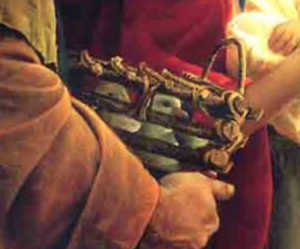
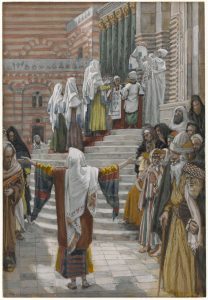 These are two of my favorite paintings of the Presentation. Notice in the top one that Joseph even has the two turtledoves in a cage to offer as the sacrifice. You can barely see the birds’ beak and eyes through the weaving.
At the Temple the Prophet Simeon declared Mary’s soul would also be pierced. That took place later at the crucifixion. Imagine a 15-year-old girl hearing those ominous words and trying to process that message!
To see the picture I took on Calvary in Jerusalem – of Mary being pierced with the sword, click here to visit my blog “With Mary on Calvary“
The post Pictures (and Radio Shows) of the Presentation of Our Lord appeared first on Defenders of the Catholic Faith.
Stephen K. Ray's Blog

- Stephen K. Ray's profile
- 27 followers

