
Stephen K. Ray's Blog, page 107
January 31, 2022
Infant Baptism
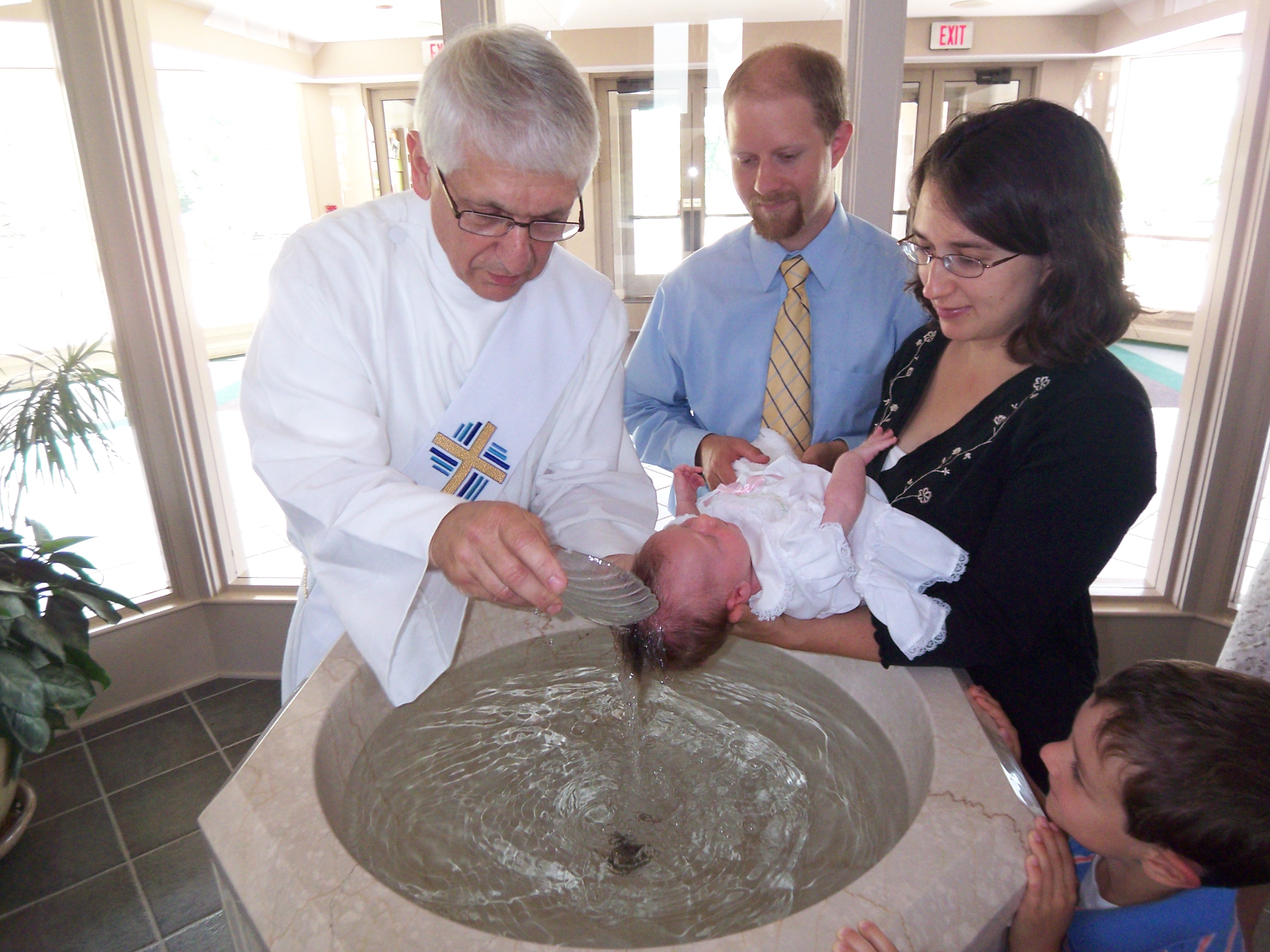 Infant Baptism is discussed and argued about quite a bit in some circles.
I was raised Baptist and taught that Infant Baptism was a man-made tradition invented by the heretical Catholics who abandoned the Word of God to follow ill-advised tradition.
(Picture: My granddaughter Elizabeth Arabella Rose Ray is baptized.)
But not all Protestants reject Infant Baptism. My favorite theologian during my later years as an Evangelical Protestant was Dr. Francis Schaeffer. He actually wrote a booklet on Infant Baptism. Granted, they do not accept the full Catholic understanding, but they did teach and practice infant baptism. Another author that I read was R. C. Sproul.
Protestant Reformed theologian R. C. Sproul writes, “The first direct mention of infant baptism is around the middle of the second century A.D. What is noteworthy about this reference is that it assumes infant baptism to be the universal practice of the church. If infant baptism were not the practice of the first-century church, how and why did this departure from orthodoxy happen so fast and so pervasively?
“Not only was the spread rapid and universal, the extant literature from that time does not reflect any controversy concerning the issue. . . . Those who dispute the validity of infant baptism make it less inclusive with respect to children, despite the absence of any biblical prohibition against infant baptism” (Essential Truths of the Christian Faith, [Wheaton, IL: Tyndale House, 1992], 228).
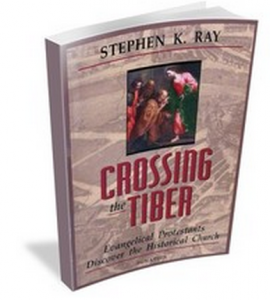
For my simple article on Infant Baptism, click here. For my blog on Baptism in general, click here. The whole middle section of my book Crossing the Tiber goes into the biblical and early Church teaching and practice of baptism, including that of infants.
The post Infant Baptism appeared first on Defenders of the Catholic Faith.


January 30, 2022
Interesting Explanation of Baptism from Protestant Dictionary – “baptism…in itself is unimportant”
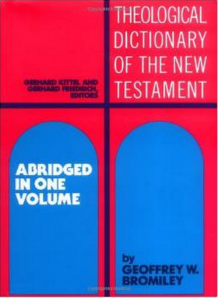 I was looking up Greek definitions of the word baptism and found this interesting “definition.” This dictionary is usually very good but I found this summary of biblical passages on baptism very intriguing and disingenuous. Take a look at this definition and think about it for yourself. Analyze it and the verses used. Notice how they dismiss the clear biblical meaning and importance of the word and the sacrament.
“The goal of baptism is eternal life, but not primarily by way of vivification [my comment: giving of new life]. In spite of 1 Pet. 3:20–21; Jn. 3:5–6; Tit. 3:5, the thought of the cleansing bath is more fundamental (1 Cor. 6:11; Eph. 5:26; Heb. 10:22). Biblical piety rules out magical evaluations of religious objects and actions. Hence baptism has no purely external efficacy and in itself is unimportant (1 Cor. 1:17; Heb. 9:9–10; 1 Pet. 3:21).”
(Kittel, Gerhard, Gerhard Friedrich, and Geoffrey William Bromiley. Theological Dictionary of the New Testament. Grand Rapids, MI: W.B. Eerdmans, 1985.)
An unsuspecting person, a subscriber to the heresy or a newbie might read this without discerning the bias and the error — and how they dismiss some biblical passages to promote others. Can you find it and explain it?
********************************
NOTES: These are some notes related to the above passages. Below are quotes from an attack on my book Crossing the Tiber made by a Pastor Chris Bayak so I added them here to explain some of his false assumptions about the same verses mentioned above.
Bayak writes: “For example, [Ray] uses 1 Peter 3:18-21, admittedly one of the hardest passages in the New Testament, as proof for baptismal regeneration.”

Steve Responds: This passage is hard for Fundamentalist Protestants to interpret because they don’t like what it says and they have to twist it to fit their own man-made tradition. It is quite sad when one has to twist Scripture to fit one’s preconceived ideas. James McCarthy has a tough time with this verse in his book The Gospel according to Rome. I discuss this passage at some length in my book. I wonder how Mr. Bayack would have preferred that St. Peter reword this passage to better fit his Fundamentalist tradition.
What Peter says is this: “And corresponding to that [Noah’s ark], baptism now saves you” (1 Peter 3:21). What about these words does Mr. Bayack find difficult? They seem pretty straightforward to a Catholic and to all Christians before the Fundamentalist movement came into being. We as Catholics don’t have to do mental gymnastics to “get around” this verse. It sounds a lot like the very first Gospel message ever preached. St. Peter preached the first gospel message in Jerusalem. It is recorded in the inspired word of God. Let’s all open our Bibles to Acts 2:38 and allow God to instruct us. “And Peter said to them, Repent, and let each of you be baptized in the name of Jesus Christ for the forgiveness of your sins; and you shall receive the gift of the Holy Spirit. “
Enough said. My book goes into much more detail on the issue of Baptism in the Bible and in the early Church. I question whether Mr. Bayack really read the whole thing or just used the “hunt and peck” method to look for objections. In any case, he certainly uses “selective scholarship.”
 Bayak writes: “Yet in over ninety pages about baptism, not once does he ever mention clear passages like 1 Corinthians 1:17, For Christ did not send me to baptize, but to preach the gospel (italics added).”
Steve Responds: I really don’t see what the above verse has to do with anything unless Mr. Bayack is trying to imply that Paul had a low regard for baptism or considered it an unnecessary appendage to belief in Christ. I remember as a Fundamentalist making my daughter write a report on the unnecessary nature of baptism a symbol only before I would allow her to be baptized. How far off I was.
Paul’s converts were all baptized immediately upon belief in Christ (e.g., Acts 16:31) as was he himself (Acts 9:17 18). Philip also showed the importance of baptism and baptized the Ethiopian eunuch immediately (Acts 8:36ff.). St. Paul himself recognizes that baptism was the means of his own cleansing and regeneration (e.g., Acts 22:16; Titus 3:5). The very fact that St. Paul makes this observation at this point in the argument demonstrates the importance and deep significance Baptism held in the apostolic Church. Had it been unnecessary or unimportant, he would not have even mentioned it in this context. What Mr. Bayack assumes about this passage actually proves the opposite.
Jerome’s Biblical Commentary observes, “No special mission was needed to baptize, and Paul usually left the administration of baptism to others. This does not imply any disdain for it; Rom 6:3-12 and 1 Cor 6:11 indicate Paul’s high regard for the sacrament of incorporation into Christ.”
Matthew Henry, in his ever popular Protestant commentary on the Bible, is also instructive in this matter. “Was it not a part of the apostolical commission to baptize all nations? And could Paul give thanks to God for his own neglect of duty? He is not to be understood in such a sense as if he were thankful for not having baptized at all, but for not having done it in present circumstances, lest it should have had this very bad construction put upon it that he had baptized in his own name, made disciples for himself, or set himself up as the head of a sect.
[Paul] left it to other ministers to baptize, while he set himself to more useful work, and filled up his time with preaching the gospel. This, he thought, was more his business, because the more important business of the two. He had assistants that could baptize, when none could discharge the other part of his office so well as himself. In this sense he says, Christ sent him not to baptize, but to preach the gospel not so much to baptize as to preach” (Matthew Henry’s Commentary on the Bible).
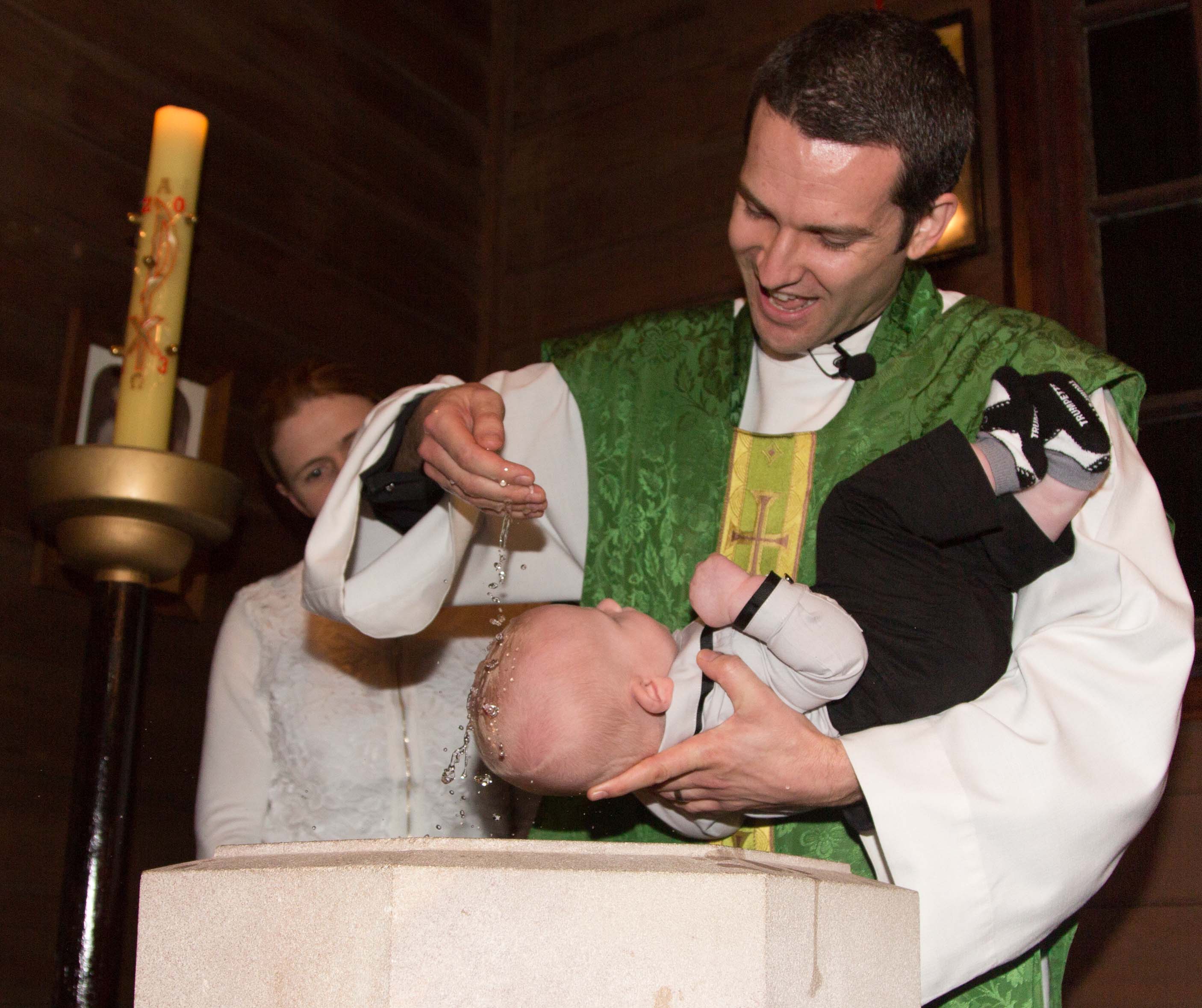 Paul, like Jesus, delegated baptizing to his disciples and ministers. The Catholic Church has never taught that baptisms must be done by an apostle or priest. The Church has acknowledged that any person can do baptisms, if done in the correct manner. Jesus thought baptism was important since he told Nicodemus he couldn’t see heaven without it (John 3:5). If Mr. Bayack denies that John 3:5 refers to Baptism he really shows that he is out of continuity with the Bible and the early Church and again his Fundamentalist Protestant tradition is shown to nullify the inspired word of God.
Jesus also, like Paul, did not baptize His followers but delegated the task to his disciples (cp. John 4:1 2).
Bayak writes: “He ignores Paul’s definition of the gospel in 1 Corinthians 15:1-4, which makes no mention of baptism or communion, that “Christ died for our sins according to the Scriptures, and that He was buried, and that He was raised on the third day according to the Scriptures.” Likewise, because he seeks to prove the necessity of the sacraments, he never addresses verses declaring salvation as a free gift such as Romans 6:23 and Ephesians 2:8-9.”
Steve Responds: I do not ignore 1 Corinthians 15:1 4 but since it does not directly refer to the topic at hand Baptism it was not necessary to bring it up. What would happen if I brought up every verse in the Bible?
Does Mr. Bayack imply that Baptism is not a free gift? How much more gratuitous can God be than to offer us a sacrament of faith as simple and as wonderful a gift as baptism? Ephesians 2:8 9 and Romans 6:23 do not contradict the Church’s teaching on Baptism, rather they support it. Does Mr. Bayack forget that the first verses of Romans 6 directly mention Baptism and its necessity for the placement of the believer into Christ? In fact, in Romans 6, Paul says that baptism is quite essential. Listen to what he says, “Or do you not know that all of us who have been baptized into Christ Jesus have been baptized into His death? Therefore we have been buried with Him through baptism into death, in order that as Christ was raised from the dead through the glory of the Father, so we too might walk in newness of life. For if we have become united with Him in the likeness of His death, certainly we shall be also in the likeness of His resurrection” (Romans 6:3 5). According to St. Paul, it is through Baptism that we are placed into Christ!
 Is Mr. Bayack again being selective (practicing “selective scholarship”) by using a proof text allegedly against baptism from Romans 6 but ignoring the fact that Romans 6 begins by teaching us that it is through Baptism that we are placed into Christ? He ignores the whole context but pulls his proof text out of context to support his Fundamentalist tradition.
I also deal with this passage to some degree in Crossing the Tiber, and find it frustrating that Mr. Bayack appears not to have read what I wrote, but still somehow feels competent to review and critique my book. I feel that I am spending far too much time rewriting things for him that he should have understood if he really read the book.
The post Interesting Explanation of Baptism from Protestant Dictionary – “baptism…in itself is unimportant” appeared first on Defenders of the Catholic Faith.
January 28, 2022
We welcome John Paul Solanus Regan into the family and world
 Today my daughter Emily gave birth to her 3rd child and our 19th grandchild. His name is John Paul Solanus Regan. He made his debut at 5:13 AM, weighing in at 7 lbs 12 oz and 20 1/2 inches.
Proud of our four kids who all have such a love for our Lord and for new life made in the image of God. May God do great things for, and through this little guy who is full of potential, maybe even to be a priest someday.
Proverbs 17:6 “Grandchildren are the crown of the aged, and the glory of children is their fathers.”
Psalm 127:3 “Behold, children are a heritage from the Lord, the fruit of the womb a reward.”
Psalm 128:6 “May you see your children’s children! Peace be upon Israel!”
The post We welcome John Paul Solanus Regan into the family and world appeared first on Defenders of the Catholic Faith.
January 25, 2022
Was He Ready to Die?
 It was just a normal morning — alarm clock, shower, espresso, dress and a saunter down the sidewalk to work. For Paul, it was another day with a whole lifetime ahead of him. But today was different.
Someone else got up this morning too. They had their coffee dressed and jumped in the car. They tried to catch up on their phone calls along the way and didn’t notice the car stopped in front of them. He swerved and his car jumped the sidewalk.
Paul didn’t even have time to blink. The car slammed into him as he walked to work and he was dead. It was over. No time to think. No time to call out to God. He was dead in an instant.
Was he ready? Where is he now? I don’t know.
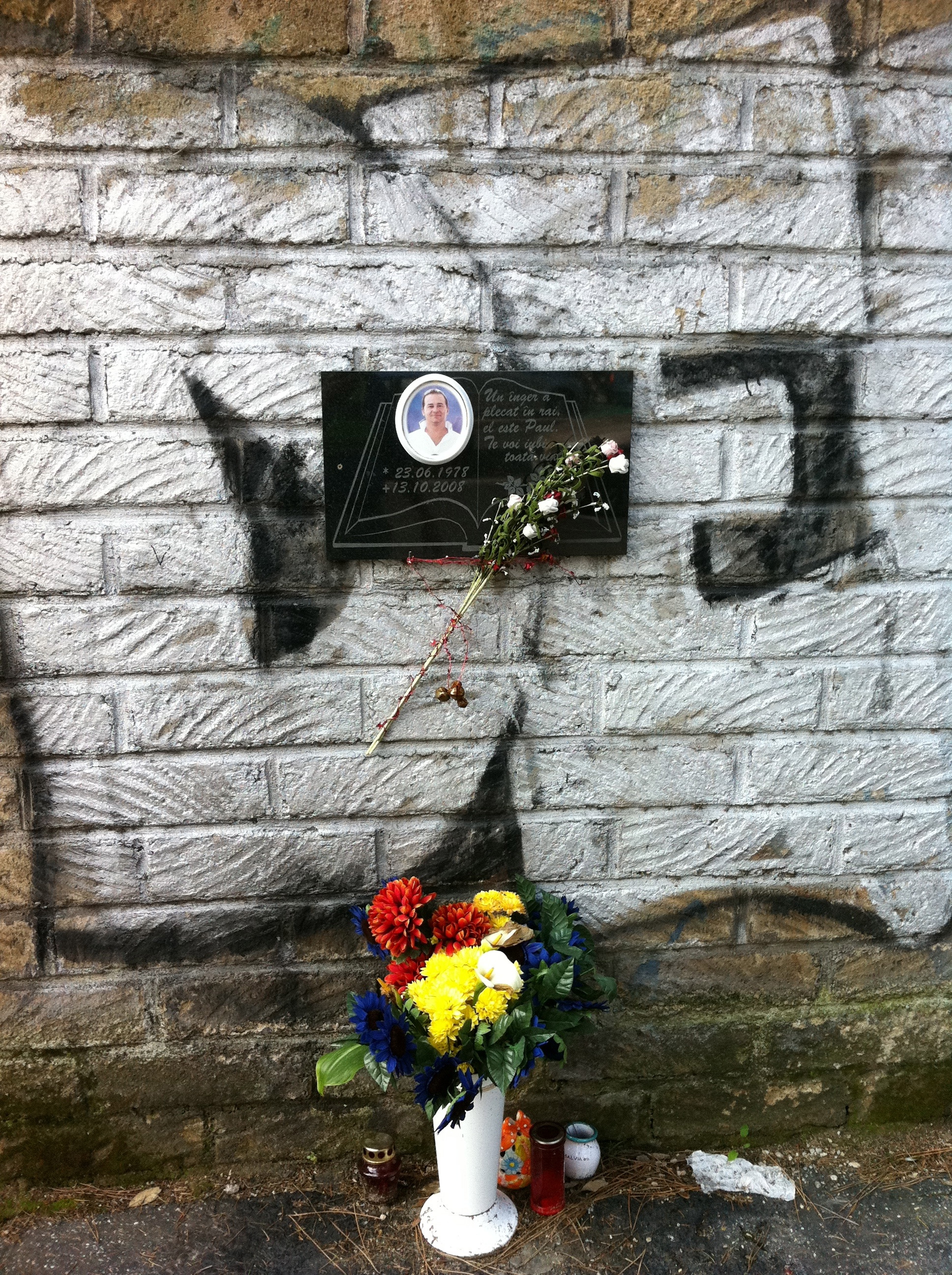 A while ago in Rome, I was just out for a run along the same sidewalk. I saw the memorial bolted into the wall with flowers and prayers. Paul’s family hopes he is in heaven. They still bring flowers, light candles and pray at the place he was instantly killed.
I stopped. I pondered the memorial — Paul’s picture. He was a young man; looks like about 30 years old, handsome and full of life. Did he leave a wife and kids behind? Was he a church-goer or had he dropped out for more important things?
Flowers, candles, prayers, tears, longing, hope, sorrow, loneliness, regret. All of this was obvious from the remembrance placed on the sidewalk.
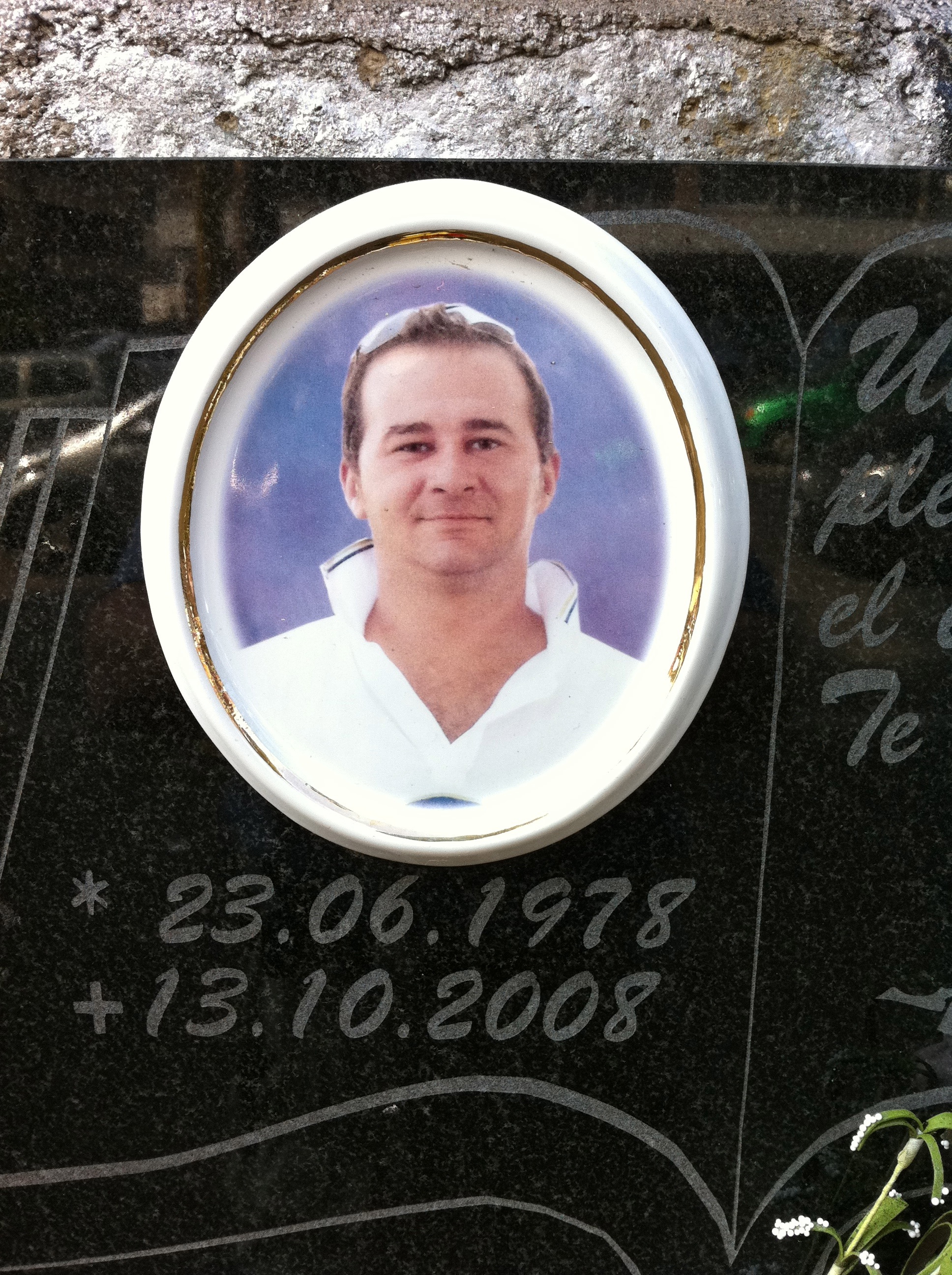 I crossed myself, said a prayer for Paul though I have no idea who he was — or is, I should say because life does not end at death but goes on in heaven or hell.
I suspect he didn’t know his life would end at 8:46 AM that morning. Nor did anyone else. Makes one wonder if his life was in order. Had he gone to confession? Did he harbor grudges against family or friends?
As I prayed and meditated a bit on the sidewalk, I thought of my own life and once again realized how fragile we are and how crucial it is to be right with God and the world at all times. We never know when a cell phone call or an absent-minded driver might snuff out our life.
It’s a good time to take a quick evaluation of your life. Are you ready to die?
For my story, The Last Nightmare: the Story of a Soul, click here.
The post Was He Ready to Die? appeared first on Defenders of the Catholic Faith.
January 24, 2022
The Conversion of St. Paul as the Seed of all Paul’s Theology
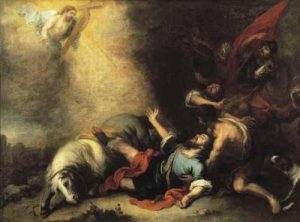 Jesus asked an unusual question from heaven. “Saul, Saul, why do you persecute Me?” How could Saul persecute Jesus who was safely distanced in heaven?
This question was the seed that grew into the foundation for all of St. Paul’s teaching and theology. Fascinating look at how we are all in Christ and Christ is in us.
Steve also discusses his times visiting the very location of Saul’s conversion in Damascus and how he came down the same wall as St. Paul in a basket.
By the way, do you know why nothing really happened that day?
Enjoy the lively discussion here
https://www.catholicconvert.com/wp-content/uploads/5-2-3-steve-ray.mp3The post The Conversion of St. Paul as the Seed of all Paul’s Theology appeared first on Defenders of the Catholic Faith.
January 22, 2022
Paul Prayed for the Dead; we should too
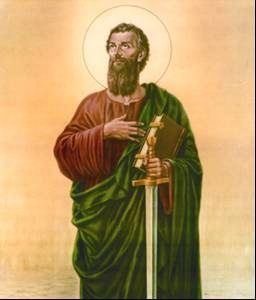 Does the Bible record St. Paul praying for a dead man? Does the New Testament relate an incident of prayer for the dead? It seems quite certain that it does.
Let’s begin with Onesiphorus—a faithful Christian who cared for St. Paul while he was in prison and who took great personal risk to serve the apostle. He was such a good man that Paul writes, “[Onesiphorus] often refreshed me; he was not ashamed of my chains” and “he searched for me eagerly and found me” and “you well know all the service he rendered at Ephesus” (2 Tim 1:16-18).
But from all indications—certainly from the words Paul uses—Onesiphorus has died or been killed before Paul wrote Second Timothy. Almost all commentators concede that Onesiphorus had probably died—maybe even martyred during Nero’s persecution. Paul speaks of him in the past tense and strangely asks for God’s mercy on his “household” without mentioning him, as though he was no longer here. Because Onesiphorus had served so well and was no longer alive, Paul prays for God’s blessing on his surviving family. All implications are that Onesiphorus has died.
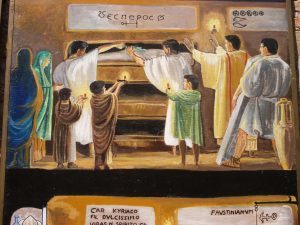 But Paul prays for him! In 2 Timothy 1:18, while in prison awaiting his death, Paul prays for the dead man and it is recorded in the Bible. Here is what St. Paul writes, “May the Lord grant him to find mercy from the Lord on that Day.” This is not just an expression of sentimental emotion—this is a prayer for a man who has died, it is prayer for the dead.
Paul, who was earlier known as Saul the Pharisee, was well immersed in the teaching and tradition of the Pharisaical Jews. The Jews prayed for the dead and Paul would not have seen the practice as egregious or unbiblical; rather, he would have viewed prayer for the dead as a proper practice for a Jew, and also now for a Christian who believes in the afterlife.
2 Maccabees 12:46 informs us of the current Jewish practice, not something novel but as something assumed by the Jewish people,
“It is therefore a holy and wholesome thought to pray for the dead, that they may be loosed from sins.”
Here is what the widely respected six-volume Anchor Bible Dictionary writes…….
For the whole article with lots of notes and documentation, click here.
The post Paul Prayed for the Dead; we should too appeared first on Defenders of the Catholic Faith.
Elections have Consequences: Virginia’s new conservative gov’t reverses Pro-Arbortion Opinion with SCOTUS
Miyares wrote: “Virginia no longer adheres to the arguments contained in its previously filed brief [and] is now of the view that the Constitution is silent on the question of abortion, and that it is therefore up to the people in the several States to determine the legal status and regulatory treatment of abortion.”
He added: “It is Virginia’s position that the Court’s decisions in Roe and Casey were wrongly decided.” READ
MARCH FOR LIFE A very large crowd of pro-life pilgrims attended the 49th annual March for Life on Friday. Here are 61 of the best pro-life signs from the event. READFrom CatholicVote’s daily e-mail The Loop
The post Elections have Consequences: Virginia’s new conservative gov’t reverses Pro-Arbortion Opinion with SCOTUS appeared first on Defenders of the Catholic Faith.
January 21, 2022
J. R. R. Tolkien on Conversion
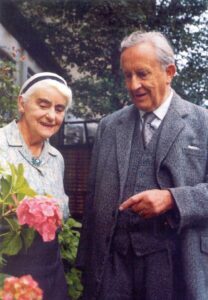 Tolkien’s mother, Mabel, converted to Catholicism despite serious opposition from her family. She was eventually cut-off financially when she refused to abandon her new faith.
The lack of financial support was a serious consequence as she relied on her family’s assistance after her husband died working in South Africa leaving her alone to raise their two young boys. Yet, she valued her Catholic faith above all else and was determined to raise her children in the Catholic Church, which she did.
Years later, when Tolkien was a young man at Oxford and was ready to marry, his future wife, Edith, was still a very active member of the Church of England. Tolkien insisted that she become Catholic before they marry. Edith was willing and believed it the right thing, but wanted to delay her conversion until just prior to the wedding to avoid the backlash of her family.
Tolkien, would not have it. He stated that the Church of England was “a pathetic and shadowy medley of half-remembered traditions and mutilated beliefs” and if Edith were persecuted for becoming Catholic, why then, that was precisely what happened to his own dear mother, and she had endured it.
He went on to say, “I do so dearly believe, that no half-heartedness and no worldly fear must turn us aside from following the light unflinchingly.” Edith agreed and was met with the same level of opposition from her family as Tolkien’s mother had suffered through.
J.R.R. Tolkien is best remembered for his fiction, but the most important thing to him was truth.
Certain details taken from “J.R.R. Tolkien: A biography” by Humphrey Carpenter. Originally posted at http://fishinginthetiber.blogspot.com...
The post J. R. R. Tolkien on Conversion appeared first on Defenders of the Catholic Faith.
January 18, 2022
Understanding the Differences between Islam & Christianity, Update 2022 – Detailed 26 pages
An Attempt to Understanding the Differences
Between Islam and Christianity
by Bill Christian
January 2022 (updated)
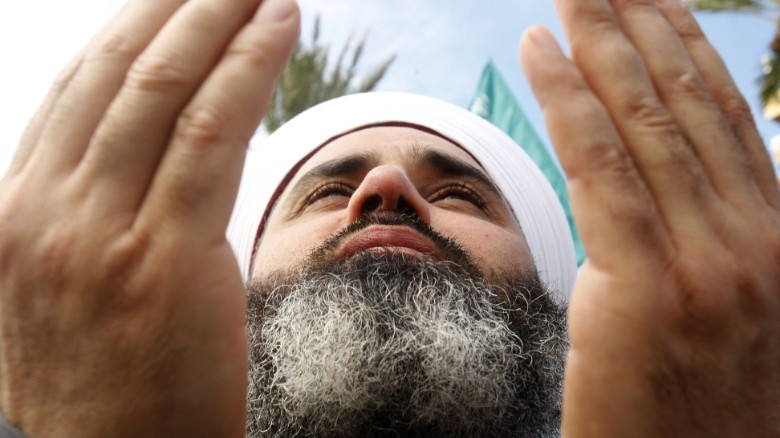
“Our governments, schools, media and many Christian denominations tell us that there is no real difference among the “Abrahamic Religions” of the Jews, Muslims and Christians. This paper is written for followers of the Christian faith. It explores the differences between Islam and the only “Two Abrahamic Religions”, Judaism and Christianity.
“Islam teaches that Abraham, Moses, Jesus and Mohammad (Peace and Blessings be Upon Him – PBUH) all received the same revelations from God. Then alleges that the ‘People of the Book’ (Jews and Christians) corrupted the scriptures for political ends and then called them ‘inspired’. In September 2020, Yassine Baradai, national secretary of the Union of Islamic Communities of Italy reiterated Islam’s position that Judaism and Christianity are a “heresy” and a “manipulation of the original message of the prophets.” “Say (O Muhammad) ‘O people of the Book! You have nothing (as regards guidance) till you act according to the Taurat (Torah), the Injeel (Gospel), and what has (now) been sent down to you from your Lord (the Qur’an).’ Verily, that which has been sent down to you (Muhammad) from your Lord increases in many of them their obstinate rebellion and disbelief. So be not sorrowful over the people (Jews/Christians) who disbelieve.” (Qur’an 5:68) (Among others claiming corruption are: Qur’an 5:43 5:44 5:45 5:46 5:47, 6:114-115, 10:94, 18:27)
“The Jews and Christians believe in the God of Abraham and Isaac. Isaac is the only son of Abraham and Sarah and Sarah was Abraham’s only wife. Isaac’s descendants were the 12 tribes of Israel. Christians believe from the Israelites came Mary the mother of Jesus, God Incarnate: for God took on a flesh as Jesus, His only Son, Fully God and Fully Human. Christians also believe God’s revelations ended with the death of the Apostle John (~ 95 AD). …
 “… The Muslims believe in the God of Abraham and Ishmael. Ishmael was Abraham’s first-born son. His mother was Abraham’s wife Sarah’s Egyptian slave, Hagar. Sarah thought herself barren, and felt that she was obligated to give her husband an heir, so Hagar bore Abraham’s son, Ishmael. Islam claims that in the Christian scriptures Abraham, having had only one son, is false. For a man’s children are his, never the women’s. Then Isaac firstborn son Esau was tricked into selling his birthright to his brother Jacob for a bowl of soup. Jacob deceived Isaac on his deathbed to steal Esau blessing by pretending to be Esau. This trickery led the descendants of Isaac from the true teachings of Abraham’s God, Allah. Esau third wife, Mahalath, was the daughter of his uncle Ishmael. Ishmael had 12 sons, the Arab nations. The Islamic Allah is the God of Abraham and his first born-son, Ishmael (from Islamic tradition). There is no God but Allah and Muhammad (PBUH) is His Messenger. Allah‘s last prophet was Mohammad (610-632)….”
After this Bill goes into pages of detail describing the biblical, cultural, moral, and political differences and the dangers that face us and our children if we don’t understand and get this right. To read the whole report CLICK HERE – updated 1-22-2022).
The post Understanding the Differences between Islam & Christianity, Update 2022 – Detailed 26 pages appeared first on Defenders of the Catholic Faith.
Everything you need for the “March for Life 2022” – we won’t stop until babies are safe!
Teresa Tomeo has provided every resource needed to support and join this year’s March for Life this Friday, January 21. Click on the image below for full access to the resources on Teresa’s website….

The post Everything you need for the “March for Life 2022” – we won’t stop until babies are safe! appeared first on Defenders of the Catholic Faith.
Stephen K. Ray's Blog

- Stephen K. Ray's profile
- 27 followers

