
David Tallerman's Blog, page 7
March 15, 2021
Drowning in Nineties Anime, Pt. 96
Once again I seem to have lucked my way into a theme of sorts, though it's not one I'd have deliberately opted for. Skimming over them, I can't help noticing that all four titles here are very much about guys doing manly guy stuff, and not one of them has much time for their female characters, and it wouldn't be much of a stretch to argue that all four have at least the odd moment where those female characters are basically there so they can be victims for the hero(es) to save.
So that sucks! But hopefully there'll be a few virtues to balance it out somewhere among Fatal Fury 2: The New Battle, Shuten Doji, Lupin the Third: Napoleon's Dictionary, and Legendary Armor Samurai Troopers: Message...
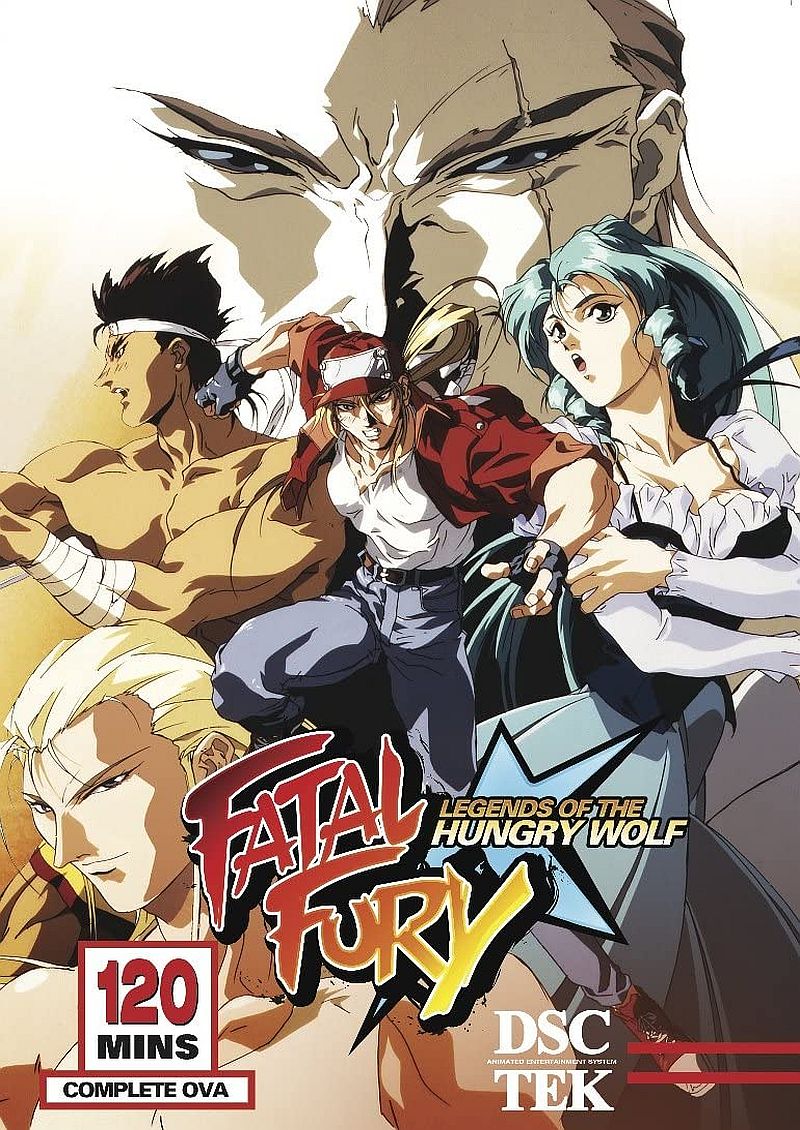
Fatal Fury 2: The New Battle, 1993, dir: Kazuhiro Furuhashi
Had you told me a week ago that the Fatal Fury franchise was capable of turning out a truly good movie then ... well, I like to think I'd have had better manners than to laugh in your face, but there's certainly a chance I'd have scoffed a little. The first OVA was fairly dire, rising to functional in its better moments, and the feature film, which would arrive a year after this second OVA, was decent enough if you could get around character designs that looked as though they'd been concocted by aliens with nothing but the Pioneer plaque to work off. And both shared the problem that there's nothing whatsoever interesting about the Fatal Fury franchise, which I dare say is remembered mostly these days because main character Terry Bogard wears a really stupid-looking cap.
Yet, despite its uninspired title, The New Battle is a genuinely good film. It even profits somewhat from the inherent shortcomings of these things, by framing its plot around fighting to a puritanical degree: in so much as there's a story, it follows Terry suffering a nasty beatdown at the hands of new villain Krauser and then sliding into depression and alcoholism - because, if he can't be the best fighter in the world, what can he be? - until his brother Andy and their friend Joe Higashi learn what's been going on and take it upon themselves to intervene. Granted, there's a bit more going on than that, including Terry getting saddled with an hilariously wardrobed teen protégé who should be more annoying than he is, and the introduction of Mai Shiranui, whose main and perhaps only purpose here is to have extremely large breasts.
Because, yes, The New Battle absolutely isn't perfect, and it's still a Fatal Fury movie, so you do have to be sensible with your expectations. Nevertheless, writer Takashi Yamada and particularly director Kazuhiro Furuhashi manage to turn almost all its potential failings into at least vaguely positive features. Take Mai as an example: enormously sexist as just about everything to do with the character is, here as she very much wasn't in The Motion Picture she's a positive presence, largely by way of being the only person who cares about anything besides fighting. I don't know that I'd accuse The New Battle of having anything as grandiose as themes, but it does nod toward acknowledging that there's something problematic about devoting your life to violence and that possibly it's not for everyone.
Mostly, though, this works because The New Battle understands what it needs to do to and follows through rigorously. It helps that the animation is frequently very good, and helps more that Furuhashi - by far the best director to make anything Fatal Fury-related - conjures up some great atmosphere and routinely captivating imagery. Mostly, though, the film gets that there's one element it can't afford to screw up, as Legend of the Hungry Wolf screwed up so badly, and that means exciting, well-conceived fight scenes, of which there are an enormous number - though somehow the makers just about manage to do the whole "this is a fighting game adaptation so everyone has to fight in every possible combination" thing in a way that feels organic and satisfying. No matter who's scrapping at any given moment, every confrontation points toward Krauser and Terry's final reckoning, and that's just enough direction to keep the show on the road, especially given that Krauser is a thoroughly satisfying bad guy, a self-satisfied Teutonic sociopath with an almighty daddy complex, a weird sense of humour, and, er, a love for playing his gigantic organ.
There are, I guess, limits to the heights to which a fighting game adaptation can climb, assuming that adaptation isn't the fantastic Darkstalkers and doesn't cheat by running off and having an actual narrative and proper world-building. But within the generally accepted limits, I'm happy to place The New Battle in the top tier of what this routinely shonky subgenre has to offer. It may not be terribly sophisticated, but as seventy-five minutes of story about people punching each other goes, it does what it does in a shockingly engaging and well-crafted fashion.
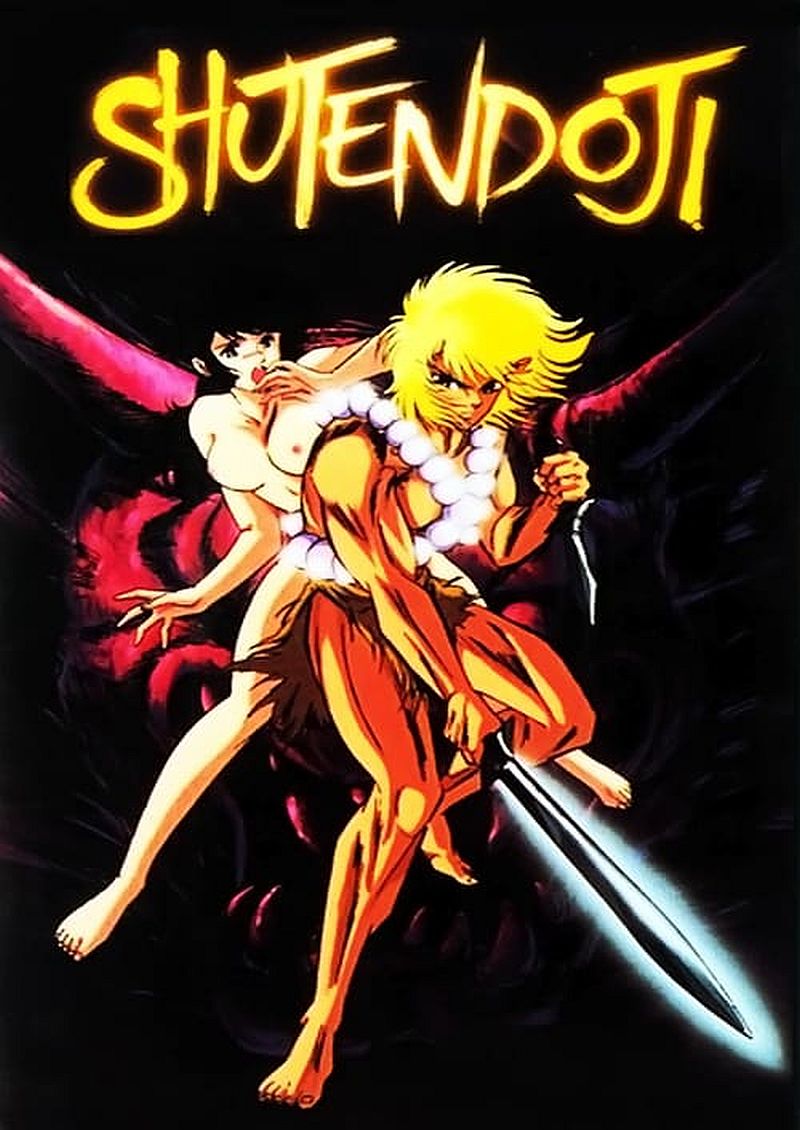 Shuten Doji, 1989 - 1991, dir's: Junji Nishimura, Jun Kawagoe, Yoshio Ishiwatari
The difficulty in reviewing the early nineties OVA miniseries Shuten Doji is that it does one thing that's quite interesting and relatively original and many things that aren't very interesting or original at all. Moreover, that one thing, though it ticks away in the background right from the beginning - a bizarre opening in which two demonic oni battle through space and time - really only becomes a central feature in the last of the four forty-five minute episodes, leaving more than two hours in which the show isn't up to much that's the least bit exciting.
This is most the case in the first couple of parts, and it doesn't help going in with the knowledge that this is a Go Nagai adaptation, because the basic setup is so similar to Devilman, by far the best Nagai work I've come across, and Shuten Doji never operates on remotely the same sort of level. Then again, even were Nagai's name not on the box, it wouldn't take much guessing that he was behind this, given the emphasis on gross-out bloodshed and particularly given the awe-inspiring levels of misogyny and sexualised violence. That's most prevalent, and most obnoxious, in the first part, in which our teenaged hero Jiro wakes up to his magical powers, while Miyuki, the girl who has a crush on him, mainly spends her time being kidnapped, stripped, and nearly raped, before being licked all over by a demon, setting a pattern for her character that Shuten Doji will have scant interest in shaking off.
Mind you, while I claimed Shuten Doji only has one legitimately interesting feature, it's mildly intriguing how much each of the parts feels distinct from the others: I'd struggle to class this as entirely a virtue, but it's certainly something. The jump between one and two is most dramatic, in that, though it's possible to follow the logical course of events, it seems strange to suddenly find that Jiro's gathered a group of protectors, especially since he could have done with their help throughout the first part. And though the leap in part three, whereby we're suddenly watching a sci-fi movie with spaceships and a killer android, ought to be more jarring, it isn't, perhaps because the similar hop in the opening sequence suggested those spaceships had to pop up somewhere. And then there's the fourth part, which I really don't want to spoil, so let's just say that again it's joltingly different from what's gone before.
I liked that ending on the whole, and while its ambitions aren't altogether new and possibly didn't add up to anything that made an enormous amount of sense, they're enough to set the show apart from the mass of its contemporaries. Which is nice, but maybe not the biggest help when the previous three episodes have failed so thoroughly to distinguish themselves, with the possible exception of a score that borrows heavily and obviously from all sorts of places but does an excellent job in the process. The animation, though, is nothing special, the writing definitely isn't, and while it's sort of gratifying that each episode is doing its own self-contained thing, those are all things we've seen frequently elsewhere.
Then again, hugely unpleasant attitude toward its female characters not withstanding, there was nothing in Shuten Doji that I found actively off-putting, either. I'd even go so far as to place it in the upper tier of Go Nagai adaptations I've seen - though that's barely a compliment! - and I've watched many a worse slice of fantasy-horror with a supernaturally powered teenage protagonist, too. It's definitely not great in any way whatsoever, but by merit of being slightly above average until an ingenious, bonkers, and memorable ending, I'm slightly surprised that Shuten Doji isn't better remembered or regarded.
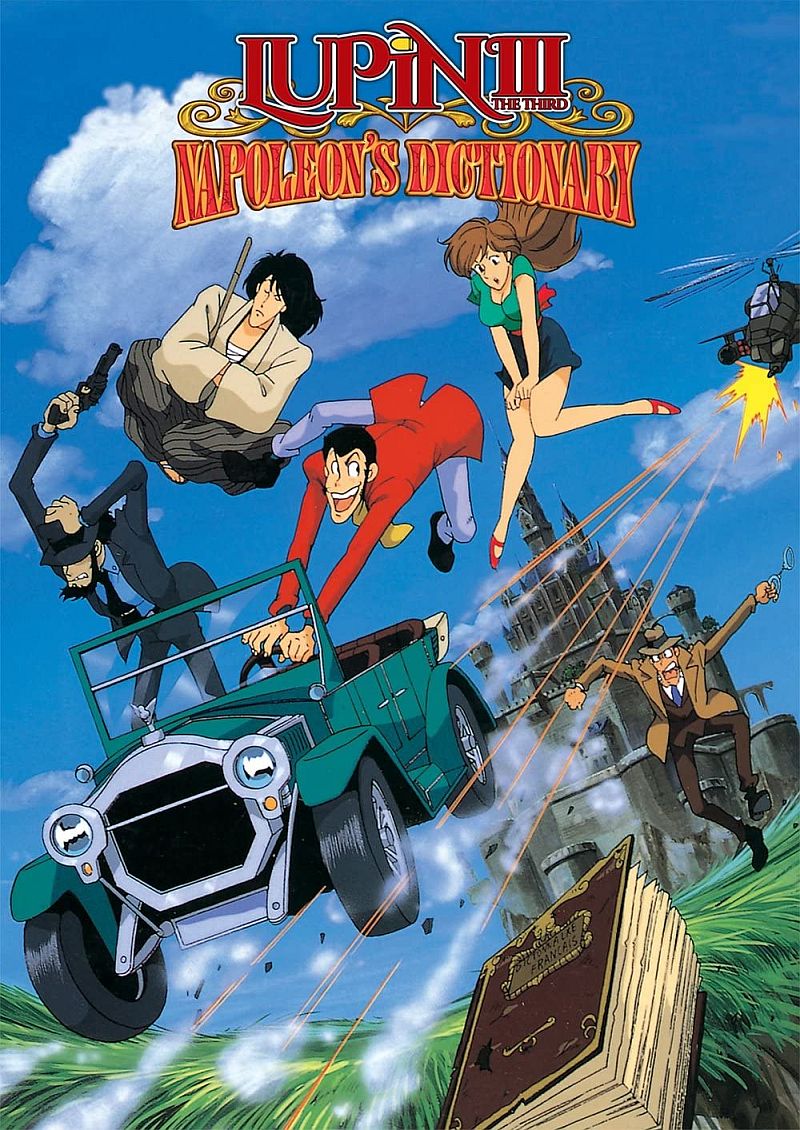 Lupin the Third: Napoleon's Dictionary, 1991, dir: Osamu Dezaki
Lupin the 3rd: Napoleon's Dictionary is what happens when undeniably talented people make something without any visible enthusiasm or inspiration. The team of screenwriter Hiroshi Kashiwabara and director Osamu Dezaki was capable of excellent work together on the Lupin franchise, so much so that it's hard to imagine they could have collaborated on a film with no merit whatsoever. Yet, for whatever reason, both of them seem to have been mostly checked out while they were making this one.
Kashiwabara gets most actively wrong, as a brief summary of the plot neatly illustrates: in this episode, master thief Lupin steals a vintage car so that he can participate in a vintage car rally so that he can win the titular dictionary so that he can find a clue to the actual treasure. Moreover, two of those steps are utterly unnecessary, as the film itself inadvertently admits: Lupin swears that he can't simply steal the dictionary from its current owner, then ultimately does so with zero apparent effort. And speaking of zero effort, that's effectively what Dezaki is providing at the helm ... bar one brief flashback scene, there are none of his signature stylistic flourishes here, which isn't necessarily a bad thing given how annoying they can be, but the trouble is that there's not much of anything else either. His direction is bland and functional and could be the work of most any mid-tier director working in anime at the beginning of the nineties, to the point where I almost wonder whether he farmed this one off onto the office junior while he concentrated his efforts elsewhere. Given that he was extremely busy at the time and also banging out some of the worst work of his career, it's easy to believe.
However, let's assume for the moment that Napoleon's Dictionary was indeed another Kashiwabara / Dezaki joint, if only for the reason that, on a scene-by-scene basis, it's just charming enough to feel like it is. Kashiwabara's script may be all over the place and shockingly devoid of momentum, but he's more than capable of flinging out a few great lines and solid scenes; Dezaki may have been mostly asleep at the wheel, but on the occasions when he wakes up, it's a reminder that few people have ever got Lupin the way he did. The best material here is built around the Lupin / Zenigata relationship, and I think this may be the first film to point out the extent to which the characters are sides of the same coin, so that's nice to see. Though Fujiko is barely present, Jigen's literally along for the ride, and Goemon's mostly occupied with imagining himself as the hero of a Yakuza flick, so it's fair to say that Kashiwabara still managed to drop the ball hard with every other character. Oh, and the animation is pretty rough, so it's not as though that's much of a distraction - though here as he failed to do in From Siberia with Love, Dezaki marshals his resources sufficiently that there are moments of relative quality. Which sort of sums up Napoleon's Dictionary: there's just enough flair and imagination and classic Lupin goodness to not make for a total washout, but nowhere near enough to add up to a legitimately good film.
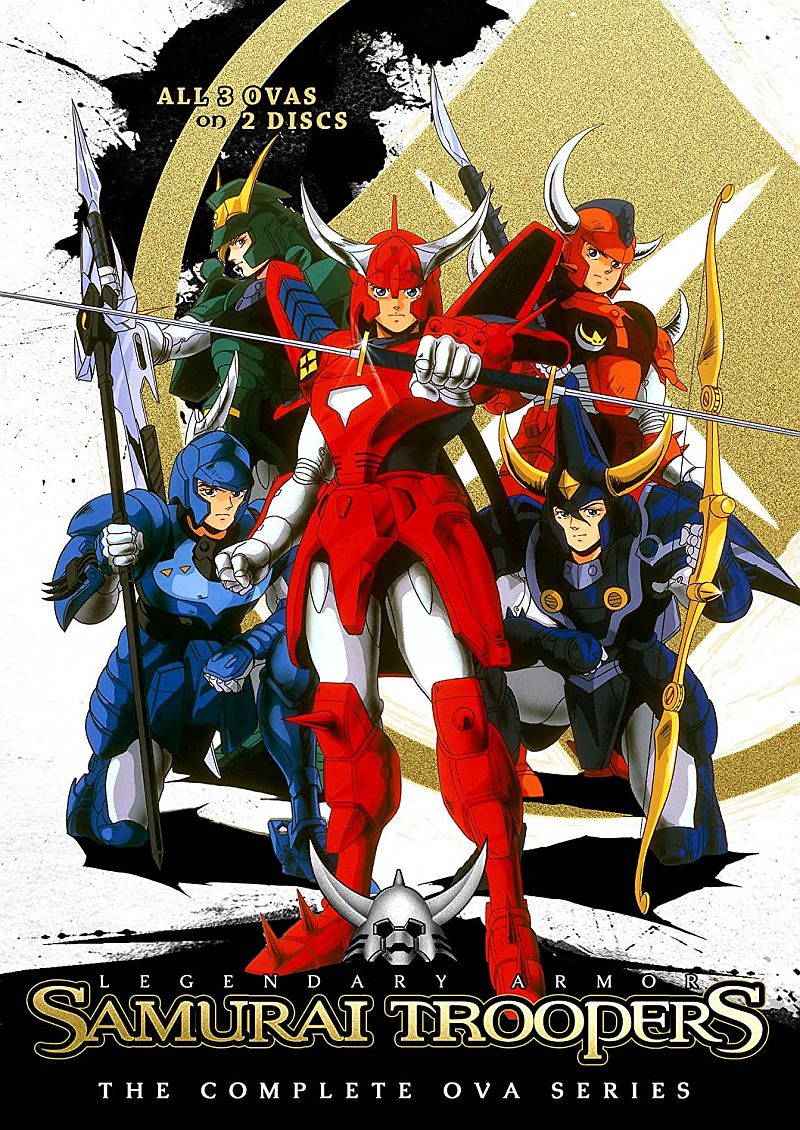 Legendary Armor Samurai Troopers: Message, 1991, dir: Masashi Ikeda
You don't have to look far to see what Samurai Troopers: Message could have been, because it's right there on the screen. The new footage here is nice indeed and the story it tells, a deep dive into series lore via a character seeking revenge for a tragic incident in the distant past, is a perfectly serviceable one with plenty of potential. But notice what I said there, "new footage"? Well, there's the problem, or at any rate the one absolutely inexcusable problem. Of the five episodes, amounting to just short of two and a half hours, I'd be surprised if more than thirty minutes wasn't cobbled together either from the TV series that this is supposedly a grand finale to or from the preceding OVA, Legend of the Inferno Armor.
Obviously that's an enormous shortcoming, there's no two ways about it. Yet it's still just about possible to see how something worthwhile could have been constructed from the available resources. Samurai Troopers the series was, after all, hardly cheap or ugly, the previous OVA looked rather splendid on occasions, and so it's not like that footage is bad as such. Granted, for any viewer who'd watched both, there'd be a measure of frustration in paying afresh to watch something they'd already seen, sliced up and taken out of context, but if the goal was both a nostalgic look back at and a challenging re-examination of the series up until this point, you can conceive of this working well enough to distract from the absurdly obvious cost-cutting.
And again I know that to be the case, because Samurai Troopers: Message gets things right just enough that its better self is right there to see. Indeed, for the first couple of episodes, I was cautiously hopeful. Since I haven't seen the series, most of what was on offer was new to me, but more than that, there was something legitimately weird and exciting about the format, the bulk of which involves one character narrating over a montage of clips. Whatever the motivation, that's a little radical as far as mainstream animation goes, the more so because Masashi Ikeda's awesomely self-indulgent script leans heavily on poetic introspection, to the extent that it's easy to forget this isn't some European art movie done up in the guise of a show about teens fighting bad guys using magical suits of armour.
All of that remains true to the end, more or less, but it's not a sustainable formula. By the third episode, my patience was waning, as it became apparent that this wasn't an introduction to get us to the point where the plot kicked in and the new footage overrode the old, this was it: the makers really did only have the budget for a single episode and enough story for maybe two or three and yet decided, for whatever reason, to drag that out to two and a half excruciating hours. And yes, once it becomes clear that there's no reward coming, this does get pretty excruciating. The nadir is a sequence in which one character sits listening to their voicemail messages, and I swear, the only actual animation is the blinking light on the answerphone. This goes on for so long that, though I only watched it last night, I'm struggling to believe I didn't hallucinate it in some mad Samurai Troopers-fuelled delirium, because who has the nerve to do that? Who wouldn't throw in the odd close-up or cutaway to distract us from how we're literally watching two frames of animation looping over and over for five whole minutes?
It's rare that we get a title I can't recommend to anyone for any reason, and it's rarer still when said title isn't even that bad. I mean, I've been positive about things that, taken as the sum of their parts, were probably much worse. Samurai Troopers: Message has some intermittently fine animation and a strong concept that it occasionally carries off, not to mention a terrific score - though for all I know, much of that was also pillaged from the series. At any rate, it undoubtedly has virtues, and as a sort of bizarre anime tone poem deconstructing shounen anime and super sentai shows, there are moments when it exerts a hypnotic fascination. But if you're new to Samurai Troopers, that's hardly going to keep you amused through such an unearned running time, and if you're a fan looking for the thrill of a true and satisfying climax, I can only imagine what a kick in the teeth this would be.
-oOo-
Oh dear, I don't know what happened there! Or for that matter what strange parallel universe I've stumbled into where a Fatal Fury OVA is the only title I'd be legitimately recommending. Though, I don't know, there's a part of me that wants to be more positive about Shuten Doji, which at least has the decency to go delightfully mad after three episodes of being not especially interesting. But, however I dress it up, there's no getting around the fact that this was a pretty weak selection. Thankfully, given what I've been watching recently, it's a safe bet to say the next one should be a fair bit stronger...[Other reviews in this series: By Date / By Title / By Rating]


March 1, 2021
Drowning in Nineties Anime, Pt. 95
If there was nearly a theme to this batch of reviews, it would be titles that have been rescued by Eastern Star / Discotek, since they've increasingly been the main source of my anime-hunting of late - though it surely says something that even many of their releases have become increasingly hard to find. On the one hand, it's easy to understand why they wouldn't be fighting to keep some of this stuff in print; presumably the sales for, say, an unfinished OVA from 1994 aren't exactly in the millions. But on the other, it would be lovely to recommend these knowing somebody might actually be able to track them down with ease. At least there are still reasonably priced copies floating about, and that also stretches to our odd-title-out, Melty Lancer, which is very definitely out of print but not too difficult to find.
As to whether you should bother, and whether those Eastern Star releases deserved to be saved or to languish in perpetual obscurity, here's what I made of Mighty Space Miners, Samurai Troopers: Legend of the Inferno Armor, Melty Lancer, and Lupin the Third: Tokyo Crisis...
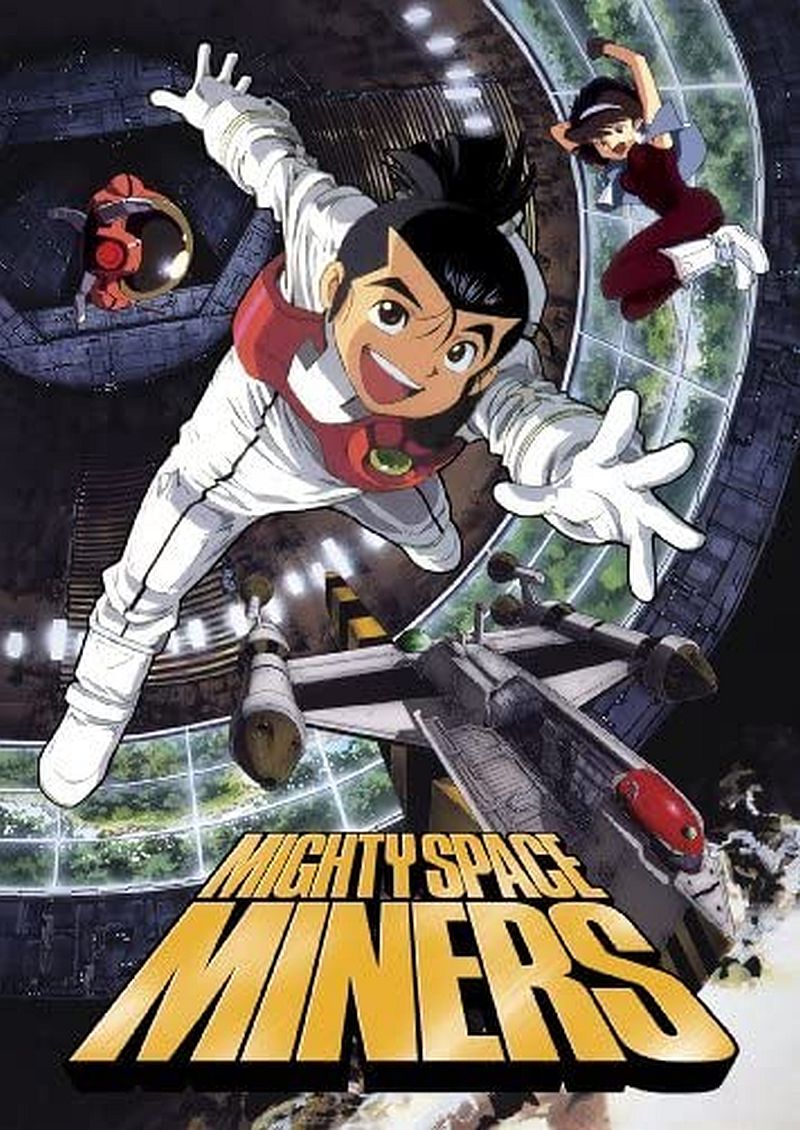
Mighty Space Miners, 1994, dir: Umanosuke Iida
Mighty Space Miners is probably the best OVA you'll never get to see the end of. And isn't that a conundrum? Is it better to watch something that's half finished but utterly fantastic, or is the potential trauma of two episodes of excellence and a cliff-hanger that won't ever be resolved too off-putting to warrant the risk?
I'll come back to that question, but first I probably ought to tell you what we have here, before I rush off into any more hyperbole. Mighty Space Miners is a bit like a more ambitious Gravity - and okay, yeah, that hyperbole break didn't last very long, but it's a fair comparison, and these fifty minutes certainly cram in more narrative than that (admittedly excellent!) ninety minute feature did. The most Gravity-esque plotline concerns teen hero Nanbu, whose pilot's exam gets severely disrupted when a decommissioned military satellite decides to go rogue and take a pot-shot at his home, the adapted asteroid Tortatis. Nanbu, as the only child born in space to have survived infancy, has a certain natural advantage, and he certainly needs any edge he can get amid the spiralling series of disasters that ensue when his ship is damaged. But his problems are nothing to what's happening back on the severely damaged Tortatis station, especially since both its corporate owners and the Japanese government seem willing to wash their hands of the incident without so much as trying to rescue any of the survivors.
If that sounds like a lot to cram into fifty minutes, it's actually not the half of it. Somehow, that running time tells various compact stories and introduces a large cast of persuasively complex characters, but among Mighty Space Miners' many accomplishments is some breakneck storytelling that manages to feel thrillingly urgent and concise rather than rushed or compressed. Nanbu gets most attention, and earns it, coming across as both an exceptional problem-solver under extreme stress and a believable kid who doesn't really know what the hell he's doing past the next ten seconds or so. But the rest of the cast are nearly as appealing, even those whose arcs are cut off before they've had a proper chance to get going.
Which brings us back to that opening question, and yes, there's no getting around the fact that Mighty Space Miners is seriously, agonisingly incomplete. Nothing about the fate of Tortatis gets resolved, and so far as we have any reason to believe, most of those we meet are exceedingly likely to die a horrible death in the near future. Some stuff does get wrapped up to a degree: Nanbu's own little mini-plot, which absorbs so much of the running time, thankfully mostly ties itself off. Still, for the narrative alone, it would be tough to recommend this. Personally I'd add on a point or two for the surprisingly realistic sci-fi, that being something that crops up in anime with disappointing rarity; indeed, the science-fictional world-building is in itself rather fantastic. But ultimately, the deciding factor if you're considering giving this a go is how much you're a fan of quality animation, because on that score, Mighty Space Miners is absolutely stunning. I mean, it's safe to assume that the reason its creators never reached the end is because they blew the whole damn budget on two episodes, that's how good it looks. And if you're anything like me, a gorgeously animated fifty minutes of cracking sci-fi with well-developed characters, a surplus of imagination, and an entire movie's worth of skin-of-the-teeth crisis management is worth a punt, even in the knowledge that there's no resolution to look forward to.
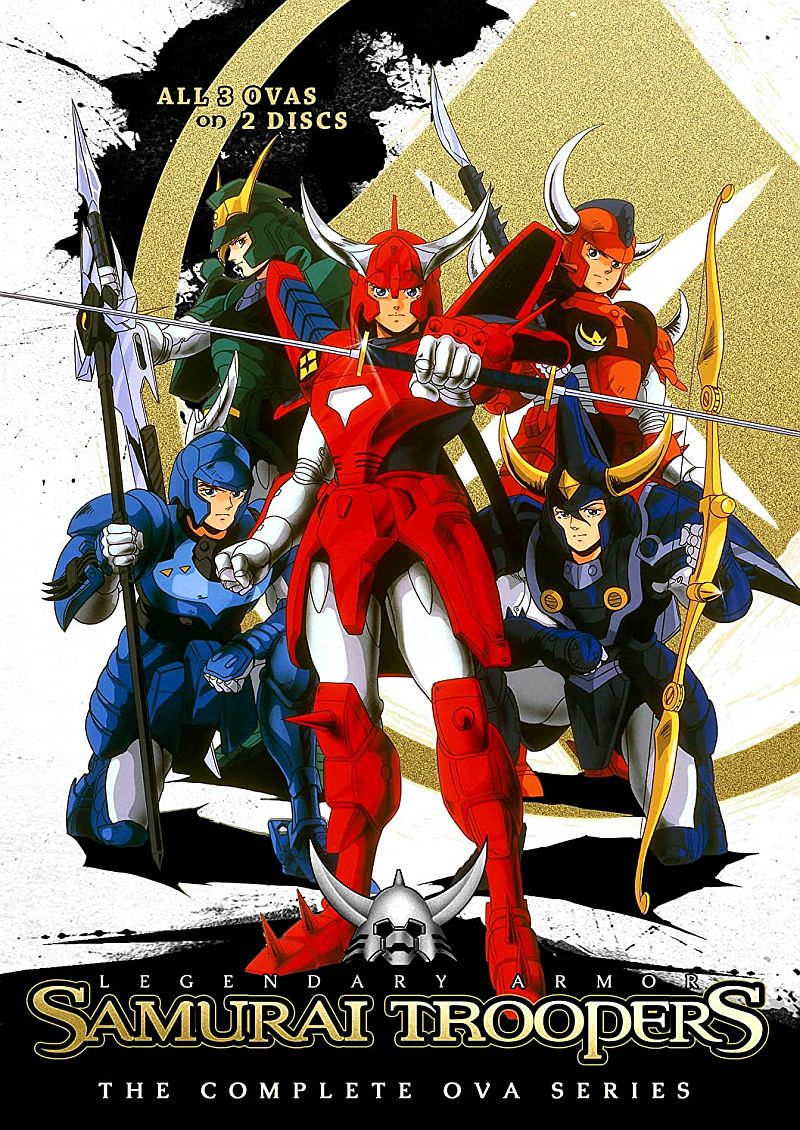 Samurai Troopers: Legend of the Inferno Armor, 1989, dir: Mamoru Hamatsu
I'd like to admire the second Samurai Troopers OVA for its attempts to broaden the series' mythos and take it somewhere new by setting a good portion of the story in Tanzania and introducing a black antagonist (who's, notably, not a villain as such), because if there's one thing pre-twenty-first century anime was dire at, it was representation. And honestly, I think the intentions here probably were admirable: Mukala, the antagonist in question, receives a terrific visual design, the more so when he gets to armour up later on, and proves more than a match for our heroes, trouncing them at every opportunity with his awesome giant boomerang. So it's a shame that I spent almost the entire running time of these four episodes with a nagging voice in the back of my mind asking, "Wait, isn't this still pretty racist, though?"
And yes, it is, so on that front anyway, it's a case of points for trying but points lost for not trying a fair bit harder, and in general for not making Mukala an actual character rather than a largely speechless automaton - or making Tanzania feel less like a bunch of mud huts in the middle of nowhere. But there I'll leave the matter, and move onto the remainder of Legend of the Inferno Armor, which, thank goodness, is ambitious in ways that are unambiguously positive. Mukala might be underdeveloped, but the plot that's wrapped around him is a welcome surprise: I noted in my review of the first OVA that I'd like to see a bit more substance this time around, and it's certainly delivered. Indeed, this feels less like an isolated story, more like an attempt to push the existing narrative forward in meaningful ways, or even to shunt it onto a more interesting track. And even though I don't actually know what that narrative was because I've never seen the series, I still found that awfully appealing.
Basically, what Legend of the Inferno Armor does is what I personally would most like something of this ilk to do: it digs deep into an existing property and finds ways to complexify and problematize it. I don't know what the explanation for why our heroes can conjure mystical suits of armour was in the TV series, but here it takes a decidedly dark turn, and that's emphasised by the arc that one character undergoes, wherein he suddenly realises he doesn't actually want to spend the rest of his life fighting just because of some arbitrary twist of fate. In its own way, what's on offer here feels almost as dramatic an upending of its chosen formula as Neon Genesis Evangelion would be six years later: indeed, you might well find yourself shouting "Cye, get in the magical samurai armour" before the end.
With that said, there's maybe not quite enough plot to fill the nearly two-hour running time. Still, even if there are points when the pace could do to pick up a little, it's rarely a hardship: Legend of the Inferno Armor has had a slight but noticeable visual upgrade from the first OVA, to the point where it mostly looks rather fine, the copious action scenes are engaging, and the story is busy and mysterious enough that it's easy to ignore the points when it slows to spin its wheels. None of that edges this up into mind-blowing territory, perhaps because, as much it's pushing at its envelope, it's still basically coming from a formulaic place; but regardless, the attempts to do something different and meaningful with what could easily have been thoroughly disposable are definitely appreciated. It's a real shame more couldn't have been made of the potentially fascinating Mukala, and that the representation of Africa falls back on such musty stereotyping, but those are the only real blots on an otherwise well above par title.
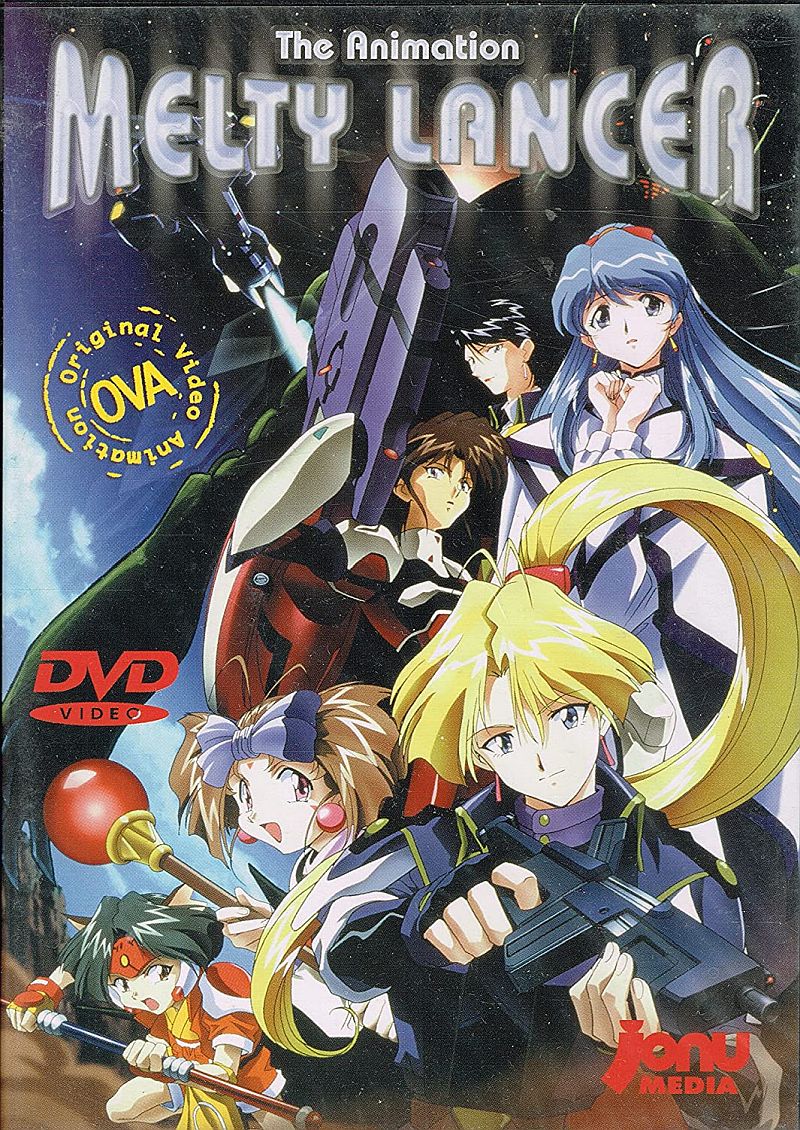 Melty Lancer, 1999, dir: Takeshi Mori
1999 is, I think, my least favourite year for anime, a fact I'm sure I've mentioned often enough. At the end of the twentieth century, computer-assisted animation and CGI were tools few knew how to get the best out of, understandable given their relative newness, and the result was often anime that all too evidently betrayed its roots. However, I mention this not because Melty Lancer falls into that category - I mean, it does on occasions, because that's just 1999 for you - but because director Takeshi Mori does a damn sight better job of exploiting the advantages of the nascent technology while minimising its obvious flaws than the majority of his peers. Not only does the six-part OVA frequently look terrific, it looks terrific in ways that couldn't have been accomplished a handful of years earlier, making good use of CG and complex camera movements without being obnoxiously show-offy and often employing washes of digital colour that provide a gorgeous, neon-soaked hew. It's that rare turn-of-the-century title that doesn't feel visually compromised, but actually looks good in ways that couldn't have been brought about without computers, and hats off to Mori for that, as well as his generally imaginative direction and solid construction of action sequences. Granted, the character designs are distinctly generic and of their time, but that aside, Melty Lancer is attractive enough that its visuals are invariably an asset.
And yes, the fact that I'm leading off by discussing the animation does mean there's a "but" coming, because it's fair to say that nothing else here works on anywhere near the same level. Still, I don't want to go too far down that route, because, at the very least, there's a fair degree of storytelling ambition happening, and that's something I'm always in favour of. I think it's fair to say that Melty Lancer's problems largely result from being a video game tie-in, though if you're more familiar with Western than Eastern media, that will immediately paint a slightly unfair picture. Japan, in general, has a much better handle on cross-media storytelling, and also a greater inclination to exploit its potential, and it's apparent that everyone involved viewed Melty Lancer not as a trashy cash-grab spin-off but as an opportunity to take advantage of some complex preestablished setup and world-building.
Which is commendable, for sure, but it would be nice if more of that setup and world-building was there on the screen. The result, without any knowledge of the games, is tricky to follow from the off and winds up somewhere awfully near to incomprehensible. Again, I hate to bitch at a property for not playing safe, but by the last episode, I had basically no clue what the precise nature of the ultimate conflict was, or how all the involved parties fit in, or how the eventual universe-saving solution actually worked. And it didn't help that, rather than having anyone who stands out as a protagonist, the show goes to great pains to spread the love between its various one-note characters, all of whom are perfectly acceptable and some of whom are quite fun but none of whom are interesting enough to care much about. This isn't a problem in the earlier episodes, which tell discreet stories and give everyone clear mini-plots to busy themselves with, but when they're all thrust together, it's that bit more of an issue.
And there are other issues, depending on your tastes and your tolerances for this sort of thing; I've seen reviews that grumble about how all-over-the-place the tone is, but honestly, if random bursts of silly comedy amid a mostly serious story wind you up, you perhaps oughtn't to be watching vintage anime in the first place. Me, I found the anything-goes approach of a show that merrily threw magical girls and mech fights and spaceship battles and high-concept sci-fi and daft humour into one baffling stew quite charming, and up until the last couple of episodes, I was mostly won over by Melty Lancer. It definitely doesn't stick its landing, but if you're going to go off the rails, better to do it by being pretty and bewildering than by being ugly and boring, I suppose.
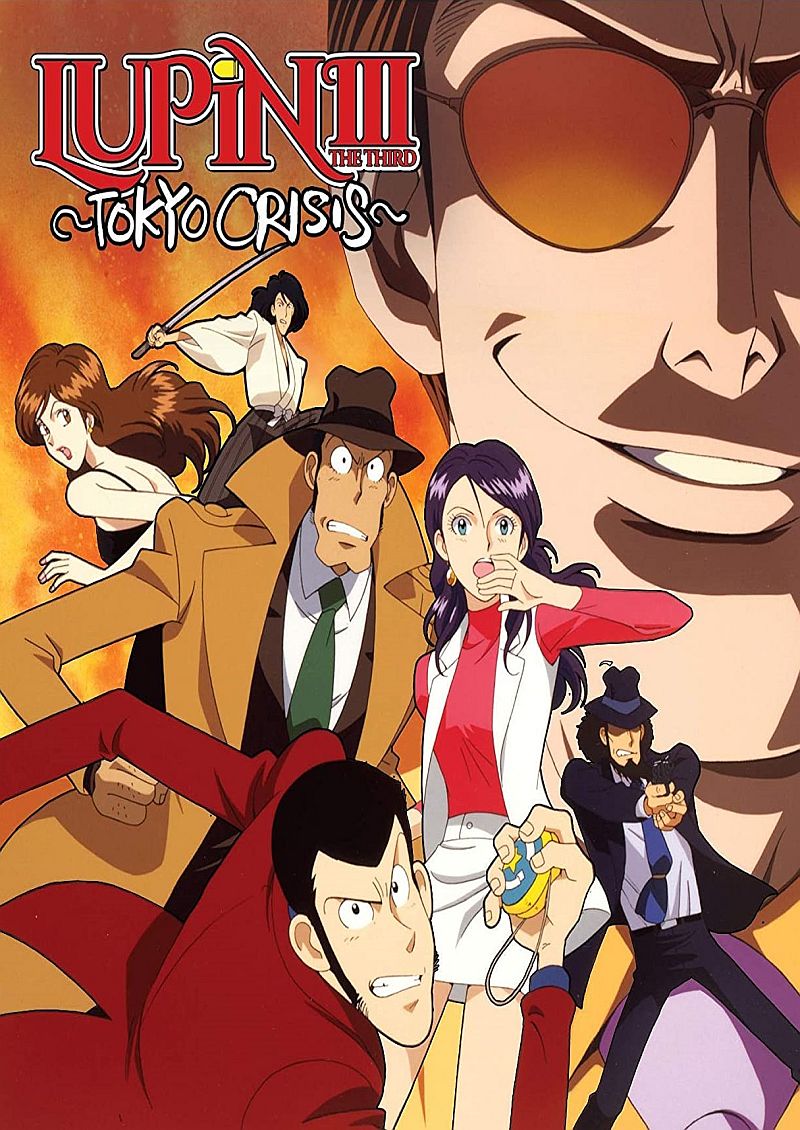 Lupin the Third: Tokyo Crisis, 1998, dir: Toshiya Shinohara
Having watched enough of these that I'm beginning to lose count, I feel I'm getting a fair grasp on what it takes for a Lupin the Third movie to work. Of course, there are no hard-and-fast rules, since some of the best films in the franchise are the ones that upend the formula in ways large or small, but still, it's safe to say that the average successful Lupin adventure gets to be that way by nailing a few crucial details. Strong action set pieces are pretty much vital, the more loopy and convoluted the better, and in large part for that reason, this isn't a series that can afford to stint too much on its animation: in particular, getting those archetypal core character designs wrong is sure to throw a spanner in the works. For that matter, it's almost essential that any given plot finds interesting things to do with all of its central cast, and this has blighted many an otherwise decent Lupin film. Generally, Zenigata or Fujiko are the ones to suffer, but it's not uncommon for Goemon and Jigen to be left out in the cold either.
Funnily enough, what seems to be least important is a good plot, and that's handy when it comes to Tokyo Crisis, because that's the one point on which it really falls down. When it comes to all of the above, it's a winner: its action is consistently excellent, we're back to a level of quality animation that wouldn't disgrace a cinema screen, the characters all look right without looking dated, and everybody has meaningful business to get on with. Goemon and Jigen are reduced to comic relief roles, but that's to the film's benefit, and the moment in which they're finally allowed to stop clowning and start kicking ass is a particular delight, while Fujiko probably fares worst, since she fades into the background after the midway point, but at least it's not yet another episode where she's shacked up with the villain of the week; though Tokyo Crisis feints briefly in that direction, it's only to set up a rug-pull. But primarily it's the bumbling but oddly noble Zenigata who steals the show, and for those of us who like Zenigata more than they like Lupin, that's always a treat. I'm willing to believe he actually gets more screen time, and is certainly more interesting and well-developed in the scenes he has, and that the film even gifts him a cute sort-of romance is the icing on the cake.
Admittedly, none of this is exactly new, and there are even specific details of Zenigata's arc that we've seen elsewhere. Really, that goes for pretty much everything in Tokyo Crisis: it feels more like a victory lap than an attempt to do anything daring. That's fine - mostly it's more than fine - but there is that plot I mentioned, and while it's terrific for what was clearly its intended purpose, as a frame upon which to hang all the action and character work and other excellence, in its own right, it's rather bland. There's a treasure hunt that dwindles to nothing and a villain with an evil plot that could have been copy and pasted from most any action movie inside or out of anime in 1998, and it doesn't exactly matter, especially not while you're watching, but it does leave a slight and unfortunate sense of dissatisfaction. That certainly doesn't spoil one of the better Lupin the Third movies I've seen - and maybe it's a hint that you simply can't have everything in one place when it comes to Lupin - but it does mean that, for all that many of its individual elements are fantastic, what they add up to is merely very good indeed.
-oOo-
As random picking from the to-watch shelf goes, that was a respectable batch; I guess the benefit of being more reliant on Eastern Star is that they're fairly choosy about what they put out. They certainly deserve all the credit in the world for bringing back something like Mighty Space Miners, and though it's probably a more commercially sensible decision, credit to them too for their efforts to give every Lupin TV special an English language release; a year ago, I'd practically given up hope of catching them all, and now I've only more more to go. And on that note, I suspect it didn't quite come over in my review that Tokyo Crisis immediately became one of my personal favourites ... it may not be revolutionary, but it's a heck of a lot of fun.Next time? More randomness, probably, though I do have a couple of specials to be getting on with, including the long-delayed end of the Dragon Ball Z marathon...
[Other reviews in this series: By Date / By Title / By Rating]
February 8, 2021
Drowning in Nineties Anime, Pt. 94
I've been feeling the lack of themes in recent posts, and while it may not be much of one, especially given just how much of what I've reviewed here falls into the category, franchise spin-offs are better than nothing. Even then, I'm maybe pushing it with the last entry, since I've never got the impression that the TV incarnation is considered the "main" version of Lupin the Third. And thinking about it, is the Kimagure Orange Road movie a spin-off when it effectively wraps up the entire story? But hey, I only follow the stupid rules! And, er, make them.
Oh, also, as per my promise from last time, everything here is pretty much readily available, most of it thanks to the ever-marvellous Discotek. If you're in the UK, all their DVD releases are multi-region, though they state otherwise, and personally I've taken to importing them via the excellent Otaku: if you don't mind a slightly longer wait, they're the most reliable and reasonably priced option I've found.
And with the free promotion section of the post out of the way, let's turn our attention to Fatal Fury: Legend of the Hungry Wolf, Samurai Troopers: Gaiden, Kimagure Orange Road The Movie: I Want to Return to That Day, and Lupin the Third: From Siberia With Love...
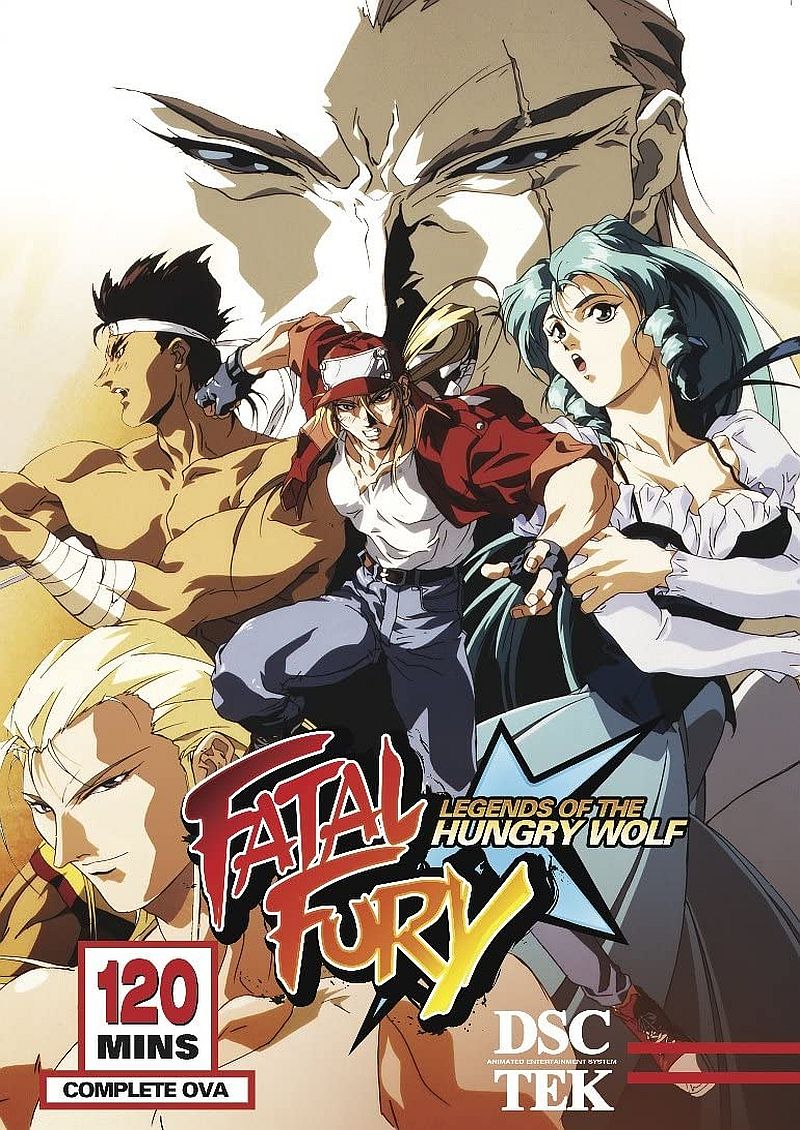 Fatal Fury: Legend of the Hungry Wolf, 1992, dir: Hiroshi Fukutomi
I never feel I've done a good job with these reviews unless I've found something positive to say, so here goes: Fatal Fury: Legend of the Hungry Wolf is perfectly functional, and indeed, for the entire length of its first couple of scenes, altogether okay. It has a beginning, a middle, and an end that follow on relatively logically from each other, and the animation and designs are efficient enough that you can always more or less tell who's who and what's going on. Oh, also the music's pretty tolerable in places.
And with that out of the way, let's move swiftly on to the negatives, which is everything else. The thing is, I know it's possible to tell an effective, vaguely novel story based on a fighting video game in the space of forty-five minutes, because director Fukutomi would pull it off the very next year with his Art of Fighting adaptation, which betters this in every way. So even though fighting games have rarely proved fertile soil for impressive anime movies, there's no excuse for how by-the-numbers this is. With barely an idea in its head, all Legend of the Hungry Wolf can think to do is barrel through some backstory for the game, and it even manages to screw that up by falling back on the laziest possible angle for these things and chucking in a tournament sequence that requires placing what scant plot there is on hold for a futile five minutes.
Still, if Legend of the Hungry Wolf had aspired to nothing besides that, it could still have been fine. Some decent action choreography would have helped, of course, and direction that was up to anything interesting whatsoever, and backgrounds that weren't drab paintings of mostly boring locations … just something somewhere to give it a spark of life. All the same, it's the particular shape Takashi Yamada's narrative takes that pushes this from mediocre to outright bad, and I can't really cover that without spoilers, so be warned! This is the kind of story where the only female character dies midway through so that the hero has that bit more motivation to defeat the villain, and indeed in which she manages to deliver her final, inspiring monologue after being shot, falling half a dozen storeys, and landing on her head. It's the kind of story that revolves around a special martial arts move, hilariously left off the otherwise complete summary of techniques that the villain's lackeys steal in the opening scene, and wouldn't you know but that happens to be the one move that can get through his defences in the climatic battle when all else has failed? Oh, and don't expect our hero to check whether his arch-nemesis is dead after he's punched him into a pond, because that wouldn't leave much space for a sequel, now, would it?
Basically, the plot is lazy crap of the laziest, crappiest sort, and even if the rest of Legend of the Hungry Wolf was firing on all cylinders, it would be quite a weight for the film to drag around. But since there isn't a single element that's doing more than getting the job done, the fact that it's in service of such a crummy, obvious, predictable, and yet barely rational story is deadly. In a subgenre that's produced a disproportionate share of rubbish, Fatal Fury: Legend of the Hungry Wolf stands as an exemplar of how to get a fighting game adaptation wrong in just about every way possible.*
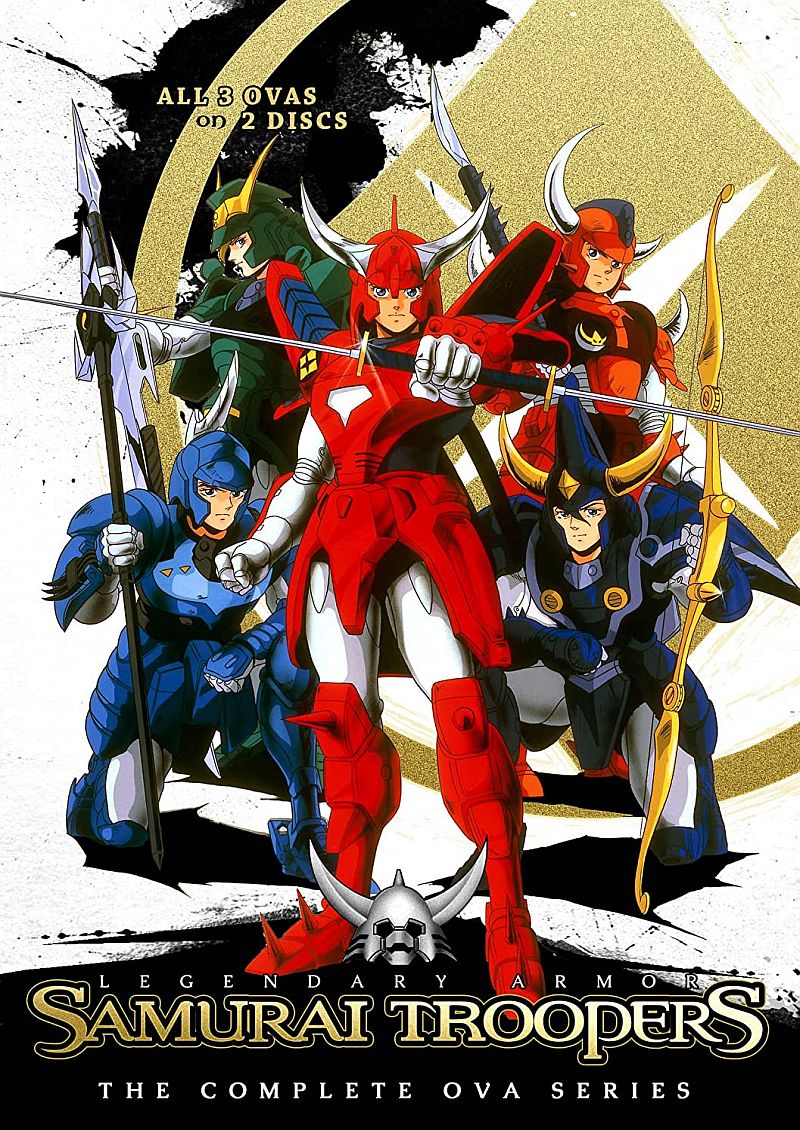 Samurai Troopers: Gaiden, 1989, dir's: Kazuki Akane, Mamoru Hamatsu
Given that I know effectively nothing about the TV show Samurai Troopers - AKA Legendary Armor Samurai Troopers, AKA Ronin Warriors, and given that this first OVA is a direct sequel to its 39 episodes, it's fair to say I'm not close to being the intended audience. And fair's fair, I tried to modify my expectations accordingly. But you know what? I really didn't need to. Not only is it pretty good, it stands on its own in an entirely satisfying fashion, as you might hope given that, to my understanding, the title Gaiden translates roughly as "side story".
Anyway, I can't altogether tell you what Samurai Troopers as a whole is about, because this two-part OVA wisely decides to discard any setup or character introductions and let us catch up on the fly with anything we really need to know and might have forgotten in the nearly two months since the TV show ended. Given that our five heroes are all much of a much and that the concept seems to be, "it's a Super Sentai show, only with magical samurai armours instead of science-y futuristic armours", any degree of explanation would have wasted some of its precious forty-five minutes - and yes, I'm conscious that all of this hesitant praise sounds a lot like criticism, but hey, not everything has to be Shakespeare, and I genuinely did admire how Samurai Troopers: Gaiden came along and told its little tale and dashed off with the minimum of fuss and clutter, so there.
This particular side story sees four of the gang going off to track down the fifth, whose armour has shown up in America of all places, and appears to be responsible for some decidedly unheroic deeds. It soon turns out that their missing friend has been lured into a trap by a brand-new, OVA-suitable foe with nice, straightforwardly evil motives and not much in the way of history, but a terrific enough design and a weird enough vibe and modus operandi that they're just fine for these specific purposes. There are some effectively creepy moments, some neat fights, and it's all about what you'd hope for from something like this, without ever particularly excelling or breaking out of its constraints.
Funnily enough, it also ends up providing the sort of introduction that it conspicuously isn't trying to offer, which is neat from the point of view of anyone who, like me, decided to skip fifteen hours of TV and go straight to the sequels. Given that the remaining two OVAs are considerably longer, I'll be approaching them with correspondingly higher expectations, and if they're as throwaway as this is, it will be quite the disappointment. But as what it was clearly meant to be, a fun diversion to keep the property in audience's minds, Samurai Troopers: Gaiden does exactly what was needed and does it all quite well.
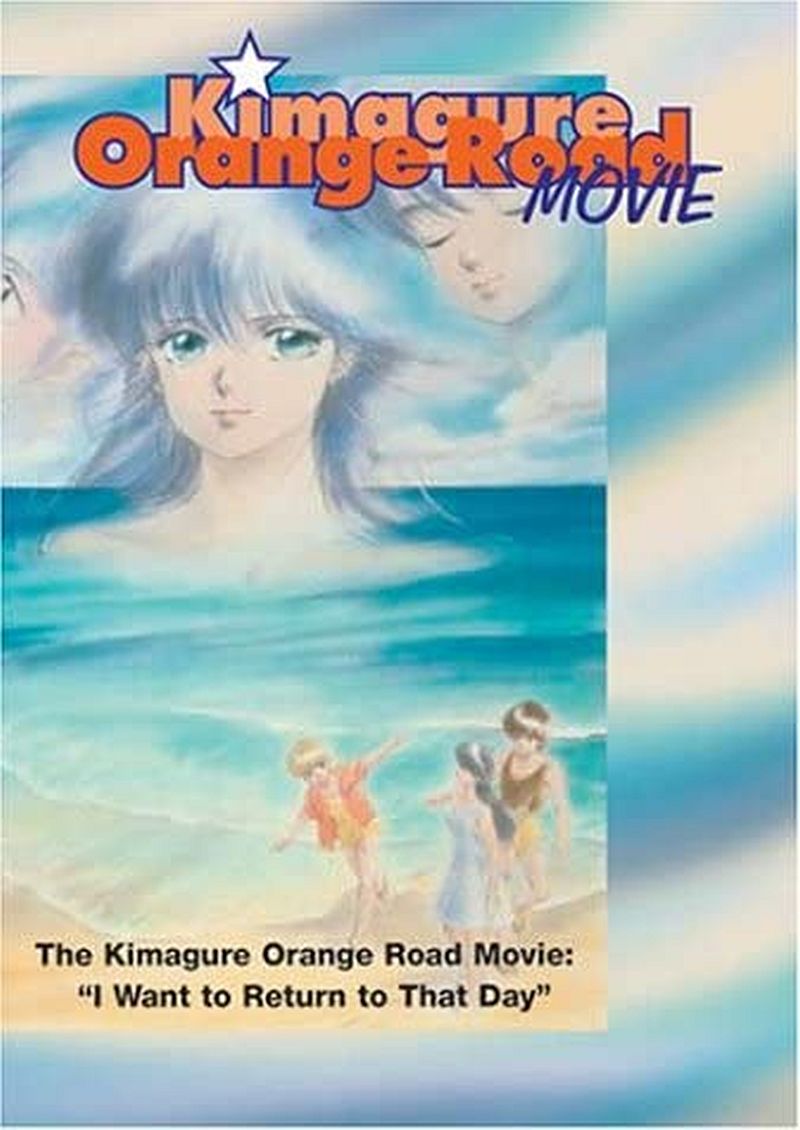 Kimagure Orange Road The Movie: I Want to Return to That Day, 1988, dir: Tomomi Mochizuki
I kind of feel like the first Kimagure Orange Road feature film, I Want to Return to That Day, saw me coming. Just a few weeks ago, I was grumbling over the second volume of the OVA series, complaining that protagonist Kasuga Kyosuke's supernatural powers felt like a clumsily used plot device and lamenting the central love triangle that drove the show, whereby Kyosuke is dating the much younger Hikaru but quite evidently sees her more as a friend and wants badly to be with the third member of their group, Madoka. Why did Kyosuke let this absurd situation continue for month after month, I asked? Why didn't he just tell both girls how he felt?
And along comes I Want to Return to That Day, responding to those questions with a bluntness and power I hadn't remotely prepared for. Gone is any mention of Kyosuke's supernatural abilities, and as for the rest, the answers are both obvious and simple: Kyosuke doesn't break up with Hikaru because breaking up with people that you care about, even when you don't love them or want to be in a relationship with them, is horrible and devastating and generally one of the worst experiences it's possible to go through, let alone to put someone else through - and the more so when that person isn't the sort to quietly accept it. And attempting to start a relationship with someone you do have strong feelings for is far from straightforward, especially when the price of doing so is their closest friendship. Sure, Kyosuke has been screwing up all this while, inadvertently abusing Hikaru's feelings and lacking the courage to pursue a more adult relationship with Madoka, but who hasn't made the same sort of dumb mistake at some point? Indeed, it's practically a guaranteed part of being a teenager, when the lines between love and friendship are at their most smudgy and you're yet to fully learn how much doing the easy thing can often be doing the wrong thing.
This is really all the plot I Want to Return to That Day has to fill its scant seventy minutes: Hikaru and Kyosuke share their first kiss, Madoka is surprised by how jealous she feels and lashes out at Kyosuke, Kyosuke finally realises what's at stake and does what he's been putting off all these months, and much pain and sadness follows. AnimEigo's blurb describes the film as bittersweet, but there's generally more bitterness than sweetness, and I mean this not at all as a criticism: the emotional honesty on display here is quite something, and though the results are pummelling, that only makes the glimpses of hope we see toward the end that bit more poignant. The closest parallel I can think of is the much-overlooked Ghibli movie Ocean Waves - also directed by Mochizuki, I realise only now! - though I'd argue that I Want to Return to That Day is that bit stronger, if only because it gets to cheat a little by having shunted so much of its character building onto the series and OVAs. Though with that said, I don't see any reason the film wouldn't stand on its own, since the central setup is so easily grasped.
Admittedly, I don't know that I Want to Return to That Day quite manages to look like a cinema-worthy feature, though it's definitely an improvement on the OVAs, which I assume were already a marked step up from the TV series. To some extent, though, it's hard to see how a higher animation budget would have brought much to the table, and what we have is ample to capture the subtle nuances of expression necessary for all of this to work. And Mochizuki, one of my favourite decidedly unfamous directors, is on truly wonderful form here, ably abetted by his trio of editors; between them, they conjure up some bravura sequences, wringing every drop of emotion out of Kenji Terada's script and sometimes getting to the same place with merely the right cut away in the right place or a perfectly chosen camera angle. Altogether, this is one of the boldest and most unapologetically heart-breaking films I've seen about the step into adulthood and all the complications that brings, and as much as I didn't have much time for Kimagure Orange Road up until now, that the OVAs were often kind of a slog was a small price to pay for so splendid an ending.
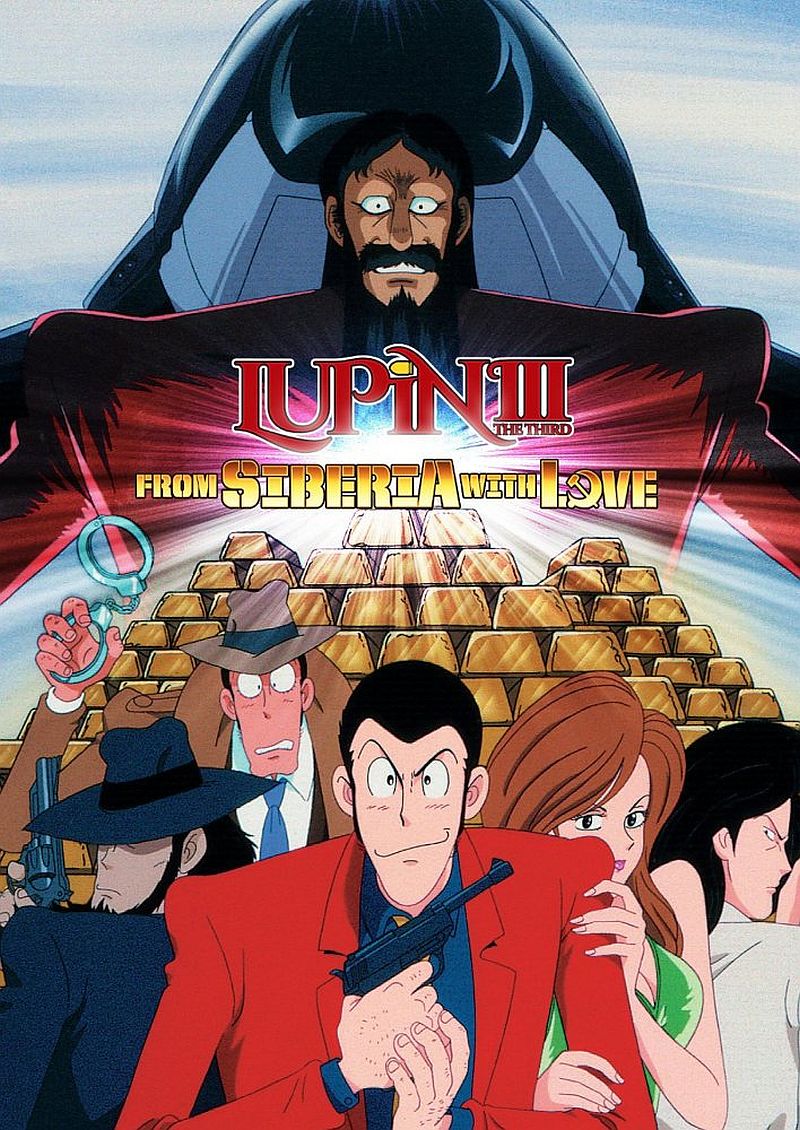 Lupin the Third: From Siberia With Love, 1992, dir: Osamu Dezaki
From Siberia With Love might almost be my favourite of the many Lupin TV specials if it wasn't so damn cheap and ugly. In the past, I've praised these specials for their visual consistency and even on occasions for being worthy of a cinema release, but there's absolutely none of that here. This looks like a TV movie, and it looks like a TV movie where the money ran out somewhere in the early planning stages, and it looks like a TV movie with a director who makes lots of very bad calls in his attempts to mask the inadequacy of his budget. And like I say, all of that's a heck of a shame, because everything else about From Siberia With Love is great.
We'll come back to that, but lets dwell a little longer on the problems, and in particular on Osamu Dezaki's hand in them. Anyone who's read a few of these reviews will know that he's a director I once hated and have come to grudgingly admire; he has a terrific sense of style, but one that, when applied lazily, tends to overwhelm his material and needlessly distract from the narrative. There are nearly as many cases where Dezaki gets it somewhat wrong as when he pulls it off, but I'm pushed to think of another example that goes quite as thoroughly wrong as this. For a start, because the money's not there, Dezaki's left to rely on an exceedingly small repertoire of tricks: his trademark dissolve to a painted image shows up plenty, but what's unmissable is the habit of repeating a snippet of footage two or three times to accentuate the action. This happens so often that I'd lost track within the first ten minutes, and I don't know that there's a single moment when it succeeds, in large part because, despite what I just said, it's not accentuating the action, it's invariably replacing it. Because, you know, good action animation is costly, and reusing footage is much less so.
Other than being overly noticeable and tacky, this also means that From Siberia With Love is that rare Lupin film without a single decent action sequence. Oh, there are ones that work marvellously on paper, but none that survive the budgetary restrictions with all their dignity intact. The first is probably the worst, being positively agonising, and there are brief bursts that are somewhat better, suggesting at the very least that Dezaki was trying to marshal his slender resources to where they might have the most impact, but still, an action comedy with no actively enjoyable action sequences is a hell of a thing.
That really ought to be ruinous, and as sad as it makes me to badmouth Dezaki after becoming a convert, he's doing little to right the ship here. Fortunate, then, that veteran Lupin scribe Hiroshi Kashiwabara was there to provide one of the very best plots, and the better scripts, that have graced these movies. Kashiwabara had a hand in quite a few of my favourites, but this might be his best effort, taking a fun central idea that spins out from an historical event - in this case, the deaths of Russia's imperial Romanov family - and drags it into the present, then hurls in a sizable cast, all with their own agendas, and watches them play off each other in enormously enjoyable fashion. Star of the show is undoubtedly the villainous Rasputon, who's hilarious and off-puttingly weird and convincingly conniving all at once, but everyone's worthy of inclusion, and the way the script rattles between them and steadily doles out key information is top-tier stuff. With a story this good, all Dezaki really needed to do was keep out of the way, and while he doesn't quite manage even that much, the result is still an enjoyable romp, albeit one that could - and should - have been stellar.
-oOo-
There were some real highs and lows there, but let's end on a positive note and mention once more how unexpectedly marvellous I Want to Return to That Day was. It would be dumb to claim there's any single reason I love anime, a field so broad as to almost defy classification, but certainly one reason is the willingness to take established properties in directions you'd never expect. Kimagure Orange Road gets a film that's up there with Tenchi Muyo!'s Tenchi Forever! and Urusei Yatsura's Beautiful Dreamer for using its source material as a springboard to go somewhere bold and unpredictable. I don't know who thought that taking a supernatural romantic comedy and stripping out the supernatural bits and the comedy and making the romance painfully realistic was a good idea, but my hat's definitely off to them.Next up: well, a bit of a break probably, since I'm about caught up with these again, and then possibly another trip back to the eighties, depending on which work-in-progress post gets wrapped up first. And of course I really need to be thinking about how we're going to mark the big one hundred, since that's getting awfully near...
[Other reviews in this series: By Date / By Title / By Rating]
* And I say this as someone who quite enjoyed Battle Arena Toshinden!
February 2, 2021
Drowning in Nineties Anime, Pt. 93
As seems to be happening a lot lately, this is another enormously random post, with a couple of the most profoundly weird entries we've yet had (and given the frequent weirdness of vintage anime, that's saying something!) We're also heading to some particularly obscure places, in part due to my recent habit of grabbing the odd title that never made it past a VHS release ... though, come to think of it, this is nothing compared with what's left sitting on the newly installed VHS to-watch shelf!
But does weird and obscure equate to good? Well, not necessarily, when it comes to Genesis Survivor Gaiarth, Tales of Seduction, Miyuki Chan in Wonderland, and the Kimagure Orange Road OVA (Disk 2)...
 Genesis Survivor Gaiarth, 1992 - 1993, dir's: Shinji Aramaki, Masayuki Ozeki, Hideaki Ôba
Or Genesis Surviver Gaiarth, as the AnimeEigo edition insists on misspelling it, and perhaps its unfair to pick on a release for misspelling its own title, but this one kind of has it coming. At least, the particular version I watched certainly does; I can imagine scenes that collapsed badly in the dub playing better in the original Japanese, and it's possible the collective result would be a release that didn't end up so wearying and cliched as this did. Genesis Survivor Gaiarth does, after all, have a bit of a novel hook to it, or anyway a hook that's been done elsewhere but not quite done to death: the futuristic world of Gaiarth, you see, exists in the wake of a war that's largely busted humans back to the level of pre-industrial civilisation, except for the fact that most of the tech is still around and the problem is more than nobody understands how to properly use it.
There's a persistent sense that the show would like to take this further than it does. By the time a robot described as an elf shows up and joins our band of heroes, it's apparent that the big idea here is "classic-style fantasy, only with all the fantasy replaced by sci-fi stuff." But the plot quickly undermines itself by requiring various characters to have a working knowledge of robotics, which seems out of place in a world where people routinely call robots "beasts". Nevertheless, there's the seed of a neat idea there, and moments when Genesis Survivor Gaiarth manages to do something with it, my favourite being the "spells" characters cast that are cobbled together from technical gobbledygook they clearly don't comprehend themselves. Admittedly, even that's not the newest of concepts, but it's the one time the English translation wakes up and has a bit of fun with language instead of leaning on whatever banality is ready to hand.
Probably, though, the script would be functional enough if it weren't for the English voice cast's determination to drag it down to the lowest possible depths. Out of all of them, only Rick Forrester as Zaxon manages not to humiliate himself, and that's in a part I suspect even I could have not made a hash of; "noble robot" is never going to be the biggest dramatic stretch. Ralph Brownewell is miserably awful in the lead, confusing being loud and dumb with appealing innocence, while Belinda Keller is only marginally better as main female protagonist Sahari, relying on a single note for her character and making that note really damn shrill. It's the sort of dub that makes you wonder what the hell was going on with the American voice acting community in those days, because no-one gives the impression of making a shred of effort or of granting the material even the minor levels of seriousness it warrants.
That dub is pretty fatal, but it feels like quibbling to suggest that Genesis Survivor Gaiarth would be significantly better without it. Aside from the central "it's fantasy but not" gimmick, the one thing that really stuck with me here was how badly its three directors' styles mesh. Of the three, only Shinji Aramaki - who also had a major hand in the writing and planning and generally appears to have been functioning as project lead - would go on to much of a career, and only then once he became a trendsetter of CG filmmaking. Here his work is largely functional, which is more than can be claimed of Ozeki, under whose guidance the animation dips into subpar TV territory. Ôba picks things up with the last and probably most visually consistent episode, but by then the damage has been done. All told, I suspect that in the original Japanese, Genesis Survivor Gaiarth is a title I'd have found passable but disappointing. However, saddled with such a god-awful dub, even passable ended up as a stretch.
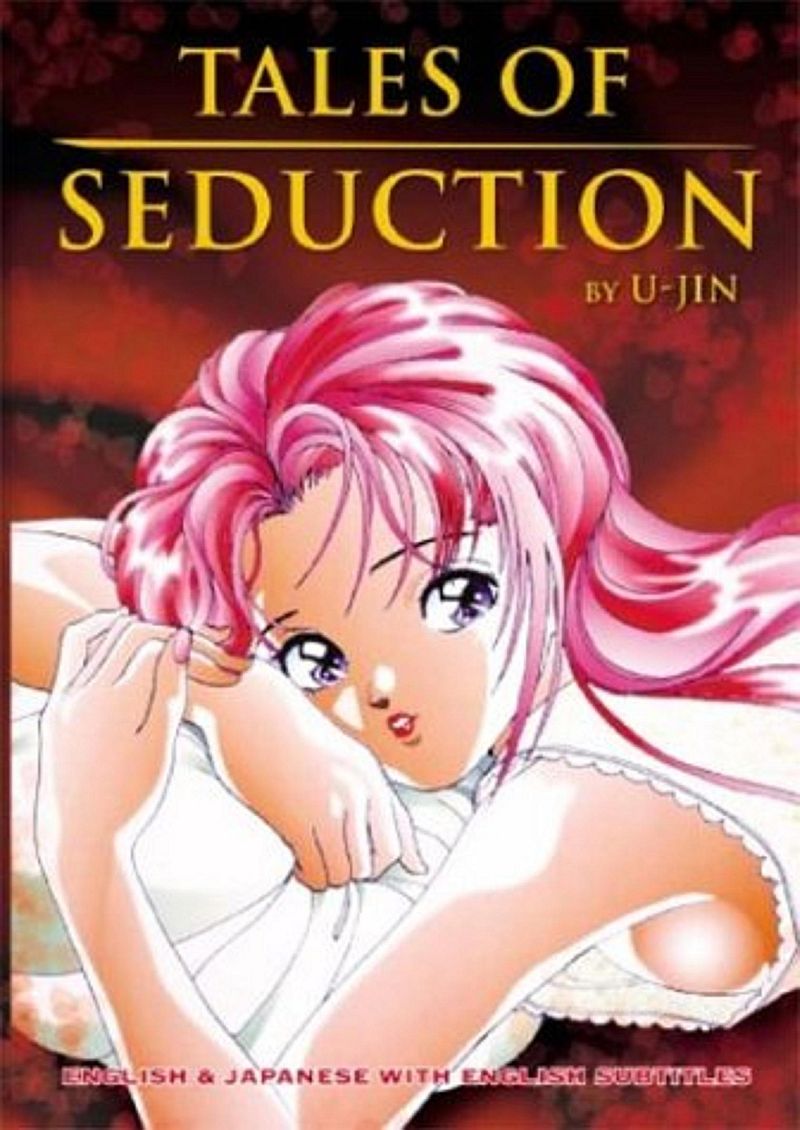 Tales of Seduction, 1991, dir: Osamu Sekita
What the hell are we supposed to do with Tales of Seduction? It's something that could perhaps only have come out of the nineties, and three decades after its initial release, is so bewildering that I barely know how to go about summing it up. But okay, imagine if you will an erotic Tales of the Unexpected, except played mostly for laughs, and where all of the plots revolve around what the title considers seduction but the subtitles doggedly refer to as rape. And by current definitions, we're definitely talking the latter, in that the women involved are invariably tricked or manipulated, though never, thank goodness, actively forced; at the time, I guess that was sufficiently a grey area to keep this on the right side of screamingly horrifying. Though you'd think the fact that the closest character we get to a hero in two of the three tales here is - and this is a phrase I could happily have gone my whole life without ever typing - a rapist for hire, would have given someone pause for thought even way back in 1991.
Each of the three tales is roughly fifteen minutes long, which is about all they could possibly stretch to, since they're really more like anecdotes or the setups for jokes - did I mention that Tales of Seduction is dead set on considering itself a comedy? In the first and sleaziest, a pop song writer divides his time between coercing novice starlets into having sex with him and lusting over the girls at a nearby college, while convincing himself that the one he's most obsessed with is actually just an object of platonic affection who reminds him of his first love. Tales two and three both involve the aforementioned rapist for hire Toyama no Benbei, who settles various affaires de coeur that have gone off the rails in his own inimitable manner. All three stories are unremarkable on the technical front, without every slipping into being actively bad, and director Sekita's only real flair is for amping up the comic moments. Certainly Tales of Seduction is quite useless as erotica, and also weirdly chaste for such an overtly sordid show.
Anyway, look, I'm going to have to own up sooner or later, so let's get it over with: I didn't hate this, for all that I probably should have done. Nobody could suggest it handles its themes with tact or grace, but it's never quite as appalling as a synopsis is bound to make it sound. For a start, there isn't the slightest suggestion that we're meant to be on side with the men, except perhaps for Toyama no Benbei, who's more a weird force of nature than any attempt to represent an actual human being. All of them are obnoxious, ridiculous, or both, and the show is quick to make sure we're aware that the women who were misled into sex were quite happy with the results and have no ill feelings, which - okay, probably makes it worse, but is enough in context to keep the whole business tolerable. And then there's the really damnable thing, which is that the twists are actually rather effective and some of the jokes are actually quite funny, to the point where I really did laugh out loud.
And yes, I'm aware this probably makes me an awful person, but it's also a testament to the extent that, while I have grave doubts the world ever needed what Tales of Seduction has to offer, it delivers fairly well. This is not, I have to stress, a reason to watch it, and I say that even with sexual politics put momentarily to one side; the world is full of better twisty short stories, and better comedies, and better erotica, and bringing all of those together with some mildly decent animation doesn't turn them into anything special. Really, the only features that stand out about Tales of Seduction all this time later are its profoundly screwed-up premise and the manner in which it manages to dredge something watchable out of such an obvious minefield. I guess that, under the circumstances, not being a toxic train wreck of epic proportions is quite the win here, but that's still a long way from being actively good.
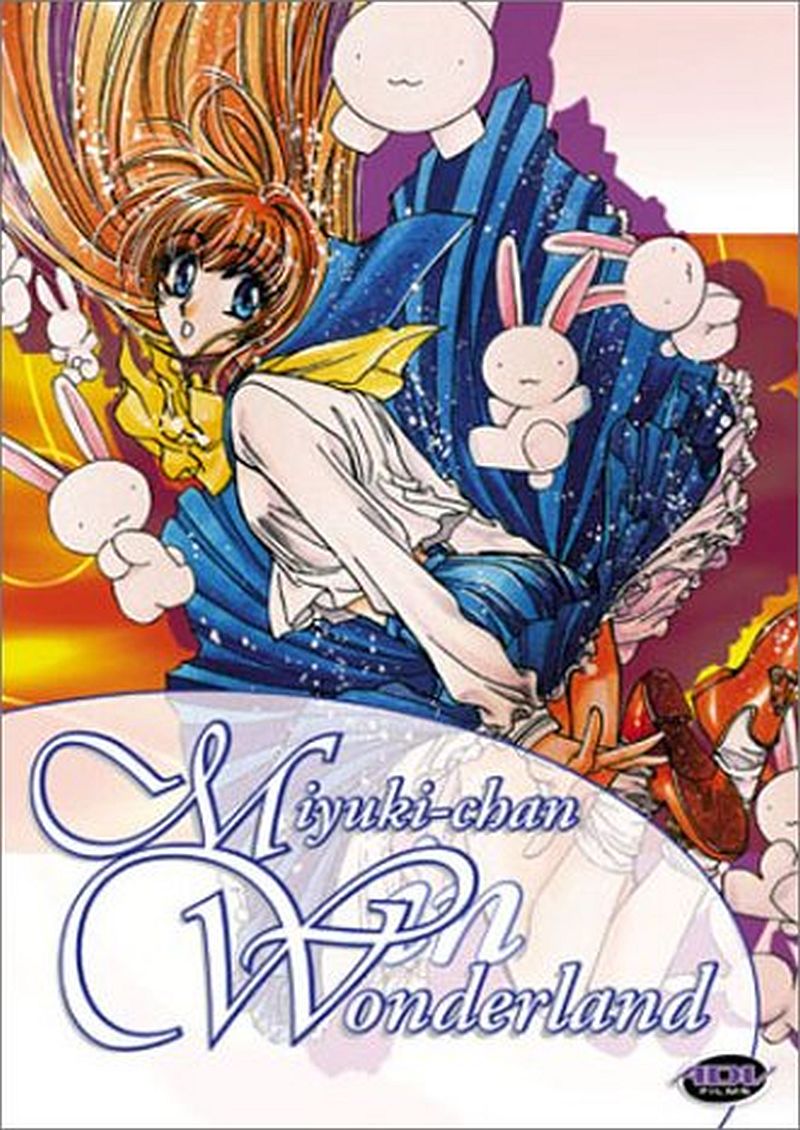 Miyuki-Chan in Wonderland, 1995, dir's: Seiko Sayama, Mamoru Hamazu
The first thing that hits you with Miyuki-Chan in Wonderland is Toshiyuki Honda's score: it's goofy, energetic, at first glance fairly obnoxious, and once it's inside you're head, you're never likely to get it out, because get past the initial shock and it's pretty damned addictive in a sugar rush-y kind of way. A good job, too, because that score accompanies every second of the two fifteen minute episodes that compose ADV's release, sometimes receding to a gentle tremor, sometimes shouting its presence, but always providing the spine that keeps Miyuki-Chan in Wonderland on its feet.
You could see that score as something of a metaphor, as well, because Miyuki-Chan in Wonderland as a whole is equally goofy, energetic, and obnoxious, but with a certain charm that sinks in quickly and never outstays its welcome. Those two episodes are heavily truncated retellings, respectively, of Alice's Adventures in Wonderland and Alice Through the Looking Glass, except that Alice is replaced with Japanese schoolgirl Miyuki and the entire rest of the cast are replaced by hot women who hit on her at every conceivable opportunity. So maybe not the most faithful of adaptations then.
If this had been made entirely by men, it might be easier to get a handle on or to dismiss as one more bit of sleazy exploitation from a decade when anime churned out more than its fair share. But in fact, the original Manga came out of all-female collective Clamp, and whether that makes it less sleazy or exploitative I'm in no position to say, but the knowledge does make you wonder if there isn't more going on than is apparent at first glance. Certainly, Miyuki-Chan seems to have little interest in being erotic, let alone pornographic; first and foremost, its aim appears to be having fun with its concept and playing it for surreal laughs. Miyuki is quite the innocent, with no interest in reciprocating the endless advances made toward her, and ultimately what we get is effectively the same situation repeated over and over in various combinations: she meets a character with some resemblance to one of Lewis Carroll's, they crack onto her, she demurs, and some happenstance whisks her off to the next scene.
Absurd and insubstantial though this is, it's also thoroughly entertaining. Miyuki doesn't get much depth or background, to say the least, but one of the great things about animation is that it can take on a lot of the heavy lifting of characterisation, and in those terms, she's a marvellous protagonist, gangly and perpetually baffled but with just enough of Alice's eager curiosity and willingness to skip blithely onto the next crisis that she never seems victimised by the string of women who are after her innocence. There's really only the one joke here, and it's a thoroughly odd one, and you can kind of see why no more of the manga's remaining five episodes made the leap to the screen. But for all that, Miyuki-Chan ends up as something unique and a little special; for those who like to probe anime's stranger corners, this definitely needs to be on the to-see list.
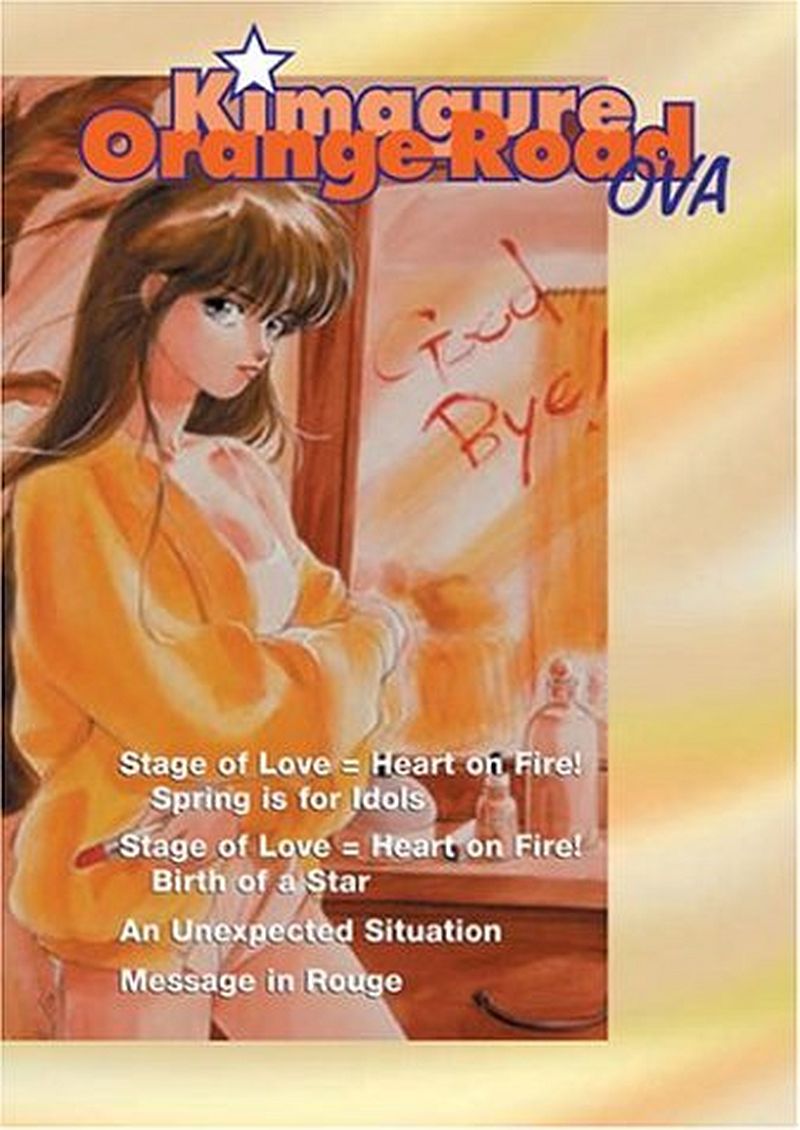 Kimagure Orange Road OVA (Disk 2), 1989-1991, dir's: Takeshi Mori, Shigeru Morikawa, Kôichirô Nakamura, Naoyuki Yoshinaga
I think it's fair to say that I don't get Kimagure Orange Road. Oh, I understand its significance as a landmark title in anime history, right enough; if I hadn't already, watching an episode of The Melancholy of Haruhi Suzumiya directly afterward certainly did the trick, because you can see the line of descent to that show nearly two decades its senior clear as day. But what I don't get is ... well, the entire concept, basically. What was weird for four episodes is plain bizarre with eight under my belt. Essentially, this is the story of a guy who's in love with one girl but apparently has no problem with dating another for months on end, and has practically limitless magical powers that he refuses to use to help anyone, including himself, lest he might have to, like, move house or something. It just doesn't work! Or rather, I suppose I ought to say that it doesn't work for me, since it's obviously worked for plenty of people over the years. But Kyōsuke Kasuga's behaviour follows no rational pattern, and the love triangle he's caught in and that's so crucial to the show feels far more like a dramatic contrivance than anything actual people might get mixed up in.
Still, with the negatives out of the way - wait, no, actually I have a couple more. The animation is run-of-the-mill and the direction is generally listless, and given the amount of pop music in this second volume and how routinely wonderful anime music from the period tends to be, the offerings here are fairly lacklustre. This really does feel more like TV than the level I'd expect of an OVA, and that's reinforced by the lack of any real thread connecting the episodes, barring the fact that the first two on this second disk tell a single story. But there's scarcely a shot anywhere that suggests the added resources of an OVA budget, which reinforces the impression of a show more interested in being functional than special.
And okay, now that's the negatives out of the way, and I'll concede that I at least got more out of this second volume than I did the first. The opening two-parter, following the romantic complications that ensue when Kyōsuke inadvertently swaps bodies with a pop idol, is nothing terribly exciting, but it gets better as it goes along and ends on a strong note. But from there, things improve dramatically, or at any rate get much more interesting. One of my biggest issues with the first volume was its godawful gay panic episode, and An Unexpected Situation, which brings back Kyōsuke's cousin Akane, almost feels like an attempt to set right the horrors of her first appearance. But for one scene in which she does something incredibly nasty for not much reason at all, it manages not only to pull off a sympathetic portrait of a gay woman being socially pressured into trying to pass as straight, but to do so without abandoning the breezy light-comedy tone that Kimagure Orange Road is so invested in. And it's bettered by the last episode, Message in Rouge, which has the decency to wrap things up by treating Madoka as a human being rather than just the centre of Kyōsuke's obsessions, and in the process to tell a story that's a good bit more serious and adult that what's gone before.
But with all of that said, I'd be pushed to regard the two best episodes as more than good, and the first two are merely okay, and those problems that I find so hard to get past are present all the way through: Kyōsuke's possibly-girlfriend Hikaru is a basically dreadful character, their relationship makes Kyōsuke seem like a jerk even when he's not wasting the limitless potential of his supernatural powers, and the male gaze-iness of the whole thing does no favours to Madoka, who seems to be perpetually on the verge of becoming a meaningful character in her own right. I don't know, maybe there are just some shows that you can't get a handle on through their OVAs, and the series is a stunning masterpiece that juggles all these issues so deftly that they're unnoticeable? Nevertheless, while this second volume was an okay way to pass some time, history's definitely been unkind to the Kimagure Orange Road OVAs.
-oOo-That wasn't such a great selection, for all that I always enjoy probing the odder and lesser-known corners of the nineties anime world. Tales of Seduction is at least intriguing from a sociological point of view, in that it's fascinating to wonder how anyone ever thought it was remotely okay; sometimes the nineties really does seem like another planet! I guess the only thing I'd actively recommend is Miyuki-Chan in Wonderland, and hey, there are still second hand copies kicking about at not-too-crazy prices, so that's something!
All the same, this is definitely one of the more pointless posts I've come up with. Perhaps next time I'll try and dig up a few titles that someone somewhere might actually be able to find and want to watch. But no promises, okay?
[Other reviews in this series: By Date / By Title / By Rating]
January 25, 2021
Drowning in Nineties Anime, Pt. 92
Personally I'd say this is one of the most interesting selections we've had yet, with the sad finale of my Black Jack OVA marathon, an odd and forgotten title that arguably deserves a little better, and an exciting find born of some seriously nerdy investigation. But while all of that's interesting to me, it's our fourth title that's fascinated many an anime fan in the years since it's release: Giant Robo has been on my radar for a long, long time, and at last I've got round to it.
So does it live up to its weighty reputation? Let's take a look at Black Jack: Incubation, Madonna, Mermaid's Scar and Giant Robo...
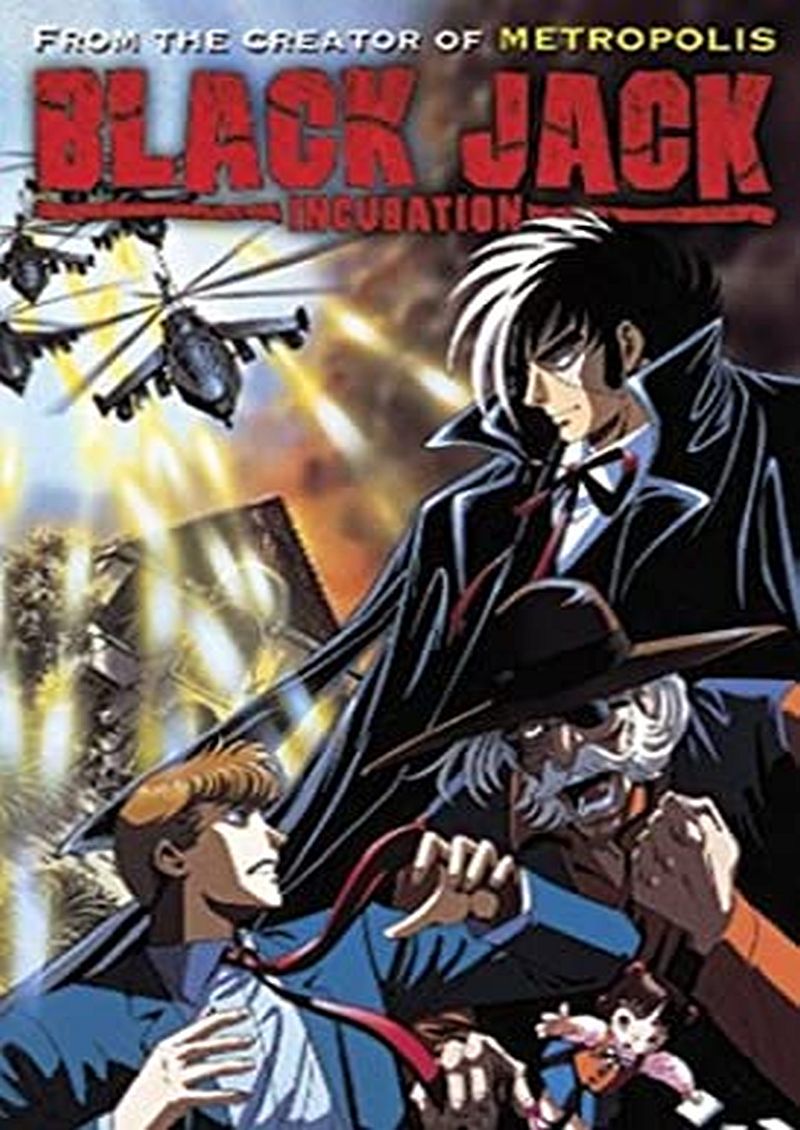 Black Jack: Incubation, 1995-1996, dir: Osamu Dezaki
Here we are, then, with what for our purposes is the last volume of these Black Jack OVAs that I've managed to review so completely out of order: there's one I haven't covered, but not only is it impossible to find, it came out a year too late for our purposes*. And honestly, I'm a bit heartbroken to know there won't be any more, since they've been so reliably excellent. But by the same measure, there were points this time around when I found myself wondering if perhaps it wasn't for the best that the makers restrained themselves to ten episodes that were as strong as these are, rather than pushing on and letting a weak one slip through.
What set me thinking in that direction was the first of the two episodes on this disk, The Owl of San Merida, which is, for my money, the worst of the ten. It's the one, at any rate, where the various formulae feel too readily apparent and where all the minor flaws stand out most starkly. Black Jack, our super-surgeon hero, does almost nothing by way of being a protagonist, and is reduced almost entirely to an observer, as we the viewer are, watching a cryptic plot slowly unravelling itself. And by the time we reach the end, it doesn't altogether feel worth the effort; there's a supernatural twist that's both awfully predictable and not terribly convincing. On top of that, there's a lack of really striking moments in the animation, which, with Dezaki being Dezaki, is one thing you can generally rely on. Yet to be clear, The Owl of San Merida is still pretty good. Certainly its central gimmick, of a man who manifests bullet wounds that heal seconds later, makes for some great body horror, and there's enough intriguing stuff amid the narrative to make it perfectly satisfying.
At any rate, Night Time Tale in the Snow, Lovelorn Princess makes up for its predecessor's relative failings and then some. This doesn't, it has to be said, immediately look like it's going to be the case, with a baffling jumping-off point that appears to involve Black Jack and his assistant Pinoko being sucked into an historical drama after their car gets snowed under in the middle of nowhere. Initially, this seems as though its going too far in the other direction, chucking the Black Jack formula and its tenuous adherence to realism out the window, but given that the story is pretty splendid and how entertaining it is watching Black Jack being unfazed by the situation - at no point does he even bother to ask why everyone's dressed like they're in a samurai drama! - it actually works out shockingly well. And Dezaki is back at his best, conjuring striking scene after striking scene, while keeping his wilder instincts largely in check. But what really makes Night Time Tale in the Snow, Lovelorn Princess is the lovely coda that comes along after it seems the tale has run its course; the result is a superlative ghost story - of sorts! - and one of the strongest episodes this remarkable series has turned out.
Obviously it would have been nice to have two episodes that were operating at that level, but as with the prior volumes, the very fact of having a pair that are so wholly different does favours to them both. Plus, if this was your entry point into the series, I doubt the issues with The Owl of San Merida would stand out so harshly; though conversely, maybe the dramatic shift of the Night Time Tale in the Snow, Lovelorn Princess might seem a little too odd. Whichever way you shake it, I guess this isn't quite in the top tier of these disks, but for such a startlingly consistent show, that's not much of a complaint.
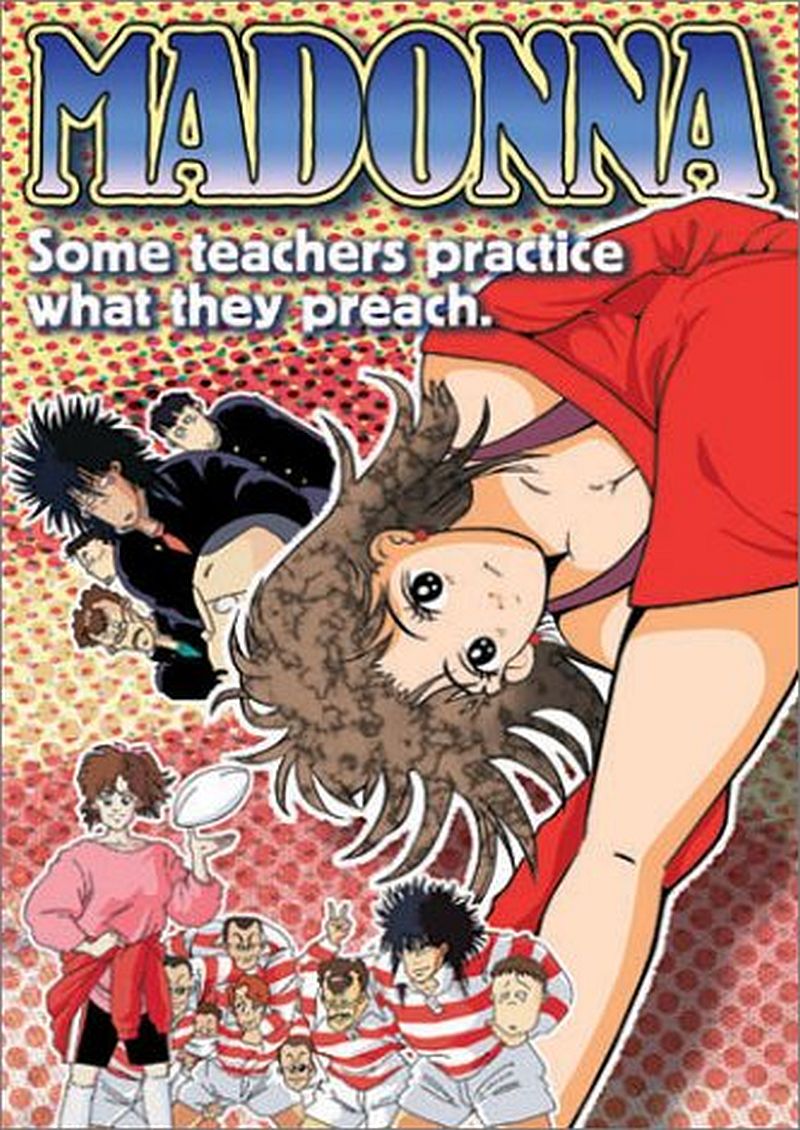 Madonna, 1988, dir: Akinori Nagaoka
The inspirational high school sports subgenre is so damn old that there are probably cave paintings about washed-up former mammoth hunters who've grown too fond of their fermented berry juice taking a bunch of disillusioned young cavemen under their wing and leading them to the top of the mammoth-hunting tables. And anime certainly hasn't been immune to such tales, so on the face of it, Madonna - which has nothing to do with the pop singer and everything to do with Mako Domon, new teacher at a school decades past its prime, who gets landed with the worst class available and is so disgusted by their antics that she's ready to chuck the towel in until she finds herself mentoring their newly formed rugby club - is about as familiar as you could imagine.
However, in many ways, Madonna bucks the trends for this sort of thing altogether. Mako is neither a middle-aged man nor an alcoholic, which sets her apart from the vast bulk of her fellow protagonists, and nor does she know a thing about rugby. The grizzled veteran player will show up eventually, but even he strays from type in a few notable aspects, and the emphasis is always on Mako, who's an appealingly flawed character and nobody's idea of an inspirational teacher; indeed, she really couldn't care less about teaching, a job she ambled into because she'd heard there were long holidays and no overtime, and even once we're past the bumpy stretch in which she's winning the bad kids over and earning their respect, she never changes that much. Her arc is more one of growing in confidence than of inspiring it in others, and there's a sense that she and the kids she's supposedly introducing to the adult world are actually growing up alongside each other.
But speaking of those tribulations, it's the first half of Madonna that feels least akin to the classic model for these stories, and is perhaps the element that makes it toughest to recommend three decades down the line. Mako, being an attractive young woman, goes through quite a different set of trials than a male counterpart would, and much of it makes for a tough watch. Mako gets sexually harassed no end of times, sexually assaulted, and at one point almost raped, and though the show doesn't trivialise any of that, it's still a difficult watch, and there's no question that a modern attempt would have to approach this stuff very differently. On the other hand, I do think credit's due for keeping us tied so hard to Mako's point of view and resisting any bid to lighten the mood; Madonna is especially good at granting us small moments in which we see how these traumas have got past Mako's armour and made her feel less safe in the world, and for an OVA from the late eighties, that's not nothing.
Indeed, Madonna as a whole does a good job of not playing to the cheap seats. Many of the teens we're encouraged to believe are capable of redemption start out as thoroughly nasty pieces of work, but we see enough of the environment they're existing in to understand a little of how they've turned out this way. Here, the animation bears a lot of the weight in selling the rundownedness of everything and how it's seeped into the folks forced to navigate these environments. The character designs end up somewhere between simple and ugly, but in a way that feels deliberate; Mako, for example, isn't portrayed as some stunning beauty but as a woman just attractive enough to occupy the attention of a bunch of troublesome teens who aren't as worldly-wise as they pretend to be. The simplicity of the character animation feels less purposeful and more budgetary, but at least the backgrounds are routinely striking, or rather, well-painted representations of mostly grim and rotten urban environments. It's not the sort of OVA that will wow anyone with its visuals, but they're of a piece with the story it's telling.
Where all that leaves us is harder to pin down. This was clearly an incredibly minor release at the time - AnimeWorks didn't bother with a dub, or even with that mainstay of DVD "features" the animated menu - and it's easy to see why nobody had an enormous amount of faith in it. There's no way you could make this material feel wholly fresh, and though the animation is fit for purpose, that's hardly the same as saying it's a joy to look at. On the other hand, Madonna does do quite a fine job of finding new ways into its hackneyed material, more so than many a better-known counterpart, and at the very least, rugby is an intriguingly weird sport to focus on. It's definitely not one I personally have the least interest in, so the fact that Madonna manipulated me into caring about the fortunes of a team made up of juvenile delinquents I thoroughly despised not an hour before is surely a testament to something.
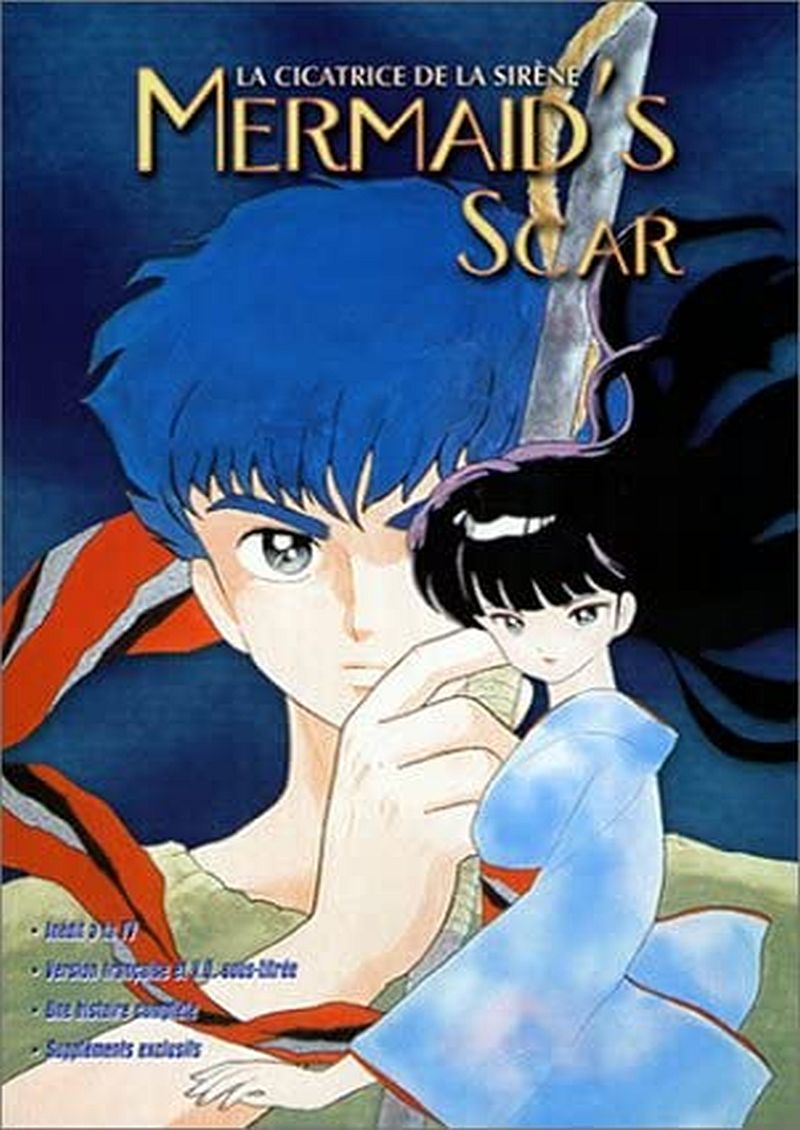 Mermaid's Scar, 1993, dir: Morio Asaka
1991's Mermaid Forest was a pretty fine slice of supernatural horror, so it's no small thing that Mermaid's Scar, the follow-up made two years later, betters it in every way. It helps, mind you, that the former got stuck with all the setup and world-building, and arguably Mermaid's Scar would suffer if you didn't watch them in order. However, it might equally be that its script just does a much more concise job of laying out its concept - eating the flesh of a mermaid has the potential to make you immortal, but the much greater potential to screw you up in horrible ways - and is thus much quicker to get into the good stuff and stay there.
This time around, our protagonists Yuta and Mana happen to encounter a young boy who's returning to live with his mother for the first time in years, and as they take up temporary jobs nearby, they soon have reason to suspect that he's being ill-treated. Saying any more than that would spoil things, especially since Mermaid's Scar doesn't do terribly well at hiding its first major twist - and actually, I told a fib at the start, that's probably the one point on which Mermaid Forest does win out. But then, it doesn't matter a great deal, since I suspect writer Tatsuhiko Urahata (or else original author Rumiko Takahashi) wanted us to get out ahead a little so that what comes after can land that bit harder. Really, the reveal toward the middle is more significant for how it pushes the narrative onto a new path that only gets darker and nastier the more we learn.
Director Asaka, surely known mostly for his extensive work on the show Cardcaptor Sakura and its accompanying movies, turns out to have absolutely terrific instincts for horror, always going for the gut rather than cheap shocks or scares, and he also demonstrates a solid grasp of three-dimensional space, resulting in something that feels oddly physical and real and leading to some especially persuasive action sequences. And while I doubt the budget here was stellar, the animation is thoroughly slick, and more importantly, well attuned to the storytelling, often visually driving home what the sparse script gets to leave largely unsaid. By way of an example, the way the grislier moments are all the more potent because these characters who've suffered so many injuries over the centuries hardly acknowledge them is great in both giving us an insight into their existence and leaving us thoroughly freaked out.
Plainly, I highly recommend this: there aren't many titles that have done such a splendid job of mining the awful extremes that living forever could so easily lead to if the circumstances or the personalities involved should go wrong enough, and the last ten minutes is one of the finest horror climaxes of any title from this particularly fertile period of anime history. But as is so often the case - and especially so when it comes to OVAs adapting Rumiko Takahashi stories, it seems - availability is a bit of an issue. There's a not-so-wonderful print of the Viz dub on Youtube, but weirdly, that dub can also be found on DVD, which is how I watched it: a bit of detective work revealed that the French release actually has it as an option, if you don't mind hard-coded French subtitles. That release isn't terribly easy to come by either, but it's absolutely worth keeping an eye out for: Mermaid's Scar is in the top tier of nineties horror OVAs and a damn good piece of horror filmmaking by any metric.
 Giant Robo the Animation: The Day the Earth Stood Still, 1992-1998, dir: Yasuhiro Imagawa
Getting your head around the look of the thing is a great way into understanding what Giant Robo is up to, and also a handy insight into what makes it so special. The impression is of a 1930s radio drama adapted in the 1960s and then brought to life with the finest animation the 1990s had to offer, and the result is deeply old-fashioned without actually feeling so or coming across as especially nostalgic; it's more like a vision of an alternate-universe future born of an alternate past than an adaptation of dated science fiction.
This is heightened no end by the strange quirk that's perhaps Giant Robo's most notable feature. In a stroke of genius born of adversity, an unfortunate rights issue that made a faithful adaptation of Mitsuteru Yokoyama's Giant Robo manga impossible led to a reimagining that pillaged characters from every corner of the writer's vast output, meaning that suddenly heroes from Chinese legend were rubbing shoulders with robots and mad scientists. This oughtn't to work, but it does, and wonderfully so, mostly because Giant Robo the OVA commits to it wholeheartedly without ever really acknowledging it: there are a team of superheroes and a team of supervillains, and many of each have an awful lot in common with characters from works like The Water Margin and Romance of the Three Kingdoms, and that's just how things are. In practise, the mashup is brilliantly odd and exciting, mostly because it lets the creative team go nuts with such an enormous amount of cool stuff: cool magic powers and abilities, cool robot designs, cool evil giant eyeballs, cool character designs, and all of it held together by that aesthetic I touched on at the start, one that's retro in the best possible way, taking elements from the past and making them fresh and new. Add to that Masamichi Amano's poundingly epic score and animation that gives the impression the budget was basically "What do you need?" and you have a show that's never less than a feast for the senses.
And how I wish all this was attached to slightly more of a story! For the first two or three episodes, the issue's barely noticeable: the setup, of terrorist organisation Big Fire setting out to shut down the world's energy by sabotaging the nigh-ubiquitous Shizuma Drive that provides universal clean and unlimited power, is enough to get us out the gate, and from there, ample twists and turns make the narrative feel more involved than it really is. Plus, Giant Robo is exceedingly good at substituting incident for narrative in a fashion that you barely notice while it's happening; every scene has its own rushing momentum that's easy to be caught up by. However, for me, that all fell apart a little by the end, first because of a penultimate episode that abruptly started flinging in major new characters in a manner that felt slightly desperate and then with a major twist that I'd seen coming since near the beginning and was pretty ruinous in its own right. I'll say only that Giant Robo has a textbook Idiot Plot, and that if one character had been clearer in their instructions, it would have saved an awful lot of trouble.
This is, I think, enough to rob Giant Robo of the classic status that, in so many other ways, it thoroughly earns. And that's a crying shame; a bit of tightening, a bit of rewriting, and I'd be more than happy to call this the masterpiece many consider it to be. On the other hand, even with those niggling issues meaning I didn't quite love it, I was still blown away by it on a regular basis. So while I'm a little cooler on it than many, I wouldn't question for a second that Giant Robo earns its status as one of those shows you have to see if you're remotely serious about vintage anime. And for that matter, its unique aesthetic lends it a timelessness not much from the nineties can boast. Perhaps you need to not think too hard about it, but on the level of sheer experience, Giant Robo is hard to beat.
-oOo-
I'd be lying if I said Giant Robo wasn't a disappointment - and we're talking here about a title that I spent years hunting down on DVD and then upgraded to blu-ray before I'd watched it, so strong was its reputation! Which I get, I do, but I can't help wondering how so many people looked past what an enormously dumb turn the plot takes. Then again, I did finally get to Giant Robo during a Christmas break spent in lockdown, so it's fair to say I wasn't in the best state of mind. There's every chance a rewatch would go some way to changing my opinion, and to be clear, disappointment or no, I still really liked it.That aside, our standout here has to be Mermaid's Scar. Given how much time I spent poring over smudgy image captures of the box trying to figure out whether Amazon's claim of an English language option was true - before I eventually stumbled over a grab of the actual DVD menu! - it would have been a shame if it had been rubbish, but I hadn't dared hope it would be quite so good as it was.
[Other reviews in this series: By Date / By Title / By Rating]
* By U.S. Manga Corps' release schedule, this was Black Jack: Biohazard, and it's absolutely superb, even in the bafflingly subtitled Malaysian edition that I watched.
January 18, 2021
Drowning in Nineties Anime, Pt. 91
And that categorically-TV-show-free line up consists of: Record of Lodoss War, Ranma 1/2: The OAV Series, Patlabor OVA Series 1, and The Legend of the Dog Warriors: The Hakkenden...
 Record of Lodoss War, 1990, dir: Akinori Nagaoka
The worst thing about Record of Lodoss War is that it puts its best foot forward, and in so doing, sets a standard it will have trouble sticking to and on occasions will stray very far from indeed. The first of its thirteen episodes couldn't be more of a mission statement, establishing from the opening moments that we're in the realms of classic-style, unashamedly trope-filled epic fantasy: our protagonists are a party of adventurers that feel precisely as though they've been rolled up minutes before by a group of gamers for whom originality was the most trivial of concerns, and the twenty-some minutes of plot finds them navigating a dungeon so that they can fight their way past - yeah, you guessed it! - a dragon. A red dragon, no less.
And the thing is, it's pretty terrific. Anyway, if you have any fondness at all for this brand of fantasy it is. In its lack of irony and subversiveness, there's a deep appeal to Record of Lodoss War, and the reason the franchise has endured so successfully is because, however you feel about what it's doing, it does that thing tremendously well. Nowhere is that truer than in this first episode, which, partly due to a basic richness to its world and characters and partly due to some tremendously strong animation and Mitsuo Hagita's magnificent score, manages to be a minor masterpiece in its own right.
It's hard to forget an opening that strong, and of course Record of Lodoss War doesn't want us to, if only because we'll immediately be flashing back to earlier events for quite a while. However, it also doesn't have anything like the budget to keep up this visual standard for thirteen episodes, and at its lowest points, the memory of how good the show looked in its glory days is more galling than inspiring. By the middle stretch, which includes a major battle that doesn't feel remotely major and a two-episode-long scrap against a dragon that scarcely moves, it's tough not to be disappointed. And it's almost made worse by the fact that there's always the lovely opening and closing sequences to show off precisely the tone of brazenly romantic high fantasy the show's striving for, and always that score of Hagita's, and always the character designs, which nail the balance between archetypes and individuals with a sense of inner life.
That middle section comes dangerously near to being a slog, and its where Record of Lodoss War's other weaknesses become most apparent. For one, it's not the easiest thing to keep up with: the story may not be what anyone would call complex, but it's a challenge to remember who in its large cast is where, and why, and who's meant to be important at any given moment. But more harmful is that the character we reliably return to is the young swordsman Parn, and Parn is an annoying idiot with a habit of starting fights he can't win. Even worse, he manages to undermine the single best character, high-elf sorcerer Deedlit, who spends an inordinate amount of time mooning over him and yelling his name as he screws up yet again, rather than being the awesome kick-ass sorcerer she's been shown to be.
Parn, it has to be said, never quite redeems himself, though he comes close. But the show as a whole absolutely does, and its final run of episodes is near enough to being on a par with that fine opening that it's easy to forget how far it strayed. And for me anyway, it was the successes that stuck with me rather than the flaws, in part becomes the ending does such a solid job of bringing everything and everyone together and making the results shine with all the money saved by the earlier scrimping. If every moment of Record of Lodoss War was as lavishly brilliant as its best episodes, we'd be looking at a classic for the ages, and what we get instead is more of a minor classic with some conspicuous faults, but that's still enough to place it among the finest epic fantasy adaptations I've come across.
Ranma 1/2 OAV Series, 1993 - 1996, dir: Junji NishimuraIt's hard to imagine a better series of OVA episodes than the twelve Ranma 1/2 received between 1993 and 1996*. They range from good to excellent, with the majority in the latter category. More impressively yet, there's almost no sense of repetition, or reuse of ideas, or even of unoriginality, and given how many a good anime show has fallen back on clichés like the Christmas episode and the hot springs episode, that's remarkable. I mean, the Ranma 1/2 OAV Series actually includes both of those, but they're brilliant and refuse to go to obvious, well-mined places. The latter, for example, actually busies itself with female lead Akane swapping bodies with a vengeful doll, which is about as far from your usual hot springs episode as it's possible to get.
And, for me anyway, this was all a little weird, because Ranma 1/2 had been largely in the shadow of Rumiko Takahashi's other enormously famous creation, Urusei Yatsura, a show I'd gained a much better impression of. I don't think it's controversial to suggest that Urusei Yatsura got far superior movies than Ranma 1/2 did: I've quite a bit of fondness for The Battle of Nekonron, China! and some at least for Nihao My Concubine, but neither is in the same league as something like the classic Beautiful Dreamer, and both give the unfair sense of a show that could do with more in the way of ideas.
Now my theory is that Ranma 1/2 just wasn't a good fit for a feature-length running time - and its noteworthy that Urusei Yatsura, which stretched so well to films, delivered a rather lacklustre set of OVAs. The latter, with its enormous cast and expansive setting, had big places to go, but Ranma 1/2 is more small-scale and domestic, centring as it does on a single household. On the other hand, it has that bit more going on beneath the surface, and I think the reason these OVAs succeed is that there's such a range of humour and so many interlocking sets of jokes. Ranma and Akane's fractious relationship is a solid foundation, and the number of amusing side characters who are eager to split them up for selfish reasons adds another layer, and all of that would work well enough even without the central gimmick of half the cast being shapeshifters of one sort or another. A lesser creator would have got as far as Ranma's gender-swapping and called it a day, but here that's one gag among a panoply of others, and often the joy of watching comes from how all those levels of humour, some clever, some dumb, some acerbic, some sweet, play off each other.
And here I am, analysing comedy, which is a fool's game and something I'm hopelessly underqualified to do, when what really matters is that the Ranma 1/2 OAV Series flat out nails it. Moreover, most entries are sufficiently well plotted that they'd be engaging even if they weren't so amusing, and the technical standards are always as good as is needed, stretching to big action scenes or neat character beats and never giving the impression that anything's been scaled down to a budget. Oh, and the music's splendid too, which should hardly be a surprise by this point. Really, these episodes are a joy from start to finish, and their sole limitation is that it helps to go in with a degree of knowledge about the franchise. But hey, a read of the first manga volume, or else a watch of the first film and five minutes on Wikipedia, will get you up to speed, and you'll be amply rewarded for the time investment.
 Patlabor: Early Days, 1988 - 1989, dir's: Mamoru Oshii, Naoyuki Yoshinaga
The tricky part in reviewing the first Patlabor OVA series is that it's essentially two shows in one. The first is a relatively-standard-for-the-time take on a relatively novel concept: it's a giant robot show that would much rather hang around with the folks who use said giant robots, in this case the Patlabor police squad, the eccentric bunch responsible for combating the new forms of crime that have grown out of society's increasing dependence on towering robotic "labors". Amid a sizeable cast, the primary protagonists are Noa, who's so attached to the labor she's named Alphonse that the opening theme is a love song from her to it, and Asuma, son of a wealthy industrialist, who's patently just along for the ride. And the plots across the first four episodes are for the most part as nonchalant and goofy as the characters, drifting between cop show action and such casual weirdness as a ghost story and a pastiche of kaiju movies. Even the art style has a certain laid-back looseness to it, and in general there's the impression of a property that's unwilling to take itself too seriously.
Then along come the fifth and sixth episodes, the two-parter that is "The SV2's Longest Day", and everything changes. Some of that's fairly subtle, like the way the focus shifts toward the unit's captains Goto and Nagumo, and thus immediately becomes that bit more mature simply by having protagonists who are older than anime tends to favour; some of it's hard to miss, like how abruptly the show decides to become a political drama that hardly includes the Patlabor police squad for its first half and only lets them near their labors for a minute or two at the end. And I think it's fair to assume this shift in focus is down to director Oshii, who set out in something akin to the mode of his earlier work on the light-hearted Urusei Yatsura and by the midpoint was evidently itching to push in a new direction, one he'd follow in profoundly productive ways. "The SV2's Longest Day" is quite literally a demo for his two Patlabor movies, both of which are masterpieces, and the second of which is essentially a feature-length retread of his work here. And if anything, that new perspective is even more apparent in the final episode, which - despite a change of directors, with Naoyuki Yoshinaga taking the helm - picks up on what the previous two did and runs with it magnificently.
The first half of Patlabor: Early Days is good, there's no doubt about it: the animation is maybe a touch too cartoony for the concept, and there's a vague sense of identity crisis, as you'd expect with a show that has the cast chasing down terrorists one minute and battling a Godzilla knock-off the next. But it's certainly pleasurable, and if that had been all there was on offer, I'd still have had positive things to say. Moreover, I'm not certain the OVA as a whole would benefit from having those opening episodes match up with what the show would morph into: that chilled, amiable lead-in lets us acclimatise to the world and the characters before things get serious. Still, it's the final three episodes that have really stood the test of time, and which edge Patlabor: Early Days from good to excellent: if Oshii and his collaborators would go on to achieve even greater successes with similar material, that doesn't erase what they accomplished here, and the depth, intelligence, artistry, and real-world significance they brought to what could so easily have been just another series about big robots.
 The Legend of the Dog Warriors: The Hakkenden, 1990 - 1995, dir's: Takashi Anno, Yukio Okamoto
We're so used to animation, and film in general, having a consistent style, that when something comes along and throws that principle out the window, it's fairly gobsmacking. I could show you stills from the thirteen part OVA series** The Hakkenden that you'd swear were from different shows, and I could even pick them from the same episode, and indeed from consecutive scenes. How you'd respond to that would probably come down to what you're after from anime in general, because if all you want is a storytelling medium, it arguably gets in the way more than it helps; but if you're a fan of animation in its own right, this is a rare treat, a showcase for top-tier craftspeople indulging themselves in ways the format simply doesn't normally allow. There's certainly a narrative function, and once you get past the strangeness, the way the style lines up with the content comes to seem pretty intuitive, growing loose or detailed or painterly or grotesque according to demands of mood and tone. But there's also an impression that this was a purposeful attempt to let talented artists do their thing, and given some of the talent involved, that's a resoundingly sensible choice. After all, the show would be an early opportunity for both Masaaki Yuasa and Kenji Kamiyama, two of the finest directors currently working in the medium, and while you can spot their presence if you look for it, the general level is so excellent that they barely stand out.
If the variations in style were no more than a chance to show off some fine animation and add some tonal emphasis, you'd hear no complaints from me, but it soon becomes apparent that all of this experimentation is ideally suited to a show with such an enormous cast and scope and range, and such striking variations in genre. The Hakkenden's pseudohistorical tale of eight brothers born, due to a hugely misjudged promise, from the union of Princess Fuse and her family's pet dog, merges the epic and the intimate and has no problem with leaping from samurai action to serious drama to graphic supernatural horror, all the while expecting us to keep up with eight protagonists and countless supporting characters across multiple locations and a span of years. The source material, Kyokutei Bakin's nineteenth century epic, is considered the longest novel in classic Japanese literature, and adapting that into thirteen episodes was a preposterously ambitious undertaking, but The Hakkenden does a splendid job of marrying the wider story with an emphasis on detail, pouring everything into individual scenes without forgetting their purpose in the overarching narrative.
Nevertheless, I'd be lying if I said I found it easy to follow: for the Western viewer with only a passing knowledge of Japanese history, and most of that gleaned from films and anime, there's a lot to keep track of, all the more so when entire episodes skip back to fill in side stories or move onto new topics without a backward glance, and when characters change name or status, and when other characters die and return from the dead or transform from babies to children over the space of months. I watched The Hakkenden across a period of weeks, and that was obviously a mistake; burn through it in a weekend and I suspect everything would be clearer. But however you go about it, this is definitely one to go out of your way for, a tale that manages to be grand and quiet, thrilling and melancholy, action-packed and philosophical, and does all of it accompanied by some sterling animation used in a decidedly radical fashion. Anime may be overflowing with semi-historical, horror-tinged martial arts fantasies, but I'd struggle to point to a single one better than this, and its best episodes are practically without equal.
-oOo-
I do believe, bar that one post where I only reviewed stuff I already knew and loved, that this is the most consistently excellent selection we've had, and it's hard to imagine it being beaten any time soon. Personally, my main takeaway is that somebody needs to slap The Hakkenden on a blu-ray or three right this damn minute, but that's probably only because I watched it most recently - though it's only grown on me in the time since. Still, everything here is brilliant to a greater or lesser degree. And thinking about it, the other three titles all have received modern releases and are fairly easy to lay hands on, so I guess there's hope yet.
Next time: back to randomness, and a major classic I've somehow taken all these years to get to...
[Other reviews in this series: By Date / By Title / By Rating]
* Strictly speaking, one's actually a movie that subsequently got lumped in with the OVAs in Western releases, but since it walks like an OVA and quacks like an OVA and happens to be half an hour long, that was surely the sensible call.
** Which is actually two OVA series, but they've never been released in the West as such and you really can't tell from watching.
January 12, 2021
2020: There Can Be No Purpose In This
In trying to figure out this post, my mind kept drifting to the early Neil Gaiman graphic novel Signal to Noise. Excepting a couple of volumes of The Sandman, it's my favourite thing Gaiman's written, and it's always stuck with me, but I'd rather hoped that its tale of a dying writer pressing on with a final project he knows he'll never complete wouldn't ever feel as relevant as it does now. Not that I'm dying - I mean, not that I know of - but I'm three months into a book it's unlikely I'll even be able to finish, let alone attempt to sell. Right now, I'm writing because, with months of near-total isolation behind me and many more ahead, I've no idea what else to do with myself. Though I've effectively been out of paying work for half a year, I have underlying health problems that make hunting a new job in the middle of a pandemic a particularly dicey move.
And so I find my brain coming back to Signal to Noise, and especially to that one quote: "Today I did something strange. I started to write. There can be no purpose in this. Still, I am writing."
 2020 wiped me out in pretty much every conceivable way. But specifically for the purposes of this post, it's left my career in tatters and killed off any real possibility that I can keep writing full time, with a large percentage of my output in limbo or languishing in other ways. No doubt that has a lot to do with the pandemic that's wrecked so much for so many, so it's not like I feel singled out, but it's hard to know to what extent the year wouldn't have still gone disastrously if it had only thrown up the usual share of mishaps and complications.
I was supposed to have six and possibly seven books out in 2020. Only one made it, my SF novel To End All Wars, and so far the sales figures for that - a book I poured more of myself into than anything I've written and, for me, definitely among the best I've produced - have been the lowest of any I've released. Truth be told, I've had other books not do so great, and of course it's never fun, but those didn't break my heart so hard as this one. I feel like there's a parallel universe somewhere where To End All Wars must have found its audience and connected with a bunch of people as something pretty unique, First World War-set science fiction mysteries with gay protagonists not exactly being ten a penny. Hopefully publisher Aethon might yet figure out how to reach that readership, but in the meantime, if you've enjoyed any of my work and not yet picked it up, maybe now's a good time to?
As for those other five books, they were all with Michael Wills and his outfit Digital Fiction, which has been my principle publisher for the last four years. One, of course, was the fourth and final entry in the Black River series, Graduate or Die, and another was my novella Graveyard of Titans; both are finished and have been ready to go since early summer. The other three were my debut Tales of Easie Damasco series, which Michael persuaded me to withdraw from their original publisher Angry Robot so that he could give them a fresh lick of paint and an exciting re-release. Clearly, none of that's happened, and I'd be lying if I claimed I know why. Michael has mostly ignored my emails since the back end of 2019, but what he has said is that he's had a tough time in the pandemic and that he's seriously considering closing Digital Fiction, which already appears to be largely shuttered. He's also, in fairness, said he still intends to put out these five books, but won't tell me when or discuss details. With 2020 over and not a ghost of a release date, there doesn't seem much room for optimism.
All of that bad news would have been easier to suck up if there'd been any good news to counter it. I guess the one book I haven't mentioned, the mysterious novella I'd hoped to have announced by now, falls into that category, except that here we are and I still can't, so the best to be said on that front is that it'll hopefully be a positive note in the very near future. As for the short fiction side of things, the year got off to a fantastic start, with Ghost Drive in new market Hybrid Fiction and Not Us going to Nightmare, along with reprint sales of Casualty of Peace to The Dark and Parasite Art being picked up for this year's NewCon Press SF best-of. Had it gone on in that vein, I'd have been more than happy, but the last nine months have been a wasteland: there's one sale I can't reveal yet and, fingers crossed, another coming soon, but given the staggering number of hours I've put in to revising and submitting short fiction, the results are effectively a disaster.
If all of this sounds as if I'm giving up, it's not like I've much of a choice at present. I've no writing income and no particular hope of more coming along in sufficient quantity to save me from ruin. But I have a couple of novels finished and a couple more at first draft stage, and I've spent a lot of the last six months readying a second short story collection, compiling and polishing a bunch of work I'm especially proud of, so I guess the time will come when I make moves in those directions. It just won't be my priority if an alternative should come along. Even were it not for the financial pressures, I don't have the heart for it right now. Frankly, the publishing world hasn't treated me too kindly for the most part, and that's been particularly true of the last few months. I am, at the very least, ready for a sizable break in which I try to figure out what the hell it is I'm doing.

Fortunately, there was some good that come out of 2020 - I've finally learned some slightly more than basic cooking skills, thanks to the rather brilliant Simplycook, my oldest friend has moved to the right end of the country, and at the very least I've enjoyed writing an absurd number of anime reviews - but my professional life has mostly been one long kick to the face, and I could do without twelve more months of that. Up until recently, the plan was to wrap up the first draft of a book no one would read and then, assuming I could do so without major risk of death, look for whatever jobs people do who've gone from being self-employed in a profession nobody respects into an employment market ravaged by months of plague and government incompetence - but given the present vaccination schedules, even that's starting to look optimistic. So who knows, maybe this new book will end up getting finished after all, whether I want it to or not?
January 6, 2021
Guest Interview: Tej Turner
In a rare break from the regular anime reviews and exceedingly irregular writing news, let's get 2021 off on the right footing with something a bit different. I first met Tej Turner at Fantasycon the year before last - or rather, I'm pretty certain we'd met no end of times before that, but that was the first occasion we properly got talking. Since Tej is a lovely bloke and I knew where to find edible takeaway food in the near vicinity, we hung out a fair bit, but I don't recall getting much into his writing career, since I'm far too ill-mannered to ask all the regular questions you're supposed to ask in these situations. Well, I'm addressing that right now! Tej has a new book out, titled Bloodsworn, and what better time to pick his brains on the subject? And, um, inquire about his tastes in anime?
-oOo-
 - You've mentioned that your first two novels were semi-biographical. Is that a common approach for you? How much of yourself and your own life experiences would you say goes into your books?
I think that, to a certain extent, I'm always putting a part of myself into my characters (even if for some of them it is only a very small part), and I often write from what I know, drawing upon my own experiences.
I won't go into too many details here, but I didn't have the easiest childhood, and those two novels were part of a cathartic process for me dealing with that. None of the characters in them were completely me, but lots of the things they went through were inspired by events that happened to me during my youth. By writing the novel in such a way – using personal stories about myself, but warping them, and projecting them through fictional characters whilst entwining them with fiction, some of my dreams, nightmares, and a bit of surrealism – I was able to exorcise some of my personal demons whilst not exposing too much about myself and maintaining a certain amount of psychic distance.
I'm glad I wrote them that way, but I'm not sure if I will ever write novels of that nature again. I penned them when I was young and experimenting with different methods of writing, and I reached the catharsis I needed at that time. My adult years, in comparison, have been both much more stable and enjoyable.
- You describe those first two books as coming of age novels; were there opportunities in writing younger protagonists that would have been missing with older characters? Were there ways in which it felt like a restriction?
 It's certainly true that one cannot cover the full spectrum of the human condition by writing coming-of-age stories alone, but I've never claimed to have achieved such a thing (I don't think any single writer can). It was just what I wanted to write at that time and it was appropriate for those two novels. My latest novel (Bloodsworn, soon to be released) does also feature some youthful characters, but also several adult narrators too.
One thing I realised recently is that one of the themes which repeatedly occurs in my writing (whether I'm composing weird urban fantasy, epic fantasy, or some other sub-genre) is protagonists who are, whilst young, somewhat older than their years through circumstance, and I think that, just because a book is mostly told through young protagonists, that doesn't mean it doesn't contain adult themes. And it certainly doesn't mean it is not an adult novel. I think that, after the YA phenomenon happened, it became a label people felt inclined to throw at almost anything with a young protagonist, despite a huge amount of the adult epic fantasy before that term being coined featuring focal characters who were coming of age.
- You're extremely well-travelled, and obviously that's been a huge part of your life. What have those experiences contributed to your writing? Would you encourage other writers to do the same if they can?
Yes, it certainly has. Travelling has not only exposed me to many different cultures, climates, and landscapes, but I think it also informs my writing.
I have first-hand experience of a lot of things that will be familiar to readers of fantasy. I know what it's like to live in a jungle – without electricity and other modern comforts of the first world – and I've made long journeys through some of the world's highest mountain ranges, where I've suffered altitude sickness and been lost in the snow. I know what it's like to suddenly find oneself in a land which feels very strange, where no one speaks your language, and had to get by whilst crossing cultural divides as an outsider. I have even visited parts of the world that are quite lawless and had my life come into danger.
That said, I wouldn't say that you cannotwrite about these things without experiencing them; that's what research is for.
December 19, 2020
Drowning in Nineties Anime, Pt. 90
I suppose there are less logical ways to close out this busy year of vintage anime reviews than one last Dragon Ball Z post. Whether or not I like the series (and honestly, I'm not fully decided on that question) it's been a big part of my 2020 experience; actually, I hadn't realised just how much so until I checked and realised I've covered all the Dragon Ball and Dragon Ball Z films in the space of barely six months. Well, okay, not quite all; we have one more to go, but the only self-imposed rule I've set for these posts that I'm yet to break is keeping them down to four reviews apiece, and wouldn't you know it but there's no way to divide thirteen films by four.
This, of course, is deeply irritating to my OCD brain, and let's hope Wrath of the Dragon is something pretty damn special, since it's going to annoy me no end to have to bunch it in with three unrelated titles. But that's a stupid worry for another day, so in the meantime, let's take a look at films nine through twelve, those being Dragon Ball Z: Bojack Unbound, Dragon Ball Z: Broly - Second Coming, Dragon Ball Z: Bio-Broly, and Dragon Ball Z: Fusion Reborn...
 Dragon Ball Z: Bojack Unbound, 1993, dir: Yoshihiro Ueda
A mere four months separated the arrival of the ninth Dragon Ball Z film Bojack Unbound from the release of the eighth, Broly the Legendary Super Saiyan, which I (checks notes) liked to a surprising degree. Four months isn't a long time between movies, but Bojack Unbound feels like a very different beast for much of its running time, and there's the sense that a lot's changed in the show. I mean, was Goku dead in the last one? (Checks notes harder.) No, it would appear that the main character of Dragon Ball Z was not, in fact, dead the last time we caught up with him.
In other film series, that might be important. Here, it's a minor blip that no-one much appears to care about, and certainly not Goku himself, who seems quite content goofing off and playing cards in the afterlife. In the meantime, his friends and family are all commiserating his untimely demise by entering into a fighting tournament, as you do. In fairness to them, there's a big cash price and the opportunity to confront the legendary hero Mr. Satan at the end of it, and surely it's what Goku would have wanted? Actually, we know it's what he'd want, since he gets to watch the contest on TV and cheer them on.
This is a fair summation of the level of ridiculousness Bojack Unbound is operating at, at least in its first half. The fighting contest is treated with almost zero seriousness, which is a tremendous relief from a franchise that tends to take its fighting very seriously indeed, and Mr. Satan is certainly not fearsome final boss material, since he spends most of his time freaking out over how utterly outmatched he is and trying to run away. And the combined results are fun of a sort we haven't seen around these parts in a fairly long while, and which generally gets relegated to comic interludes that don't particularly work. If, like me, you much preferred the trivial goofiness of the original Dragon Ball to the interminable battling to save the world of Dragon Ball Z, this is all quite a delight.
It can't last, of course. Every franchise has its rules, and in this case, the rules say the entire second half has to be a big old fight, so that's what we get. It's not among the series' best, it offers up one of the most disposable antagonists yet, and its all the more frustrating for spoiling a film that up until that point had been so enjoyably silly. But it's also not horrible, and the animation is impressive enough to keep it on the right side of watchable. (Actually, Yoshihiro Ueda's directorial debut marks a notable shift to a cleaner, crisper style; it's not necessarily better, but it looks a good deal more modern.) What redeems the back half, and benefits the film greatly in general, is the lack of Goku. Nothing against the guy, but it's an unexpected pleasure to see the supporting cast thrust into the spotlight, and his absence makes everything seem that bit more inventive, even the parts that are otherwise deeply familiar. Altogether, this is the closest we've come to the Dragon Ball Z movie I've been dreaming of, the one with the courage to eschew the strangling formulaicness that's been present from the start, and while it's a shame that couldn't have gone further, it's enough to make for one of the more memorable entries.
 Dragon Ball Z: Broly - Second Coming, 1994, dir: Shigeyasu Yamauchi
In multiple ways, Broly - Second Coming feels like something of a soft reboot, or an attempt to nudge the franchise in a fresh direction. For a start, we have a new opening sequence and theme for, I believe, the first time since the series began, and for another start, the focus is squarely on a younger generation of the cast, with the grown-ups nowhere to be found. Our heroes this time are Goku's two sons Gohan and Goten, his fellow Saiyan's son Trunks, and Videl, the daughter of Mr. Satan, who I guess was a significant character in the series at this point, despite his lack of impact on the films? At any rate, the overall sense is partly of a bit of a general spit and polish and partly of a bid to go down a Dragon Ball Z: The Next Generation route, perhaps with the goal of roping in younger viewers.
So it's a weird choice on the face of it to resurrect a former villain, especially one who was so enormously boring, and especially in such a credibility-shattering fashion as Broly - Second Coming decides to go with. Broly, who we last saw, I don't know, dying in space or something, has apparently crash-landed on Earth, but he's been unconscious for years beneath a frozen lake because of reasons, and he's woken up now by Goten's whining over an empty stomach, which reminds him of how much he hated Goku when he was a new-born baby ... a new-born baby, presumably, with a really good memory and a really long vengeful streak. Anyway, that's more than enough for our favourite monosyllabic slab of meat to start attempting to murder our young heroes, and this being Dragon Ball Z, ample setup for a thirty minute fight scene.
Now, the rational may have been that there was a certain inherent drama in pitting a bunch of kids against a foe their parents barely managed to beat, and certainly the idea of unleashing Broly - who, as much as I dislike the character, is at least pretty damn intimidating - against children would, you'd think, raise the stakes, if nothing else. However, that's not really what happens, since Broly - Second Coming refuses to take any of this too seriously. If we divide the Dragon Ball Z movies into two camps, those that have some semblance of a plot and those that are essentially just enormous scraps, then this is more the latter, except that the light-hearted goofiness and the limited narrative setup from the first half heavily inform the rest, with what gravity there is (and the obligatory "Oh no, our heroes are clearly all beaten, how will they possibly get out of this one?!" montage) relegated to the last ten minutes.
This, I think, is the right choice, and the one that just about elevates Broly - Second Coming into the franchise's upper tier. The comedy isn't especially funny, and it sure as hell isn't sophisticated, but with the hopelessly boring Broly as an antagonist, it makes for a satisfying contrast. You suspect that writer Takao Koyama was fully aware of Broly's dramatic limitations, and reducing him to the status of a shouty, explodey object that the plot proceeds to happen around is a wise move on his part. Indeed, as Dragon Ball Z gigantic fight climaxes go, this is one of the better ones, by virtue of having a fair few moving parts and a degree of narrative progression. Granted, it backs itself into a definite corner, with two obvious deus ex machina by which this wholly one-sided fight seems likely to end, and kudos to Broly - Second Coming, I suppose, for going with both of them. None of this makes it an exceptional movie, but it does make it a fun way to waste an hour, and a gentle attempt to do something novel with Dragon Ball Z's deeply inflexible formulas is definitely preferable than no attempt at all.
 Dragon Ball Z: Bio-Broly, 1994, dir: Yoshihiro Ueda
What a strange little nothing of a film Dragon Ball Z: Bio-Broly is! And that shouldn't come as a surprise, given that plenty of these have been brief, lightweight, trivial, or a combination of the three, but coming on the back of a run of movies that bucked the trend in one way or another, it's all the more noticeable that Bio-Broly just doesn't seem to have a lot of reason to exist. Why bring Broly back immediately and for a third time? Why bring him back as a slime-monster that has even less personality than his previous incarnation? Why anchor that to a non-story about one of Mr. Satan's old school rivals trying to take revenge on him, especially given how much that angle fizzles to nothing once the action starts? And from the perspective of someone who only knows these characters through the films, since when is Mr. Satan important enough to warrant such attention anyway? I guess what I'm saying is, what the hell was anyone thinking when they made this? I mean, other than, "Hey, you know what makes money, Dragon Ball Z films!"?
And look, it's not horrible, so don't let me give that impression. It's not even bad, really. It's certainly messy, and it cycles through at least four protagonists over the course of a forty-five minute running time, which is some decidedly untidy storytelling, but it's also par for the Dragon Ball Z course and thus not worth getting too wound up over. Plus, in among the film's carelessly slammed together three acts, all of which conform to totally different genres, we do end up with a final chapter that's kind of a neat disaster movie, which is something we haven't seen from the franchise in a while. In a series that's as obsessed with punching as this one, threats that can't be punched, like the absorbent slime that plays a big role in the climax, are good for wrinkling the formula in interesting ways, and I'm all in favour of interesting formula-wrinkling.
Really, though, this is awfully inconsequential, and seems to know it; was that why Broly was chucked in, to try and give a bit of unearned impact to a plot that would otherwise be so forgettable? Add to that what was a minor issue in the last entry but is far more noticeable here, the fact that the younger cast members that now appear to be the focus really aren't convincingly powerful enough to be dealing with these sorts of threats, and I almost find myself wishing for Goku back, novel though this lengthy absence of his has been. But what I'd really like is - and having looked at the running times of the two remaining movies, I fear this is optimistic! - a return to something more substantial-feeling, in the way Broly the Legendary Super Saiyan was. Or failing that, I'd take a film that doubles down on the wackiness and humour as Bojack Unbound did. But Bio-Broly offers up the worst of both worlds, albeit in a fairly harmless and inoffensive package, and surely no-one's crying out for that?
 Dragon Ball Z: Fusion Reborn, 1995, dir: Shigeyasu Yamauchi
It's maddening to discover that we could have had eleven Dragon Ball Z films that were like Fusion Reborn, when what we've actually had was eleven films that were largely indistinguishable, with the odd special entry at least tweaking an overbearing formula in ingenious fashion. And arguably, what's so brilliant about this twelfth movie is that, though it feels radically different to anything that's come before, it doesn't get there by flinging out the formula but by assuming we know it by heart and using that instead as a launch pad to somewhere far less predictable. It has a first half that's mostly setup and a second half that's mostly a fight against a single, apparently unbeatable opponent, and it does both those things as well as any prior entry in the series, but for almost the first occasion, that's only a small part of what's on offer.
That we're in for something different is apparent from the beginning, which finds Goku in a fighting tournament in the afterlife, before rapidly shunting to another section of that selfsame afterlife, where the sort of clumsy mistake you might imagine would have happened at least once before in however many millennia this place has existed causes all the evil that's ever been to coalesce in the body of one teenaged oni. The resulting creature, Janemba, will be our major threat for the movie, but meanwhile, the subsequent disruption has brought the dead back to life, which leaves all our less deceased heroes with problems of their own. And while a brief fake-out leads us to suppose that means fighting the reincarnation of significant foe Frieza, what it actually amounts to is mostly Goten and Trunks battling Hitler and an army of Nazis for the purposes of comic relief. Because Fusion Reborn is that kind of a movie.
There's plenty of weirdness for weirdness' sake here, and the film embraces it wholeheartedly, down to the level of experimenting with the animation in ways I'd never have dared imagine Dragon Ball Z would indulge in: those Nazi-fighting scenes, for example, are presented in a whole different style of their own, one that looks as though the characters are cardboard cutouts stuck onto the backgrounds. But even when nothing that outright odd is going on, Fusion Reborn feels conscious of how goofy these designs are in a way none of the previous films have hinted at, and responds by dialling them up to eleven. It's not a great-looking movie exactly, and indeed there are occasional shots and elements toward the start that are pretty crummy, but there's something terrifically exciting about a Dragon Ball Z film that gets how bizarre this all is and runs with it. Really, that's the major success here, coupled with the aforementioned acceptance that, because we know inside out how these things function, that knowledge can be used to toy with our expectations.
Granted, it's not anything close to perfect, nor do I get the impression anyone wanted it to be. Were it not for the fact that at heart it's basically doing the same things all the previous movies have been doing, albeit in more imaginative ways and with a healthy dose of surrealism chucked in, the approach could easily have ended up a total mess. That aside, there are aspects that flat-out don't succeed; Shunsuke Kikuchi's score is pretty fine when it's being serious but obnoxious when it's aiming to emphasise the humour, and as noted above, experimenting with the animation occasionally just leaves it looking rough and unfinished. Nonetheless, in the grand scheme of a series that's been spectacularly awful at taking chances, Fusion Reborn is quite the revelation: a film that understands what in Dragon Ball Z works and understands equally that it's not cool to keep making the same movie over and over again, but that such a legacy is an unprecedented opportunity to mess with an audience in all sorts of engaging ways.
-oOo-
As hinted in the introduction, though I wouldn't claim to be a Dragon Ball Z convert, it's hard to ignore how many of these I've enjoyed quite a bit. My plan had been to tear through them for the sake of completism and then sell the box sets on, but that's been scuppered by how there's at least one film I really like in each. And this set has already produced two, so, however Wrath of the Dragon turns out, it's evidently a keeper: Bojack Unbound I'll probably return to eventually, and Fusion Reborn would be my series favourite were it not for the fact that, eight years later, Dragon Ball Z: Battle of Gods would be released, a movie so terrific that I'd cheerfully recommend it to even those like me who are ambivalent about this whole Dragon Ball Z business.And, oh, hey, I just remembered that the TV specials exist and that I probably need to review them too at some point - and that even with those, I still don't have enough titles for another full post. Goddammit, Dragon Ball Z!
[Other reviews in this series: By Date / By Title / By Rating]
December 7, 2020
Drowning in Nineties Anime, Pt. 89
I'm now more or less caught up with the backlog of these posts, which feels like about the most productive thing I've accomplished in 2020, though I hope to goodness it isn't really. At any rate, I'd hoped to have the mess I'd created for myself back under control before Christmas, and it's certainly before Christmas, so I'm happy to call that a win.
As for what we're looking at, we're back with whatever I happened to grab off the shelf, with the trawl through the Black Jack OVA series drawing close to its sad and inevitable end, a popular favourite that's somehow passed me by until now, an early Manga Video release that's taken me forever to hunt down*, and a bit of an oddity to close things out on. Which makes for, Black Jack: Trauma, Kimagure Orange Road OVA (Disk 1), Bounty Dog, and Fortune Quest: Journey to Terrason...
 Black Jack: Trauma, 1998, dir: Osamu Dezaki
I won't reiterate at length what I've said elsewhere about the Black Jack OVA series. It should be enough to note that it's one of the very highest high points of nineties anime, combining terrific storytelling with some superlative animation, and both in the hands of a director capable of real greatness doing perhaps the finest work of his career. With six of the ten episodes reviewed, it's become more a matter of rating them comparatively, since none are anywhere near to bad, or even to mediocrity, and I struggle to imagine at this point that there are any major disappointments ahead.
Black Jack: Trauma is most definitely not a disappointment. Returning after a two year gap, the show delivers one of its finer episodes, and also one that eschews the formula these things hew to more often than not, whereby super-surgeon Black Jack is recruited to investigate some bizarre and faintly supernatural medical anomaly that would defy the skill and knowledge of lesser mortals. There's a bit of that here, in that the jumping-off point involves Black Jack being sent into a civil-war-stricken country to treat the granddaughter of a gangster, a little girl suffering with a rare heart disorder. However, there's nothing fantastical about her condition - if you've been following along with the series, this is quite a shocking development in itself! - and the real drama is reserved for the second half, when Black Jack and the girl are back in America and caught up in medical complications of an entirely different nature.
To go into more detail than that would spoil the fun, if fun is really the word for a particularly cerebral, downbeat episode that only really brightens up for some comic interludes with Black Jack's pint-sized assistant Pinoko. Suffice to say that the conflicts centre around Black Jack's outsider status as an unlicensed surgeon, not to mention his often mercenary approach to who he will or won't treat. The character has a tendency to be something of a cipher, so it's rewarding to have a story that humanises him and delves into his morality and motivations, especially since it manages to do so without going so far as to dint the good doctor's mystique. Here toward the middle of the series, it feels like just the right step, as does the noticeable shift in tone and content. Black Jack's formula is of the rare sort that's unlikely to ever grow tired, and given how easy it would be to rely on, it's commendable that the makers were prepared to take chances on diversions like this.
Unfortunately, the ending is a mild letdown, simply because the central conflict is resolved too effortlessly and thus feels rather pat, though a neat little epilogue does a lot to redeem it. It's a small misstep in the scheme of things, but one that would have been helped greatly by U.S. Manga Corp's sticking to handling this part as they did the preceding six. This was the first of their releases to offer up a mere single episode, and not only was that a crummy move, it leaves us with a disk that's both exceptionally hard to find and was poor value for money even at its original price. Take that together with how much it benefits from having seen the preceding episodes and I suppose Trauma is unlikely to be anyone's first port of call, which is a shame, because its bold attempt to do something different with a franchise that's already plenty different to begin with is a rare treat.
 Kimagure Orange Road OVA (Disk 1), 1989-1991, dir's: Takeshi Mori, Shigeru Morikawa, Kôichirô Nakamura, Naoyuki Yoshinaga
It's telling, I think, that the blurb on the back of AnimEigo's Kimagure Orange Road OVA releases does a better job of summing up its concept and stakes than any of the four episodes presented on this first disk. Of course, it's not unreasonable for an OVA to assume a degree of audience familiarity, and arguably it's my bad for supposing this would be as standalone as something like the Oh! My Goddess OVA. But maybe it's not unreasonable, either, to assume that after watching four episodes of something, you'd have a clear sense of what, for example, the protagonist's convenient magical powers actually entailed, or which of the two female leads he was perpetually hanging around with was the one he's most interested in.
So forgive me if my own summation is a bit wobbly, but here goes: high-schooler Kyosuke is part of a cursed family - cursed, in this context, apparently meaning much the same as super-powered - and while he's sort of dating a girl named Hikaru, or at any rate she seems to believe so, he's also in love with her best friend Madoka, though he can't tell her or do anything about it for ... reasons, I guess?
Mind you, it's perfectly possible that most of the above won't have much bearing on any given episode. The first, a giddy bit of fluff in which Kyosuke spends most of his time body-swapped into a goldfish, is the clear winner, probably because it balances the various elements most gracefully: there's a solid little story, some humour, a hint of romance, some supernatural shenanigans, and a dash of perving at naked women, which judging by that cover art and the remaining episodes, certainly seems to have been a meaningful component of the Kimagure Orange Road formula. The second, conversely, is definitely the worst, and not only because its setup boils down to, "Boy, lesbians are scary, huh?" Although, yeah, mainly that. The third is a run-of-the-mill ghost story of the sort that's padded out a thousand anime series, though it's a solid stab at that tried and tested subgenre. And the fourth is, for some reason, a gritty kidnapping thriller set in Hawaii, which if nothing else had the merit of taking me by surprise. If there's a twist, it's that Kyosuke has powers that could easily resolve the situation, but can't use them because presumably keeping them a secret is more important than his friends' lives or something.
Now, I get that Kimagure Orange Road was hugely influential, and I'm not saying I can't see why: the ingredients are familiar, no doubt in part because they were imitated ad nauseam, but that's not to say they're bad ingredients. Love triangles can be good, and families with wacky magical powers can be good, and the show definitely looks nice, even if its aesthetic has dated it more than many a title from the back end of the eighties. Heck, there's even the occasional spot of experimentation on the animation front, and I'm always in favour of that. But, at the risk of being a jerk about a much-loved classic, the passage of three decades hasn't been kind; there just isn't a lot of meat on these bones compared with many of the shows that were huge at the time. Compared with something like the ever-spinning web of characters and gags that was Ranma 1/2, there are only really two ideas on offer here, and this first half of the OVA series routinely gets distracted from both of them.
 Bounty Dog, 1994, dir: Hiroshi Negishi
Do you hate the colour yellow? Then there's a fair chance you'll hate Bounty Dog, too. Certainly contemporary reviewers seem to have fixated on the unusual choices that went into its colour scheme to an inordinate degree. It's undoubtedly novel: most scenes err toward being monochromatic, with often yellow dominating and then a splash of red, blue, or green in there as well. Then again, some shots are predominantly red, too, and there's a clear codification that justifies all this, with each primary colour being pinned to one or two associations and / or settings. But yellow most of all, and most straightforwardly: Bounty Dog, you see, is set on the moon, and somewhere along the line, the decision was evidently made that if you lived on the moon, everything would be very yellow all the time. And not just any yellow, either: a faintly nauseating, acidic shade that does a fine job of replicating the look of crummy electrical lighting, and an equally fine job of making its locations seem unpleasant and wrong and built by humans under less than ideal circumstances.
Was this, as those reviewers back in the nineties tended to suggest, a cost-cutting measure? Perhaps so. But personally I'd argue for a world in which all cost-cutting measures were so bold. Via one simple decision, the makers of Bounty Dog accomplished what many arguably better works have tried and failed to nail: they really do sell the notion that these events are happening on a sphere that isn't Earth and in a time that's not our own. Also, if the goal was to keep a limited budget for where it would be most productive, then job done: the animation is routinely terrific, with an unusually realistic and detailed aesthetic, some decidedly slick action, and particularly lovely mechanical designs, which the credits attribute to the legendary manga creator Masamune Shirow, of Ghost in the Shell fame, though the internet is hazy on the fact. I'm inclined to believe them, though: this both looks and feels like Shirow had a hand in it, or at at any rate was an influence. And speaking of influences, I'd be amazed if director Negishi wasn't thinking of Mamoru Oshii at least a little: the closest analogue I could think of while watching was his early OVA series Dallos, but there are definite notes of Patlabor too.
If there's a reason Bounty Dog isn't on a par with any of those real or potential influences, it's the story: not that it's bad but that it's beyond what a two-episode OVA can do justice to. There are interesting ideas here, and if none are desperately fresh, the particular combination and the manner in which we're brought to them is fairly exciting. But with under an hour to play with, Negishi is obliged to hit the ground running and rarely let the pace slip, and it does the material no favours. At points, it feels positively schizophrenic, flinging up ideas that seem decidedly mystical and then revising them in science-fictional terms before we've had a chance to get our heads around them in the first place. Even having watched carefully, I'm still not certain where that line ought to be drawn and what was the real nature of the threat our three heroes were facing. And perhaps needless to say, fifty-five minutes doesn't give us much opportunity to get to know them as characters, either, even with so small a central cast.
All told, though, I liked Bounty Dog quite a bit. Not all its decisions pay off, but there's a definite sense that they were all actual decisions. As much as it's reminiscent of other works from the period, it's also very much its own thing, and every element feels as though it's been thought through with unusual specificity and care. There is, for an example, a vehicle called the manslave that our protagonist drives, and not only does it not look precisely like anything you've seen, it looks as though it was built for a real purpose that would make total sense in this setting. In short, where Bounty Dog fails narratively, it's by offering too much rather than little; for all that I got to the end with plenty of questions, I don't doubt they were questions the creators could have answered given a few more minutes of running time. At three episodes, I suspect this might have become a minor personal favourite. At two, it still has plenty to offer, and I already look forward to revisiting it.
 Fortune Quest: Journey to Terrason, 1997, dir: Eiichi Sato
One of the many rules I've tried to stick to with these reviews, not always successfully, is to avoid reviewing TV series, on the grounds that there are too many of them and they're largely too hard to find now. However, I'm making an exception for the title that AnimeWorks released as Fortune Quest: Journey to Terrason because, while it's actually the first five episodes of the show Fortune Quest L, it's all that would ever be released in the West. So for our purposes, and since I went to the trouble of picking it up, let's pretend it was simply a five episode OVA, shall we?
The funny thing is, there's not a lot of reason not to. Those five episodes form a complete arc that sets the table for further adventures, but does a perfectly fine job of wrapping up its own story. The show - the sequel to an earlier manga which itself had an OVA - is an exceedingly gentle pastiche of fantasy tropes, somewhat in the line of Slayers or Maze if you scrubbed out all the sex and innuendo and rounded off any sharp edges. It follows a party of young adventures, of whom our focal point is the wonderfully named Pastel G. King, a cartographer with no sense of direction who keeps them funded by writing up their exploits as fiction. Indeed, were this the sort of role-playing campaign it's nodding heavily toward, their party would last about five minutes: the other members include a fighter, a thief, a wizard who's both an elf and a small child and never does any actual magic, and a baby dragon named Shiro that's effectively a house pet.
It's Shiro who becomes the centre of these episodes, as, after some shenanigans with a kidnapping that don't amount to much, the friends find themselves press-ganged into a quest to - wait for it! - journey to Terrason, where the crooked town mayor of the local village hopes to have a wish granted by the dragon rumoured to reside there. And since Shiro's a dragon too, everyone's happy to assume that there's a fair chance he'll end up meeting one of his parents; I guess dragons aren't especially common in this world, because otherwise that seems pretty dragonist. Whatever the case, it's enough motivation for them to brave the various dangers along the way, including some bizarre fairies and a giant monster centipede.
Writing it out like that reminds me of how thin the narrative is, but then Fortune Quest: Journey to Terrason is much more interested in incident than plot. Really, that's the only level on which pretending it's an OVA falls down; it's a bit too slight to watch in one go, and I definitely found my concentration waning by degrees. It doesn't help that there's not much else to hold the attention: the animation is resolutely functional, the designs are uninspired and sometimes thoroughly shonky, and the music is mostly just okay, with the exception of a lovely closing theme that's an odd fit for the show. What's most surprising, maybe, is how little any of that dints the moderate pleasures to be had in watching Fortune Quest: Journey to Terrason: its major virtue is how nice it is to be around, both in terms of the characters and its general ethos; in so much as there's a theme, it's that it's good to have friends and good friends should be valued and hung onto. And in fairness, it's often amusing and has its share of entertaining ideas, so it's never remotely a chore to be around. Which I guess can't be regarded as a recommendation, but in the crowded subgenre of anime fantasy comedy, I've definitely seen worse.
-oOo-
I've already watched Bounty Dog again, and it made a good bit more sense, while still feeling like it barrelled through its plot a lot faster than was healthy; nevertheless, it held up well and I feel good about my recommendation, while being faintly puzzled that it's not more fondly remembered. Do people really hate the colour yellow that badly? Elsewhere, Black Jack continues to be a strong contender for best OVA series ever, Kimagure Orange Road was quite the disappointment - without actually being especially bad - and Fortune Quest: Journey to Terrason fared about as well as five episodes of a TV series that I arbitrarily pretended were a self-contained story could be expected to.[Other reviews in this series: By Date / By Title / By Rating]
* And which I then somehow ended up with two copies of on two different formats. Anybody in the market for a VHS copy of Bounty Dog?


