
David Tallerman's Blog, page 6
July 31, 2021
Drowning in Nineties Anime, Pt. 104
This is an entirely typical batch of reviews by our regular standards, but for me it was a particularly exciting one in that I've been curious to see the 1994 OVA series Genocyber for a long, long while now, partly because it's one of the few truly notorious titles from the time that I'm yet to cover but more so because it's also generally regarded to be pretty damn good, which can't be said for a lot of its ultra-violent kin. Well, thanks to Eastern Star and their recent rescue of the title, I at last got my chance to discover what all the fuss was about, so let's have a long-awaited gander at Genocyber, along with Suikoden: Demon Century, Go Nagai World, and If I See You in My Dreams...
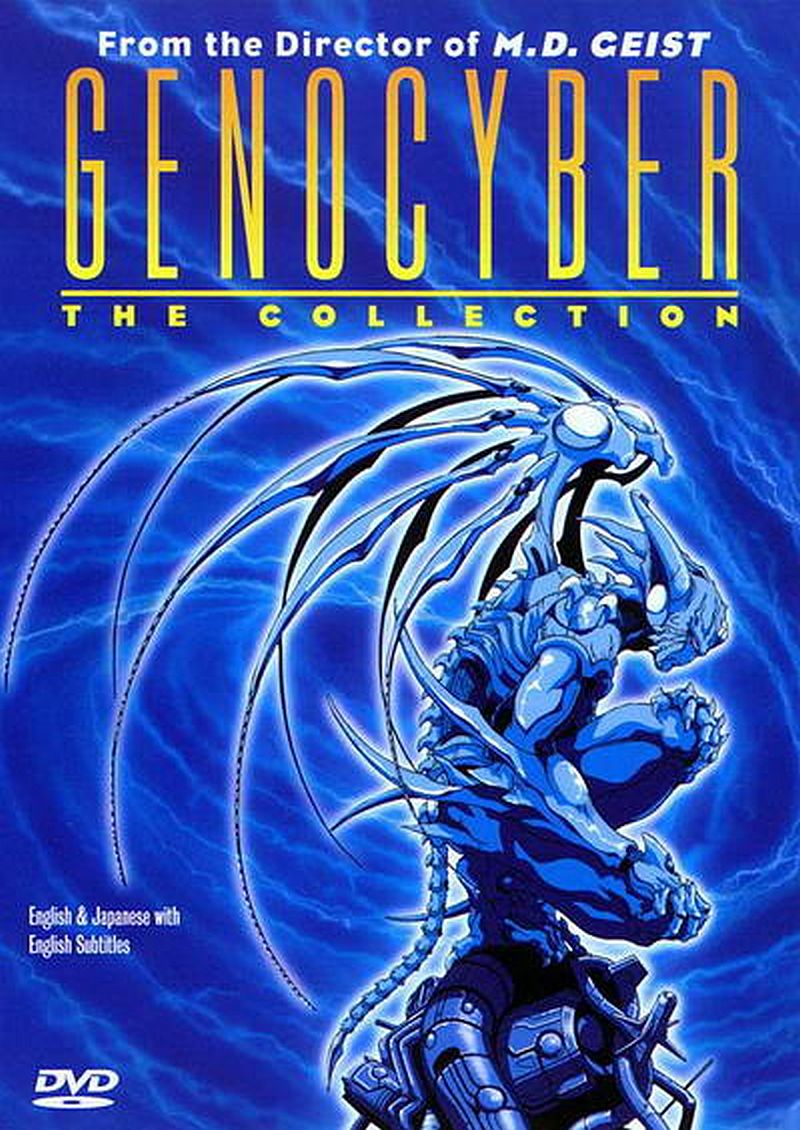 Genocyber, 1994, dir: Koichi Ohata
Perhaps the most puzzling aspect of Genocyber from a reviewing standpoint, even taking into account the fact that there's an awful lot about it that's puzzling, is that, though it's absolutely definitely a single OVA working its way through what's basically all one plot, it nevertheless manages to tell three largely separate stories that are each very much their own thing. I don't know that you could watch any of them in isolation - though the first is at least pretty self-contained - but at the same time, the second and third chunks go off on such wild tangents that, even in the world of vintage anime where wild tangents were common enough to be practically the norm, I'd be pushed to think of a title that goes quite so far.
The result is that it's tough to make definite statements about what Genocyber is and what it does that might give you a clear sense of whether you'd want to devote two and a half hours of your life to it. I might say, for example, that it's one of the most outrageously gory films I've come across within or outside of anime, and that's absolutely true of the first three episodes, which feel more extreme and legitimately nasty than anything I can think of in a medium and during an era when nastiness was very much often seen as a goal to be worked toward. But then, the last two episodes, which make up the third self-contained arc, are relatively bloodless. By the same measure, if I were to describe the show as near-future cyperpunk horror, those last two episodes ruin that, too, by shifting the action to a post-apocalyptic diesel-punk city that feels totally distinct from what's come before. Heck, even the middle arc, though it's still up to basically the same stuff as the lengthy opening episode, comes at that material from a very different angle, stuffing its plot into a single location and going for a somewhat altered, though equally limit-pushing, brand of gore. In short, Genocyber is surprisingly experimental in its narrative for what on the surface could easily be mistaken for mere exploitation.
Then again, that oughtn't to be a surprise when we consider that the guy at the helm was Koichi Ohata, known mostly these days not as the excellent mecha and character designer he was but as the director of the risible M. D. Geist and its sequel and the arguably kind of brilliant Cybernetics Guardian. Based purely on the latter, I've quite a bit of time for Ohata, and there's no getting around how he uses what could easily be an exercise in gore for the sake of gore to push the envelope in surprisingly inventive ways. Aside from the bizarre narrative shifts, the most noticeable is animation that throws in live-action footage and stills, some unexpectedly decent CGI, stop-motion, physical models, and various other gimmicks to create something thoroughly strange and abrasive. As shocking as the violence often is - and I can't overstress how gross the title is on a routine basis - Genocyber's impact comes as much from the sense of visual shifting sands, since you're never certain what Ohata will throw into the mix next.
Part of me wants to be critical; after all, it's kind of ridiculous that one OVA series should be up to such inconsistent stuff that it's easy to imagine a viewer who might love the first part and hate the third or vice versa. And if we wanted to be sniffy, it's not like all this is happening in service of a particularly exciting or original story. The sense is that the appeal of the unfinished manga Genocyber was expanded from was less that it was a work of genius begging to be retold in a new medium and more than it offered plenty of room for all the weird gimcrackery Ohata brought to the project. Yet, say what you like about Genocyber the anime, it certainly knows how to keep you on your toes, and it's never boring ... horrifying, often hard to follow, and overall slightly mystifying, but not boring. Ultimately, its experimentation makes it difficult to love, in that you can all but guarantee that whatever aspects you're enjoying won't last, yet I can't but admire anything so ferociously odd and confrontational that it still feels dangerous almost three decades later.
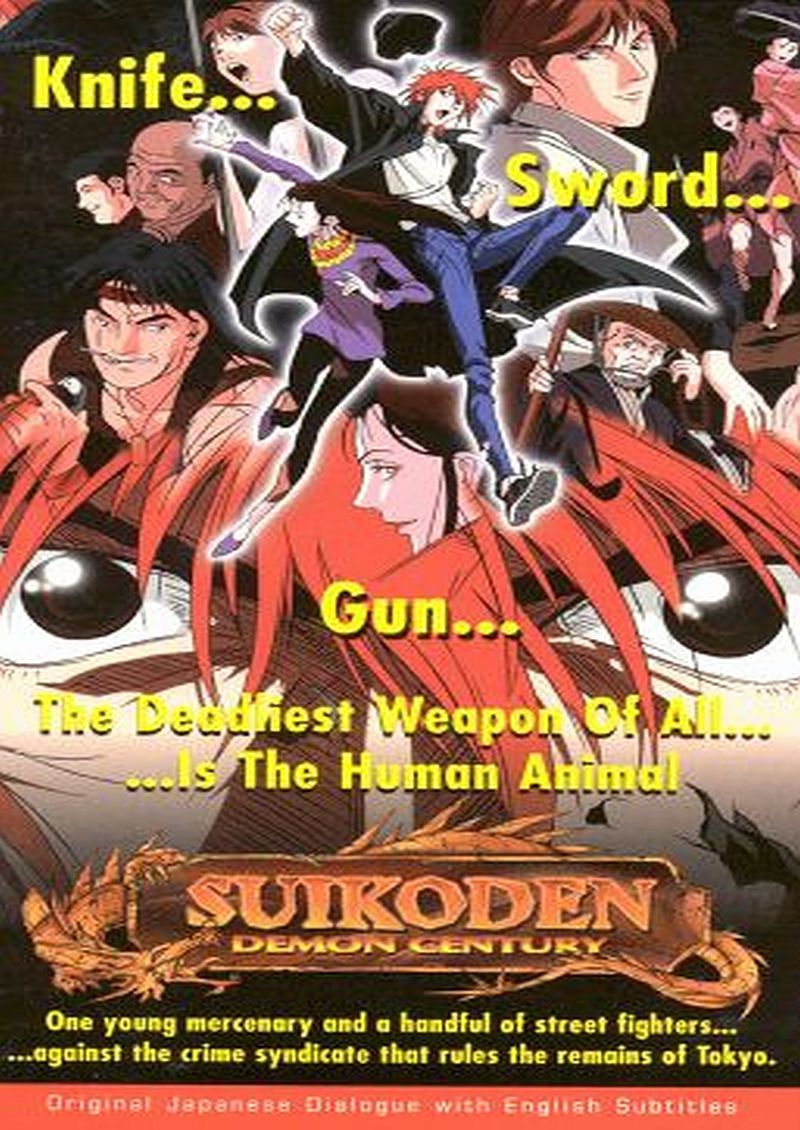 Suikoden: Demon Century, 1993, dir: Hiroshi Negishi
Normally it's either brutally obvious why a title never made it to DVD or else a searing injustice with no conceivable rhyme or reason. When it comes to Suikoden: Demon Century, however, it's tough to have strong feelings either way. It's not bad, as such, as far as forty-five minute OVA films go; had it appeared in Manga's budget Collection range, for instance, it would have been comfortably around the middle of the bunch. On the other hand, there's absolutely nothing original here, such that it's actually quite hard to talk about. A bunch of disparate heroes who also happen to be reincarnations of figures from out of history band together in a post-apocalyptic Tokyo to take on a big bad, you say? I'm pretty sure I've heard that one before, and indeed watched more shows exploring each of those individual elements than I care to remember.
If Suikoden: Demon Century stands out in any way, both for good and bad, it's by merit of the inclusion among its core cast of trans female character Miyuki Mamiya, which is nice to see from a progressive point of view but, in the American dub at any rate, handled with all the insensitivity you'd expect and a bit more besides. I'm singling out the dub because the animation and design work presents Miyuki more sympathetically, to the extent that it very much feels as though Tiffany Grant, in charge of the adaptation, went out of her way to pile on the homophobic quips. Not that nineties anime wasn't capable of its own homophobia, heaven knows, but it definitely feels as though there's a somewhat three-dimensional character bursting to get out here that's being constantly stymied by the script's flailing attempts at humour and Aaron Krohn's lisping performance - because, yeah, of course they cast a male actor in the part. (In fairness, so did the Japanese original, which means I'm likely giving that more credit than is due.)
It's frustrating to see an opportunity to bring a bit of diversity to an otherwise largely cliched cast being blown in such a fashion, but let's face it, Suikoden: Demon Century doesn't fare any worse on that score than an awful lot of other anime (and of course non-anime) from the time, and perhaps it only gnawed at me so much because there wasn't a ton of other stuff to divert my attention. The animation is resolutely fine and buoyed by some energetic action sequences, which are a definite plus when action's about all that's on offer but don't fill up enough of the running time to actually become a selling point. Director Negishi would have a solid but unspectacular career, and that feels appropriate given that this is solid but unspectacular work, though in fairness its hard to imagine how any amount of visual style could have distracted from how fundamentally hackneyed the narrative is.
If all this weak praise seems to clash with my opening comments, all I can say is that the nineties generated more than their share of crushingly average OVA short films, and Suikoden: Demon Century is competent and lively and engaging enough, if not to stand out, then at least not to get altogether lost in the crowd. It's mildly surprising that it never got as far as a DVD release when many a worse title did - it seems to have come awfully close, to the point that ADV even advertised a planned DVD version - but then again, I can't imagine anyone regarding its absence as a crushing loss to the world of animated entertainment.
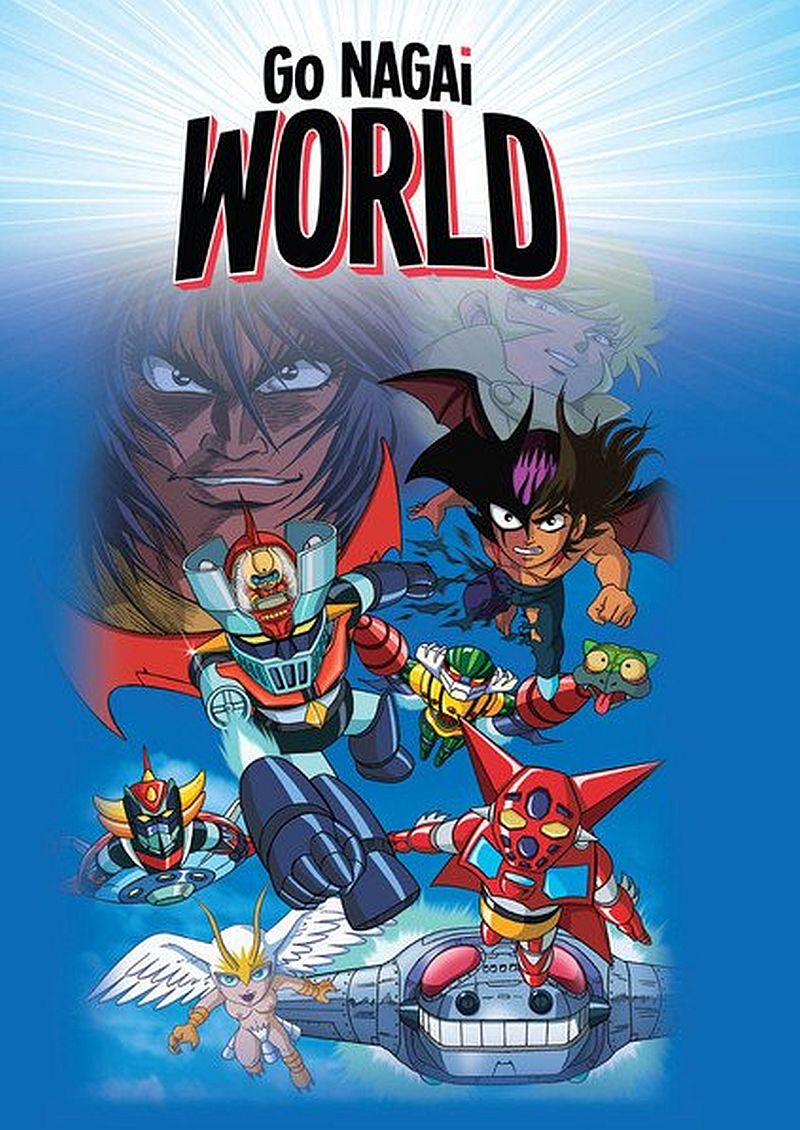 Go Nagai World, 1991, dir: Umanosuke Iida
I don't know that Go Nagai World needed to be half so good as it is. And that's a strange observation, I realise, but hear me out ... what we have here is a comedy spin-off of the works of arch provocateur manga creator Go Nagai, in which the bulk of the joke is that his characters are cutesy, chibi-fied versions of themselves that are thrust together into one shared reality, there to play off each other in appropriately silly ways. As I've often noted, comedy mostly just needs to be funny, which means that it doesn't have to be well plotted or sophisticatedly animated to succeed, and indeed I could point you to plenty of genuinely great anime comedies that are neither of those things and get by entirely on the strength of the laughs they provide.
Go Nagai World is funny, although it's not uproariously funny and a lot of the humour is tied into the concept, so that if you're not a fan of the properties involved - primarily Devilman and Mazinger Z, with a hefty chunk of Violence Jack toward the end - and also not the kind of person who's likely to be amused by characters from a series you like being small and ridiculous, you're unlikely to find this hilarious. Still, there's enough else going on beyond the central concept that it's a perfectly good bit of comedy, and if that was all there was here, I'm sure I'd have given it a modestly positive review.
Yet not only is that not the extent of Go Nagai World's ambitions, it barely even seems to be where the majority of its attention is pointed. That it has an actual plot is a surprise, and that said plot gets fairly involved and incredibly meta before it's done is downright baffling; for something so overtly dumb, it gets up to some awfully sophisticated narrative high jinx. But that's nothing compared with the animation, which is gorgeous in a way I barely know what to do with. That's most noticeable in some stunning background art, which ties into how well the narrative works, since those detailed, imaginative images give life to the various locations, however outlandish they often are. But the character work is pretty fine too: since all the cast (barring the odd "real world" sequence) are simple chibi versions of themselves, there's no real need for shading, which leaves room for animation that's much smoother than you'd expect of an OVA from 1991. Put that all together and add in how well the super-deformed character designs have dated, and take into account a top-tier print from Discotek, and you have something that's aged spectacularly well. And on top of that, we have a score by the wonderful Kenji Kawai, which largely ignores the comedy side of things and focuses on being an excellent score of the sort Kawai knocked out on an alarmingly regular basis. Really, the technical values are hard to fault.
In short (pun not intended, but hey, now that it's out there!) I return you to my opening point: Go Nagai World goes far beyond the call of duty into the realms of what could only be considered labour of love territory, and that's especially weird given that it's certainly not driven by blind affection for Mr. Nagai. In fact, part of what makes it so exciting in the late game is the harsh eye it turns upon the act of creativity and the open and honest way in which it addresses how these sorts of works come to exist. A nagging part of me wonders if this was truly the way to go with such a property - I can't deny I'd have liked to see more Nagai characters included outside of their cameos in the opening and closing credits, and it could definitely be a good bit funnier - but by the same measure, it's always exciting to come across something made with so much obvious passion and enthusiasm. All that really holds this back from classic status, then, is how niche it is: here in the West, where Nagai isn't such a household name even among anime devotees, it's hardly an obvious recommendation for the average viewer. So I guess all I can fairly say is that if you fancy it at all and have even a glancing knowledge of Devilman and Mazinger Z, you absolutely ought to give Go Nagai World a look.
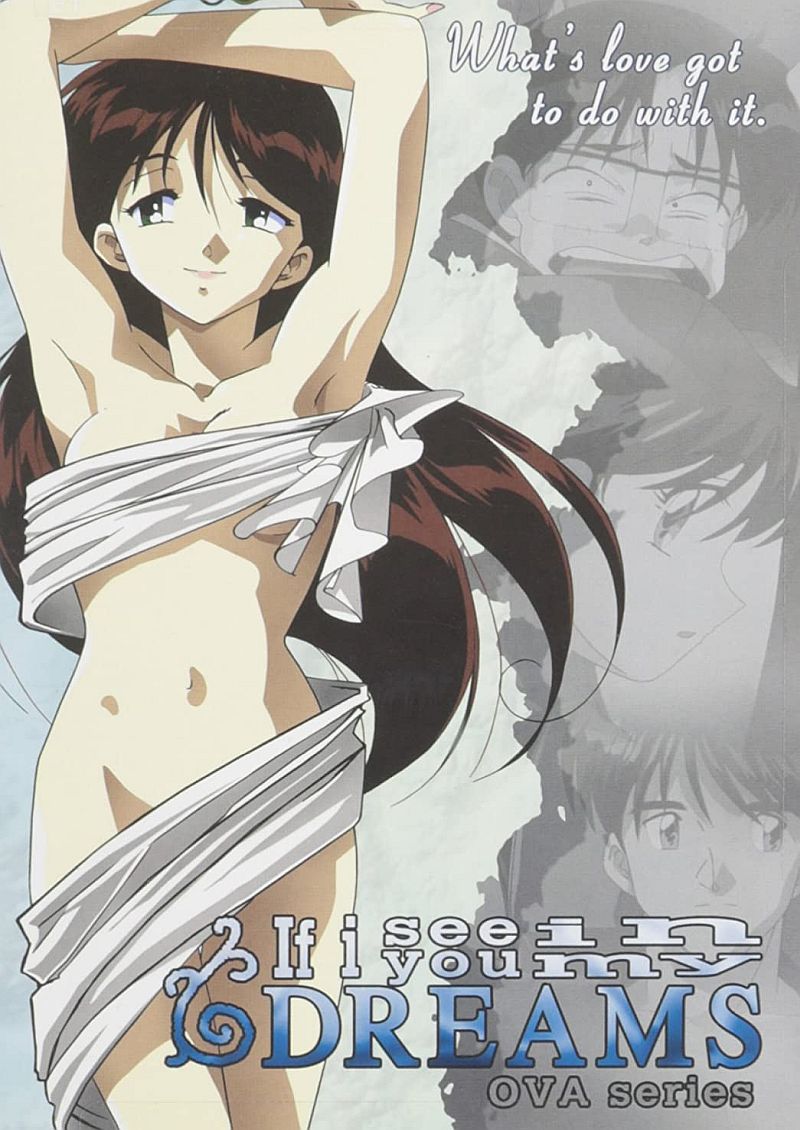 If I See You in My Dreams, 1998, dir: Hiroshi Watanabe
For a three episode OVA romcom that nobody much remembers these days, If I See You in My Dreams offers its share of surprises. And the main one for me was how far it leans into the rom half of that equation. Its slender tale introduces us to hapless salaryman Misou, who's somehow made it into his twenties without so much as snatching a first kiss, and is assured by a fortune teller that his lack of luck with the ladies is set to continue until his dying days. However, that begins to seem fractionally less of a sure thing when a chance encounter and a small act of kindness leaves him pining for the beautiful - but equally perennially single - Nagisa. Of course, the path of true love never did run straight, plus it's not altogether clear how interested Nagisa is in him, especially as Misou's blunders in his efforts to get closer to her begin to mount up, and with other people chasing after both of them, how much of a chance do they really have?
What I didn't see coming was how seriously If I See You in My Dreams treats its material and indeed the matter of young love in general. Neither Misou nor Nagisa are anything like perfect; Misou's crippling shyness doesn't need much encouragement to slide into creepiness, and though Nagisa is more of a catch on the face of it, she's awfully quick to jump to the wrong conclusion and then catastrophically overreact. It's not hard to see how this pair reached their twenties without a single date between them, yet they're appealing enough that it also makes sense that they're both attracting the romantic attention from others that leads to most of the show's mishaps. In fact, by the third episode, I wasn't sure whether I ought to be rooting for them or not; rather than their suitors being obvious jerks as they'd probably be in a Western romcom, here they might actually be better matches, and that adds a significant wrinkle to what might otherwise be an overly simple drama.
What that leaves us is a romantic comedy that makes very little effort to be funny, and, if we're to be critical, is absolutely at its worst whenever it heads in that direction. The supposedly humorous situations can't possibly have seemed fresh back in 1998, and even if they had, they'd still be more cringeworthy than amusing. However, their repercussions play out with startling seriousness, and there's something genuinely disconcerting in seeing this sort of material strapped into the framework of an actual romance with actual adults and somewhat realistic emotions. Which leads us to another surprise, which is that director Watanabe, who spent most of the nineties churning out Slayers movies, brings so much artistry and restraint to the project. I liked those Slayers movies just fine, but nothing in them led me to suspect he was the sort of director who'd ever favour introspective character moments over laughs. However, what Watanabe pushes for here time and again is a plaintive, melancholy atmosphere that's well-suited to his protagonists and their predicament, and with less than ninety minutes of running time to play with, it's remarkable how much he's willing to take his foot off the pedal to let a quiet moment sink in. Add to that some rather more complex animation than you'd expect for a title of this ilk and a lovely, emotive score and perhaps the biggest surprise with If I See You in My Dreams is how often it manages to tap in to genuine emotions.
For all its merits, that still leaves If I See You in My Dreams as very much a minor-feeling title, the sort of thing that probably made almost no splash at the time and has since been done better and bigger; it doesn't exactly feel rushed at three episodes, yet that running time does leave it seeming somewhat insubstantial, where another episode or two might have really let the creators dig deep into the central relationship. Nevertheless, that doesn't detract from what a nice little OVA it is or how much it accomplishes with the time it has, nor how thoroughly it won me over in the brief time I spent with it.
-oOo-
A good, solid batch, that was: only Suikoden: Demon Century let the side down, and let's face it, that one's pretty much vanished from the world anyway, its loss never to be mourned. But Genocyber rewarded my years of patient waiting and comes highly recommended for anyone with the stomach to handle its violent excesses, and Go Nagai World is one of the nicest surprises these reviews have turned up in a long while, taking a concept with much potential for naffness and instead offering up a real gem. Which only leaves If I See You in My Dreams, a nice surprise on a smaller scale but still a title with much more to offer than I'd have hoped. Good times![Other reviews in this series: By Date / By Title / By Rating]


July 17, 2021
Drowning in Nineties Anime, Pt. 103
Our Dr. Slump and Arale-chan marathon didn't get off to the best of starts, what with me tacking its beginning onto the end of my Dragon Ball Z round-up out of an obsessive-compulsive need to keep these posts at four reviews a piece. But look, that's all behind us now! And if you want to pop back and read my thoughts on that first film, you can do so here, but if you'd rather not, then I'll save you the trouble and just quote my own conclusion:
"I don't know exactly what I'd make of this if I'd watched it in isolation, but as the first entry in a five film marathon, it's an utter joy, and my only worry going forward is whether such ridiculous daftness can stretch to a longer running time without becoming completely exhausting."
So was that worry justified? I guess we'll find out, as we work our merry way through Dr. Slump and Arale-chan: Hoyoyo! Space Adventure, Dr. Slump and Arale-chan: Hoyoyo! The Great Race Around the World, Dr. Slump and Arale-chan: Hoyoyo! The Secret of Nanaba Castle, and Dr. Slump and Arale-chan: Hoyoyo! The City of Dreams, Mechapolis...
 Dr. Slump and Arale-chan: Hoyoyo! Space Adventure, 1982, dir: Akinori Nagaoka
Given my concerns over how something as aggressively wacky as the first Dr. Slump film could possibly translate to a feature-length running time, the immediate good news - which is also ever so slightly the bad news - is that Dr. Slump: Hoyoyo! Space Adventure doesn't try. That's to say, the franchise's first stab at stretching to feature length eases up noticeably on the madcap pace that characterised Hello! Wonder Island and instead is content to behave like a proper movie, with things like a legible story and a coherent three-act structure with a beginning, middle, and end. This is definitely the right choice, because ninety minutes of Hello! Wonder Island would have been absolutely brain-melting, but it does have the unfortunate side effect that Hoyoyo! Space Adventure has to busy itself with things like setting up plot and establishing characters, stuff that simply isn't as much fun as the delirious comic anarchy that's surely the series' standout trait. To put it bluntly, Hoyoyo! Space Adventure is only sporadically funny, and almost never as hilarious as the better moments from Hello! Wonder Island, which I assume to be a fairly good representation of how the TV series operated.
Fortunately, that's largely it for the criticisms, because while Hoyoyo! Space Adventure has the relative disadvantages of stretching a brand of comedy out to ninety minutes that's designed to work in much shorter timeframes, it has the benefit of doing quite a fine job of being a ninety minute comedy-sci fi movie that works in its own right. Not, granted, the sort that modern audiences would expect to see up on a cinema screen; the animation's had a bit of a polish and there are some nice sequences, but we're squarely in the middle of eighties TV animation blown up to movie proportions territory here. Yet, taken as the sum of its parts, it feels like a film in a way Hello! Wonder Island didn't pretend to try at, with big musical numbers and exciting action sequences and running gags and even some vague dabbling at themes, though they don't get much beyond "Being a jerk is bad so don't do it." But that's fine; unlike many a comedy, Hoyoyo! Space Adventure never forgets to be fun, even when it's not being actively funny, and a movie that's fun from start to finish is - well, it's a fun movie is what it is.
Most of the reason Hoyoyo! Space Adventure is lighter on laughs than Hello! Wonder Island is that it's obliged to use the series' stand-out character, dim-witted, indestructible, super-strong robot girl Arale, with more restraint. Indeed, it breaks down fairly neatly into scenes that do something or other to shunt the plot forward and scenes that are just Arale being weird, dim, violent, or all three. While I was watching, this felt like a flaw, in that the Arale scenes are always the highlights, but in retrospect, I reckon the balance is pretty much spot on. The gain is that Hoyoyo! Space Adventure has much more charm, and some mild stakes, and even a degree of genuine warmth, the sort where by the end you feel kind of sad that you're not going to be able to hang out with the characters any longer. It's an extremely watchable concoction that flies by at lightning speed, and even if it relaxes a little on the humour front, it never wastes an iota of energy on being anything besides entertaining.
 Dr. Slump and Arale-chan: Hoyoyo! The Great Race Around the World, 1983, dir: Minoru Okazaki
I don't have it in me to criticise this third Dr Slump movie for ripping off the Wacky Races formula, not when the franchise is such a perfect fit. In fact, it feels so logical as to be almost inevitable; after all, what was Wacky Races but a loose framework upon which to hang a bunch of goofy jokes and scattershot comic scenes? And now that the series has stepped back from regular movie length to regular pre-2000's anime movie length, which is to say somewhere around the fifty minute mark, the idea of a race around the world into which all the regular characters can be flung seems like just about the right amount of narrative for one of these things. So really, my only complaint is that I wish Dr Slump: The Great Race Around the World was better at doing all that than it is.
To be sure, it's not bad. But it's more toward that end of the spectrum than either of its predecessors, and given such a seemingly perfect setup, that feels more annoying than it perhaps ought to. The main problem is that it's not terribly funny, which was fine for "Hoyoyo!" Space Adventure because that had other stuff going on, whereas The Great Race Around the World is doing nothing besides things that should in theory be amusing and it's just that few of the gags are that strong or necessarily recognisable as gags at all. Weirdly, it's Arale, generally the most reliable character, who gets the worst of this, having been reduced largely to an annoying toddler who shouts the same handful of phrases over and over and rarely gets those moments of inspired lunacy that made her such a standout in the first two films. Generally, for most of its running time, this feels as if it's ambling through a series of loosely connected events, which is of course exactly what you'd expect from Dr Slump and so a dumb criticism in and of itself, except that elsewhere the events in question were often funny and here they're only intermittently funny.
Ultimately, being Wacky Races proves not to be the ideal fit that it seems. Only two sets of characters get to have much of a presence: there's Slump and Arale, in their depressed sentient minivan - one of the funnier jokes, by the by - and series regular villain Dr. Mashirito, who bizarrely seems to recognise Arale but not notice that one of his fellow racers is the woman he kidnapped and tried to force to marry him in the last film. Most of the other regular cast members pop up, but the format gives them not a lot to do except be there, and they don't even get distinctive vehicles to drive or anything by way of gimmicks. It doesn't help that the plot ensures that the race boils down to basically three participants and the remainder are clearly just making up the numbers.
I'm making The Great Race Around the World sound hopelessly terrible, where actually, in some limited ways, it's a step forward: Shunsuke Kikuchi's score is a bit more present and striking and, for what feels like the first time, we get glimpses of somewhat movie-appropriate animation, even if the general aesthetic is still that of a somewhat expanded TV budget. Actually, that hits the nail on the head: The Great Race Around the World has the vibe of a TV special more than a cinema release. Where "Hoyoyo!" Space Adventure seemed delighted at the prospect of filling out ninety minutes and stretching the envelope of what Dr Slump could be, The Great Race Around the World has the air of a creative team landing on an idea that will about do to occupy the better part of an hour, because sure, why not? It's all very small and unambitious and a touch under-baked, and though it coasts by on the virtues of an inherently likeable and amusing property, that still makes for a genuine disappointment.
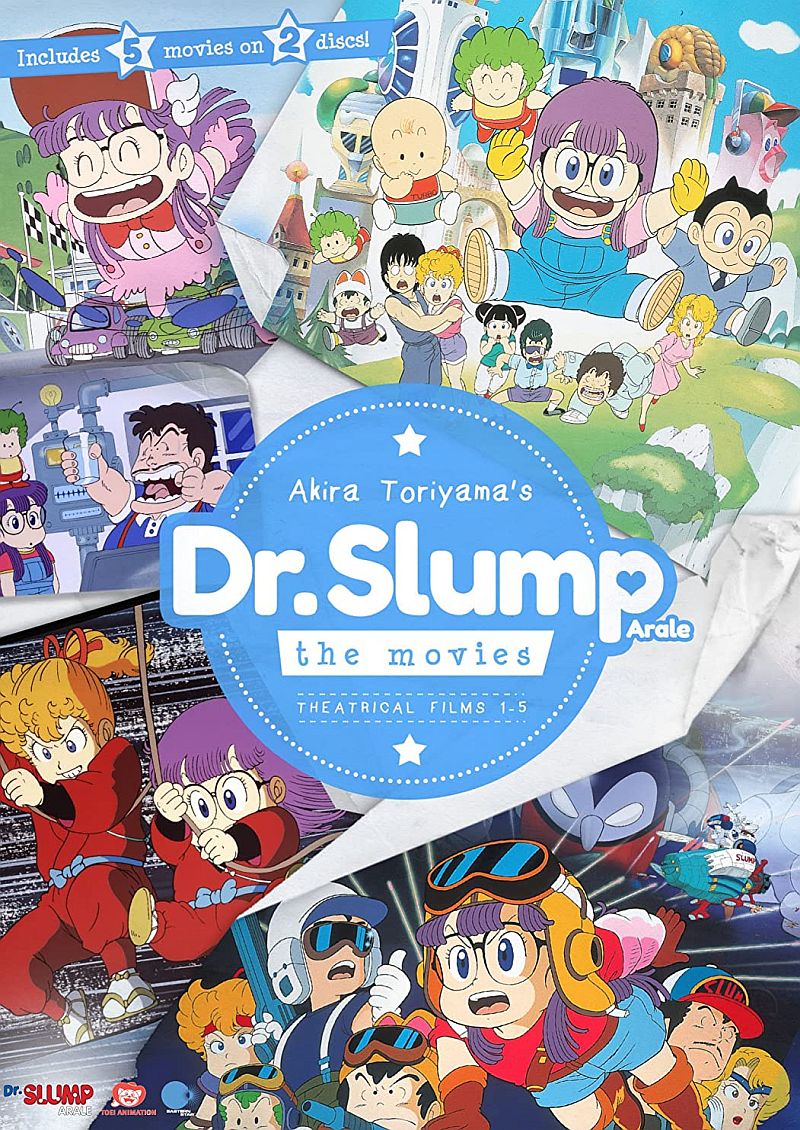 Dr. Slump and Arale-chan: Hoyoyo! The Secret of Nanaba Castle, 1984, dir: Hiroki Shibata
From its opening scene, it's apparent that The Secret of Nanaba Castle is a return to something that feels like a proper movie rather than a TV special, for all that it's yet another step down in length, to a mere forty-eight minutes. This was director Hiroki Shibata's debut, and he'd go on to work almost entirely in kids' television, albeit on such prestigious properties as Sailor Moon and Digimon, but here he shows a natural-seeming knack for punching his material up into a register that feels cinematic in a way even the most obviously cinematic Dr Slump movie so far, Hoyoyo! Space Adventure, never quite managed. And as I say, this is apparent from the beginning, and a pre-credits sequence that feels much like the sort of thing you'd find in an actual movie, delivering a fun, compact, mildly exciting episode in which some mysterious characters discover a mystical jewel in an exceptionally well hidden mountainside cave and pointedly not featuring any of the familiar Dr Slump characters.
It's a fair taste of what's to come: one of the weirdest things about The Secret of Nanaba Castle is how it keeps to the spirit of what a Dr Slump movie involves while discarding so many of the traditional ingredients. So the setting is the nineteen-twenties and the plot is, more than anything, a pastiche of the sort of pulpy adventure serials the US was churning out in those days, the very same material that would be revamped so lovingly by the Indiana Jones franchise - and while it will eventually end up feeling like a quite specific send-up of Indiana Jones and the Temple of Doom, a film that bizarrely came out in the same year and so surely wasn't an influence, The Secret of Nanaba Castle spends far more of its time just grabbing from those sorts of stories in a merry, freewheeling fashion.
Again, the extent to which this feels like a Dr Slump movie comes down to whether you think the heart of the franchise lies with the anarchic Arale-Chan and the show's generally wacky tone and ultra-cartoony ethic or whether you think it matters that the core cast and setting are kept front and centre. Unless I was really missing something, the titular Dr. Slump doesn't even appear in this one and Arale has been refigured as a Robin Hood-esque sneak thief: we first meet her pulling off a heist for baked potatoes to feed the denizens of the orphanage where she apparently lives. But change the character details any which way you like, Arale is still Arale, as bonkers and unflappable and wilfully destructive as ever, and she remains the core of what's funny about The Secret of Nanaba Castle. Indeed, humour doesn't really seem to have been anyone's priority, and though there's plenty to chuckle at, there aren't many outright laughs.
Still, this fourth Dr Slump movie remains a thoroughly engaging experience, barrelling from one ridiculous set piece to another and generally allowing just enough sense to creep in to keep the plot moving in a vaguely coherent direction. A purist might grumble that shifting the entire ensemble to a different setting and sidelining half the cast is kind of a cheat, but then Dr Slump would be the strangest possible series to get puritanical about, given how deeply random craziness is baked in to the formula. For me, while I wouldn't have said no to a jot more humour, this entry was both a breath of fresh air and an engaging film in its own right, and thus a definite contender for my favourite entry so far.
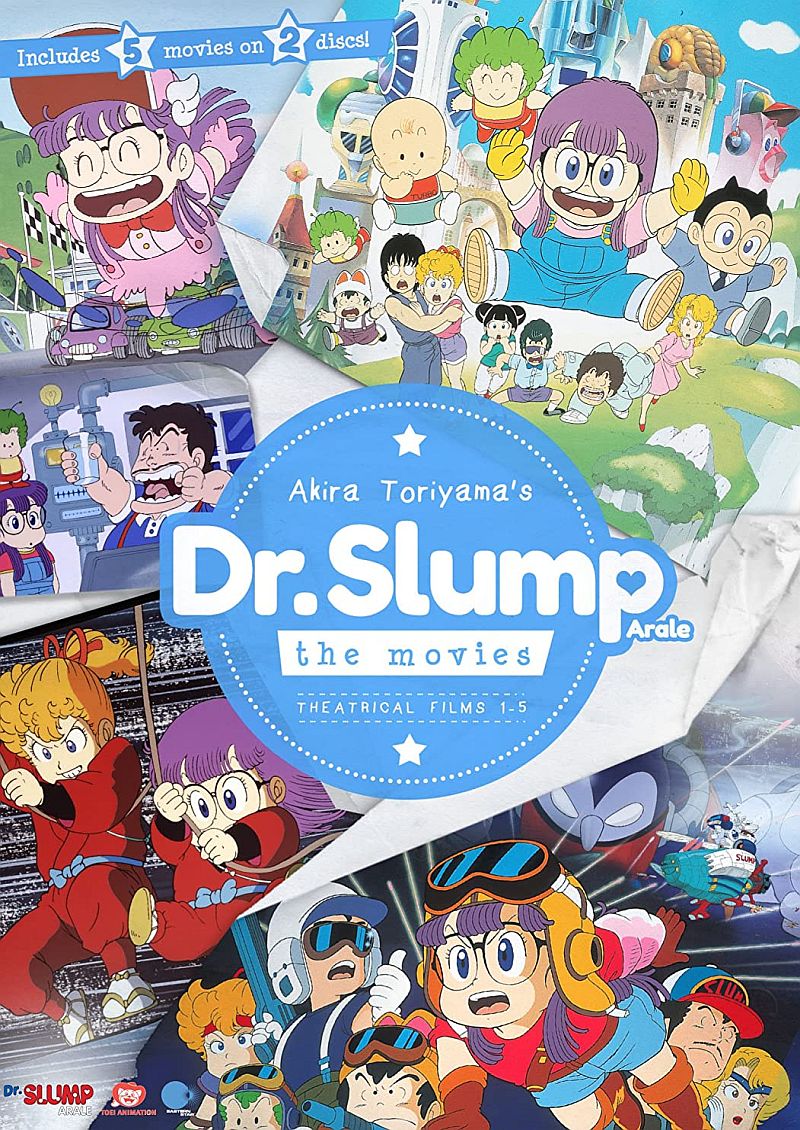 Dr. Slump and Arale-chan: Hoyoyo! The City of Dreams, Mechapolis, 1985, dir's: Kazuhisa Takenouchi, Toyoo Ashida
It was quite late at night and I had a glass of wine or two in me when I settled down to watch The City of Dreams, Mechapolis, and if you sat me in a court of law and made me swear I was absolutely certain it wasn't all some fever dream brought on by booze and tiredness, I'm not altogether sure I'd be willing to take the chance. This fifth entry is a return to the demented energy and non sequitur-driven plotting of the first film, Hello! Wonder Island, which it resembles in other ways, too, and after three shots at seeing what an actual, functional Dr. Slump movie might look like, it's kind of a joy to find the makers once more throwing up their hands in merry abandonment and admitting this franchise works best when it's just hurling whatever bonkers crap occurs to them in the moment at the screen as hard as they possibly can.
Thus, even the semblance of a plot that we get is fundamentally nuts: Arale and her friends see a trailer for a sort of wandering intergalactic amusement park by the name of Mechapolis - presented by the robot from Metropolis, incidentally, because why not? - and Arale decides she'd very much like to go there, despite the fact that nobody's altogether convinced it exists. But of course it does, and in due course most of the cast have been whisked there in a pastiche of alien abduction films, and as promised they're granted their wishes, however ridiculous, costly, or dangerous, until one character's tyrannical selfishness breaks the exceedingly tenuous logic of a society where everyone and everything is a wish-granting robot, at which point all manner of chaos ensues.
Another way in which The City of Dreams, Mechapolis resembles Hello! Wonder Island is in being so short that we can barely call it a film at all, scraping in at a mere thirty-eight minutes, which is fortunately about right for something that would probably provoke seizures and severe mental scarring if it went on for an awful lot longer. And yet another way is that it has a tendency to look exceedingly cheap, so much so that it feels more like another bit of deliberate silliness than a lack of animation know-how, especially since, once we get into Mechapolis, there are some sequences that are actually fairly flashy and slick. And I'd better point out here that none of these comparisons are meant to be considered negatives, since in many ways Hello! Wonder Island was my favourite slice of Dr. Slump action, being as it was a perfect distillation of a formula that never felt absolutely right when it was expected to carry a proper narrative or stretch to any real length.
As for which is better, or indeed whether The City of Dreams, Mechapolis is preferable to a more coherent, substantial entry like Hoyoyo! Space Adventure, well, I'm not sure those questions get us anywhere useful when the general bar of quality is this high. The City of Dreams, Mechapolis is even more obsessed with cultural references than its predecessors, to the point where Gamera and Dr. Spock are both recurring characters, and in its weirdest moments, it's about as far out as this exceedingly weird franchise has managed to get, and personally I found both of those pluses, though I guess there are those who wouldn't. At any rate, if you'd enjoyed what's come before, I find it hard to imagine you wouldn't get a kick out of this last entry too, and if you felt like starting at the end, well, why not?
-oOo-
This one's easier to sum up than most, because the only way you'll be getting your hands on any of these films is in Discotek's complete DVD set, and really, supposing they sound remotely up your alley, why wouldn't you buy that? The weakest entry here, The Great Race Around the World, is still watchable and moderating amusing, and all the rest range from very good to great. Actually, the one obvious reason you might not is that said collection is out of print, because for all their virtues, Discotek are absolutely dire at keeping their releases available; but there are copies kicking about at sensible prices, and if you're in the UK, my importer of choice Otaku have it fairly cheap.[Other reviews in this series: By Date / By Title / By Rating]
July 10, 2021
Drowning in Nineties Anime, Pt. 102
No theme this time around, and indeed no connecting thread whatsoever, except that we happen to have a set that's brimming with hyphenated titles, which would be weird if the world of nineties anime wasn't quite so full of the things. Which, say whatever you like about it, certainly makes for a really long list, in the shape of Martian Successor Nadesico The Movie: The Prince of Darkness, Great Conquest: The Romance of the Three Kingdoms, Animated Classics of Japanese Literature: The Sounds of Waves & Growing Up, and Hyper Doll: Mew and Mica the Easy Fighters...
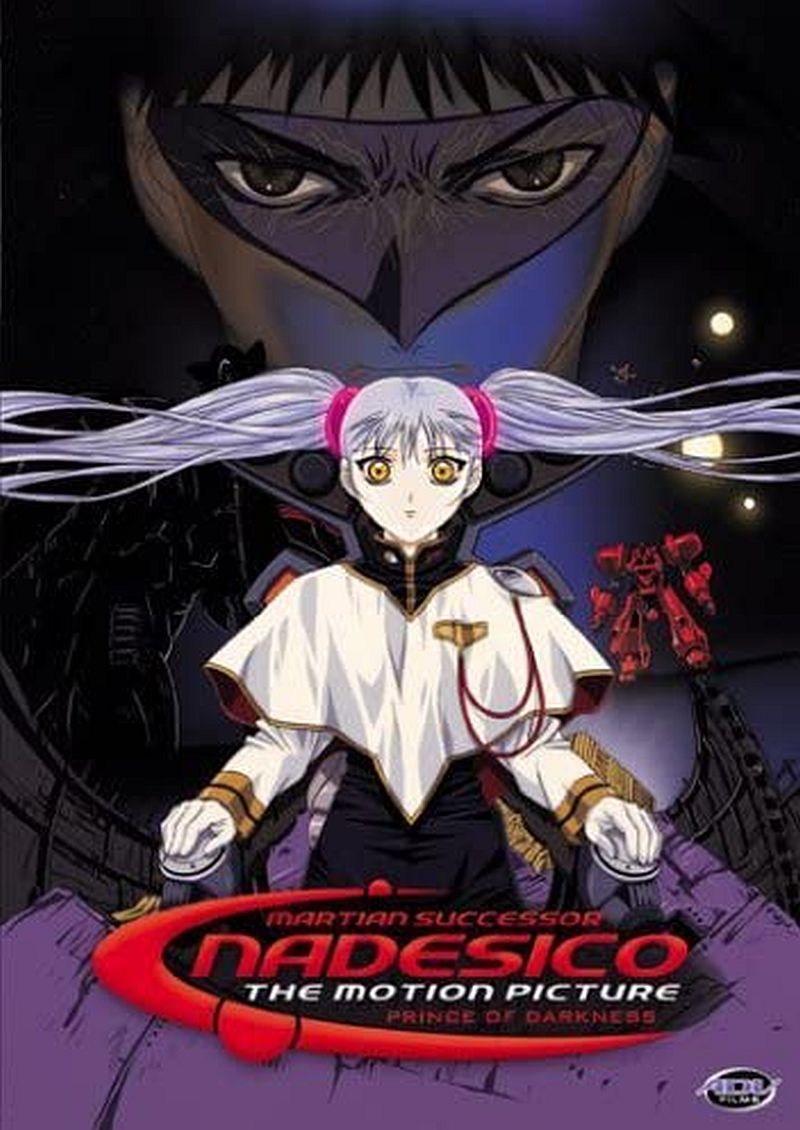 Martian Successor Nadesico The Movie: Prince of Darkness, 1998, dir: Tatsuo Satô
Martian Successor Nadesico was one of the best anime series to come out of the nineties, and while its accomplishments were many, the element that truly set it apart was the extent to which it managed to be both a great parody and a great example of all the things it was parodying. Despite blatantly pastiching real robot shows, space opera, and various other popular Japanese SF trends, it somehow still managed to provide an excellent and fairly original science-fiction story, one that would have stood alone fine without the humour. But, perhaps most impressively, there never came a point at which Nadesico, like so many series before and after it, decided to jettison the humour to focus on its story-telling: no, Nadesico stayed funny through to its final minutes, invariably finding time to laugh at even the most major plot developments, and yet also never letting its underlying silliness undermine the more serious elements altogether. It was a rare balancing act and one I don't know I've ever seen done quite so well.
Prince of Darkness doesn't pull that off, and this, among other things, seems to have earned it the ire of the majority of the fan community. But I don't think that was ever its goal, and I'd argue that what it's up to is actually even more subversive, poking holes in the very notion that we should be deeply invested in the fates of certain undeniably shallow characters and going one step further in showing up the silliness of certain space opera tropes. It's bad practise to tell anyone how to enjoy their art, but I can't help being surprised by the number of people who apparently missed the fact that Nadesico was a parody - or else got that it was a parody, but expected it not to parody anything they actually cared about - and wanted nothing from a film other than that it be more of the same.
Prince of Darkness has no intention of being more of the same. For a start, it looks a hell of a lot better than the series ever did, and the series was hardly a slouch. But the movie is operating at a whole different level of ambition, and you can almost sense the animators' excitement at the notion of playing around with a theatrical budget; there are all sorts of neat and clever shots along the way that would have been beyond what the series could dream of. Yet equally striking is the extent to which Prince of Darkness is determined to tell its own story, one set three years after the close of the show, and how it unapologetically flings the viewer in at the deep end. The consensus is that this is because that missing chunk of plot was filled by the Sega Saturn game Nadesico: The Blank of Three Years, and no doubt that's true so far is it goes, but it also feels like a conscious choice made by people determined to toy with fan expectations, since toying with expectations was such a core part of the Nadesico experience.
Thus, we have a largely standalone plot that aggressively disrupts much of what many viewers seem to have loved about the TV series - because, again, there really do seem to be people out there who took its obvious send-up of a central romance plot seriously! Rather than pander to that audience, the film opts instead to parody the post-Evangelion trend for making everything terribly dark and depressing, with nominal series hero Akito getting made over as a moody bad-ass who rides around in a mech literally designed to look like the devil. But it has much more time for the formerly under-utilised Ruri, promoting her to protagonist and captain of the Nadesico B, and she's a marvellous fit for those roles, especially in the opening third where Prince of Darkness is largely content to pretend it's a straight-forward SF movie with a plot it intends to take seriously all the way through to the end.
That doesn't happen, of course, and on a first viewing, it very much feels like the film goes off the rails in its closing minutes. There's an element of truth to that; one undeniable flaw is that a running time of seventy-five minutes sans credits is nowhere near enough to cram everything in, leaving an exceedingly visible three act structure that basically amounts to setting up a threat, ignoring that threat to have fun for half an hour, then dealing with the threat in the most perfunctory fashion imaginable. Still, that for me seems in keeping with what Nadesico was all about, exploding the business of anime space opera from within and smirking all the while, and while I'd be awfully glad to see a longer version of Prince of Darkness with a bit of room to breath - and an ending that didn't hint so hard at a sequel that would never materialise! - I'm glad to have the version we got. There's no recommending it to anyone who hasn't seen Nadesico the series, but for those who have and were put off by the bad press, I'd urge you to give it a go and take it on its own merits, because by that measure, it's a worthy spiritual successor to a show that would have been ill-served by a more by-the-numbers sequel.
 Great Conquest: The Romance of the Three Kingdoms, 1992, dir: Masaharu Okuwaki, Toshio Masuda
There are, I'd suggest, two basic ways to go about fictionalising major historical events, and hats off to Great Conquest: The Romance of the Three Kingdoms for managing to fluff them both. Especially since, for its first quarter, it seems entirely wedded to one of those approaches and the other doesn't get any sort of look-in. For that introductory half hour, our focus is solely on Liu Bei and, soon, the two companions he teams up with in the hope of restoring some semblance of peace and justice to the nascent Chinese nation. And none of this works amazingly well, for reasons we'll come to, but at least you know where you stand with a story that views history through the lens of a single important character and makes them the protagonist of events that in reality had an infinitely larger scope.
We could call that the heroic approach - certainly that's what Great Conquest makes of it - but there's always the alternative of trying to capture as much of the rich, intricate tapestry of history as possible by retreating to a more omniscient perspective and treating events in a pseudo-documentary style, hopping from place to place and character to character whenever is necessary to keep track of the flow of monumental goings-on. And though we've had a touch of that, with a stentorian narrator filling in scraps of wider context and cutaways to a not very helpful map, it abruptly becomes a much bigger deal when the narrative ditches Liu Bei and his chums to start focusing on some of the other major players.
Like I said, though, it's not like it gets either approach right. The Liu Bei segment is fine, but I never got a sense of why he was important or even why he was special; his early successes are unearned, his ongoing victories look more like luck than judgement, he does a lot of crappy things that the film is happy to look past, and he's saddled with a romantic subplot that would be hilariously inept if it wasn't so sexist. But his companions are more entertaining, and at least it's easy to follow the flow of events. Then suddenly Liu Bei drops out of the narrative, and we're being embroiled in national dramas that had been gently hinted at prior to that point and introduced to new characters that the film does such an awful job of differentiating that I was muddling up two of them right to the end. A lot of this stretch works on a scene-by-scene basis, but that's really the only way it works, leaving a story that sputters into life for brief spells before switching focus again and losing whatever momentum it's gathered.
That failure to pick an angle and stick to it is one that dogs Great Conquest all the way through. It keeps threatening to do something interesting and appealing with its animation, aping the style of contemporary Chinese paintings, and had it committed to that, I suspect I'd have loved it despite its storytelling flaws. But more often, it opts to look like some sort of cheesy historical afterschool special. Outside of a few striking battle sequences, the character work is almost never that good, but the film is capable of producing some terrific backgrounds, so it's weird that a fair percentage look shoddy and out of keeping with what surely ought to be the reigning aesthetic. And given that the music makes the same blunder - we get some lovely traditional Chinese music, but a load of tacky action themes that could have wandered in from any low-budget anime - you have to wonder if this was somehow a deliberate stylistic choice, or if there were two different creative teams feuding against each other.
Still, I'd be more inclined to give this a tenuous recommendation, if only on the grounds that epic representations of Chinese history aren't exactly ten a penny in the anime world, but for one thing: it doesn't end. I have a suspicion this is because Eastern Star were more interested in resurrecting the dubbed and edited American version that had previously been available on video and so didn't try and license the third episode, which certainly seems to have been made if Wikipedia is to be believed - and if so, shame on them. But if I've got the wrong end of the stick, then shame on them anyway, because this is one of the most frustrating unfinished titles I've yet come across, breaking off as the narrator tells us how things are really about to kick off now, and passing it off as a finished work is especially irritating. I mean, I don't know that an ending would have saved Great Conquest from mediocrity, but it certainly wouldn't have hurt.
 Animated Classics of Japanese Literature: The Sound of Waves & Growing Up, 1986, dir's: Hidehito Ueda & Isamu Kumada
Though I gave it a thumbs up, I wonder if I wasn't a bit hard on the first volume of U. S. Manga Corp's release of the Animated Classics of Japanese Literature series that I looked at. In retrospect, I suspect I went in with certain preconceptions based on how a release like this would function in the West that weren't altogether warranted. The biggest of those was that these adaptations were aimed at children, which both the stories here quickly dispel: the teenage romance of The Sound of Waves involves some nudity and an intimate scene that's surprising in its frankness, and Growing Up makes few bones about the fact that its own youthful protagonist is on the cusp of a job that's tantamount to prostitution. I wouldn't say children couldn't watch these, and I definitely wouldn't say they shouldn't, but it feels like a stretch to suggest they were the intended market.
Likewise, I argued that the animation, though charming, tended to be on the subpar side of things, and ... well, that's not untrue, I certainly think that even by 1986 TV standards, the budget wasn't quite there to do the creators' vision justice. There's plenty of stuff that's a little off; The Sound of Waves struggles with perspective and both titles feature some of the most incredibly simple character designs you're likely to come across, though it's worth pointing out that they're no less effective for their simplicity. Regardless, there's some serious craft here, and not only in the frequently gorgeous backgrounds either. The Sound of Waves features plenty of legitimately impressive animation, both titles are full of subtle, detailed character work, and Growing Up, which has by far the more distinctive aesthetic, looks legitimately lovely, not by being lavish but by finding a style that's the perfect fit for its tale of the harsh transition from childhood to adulthood.
All of which is dancing around the fact that I loved the hell out of what was on offer here, and perhaps also dancing around the fact that it's very clearly not for everyone. But as someone's who's generally interested in Japanese culture and also a colossal animation nerd, this was a delight from start to finish. Of the two works adapted, The Sound of Waves fares better, by virtue of getting two episodes and forty or so minutes to present its story. That still means having a narrator to fill some gaps, but the narration is so tonally suited that it's hardly a problem, and the tale of young love in a remote island community generally goes by at precisely the right pace, excepting perhaps an ending where everything slots into place a fraction too neatly. Nevertheless, it's fine work, and that Growing Up isn't quite on a level is scarcely a criticism, especially when it's such a striking piece of animation. Still, this time the story could use a dash more breathing room, and the ending was so abrupt that I had to rewatch a few scenes to be sure I hadn't missed anything - until I realised abruptness was precisely the way to go.
There's no getting around it, animated adaptations of classic Japanese literature subtitled into English are only ever going to appeal to an incredibly niche audience, and I'm conscious that I'm slap bang in the middle of that audience, whereas anyone reading this may well not be. Add in how difficult it is to track these titles down - that would be very difficult - and it seems mildly crazy to be suggesting anyone should go to that sort of effort. But hey! Who cares. This is a wonderful release, I've a world of admiration for U. S. Manga Corp for releasing something so delightful and so guaranteed not to sell, and it breaks my heart slightly that they didn't manage to get the entire series out.
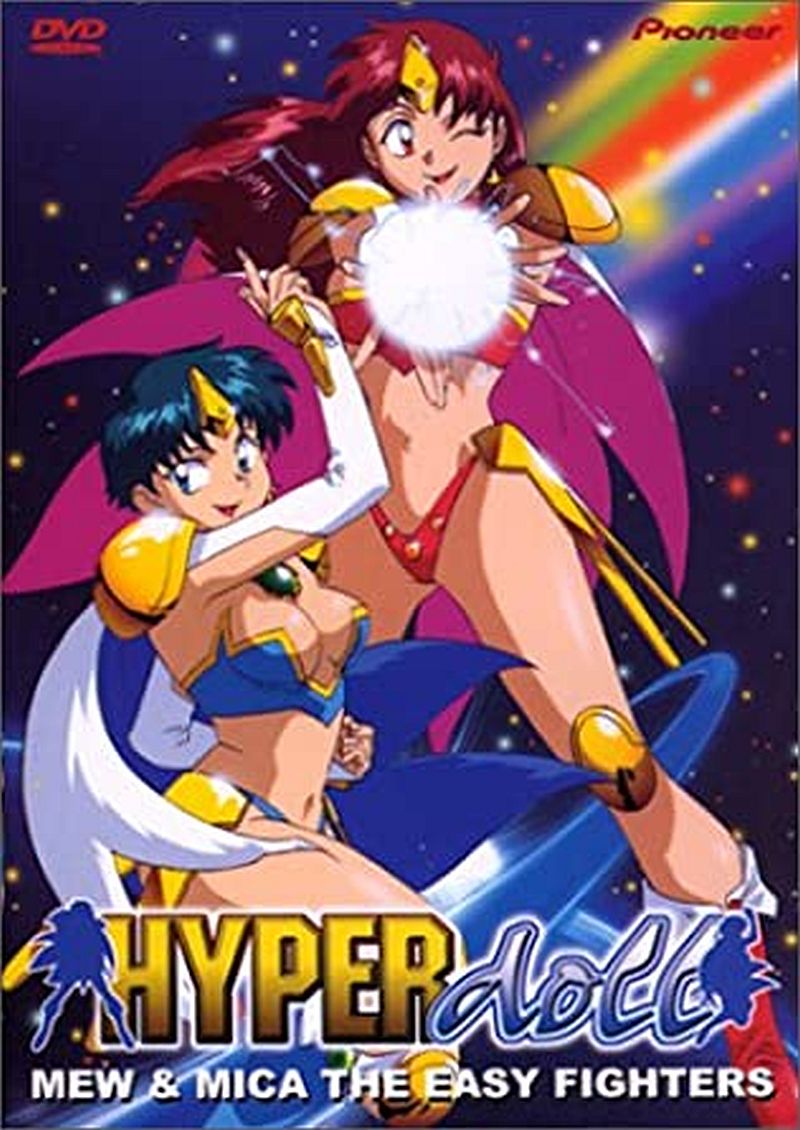 Hyper Doll: Mew and Mica the Easy Fighters, 1995, dir: Makoto Moriwaki
For something that, on the face of it, looks an awful lot like no end of other titles, Hyper Doll actually has quite a neat angle. Sure, Mew and Mica are two indestructible space girls defending the Earth from all manner of threats while posing as normal high-schoolers, and sure we've seen that concept often enough in anime that you'd probably have to invent a new numbering system to keep up with it, but here's the twist: Mew and Mica really don't care. That is, they care about the posing as high-schoolers bit, in so much as it means they get to goof around and enjoy Earth food and what-have-you, but all that saving the world stuff? Nope, not for them. And indeed, they clearly couldn't care much about human beings full stop, since one of the first things we learn about them is that they nearly murdered their classmate Hideo for discovering their secret, meaning that Hideo is stuck in the awkward position of having to act as though nothing's going on while keeping their identities hidden - something Mew and Mica also don't much seem to give a damn about - and trying not to annoy them enough that they decide to twist his head off.
If that sounds rather like "What if Superman was evil, and also there were two of him, and also both of them were sexy high-school girls" then yup, that gets us most of the way there, and it's a setup Hyper Doll mines for some satisfyingly dark humour, while also not letting it remotely get in the way of being a wacky show about superheroes punching out stupid-looking monsters. The hyper dolls apparently have no foes that aren't stupid, and that "easy fighters" bit in the title that reads so like a mistranslation presumably refers to the fact that all their battles are completely trivial, since they have effectively unlimited power, a detail we discover through a great running gag in episode two. Thus, the only real dramatic tension stems from whether the pair will bother to turn up and whether they'll keep themselves in check enough that there's anything left by the time they're done throwing around energy balls.
This is all quite a lot of fun, but it's fun that Hyper Doll needs an episode to get properly set up, and that's a problem when your OVA consists of only two episodes. I'd bet you actual money there were meant to be more, but there aren't, and so what we're left with is one entirely satisfactory episode that doesn't have time for much besides getting its ducks in a row and one terrific episode that does great stuff with the premise that part one got slightly too bogged down in setting up. And that's about all there is to be said about Hyper Doll: technically it's thoroughly competent without doing anything actively exciting, except perhaps for some character designs that are marginally rounder and more cartoony than what was typical of the time, and director Moriwaki seems content to keep the show on the road without bringing any real personality to the work. A couple more episodes and I suspect this one would be a firm recommendation, but as it is, I guess it's just another promising show lost to the black abyss of history, albeit one I thoroughly enjoyed and will no doubt return to.
-oOo-
Aside from the fact that I can't see any good reason to bother with the annoyingly incomplete Great Conquest, I feel like I ended up with a lot of half-hearted recommendations here, in the shape of a couple of titles that are comfortably worth a look but exceedingly hard to find and one that I seem to be the only person to rate. And despite what I suggested in my review, I do see why so many people object to Prince of Darkness, I just feel like it has plenty of virtues that the "but this is nothing like the TV series!" crowd have failed to give it credit for. Still, given how easily wowed I am by shiny animation, I could well be wrong on this one!Next up: I reckon it'll be the remainder of the Dr. Slump movie special, since I've already got it pretty much written...
[Other reviews in this series: By Date / By Title / By Rating]
June 17, 2021
Drowning in Nineties Anime, Pt. 101
It's fair to say that not everything has gone to plan with this review series, which is one reason why we're up to a hundred and one goddamn posts and counting. But it's also fair to say that nothing has gone quite so horribly wrong as with this post. And it's all the fault of Dragon Ball Z! Because, you see, the one unbreakable rule around these parts is that posts consist of four reviews apiece, and there are fifteen Dragon Ball Z films if you count the two OVA movies, and fifteen isn't divisible by four, meaning that the obvious options would be to either wrap up my trawl through Dragon Ball Z with a three film post or to skip the last entry and the TV specials.
It's an insoluble problem of the sort I'm sure has ended weaker blog series, and probably even taken down an empire or two, but here's the thing: I suspect the solution I've come up with might be even worse. Still, I've committed to it now, so follow my logic ... Dragon Ball was created by Akira Toriyama, and prior to that, Toriyama was the man behind the super-successful-but-not-Dragon-Ball-successful series Dr. Slump, and there have been precisely five Dr. Slump films released outside Japan and - oh yeah, you've got it! - five plus fifteen is twenty, and twenty is divisible by four.
Which is a long way of saying, welcome both to the end of our intermittent Dragon Ball Z marathon and also the start of our Dr. Slump marathon, and I sincerely hope that nothing like this ever happens again. But since it has, let's make the best of it and take a look at Dragon Ball Z: Wrath of the Dragon, Dragon Ball Z: Bardock the Father of Goku, Dragon Ball Z: The History of Trunks and Dr Slump: Hello! Wonder Land...
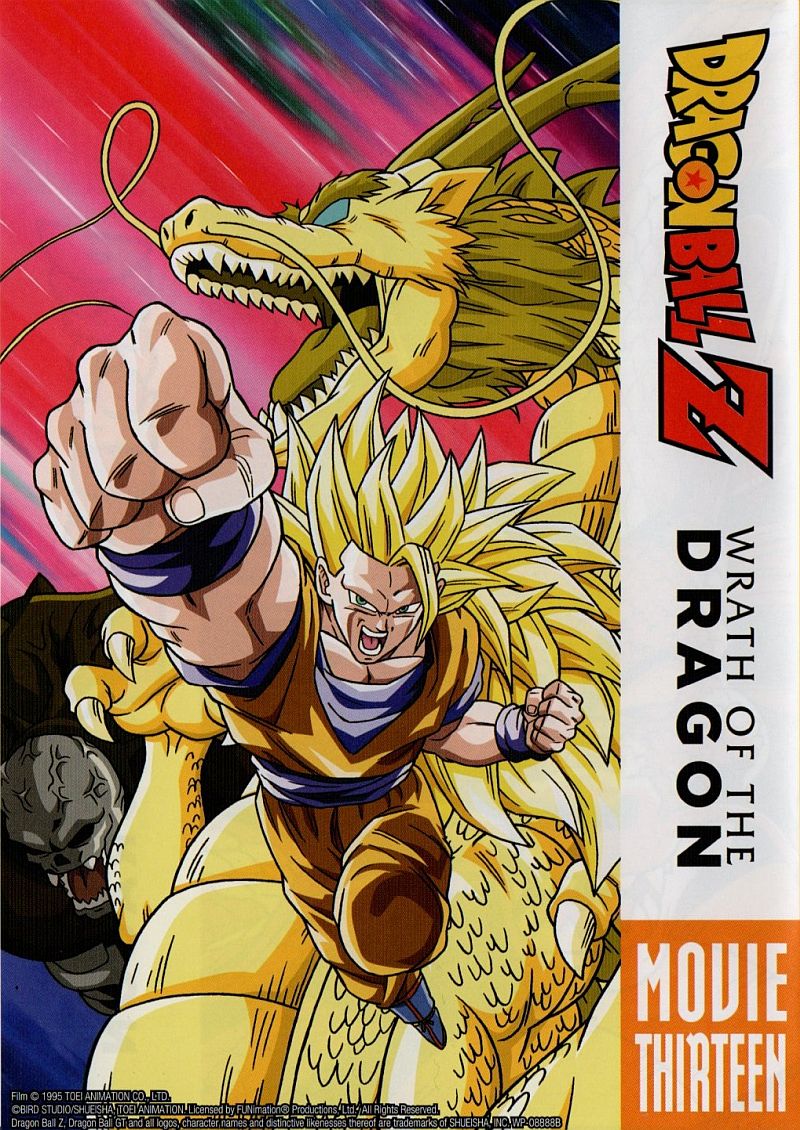 Dragon Ball Z: Wrath of the Dragon, 1995, dir: Mitsuo Hashimoto
First up, I was very much hoping that this would be the Dragon Ball Z film in which long-suffering deus ex machina Shenron the wish-granting dragon would finally snap and vent its pent-up rage on our heroes for abusing its powers so many, many times, so there's a point immediately lost for the misleading title. (Honestly, I've no idea where it comes from, except that there's a final attack that's kind of dragon-y.) Second up, I know I've ragged on these Dragon Ball films plenty for having basically the same plot enough times that it's become faintly obscene, so hats off to Wrath of the Dragon for shaking things up, in so much as any degree of shaking is possible for this franchise. Which is to say that everything still ends with an enormous fight, but the enemy this time around is a bit different and the road by which we arrive at that confrontation feels distinct from anything we've had before.
In a nutshell, the gang come across an enormously dodgy-seeming old man who convinces them that if they can just open the mysterious music box he gives them, a mystical hero with appear. Since they like heroes and presumably have nothing better to do - and are all too dim to realise how tremendously off this all is - they enlist the help of poor Shenron, whose number they presumably have on speed-dial by this point, and who takes this latest demand on its time with the usual dignity. And somewhat surprisingly, once they crack the magic box, it does contain a hero, albeit one who isn't the least bit happy about being rescued, for reasons that will occupy most of the movie's middle section.
Here's the problem with all that: there are no stakes. I mean, there's some vague mumbling about a universe-ending cataclysm, and very many people die in the inevitable scrap that takes up the last quarter hour - though, even there, hilariously, the point's made that good old Shenron will have them back to life in no time at all, because clearly godlike wish-granting dragons have nothing better to do except sort out your damn messes, Goku. But introducing a new protagonist, setting out their conflicts and backstory, and doing all the required worldbuilding for any of that to work is a lot to ask of a film of less than an hour, and while Wrath of the Dragon does a fairly good job all told, nothing can keep this from feeling terribly inconsequential. The nature of the crisis is both totally self-inflicted and largely unrelated to any of the series regulars, and more than ever, there's no meaningful effort made to convince us that our by this point preposterously swollen cast are likely to lose, let alone die.
All of which means that Wrath of the Dragon can't help but give the impression of being a side story that exists solely because Toei weren't about to let a whole six months go by without punting out another Dragon Ball movie. And that's unfortunate because, by most other metrics, this one's a commendable effort. Hashimoto wasn't a top-tier director by any means, but he does well enough at keeping the gears turning, and the animation is actually quite impressive: one shot in particular, an audacious fish-eyed first-person sequence, legitimately wowed me in a way Dragon Ball Z has rarely managed. So it's not like there's no reason to watch Wrath of the Dragon, and it even probably just about makes it into the upper tier of the series' many entries; I just can't imagine I'll still be thinking about it even slightly once I've finished writing this review.
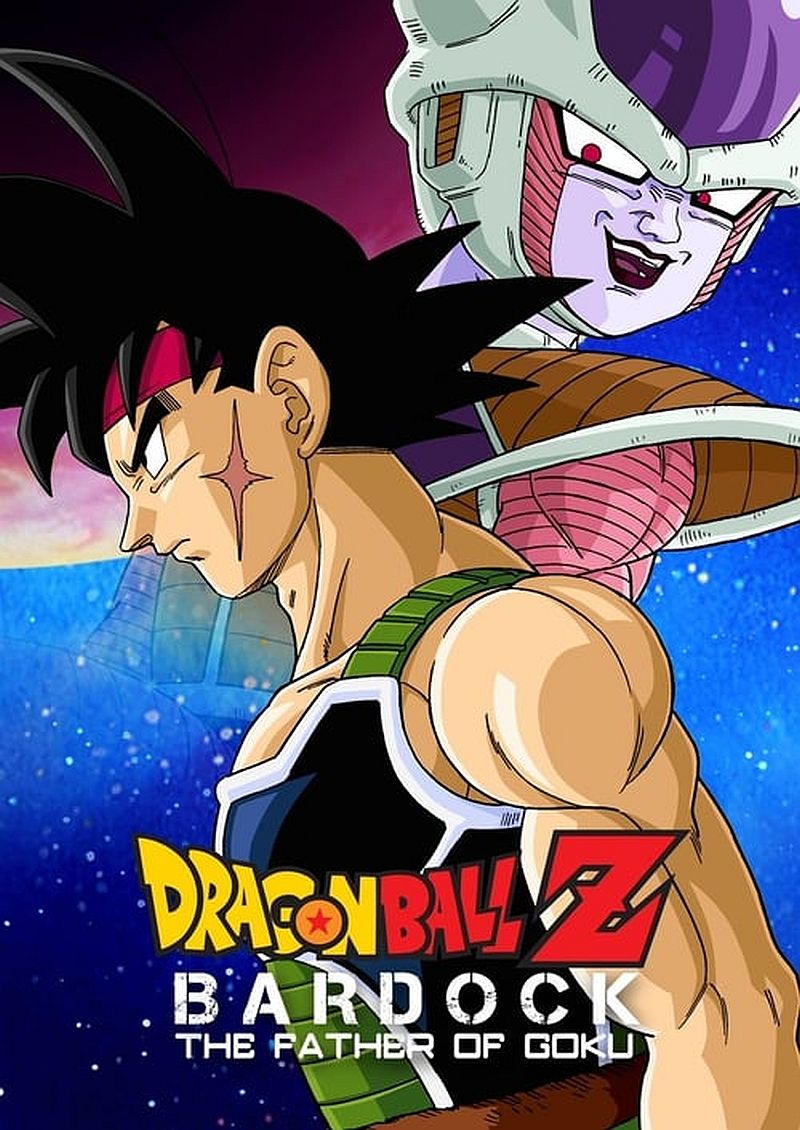 Dragon Ball Z: Bardock the Father of Goku, 1990, dir: Mitsuo Hashimoto, Daisuke Nishio
Dragon Ball Z: Bardock the Father of Goku has two sizable narrative problems that it has no clue how to get around or perhaps doesn't even realise are problems. Which is a shame, because neither of them are insurmountable, it would just have taken some actual effort to, you know, surmount. And in fairness, it may be that in 1990 one of those issues might not have been quite so glaring as it is now, but anyway, let's stop dancing around it ... the fact is that a story about a largely unlikeable character with no real personality to redeem him, and one to which we already know the ending, or at any rate what the ending definitely won't involve, is a tough old sell.
So this first Dragon Ball Z TV special is a prologue doing precisely what its title suggests, in that it introduces us to Bardock, Goku's dad. Since we know Goku was found on Earth as a baby, there's no reason to expect a heart-warming tale of parental bonding, and sure enough, the two are never so much as in the same room together, which you might expect to be problem three, except that one thing the makers do manage to get right is sketching in something of a relationship for the pair, so credit to them for that, even if the way they've pulled it off involves an exceedingly dubious contrivance that's necessary to get the plot moving in any sort of direction at all. Essentially, we begin with Bardock and his fellow Sayans working in service to the evil despot Freeza, and Bardock has no problem with this until an alien curses him with the ability to see the future, or at any rate very specific parts of the future that relate to the awful fate awaiting him and his fellow Sayans. Oh, and also random clips from the original Dragon Ball, since ... yeah, actually, I'm already thinking that calling what we have here a character relationship was too much of a stretch. But it's enough to get Bardock to acknowledge the son he's never previously wanted anything to do with, and that's narrowly sufficient to make this function as some sort of meaningful prequel.
Going back to my original point, there are undoubtedly ways the film could get around how little grounds we have to root for Bardock, a man who'd surely have merrily kept on doing evil at the service of an intergalactic villain all the way to retirement age if the circumstances had allowed, but Bardock the Father of Goku deftly avoids almost all of them. It's only when Freeza's lieutenant convinces him that the Sayans are as much a threat as they are a useful tool that Bardock begins to think about rebelling, and his motives are never remotely noble. And while his drift toward something like the side of good isn't without a certain charm, it comes too late and too easily, and has nowhere to go except major problem number two, in that we can suppose with stone-cold certainty that the ending isn't going to involve Bardock executing his nemesis and saving the Sayan race from oblivion.
Given a narrative that spends its time dashing toward a brick wall and somehow still makes a mess of getting there, Bardock the Father of Goku could be worse than it is. If you've seen enough Dragon Ball Z to appreciate the broad significance of all this, it's kind of engaging to see these major historical events play out, and the animation is functional enough, with a bit of neat action right at the end where it most counts, and I dare say the sort of fans who come to these with their critical faculties turned way down would be far more excited to get to know Bardock than I was. Still, unless you fall into that category, I can't think of a single reason why you'd bother with this when there are so many better entries in this bloated franchise to pick from.
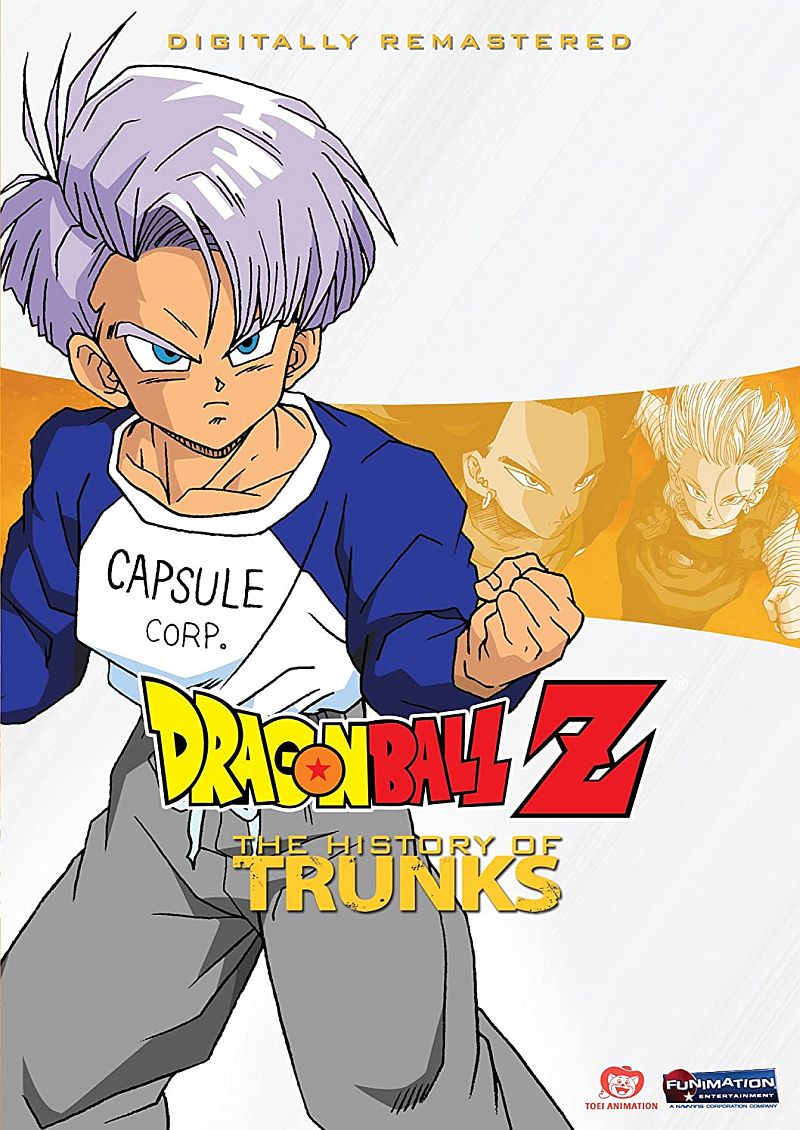 Dragon Ball Z: The History of Trunks, 1993, dir's: Yoshihiro Ueda, Daisuke Nishio
When it comes to The History of Trunks - and surely I can't be the only one who thinks that sounds like the title of a seedy documentary about swimming underwear? - it helps to have a proper idea of what you're in for. And I say this as someone who went in without the faintest clue; oh, I knew it was a TV special rather than a cinematic release, so my expectations were suitably muted, but I'm nowhere near up enough on Dragon Ball Z canon to appreciate that it was filling in a thus-far unscreened bit of background, in the shape of an alternate timeline adventure that the TV series made clear had to exist without giving any actual details of. Since it was stated that the character of Trunks had travelled back in time from an alternate future to heal Goku from an otherwise fatal condition, that necessarily meant that, if he hadn't, there'd have been a future in which Goku wasn't saved and things would have turned out very differently. And so they did, as we'll discover, in the shape of practically everyone in the Dragon Ball Z-verse biting the dust at the laser-spewing hands of evil synthetic human pair Android 17 and Android 18, leaving only Gohan and Trunks to pick up the slack.
A setup that wipes most of the major players off the board before we've caught our breath is an exciting change of pace for a series that tends to be so risk-averse. The problem is, screenwriter Hiroshi Toda doesn't seem to have thought this through half as much as he needed to, and more than once he gets tangled up in some inordinately stupid storytelling trying to keep his ducks in a row for Trunk's inevitable trip back through time. In one standout dumb moment, Gohan keeps Trunks out of a fight by the reasoning that he's three years away from being ready, though it's obvious Trunks is going to fight anyway, just on his own and with no hope of winning. Indeed, the whole business of navigating from young Trunks to less-young Trunks makes an almighty mess of any narrative logic, obliging leaps of years in which we're told characters have been fighting, training, or combinations of the two in ways that are almost impossible to reconcile with what we're actually seeing. Generally, the second you question any part of the plot, it crumbles. Why, for example, are people just going about their lives as normal with an existential threat on the loose? Why, with half the Earth's population dead, are theme parks still a thing? Sure, the villains are unbeatable, but people could at least try and hide from them instead of acting like everything's normal until the minute they turn up and decimate the entire city.
That, however, does get us to the one unassailable virtue The History of Trunks has to offer: its baddies are pretty marvellous. Or rather, its baddies are run of the mill by Dragon Ball Z standards as far as their designs and powers go, but their gleeful evilness and lack of any motivation besides a casually homicidal sense of fun is never not entertaining. They're basically two normal teenagers if normal teenagers had the power to kill anyone who irritated them even mildly, and that ends up being much more entertaining as a concept than it probably has any right to be. It even more or less makes up for the fact that Trunks himself isn't a remotely interesting protagonist, and for once, the one-sidedness of the various fights is a virtue, in that Android 17 and Android 18 are so hilariously bad-ass.
Those fights look pretty solid, too, as does most of a TV special that, visually, is barely below the level of the Dragon Ball Z films of the time - not the highest of bars to clear, it has to be said, but that this doesn't just look like television-quality animation is a pleasant surprise. Sad to say, though, that's about the only way in which The History of Trunks manages to exceed expectations or give a pretence of being more than it is. Get past the novelty of the setup and you find yourself with a tale that's broken in a bunch of crucial ways, the most significant being that it's forty-five minutes of setting up a conflict that won't be resolved and doesn't matter except to clear up questions it's hard to imagine anyone asking.
 Dr. Slump: Hello! Wonder Land, 1981, dir: Minoru Okazaki
Dr. Slump: Hello! Wonder Land is - and I intend this, mind you, as a compliment - inordinately stupid. I mean, this is the sort of stupid you can't just chance your way into; this is some transcendental stupidity we're looking at right here. And unless you find silly humour an absolute turn off, that's enough to get it to some very, very funny places. Actually, given that I normally hate silly humour myself, maybe even that isn't much of an argument against.
What helps, I think, is that, prevalent though it is, the stupidity isn't all that's on offer. Hello! Wonder Land also has some actual ideas, and many of those ideas are fairly inspired. Take, for instance, the opening scene, in which a thinly veiled Superman knock-off argues with a thinly veiled Tarzan knock-off over who's the star of the film, before they both discover that in fact neither of them are and that instead we'll be spending the next half hour following Arale-Chan, pint-sized, super-strong, incredibly dim robotic assistant to the titular Dr. Slump, a sleazy inventor genius who's main goal here is to magically roofie the woman he has his heart set on. (Don't worry, he doesn't remotely succeed, and the precise manner of his failure is one of the best gags in the film.)
The universe in which this madness unfolds is so endlessly weird and inventive that, not for the first time, I find myself desperately sad that Akira Toriyama would end up being the Dragon Ball Z guy when he could have been knocking out divine lunacy like this. My favourite feature is the sentient technology that Slump cooks up, which somehow manages to do Cronenbergian technological body horror two years before Videodrome was even a thing and then, even more astonishingly, wrings laughs out of something so visually alarming that it makes your eyes want to crawl into the back of your skull. Actually, aside from the stupidity, this embracing of the strange and wrong is perhaps the main other source of humour in Hello! Wonder Land, and if anything that's even harder to get right.
None of this, it has to be said, is particularly technically accomplished. The animation is serviceable and often delightful, without doing a single thing that would make you dream this was a feature film; IMDB classes it as just another episode of the TV show, and while I'm inclined to believe Wikipedia and Discotek over them, you can easily see how someone would make the mistake. As far as the nuts and bolts go, the one aspect that truly shines is the vocal performances, which very much have the feel of actors who've inhabited these roles for so long that they've learned to pull off gags with razor-sharp precision, even when that gag is only spouting nonsense at high speed. I don't know exactly what I'd make of this if I'd watched it in isolation, but as the first entry in a five film marathon, it's an utter joy, and my only worry going forward is whether such ridiculous daftness can stretch to a longer running time without becoming completely exhausting.
-oOo-
If I ended up liking Dragon Ball Z a fair bit more than I ever imagined I would, and if I'll always be thankful to the nineties entries for leading me to the utterly brilliant 2013 feature Dragon Ball Z: Battle of Gods, still, I'd be lying if I claimed I wasn't relieved to see the back of the franchise. Consider me a convert of sorts, but one who's looking forward to a good, long break from anything Goku-related. On the other hand, if Hello! Wonder Land is anything to go by, our much shorter Dr Slump marathon is going to be an absolute joy...[Other reviews in this series: By Date / By Title / By Rating]
June 9, 2021
Drowning in Nineties Anime, Pt. 100
Post number one hundred! For ages, I never imagined I'd reach this landmark, because that would mean four hundred reviews and approximately a quinzillion hours of anime-watching. But once I'd accepted that the big one hundred post would happen, I knew I'd need to come up with something suitably momentous, given that whatever I went for ought to sum up this crazy years-long endeavour and the whole landscape of a decade's worth of anime, from magical girls to fantasy pastiches to cyberpunk to gross-out horror to giant robots to tentacle porn to every possible combination of the above. Was that even possible?
Well, after much wracking of whatever brains I have left after watching most of the anime films and OVAs released in the West between 1990 and 2000, I reckon I've cracked it. And so, with great pleasure and no small amount of pride, I bring you ... the Drowning in Nineties Anime classic-anime-children's-films-based-on-major-works-of-Western-culture-all-of-which-happen-to-include-a-few-songs-and-to-have-been-released-by-Eastern-Star-and-none-of-which-are-from-the-nineties special!
Ha, yeah, that other stuff was a lie! Actually, my original plan was to review some nineties Studio Ghibli films, but as much as I love those, a big part of this blog has been trying to make the point that Ghibli aren't the be-all-and-end-all of anime, and also I'm not sure there's much I can add to that conversation. And since the only self-imposed rule I'm yet to break here is that I haven't gone back as far as the seventies, I figured I'd jump on the opportunity to go somewhere totally different for this anniversary post. Which, to be specific, means taking a look at Swan Lake, Animal Treasure Island, Nutcracker Fantasy, and A Journey Through Fairyland...
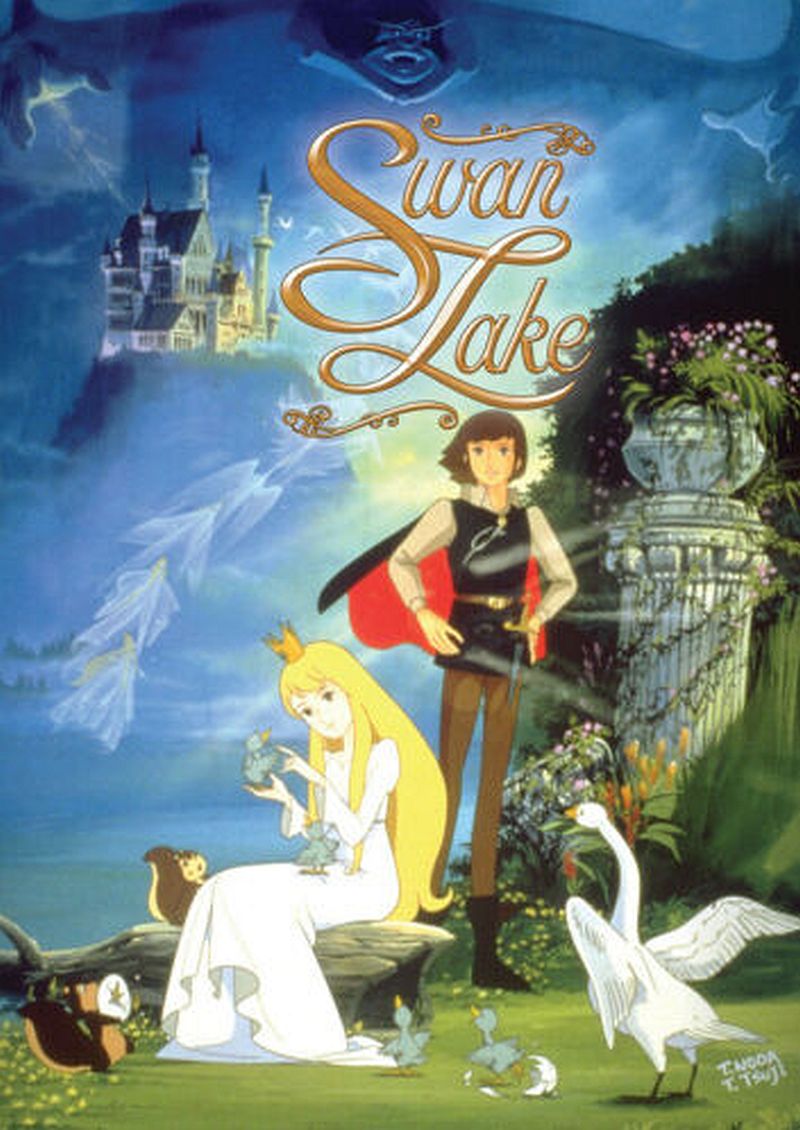 Swan Lake, 1981, dir: Kimio Yabuki
Given how extraordinary it is that they're putting out stuff like this at all, you can hardly blame Eastern Star for the lack of extras on their disks, but sometimes it would be awfully nice to have a spot of background information that would explain, for example, just what series of decisions led to longstanding anime studio Toei deciding to adapt a century-old Russian ballet. A little digging offers some insight, in that this was part of their ongoing "World Masterpiece Fairy Tales" series, but why a ballet of all things, and why this particular ballet? I'm not knocking Tchaikovsky here, and since I've never seen a performance of Swan Lake, I don't have much knowledge to work off, but a scan of the plot on Wikipedia suggests that there's not a ton of material there out of which to craft a feature film, even one of a slender seventy-five minutes.
Then again, it's possible that was precisely the point, because the anime Swan Lake is an utter delight, and a big part of the reason is that it doesn't feel as though anyone involved considered themselves terribly beholden to their material. I'm not suggesting it's a bad adaptation, by any means; I can't find anything to say that the Tchaikovsky version includes a pair of comedy-relief talking squirrels, but apart from that, it seems to hew quite closely to what scant plot the ballet has to offer. But with so many gaps big and small to be filled in that narrative, there's ample room for diversions and asides to put some meat onto the bones of a skeletal story. The villainous Rothbart, for example, whose machinations and obsessive love of the heroine Odette are the main driver of everything that happens, is a tremendously appealing creation, silly and menacing in equal measure and an all-round wonderful piece of animation - no surprise since he's effectively the reincarnation of Lucifer from Yabuki's equally captivating 1969 classic The Wonderful World of Puss 'n Boots, even down to having the same voice actor.
As for the visuals in general, that cover art up there should give you a fair idea of what to expect. Swan Lake is transparently drawing on the classic Disney aesthetic, which was quite different to what Disney were actually putting out by 1981, more Sleeping Beauty than The Fox and the Hound. And Toei being Toei, we could go a step further and say it's that classic Disney aesthetic but on a much reduced budget, which would no doubt be true but would give a very wrong impression of how lovely Swan Lake is. Sure, the character designs are simple, but they're just right in their simplicity, tapping into a certain vibe that positively screams "fairy tale". And if that's true of the characters, it's ten times truer of the lushly painted backdrops, which nail that look about as well as Disney ever did anywhere. The forest of thorns young Prince Siegfried has to ride through at one point is just the creepiest, spikiest forest of thorns you could hope for, while Rothbart's castle is as cartoonishly grim as you can imagine. As has been proved on many an occasion, the heightened sense of style that's part of the bedrock of anime turns out to be a terrific fit for Western fairy tales, and I don't know that that's ever been truer than here.
On top of that, of course, the film has a heck of a score, unless you absolutely hate Tchaikovsky I guess. The film, admittedly, doesn't foreground the music half as much as you might expect or even treat it with a great deal of respect: more than once, pieces are cut off abruptly, and there are frequent scenes where dialogue gets pushed to the front of the sound mix. But again, that just brings us back round to the fact that this feels less like an attempt to make the definitive adaptation of the ballet and more like an attempt to be a really terrific little anime fairy-tale adaptation that just happens to have a lot of excellent music along the way. And given what a basically perfect job it does on that front, I can't imagine Tchaikovsky would be too bitterly offended.
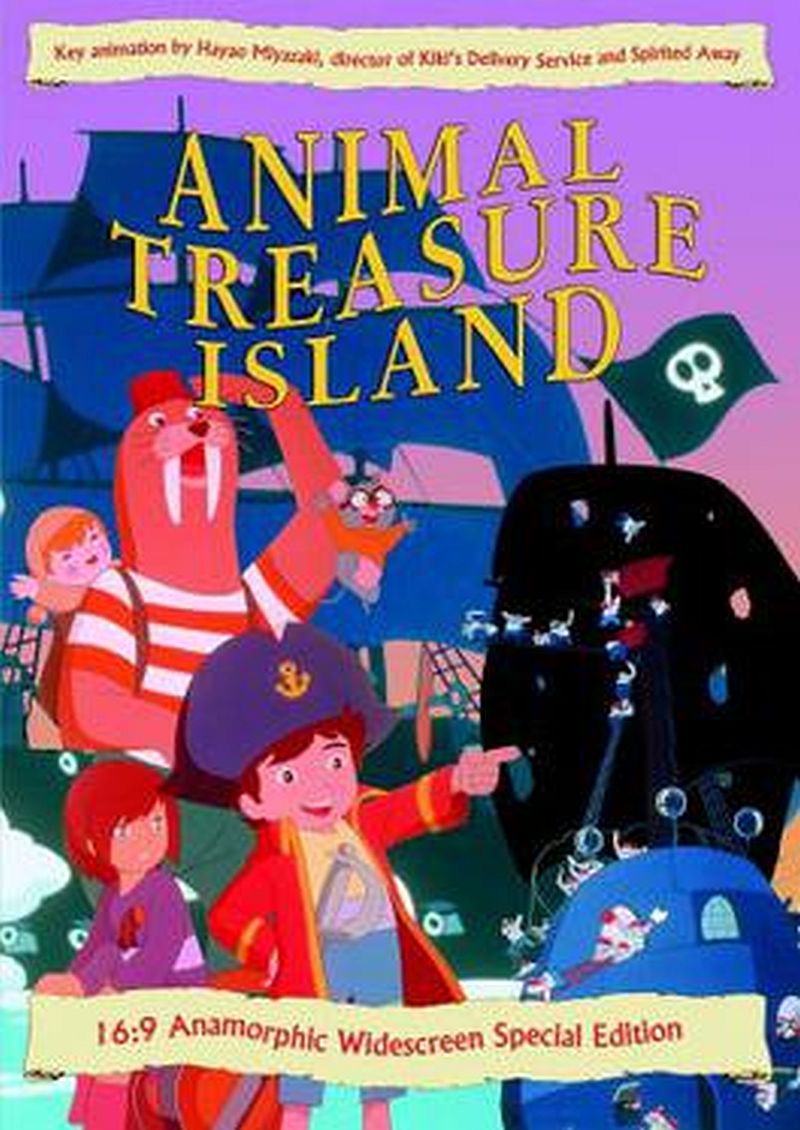 Animal Treasure Island, 1971, dir: Hiroshi Ikeda
A slight odd-one-out in this list - and how I'm kicking myself that I've already covered Gauche the Cellist, because that would have been a perfect fit! - Animal Treasure Island is nevertheless a worthwhile inclusion to make the point that Japanese kids movies prior to the advent of the nineties weren't all sombre, artsy affairs devoted as much to raising cultural awareness as to providing entertainment. Animal Treasure Island doesn't give a good goddamn about your cultural awareness, and even seems as though it might be quite happy if you come away less cultured than when you arrived, so long as you've had fun in the process. It's hard to imagine a film more invested in providing enjoyment for the sake of enjoyment, without having any qualms about being substantial or educational, but also without straying into being flat-out dumb in the manner of so many kids' films before and since.
Still, Animal Treasure Island doesn't half butcher its source material - that being Robert Louis Stevenson's seminal pirate adventure novel Treasure Island - and since I have quite a lot of love for the book, it follows that I've always found the film hard to feel the same affection for. Simply put, I don't know that the writing team (among them a certain Hayao Miyazaki, in one of his earliest breaks) had to mutilate the novel so heftily as they did. There are some bizarre decisions along the way, and though you can rationalise them to a greater or lesser degree independently, put them together and you're left with something that strays so far as to barely justify that title. I'm not talking about the fact that all but a couple of the cast have been replaced by animals, either, which is only odd if you think about it too hard; rather, there's the addition of Jim's mouse companion Gran, there's the insertion of a random toddler named Baboo whose safety Jim seems wholly unconcerned for, and most jarringly, there's the introduction of a major new character in the shape of Captain Flint's granddaughter Kathy.
Kathy looks enough like a Miyazaki design that it's easy to suppose her inclusion was an early example of the feminist bent that would become such a major element of his filmmaking, but she's written without any of the later nuance; moreover, her presence means scuppering the character of Long John Silver, and I doubt anyone familiar with the book would contest that the relationship between Silver and Jim is the heart of Treasure Island. Even if that weren't the case, Kathy's plotline requires the film to abruptly have a modicum of stakes, which fits awkwardly when until then everything has felt utterly inconsequential. Honestly, the more I think about it, I like very little about Kathy, who plays like the sort of shallow "strong female character" type that litters many a modern Hollywood movie; she's tough in a one-note fashion that's much less interesting than Jim's plucky bravado, and still manages to end up as something of a damsel in distress.
This would all matter more if Animal Treasure Island was properly interested in being a work of drama as opposed to a wacky, anything-goes sugar-rush of an animated movie. It's a modest film aimed squarely at children, and that stretches all the way to the animation, which - despite also having Miyazaki as key animator - is resolutely simple. Never bad simple, there's not a moment when it doesn't look like the work of skilled animators, but largely the brief seems to have been to go all in on simulating a picture book given life and not get too caught up in showing off anyone's hard-learned craft. This changes somewhat in the last third, with a satisfyingly dramatic storm and a boisterous action climax, but in general, what marks the visuals out is their exceedingly bold colour scheme - the pea-green sea takes some getting used to! - and their commitment to simplicity and charm.
Taken on its own terms, then, when Animal Treasure Island works, it really does work, and that actually happens quite a lot, for all that I've not been shy about picking on its weaknesses. The songs are a joy and, in a film that consists more of loosely strung together set pieces than narrative, the majority of sequences are a success, with lots of warmth and energy and their fair share of genuine laughs. So no classic, then, by any means, but nevertheless a mostly enjoyable children's film made with sufficient quality to not waste the time of adults, and given how much rarer that is than it ought to be, I'm still happy to give Animal Treasure Island a thumbs up.
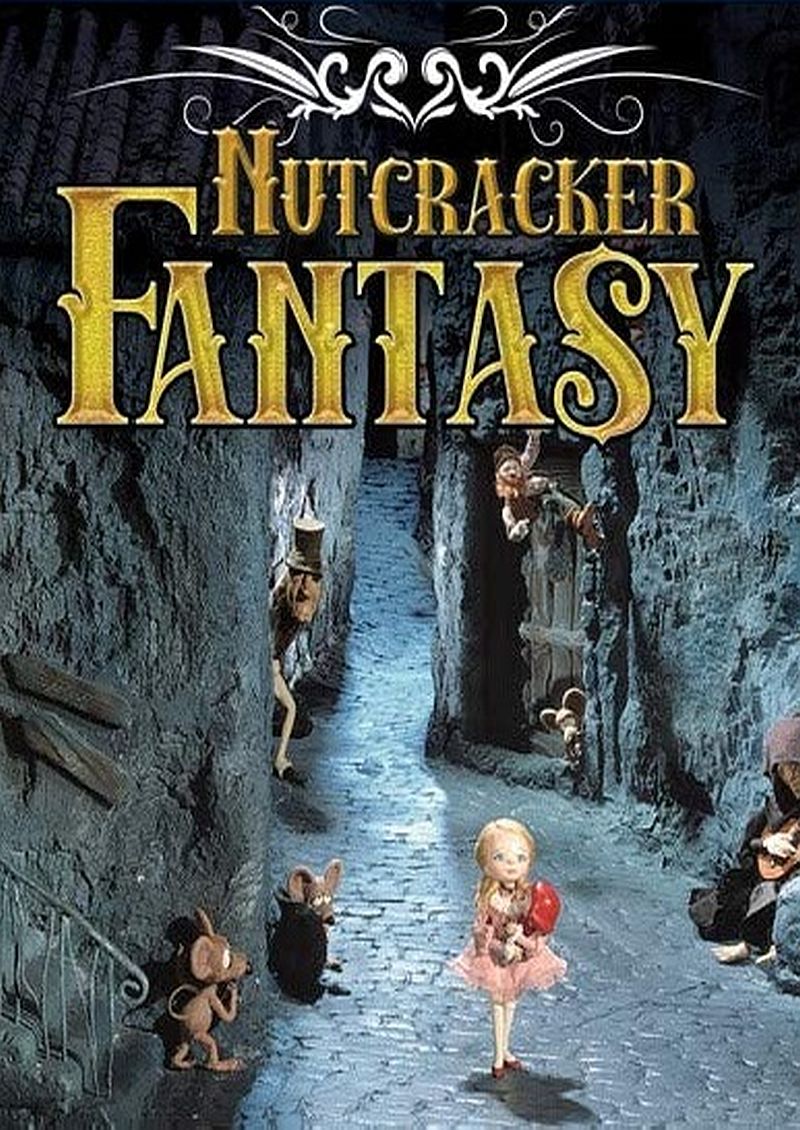 Nutcracker Fantasy, 1979, dir: Takeo Nakamura
Most of the time, the business of reviewing essentially boils down to the question of whether a particular work is accomplishing whatever it apparently set out to do. If something sets itself up as a comedy, then you mostly just have to establish whether it's funny. If it's evidently aiming to be an action movie, is it exciting? That sort of thing. But then you run into a film like Nutcracker Fantasy and realise the limitations of that approach. Because I can barely guess at what the makers of Nutcracker Fantasy thought they were about. That's not to say it's bad. It does many things very well indeed. But not many of those things are what you'd expect an animated children's film from the tail end of the seventies to be even thinking about attempting.
Which is to say, Nutcracker Fantasy spends a truly surprising amount of its running time being a pretty successful surrealist horror movie, and while it's unlikely director Takeo Nakamura had been influenced by David Lynch's gonzo masterpiece of a debut from two years earlier, I frequently found myself wondering if his primary motivation wasn't "What if we could make something a lot like Eraserhead, but, you know, for kids." Children's films often stray, deliberately or otherwise, into being scary, and Japanese children's films from this period often seem quite content to throw in a bit of undiluted nightmare fuel, but I don't know that I've ever seen anything that purported to be a children's film that was so unmitigatedly weird and unsettling and driven by the purest dream logic over narrative as this. To put that in context, we're talking about a plot that reboots itself at least five times over the course of ninety minutes, and that's when it's being anything like a recognisable plot at all and not just throwing out scenes at random. The first example that really struck me was when, a few minutes into a stop-motion animated film, we're suddenly presented with live-action footage of a ballet dancer, which, sure, makes a measure of sense for what's loosely an adaptation of Tchaikovsky's ballet The Nutcracker, only it doesn't make much sense in relation to anything we've seen prior to then.
But I just got around to mentioning the animation, didn't I? And we definitely need to talk about the animation at some length, because Nutcracker Fantasy happens to be the first anime film I've come across made primarily using stop motion. On the one hand, this is absolutely the right choice for the material, in that a plot in which most of the characters are toys, dolls, or animals benefits greatly from the handicraft tactility and the frankly gorgeous dollhouse-esque sets that the makers put together with what was clearly a massive amount of effort, passion, and skill. On the other, dolls are creepy at the best of times, and jerky stop-motion animation is creepy too, and when you have a film that contains material that would be pretty damn creepy whatever the approach, that's enough to frequently push it over into "What the actual hell?" territory. Going back to that question of intent, I can definitely see that we're supposed to be scared of the screeching, two-headed rat lady that's the main antagonist, and also of the villainous child-snatching ragman who stalks the edges of the film. But are we meant to be scared of Clara, our cute child protagonist? Because reader, I confess, in a film where I found just about everything unnerving, Clara's jolting movements and dead-eyed stare were no exception.
My suspicion is that Clara wasn't meant to be quite so freaky as she is, and also that the story wasn't meant to be such a jolting sequence of absurdist non-sequiturs, and that the goal here genuinely was to make something fun and appealing for a younger audience, the sort who like dolls and ballet and princesses and tacky songs and silly comedy. Conversely, there's so much sinister weirdness in Nutcracker Fantasy that it seems unfair to suggest that the bulk of it was accidental; if nothing else, no film that isn't interested in chucking some horror into the mix could contain this many Dutch angles. And if there's one consistent feature throughout, it's a willingness to embrace any idea and run with it, no matter whether it scuppers the pacing or is liable to leave the viewer floundering. So all in all, I wouldn't feel right in suggesting Nutcracker Fantasy is a failure, if only since nothing this hypnotically strange and meticulously crafted can deserve that word, but as a children's film that actual children might watch, the sort that don't want to be left in a state of existential terror, it's a bewildering boondoggle of the first order.
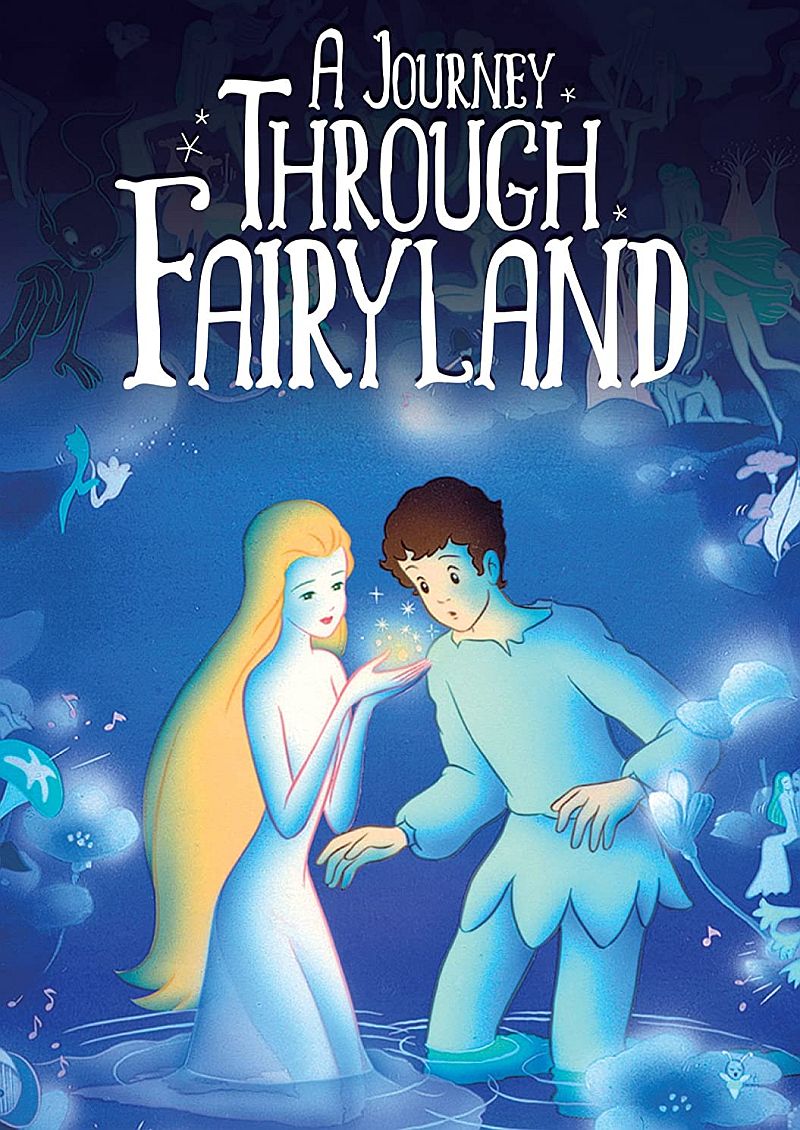 A Journey Through Fairyland, 1985, dir: Masami Hata
A Journey Through Fairyland may be the single loveliest-looking animated film I've ever seen. That's not quite to say it's the most well animated, though it's also not to say it isn't; it would certainly deserve a spot on any top ten, and given the sorts of budgetary restraints normally placed on anime, that's quite a statement. Certainly the animation is phenomenally meticulous, and there are shots here of striking ingenuity and complexity, and in general the sheer ambition and willingness to explore the possibilities of the medium is up there with practically anything else you're likely to encounter, especially prior to the advent of computer-assisted animation. Still, all of that's not quite what I was getting at with that opening statement; rather, it's what I can best describe as a picture-postcard quality, as though the entire film were composed of those painted images you get on the better class of greeting cards, though even that makes A Journey Through Fairyland sound rather tacky and twee and, given its subject matter, that's something it actually manages to steer fairly well clear of. At any rate, the backgrounds are invariably gorgeous, and, unusually for anime, the character work is practically on a par: sure, the designs are simple, but what's done with them is often astonishingly lavish. I heaped similar praise on director Hata's earlier movie Sea Prince and the Fire Child, but with a few caveats; here, Hata has ironed out every last kink, and the results are glorious.
Being a film that's heavily about music, it's fair to say the score is pretty fantastic, too, at least if you have any sympathy at all for classical music. Here, by the way, I'm cheating ever so slightly when it comes to our theme, in that there are a couple of Japanese composers in the mix; still, the vast majority are the big European names, practically all of whom get a look-in. Actually, this is as good a time as any to dig into what A Journey Through Fairyland is, and the short answer is that it feels very much like what would happen if a bunch of enormously talented Japanese animators watched Disney's Fantasia and thought, "Sure, we can beat that." If there's a crucial difference, it's that A Journey Through Fairyland has a persistent narrative of sorts, but it's one that often gives way to abstract sequences devoted to not much more than the joy of lushly animated objects moving in an appropriate fashion to some timeless piece of music, and so the end result still has the air of a Fantasia-esque anthology as much as it does that of a more traditionally story-driven film.
This is worth highlighting, because the story, and its two central characters, are without a doubt the weakest aspect. In a nutshell, Michael is a promising student at a music academy who's recently grown too distracted by his hobby of tending the local greenhouse to avoid screwing up in class, and his teacher has finally had enough, to the point of kicking him out of the orchestra and potentially the school. Fortunately for Michael, he's earned the devotion (not to mention the fairly blatant lust) of a flower fairy named Florence, and Florence decides the best thing for everyone would be if she transported him to her home, the magical land of flowers, for - um, a date, I guess? It's not altogether clear, and it actually turns out to be a spectacularly ill-judged move, since the land of flowers is a pretty damn dangerous place, presumably because no Japanese children's film from the eighties can keep from including at least a dash of raw nightmare fuel. Anyway, neither Michael nor Florence are remotely interesting on any level, even down to having the blandest designs of any of the characters, and while Michael's trials in our world are easy enough to sympathise with, he does almost nothing throughout the middle of the film except be carried along by events.
Luckily for us the viewer, this doesn't matter much. I mean, if you cared nothing about stunning animation and were filled with a profound hatred for classical music, then probably it would matter, and if that's true, A Journey Through Fairyland is absolutely one hundred percent not the film for you. However, I'm not that devoted to classical music in general, and I still found myself enjoying the pieces here, in large part because the animators have done a terrific job of highlighting what makes them so enduring rather than simply slapping vaguely sympathetic imagery upon them. On that front, I'd argue it's actually a better film than Fantasia, though Fantasia edges it out on variety; having set itself the plot it has, A Journey Through Fairyland is then bound to include an awful lot of fairies and flowers, and fairies dancing with flowers, and the like, and it's fair to say that repetition creeps in before the end, though the aforementioned bursts of horror definitely shake things up. At any rate, if you have an interest in animation or just fancy a beautiful-to-look-at children's movie, I'd urge you to put any reservations you have on hold and give this one a go. It's not without flaws, but they largely pale in the face of its extraordinary loveliness and breadth of craft.
-oOo-
I still can't quite believe I made it this far! What started out as a simple sideline to pad out a blog ostensibly about my writing career has exploded out of all proportion, as the brief changed from reviewing the relatively small number of titles that had been released in the UK during the nineties to reviewing practically everything that was released in the nineties, including stuff that never made it to DVD or even, occasionally, into English. Frankly, it's all got a bit out of hand! And as much as I keep thinking I'm bound to run out of stuff to review soon, I'm not sure the end's actually that near.Certainly, I have quite a bit waiting to be got through. Next up, it'll be back to business as usual, more or less, in the shape of the wrapping up of our Dragon Ball Z-athon. And I suppose I'd better start thinking about what the heck I'm going to do for post number a hundred and fifty, hadn't I?
[Other reviews in this series: By Date / By Title / By Rating]
May 31, 2021
Short Story News - May 2021
Apparently, it's been almost a year since I last did a short fiction round-up, which I guess isn't that surprising since I haven't had a lot to tell, but there have been a few snippets of good news along the way, and I reckon they've piled up enough by now that they warrant a quick post, especially since I've had three stories out in recent months that I didn't do I great deal to draw anyone's attention to.
 The first of those saw my return to excellent horror 'zine The Dark, with a story by the title of A Cold Yesterday in Late July. Like seemingly most of the horror I've been writing in recent years, this is another introspective one, and seems all the more so in the light of the last year. A Cold Yesterday is about isolation, about falling between the cracks, about depression somewhat, about the inescapability of the past, and about the slivers that aging cuts from us - but actually, given that that stuff is all pretty universal, what makes it feel so personal is that it's about hiking and I drew a lot of the vibe from my own adventures ambling around the countryside. Funnily enough for something so bleak, I had quite a bit of fun writing it, mainly because it's amusing to make up names for out-of-the-way villages and the sort of odd rural landmarks you only tend to stumble across when you get far off the beaten track. Even more strange, it's been well-received from what I've seen, with a particularly nice and detailed review here. Oh, and if you should want to read (or listen to) the story itself, here's a link for that.
 A much more cheerful tale all round is Love in the Age Of..., which appeared in The Fox Spirit Book of Love, out last month. I'm yet to see a contributor copy, so I can't comment on the collection as a whole, but if my story's at all representative, it's going to be a weird old beast. Love in the Age Of... was a heck of a tough sell that probably would never have got picked up for any book but this, in that it pulls the sort of stunt that makes it all but impossible to win over slush readers, who, let's face it, can't always be relied on to get past the first page. And that makes things tricky if your first page is unicorn porn. Look, you'll be glad to hear that I didn't actually go sending out unicorn porn (unless you're anything like the friend who felt the need to point out how disappointed she was with me for making promises I didn't keep) but I can see how a feint in that direction might have put some folks off. Not Chloë Yates, though, and much credit to her for that! Indeed, this ended up as one of those rare cases of landing a story with an editor who seemed to properly get it, and the edits were an unusually pleasant process.
Next, and also a very strange tale, because I guess that's what I write these days, we have M.A.T.E.R Knows Best, which - well, I'm not going to try and convince you it's not a James Bond pastiche, because it certainly is, but that's not really what it's about. What it's about is my finding James Bond films for the most part pretty screwed up in a lot of ways, but especially Skyfall, a film so staggeringly misogynistic that I'm at a loss as to how some people missed it (or, bewilderingly, ignored all the evidence to the contrary and declared the film to be a step in the right direction ... you do you, The Guardian!) I only came across this essay today, having realised I was too lazy to try and make its arguments myself, but I agree with pretty much every word and it's a great summing up of what I was trying to get at with M.A.T.E.R Knows Best. But that all sounds kind of heavy, so I probably ought to mention that it's actually quite a fun, blackly comic story, except maybe for when it gets a bit more serious at the end. Anyway, it was another piece I'd given up much hope of selling due to its extreme nicheness, so hats off to Distant Shore Publishing for seeing that as a virtue instead of a flaw. Plus, it's another one you can read for the princely sum of bugger all, at the link here.
And while that's everything I've had out lately, I've made another couple of sales that are well worth a mention. On the surface, Fall to Rise is a relatively straightforward, action-heavy story of the sort I don't generally write, but from my perspective it was actually an experiment in crafting a narrative bound almost entirely to a single location and with some very weird physical rules. Like everything here, it's eccentric enough that it didn't expect it to be an easy sell, so I was extra-happy when it went to my 'zine of choice, Beneath Ceaseless Skies. And that was doubly true for An Exchange of Values, Conducted in Good Faith, a story I wrote specifically with a market in mind, something so risky that I wouldn't normally take the chance. Then it ended up being far longer than intended, drifting into novelette territory, and I really thought I'd shot myself in the foot - except that said market happened to up their word limit enough that it slipped through and, thank goodness, they liked it enough to say yes. Since the ink's not yet dry on that one, I'd better not say who it was yet, so I'll settle for noting that with the year not yet half done, it's already proving to be one of the best I've had for short story sales, which is awfully appreciated given what a train wreck 2020 was on that (and every other!) front.
May 12, 2021
Drowning in Nineties Anime, Pt. 99
It's fitting that, here on the cusp of the big one hundred post, we should go all in on the randomness, and this is definitely among the oddest selections we've had yet, if only for how I've somehow ended up with gross-out body horror placed next to a charming kids' movie about a friendly whale. Aside from our first entry, finishing off the Lupin the Third marathon I've apparently been crawling my way through since way back in post 28 and November of 2017, there's nothing here that could remotely be considered famous or well-regarded. And part of the reason for the obscurity is that, of the four titles here, one of them only ever came out on VHS and another seems to have had about the most limited DVD release imaginable, so you could definitely argue that there's a bit of barrel-scraping going on.
But no, let's try and be optimistic! Surely there's got to be something worth a damn in among Lupin the Third: The Columbus Files, Kama Sutra, Apocalypse Zero, and Fly Peek: Peek the Baby Whale...?
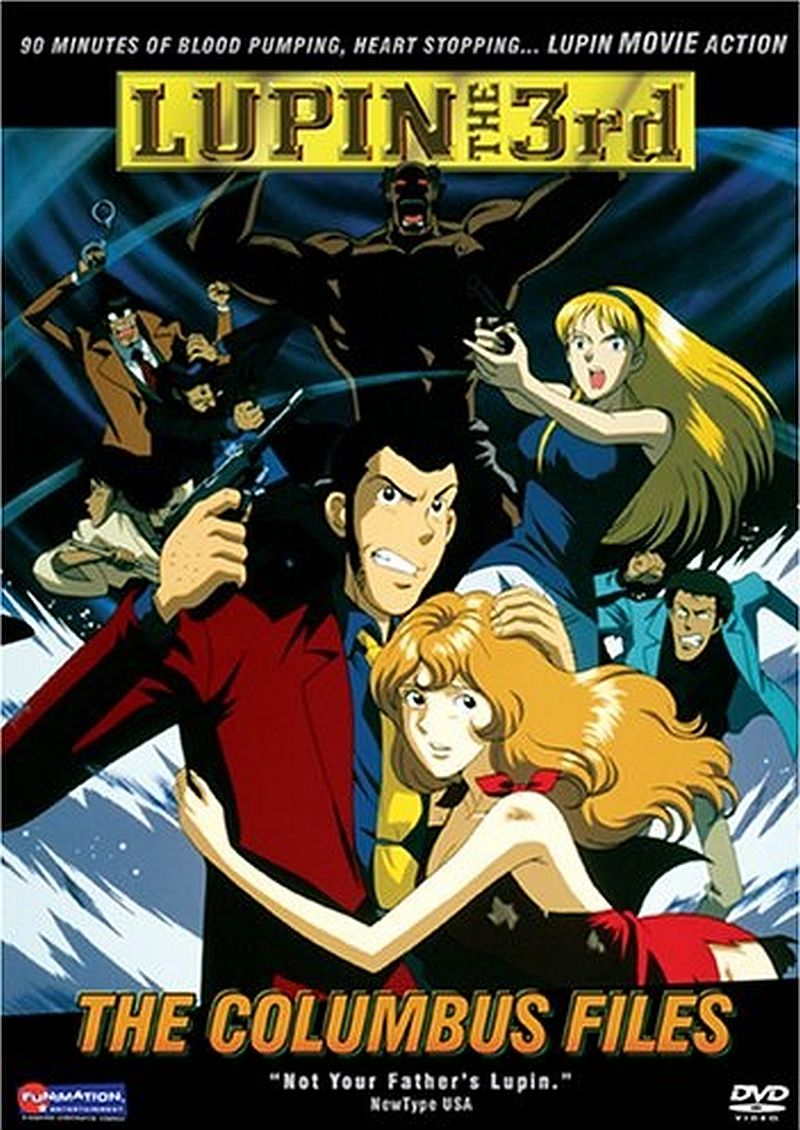
Lupin the Third: The Columbus Files, 1999, dir: Setsuo Takase, Shin'ichi Watanabe
It's a lot of pressure to be the last of your kind of the millennium, so perhaps we shouldn't be unduly harsh toward The Columbus Files for being so mediocre as it is. There's even an argument to be made that by the numbers was the way to go here, capping off a decade of TV specials that often hit considerable heights and sometimes pushed gently at the Lupin envelope but generally were content to turn up and get the job done. And since that's mostly true of The Columbus Files, I'm again left to wonder how much my lack of enthusiasm for it was down to the fact that it was both the last Lupin TV special of the nineties and the last one I'll be covering in these reviews.
The immediate answer to that question is that, sure, there are many ways in which The Columbus Files is fine but not outstanding. The artwork and animation are the one that stands out most: it's pleasing that the film doesn't try to veer too modern, but it just ends up looking very clean and crisp and thus a touch bland in the way anime from 1999 had a tendency to do. There's nothing conspicuously wrong, and that's far from a given with Lupin specials, but two nights on and I struggle to think of a single scene or image that really wowed me. Which is equally true of the narrative, at least in its broadest sense of a series of incidents: The Columbus Files rattles along from set piece to set piece, chucking in the odd comic interlude and pause for exposition, and it's all perfectly entertaining while you're watching, if somewhat overfamiliar if you've seen as many of these as I have.
Stripped down to its nuts and bolts, however, the plot is the one element that goes really, conspicuously wrong, and in rather a frustrating fashion, too. The Columbus Files chooses for its focus Lupin's on-and-off lover and perpetual rival in the art of thievery Fujiko Mine, and specifically concentrates on their relationship and the matter of what actual feelings might or might not lie beneath all of Lupin's clowning and Fujiko's femme fatale games-playing. This is a good angle for a Lupin film to cover, one of my favourite things about the series is that these relationships have plenty of potential depth for the creators willing to dive into them, and there's definitely gold to be mined here. Unfortunately, The Columbus Files chooses to go about its self-imposed task by giving Fujiko amnesia, which is awfully cheesy, but might still get us somewhere interesting, except that Fujiko Mine with amnesia is pretty much not Fujiko Mine at all. The version of the character we get instead is scarcely more than a plot device, a blank slate for Lupin to interact with and a victim to be protected and rescued; put all that against the regular Fujiko, a wily, back-stabbing, outrageously sexy master thief who's always two steps ahead of anyone in the room and ... well, you see the problem.*
The makers address this by introducing a second female protagonist, Rosaria, but that doesn't help because she isn't very interesting either and suffers from being tied into the main story in ways that do her no favours. Come to think of it, The Columbus Files has one of the series' least interesting or thought-through McGuffins and dives so deeply into supervillain-of-the-week territory that it frequently ceases to feel like a Lupin-esque treasure hunt at all. And here we are at the end of the review, and I've almost convinced myself that calling this one mediocre at the start was too kind. But that's not true, I don't think; for the most part, I enjoyed it fine while I was watching, and though I wasn't blind to the narrative problems, the minute-by-minute high jinks were engaging enough to keep me from dwelling too hard. Still, in a world where there are a staggering number of Lupin TV specials to choose from, it's fair to say that this one's more toward the bottom of the pile than the top.
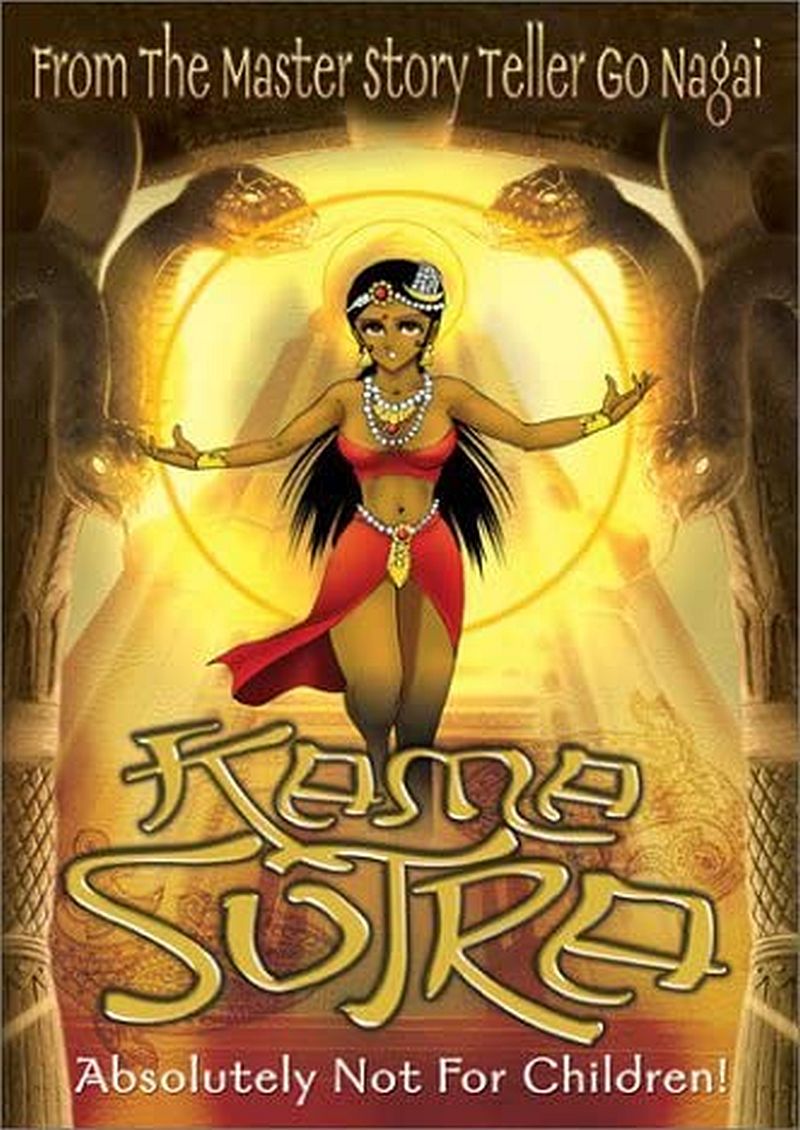 Kama Sutra, 1991, dir's: Chihata Miyazaki, Masayuki Ozeki
It's almost impressive, really, how bad Kama Sutra manages to be at everything it attempts. And for a forty minute OVA, it attempts quite a bit: at one point or another, it's an historical drama, a goofy comedy, an action movie, and an erotic thriller, at the very least. To do none of those things with more than the barest modicum of competence, well, you don't just luck your way into a film-making mess like that.
Normally at this point I'd take a stab at a bit of a story summary, but among the things Kama Sutra is inordinately lousy at is communicating its plot, so the most I can do is offer up the bare bones. We open in ancient India, and some bad guys are attacking some presumably non-bad guys, and there's a princess whose bodyguard gets killed, and then we cut to the present, at which point archaeologists have found the princess, who's been asleep all this time and has now woken up, which possibly has something to do with a magic sex cup - I definitely remember the magic sex cup being important - and then the main hero has sex with the archaeology professor's assistant, then his girlfriend turns up, then the bad guys arrive again and for some reason the main bad guy isn't dead either, and maybe there was a car chase? I'm pretty sure there was a car chase. And then more stuff happened and, look, I really wasn't concentrating by that point. I mentioned the plot revolves around a magic sex cup, right?
Anyway, none of this is done even the slightest bit well, and also none of it fits together in any practical or productive way. The action is devoid of thrills, the comedy is wacky and wholly lacking in actual jokes, the historical elements and the portrayal of India in general are as crass as you'd expect, and the erotica ... well, I'm torn between thinking that deserves a paragraph all of its own and wanting to skim over it as lightly as possible. Given that the animation is as bad as anything I've ever seen in anime, there was never any hope of it succeeding, but the extent to which Kama Sutra screws up - if you'll pardon the pun - what you'd assume to be it's raison d'être is genuinely special. There's only really one substantial sex scene, and not only does it take place in some bizarre sex pyramid that feels like something out of the movie Cube (and if you're half as prone to claustrophobia as I am is even more terrifying), it's hilariously unadventurous. If most Go Nagai titles feel like the work of an excitable, slightly psychotic twelve-year-old boy who's just discovered his dad's hidden magazine collection, Kama Sutra takes that to a whole new level, and its notions of sex are absolutely those that said twelve-year-old would hold. I mean, this is a supposedly erotic title that considers the woman being on top to be outlandish enough to be worthy of note!
There's a small part of me that wonders if Kama Sutra edges its way into so-bad-it's-good territory; I suspect parts of it will stick in my memory when scenes from merely mediocre anime have long since faded, and there's a fair chance that the nightmare sex pyramid will haunt me until my dying days. But is that a reason to watch it? No, it's most certainly not. However, it is on Youtube, and while normally I'd get a bit sniffy about that socially acceptable piracy site, in this instance, I feel like the only person you'd really be stealing from if you spent ten minutes chuckling over the weirder and more absurd scenes in Kama Sutra is yourself. So if all this talk of sex pyramids and magic sex cups has roused your curiosity, I guess that's an option - but just know that I take no responsibility!
[image error] Apocalypse Zero, 1996, dir: Toshiki HiranoApocalypse Zero has been sitting on the to-watch shelf for a very long time now, after I bought it out of a vague sense of duty and curiosity - could anything really be as nasty as this famously vile title was rumoured to be? - and then commenced to avoid it at every turn because I'm just not that much of a gore-hound and so much of the anime that's remembered solely for how horrible and boundary-pushing it was has turned out to be a depressing chore. So colour me surprised: I didn't hate Apocalypse Zero. Heck, I even quite enjoyed it. I even got to the end and found myself wishing there was more; the plan was for an entire eight more episodes to finish off the tale begun in the two here, and while I perhaps couldn't have stomached that many, a couple more wouldn't have hurt.
Quite possibly this means I'm not a healthy or well-balanced human being, because there's no getting around it, Apocalypse Zero is phenomenally repellent. Barely five minutes have gone by before we're watching an obese, mostly naked monster-woman sucking the face clean off someone's skull, and there's worse to come from there, all of it running along much the same lines: if you're at all uncomfortable with sexuality played up for maximum grotesqueness or weaponised genitalia or shots of body parts that really ought to be on the inside very much ending up where they shouldn't be, then Apocalypse Zero is going to push your buttons with maniacal determination. And that, I think, is what ultimately made me warm to it; anyone can animate exploding bodies or deformed monstrosities, but to put this much effort and imagination into your unpleasantness? On those terms, Apocalypse Zero is flat-out ingenious, to the point where it not only shocked me but surprised me, jaded film nerd that I am.
Now, I realise I've got this far without making any attempt to explain what the show is actually about, and while I could, I'm not convinced it would do anybody much good. There's nothing original here except the levels of gore and general offensiveness, and on the whole, that's possibly for the best. Because the gore's a lot to process in and of itself, and also clearly where everyone's creative attentions were focused, and likely a searingly original plot would only have got in the way. Apocalypse Zero robs openly from things like Fist of the North Star and Violence Jack with its post-apocalyptic setting and from the likes of The Guyver with its sinister organic super-suits that look nearly as screwed-up and threatening as the villains, and it even dallies with a bit of high-school drama, à la more shows than I could name. But in so much as it cares about any of this, it's on a level somewhere around pastiche, except without any of the overt humour that implies. Apocalypse Zero takes itself entirely seriously, even when things are happening that surely we can't be expected not to find ridiculous, and after a while I came to suspect that was the joke: push the clichés of violent anime far beyond their breaking point, then push a bit further, and dare the audience to either switch off or to laugh.
Like I said, I'm probably a dreadful person, because I did laugh more than once, and frequently it was that gleeful sort of laugh you get from watching creators go to places you never expected them to go to, because there are levels of depravity that most of us - and even the creators of nineties anime video nasties - tend to back away from. Then again, it may simply be that I'm a sucker for well-made animation, no matter what awfulness it's showing, and I'd have given Apocalypse Zero a pass on those grounds alone: compared with many of its peers that went for shocks over content, it's actually rather skilfully and thoughtfully put together. Or just possibly there was a part of me that's been missing the kind of gonzo horror that, for example, a young Peter Jackson used to make in his Bad Taste and Braindead days. Whatever the case, if you like your horror gross and deliriously weird, and you reckon you've seen everything, maybe you could do worse than tracking down Apocalypse Zero and discovering how wrong you can be.
[image error] Fly Peek: Peek the Baby Whale, 1991, dir: Kôji MorimotoIn so much as there are reasons to be talking about Fly Peek: Peek the Baby Whale, they mostly boil down to factors not directly relating to the film itself. Historically it's greatest importance is surely that, a couple of years later, Hollywood would - arguably! - file the serial numbers off the story and release it under the title of Free Willy, a film that would go on to be bewilderingly successful and spawn an even more bewildering number of sequels. I mean, I guess there's no proving it, or else we'd surely have heard about the lawsuit, but the two movies are exceedingly similar, down to some very specific details that are hard to rack up to parallel evolution. And then, on a less contentious note, we have the fact that this is the sole feature-length work of director and producer Kôji Morimoto, who's had quite a fascinating career over the years, as both the co-founder of Studio 4°C and the man who's surely contributed to more anthology movies than anyone alive: Robot Carnival, Genius Party, The Animatrix, Short Peace, if you can name an anime anthology, he's probably in there.
None of this should be taken to suggest that Fly Peek - or whatever we choose to call a film that distributor Kiseki would only ever release on VHS and under an unholy splodge of a title - isn't worth discussing in its own right. Actually, it's very much good enough to make Morimoto's lack of a return to directing features quite saddening. If I say that it has the feel of a minor Studio Ghibli work from around the same time, that's also not meant as a criticism. It's very much a kids' movie, though with enough depth and edge to reward any adults who happen to be in the room, and though its character designs are simple and rather old-fashioned for the start of the nineties, the animation is detailed and the backgrounds are lavish, and also actively Ghibli-esque in places: the city that the back half of the film takes place in feels like a semi-remembered fever dream of a European coastal town more than an actual, physical space in ways that work to the considerable benefit of the material.
There are, it has to be said, some narrative problems along the way. The extent to which the film breaks into two clean halves is frustrating, even if it's not particularly damaging when all's told. In the first half, we follow brothers Kai and Moito, who find a way to deal with the grief surrounding their drowned father** by caring for a stranded albino baby whale that they name Peek. This all gets wrapped up when a nasty bit of bullying toward the two brothers leads to the rest of the village learning their secret, which in short order means that Peek becomes the property of a nearby sea circus and its unscrupulous owner, who sees the infant whale as a potential attraction and has no qualms about keeping it imprisoned for the rest of its life. Once Kai learns of the obvious deception he's fallen for, he heads off to set things right, at which point the film basically reboots itself and forgets about Moito, to the extent that he never appears in a scene beyond that point. Along with that, there's a noticeably different tone and the introduction of an all-new major character in the shape of the sea circus owner's daughter Maila, and while both halves are up to good stuff on their own terms, it's by and large very different stuff, especially since the back end is a good deal more action heavy.
We know it's possible to navigate this sort of narrative with more grace and coherency because ... well, I'm only going off the synopsis here, having never seen it, but I get the sense that Free Willy managed to iron out the weirder glitches and streamline those two chunks of plot into one. On the other hand, there's something quite charming about the way Fly Peek is so willing to buck storytelling common sense and just keep the focus where it needs to be, no matter if that means ditching what we'd been led to believe was a crucial character. And even with that odd flaw, and its strange character designs, and a theme that feels somewhat overfamiliar here in 2021, there's a lot else that's charming, enough to make the film's almost total vanishment from the world seem as sad as its director's vanishment from the realm of feature-length movie making. Fortunately, it's made its way onto Youtube in a surprisingly nice (if annoyingly cropped) print, so if you've burned your way through all of Ghibli and fancy a sweet, ever-so-slightly dark, lovingly made anime kids film, this one's definitely worthy of your time.
-oOo-
Despite what I suggested above, I feel like I can't really go recommending Apocalypse Zero to other human beings, what with how completely depraved and wrong it is almost from start to finish, so ... er, let's just pretend I never said that, all right? Which leaves us with just Fly Peek, not quite a lost treasure but certainly a film that deserved a far better reception than it got in the West and is long overdue a DVD or Blu-ray release. Or alternatively, if you just want to laugh at something startlingly awful, there's always Kama Sutra!And with that, there's nowhere left to go but across the Rubicon and into post number 100. This is the big one, folks!
[Other reviews in this series: By Date / By Title / By Rating]
* In the interests of fairness, I will say that the point at which Fujiko finally gets her memories back is one of the character's most hilariously bad-ass highlights, so that's something.
** A drowned father, incidentally, that the dialogue seems to uncritically suggest was a whaler, making for a film that's apparently much more comfortable with the killing and eating of whales than the idea of keeping them in captivity.
April 30, 2021
Drowning in Nineties Anime, Pt. 98
We're in the ballpark of having a proper unifying theme for our four entries this time around, which is always a surprise. Granted, its a theme that covers quite a bit of anime from the time, but all of these titles were attempts to pick up a beloved franchise years or even decades after its heyday and to take it in a bold new direction. This is something anime can be unusually good at, and for me that has a lot to do with a willingness to go against the apparent grain of what made a property popular or successful and try to find an excitingly different angle, meaning that, while the results aren't necessarily always great, they at least tend to interesting.
Do these four manage to pull that off, though, or do they just end up as crass imitations? Let's dig into Gatchaman, New Hurricane Polymar, Tekkaman Blade II, and New Kimagure Orange Road: Summer's Beginning...
 Gatchaman, 1994, dir: Akihiko Nishiyama
Resurrecting a classic property years later is a tightrope walk. Alter too much and you risk losing the original appeal; alter too little and you've made a rehash rather than a reboot. Go too dark, go too funny, go too campy, change the characters, don't change the characters ... there are no end of ways to get it wrong, and because you're dealing with something that was once - and you're presumably hoping, still is - much-loved, the ire you'll receive when you screw up, or even just go a little bit awry, is liable to be far harsher than if you'd messed up on a fresh idea.
Gatchaman - that is, the 1994 reimagining of the seventies TV series Science Ninja Team Gatchaman, which reached the West in mangled form under the title Battle of the Planets - absolutely nails it. And though the reasons it does so are many and varied, I'd argue that the primary source of its success is an absolute, unshakeable conviction that Gatchaman, and more specifically the superhero team that goes by that name, is the coolest thing ever. Practically from its opening moments, Gatchaman grabs you by the throat and screams, "Look at them! They're science ninjas, damn it! Ninjas! With science stuff! And they're dressed like birds! How cool is that?!" Which, if you'd asked me two days ago, I'd have replied, "I guess maybe mildly cool?" but now that I've seen the Gatchaman OVA would have to admit is so cool that everything else henceforward is going to seem just a bit less cool for the fact that this exists.
Because, in director Nishiyama's hands, these kids really are awesome. One of the major changes, perhaps inevitably, is an upping of the violence levels, and while that's generally an obvious and tacky route to take a reboot down, here it means that the Gatchaman team get to really ninja it up, taking out endless goons in ludicrously slick fashion. Plus, though there's no actual sex and nary a sniff of romance, the sex appeal has been dialled up to eleven: unsurprisingly, that means token girl member Jun looking hot and getting stuck with a flash of nudity, but actually it's team leader Ken who gets sexualised the most. (Indeed, Jun is treated with more dignity than this type of show normally allows, being both a genuinely useful team member and as deft at kicking ass as anyone.) More generally, though, the attention to detail in ensuring that everything relating to the team - every pose, every gesture, every neat vehicle transformation and dramatic cape flap - is as hypnotically stylish as can be suggests a passion for this material that went far beyond the usual cash-grubbing.
The same is true for the animation, which, taking into account the fact that this is an OVA of two and a bit hours, is awfully close to "no expenses spared" territory. Obviously, some expenses were spared, and that even includes a spot of reused animation, but since that consists of the sort of sequences you'd expect to be reused - the one I first spotted was Joe's plane docking with the team's supersonic jet God Phoenix - it's almost more a virtue than a flaw. The same goes for the score, which is often very cheesy indeed, down to an absurd hair-rock anthem for the closing credits, and yet feels like a perfect fit for a title that manages to have its cake and eat it by simultaneously going down the seemingly incompatible superhero routes of dark brooding and gleeful retro camp and somehow landing them both.
Arguably, the only point where that categorically doesn't work is the plot, or at any rate the parts of the plot that relate to its villain's motives, which are the most incompressible, self-contradictory nonsense you could hope for. Yet even there, it's hard to grumble; probably that (and other issues, for that matter) would stand out more to someone who'd never encountered Gatchaman before in either its Japanese or US iterations, but with the TV-footage-recycling movie and dim childhood memories of the show behind me, nonsensical villain motives felt very much par for the course. I suppose in a sense that's giving Gatchaman bonus points for being Gatchaman, but so be it: if there's one lesson I've learned lately, it's that Gatchaman is the coolest thing imaginable and deserves all the bonus points it can get.*
 New Hurricane Polymar, 1996, dir: Akiyuki Shinbo
On the face of it, New Hurricane Polymar is something we've seen plenty of around these parts, and indeed something we were looking at just a paragraph ago, a gritty reboot of a much older series that attempts to drag its source material into the present without losing too much of what was appealing in the first place. Though within anime and Japanese culture in general, we could go further than that, since shows about youthful heroes battling crime with the aid of super-suits of one sort or another are part of the bread and butter of the nation's media. And - again, on the face of it - there really isn't a lot to differentiate New Hurricane Polymar. Teenager Takeshi Yoroi finds himself the recipient of a curious red helmet in the mail, sent by a schoolfriend he hasn't seen in ages, a genius scientist who we already know and he quickly discovers has been murdered by a vicious terrorist organisation hellbent on hastening the human race's extinction from climate disaster. Fortunately, or maybe not so fortunately, Takeshi is the sole employee of hapless detective Joe Kuruma, who's just competent enough to track the terrorists but not at all competent enough to do anything about their shenanigans, at least not without the aid of a besuited hero by the name of Hurricane Polymar.
One obvious element that sets this apart from similar titles is the talent at the helm. Here we have another work from someone we've seen a lot of in these reviews, director Akiyuki Shinbo, who'd only really come to widespread fame on the back of the superb Puella Magi Madoka Magica, but who'd been quietly banging out work that ranged from respectable to great for nearly two decades by that point. Back in 1996, Shinbo was the better kind of hack, in that I don't imagine this was a passion project and there's not a great deal of directorial presence, but at the same time, everything is delivered with an unobtrusive sense of style that suggests a creator with talent and ideas to spare. However, if you're up on your anime, it's not Shinbo who leaves the most noticeable mark but character designer Yasuomi Umetsu, who a couple of years on from this would make his own directorial feature debut with the notorious Kite, where he'd blatantly rip off one of his own designs to such an extent that it's really damn noticeable. I mean, I had to keep doing double takes to be sure that Takeshi and Joe's landlady wasn't actually teen assassin Sawa and about to kill everyone in the room.** Honestly, it's a little distracting, but hey, at least we get some unusually imaginative character designs, so there's that.
Neither Shinbo nor Umetsu's presence, however, is what ultimately makes New Hurricane Polymar feel different from its many counterparts. What does the trick is more a matter of tone, and how the show opts to push hard into being about comedy as much as it's about action. And even that isn't really it, since anime is frequently willing to throw daft comedy antics into something that, judging by the bloody violence and gratuitous nudity, might not be the most obvious fit. But New Hurricane Polymar takes that to a whole 'nother level in a way I can't say I've seen before: it feels, essentially, like two different shows smushed together. The action stuff is very much what you'd expect of the genre and is taken completely seriously; I'd go so far as to say that there isn't a hint of humour at any point when Takeshi's suited up. Whereas outside of those scenes, the comedy balance is way higher than you'd expect, to the extent that we get regular insights from Joe Kuruma's dog and there's a running joke about how his office is dangerously uninhabitable that runs so hard that it starts to overtake the A plot.
It's all very weird, and while it's maddening that only two half-hour episodes of New Hurricane Polymar were ever made, I can kind of see why this might not have found its market. Were the action scenes not so deadly serious, and indeed so well done, I'd be inclined to suggest that it feels like the work of people who simply didn't want to make the product they'd been handed and decided to sabotage it from within. But that's not at all the vibe: the stuff with Hurricane Polymar is plenty good in its own right, it just keeps on taking a back seat to the comic side of things, which has the benefit of feeling that bit fresher. Slam them together and you definitely have an odd mix that never quite gels, but at the same time one that's surprising and entertaining in a way a synopsis would barely hint at. If New Hurricane Polymar had been finished - and hey, it's only missing one episode! - I'd be pushing it enthusiastically, but even at only an hour, it's still a bit special.
 Tekkaman Blade II, 1994, dir: Hideki Tonokatsu
Just what is it you come to a sci-fi show about people in cool suits fighting aliens for? Is it the people in cool suits fighting aliens? Or is it more the rambling character drama? Do you really like to watch your heroes bickering about nothing much? And then making up? And then bickering some more? Do you want them to obsess incessantly over who has a crush on who, and would absolutely everyone have a crush on somebody else - somebody who's guaranteed not to like them in return - as though they're really in high school and not defending the Earth from imminent annihilation? Well, if all of that's the case, then boy are you going to love Tekkaman Blade II.
An OVA follow-up to a lengthy series that sounds as though it didn't need much following up, Tekkaman Blade II is effectively Tekkaman The Next Generation, which would be a reasonable enough approach to take if it weren't for the fact that the new character it fixes its attentions on is Yumi Francois, a young mechanic who's recruited to the team for absolutely no imaginable reason. Granted, the "apparently incompetent new recruit turns out to be the one team member who can save the world" trope is about as old as sci-fi anime itself, but it pretty much has to go one of two ways: either they have some hitherto-unknown power that makes them especially capable or they're so uniquely personable that they become the heart and soul that nobody realised the team was missing. So that Yumi Francois starts out as an annoying cretin and ends up as an annoying cretin and only accomplishes anything whatsoever because she's inadvertently given access to a devastating superweapon that she just barely figures out how to control is ... well, it's a fresh take, I'll give Tekkaman Blade II that much.
Fortunate for those fans of teenaged soap opera, then, that the show is much more interested in Yumi's love life - though even there, it's even more interested in showing her and any other female characters naked at every opportunity. And somewhere amid the lingering shots of bare breasts and bums and the endless scenes of Yumi pining over the hilariously nicknamed D-Boy, there's that aforementioned sci-fi show about people in cool suits fighting aliens, which for the first three episodes feels so pushed into the background that you wonder why they bothered. When an actual plot of sorts starts up after the midway point, it's quite the shock, but an improvement nonetheless, since those back three episodes contain the seeds of an interesting story. Unfortunately, it's one that relies heavily on knowledge of the original series that the OVA has shown zero interest in sharing, and even at its best, the delivery's decidedly clunky. Most noticeably, it seems the writers heard about foreshadowing once but didn't get how it was supposed to work; a crucial character relationship is dropped in three episodes before it will matter by having one of the female pilots take a phone call from her father - while topless, of course! - and another pilot's tragic backstory is hinted at by having him randomly quoting the bible, again a good hour before the reasons why will become apparent. It's so clumsy that it's kind of endearing.
The only element of Tekkaman Blade II that's unequivocally a success is the animation, which is thoroughly decent all the way through, if never eye-popping. And the bulk of the design work is relatively appealing, too, though when things go wrong they go really wrong. In particular, I struggle to think of an instance where that hideous trope of making the female characters' suits look super-girly so we don't for an instant forget they're girls has felt more stupid and inappropriate; Yumi's suit looks as though someone had a last-minute panic and decided to stick giant cherry blossom petals all over it. Like Yumi herself, it's a bizarre attempt to bring something kitschy and cutesy to a show that otherwise seems determined to be quite grim and serious, and as with most everything about Tekkaman Blade II, it leaves you with the distinct sense that the creators had no idea what they were trying to accomplish.
 New Kimagure Orange Road: Summer's Beginning, 1996, dir: Kunihiko Yuyama
It's hard to know just what we're meant to make of Summer's Beginning. It came relatively close on the heels of the Kimagure Orange Road TV series and the prior film that brought it to an ostensible close, with a gap of a mere eight years, and certainly positions itself more as a continuation than any sort of spin-off or reboot. And yet it does insist on calling itself New Kimagure Orange Road and in general on having the feel of a revamp even when it picks up so directly from I Want to Return to That Day that it repeats a handful of crucial scenes by way of a recap.
Then again, you can see the makers might have felt that a bit of ambiguity was in their favour. Continuing a plot that was functionally complete while also insisting on taking things in a new direction has the unfortunate effect of making Summer's Beginning feel distinctly like fan fiction, and it has to jump through quite a string of hoops even to get itself started. This second movie picks up three years after the first left off - with Kyosuke and Madoka finally a couple and Hikaru heartbroken but already bouncing back via a burgeoning career as a dancer in musicals - and thus far, their lives have continued to follow roughly the same tangents. Kyosuke and Madoka are still together, though his job as a photojournalist has kept them separate for a while, and Hikaru has been Stateside with her work. However, that all gets shaken up when the present-day Kyosuke and the Kyosuke of three years earlier both have near-fatal accidents, leaving younger Kyosuke in the body of his older self and older Kyosuke stuck in some sort of limbo.
This is a breathtakingly contrived way of getting Summer's Beginning to the point it apparently needs to be at, which is to tempt Kyosuke with the what-might-have-been of seeing a more grown-up Hikaru, one who's come out the other side of the pain of their breakup as a stronger, tougher, more likeable person, but also isn't so past it that she doesn't have a yearning for the guy who dumped her all those years ago. And as riddled with problems as that setup is, it's not devoid of appeal. Like I said, this has the feel of something fans eager for more might cook up, yet it also seems like the work of people who genuinely cared about these characters and knew their history and hidden depths and wanted to do them justice. On that level, it's often a success: as much as I loved I Want to Return to That Day, I wouldn't class myself as a Kimagure Orange Road devotee, yet there was many a moment that I got a kick out of. The best of those, for me, revolved around Madoka and Hikaru, and if there was a loose thread left hanging, it was that their friendship seemed irreparably broken, so I appreciated the less cavalier approach Summer's Beginning took to the matter of their relationship.
Not everything succeeds so well. My biggest bugbear was how obsessed Summer's Beginning was with the prospect of Kyosuke and Madoka first sleeping together, to the extent that it becomes a crucial ongoing plot point; it's handled tolerably enough, in fairness, but it definitely undermines the maturity shown elsewhere and veers terribly close to being the wrong sort of fan service. And there are some technical issues along the way, too, in the shape of a slight but noticeable lack of polish in places where the film would greatly have benefited from it. For example, a crucial scene in which Hikaru gets to show off her dancing falls flat because, if the animation is to be believed, she isn't really all that good. On the other hand, the film does an excellent job of updating the classic character designs and of using its visuals to convey the crucial shift into adulthood that's so essential to its themes.
There isn't really a good reason for New Kimagure Orange Road: Summer's Beginning to exist, following on as it does from an ending that was to all intents perfect and setting itself the task of answering questions that didn't need asking. However, perhaps as much through luck as judgement, it hits on some genuinely emotive topics - the idea that this version of Hikaru that Kyosuke is so enticed by only exists because their breakup forced her to grow up and find her inner strength is quite fascinating - and there are plenty of individual scenes that land with real force. The problem is that Summer's Beginning has to wrap itself in such knots to get to that material, and all the body-swapping and time-jumping stuff is much less interesting than the simple character beats that, after all, are what Kimagure Orange Road was fundamentally about. Still, there's pleasure to be had here, even if its not consistent, making for an addition to the franchise that just about earns its seat at the table.
-oOo-
Despite what I said in the introduction, there's only one real triumph here, though what a triumph it is! The Gatchaman OVA is a masterclass in how to get a revamp right, so much so that it's hardly fair to weigh anything else against it. On the other hand, Tekkaman Blade II is the only major failure, and I don't know whether that has much to do with it being a reboot, though it would surely have been better if it had settled on either telling its own story or developing what had come before rather than uneasily shuttling between the two. As for the rest, New Hurricane Polymar is perhaps the most interesting title in terms of how it goes about reimaging its source material, whereas New Kimagure Orange Road is the most strange and baffling, and probably deserves credit for being as good as it is when it's so inherent misconceived.And with that, we're exceedingly close to the big one hundred post, which I'm mostly through writing ... I'd have got there a lot quicker if I didn't keep getting dizzy from all the excitement! In the meantime, however, we've one more batch of random nonsense to look forward to, so expect that in the not-too-distant future...
[Other reviews in this series: By Date / By Title / By Rating]
* If there were two, the other one would be that when I grow up I want to be a science ninja.
** Though what I was really reminded of, and what New Hurricane Polymar is reminiscent of in quite a number of ways, is Umetsu's much-underrated 2004 TV series Mezzo DSA.
March 31, 2021
Announcing The Outfit
So, that bit of news I've been dropping hints on for quite some time now? Well, today's the day I finally get to stop hinting!
Toward the back end of 2019, Rebellion editor David Thomas Moore got in touch to ask how I felt about the possibility of writing a fictionalisation of the Tiflis bank robbery. Clearly, my first step was to learn what the heck a Tiflis bank robbery was, for which, being only human, I went straight to Wikipedia. Roughly five seconds later, having discovered that the Tiflis bank robbery was one of the most wildly insane events ever to occur in human history, positively gawking at the fact that nobody had yet written about it and that I might conceivably get to be the one who did, I was already trying to think of ways to reword "Seriously though, when I can I start?" into something a business-savvy professional writer sort might say.
For those who didn't follow that Wikipedia link: the Tiflis bank robbery is the occasion when, on the instructions of Lenin and other high-ups in the Bolshevik command, a young Joseph Stalin led the gang of career revolutionaries he was at the time in charge of in one of the most outrageous, profitable, and bloody crimes in history. And yes, I do mean that Joseph Stalin. This a real thing that really happened in actual history, and when you dig beneath the surface, it only gets weirder and less plausible. One example off the top of my head: there's a scene in the book in which Stalin recruits someone to his cause using their passion for his, Stalin's, youthful poetry. Oh, and it takes place over a glass of milk, because milk bars were a thing in early twentieth-century Georgia. Did I mention that this all really happened?!
The Outfit is still quite a way from release, having been put back a couple of times for the same reason that every damn thing's been put back over this last year and change, but at least, as of today, it's public knowledge and has a definite landing date. It also has a press release, which you can read here - if you're not sold at "The Russian Revolution meets Reservoir Dogs" then I'm not sure I can help you! - and I wouldn't be surprised if there's an unveiling of the cover in the not terribly distant future. And meanwhile, I, obviously, will be rattling on about it at every possible opportunity!
March 29, 2021
Drowning in Nineties Anime, Pt. 97
How on earth did these eighties posts become a regular feature of a blog that has its chronological parameters baked right into the title? Obviously it has a lot to do with me being awful at following the rules I set myself to keep this whole exercise within a remotely manageable scope; but equally as often, it's just that I pick stuff up because it looks interesting or I've heard good things about it and only realise once I get round to writing my review that it came out in the wrong decade. That was the case with a couple of the titles here, and inevitably I then end up reviewing some other stuff that I might have settled for just watching for my own amusement so as not to be left with half a post - which is how I'm talking about a kid's movie that's a whole nine years too early for our purposes!
And why I'm bothering to explain any of this is beyond me! After all, we've got some terrific anime this time around, in the shape of The Fantastic Adventures of Unico, Twilight of the Cockroaches, Outlanders, and Macross: Do You Remember Love?
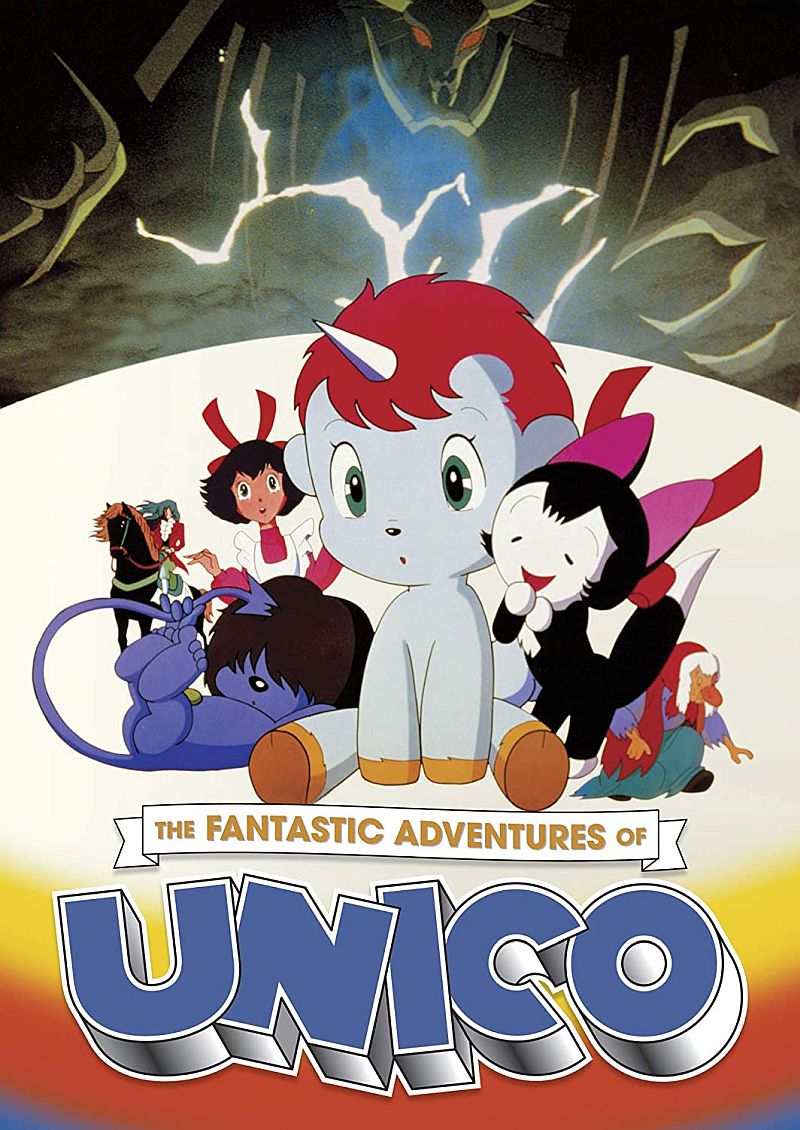 The Fantastic Adventures of Unico, 1981, dir's: Toshio Hirata, Osamu Tezuka
You have to respect the willingness - nay, the eagerness! - of eighties Japanese children's films to go to thoroughly dark places. The Fantastic Adventures of Unico doesn't so much toy with questions of mortality, grief, isolation, and the depredations of age as it does fling itself at them headfirst. What we have here is a cutesy kids adventure that opens with its protagonist being sentenced to death by the gods for the crime of bringing too much unearned happiness to humanity, and though that sentence is quickly commuted to banishment to the ends of creation, it's a fair taste of what's to come. In short order, the chosen agent of the gods, the West Wind, takes pity on our magical infant unicorn hero and drops him off, instead, at the most isolated spot she can find, reasoning that if there's no-one around for him to bring joy to, he can't very well incur the wrath of his creators any more than he already has. But it's not long before the briefly traumatised but ever-optimistic Unico is trying to befriend a demon, a project that goes about as well as you'd expect, in that - spoiler alert, I suppose - he winds up dead within minutes. It doesn't stick, of course, or we wouldn't have much of a film, but you sure feel like it might when you're watching an adorable, pink-haired unicorn child drowning in a seething ocean.
I can't overstress how weird this is; bar a brief interlude in which we're introduced to one of the most delightful cats in all of animation history, there's nary a scene of The Fantastic Adventures of Unico's ninety minute run time in which something emotionally challenging isn't happening. But I also can't overstress how charming and engaging the film is and how much that grows out of its aggressively bleak themes rather than acting as a counterpoint to them. Unico is a kindly innocent in a world where even the gods are seriously screwed up, and though he has magical powers that basically let him do whatever the plot requires, they only work when he loves and is loved in return. Unico's is a world in which even small cruelties can be debilitating, and that lends the moments of kindness and decency that crop up vastly more weight than they have in the average kiddie flick, where the stakes are nonexistent and the forces of evil are more obstacles to be overcome than genuine threats.
It helps, mind you, that the film is lovely to look at, with gorgeously detailed backdrops and simple characters animated with an emphasis on nuance and personality, all gathered together in an aesthetic that somehow squares the circle between its seventies Osamu Tezuka source material and its eighties movie present: the lush colour scheme favours supersaturated shades and burning neon far more than you'd think could possibly work, but somehow it does. Fortunately, perhaps, the soundtrack doesn't try the same trick, and the many songs, mostly delivered by singer / songwriter Iruka, are gentle, folksy things that are so legitimately sweet and sad that they stay on the right side of kitsch.
Which, I think, sums up The Fantastic Adventures of Unico in its entirety. It ought to be unbearable to adult eyes, but, like its hero, it's so genuine and good-hearted, and so willing to confront and try and overcome the darkness of its world, that it somehow turns a tale of a magical unicorn into something complex and powerful, without forgetting that it also needs to be cute and lively and full of colour. I can't begin to imagine how actual children would respond to this, and though I didn't sample the English dub, it's all but impossible to imagine how that wouldn't push the thing off the tenuous tightrope it's walking; it would take almost nothing to make this too cutesy, and less to make it so existentially terrifying that the average child would need therapy on the back of the experience. At the same time, I suspect that emotionally sturdy kids are exactly the right audience, and if I had any to hand, I'd be eager to sit them down and let them experience the bittersweet joys of The Fantastic Adventures of Unico.
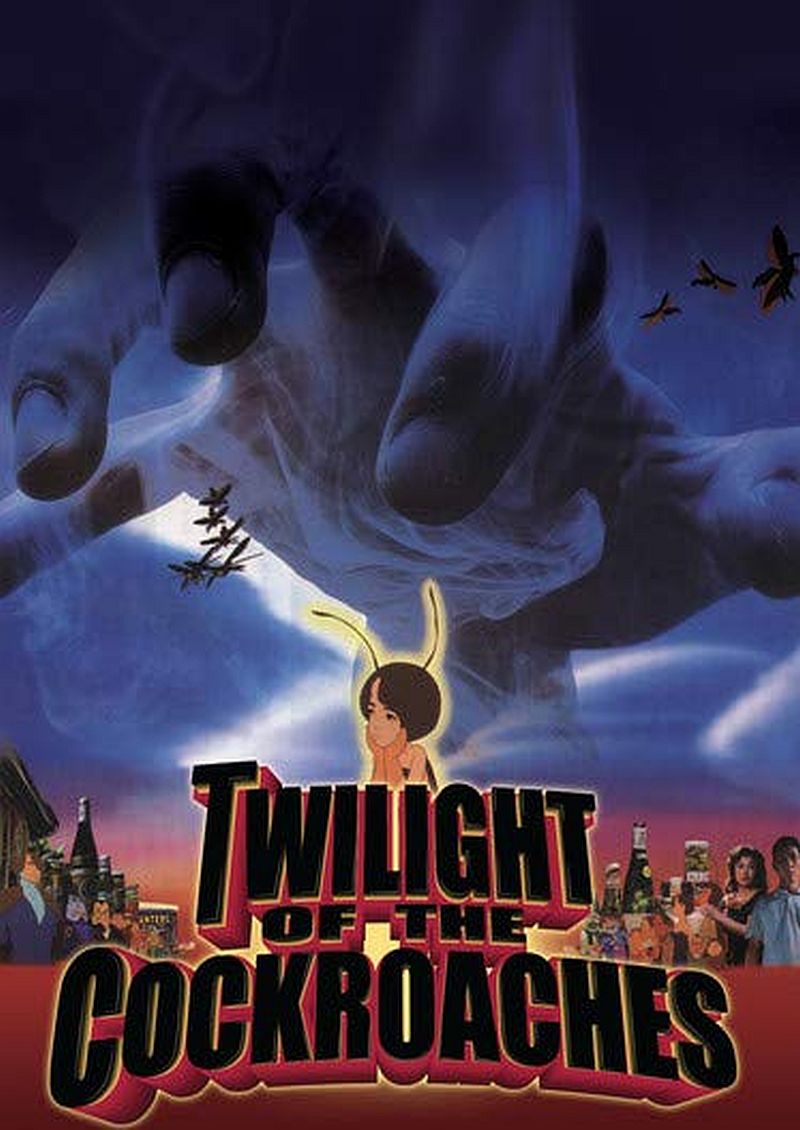 Twilight of the Cockroaches, 1987, dir: Hiroaki Yoshida
It's curious, really, that there isn't more anime that combines animation with live-action footage. Oh, I can think of a few titles that feature both in the same place - Otaku No Video springs to mind as an obvious example - but ones that combine the two, in the manner of, say, Who Framed Roger Rabbit? Off hand, I'm not certain I've encountered a single one beside Twilight of the Cockroaches.
Granted, the technique would hardly be an ideal fit for every project, and it's definitely hard to conceive of a more perfect usage than what it's put to here. Twilight of the Cockroaches tells the tale of a tribe of 'roaches who've been living for long enough in a state of nonconfrontational equilibrium with the human whose apartment they occupy that they've come to regard that as just how things are - and the film's central gimmick is to render the bugs in hand-drawn animation while using live-action footage for everything else. (There are two exceptions: a talking dog turd done up in some rather splendid stop-motion animation and one tiny spot of cheating that bothered me more than it probably should have, especially since it's in service of an especially fine bit of visual storytelling.) Anyway, clearly things can't go on as they are, and cracks start to show when our 'roaches encounter a refugee from another tribe that live across the field behind their building; a victim of cockroach / human warfare, he's held up as an example of how great their ceasefire is, but it's obvious to us, if not them, that war is bound to reach their shores before too long. Because it so happens that the woman who lives in the apartment across the field has caught the eye of the sad-sack layabout who's our protagonists' inadvertent landlord, and suddenly he has every reason to clean his act up.
All told, it's rather a strange narrative, one that very much has the feel of an allegory but at the same time is so specific that it's hard to see how it would map onto anything in our reality. Apparently director Yoshida maintained that the cockroaches represented Japan, with the humans as the rest of the world, which does neither side any favours but also does the movie itself a disservice: it does such a good a job of giving its pest stars their own inner life, anthropomorphizing them but never to the extent that we can forget they're insects of a sort that tend to inspire revulsion more than affection. In fact, the register Twilight of the Cockroaches often drifts into is a sort of cosmic horror, since we have a far greater understanding of what's going on and what it means than they do, leaving us full of dread on their behalf as they blithely blunder closer to oblivion.
Nevertheless, plot-wise, I don't know that Twilight of the Cockroaches is wholly a success, and at an hour and forty-five minutes, probably some of its odder digressions could have stood a dash of trimming. But what absolutely does work is the look of the thing: even in the dire print Eastern Star put out, presumably because it's all that survives, the film is a delight to experience. The animation isn't technically outstanding and the designs are relatively simple, albeit brimming with charm, but the integration with the live-action footage is outstanding, ingenious and adventurous in a way I've rarely encountered prior to this. Once you get used to it, which takes all of a couple of minutes, it works and works beautifully, adding a special magic to the storytelling that makes even its odd flat moment feel special. Frankly, if this is what Japan could pull off by mixing live action and animation, it's a hell of a shame the experiment didn't inspire more imitators, but I'm glad we at least got something so deeply weird and individual as Twilight of the Cockroaches.
 Outlanders, 1986, dir: Katsuhisa Yamada
You can tell a lot about Outlanders from its opening couple of minutes and the way it handles its meet-cute between alien princess Kahm and bumbling human Tetsuya. We're introduced to Kahm as she's single-handedly assaulting the Earth, and, having seen off the air force with her gigantic spaceship, she gets down to slaughtering a bunch of soldiers with her sword in rather bloody fashion. One of their decapitated heads happens to land in the hole where poor Tetsuya is hiding, which is enough to scare him into the open, but not enough to convince him that standing gawping at Kahm - not to mention trying to take her photo! - is a seriously bad idea. Still, his camera somehow deflects her sword, the two end up wrestling, and Tetsuya can't help noticing that Kahm isn't wearing much of anything, by which point Kahm's also finding the whole business a bit of a turn-on, and wouldn't you know it but five minutes later she's decided that it's high time the two of them were wed - and the sooner the wedding night arrives, the better.
Aside from being a bonkers way to get your central couple together, that opening teaches us quite a bit about where Outlanders' priorities lie. Despite the relatively brief fifty minute running time, we'll have a couple more sword fights and the odd space battle, but far more than either, we'll have Kahm and Tetsuya really wanting to jump each other's bones at every available opportunity. Outlanders is delightfully frank about sex in a way most popular culture and definitely most vintage anime almost never is: we're not really expected to believe this is some grand love story, just that these two kids are insanely hot for each other, sufficiently that Kahm's willing to defy her tyrannical father and let Earth off from its destruction and Tetsuya's willing to almost get himself killed and generally to put up with all manner of space weirdness. But they're not the only couple here, we also have Kahm's best friend Battia and rebellious ship's captain Geobaldi, and their relationship is even more openly sexual, to a quite startling degree - not to say that we see a lot, though Outlanders does get surprisingly explicit at points, but in the way the film doesn't remotely dance around the fact that they're two adults who really, really enjoy getting it on with each other.*
I suppose that all this doesn't necessarily make Outlanders good, but since the topic of sex is generally treated with such immaturity, it does make for an awfully refreshing and distinctive watch. Mind you, strip out the hanky-panky and you'd still have a decidedly odd title, one that very much feels as though there's a great deal of plot happening beyond the edges of the frame but still manages to barrel through a satisfying chunk of story in less than an hour. In this, the wonderful design work is a major help, not so much for filling in the missing details but more for selling us on an entire galactic civilisation just by how visually thought through every aspect is. The animation is nothing to write home about, though it's perfectly good and laced with nice character work, but the designs are enough to make for something that's always a pleasure to watch.
However, even putting aside the fact that a space opera rom-com that's obsessed with sex isn't everyone's cup of tea, Outlanders is less than it could be. Perhaps it has something to do with being all the way from back in 1986 - a fact I admittedly wouldn't have guessed from the visuals - but Yamada's direction has a certain stiltedness, a certain uncertainty of tone, and it's not helped by Kei Wakakusa's score, which plays as though this were straight sci-fi and thus does more to undermine the tone than back it up. Neither of those problems are calamitous, but they're enough to leave me imaging a version of Outlanders that works just slightly better than this. Still, I'm plenty happy with what we got; anything this committed to its own weirdness is almost bound to find itself on my good side.
 Macross: Do You Remember Love?, 1994, dir's: Noboru Ishiguro, Shôji Kawamori
Macross: Do You Remember Love? is a compilation movie retelling the first three quarters or so of the original Super Dimension Fortress Macross series that wrapped in the previous year, and based on experience, you'd think there's a definite cap to how good a compilation movie can be, for at least a couple of reasons. For a start, that generally means recycled TV footage, which obviously is unlikely to look too hot on a cinema screen, and then there's how basically flawed the whole principle is: a story that's suited to multiple television episodes isn't generally one that can be crammed into a couple of hours without losing any of its depth or nuance.
Having not seen the TV series, I can't comment on that second point, except to say that Macross: Do You Remember Love? certainly doesn't feel like a work that's been stripped of anything at all, or indeed one that's been squashed into a shape that isn't the perfect fit for its material. There is, in retrospect, a certain lumpiness to its story that you could see as representing chunks of multiple episodes, but there was never a second where that bothered me, and indeed there are frequent structural triumphs, such as the way crucial elements mirror each other, that make it hard to imagine how this could have functioned as twenty-some episodes. Its story is a fine bit of space opera, one that pulls off the oft-attempted and even more oft screwed-up trick of marrying personal conflicts to grand cosmic drama, in this case a love triangle between pop idol Lynn Minmay, pilot Hikaru Ichijyo, and his commanding officer Misa Hayase and the tale of how the titular space fortress finds itself entangled in a war between alien species whose history is deeply connected with the Earth's. Honestly, outside of Star Wars at its best, I don't know that I've ever seen a better pairing of small-scale human drama with galaxy-shaking mythologising: there are charming personal moments and there are moments of epic scale, and not only do the two never pull focus from each other, some of the best scenes web them inextricably. It helps that the pace, while not slow, is willing to linger on the character stuff, so that, for example, when Hikaru and Lynn are trapped in a damaged portion of the Macross during a battle, we spend enough time with them that their relationship gains some proper weight. As the title suggests, Do You Remember Love? is very much a love story front and centre, but somehow it manages to make that the core around which a great deal of other stuff spins.
Oh, and that other persistent flaw with compilation movies, the reuse of TV footage? Well, there's none of that here. The movie was reanimated in its entirety, and I suppose that really means we have to view it as something different, more a reimaging, but at any rate it looks astoundingly good, not just in the sense of being exceptionally well animated but for the sheer imagination and ingenuity that co-directors Noboru Ishiguro and Shôji Kawamori bring to their material. There are no end of show-stopping scenes, with perhaps the most memorable being the one that literally stops the show: without going into spoilery details, there's a fairly astounding sequence near the end of a space battle with one character foregrounded that makes the film's marrying of the personal and the epic satisfyingly blatant. But then, I could spend this whole review picking favourite scenes and shots from Do You Remember Love? and while you're watching, the breadth of its ideas and attention to detail seems practically endless.
Granted, there are odd points I could quibble on if I really wanted to; for a film that's so much about music and that features a pop idol as one of its central characters, the music is often disappointingly on the bland side, and I suppose that if you weren't willing to meet it halfway, the plot is much too ludicrous to be taken half as seriously as it is; view it with a cynical eye and there's plenty that would make for easy laughs. But Do You Remember Love?, with its marrying of enormous, bombastic sci-fi thrills and genuinely engaging character drama, is the sort of film that sweeps you up and carries you along, and it would take a hard heart indeed not to surrender to its wiles. It's no wonder this was an enormous hit at the time, and nearly four decades on, it's lost none of its charm.
-oOo-
With that behind us, I feel a lot less apologetic about these random eighties posts, because if ever a selection justified the odd departure further back in time, this was it. Purely by accident, I seem to have come up with a really fine overview of some of the decade's best trends, so well done me for that! Still, it's back to business as usual next time, and I know I keep saying this, but I really need to get to work on that big centenary post...[Other reviews in this series: By Date / By Title / By Rating]
* Of course, one of them is an anthropomorphised dog. Hey, this is still anime!


![[image error]](https://1.bp.blogspot.com/-MBgZ2KAY4AI/YHnvhS2rW2I/AAAAAAAALGk/vRNyVSxaSvUvb8vssxAQhkqlw6Pcz3pMQCLcBGAsYHQ/s1130/Apocalypse%2BZero.jpg)
![[image error]](https://1.bp.blogspot.com/-eHsYecPrBYs/YH3mZkRl6BI/AAAAAAAALHE/Vl2NxwXPRyw99uxfUPagB3lUWSMKu-JlwCLcBGAsYHQ/s1130/Fly%2BPeek.jpg)