Kelsey Timmerman's Blog, page 26
February 3, 2014
UK class reminds me to never be afraid to do stuff I’m not good at
A class at the University of Kentucky took some of the themes I write about in Where Am I Wearing? and turned them into art. It’s awesome when something you made inspires other people to make things, but that’s not what I love most about this project. That would be the fact that many of these students weren’t art majors.
From University of Kentucky News:
The UK Core “Pathways to Creativity” course awakens in some students new interests and talents.
“I really have absolutely no art background, and I kind of surprised myself in this class. I really liked working with watercolors, because you kind of have the most freedom to do what you want. I actually did a painting that almost got submitted to an art contest,” said business management freshman Emily Hubbard, who plans to take more art classes in the future.
The students talking about the project:
I took piano lessons for 11 years, but I was never good at it. Still, I enjoyed it. It made me think different and sometimes it even made me feel different. I hope I’m never afraid to do stuff that I’m not good at. I should probably do that more. We all should.


January 24, 2014
Why now is the time to start drinking Fair Trade coffee
Being a coffee farmer isn’t easy.
This was one of the thoughts racing through my head as I straddled a shivering coffee tree on a steep, crumbly volcanic mountainside in Colombia’s Narino district. However, mostly I was thinking: “Don’t die! Don’t die!”
The “grande Gringo” as I became known to my coffee farmer hosts did not fall to his death, but, following my visit, coffee prices did.
In 2012, while I traveled to Honduras and Colombia researching my latest book Where Am I Eating? An Adventure Through the Global Food Economy, the global price for a pound of coffee beans stood at $1.60 . By November of 2013, prices fell to $1.00 per pound a six-and-a-half year low.
When I read the reports, I couldn’t help but think of Felipe Ordonez, the Colombian farmer who allowed me to molest his trees. Felipe is a wiry man who bound up and down his sloped mountainside of coffee like a billy goat. Like other farmers around the world, Felipe was concerned about the changing climate. (I met farmers on four continents and not a single one of them was a climate change denier.) His crop, facing wetter wet seasons and drier dry seasons, was threatened by coffee rust and beetles.
Coffee was how he fed his family. Coffee was how he sent his kids to school. Coffee was everything to Felipe.
For years Felipe has sold some of his coffee to Starbucks. His farm was included in Starbucks C.A.F.E. (Coffee and Farmer Equity Program) Practices certification program. (I found that many of the Starbucks farmers had never heard of the global coffee giant even though Starbucks included them in their C.A.F.E. Practices program as evidenced by the plaque affixed to their homes.) Felipe hoped to sell his coffee through an additional certification: Fair Trade. (Note: Starbucks reports that 90% of their coffee is ethically sourced through their C.A.F.E. Practices program and 3% from third-party certifiers such as Fairtrade International.)
Like other certifications, Fair Trade requires that a certain set of social and environmental standards be upheld. But Fair Trade farmers also earn a 20-cent social premium and an additional 30-cents per pound if their coffee is certified organic. And there’s one other huge difference: Fair Trade has a set minimum price, currently at $1.40 per pound, which protects farmers from falling prices.
When the global coffee price is above $1.40, the minimum is a non-factor, but when prices are much below, Fair Trade is even more appealing to farmers.
“Fair Trade provides stability in the face of volatile markets, and farmers are recognizing this,” explains Jenna Larson of Fair Trade USA. “We’ve heard from a number of co-ops that new farmers are joining to access better prices. GRAPOS in Chiapas, for example, reported that membership was up 24% in 2013.”
When prices fall, so do the living standards of the farmers.
“This current market gives no hope for farmers to stay on their land, much less for the next generation to take over,” said Angela Pelaez of Expocafe, a Colombian exporter that works with farmer cooperatives. “The average age of coffee farmers in Colombia is 56. Nobody wants to invest in a business that doesn’t even meet the costs of production.”
“Fairtrade generates a base price, which really helps us, especially in a time like now,” stated Fatima Ismael, General Manager at Soppexcca, a cooperative in Nicaragua certified by Fairtrade International, in the certifier’s October 2013 press release. “It gives us stability for our families.”
Low prices coupled with a crop threatened by coffee rust is threatening the livelihoods of many farmers in Central America. In 2013, FUSADES, a think tank in El Salvador, predicted that 500,000 farm and processing jobs would be lost in Central America because of coffee rust. Farmers who are losing money on every sale, and are being pushed to a cliff in terms of their
ability to invest in quality and productivity, are struggling to survive as coffee farmers.
Maybe you want to look on the bright side of things and are thinking: “At least my morning cup of coffee will be getting cheaper.”
Wrong.
Starbucks expects to see a positive impact on their bottom line of an extra $110 to $120 million this year, after seeing a $97 million benefit in 2013. It’s unlikely they’ll be passing much, if any, of the savings on to you.
Poorly compensated farmers are good for business. This is nothing new in the coffee industry. In The End of Food author Paul Roberts reported that from 1997 to 2002, the price of coffee dropped 80 percent, but the price to Starbucks’ customers only dropped 27 percent.
In 1991, global coffee revenue equaled $30 billion. It’s doubled to nearly $70 billion today. Yet in 1991, according to Antony Wild author of Coffee: A Dark History, producing countries earned 40 percent of the revenue. Today, as I document in Where Am I Eating?, they’re lucky to keep 10 percent.
We, as consumers, are paying more for coffee; producers are getting paid less; and those in the middle are making money from both.
Life for coffee farmers like my friend Felipe is already hard enough without facing collapses in the market. By starting every day with a cup of Fair Trade, organic coffee I’m drinking coffee for which the farmers earned nearly 90-cents more than a regular cup of coffee.
That’s why drinking Fair Trade coffee is a simple act that makes a big difference.
January 22, 2014
The Burden of Wealth
The wealth of the world’s 85 richest people equals the wealth of the world’s poorest 3.5 BILLION.
That stat, released in a recent OxFam report that is covered in this Guardian story, blew my mind.
$ of 85 = $ of 3,500,000,000
I first heard the stat yesterday while driving our 2005 Pontiac G6 to The Arsenal for my daily CrossFit humbling at 5:45 AM. Immediately I thought of those 85 people and what it would be like for them to hear that stat while being flown in their solid gold helicopter, or whatever, on their way to their basketball workout with Michael Jordan, or wherever. How would they feel?
If I were them, how would I feel?
Burdened. That’s the word that jumps to mind. The weight of all that money in a world with all of these problems must just weigh on them. Even a guy like Bill Gates who is using his immense wealth to eradicate certain diseases from the face of the earth must go to bed at night and think: If only I could do more?
If you’re reading this, you are more than likely not among the 3.5 billion poorest people on the planet. You have electricity, you have an Internet connection, and you have the time not doing manual labor to sit here and read a blog post. Congrats! In fact, relatively speaking, you are rich compared to the bottom 3.5 billion. Does that burden you?
Often stats that show growing inequality are viewed as if the rich aren’t doing enough and they should feel guilty about their wealth. Some demand that the rich and multi-national corporations do more. We talk about things like corporate social responsibility. We expect and demand for them to be better local and global citizens.
But what do we expect of ourselves? What about our individual social responsibility?
Do I give enough money? Do I give enough of my passion and skills to the less fortunate? Do I act when I should? Am I a good guy?
Whether a billionaire or a guy driving around in a Pontiac, I think we all struggle to answer these questions.
The important thing is that we ask them and search for the answers.
What do you think? Are you doing enough?
January 20, 2014
We thought our hermit crab was dead, then he went missing!
We thought the hermit crab that our four-year-old daughter, Harper, got for Christmas was dead. But then he went missing.
“Did you move the crab?” Annie, my wife, asked me last night at 2AM.
“No.”
“He’s not in the dish!” Annie said. 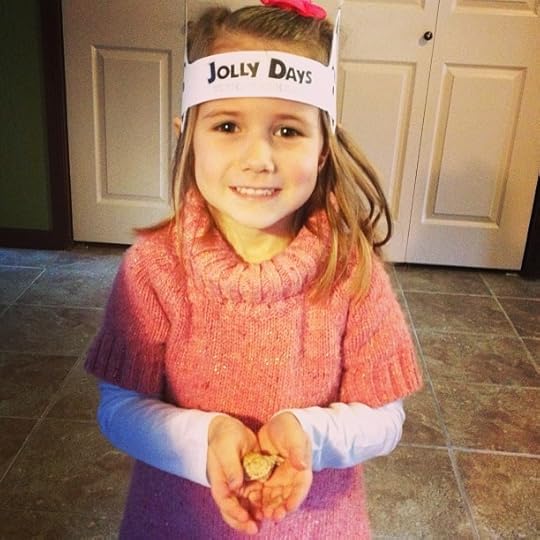
Our house is for sale and anything that isn’t necessary needs to go. A hermit crab habitat complete with “I’m crabby” sign was taking up a chunk of our kitchen counter. And since the crab that lived in there didn’t seem to be moving, drinking, or eating, and by all appearances was dead, the habitat had to go. Annie had already had the, “your crab is dead,” talk with Harper, which ended in tears, but for some reason Annie didn’t make final arrangements for the crab. Instead, she put his habitat in the garage and placed him in a small dish on the counter.
But dead crabs don’t climb out of small dishes and go missing, which was our dilemma. I, managing my grief, immediately went back to sleep while Annie searched for him.
“Kelsey, come here!” Annie whisper-shouted into the bedroom, a few minutes later.
Annie stood in the kitchen staring into the sink. I followed her gaze.
Nothing.
I followed her gaze deeper, into the garbage disposal, and there was our “dead” crab trying to crawl out. He had climbed out of the dish, walked six feet across the counter and our stove top, and plunged into our sink. For a crab that we hadn’t seen move an inch in days, that’s a pretty big adventure.
Like a scene from a bad horror film, I reached into the garbage disposal and pulled out the crab. Annie retrieved his habitat, and, our crab, has come back from the dead.
Part of the reason parent’s get pets for kids is to teach them about life and death. In an epic parenting fail, we taught our daughter that if something dies, wait long enough and they’ll come back to life.
The Two MLK Jr. Quotes from the speech that changed my life
Where Am I Eating?
January 9, 2014
There are no mountains or oceans in Indiana
Fifteen years ago if you would’ve told me I would settle down in Muncie, Indiana, I would’ve done a spit-take. I was going to live somewhere with mountains or oceans or, more than likely, both.
Over the decade that Annie and I dated, I tried to convince her to move to the Florida Keys and Hawaii. I tried to convince her to put her life in a backpack and hit the road with me. I followed her to North Carolina where we lived for two years. She worked as a nanny. I worked retail at an outdoor equipment store (think backpack and tents) and as a SCUBA instructor. I also wrote and got paid tens of dollars per month for my writing. While we enjoyed being somewhere where it was just us, I think the experience confirmed for her that she wanted to live in a 60-miles radius of where we grew up in Union City, Ohio.
Muncie is in that radius. So we live here, but we don’t have to live here. Annie stopped worked when Griffin (2) was born and I could work from anywhere. But we’re here and we’ve planted roots for the first time in our adult lives.
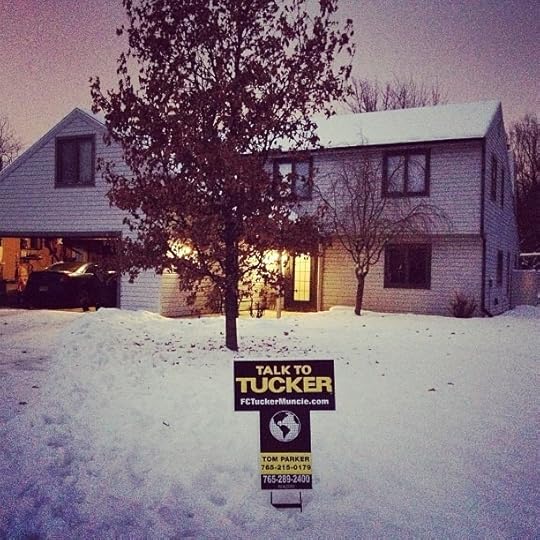 We’re moving. At least we hope to move. Our house is for sale. (Here’s the listing. We love our house. We just wish it was on more than .24 acres. We both grew up with acres of yard and want more room for the kids to play. If we could attach a bunch of balloons to our house and, ala UP, relocate it to 1.5 acres, we would.) In the process of talking about selling our house, the “we could live anywhere” conversation came up. Annie wanted to stay in the Muncie area, and in a surprise twist, so did I.
Today, Harper is having a birthday party with some of her friends, and tomorrow night with our family. My brother and his family are heading from Oxford, Ohio, to stay with us. We’re all really looking forward to it.
Muncie is home and it may not have mountains or oceans, but it is close to the people we care the world about.
I don’t think we’ll ever leave.
Why do you live where you live? Family? Job? Environment? School?
January 2, 2014
Seinfeld & Embracing ignorance
I talk about storytelling a lot with my friend Matt who is a pastor. He recently handed me a book with this quote from Flannery O’Connor:
People have a habit of saying, “What is the theme of your story?” (They) have the notion that you read the story and then climb out of it into the meaning, but for the fiction writer himself the whole story is the meaning… When you can state the theme of a story, when you can separate it from the story itself, then you can be sure the story is not a very good one. The meaning of the story has to be embodied in it, has to be made concrete in it. A story is a way to say something that can’t be said any other way, and it takes every word in the story to say what the meaning is. You tell a story because a statement would be insufficient.
I don’t think this is specific to works of fiction. That’s why nonfiction books aren’t pamphlets, but books.
My books get used a lot in academia, and this question is often posed to me as: “What was your thesis?”
To which I usually respond: “Dude, who made my underwear? Is that a thesis?”
Don’t research the curiosity away
Going into both of my books WHERE AM I EATING and WHERE AM I WEARING? I tried my best not to have any preconceived notions about what I was going to see, experience, or takeaway. I don’t want to have my perceived reality fog what’s actually happening. If I think I know everything there is to know about the coffee industry in Colombia, why go there and talk to farmers? I try to go in with a basic understanding of the lives of the people I will be meeting, but I fight hard to hold onto the simple questions because they are the ones that build the foundation of the true story.
I’m not a big proponent of preparing pages of questions for an interview. When I do, I usually ignore them. Good interviewers don’t prepare questions, they prepare themselves to be in the moment and engaged with the subject and topic at hand. Here’s what my favorite NPR hosts, Tom Ashbrook, has to say on this:
“I’m a big fan of mindfulness. I want to be so engaged with the issue that the questions are just brimming, and so aware of what people want to learn that the arc of the show creates itself in real time.”
I admit that I don’t know everything. I think this makes my questions better and helps me maintain the deep curiosity that is the heart of all that I do. Later I dive deeper into the studies, literature, and governmental reports.
But before I can learn anything I have to embrace my ignorance. Trust me. I know a thing or two about being ignorant. The Financial Times called my ignorance amusing and maddening.
Never be afraid to admit, “I don’t know.”
When you write a book, you have to write the book over and over again. You write it in a 3,000-word feature for a magazine, you write it in 250 words for a sidebar, you write it for the jacket copy, you write it on your blog, you write it in a tweet, you write it in an email for an interview, you tell your weird uncle at a family reunion about it. You write it again and again.
WHERE AM I EATING features modern day slavery, an underwater genocide, Starbucks farmers who’ve never heard of Starbucks. How can you write a summary that captures all of these things? You can’t. You can try, but you can’t.
A summary, heck, even a book is just what the author thinks the story is, but that doesn’t matter nearly as much as what the reader thinks the story is after reading it.
Whether an author embarking on the writing journey or a reader reading the result, we each have to stand up and admit that we don’t know something. That’s how we gain knowledge. As a SCUBA diving instructor, I quickly learned that the folks who think they know everything are the most likely to need me to save their ass.
Never be afraid to admit, “I don’t know.”
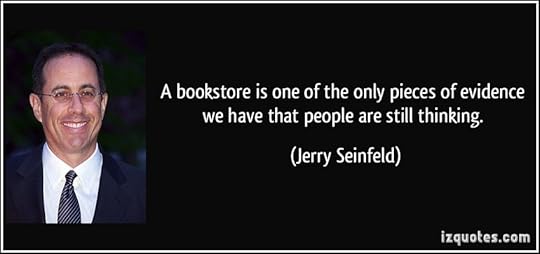
This brings to mind the introduction of Jerry Seinfeld’s book Seinlanguage (read the entire introduction here):
In a lot of ways, that’s what a bookstore is. It’s a “smarter than you” store. And that’s why people are intimidated—because to walk into a bookstore, you have to admit there’s something you don’t know. And the worst part is you don’t even know where it is. You go in the bookstore and you have to ask people, “Where is this? Where is that? Not only do I lack knowledge, I don’t even know where to get it.” So just to walk into a bookstore you’re admitting to the world, “I’m not too bright.” It’s pretty impressive, really. But the pressure is on you now. This book is filled with funny ideas but you have to provide the delivery. So when you read it, remember—timing, inflection, attitude. That’s comedy. I’ve done my part. The performance is up to you. And if you find at some point that you’re not laughing, keep smiling, wipe your brow, and try to get them on the next bit.
What is this post about? What are my books about? You tell me. I tell stories because a statement would be insufficient.
December 30, 2013
Protests erupt in Bangladesh and Cambodia
Bangladeshis and Cambodians have taken to the streets to protest economies and political systems in which they feel underrepresented. Both protests were featured separately in the New York Times yesterday.
I visited both of these countries in researching Where Am I Wearing. Each is a major player in the garment industry.
The industry referenced in the Bangladeshi story:
The struggle between the two political coalitions has paralyzed Bangladesh, unnerved Western governments and wounded the country’s vital garment industry.
The industry referenced in the Cambodian story:
Touch Vandeth, 24, was one of thousands of garment workers on strike who demanded a doubling of the minimum wage to $160 a month, a sharp increase that would put wages well above those of Cambodia’s regional economic competitors, including Bangladesh, Myanmar and Vietnam. Ms. Touch Vandeth, who assembles Adidas footwear at a factory on the outskirts of Phnom Penh, said she had been unable to save much money on her current salary, $80 plus overtime.
There’s a lot of talk about what importing countries, companies, brands, and consumers can do to improve the lives of factory workers in developing nations. No bill, trade policy, or certification will impact the lives of workers more than the factory workers themselves standing up to be heard.
What I don’t know is if these protests are a result of people feeling empowered and creating a movement of positive change or if they are result of people being pushed to the limit and having no choice but to take to the streets.
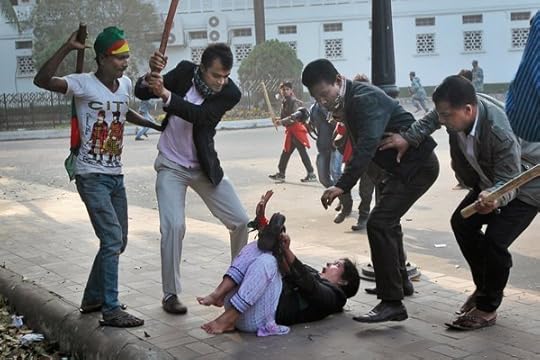
Either way, change is often necessary, and often ugly. Try to unseee this photo out of Bangladesh in the Times:
December 25, 2013
Merry Christmas
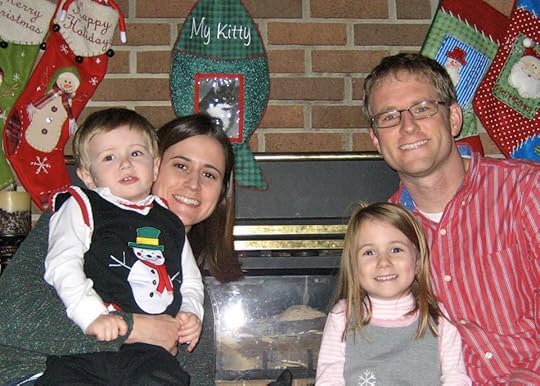
We didn’t send out Christmas cards this year. So this is it. Merry Christmas, Happy Holidays, and we hope you enjoyed the day as much as we did.
December 23, 2013
My CrossFit obsession…
I’ve been writing about my CrossFit journey over at the blog of the Arsenal, Muncie’s only CrossFit gym. My latest post…
CrossFit showed us how strong we can be
CrossFit was the best thing that happened to my family in 2013.
I know that sounds like an overstatement of immense proportions. It’s not.
Annie, my wife, agrees. And if you know Annie, she doesn’t overstate anything.
Don’t get me wrong, we had a lot of awesome things happen personally (I taught my daughter how to ride a bike…on Father’s day!) and professionally (my second book came out), but the last year has been tough.
Honestly, we’ve sort of been reeling since September 18th, 2012. That’s the day we learned that our son Griffin might be on the autism spectrum. In 2013, after jumping through all sorts of hoops and watching our son be poked and prodded again and again in the name of evaluations, we learned that our little Griffy is autistic.
So much of our hearts and minds have been wrapped up trying to learn what autism means and what to do and how to feel. We struggled. We cried. Nothing we could say or do made it better. Much of whatever free time was left after a day of wiping ends of kids, feeding, bathing, and putting them to bed was spent talking about autism.
We took less photos. We spent less time with friends. We both were depressed.
But then BJ invited me to try CrossFit at The Arsenal, and things started to change.