Allen White's Blog, page 14
January 21, 2020
Is Your Church’s Model Helping or Hurting Your Groups?
In the last 30 years, three models have stood out: the Attractional Model, the Communal Model, and the Missional Model. These models were built by overemphasizing one of three important aspects of every church: Worship, Relationship, and Service. What your church focuses on will greatly determine the effectiveness and impact of small groups.
 Image by Lorenzo Cafaro from Pixabay
Over the last 30 years, the Attractional Model has reigned supreme. Worship services were designed as the entry point for the unchurched. Pastors offered relevant, felt-need sermons. Groups were an option, but not essential. While there are certainly exceptions like Saddleback Church and North Point Ministries, many attractional churches focused solely on the weekend and whatever staff, resources, and volunteers it took to pull off the weekend service.
The Communal or House Church Model focuses on relationship and personal growth over large group gatherings and worship services. The real work of making disciples is seen in the living rooms and coffee shops with believers pouring into each other. While disciples were making disciples, often churches in this movement succumbed to lack of a unifying vision.
The Missional or Incarnational Model focuses on living out what Jesus called believers to do. Serving takes priority over worship and relationship. The problem is that if emphasis is placed on what people do over what they are becoming, then a significant piece of the equation is missing.
This may be an exaggeration of each particular model, but I think we can all agree that the Attractional Model emphasizes worship over relationships and service. The Communal Model favors relationships over worship and service. And, the Missional Model leans strongly on service over worship and relationships. There is an imbalance to each model.
In the book, Intentional Churches (Thomas Nelson 2020) by Bart Rendel and Doug Parks break it down this way:
“[The Baby] Boomer said, ‘Hey, we can learn a lot from business and marketing principles and apply them to our church leadership. The prospective customer is most likely going to walk through the door on a weekend, so let’s place most of our resources there!’
“Gen Xer said, ‘You silly boomers! Bigger isn’t better. Closer is better. And customer? We need relationships and generational commiseration. Community is where it’s at, and the gathering is just a by-product of rich relationships and shared life, anyway.’
“Millennial said, ‘You lazy Xers and crazy boomers. If we took just half the money we put into a building and got off our rumps, we could do so much good in the world.’”
While groups can certainly thrive in the Communal Model, the other missing pieces eventually cause the movement to lose steam. While churches using the Attractional and Missional models can appreciate groups, the leading indicators in both models are worship attendance and service respectively. Groups are more of a lagging indicator.
While we can all agree that disciples are better made in circles than in rows, if groups are not connected to the larger body, they tend to lose focus and momentum. Sermons don’t make disciples, but sermons can start a conversation that will continue in groups, who will discuss and apply the topic from the worship service, then take action by setting goals for themselves, holding each other accountable, and serving together.
Most churches need realignment and balance to effectively serve in the coming years. The Attractional Model has lost its luster in many ways. The idea of a healthy, megachurch pastor is almost an oxymoron in some cases. As Baby Boomers are aging and Millennials are coming on strong, if pastors want to stay relevant, they must become “missionaries” to understand a new people and a new culture.
These models can work together. Worship services and events can inspire and call for commitment, but it’s just the first step. In order to truly impact people’s lives and catalyze lasting change, the first step must lead to a next step. The sermon should lead to a group discussion guide where the Truth of God’s Word can be worked out and applied to people’s lives. I would dare say that marriage conferences have created more problems in marriages than they’ve ever solved. By painting an idyllic picture of marriage, conference speakers often raise expectations which are not going to be achieved overnight. If you don’t believe me, just look back at the Promise Keepers movement. While there was great intention there, the lack of follow through caused Promise Keepers to quickly become promise breakers. But, if a marriage conference led to a commitment to improve marriages, which offered a next step into an on-going marriage group or class or counseling, then the event might have catalyzed some good instead of setting off a bomb.
Jesus summed up 613 commandments into just two of them: love God and love your neighbor as yourself. The church has a mission to reach the world with God’s love. That mission starts with the neighbor next door. Mission must be tied to relationship. Church members love their neighbors and serve them. There’s a relationship there. After all, ministry is not something we do to people. While community-wide serve days can elevate a church’s brand and get their name in the paper, service divorced from relationship is missing something.
Groups must connect to the larger church body, serve together, and reach others to remain healthy. A small group is essentially the microcosm of the church. What the church is called to do, the group is called to do. But, where do groups fit into the whole?
If a church has a balance of attractional, communal, and missional, then groups make perfect sense. If the church is more attractional, then groups will help by connecting the congregation and keeping them motivated to attend, to serve, and to give. (See the Senior Pastors Guide to Groups). Groups and the communal model go hand in hand. If the church is based more on the missional model, then groups provide the teams and the relationships to accelerate ministry and outreach.
Which model does your church follow? How is that model helping or hindering groups in your church?
The post Is Your Church’s Model Helping or Hurting Your Groups? appeared first on Allen White's Blog.


January 7, 2020
The Genius of Sermon-based Studies
A new year often brings new motivation to get your life in order. The problem with most New Year’s resolutions, however, is that people try to change too much all at once. They want to lose weight, pay off debt, read their Bible through in a year, whiten their teeth, get more exercise, get more sleep, and wake up earlier. Before long their resolutions go by the wayside and reality sets in. The gravitational pull of their default way of living is just too strong. We do the same thing in the church.
 Photo by
Startup Stock Photos
from
Pexels
Photo by
Startup Stock Photos
from
Pexels
As a child, my family went to church a lot. Every Sunday included a Sunday school class, morning worship, and a Sunday evening service. We also went to Bible study every Wednesday night and a lot of other meetings and activities in between. This was the pathway to Heaven, wasn’t it? But from a spiritual growth perspective, all of these meetings and services didn’t help people grow spiritually.
Every week we received a Sunday school lesson, then a sermon that had nothing to do with the Sunday school lesson. Then a Sunday evening sermon on a completely different topic plus a midweek Bible study that added a fourth thing to think about. In all likelihood, however, the lessons from Sunday had been forgotten by Wednesday.
If success was measured in the amount of time spent at church, we were successful. If spiritual growth occurred in terms of lessons learned, then we were well on our way to becoming spiritual giants. Yet, the reality is no one can make four significant changes in a week and certainly not over 200 changes in year. We’d probably see more progress working on one thing over 30 days.
Today, in many churches, Sunday school, the evening service, and the midweek Bible study have disappeared. That’s not necessarily a bad thing. For most people, it was too much to absorb anyway, let alone actually apply to their lives. Too much information interferes with change. But, information is only one aspect of making a change. This is why I see the genius of sermon-based studies.
They Take Their Weekend into Their Week.
Most preachers are painfully aware that sermons are usually forgotten within the first 48 hours. People are busy and distracted. The information they gain on the weekend is quickly diluted by all of the other information they receive. How can people work on something when they can’t even remember what the something was?
By creating sermon-based studies, small group members can revisit the topic from the weekend and be reminded of what they heard. It’s amazing how quickly the teaching will come back. Some churches will include a 5-8 minute video to get the discussion started. These videos can easily be produced on a smartphone and uploaded to Youtube. While the message is still fresh in the pastor’s mind, record either a supplement or a summary of the sermon to help the group get started.
They Get to Discuss and Apply the Sermon.
Sermons are created for listeners, not participants. This makes sermons passive. While some people are auditory learners, people with other learning styles won’t retain as much unless they’re given an opportunity to discuss and apply the teaching.
By offering 5-6 discussion questions based on the sermon, group members can work out what the sermon means to them and how to apply the teaching to their lives. Remember, our mission from Jesus is “teaching them to obey everything I have commanded you” (Matthew 28:19, NIV), not just teaching commandments. Sermons should inspire people to change, but the real work of change happens with a smaller group of people.
They Can Set Goals and Seek Accountability.
Once the group understands what they need to change, they should be challenged to set goals for themselves. The goals can be as simple as “Based on this lesson, I will take the following step in the next week.” Then write down the goal. By setting objectives for the next week, the group members can turn intent into action.
While some may be self-disciplined enough to carry out their goal by themselves, this is not the case of everyone in every situation. In order to fulfill a goal, most people need someone to encourage them and check in on their progress. This does not need to be heavy-handed. In fact, the only accountability that really works is the accountability people want.
Ask group members to partner up and check with each other between meetings. Knowing that someone is going to ask will often motivate people to move forward. If someone hasn’t met their goal, then they should be encouraged to try again. Accountability can also be built into the sermon discussion guide by simply asking about the group members’ progress at the beginning of the next meeting.
Disciple-making that Involves the Senior Pastor Brings Success.
Both the senior pastor and the church members will be more interested in small groups when the studies are connected with the pastor’s sermons. Pastors are more interested in groups because they are delving deeper into the teaching. Any pastor would be encouraged to have a discussion of the sermon that extended beyond Sunday lunch. Pastors will become more interested in groups when the groups are involved in what interests them. They might even refer to groups in their sermons by saying, “Hash this point out in your group time this week.” That will certainly raise the profile for groups.
Anything the senior pastor is involved in will get the attention of the congregation. If the group study is based on the pastor’s sermon, then members will be very interested in hearing more from their pastor and being part of something their pastor is leading. It’s a win/win.
Sermon-based Studies are Not Always for Everyone.
While I believe there is a certain genius in connecting the sermon to the small group study, you also have to take into account the fact that group members are at very different places in their lives and spiritual maturity. Simply put — not everyone needs the same things. Have enough flexibility to allow for exceptions when groups need to study something other than the sermon.
Church-wide campaigns offer another opportunity to connect sermons and studies. The purpose of campaigns, however, is to recruit new group leaders more than anything else. While there are spiritual growth benefits to campaigns, the biggest gain is in new leaders and new groups.
Consider writing a sermon discussion guide for your groups and see the impact it gives. If you don’t have time to write one personally, then form a team to help you. For more information on creating sermon-based studies, enroll in the Writing Effective Curriculum Workshop. A live version of this workshop starts on Thursday, January 16, 2020 and runs for four Thursdays.
The post The Genius of Sermon-based Studies appeared first on Allen White's Blog.
December 24, 2019
Top 10 Posts from Allenwhite.org in 2019
Looking back over 2019, I wanted to share the Top 10 posts from the blog just in case you might have missed any. Overall, my readers have shown strong emphasis on making disciples (discipleship) as well as creating curriculum and other small group topics. If you’re favorite post is not listed here, please let me know!

10. Why You Should Write Your Own Curriculum. FYI, the Writing Effective Curriculum Workshop is enrolling right now and will meet Thursdays, January 16 – February 6.
9. Launching Groups in Smaller Churches.
7. Training Busy Group Leaders.
6. Connect, Grow, Serve is Not a Discipleship Strategy.
5. Jud Wilhite’s Bad Bet Against Groups.
4. The True Size of Your Church.
3. The Deficit of Discipleship: How the American Church is Off-Mission.
1. Sermons Don’t Make Disciples.
What do you want to learn about in 2020? Contact info@allenwhite.org and let us know!
The post Top 10 Posts from Allenwhite.org in 2019 appeared first on Allen White's Blog.
December 17, 2019
7 Proven Strategies to Launch More Small Groups
Most churches cannot launch groups fast enough to keep up with the demand for discipleship. As the worship services grow larger, the small groups ministry gets further and further behind. Well, that’s not entirely true.
 Image by AnnaER from Pixabay
Churches CAN launch groups fast enough to keep up with the demand for discipleship, if they change up how they are launching groups. Here are 7 things I’ve discovered over the last 15 years in working with over 1,500 churches across North America. These aren’t just 7 ideas or 7 philosophies. These are 7 proven strategies to launch groups.
#1 Offer Multiple Short-term Opportunities.
People have watched small group methods and models come and go over the years. The innovators and early adopters are right there with you every time you propose a new idea. This is your low hanging fruit that amounts to about 30% of your congregation. This is also why most churches get stuck at 30% in groups.
The rest of the folks are waiting to see how long you stick with the latest and greatest idea. Once they see that you are willing to go the distance (and that nobody died from the new strategy), they’ll jump in. But, they need to know you’re serious by offering short-term opportunities to start groups over and over again. You will get sick of asking before some of these folks are even interested in trying.
#2 Offer Easy-to-Use Curriculum.
People aren’t dumb. They’ve been around. They know the Bible. I’ve surveyed some of the largest, most seeker-focused churches in the U.S. to discover they still had 95% transfer growth. Most of your congregation is not new, but they are busy.
Busy people don’t have time to prepare, so make it easier for them to get a group started. By creating and purchasing an easy-to-use video-based curriculum, people can gather their friends and do something intentional about their spiritual growth. This is not where you’ll leave them, but it’s a great place to start them.
#3 Offer an Experienced Leader to Help.
Before you panicked because I’m about to say “coaching,” think about something for a second. If you were to double the number of groups in your church in the next 30 days, how would you help the new leaders? When our church doubled our groups in one day, I panicked! Then, I matched up the new leaders with experienced leaders. This does two things for you.
First, all of the new leaders won’t be calling you, because you’ve given them someone to call. Second, you don’t have to worry about what’s going on in all of these new groups, because an experienced leader, who you know and trust, is getting to know the new leaders. Coaching helps everybody.
#4 Give Permission and Opportunity.
The reason people are not in your groups is not because the hate the Bible and hate other people. They want to become more Christlike. What doesn’t work for them is what you are currently offering. How do I know? Well, unless all of your people are currently in groups, then what you’re offering is not working for everybody. A word of caution — don’t throw out what you’re currently doing — it’s working for someone. Keep it.
Now, here’s the part that blew my mind — I didn’t need to solve everybody’s problems or create a multiplicity of groups to meet every need. I gave our people permission and opportunity to figure out how to do a group that would work for them. They figured it out. If this sounds too loosy goosy for you, remember you determine the curriculum and the coach. Those are pretty good safe guards.
#5 Allow People to Gather Their Own Groups.
Most people have friends. If they have friends, they can start a group. If the topic is appealing to the average person, your people might also invite their neighbors, co-workers, and others. Some churches I’ve worked with ended up with twice as many people in groups as attended the weekend services.
Personal invitation is far superior to any sign-up card or website. Active methods of connecting people into groups work far better than passive methods. And, if people don’t need to be placed in groups, your administrative task just went way down. Get as many people to invite as many people as they can, then provide a way for new people to get into groups.
#6 Ask the Senior Pastor to Invite Them.
Next year marks my 30th year of full-time ministry. For most of those years, I was the Associate Pastor, Discipleship Pastor, or Vice President. What I learned in the second chair was that if my senior pastor said the exact words I would use, we would easily triple the result. Or, put another way, if I made the invitation, I would only do about 30% as well.
Encourage your pastor to be the spokesperson for groups. Give them reasons to champion groups from The Senior Pastors Guide to Groups. Give them stories from small groups for sermons. Script out the invitation for group leaders. Then, sit back and watch the people show up.
#7 Don’t Advertise These “Groups.”
When you put a leader’s name on a groups directory or website, the church is giving an implied endorsement of the group. If you don’t know the leader very well, then this presents a problem. You can do one of two things: You could get to know all of the new leaders ASAP, or you don’t advertise these groups.
By not advertising these new groups, you make it safer for the new leader. They can invite people they know. They’ll be more comfortable. And, you don’t have to worry about your church’s charter members ending in a group led by a new believer. By not advertising these new groups, you give a lot of grace all around.
Chances are as I have given you 7 proven strategies that have worked over and over again, you’ve come up with seven or more excuses for why this won’t work in your church. I was just like that once upon a time. But, then I took some wise words to heart from Brett Eastman, “Let the exceptions be the exceptions.” It’s tempting to create an entire system to account for all of the possible exceptions. But, systems like that tend to get in the way of launching groups and making disciples.
The post 7 Proven Strategies to Launch More Small Groups appeared first on Allen White's Blog.
November 19, 2019
Webinar: Starting Leaderless Small Groups
Wednesday, November 20 at 1 pm ET/ Noon CT/ 11 am MT/ 10 am PT
Featuring Kent Odor, Executive Minister of Spiritual Nurture
at White Oak Christian Church, and Allen White, Church Consultant and friend of Kent Odor.
You will learn:
The Advantages of Leaderless Groups.
The Pitfalls of Leaderless Groups.
How to Support Leaderless Groups.
How to Plan for Leaders to Emerge.
The post Webinar: Starting Leaderless Small Groups appeared first on Allen White's Blog.
November 12, 2019
Leaderless Small Groups
The number of groups any church can launch and maintain is limited by the number of leaders available. It’s simple. If you have a leader, you have a group. If you don’t have a leader, then no group. The problem is most churches can’t recruit all of the leaders they need to meet the demand for groups. The problem goes even further because most people don’t regard themselves as being any kind of a leader. Without more leaders, how do you launch more groups?

Problem #1: Not Everyone Qualifies as a Leader
Churches place various qualifications for leadership. They may require church membership, leader training, apprenticing in a group, a background check, an interview, or any number of qualifications to lead. For most churches the bar for leadership is set pretty high – as it should be.
In 1 Timothy 5:22, Paul instructs Timothy, “Do not be hasty in the laying on of hands.” Commissioning someone as a leader is a serious thing. In order to recognize someone as a leader in the church, they must have good character, and they must be proven as a leader. If you hand out the title to just anyone, then you dilute the meaning and authority of leaders in the church. But, this leads to the second problem.
Problem #2: Most People Don’t Consider Themselves to be Leaders
If they must be a leader to lead a group, then they must fulfill leadership requirements and receive leadership training before they can lead, but they aren’t leaders so why would they do that? My apologies for the run-on sentence, but it’s a legitimate question. How many times have you invited someone to lead a group only to be turned down with “I’m not a leader”?
Admitted non-leaders don’t get excited about meeting leadership requirements or taking leadership training. They’re not leaders. If they have to be a leader to lead a group, then it’s probably not going to happen.
What If You Don’t Need Leaders?
“We’re not recruiting elders here,” said Randal Alquist, Discipleship Pastor, Vertical Church, West Haven, CT. “We started giving people permission to jump in. We’re asking for people who love people and love God. We want people who are willing to facilitate a healthy environment where connections can happen.”
Think about this for a second – what did Jesus call us to do? He didn’t call us to make leaders. Jesus didn’t even call us to start small groups although He modeled it. Jesus called the church to “go and make disciples” (Matthew 28:19). What do you need to make a disciple? You need a disciple to make a disciple. How many disciples do you have?
By inviting disciples to make disciples in groups, you can help your people walk in obedience to the Great Commission. Rather than continuing to allow your people to borrow from your spirituality, you can give them an easy-to-use tool like a video-based curriculum and a coach to supervise them. They can live in obedience to Jesus by making disciples. They can prove themselves and learn to lead by doing. You can have more groups ASAP. And, eventually, these disciples can be recognized as leaders.
The bar for leadership should remain high. When you do church-wide campaigns, group launches, or alignment series, these are part of the leader recruitment process. These are not ordination events for new leaders. It’s a trial run to give them an opportunity to prove themselves as leaders. Once they’re ready, then you can commission them as leaders. As one of my leaders, Doug Howard told me, “Thank you, Pastor Allen, for showing me I was the leader I never knew I was.” I hope you hear that a lot!
For more tips on launching more groups, register for the Starting Leaderless Groups Webinar on Wednesday, November 20 at 1 pm ET/ Noon CT/ 11 am MT/ 10 am PT.
The post Leaderless Small Groups appeared first on Allen White's Blog.
November 5, 2019
Video: Start 100 Groups in 1 Year
Resources:
The Senior Pastors Guide to Groups
The post Video: Start 100 Groups in 1 Year appeared first on Allen White's Blog.
October 29, 2019
Learning by Doing in Groups
What does it mean to learn? Is it merely an acquisition of more facts?Or is it taking those facts and putting them into practice? Meetings are not the only place for groups to learn. Often lessons are learned better by doing.
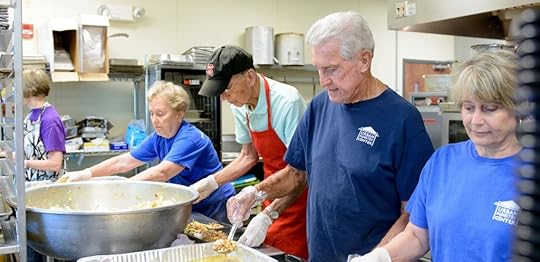
At New Life Christian Center where I served in California, we challenged our groups to prepare and serve a hot meal every Friday night at an emergency homeless shelter which ran five months of the year. We asked for groups to volunteer together instead of individuals, because the positive peer pressure of the group would guarantee 10 out of 10 group members participating, whereas individual recruitment might have netted 4 or 5 out of 10.
Our groups took this project to heart. Even on the
year when both Christmas Eve and New Years Eve were on a Friday, the signup
sheet was completely filled up by our groups within an hour of placing it at
our information center. My group didn’t even get a chance to sign up!
One group member told me he was very reluctant to participate. His attitude toward the homeless had always been “I started with nothing and pulled myself up by the bootstraps and built a successful construction company. Why couldn’t the homeless work hard and do the same.”
He was part of a small group of middle aged adults who had about 40 years of Sunday school under their belts. There wasn’t much of the Bible they hadn’t studied. Yet, all of this Bible study had done little to change this man’s attitude toward the poor.
He went with his group to serve the meal at the
shelter. He later admitted that as he stood in line serving those men and
looking them in the eye, he realized if circumstances had been different in his
life, then he might be standing on the other side of that line receiving the
meal.
Six months later, he was sending his construction crews over to San Francisco every Friday to renovate a building which would be used as a homeless shelter in the Tenderloin. Talk about a change of heart. Not only did he see the homeless differently, he was compelled to do something about it. Instead of his crews building multimillion dollar homes on Fridays, they were renovating a homeless shelter. The positive peer pressure of a small group serving together made a difference not only in his life, but in the lives of many homeless people he might never meet.
In making disciples, Jesus instructed us to “teach them to obey what I have commanded” (Matthew 28:20). In Matthew 25, Jesus tells His disciples, “Truly I tell you, whatever you did not do for one of the least of these, you did not do for me” (Matthew 25:45). The words must lead to doing in order to make disciples in the way Jesus directed us. By simply inviting groups to serve together during the Christmas holidays or during Summer break, we can help them apply what they’ve learned and become more Christ-like in the process.
The post Learning by Doing in Groups appeared first on Allen White's Blog.
October 22, 2019
Case Study: Connect Church, Lawrence, Kansas
Connect Church is an 83-year-old Wesleyan Church of 400 adults in Lawrence, Kansas. In recent years, they’ve started groups through church-wide campaigns for the first time and knew they would need help to support the group leaders with coaches.
 Photo by the Lawrence Journal-World.
“Before we didn’t have any kind of a coaching structure,” said Elizabeth Scheib, Connections and Communication Director. “I was caring for all of the leaders and not doing a very good job of it. I also tend to be a control freak. I wanted to control a lot of the processes and the things the leaders went through. But, we were stuck. We had plateaued.” The church at the time had an adult attendance of 350 with 165 people connected in 16 small groups. “It wasn’t impossible to coach 16 groups. It just wasn’t effective because the whole thing in coaching is about relationships.”
As the church began to embrace the Exponential Groups strategy of creating their own curriculum and making the Lead Pastor the spokesperson for groups, they knew many people would respond to host a group. They also knew these new hosts would need help. “If the host came out of a group, then their former group leader naturally became their coach since there was already a connection.” But many more people were about to host a group for the first time as well.
The established small group leaders were already in the practice of joining Elizabeth for a huddle twice a year prior to the two annual group launches. “I explained at the huddle that we wanted to grow our groups, so we were adding a layer to our structure called coaches. I asked them, if they had a heart to come alongside a new host and help them get off to a great start, we needed their help. Then, I explained the responsibilities and gave them a starter kit that included a coaching description and a coaching timeline.” Their leaders responded.
One new host almost immediately got cold feet after she had
volunteered to start a group. “We asked those who wanted to host a group to
come down to the front of the sanctuary after the worship service. We gave them
the information about starting a group and matched them up with a coach.”
In this case, a woman had talked herself out of hosting a
group by the time she had left the sanctuary. “I can’t do it,” she said. “My
husband is an introvert, and he never wanted to do it, but I felt like we
should.” Elizabeth encouraged the woman to give the group a chance. Her husband
could be the “kitchen guy and hang back where the introverts hang out.” She
could lead the discussion. Elizabeth also encouraged her to talk to her coach.
When the coach called her, they talked for an hour. “It was
laborious, but the coach was so gracious and had such a heart for this couple.”
They ended up leading a successful group for the eight-week commitment and even
added a potluck each week so the husband had a valued role. “It would not have
worked if they did not have constant encouragement and prayer from the coach.”
Another couple decided to host a group. They were extremely
gifted and had considerable experience leading groups. In fact, they were
involved in campus ministries at local colleges. But, they still needed a coach
to serve and support them, not in skills training, but in their own journey as
believers. “They knew how to lead a group. There were not foreigners to this.
But, I also knew that if I was going to make the coaching structure work, I
couldn’t give them a pass. I couldn’t be their coach. I knew from being in a
women’s group with the wife that they were going through some stuff.” The
couple was matched with another couple who coached them. “I assigned them to
coaches I knew would be able to really establish a deep spiritual relationship
with them.” Not long after the assignment, Elizabeth discovered the coaches had
already called them, and they had gone to coffee together. They didn’t need
someone to tell them how to lead a group discussion. But they did need some
prayer, encouragement, and friendship. They didn’t follow everything in the
coaching timeline, but they received the coaching they needed.
By recruiting experienced leaders to coach new hosts, Elizabeth discovered the church could provide the care the leaders needed, and she could provide the overall guidance for how the leaders were coached. By loosening the reins on coaching, the groups at Connect Church became unstuck. They went from plateaued to thriving.
To learn how to build a coaching structure in your church, we recommend the Coaching Exponential Groups course and the Small Group Ministry Coaching Group.
The post Case Study: Connect Church, Lawrence, Kansas appeared first on Allen White's Blog.
October 15, 2019
Introducing DIY Video Curriculum
Today, we are introducing DIY video curriculum. Fifteen years ago I learned the power of video-based curriculum when our church doubled our groups in one day. After seven years of handpicking leaders and begging them to raise up an apprentice leader, our groups were stuck. My pastor was headed into a series that I quickly piggy-backed on to launch groups. We found a study guide on the topic, but there was no video component. We knew that if our pastor put the teaching on video, we could equip disciples to make disciples.
 Photo by Allen White
But, the reality is that every church does not have the capacity to turn out curriculum series after curriculum series as momentum builds for groups. DIY Video Curriculum takes the hard work out of producing curriculum. The study guides are written. The video scripts are written. Churches just need to shoot the video with their pastors. The level of production is entirely up to the church. Some churches shoot with an iPhone and upload the videos to YouTube. Other churches will shoot with multiple cameras, stream the videos, and create DVDs. The key is not the production. The key is your pastor.
Why Create Video Curriculum?
Peak Your Pastor’s Interest in Groups.
Several years ago, we were coaching a church’s team on how to create video-based curriculum. They spent a full day recording the pastor’s teaching, and planned to write a companion study guide for their groups. This was a lot of work, but they were committed. Then, something happened that surprised the team.
The day after the video shoot, the pastor pulled us into his office and said, “We’ve recorded these videos. We are writing this curriculum. How are we going to recruit leaders and connect people into groups?” Their discipleship pastor later confided that he had been trying to get his senior pastor interested in groups for two years and basically got no where. Now after a day of shooting video, their pastor was very interested. When pastors invest in creating resources, they will become the champion for small groups in the church.
Energize Your People’s Interest in Groups.
If church members are not connected to each other, the reason they attend a church, other than Jesus, is because of the senior pastor. They like the pastor’s style. They laugh at the jokes. They like the pastor’s personality. Warning: Don’t mention this to your worship pastor. It will break his heart.
What we discovered in our church in California as well as churches we’ve coached across North America is when the congregation is offered exclusive video teaching from the pastor, they are getting more of what they already like. Members want to hear from their own pastor more than they want to hear from a nationally-known teacher. By offering the pastor’s video-based teaching, members have a great incentive to start groups and to join groups.
Empower Your People to Make Disciples.
When members are invited by their senior pastor to get together with their friends and do a study, they are more than willing to follow their pastor’s lead. Some churches we’ve coached have actually connected twice their worship attendance into groups. By offering an easy-to-use video-based curriculum, people who gather groups don’t need to be Bible experts. The pastor is the expert. (And, the church doesn’t have to worry about what the groups are teaching, because the church supplied the teaching). The video also reduces the amount of preparation time for the person leading the group meeting. People are busy. An easy-to-use curriculum will eliminate one more excuse for leading a group.
Why Don’t Churches Produce More of Their Own Curriculum?
Here are the short answers:
Some pastors feel they must produce the next 40 Days of Purpose. With the pastor preaching every week, there is no time to write scripts and create curriculum.Publisher-quality materials are time consuming to create.
How DIY Video Curriculum Can Help.
The scripts are already written. The pastor just needs to personalize them.The books are already written and professionally designed.The videos can be shot all at once or a week at at time.
For more information on DIY Video Curriculum, Click Here.
The post Introducing DIY Video Curriculum appeared first on Allen White's Blog.