Allen White's Blog, page 11
August 25, 2020
How One Church Launched 119 New Online Groups in July 2020
This year has been just as crazy of a year for Rock Church in San Diego, CA as it has for everybody else. They have not conducted in-person services since March. Pastor Miles McPherson streams his message every Sunday morning to a growing online congregation. Then, in addition to quarantine, the US began to experience racial unrest to a high degree. Pastor Miles just so happens to be the author of The Third Option: Hope for a Racially Divided Nation. Suddenly, he knew what his next sermon series would be. The church also decided to launch book groups to go along with the series. Even if your church isn’t a megachurch or your pastor has not written a book, the principles Rock Church used will help you launch more online and in-person groups. This is how they launched 119 new online groups in July:
The Senior Pastor Invited People to Join Groups.
Every week Pastor Miles invited people to start or join a new online small group during the online worship service. This invitation wasn’t relegated to the announcements or made by another staff member. Over the years, I’ve seen that when an associate pastor makes the invitation, the church gets about 30% of the result. In 30 years, of full time ministry, I’ve experienced the same. This is why a lot of churches get stuck with only 30% of their adults in groups. Pastor Miles gave the invitation, and he got a big response.
They Chose a Compelling Topic.
You want a topic that has a broad appeal to a large group of people. This is not the time to choose a mature topic like fasting or anything to do with money. There are times for those series. By choosing a topic on racial tensions and reconciliation, Rock Church was positioned well to start a maximum number of groups in the middle of the summer. Now, it helped that Pastor Miles was the author of a book on racial reconciliation, but your church could also start groups using Miles McPherson’s book or start groups with a weekly teaching video and discussion questions from your pastor. The more relevant the topic, the greater the appeal.
They Reframed the Invitation to Start a Group.
Rock Church did not start “small groups.” They started book clubs or book groups. Small groups already had a certain meaning in their church’s culture. Small groups implied high qualifications and a lot of training in advance. By inviting people to Book Clubs, they didn’t need a small group leader. They needed friends to discuss a book. Language defines culture. To change the culture of groups in your church, change the words you use.
They Gave Their People Permission and Opportunity.
People interested in starting book clubs simply invited people they knew who would be interested in the book. There was no lengthy sign-up process or website to build. People just leveraged their existing relationships to meet online and discuss a topic that was relevant to them at their pastor’s invitation. It doesn’t really need to be more complex than that. That’s how most of these got started.
Now Rock Church is a large church. Chances are that there were many people who wanted to join a book club, but didn’t feel they could start one and didn’t get invited. The opportunity was given to register to join a book club. About 600 people took them up on this offer. The risk comes when you assign prospective group members to book club “leaders” that the church doesn’t know well. Instead, the book clubs for those 600 are being led largely by the church staff. (The campuses are closed. Services are online. What else is the staff going to do….?).
They Gave New Leaders an Experienced Leader to Coach Them.
To prepare for this launch, Mark Richardson, the small groups pastor at Rock Church, began to recruit experienced group leaders to walk alongside these book group leaders during the series. With the pandemic everything is decentralized. They didn’t have the ability for large training meetings, so they delivered the training through experienced leaders who can support and encourage these new leaders and answer their questions as they come.
Concluding Thoughts
If you can get these five keys in place, you will see a big result: Senior Pastor’s invitation, relevant topic, reframe the invitation, give permission and opportunity, and give the help of a coach. It’s not as difficult or complex as you might think. In this past year, Mark Richardson and Rock Church were prepared through my small group ministry coaching group. When we started the year, none of us knew what this year would hold. In January, Mark didn’t know he would be starting book clubs in July. But, by being ready to try something new and having coaches standing by, when Pastor Miles decided on The Third Option series, Mark was ready. Their people and their groups have benefitted greatly.
If you are interested in a 2021 Small Group Ministry Coaching Group, we’d love to have you. Click here for more information.
The post How One Church Launched 119 New Online Groups in July 2020 appeared first on Allen White Consulting.


August 18, 2020
Why Write Your Own Small Group Curriculum?
With so much curriculum available from so many great authors, why would anyone undertake to write curriculum for their church. While you may not achieve the production levels of some professionally produced curriculum out there, unless the speaker or teacher is very well known, chances are you’ll have to introduce them to your people anyway. But, when you create curriculum with your pastor and your teaching team, your people will become very excited about getting more of what they already like – your pastors’ teaching!
Why Write Your Own Small Group Curriculum? (3:53)
I’ve written a lot of small group curriculum over the years. Just to show you that I know what I’m talking about, I’ve created curriculum for Chip Ingram, Doug Fields, John Ortberg, and even Rick Warren. (Now, all of these guys might not have known that I was writing for them, but I did). Starting from our home-grown campaigns for our church in California to writing a weekly sermon discussion guide for our church in South Carolina to creating video-based studies for churches across the country, I’ve found that writing your own curriculum gives you some great advantages.
Write from Your Church’s Doctrine and Teaching.
While there’s a lot of great curriculum out there, some of it comes from a very different doctrinal perspective. While Calvinists and Arminians might agree on a few things, once they start debating doctrine, they just might end up losing their salvation! Pentecostals and Fundamentalists will struggle with each others’ teaching. While you can use curriculum based on a different doctrinal viewpoint, you’ll spend a lot of time explaining away things that don’t fully agree with your beliefs. Rather than working around doctrinal issues in curriculum, when you write your own curriculum, you create resources that teach what your church believes.
Reflect Your Church’s Vision and Values.
Every church is unique. You have a unique culture. So many factors come into play in the makeup of any church: region, ethnicity, age, history, personality, vision, values, passion, and so many other things. Your church is not like the church across the street let alone a church across the country.
Your curriculum can reflect your church’s uniqueness. You can write about what your church values in your curriculum. You can reinforce your vision statement in the curriculum. You can base the objectives and application of your lesson on where you want to lead your church. You shouldn’t follow someone else’s vision. Write about your own.
Save Money.
Curriculum is expensive. I remember at my church when a new Beth Moore series was released, I’d have five or six groups requesting a copy. At about $200 a pop, I wasn’t buying six copies. I think I settled on two copies. They either took turns or shared.
Even in a scenario where group members pay for their own books, there are still costs for streaming video or DVDs (although DVDs are slipping away…finally). And, even with books, the church ends up paying for the leaders’ books and for group members who can’t afford a book (as they should). And, there are always overages. As much as a small group pastor tries to look into the crystal ball and accurately predict the exact number of books to order, you always order too many. This also takes from your budget. Oh, and did I mention this was only for one alignment series or one semester. There’s at least 30 weeks total to cover!
By creating your own curriculum, you can save a great deal of money. The most affordable and easiest way to distribute curriculum is by digital download. You just create a pdf of your lesson, then either upload it to your church’s website or email it to your leaders. There are no physical materials to distribute. You can even create a teaching video and put the link at the top of your pdf.
If you’d prefer printed books, then print-on-demand is a simple and affordable solution. Services like Kindle Direct Publishing or Ingram Spark allow you to print your books for about $2.25 each (120 page study guide with a color cover and black and white pages). Whether you order one book or a thousand, the price is the same. You do need to plan in advance and allow about 2-4 weeks for shipping and delivery.
Writing your own curriculum will definitely save you money.
Publish It Anywhere You Want.
When you write your own curriculum, you can post your curriculum online. You can email it to your group leaders. You can sell your books on Amazon. You can print your books on-demand. Since the curriculum is yours, you can do whatever you want with it. If you do this with somebody else’s curriculum, you’re breaking the law.
Writing your own curriculum gives you flexibility. You can offer the study to your groups for free, and then sell it to other churches. You can make your studies available online and suddenly serve the global church. They no longer need to wait three months for study guides to arrive by boat.
Writing your own curriculum gives you flexibility in distribution, a possible revenue stream, and it keeps you out of jail! Whether groups are meeting in-person or online, this alleviates the difficulty of distribution.
Writing Your Own Curriculum is Not Difficult.
Like anything else curriculum writing seems difficult before you’ve done it. Personally, I’m a self-taught curriculum writer (and I earn a living at it). Once you master the basics and put in the practice, you are well on your way to becoming a curriculum writer yourself. You can test your curriculum with focus groups in your church to get their feedback and improve your studies. You can find someone to edit and proofread your studies. You probably already know someone who can design your cover and layout you pages. (If you don’t, that’s not so hard either).
Are you ready to get started?
In fact, in my Writing Effective Curriculum Workshop, you will learn to write great questions, write sermon discussion guides, write complete study guides, and write to make disciples. Not only will I teach you how to write and organize your studies, I will give you assignments, then offer my feedback on your writing. This is not a course. This is a WORKshop. You have to work! If you’re ready to jump in, the Writing Effective Curriculum Workshop is enrolling now.
For more information on the Writing Effective Curriculum Workshop, Click Here.
The post Why Write Your Own Small Group Curriculum? appeared first on Allen White Consulting.
August 11, 2020
Handling Childcare in Online Small Groups
There are several options for children during the online group meeting. The important thing is to be flexible. If child interrupts to ask a question, that’s okay. You can mute your mic and tend to your child. Some parents get uptight when their child interrupts the group meeting, but please remember your group is not more important than your child.
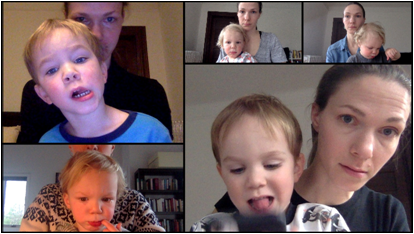
Here are some options to consider when it comes to meeting online and caring for your children:
Meet Later After the Children are Asleep.
If group members have younger children, then you might want to meet later in the evening after the children have gone to bed. This way parents can give their attention to their children at bedtime, put them to bed, then join the online group meeting. The group may need to meet at 8 o’clock at night, but it won’t take long for the group to get home after the meeting. They are home.
Offer a Children’s Online Small Group.
There are a number of online children’s ministry options on various online platforms. Maybe kids could have their own group during the adult group. Older children could moderate the group time. Kids are very interested in Zoom meetings just like they’re parents are doing!
Spouses Could Trade Off.
Spouses could agree to take turns in attending to children during the online group meeting. One spouse would help with the kids this week, if they need something during the meeting. Then the other spouse could help next week. Both spouse can participate in the meeting, but one would be “on call” when their children need someone.
Enlist Grandparents or Other Relatives.
If group members have family nearby, the group night could be a great time for a little Grandparent-Grandchild time. Other relatives or friends might also be available to help during the meeting. In one church I served, there was a group of grandparents that met on Tuesdays, then their children had a group on Thursdays. The grandparents kept their grandchildren on Thursday nights, so the parents could meet for their groups.
The most important thing is to relax and go with the interruptions. They happen. The author has worked from home for a number of years. I’ve had kids walk in during online meetings. Sometimes those interruptions involve a cookie or a hug. They’re not so bad. Remember, your group is not more important than your children!
This article is an excerpt from Leading Online Small Groups: Embracing the Church’s Digital Future by Allen White.
The Starting Online Small Groups Course is now available. For more information, click here.
The post Handling Childcare in Online Small Groups appeared first on Allen White Consulting.
August 4, 2020
Why Are People Ghosting Online Small Groups?
People are ghosting online small groups in an alarming rate. Typically, when people sign up for a small group, we expect a certain number to not show up. That’s just how things are in small group world. At the church my family attends, people just choose a group from the website. The problem is what happens next.
 Olga Yastremska via 123rf.com
I asked one of the Small Group Pastors how well that system worked. He said the previous week that 53 people had signed up to join a group. Then, I asked how many of those people were contacted by the leader. He pulled out his phone and said that 27 were contacted. Now, the sign up number was effectively cut in half. Then, I asked how many of those new people actually made it to a group. His reply was, “I don’t know.” He’s not the only one who’s had that experience. But, the problem is that the sign up to show up rate for online small groups is every worse. Here’s the reason why.
Online Groups Present Too Many Unfamiliar Things
Wouldn’t you think it would be easier to get people to an online group than to somebody’s house? It seems that turning on a computer and logging into the meeting is much easier than walking into somebody’s house. But, it isn’t.
When you ask your in-person and online congregations to join online small groups, think about what you’re asking them to do. First, you are asking them to join a small group, which might be a new experience for them. Second, you are asking them to join a small group with strangers. Third, you’re asking them to join a small group of strangers online. One, two, three strikes and you’re out!
What do you do? People need conversation and community. There’s a lot going on in the world – a global pandemic, racial injustice, economic uncertainty, and political upheaval – they need a place not just to process all of this, but a group who will point them back to the truth of God’s Word, the Bible, amidst all of the uncertainty. But, how do you get them to a group with so many roadblocks?
Make Part of the Equation Familiar
If online small groups present three unfamiliar dimensions: small group meeting, strangers, and online, how can you make part of this more familiar to them? I’ve said for a long time that “groups of friends tend to last longer than groups of strangers” (Exponential Groups). The friend factor is the answer to getting people into unfamiliar online small groups. But, you have to change your approach.
You must abandon passive recruiting methods in forming groups. Passive methods include things like sign up cards, websites, and small group directories. While these methods seem efficient, they are simply not get effective in getting new people into groups in any season, especially now in forming online groups. There’s just not enough motivation and connection to get people to groups. Think about the amount of time you’ve wasted trying to move heaven and earth to get people into the right group only to see them not even show up. You need to get out of that business.
Instead, turn to active recruiting methods like asking people to start their own groups. If they start the group, then they’re in! If you give your people permission and opportunity to start a group on their terms with your curriculum and coaching, they will take you up on the offer. They will use whatever platform they are familiar with to start an online group: video, audio only, or asynchronous.
Another active recruiting method is personal invitation. New leaders, established leaders, and “gatherers of friends” simply make a list of the people they already know and invite them to the group. Who do they know who would enjoy or benefit from the online small group? They can list friends, neighbors, co-workers, church members, and others. Since these are online groups there are no geographical boundaries. They could invite their Facebook friends and other social media connections. They could invite high school friends and college buddies. One pastor from my coaching group started a group with three college friends. They’re in Washington state, California, and New York!
I know what you’re thinking: What about the people who don’t get invited? Well, as Brett Eastman told me once, “Let the exceptions be the exceptions.” You can start a lot of new online small groups doing what I just mentioned, but there is one more active recruiting method you should try: personal introduction.
Typically, personal introduction is conducted as a small group fair, group link, or connection event. This is an in-person meeting where potential group members have a chance to meet the leaders and sign up to join a specific group. Right now, an in-person group might not be an option, or even if it is, people may not show up. You can offer an online version of a connection event. You could invite everyone to a big chaotic Zoom meeting, then let the online group leaders introduce themselves via video. (Zoom webinar might work better for this). Another option is to ask each group leader to make a short, personal video to introduce themselves: who they are, a little about their family, what kind of work they do, and what they’re group is about. Then, prospective members can sign up for the group they feel the most connection to.
Now You Just Have to Get Them There
Every online group that I lead gets a flurry of reminders. When someone signs up, send them a welcome email and the group information. A day before the group meeting, send them another reminder. An hour before the group starts, send them another reminder. This may seem like overkill, but people are busy and distracted. If they have to dig through their inboxes for the login link, they may not get there.
If someone misses the group meeting, then someone should call and check on them. This is not to be heavy-handed, but to get them to the group they need. You could say something like, “I’m not calling you like a truant officer. I’m just calling because I care.” Maybe they had to work late. Maybe someone in their family is sick. Maybe they had trouble logging into the meeting. If they need help, then the group could help them. If they need prayer, then the group can pray. Even if they never show up, keep calling, caring, and serving them.
Now, this may seem like a lot for a new online small group leader to take on. You should encourage these leaders to recruit a couple of people in the group to help. Someone could send the reminders. Someone could manage the tech. Someone could make follow-up calls. The more people who are involved, the more ownership they will have in the group.
Concluding Thoughts
Online small groups are a new thing to a lot of people right now. While online groups have been around for a while (Remember my online group on CompuServe in 1994?), they are unfamiliar to a lot of people. The more that we can eliminate barriers to online small groups and encourage people to start with what they are familiar with, the better chance they have of joining and enjoying their group. If meeting with strangers is an obstacle, then encourage them to invite their friends. If meeting on Zoom is a problem, then encourage them to meet on a platform they’re familiar with.
During the Coronavirus pandemic, one church that I’m coaching has increased their small groups by 50%. Another church started 163 new online small groups in the month of July! This is a season of frustration, confusion, and limitation in a lot of ways, but this disruption has also produced a season of opportunity. By using these strategies, you can help your people to stop ghosting their online small groups.
The Starting Online Small Groups Online Course is now available. For more information, click here.
Allen White is the author of six books on small groups including the newly released Leading Online Small Groups and the Exponential Groups Workbook.
The post Why Are People Ghosting Online Small Groups? appeared first on Allen White Consulting.
July 28, 2020
COVID-19 Fulfilled Something I Wrote About the Church Two Years Ago
Recently, I came across a post that I wrote on March 13, 2018 called The Future of Church. It struck me because things that I had written back then are exactly what we’re living right now amid the Coronavirus pandemic. I’m not saying this in the guise of “Oh, look how smart I am,” because to be honest with you, I’m just as surprised as you are that I got something this right. Here are some updated thoughts on what I wrote two years ago, but I would encourage you to go back and read the original post for yourself.
Ministry Outside of a Church Building was Coming
I started that post by saying I was reluctant to share these things, but they’d been on my heart. These were things that I’d been sensing for a while. It talks about problems with church buildings. While they’re not the exact problems that we’re having right now due to the Coronavirus pandemic, we are certainly having a problem with church buildings.
There are no mega churches meeting right now, except for one that meet last Sunday. Only 30% of churches are conducting in-person services. Most of those churches have only about 25% in attendance. For some it’s because of spacing and social distancing issues. I know of one church that’s at about 40% of their summer attendance, but they’re in North Dakota in a county that has literally three cases of Coronavirus. For the most part, buildings are not being used.
This brings us to a question that Rick Rusaw and Eric Swanson raised in their book, The Externally Focused Church. If your church disappeared from your community, would you be missed? Your church, your in-person services, the things that happened in your building — your church today has disappeared from your community. Is it being missed? That’s a hard question because I know that pastors work hard. I know that they invest a lot of blood, sweat, and tears into the work of the ministry, but is what we’re doing being missed?
The attractional model was a great model for the last 30 or 40 years. We saw a lot of people come to Christ. We saw a lot of great churches built. We saw a lot of great things happen because of that strategy. But, the reality is that what happened in the last 30 or 40 years is not what’s going to work in the next 30-40 years. As of four months ago, nothing that we’ve ever done before is working. The whole game has changed. I hear of a lot of pastors really struggling with discouragement right now, because if you’re holding yourself to a standard that you had a year ago, or if you’re still defining a win by what you had a year ago, you are living in a very discouraging and very depressed place. We don’t even live in that world anymore.
Pastors Need a New Measuring Stick
There are new ways to measure how effective we are. The first thing is decentralized organization. The church could not be more decentralized than we are right now. To borrow from Dave Ferguson and Warren Bird in Hero Maker, the hero in any church is the member, not the pastor. When you think of your congregation, you have to ask yourself: do you see your congregation as an audience or as an army? If they’re an audience, they have to be entertained. You have to perform for them. You have to give them something so that they’ll keep coming back. And the win is that they come back.
But if you see your congregations as an army, then you see a group of people that need to be equipped and empowered to serve. What they need from their pastors is permission and opportunity. Your church building may not be functioning in the way that it normally does, but your church is in the community. Your church is dispersed. How could you encourage your church to serve others — to check in on their neighbors, to check in on elderly people, to make calls, to send texts? People are on their phones all the time. Why not use their phones to encourage other people and see how they’re doing? You see the focus changes from gathering to scattering. And this is what I say in the article: “In the last 25 or more years, the church gathered well, but scattered poorly. It’s time for a change.” If you’re in a gathering mindset in a scattering climate, you’re living in a very frustrated place.
You have to embrace the scattering mindset. Here’s something interesting. The initial fulfillment of Acts 1:8 when Jesus told to his disciples, “You will be my witnesses in Jerusalem, Judea, and Samaria, and to the uttermost parts of the earth.” The fulfillment of Acts 1:8 is found in Acts 8:1, “On that day a great persecution broke out against the church in Jerusalem, and all except the apostles were scattered throughout Judea and Samaria.” We’re not in persecution per se. (Some people would say that we are). But we’ve definitely been scattered. How can you use this scattering as an opportunity to fulfill your mission?
Flexible, Unstructured Gatherings
The second thing is flexible, unstructured gatherings. This goes back to a conversation I had about eight years ago with Josh Surratt at Seacoast Church. Josh mentioned that a family from his church had moved to the state of Maine. They had about 30 people gathering at their house to watch Seacoast service every week. I looked at Josh and said, “Well, maybe you need to redefine what a campus is.”
Around that the same time period, 8-10 years ago, people in a number of ministries around the country began to think about this notion of microsite churches. What I saw in the 2018 article were microsite campuses in smaller communities where multisite churches wouldn’t build a campus. The question I asked in the article is what if the service via streaming video was brought into homes, restaurants, or smaller meeting places to serve these areas?
Here’s the deal — if your church is not meeting in person (which is about 70% of churches right now), you have microsite churches. You have families gathered in homes. Maybe a few people are doing “watch parties” where they’ve invited some neighbors. Right now your church is gathering in microsites.
The challenge right now is that I, personally, attend a multisite campus that is a video venue. There’s a campus pastor and a team. There’s live worship and a service host, and then the messages are on streaming video. Why would I go back to my video streamed multisite campus when I can stay home and participate from my microsite campus? If I want more people to gather with me, I can invite them to my house.
Today, there is not a single multisite campus meeting in this country — period. (If you don’t agree with me, or if you have a campus that’s meeting, then argue with me in the comments). Multisite is gone. Multisite might be dead. Recently, Church of the Highlands in Birmingham lost two of their campus locations that were in public school auditoriums. The school board had disallowed Highlands from using these campuses because Pastor Chris Hodges had liked a tweet. These were two buildings that Highlands had paid like $800,000 over the years to rent.
Here’s the other side of it — nobody was meeting in those buildings anyway because of the pandemic. They had all been closed down. There was no reason to pay rent on the buildings. There is no reason to maintain a building for a multisite campus that nobody is meeting in because everybody is meeting at home.
Let’s fast forward. In the 2018 article I talk about that by developing a microsite strategy with online video and support, there’s no limit to a church’s potential to reach any community. Your only limitation is the number of qualified leaders and available homes. JD Greear at the Summit Church in Raleigh, North Carolina announced their church is not meeting for in-person services for the rest of this year. Instead of having 12,000 people meet in 12 locations, they’re going to have 15,000 people (3,000 more than normal) meet in 2,400 locations. Those locations are the homes of their members.
Meaningful Volunteer Ministry
These flexible unrestricted gatherings can multiply without church-owned property or paid staff. Now there needs to be some training. Where do you get trained volunteers? This goes to the next point in this 2018 article — meaningful volunteer ministry. I hate the word “volunteer” because Paul says to the Corinthians that one part of the body can’t say to another part of the body, I don’t need you (1 Corinthians 12:21. By definition, “volunteer” means that people aren’t being paid for their time. But, the dichotomy between volunteer and staff has become as great as the one between clergy and laity.
Churches have reached the point that they keep hiring all of these people to do tasks, because it seems easier to motivate them and get them to meet a deadline than it would with a volunteer. But the reality is that every one of us has spiritual gifts that God’s given us. Every one of us has a calling. The calling is not just limited to clergy. Ministry is not limited to paid staff.
What do we need volunteers for in the church? Volunteers are needed to maintain in-person worship services. Since there are no in-person services, there is no need for “volunteers.” Again, quoting from this 2018 piece, “the church burdens many of its members with meaningless ministry, parking lot attendants, greeters, coffee servers, and so forth. Potentially the worst staff position in any church is the guest services coordinator, because this person must constantly hustle to fill vacant spots every week of the year. Why? Because no one is called to this!”
Today, if you’re the guest services coordinator and your church is only meeting online only, you’re like the happiest person in the world! You’re like on vacation. Here’s the thing — believers will rise to the occasion for gift-based ministry, things that they’re called to do, things that they see a need for and could fill it. They could do something about it with their gifts and abilities. They just need to be equipped. They need to be released to do that. JD Greear said this, “Even when you can’t come to church, you can still be the church.” When you look at Ephesians 4 you see the work of pastors and teachers is to equip the saints for doing the work of the ministry. Pastors and staff should be ministry multipliers to release their congregations to serve rather than doing the work themselves. We are decentralized. People can use their gifts. They can invite people into their homes. The church can be the church.
This is a Major Shift
We can’t meet in-person for various reasons. The church doesn’t revolve around the building. This is a shift. The multiplication of microsites is easier than multiplying megachurches. What about training? What are they doing in the houses while they’re being friendly? They get people together. They’re watching the service online. You can train somebody to do a microsite much more quickly than you can train a pastor. A person doing a microsite doesn’t need a Master of Divinity, but they do need supervision.
Most churches will never have the budget for all of the paid staff or buildings they need to accomplish what God has called them to. Yet, the church already has millions and millions of dollars worth of property in the homes of the church members. The “staff” for these microsites originates from gifts-based assessments.
Now, when I wrote this original article on March 13, 2018, this might have all seemed weird to you. It may still seem weird to you right now, but if these things are put it into practice right now, it would make a huge impact in your communities.
We have a world that is hurting in so many ways. They’re afraid of a virus. They’re afraid of meeting together. They can’t see a loved one in a hospital. Some of them can’t even go to a funeral. We have political unrest to an extent that I don’t even remember in my lifetime. We have racial injustice. We have so many things that are plaguing our country, and there’s such a great spiritual need. In fact, I would say the last time we saw a spiritual need at this level was 9/11. And if you remember, after September 11, 2001, that next Sunday, our churches were packed.
People are feeling that level of anxiety, depression, and uncertainty. Some people don’t know if they’re going to have a job. How can they buy food? There’s so much uncertainty. They can’t go to church or they’re afraid to go to church, but they can go online. They could go to a friend’s house. They could go to a small group. They can watch a streaming service.
Here’s the crazy thing. These things that I’m talking about — a year ago, they were a novelty. Four months ago, this became a necessity. Today, this is an opportunity. Let’s make the most of this opportunity.
The Starting Online Small Groups Online Course is now available. For more information, click here.
Allen White is the author of six books on small groups including the newly released Leading Online Small Groups and the Exponential Groups Workbook.
The post COVID-19 Fulfilled Something I Wrote About the Church Two Years Ago appeared first on Allen White Consulting.
July 21, 2020
What Type of Online Group is Right for You?
When the topic of online groups comes up, people typically think of video-based platforms like Zoom. While this format is popular for some, it’s not the only way to meet online. When my first online group met in 1994 on CompuServe, there was no option for audio or video. You could only do so much with a dial-up modem. Yet friendships were formed, members were encouraged, and one guy came to Christ as a result of that group.
When you think about types of online groups, you actually need to consider two questions: Why is the group meeting? and How will the group meet? Let’s look at both.
 Photo Courtesy of dolgachov via 123rf.com.
What is the Purpose of the Group?
Groups meet for a variety of reasons. Some gather for connection, encouragement, and/or Bible study. Other groups meet for support. While in the season of Coronavirus, every group needs an element of support. Even in the groups of pastors that I coach, we start the meetings with a check-in on how everybody is doing. These are crazy times, and everybody is not doing great. Every group should allow time for members to check-in and process what they’re dealing with. While content should be the center of the meeting, people also need conversation.
Support groups, even those who were once reluctant to meet online, are finding amazing results online. They never imagined that online groups like Celebrate Recovery or the Alpha Course would work, but these ministries are seeing numbers like they’ve never seen. In a recent interview, Nicky Gumbel, founder of the Alpha Course, said one pastor in New York is starting a new Alpha group every day. DivorceCare and GriefShare have gone online. These online groups are meeting the needs of a record number of people including those who might never darken the door of your church.
How Can Groups Meet Online?
Online groups can choose from a variety of meeting formats. Groups can meet on video, audio only, or asynchronously. As with any type of small groups, one size does not fit all for online groups either.
Video-based Platforms.
Video groups offer a multidimensional online group experience. Members can see each other, hear each other’s voices, text chat during the meeting, and share a teaching video. While Zoom is very popular, there are a number of other paid or free services including: GotoMeeting, Webex, Microsoft Teams, Google Hangout, Google Meets, and Facebook Groups among others. For a comparison on some of these video services, see Jason DeGraaf’s post here.
Now, in the world of working at home and schooling at home, people have begun to complain about Zoom fatigue. At first I took Zoom fatigue as the new excuse for “I don’t have time for a small group.” While I still believe there is some of that, there is something strange about seeing your own image throughout the day, or even sitting in a meeting with everyone looking directly at you. When you’re in a meeting room, you don’t have direct eye contact with every person in the room. And, when you’re meeting in person, you don’t have to look at yourself. In fact, unless you pass a mirror, you’re probably not even aware of your physical appearance after you get ready in the morning (at least that was true for me). Fortunately, if people struggle with Zoom fatigue or are technologically challenged, there are other options.
Audio Only Groups
Audio only groups meet on a conference line. They don’t have to look at anyone. They’re just talking on the phone. Most people are capable of that. Free services like freeconferencecall.com are available to anyone who would like to set up a conference line. Typically, these services offer a long distance number, but long distance charges are not a real thing for most people these days anyway.
The only downside of an audio only group is that you can’t see when others are about to speak. Sometimes you get into that stalemate like when you’re at a four-way stop: “You go, no you go.” But, you can learn to yield to others. The leader can ask who has a comment, and then encourage members to start with a short answer like “I do.” Then you can call on them and avoid the traffic jam.
Asynchronous Groups
Asynchronous groups are simply groups that don’t meet at the same time. They leave a post in a private Facebook group. They send a group text. They post a short video on the Marco Polo app. Or, they could share a Youversion reading plan together. You use asynchronous groups all of the time: text message, email, Facebook, Instagram, Twitter, and other social media. We could even go back to letter writing, but it would take a while for a group to get through a lesson that way.
Asynchronous groups are like my group on CompuServe in 1994. Someone posts a question, then the group responds, when they can respond. These groups are great for people who travel or who have odd schedules. They can participate in the group when it’s convenient for them. The group leaders post the questions and moderate the group. Asynchronous groups are also great for people who are new to online groups and maybe join through your online worship service.
Jay Kranda, Online Campus Pastor at Saddleback Church, says, “Private small groups will start off primarily via text-based interactions, move to audio calls after a few weeks, and hopefully turn into regular Zoom or Facebook video calls as trust is built within the group.” Every asynchronous group doesn’t need to transition to an audio or video group, but they certainly could move in that direction.
Digitally Interactive Curriculum.
This is another form of asynchronous groups, but the format is unique. I was introduced to this technology about five years ago. On this platform, the video and questions are hosted on the platform. Groups and their members logon and interact with the video (They can leave comments during the video), after the questions, and for each other).
This platform can be used with individual groups interacting with a study like Jennie Allen’s Get Out of Your Head on Zondervan’s Studygateway.com. Individuals can participate with the thousands of others doing the study or leaders can form their own groups. Other studies are coming.
Churches can host their own digitally interactive curriculum through the parent technology from a company called Rali. Rali is principally a business platform, but the company has a heart for the church. Rali can be used for small group studies, Bible studies, recorded worship services, membership classes, Growth Track, or any other content you could host online. Members can interact with the content in general (like an online worship service) or in an online group. Pastors can view metrics for who is using the platform, where they live, what they’re interested in, how long they engage with the video, etc. I believe Rali is the solution for what 300,000 churches are dealing with right now. (I do not have any affiliation with Rali. I’m just a big fan.)
Concluding Thoughts
During the Coronavirus pandemic, every church in every state is facing different pressures. Only about 30% of churches are meeting in-person and are seeing less than 40% attendance. (If you’re the exception, let me know. I’d like to hear what you’re doing). That means that the way the Church fulfills our mission in the coming months will be different from anything we’ve ever done. If you are relying on the metrics that gauged your success a year ago, you are probably very depressed right now. Fear of catching COVID-19, fear of spreading it, and fear of being blamed for spreading it at church are keeping most churches closed and keeping people away. That’s your reality. But, COVID-19 isn’t even close to being the gates of hell (Matthew 16:18).
This is an era of opportunity. People are tuning into online services that wouldn’t darken the door of your church. Millennials are attracted to online worship services because they can watch the service and no one is watching them. Like I said before, support groups like Celebrate Recovery, are posting bigger numbers than when they met in-person. The Alpha Course is doing the same. Pastors and churches are great at developing content, but people also need conversation and community even when they can’t meet for in-person services.
Online small groups – in whatever form – are a strong solution to this current situation. But, it’s bigger than this. There are so many benefits to online small groups that go beyond social distancing.
In a recent conversation, a pastor told me that this season of ministry is not unlike the invention of the printing press that fueled the Reformation. The church is no longer limited to an hour on Sunday, but can now offer worship services 168 hours per week. The same goes for groups, Bible studies, classes, and growth tracks. Could Zoom, Youtube, or Rali be your church’s new printing press?
The Starting Online Small Groups Online Course is now available. For more information, click here.
Allen White is the author of six books on small groups including the newly released Leading Online Small Groups and the Exponential Groups Workbook.
The post What Type of Online Group is Right for You? appeared first on Allen White Consulting.
July 14, 2020
The Benefits of Online Small Groups
While some people may feel forced into their groups meeting online, there are some definite benefits of online small groups. Online small groups aren’t new. After all, I started my first online group on CompuServe in 1994. They aren’t new, but online small groups are next.
Apart from the technology, there are many commonalities between online small groups and offline small groups, yet they are not exactly the same. In both types of groups, the members want to become more Christlike, seek spiritual answers, or find support and recovery. Most small groups are formed around a Bible study with a focus on applying the truth of God’s Word to their lives. The members are there to deepen their relationships with each other, serve together, and reach others for Christ. Online or offline these group purposes are very similar.
 Photo Courtesy of Andriy Popov via 123rf.com
There are some distinct difference, however. In an offline group, there are usually side conversations before or after the meeting, where in an online group, everyone is all in one video conference, conference call, or other format. All of the conversation involves everyone. Of course, group members can discuss things offline as well.
Online small groups are portable. Group members can gather regardless of their geographical location. They can become a group even if they live in different cities, states, or countries. And, if the group members move or have to travel, the group is still available to them wherever they go.
Online small groups can keep snowbirds connected. A snowbird in the U.S. is someone who spends the summers in a northern state and the winters in a southern state. Having worked with churches both north and south over the years, often the arrival or departure of their snowbirds factors into their small group launches. With online groups, snowbirds can stay connected to their northern or southern group regardless of their location.
Online small groups are a great way for people to dip their toe into small groups. They might start with an online asynchronous group, like a private Facebook group, where they communicate with the group through a message board. Eventually they may warm to the idea of meeting via audio or video. But, initially the anonymity helps them get started.
Online small group meets are typically shorter than offline groups. There is no travel time to the group meeting or back home afterward. Groups can meet at various times of day. Group members may want to meet a little later in the evening after their children have gone to bed. That takes care of the childcare issue. The only downside is that members will have to bake their own brownies.
Online small groups shouldn’t be limited to meeting online only. Groups can meet offline for socials, service projects, or open houses to invite new members, if they live in the same geographic area. If group members have only known each other online, then the first offline meeting could be a little awkward, but they will get over that awkwardness quickly. They know each other!
Some people complain of Zoom fatigue. We’ve heard this a lot during the Coronavirus pandemic. Part of me wonders if Zoom fatigue is the replacement for the old “I don’t have time for a small group” excuse. The good news is that online groups can meet on video platforms, audio platforms, or asynchronous message boards. If members just can’t look at another computer, they could talk on the phone. If they are tired of video conference, then they could write back and forth in a private Facebook group. Most people are on Facebook anyway, why not use it for their spiritual growth.
The Coronavirus pandemic and the accompanying quarantine showed churches that there is a whole world they can reach online. An online group can provide community to people who participate in the church’s online worship services. Several ministries like Celebrate Recovery at Saddleback Church in Lake Forest, California and the Alpha Course at Holy Trinity Brompton in London, England have reported increased participation from a more diverse group of people once they put their groups online.
Whether an online small group is a necessity or an opportunity for you, you will discover a new way to serve others and to grow with your online group. Online small groups are not perfect, but then again, no small group is perfect – online or offline.
The article is excerpted from Leading Online Small Groups by Allen White. Available on allenwhite.org at 25% off, and Amazon (paperback and Kindle).
Join our FREE WEBINAR on Starting Online Small Groups on Thursday, July 16, 2020 at 2 pm Eastern/ 11 am Pacific. Click Here to Register.
The post The Benefits of Online Small Groups appeared first on Allen White Consulting.
July 7, 2020
Planning in Pencil and Prayer
The phrase “planning in pencil and prayer” is borrowed from a pastor who serves in of all places, Corona, California. The sentiment rings true. It’s hard to know how or what to plan at this point.
Back in March when our church, NewSpring, announced that worship services, KidSpring, and Fuse (student ministries) would be opened in mid-July, I felt they were operating out of abundance of caution and wisely chose to regather once the pandemic was well behind us. Well, that’s next weekend, and the fact that they are persisting makes we question their wisdom at this point. But, it’s not just my church.
 Photo by rawpixel via 123rf.com
Considering the uptick in Coronavirus cases since Memorial Day, I can’t imagine the number of cases that will appear in the 14 days following the Independence Day weekend. Someone online questioned the validity of all of this precaution. He asked his followers, “Have you seen anything different this year than during a normal flu season?” I have. I know of more people in the hospital and more people who have died than during a typical flu season. These aren’t statistics: a friend’s 35-year-old healthy co-worker and others have died.
So, how do you plan during a pandemic? Are we looking at online Christmas services? (Honestly, I was surprised by the idea of online Easter services at one point). It seems nearly impossible to plan during such a continuously ambivalent period. What does planning in pencil and prayer look like?
Your people will be worshipping somewhere.
Imagine your congregation was forced to meet at a different physical location. What would you do? Would you wait for them to return to your building before ministry could resume? Of course not! You would follow them to the new location and conduct services in the building that is currently housing them. Well, your congregation moved.
They moved online. They may or may not be able to regather in the remainder of 2020. Either way, they need a place to worship. The good news is that more people will participate in your online services than will ever join your on-campus services. When your congregation eventually regathers will you slam the door on your online followers?
The future will be a hybrid off online and on-campus services — but hear this — these are two different kinds of services. Streaming a regular worship service doesn’t work, but ignoring the people in the room to speak directly to the camera doesn’t work either. Two services are necessary just like you might have a traditional worship service and a contemporary service. The message is the same but the method is different.
The only true loser in all of this is the multisite campus. If people can watch the service online at home or even with friends, why would they need to watch online at a building the church rents? Streaming is streaming, right
Small groups are essential for your church’s continuity.
Again, in the vein of planning in pencil and prayer, we don’t know if small groups will be online, offline, on-campus, or off-campus. Groups are important for a variety of reasons as you can review in the Senior Pastor’s Guide to Groups. Groups are normally important because it’s a great format for disciples to make disciples.
During the pandemic, groups are especially important because in addition to content people also need conversation. They need a place to process what they’re dealing with. They need to discuss what was presented in the weekend service. Groups have always been a great means of taking your weekend into your week, but this is more important now than ever.
In order to start as many groups as you possibly can, you need to recruit as many people to start them as you possibly can. I don’t say “leader” here because I do not believe you need a leader in order to start a group. I do believe that if you give people permission and opportunity they will they will gather a group. To get you started with online small groups: Leading Online Small Groups: Embracing the Church’s Digital Future releases on 7/31/2020. Preorder Now!
Unleash your people to serve.
Since churches have been unable to gather, many of the entry-level service roles such as ushers, greeters, parking lot attendants, guest services, coffee station workers, and so forth have disappeared. For churches who are depending on serving opportunities to assimilate their guests, that strategy just went out the window. But just because the church isn’t meeting in the building doesn’t mean the church has closed.
Again by giving your people permission and opportunity, you can empower them to do something about the needs that they are discovering. How can they love their neighbor when they have to social distance? What needs are they seeing in the community, what can they do about it? The more you get people engaged in ministry instead of arguing on Facebook, the better off everyone will be.
Personalized your ministry.
Closing church buildings resulted in the shift from centralized to decentralized ministry. You are well aware by now that people will only tolerate a certain number of zoom meetings in a day. But there are a lot of other ways to connect with people and help them other than more online videos and more zoom meetings.
With your smart phone, you can connect with more people in a more personal way than at any other time in history. You can call them, text them, message them, sing them a TikTok song (Maybe not that last one). In a previous post, I showed how you can accomplish all of the one another’s of the Bible with a smart phone. You just can’t greet one another with a holy kiss.
When the church doors closed, ministries got smaller and larger at the same time. We’ve already talked about the larger part with online services. But the smaller part is focusing on a select group to disciple personally. The smaller part is connecting regularly with the top 25% of your givers. The smaller part is focusing on the committed core of your church, serving for the crowd through online worship services, and caring for them through small groups. Your ministry priority should be clearer now and than ever been.
Concluding Thoughts
Many pastors have greatly overestimated what the weekend service could accomplish. Buildings closed and the church marched on. The church’s mission was never dependent on a building anyway.
On-campus worship services got a bunch of people in the room, but they were deceiving in two ways. First, sermons don’t make disciples, and second, the shoe was limiting the size of the foot. There are far more people to serve “out there” than could ever fit “in here” (or would even darken the door of a church).
In your planning, plan for necessities, but also plan for opportunities. The normal you are longing to see return won’t be the normal you remember. That’s okay. As long as your open to learn new things, you’re future is brighter than it might seem.
This is a season to try new things. This is the time to hit play while the rest of the world is hitting pause. What opportunities do you see? What are you doing to make the most of those opportunities? I’d like to hear what you’re thinking. Respond in the comments.
The 2021 Small Group Ministry Coaching Group is now forming. For more information, click here.
The post Planning in Pencil and Prayer appeared first on Allen White Consulting.
June 30, 2020
Case Study: A New Small Group Model in a Legacy Church
Ward Church is a 63 year old Evangelical Presbyterian Church in Northville, Michigan, a Detroit suburb. Ward currently has a congregation of 1,800 adults and has a long history of small groups.
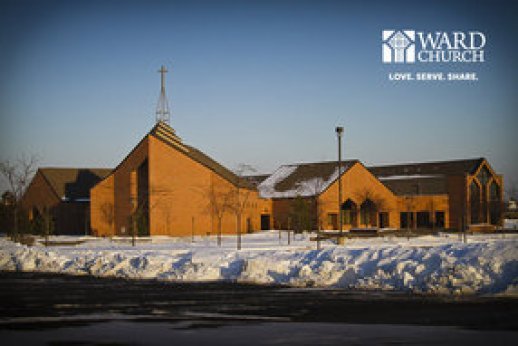
The church offers a wide variety of groups to their congregation and neighborhood – groups for men, women, couples, singles, and parents. They also have a number of support groups including GriefShare, Celebrate Recovery, and DivorceCare. Yet, even with all of these groups, Ward had not connected their entire congregation into groups. They chose to use an alignment series.
“People really enjoyed the series. An alignment series solves the question of what groups are going to study. It provided an opportunity to start new groups and get new people plugged into both our new and established groups,” reported Janet Branham, Director of Small Groups.
With a long history of groups, it took a little finesse to get established groups on-board with the alignment series. “We have lots of groups that want to do their own thing and follow their own schedule. Some complained that the material isn’t ‘deep’ enough. We added a digging deeper section to the curriculum to serve these groups and avoid this objection,” Branham shared. “We encouraged our existing groups to do the material and asked them if they had room for new people. If they chose to do the alignment study, then their groups were included in the church’s Small Group Fair. We also made an appeal for new leaders to launch groups at the Small Group Fair.”
By inviting rather than mandating, Ward Church was able to enlist many of their established groups. By honoring the established groups and even blessing those who chose not to do the study, Ward has been able to maintain a solid percentage of groups, both on-campus and off-campus for decades.
This case study is an excerpt from the Exponential Groups Workbook by Allen White. The workbook is filled with examples, templates, timelines, and samples to effectively recruit leaders and launch groups in your church.
The post Case Study: A New Small Group Model in a Legacy Church appeared first on Allen White Consulting.
June 23, 2020
Entering the Church’s Digital Future
About 90 days ago the church made a pivot to online services. Regular worship services were prohibited in most areas of the country due to COVID-19 and efforts to flatten the curve. Suddenly, worship services appeared online. Churches who had never recorded or live streamed their services scrambled to get online. But, some other things began to happen.

Many churches discovered that just streaming the weekend service was not sufficient to engage participation at home. It was open season for experimentation in worship. Worship teams went from social distancing on stage to leading from their homes and looking like the Brady Bunch online.
The biggest learning in all of this was that people actually showed up. Some churches quickly saw twice the number of people online as they typically had on the weekend. One church with a normal weekend attendance of 10,000 had 200,000 people tune in at Easter. People from out-of-town, out-of-state, and even out of the country began to join in. This presented a new challenge — when things got back to normal, nothing would be normal. How could you abandon your new online congregation? You can’t and you shouldn’t.
Digital ministry is significant. It’s a moment not unlike the printing press 500 years ago. While we might not call it a digital reformation, online ministry is showing signs of creating a new category of ministry for the church going forward. The message hasn’t changed, but the method certainly has. How do you lead a digital congregation?
Interactive Online Services
The churches that are making it without an on-campus weekend service are offering a direct-to-camera, interactive worship service. It’s not merely streaming a typical weekend service. That’s passive. They are connecting with an online audience.
The method has shifted from standing on a stage behind a pulpit and preaching to the crowd to sitting in the living room talking to your members and many others through their televisions. In some cases, pastors are actually taking questions through Facebook Live or some other means and providing answers during their messages or Bible studies. The world is tuning in. What are you giving them?
When this is over, online services shouldn’t be gone. In fact, in churches that are regathering for worship, pastors should remember to speak to the cameras, because there is far more of the congregation “out there,” than there is “in here.” While pastors don’t want to feel like they’re ignoring those in the building, they must either speak directly to the camera (otherwise you creative a passive experience for your online audience), or record an entirely different format for the online folks. Same message, but different method.
Meaningful Connections and Online Groups
When the pandemic began, I broke down all of the “one anothers” and showed how the church could still practice all of them except greeting with a holy kiss. We’ve always said that the church is not the building, and the church is not the worship service, but were we telling the truth? I agree with those who said that the church isn’t reopening because it never closed. The church — the ekklesia, the assembly – is the people of God. The gates of hell cannot defeat us, let alone Coronavirus.
The churches who are succeeding right now are meeting their members’ needs in personal ways. Whether people are required or choose to social distance, the pastors that are getting it right are forming new online small groups, sending personal notes in the mail, and making personal phone calls. That may seem a bit daunting, but start somewhere. One church immediately upon the shutdown tasked their staff with calling the top 20% of givers in their church – not to ask for money, but to see how they were doing. Again, go back to the digital one anothers: text encouragement, send a note of appreciation, recruit new online group leaders. We are 100+ days in, but it’s not too late to get started.
Meeting Practical Needs in the Community
Government stimulus checks went pretty fast. Now what? Folks are looking for jobs. In many places states of emergency have ended, so foreclosures have begun. People are trying to keep a roof over their heads and feed their families. For some, these are desperate times. How can your church help?
Food producers are throwing food away, yet people are going without food. How can your church redirect discarded food and get it to the people who need it? Can you assist a local food bank? My wife and son support a local free pantry down the street in front of the fire station. Someone built it. I’m not sure who. But, neighbors provide some food and necessities, then post a picture on their Facebook group. Those in need are informed of what’s available. Those who help can see when supplies need to be restocked. How can your church help the least of these?
Giving Spiritual Next Steps
Some people watching your online service will never show up at your church. It may not be practical with their work schedule. They might live out-of-state. How do you disciple your online following?
How would you guide these folks if they came to church on Sunday? You would probably have them fill out a communication card. Are you getting their information? Maybe you would offer a meeting with the pastor or some sort of “Welcome to the Church” class. You can do this online.
Some churches have a membership class, a Growth Track, CLASS 101-401, or something else. If you put these online, they could help in two ways. First, you can offer next steps to your online congregation who may never darken the door of the church. Second, you can provide a way for people who do attend locally, but have never taken the next steps classes. Instead of offering these classes once a month, they could be available 168 hours a week. You could gain new members in the middle of the night!
Concluding Thoughts
Whether people are quarantined by themselves or with their families, there is a sense of isolation. We need each other! Digital ministry involves getting people connected into groups and creating intentional opportunities for people to meet online at first.
Giving is almost 100% online in these days. And, giving should be tied to meeting practical needs in the community. By linking generosity with reaching people and helping them in a crisis, members will be more generous than ever.
Digital ministry is not going away, nor should it. Many churches are attempting to hire a digital ministries pastor at this point. (I say “attempting” because there aren’t a lot of people with the technical, pastoral, and creative skills to fit the bill.) You might need several staff (paid or volunteer) for this role. How will your church engage the community in this digital reformation?
The post Entering the Church’s Digital Future appeared first on Allen White Consulting.