Allen White's Blog, page 13
April 7, 2020
How Are Your People Coping with the Pandemic?
People are coping with the pandemic very differently. You might live in a part of the country where everyone has stayed home for more than a month already. You might live in a part of the country where some stores look like last minute shopping on December 23rd. Your people are going through a lot right now.
 Courtesy of The Church on the Ridge
Working with pastors across the country, I witnessed the response to the Coronavirus pandemic change from week to week. Those living in the areas that were affected first quickly hunkered down and took extra precautions while some in other parts of the country were still wondering if the whole thing was really that big of a deal.
As our coaching group discussed all of this, what we began to witness in different waves were the stages of grief: denial, anger, bargaining, depression, and acceptance. You’ve probably experienced some of these stages yourself. Everyone is grieving a loss. They’ve lost everything from March Madness to jobs to family visits and now they’ve lost Easter Sunday for the first time in the history of the church (as far as I am aware). Your people have lost a lot.
Unfortunately, people are not coping with all of this in the healthiest ways. There’s been an increase in alcohol consumption even with bars and restaurants closed. Many people jokingly post about overeating, binge watching, and other outlets. Pastors are over-emailing (Pastor, it’s a good time to write your book!) The worst statistic is the rise in domestic violence across the country.
Your people are in a pressure cooker. They need a place to process what they’re dealing with. They don’t need necessarily more content, but they need conversation. This is an amazing time to start new online small groups. I want to help you get started.
I’m offering any church the opportunity to join a new free downloadable study called Cabin Fever. This seems to be where we’re at. In partnership with the Church on the Ridge in Snoqualmie, Washington, we would like to offer you this series for free. The Ridge is creating video interviews with experts along with a Bible study for the six weeks following Easter (or longer). Experts are saying to expect the effects of the Coronavirus outbreak to last until the first of June. Of course, we know those predictions change almost daily.
Cabin Fever Groups are designed in response to the growing stir crazy found all over the globe. Groups will virtually meet each week to hear from an expert in a variety of topics ranging from what to do when your kids are about to make you explode to managing stress in your new environment to balancing this new work from home environment with your family. Each lesson will include a 10-minute video session with an expert in the field. Following the teaching segment groups will have time to discuss practical application, exchange their own tips, and encourage one another.
If you are interested in starting Cabin Fever Groups, click here to sign up. Lessons and videos will be sent out weekly over the next six weeks. Of course, you can feel free to create your own videos or use these ideas to create your own series. We’ve just trying to help you help your people cope with Cabin Fever.
The post How Are Your People Coping with the Pandemic? appeared first on Allen White's Blog.


March 31, 2020
Starting Online Small Groups
The Coronavirus outbreak has opened a new chapter in starting online small groups. Online small groups aren’t a new thing. I was in an online small group on CompuServe in 1992! That might make me the grandfather of online small groups. But, online groups might be new to you.
The Pursuit Church in Minot, ND just launched online small groups off of their online service on March 22, 2020. This church of 1,500 already had about 60 small groups. On that Sunday, 30 people stepped up to start new online small groups. Could you imagine increasing your small groups by 50% in one day. You can hear Tara Wiley tell The Pursuit’s story along with seven principles of starting online small groups.
The Freebies mentioned in this video are available here.
If you want to jump to a specific point of the video:
What You Need to Start Online Small Groups (Point starts at time code indicated):
A willing, caring person to initiate (8:50).A system to connect (13:58).A platform to meet on (18:10).Curriculum to guide (25:14).Just-in-time training and coaching (30:49).Follow up and feedback (34:51).Supervision and accountability (35:59)
Case Study: The Pursuit Church, Minot, ND (44:17)
Contact Us for More Information
The post Starting Online Small Groups appeared first on Allen White's Blog.
March 24, 2020
Suddenly, Everybody has Time for a Small Group
Unless they offer an essential service, suddenly everybody has time for a small group. The #1 excuse people give for not joining a group is that they are too busy or they don’t have enough time. Small Group Pastors know what they are really saying is, “Small group is just not a priority.” I get that. But, now the “I don’t have time” excuse has been erased, and small groups should become a greater priority — even if they can’t meet in person.
 Image by Pexels from Pixabay
Why do you need to start new groups during a pandemic?
Whether by choice or by mandate, people are staying away from other people right now. Church services have gone online. School has gone online in many places. While people are making their best attempts to curtail the spread of a disease, isolation and loneliness coupled with a steady intake of cable news and social media is a breeding ground for fear. Isolation and fear come straight from a page in the enemy’s playbook. The devil is having a heyday with this.
People have spiritual and emotional needs. With all of the conflicting information and no one to discuss this with, the monsters in our people’s heads just become bigger and bigger. Last week I wrote about practicing the “one anothers” of the Bible while in quarantine. People need more than worship and a sermon to reassure them and help them deal with what’s going on. Beyond that some people have practical, physical needs. How is your church keeping up with older people or people with medical conditions. We must find a strategic way to care for our members. Here’s a tough thought — your people can find a better online service. How you help them right now will determine where they go and where they give after this is all over. This is fertile ground for the enemy to do his work. This is a tremendous opportunity for the church to do its work.
As a church staff, you are working hard to transition worship and sermons to online services, but what about the social time people spent in the lobby or even in the parking lot. How are you meeting your members’ need for connection? This is the time to launch new groups. Groups could meet on a video platform. Groups could meet on a free conference call line. While many are forced to be apart, there are ways to be together.
How to Start New Groups
Starting new groups online is not so different than starting groups offline, except you have one advantage. People need connection more than ever. Now is the time to get all hands on deck and start as many groups as possible. Churches must mobilize the most people they can for ministry right now. Your people need personal care like never before. You can do this. Here’s what you need to get started:
A willing, caring person to initiate.
If there was ever a time to bypass bulky requirements for group leaders and get all hands on deck, the time is now. Invite every person who will willing and caring to start a group right now. If you are insecure about that method, then review a copy of your church’s membership roster. Who would you feel good about? Call them and invite them right now. Who is willing and caring? Remember, they suddenly have time for a group.
A system to connect.
Once you have invited people to lead these groups, then ask them who they know who would be interested in a group. Take a week and have them invite everyone they know inside the church or outside the church to join their group. Then, invite the rest of your congregation to sign up online or even give out some names for leaders to call and invite to their group. The idea is that everyone in the congregation would have someone to connect with personally every week.
A platform to meet on.
Some localities are still allowing meetings of groups less than 10 people. If people are comfortable meeting in person, then they can. Personally, I would recommend an online option like a teleconference or a conference call. This will prohibit any unnecessary contact and potential spread of disease. Teleconference services such as Zoom, Google Hangouts, and other services offer a stable platform and an easy way to connect online with video. Most services offer a call-in number for those who might be less tech savvy. For a comparison of video platforms, click here. If video is not a good solution because of the internet service in your area, then a free conference line could work as well. Several services are available.
For families with children, encourage them to meet later in the evening when their kids have gone to bed. Wear headphones to eliminate background noise. Mute yourself when you’re not talking. And, do not take your device into the bathroom with you!
Curriculum to guide.
Your groups could start with just a weekly check in to see how everybody is doing. Start the meetings by allowing people to debrief what’s going on in their lives and in their minds. Another great way to start a new group is to ask people to tell their stories or at least the part of the stories that they’re willing to tell. This is an important way for the group to begin to understand each other and have context for what they share in the group.
For new leaders I have discovered that it’s best to use some sort of video-based curriculum that contains the teaching on the video. This makes things safe for both the new leader as well as the pastors. The new leader doesn’t have to be the Bible expert, and the pastors don’t want the new leader to teach or be the Bible expert anyway. By giving them a curriculum that you’ve created or a curriculum that you trust, you could assure that the group will follow the topic that you’ve given them and have a great meeting to encourage each other, build up their faith, and grow spiritually in an unusual time.
Just-in-time training and coaching. Don’t skip this step!
There won’t be a lot of time to train these leaders at first. I have discovered that if you recruit an established leader to follow up with new leaders, you create a win-win situation. The new leaders get help and support right when they need it, and the experience leader gets a trial run at being a coach. Once the trial is over, you can determine whether the new leaders will want to continue and whether the coaches should continue.
Just like groups can meet over a teleconference or conference call, training can also happen in the same way. In the last church I served we had an immediate need for coaches. I knew it would be difficult to add another meeting to an already busy schedule which included all of the coaches leading their own small group, so we met together on a conference line at about 8:30 at night for 30 minutes and did this for about six weeks in a row. Why did we meet so late? Well everybody was home from work, finished with dinner, and their kids were hopefully in bed. With all of these distractions removed, I was able to conduct the training and get these new coaches started. The same can be true for leader training, but I would recommend letting the coaches do the work for at least the first six weeks, then offer more formal training when the leaders are ready to move forward and when the leaders feel like they actually need the training.
Follow up and feedback.
Leading a small group and coaching is important work so you must inspect what you expect. If you’ve asked your coaches to call the new leaders every week, then you need to call the coaches every week and hear what’s going on with the groups. As a pastor, you want to know what’s going on with your people especially during a crisis. Your coaches can give you the needs that you need to address that maybe they cannot. You also get an accurate picture of what’s going on in your small group ministry. If you wait for a report, you are already in the weeds.
Do for your coaches what you expect them to do for your leaders. Just like your people need the care of a leader and your leaders need the care of a coach, your coaches need care from you. Now that your schedule has changed, it shouldn’t be too hard to pick up the phone and give each of your coaches a call.
Supervision and accountability.
While you have successfully given away the ministry to new leaders and new coaches, the only thing that you cannot give away is the responsibility for the ministry. The buck still stops with you. I don’t say this to make you nervous, but I do say this so you will avoid an entirely hands off approach. The coaching structure is effective, but it cannot run on auto pilot. While you are not in the day-to-day care of leaders, you cannot be completely out of it either. This is still your baby.
The End Result
In this climate, everything you do is essentially a startup. You cannot call a meeting and gather people on campus. You cannot do on-site training. You can’t even visit your people in their homes. But you can start online groups that will accomplish all of this. This may go against your personality. This may go against everything that you’ve done before. But the message is the same — We are better together even if we are apart.
By starting new small groups right now, your people will feel less lonely, less isolated, and less fearful. These groups can help your people build their faith and experience the care that they deserve. And the hard truth is that you cannot create that with an email.
My hope for you is that the end result of starting online groups will be at the beginning of something new for your ministry and your church. Pastors and staff cannot possibly meet all of the needs of any congregation. And they shouldn’t. Now more than ever, you need to get your people to engage their gifts and serve others in groups like never before. Don’t waste this moment. Suddenly, everybody has time for a small group!
If you’re ready to start groups, I want to invite you to two webinars this week:
How to Start Online Small Groups – Thursday, March 26, 1 pm ET.
Easter Online – Wednesday, March 25, 2 pm ET
The post Suddenly, Everybody has Time for a Small Group appeared first on Allen White's Blog.
March 17, 2020
Promoting Community While Social Distancing: Moving Your Small Groups Online
Amid the Coronavirus pandemic, people need each other more than ever before, yet they need to avoid each other more than ever. Christians believe faith is more powerful than fear. As the news media and government agencies continue to discuss the critically important topic of the spread and impact of Coronavirus, it’s easy for anyone to give into fear, especially when they are isolated from others.
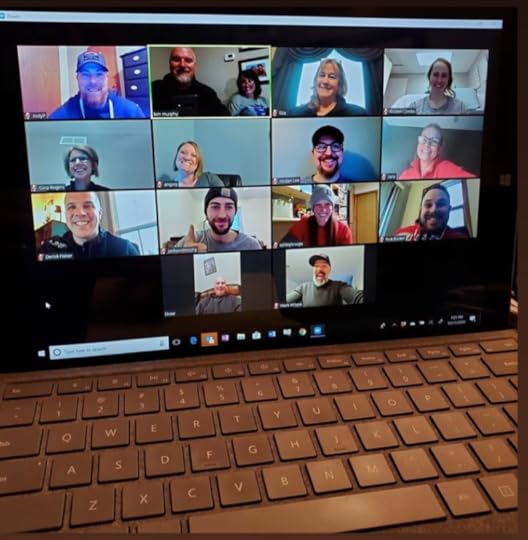 Courtesy of @kenwmurphy via Instagram
Worship services are forced online as groups of 10 are being discouraged to gather. For smaller numbers, social distancing is encouraged where people should stay six feet away from each other. Whether by mandate or by choice, people are cautious about meeting with any size group. Isolation, though, tends to amplify fear. How can we promote community and social distancing at the same time?
Reframing Life and Ministry
The only thing missing from everyday life amid a pandemic is personal contact. The church may not be meeting within the four walls of the church building for an hour on Sunday, but the church can function as the Body of Christ despite the lack conventional church services.
Paul instructed in 1 Corinthians 12 that every member of the Body is important and that every member has gifts. Rather than meeting in weekend services to check off the church box for the week, members can and should be challenged to embrace their deeper calling. Who can they serve? How can they encourage? How can the church be the church outside of the four walls of a Sunday service? We really should be asking these questions anyway.
When we think of small groups in particular, often we focus on practicing the “one anothers” of the Bible.
“Love one another” (John 13:34; John 15:12).
“Be devoted to one another in brotherly love” (Romans 12:10).
“Honor one another above yourselves” (Romans 12:10).
“Live in harmony with one another” (Romans 12:16).
“Stop passing judgment on one another” (Romans 14:13).
“Serve one another in love” (Galatians 5:13).
“Carry each other’s burdens” (Galatians 6:2).
“Be kind and compassionate to one another, forgiving each other” (Ephesians 4:32).
“Build each other up” (1 Thessalonians 5:11).
“Encourage one another daily” (Hebrews 3:13).
“Spur one another on toward love and good deeds” (Hebrews 10:24).
“Pray for each other” (James 5:16).
There are 59 of these statements in all. (For a complete list, check out this post on smallgroupchurches.com LINK https://www.smallgroupchurches.com/th...
There are only a couple of these statements that should be avoided in a climate of social distancing:
“Wash one another’s feet” (Mark 9:50) and
“Greet one another with a holy kiss” (1 Peter 5:14).
All of the other “one anothers” can be practiced among believers even in isolation, quarantine, and social distancing.
Reframing the Practice of the One Anothers
What is available to believers who are in isolation or self-quarantine? We have computers, tablets, smartphones, messaging, social media, telephones, streaming video services, and televisions. People communicate more while they are apart than when they are actually together it seems! Now take the communications devices available to people and pair them with the one another statements.
With this technology, how do we “encourage one another daily” as stated in Hebrews 3:13. The reality is most people don’t see each other every day. But, given the technology in our hands, we could text or message encouragement to one another daily. Just the other day a friend in Florida came to mind. I texted to see how he was doing. He was discouraged. In a short text, I encouraged him. His response was, “I think that’s just what I needed to hear today. Thank you.” I wasn’t in the same room with him. I wasn’t even in the same state with him, but I was able to encourage him. How can we encourage one another daily when we can’t see them in person? Use what we have!
The same goes for these other “one another” statements as well.
“Love one another” – We can do this anywhere at any time.
“Be devoted to one another in brotherly love” – We can call to check on each other.
“Honor one another above yourselves” – We can think of others before we think of ourselves. How is the pandemic affecting those we know? How about our neighbors?
“Live in harmony with one another” – Distancing may promote harmony in some ways. But in light of a global pandemic, we can also put our differences aside.
“Stop passing judgment on one another” – Everyone acts differently in different situations. Be as gracious in social media as you would if you were talking to the person face to face. People are already anxious. We don’t need to feed into this.
“Serve one another in love” – Can you spare a square? If someone is in need and you have the ability to help, then help them. You might need to make a “no contact” delivery and leave some toilet paper on their doorstep, but you can serve.
“Carry each other’s burdens” – When you call to encourage someone, you can listen. You can empathize. You can’t give them a hug, but you can care.
“Be kind and compassionate to one another, forgiving each other” – Life’s too short. Let it go.
“Build each other up” – When people are isolated, their thoughts and our enemy can get the best of them. Lift them up. Send a text about what you like about them. Post a verse. Leave a voice mail.
“Spur one another on toward love and good deeds” – We need reminders to move forward and not get stuck. While stuck home from work or school, we have time on their hands. How can we help others?
“Pray for each other” – We can pray over the phone. We can even pray on someone’s voice mail.
Meeting with Your Small Group Online
Hebrews 10:25 instructs us “…not giving up meeting together, as some are in the habit of doing…” Often these instructions are taken for worship services, which today have moved online. The author of Hebrews is more than likely speaking to smaller home gatherings. This is your small group. You could take the risk and meet together in-person. But, let’s face it, we don’t know where the Coronavirus pandemic is going to go. Your group might meet, but some might choose to stay away – either out of caution or out of fear (Remember: “Stop passing judgment on one another”). If we can’t meet in person, we can meet online.
I was part of an online small group on CompuServe in 1992. There was no video or audio. It was basically a chatroom and a message board. It seems like ancient history now, but this was back before most people had ever heard of the internet. On my dialup modem, I connected with Greg in southern California, Trish in Chicagoland, David in California, and a couple in Idaho. Greg wasn’t even a Christian at the time, but he joined our Christian forum because it offered low priced, flat rate service. One day Greg informed the group that he received Christ as his Savior. We all converged on Greg’s house in San Dimas, California for his baptism. Years later, Greg was a groomsman in my wedding. Since moving to the East Coast, we don’t see each other very often, but we still connect.
With online technology today, it’s easier than ever to host groups online. You get to see faces and hear each other’s voices. It’s much better than my CompuServe days! To meet in online groups, you have to pick a platform. I prefer Zoom, which offers both a paid and free service. Group members can connect by video, audio, and/or telephone. I use it every day for staff meetings and coaching groups.
To make group meetings work best, you have to eliminate distractions –close other windows and notifications on your computer, tablet, or phone. Use ear buds or headphones to prevent audio feedback. Make sure there is nothing distracting in the environment where you are sitting. Then, just focus on your group meeting.
Over the years, I’ve heard people object that people who meet online can pretend to be anyone they want and won’t necessarily present their real selves. I’ve discovered this is also true in in-person meetings. It’s up to group members to choose how much they will disclose about themselves and how vulnerable they will be. Remember: speed of the leader, speed of the team.
Ministry doesn’t have to stop because of a pandemic and social distancing. In fact, there are plenty of opportunities for the church to be the church. The persecuted church in Acts 8:1 couldn’t stay with the apostles in Jerusalem, but they did spread the message of the Gospel throughout Judea and Samaria just as Jesus commanded them in Acts 1:8. How can we use this circumstance to fulfill Jesus’ command? We don’t need church buildings. We don’t need “official” ministries. We don’t need church staff to lead the meetings. Now is a time to be the church more than ever. My hope is even when we go back to weekend worship services, we will never go back to “normal.” The church should continue to be the church.
For more information on online small groups:
How to Host an Online Group by Jason DeGraaff (Offers a comparison of teleconference services).
How Online Small Groups Work by Jay Kranda
The post Promoting Community While Social Distancing: Moving Your Small Groups Online appeared first on Allen White's Blog.
March 16, 2020
Free Small Group Resources for Pastors
By choice or by mandate, your meetings might be cancelled this week. You may even work from home. All of that to say, things have slowed down. While you very much deserve a little downtime or even a staycation, this is also a great time to invest in yourself.
FOUR FREE RESOURCES FOR YOU THIS WEEK!
The Senior Pastors Guide to Groups – Free Download.

Leading Healthy Groups Kindle Edition – Free through Tuesday, March 16, 2020 at Midnight. ($9.99 value)

3 Keys to Lasting Groups Online Course – Use Code: LEARN ($27 value) — good thru 3/31/2020

One-on-One Coaching Call with Allen White ($150 value) – Sign Up by Clicking Here.

If there is any other way I can help you, please let me know by replying to this email.
Live in Wisdom and Faith!
Allen White
The post Free Small Group Resources for Pastors appeared first on Allen White's Blog.
March 10, 2020
How to Start Small Group Coaching
In some circles, coaching is either underrated or
non-existent. I think this is a mistake. Coaching provides a number of things
for new and established leaders:
Support and encouragement.Customized training target to specific needs.A spiritual covering for ministry.Supervision and accountability.A resource to help meet the needs of group
members.A sounding board for new ideas and
troubleshooting issues.A relationship with a like-minded leader.A link between the group and the church.
If you’re not providing this for your leaders, then how are you helping them? Meetings and emails might provide a little help, but they won’t provide help at this level.
 Image by S K from Pixabay
Where to Start
Start with new leaders. A completed org chart does not need
to be in place to effectively coach leaders. In fact, I’ve seen some very impressive
org charts that actually didn’t represent very much. There wasn’t much coaching
going on, but everyone was accounted for.
New group leaders need the most help, so start with them. When prospective leaders show up at a new leader briefing, they can meet their coaches. The assumption is that every new group leader at your church gets a coach, and they should. New leaders are far more accepting of both the coaching and the help than established leaders. In fact, if you assign coaches to seasoned leaders, that announcement will be met with anything from suspicion to resentment. Established group leaders will need a different style of coaching, which is covered in Chapter 10 of Exponential Groups.
New leaders need the most help. They will have many questions. As the church continues to implement new strategies of forming groups like the HOST model or “do the study with your friends” strategy, two things will happen: (1) the “leaders” of these groups will be less “experienced” and will need help, and (2) the church leadership will not be as familiar with these “leaders.” The safety net here is launching non-groups led by non-leaders which are not advertised, but there is still a responsibility to these non-leaders and their non-groups. If each of these prospective leaders, even in the unadvertised groups, has a coach, then the leaders will be supported in meaningful ways, and the church will be assured of what’s going on because the coach is checking in.
Coaching will help new groups actually get started and will keep them going as they face various issues and possible discouragement. As new leaders are forming their new groups, it’s easy for them to get overwhelmed. An experienced leader who is willing to coach these new leaders will help you get more groups started.
Shepherding God’s people is a big responsibility. It’s just about the biggest. By recruiting “under-shepherds,” you can guide your new leaders and new groups into transformative experiences in their groups.
This article is an excerpt from the Exponential Groups Workbook (Hendrickson 2020).
For more guidance on building a coaching structure, check out the Coaching Exponential Groups Online Course.
The post How to Start Small Group Coaching appeared first on Allen White's Blog.
March 3, 2020
Multiply Yourself for Ministry
Some pastors outgrow their jobs. Others find their jobs outgrow them. In 30 years of ministry and 16 years of consulting churches, I’ve witnesses the hard break of pastors putting their hearts and souls into their churches and small group ministries only to eventually become disqualified for their positions. As you grow your ministry, you must grow yourself.
 Image by Simon Matzinger from Pixabay
A great example of this principle is found in Moses and how he handled the people’s disputes while they wandered in the desert. The Israelites numbered somewhere around 3 to 3.5 million. Moses spent his days resolving every conflict for all of them. Things became so bad that Moses’ wife and children left him (Exodus 18:2).
Moses’ father-in-law Jethro confronted him: “What are you really accomplishing here? Why are you trying to do all this alone while everyone stands around you from morning till evening?” (Exodus 18:14). Moses’ answer sounds like a lot pastors I know (and a pastor I’ve been): (1) The people like coming to me and, (2) I’m the only one who can do it (18:15). Some of us think, “Well, isn’t that what good pastors are supposed to do? But, others might realize this all sounds a bit co-dependent. Moses needed to be needed. Have you ever known any pastors like that? To be honest, I didn’t need to be needed. I just needed to be in control. And, our small group ministry got stuck because of it. (Click here for more lessons on why small group coaching fails).
You Cannot Personally Pastor Everyone
If you have more than 10 small groups in your church, you have to decide who you are going to personally pastor. If you wear a lot of hats other than groups, 10 group leaders might be too many. While you may not think you don’t need any help, you have to realize that you are not giving adequate help and support to your leaders if you’re trying to do it all by yourself. You’re probably busy putting out fires, but you are not mentoring your leaders. You’re probably holding big training meetings that are half attended at best, but you’re not coaching your leaders. You might be sending a weekly email blast, but you’re still not training your leaders. You’re just spamming them. No wonder your leaders don’t respond!
Take a look at Jethro’s advice to Moses: “But select from all of the people some capable, honest men (and women) who fear God and hate bribes. Appoint them as leaders over groups of one thousand, one hundred, fifty, and ten” (Exodus 18:21). Jethro gave Moses the model for a small group coaching structure. The leaders of ten are small group leaders. The leaders of 50 and 100 are coaches. The leaders of 1,000 (if you have thousands) are a small group team (staff or volunteer).
But You Can Pastor the Right Ones
Growing your leadership does not mean that you stop pastoring and mentoring people. But, it does change your focus as to whom you invest in. You don’t need to handpick every small group leader, but you do want to handpick your coaches and your small group team. If you can only spend time with 10 leaders, then choose 10 leaders who are mentoring 10 other leaders. Now you’re set for 100 groups. If you have more than 100 groups, then choose 10 leaders who can mentor 10 coaches who are mentoring 10 leaders. Now you’ve covered 1,000 groups. (If you have more than 1,000 groups, then talk to Steve Gladen at Saddleback or Bill Willits at North Point.)
Who’s doing a great job with their groups? Which groups would you like to see 10 more just like them? Recruit these leaders to coach other leaders. If you have groups you don’t like or leaders who aren’t doing well – don’t recruit those! If you have leaders who are hard to get along with – don’t recruit those either. Recruit the ones who are doing a good job (and the ones you like!).
A Coaching Structure Will Save Your Ministry
You cannot possibly address every issue in every group. Seating group leaders in neat rows and lecturing them has never really solved a group problem. But, if an experienced leader builds a relationship with a new leader and gives them what they need when they need it, then they receive training that sticks. Think about it. What lessons have stuck with you? The ones that you learned when you were in the middle of a problem. Your leaders are just like you.
Your leaders need a spiritual covering. I don’t want to make too much of this, but I also don’t want to make too little of this. There is a spiritual battle afoot. The enemy comes to steal and to kill and to destroy (John 10:10). Leaders will become discouraged. Groups might become divisive. Your leaders and groups need a coach to care for them, encourage them, and lead them spiritually. By the time an issue gets to the pastor, the situation is usually out of control. Coaches can address problems while they’re still small and haven’t done much damage yet.
Isn’t It Easier to Do It Myself?
It depends on your goal. If you are in a church that only cares about having “some groups,” then you can probably get away with dabbling in groups and not attempting to connect the entire congregation. But, if your congregation and your small group ministry are growing, then doing everything by yourself becomes impossible. There is only so much of you. There are only so many hours in a day. Face it – you are one disaster from being out of a job! I know that sounds extreme, but it’s easy to cruise when problems haven’t raised their ugly heads. Eventually, something is going to blow!
I was reluctant to have coaches. I knew I needed them. I recruited a couple and only got in their way. Finally, after we had doubled our groups in one day (whole other story), I was forced to invite some experienced leaders to help me. Here was the invitation: “I don’t have this all figured out, but if you’re willing to help me build this, I really need your help.” Nobody turned down that invitation.
Start small and start building your coaching structure. Recruit coaches for your new leaders first. (Your other leaders have it figured out). And, the great thing about building a coaching structure like this is it can scale as your ministry grows!
Are you ready to learn more? Join the 10 Biggest Coaching Mistakes Webinar on Wednesday, March 4 at 1pm ET/ Noon CT/ 11 am MT/ 10 am PT.
The post Multiply Yourself for Ministry appeared first on Allen White's Blog.
February 25, 2020
Why Small Group Coaching Fails
Almost every small group pastor or director will agree coaching small group leaders is important. Yet, many of those pastors would also admit they don’t know how to adequately coach their small group leaders. Having tried and failed at various coaching structures many times myself, I have found three key issues in unsuccessful (and eventually successful) coaching.
 Image by Raphi D from Pixabay
Unclear Expectations
Many coaching structures fail simply because no one knows what a coach is supposed to do. Is the coach an administrator or record keeper? Is the coach a trainer? Is the coach a figurehead so we can say we have a coaching structure? What do we expect our coaches to do?
If we need coaches to train leaders, then why are small group pastors still running centralized training meetings? Do we really need coaches to collect rosters and reports? Don’t we live in the 21st century? After all, churchteams.com will solve all of these administrative issues. (In an effort for full disclosure, I believe ChurchTeams is the best small groups’ database on the planet. Boyd Pelley did not pay me to say that. He did buy me an ice cream once.)
What do we need coaches to do? We need coaches to do the things we can’t do ourselves. If we had, say, five small groups, then what would we do with those leaders? We’d call them on a regular basis. We’d get together for a cup of coffee. We would personally encourage them, answer their questions, and pray for them. We would invest in the relationship. What if our coaches started there? Coaching is based on relationship. If there’s no relationship, not much coaching will take place.
Unreasonable Requirements
A friend of mind called me a while back. He was frustrated because many of his coaches were quitting. I asked him what he was asking them to do. He wanted his volunteer coaches to hold a monthly training meeting with their leaders on the church campus. Then, I asked him if he’d ever driven in his city?
This was a major metropolitan area. So, think of requiring volunteer small group coaches to hold monthly training meetings in the middle of one of the 10 largest cities in the U.S. It wasn’t working, and his coaches were quitting.
Face to face meetings are great. If you can pull them off with all of your leaders together, that’s really great. But, most people can’t. Fortunately, there are some alternatives.
Why not meet “together” with small group leaders on freeconference.com or Skype? Every day I coach small group pastors across the country over the phone or by teleconference. I’ve met few of them in person, but we connect on a weekly basis. We have a relationship, and they have seen success in growing their groups. This works with leaders locally too.
Facetime is necessary (the real, in-person version). Again, coaching is built on a relationship. But, maybe the face to face meetings are with one or two group leaders and not all of them. We can use other means to connect at other times. Don’t get me wrong. I am not advocating a simple “Like” on Facebook or a bulk email to all of the leaders at once. The connection must be personal to grow the relationship.
Lack of Accountability
None of us likes to make people uncomfortable. Some of us avoid this discomfort to the point of not asking our coaches if they’re coaching. Then, we discover not much coaching is taking place. We shouldn’t be surprised.
Only what we supervise gets done. Now, we don’t have to come down on our coaches like a ton of bricks, but we do need to ask. Rather than asking, “Have you contacted your leaders?” we should assume the good, qualified people we recruited to coach are actually coaching. The question could go like this, “What are you learning from your leaders?” They won’t get defensive.
They might respond, “Well, I haven’t contacted any of them lately.” That’s okay. Give them a deadline, “I understand you’re busy, but connect with your leaders in the next two weeks, then I’ll check-in with you again.” Presuming the best about our coaches both honors and motivates them. Giving them accountability helps them keep their commitment to coaching and eliminates the guilt of not fulfilling their commitment.
Effective Coaching
Effective, motivated coaches need direction that is clear, reasonable, and accountable. How do I know? A good coach taught me that…as he was resigning. Do your coaches know your expectations? Do you know your expectations? Are your requirements reasonable? And, if it’s truly important, are you holding them accountable? These three simple words will transform your coaching structure.
Catch The 10 Biggest Coaching Mistakes Webinar with Allen White on Wednesday, March 4, 2020 at 1pm Eastern. For more information: https://allenwhite.org/10biggest
The post Why Small Group Coaching Fails appeared first on Allen White's Blog.
February 11, 2020
Dominate with Groups in 2020
What are your church’s priorities? For many churches big priorities point to big events – weekend worship services, conferences, and outreach events. While all of these things have their place, do they deserve all of the attention they get? Imagine if small groups and disciple-making were front and center for once instead of lingering on the backburner somewhere.
 Image by Hans Braxmeier from Pixabay
Jesus commanded us to “go and make disciples.” Disciples aren’t made overnight. Discipleship is not a process or a program. Making disciples requires a person. After all, disciples make disciples. If disciples could be mass produced then services and seminars would be adequate to do the job. Clearly, they don’t.
What if everything in your church revolved around small groups instead? When our church in California reached a place where 125% of our weekly worship attendance was connected into groups, priorities shifted for our staff. As far as discipleship went, the tail was no longer wagging the dog.
How can small groups rise to the top? First, you don’t have to tear everything else down to raise the value to groups and disciple-making. This is not a matter of demolishing a church’s ministry to rebuild it. No one can afford to do that. This is more the scenario of re-engineering the airplane while it’s flying. It requires more nuance. By recognizing the opportunities and creating the right alliances, small groups could dominate your church in 2020.
Partner with Your Senior Pastor.
Why are the senior pastors so invested in the weekend service? First, pastors put their hearts and souls into creating a sermon. If you’ve preached, you know that time and energy it takes. One pastor said that it was like having a term paper due every week.
Another reason pastors are invested in worship services is because a large portion of the church attend. It’s a good feeling to speak to a packed house. Over the years, I’ve spoken to as few as 11 people and as many as 5,000 in a single day. The bigger, the better, right?
Lastly, preaching a sermon produces immediate results. Pastors tell jokes, and they get a laugh. They hit a point hard, and they get a response. Some will shout, “Amen!” Others might become very quiet. Then, in many churches at the end of the service there is a response at the altar. While approval is not the goal, a response is certainly reassuring.
While there are other reasons for pastors to devote themselves to worship services, think about these three things: (1) pouring their hearts and souls into teaching, (2) reaching many people, and (3) receiving a response. Small groups can do this too and even at a larger scale. By putting the pastors teaching on video, an audience larger than the weekend service will be reached. All of the hard work of sermon prep doesn’t end up in a file folder, it lives on in living rooms and breakrooms and board rooms around town.
Getting the response is up to the small group pastor. Collect stories of what God is doing in groups. Let the pastor know the impact the video teaching in groups is making. If senior pastors could reach larger audiences every week wouldn’t they be interested. Your small groups will connect your congregation, but will also include many people from the community who have never darkened the door of your church. In fact, according to Rick Warren, there is a trend of people coming to a small group first, then attending a weekend service with their groups. By partnering with senior pastors, their goals will be reach and so will yours.
Create a Next Step for Every Church Event.
Do marriage conferences improve marriages? They could. They also might accelerate conflict. Do sermons make disciples. I’ve already answered that here. Do men’s retreat make better men? They could, but as Randy Phillips, the former president of Promise Keepers says, “The failure of Promise Keepers was not offering a next step after the conferences.” Essentially Promise Keepers became promise breakers. While services and events are not the be-all end-all of life change, they can be a start. They can inspire commitment, but it’s not over and done. As Marcus Buckingham said, “The problem with people is they are just never done.”
Change is difficult. People fall into patterns of behavior that they’ve learned over the years. Marriages fall into patterns. Work relationships fall into patterns. We commonly refer to this as getting into a rut. It’s hard to get out. Change is difficult.
We know how to lose weight, but we don’t. We know how to get out of debt, but we’re still in debt. The list could go on, but we will stick with my problems for now. When I lose weight, it requires focused effort. I need accountability. I have to set a goal and make steps toward that goal. I could listen to someone talk about weight loss and be inspired. I could even watch exercise videos and still not lose a pound. Now before this gets silly, this is also true for every other change a person is trying to make.
Every change starts with a commitment. A conference, a retreat, or a worship service is a great place to make a commitment. But, commitments are forgotten without a next step and others to support you. If your church hosts a marriage conference, what’s the next step? Does the speaker have a book or curriculum? If not, what resources are available? Start groups during the conference. If your church has a men’s retreat, use the opportunity to form groups at the retreat before the guys come home. Have the study and the day and time of the first meeting in place before they resume their regular schedule. And, for the sermon, help your members take their weekend into their week by producing a sermon discussion guide or an alignment series.
Events can start something, but they cannot create lasting change. Small groups can complement events and give people what they need to achieve the growth they desire. Every event in your church should be a launching pad for small groups.
Make “Small Groups” the Answer to Every Problem.
What is your senior pastor’s biggest concern for your church?
More Leaders? Small Groups are a leadership development engine.
Better Attendance? People in groups are more committed than people who are not in groups.
More Serving? People in groups serve more than people who aren’t in groups.
Better Giving? People in groups, on average, give 4% more of their income than people not in groups.
More Growth? People in groups are more focused on growth than people not in groups.
Better Outreach? People in groups reach others for Christ more often than people not in groups.
Your pastor’s major concerns are all addressed in small groups. These thoughts are not merely anecdotal. Look at the research by Ed Stetzer and Eric Geiger in Transformational Groups and Princeton professor Robert Wuthnow in Sharing the Journey. Research shows that people in groups are the most motivated and most active members of the church. (For a synopsis of this research: The Senior Pastors Guide to Groups). If you want more of “all of the above,” you need to connect more people into groups.
So, Why Aren’t Senior Pastors the Most Excited About Groups?
They may not know the value of groups. The senior pastor role today is more like a CEO. There’s a lot on your pastor’s plate. That’s why you were hired to take care of groups and discipleship. Yet unless you engage your senior pastor, discipleship will continue to linger in obscurity in your church. Help your pastor see the benefits of groups. Zig Ziglar once said, “You can have everything in life you want, if you will just help other people get what they want.” Find every possible way to align groups with where your pastor is headed or what concerns your pastor the most.Most seminarians don’t learn about groups. I earned a Master of Divinity in Christian Education and did not hear one lecture on small groups. If pastors’ degrees are in pastoral ministry, biblical studies, counseling, or theology, they didn’t learn about small groups either. You have to educate your pastor about small groups and the key role they should play in the church. Point to outstanding models of churches with groups like North Point Ministries, Saddleback Church, North Coast Church, and many others. Start a staff small group. Tell the stories of what God is doing in your groups.Senior pastors may be resistant to groups because their small group pastors have become adversarial. One small group pastor complained to me, “I just can’t get my pastor on board with small groups.” I told him that he didn’t need to get his pastor on board. It was the pastor’s boat! The small group pastor needed to get on board with where the senior pastor was headed and include groups with it. The senior pastor has the responsibility to hear from God and give direction to the church. Follow that direction and add groups to the strategy.
No one should feel more strongly about small groups in your church than you. You should be the most passionate person when it comes to groups. Don’t allow your passion to spill over into anger. But, have small groups on the brain! The answer to every question your senior pastor or your team asks should be, “Small Groups.” As you partner with your senior pastor and others, you can dominate with groups in 2020.
The post Dominate with Groups in 2020 appeared first on Allen White's Blog.
February 4, 2020
Is Your Church Ready for Easter?
Easter preparation comes in different ways. This is certainly the season where plans are amping up for Easter worship services. But, beyond music rehearsals and set design, how are your members personally preparing for Easter?
 Image by Germán R from Pixabay
Easter marks the most significant event in Christianity. If there was no resurrection, then there would be no church. In the midst of stuffing Easter eggs and sending out social media posts about service times, the church should also prepare their hearts.
For liturgical churches, the 40 days from Ash Wednesday (February 26, 2020) to Easter (April 12, 2020) is known as Lent. While your church may or may not follow the liturgical calendar, you will certainly celebrate the true meaning of Easter and captivate your members’ hearts and attention.
Charlie Holt and Bible Study Media have produced an excellent video-based study for Lent called The Crucified Life (catch my interview with Charlie here). Filmed at the Cathedral Church of St. Luke in Orlando, this curriculum provides a space in which believers can listen to Jesus’ final words from the cross. They will understand and identify with His suffering in a way that challenges, transforms, and ultimately brings hope. The video-based teaching is accompanied by a beautiful, full-color study guide and a devotional book.
Of course, the story of Jesus doesn’t stop with the crucifixion. The Christian Life Trilogy includes two other studies in the series: The Resurrected Life and The Spirit-filled Life. These series can start at Easter and Pentecost respectively. These follow-through series will not only continue the story, but will also help the groups starting prior to Easter to continue on after Easter. A next step is necessary to guarantee the success of the first step.
While Pentecost Sunday is May 31, 2020, some groups find it difficult to meet during the summer months. That’s okay. The Spirit-filled Life study can be used in the fall of 2020. Groups can focus more on group life during the summer months, then meet again for the fall study.
While bunnies and Easter eggs are fun (and you should have plenty of them), refocusing on the meaning of Easter and what Jesus did on our behalf is a significant reminder for all believers. People live busy and distracted lives. Why not set aside an intentional season like Lent to prepare for Easter?
Testimonials for the Christian Life Trilogy:
“Charlie Holt brings us to the foot of the cross and the very heart of the Christian gospel. He invites us to ponder the death of Jesus for us and our own death to self in response to him. Powerful, compelling, transformative; a wonderful study for Lent or any other time.” – The Rt. Rev. John W. Howe, Retired Bishop of the Diocese of Central Florida
“In his series, Father Charlie Holt offers believing Christians new reflections on the sublime lessons of Christ’s sacrifice for us, while at the same time offering means whereby we as individuals can apply the lessons of Calvary to our own lives. The series is an important opportunity to grow in faith by means of encouragement and meditation, especially as regards the self-examination that all Christians are called upon to do in our walk.” – Martha Hoeber
“The Crucified Life is really taking our congregation more deeply into Lent. The stories I hear from our groups include new friendships, more meaningful fellowship, and faith-filled risk taking in several ways. People who have never led a discussion are doing it well. One host is even re-learning to play the piano so that her group can close each week by singing a hymn together. We are on an amazing journey together into the heart of the Crucified Life. Thank you for making these materials available!” – The Rev. Pamela Easterday, Holy Trinity Episcopal Church, Melbourne, FL
The post Is Your Church Ready for Easter? appeared first on Allen White's Blog.