
Jesse Sublett's Blog, page 6
January 5, 2015
Howlin’ Wolf at War

Howlin’ Wolf in the army, 1941.
This photo of Howlin’ Wolf in the Army, proudly wearing his campaign hat, the crown pinched in the style from World War I, should have been included in my last Howlin’ Wolf post, with the recently discovered photo of Wolf during the Louisiana Maneuvers in 1941, where the caption identifies him only as Pvt. Chester Arthur Burnett (see below). According to sources quoted in Moanin’ at Midnight: The Life and Times of Howlin’ Wolf, by James Secrets and Mark Hoffman, Wolf played a bit during his army stint, but only in casual settings, such as the orderly room. Several individuals who heard him play or played with him are quoted, but not a lot of information is relayed in their unedited statements.

Chester Burnett AKA Howlin Wolf, on left, serving in the US Army.
Wolf’s army experience was traumatic. He suffered nervous breakdowns and was hospitalized for weeks before being given a discharge in 1943. Interestingly, the great songwriter, producer and bass player Willie Dixon, who worked with Wolf a great deal after Wolf moved to Chicago and signed with Chess, refused to serve and was imprisoned for ten months for that reason, for the reason that if he didn’t feel obligated to lay down his life for a country that didn’t treat people of color equally. I’ve always respected that about him. I’ll have to write a bit about Willie later on. Dixon, that is. As the saying goes, Willie wore a lot of hats in the music biz.
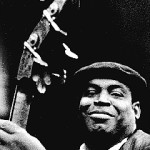
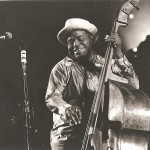
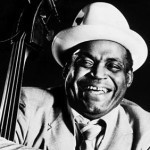
Willie Dixon, songwriter, producer, bandleader, conscientious objector.


January 2, 2015
Howlin’ Wolf in the US Army
Chester Burnett AKA Howlin Wolf, on left, serving in the US Army.
The caption is a little odd, even after realization sinks in: “Second Army Maneuvers in Louisiana, Pvt. Chester Arthur Burnett, Picket line Troop G, 9th Cavalry (colored) from Aberdine, Mississippi, cleaning frog of horse, while Staff Sgt. Columbus Rudisal, Goffney, S.C., looks on. Sgt. Rudisal is directing Troop G, 9th Cavalry, 4th Brigade. Sept. 12, 1941.” Although Wolf said that he acquired the nickname as a child, he was just Pvt. Burnett during his brief service in the US Army. The “frog” is the inner portion of a horse’s hoof.
The image was found thanks to HowlinWolf.com, reposted from a page called “WWII: African-Americans on Maneuver” on US Army Center of Military History. It’s an official government site and in my opinion, it needs a little work, a little expansion on the information side. Apparently the page has been up since 2001 and the webmaster there has been unaware of the later fame and significance of Chester Burnett, but if you’d like to send them a message, contact them here. The US Military was still segregated during World War II and although the army was one of the first US institutions to integrate, African-Americans were subjected to severe discrimination and were often assigned to maintenance battalions and other lower level duties–this, despite the bravery and distinction demonstrated by so many African-American citizens dating back to US colonial times. Here are some other images from CMH online, with the full-length captions posted there.

Jazz musicians from prominent bands serving in the 41st Engineers Regiment.
The full caption online: “First Army Maneuvers in the Carolinas: These nine musicians, and formerly members of leading colored dance orchestras, are now members of the 41st Engineers Regiment, Fort Bragg, N.C., and play with the Regiment dance orchestra. They are L to R: Pfc. Louis W. Carrington, Richmond, Va; Sgt. Rufus Wagner, Atlantic City, N.J., formerly with Blanch Calloway’s orchestra; Pvt. Elmon Simon, Norfolk, Va., formerly with Tiny Bradshaw; Pvt. Teddy Wood, Richmond, Va., formerly with the Roseland Ballroom orchestra of New York City; Cpl. Milton S. Bell, Richmond, Va., formerly with Johnson’s Happy Pals; Sgt. Wilburn Pogue, Washington, D.C., formerly with Duke Ellington and Ethel Waters; and Sgt. Frank Wess, formerly with Blanch Calloway; and in the foreground are (left) Charles L. Anderson of Virginia, formerly with Don Albert; and Pfc. George Wolfe, Atlantic City, N.J., formerly with Ethel Waters. South Carolina. October 20, 1941.

Thanksgiving in the Carolinas with VI Army in the field, 1941.
The full caption: “First Army Maneuvers in the Carolinas. These Negro children are eating Thanksgiving dinner with VI Army Corps in the field. November 23, 1941.”

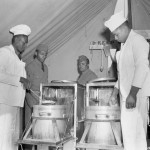
African American troops loading a pontoon bridge.
Full Caption: “Second Army Maneuvers in Arkansas, 77th Engineers (colored) moving 10 ton pontoon from truck prior to building pontoon bridge across the Red River. August 26, 1941.”
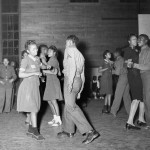
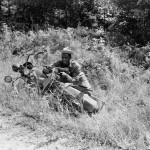
Full caption for the first image above left suggests that it was written for an army publication during the war: “First Army Maneuvers in the Carolinas. We see here jitterbugs ‘cutting the rug’ at the 24th Infantry dance given in Rock Hill, South Carolina for Negro Soldiers. The dancers are Pvt. Jerome Jackson of Philadelphia, Pa., and Annie Bess Young of Rock Hill. November 14, 1941.”
Full caption for middle photo: “First Army Maneuvers in the Carolinas: Staff Sgt. Ed Nikens passes the O.K. on a delicious pot of steaming hot beef stew, as hungry soldiers of the 24th Infantry wait outside. Kitchen personnel are (L to R): Pvt. Jessie Rush, of Columbus, Missouri; Cpl. Harold Bussey, of Atlanta, Ga.; Staff Sgt. Ed Nikens, of Kilmock, Va.; and Pvt. Homer Jones, of Opelika, Alabama. Nov. 11, 1941.”
Third photo caption reads: “Second Army Maneuvers in Louisiana: Sgt. Andrew Favors, Hqs. Troop, 9th Cavalry, with 45 Sub. Thompson machine gun. Aug. 30, 1941.”

African American artillery troops
Full caption for above image: “Third Army Louisiana Maneuvers, Camp Polk, La., awaiting the firing order from the Army’s latest Handi-talkie radio, this anti-tank crew stands ready to roll. L to R: Pfc. Theodore Estorge, Houstonville, N.Y.; Pfc. Phillip Glover, Gurdon, Arkansas; Cpl. Lester Levine, Brooklyn, N.Y. 4/18/43. 93rd Division Hq. Co.”

Pvt. Clarence Jones, in a slit trench. African Americans served with bravery and distinction despite prejudicial treatment in WW2.
Full caption for above: “Third Army Louisiana Maneuvers, Camp Polk, Louisiana, Pvt. Clarence Jones, North Birmingham, Alabama, in slit trench with carbine, ‘On the Alert.’ 4/17/43. 594th Field Artillery Battalion A.”
December 19, 2014
My Favorite Books of 2014

Two of my favorite reads of 2014
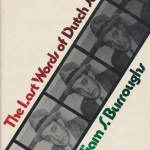
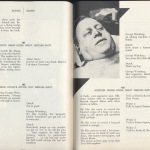
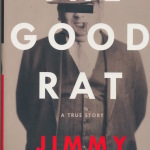
Here we have some of my favorite books of 2014. I’m still reading a couple of them, and several were published a year or two ago. The Good Rat, by Jimmy Breslin, knocked me out… I’ve still got a few essays to finish in The Manly Art, by the late, great George Kimball, a master chronicler of the art of bruising. Andre the Giant, a graphic novel treatment of the life of wrestler Andre Roussimoff and Slayground, Darwin Cooke’s graphic adaptation of the great Richard Stark novel, were my two favorite graphic novels of the year, and I don’t read that many of them. To be honest, I read a lot of books that I should’ve read years ago. One of them was The Last Words of Dutch Schultz, by William S. Burroughs. If you’re thinking of the random beat junkie poetry of Naked Lunch and Junkie, you’re not in the room with me on this one. True, this one is also quite bizarre and druggy compared to, say, a Nicholas Sparks novel, and basically a screenplay adaptation of the actual last words of the famous mobster, who was dying, gut-shot, and the FBI was there, hanging on every word, trying to get a straight answer from the guy. It’s a screenplay with precise stage directions, and I cannot believe this has never been filmed. The book is illustrated with public domain shots from the Prohibition era–flappers and whisky stills and booze warehouses and Dutch on a slab, dead as a door nail.
There were a couple of others but they’re not making the list. Definitely making the list are Blood Aces, Douglas Swanson’s fine biography of Bennie Binion, which was one of the best books of the year about a real turd of a man, just the kind of greedy, murderous asshole they lionize in Vegas, or in the modern GOP.
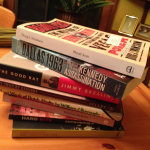
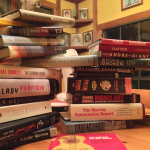
The Greek Myths, by Robert Graves and Fear, by Gabriel Chevallier both happen to have been written by veterans of the Great War, and they both wrote great books after fighting in that human meat grinder of a conflict. Missing from these stacks is Many Rivers to Cross, the excellent Katrina novel by my friend Thomas Zigal, and I don’t know where I put it but you need to find it if you haven’t read it yet. I also couldn’t find Past Tense, by Jean Cocteau, so maybe Cocteau and Zigal ran off together, maybe to do an adaptation of his quitting opium memoir, and I really, really loved Past Tense, the first volume of Cocteau’s journals of making his crazy surrealistic films and plays, writing in that crazy, bitchy French tone of his, and then just two weeks ago saw Cocteau’s Beauty and the Beast on TCM, the first time, ever, and was like getting hit in the head with a brick by Sonny Liston, and I mean that in a good way. Speaking of people I know, people whose word on the best chicken fried steak in town you can take to the bank, David Marion Wilkinson’s Where the Mountains Are Thieves is damn good, will break your heart, make you laugh out loud and slap your mama. And I blurbed Nine Days, the debut by Minerva Koenig and I also blurbed Painting Juliana, by Martha Louise Hunter, and if you’re cynical about authors praising their friends, bear in mind that Walter Moseley has used my blurbs on his novels, too. And if you don’t know what “blurb” means, it has nothing to do with getting your car painted at Earl Scheib. By the way, Moseley has resurrected his Easy Rawlins series, which I am catching up to, reading Little Green and digging it, although he seems to have lost a bit of the fire that he was famous for in the early novels, not just Devil in a Blue Dress but Little Yellow Dog and the Fearless Jones novels as well, and although I loved The Man in My Basement, don’t even talk to me about his sci-fi stuff. Steve Davis and Bill Minutaglio won the PEN award for their book, Dallas 1963: The Road to the Kennedy Assassination, one of those cases where you go, OK, it’s about time somebody worthwhile won something. Minutaglio and Davis are really good writers writing about a really mean, mean town in a bad, sad time. Hard Bite by Anonymous 9 gets a groove on for paraplegic serial killers and their pet monkeys, with a sequel coming out in 2015, and then there’s Swollen Red Sun, Matthew McBride’s second novel after Frank Sinatra in a Blender which blew everyone’s mind (everyone who pays attention to cool crime novels, that is), and proves that Matthew is a hell of a writer and if he (Matthew McBride) chose to move from his meth-and-white-trash-infested stomping grounds in rural Missouri, even if he chose to move to Indonesia, how could we blame him? And he did, in fact, move to Indonesia. OK, yes, there’s a woman involved, but isn’t there always? Somewhere in there, over the year, I read Robert Fagles’s translation of Homer’s Odyssey, along with a translation of The Oresteia, by Sophocles… and one or two Anne Carson books I just acquired. Denis Johnson put out Laughing Monsters and James Ellroy published Perfidia. And did Robert Draper write a book this year? I guess he didn’t, but he’s a killer writer and he’s making plenty of dough writing for New York Times and other magazines, so why should he bother? When I spotted him at the Texas Book Festival Author’s Party in Eddy Safidy’s fine apartment downtown, I had to hug the guy and later on I asked myself: Look, I’ve known this guy a long time, going back to the Raul’s days, in like 1979, and he hosted my bachelor party in 1984 and everything, but why did I feel this need to hug the guy? The answer is, I really like him, and every time I read something he’s written, he takes over my mind. I find myself arguing with him, because he’s such a damn forceful writer, but then after a bit, I settle down and I have to admit, dammit, Draper is right. Again. He’s that kind of a writer. So I had to hug the guy. Look forward to seeing him again.

Random kitten photo, not relevant… not at all relevant
In Guy Town By Gaslight, Richard Zelade tells you pretty much everything you need to know about whores in Austin in the Victorian age, and Sarah Bird’s second Okinawa novel, Above the East China Sea, was one of last year’s hits of my wife Lois’s book club, and I’m finally reading it now because I was on one hell of a grind, promoting my last book, Broke, Not Broken: Homer Maxey’s Texas Bank War, and doing a ten-chapters-ten-weeks-Death-March to deliver my next one, 1960s Austin Gangsters: Organized Crime that Rocked the Capital, which will be released by History Press March 9, 2015. Look for that one, expect parties and noise, probably involving heavy beer and surrealistic blues. If you’re not cool you probably won’t be there. Let me put it that way. OK, I just did.
Ah, yeah, before I forget, there was also the Warren Commission Report, which I’m rereading… immersed in it, actually, and expect to be immersed in the terror report book, also, and speaking of the US and terror policy, let me ask you this: Every time you hear Dick Cheney say, It worked, and I’d do it again in a minute… Don’t you picture him as Pontius Pilate, crucifying Jesus, saying, “I’d do it again… it works… it’s legal… arrrgghh…” What a shit bird, what a Darth Vader wannabe… But anyway, I meant to say, there were also two really fine Jim Tully novels that I caught up with this year, what a great, great writer and character. Like every author, he wrote books that were autobiographies, but the thing with Tully is that he lived so many different lives, lived them to the fullest, hoboing, boxing, riding the rails, writing in Hollywood and hanging out with the Tinseltown crowd back when Hollywood was up in Los Feliz and Whitley Heights. This summer I read Shanty Irish and Beggars of Life. What a guy. If you haven’t read The Bruiser or Circus Parade, you don’t know a damn thing, but at least you’ve got something to look forward to, which is, by the way, getting hip.
December 18, 2014
Mythic Boots by Charlie Dunn

Charlie Dunn boots, made by him in 1968, Eddie Wilson collection auction, see: http://burleyauction.com
I don’t wear cowboy boots but I would buy these in a minute. I’m sure they’re not size 12 anyway but you might just want to keep them in a glass case. Don Hyde’s boots, made by Charlie Dunn. Here’s the story straight from Don Hyde, an historic Austin legend himself (co-owner of the original Vulcan Gas Company, Austin’s first psychedelic joint). The boots are on the auction block with Eddie Wilson’s Armadillo / Threadgill’s Collection, details here.
The boots were made in 1968 by Charlie Dunn when he worked for Buck Steiner at Capitol Saddlery. There were the first pair of dope boots ever made. He went on to do over 700 pair before he died. Buck would not let me have them for 3 or 4 weeks as he demanded that they be put in the window of the shop. They started to get orders the first day. Buck claimed to have smoked dope “a lot” when he was a kid (it was legal) but he thought that it was just “kid stuff,” but didn’t mind it at all.
Charlie was famous for his roses. My girl friend (Mikki Long) would go in the shop to use the sewing machines to make me clothes and she and Charlie became great friends. Charlie said he had not made a REALLY fancy pair of boots in over 20 years. She wound up ordering a pair of rose boots and they came out so well I decided to do this pair. They are Chinese pewter colored because when I saw Bob Dylan in Austin in 1965 when he came out for the second set, which was electric and the first time he ever played in public with the full group that later became known as the Band, he was wearing a Chinese pewter suit! I was on the front row under the mic and was stoned on peyote and he was overtly ripped as well. They blasted out with “Baby Let Me Follow You Down.” I was impressed and it was a big reason I later did the Vulcan Gas Company.
So I had Charlie do the boots in Chinese pewter with French gold fleur-de-lys on the bottom and a Texas gold star on the front topped with a cannabis leaf. The problem was the boots went so high I demanded they have a zipper so I could get them on easier. I don’t think Charlie ever made a pair of boots with a zipper before or since. He was very much against it but I held my ground and he did it.
Charlie was right about the zipper, it was alway a problem and often broke so I didn’t get to wear them as much as I would have liked to. But that is also why they look as good as they do after all these years.
These are the boots made more famous by the Jerry Jeff Walker song “Charlie Dunn.” The lyrics are presented here with apologies to Buck Steiner, whom JJW treats snidely at best in the bridge (Which is odd, when you think about it, since the middle-eight is traditionally–though not always–used to bring more uplift and redemption to a song, and here it’s more of an insult).
Charlie Dunn
By Jerry Jeff Walker
Well, if you’re ever in Austin, Texas
A little run down on your sole
I’m gonna tell you the name of a man to see
I’m gonna tell you right where to go
He’s working in Capitol Saddlery
And he’s sewing in the back of the place
He’s old Charlie Dunn, the little frail one
with the smilin’ leathery face
[Chorus]
Charlie Dunn, he’s the one to see
Charlie done the boots that are on my feet
It makes Charlie real pleased to see me walkin’ with ease
Charlie Dunn, he’s the one to see
Charlie’s been making boots over there
He says, about fifty some-odd years
And once you wear a pair of his hand-made boots
you know you’ll never wear a store-bought pair
Charlie can tell what’s wrong with your feet
Just by feeling them with his hand
And he can take a look at the boots you wear
And know a whole lot about you, man
(Chorus)
[Bridge]
Now, ol’ Buck’s up front, he’s countin’ his gold
Charlie’s in the back patchin’ up the soles
of the people comin’ in, smilin’ at him
They all wonder how’s ol’ Charlie been
And ol’ Buck’s makin’ change, he never sees no one
He never understood the good thing that Charlie done
Yeah, ol’ Charlie never had his name on the sign
He never put a mark in his boots
He just hopes that you can remember him
The same way that he does you
He keeps your measurements in this little book
So you can order more boots later on
Well I’m writin’ down some of Ol’ Charlie’s size
‘Cause I’m makin’ him up this song
(Chorus)
Yeah, ol’ Buck’s makin’ change, he never sees no one
And He never understood the good thing that Charlie done
1960s Austin Gangsters: update

Coming from History Press March 9, 2015.
We now have a firm release date of March 9, 2015 for 1960s Austin Gangsters: Organized Crime That Rocked The Capital. You’ll find more updates on book events & where to purchase in the coming weeks. The timing means that we’ll have books in time for SXSW, where I’ll do a brief signing at the SXSW bookstore (the festival is March 13-22), so check back for the exact date, and we will probably do another SXSW-related event, plus bookstore and/or blues joint gigs before and after.

Still shot from “Walking Tall,” the original Dixie Mafia movie, based on real events about Tim Overton’s friends in Tennessee, Mississippi and New Orleans.

Attorney Brooks Holman, left, and Timmy Overton.

Hattie Valdes, Austin’s leading whorehouse madam.

Chester Arthur Schutz, Jr., who seems to have had nine lives. Maybe more. Nickname: Magoo.

Yes, there’s a couple of stories about hard luck Charlie Whitman, the geek who took over the Tower August 1, 1966. He owed Tim Overton a gambling debt.

Timmy Overton, right, putting the hurt on in Golden Gloves. Timmy fought in 1957 and 1958, maybe 1955, too, first as a middleweight, then light-heavy.

More Overtons. Dudley Pounds was a friend from way back, same age as Timmy, attended McCallum, played baseball, very tough, professional road gambler, later cohort of Jerry Ray James in their New Mexico misadventures.

TIm Overton mug shot 1967.

Peggy Bryant, a rival of Hattie Valdes.

Jerry Ray James, AKA Fat Jerry, Fat, Fat Cat, The Fat Man, Fox, Wolf, John W. Hardin, Jerome Jennings… a real desperado. He and Tim Overton were, some said, like Laurel & Hardy. With a mean streak.

Unfortunately it looks like we won’t have books in time for Scott Montgomery’s Feb. 16, 2015 birthday party at Noir at the Bar at Opal Divine Penn Field, but you can bet that I’ll be there with my guitar or bass, some reading material, and some murder ballads. Scott’s working on a program of authors for that date, so again, check back for details.
I’ve included a few images here that wouldn’t work for the book, because of low resolution, but they work fine online. So you could call these “exclusive” pictures, except I expect that some of my readers / trollers will copy them and use them, as they’ve done in the past, so if they’re exclusive now, they may not be exclusive five minutes from now.
December 17, 2014
About that piano…
Watch this space… I’m not yet done blogging about Eddie Wilson’s Armadillo World Headquarters & Threadgill’s Collection Auction. The auction is at Burley Auction Gallery in New Braunfels, Jan. 17. Details here. I’m enjoying this, hope you are, too.
Before we get started, I wanted to share something amusing. Be careful Googling for more info on the Armadillo World Headquarters’ famous piano. With the search term “Armadillo piano,” you get this, the Renzo Piano building in Paris, France.



The following article was published in the Spring 2012 Star, a publication of the Bob Bullock Texas State History Museum, promoting the exhibit, Texas Music Road Trip, of which the legendary house piano at the Armadillo World Headquarters was the star exhibit. See Fats Domino, superstar of the 1950s, radiant faces of a rapt audience, close enough to get every click of the great man’s fingernails.

The mythical piano banged by the legendary giant, Fats Domino.
Note the byline: John Schulian. Successful screenwriter, revered sportswriter, he’s produced some of the best books about boxing ever published, including, At the Fights (co-edited with the late George Kimball); he wrote Sometimes They Even Shook Your Hand: Portraits of Champions Who Walked Among Us. He’s up there with the best of the best at literature about the art of bruising. He also wrote for Miami Vice and Xena: Warrior Princess. That’s out of your league and mine, too. To hell with the Alamo. Forget the Alamo. He wrote for Michael Mann in the eighties. He’s hammered a few hundred thousand words about Muhammed Ali, Sonny Liston, Battling Siki, Roberto Duran, Manny Pacquiao. Get outta here. Forget the Alamo, tell me about the Armadillo.
Making Music History
By John Schulian
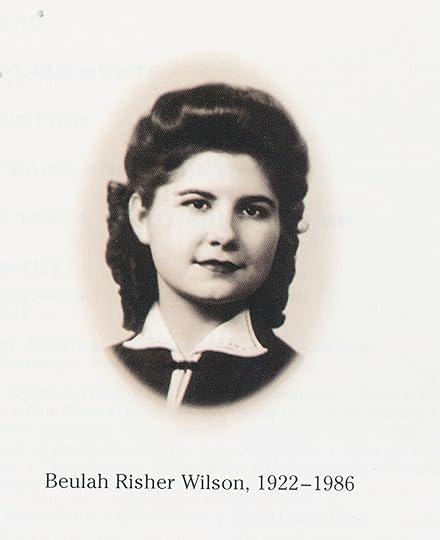
Beulah Wilson, Eddie’s Mom, who bought the piano that rocked Austin.
Beulah Wilson was as proper as a church supper, which is to say that under normal circumstances no piano of hers would have ended up in a honky-tonk, no matter how hallowed it was. But the honky-tonk in question was Armadillo World Headquarters, and it happened to be the brainchild of her son Eddie. Of course Beulah never stopped calling him Edwin, and she really wasn’t that comfortable with the fact that the ‘Dillo would gain a reputation as a place where cheap pot could be had as readily as cold beer and great music. In its early days, however, when disaster lurked around every corner, her Edwin wouldn’t have had anything going for him except prayer if she hadn’t given him that Mason Hamlin baby grand.
The old brick pile had no air conditioning, a fact that was duly noted by the rednecks, hippies, and unlabeled music lovers who showed up on a sweltering opening night in August 1970. Come winter they discovered there wasn’t any heat, either. Nor did the Armadillo have stage lights, curtains, or a sound system. Things were no better behind the scenes where there was no furniture, no office supplies, and too often, no money.
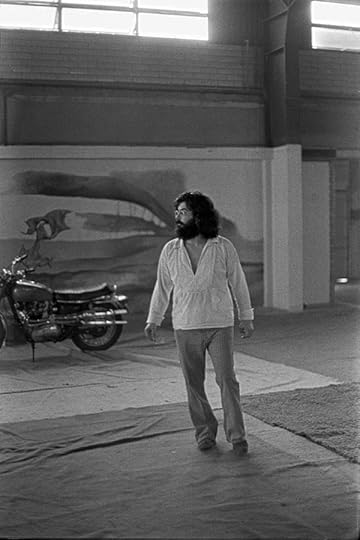
And yet Beulah’s boy continued to book acts that inspired the Dillo’s famous posters—big acts from the worlds of rock, country, blues, and jazz. There were sitar pickers, too, and dancers and comics. But what there may have been more than anything else were piano players: Count Basie, Ray Charles, Jerry Lee Lewis, Dave Brubeck, Phil Woods, Mose Allison, Leon Russell, Earl Poole Ball, Bill Evans, Donald Fagen, Floyd Domino, Fats Domino. And that’s not half of them, but you get the picture.
When Beulah bought the piano that ended up at the Armadillo, it was, her Edwin says, “old but beautiful.” He was 12 then, and his mother’s idea was that he would play it well enough to take his place among the world’s great ivory ticklers, or at least entertain visitors at home. Alas, Beulah, like many a mother before and since, vastly overestimated his talent. He walked away from his weekly lessons, and after that, the only hands that were laid on it belonged to his mother’s mother, dear old deaf Granny Risher. She tortured it daily, banging out favorites from the Broadman Hymnal that assaulted the ears of listeners like so many crooked nails.
Then the piano sat quietly, tucked away at Beulah Wilson’s Day Nursery School, on Avenue B, in Austin’s Hyde Park neighborhood. It was as if it was waiting for the night when Eddie Wilson, seeking nothing more than a private place where he could relieve his bladder, stumbled into the abandoned armory where the inspiration for the Armadillo struck. The need for Beulah’s piano arose not long afterward.
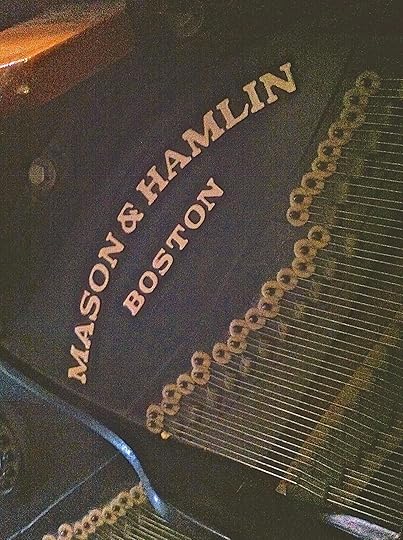
Close up, the piano that rocked Austin.
Over time the ‘Dillo would shake off its rough edges and replace them with good acoustics, a huge curtained stage, a kitchen staffed with hippie girls, and bars everywhere. There was a tiered seating system of risers that gave every ticketholder a clear view of the stage. Radiant heat warmed the winter nights, but there was still no air conditioning in summer. Miracle of miracles, the crowds came anyway, earning them Wilson’s praise as “the loosest, sweatiest music fans in America, if not the whole world.”
At the heart of Armadillo’s magic was Beulah Wilson’s grand piano, all five feet, eight and one half inches of it. Every time Robert Shaw, Austin’s king of barrelhouse boogie, finished playing it, he would lower the cover respectfully and pat it. “I’m used to banging on dilapidated uprights,” he’d say.
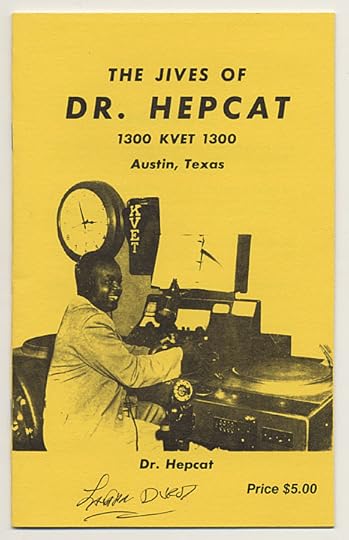
One & only Lavada Durst, Dr. Hepcat, giant of Austin music culture.
No one, however, gave more of his heart to that piano than Fats Domino did. Eddie had fallen for the Fat Man’s music as a kid, when Lavada Durst (AKA Dr. Hepcat) played it on his “Rosewood Ramble” radio show. The first chance there was to book Fats at the ‘Dillo, Eddie jumped at it. Here was the kind of national star on whom he wanted to build the joint’s reputation, and Fats responded with a show that had the crowd going crackers from the first chords until the last chorus. Fats said thanks by belly-bumping Beulah’s baby grand all the way across the great wide stage, and they called it love.


December 16, 2014
HOW EDDIE WILSON BECAME CITY MANAGER OF THE MUSICAL MECCA CALLED AUSTIN

Janis Joplin, signed, for sale, more details soon
Yesterday in Watch This Space I wrote about Eddie Wilson’s gigantic auction, which happens January 17, 2015, and it’s one of the biggest, most significant collections of Austin music and beer joint history collections being offered to the public in many, many years. So, like Eddie himself, it’s a historic thing. Usually when I see Eddie we talk about cool/weird/historic things that we know about, and Eddie has more to offer, of course, because he’s a few years older than me and he’s been a teenage brawler in 1950s Hyde Park, the guy with the fastest hot rod in Austin (a 1957 Ford), a Marine, a school teacher, a beer distributor, the manager of a psychedelic fiddle band in the ’60s (Shiva’s Head Band), founder in chief of Armadillo World Headquarters, owner of Raw Deal, reclaimer /owner of Threadgill’s and the Threadgill’s legacy, etc, etc. And so, as you can see, when you are feeling the vibrations of 100 bands up through the sidewalk in the so called Live Music Capital of the World, the guy that metaphorically poured the cement in that sidewalk was Eddie Wilson, who happens also to have a pack rat habit so, guess what, he’s had an overflowing attic stuffed with Austin music and beer culture for longer than your bass player’s grandfather has been on the planet.

Or put it another metaphoric way: Eddie keeps promising to show me this photo of long ago Austin, before the Colorado River was tamed in its wild sways between killing floods and drought-condition trickles, and there’s a guy standing with one foot on the south bank of the river and one foot on the north bank. Think about it. Austin has changed. The river stays pretty much the same. And Eddie Wilson is that guy, a guy who can still straddle Austin’s wild river.
Here’s one of Eddie’s autobiographical essays:
TEXAS BEER + ROCK AND ROLL POSTERS
By Eddie Wilson
I got fired from teaching school in 1967 on account of I treated black kids the same as I did white kids, which was no way to win the hearts and minds of the locals in Van Vleck, Texas. When I was out job hunting, I answered an ad saying the Texas division of the United States Brewing Association was looking for a field rep. Well, shucks, I could drink to that. Then I read a little further and discovered they wanted a retired schoolteacher to handle community concerns over the grand old problem of underage drinking. I was barely legal myself and I’d warmed up for my teaching job by spending six months down in Mexico, searching for Timothy Leary and hoping to expand my consciousness. With one foot in psychedelia, I went to see the USBA’s local point man for what I figured would be a short meeting. He was a James Cagney-looking guy named C.B. Alexander who didn’t flinch when I told him why I wasn’t teaching anymore. Instead, he said he’d done some civil rights work himself. Then he hired me. I was only 23, but I looked retired enough to make him happy.
I quickly became a professional beer drinker and learned well the virtuous nature of mankind’s earliest buzz; “liquid bread.” For most of the next three years I crisscrossed the state visiting bars, lounges, clubs, dancehalls, honky-tonks, military installations, college campuses, newspapers, breweries, beer distributors, and law enforcement agencies, all for the express purpose of trying to justify my job’s existence. The best I could manage was to start the Beautify Texas Council in an effort to cozy up to the legislators being urged to pass a tax on throwaway containers. It was a lot easier to let myself get big and fat and ashamed. But that was no way to be if I was going to save the planet, so I started looking for a new line of work. Nobody told me the change was going to be easy, but I was traveling light. About all I owned in the way of keepsakes was one Judge Roy Bean poster.
Shiva’s Head Band, best remembered for their psychedelic fiddle music and disdain for practice, opened the door to the emerging Austin for me. They needed a manager and I owned a few suits. It wasn’t long, however, before none of those suits fit, thanks to my new mescaline diet. But I forgot about my need for a new wardrobe the instant I stepped into a huge empty building at Barton Springs Road and South First Street, around the corner from the Vulcan Gas Company, where Shiva’s was the house band. You couldn’t see the building from the street, but it had a view, cheap rent, and enormous restrooms. Fifteen years before, in 1955, the building had opened as the Sports Center and given the town a parade of boxing, wrestling and music shows. Not just any music shows, either. When Elvis Presley showed up, he was hailed as “A Folk Music Fireball.” It wasn’t long afterward that you could put your ear to the railroad track and hear change a-coming like nothing was going to stop it.
By the early 1970s, Austin was a cultural petri dish. It was ripe for the music club that a slew of kindred spirits and I wanted to open in the building I stumbled into for no other reason than my bladder was at high tide. We called it Armadillo World Headquarters, and it became a home for every kind of musical act – rock and roll, blues, country, classical, jazz. I even featured the Austin Ballet Theater once a month. I’ve since been told that only the Astrodome sold more beer in Texas than the ’Dillo did, but that wasn’t the joint’s greatest accomplishment. Somehow the ‘Dillo had a soothing effect on the hippies and rednecks who wandered in to see what was going on in our Beer Garden of Eden. Whatever hostilities were going on out in the streets ceased the moment when they heard Commander Cody and the Lost Planet Airmen doing “Beat Me Daddy (Eight to the Bar).”
But if they were having fun – and I tend to think they were – I was having none. After six years of trying to entice 1,500 hippies to buy tickets every night, I left with my tail between my legs and and opened a chophouse called the Raw Deal, on Sabine Street off East Sixth. It had thirty-two seats and $100-a-month rent, and it came with my first two beer neon signs, a Falstaff and a Shiner on Tap. But while I hung onto the signs, I soon sold the Raw Deal to a couple of pals and bought a gas station on North Lamar that had been run by Kenneth Threadgill, the bootlegger and folk singer who discovered Janis Joplin. We turned the station into a restaurant that serves American food, Southern Style, just like our newer operation next to the site of the Armadillo, which fell to the wrecker’s ball long ago. Both places bear Mr. Threadgill’s last name, as well as a connection to the ’Dillo. We opened the first Threadgill’s the same day in 1981 that the Armadillo was closing. The first lunch we dished up was to a bleary-eyed crowd of revelers who, about dawn, stumbled out of what was billed as “The Last Dance at the ’Dillo.”
They would take away their memories of nights that couldn’t have happened anywhere else, but memories are only part of what has kept the Armadillo alive in heart and mind. When I want to re-live the good times there, I turn to the work of its Art Squad, a crew of wildly talented, and sometimes just plain wild, artists who produced nearly 500 posters in the decade of its existence. The posters’ quality and stylistic variety has outlived even the music of the great artists who stepped onto its stage. Without the ’Dillo’s artists to capture the spirit of each performer, Austin’s musical reputation might never have taken on its enduring glow. And still their names may be a mystery to you, so allow me to seize the moment and take roll: Jim Franklin, Micael Priest, Ken Featherston (RIP), Danny Garrett, Sam Yeats, Guy Juke, Bill Narum (RIP), Henry Gonzales. I salute you one and all.
To John St. Clair, John Paul Hudson, Mike Robuck, and all the others who helped me collect my assortment of neon beer signs, I thank you and hereby offer up the surplus I’d intended to use for other Threadgill’s locations. That’s a job I’ve now grown too old to pursue unless it’s in New Zealand. And New Zealand is too far away to tote anything that won’t float.
[contact-form]
December 15, 2014
Armadillo & Threadgill’s music history on the block
Eddie Wilson’s Armadillo World Headquarters & Threadgill’s Collection auction is probably the biggest collection of such art and collectibles being publicly offered in many years. Eddie is selling off his huge trove of posters from the Armadillo era, plus beer signs dating back almost to the Civil War… signed photos, cosmic cowboy stuff, large & small.

a few posters from the collection being offered… and there’s a story, believe me, about each one.
All this, plus the biggest item in the auction, the Wilson family piano which Eddie’s mother, Beulah, bought so he could grow up to be a… yes, famous classic pianist. Instead, Eddie founded the ‘Dillo, Raw Deal and the reinvention of Threadgill’s music diners, and Beulah’s piano got pounded by guys like Fats Domino, Count Basie, Ray Charles, Floyd Domino, Dave Brubeck, Jerry Lee Lewis, Marcia Ball, Bill Evans, Donald Fagen, Mose Allison, Randy Newman, Earl Poole Ball, and so on. The auction catalog is being finalized as I write this, so watch this space for more updates and details on individual items. For now, you can view items on the Burley Auction site, but soon you’ll be able to get the details on each thing being offered. See my daily blog posts & other blurbs in the social media jungle for more vignettes on this collection of Austin Music History.
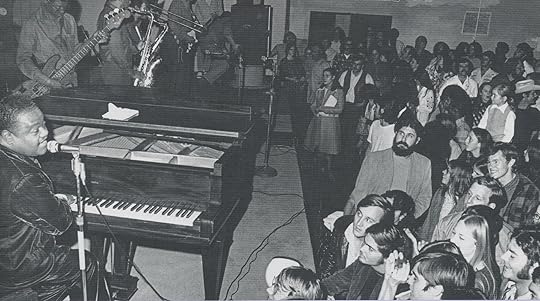
Fats Domino rocking it on the Armadillo piano, photo by Burton Wilson.
The auction catalog is being finalized as I write this, so watch this space for more updates and details on individual items. For now, you can view items on the Burley Auction site, but soon you’ll be able to get the details on each thing being offered. See my daily blog posts & other blurbs in the social media jungle for more vignettes on this collection of Austin Music History.
Willie Nelson, Waylon Jennings… check. Jim Franklin, Commander Cody, Bruce Springsteen… check… it’s all there… the very roots of Austin becoming the Live Music Capital of the World, so-called.
By the way, KVUE-TV did an interview with Eddie, which was nice, even though I found it slightly hilarious that they neglected to mention the actual date of the auction, the place, or a URL where the average person might find more info about it and actually participate in this event. Then all the other social media sites picked up the story, added a photo or two, and again, neglected to actually provide any useful information. But here at Jesse Sublett’s Little Black Book, we’re fixing that. The auction is at Burley Auction Gallery, New Braunfels. Make plans to attend, or take your shot online.
Burley Auction Gallery, 134 Deborah Drive, New Braunfels, TX
Preview: Friday Jan. 16, Noon-6:00 & Sat. 8:00AM-10:00AM
Auction starts at 10 AM Sat. Jan. 17.
Janis Joplin, signed, for sale, more details soon
1960s Austin Gangsters
February 2015…. The countdown begins soon. We’re getting set for the release of the long-labored, much-awaited book on the Austin underworld of the 1960s… the thugs, pimps, safecrackers, and Cadillac-obsessed ex-football players and used car salesmen known as the Overton Gang… the thug culture matrix that evolved into the criminal network known as the Dixie Mafia [For a little more info, see my preview file on the Austin Underworld, Austin Noir]. In November I finished the manuscript–10 chapters in 10 weeks, plus appendices and almost 70 photos (many never seen before) and submitted cover art elements. By last week, I had received and corrected the edited manuscript and also proofed approved the page proofs and the cover art. Pub date should be sometime in February 2015. We’ll get a more precise date soon and then we’ll start booking signing parties. Happy Holidays and watch this space.

Cover art for “1960s Austin Gangsters: Organized Crime That Rocked the Capital,” by Jesse Sublett
October 18, 2014
SEE ME, HEAR ME, ETC. AT TEXAS BOOK FESTIVAL


The Texas Book Festival is October 25-26. Come see our panel, TELLING THE TEXAS STORY: TRUTH & FICTION IN LONE STAR HISTORY, at 4:15 PM Saturday, but first, at 3 PM, stop by the Music Tent and see Jesse Sublett & The Big 3 Trio! It’ll be a quick set, because right after the last rocking tune, they’ll hoist me up by helicopter over to the Capitol extension for the book panel. The panel features my “Broke, Not Broken” [read more here] co-author Broadus A. Spivey, Carmen Boullosa, and Cynthia Leal Massey. “Broke, Not Broken” is published by 
Much more news is happening but lately I ain’t got time to blog!
Cheers, till later,
Jesse
[contact-form]


