
Jesse Sublett's Blog, page 3
May 9, 2016
Noir at the Bar Austin Gets a New Home
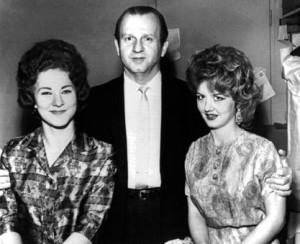
Join the gang at Threadgill’s May 12 for a night of cool noir fun.
Thursday, May is noir night at Threadgill’s. Join me and my pals to hear a couple of new murder ballads in my repertoire and hear real, live authors read their new books. I’ll be kicking things off with my guitar and our host with the most, ace bookseller Scott Montgomery, and bitchin’ blogger Molly Odintz will be there to make sure you can buy one or three or more of the books we’re meeting up to talk about. Order some food, drink some libations, hang out and dig the scene.
The good folks at Threadgill’s asked to be our new hosts and we were quick to say yes. To inaugurate the move we have a strong lineup of talent to read.
Con Lehane returns with a novel after an absence close to a decade. His series featuring bartender Brian McNulty are worth trying to find. With his new novel, Murder At The 42nd Street Library, he introduces us to the crime fiction curator for The New York Public Library. Con gives a great New Yorker’s view of the city.
Jordan Harper is quickly becoming one of the more respected writers among his peers. His day job is for writing TV shows like The Mentalist and Gotham. At night, he writes some of the best down and dirty crime fiction. His collection, Love And Other Wounds, is full of great, violent tales of life on the margins.
Les Edgerton has had a life that could have been a noir novel. Luckily, he survived to write some of the strongest, lived-in crime novels. His latest is an edgy caper story, Bomb. Les has a talent for finding humanity in the darkness.
As always, Jesse Sublett (that’s me) will be providing music and reading. His 1960s Austin Gangsters is one of the best books abut the city. So join us at 7pm, Thursday, May 12th, at Threadgill’s on 301 West Riverside Dr. There will be plenty of room! Books by the authors will be there to sell. Come out and help celebrate this big change in our life of crime.
Always read the Mystery Blog for info and wisdom to grow your crime fiction / crime fiction IQ.


April 9, 2016
Vacant Lots On Fire
My new favorite band, the Vacant Lots. I don’t listen to a lot of psych bands. I mean, after seeing the 13th Floor Elevators back in the day, maybe I’m jaded. But I like this one. Normally I don’t care for 2-person bands, either, but these guys sound like a full band. Maybe partially it’s because there’s a strong hint of the Hives, whom I miss very much, alongside the obvious Velvet Underground, Satanic Majesties Stones, and of course, Alan Vega/Suicide. Back in 1979, when the Skunks were playing CBGB and the other punk Mecca sites, we caught Suicide at CBGB, and loved it.
I regret being so absent the last few months. I’ve been working on finishing up work with Eddie Wilson on his fabulous Armadillo World Headquarters memoir, while diving into the book about Esther’s Follies. Both books are among the greatest writing experiences I’ve ever had, not counting 1960s Austin Gangsters. But I’ll try to find time to post a bit more.
Here’s another great clip, “Mad Mary Jones” by the Vacant Lots.
And the Vacant Lots bandcamp.com site where you can stream all of their songs.
https://thevacantlots.bandcamp.com
AND, finally, a plug for moi. You can also stream / buy my latest stuff on CDBaby.
Hope this finds you well.
[contact-form]
January 6, 2016
Statesman story on “1960s Austin Gangsters”
Michael Barnes wrote a story on my book “1960s Austin Gangsters,” published in Austin American-Statesman on Mon., January 4, 2016:
HISTORY
Sublett scrapes Austin’s underside — again
Author and musician’s ‘1960s Austin Gangsters’ elicits more gritty tales.Posted: 12:00 a.m. Sunday, Jan. 3, 2016
By Michael Barnes – American-Statesman Staff
Turn over another rock, find another snake.
Austin author and musician Jesse Sublett spent 10 years researching “1960s Austin Gangsters.” Still, in the months since the slim book came out last spring, Sublett has learned much more about the slippery Overton Gang, which brutalized not just Austin but also the rest of Texas and beyond.
“It’s a sort of secret history of Austin,” Sublett says. “People light up when you mention them.”
Sublett has a gift for getting people to talk. The gang’s few survivors and offspring spilled the beans about the burglaries, prostitution, murders and other crimes — spread out over more than a decade, mostly up and down Interstate 35 — as did bigwigs such as Roy Minton, Ed Wendler, Dick DeGuerin and Armadillo World Headquarters founder Eddie Wilson, who was a huge help.
Sublett goes beyond interviews and archives to paint a gritty picture of each scene. Although his geography is sometimes a bit skewed — he admits that some bad typos made it into this edition — he packs “1960s Austin Gangsters” with distinctive Texas towns, highways and street addresses.
Austin author and musician Jesse Sublett spent 10 years researching “1960s Austin Gangsters.” Still, in the months since the slim book came out last spring, Sublett has learned much more about the slippery Overton Gang, which brutalized not just Austin but also the rest of Texas and beyond.
+
Timmy Overton, center, flanked by Texas Rangers, being led from federal court in Austin on May 17, 1967. Courtesy of Jesse Sublett
“It’s a sort of secret history of Austin,” Sublett says. “People light up when you mention them.”
Sublett has a gift for getting people to talk. The gang’s few survivors and offspring spilled the beans about the burglaries, prostitution, murders and other crimes — spread out over more than a decade, mostly up and down Interstate 35 — as did bigwigs such as Roy Minton, Ed Wendler, Dick DeGuerin and Armadillo World Headquarters founder Eddie Wilson, who was a huge help.
Sublett goes beyond interviews and archives to paint a gritty picture of each scene. Although his geography is sometimes a bit skewed — he admits that some bad typos made it into this edition — he packs “1960s Austin Gangsters” with distinctive Texas towns, highways and street addresses.
+
Book Jacket: “1960s Austin Gangsters: Organized Crime that Rocked the Capital” by Jesse Sublett.
Since the book came out, he has visited the former Travis Heights residence of Hattie Valdes, the infamous madam whose tale is woven into the main story of the Overton brothers and their associated “characters.”
“It’s on Le Grande Avenue, but it used to be 401 Riverside Drive,” he recounts. “The current owners were having a garage sale and told me: ‘Hattie used to own all these houses on this alcove. We gave a party to celebrate her birthday.’ Hattie used to have backyard barbecues and was an avid gardener. One of the times (the gang) robbed her by coming up through the floor. It’s been preserved like a shrine, along with a secret safe room.”
Scraping Austin’s underside
+
The infamous Hattie Valdes, the Austin madam who was sometimes in cahoots with the Overton Gang in the 1960s.
Sublett, 61, grew up in Johnson City and attended Texas State University for two years.
“I quit to come here and become a rock star,” he says. Sublett did just that.
Among his outfits in the 1970s and ’80s were the Skunks, the Violators and Jesse Sublett’s Secret Six. His firsthand knowledge of the city’s clubs and evolving music scene gave him a leg up in exploring Austin’s underside for this book. After all, some of those characters from the ’60s were still hanging around.
Austin author and musician Jesse Sublett spent 10 years researching “1960s Austin Gangsters.” Still, in the months since the slim book came out last spring, Sublett has learned much more about the slippery Overton Gang, which brutalized not just Austin but also the rest of Texas and beyond.
+Timmy Overton, center, flanked by Texas Rangers, being led from federal court in Austin on May 17, 1967. Courtesy of Jesse Sublett
“It’s a sort of secret history of Austin,” Sublett says. “People light up when you mention them.”Sublett has a gift for getting people to talk. The gang’s few survivors and offspring spilled the beans about the burglaries, prostitution, murders and other crimes — spread out over more than a decade, mostly up and down Interstate 35 — as did bigwigs such as Roy Minton, Ed Wendler, Dick DeGuerin and Armadillo World Headquarters founder Eddie Wilson, who was a huge help.
Sublett goes beyond interviews and archives to paint a gritty picture of each scene. Although his geography is sometimes a bit skewed — he admits that some bad typos made it into this edition — he packs “1960s Austin Gangsters” with distinctive Texas towns, highways and street addresses.
+Book Jacket: “1960s Austin Gangsters: Organized Crime that Rocked the Capital” by Jesse Sublett.
Since the book came out, he has visited the former Travis Heights residence of Hattie Valdes, the infamous madam whose tale is woven into the main story of the Overton brothers and their associated “characters.”
“It’s on Le Grande Avenue, but it used to be 401 Riverside Drive,” he recounts. “The current owners were having a garage sale and told me: ‘Hattie used to own all these houses on this alcove. We gave a party to celebrate her birthday.’ Hattie used to have backyard barbecues and was an avid gardener. One of the times (the gang) robbed her by coming up through the floor. It’s been preserved like a shrine, along with a secret safe room.”
Scraping Austin’s underside
+The infamous Hattie Valdes, the Austin madam who was sometimes in cahoots with the Overton Gang in the 1960s.
Sublett, 61, grew up in Johnson City and attended Texas State University for two years.“I quit to come here and become a rock star,” he says. Sublett did just that.
Among his outfits in the 1970s and ’80s were the Skunks, the Violators and Jesse Sublett’s Secret Six. His firsthand knowledge of the city’s clubs and evolving music scene gave him a leg up in exploring Austin’s underside for this book. After all, some of those characters from the ’60s were still hanging around.
+Jesse Sublett, author of ‘1960s Austin Gangsters.’
“You always had a connection with the outlaws and the lawyers and the politicians,” Nick Kralj, former club owner and Austin backstage historian, told Sublett. “It was all connected because they all liked the same things. You know, whores and booze and other stuff like that.”
Austin’s early musical innovators, such as the psychedelic rock peddlers 13th Floor Elevators, played the venues, such as Le Lollyop, a go-go discotheque at 1818 Lakeshore Drive, patronized by the gangsters and their molls. The cops treated both facets of the drug culture as equally suspect.
In 1987, Sublett moved to Los Angeles to concentrate on writing crime novels. “Because that’s where Raymond Chandler is from,” he says. “And I wanted to be the rock ‘n’ roll Raymond Chandler.”
He cut a deal with Viking for a series of detective novels set in Austin and continued playing music gigs with the likes of Kathy Valentine and Carla Olson. After his short stories and novels were optioned for films, he started writing screenplays — spec work, adaptations and history documentaries more than anything else.
He moved back to Austin in 1994. Sublett recently celebrated 18 years cancer-free, having survived a case of stage 4 throat cancer in 1997. He lives with wife, Lois Richwine, and they have one child, Dashiell, named after crime novelist Dashiell Hammett.
“I started doing more journeyman writing,” he says. “As if history docs were not journeyman enough. But I really enjoy the writing.” Among his more recent works are “Gravedigger Blues,” in which the world ends in the first chapter, and “Broke, Not Broken: Homer Maxey’s Texas Bank War,” co-written with Broadus A. Spivey, about a successful country-style lawyer.
As Sublett told American-Statesman columnist John Kelso, he took on the Overton Gang project in 2002 while researching the serial killer who murdered his girlfriend Dianne Roberts in 1976. A story in the newspaper archives, “Austin Underworld of the ’60s; Overton Gang Capers recalled,” transfixed him.
He learned that parts of Austin — even Hyde Park — were really sketchy in the 1950s and ’60s. The Overtons operated a multistate enterprise out of their dad’s transmission shop on what was then East First Street, when that neighborhood was a mix of Latinos and working-class Anglos.
“One of the unusual things about Tim Overton was his Austin rootedness,” Sublett writes. “He bought new cars more often than he changed addresses and logged thousands of miles a month on gambling and burglary runs, but by comparison, even his roommates were nomads. You could tell by their arrest records.”
Their wives and girlfriends were often prostitutes, some of them working for Valdes at locales on South Congress and elsewhere. Though they play supporting roles, the women in the book, including Valdes, emerge as fairly full characters. So do cops such as Harvey Elwood Gann and Ernie Scholl.
One ticket out of tough circumstances, then and now, was sports. Tim Overton, whose abusive, addicted father married his short-lived mother when she was just 13, was recruited from Austin High School by coaching legend Darrell Royal. He was part of the team that met Syracuse University in the Cotton Bowl in 1960, though he didn’t play.
After multiple arrests, Overton was dropped from the Longhorn team. He vowed revenge on the University of Texas, as did, for different reasons, his sometime fellow poker player at the Goodall Wooten dorm: Charles Whitman.
The latter’s shootings from the UT Tower on Aug. 1, 1966, were a far more horrific payback.
Aftermath
The Overtons and their gang were dangerous — although sometimes likeable and popular — criminals. How did their friends and families respond to the book?
“I’ve heard from relatives of these guys, including a guy from Huntsville whose great-uncle is Jerry Ray James, one of the main thugs,” Sublett says. “The interesting thing is that they own this history. They aren’t mad because I dug up ‘dirt.’ They accept it as a part of the past.”
He has also met the daughter of Don Jester.
“He wasn’t much part of the safecracking gang, but he was a super-gifted stud athlete, graduating Class of 1958 at Austin High,” Sublett says. “He became untethered. That’s what happened to a lot of those guys”
In fact, so many of the gangsters were football players, one wonders whether head injuries had anything to do with their later, sometimes sociopathic activities.
Sublett has heard from a number of former car dealers, tow truck drivers and Austin attorneys who were very familiar with Tim Overton and the gang.
“You can imagine that they did a lot of business with them,” Sublett says. “In Dallas, a friend of mine mentioned my book to some people in the auto business and was told, ‘Oh, yes, we knew them all. Once, Timmy and the boys came by and bought a large quantity of battery acid. We asked if they had a lot of bad batteries, and Timmy said: No, we’re just going around making collections.’”
Author and screenwriter Bill Wittliff was in a UT fraternity when the gang was pulling tricks on student gamblers.
“It was serious,” Wittliff told Sublett. “I didn’t think it was fun or that it was funny. Poker games put me through college — that and selling sandwiches and stuff out of my dorm room, which I’d made into a store. But when the Overtons showed up to a game, they were there to take all your money, so me and my friends would just fold.”
Some relatives of the Overton family are haunted by how “off the grid” they really were.
“The adopted stepchild of one of Timmy’s brothers, when it was over and he was out on his own, learned that when you got in trouble, you called the police,” Sublett says. “When you got hurt, you went to the doctor. Not like his father and his gang.”

“1960s Austin Gangsters: Organized Crime that Rocked the Capital” can be purchased in Austin at BookPeople, South Congress Books, Barnes & Noble, and some Walgreen’s locations. It’s also for sale at the Capitol Visitor’s Center and Half Price Books North Lamar. You can order it on Amazon. You can order a signed copy from the author here by using the comment form. We accept PayPal. Send a note specifying how you want your book inscribed. The cost for US shipping is $20 + $5 postage and handling.
January 3, 2016
Top Ten Books 2015 lists “1960s Austin Gangsters”
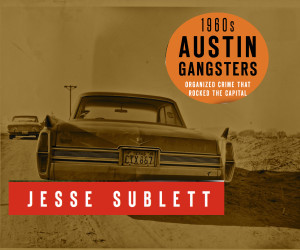 Happy new year. We were proud to be included in two Top Ten Books lists, plus my own Top Ten of 2015. Thanks to Jay Trachtenberg and Joe O’Connell, writing in the Austin Chronicle. I respect and value their opinions, as Jay is one of the best deejays in Austin with his Jazz Etc. show on KUTX and Joe is, among other things, an esteemed creative writing instructor at ACC.
Joe O’Connell’s Top Reads of 2015
In my favorite 2015 read, Joe Lansdale takes on the mythically true-ish story of Nat Love, an African-American marksman nicknamed Deadwood Dick who was both a marshal and a Buffalo Soldier. Along the novel’s picaresque journey, Love is tracked by a racist killer seeking revenge. Paradise Sky (Mulholland Books), like Lansdale’s equally fine 2013 novel The Thicket, channels Mark Twain. It’s fun, beautifully written, and, most important, captures a neglected piece of the American puzzle.
Charles Baxter is known as a writer’s writer. His collection There’s Something I Want You to Docements that rep with stories divided into virtues and vices. The story “Loyalty” shines the brightest with its abandoned husband coming to the aid of his crazed ex-wife. Baxter’s tales are elegant gems of humanity. Austinite Elizabeth Harris’ novel Mayhem reverberates around a castration done in anger after a potential rape in rural 1936 Texas. The fine prose echoes Katherine Anne Porter in its sense of place.
Gary Cartwright’s memoir The Best I Recall (UT Press) was my favorite nonfiction work of 2015. It follows Cartwright’s career from Sixties Dallas/Ft. Worth, reporting sports alongside Bud Shrake, Blackie Sherrod, and Dan Jenkins, to drug-addled Seventies Austin and his days at Texas Monthly. But his honest take on the losses of late life make this book truly a keeper.
Amanda Eyre Ward’s novel of the migrant journey, The Same Sky (Ballantine), is the most important book to come out of Austin this year. Debra Monroe’s blue-collar-to-academia memoir My Unsentimental Education (University of Georgia Press) is as well-written as it is wise. Jesse Sublett gets wonderfully gritty in his true-crime book 1960s Austin Gangsters: Organized Crime That Rocked the Capital(Arcadia Publishing). Former Austinite Dao Strom mixes music and memoir in the lyrical We Were Meant to Be a Gentle People (MPMP), a book/album examining memory and identity. I just read Elizabeth McCracken’s masterful 2014 collection, Thunderstruck and Other Stories (Dial Press). You should too.
Jay Trachtenberg’s Top Reads of 2015
Nearly the first quarter of my reading year was taken up with Jamaican novelist Marlon James’ gargantuan epic A Brief History of Seven Killings (Riverhead). Released at the end of 2014 and named the winner of this year’s coveted Man Booker Prize, it is a complicated, harrowing, violent tale centered around the attempted assassination of Bob Marley in December 1976, an act with ramifications that extend into the NYC drug wars of later decades. Dickensian in its scope and huge cast of characters, many of whom speak Jamaican patois, it’s an intense, exhausting, but ultimately exhilarating read.
Traveling this summer in Morocco and last summer in Turkey has naturally piqued my interest in the Muslim world. Two novels from this year were certainly pertinent to current events. Submission (Farrar, Straus and Giroux), by controversial French writer Michel Houellebecq (just published stateside, translated by Lorin Stein), is the timely tale of what happens when the Muslim Brotherhood wins the French election in the near future. Insightful, dark, and very funny, it is interpreted from the viewpoint of an emotionally disenfranchised university professor. Highly recommended to political junkies. Also generating controversy upon its original publication in Algeria is The Meursault Investigation (Other Press), by journalist Kamel Daoud (translated by John Cullen). He cleverly revisits Albert Camus’ 1942 existential masterpiece The Stranger, this time through the eyes of the brother of the heretofore nameless Arab murdered by Camus’ antihero Meursault. Daoud addresses the legacy of colonialism and, by extension, the current state of Arab identity.
Two Austin-centric books of note are Scott Blackwood’s See How Small (Little, Brown and Company) and Jesse Sublett’s 1960s Austin Gangsters: Organized Crime That Rocked the Capital (Arcadia Publishing). The former is a rather unsettling fictional account of the still-unsolved 1991 yogurt shop murders. The latter is the lively, noirish, and well-researched story of the largely forgotten Timmy Overton Gang and the Dixie Mafia that ran wild 50 years ago.
1)
Jesse Sublett’s Top Ten Books of 2015
The Theater of War: What Ancient Greek Tragedies Can Teach Us Today by Bryan Doerries (Knopf), chronicles the author’s work with war veterans, prison workers, and other PTSD victims using Greek tragedies authored by Aeschylus and Sophocles – both war vets who had seen best friends ripped apart on the battlefield.
2) All That You’ve Seen Here Is God (Vintage) collects four of Doerries’ stripped-down translations of the Greek classics. Both are recommended.
3) War Music: An Account of Homer’s Iliad by Christopher Logue (Farrar, Straus and Giroux) is one hell of a book/poem. Reading it now, saying “wow” a lot.
4) H Is for Hawk by Helen Macdonald (Grove), a memoir of a daughter’s grief and a bird, seems to have swooped down and stolen everyone’s heart. Nice work if you can get it.
5) The Berlin series (City of Stones, City of Smoke, and City of Light) by graphic novelist Jason Lutes (Drawn & Quarterly) is set in the waning days of the Weimar Republic, just before Hitler takes over. Chapters 17-19 were issued in comic-book format in 2015; the final compilation volume, Berlin: City of Light, is expected in late 2016. Great, great stuff.
6) A Better Goodbye by John Schulian (Tyrus) is the first crime novel by Schulian, author of some of the best writing about boxing ever. Just got it and expect to be floored.
7) The Roses Underneath by C.F. Yetmen (Ypsilon & Co.) is a novel of Germany just after the end of World War II, told from the survivors’ POV. Yetmen, who lives in Austin, draws on her own family history with deft skill and soul. I predict you’ll be hearing much more from her.
8) Sam Phillips: The Man Who Invented Rock ‘n’ Roll by Peter Guralnick (Little, Brown and Company) is something we all expected to be a great read, and hell yeah, it is.
9) Red Harvest by Dashiell Hammett knocked me out when I re-read it, in sequence with every other Hammett novel this summer. Hammett’s prose still crackles with electricity, action zips along at breakneck pace, and slanguage sings. Hammett rocks!
10) And this was the year I finally published my true-crime chronicle, 1960s Austin Gangsters: Organized Crime That Rocked the Capital (Arcadia Publishing). Does it seem immodest to include it on my Top 10 list? Tough luck, it would be a lie to leave it off. Happy New Year.
PS. We have scheduled a SPECIAL EDITION of Noir at The Bar to celebrate John Schulian coming to Austin to sign his new book, A Better Good-By, for Feb. 16, 7 PM at Opal Divine Penn Field. Mark your calendar. I’ll be there to play a couple of songs, along with my colleagues in crime Scott Montgomery and Molly Odintz of Mystery People. The current calendar listing hasn’t been updated yet and I’ll post a link to it when it has been fixed.
Thanks.
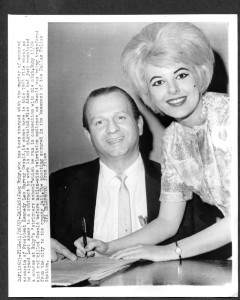
Jack Ruby, no way a Mob confidante, but a fascinating character.
PS: Jay mentions Gary Cartwright’s Best I Recall memoir. I have done several quick reads of this book, but every time I have done so, I’ve come to a dead stop on the page where Gary writes that Jack Ruby was sent here as a representative of Murder Inc. It’s such a ludicrous notion that I at first I assumed that Gary meant it as a joke, but it’s not very funny. Some very goofy decisions have been attributed to made men in the Mafia over the decades, but I don’t see how this one could have been possible. Everyone who knew Jack Ruby was aware that he was a nut case not to be trusted. One of the things best known about him was that he was a terrible snitch, a cop groupie. Associated with crime, organized and otherwise, yes, he was. A paid assassin for the Chicago mob? No way. Maybe it was a sloppy slip-up by a copy editor. I did enjoy the other references to Ruby and Candy Barr, however, and Gary has certainly done a lot for Texas-centric writing over the years.
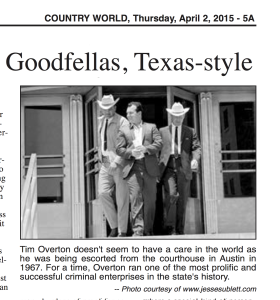
From the April 2, 2015 issue of Country World, a rural paper published in Sulfur Springs, TX.
December 3, 2015
Peppermint Harris
I really dig this song by the late, great Peppermint Harris, another boozy anthem of his. Goes without saying that it is as true as ever today:
I’m Telling You People
spoken: I went down to grocery store
And he began to cry
You need to order neck bones, fella
Because the price of steak’s too high
I’m gonna tell you people, I swear times are getting hard
If you don’t have no money
You can’t even get a job
Spoken: I went down to Good Time Charlie’s
To get myself a shot
He said, You got to have more than a quarter, fella
This is the good stuff I got
I’m gonna tell you people, I swear times are getting hard
If you don’t have no money
You can’t even find no job
Spoken: Back in 1930, relief would help a man
Even the government was getting cool
You gotta do the best you can
I’m gonna tell you people, I swear times are getting hard
If you don’t have no money
You can’t even get a job
Spoken: Now the women getting cold
If you ain’t got no gold
First thing they tell you
Fella, I think you’re too old
I’m gonna tell you people, I swear times are getting hard
If you don’t have no money
You can’t even get a job.

Peppermint Harris
Peppermint Harris is probably best known for songs like “I Got Loaded.” That one’s been recorded by Los Lobos, Elvis Costello, Ry Cooder, and many others. There are about a dozen other clips on YouTube, but this tune, sadly, is not one of them. I really dig his voice, his sense of humor, and the far-out piano playing on his records, and Albert Collins playing guitar on many of the tracks. He was recorded by Bob Shad of the great Sittin’ in With label. He also recorded for Gold Star in Houston, and Aladdin. Peppermint Harris came by his name accidentally. Born Harrison Nelson, Jr., his name was altered on a tape box when producer Bob Shad wrote out the label and misremembered his name.
Like the great James “Wee Willie” Wayne, Pep was born in Texarkana. Came from a religious family who objected to his involvement in the devil’s music. According to his obit, he was born in 1925. He died in 2011.
Thank you, Don Hyde, for turning me on to Pep and all those other great players I’d previously missed.
November 25, 2015
“Lightning Point in History” Collection Auction Coming Up

The Mighty Howlin’ Wolf AND Janis Joplin at Avalon ballroom.

Jeff Shero Nightbyrd, at a “lightning point in history”
I spent the morning with Jeff Shero, talking about his art collection and skipping over some of the places he’s been in the last 50 years. Perhaps you, like myself, think of him as Jeff Nightbyrd , as many of us knew him in the 1970s. As a journalist, activist, publisher, organizer who blazed trails in the mid-sixties, suffice to say a name change probably wasn’t a bad idea. But to hell with politics for a moment, what we talked about most was art, because the Jeff Shero Nightbyrd Collection Auction, Saturday, Dec. 5, showcases a big bunch of Jeff’s collection of poster art and other ephemera from the tumultuous, radical, psychedelic, rock ‘n’ roll sixties, up through the punk rock revolution of the seventies and eighties. For collectors who missed out on Eddie Wilson’s grand auction of Armadillo World Headquarters posters and art last January, this is a chance to score some sought-after items.
The auction is Sat. Dec. 5, at Burley Auction Gallery in New Braunfels, starting at 10:00 AM. Complete details at Burleyauction.com.
If you want to skip all this, go straight to the collection catalog (you don’t have to bid if you just want to look).  Austinite baby boomers know that Jeff is one of the people who really put Austin on the map. When he was at the University of Texas in 1964 writing for the Daily Texan, he won
Best Columnist in the Southwest. In 1965, a pivotal year for the movement to halt US involvement in Vietnam, Jeff was elected Vice President of Students for Democratic Society (SDS). Still in the trenches of anti-war activism, in 1967 Jeff was one of the founders of the Austin RAG, one of the most important underground newspapers in the nation. In 1968 Jeff founded RAT Subterranean News in New York.
In 1974 Jeff Nightbyrd and Michael Eakin founded the Austin Sun, which had a good run through 1978. A couple of years later, some of the same writers and editors went on to found a little magazine known as the Austin Chronicle. Some of the people associated with both publications include Louis Black, Nick Barbaro, Margaret Moser, Michael Ventura, and James Big Boy Medlin.

Vulcan Gas Co. art by Jim Franklin
Later, Jeff edited the Los Angeles Free Press, ran the Plains Georgia Monitor during Jimmy Carter’s presidency, and was a contributor to the Austin Chronicle and the Austin American-Statesman.
So, that’s what they mean when they call Jeff Shero Nightbyrd a legend. He’s led a busy life. But, as he told me, “I was lucky to live in a lightning point of history.” One of best things about that is that he had the good sense and good taste to start collecting art, including work that he commissioned himself. The collection also includes some amazing artifacts from Woodstock, including an official press pass and the only known surviving example of the Woodstock Survival Guide (image at left below shows a portion) that was printed & distributed at the concert. (click the links above to go directly to the catalog entry for the item).
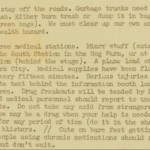
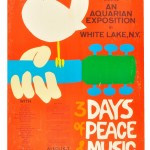

A mini-documentary on Vimeo explains how Jeff Shero Nightbyrd and Abbie Hoffman got involved in the Woodstock festival, providing medical care and other vital logistics for the organizers, who had apparently not conceived of the necessity of such things. It’s also one of the most concise sociological documentaries on Woodstock that I’ve ever seen. An original Woodstock Concert Poster is in the auction, too.

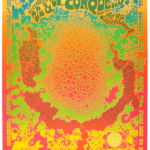

Classic poster art from the Austin music scene includes posters from the Vulcan Gas Company (the original, not the current dance club) and Armadillo World Headquarters, with signed works by Jim Franklin, Bill Narum, Ken Featherston, Danny Garrett, Sam Yeates, Michael Priest, Gilbert Shelton, Guy Juke, Kerry Awn and other Armadillo Art Squad members.
Is it nostalgia, history, culture, or all three? It’s a window into the soul of rock ‘n’ roll and the great movements that rocked the sixties and seventies whose energy we sorely miss today. There’s a rare, limited edition nude of Janis Joplin by Bob Seideman, and a rare handbill for a 1968 Janis Joplin Concert at Hemisfair Park in San Antonio that was cancelled.

Signed photo of Janis Joplin by Bob Seideman
Then there are works by Peter Max and the iconic Andy Warhol Banana that became shorthand for Lou Reed and the Velvet Underground. There are Willie Nelson posters, and again, several classic pieces by Gilbert Shelton from the Vulcan Gas Company days, several classics by Jim Franklin from the Vulcan and AWHQ.
There’s even, and I find this hard to even mention, a John Wayne chair, for those of you who always wanted to sit in the Duke’s lap, or depending on how you feel about him, sit on his face.
I’ll be posting more on Twitter and Facebook later. I haven’t mentioned the punk posters (sorry, no Skunks posters in this auction), but there are nine works by Frank Kozik, including two Butthole Surfers posters.
many signed San Francisco posters including Moscoso, Mouse & Griffin. And I don’t how I did it, but I waited until last to mention Pablo Picasso. It’s a large print. See the catalog entry here.

Peter Max (from Peter Max..)

(to…) Pablo Picasso
Nor have I posted any of the pics I took at Jeff’s house today. I particularly liked all the RAT posters, and woodcuts by a Cuban artist with the last name Jimenez. Follow me on Twitter @Jesse_Sublett.
Again, Burley Auction Gallery will be auctioning off this unique collection starting 10:00 AM Saturday, December 5th at Burley Auction Gallery 134 Deborah Dr., New Braunfels, Tx. 78130. The public is welcome. Preview is Friday December 4th Noon-6:00PM & Saturday 8:00AM-10:00AM auction start.
For more information on the posters and underground art history you can contact Jeff at nightbyrdebay@gmail.com or on his cell 318-780-6600. For more information about the auction, contact robb@burleyauction.com or on his 830-660-3201.
November 14, 2015
DOWNTOWN AUSTIN EARTHQUAKE SHAKE

Dear friends: I’ve been swamped with writing work as you may have heard, working with Eddie Wilson on his great Armadillo World Headquarters memoir, a book on Esther’s Follies, and more vintage Austin underworld crime. In the interim, we have the gig at the Townsend Saturday Nov. 14, and a story in the Statesman by Peter Blackstock. It’s nice to see The Skunks get some ink, alongside two other bands (The Next and Standing Waves) who joined in the Raul’s scene after our first gig in January 1978.
“Larry and I have been friends for a long time and I really treasure that,” [Sublett] noted. “Jon Dee is one of the best friends I have, and the great, weird, incendiary rapport we have together is probably the main reason the Skunks still play live gigs.”
Another reason is the bond with audience members who treasure “memories of experiences with our music as landmarks in their lives,” as Sublett puts it. “Back in the day, when we first started, it was validating to see people screaming, angrily expressing their frustration because punk rock was an outlet, a cathartic experience. Now it’s great to play and see people smiling and laughing.”
Peter also had some complimentary comments about my solo EP, Eldorado. Stay tuned for EP Release gigs soon. An excerpt:
Sublett has a new EP out too, though “Eldorado” is a solo affair. It’s something of a companion to his recent true-crime novel “1960s Austin Gangsters.” Though Sublett initially made his name as a musician, first with the Skunks and then Secret Six, he began writing books while living in Los Angeles from 1987 to ’94, and he primarily makes his living as an author today.
Whereas the Standing Waves EP bristles with pop immediacy, Sublett’s “Eldorado” is more of a mood piece, in keeping with the noir sensibility that’s a hallmark of his prose. He alternates between electric and upright acoustic bass, drawn to the latter because “it’s like sculpting sound,” he says.
Co-produced with guitarist Kim Simpson, who Sublett says “encouraged me and helped arranged the songs and made it happen,” the record swings and weaves around Sublett’s distinctive vocals. His penchant for storytelling is obvious on “The Headless Supermodel,” a spoken-word lark propelled by tight rhythms and Simpson’s guitar spikes. “Every international fashion emporium wanted the headless supermodel/ So what if she lacked a cranium?” Sublett crows.

Available on iTunes & CD BABY, also at Waterloo and End of an Ear record stores.
Please drop in at Justine’s and Chez Nous for meals and drinks as often as possible. Watch some great French films, especially by Jean Pierre Melville, my favorite, or Truffaut, whatever. Viva la France! Serge Gainsbourg, even Johnny Halliday  Because if the terrorists’ aim was to unite us, they have succeeded in that, at least.
And one final word about that: If I had a zillion dollars, one thing I would invest in is a series of billboards and other messaging that would convey this message:
Hey you jihadi, before you blow yourself up and kill a bunch of innocent babies and women and other people who might otherwise have sympathy for the plight of your people, you should know that your own life is being tragically, stupidly wasted. Those virgins they promised you in the afterlife, they aren’t going to be there. That’s a cynical myth they used to recruit you. Whatever it is you want, murder is not going to get it for you.

Seven hundred students at Kyrene de las Brisas Elementary School celebrated 100 days of peace—no students sent to the office, no
arguments, no conflicts—by having a parade through the school, then heading outside for a peace-symbol photo and final cool-down
with frosty Otter Pops. It was a great day for the students, teachers and administration, who dressed for the occasion in “peace”
wear, school colors of purple and turquoise and gear symbolizing the school mascot, a gecko.

October 14, 2015
See See CD Baby, Who needs a record label??

Jesse Sublett’s first SOLO record is out and it’s GOOD.
My new seven song CD, “Eldorado,” is out just in time for that little old Texas Book Festival. Tell me something, does your favorite author have a new noir blues record out? Maybe he or she does and it’s brilliant, a work of art. Well, mine is out now. And although there are no songs about the Timmy Overton Gang on the CD, these songs were all written at the same time that I was digging through several linear miles of files of FBI research on these bad boys. You can buy “1960s Austin Gangsters” and listen to the CD or vice versa. I’ll continue to play some of these songs at events promoting my own books as well as our visiting friends at Noir at the Bar. Watch this space for more news about all that and all the rest. You can buy the CD on iTunes or on CD Baby here, or stream it on Soundcloud. Read more about it on the Eldorado page, where I’ll continue posting info about the songs, lyrics, and the musicians who helped me produce it.
Cheers,
Jesse

October 5, 2015
Austin Gangster Chronicles
The Austin Chronicle review of “1960s Austin Gangsters” is out. A fine critical appraisal by Tim Napalm Stegall. I’ve pasted the text below so you can enjoy it right here. Busy week: Noir at the Bar is Tuesday (10.6.15), my presentation at the Dallas Historical Society is Thursday (10.9.15) and I’m speaking and playing for the Sisters in Crime on Sunday (10.11.15). In between I’m working on two new books and releasing my new CD “Eldorado,” which is available digitally from CD Baby and at Waterloo Records and BookPeople. We’ll have them on sale at Noir at the Bar, too.
Jesse Sublett’s 1960s Austin Gangsters
The noir novelist digs into the capital city’s criminal past and unearths characters who are lively, colorful, and interesting
REVIEWED BY TIM STEGALL, FRI., OCT. 2, 2015Gangsters?! In Austin?! Really?! Believe it or not ….
There was a time – the 1960s, to be precise – when ex-UT football hero Tim Overton, his crony Jerry Ray “Fat Jerry” James, and their white-trash buddies could band together to commit crimes ranging from petty to serious. Prostitution, smuggling, safecracking, gambling, drugs – you name it, all run out of a transmission shop in what would eventually be the original location of Emo’s on Sixth Street. It was the days of the loose alliance known as the “Dixie Mafia,” which had outposts in Dallas, Ft. Worth, New Orleans, Biloxi, Oklahoma, and Florida. The local branch was a cadre of what author Jesse Sublett describes as “Cadillac-obsessed hoodlums” with “Elvis hair,” pinky rings, and sharp suits, consorting with strippers and call girls.
Welcome to the wildest local true-crime tale told, from the pen of an ex-punk rock bassist with a penchant for films noirs and hard-boiled fiction.
Slim as the volume is, Sublett’s pulled off a remarkable piece of scholarship. The pages are packed with detail. He uncovers specifics behind several of the small-town bank heists the Overton/James gang pulled across Texas, the mid-South, and the Midwest. He writes of the meticulous planning and the network of used car salesmen and crooked lawyers aiding and abetting. He tracks tentacles weaving through the local blues scene and even to the Kennedy assassination, leaving room for cameo appearances from Charles Whitman, the 13th Floor Elevators, and even 20-year-old Elvis Presley. Then he will drop a slice of pure noir poetry in your lap. Like: “Standing in the middle of the road next to the First State Bank of Mobeetie, with no fear of being hit by a passing vehicle, looking out at the knife-edge horizon, I kept thinking: Out there is a whole lot of nowhere to run.”
Read a line like that, and it makes you think that Sublett should be hailed as an Ellroy-level master of modern crime writing.
1960s Austin Gangsters sinks its hooks in you and does not let go. It reads like a well-paced, densely plotted novel. It’s local history that frequently gets overlooked. It uncovers a set of characters who, for all their evil and malice, were nevertheless colorful, lively, and interesting. It’s an Austin weirder than any municipal marketing slogan and likely embarrassing to the Chamber of Commerce. In other words: It’s fun!
1960s Austin Gangstersby Jesse SublettThe History Press, 176 pp., $19.99
A version of this article appeared in print on October 2, 2015 with the headline: Jesse Sublett’s 1960s Austin Gangsters
Jesse Sublett’s first SOLO record is out and it’s GOOD.
September 9, 2015
AUSTIN HISTORY CENTER TO BECOME AUSTIN GANGSTER CENTER FOR A DAY
Austin History Center, IOU a lot, and on Museum Day — Sunday, Sept. 20th — it’s payback time. I spent hundreds of hours at AHC researching my latest book, “1960s Austin Gangsters,” and on Museum Day, 2-3 PM, I’ll be presenting an extra-special multimedia gig in appreciation. Come down to see photos of Hattie Valdes, the most infamous and successful Austin madam of the 20th century, the girls who worked for her, and the bad, bad men who ruled the Austin vice scene in the 1960s. Timmy Overton, his brothers Darrell and Charles, the infamous Jerry Ray “Fat Jerry” James, Hank “the Bank” Bowen, Chester “Magoo” Schutz… their safecracking gear, what they looked like and talked like. I’ll be singing a short set of my Austin underworld ballads, too. Mark your calendar, ya mugs.
Click Austin Museum Day for a press release on Museum Day in Austin and the list of participating places with free admission on 9.20.15.
More info soon. You can keep up by checking back here or my Jesse Sublett on Facebook page. Austin History Center is on Facebook, too.

Five members of Timmy Overton’s crew apprehended after a massive manhunt across the Texas Panhandle in March 1966. LR: Jerry James, Fred Hedges, Hank Bowen, William Brown and (in back) Tim Overton


