
Jesse Sublett's Blog, page 15
January 4, 2013
TOP TEN AWESOMENESS OF 2012
THE ABSOLUTE BEST & BADDEST OF 2012, in the highly concentrated, subjective, supercool, chocolate-coated, no-steroids-or-MSG-allowed world-view of My Terrible Self, Jesse Sublett, author, blues singer, blogger, etc.
TOP TEN BOOKS of 2012
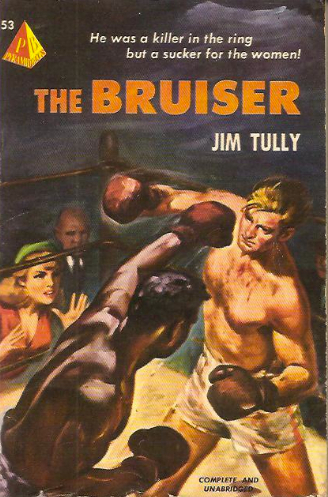
1. The Bruiser, Jim Tully (1936)
The Bruiser is probably the best novel about boxing, outside of Bud Schulberg, I’ve ever read. Even if you give the number one slot to Schulberg, The Bruiser is still one of the best novels I’ve ever read, period. You expect a novel set in the boxing world to have a regular pattern of action that drives the plot forward page after page, and on that, this book delivers and then some. But there’s also more heart, more cool-as-shit hardboiled lingo on every page than you’d expect from any of the best tough-guy authors of any period. There’s not an ounce of fat here. The book feels like a movie because, after all, Tully wrote for movies and was pals with a who’s-who of top slot actors from the 1920s-30s. I mean, Charlie Chaplin and Wallace Beery, to name a couple, were close chums. I love this book! Hell, I’ll probably read it again in a couple of weeks.
Did I mention that Tully was a boxer before he was a writer?
If you need an introduction to Tully, a great place to start is Woody Haut, whose excellent piece on Tully, posted on November 28 of last year, prodded me to finally get around to reading Tully, after hearing about him at least ten years ago from my good pal, the publisher and professional mad man Dennis P. McMillan. As I recall, Dennis really wanted to bring some of Tully’s work back into print, but at the time he was trying, he was also moving toward a decision to disengage from the highly addictive yet difficult-to-make-a-dime-in racket of publishing books. Woody Haut, by the way, is a wise, wise man and has written a number of very, very cool books on noir lit. If Woody says something like, “Jim Tully may have been the true father of hardboiled fiction,” whether you agree or not, you better listen, because he knows what he’s talking about.
2. Circus Parade, Jim Tully (1927)
OK, so I’ve written about Tully already. I mentioned that he was a boxer and a Hollywood writer, but I neglected to mention that he was also a hobo who rode the rails and who also became a circus bum, and this book is auto-biographical. I’ve already raved and raved about The Bruiser. Pretend that I have raved again about Circus Parade. Thank goodness I only read these two in 2012, or this list might be exclusively devoted to one author.
3. Floyd Patterson: The Fighting Life of Boxing’s Invisible Champ, W.K. Stratton
OK, forget that last line. Even if W.K. “Kip” Stratton wasn’t one of my best friends, and even if I didn’t love books about boxing, I would have to list this great, great bio of Floyd Patterson. I mean, Kip had his work cut out for him, too, because everybody is such a huge Muhammed Ali fan (for good reason) and then there are guys like me who just love Sonny Liston, the heavyweight who beat Patterson for the title. But seriously, Floyd wasn’t the most flamboyant of guys, and the turmoil and difficulties of his early life as a juvenile delinquent weren’t there on the surface for all to see. But how many heavyweight boxers are known for their compassion, not just out of the ring, but in it? Here’s a guy who actually picked up his opponent’s mouth piece and handed it back to him before resuming the punishment? Stratton does a fine, fine job here of not only bringing this long neglected sports hero to life, but he also does a tremendous job of evoking the sounds, sights and smells of the boxing world, and the tumult of the various worlds and characters (as in, “Don’t mess with that dude with the bent nose, he’s a character…”) that swirled about it.
4. The Black Box, Michael Conelly
Again, Michael Connelly is a friend of mine and I expect nothing but the best from him, but in this outing, he proves again why people say he’s by far the best crime writer going today. Harry Bosch is getting older, and several generations of younger cops and new technology have appeared since we first met him back in 1992 with The Black Echo. But Harry is here to stay, I reckon, and I’m glad.

5. The Score, Richard Stark, Darwyn Cooke’s graphic novel adaptation
Here goes: The best crime caper novels by a long shot were written by Donald Westlake under the pen name Richard Stark. The protagonist was a professional thief named Parker. One of the best films noir of all time was Point Blank (1967), adapted from the first Stark novel, The Hunter. The Score is the third adaptation of Stark’s novels by graphic artist Darwyn Cooke. Each one is stunning, explosive, cinematic, super-cool, but if anything, they keep getting better and better. I can’t tell you how much I love these books. Read more about this at the great website devoted to Richard Stark and Parker: The Violent World of Parker, then go see the blog about this new Cooke book, suitably titled “Like Having a Scorpion in the Room.”
6. You Can’t Win, Jack Black (1926)
When it comes to criminal memoirs, this is one of the earliest in modern literature and still one of the best. This is available in many editions, including eBooks, but one of the coolest editions is the one with an intro by legendary Beat junkie and convicted murderer William Burroughs. Burroughs penned his intro and made various allusions and quotes without the benefit of a copy at hand to double-check his accuracy. That’s how much he dug this book, or how desperately the publishers wanted his seal of approval-take your pick.
7. Mars Attacks: 50th Anniversary Collection, by the Topps Company, Inc., with introduction and commentary by Len Brown, afterward by Zina Saunders
Yes, a book commemorating the 50th anniversary of a bubble gum card series, which was adapted into a terrible film, despite having Jack Nicholson in it. The book was published by Abrams Comic Arts, which also published the super cool Heroes of the Blues, by R. Crumb, which also began as a card collection. They may be crazy about bubble gum cards, but they sure have great taste.
8. Ulrich Haarbürste’s Novel of Roy Orbison in Cling-Film, Ulrich Haarbürste
You won’t find this one at the local mall. Yes, it’s a book (published in 2007) written from the point-of-view of a guy who has a thing about imagining scenarios in which he encounters Roy Orbison, the great rock n’ roll singer, and a situation of some dire emergency arises, including car wrecks, about-to-be-cancelled concerts, and even showing up at a swank costume party without a costume. Invariably, Ulrich saves the day by volunteering to wrap “the famous man in black” from head to toe in cling-film, which most of you may know as cellophane, Saran Wrap, etc. By any other name, it would be a strange read. I discovered this fetish author at least ten or so years ago by accident on the internet, back in the old dial-up days, when it was poky and prone to breaking down constantly if you had any access at all. So, imagine my surprise when I found Ulrich and his strange hobby. This summer, when I was writing Grave Digger Blues, I created a character modeled after him and decided to see what the real Ulrich has been up to. He published this book in 2007, for one thing. I suppose since then he may have “wrapped” another project or two.
9. Lyndon Johnson: The Passage of Power, Robert Caro
Wow. This is a great book, period. You can read elsewhere about what a monumental contribution to political biography and American history this book, the fourth in Caro’s biographical treatment of the life of the great president, Lyndon B. Johnson. You can read in my memoir, Never the Same Again, what it was like to be a young teenybopper in Johnson City, frequently encountering the great man at church and elsewhere when he was home from the White House. And I will probably comment on that again in this space someday soon. But only RIGHT HERE will you see someone like me say: This is one hell of a riproaring page-turning, noirish, thrill-ride of a book. It could easily be a dark film noir, a real thriller. Wow. I LOVED THIS BOOK. I told Caro all this at a party during the Texas Book Festival. I started by congratulating him by accurately describing how mean people in Johnson City can be, and were, when LJB was growing up and his family fell on hard times. I said: “They’re still that way.” He said, “Yes! I’m glad you told me. I found them that way, too.”
10. The Yellow Birds, Kevin Powers
A really good first novel by a former Marine who fought in Iraq. Powers attended the Michener Center for Writers at UT, and his writing is evocative and hallucinatory in ways that bring to mind the great author and poet Denis Johnson. Some parts of the novel work better than others, but it’s a very impressive debut and we should all be watching out for his next effort.
TOP FIVE FILMS
1. Killing Them Softly
I really liked the other movies on this list, but few of them came close to this one. Beginning to end, inside and out, one of the greatest films noir of all time. It is small, dark, contained, sweaty, ominous, real, surreal. Brad Pitt is phenomenal. Richard Jenkins is superb. Based on the novel by the late, great George V. Higgins, and if you aren’t a huge, huge fan of the film adaptation of Higgins’ great novel The Friends of Eddie Coyle, I have to tell you that we can’t be friends anymore.
2. Killer Joe
Stunning, startling, hilarious, sick, tight, unhinged. I also read the playscript by Traci Letts. Traci Letts writes white trash like nobody’s business. A related note that may be of interest: I was a little disturbed to encounter a couple of friends who had “left the wives at home” and after the movie, had gone to Lucy’s Fried Chicken to “pick up some dinner for the girls.” They were quite amused with themselves. No reports on how this went over, but I watched for police reports in the paper next morning, didn’t see any.
3. Django
Wow. Hell of a movie. I used to be fed up with Tarantino, but after Inglourious Basterds and this one, he’s OK in my book. And what’s with that actor, Christoph Walz, anyway? He’s one weird dude.
4. Seven Psychopaths
Almost every movie with Tom Waits in it is OK with me. Plus this one had other attributes.
5. Skyfall
Loved it a lot, although parts were a little too comic-booky. Did I really say that? Loved the low-tech Q, which was a good touch, plus the return of the Aston Martin.
6. Bernie
This film captures small town folks quite well. The way they talk and think, the way they dress and live. Yikes. It was a fine film but don’t want to go there again. I lived it already, growing up in the Hill Country.
TOP FIVE TV
1. Election Night coverage of Barack Obama’s reelection.
As if this isn’t self-explanatory. Plus there was the super bonus of watching everyone melt down on Fox. Now THERE’S AN IDEA FOR A MODERN OPERA.
2. Mad Men
Rarely a slack moment.
3. Breaking Bad
Strange, comic, brilliant, creepy, twitchy, funny. Is Bryan Cranston awesome or what?
4. MSNBC
This may sound creepy, but from spending so many evenings with them, we’ve come to feel like Rachel Maddow, Chris Matthews, Lawrence O’Donnel, Reverend Al, and Big Ed are part of our family. And although I don’t watch a lot of daytime TV, being a fan of beauty, I’m quite fond of Tamron Hall.
BEST MUSIC of 2012
1. Smokestack Lightning: Complete Chess Masters, Howlin’ Wolf
The Wolf was awesome, a force of nature who lives on. Great box set collecting the work of a truly incredible talent. Not just a bluesman, but an artist and a fascinating human being. Here’s one of many listings for the box set that do not happen to be Amazon.
2. Bad as Me, Tom Waits
Weird and funny as ever, he came through again with a dynamite record. “Hell Broke Luce” is one scary goddamn war song. This video does it justice.
3. Garage Sale, Jon Dee Graham
Even if Jon Dee wasn’t one of my best friends, my oldest friend, one of my most talented friends, I like to think that this record would still be on here. But it’s got some damn good music on it.
4. Complete Recorded Works in Chronological Order, Vols 1-3, Charley Patton
I belatedly got around to some heavy listening to Charley Patton, and now that I have seen the light, I don’t think I will ever stop. Fascinating as a historical figure, he did things to his guitar that still mystify and cause terrible arguments between guitar geeks to day. Listen to “High Water Everywhere Part 1.” Then tell me if you can show me anything better in any category. Very cool graphic novel bio of Charley here.
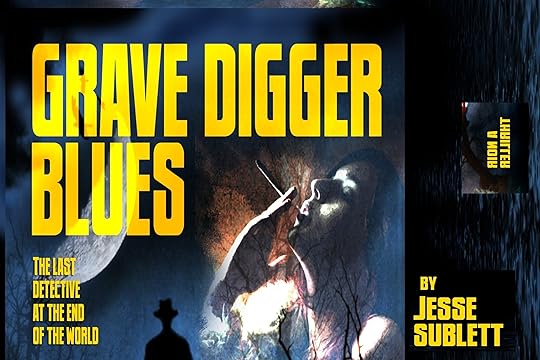
GRAVE DIGGER BLUES, mind blowing pulp fiction
TOP TEN RANDOM
1. Creating ibooks for iPad
On January 19, 2012, Apple released iBooks Author as a free ap, which allows the user to create enhanced multi-touch multi-media books for the iPad. On February 6, I released an edition of my first novel, Rock Critic Murders, as an enhanced iBook for the iPad, with dozens of photos, drawings, videos, plus music and other media. A great experience, though I have not yet figured out how to make much money doing it. My new iBook for the iPad, Grave Digger Blues, is a streamlined and super hip iBook, created especially to take advantage of the ap’s technology, and I’m really proud of this one. It’s a wicked, outrageous apocalyptic pulp fiction narrative with 100s of photos from Austin art photographers–sexy stuff–plus drawings and collages by My Terrible Self, plus audio chapters and my own blues soundtrack and collaborations with Fort Worth blues musician Johnny Reno. I also released a stripped down version for Kindle (text and photos only) and a bare bones edition for Smashwords.
2. Almost meeting Rachel Maddow in Rockefeller Plaza
This is a no-brainer. We were trying to catch her before she went into her office to prepare for the show but we missed her and then saw her just as the elevator doors closed so we ran up two flights of stairs and when we got there she was just closing the door behind her and our friend who produces for Rachel said “you DO NOT bug Rachel during that time period.” So we went downstairs and ran into Tamron Hall, who is super beautiful, friendly, and originally from Lufkin and Grapevine and said her accent is not a problem except sometimes instead of saying “naked” she says “nekkid” and who came blame a gal for that?
3. Seeing Nick Lowe at Hardly Strictly Bluegrass and seeing Preservation Hall Jazz Band at least twice that weekend, with Buddy Miller and Jim Lauderdale rocking the festival like crazy with Robert Plant and John Paul Jones standing in front of me backstage but I didn’t mind as I had never seen Nick Lowe play “Tennessee Stud” before and he had never played it before but he did one hell of a job and everybody under the Golden Gate loved it.
4. Random eating adventures in Austin
Enoteca and Vespaio, Justine’s, Hoover’s, Threadgill’s, Whip Inn… over and over again. There are many other restaurants in Austin, but these places are the places we really, really love.
5. Musso & Frank
Musso & Frank’s Grill on Hollywood Boulevard has always been one of our favorite places in LA. We had a great weekend trip there with our friends, doing lots of cool stuff, but when we went there for dinner Saturday night with our great friend Rocky Schenck, it all came together. Another great highlight was driving around LA in a Crown Vic, which was the only full-size car in the Dollar-Rent-a-Car lot that spoke to us. And boy howdy, I gotta say, driving around LA in a cop car is a hell of a lot of fun. And you know how people sometimes don’t get out of your way when you do something aggressive like make a U-turn in the middle of Sunset Boulevard? When you’re driving a big black Crown Vic, not so much!
6. Howlin’ Wolf Birthday Show
I organize and lead and produce and play and sing in this tribute to the great Howlin’ Wolf at the Continental Club around the time of the Wolf’s birthday on June 10. This year we did a Saturday night and having Denny Freeman, Mike Buck, Eve Monsees, Big Foot Chester and so many other pals of mine playing with me, it was maybe the best Wolf party I’ve had. Wow. It was cool. If you weren’t there, I gotta say, I feel badly for you.
There were other stellar events in 2012 in my life, including my family — my wife Lois Richwine, and my son, Dashiell, and I know I couldn’t do better than be involved with either one of them, but to have them both, hey, it’s a trifecta, a perfect storm! And my Mother and brothers and sister, and the extended family, I really appreciated them this year.
You may have noticed that I’ve been doing more political blogs lately and these are often published on OpEdNews.Com before they are posted here. OpEdNews.com is a great progressive news source. Lately I’ve been writing about the post-Obama-reelection secession craze and gun control. Go here for the direct link to my stories.
See you around.
Cheers,
Jesse


December 23, 2012
Heavy on the boobs
Your faithful Blue Xmas correspondent, a k a, the Author & Musician, Jesse Sublett
GRAVE DIGGER BLUES, mind blowing pulp fiction
“Jesse Sublett dazzles in his latest offering, a surreal noir escapade for the Kindle and iPad called The Gravedigger’s Blues. Sublett composed the work using iAuthor which enabled him to embed paintings, collages, photographs and several songs in the iPad version. It makes for a rich, multi-media, multi-sensory experience.When you open the book you come face to face with a video of the bluesman in dark glasses and a houndstooth coat, singing a mysterious, melancholic tune. The video adds an element of intimacy to the reading experience. We’re all familiar with the standard author photo. Now imagine the photo come to life, and set to music. It’s very cool. There are several other audio-only jazzy-blues songs included in the book which help to set the mood. I particularly liked The Headless Supermodel, a humorous, hip skewering of L.A. vacuity.
Sublett is a gifted visual artist. He includes several photo collages in this work. They are strange, unsettling compositions. I may never recover from the gothic horror of Dick Cheney in drag. Sublett’s paintings have a modernist feel. They are bright, intense things heavy on the boobs.
This e-book is a goody-bag of delights. I found it hard to read the book straight through, but perhaps it isn’t meant to be read that way. Dip into the book, here and there. Hear some songs, see some art and read the book, in sections, to enjoy this wonderful prose stylist, letting loose, experimenting with and stretching the bounds of this exciting new medium- the enhanced e-book.” — Kate Walker, writer, book & music reviews blog
President of the Ex Girlfriends Club.
She’s too good for you.
Why do we dream what we dream?
The above blurb is from an advance copy of Kate Walker’s review of GRAVE DIGGER BLUES for her wordpress blog, and I’m delighted not only by her comments but by the notion of being written about on the same site which writes seriously about Katy Perry (I’ve been a fan ever since the first dose of ear candy from her reached out from the radio and grabbed me) and Daniel Woodrell, the acknowledged master of that sub-genre of crime fiction called country noir.
Things she does to drive me crazy
She said sex was like pizza.
BIG DEAL, XMAS STEAL: To encourage readers to check out GRAVE DIGGER BLUES, all 3 of my Martin Fender novels, plus the short story Moral Hazard, are free in the Amazon Kindle Store through December 26. Alternately, of course, you could do whatever you want to do a Amazon and then quickly go to the Apple iBookstore and get a free sample of the Blues Deluxe Edition for iPad of GRAVE DIGGER BLUES, with music, video and audio chapters, which, sadly, Kindle does not have the technical capacity to deliver. Nor, sadly, do over 99% of my rival authors.
October Eve.
Delfina next morning.
Jade Honey.
Due to an epic case of Apple OS X corruption on my trusty-not-rusty MacBook Pro, the past week has been one of rebuild-and-restore here at Grave Digger Blues, Incorporated, and I have not been able to finish a new political blog post for my Secession Chronicle page or our cousin, the mighty OpEdNews.com site.
Obviously, as a blatant attempt to keep you returning to this page, I’m offering a selection of original images here, including a few of the aforementioned “heavy on the boobs” original images from moi, your favorite noir author and surrealist blues troubadour. Also this recently discovered video link on Hulu, by which you can enjoy the Biography episode: ATTILA, SCOURGE OF GOD, which I wrote for Biography A&E a few years back. It’s a fairly low budget piece of nonfiction television, but quite informative, I think, and the show was well-received. I’ll write a few notes about it later, in this same space.
HAPPY HOLIDAYS
from Jesse Sublett, your faithful blues & noir correspondent

















December 19, 2012
Howlin’ for Grave Digger Blues

Things she does to make me crazy
New blurbs have come in for GRAVE DIGGER BLUES, the post-apocalyptic pulp fiction novel that you can download just in time for the Mayan-predicted The Big Shut-Down… The Last Last Call… The Big Whatever… Or, as we call it in the novel, The Big Fuck-off.
Our most recent critiques come from Eddie Wilson, best-known as the proprietor of Threadgill’s and Armadillo World Headquarters, silver-tongued restaurateur and pillar of Austin cool; Richard Zelade, author and blogger, Kathleen Maher, author and journalist; Scott Montgomery, czar of MysteryPeople (the crime fiction section at BookPeople); and a couple of other generous literary critics and overall cool people. Hey man, I really appreciate your support. I could use more of it from the rest of you.
It took Jesse’s GRAVE DIGGER BLUES to awaken me from my nightmares. He made them look like cartoons. If I could write like this I’d have giggle-mares instead. Indeed, GRAVE DIGGER BLUES has turned me into a fiction fan once again. Keep ‘em coming. — Eddie Wilson, owner of Threadgill’s and Armadillo World Headquarters
GRAVE DIGGER BLUES is a departure from Jesse Sublett’s excellent books. The Martin Fender series takes the detective novel on a tour through the music demi monde by way of Austin. His memoir, Never the Same Again is as enthralling as any work of fiction and it’s real.
Now, he’s trying something new. GRAVE DIGGER BLUES brings in Sci-fi, a bit of poetry, and art. It’s nothing less than an attempt to re-think the novel for the digital age and it’s really brave. Some sections work better than others, but it’s a good ride. I’m hoping that Sublett plans to take this further, he’s on to something and I want to see where it goes. –Kathleen Maher, author and journalist

The Blues Cat, his blues was epic, like a film noir in real time, all those hard luck songs about trains and cheap whisky, jail, no money and bad women like shrapnel from a bomb embedded in his soul.
I’ve seen Jesse Sublett perform this book as a work in progress at our Austin Noir At The Bar and it’s great everyone can experience this unique story with Hank Zzybnx an end of the world private eye. It’s hard to tell it it goes out with a whimper or a bang, but it will be weird, violent, and funny in its dark way.
Sublett uses a voice that’s 80 percent hardboiled and 20 percent hipster. Hank’s world is like Mike Hammer’s seedy city underbelly that somehow found a way to get worse. As he wonders the terrain on his cases he runs into Newt Gingrich, getting by as a circus geek, and even Marlyn Monroe. In many ways it’s his own boulevard of broken dreams that Hank walks down.
Hank, his case, and Sublett’s style, provide a great arena for hardboiled action, satire, and human emotion to play together. If you’re a fan of Victor Gischler, Joe R. Lansdale, or Kurt Vonnegut, this is a read for you. The book also has the bonus of a music performed by Jesse, the bandleader and bassist from The Skunks and a great solo artist, to accompany the take.
It may be the end of the world, but I hope this isn’t the last we’ve seen of Hank. — Scott Montgomery, MysteryPeople / BookPeople
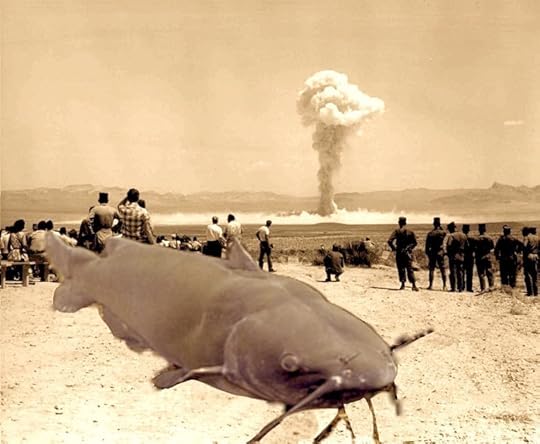
Maybe it was revenge for all the things we’d done to her, but Mother Nature wasn’t herself anymore. Nobody was.
Grave Digger Blues is perhaps too gentle a name for Jesse Sublett’s vision of the end of the world as we know it. To sing the blues, you have to have lived the blues. To write about hell on earth, you have to have lived it. Jesse has, and has emerged the stronger and more perceptive for it. Grave Digger Blues showcases his prowess as a writer, songwriter, performer, and graphic artist. I am jealous of precious few writers; Jesse Sublett is one of them.–Richard Zelade, author and blogger
Ingenious. GRAVE DIGGER BLUES is hilarious. Sublett’s sense of humor is refreshing and remarkably unique. Remarkably tasty as well. Very creative take on the e-book. The dark and clever songs really add a nice interactive component as well. – Flyingpeninsula, review on iTunes.
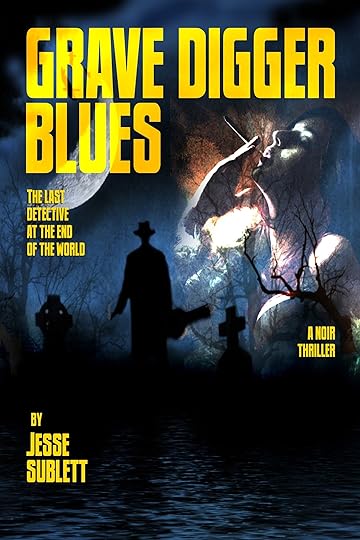
GRAVE DIGGER BLUES is available on Amazon’s Kindle store, for download to your Kindle, Kindle Fire, iPhone, etc., with 100+ great photos, drawings, collages, etc.; and the Blues Deluxe Edition for iPad, available at iTunes and the iBookstore also has an hour of audio, with original blues music and audio chapters.
December 13, 2012
DELTA BLUES ON THE RIVER OF DEATH
My favorite short comment recently: A Twitter follower of mine wrote: “This guy Jesse Sublett is nuts! But he’s my kind of nut.”
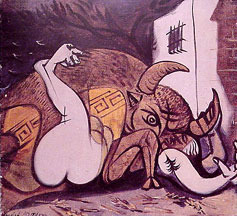
This wild man who crashed into your room, was he a minotaur? Huh? A Ford Taurus? No, man, this cat drove a Buick. (Picasso)
Since I last wrote to you about Grave Digger Blues, my new eBook crime novella for iPad and Kindle, a couple of cool new reviews have come in. Nice comments. See them below ( I’ve also added them to the Grave Digger Bluespage).
This is something really different. Grave Digger Blues is a departure from Jesse Sublett’s excellent books. The Martin Fender series takes the detective novel on a tour through the music demi monde by way of Austin. His memoir, Never the Same Again is as enthralling as any work of fiction and it’s real. Now, he’s trying something new. Grave Digger Blues brings in Sci-fi, a bit of poetry, and art. It’s nothing less than an attempt to re-think the novel for the digital age and it’s really brave. Some sections work better than others, but it’s a good ride. I’m hoping that Sublett plans to take this further, he’s on to something and I want to see where it goes. — Kathleen Maher, writer
The Blues Cat, his blues was epic, like a film noir in real time, all those hard luck songs about trains and cheap whisky, jail, no money and bad women like shrapnel from a bomb embedded in his soul.Grave Digger Blues is perhaps too gentle a name for Jesse Sublett’s vision of the end of the world as we know it. To sing the blues, you have to have lived the blues. To write about hell on earth, you have to have lived it. Jesse has, and has emerged the stronger and more perceptive for it. Grave Digger Blues showcases his prowess as a writer, songwriter, performer, and graphic artist. I am jealous of precious few writers; Jesse Sublett is one of them. –Richard Zelade, author

Maybe it was revenge for all the things we’d done to her, but Mother Nature wasn’t herself anymore. Nobody was.
I really appreciate this kind of support. If any of you have read the book and enjoyed it, it would be really great if you went to the Grave Digger Blues listing on Amazon and also the listing in iTunes or the iBookstore and give it a rating and write a few lines about it. If you aren’t involved in this kind of publishing, you have no idea how essential it is to have that feedback in order to make any sales. It’s difficult to get the old school media to review eBooks, so eAuthors are very dependent on fans and friends for their positive feedback.
You may already be aware of the cameo appearances in my new new by walking catfish (an oversized mutation of an Asian species, Clarius batrachus, a k a, walking catfish, which have undergone disturbing changes due to radiation in the environment in the last weeks before the end of the world), or I hope you are aware of that, anyway, but it’s possible you might have missed this story about aggressive catfish which I found on NPR yesterday. I’m posting it here for your enlightenment. Ladies and gentlement, I present Krulwich’s nature blog, shining a well-deserved spotlighted PIGEON EATING CATFISH. Or you can just go straight to video, below.
NPR’s Krulwich rightly compared the catfish to orca, the killer whale. Ever seen those big cute panda bear sea mammals come shooting up out of the surf onto the shore to grab and devour a cute little sea lion? It’s quite impressive. Also you may or may not be familiar with the fascinating snakehead catfish (Channa striata, and other related catfish), which can migrate across land from pond to pond. There was a scare about those beasts taking over in the US a couple of years ago. They’re also common in Asia. Strong fighters. Sport fishermen like tussling with them.
Snakeheads are sold in the U.S. both as food in Asian markets and as pets, being prized for their hardiness and aggressive habits. Snakeheads in U.S. waters are generally assumed to be former pets whose owners tired of them and dumped them.
An interestingly put factoid here about the appetite of these boogers, expressed in a cost-benefit ratio from an article posted in 2002.
Snakeheads are sold in the U.S. both as food in Asian markets and as pets, being prized for their hardiness and aggressive habits. A six-inch snakehead that costs $7 will eventually eat up to $8 of goldfish a day.
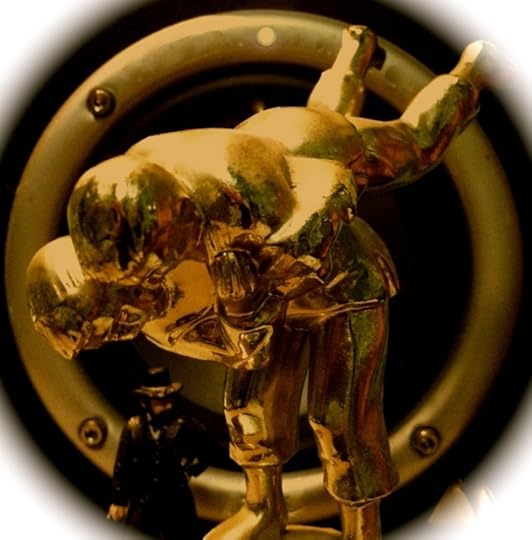
The nation wrestles with the dark parts of her soul.
You may have noticed that I’ve begun blogging about the Secession craze sweeping the country lately, particularly the darker corners of the Old Confederacy, and the old Lone Star State has been leading the way. Leading the way to Clown Heaven, that is. I find this a very interesting story and I’ve been posting new blogs here and then uploading them to OpEdNews.com, a great progressive news site. You can link directly to those stories at OpEdNews and give them some props, tweet them, like them on Facebook, and various other forms of digital love. The first one was ESCAPE TO CIVIL WAR LAND, published Dec 9, and the second is SECESSION OBSESSION UNABATED.
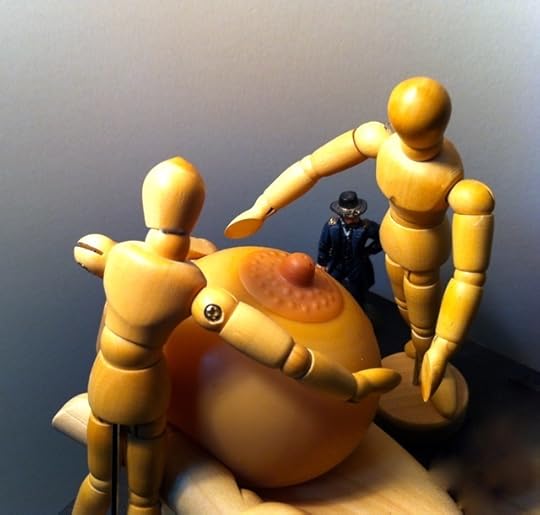
Manning the breastworks in the eWriting office.

Working 24/7 to keep it weird.
December 10, 2012
SECESSION OBSESSION UNABATED

The old love-it-or-leave-it crowd is singing a new tune.
The big word on secession on Monday was “ignored,” as in the ABC headline “TEXAS SECESSION PETITION IGNORED BY WHITE HOUSE,” which was appeared in dozens of slight variations in media coverage online and elsewhere. The petitions (at least one from every state) were filed on the White House “We the People” portal, a high tech democracy widget that makes seceding from the US and establishing a post-modern Confederacy seem almost as easy as buying a gun.

The White House refused to confirm or deny rumors that the President has been adding joke names to the secession petitions as a way to “blow off steam from the daily grind of calling drone strikes on terrorists, coordinating disaster relief and other mind-numbing chores.”
The site does say that once a petition has achieved the threshold of 25,000 digital signatures in a 30-day period, it shall merit an official response from the White House. (Secession petitions have been filed from all 50 states, including Hawaii, one of the other states which, like Texas, was once independent; and a handful of those petitions have also reached the minimum number for a response.)
The “We the People” widget does not, however, give a time frame for when that response would be issued. If the Texas secessionists that on Day 30 there would be an announcement in the Rose Garden from President Obama saying something like, “OK, bro, you guys are outta here… See ya on the links over at Civil War Land.” (By the way, your reporter admits that he stole that concept — the post-modern Confederate’s dream vacation — a secessionist theme park — from a book titled Civilwarland in Bad Decline, written by George Saunders. I haven’t read it, but I always enjoyed reading the reviews.)

Dead horse on battlefield, Gettysburg, PA
We wonder sometimes if this was only a Beta release of the “We the People” gizmo. You’d think the creators would have put a few disclaimers on there, maybe an automated response for requests that are pretty much unreasonable, like, for instance, promising everybody in the country a slice of Italian cream cake before bedtime, or a new pony for every child reaching the age of five. Not to mention insisting that the President allow your state to secede every time your candidate doesn’t win, or whenever the Cowboys aren’t in the Super Bowl, and I am fairly certain it would be unconstitutional for him to let Texas, Louisiana or Georgia go ahead and become the Sovereign Nation of Whatever.These people used to be so crazy about the Constitution, too. I guess they just fell out of love with it. That and the old notion of “My country, right or wrong.”
It’s hard to say how these people will take when the White House says no. They’ll need something to soften the blow. What if the widget-makers had programmed it with a universally loved character’s personality and voice. Like, say, Robbie the Robot.
Hearing the chunky analog dude say "That does not compute" would let them down easy.
There’s a strange conundrum here. Obama’s harshest critics ascribe to him all manner of maniacal, tyrannical attributes, but even if he was indeed Hitler, Stalin, Lenin and Kenyan tribesman rolled into one, having the power to granting a state’s petition to secede as if it were a second grader wanting to use the restroom, it’s a little much.

Confederate sharpshooter killed by a shell at Gettysburg.
In the last concerted movement to leave the Union, a lot of people got hurt, and after the dust and smoke and amputated limbs settled and the jigsaw map of the US all glued back together again, the question of whether or not states were free to come and go as they pleased had been rather forcefully addressed, and the answer, for those of you who were updating your Facebook page during American history class, was no.
Even the most caffeinated members of the Tea Party will usually admit that the current White House tenant (whose four year lease was recently renewed, by the votes of a significant majority of American voters) is a very gifted speaker, so whenever there is an official announcement, I expect it to be, at the very least, a memorable statement.

Not all the secession petitions are from Tea Party types.
If the news and editorial coverage from El Paso-based HispanicBusiness.com is any indication, El Pasoans are not generally big supporters of the Post-Election 2012 Whine-and-Secede Party, as the above petition on the “We the People” widget would suggest. The online news magazine has been regularly covering the secession efforts and not looking kindly upon them. One of the sharpest Op Ed pieces in that category was penned by Dana Milbank, a member of the Washington Post Writers Group and a frequent contributor to MSNBC News, or, as some of us like to refer to the liberal news network, “The exact opposite of Fox News except that the stories happen to be factual most of the time.” Milbank’s November 16 piece, “A Confederacy of Takers,” raised a number interesting points about the reddest of the states actual dollar contributions to the federal government which is taking away their liberty with Obamacare, social security, medicare, consumer protection laws, the interstate highway system and other socialistic ideas that either came from The Communist Manifesto or Mein Kampf, I forgot which one they’re talking about this week. Milbank pointed out that “red states receive, on average, far more from the federal government in expenditures than they pay in taxes. The balance is the opposite in blue states.” Therefore, says Milbank, if President Obama wanted to create a more perfect Union, or rather, one that need not worry about the “fiscal cliff,” he could offload the reddest of the red ink states.
For every dollar in federal taxes paid out, these states receive the following amount in federal aid:
Louisiana $1.45
Alabama $1.71
South Carolina $1.38
Missouri $1.29
Milbank says that if these states were allowed to secede from the Confederacy of Makers (the blue states of the Union), “what would be left, is a Confederacy of Takers, including relatively poor states such as Alaska, West Virginia, Kentucky, Tennessee, Arkansas and Mississippi.”
Of course we haven’t mentioned Texas, which is one of the few wannabe Confederates that pays out more than it receives back in federal aid. That’s because of oil money, which brings the state close to break-even at 94 cents of benefits for its tax dollar. But we’ll come back to Texas in a minute.
Milbank points out that culturally, and in other ways, the country would be poorer without the takers. On the other hand, there’s this: “Once the handout states left the union (and took with them a proportionate share of the federal debt), the rest of the country could enjoy lower taxes and the high level of government service typical of the Northeast, the Great Lakes and the West Coast.”
Milbank is also concerned about what the secessionists would do to the poor and otherwise vulnerable citizens within their borders. Judging from the ideas we’ve heard in recent years from the right wing, it’s not a pretty thing to contemplate. Recognizing that cities like Austin, New Orleans, south Florida, Houston, Dallas, and, as we have seen, El Paso, would be adamantly opposed to secession, special arrangements would have to be made for these islands of sanity. Milbank uses the concept of “protectorates,” such as old Hong Kong, which be preferable to the example of West Berlin, as it existed for those decades between the end of World War II and the fall of the Iron Curtain in 1991.

If people had to venture behind a new Iron Curtain to visit the Austin and the Continental Club, or SXSW or ACL, would anyone come to Texas at all?
But let’s not even go there. These are just a piddling few examples of the problems that the secessionists apparently have not considered. Houston, like Dallas, Austin and El Paso, overwhelmingly favored Obama for reelection. If Houston retained control of the Houston Ship Channel and countless other petroleum industry facilities, the spigot of oil money Texas relies on would be drastically curtailed. What would Texas be without Austin? Forget the state capitol building and other government offices; without the Continental Club, Barton Springs, the lakes, Broken Spoke, Alamo Draft House, the Texas Chili Parlor and Threadgill’s, to name just a handful, Texas would be infinitely less desirable–also a great deal less celebrated and much less visited. So let’s not go there.
In fact, now that we’re on the subject of people not wanting secession, we must point out that the numbers of signatures on these petitions is really not all that impressive. The pace of new names being added has slowed considerably in the past week or so, but assume that the total reaches 800,000 by year’s end. To be generous, let’s say a million. In 2011 the population of the US was 311,591,917. A million petition signers represents .03 (three-tenths) percent of the population. Is that really a movement?
Is it really a movement when the thing the people are asking for is unattainable and impractical?
Here’s an alternative idea. Let’s say that when push comes to shove, these 700,000 or 800,000 or even 1 million petition signers are really done with USA. They HAVE HAD IT with universal health care, National Parks, protection for endangered species, abortion rights, laws against discrimination and minimum wage and crazy stuff like that. But they can’t secede. The vast majority of citizens wherever they live will not go along with secession, even if they themselves signed one of these things. But if there are still 200,000 or 300,000 people left who really, really hate the USA now and can’t stand it here anymore, they could go somewhere else and set up their own little country.

Ruins in Richmond, VA, Andrew Russell, April 1865
Surely there’s an island for sale somewhere they could afford. If 200,000 people contributed a few bucks, they could probably score something nice, not just a pile of rocks with a few palm trees on it. We’re talking something with some paved roads, parking, maybe a helo pad, shuffle board, etc. A lot of these folks hate the EPA because it protects animals, plants and other useless things, so there shouldn’t be a big demand for furry creatures and greenery to keep them happy.
A few million dollars would be enough, I’d think, for a place where they could be happy, home school their kids, shoot guns and pray all day, all the things white people do. Ted Nugent could fly in and play a gig now and then. Hank Williams Junior could retire there and be among his Obama-hating kind.
The Koch brothers and Donald Trump could get in on this thing, kick in a few million. Trump could probably get some kind of Mt. Rushmore erected in his image. It would be a win-win for everybody.
They could even reenact the Civil War any time they wanted to. Whether they could convince extras to go there and play the parts of the black people, I don’t know, but that’s what they invented blackface for, right?
In the next installment of Secession Chronicle, we’ll try to figure out just what the government and society of the Nuevo Confederacy would look like.
UPDATE: A month late, I found Forrest Wilder’s disconcerting piece in the Texas Observer on Election Night in Texas. Correction: Forrest relates the manner in which Obama’s reelection was viewed in SOME very dark corners of Texas. I grew up in this state, so I’m not easily shocked by racism or hateful stupidity, but still, this stuff is like a caricature. If it was in a movie you’d be forgiven for saying it’s too shallow, too Central Casting. But it’s real. Real awful.

Take that hand off your heart, sonny.
December 8, 2012
ESCAPE TO CIVIL WAR LAND

Barack Obama, the 44th President of the United States of America, reelected to a second term on Nov. 6, 2012.

2012 Petition to allow Texas to secede from the Union
During the 2012 presidential campaign the Republicans talked an awful lot about democracy and American principles, but after the November 6 election, when their ideas were rejected by a large majority, it turns out they’re not all that fond of those things. Mitt Romney’s dream of a nation of yeomen corporations was downsized and shuttered–despite the countless roadblocks to voting in Democratic-leaning and minority-heavy districts, erected by people who talk loudly about democracy and the constitution, but their actions send a very different message.
Now they’re mad as hell and they just want to get away from it all.
Over at the White House “We the People” online petition forum, tens of thousands of these dead-enders are signing secession petitions, asking that their state (actually, not just their own state, as you don’t have to be a citizen of the state whose petition you’re signing) be allowed to go its own way, perhaps to become an indie republic, perhaps to team up with other unhappy-feeling states to form a sort of post-modern Confederacy.
It’s a weird thing. After his defeat, Mitt picked up his sad face and went to Disneyland,but the sorest of losers seem to be heading off to Civil War Land.

After his drubbing at the polls, Mitt went to Disneyland. Many of his fans headed off to Civil War Land.
Raging against the iron boot heel of affordable health care on their necks, not to mention clean air and water, a path to energy independence, foreign wars ending, terrorists hunted down and expanded guarantees of fairness and equality in marriage, the workplace and the military, these sore losers want to take their toys and go home. Actually, the place they yearn for isn’t home, exactly, but some fantasyland version of the USA, one that exists somewhere in the silver mists of their misguided adolescent fantasies. In a time when so many conservatives believe in a literal interpretation of the biblical story of creation, as well as absurd new definitions of rape and personhood, it’s no surprise that their ideas about the founding fathers’ vision of the Republic seem about as thin as a pop-up book on the US constitution.
Silly as this secession talk sounds, in some a ways it’s a big deal. As of noon Friday, December 7, secession petitions from 40 states had been filed through the wonderful new White House widget. Not surprisingly, Texas leads the pack, with 118,949 signatures. The person who created this petition, identified as “Micah H., Arlington, TX,” filed it on November 9, 2012. That’s three days after November 6, when Barack Obama was reelected, and three days plus 152 years after the election of Abraham Lincoln. The prelude to the US Civil War began on December 20, six weeks later, when South Carolina voted to secede. Ten additional states left the Union over the next several months. (Texas was number seven.)
As of December 7, 2012, only 24,809 had signed the South Carolina petition to secede (again). Since it’s known as the “Cradle of Secession” you’d think there would be more interest. Maybe it’s a case of been-there-done-that.

Dead Confederates in trenches of Ft. Mahone April 3, 186
The 2012 petitioners complain that the federal government has egregiously abused their constitutional rights. Interestingly, the 11 treasonous states who withdrew from the Union in 1860-1861 also complained about their rights being steamrolled by both the fed and the northern states. The primary rights at issue concerned slavery–the right of Southerners to buy, sell, keep, rape and otherwise utilize slaves as their personal property, to have such property returned to them when runaway slaves escaped to states where slavery had been outlawed, and other such deeply cherished rights.
Ironic and ugly, isn’t it? Why would anyone want to be associated with a verb like “secession” these days?
As we have seen in so many other examples of tragic-comic bad behavior, Texas is only too proud to be leading the way. None of the other secession petitions comes close to Texas. The second most popular, Louisiana, had 37,289. Five other states have 30,000-plus signatures, six others have 20,000-plus signatures, and then the numbers fall off rather quickly. In case you want to see where your state ranks in this online wall of shame, go to the “We the People” home page at https://petitions.whitehouse.gov.
To qualify for posting on this online platform, a petition must collect 150 signatures within 30 days. The petition must amass 25,000 signatures in the next 30 days to merit an official response from the White House. This could be interesting to watch. I’m anxious to hear what the President says about the petition to: “Deport everyone that signed a petition to withdraw their state from the United States of America.” That one already has 26,405 signatures.
As a Texan, I feel some responsibility for this, sort of like inheriting an original sin. When I was a boy growing up in Johnson City, Texas, I remember how proud it made me that Texas was so big and storied, a state that was once an independent nation. We used to take our toy guns to the dumping ground by the creek near my house and reenact famous battles like Custer’s Last Stand, the Shoot-out at the OK Corral and the previous week’s episode of Combat. Every adolescent boy had a coonskin cap in those days, and so we idolized Davy Crockett, and we fought the hell out of the Battle of the Alamo, over and over again. In that one, we all died, just like the 200 or so doomed defenders in San Antonio on March 6, 1836. Then we’d spring back to life and reenact the Battle of San Jacinto, where on April 21, 1836, General Sam Houston led a larger Texan Army into a deadly ambush of Santa Anna’s forces, who happened to be sleeping at the time. The Texans howled “Remember the Alamo” as they drove the Mexican Army into a humiliating defeat. Thus, liberty and revenge were achieved in one fell swoop.
Houston’s military leadership, combined with his service in public office, his skills as a multi-cultural ambassador, and the fact that he was just a damned interesting dude, combined to make him Texas’ greatest hero–even more beloved than Rick Perry, even though Perry has served longer in office than Houston.

As a boy in Texas, you’ll always Remember the Alamo.
When you’re a kid, fighting with make-believe weapons and invisible bullets, it’s awesome fun to go down in a blaze of glory, fighting for a seemingly brilliant cause–even though you don’t yet have the fuzziest idea of the facts behind it (even though we were obliged to take a full two years of Texas history in public school).
What a thrilling fantasy it must also be, for all those disgruntled Republicans and severely disgruntled right wing conservatives, shaking off their post-election depression by marching in the army of secessionist petitioners, citizens so disenchanted with the federal government and the ideas and feelings of the rest of the nation that they no longer want their state to be one of the United States.
It’s particularly sad for the Texas petitioners who find inspiration in the mistaken idea that Texas was not only an independent nation, but a powerful, glorious one. In fact, the nine years of Texas independence were no great shakes. Yes, the Republic of Texas received official recognition from a handful of nations. There was a French Legation in Austin and a Texas Embassy in Britain (which actually did not officially recognize Texas, but the Texas Embassy did serve a useful purpose later in life, first as the headquarters of the White Star Line and later, a Tex-Mex cantina called The Texas Embassy . We even had our own toy navy . Wealth? Not so much. Texas was overburdened with debt, and being accepted to the Union in 1845 was the best thing that ever happened to us. In fact, annexation was the cherished goal of Sam Houston.
In fact, Houston was heartbroken over the vote to secede from the Union in 1861. He made an impassion plea to the secession convention, trying desperately to inject some reason into the debate, but to no avail. He retired to his home in Huntsville, heartbroken.

A very impressive collection of Davy Crockett hats at FurHatWorld.com.
As an Austinite, I’ve always been immensely proud of the fact that this part of the state, Travis County, voted against secession. And we are still in the liberal Democrat column today, a bold blue marble in a sea of red Republicanism.
And so, as this parade of knuckleheads follows Texas down this rutted path, I can’t help being reminded of the fantasy play of snot-nosed young boys in Texas in the 1960s. We thought war and revolution was glorious, but hell, we thought bubble gum cards were glorious, too.
I worry what will happen. If these petitioners don’t cool it with their pseudo-Confederacy schemes they might give Civil War reenactors a bad name.

If at first you don’t secede….
When it comes down to it, the petitions aren’t very impressive, either. The one from Texas, for example:
We petition the Obama administration to: Peacefully grant the State of Texas to withdraw from the United States of America and create its own NEW government.
The US continues to suffer economic difficulties stemming from the federal government’s neglect to reform domestic and foreign spending. The citizens of the US suffer from blatant abuses of their rights such as the NDAA, the TSA, etc. Given that the state of Texas maintains a balanced budget and is the 15th largest economy in the world, it is practically feasible for Texas to withdraw from the union, and to do so would protect it’s [SIC] citizens’ standard of living and re-secure their rights and liberties in accordance with the original ideas and beliefs of our founding fathers which are no longer being reflected by the federal government.
So, a big complaint here is that the US has failed to “reform domestic and foreign spending.” But is this an objection to financial aid to the poor, student loans and protecting the environment, or wasteful expenditures such as subsidies to oil companies, tax breaks for billionaires, that sort of thing? If one is to believe the claim that the federal government is a bloated bully with its satanic hooves upon our backs, wouldn’t one expect a beefier list of “blatant abusers” than “NDAA, the TSA, etc.”?
The National Defense Authorization Act (NDAA) is a arguably a nasty piece of work, as it includes provisions like the one allowing the federal government to indefinitely detain domestic terrorism suspects. Naming the Transportation Safety Agency (TSA), however, I suspect was done to placate some of the uptight elderly Tea Party members who think that only swarthy air travelers in Bedouin robes should be groped and body scanned at security check-points.
Then there’s the last part: “Given that the state of Texas maintains a balanced budget and is the 15th largest economy in the world, it is practically feasible for Texas to withdraw from the union…”
Here, a few inconvenient facts come to mind. As most of us start working on our Christmas shopping lists and exchanging fruitcake recipes, Governor Rick Perry and other state officials are forced to contemplate a very uncheerful set of possibilities. If Obama administration and the Republicans fail to make a deal to avoid the dreaded financial-geographical metaphor we know as “the fiscal cliff,” on January 2, 2013, automatic federal spending cuts will be triggered (as per the sequestration outlined in the Budget Control Act of 2011). If that happens, then states like Texas, yes, even mighty Texas, will face Draconian cuts in federal aid.
Some of the specifics were mentioned in a December 4, 2012 story in the Austin American-Statesman. According to the Texas Legislative Budget Board, the cuts could reach $1.1 billion and affect 13 state agencies over the next two years. Expect to see some pained expressions in the granite domed state capitol building (which, in case some Texan hasn’t told you already, is five feet taller than the one in the nation’s capital).

Rick Perry, going for the 2012 GOP clown crown
The Texas Legislature has scheduled a hearing to discuss the issue the second week of December, but miracles are not expected. If the automatic cuts should come to pass, Texas’ genitals, caught in the proverbial vise, would be torqued even further because of the state’s dependence on federal spending on defense, homeland security and border security, and so forth. All of this, despite the fact that Texas used to be an independent nation, with a president, a flag, and everything. Yes, and despite the fact that Mexico was so badly routed at San Jacinto, the Republic of Texas continued to be invaded by Mexico with great regularity. Like it was a sport or something.
Oddly enough, for a state claiming to be the “15th largest economy in the world,” Texas and the federal tit are never very far apart.According to Eva DeLuna Castro of the Center for Public Policy Priorities, (cited in the Statesman article) federal spending accounts for about one-fifth of the Texas economy. In 2010 a total of $226 billion federal dollars were expended in the Lone Star State, including $43 billion from Social Security; $16 billion from Medicare, and a total $59 billion from the Department of Defense.
If the fiscal cliff comes under our wheels, just try throwing a rock without hitting someone reeling from the impact. OK, maybe you could just drop it on a Houston oil man’s head or something.
Public education would be poleaxed: Title 1 grants to schools cut by $100.8 million, 1,386 education jobs gone, 254,704 fewer students served, 422 fewer schools receiving grants, and many other cuts to areas already hurting. Thus would acceleration be applied to the state’s race to the bottom in education.
Over the next week or two, expect to see some pained expressions around the granite domed state capitol building (which, in case some Texan hasn’t told you already, is five feet taller than the one in Washington, D.C.).

The myth of the rugged, independent, violent frontiersman, seductive as crack cocaine
These quirks and coincidences are all kind of tangled up together. If there’s any logic to my presentation, it should become clear enough soon. The aforementioned fiscal freak-out story was reported on December 4, the same day that Elizabeth Flock, on the US News blog Washington Whispers, quoted a series of breathless brags from Dan Miller, president of an organization called the Texas Nationalist Movement (TNM). According to Miller, the group’s paid membership had risen by 400 percent in recent months. Although Miller declined to provide any specific numbers or proof of these claims, he also claimed that traffic to the group’s website, TexasNationalist.comhas increased by 9,000 percent.
Some of that increase, however, is likely due to a copy editing error that was overlooked when a pro-gambling group, Let Texans Decide, ran a series of radio spots, seeking support for a referendum to legalize gambling in the state. In the ad copy, the organization’s home page URL was misspelled, and thus, instead of sending listeners to LetTexansDecide.com, they were directed to LetTexasDecide.com, where they found a petition sponsored by TNM advocating a referendum on Texas independence. It’s an ill wind that blows a Libertarian no good. (My definition of libertarian, by the way, is a redneck with a bong.)

Antietam, Confederate dead by a fence on the Hagerstown Road
Miller insists that the secession/independence fad is not merely a reaction against the reelection of Barack Obama, who happens to be a Democrat, an African-American and a non-Texan. ”A lot of people in the opposition want to downplay this as extreme and fringe,” says Miller, “But at our meetings in different counties, we’re sometimes drawing more people than the Democratic and Republican parties…. This political and cultural disconnect between Texas and the federal system has been talked about for generations. Now, it has entered into mainstream political discourse.”
Miller is obviously enjoying his moment in the spotlight, but I would disagree that being talked about in the mainstream political arena is the same thing as being involved in the mainstream swing of things. I mean, when traffic on the freeway slows down to gawk at a bloody accident, it doesn’t mean all those drivers wish they were sitting in a crumpled car, waiting for the jaws of life to arrive.
Speaking of disconnect, there’s a cherished myth in this state that rugged, independent Texas folk, particularly those who live in rural areas or who happen to own oil producing land, could get along quite nicely without the generous pipeline of federal money carried between the federal government and the state. You know, such as agricultural subsidies, defense contracts, oil company tax breaks, and things like that. Maybe you actually believe that.
Maybe you were actually excited at the prospect of President Rick Perry.

Rick Perry, going for the 2012 GOP clown crown
There’s also a misconception that Texas joined the Union under some sort of non-binding agreement, one that allowed it to leave again, no strings attached, whenever it felt like it. There’s not one molecule of truth to this notion. Zip, nada, zero. By now, we hope someone has shared this info with Rick Perry, who helped spread this bit of misinformation.
Texas’ abrasive, disconnected character got a boost in the 1950s, when the oil was flowing and all that oil money helped make Texas a valuable player in right wing political discourse. It was a rich Texas oil man who gave Senator Joseph McCarthy a brand new Cadillac for being such a great American. Conservative Texas Republicans also never quite forgave FDR for not only leading the Allies to victory over Germany and Japan during World War II, but his New Deal programs that got us out of the Great Depression.Gov. Allan Shivers, a hard line conservative old school Deep South Democrat, desperate to win reelection, turned even more severely conservative and delivered the state’s conservative Dems to Eisenhower in 1952 and ’56. Shivers fought hard to preserve segregated schools, too. Everyone remembers Arkansas Gov. Orval Faubus in Little Rock in 1957 as a racist retrograde, but he was emboldened and inspired by Shivers’ crackdown on the attempted integration of public schools at Mansfield the previous year. Shivers was a cold piece of work.
Texans just like to talk tough, right? Here’s a couple more examples from this season of madness. Last August a county judge from Lubbock named Tom Head warned that Obama’s reelection could spark a second civil war. Why? Because Judge Head expects Obama to hand the reins of power over to the United Nations. (And are we positive that this guy’s first name isn’t actually Dick?)
Another tough guy, Peter Morrison, treasurer of the Hardin County Republican Party, said there was no reason for the Lone Star State and bastions of effeminacy and communism, like, Vermont, for example, to “live under the same government.” The people who had elected Barack Obama, he said, were “maggots,” many of whom voted on an “ethnic basis.”

Herman Cain stood toe-to-toe with Rick Perry on the campaign trail.
But enough digression. Back to the state of Texas’ budget woes, which will be getting worse in the next couple of years, even if the fiscal cliff is avoided. Very early in Obama’s first term, Gov. Perry went on record as being adamantly opposed to the federal stimulus program. Like so many Republican political leaders, he railed against the stimulus, but he was waiting at the trough when it was doled out, and it was those six billion dollars of dirty federal dough that allowed Gov. Perry to claim that his administration had not only made big spending cuts, but created jobs and balanced the budget.
The dreaded stimulus program also happened to be the subject of discussion back in April 2009, when Perry made his first veiled threats about secession.
Speaking to a rowdy crowd of tax protesters in Austin, back in the heady, early days of the Tea Party movement, Perry obviously sought to burnish his right-winginess in a memorable way.
“There’s a lot of different scenarios,” he said. “We’ve got a great union. There’s absolutely no reason to dissolve it. But if Washington continues to thumb their nose at the American people, you know, who knows what might come out of that. But Texas is a very unique place, and we’re a pretty independent lot to boot.”
If everyone who thumbed their nose at me was about to give me six billion dollars, or even a few hundred, I’d be very happy. Who knows what might come out of that?

Rick Perry is worried. No evil socialist stimulus money this year so he can magically claim a “balanced” state budget
Why would a governor of a state joke or tease or play around with the concept of secession? Maybe Perry thought it was the best way to guarantee a seat on the classic clown car that was the 2012 Republican presidential campaign. If so, the gambit paid off. For a few heady minutes there, Perry was the man to beat. A few minutes later, he was beat. Few other rising stars have so efficiently showcased their shortcomings. Making a fool of yourself when your only competition is Mitt Romney, Herman Cain, Rick Santorum, Newt Gingrich and Ron Paul really is not as easy as it looks.

Newt Gingrich was a tough clown to beat in 2012
Now Perry and his team have another big show ahead of them–another balancing act with the state budget. But this time, he won’t have the dreaded fed forcing another six billion dollars on us, and if Perry’s colleagues in Congress want to continue their fantasy battles with President Obama and the US economy, sending us over the fiscal cliff, Perry’s budget woes will become a whole lot worse.
It’s almost enough to make you feel sorry for Rick Perry. He’s got the kind of problems that would make any chief executive want to run away to Civil War Land, or Disneyland. Even one who can count all the way to three.
One final observation about numbers, and then it’s down to the research lab to start working on the next installment of these Secession Chronicles. The numbers of signatories on these post-modern secession petitions are chimerical, just like all the action over at Daniel Miller’s Texas Nationalists Movement. When you look at the Texas petition, with its 115,000 signatures, the addresses are from all over the country. On the first screen of 40 names, only 12 have Texas addresses.

The Texas petition has 40 names on page 1, and only 12 have Texas addresses.
That’s just a random example, but even if three-fourths of the unhappy Republicans in this state wanted to secede, that still wouldn’t be a majority. There may be a lot of dumb Texans, but they’re not all dumb, and this state doesn’t want to secede, nor do any other of the forty-nine. And as excited as people like Daniel Miller might be about their growing ranks, they’re all dying breed. Demographics are against them. Even in Texas, most of the big cities went to Obama. Some rural counties where the vote was a lopsided 80 percent Romney vs. 17 percent Obama are adjacent to counties where the voters preferred Obama over Romney in equal proportions. As you may have guessed, those counties are home to Latino majorities, and that’s the direction the whole country is headed.
In the same Washington Whispers post that dutifully repeats Daniel Miller’s claims that the tide of Texanism is on the rise, she writes that “according to the New York Times, even sales of a ‘SECEDE’ bumper sticker have dramatically increased in Texas in recent weeks.” Big deal. Those things came out at least 20 years ago. Usually you saw them on the backs of banged-up pickup trucks driven by cosmic cowpokes, whose idea of a new Republic of Texas had something to do with cheap pot, braless women and Willie Nelson as president.
It was a joke then.
It’s a joke now.
Finally, here’s a kind of sad note. This Google search result indicates that a large number of people who want to know if Texas has the right to secede are not very good at spelling it.

December 7, 2012
GRAVE DIGGER: INDIE AUTHOR NEWS SCOOP
<
blockquote>Seen this clip? GRAVE DIGGER BLUES is in the Twittersphere, the Bloggerama, Indieland and everywhere, man. Don’t let Pearl Harbor Day sink your mood. Mix yourself a redhead, put your rowboats up on the La-Z-Boy and dig into this crazy new crime-and-mayhem adventure. I’ll let Indie Author Newsexplain the rest.Share this blog, or copy this Indie Author News link and spread it around:
Friday, December 07, 2012
New Indie Book Release: Grave Digger Blues (Jesse Sublett)
New Indie Book Release:
Grave Digger Blues – Jesse Sublett -
Crime Fiction – set in the near future (November 19, 2012 – 52,000 words plus Bonus Material – more than 100 photos, drawings, and collages)
“Grave Digger Blues is a dark fever dream that’s part noir, part stand-up. Sublett’s writing is as apt to scare the hell out of you as it is to make you die laughing.” – Reed Farrel Coleman, three-time Shamus Award-winning author of Gun Church
About the Book
Clickto Read an Excerpt on Kindle.

The FIRST surrealist/blues/pulpfiction iPad novella, out now, on iTunes and Amazon. The Kindle version has over 100 cool photos and graphics; the Blues Deluxe Edition for iPad has music AND photos.
Click to download a sample on iTunes.
Grave Digger Blues is a blast of surreal, post-apocalyptic noir, set during the last weeks of the world. Dual protagonists drive the narrative–The Blues Cat, an itinerant, doomed jazz musician, and Hank Zzybnx, a private detective and damaged war veteran.
It’s a dangerous and strange world, shot through with bizarre beauty and dreamlike weirdness. Grizzly bears and alligators have invaded the cities, walking catfish prowl the exurbs, and the best bar in town was formerly the city Morgue.
A right wing rebellion has wrecked the infrastructure of US, and the planet is wracked by daily earthquakes, bizarre weather and mutated species. Old politicians litter the bars and circuses. Dick Cheney is a drag queen… Newt Gingrich is a security guard at WalMart.
During these hard times, the only profitable work left for a private eye is murder for hire. Hank is exclusive about his clients and only accepts contracts on people who are truly despicable menaces to society. Fortunately, as he puts it, “There’s always some scummy sonofabitch out there who needs killing and somebody willing to pay for it.”
Despite being a hired killer, in this bleak nightmare world, Hank is a sympathetic character, even a poetic figure. He’s haunted by the benevolent ghost of Marilyn Monroe, fragmented memories of the war in Murderstan, and a grifter mother who hated him before he was born.
The Blues Cat is a lady’s man, but constantly being attacked or hounded by disgruntled husbands and neurotic groupies. His body is a road map of scars from the innumerable attempts on his life. He’s followed across the country, from one dive to the next, by a 300 pound thug called The Muffin Man.
“Grave Digger Blues is a nasty, raunchy, rude-boy romp that I totally loved. In its sinister way it is very, very funny. The exquisitely rendered visuals and other enhancements are great. You’ll love it, especially if you hate the Beatles.” – W.K. Stratton (Chasing the Rodeo, Boxing Shadows, Floyd Patterson: The Fighting Live of Boxing’s Invisible Champ)
About the Author:
Jesse Sublett is an author, musician, artist and all-around Austin character. He’s been an influential figure in the Austin music scene since 1978, when he founded the seminal rock n’ roll band, the Skunks, a band that is credited with helping put Austin on the rock n’ roll map. In the years since, Jesse has shared the stage with and / or recorded with luminaries like Patti Smith, ex-Rolling Stones, Go-Go’s, Elvis Costello, members of Blondie and the Clash, Jon Dee Graham and countless others.
Jesse’s first series of crime novels were set in the Austin music scene, published by Viking Penguin: Rock Critic Murders (1989), Tough Baby (1990) and Boiled in Concrete (1991). With a blues musician protagonist Martin Fender, these novels were lauded for their authentic and lyrical descriptions of the world of the working musician, critically acclaimed by critics and many well-respected authors, like Robert B. Parker, James Ellroy and Michael Connelly.
Jesse’s nonfiction books include his music and true crime memoir, Never the Same Again. The book chronicles his experiences as a musician, a harrowing battle with Stage 4 throat cancer, and the investigation of the murder of his girlfriend in 1976 by a serial killer. Never the Same Again is a rocking read–alternatingly terrifying, dark, uplifting and funny.
James Ellroy ( Confidential, American Tabloid, The Cold Six Thousand ) said: “Never the Same Again is a harrowing, wrenching, spellbinding work of great candor and soul.”
Michael Connelly (The Black Echo, Lincoln Lawyer, The Black Box) said: “Never the Same Again is an important work. Sublett takes us on a ride through life that is crazy, funny, and sometimes deeply tragic, but ultimately, an inspiring and always highly readable survivor’s tale.”
Connect with Jesse Sublett via Twitter @jesse_sublett
December 3, 2012
AUSTIN WALKS INTO A BAR
A man walks into a bar. Bartender says, “Hey, you look familiar.” Man says, “Well, maybe it’s because my great-great-great grandfather used to come in here.” It’s no secret that a joint that’s been around a few decades almost always exudes a certain welcoming vibe to its patrons. Like the old joke about the restaurant on the moon: It had great food and everything but no atmosphere.

Bar. By Jesse Sublett
Last week the Austin edition of Eater.com published a neat story on this topic: http://austin.eater.com/archives/2012...
, a cool story which I’m sure many of you will agree bears further study.
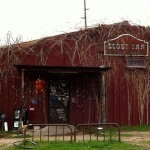
The oldest bar in town and the first one on the list is Scholz Garten, at 1607 San Jacinto Bl. Scholz Garten was founded in 1867, followed not long after by The Scoot Inn (1871), at 1308 E. 4th (presently closed for renovations). Next on the Eater.com lists are the bar at the Driskill Hotel, downtown (1886), and Threadgill’s on North Lamar (1933), Tavern at 12th and Lamar (1933), Mickey’s Thirsty I Lounge (1934), Longbranch Inn (1935), Deep Eddy Cabaret (1951), Continental Club (1957), Broken Spoke (1964), Horseshoe Lounge (1965), Draught House (1968), Donn’s Depot (1972), Cloak Room (1970s), Cedar Door (1975), and Ginny’s Little Longhorn (1970s).
Even newcomers to Austin might already know that Scholz Garten is the oldest joint in town, but I like to say that you could argue that Scholz also helped set the stage for Austin becoming the Live Music Capital of the World. We have the German community and beer to thank for that, also. You see, a German singing group was organized in Austin in 1852, and after Scholz opened its doors, it was only natural for these folks to gather there and sing and imbibe. The group officially organized as a German singing society called Saengerrunde in 1879, and that year the organization also hosted a gathering (read: conference and music festival) of other German singing clubs. Visualize, if you will, the hordes of German musicians converging on Austin for a weekend of song, fellowship, and schmoozing, way back in 1879, long before iTunes, Napster, Kickstarter, Red Bull, or any of that. All the registrants for this first Saengerrunde by Southwest were issued state-of-the-art convention ID badges made of pressed tin hung on rawhide lanyards, and even in these very formative early years, the town was already atwitter with rumors of a secret showcase by Bob Dylan.

The first SXSW was sort of held in 1879, the way I figure it, anyway.
No story like this could ever be complete in a bulletproof way, and of course it leaves out all the great dives and joints that came and went without making a big impression for posterity, but we must call attention to a few here, including the Victory Grill (opened V-day 1945), Carousel Lounge (1960s), and Rabbit’s Lounge(1969).
Austinites who know Austin history (or who simply lived it) will also want to mention important defunct establishments like Armadillo World Headquarters and its predecessor, Vulcan Gas Company, and folkie joints like the Fred, 11th Door, and others. Powerful emotions and lots of great stories will be prompted as well by recollections of the late, lamented One Knite Saloon, a real Austin landmark when it comes to the blues scene, as well as the truly historic joints like the I.L., Ernie’s Chicken Shack, Charlie’s Playhouse and Sam’s Showcase. Another club that opened around the same time as the One Knite is the Hole in the Wall, still a spewing spigot of musical expression in Austin today.

Pictured above, those benevolent giants who ran Raul’s, Joseph Gonzalez and Bobby Morales. Not pictured, Raul “Roy” Gomez, the owner.

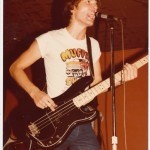
Me & my Fender Precision bass at Raul’s club with the Skunks, 1978
And, if you were waiting for me to mention Raul’s Club, which opened for business under that name in 1977, I don’t want you to be disappointed. It was here that the moribund and cowpokey Austin music scene was gifted a battery acid enema by the punk/new wave scene starting in January 1978. Austin’s first two punk bands, The Violators and The Skunks, played there just two weeks or so after the Sex Pistolsshow in San Antonio and, as you probably know, I was in both bands.
The Skunks, Austin, Texas, Raul’s Club 1979, performing “Television Lover" (youtube);


Instead of rounding out this blog with a bunch of lists, I wanted to point readers toward some good histories that have been previously published on this subject, with a half-assed promise to delve deeper into it myself at a later date and share some collected knowledge of the history of Austin night life. “Oldest Bars” story sparked this idea, but in truth, it’s always just below the surface of my subconscious. So, as a step in that direction, something I think about every time I head into East Austin and visit some of my favorite haunts, taking note of the armies of hipsters and slackers and tourists who have rediscovered the cool vibe of East Sixth Street and the neighboring area, including the 11th Street corridor long ago known by such derisive, antiquated terms as “The Congo,” I am directing you to a fine piece of writing titled Bright Lights, Inner City, by Margaret Moser in the Austin Chronicle July 4, 2003.
“The Cotton Club was down on 11th Street, just off I-35, coming east right before you get to Ebenezer Baptist Church, at San Marcos Street,” remembers Ernie Mae Miller. “They had nice bands there — Duke Ellington, Count Basie. It must have been the Forties when it got torn down, when I was a kid. Right next door was the Paradise Inn. They had a jukebox, but every now and then, they’d bring in a band.
“My mama would tell me, ‘Now, y’all go to BYPU,’ the Baptist young people’s group, 6 o’clock Sundays. So we’d go into Ebenezer, then out the back door and down to the Paradise. My mama came by there with a switch one time, switched me all the way back home. I just wanted to hear the music!”
And it was the music that shaped Ernie Mae Miller’s life. The 76-year-old native was a band student at L.C. Anderson High School, Austin’s black high school of the day, which was named for Miller’s uncle. Back then, she was known by her maiden name, Crafton, and she played baritone sax. At Prairie View College, she joined an all-girl big-band revue known as the Prairie View Co-Eds, who traveled the country playing army bases, camps, and USOs, even hitting hot spots in New York City.
Afterward, Miller returned to Austin, traded the baritone sax for piano, and by the Fifties, had established herself as a solo musician and singer — in part because her husband didn’t care for her touring with male musicians. Miller crossed racial lines early, playing clubs patronized by whites such as Dinty Moore’s, and in more recent years, she played nearly every hotel bar in town.
Miller’s most famous gig ended its 16-year run in 1967 at the New Orleans Club on Red River Street, then considered the western end of the Eastside’s 11th Street entertainment district. Popular music in the Sixties underwent the birth of rock & roll, which boosted the audience for its parent genre, rhythm and blues, but the results were not always beneficial to the black community. Nevertheless, traditional musicians such as Miller sometimes found themselves in the most interesting of places with the most interesting of company.
“At the New Orleans Club, I played downstairs, and the 13th Floor Elevators often played upstairs,” recalls Miller. “One night it rained, and the place got flooded. That night I’d bought a brand-new pair of red suede shoes. You had to walk down about six steps to get to the club, and that night I had to walk — slush, slush — across Coke cases through the water, while upstairs was the Elevators with people dancing.
“I sure did like those shoes.”
Rockin’ in Rhythm
In a dark, poorly documented corner of Austin’s memory, it’s pure speculation to suggest that the town’s fabled music scene started in the jazz age of the Twenties. It’s quite possible, however, that young Duke Ellington loaded into Austin’s Cotton Club at the same time that Louis Armstrong was polishing his trumpet in preparation for his well-documented gig at the Driskill Hotel. Jazz was so pervasive at the time that it was being incorporated into country & western music and called Western swing. With the Depression just around the corner, music was as vital to the culture here in Austin as in Harlem or New Orleans.
The presence of active military bases at Bergstrom and Fort Hood (then Camp Hood) meant soldiers on the town every weekend. Documents on and of the time imply that the rowdy atmosphere led to scrutiny by the city and subsequent regulation. By Ernie Mae Miller’s recollection, the Cotton Club and Paradise Inn were closed by the end of the Forties.
Meanwhile, Huston-Tillotson College’s jazz programs were in full swing, the Apostolic Church at Comal Street and Blackberry offered teen dances, and a place called the Black Cat on 12th was popular, but not until Johnny Holmes opened his Victory Cafe on V-E Day in 1948 did the scene revive. By the time the cafe moved a half-block toward town as the Victory Grill in the Fifties, other clubs like Tony Von’s Show Bar — previously the Black Cat — were booking live music, too. As Henry “Blues Boy” Hubbard looks back on it, “The Victory Grill was it,” but changes were afoot.
“I was playing piano with a trio at the Victory Grill about 1956,” says Hubbard, 69, “when Tony Von had a jazz group at the Show Bar that wasn’t drawing so well, and he invited me to get on guitar. We got a group together — no name, just a group — and within a week, the house was packed, and no one was at the Victory. I went up to the Grill on a Friday not long after, and it was only the people that worked there sitting around looking at each other.”
By the late Fifties, East 11th Street and its jog up 12th was Austin’s musical destination, much as Sixth Street is now. “Lit up like Broadway,” is how some describe the snaking blocks of clubs that attracted jazz, blues, and R&B players of every caliber. Clubs with names such as the Clock Lounge, Good Daddy’s, the Palladium, the Shamrock, Slim’s, and Steamboat attracted a lively following. Like Harlem, the scene jumped with lines to get into clubs, flashy cars, and well-dressed patrons of every color out for the weekend stroll. For a young musician like Hubbard, it was heaven.
The military brought Hubbard to Austin, stationed him at Bergstrom AFB, and here he stayed. In addition to the Victory and Show Bar, Hubbard and company played after hours at places such as Cheryl Ann’s on Webberville Road, near the outskirts of town. It was a good time to be young and in the swing of things; the unlikely benefit of segregation was the tightly knit black community that thrived in East Austin.
“During the time we played at the Show Bar, Charlie Gildon bought the place,” explains Hubbard. “He bought the whole block there — barber shop, cleaners, liquor store, shine parlor, and the club. And when he bought the place in 1958, he called me and said, ‘I got part of your band, and they want to make you the bandleader.’ Charlie and his wife wanted it to be a business and wanted a name for the band. So I said, ‘Why not the Jets? I’m a jet mechanic at Bergstrom.’ And that’s how it came about.”
Dance to the Music
Pay attention when Allen “Sugar Bear” Black emcees at Antone’s. He’s been a fixture at the club since the Seventies; he walked into its original location at Sixth and Brazos Street with former Show Bar owner Tony Von to promote Johnnie Taylor and stayed for the next three decades. The tall, handsome man may stand at the door of Antone’s as a greeter of sorts, but he’s a direct link between today’s downtown blues scene and the glory days of the Eastside.
“I was a youngster in 1965, going to Charlie’s Playhouse,” recounts Sugar Bear. “I saw bands like Al ‘TNT’ Braggs, Tyrone Davis, and Albert Collins, but mostly it was Blues Boy Hubbard and his Jets on the weekends. It was basically a Blue Monday club for blacks, but on Friday and Saturday nights, it was 95% white — kids from colleges and the University of Texas.
“It was real unusual to have that. They didn’t fear coming to the Eastside; people didn’t get their cars vandalized, stuff like that. More like it is now, with blacks and whites in clubs together. There’d be a constable out there with a pistol, to keep people from loitering if they weren’t coming in.”
The presence of a young white audience on the Eastside had been building since the late Fifties. Hubbard theorizes that the proximity of the neighborhood to UT was the crucial link.
“The fraternities wanted somewhere to go every week,” he states. “Here’s a club on the Eastside that’s all black, and it turned all white. I wasn’t surprised to see it — if you’d seen how the kids were going on over that music. … When we’d kick that first number, they’d be on the dance floor and wouldn’t leave. They’d dance when we weren’t even playing. They just couldn’t get enough of it.
“The blacks on the Eastside would come to Charlie’s and get turned away. Not exactly turned away, but no room to sit. The fraternities reserved tables for 20, 40, 50, and the Playhouse was full before we’d even kick off. The white college kids were spending more money than the black kids because they had more money. It got to the point that blacks on the Eastside coming from the projects were getting mad at Charlie because of that. But Charlie was looking out for Charlie.”
The impact of a moneyed white audience bolstered East Austin’s economy. Hubbard saw the changes from a businessman’s point of view as well as an artist’s.
“Charlie’s brought the white kids from the west side and the runoff enabled the other clubs to have a heck of a business,” he explains. “Like Sam’s on 12th Street and the IL Club across the corner from Charlie’s Playhouse. And when Charlie’s was full, the kids just said, ‘We’ll go to the IL Club,’ because he had a band, too. They just tore that club down a year or two ago.
“Sam’s Showcase was the only other club to give competition to Charlie’s, really. W.C. Clark was playing with me then and would say, ‘Well, Charlie’s paying $10 a night, but Sam is paying $12.’ So he’d end up going to Sam’s and play with Major Burkes for a while.
“So Sam and Charlie got together on what they wanted to pay the bands. Sometimes, the musicians would get tired of the same crowd and jump the fence to play another club. The grass always seemed greener. But next thing you know, they were back with me. Until 1970, Charlie had one heck of a business.”
Charles Ernest Gildon, “or maybe it was Ernest Charles Gildon, I’m not sure,” was Sugar Bear’s uncle, a man with a glad eye for a dollar who was in the right place at the right time. In 1960 he bought the after-hours joint called Cheryl Ann’s and renamed it Ernie’s Chicken Shack and would often continue the night’s music from the Playhouse into the morning’s wee hours. Hubbard’s Jets became the after-hours band at Ernie’s, a gig that made them local legends.
Mississippi-born Lavelle White was already a veteran musician based in Houston when bookings brought her to Austin in the Sixties.
“I came to Austin to play,” she says, “and I played a gob of clubs: Charlie’s Playhouse, the Derby, Good Daddy’s, Sam’s Showcase, the Victory Grill. Joe Valentine had a club, too. There were a lot of clubs there and really in the swing, you know? They were really doing it.
“Ernie’s Chicken Shack — that was a rockin’ place, and I was a rockin’ girl. That place was so jumpin’, and the best food — mmm, mmmh — you ever ate in your life! That fried chicken and fish was just mouth-watering. It was really hoppin’, I’m telling you.
“Everybody went there, every weekend night. You could hardly find a place to sit. Dancing and music. Gambling going on in the back room, yes there was. They had bootleg liquor and Blues Boy Hubbard & the Jets. It was wonderful.”
As quickly as it came, the scene went. By the early Seventies, the Victory Grill had closed, as had Charlie’s, Sam’s Showcase, and the IL Club. Ernie’s Chicken Shack served its bootleg liquor and hosted the Jets after hours until 1979, when Gildon died. Nearly every one of the musicians interviewed cites the same ironic factor in the decline: integration.
Integration isn’t the only reason given; drugs, crime, and the changing times played their part as well. Today, the limestone structure known as Symphony Square stands where the New Orleans Club was located, and to look up the block from there toward I-35 is to see how successfully a bit of architecture can affect a culture. The interstate that quite literally divided the city was, as Harold McMillan says, “symptomatic and not causal.”
McMillan moved to Austin in the late Seventies as a student and musician, and his experiences as both led to the founding of his local preservation organizations, DiverseArts and the Blues Family Tree Project.
“Once the desegregation legislation happened,” says McMillan, “like the Voting Rights Act, black folks had a false sense of victory. We assumed that when the laws changed, we could go all over Austin and do whatever it is we do — see music, eat wherever we want. No need to do business just in central East Austin, because investment will come here, too, and it’ll be just fine. Instead, especially in businesses and clubs, it started to die off.”
Some of this was due to what McMillan calls a lack of “critical mass of African-American political and economic power in Austin because the community is so small.” He concedes that the decline happened all over the U.S., yet correctly points out that cities like New Orleans did not turn its back on its musical heritage simply because the times changed.
Like McMillan, Rudy Malveaux came to Austin as a student and would like to see the times changed back. Malveaux also worked as a musician and rapper, playing clubs such as the Mercury, Electric Lounge, and Mercado Caribe. As owner of a small grocery in East Austin in the late Nineties, Malveaux became friendly with a customer named R.V. Adams, who owned the Victory Grill.
In 1997, Malveaux was trying various musical efforts, but the one that took off featured Bobby “Blue” Bland, the Houston R&B singer who’d been a star at the club in the Fifties and Sixties. Opening the show was a local teenage guitarist, Gary Clark Jr., who played with the Blues Specialists and is among the last of the keepers of the Eastside flame.
“When you bring back Bobby Bland, debut Gary Clark, and have an institution like the Blues Specialists, where do you go?” asks a frustrated Malveaux.
[Here's me, your blogger, interjecting a comment: Speaking of Gary Clark, Jr., he's come a long way since this story was published. His new CD, titled Blak & Blu, is selling like bootleg hootch on a Saturday night at Ernie's Chicken Shack, and here's a youtube clip of his song from that CD titled, ironically, "Bright Lights."]
Gary Clark Jr. on youtube performing “Bright Lights”
Malveaux’s question is one he’s pondered for six years. In that time, he’s worked with Showtime, the Austin Music Network, and a variety of musical acts and events at the Victory Grill, including the Juneteenth MusicFest two weeks ago. Not all his efforts are profitable, but his spirit is unflagging, because he believes now, as then, that “the Victory Grill is the cultural hub of East Austin.”
For veteran musicians like Lavelle White, the memory of the Victory Grill in its heyday clashes with today’s reality. She bluntly states there’s no place in Austin for her to play any longer and talks of moving away after her new album is released this summer.
“If you’re a skinny white boy with a guitar, you got a gig,” she asserts. “But no one wants to see a black woman with talent.”
Without rancor, Blues Boy Hubbard agrees.
“Lavelle is right,” he says. “I was lucky back then; I got with Charlie, and Charlie’s living was me. He hired me in ’58, and I played for him ’til he died in ’79. Every week. But the other black musicians didn’t have a place to hang their hat for 10 years. The club owners kept coming and going. Get a band to a club for a year, someone else buys the club, maybe he don’t want a band.
“Then I went to the Austex and the Continental Club, the Opera House, Steamboat. I met Steve Dean, Clifford Antone, Chuck Geist from Hut’s, C-Boy, and Hank Vick, and these guys all kept me working, opening for Bobby Bland, John Lee Hooker, the Fabulous Thunderbirds. I played the Guadalupe club for a month one time, playing to a lot of college kids, just like the old days at Charlie’s Playhouse.”
There’s an arch over the entrance to 11th Street from I-35 today, and it’s a bellwether of new hopes and old dreams. Drive up 11th Street and the revitalization is evident in refurbished buildings, construction, and a cleaner look to the area. Everyone agrees it’s a positive step for the neglected community: Build it, and maybe the people will come.
Yet the frustration in Lavelle White’s voice is understandable. In her mind, the Eastside’s musicians are still relevant and should have a place in the music scene on both sides of the interstate: “It’s time to make people wake up and smell the music. That’s my new saying: Wake up and smell the music.”
November 29, 2012
BIG FOOT CLUB FOOT GHOST DRIVE-BY

I saw a ghost today, while singing “Grave Digger Blues.” No joke. It’s on youtube.
A lot of things happened today. Not all of them right here, in my tiny office facing east, but here’s a couple of things I observed. For one thing, I read some startling news about Big Foot. Then some stuff about cheerleaders in East Texas. Had lunch at Hoover’s with a friend and writing colleague. I walked around Lady Bird Lake and went to the Y. I saw a ghost. Captured him or her on video, too.
OK, here’s the highlights:
SCIENCE PROVES BIGFOOT IS REAL: That’s what I read today today in TM Daily Post, anyway.

Why this character didn’t end up with the GOP nomination is beyond me
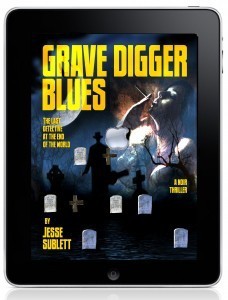
The FIRST surrealist/blues/pulpfiction iPad novella, out now, on iTunes and Amazon. The Kindle version has over 100 cool photos and graphics; the Blues Deluxe Edition for iPad has music AND photos.
A team of scientists based in Nacogdoches claims to have successfully sequenced Bigfoot’s DNA. This “confirms the existence of a novel hominin hybrid species, commonly called ‘Bigfoot’ or ‘Sasquatch,’ living in North America,” according to an announcement by Melba S. Ketchum, PhD., founder of DNA Diagnostics. A team of “experts in genetics, forensics, imaging and pathology” worked on the Bigfoot project for five years before releasing their conclusion. The announcement has been greeted with skepticism by other members of the scientific community, however, partially because the group has not released any of data to be examined and peer-reviewed, which is generally how scientists like to work.
“Sasquatch nuclear DNA is incredibly novel,” says Ketchum, “and not at all what we had expected. While it has human nuclear DNA within its genome, there are also distinctly non-human, non-archaic hominin, and non-ape sequences. We describe it as a mosaic of human and novel non-human sequence. Further study is needed and is ongoing to better characterize and understand Sasquatch nuclear DNA.” THe rest of the press release from DNA Diagnostics can be read here.
Doesn’t Joe Lansdale live in Nacogdoches? I know he lives way out in the Piney Woods, and he’s a great writer and a pretty weird guy. I would definitely trust him to go check this thing out. He could be working on it right now for his next novel. Joe, if you’re reading this, please get back to me.
And because Bigfoot makes me think of Big Foot Chester, the nickname of the great Chester Arthur Burnet, a k a Howlin’ Wolf, I am posting a poster of him right here, or rather, the last Howlin’ Wolf Birthday Tribute which I produced this year, and you’ll notice, my pals BigFoot Chester are on the bill. Cool band.
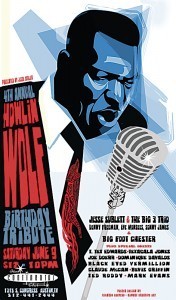
And this also makes me think of Club Foot, the long-gone nightclub that used to be on 4th Street downtown, right where Frost Tower is now.
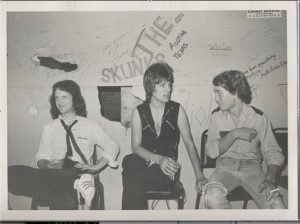
The Skunks, L-RBill Blackmon, Jesse Sublett and young Jon Dee Graham, down in the basement dressing room at Club Foot, 1979.
A few decades, a few changes. That is indeed a 19-year-old Jon Dee Graham on the right, and me in the middle, Bill Blackmon on the left.

CLICK below to see the video clip of the Skunks doing “Let’s Get Twisted.”
“Let’s Get Twisted” by The Skunks
If you were a devotee of Club Foot back in the day, or you have any interest in the history of the Austin music scene, and you’ve never seen the mini-doc “Dead Venues Live: Club Foot” you should see it right now. Spoiler alert: I’m in it.
So then while I was reading about BigFoot (and by the way, a guy in Dallas claims that BigFoot threw a rock at him, I got sidetracked by this story about a small town in Texas where they’ve been letting the cheerleaders use run-through banners with Bible verses on them, which is dumb beyond belief, but this is Texas and football and like they say, in Texas football is like a religion, or it actually IS religion. This is happening in a small town called Kountze (I hope that’s not pronounced like I think it might be pronounced). After it was pointed out to school administrators that this kind of thing is frowned upon by the US Constitution, the banners were discontinued, then a temporary restraining order was issued, which allows the practice to continue until the matter is resolved in the courts.

They’re just doing the Lord’s work, OK?
One cheerleader said that the ban only strengthens the group’s resolve: “I’m actually thankful for it,” Ashton Jennings told Houston’s CBS affiliate KHOU. “Because if someone hadn’t complained, or if there hadn’t been any opposition we wouldn’t have this chance to spread God’s word in this big of a way.”
Hey, isn’t that great? Because the Creator of the Universe really needs some high school cheerleaders to spread the word. You’d think He’d be able to get his message out without pom-poms and stuff. But then this last bit of the story took me by surprise:
Kountze’s previous claims to fame include being the first U.S. city to have a Muslim mayor as well as being home to the world’s only married armadillo couple—named Hoover and Star—according to the Freedom From Religion Foundation.


So then later I was recording a little demo on my iPad of the theme song to Grave Digger Blues. I’ve recently learned a new version that works in open G tuning on the acoustic guitar, and I kind of like it. So I’m recording it, one take, and near the end, this ghost flits through the image on the iPad screen. Seriously, this is no hoax, not a joke. I know I have a bad reputation for being a jokester, but I’m serious.
I saw the ghost go by, from left to right, while I was recording, and I thought, “Gee, that looks like a ghost, but I’ll keep recording because it’s near the end of the song.” Link to the youtube clip is below the screen shot below. The quality is crude and a couple of notes are off, but you know, I thought this was kind of interesting. The ghost–or whatever it is–appears right at 3:00 into the song, with 13 seconds to go. Right after the last refrain, where I come in with the falsetto “whoo-hoo” a little off-key, because my throat is shot again.
Screen shot of the ghost–almost like snot flying out of my nose. Click below for video.
“Grave Digger Blues” in open G with ghost drive-by
So, yeah, here we are, at the end. We have the Abominable Snowman, a k a The Yeti, Sasquatch and/or Big Foot, being declared genuine by some scientists based in the piney woods of East Texas. We have cheerleaders spreading the word of God (and damn the Constitution, anyhow), in good old’ East Texas. And I’m playing this song, inspired by the great blues songster from Nacogdoches, Mance Lipscomb, and a ghost appears. These things could be connected, don’t you think?
I don’t know what to do, other than put it on YouTube, and I already did that. Actually the best part of the day was having lunch at Hoover’s, and having dinner with my wife, Lois, who is a phenomenal cook and damn good looking, too.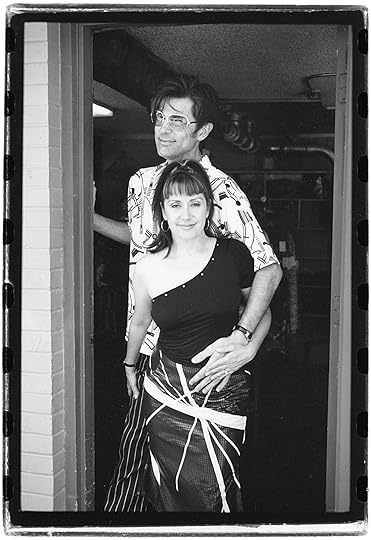
KING OF NOIR

I’ve been thinking about pulp fiction.
In the 12 days since my new novel Grave Digger Blues went on sale, I’ve been thinking more about pulp fiction. Sometimes wherever I am this genre seems to reach out and grab me, like some random demons in waiting. Certainly I’ve some experiences of my own that were right out of a pulp fiction nightmare. I’ve written about them, and will probably write about them again. At other times, writing from the noir state of mind just helps me put things in perspective, in the same way that writing a blues song helps me communicate.

A band called the Tin Can 44s contacted me and asked me if I could share some more scans of my vintage paperback novels to help them in their development of artwork for an upcoming release. and I’ve been doing some research that required digging through my book collection and files (but nothing new about that), so I fired up the scanner and flipped through some files and found this piece I wrote about Jim Thompson published by Texas Monthly in November 1999. The idea for the story came to me all at once. Novelist Jim Thompson, widely acknowledged as the “King of Noir,” lived in Texas for many years, and many of the rough and tumble experiences, including his stint as a teenage bell hop in Fort Worth during the Roaring Twenties and his work and fucking off in the oil fields of West Texas, became fodder for many of his classic pulp fiction novels. And here’s Texas, a state that’s always bragging about the great, famous people who are from here, yet this fact was rarely acknowledged and even more rarely–as in never–celebrated.


So here’s that story, in its entirety, as published in Texas Monthly, with my own scans of my copies of the novels which I loaned the magazine for their illustrations back in 1999. (Oddly enough, there did not seem to be any hardboiled crime collectors in the offices of Texas Monthly at the time.)


Commercial Announcement: If you haven’t done so yet, do yourself a favor and download a sample of Grave Digger Blues right now. The Blues Deluxe Edition for the iPad (with an hour of audio, including original blues music and audio chapters, over 100 photos and graphics, plus a video intro) is available on iTunes for $6.99, and the Kindle version (100+ photos and graphics and the same wild story) is available in the Amazon Kindle Store for $4.99. Much more info on the Grave Digger Blues page, with updates here and here.

From the Kindle edition.
WILD TOWN: JIM THOMPSON’S FORT WORTH YEARS
Many of Jim Thompson’s noir novels drew on his days as a bellhop at the old Hotel Texas, when Fort Worth was rowdy and the twenties were roaring.
by Jesse Sublett
When Jim Thompson died in Los Angeles in 1977, his career was almost as dead as he was. Not one of his more than two dozen books was in print. His last important screen credit had been for Stanley Kubrick’s Paths of Glory, twenty years earlier. But during the past decade and a half, Thompson has blazed a comeback trail from oblivion to mainstream popularity and recognition as a unique voice in American literature. Almost all of his novels are back in print, including the ultimate noir novel, The Killer Inside Me, one of the scariest ever written. Even Stephen King thinks so.


Generations of filmmakers, from Orson Welles to Quentin Tarantino, have admired his work. Among his eight books that have been made into movies, the best known are probably The Getaway, filmed in 1972, and The Grifters, which was nominated for four Academy awards, including best adapted screenplay, in 1990. Too bad Jim Thompson isn’t around today to enjoy his amazing comeback. In a perfect world he’d be the star attraction at this month’s Texas Book Festival. At least half of Thompson’s books are set in Texas, and all of them are informed by his experiences here during his teens and twenties, between 1919 and 1935—times that were quite likely the worst of his life.

 Jim Thompson playing dead. By the 1970s, his reputation was face-down, too.
He was born James Myers Thompson in 1906 in Anadarko, Oklahoma, where his father, James Sherman Thompson, was the county sheriff. The following year, his father fled to Mexico and parts unknown for two and a half years after being implicated in a murky scandal involving financial improprieties. The family moved around Oklahoma and Nebraska for years before relocating to Fort Worth in 1919. For the next four years the senior Thompson dabbled in numerous schemes and ventures, including drilling wildcat oil wells in West Texas, but by 1923 the family was destitute. His son chronicled this chapter of his life in his first book, Now and on Earth: “Pop went broke and his was the irremediable brokeness of a man past fifty who has never worked for other people.”


Things were booming in Texas, however, and sixteen-year-old Jim Thompson was able to get a job working nights as a bellhop at Fort Worth’s Hotel Texas, at 815 Main Street. Rubbing up against and running errands for gamblers, gangsters, con artists, rich oilmen, and lonely females in a big-city hotel gave Thompson plenty of material for his future novels. One example is the swindle known as “the twenties” that figures in The Grifters; Roy Dillon (played by John Cusack in the film) uses sleight of hand to get $20 of change for a $1 bill. Thompson learned that trick and a slew of others at the Hotel Texas, a thinly disguised version of which is featured in numerous Thompson novels and is the focal point of all action in his hotel novels, like Wild Town and A Swell-Looking Babe.
Thompson also befriended notorious bank robber and gangster Airplane Red Brown, who made a big impression on him. Brown would serve as the inspiration for the protagonist or a major character in many of Thompson’s novels, including Airplane Red Cosgrove in Recoil, Allie Ivers in Bad Boy and Roughneck, and professional thief Doc McCoy in The Getaway.


During the wild and woolly oil boom and Prohibition years, bellhops at places like the Hotel Texas didn’t just carry luggage for the guests; they also procured bootleg booze (Thompson used to carry a couple of extra half-pints in his socks), hookers, and drugs. A bellboy who was killed while scoring drugs for a guest is at the center of the short story “The Car in the Mexican Quarter,” one of Thompson’s few private-eye stories: “The Lansing is one of the biggest hotels in town, but I knew that it stood for a lot of dirty work from its employees. One suicide a year is plenty for a big hotel and the Lansing had one almost every month.”
Things have changed in Fort Worth since Thompson lived there. The Hotel Texas is now the Radisson Plaza, and the wildest thing that went on while I stayed there recently was a convention of Seventh Day Adventists. The fifteen-story luxury hotel was completed in 1922, and despite having been extensively remodeled inside, it still exudes a sense of grandeur and history. President John F. Kennedy spent his last night there, in room 850.

To be fair, the Hotel Texas never had a lock on decadent behavior in downtown Fort Worth. It was located in a part of town known as Hell’s Half Acre—a concentration of brothels, saloons, gambling halls, and like enterprises that had catered to cowboys and cattlemen back when Fort Worth was a major stopover on the Chisholm Trail.
Thompson’s father used to regale him with stories about the infamous lawmen and outlaws he’d known, many of whom spent time sampling the delights of places like Two Minnies, where customers in the downstairs bar could view the naked prostitutes prancing about upstairs through the glass ceiling. Two Minnies was long gone, but there were still plenty of holdovers from the days of Hell’s Half Acre when Jim Thompson walked these redbrick streets. In his autobiographical novel Bad Boy, Thompson recounts a day he spent with his Grandfather Myers in downtown pool halls, arcades, and burlesque houses:
. . . following lunch we went to a penny arcade.
Pa had brought the bottle with him, and he became quite rambunctious when ‘A Night With a Paris Cutie’ did not come up to his expectations. He caned the machine.
Great story material, but working seven nights a week while attending Polytechnic High School devastated Thompson’s health. Whiskey, cocaine, and three packs of cigarettes a day kept him going. After two years of this hellish routine, he suffered a total physical and mental breakdown at the age of eighteen.
In more than a few Thompson novels the protagonist’s spiral of doom and dissolution is propelled by an Oedipal streak a mile wide. It doesn’t take a degree in psychology to guess that Thompson wrote to get back at his father for his various failings, not to mention the torturous routine he himself had to endure to support his family. He created numerous wicked caricatures of his father. Both The Killer Inside Me and Pop. 1280 are narrated by a slow-talking, joke-spinning West Texas deputy sheriff who is actually a serial murderer.
A bleak, menacing backdrop is a staple of noir fiction, but Thompson’s portrayals of Texas and Texans are so bleak and bitter that they veer into the category of surreal cartoons. As he explains in Bad Boy:
. . . Texans were distasteful—or so I soon convinced myself. I studied their mannerisms and mores, and in my twisted outlook they became Mongoloid monsters. I saw all their bad and no offsetting good.
Texans made boast of their insularism; they bragged about such things as never having been outside the state or the fact that the only book in their house was the Bible.
Interestingly, as Thompson’s narratives move westward, his tone mellows considerably. In Texas by the Tail, written in the mid-sixties, his con man narrator berates Houston for, among other things, its weather and its racial politics. He definitely favors Fort Worth over Dallas:
Neighboring Dallas started an evil rumor about its rival. Fort Worth was so rustic, the libel ran, that panthers prowled the streets at high noon. Fort Worth promptly dubbed itself the Panther City, and declared the lie was gospel truth.
Certainly, there were panthers in the streets. Kiddies had to have somethin’ to play with, didn’t they? Aside from that, the cats performed a highly necessary service. Every morning they were herded down to the east-flowing Trinity River, there to drain their bladders into the stream which provided Dallas’ water supply.
Thompson’s own sympathies ran along similar geographic lines. In 1926, after recuperating from his first stint as a bellhop, he hitchhiked to West Texas on a strange pilgrimage that took him to the very same oil fields and towns where his father had gambled away his family’s future. He spent the next two years laboring at backbreaking, dangerous jobs in the oil fields, working in gambling joints, briefly running a diner, and hoboing.
In Bad Boy, Thompson says that becoming a writer was foremost in his mind when he lit out for West Texas. “Oil Field Vignettes,” the first of several pieces he wrote while in the oil fields, was published in Fort Worth—based Texas Monthly magazine (no relation) in 1929. Ironically, the oil business—which had broken his father—provided the means for Thompson to reinvent himself.
It had already transformed Cowtown into Fort Worth, a major hub of the Texas oil business. The black gold that bubbled beneath their ranchland made West Texas cattlemen like Burk Burnett and W. T. Waggoner—who weren’t exactly poor before—into wealthy oil barons who funneled a great deal of their prosperity through the city that had always been good to them. Jim Thompson undoubtedly encountered many of these men while working as a bellhop, and certainly breathed construction dust as monuments to their success shot skyward: the W. T. Waggoner Building (810 Houston), oilman R. O. Dulaney’s cool art deco Sinclair Building (106 West Fifth), the Petroleum Building (also built by Dulaney, 611 Throckmorton), and others, all built between the teens and the early thirties.
While train travel isn’t a frequent fixture in Thompson’s novels, most of the grifters, gamblers, and other fun-seekers he hopped bells for came into Fort Worth via the old train stations that are just a short walk from downtown: the Santa Fe Depot (1601 Jones) and the Texas and Pacific Terminal (West Lancaster Street between Houston and Throckmorton). The former, built in 1899, evokes old Cowtown more than it does the Roaring Twenties, while the latter is a magnificent 1930 art deco structure that conjures up fedoras and big-city film noir. (To take a guided walking tour called “Hell’s Half Acre to Sundance Square,” contact Bill Campbell at 817-253-5909 or dwcjr@swbell.net. A “Downtown Fort Worth Walking Tour” brochure is available from the Fort Worth Convention and Visitors Bureau, 817-336-8791.)
In 1931 Thompson married Alberta Hesse, and before long he had found a job at the Worth Hotel (at Seventh and Taylor, where the expanded Fort Worth Club stands today). Thompson was working at the Worth when Will Rogers gave him a $50 tip for retrieving his car. Despite occasional nights like that and the fact that he was working 84 hours a week with no days off, he still wasn’t making enough to get by. Things only got worse as the Thompson household expanded to include three children born between 1932 and 1938.
In a bold stroke that, in hindsight, seems to have been preordained, Thompson turned from writing for oil trade journals to writing for true-crime magazines. A gentle, well-mannered soul who loathed violence and bloodshed, he churned out lurid stories for publications like True Detective, Daring Detective, and Startling Detective, managing to eke out a living and at the same time developing many of the stylistic techniques he would employ in his later novels. In 1935, lured by a lucrative offer from a true-crime magazine, Thompson moved to Oklahoma, ending the strange, bittersweet, and often brutal saga of his Texas years.
Once Thompson got to Oklahoma, his crime-magazine job suddenly fizzled out. In 1936 he obtained a position with the Oklahoma Federal Writers’ Project and not long thereafter was appointed its director. Also actively involved in left-wing politics, he gained many influential colleagues and admirers, including Woody Guthrie, who essentially agented Thompson’s book deal for Now and on Earth, published by Modern Age in 1942. A sort of semi-autobiographical protest novel—cum—psychological study, it met with mostly great reviews but lackluster sales. His first crime novel, however, Nothing More Than Murder (1949), struck a nerve with critics and the reading public alike.
As chronicled in Robert Polito’s excellent 1995 biography, Savage Art, Thompson’s writing career is the stuff of hard-boiled literary legends: He wrote like a demon between 1952 and 1954, turning out twelve explosive novels for Lion Books. Although he never really fit into the neat category of mystery or crime fiction, the trajectory of his life from 1942 until his death in 1977 was eerily similar to that of noir giants like Dashiell Hammett and Raymond Chandler, who also emerged from the ghetto of pulp fiction into mainstream American culture. Such men often wrote for two main reasons: because they needed the money and because if they didn’t write, their head would explode. They also tended to live hard and drink hard, and when they were hot, they were on fire.
One night during a recent stay at the Radisson Plaza, I lay in my bed sleepless, thinking about young Jim Thompson toiling up and down these halls where the Roaring Twenties howled with a uniquely Texan decadence, leaving a young man with a hangover that would last a lifetime. If these walls could talk, I wondered, what would they say? Maybe they would say some of the things that are said in the pages of Jim Thompson’s books. In Bad Boy he wrote:
It was a weird, wild and wonderful world that I had walked into, the luxury hotel life of the Roaring Twenties. . . . a world whose one rule was that you did nothing you could not get away with.
There was no pity in that world. . . .
At the end of Thompson’s life his declining health made it all but impossible to write—and no one seemed interested in his style of writing anyway, since all his books were out of print. Shortly before he died he told his wife, “Just you wait. I’ll be famous after I’m dead about ten years.” Wherever he is now, Jim Thompson must be enjoying a hell of a last laugh.[The End]


